
Our Categories

Our Categories

P.K. Tripathi

P. K. Tripathi is Associate Editor at Entrepreneur India and a seasoned business consultant with over 35 years of experience advising startups and established enterprises across multiple industries. He has worked closely with founders and business leaders, offering strategic guidance on business planning, project execution, and market positioning — helping entrepreneurs transform ideas into viable, scalable ventures. A published author of several business books on startups, manufacturing opportunities, and practical entrepreneurship, P. K. Tripathi is known for his grounded, execution-focused approach that cuts through theory to deliver actionable insights. Through his writing and consulting work, he continues to equip aspiring entrepreneurs with the real-world knowledge, industry intelligence, and practical strategies needed to thrive in competitive markets.

Manufacturing Business in Afghanistan

Profitable Manufacturing Projects in Afghanistan

Profitable Manufacturing Projects in Afghanistan Read More »

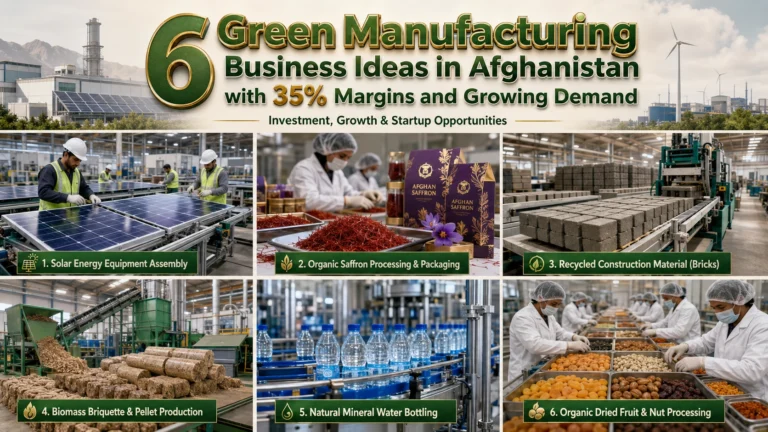
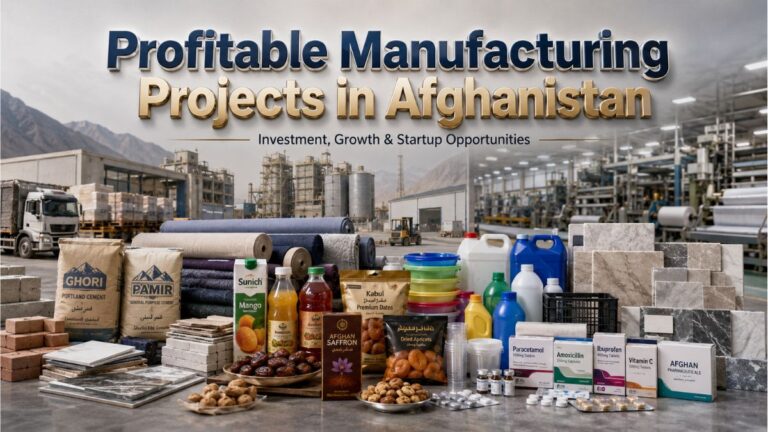
Manufacturing Business in Afghanistan Although Afghanistan is not often cited as a manufacturing hub, it provides one of the best industrial opportunities in Asia. There are significant gaps in local manufacturing in Afghanistan and many developing markets are already saturated with competition. It is a country with high level of agricultural and mineral resources; however, its processing facilities are less. This imbalance means the export of raw materials is done at a more affordable price than the import of finished goods. This is a huge opportunity for those who are entrepreneurs who are willing to be among the early entrants. Afghanistan has a wide export of raisins, almonds, pistachios, saffron and dried fruits each year. But, most of these products are not cleaned, graded, branded and packaged within the country. International companies process the articles in UAE, Europe and India and take the biggest benefits. It is the same in the case of construction materials and pharmaceuticals. Though there are high demand in Afghanistan, but Afghanistan is importing most of the building materials and medicines from neighboring countries. This is a golden opportunity for Indian entrepreneurs and MSME investors to play a first-mover advantage. Why Afghanistan Has Strong Manufacturing Potential Business opportunities can be the largest when the supply chain is incomplete. This is evident from the economy of Afghanistan. The country is still relying on imports for products which can be produced locally. There are some major market gaps such as: Limited facilities for food processing. Higher dependency on imports for medicines Low local production of construction materials Agricultural production that is big but not adequately processed. The increased demand in the cities of Kabul, Kandahar and Herat. This means that manufacturers have good profit margins available due to the combination of raw material availability and low competition. One of the other key benefits is that of exports. Afghan saffron, raisins, almonds and apricots already enjoy a good reputation in the international markets. The lack of an industrial processing and branded packaging layer. It is here that manufacturing companies can really make healthy margins. Related Article: Best Import Substitution Industries in Afghanistan Dry Fruit Processing: The Best Low-Risk Manufacturing Opportunity Dry fruit processing is the most feasible business opportunity for the entrepreneurs in all the manufacturing sectors in Afghanistan. Afghanistan already has high-quality: Raisins Pistachios Almonds Dried apricots Saffron But the major products are exported in their raw state. These products can have their market value enhanced significantly when the businesses involved in their cleaning, sorting, grading, packaging and branding do so. Why This Business Works The raw material supply is already available and there is a steady demand for exports in the following markets: UAE Germany Saudi Arabia India United Kingdom The investment in the medium scale processing unit is in the range of ₹64 lakh to ₹1.10 crore depending upon the level of automation and production capacity. Basic Machinery Required A machine used to clean and de-stone. Colour sorting machine Grade and size equipment Packaging line Cold storage unit Moisture testing devices The majority of the machinery can be obtained from industrial cities in India like Ahmedabad, Ludhiana and Pune. One of the most significant benefits of this sector is that it is non-violent. It is easier to meet the regulatory requirements than for pharmaceuticals. The margins on exports are much greater than in heavy construction manufacturing. Dry fruit processing is probably the best and most secure venture for the first time industrial entrepreneurs. Get Detailed Insights from This Book: Drying & Milling of Cereal Foods Construction Material Manufacturing: A Growing Domestic Market The cities of Afghanistan are growing at a high rate, however the capacity to produce building materials is low. Hence contractors heavily depend upon import from Pakistan, Iran and China. It provides good prospects in the following industries: Hollow concrete blocks Marble processing Tiles and stone finishing Cement-based products Another attractive manufacturing option for hollow concrete blocks is that the setup cost is relatively low and a demand exists. Why Demand Is Rising Across Kabul and other cities urban development projects are still on the rise. Construction materials are needed for residential buildings, commercial buildings, warehouses, and roads. A medium sized block manufacturing unit can manufacture thousands of blocks in a day and deliver to local contractors. Key Advantages Lower setup cost Simple machinery requirements Immediate domestic demand Stable recurring orders Another sector that has potential is the marble processing sector since Afghanistan has great reserves of marble, but lacks modern finishing facilities. The majority of the marbles produced are not cut or polished and the value added is left for foreign processors. Pharmaceutical Manufacturing: High Investment, High Margins Pharmaceuticals are the greatest opportunity in Afghanistan with a high barrier to entry and some great long-term returns. Medicines, including basic generic medicines, are mostly imported in Afghanistan. Most of the products used, such as painkillers, antibiotics, vitamin tablets and so on are imported. This gives a huge opportunity to local pharmaceutical formulation plants. The selection of products with strong demand. Tablets Capsules Antibiotics Vitamin supplements Pain relief medicines The cost of a pharmaceutical manufacturing project is typically between ₹1.5 crore and ₹4 crore, depending on the scale of production and the standards for compliance. Major Requirements WHO-GMP compliance Regulatory approvals Skilled technical workforce Clean-room infrastructure Set-up is more complex but operation margins can be very high after approvals are given, due to limited competition. It is the best place for experienced industrial investors who can deal with the regulatory and operational complexity. Access Complete Business Plan: India Pharmaceutical API Market Report Why Indian Entrepreneurs Have an Advantage Indian companies currently are well established at using: Food processing Pharmaceutical manufacturing Industrial machinery Packaging solutions Export management Geographical proximity and ready access to machinery are other advantages for Indian entrepreneurs. Technical support and the availability of spare parts are relatively easy in the case of Industrial equipment import from India. Indian MSMEs have a good strategic edge in the rapidly growing manufacturing sector of Afghanistan.

Entrepreneur India April 2026 manufacturing business opportunities in India

Entrepreneur India April 2026: India’s Industrial Transformation Is Creating Business Opportunities Worth Billions

Entrepreneur India April 2026: India’s Industrial Transformation Is Creating Business Opportunities Worth Billions Read More »

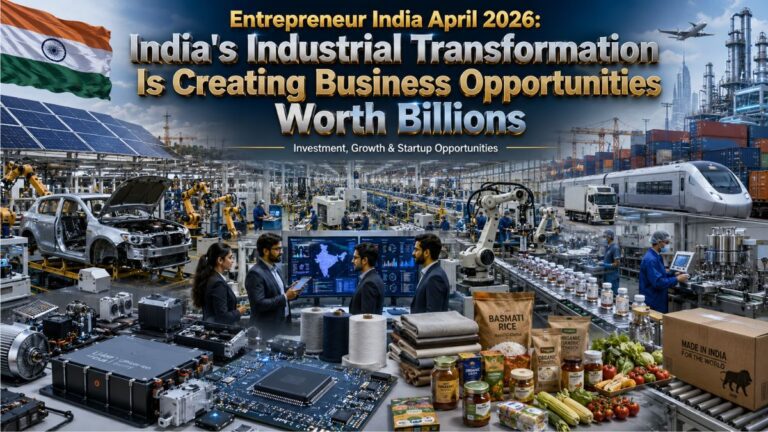
Entrepreneur India April 2026 India is now in a new phase of growth in the field of industries. The country is experiencing one of the biggest manufacturing growths in decades with the introduction of electric vehicles, use of advanced materials, green packaging solutions, and agro-processing as a few examples. Businesses that can be developed today in the right industries will be very lucrative over the next decade. NIIR Project Consultancy Services (NPCS),  April 2026 issue of Entrepreneur India Magazine, features some of the most promising industrial opportunities that are now available in India. Entrepreneur India is different from the regular magazines which bring to light start-up stories or corporate news, it is all about real business opportunities supported by industrial research and project feasibility analysis. At a time when India is witnessing the growth of manufacturing sector due to various factors such as strong government support, escalating domestic demand, infrastructure development, and the global China+1 strategy, this edition comes at a perfect time. International companies are seeking manufacturing alternatives other than China, and India is among the most significant beneficiaries of this trend. Related Article: Entrepreneur India April 2026 Is Here — And It Could Change the Way You Look at Indian Manufacturing Why India’s Manufacturing Sector Is Growing So Fast Indian industry is on the rise due to a number of strong influences. The government is promoting domestic investment in manufacturing through various schemes such as Make in India and Production Linked Incentive (PLI) scheme in several industries. Concurrently, the growing urban demand and the surge in the demand of sustainable products are generating new business opportunities. The following are key factors in this growth: Expansion of EV and battery manufacturing Increasing demand for green products The development of infrastructure and logistics. Import substitution opportunities Growing demand for specialty chemicals. To give more attention to the use of renewable energy resources The April 2026 edition of Entrepreneur India delves into the sectors that are directly benefiting from these long-term economic shifts. High-Growth Business Opportunities Featured in Entrepreneur India April 2026 One of the best features of this issue is that it concentrates on industries that are scalable for the long-term and have a high future demand. Lithium-Ion Battery Assembly The Indian electric vehicle industry is rapidly expanding, leading to a significant demand for lithium-ion batteries and energy storage solutions. It is expected that Battery Manufacturing will be one of the largest industrial sectors in the near future in the country. There are opportunities in this sector for work in the following occupations: EV battery packs Solar energy storage Industrial battery systems Consumer electronics batteries Indian Government is also giving a push to electric mobility and entrepreneurs interested in this business might reap huge benefits in the coming years. Get Detailed Insights from This Book: Lithium-Ion & Lead-Acid Battery Production Get Detailed Insights from This Book: Just For Starters: How To Start Your Own Export Business Rice Husk Biodegradable Cutlery As regulations start to take effect and plastic bags are enforced for all consumers, there is a growing need for biodegradable options. Rice husk biodegradable cutlery is an ongoing business that emerges as profitable since it helps the conversion of agricultural waste to eco-friendly products. The following are some of the key benefits of this enterprise: Low-cost raw materials Growing export demand Eco-friendly market positioning The support for sustainable manufacturing is provided by government. It’s a good example of the conversion of waste materials to commercially useful materials. Carbon Fiber Reinforced Polymer (CFRP) The applications of carbon fiber reinforced polymer are in the fields of aerospace, automotive, railways, renewable energy and construction. India currently has significant import dependence on CFRP products, thus presenting a high level of import substitution potential for domestic CFRP manufacturers. The sector has potential due to: High industrial demand Strong profit margins Advanced manufacturing growth Long-term infrastructure expansion View Full Project Details: Carbon Composite Fiber Manufacturing Plant Report Hesperidin and Pectin Extraction The magazine also makes an in-depth focus on opportunities for citrus peel processing. Citrus waste has been used to extract hesperidin and pectin, which are relevant for the food processing, cosmetic, pharmaceutical, and nutraceutical industry. This business model is desirable because: Raw materials will cost less. The finished products are of high value. Demand is increasing globally Increased profitability due to waste utilization. Circular Economy Manufacturing Is Becoming a Major Trend One of the key topics in the April 2026 issue is circular economy manufacturing. Agricultural waste, food waste, or industrial waste are increasingly being used for profit by businesses. Entrepreneurs are now converting waste into: Biodegradable packaging Nutraceutical ingredients Industrial chemicals Eco-friendly consumer products These businesses can usually enjoy high profitability as the raw material costs are low, and there is a demand from the consumer for “green” products, which entitle them to premium prices. The push towards sustainability in the environment is likely to bring even more opportunities from this segment in India in the coming decade. Why Import Substitution Businesses Have Huge Potential India still has a high dependence level on imports for many industrial products and specialty materials. This opens up huge possibilities for Indian entrepreneurs to set up indigenous manufacturing units. The following industries have high import substitution potential: Specialty chemicals Battery materials Advanced engineering products Industrial minerals High-performance materials The government actively encourages domestic production by providing incentives, subsidies and infrastructure support. There is potential for policy-driven growth as well as strong demand for entrepreneurs to enter these sectors. How NPCS Helps Entrepreneurs Start Manufacturing Businesses NIIR Project Consultancy Services (NPCS)  is one of the most experienced project consultancy and industrial research firms in India having over 45 years of experience. NPCS provides support for entrepreneurs through: Detailed Project Reports (DPRs) Techno-economic feasibility studies Market research reports Plant setup guidance Financial projections Bank loan documentation Selecting suitable machinery and processes Thousands of entrepreneurs, MSMEs, investors, financial institutions use the NPCS reports to assess the manufacturing opportunities and industrial projects. The main strength of NPCS is its specialization

Biodegradable products manufacturing in India

The Green Manufacturing Revolution: Paper Water Bottles, Bioplastics & Biodegradable Products

The Green Manufacturing Revolution: Paper Water Bottles, Bioplastics & Biodegradable Products Read More »

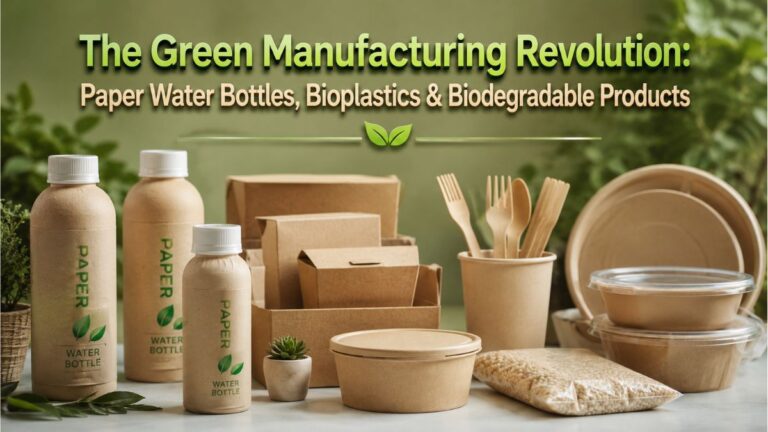
Biodegradable products manufacturing in India Plastic pollution is no longer just an environmental problem; it’s one of today’s greatest business opportunities. Governments, consumers and big companies around the globe are phasing out conventional plastics and adopting more eco-friendly alternatives like biodegradable plastic. The green manufacturing revolution is generating a whole new industrial economy, ranging from paper water bottles to compostable food packaging. Sustainability was a somewhat esoteric idea a couple of years ago. Today it shapes the way that companies produce their goods, how restaurants package their food and even how consumers choose which brands to support. This shift is occurring at an accelerated pace, due to increased global awareness of the long-term environmental effects of plastic waste, especially on oceans, soil, and human health. India produces millions of tones of plastic waste in a year. Much of this waste is hard to recycle and will eventually be dumped in landfills, rivers and oceans. To mitigate the issue, the Government of India has banned a large number of single-use plastic items from July 2022. This policy sparked immediate need for biodegradable alternatives and offered tremendous opportunity for manufacturers. As a result, industries are now actively searching for sustainable packaging solutions such as: Biodegradable carry bags Compostable food containers Paper straws Sugarcane bagasse plates Starch-based bioplastics Paper water bottles These products are not anymore experimental products. They are being produced commercially and sold all over the world. The global bioplastics market is already larger than $1 billion and is projected to rise sharply during the next 10 years. Get Detailed Insights from This Book: Paper Water Bottles and Bioplastics Manufacturing Handbook Why India Has a Huge Advantage India is placed in a very good position in order to be a global name in manufacturing biodegradable products. There are plenty of raw materials of agriculture in the country that can be processed into environmentally friendly raw material. In India some of the most important raw materials are: Sugarcane bagasse Rice husk Corn starch Cassava starch Potato starch Wheat bran Agricultural residues can be utilized in the production of sustainable packaging and biodegradable products, rather than as waste. This not only helps to minimize environmental impacts but also generates new livelihood and business opportunities for farmers and rural industries. The other great benefit is the low-cost manufacturing setup in India. Indian biodegradable products are very competitive in the global markets as compared to that of Europe or North America as production costs are much low in India as compared to them. Paper Water Bottles: The Next Big Packaging Innovation Paper water bottles are receiving vast attention worldwide among all eco-friendly packaging products. As consumers become more environmentally conscious of packaging, large beverage companies are already investing in the technology for paper bottles. Paper water bottles are designed with: A paper shell outer shell The inside lining is biodegradable or recyclable. Eco-friendly barrier coatings The idea is simple: reduce plastic usage while maintaining the convenience of bottled beverages. The combination of relatively low competition and increased demand makes paper water bottles particularly appealing to Indian entrepreneurs. Environmentally friendly packaging is a quick way for consumers to make sense of environmentally friendly brands and companies, helping to establish trust and a good reputation. Over the next couple of years, the hospitality sector, airports, luxury retailers and eco-conscious beverage brands will be significant purchasers of paper bottle packaging. The Rising Demand for Biodegradable Packaging The biggest business opportunity is to replace common plastic products with alternatives that are more environmentally friendly. The following industries are contributing to this demand: Restaurants and cafés Food delivery companies Cloud kitchens Hotels and resorts Hospitals Retail stores FMCG companies Airline catering services Consumers and government regulations are forcing many businesses to decrease their use of plastic. Consequently, plates, bowls, trays and carry bags that biodegrade are becoming more popular. Other biodegradable plastics, such as PLA (Polylactic Acid) and PHA (Polyhydroxyalkanoate), are also becoming popular due to their durability and biodegradability.  Access Complete Business Plan: Biodegradable & Eco-Friendly Plastics and Packaging Challenges in the Industry The market for biodegradable products is huge, but entrepreneurs need to know the difficulties of entering the market. The greatest problem is the production cost. The prices of biodegradable products are generally higher than those of conventional plastic products. In markets where price is a major consideration, consumers could be reluctant unless sustainable alternatives are mandated by regulations. An additional challenge is certification. Biodegradable or compostable products are those that comply with the following recognized standards: EN 13432 ASTM D6400 BIS certification in India Manufacturers might encounter challenges in exports and in commercial sales on a large scale without proper certification. Another factor is the supply of raw materials is not consistent. The key to sustaining product quality and price stability is the dependable sourcing network a business can have. Opportunities for Entrepreneurs and Startups With all of the difficulties, the future of this industry is looking bright. There are various levels of investment that entrepreneurs can make within the sector, depending on their resources and expertise. Small-scale opportunities include: Compostable cups Sugarcane bagasse plates Paper straws Biodegradable carry bags Medium & large opportunities: PLA manufacturing Paper water bottle production Bio-based packaging films Industrial compostable packaging units The expanding start-up ecosystem and support from the government on green industries are helping new entrepreneurs to enter the market. Identify high-growth industries before others do NPCS: Trusted Industrial Guidance for Entrepreneurs If a businessman wants to open a business for manufacturing biodegradable products, he will have to take proper industrial instructions. This is where NPCS (Niir Project Consultancy Services) comes into play. National Institute for Industrial Research is one of the premier industrial consultancy and project report organizations in India. NPCS has been assisting startups, MSMEs, Manufacturers and investors for decades in understanding profitable manufacturing opportunities. Their website called Entrepreneur India offers useful business-related information on: Manufacturing project reports Market research studies Machinery details Techno-economic feasibility reports Startup business ideas Industrial investment guidance These resources can help

Profitable small business ideas in Bahrain for Indian entrepreneurs 2026

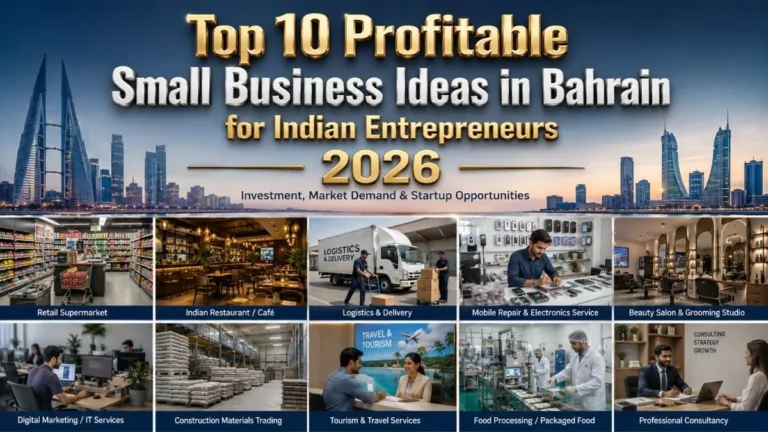
Top 10 Profitable Small Business Ideas in Bahrain for Indian Entrepreneurs (2026)

Top 10 Profitable Small Business Ideas in Bahrain for Indian Entrepreneurs (2026) Read More »

Profitable small business ideas in Bahrain for Indian entrepreneurs When it comes to making plans for a business in the Gulf region, most of the Indian businessmen, think about Dubai. But in recent years, Bahrain has emerged as one of the most profitable and affordable countries for starting a small business. The country has low tax rates, registering companies is very convenient, the purchasing power is high, and there are many Indians in the country. There are over 320,000 Indians in Bahrain and their needs are vast for Indian food, education, beauty services, manpower, healthcare and digital solutions. Entrepreneurs from India also have an easier time to start businesses in Bahrain, as 100% foreign ownership is permitted in many industries. The competition in Bahrain is less as compared to other Gulf countries and the other advantage is that it provides the entrepreneurs and MSMEs with better growth prospects in the long run. Get Detailed Insights from This Book: Just For Starters: How To Start Your Own Export Business Why Bahrain is a Good Market for Indian Businesses Bahrain’s economy continues to grow off of oil. Government is promoting investment in technology, healthcare, retail, tourism and logistics industries. This has paved the way for the Indian entrepreneurs who already have some experience in service-based businesses. Major Advantages of Starting a Business in Bahrain No income taxes for the individual. No tax on personal income. Quick business registration process The office and shop rents are affordable. Good customer base in India. Robust customer base in India. Good connectivity to the GCC markets High internet usage, and high usage of the smart phone. Given these benefits, Bahrain is starting to become one of the most accessible places in the Gulf for small businesses to grow. 1. Indian Restaurant and Tiffin Service Due to the high number of Indians working in food businesses in Bahrain, they are doing very well. Every day, thousands of workers and professionals are looking for cheap and healthy Indian food. There are still a lot of places where there are no organized tiffin service and medium Indian eateries. A cloud kitchen or a delivery service can be a good place to begin if you want to launch your restaurant. Estimated Investment ₹25–40 lakh for a medium sized unit For smaller kitchens, the initial capital can be lower. Why This Business Works High repeat customers Daily cash flow business Stronger demand from expatriates from India. Delivered via easy-to-scale delivery apps A good restaurant will pay for itself in 2-3 years. 2. IT and Digital Marketing Agency While businesses in Bahrain are accelerating the process of shifting to online, there are still not many affordable digital agencies present. This opportunity can be capitalized on by Indian IT professionals to create profitable businesses. The services that are in demand are SEO, website development, social media management, and Google Ads. Services You Can Do Website development SEO and content marketing Social media management App development Graphic design services Key Benefits Low startup cost High profit margins Minimal inventory required Easy remote operations Digital businesses are likely to be more profitable than traditional businesses in a shorter period of time. 3. Healthcare & Wellness Clinic With its steadily increasing expatriate population, healthcare demand is steadily rising in Bahrain. There is a good future potential for affordable wellness centres and clinics. The credibility of Indian doctors, physiotherapists, nutritionists and fitness experts are already established in the Gulf countries. The most popular wellness businesses are: Physiotherapy clinics Dental centres Ayurvedic wellness services Fitness and nutrition studios Licensing will require time, but healthcare businesses will generate income that is relatively secure for the long-term. Access Complete Business Plan — BEST OPTION: Healthcare and Medical Businesses 4. E-commerce and Logistics Business The pandemic has seen a surge in online shopping in Bahrain. Today, consumers want to have groceries, electronics and everyday goods delivered to their houses. Entrepreneurs may create niche e-commerce stores catering to Indian products and go into logistics and delivery businesses. Profitable E-commerce Categories Indian groceries Ethnic clothing Ayurvedic products Home essentials Packaged food items This industry will expand at a significant pace over the next couple of years. Read the Complete Book Here: Food Packaging Technology Handbook (4th Revised Edition) 5. Event Management Company Events are growing in Bahrain due to wedding occasions, company meetings, exhibitions and personal events. This business isn’t a money intensive one, but rather a business that asks for creativity and networking. The services you can provide are: Wedding planning Stage decoration Sound and lighting setup Corporate event management Coordinating photography and videography. Prizes and vendor connections can lead to good profits for event administration firms. 6. Indian Food Export Business The nation of Bahrain is an importer of most of its food products and thus this presents excellent opportunities for Indian exporters. There is already a strong demand for Indian snacks, spices, frozen foods and ready to eat snacks. Food processors and food wholesale traders can enter Bahrain by export partnerships. High-Demand Indian Products Spices and masalas Pickles and snacks Frozen Indian meals Sweets, bakery products Ready-to-cook food items The entrepreneurs build direct retail distribution network, which raises the profitability of this business. Related Article: Spice Processing & Packaging Unit Business Guide: Setup, Cost, Profit and Market Opportunity in India 7. EdTech and Coaching Centers The investment of parents in quality education in Bahrain is of high magnitude in India. This has resulted in high demand for tutoring centers and e-learning services. Examples of popular education services include Competitive Exam Coaching, Cbse Tuition, Coding Classes, Spoken English. Why This Business Performs Well Low operating cost High student retention Recurring monthly income Easy online expansion Small home-based startups can grow into large businesses in the EdTech space. 8. Cleaning and Facility Management Services Along with the development of commercial and residential infrastructure in Bahrain, the demand for cleaning and maintenance services is rising as well. Professional cleaning companies can be given a long-term contract from offices, malls, apartments, and hotels.

India Vietnam business opportunities 2026 MoUs sectors

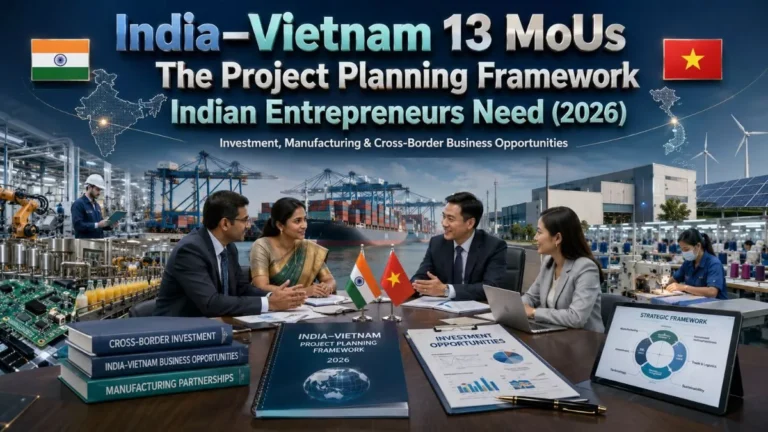
India-Vietnam 13 MoUs: The Project Planning Framework Indian Entrepreneurs Need

India-Vietnam 13 MoUs: The Project Planning Framework Indian Entrepreneurs Need Read More »

India Vietnam business opportunities The recent signing of 13 Memorandums of Understanding (MoUs) between India and Vietnam has been a great boost for Indian entrepreneurs to make a foothold in the fast-growing ASEAN markets. There are several industries open today from manufacturing to digital services, but not picking the industry that is popular this year will not bring success. Most entrepreneurs fall in failure due to the lack of proper evaluation, not due to the weakness of the opportunity. Structured planning techniques are very useful, such as NIIR Project Consultancy Services (NPCS). Related Article: India-Vietnam Trade Deal: 6 Manufacturing Projects Now Worth a Detailed Feasibility Study The Real Mistake Entrepreneurs Make The first thing you want to ask when you hear a trade deal is the question, “What business should I start?” That is a confusing question, it results in random searches and risky decisions. It probably would be better to ask, “Which opportunity is in my budget, location and skills?” This small change makes a huge difference! It makes you think practically, not emotionally. The majority of the projects that fail do so because of similar issues with them: Failing to identify the right trend to pursue due to a wrong sector selection. Too little capital investment and working capital Lacks of understanding of regulations No proper project documentation Typical errors occur at a later stage – when going for loans or when production begins. The Six Sectors: Where the Real Opportunities Are Six key sectors have been unlocked under the India–Vietnam agreement. There are varying degrees of risks and investments involved. Agri-processing is extensively regarded as the most approachable option. It is suitable for agricultural areas for entrepreneurs and is a steady demand. Rare earth processing is influenced by changes in the global supply chain and has a high export potential but needs a permit for the environmental processing. Pharmaceutical Production is a lucrative and complicated industry and it is so much required to be compliant. Renewables vs. Components for balanced growth with limited investment and, FinTech has a low cost, high scalability but strong competition. Defence manufacturing is at the top, and needs high capital investment and a long approval process. To make your life easier: Agri-processing: Best for beginners, stable demand Rare earth processing: High demand, moderate complexity Pharma manufacturing: High profit, high regulation Renewable components: Balanced growth opportunity FinTech: Low investment, high competition Defence manufacturing: High barrier, long-term returns Choosing the right sector depends less on hype and more on your situation. Get Detailed Insights from This Book: Drugs & Pharmaceutical Technology Handbook Why Proper Planning Matters More Than the Idea If you don’t plan an idea, it’s a risk. Many businessmen think that once they decide on a business, they will have success. But in truth execution is all. Through a proper evaluation, you can be sure that: All your raw materials are available Your location is conducive to logistics and exports. Your investment can help support early operations. All permissions and licenses are easy to deal with. That’s why it’s best to begin with a project report like this one to invest in someone’s expertise. These reports are created by organizations like NIIR Project Consultancy Services (NPCS) to minimize uncertainties. DPR vs Feasibility Study: Understanding the Difference You have to be sure of what you’re getting into before you invest and the best way to find out is with the proper paperwork. A Detailed Project Report (DPR) provides a comprehensive view of the industry. It provides an understanding of how the business operates, the costs associated with it and what to expect in terms of returns. This is the first and most critical step for most novices. A feasibility study delves further. Tailored for your strategy and can answer reasonable questions like ‘Is my position appropriate?’ and ‘Is my investment sufficient. In simple terms: You can learn about the business through the help of DPR if you are having problems. A feasibility study is used to validate your business. This step is frequently missed and results in future financial and operational issues. View Full Project Details: Renewable Energy Sector and Green Power Realistic Expectations: The Truth About Profits There are lots of entrepreneurs that start with a vision that is too great. They believe that they are able to grow quickly and make quick profits – something that is not common in manufacturing or exports. In reality: Businesses take time to reach full production Delays in payments, particularly in exports, can occur In the first couple of months, cash flow control is crucial. Better way to do it is to make a plan for gradual growth rather than immediate success. It’s more important to have stability during the first year than to expand aggressively. Common Mistakes That Lead to Failure Staggering opportunities are not being utilized because they are not being executed well. Here are some of the most frequent errors: Not accounting for working capital needs Overestimating first-year revenue Delaying regulatory approvals Choosing sectors without understanding operations The following are some of the pitfalls you should avoid to increase your odds of success. Choose the right startup backed by real market demand How NPCS Helps Entrepreneurs NIIR Project Consultancy Services (NPCS) has a rich experience of more than 45 years in providing assistance to the entrepreneurs for the planning and implementation of industrial project. Their support includes: Industry-specific project reports Techno-economic feasibility studies The participation of the bank in the financial planning and in the documentation of loans. Advice regarding equipment and standards These reports are a favorite of banks and financial institutions for funding and execution. A Simple Strategy to Choose the Right Sector Rather than over thinking, stick to a practical filtering approach: Use the amount of money that you have. Use the capital you have. Look at the advantages of your place. Think about place strengths. Evaluate your technical knowledge or experience This obviously limits your choices and enables you to concentrate on viable opportunities. Conclusion: Preparation Is

msme schemes in india loans subsidies government benefits infographic

MSME Schemes in India: Complete Guide to Subsidies, Loans & Government Benefits

MSME Schemes in India: Complete Guide to Subsidies, Loans & Government Benefits Read More »

Introduction: MSME schemes in India One of the well-built sectors of the Indian economy is the Micro, Small and Medium Enterprises (MSME) sector. It supports almost one-third of GDP and employs millions of individuals both in the rural and urban India. Nevertheless, many entrepreneurs have one big problem namely, insufficient funds and knowledge of government programs. Interestingly, India is already well-established with a complete subsidy and credit system, but it is not used to its full potential because of the complicated procedures and absence of proper guidance. Nowadays, subsidies, loans are provided without collaterals, and state incentives allow MSME entrepreneurs to start up and grow their business at a considerably low cost. The difficult thing is to understand what scheme suits your business, and utilize it properly. Related Article: JanSamarth Loan Apply Online 2026: Complete Government Business Loan Guide for MSME MSME Classification in India It is necessary to know about MSME classification before delving into schemes. The classification of businesses is according to investment in plant and machinery as well as turnover annually. Micro enterprises: Investment up to 1 crore and turnover up to 5 crores. Small businesses: Investment less than 10 crore and turnover less than 50 crore. Medium enterprises: Investment increase of up to 50 crore and turnover increase up to 250 crore. This categorization is significant since subsidies and loans are determined by it. The majority of schemes demand Udyam Registration, the official MSME registration in India. Major MSME Schemes in India India has a number of governmental programs which assist the business owners in various phases of the business development. Read the Complete Book Here: Our Books PMEGP – Prime Minister Employment Generation Programme PMEGP is the most popular scheme among new entrepreneurs. It assists people to initiate micro enterprises by availing them with financial aid as a subsidy of margin money. In this scheme, a subsidy of 15 to 35% of the project cost would be given to eligible applicants based on location and category. It is particularly applicable to first time business people who wish to establish manufacturing or service-based businesses. MUDRA Loan Scheme MUDRA scheme is a collateral free loan scheme to the micro and small businesses. It is among the simplest financing means in India. The scheme is categorized into three: Shishu: Less than ₹50,000 to very small startups. Kishore: 50,000-5 lakh to expand businesses. Tarun: 5 to 10 lakh to existing micro units. Such loans are extended by banks, NBFCs and microfinance institutions. CGTMSE Scheme Credit Guarantee Scheme of Micro and Small Enterprises (CGTMSE) enable the enterprises to borrow money without collateral. Key benefits include: Loan up to 2 crores. Government-backed credit guarantee Less difficult bank approvals. Less risk to the lenders. The scheme is very vital to businesses which lack assets to pledge. Get Detailed Project Report (DPR): Project Reports & Profiles CLCSS – Technology Upgradation Subsidy This plan encourages companies that desire to modernize the equipment and embrace new technology. It assists in enhancing productivity and competitiveness within manufacturing industries. Gives as much as 15% capital subsidy. Maximum benefit of up to 15 lakhs. Usable on approved equipment. ZED Certification Scheme Zero Effect Zero Defect (ZED) scheme encourages quality production and sustainability. Benefits include: Reimbursement of certification cost. Export preparedness support. Promotion of environmentally friendly manufacturing. Such a plan is particularly applicable to manufacturers who have a global target. State Government MSME Schemes In addition to central government schemes, state governments provide some other incentives to MSMEs as well. There are some large-scale ones, such as: Gujarat: Subsidy of interest and lower cost of industrial land. Maharashtra: Capital subsidy on micro enterprises. Tamil Nadu: Power tariff and wage support benefits. Karnataka: MSME interest subvention. Capital subsidy on manufacturing units in Rajasthan: Uttar Pradesh: ODOP scheme in Favor of local products. Such plans are usually combined with central subsidies, with the net effect of boosting the overall benefits of entrepreneurs. How to Apply for MSME Schemes The application is easy and should be well planned and documented. The first one is that all businesses need to undergo Udyam Registration, which is free of charge and online. Most MSME schemes are obliged to register. Once registered, the next thing to do is to decide the appropriate scheme according to your business stage. As an illustration, new entrepreneurs tend to use under PMEGP and existing businesses use MUDRA or CGTMSE. Preparation of a Detailed Project Report (DPR) is one of the most crucial steps. This document includes: Business model and product information. Set up and machinery cost. Financial projections Market demand analysis Break-even estimation and profit. It is hard to get loan or subsidy approval without a powerful DPR. Lastly, applications are done via banks, DIC offices or government portals depending on the scheme. Upon verification and inspection, subsidies or funds are granted. Stop guessing—choose the right business with confidence Challenges Faced by MSME Entrepreneurs Although the government is very supportive, most of the entrepreneurs continue to encounter problems like: Inadequate knowledge regarding schemes. Poor or unsuccessful project reports. Bank delays. Lack of comprehension of eligibility requirements. Poor documentation management Such difficulties tend to lead to rejection or postponement of applications. Role of NPCS (Niir Project Consultancy Services) Professional guidance is of great importance in such a complex eco system. NPCS (Niir Project Consultancy Services) is a reputable consultancy that assists businesspeople with the planning and paperwork. NPCS offers services including: Detailed Project Reports (DPRs) Market research and feasibility studies. Cost analysis and machinery. MSME scheme guidance Investment planning support The reports will be tailored to meet bank and government standards, which further enhances the success of loan and subsidy approval. In the case of first-time entrepreneurs, NPCS serves as an intermediary between the schemes of the government and their practical application to minimize risks of rejection and save time. Conclusion The government support provided by MSME schemes in India creates a strong business development opportunity for entrepreneurs who want to establish and expand their companies. The system provides financial

Food Processing Business Opportunities

Top 8 Food Processing Business Opportunities in India (2026–2031 Guide)

Top 8 Food Processing Business Opportunities in India (2026–2031 Guide) Read More »

Introduction: Food Processing Business Opportunities India’s food processing industry is going through a phase of transformation between 2025 and 2031. With increasing urbanization, evolving lifestyles of consumers, organized retail expansion and government supported schemes like Production Linked Incentive (PLI) schemes and Mega Food Parks, the sector is fast emerging as a structured ecosystem of manufacturing. India is, however, already the second largest producer of fruits and vegetables in the world, largest producer of milk and one of the leading producers of cereals, spices, pulses and marine products. Despite this huge agricultural output, the level of added value through food processing is still comparatively low. This imbalance between the production of raw agricultural goods and processed food goods results in great opportunities for entrepreneurs and investors. From the point of view of techno-economic perspective food processing is no longer an agribusiness, but a scalable industrial sector, which has strong domestic demand and export potential. In this article, wediscuss the significant demand-supply gaps and high growth investment opportunities in the food processing industry of India from 2025 to 2031. Read More: Detailed Project Profiles on Dairy & Dairy Products (Dairy Industry, Dairy Packaging, Dairy Farming & Dairy Products, Chocolate Confectionery Plant, Cheese Analogue, Milk Processing, Skimmed Milk Powder & UHT Milk Plant) (3rd Edn.) 1. Dairy Processing: Value Added Dairy Products Market Overview India is the largest milk producer in the world, producing over 220 million tonnes of milk every year. However, only 35-40% of milk is processed through organized channels.(Food Processing Business Opportunities) While liquid milk remains dominant in the market, value added dairy products have grown in a big way in the market as some of the products that have been developed are cheese, yoghurt, whey protein, lactose powder and probiotic drinks. Industry estimates indicate that the Indian dairy market could be valued at more than USD 250 billion by 2030 with value added dairy segments growing at 12-15% a year. Demand–Supply Gap Despite India being the largest milk producer in the world, it is an importer of dairy products such as whey protein and lactose derivatives. The problem, however, is not the availability of raw milk, but the lack of processing capacity for dairy ingredients. Investment Opportunity Medium-scale units which can be set up by entrepreneurs include: Whey protein concentrate Casein and lactose powder Mozzarella cheese Milk powder, dairy ingredients Institutional demand from bakeries, QSR chains, confectionery manufacturers, and health supplement brands makes demand stable.(Food Processing Business Opportunities) 2. Processing of Fruits and Vegetables Market Overview India produces more than 350 million tonnes of horticulture produce a year, but less than 10% gets processed, which is more than 60% of the produce in the developed countries.(Food Processing Business Opportunities) This results in huge post-harvest losses of between 15-20% – primarily because of poor cold chain infrastructure. Demand for the following products is rising, both in the country and internationally: Frozen vegetables Ready-to-cook mixes Aseptic fruit pulp Dehydrated fruit and vegetable powders Demand–Supply Gap Large quantities of mango, tomato, onion and peas are exported in the form of raw or semi-processed commodities because of the lack of advanced processing facilities. Investment Opportunity Setting up cluster-based processing units close to agricultural production zones can save a lot of logistics costs. Examples of high potential segments are: Mango pulp processing Tomato paste and puree plants Dehydrated onion flakes/powders Frozen vegetables processing units (IQF technology) These products have very good demand in export countries, foodservice chains, and packaged food companies.(Food Processing Business Opportunities) Read More: Fruits and Vegetables Value addition, Food Processing, Dehydration, Canning and Preservation, Processed Food Projects 3. Ready to Eat (RTE) and Ready to Cook (RTC) Foods Market Overview Urbanization, nuclear families, and busy lifestyles are putting more pressure on the need for convenience foods. Ready-to-Eat Market and Ready-to-Cook Market in India is growing at 15-18% CAGR. Demand is no longer restricted to metropolitan cities and is fast spreading to Tier II and Tier III cities. Institutional buyers including: Airlines Railways Defence forces Online grocery platforms are further driving growth. Demand–Supply Gap Production capacity is concentrated among a few big brands and regional segments of cuisine remain underserved.(Food Processing Business Opportunities) Investment Opportunity Entrepreneurs can launch regional cuisine based RTE food brands using retort pouch technology. Examples include: General Tips for Consuming Healthy Food: – Ready-to-eat dal and curry meals Instant biryani mixes Traditional Regional Dishes Small-scale retort processing lines enable MSMEs to launch based on easily scalable investments.(Food Processing Business Opportunities) 4. Edible Oil Refining, Specialty Oils Market Overview India is one of the biggest importers of edible oil in the world, with imports of more than 55 – 60% of consumption.(Food Processing Business Opportunities) Total consumption of edible oil is more than 25 million tonnes per year and the demand is increasing with an increase in population. Demand–Supply Gap While the refining capacity is available, domestic oilseed crushing and specialty oil production is insufficient. Investment Opportunity High-growth niches include: Cold-pressed edible oils Rice bran oil production Fortified edible oils Institutional bulk oil packaging Integrated oilseed crushing and refining plants located close to agricultural areas can enhance profitability and ease import dependence.(Food Processing Business Opportunities) Read More: Ready to Eat Food (Retort Packaging) (Vegetable Pulao, Dal Makhani, Palak, Rajmah, Potato Peas & Mutter Mushroom )- Manufacturing Plant, Detailed Project Report, Profile, Business Plan, Industry Trends, Market Research, Survey, Manufacturing Process 5. Meat and Poultry Processing Market Overview India is one of the largest producers of poultry and buffalo meat, but a huge portion of the meat is sold as live or minimal processed products. Demand for processed poultry products is growing as a result of the rapid growth of the following: Quick-service restaurants (QSRs) Modern retail chains Frozen food markets Demand–Supply Gap Automated and hygienic meat processing plants are still limited in many areas. Investment Opportunity Examples of potential investments include: Automated poultry processing plants Frozen and marinated chicken products unit Export oriented buffalo meat processing facilities These products have a good export demand in the Middle East

Chemical Manufacturing Business Ideas in India

Top 15 Chemical Manufacturing Business Ideas in India with Huge Import Substitution Potential

Top 15 Chemical Manufacturing Business Ideas in India with Huge Import Substitution Potential Read More »

Chemical Manufacturing Business Ideas in India The chemical industry in India is growing faster than the manufacturing capacity. Growth in construction, automobiles, packaging, FMCG, electronics, textiles and renewable energy has severely impacted an increased demand for chemicals, while domestic supply is lagging. This mismatch has sent India’s import of chemical and petrochemicals (minus pharmaceuticals and fertilisers) to over ?2.27 lakh crore in 2023-24. For MSMEs and new entrepreneurs, this is a rare opportunity in this gap. With government support in the form of Plastic Park and PCPIR along with capital subsidies of up to 50%, manufacture of chemicals is not a preserve to ‘big’ corporates and ‘big’ players. Below are fifteen chemical manufacturing opportunities where import substitution, steady demand and scalability combine. Read More: Handbook On Chemical Industries (Alcohol Based) 1. Vinyl Acetate Monomer (VAM) Vinyl Acetate Monomer is a basic raw material for adhesives, emulsion paints, packaging films and EVA Polymers. Currently, India does not have a large-scale VAM manufacturing industry and imports more than 1470 crore rupees worth of VAM every year. Why VAM is attractive Strong demand from construction adhesives and paints Near-total import dependence Clear scope for integration with ethylene & acetic acid A domestic VAM unit which is close to a petrochemical hub can easily get high capacity utilisation because of strong downstream demand.(Chemical Manufacturing Business Ideas in India) 2. Ethylene Vinyl Acetate (EVA) EVA is used widely in footwear soles, solar panel encapsulants, hot-melt adhesives, and flexible packaging. While the domestic capacity is limited, the imports remain more than ?3,100 crore. Business potential Rapid industrial growth in footwear and solar energy The benefits of this process include the following: – Opportunity in EVA compounding and sheet manufacturing Lower capital requirement in comparison with polymerisation plants 3. Acrylonitrile Acrylonitrile is necessary to ABS plastics, acrylic fibres and nitrile rubber. India is entirely reliant on imports of almost 1800 crore per year. Instead of immediately investing in large-scale production, MSMEs have an option to focus on downstream segments like ABS moulded components, nitrile rubber compounding and acrylic fibre based products.(Chemical Manufacturing Business Ideas in India) 4. Butyl Rubber Butyl rubber is important in tyre inner tubes and in pharmaceutical closures. Even after the commissioning of the first major plant in India, the imports still seem to be in excess of ?1,000 crores every year. Where MSMEs fit in Manufacturing of inner tube and bladder Pharmaceutical bamboo stoppers Sealing products for the automotive sector 5. Styrene-Butadiene Rubber (SBR) SBR is a backbone of the tyre industry. Despite domestic production, imports of SBR is still above Rs 2,000 crore because of increased automobile demand. MSMEs can successfully work in the rubber compounding and customised SBR formulations for tyres, footwear and industrial belts.(Chemical Manufacturing Business Ideas in India) Read More: Modern Technology of Industrial Chemicals 6. Polybutadiene Rubber (PBR) Polybutadiene rubber has high levels of resilience and abrasion resistance, which makes it ideal for use in tyre treads and industrial products. Imports amounting to around Rs 1700 crore show the gap in supply. Key opportunities High performing rubber blends Tyre tread compound modification Export oriented specialty grades 7. EPDM Rubber EPDM rubber is commonly used in automotive weather seals, roofing membranes, and cable insulation. India does not have any domestic EPDM manufacturing which has led to imports of more than 1100 crore. For MSMEs there is constant demand for EPDM extrusion, gasket production and sealing systems for vehicles and buildings.(Chemical Manufacturing Business Ideas in India) 8. Unsaturated Polyester Resin (UPR) UPR is a base material for FRP tanks, panels, boat hulls, and wind energy components. Imports are around more than a 1000 crore a year because of infrastructure growth. Small and medium UPR plants and FRP product manufacturing suit those MSMEs with regional market orientation. 9. Polyacetal Resin (POM) Polyacetal is an engineering plastic for precision automotive and electrical components. India is still completely dependent on imports. Why POM is promising Increase in automobiles and electronics High value-added applications Opportunity in compounding and precision moulding Read More: Project Reports & Profiles 10. Mono Ethylene Glycol (MEG) MEG is necessary in polyester fibres and PET bottles. Imports are more than a rupee four thousand three hundred crore per year despite domestic production. MSMEs can reach this segment through bio-based MEG, polyester yarn spinning and PET recycling as per the sustainability goals.(Chemical Manufacturing Business Ideas in India) 11. Polycarbonate Polycarbonate has a high impact strength and transparency, which makes them ideal for helmets, EV parts and electronics. Imports are more than 5000 crore every year. MSME entry points Polycarbonate sheets and roofing (panels) Auto parts and electrical components Safety and glazing products 12. Toluene Toluene has a wide variety of applications as a solvent and as a feedstock for chemical derivatives. Domestic supply is lacking and imports amount to almost crore 4800. MSMEs can concentrate on purification, specialty solvent grades and derivative products for pharmaceuticals and specialty chemicals.(Chemical Manufacturing Business Ideas in India) 13. EDC and VCM (PVC Feedstocks) EDC and VCM are important for making PVC. Due to demand for PVC exceeding the domestic capacity, imports of these feedstocks continue to be high. Downstream scope PVC compounding Wire and cable insulation Flooring, medical grade PVC 14. Hydrogen Peroxide Hydrogen peroxide is applied in the textiles, pulp and paper, chemicals and water treatment industries. High capacity utilisation is a sign of tightness in the supply. Regional production, dilution units and specialty grades are viable MSME opportunities.(Chemical Manufacturing Business Ideas in India) 15. Titanium Dioxide Titanium dioxide is the most commonly used white pigment in paints and plastics. Domestic production is limited in spite of good demand. Value-added opportunities TiO2 masterbatch manufacturing Paint and plastic additives Import substitution on coatings industry Read More: Best PCPIR for Chemical Manufacturing in India: Dahej, Paradeep or Vizag? Strategic Roadmap for MSMEs Across these segments, the pattern is clear: growing demand, import dependency and policy support. Entrepreneurs who identify the right product, location (within industrial clusters) and technology (which may be proven) can assemble scalable

Maize Processing Industry India

Why India Still Imports Sorbitol? Maize Processing Industry Capacity & Business Opportunity

Why India Still Imports Sorbitol? Maize Processing Industry Capacity & Business Opportunity Read More »

Introduction: Maize Processing Industry India India’s maize processing industry has undergone a tremendous transformation during the past decade from being primarily an agriculture-driven enterprise to being a strategic industrial sector. Processed maize derivatives like starch, liquid glucose, dextrose monohydrate and sorbitol have become key raw materials for pharmaceutical, food processing, textiles, paper, adhesives, fermentation, and personal care industries. Despite being one of the largest producers of maize in the world, India still has a structural deficit in industrial maize processing capacity. This demand-supply gap has led to persistent reliance on imports for refined maize derivatives, in particular, pharmaceutical-grade sorbitol and specialty glucose syrups. As a result, maize wet milling has become a high potential manufacturing and investment opportunity for organized sector players and MSME entrepreneurs.(Maize Processing Industry India)  Read More: Maize (Corn) Products in India (Starch, Glucose, Dextrose, Sorbitol) Trends, Opportunities, Market Analysis and Forecasts (Upto 2030-31) Maize Production Scenario in India India is one of the leading maize producing countries in the world. According to the data released by the ministry of agriculture and farmers welfare, more than 36 million metric tonnes of maize is produced in the country every year. Maize cultivation is concentrated in states in: Karnataka Madhya Pradesh Maharashtra Telangana Andhra Pradesh Bihar These states have benefited from favourable agro-climatic conditions, availability of hybrid seeds and increasing mechanization. However, high agricultural production has not been matched by equivalent levels of industrial processing, and a disconnect of the farm production with the utilization of it in the industries has developed.(Maize Processing Industry India) Utilization Pattern of Maize in India The pattern of domestic consumption of maize reveals the limitations of the processing infrastructure in India: 55-60% used in poultry and animal feed 10–15% consumed directly as food 20-25% used for industrial processing Developed economies, on the other hand, use a much higher proportion of maize in value-added industrial products. India’s low processing share is the reason that industries are still importing refined derivatives despite good availability of maize domestically.(Maize Processing Industry India) Read More: Handbook on Maize (Corn) Processing and Manufacture of Maize Products Industrial Demand for Maize Products The demand for maize derivatives has grown steadily because of growth in a range of end use industries. Each derivative has a different and critical industrial function: Important Derivatives and Uses of Maize Maize Starch Used in textile sizing, paperboard manufacture, corrugated box adhesives and pharmaceutical tablets binding. Liquid Glucose Widely used in confectionery, bakery products, ice creams, jams and other medicinal syrups, and infant foods. Dextrose Monohydrate Essential for intravenous (IV) fluids, fermentation industries, nutraceuticals and energy supplements. Sorbitol Extensively used in toothpaste, oral care products, cosmetics, the development of vitamin C, pharmaceutical preparations; According to the industry insights from Ministry of Food Processing Industries, the increased intake of packaged and processed food items has directly increased the demand for starch and glucose syrups. Simultaneously, because of rapid expansion of pharmaceutical manufacture under the Department of Pharmaceuticals, there is a significant increase in the requirement for pharmaceutical grade sorbitol.(Maize Processing Industry India) Major Maize Processing Companies in India and Capacity The maize wet milling capacity in India is concentrated amongst a few organized players. Some of the major companies are: Gujarat Ambuja Exports Ltd. The largest player, with estimated processing capacity of more than 4000 tonnes per day, producing starch, liquid glucose, sorbitol and by-products. Riddhi Siddhi Gluco Biols Ltd. A leading supplier of starch derivatives to the food and pharmaceutical industries. Sukhjit Starch & Chemicals Ltd.The company employs one of its most experienced players who has extensive knowledge of both national and international markets. Roquette India Pvt. Ltd. Focused on Specialty starches and Pharmaceutical Excipients. Gulshan Polyols Ltd. A leading manufacturer of sorbitol and other polyols. Despite their combined output, existing capacity is too low to keep pace with the rapidly growing demand from the pharmaceuticals, food processing and personal care sectors.(Maize Processing Industry India) Read More: Maize, Corn and its By Products, value added Products, Derivatives, Maize Processing Industry, Corn Starch, Dextrose, Liquid Glucose, Sorbitol, Oil, Gluten, Germ Oil, Wet Milling, Maize Starch Plant & related Products, High-Fructose Corn Syrup (HFCS) Import Dependency & Regional Demand Gap However, India continues to import considerable amounts of refined sorbitol and specialty glucose syrups. Pharmaceutical manufacturing clusters in Gujarat, Telangana, Himachal Pradesh and Maharashtra often purchase sorbitol from Chinese, Indonesian and European suppliers. Due to this import dependence there are: Higher procurement costs Exposure to volatility of foreign exchange Longer lead times Vulnerability to Disruptions in Global Supplies For domestic manufacturers, this avails a significant import substitution opportunity. Industrial buyers receive faster product delivery because maize wet milling units operate closer to consumption locations. The units simultaneously provide customers with competitive pricing and reliable product delivery.(Maize Processing Industry India) Overview of the Maize Wet Milling Process The major steps in a typical, integrated maize wet milling plant are: Steeping – Maize kernels are put in a soaking phase to soften the endosperm Grinding and Separation – grinding and Starch gluten fiber and germ are separated Starch Refining – purification and concentration of starch slurry Hydrolysis – It is the conversion of starch to glucose syrup by the use of enzymes Crystallization – Dextrose Monohydrate Formation Hydrogenation – Glucose is converted to sorbitol Valuable By-Products Maize germ (edible oil) Corn gluten meal (animal feed) Corn Fiber – feed & industrial uses Sale of by-products makes overall project much more profitable.(Maize Processing Industry India) Read More: 3 Profitable Green Manufacturing Business Ideas in 2026: Bio-CNG, Maize Starch & Palm Oil Mill Importance of Techno-Economic Feasibility Studies Before investing in maize processing projects, entrepreneurs need to undertake a detailed technical and financial evaluation. A professional feasibility study is helpful to investors who want to know: Market demand and price trends Best product mix and capacity selection Technology alternatives and plant configuration Raw material sourcing and logistics Project cost, ROI and break even period Organizations like Niir Project Consultancy Services offer Market Survey-cum-Detailed Techno-Economic Feasibility Reports which go a long way

Solar cell manufacturing plant in India with automated production line

Solar Cell Manufacturing in India 2026: Market Size, Investment Cost & Profitability Analysis

Solar Cell Manufacturing in India 2026: Market Size, Investment Cost & Profitability Analysis Read More »

Introduction: Solar Cell Manufacturing in India India’s renewable energy transformation now has entered a decisive phase with solar energy emerging as the core of India’s clean energy strategy. Over the past 10 years, India’s installed solar capacity has risen from under 3 GW to over 135 GW, one of the fastest growing markets in the world. Under the policy direction of the Ministry of New and Renewable Energy (MNRE), not only is India getting installations moving forward, it is ramping up domestic solar manufacturing. With some ambitious renewable targets, strategic trade policies and financial incentives, solar cell manufacturing is becoming a high growth industrial sector. This report offers in-depth outlook for the solar cells market size, share, growth drivers, technology trends, investment and future opportunities in India for 2026. Read More: Solar PV Power and Solar Products Handbook India Solar Cells Market Size in 2026 India’s solar industry is growing at an industrial level. The country has already over crossed 135 GW of installed solar capacity and is aiming to reach 500 GW of non-fossil fuel energy capacity by 2030 with solar contributing close to 300 GW. Existing Manufacturing Capacity Overview Solar Module Manufacturing Capacity: ~100 GW Solar Cell Manufacturing Capacity: ~35 – 40 GW Wafer Manufacturing Capacity: Limited and growing Import Dependence: Heavy import dependency on wafers & select high efficiency cells The massive difference between the module and cell manufacturing capacity shows there is high potential for investments. As domestically the cell production starts to grow, India can not only reduce imports, but also achieve energy security and become an export-oriented manufacturing base. By 2026, India’s solar cell market is anticipated to grow at a healthy CAGR, backed by policy support, local demand, and global diversification of the supply chain.(Solar Cell Manufacturing in India) Important Growth Factors of Indian Solar Cells Industry 1. Government Incentives and Policy Support The main force which drives solar manufacturing expansion in India operates through the Production-Linked Incentive (PLI) scheme. The program provides rewards to companies based on their domestic value creation and their use of advanced technology that delivers better results. The Approved List of Models and Manufacturers (ALMM) policy ensures that government projects must select certified local manufacturers as their primary suppliers. The requirement of increased local production for solar cells and modules leads to heightened demand for their manufacturing. The import duty that applies to solar cells and modules creates advantages for local manufacturers because it improves their ability to compete with international products. 2. Rapid Growth in Power Demand The industrial growth and urban development of India has created a substantial rise in electricity requirements. Businesses in both industrial and commercial sectors use rooftop solar systems as a method to cut electricity expenses while meeting their environmental, social, and governance (ESG) requirements. The demand for advanced manufacturing technologies to produce rooftop solar installations exists because high efficiency cells require Mono PERC and Topcon production methods.(Solar Cell Manufacturing in India) 3. Utility-Scale Solar Parks States such as Rajasthan and Gujarat have developed into major solar centers because they possess optimal land resources and excellent solar energy potential and established handling facilities. Large-scale solar parks are generating predictable procurement pipelines into the multiple gigawatt range, year after year. This consistency makes the demand for solar cells visible in the long term and ensures demand visibility for solar cell manufacturers.(Solar Cell Manufacturing in India) Read More: India Solar Glass Market 4. Global Supply Chain Diversification With the international markets eager to find alternatives to single-country dependency, India has become a creditable manufacturing destination. Western countries are diversifying more and more in sourcing, and it is opening up opportunities for export for Indian solar cell producers. Manufacturers who have international certifications and high efficiency production lines stand to benefit greatly from this shift.(Solar Cell Manufacturing in India)  Technology Trends Impacting Solar Cell Market Technology choice is important in competitiveness and profitability. 1. Mono PERC (Passivated Emitter And Rear Contact) Mono PERC has become the reference technology for high efficiency production technology in India. It provides better efficiency than traditional multi-crystalline cells and still has a manageable capital investment requirement. 2. Topcon (Tunnel Oxide Passivated Contact) Topcon technology is receiving rapid adoption because of its higher efficiency and improved performance in large-scale solar projects. It enables manufacturers to charge premium prices especially in export markets. 3. Heterojunction (HJT) HJT cells offer very high efficiency at the expense of higher capital expenditure and special equipment. While still emerging in India, HJT is the next stage of premium solar manufacturing. 4. Emerging Perovskite Tandem Cells Although still in the development stage, perovskite tandem technology can promise great efficiency improvements. Investment in R&D partnership by Indian manufacturers might provide early mover advantages in this segment.(Solar Cell Manufacturing in India) Competitive Landscape India’s solar manufacturing ecosystem has large conglomerates and specialized players. Read More: GOOD OPPORTUNITY IN SOLAR POWER PLANT – Manufacturing Plant, Detailed Project Report, Profile, Business Plan, Industry Trends, Market Research, Survey, Manufacturing Process, Machinery, Raw Materials, Feasibility Study, Investment Opportunities Major Industries Participants Adani Solar Reliance Industries Vikram Solar Warre Energies The companies pursue aggressive capacity expansion plans, while several companies implement a strategy to control their production process from wafer manufacturing through to module creation.(Solar Cell Manufacturing in India) Competitive Strategies Successful manufacturers are usually focused on: Large scale capacity for cost advantages Technology upgrades to keep up efficiency leadership Vertical integration to better margins Export diversification Strong domestic distribution networks New companies face challenges when they attempt to provide affordable products because they struggle to compete on that factor. The company should choose to focus on three specific areas which include niche market segments and product excellence and comprehensive service delivery according to the target market needs.(Solar Cell Manufacturing in India) Investment Requirements and Profitability Study Solar cell production is capital intensive. Estimated Investment The cost of establishing a 1 GW solar cell manufacturing facility depends on the chosen production technology which requires a substantial financial investment. The primary cost elements consist

Have a business idea? Let's make it happen together-contact us now!


Contact Form Demo

This will close in 0 seconds

Translate »