
Want to Start Business in Ethiopia, East Africa?
Ethiopia, one of Africa’s fastest-growing economies, offers tremendous opportunities for aspiring entrepreneurs. With its rapidly expanding population, government-backed industrialization programs, and strategic location in the Horn of Africa, Ethiopia is becoming a hotspot for business innovation and investment. The demand for infrastructure, agriculture, education, healthcare, and technology-based solutions is on the rise. Ethiopia’s youthful workforce, fertile land, and policy-driven encouragement for foreign and domestic businesses have created a ripe environment for launching ventures that not only thrive but also contribute to the country’s economic development. Lucrative Sectors to Explore for Business in Ethiopia When planning to start a business in Ethiopia, it is important to analyze local needs, government policies, and areas where market gaps still exist. The Ethiopian government has prioritized industries such as manufacturing, agriculture, renewable energy, and services. Below are some of the most promising project ideas to consider: 1. Agro-Processing Industry Ethiopia’s economy is largely agrarian, with agriculture contributing about 40% of GDP. However, much of the produce is exported raw, leading to missed opportunities in value addition. Starting an agro-processing unit—such as for coffee, cereals, fruits, or oilseeds—can cater to local demand and boost exports. Projects like packaged fruit juice, flour mills, or oil extraction plants are ideal. This not only enhances income generation but also creates local employment. 2. Textile and Garment Manufacturing With an abundance of cotton and a low-cost labor force, Ethiopia has emerged as a global destination for textile production. Setting up a garment manufacturing unit is a smart choice, especially with the government’s push to develop industrial parks. Local and international demand is high for affordable clothing, and businesses can benefit from duty-free access to markets under AGOA (African Growth and Opportunity Act). 3. Renewable Energy Solutions Despite major investments in hydroelectric power, rural electrification remains a challenge. Entrepreneurs can tap into the solar and wind energy market, offering products like solar home kits, water pumps, or mini-grids. These solutions are essential for rural development and align well with Ethiopia’s long-term green energy vision. 4. Tourism and Eco-Lodges Ethiopia is home to historic cities, ancient monasteries, national parks, and World Heritage Sites. However, the tourism sector is underutilized. Investing in eco-tourism, boutique hotels, cultural tours, or adventure travel can draw both domestic and international tourists. A business in Ethiopia that promotes cultural heritage and sustainability is likely to attract eco-conscious travelers and global attention. 5. Digital and Mobile Services As smartphone penetration increases, Ethiopians are adopting digital services at a record pace. With the liberalization of the telecom sector, now is the right time to invest in app development, e-commerce, fintech, online education, or digital health. For instance, an app that facilitates mobile payments, agricultural advice, or e-learning in local languages can be revolutionary. Digital businesses in Ethiopia can leapfrog traditional infrastructure gaps and scale quickly. 6. Construction and Real Estate Rapid urbanization and a growing middle class have led to increased demand for residential and commercial spaces. Real estate and construction businesses can build homes, offices, warehouses, and even prefab structures. Moreover, supplying construction materials like cement blocks, steel bars, and tiles can be equally profitable. Business in Ethiopia’s real estate sector benefits from both urban growth and infrastructure projects. 7. Education and Training Services The young population in Ethiopia is eager to upskill. Starting a private school, technical training institute, or online learning platform can meet this need. There’s also demand for English training centers, vocational courses, and ICT education. Partnering with local educators or international institutions can lend credibility and improve access to quality education. 8. Food and Beverage Industry From local Ethiopian cuisine to international fast food, urban consumers are seeking convenience and variety. Opening a café, bakery, or fast-food outlet in cities like Addis Ababa can be a great investment. Packaged food items, bottled water, and organic food production are other viable projects. The rising middle class presents a stable market for food-related businesses in Ethiopia. 9. Healthcare Services and Pharmaceuticals Access to quality healthcare remains limited, especially outside urban areas. Clinics, diagnostic labs, and mobile health services can fill this gap. Also, there is huge potential in manufacturing or distributing generic medicines, medical equipment, or herbal products. A business in Ethiopia’s healthcare sector can generate income while serving critical community needs. 10. Logistics and Transport As Ethiopia increases its international trade through the Djibouti port and industrial zones, logistics and transport services are in high demand. Starting a trucking service, warehouse facility, or last-mile delivery business can be profitable. With growing e-commerce, there’s also demand for reliable courier and freight management services. Government Support and Incentives To encourage investment, the Ethiopian Investment Commission (EIC) provides incentives such as tax holidays, customs duty exemptions, and easy business registration. Sectors like manufacturing, agro-processing, and renewable energy enjoy maximum benefits. Moreover, industrial parks with ready infrastructure and one-stop-shop services reduce entry barriers for new businesses in Ethiopia. Tips for Success in Ethiopia Local Partnerships: Teaming up with local entrepreneurs or hiring local staff helps in understanding cultural dynamics and gaining community trust. Regulatory Compliance: Ensure you meet licensing, tax, and environmental standards to avoid legal hurdles. Market Research: Understand regional needs, consumer behavior, and competition before launching. Leverage Technology: Use mobile platforms, social media, and digital marketing to reach untapped audiences. Sustainability: Design your project to support environmental and social goals—it improves brand reputation and community support. Challenges to Consider Starting a business in Ethiopia is promising but not without its hurdles. Entrepreneurs might face bureaucratic delays, foreign exchange shortages, and occasional political instability. However, with patience, local engagement, and smart planning, these challenges can be managed. Conclusion Ethiopia is undergoing a transformation, and businesses that align with its development goals have significant growth potential. Whether you’re interested in agriculture, technology, education, or manufacturing, the time is right to take action. By choosing the right project and navigating the local landscape effectively, your business in Ethiopia can make a lasting impact and generate long-term rewards. With a visionary approach, the possibilities are vast and inspiring in
List of Profitable Business Ideas in Textile Bleaching, Dyeing, Spinning, Weaving, Printing and Finishing Industry.
The textile industry stands as one of the oldest and most lucrative sectors globally, offering vast potential for entrepreneurs looking to start a manufacturing venture. As the demand for quality fabrics, fashion products, and sustainable materials increases, the scope of textile manufacturing business ideas continues to expand. From traditional fabric weaving to high-tech textile production, this industry encompasses a wide range of opportunities for both small-scale and large-scale entrepreneurs. Whether you want to begin with minimal investment or plan a full-scale industrial unit, the textile sector provides promising options for long-term profitability. Profitable Textile Manufacturing Business Ideas – Complete List When entering the textile industry, selecting the right niche is crucial. Below is a complete list of textile manufacturing business ideas that cater to varying budgets, markets, and technological capacities. 1. Cotton Fabric Manufacturing Cotton is the most commonly used natural fiber in the textile industry. Setting up a cotton fabric manufacturing unit can be highly profitable, especially in countries with easy access to raw cotton. This business involves spinning, weaving, or knitting cotton fibers into fabrics used in everything from casual wear to home furnishings. With sustainable and organic cotton gaining popularity, producers who focus on eco-friendly methods enjoy higher market demand and better margins. 2. Synthetic Fiber Production Synthetic fibers like polyester, nylon, and acrylic are widely used in sportswear, automotive fabrics, upholstery, and industrial applications. Launching a synthetic fiber production unit requires more technical expertise and machinery, but it offers higher scalability and return on investment. Due to their durability and cost-effectiveness, synthetic fabrics remain a top choice for many brands, making this a smart textile manufacturing business idea for long-term success. 3. Denim Fabric Production Denim never goes out of fashion. Manufacturing denim fabric is a specialized segment that requires heavy-duty looms and dyeing equipment. However, the demand for jeans, jackets, and casual wear made from denim remains strong worldwide. Innovations in eco-friendly denim processing and distressed finishes have added further value to this niche. Entrepreneurs can also tap into premium markets by offering organic or stretchable denim fabrics. 4. Nonwoven Fabric Manufacturing Nonwoven fabrics are used in sectors like hygiene (diapers, sanitary napkins), medical (surgical gowns, face masks), and industrial insulation. This form of textile manufacturing business idea has grown significantly after the pandemic, where demand for medical-grade textiles surged. Nonwoven production requires specialized machinery but is highly rewarding in terms of market stability and customer diversity. 5. Woolen Fabric Manufacturing Wool fabric manufacturing is another profitable venture, particularly in colder regions. Woolen textiles are used in winter wear, blankets, and fashion accessories. This sector values craftsmanship and quality. Businesses can source wool from local sheep farms and add value by offering handwoven or premium branded woolen textiles. 6. Textile Dyeing and Printing Unit This is a service-oriented textile manufacturing business idea where you provide dyeing and printing services for raw fabrics. It includes processes like screen printing, digital textile printing, block printing, and batik. With innovations in natural dyes and fabric-safe chemicals, this segment offers plenty of scope for eco-friendly startups. You can also develop your own fabric designs and sell under a private label. 7. Embroidery and Lace Manufacturing Embroidery and lace fabrics are widely used in ethnic wear, bridal wear, and home décor. Automatic embroidery machines and computerized lace-making systems make the production process more efficient. A business in this niche can cater to designers, exporters, and local boutiques, making it a strong and creative textile manufacturing business idea. 8. Technical Textiles Production Technical textiles include fabrics designed for performance rather than appearance, such as fire-retardant suits, waterproof fabrics, geotextiles for construction, and military wear. Though this niche requires higher capital and compliance with technical standards, it brings premium clients and long-term contracts. The government and private sectors heavily invest in technical textiles, making it a future-proof business area. 9. Recycled Textile Manufacturing As sustainability becomes central to fashion and textile, recycling waste fabric into usable textiles is emerging as a strong textile manufacturing business idea. This includes converting textile waste, plastic bottles, or discarded garments into yarns or fabrics. Startups focusing on circular fashion models can attract eco-conscious buyers and government grants. 10. Carpet and Rug Manufacturing Handmade and machine-made carpets are valuable items used in homes, offices, and hotels. India, Turkey, and Iran are major exporters of high-end rugs and carpets. Starting a carpet manufacturing unit offers both cultural value and good profit margins. You can also specialize in jute rugs, cotton dhurries, or Persian-style carpets depending on your market. 11. Blanket and Quilt Manufacturing Blankets and quilts are essential in household and hospitality sectors. Their manufacturing involves fiber selection, layering, stitching, and sometimes decorative quilting. Cotton, wool, and synthetic fibers are commonly used. This textile manufacturing business idea is easy to start on a moderate scale and allows seasonal product diversification. 12. Silk Fabric Manufacturing Silk, known for its luxury and texture, is highly valued in the fashion industry. Starting a silk fabric manufacturing unit requires sourcing raw silk, spinning it into yarns, and weaving it into various patterns. The business has strong export potential and government support in many countries. Silk weaving is labor-intensive but can offer premium pricing and strong branding. 13. Knitted Fabric Manufacturing Knitted fabrics are used in innerwear, T-shirts, babywear, and sportswear. This textile manufacturing business idea focuses on circular or flat knitting technology. It’s easier to scale, has continuous demand, and supports fast-fashion timelines. With the rise in athleisure and comfort wear, investing in knitted fabrics offers a solid market opportunity. 14. Jute and Hemp Fabric Production Jute and hemp are biodegradable fibers used in bags, packaging, home décor, and eco-clothing. These natural fibers have lower carbon footprints and are highly in demand in international markets. A jute or hemp textile manufacturing unit requires moderate capital and caters to the sustainable product segment. 15. Uniform Manufacturing Unit Schools, hospitals, security services, and industries require uniforms in bulk, all year round. Starting a textile unit focused on uniform production can lead to consistent
List of Profitable Business Ideas in Plantation, Farming, Cultivation, Agro Based and Livestock Projects.
The agriculture sector has evolved drastically in recent years. In 2025, with the growing demand for organic food, sustainable farming practices, and value-added agri-products, the scope for agriculture business ideas has expanded beyond traditional cultivation. Entrepreneurs are increasingly tapping into modern techniques and innovative agri-solutions to build scalable and highly profitable ventures. From organic farming and dairy processing to agri-tech services and vertical farming, the industry offers multiple avenues for investment and growth. Emerging Trends Supporting Agriculture Business Ideas in 2025 The agriculture sector is being reshaped by technological innovation, climate awareness, and consumer preference for quality and sustainability. A few key trends fueling this transformation include: Organic and residue-free farming: Consumers are willing to pay a premium for safe, organic, and naturally grown food, making it a lucrative segment. Smart farming and agri-tech: Internet of Things (IoT), drones, and data analytics are helping farmers optimize crop yield and resource use. Farm-to-table supply chains: Direct selling through e-commerce and farmers’ markets is helping producers get better prices. Climate-resilient agriculture: Drought-resistant crops, vertical farming, and soil-less techniques are gaining ground. Agri-fintech: Digital lending and farm insurance platforms are simplifying capital access for small farmers. Here are some of the most profitable agriculture business ideas to consider in 2025: 1. Organic Vegetable Farming Organic produce remains one of the fastest-growing markets globally. As consumers become more health-conscious, they are increasingly turning toward pesticide-free, non-GMO vegetables. Starting an organic vegetable farm requires fertile land, organic inputs, and compliance with certification standards, but the returns can be significantly higher than conventional farming. Why it’s profitable: Organic vegetables fetch 2–3x the price of conventional ones. Government schemes support organic inputs and marketing. Can be sold directly to urban consumers via subscription models. 2. Mushroom Cultivation Mushrooms are a high-value crop that require little space and can be grown indoors, making it ideal for small-scale entrepreneurs. Button mushrooms, oyster mushrooms, and shiitake mushrooms are in great demand from restaurants, hotels, and households. Setup needs: Temperature-controlled rooms or sheds Moisture and humidity control Spawn and substrates (straw, sawdust, etc.) Profitability:A small 500 sq ft unit can yield significant monthly profits with quick harvest cycles (every 30–45 days). 3. Dairy and Milk Processing Unit Milk is a staple in most Indian households, and its by-products like paneer, ghee, yogurt, and flavored milk are always in demand. Setting up a small-scale dairy processing unit can turn into a highly profitable venture if hygiene, branding, and consistent quality are maintained. Key components: Access to fresh milk (own dairy or local farmers) Processing equipment (pasteurizer, homogenizer, packaging) Branding and distribution network Business edge:Value-added products have longer shelf life and greater margins than raw milk. Flavored dairy drinks, probiotic yogurt, and organic ghee are trending in 2025. 4. Vertical Farming and Hydroponics With urbanization and land scarcity, agriculture business ideas like vertical farming and hydroponics are changing the way crops are grown. These soil-less systems allow you to grow vegetables and herbs indoors with minimal water and space. Ideal crops include lettuce, basil, spinach, strawberries, and cherry tomatoes. Advantages: Up to 90% less water usage Year-round production Clean, pesticide-free produce Though the initial setup is capital-intensive, the high efficiency and premium pricing make it a viable long-term business. 5. Agri-Tourism Blending farming with tourism is an innovative agriculture business idea that caters to urban dwellers seeking authentic rural experiences. Agri-tourism farms offer farm stays, tractor rides, cow milking, and organic food, giving city visitors a taste of rural life. Revenue sources: Entry tickets and guided tours Farm-stay accommodations Sales of farm-fresh products States like Maharashtra and Kerala are promoting agri-tourism through dedicated policies, making this a low-risk, high-reward model. 6. Beekeeping and Honey Production Beekeeping, or apiculture, is a low-investment business that supports biodiversity and yields multiple products like raw honey, beeswax, and royal jelly. With the rise in demand for organic and raw honey in wellness and cosmetic markets, beekeeping is emerging as a sweet spot in agriculture entrepreneurship. Start-up essentials: Bee boxes and equipment Flowering plants or access to farms/orchards Minimal land required Market scope:India exports honey to the U.S., UAE, and Europe, making it a good export-oriented opportunity. 7. Seed Production and Processing Farmers need high-quality seeds for better yields. You can enter the certified seed business by growing foundation seeds and getting them certified through seed certification agencies. Hybrid seeds for vegetables, grains, and pulses are in great demand. Business model: Contract farming with R&D companies Own production unit for drying, grading, and packing Supply to cooperatives, agri-input shops, and directly to farmers This is one of the most scalable agriculture business ideas due to its recurring demand and government support through seed subsidy schemes. 8. Commercial Nursery Business Supplying saplings of fruits, vegetables, ornamentals, and medicinal plants is another thriving niche. A well-managed nursery can serve farmers, landscapers, government schemes, and home gardeners. What’s needed: Polyhouse or shade net Mother plants for propagation Skilled labor for grafting and potting Popular plants include mango, guava, neem, tulsi, aloe vera, and decorative plants like ficus and palms. 9. Cold Storage or Warehousing for Produce Post-harvest losses in India account for over 30% of produce due to poor storage infrastructure. Setting up a cold storage unit near agri-clusters or mandis can be a highly profitable investment. Farmers, traders, and retailers are willing to pay storage fees to preserve perishables like fruits, vegetables, flowers, dairy, and seafood. Facilities to include: Cold chambers for varied temperature needs Ripening chambers Logistics and inventory software With rising e-commerce grocery platforms, B2B warehousing is also gaining traction. 10. Millet Processing and Packaging Millets like ragi, bajra, and jowar are back in demand due to their health benefits and eco-friendly cultivation. Processing them into flour, ready-to-cook mixes, or snacks (like millet cookies and khakra) is a rising trend among health-conscious consumers. Why invest in millets: Government is promoting “Shree Anna” under International Year of Millets Urban buyers prefer clean, packaged grains Low input cost and drought-resistance make millet farming viable too This value-addition model ensures
Need a Business Idea? The 15 Most Profitable Industries to Start a Business
The business landscape is evolving at lightning speed, and 2025 promises to bring fresh, lucrative opportunities for entrepreneurs ready to innovate and adapt. Whether you’re a seasoned investor or a new entrant, knowing where to place your efforts is crucial. Emerging technologies, changing consumer behavior, and sustainable living have all contributed to new sectors booming globally. This guide dives deep into the 15 Profitable Industries that offer immense potential for growth, scalability, and long-term success in 2025. Exploring the 15 Profitable Industries for Business in 2025 Here are the 15 Profitable Industries that present high potential for entrepreneurs and investors in the coming year: 1. Renewable Energy and Clean Tech The global shift towards sustainability continues to fuel the growth of renewable energy businesses. Solar panel manufacturing, wind turbine installation, and energy storage solutions are all thriving. As governments increase investments in clean energy, entering this sector can be a highly profitable move. Green hydrogen and carbon capture technologies also open up exciting niches within the renewable energy space. 2. Health and Wellness Tech The convergence of health and technology is creating massive demand for telemedicine, wearable health trackers, mental health apps, and AI-driven diagnostics. Post-pandemic, consumer behavior has shifted toward proactive health management. Startups in personalized wellness, fitness subscriptions, and digital therapy are capturing major market share. 3. Fintech Solutions From blockchain-based platforms to payment gateways and budgeting apps, fintech continues to disrupt traditional banking. In 2025, embedded finance (financial services integrated into non-financial platforms) will explode. If you’re tech-savvy, launching a startup in this space could be your golden ticket. 4. E-commerce and Niche Marketplaces Online shopping isn’t slowing down, especially with the rise of hyper-personalized experiences. Niche marketplaces focusing on specific customer segments (e.g., eco-friendly products, pet care, handmade goods) are seeing strong traction. By choosing the right niche and leveraging AI-driven tools, entrepreneurs can thrive in this highly dynamic industry. 5. Artificial Intelligence (AI) and Automation AI is revolutionizing every industry—from agriculture to healthcare to customer service. Startups offering AI-powered solutions, including chatbots, recommendation engines, and workflow automation tools, are attracting significant investment. This industry is not only future-proof but also scalable across sectors. 6. Sustainable Packaging and Eco-Products With bans on single-use plastics and increasing consumer awareness, businesses focusing on biodegradable packaging, compostable containers, and reusable products are booming. This sector is among the 15 Profitable Industries that align profit with purpose, making it an excellent choice for socially-conscious entrepreneurs. 7. Education Technology (EdTech) Remote learning platforms, micro-learning apps, AI tutors, and skill-based training programs have turned EdTech into a billion-dollar industry. The future lies in platforms that can deliver hybrid learning, gamified content, and customized career pathways. As the world transitions to continuous learning, EdTech businesses will remain in high demand. 8. Cybersecurity Services With data breaches on the rise, companies are allocating bigger budgets toward digital security. Whether you offer penetration testing, cloud security, or compliance software, the cybersecurity industry is ripe with opportunity. Startups that provide easy-to-integrate security solutions for small and mid-sized businesses are especially well-positioned. 9. Smart Agriculture and AgriTech Food security and sustainable farming are global priorities. AgriTech solutions like drone farming, hydroponics, vertical farming, and AI-based crop monitoring offer profitable ventures. This sector not only addresses a basic human need but also leverages cutting-edge technology, making it a key player in the list of 15 Profitable Industries. 10. EV Infrastructure and Battery Tech The global push towards electric mobility has created demand for charging stations, battery recycling, and energy-efficient drivetrains. Entrepreneurs can explore EV fleet management, smart charging systems, or even battery-as-a-service models. As EV adoption becomes mainstream, this industry promises exponential growth. 11. Digital Marketing and Content Creation With brands prioritizing online presence, the need for SEO services, influencer management, podcast production, and content strategy has skyrocketed. AI tools now aid in video editing, copywriting, and analytics, allowing solopreneurs to start lean and scale fast. If you understand digital trends, this industry can be highly rewarding. 12. Personalized and Smart Home Technology Smart home gadgets—like connected lighting, voice-controlled appliances, and energy-efficient thermostats—are becoming household essentials. Businesses offering installation, maintenance, or bundled smart tech solutions are in high demand. As consumers seek more convenience and control, this sector holds a strong place among the 15 Profitable Industries. 13. Mental Health and Wellness Services Mental wellness is no longer a taboo subject; it’s a booming industry. Online therapy, meditation platforms, journaling apps, and stress management programs are gaining popularity. Entrepreneurs entering this space can benefit from subscription models and low overhead costs while making a meaningful impact. 14. Pet Care Products and Services With pet ownership increasing, especially among Gen Z and millennials, services like pet grooming, organic food, training apps, and even pet fitness trackers are generating significant revenue. This niche is less saturated and emotionally driven, providing opportunities for long-term brand loyalty and growth. 15. Re-Commerce and Circular Economy Platforms Consumers are leaning towards sustainability through second-hand shopping and upcycling. Online resale platforms for electronics, clothing, furniture, and books are thriving. Entrepreneurs focusing on quality control, logistics, and seamless UX can build highly scalable businesses in the re-commerce space, rounding off the 15 Profitable Industries of 2025. Final Thoughts Choosing the right industry is the foundation of a successful business. The 15 Profitable Industries listed above reflect a combination of technological evolution, social responsibility, and changing consumer needs. While the entry point and initial investment may vary, the one constant across all these industries is potential. In 2025, being adaptable, tech-savvy, and purpose-driven will give entrepreneurs a solid edge. Whether you’re starting small or dreaming big, aligning your strengths with one of these booming sectors could set you on a path toward lasting success. As always, research your target market, validate your business model, and stay updated on trends to make the most of these lucrative opportunities. Now is the time to explore these 15 Profitable Industries, innovate within them, and create a business that not only grows but also leaves a positive impact. Visit the
How to Start Natural Rubber Latex Condom Manufacturing 2026 | Plant Setup to Finished Product Opportunities
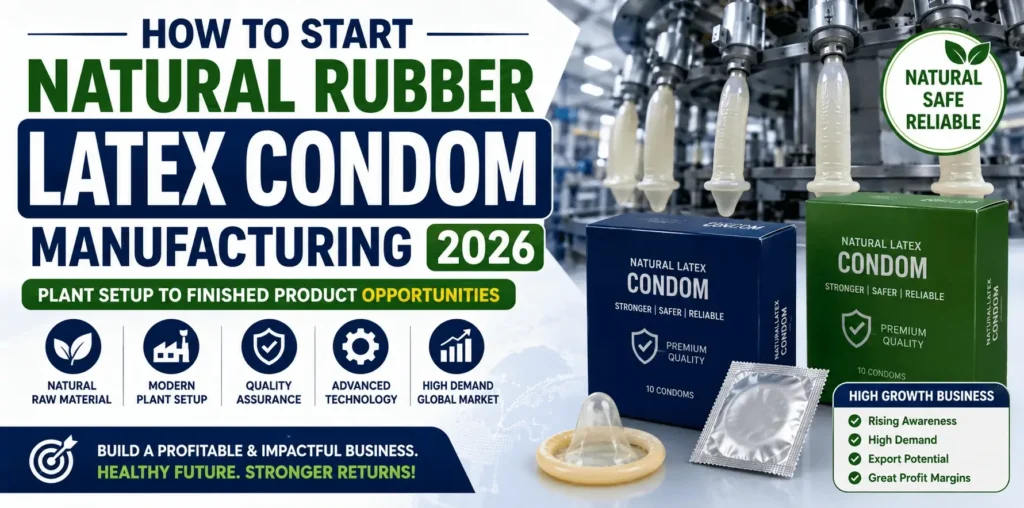
The Latex Condom Manufacturing Business is emerging as a high-potential opportunity in the healthcare and personal wellness industry due to increasing awareness of safe sex practices, rising population health initiatives, and growing global demand for contraceptive products. Natural rubber latex condoms continue to dominate the market because of their affordability, flexibility, durability, and effectiveness. India is becoming an important hub for latex condom manufacturing due to expanding healthcare infrastructure, government awareness programs, export demand, and advancements in automated production technologies. Entrepreneurs entering the condom manufacturing business can benefit from rising domestic consumption, NGO procurement programs, eCommerce growth, and international supply opportunities. This guide explains the complete latex condom manufacturing business setup process including machinery, manufacturing technology, raw materials, quality standards, licensing requirements, investment cost, and profitability analysis. What is Latex Condom Manufacturing? Latex condom manufacturing is an industrial process that produces natural rubber latex condoms through dipping, vulcanization, electronic testing, lubrication, and sterile packaging processes for healthcare and personal protection applications. Why Latex Condom Manufacturing is Growing in India Include: awareness programs government healthcare initiatives export demand eCommerce growth STI prevention awareness NGO procurement population control programs Understanding the Latex Condom Manufacturing Industry Latex condom manufacturing is part of the broader sexual wellness and healthcare segment. The product, made from natural rubber latex, undergoes a highly sensitive production process involving dipping, vulcanization, testing, and packaging. With increasing global concern over sexually transmitted infections (STIs), HIV/AIDS, and population control, the demand for quality condoms is growing, especially in developing nations. India, China, Brazil, and parts of Africa are considered high-potential markets for expansion. Governments and NGOs have made substantial investments in distributing free or subsidized condoms, which adds to the demand. Furthermore, the social taboo surrounding condom usage is diminishing due to awareness campaigns, which enhances the prospects for new players in the latex condom manufacturing industry. Step-by-Step Guide to Starting a Latex Condom Manufacturing Business 1. Market Research and Business Planning Before investing in machinery or infrastructure, conduct a detailed market analysis. Study regional and global demand, consumer behavior, competitor strategies, and potential distribution channels. Identify whether you’ll cater to the premium segment (flavored, textured, ultra-thin) or standard products. Create a business plan covering: Business objectives Target market Investment and financial projections Production scale Pricing and distribution model Compliance and certifications A solid plan will help attract investors and secure loans or grants from health-oriented funding agencies. 2. Legal Compliance and Licensing Given that condoms are classified as medical devices in many countries, manufacturing them requires stringent regulatory adherence. In India, approval from the Drug Controller General of India (DCGI) and registration with CDSCO (Central Drugs Standard Control Organization) is mandatory. Other global certifications include: ISO 4074:2015 (International standard for natural rubber latex condoms) CE Marking (European market) WHO Prequalification (for global NGO supply) GMP guidelines WHO quality standards Medical device regulations Quality testing protocols Apart from that, you’ll also need: Company registration GST or other local tax registration Factory license Pollution control and fire safety certificates Compliance helps ensure product safety, international acceptance, and eligibility for government and NGO procurement programs. 3. Location and Factory Setup Choosing the right location is essential. The ideal site should have good connectivity, access to skilled labor, and reliable water and electricity supply. The factory layout should consist of the following: Raw material storage Production and dipping area Drying and curing rooms Electronic testing section Packing and storage rooms The facility should follow GMP (Good Manufacturing Practices) and hygiene protocols to prevent contamination. 4. Machinery and Equipment Investing in high-quality automated machinery ensures efficiency and product consistency. Major equipment includes: Latex dipping machines Coagulum tanks Vulcanization oven Electronic testing equipment Packaging machines Conveyor belts and air compressors Automated machines improve output, reduce manual errors, and maintain hygiene. Depending on the production capacity, the machinery cost can range from ?1 crore to ?5 crore. 5. Raw Material Procurement The main raw material in latex condom manufacturing is natural rubber latex, sourced from rubber plantations or vendors. Other materials include: Coagulant solution Lubricants (silicone or water-based) Corn starch or talc (for dusting) Foils or wrappers (for packaging) Flavoring agents (for specialty condoms) Ensure that all materials are of medical-grade quality and comply with health regulations. 6. How are Latex Condoms Manufactured? The standard latex condom manufacturing process generally includes: Latex Compounding: Mixing raw latex with chemicals to improve elasticity and durability. Former cleaning and Dipping: Cleaned glass or ceramic molds are dipped in coagulant and then into the latex solution to form the condom layer. Vulcanization: Condoms are cured at high temperatures to strengthen the rubber. Leaching and Washing: The product is thoroughly washed to remove residual chemicals and proteins. Drying and Testing: Condoms are electronically tested for holes, strength, and elasticity. Electronic pinhole testing: Lubrication and packaging: Each piece is lubricated, sealed in foil wrappers, and then packed into boxes. Sterility and quality inspection The entire process must be handled in a contamination-free environment using sterilized equipment. 7. Quality Control and Testing Quality assurance is a vital component of latex condom manufacturing. International standards dictate rigorous testing, including: Electronic pinhole testing Air burst and tensile strength test Water leak test Lubricant quantity test Random samples are taken from each batch to ensure consistency and safety. If a batch fails any of the tests, it must be discarded. 8. Branding and Marketing Strategy Create a compelling brand identity that reflects trust, safety, and innovation. Use discreet yet bold packaging to attract consumers. Focus on: Health campaigns and CSR collaborations Social media marketing targeting youth and urban areas Online marketplaces and pharmacy tie-ups Government supply contracts and tenders Brand ambassadors, health influencers, and digital ads can help break taboos and promote acceptance. 9. Distribution Channels Condoms are widely sold through: Pharmacies and drugstores E-commerce platforms Supermarkets and convenience stores NGOs and health agencies Clinics and hospitals Partner with logistics companies that specialize in sensitive goods. Maintain an efficient supply chain to ensure consistent product availability. 10. Cost and Profitability Analysis Starting a latex condom manufacturing
60 Potential Project Profiles for new MSMEs.
Starting a micro, small, or medium enterprise (MSME) in India is an excellent path for aspiring entrepreneurs aiming to build a sustainable and profitable business. The Indian government has consistently supported MSMEs by offering funding schemes, subsidies, and technical assistance. Selecting the right MSME project is crucial for long-term success. In this article, we present 60 promising MSME project profiles that cater to various sectors including manufacturing, services, food processing, and more. Why Choose an MSME Project? India’s MSME sector plays a pivotal role in job creation, GDP contribution, and innovation. Choosing a suitable project not only ensures growth but also aligns with regional market demand, available resources, and government incentives. Below is a comprehensive list of MSME project profiles across multiple categories: Manufacturing Sector MSME Project Profiles Paper Cup ManufacturingEco-friendly and highly in demand, paper cup manufacturing is a low-investment business with quick returns. Agarbatti (Incense Stick) MakingWidely used in Indian households and temples, agarbatti production is labor-intensive and suitable for semi-urban and rural areas. LED Light AssemblyWith increasing energy conservation awareness, LED light production is a booming opportunity. Detergent Powder ManufacturingThis everyday-use item offers steady market demand, making it a great MSME project profile. PVC Pipe ManufacturingEssential in the construction and agriculture sectors, PVC pipes are always in demand. Fly Ash Brick PlantEnvironmentally friendly and cost-effective, this project aligns with green building initiatives. Aluminium Utensils ManufacturingThis traditional yet scalable business has excellent domestic and export potential. Plastic Bottles and Containers ManufacturingThese are used widely across FMCG and pharmaceutical industries. Disposable Syringe and Medical Supplies ProductionA high-potential sector post-COVID-19, with demand in both rural and urban healthcare sectors. Toy Manufacturing Unit“Make in India” is pushing domestic toy production, which presents a unique opportunity. Food Processing MSME Project Profiles Packaged Spices UnitIndia’s spice industry is growing rapidly with export potential. Branding and hygiene are key success factors. Flour MillIdeal for semi-urban areas, with scope for processing wheat, maize, and other grains. Fruit Juice and Beverage ManufacturingSeasonal yet profitable; requires careful packaging and FSSAI compliance. Pickle and Jam ProductionTraditional taste meets modern packaging—this project appeals to both local and global markets. Frozen Food ProcessingGrowing urbanization has increased demand for ready-to-cook and frozen food items. Bakery Products ManufacturingBread, cakes, and cookies are everyday items with wide consumption. Dairy Processing UnitMilk, ghee, paneer, and curd offer multi-product revenue streams. Organic Food Products UnitAs consumer awareness rises, organic food is becoming a niche but premium sector. Puffed Rice and Murmura PlantAn excellent low-cost, high-margin snack food business. Soyabean Processing UnitOffers products like soy flour, soy milk, and tofu; ideal for health-conscious consumers. Agro-Based MSME Project Profiles Vermicompost ProductionA great way to convert organic waste into valuable compost for organic farming. Mushroom FarmingHigh profit in small space; ideal for peri-urban areas. Herbal Plant Cultivation and ProcessingHerbs like tulsi, aloe vera, and ashwagandha are in global demand. Cold Storage UnitEssential for preserving fruits, vegetables, and dairy products. Poultry Feed ManufacturingA booming sector that supports rural poultry farming. Oil Extraction Mill (Groundnut/Sesame/Sunflower)Organic and cold-pressed oils fetch premium prices. Honey Processing UnitBeekeeping and honey processing is profitable with both domestic and export demand. Cashew Nut Processing PlantA seasonal but profitable business with export potential. Coconut-Based Product Unit (Oil, Water, Fiber)Multipurpose products from a single raw material. Turmeric Powder ProcessingA key spice in Indian cuisine and medicine; the business has consistent market potential. Textile and Garment MSME Project Profiles Embroidery UnitCustom ethnic fashion, bridal wear, and fabric embellishment are always in demand. T-Shirt and Apparel Printing UnitSuitable for e-commerce and local supply; customization adds profit margin. Readymade Garment ManufacturingUniforms, kidswear, and ethnic wear are evergreen categories. Jute Bag MakingEco-friendly and government-supported; suitable for exports as well. Textile Dyeing and Printing UnitImportant ancillary service to garment production. Socks and Hosiery UnitA fast-moving product category with less inventory issues. Quilts and Comforter ProductionSeasonal but lucrative with the rise of premium home furnishing. School Bag ManufacturingConsistent demand with government schemes for schoolchildren. Handloom Product UnitIdeal for traditional markets and online platforms promoting Indian handicrafts. Boutique or Tailoring ShopA low-investment, skill-based MSME project profile for urban markets. Service-Based MSME Project Profiles Digital Marketing AgencyDemand for online presence makes this a hot and scalable business idea. Mobile and Laptop Repair ShopA high-margin, skill-based business. Coaching and Tuition CenterEducation is a recession-proof sector, especially for board exam and entrance coaching. Beauty Salon or SpaA good business model, especially in urban and semi-urban areas. Courier and Logistics ServicesE-commerce expansion has made last-mile delivery businesses crucial. Car/Bike Washing and Servicing StationA recurring income model in high-traffic areas. Freelance Content Writing/Graphic Design StudioSuitable for creative professionals; scalable via agency model. Cyber Cafe with Printing/Scanning ServicesStill relevant in small towns for form-filling, government schemes, and document submission. Event Management ServicesWeddings, corporate events, and personal functions keep this industry profitable. Photography and Videography StudioA passion-led business with good returns during peak seasons. Miscellaneous MSME Project Profiles Recycled Paper UnitEco-friendly and sustainable, with demand from education and packaging sectors. Pet Accessories and Food UnitRising pet ownership is driving demand in this niche. Candle Making BusinessGreat for festive seasons, hotels, and spas. Sanitary Napkin Manufacturing UnitA high-impact business for both profit and women empowerment. Bamboo Craft and FurnitureGovernment-promoted green product with export potential. E-Waste Management UnitA growing problem turned into opportunity with proper licenses. Soap and Handwash MakingHygiene-related products are always in demand, especially post-pandemic. Gift and Craft Items ManufacturingA creative niche for corporate and festival gifting. Printing and Packaging UnitEvery product requires packaging—this is a supportive but essential MSME project profile. Water Purifier Assembly UnitHealth awareness is boosting demand for affordable water filtration systems. Final Thoughts Choosing the right MSME project profile depends on several factors: investment capacity, market demand, personal interest, location, and government policies. With support systems like Udyam Registration, subsidies under PMEGP, and easy access to MSME loans, entrepreneurs can now convert their ideas into scalable businesses more efficiently than ever before. The above MSME project profiles are not just ideas but potential gateways to self-employment, income generation, and contribution to the Indian economy. Whether you choose
Want to Start Business in Bilaspur, Chhattisgarh?
Bilaspur, a growing city located in the Indian state of Chhattisgarh, is rapidly emerging as a fertile ground for entrepreneurs and small business owners to start a business in Bilaspur, Known for its agricultural produce, mineral resources, education centers, and a steadily developing infrastructure, Bilaspur is evolving into a promising commercial hub. The region offers a mix of urban accessibility and rural outreach, making it an ideal location to tap into various sectors like manufacturing, retail, services, food processing, tourism, and IT-enabled services. Why Business in Bilaspur is the Right Choice Bilaspur’s strategic location, supported by the South East Central Railway Zone, efficient road networks, and proximity to mineral-rich regions, adds immense value to logistics and supply chain operations. With a population eager for new services, better employment opportunities, and modern consumer experiences, the demand is outpacing supply across several sectors. Additionally, the Chhattisgarh government’s MSME policies and industrial promotion schemes offer financial incentives and subsidies, especially beneficial for startups and new entrepreneurs. Now, let’s explore profitable and feasible ideas that you can pursue to successfully establish a business in Bilaspur. 1. Agro-Based Processing Units Agriculture is the backbone of Bilaspur’s economy. With crops like paddy, maize, sugarcane, and oilseeds widely cultivated, there’s high potential in setting up small-scale processing units such as rice mills, oil extraction plants, or flour mills. You can also consider organic food processing, spice grinding, or packaging dehydrated fruits and vegetables. Market Opportunity: High demand locally and for exports. Investment Range: ?5 to ?25 lakhs (small to medium-scale). USP: Use locally sourced raw materials and promote organic/chemical-free produce. 2. Packaged Drinking Water or Bottling Plant With growing concerns over water purity and the rise of educational institutions, hospitals, and industries in the region, a bottled water business is a practical choice. It involves relatively low investment and fast returns. Required Licenses: FSSAI, BIS certification, and pollution control board clearance. Revenue Model: B2B (bulk supply to offices, hotels) and B2C retail packaging. Tip: Build a brand around purity and sustainability. 3. Tourism and Travel Services Bilaspur is the gateway to several pilgrimage sites, wildlife sanctuaries, and eco-tourism spots such as Achanakmar Wildlife Sanctuary and Ratanpur Temple. Starting a travel agency, adventure tour services, or homestay management business can be both exciting and profitable. Key Customers: Tourists, pilgrims, school/college groups. Business Expansion: Include vehicle rentals and hotel tie-ups. Why It Works: People seek curated, local travel experiences over generic packages. 4. Education and Coaching Institutes As a major educational hub with institutions like coach Ghasidas Central University and various private colleges, the demand for skill development centers, coaching institutes for competitive exams (like UPSC, SSC, NEET), and personality development classes is booming. Business Scope: Offline and online models. Initial Setup: Classroom, faculty recruitment, digital board setup. Add-ons: Offer certifications in digital marketing, computer basics, or foreign languages. 5. Clothing Boutique or Fashion Store Fashion is a growing trend even in tier-2 cities like Bilaspur. You can launch a boutique specializing in traditional Chhattisgarhi clothing, sarees, and ethnic wear or modern western clothing and accessories. Ideal Locations: Vyapar Vihar, Telipara, or near educational institutions. Differentiator: Offer customization, local embroidery, or fusion collections. Profit Margin: Clothing retail offers 25–40% margin with regular sales. 6. Digital Marketing & Web Services Many small businesses in Bilaspur still lack a digital presence. Starting a digital marketing agency or a freelance service business focused on website development, SEO, and social media marketing can be immensely profitable. Target Clients: Local hotels, educational institutions, coaching centers, and retailers. Requirements: Basic internet setup, laptop, and marketing knowledge. Bonus: Scalable with clients outside Bilaspur as well. 7. Mobile and Electronics Repair Store With the increasing penetration of smartphones and digital gadgets, there’s high demand for affordable repair and maintenance services. Opening a shop for mobile accessories, repairs, and re-selling refurbished items can yield excellent returns. Startup Cost: ?1–2 lakhs for tools, spares, and setup. Footfall Areas: Near railway station, malls, or education hubs. Pro Tip: Offer doorstep repair or instant service to build a loyal clientele. 8. Bakery or Café Business Urban youth and college students often look for cozy and modern hangout spots. Launching a café with local snacks, fusion foods, and beverages can serve the dual purpose of profit and passion. Menu Ideas: Fusion chaat, baked goods, beverages, and local sweets. Marketing Strategy: Social media promotion and combo offers. Add Value: Free Wi-Fi, games, or open mic events to engage customers. 9. Two-Wheeler Rental or EV Rental Services With rising fuel prices and a demand for short-distance, affordable commute options, especially by students and solo workers, a two-wheeler rental or e-bike business is worth exploring. Initial Setup: 10–15 bikes or scooters. Target Audience: Tourists, students, and professionals. Smart Tip: Integrate with a simple mobile booking app for ease of use. 10. Home-Based Tiffin or Cloud Kitchen There is a constant need for hygienic, home-style meals, especially for working professionals and students. You can start a cloud kitchen or home-based tiffin delivery service targeting hostels, PGs, and small offices. Low Investment: Kitchen setup, food containers, and a delivery system. Promotion Tip: Use WhatsApp, Instagram, and Google Business to gain visibility. Customer Loyalty: Weekly subscription plans and seasonal dishes. Tips for Launching a Successful Business in Bilaspur Starting a business in Bilaspur requires smart planning, local insight, and the right network. Here’s what you should keep in mind: Study Local Demand: Conduct surveys or interviews to understand what’s missing in the market. Legal Setup: Register your business with the Udyam portal, get GST, and other licenses based on your business type. Leverage Government Schemes: The Chhattisgarh government offers support under the Startup Chhattisgarh scheme, subsidies for MSMEs, and more. Location is Key: Choose high footfall areas for retail and service businesses. Go Digital: Use platforms like Justdial, Google My Business, and social media to market your offerings. Final Thoughts If you’ve been planning to become your own boss, launching a business in Bilaspur offers an encouraging environment to begin. Whether you choose the service sector, retail,
List of Fast-Growing Industries for Hot Start-Ups in 2018.
Starting a business can be one of the most rewarding journeys in life, but it also comes with significant risk. Many budding entrepreneurs struggle with choosing the right project or business idea that offers not just profitability, but also sustainability in the long run. The “NPCS 2018 Guide to Profitable Projects and Startup” serves as an insightful manual for entrepreneurs, helping them identify high-potential sectors, assess market demand, and plan their ventures effectively. Published by the National Project Consultancy Services (NPCS), the guide is tailored for Indian markets but also offers globally applicable insights. Why the NPCS 2018 Guide Is a Valuable Resource for Profitable Projects and Startup The guide stands out because of its focus on practical implementation and real-time profitability assessment. It doesn’t just list business ideas—it provides in-depth feasibility reports, market potential analyses, estimated investment costs, and detailed manufacturing processes. The NPCS 2018 Guide to Profitable Projects and Startup empowers entrepreneurs to move from ideation to execution efficiently. Industry Trends and Sectors Covered One of the strengths of the NPCS 2018 edition is the variety of sectors it covers. From agro-based industries and chemical manufacturing to food processing, pharmaceuticals, and eco-friendly technologies, the guide details over 100 business ideas. These are carefully curated based on current market demand and future trends, ensuring that each business idea is in line with consumer and industry needs. For example, the guide explores projects like: Organic Farming and Processed Foods: As health-consciousness grows, organic food items have witnessed a rise in demand, both domestically and internationally. Waste Recycling and Renewable Energy: With environmental sustainability taking center stage, projects in solar energy, e-waste recycling, and biofuel are becoming more viable. Cosmetics and Personal Care: This sector continues to expand, especially with herbal and Ayurvedic products gaining popularity. Petroleum Derivatives and Lubricants: Despite global shifts toward green energy, these products remain in high demand in industrial and automotive sectors. Textile and Garment Manufacturing: As a labor-intensive industry, it offers scope for job creation and export earnings. The NPCS 2018 Guide to Profitable Projects and Startup examines each of these sectors by breaking them down into technical, financial, and commercial aspects. Key Components of a Profitable Startup Plan To launch a successful startup, one must follow a well-structured approach. According to the NPCS 2018 Guide to Profitable Projects and Startup, here are essential elements every entrepreneur should consider: Market Research: Understand your target audience, their preferences, and gaps in the market. Feasibility Study: Evaluate the technical and financial aspects of the project. The guide provides templates for this. Business Plan Development: Include marketing strategies, competitive analysis, pricing models, and projected ROI. Licensing and Regulations: Ensure compliance with local and national legal frameworks. Funding Options: Explore sources like bank loans, angel investors, and government schemes like Startup India or Mudra Yojana. The guide offers extensive insights into how each of these areas contributes to developing profitable projects and startup ideas that are scalable and resilient. Startup Case Studies and Success Models Another impressive feature of the NPCS guide is its case studies section. These real-world examples provide a roadmap for aspiring entrepreneurs. The book details how small ideas have transformed into large enterprises through strategic planning and execution. Take for instance a featured case study of a small-scale honey processing unit in Uttarakhand. With an initial investment of just ?10 lakhs, the business scaled operations over five years to become a regional supplier to major grocery chains. Similarly, the guide outlines how one entrepreneur capitalized on the demand for ready-to-eat meals in metro cities, turning a home kitchen into a packaged food company. Each of these stories showcases how applying the principles outlined in the NPCS 2018 Guide to Profitable Projects and Startup can turn a modest idea into a sustainable business. Financial Planning and Investment Costing The financial section of the guide is highly detailed and practical. It walks you through cost estimations, machinery investment, working capital needs, and profit margins for each listed project. This allows potential entrepreneurs to compare and choose the most suitable option based on their budget. Some highlighted examples include: Biodegradable Cutlery Manufacturing: Investment: ?18 lakhs; Break-even: 18 months Solar Panel Assembly Unit: Investment: ?35 lakhs; Break-even: 24 months Essential Oils Distillation Plant: Investment: ?22 lakhs; Break-even: 15 months These projections are not just arbitrary numbers; they are based on real-time market analysis, which adds credibility to the NPCS 2018 Guide to Profitable Projects and Startup. Government Incentives and Support Schemes In recent years, the Indian government has introduced numerous schemes to foster entrepreneurship. The NPCS guide doesn’t overlook this and provides a well-researched section on how to benefit from: Startup India Mission PMEGP (Prime Minister’s Employment Generation Programme) MSME subsidies and tax exemptions Skill India training and support By aligning your business with these schemes, your startup gains not only financial relief but also credibility and networking opportunities. The NPCS 2018 Guide to Profitable Projects and Startup helps navigate these programs, providing step-by-step processes for registration, documentation, and compliance. Emerging Business Models to Watch While traditional manufacturing and processing industries continue to thrive, the guide also emphasizes new-age models. These include: Digital Services and SaaS Models: Especially in Tier 2 and Tier 3 cities, there’s a growing demand for IT solutions, online education platforms, and fintech services. Eco-Conscious Consumer Goods: From bamboo toothbrushes to biodegradable packaging, sustainable products are not just trendy but commercially viable. Home-Based Enterprises: The guide highlights low-investment options like handmade soap production, craft businesses, and cloud kitchens that require minimal capital but offer decent profits. Such innovative models open up opportunities for a new generation of entrepreneurs who seek flexible, technology-driven, and scalable ideas. Long-Term Success: Tips from Experts The NPCS 2018 Guide to Profitable Projects and Startup doesn’t stop at just business ideas. It shares wisdom from industry experts and consultants on long-term success: Continuous Market Feedback: Always keep refining your product based on customer needs. Reinvestment and Scaling: Don’t rush expansion. Focus on reinvesting profits for sustained growth. Skilled Workforce: Invest
Fastest Growing & Best Industries for Starting a Business.
In today’s rapidly evolving economic environment, identifying and investing in the fastest growing industries can provide a strong foundation for entrepreneurs aiming to build profitable and sustainable businesses. Whether driven by emerging technologies, global health challenges, environmental awareness, or digital transformation, several sectors are witnessing explosive growth. Entrepreneurs who stay ahead of the curve and align their ventures with these booming industries can expect robust returns and long-term stability. Why Entrepreneurs Should Focus on the Fastest Growing Industries The most successful startups often emerge in markets that are not just large, but growing quickly. Investing in the fastest growing industries allows business owners to ride the wave of increased demand, benefit from market gaps, and position themselves as early leaders. High-growth sectors often attract increased consumer interest, government support, and investor funding—factors that can accelerate business development significantly. Let’s explore the top industries leading the charge in 2025 and beyond. 1. Renewable Energy and Clean Technology With climate change taking center stage globally, the renewable energy sector has evolved from a niche market to a thriving industry. Solar panel installations, wind farms, green hydrogen production, and battery storage systems are reshaping how energy is produced and consumed. Governments and corporations are investing heavily in carbon neutrality and green infrastructure, making clean tech one of the fastest growing industries today. Entrepreneurs can enter this market through solar installation services, energy auditing, electric vehicle (EV) infrastructure development, or manufacturing eco-friendly products. As regulations tighten and fossil fuel costs fluctuate, the demand for alternative energy solutions continues to soar. 2. Health and Wellness Technology Healthtech and wellness innovations have seen exponential growth since the COVID-19 pandemic. From telemedicine and wearable health monitors to mental wellness apps and personalized nutrition, this sector is experiencing robust demand. Aging populations, increasing chronic illnesses, and rising healthcare costs are fueling the need for smart, efficient, and accessible health solutions. Digital health startups offering remote diagnostics, AI-based treatment recommendations, or virtual therapy platforms are thriving. Additionally, wellness-focused ventures such as organic skincare, supplements, and fitness apps fall within the scope of this rapidly expanding market. 3. E-commerce and Digital Retail The digital retail revolution continues to be one of the fastest growing industries in the world. Online shopping has become the default mode for millions of consumers, accelerated by better logistics, secure payment gateways, and mobile commerce. From fashion and electronics to groceries and digital goods, e-commerce offers endless opportunities. Aspiring business owners can launch niche-specific online stores, dropshipping operations, or private label brands. Emerging trends such as livestream shopping, social commerce, and AI-powered product recommendations make this sector dynamic and highly lucrative. 4. Artificial Intelligence and Machine Learning AI and machine learning are no longer just buzzwords; they are the driving forces behind automation, analytics, and innovation across all industries. Whether it’s in finance, healthcare, education, or customer service, AI is revolutionizing how decisions are made and services are delivered. Businesses in this domain range from developing AI-powered SaaS products to providing custom AI solutions for enterprises. As companies seek to optimize operations, reduce costs, and predict consumer behavior, the AI industry remains one of the fastest growing industries with high scalability. 5. Cybersecurity As digital transformation accelerates, so do threats to data security. With increasing incidents of data breaches, ransomware attacks, and digital fraud, cybersecurity has become a top priority for organizations and individuals alike. From cloud security to mobile app protection, the market for cyber defense is growing rapidly. Entrepreneurs can capitalize on this by offering penetration testing services, developing encryption tools, or creating security awareness training programs. The demand for skilled cybersecurity solutions is at an all-time high, making it a prime sector to enter. 6. Fintech and Digital Payments The financial technology sector is reshaping traditional banking and financial services. Mobile wallets, online lending platforms, robo-advisors, and blockchain-based services are gaining widespread acceptance. Consumers are embracing digital finance for its convenience, speed, and transparency. Entrepreneurs in this space can develop peer-to-peer lending apps, neobanks, or blockchain-powered transaction systems. As financial inclusion and digital literacy grow worldwide, fintech remains one of the most vibrant and fastest growing industries. 7. Sustainable Products and Green Consumer Goods Modern consumers are increasingly eco-conscious, preferring products that are sustainable, ethically made, and low on carbon impact. From biodegradable packaging and plant-based foods to zero-waste personal care products, the demand for green alternatives is skyrocketing. Starting a business in this niche can involve manufacturing or distributing sustainable products, curating eco-friendly lifestyle boxes, or offering recycling and upcycling services. With the environmental movement gaining strength, green business ideas are both ethical and economically viable. 8. Educational Technology (EdTech) Education has undergone a paradigm shift with the advent of EdTech. Online learning platforms, gamified education, skill-based courses, and AI tutors are transforming how knowledge is delivered. This trend was supercharged by the pandemic and continues to evolve with hybrid and remote learning models. Opportunities in this space include creating e-learning platforms, developing curriculum content, launching tutoring apps, or offering corporate training services. Given the global emphasis on reskilling and upskilling, EdTech stands out as one of the fastest growing industries. 9. Virtual and Augmented Reality VR and AR technologies are not limited to gaming anymore. They are being integrated into real estate, retail, education, tourism, and even healthcare. Virtual showrooms, immersive learning experiences, and AR-based instructions are reshaping consumer interactions. Entrepreneurs can explore opportunities in VR content creation, AR mobile app development, or hardware distribution. As devices become more affordable and accessible, VR/AR applications are expected to grow exponentially. 10. Personalized Nutrition and Food Tech The food and beverage industry is being revolutionize by data and biotechnology. Consumers are seeking healthier, tailored food solutions, and businesses are responding with lab-grown meats, plant-based alternatives, and AI-driven meal planning. This intersection of health, sustainability, and technology makes personalized nutrition one of the fastest growing industries. Entrepreneurs can innovate with smart kitchen appliances, diet-coaching apps, or health-focused meal delivery services. Final Thoughts Understanding and investing in the fastest growing industries is a strategic
Setting Up Profitable Microbrewery, Brewpub, Craft Brewery Restaurant Business in India
India’s urban culture is experiencing a refreshing revolution. With evolving tastes and rising disposable incomes, people are seeking more than just a drink—they want an experience. This is where the craft brewery restaurant business in India enters the spotlight. Combining artisanal beer with curated food menus and vibrant ambiance, this business model is attracting both investors and consumers. It offers a high-margin, high-engagement venture that blends hospitality, lifestyle, and creativity. For entrepreneurs, the craft beer scene presents a golden opportunity to create a brand that not only quenches thirst but also builds community. Why the Craft Brewery Restaurant Business in India is Booming The craft brewery restaurant business in India is witnessing explosive growth, particularly in metros and tier-1 cities. This concept pairs freshly brewed, locally crafted beers with unique dining experiences. From wheat lagers and stouts to seasonal ales and IPAs, the Indian palate is expanding. More importantly, the business encourages local sourcing, innovation, and branding. Entrepreneurs now have the opportunity to build a loyal customer base through quality, authenticity, and ambience. 1. Rise of the Craft Beer Culture India’s young population is becoming more experimental with their food and drink choices.Craft beer stands out because: It’s fresh, preservative-free, and made in small batches Breweries offer diverse flavors not found in mass-market beers Customers value the “brewery tour” and tasting room experience It encourages community gatherings and events Cities like Bengaluru, Pune, Mumbai, Gurgaon, and Hyderabad have seen craft breweries thrive. As a result, the craft brewery restaurant business in India is becoming a symbol of modern leisure culture. See Also :- Holiday Resort Timeshare Resorts Business Opportunity 2. Business Models to Consider There are a few primary ways to enter the craft brewery restaurant space: Brewpub model: Brewing and serving on-site within a restaurant Brewery with distribution: Brewing in bulk and distributing to restaurants and bars Franchise model: Partnering with existing brewery brands for regional operations Cloud kitchen with bottled craft beer: Pairing microbrewery flavors with delivery-based food service Each model has different capital requirements and operational complexity. Brewpubs offer the highest branding potential and customer interaction, making them the most popular form of the craft brewery restaurant business in India. 3. Legal and Licensing Requirements Alcohol-related businesses are tightly regulated in India, and each state has its own policies. Typical requirements include: Liquor license: Issued by the state excise department Brewery license: For manufacturing alcohol on-site Food license (FSSAI): Mandatory for the kitchen operation Shop and establishment registration Fire safety and pollution board approvals States like Karnataka, Maharashtra, and Haryana are more supportive of microbrewery operations, which makes them attractive locations. It’s essential to work with legal consultants to manage the compliance process properly. See Also :- Business Ideas in Herbal Products Manufacturing Industry 4. Equipment and Setup Costs Starting a craft brewery restaurant involves significant capital investment, especially for the brewery plant. Key components include: Fermenters and brewing tanks Chillers and filtration systems Taps, kegs, and CO? supplies Kitchen and dining infrastructure POS, billing, and inventory software Setting up a small to mid-sized craft brewery restaurant business in India can cost anywhere from ?1.5 crore to ?4 crore, depending on size, location, and design. 5. Crafting the Perfect Beer Menu Your beer menu will define your brand. Top breweries succeed because they offer a variety of options: Light lagers for casual drinkers Hoppy IPAs for enthusiasts Seasonal brews like mango wheat or coffee stout Beer flights for sampling multiple flavors Rotating menus keep the experience fresh and encourage repeat visits. Collaborating with expert brewmasters ensures quality and consistency. The most successful craft brewery restaurant business in India focuses on balance—familiar yet adventurous offerings. See Also :- Business Ideas in Medical Healthcare Industry 6. Pairing Food with Beer Unlike typical bars, craft breweries are full-fledged restaurants. Food plays a critical role. Key aspects to focus on: Curate a menu that complements beer flavors Include comfort food, fusion dishes, and local flavors Consider beer-infused recipes and desserts Offer tasting menus and pairing guides Food revenue often equals or exceeds drink sales. A carefully designed food offering elevates the entire customer experience and strengthens brand loyalty. 7. Ambience and Branding Strategy Ambience isn’t just decor—it’s identity. A successful craft brewery builds an immersive experience. Tips for ambience and branding: Use industrial-chic or rustic wooden interiors Display brewing equipment to enhance authenticity Create cozy seating for group hangouts and date nights Use branded glassware, coasters, and merchandise Host live music nights, brew workshops, or comedy gigs Creating an Instagrammable and memorable space increases footfall and word-of-mouth. This turns your craft brewery restaurant business in India into a lifestyle destination. 8. Marketing and Customer Engagement Traditional advertising is not enough in this segment. You need strong storytelling and digital engagement. Effective marketing ideas include: Social media campaigns with reels and influencer reviews Loyalty programs and membership clubs Happy hour deals and launch events Collaborations with local artists or chefs Seasonal beer fests and tasting events Your online presence—especially on Instagram and Zomato—must reflect the vibe of your brewery. Consistency in tone, design, and customer engagement sets great brands apart. 9. Revenue Models and Profit Margins Craft breweries enjoy high gross margins, especially on beer. Here’s how revenue flows: Beer sales (in-house and takeaway, if allowed) Food and dessert sales Event bookings and private gatherings Merchandise and growler sales Brewery tours and paid tastings With good planning, the average profit margin can range between 25% to 35%. Once the setup cost is recovered (typically within 2–3 years), the craft brewery restaurant business in India becomes a steady revenue generator. 10. Challenges and Solutions Like all businesses, this one has hurdles too: High setup cost and long breakeven periods Licensing delays and regulatory complexities Finding skilled brewers and staff Changing consumer preferences Seasonal fluctuations in footfall Solutions involve strong financial planning, hiring experienced consultants, and continuous innovation. Flexibility and passion are key to thriving in this industry. Conclusion The craft brewery restaurant business in India is more than just a hospitality venture—it’s a cultural movement.