
Food Processing for MSMEs and Entrepreneurs
In the era of fast-paced urbanization and evolving dietary preferences, the Food Processing industry has emerged as one of the most dynamic and lucrative sectors in the global economy. Especially in a country like India, with its rich agricultural base and rapidly growing population, food processing offers enormous potential. As we step into 2025, the demand for packaged, ready-to-eat, and value-added food products is projected to rise even further, making this the perfect time to explore opportunities in the Food Processing industry. Why 2025 is the Right Time to Enter the Food Processing Industry The landscape of the Food Processing industry in 2025 is defined by technology, consumer awareness, sustainability, and government support. Technological advancements in automation, packaging, and food safety have significantly improved efficiency and product shelf life. Consumers are also more health-conscious and seek clean-label products, organic ingredients, and convenient yet nutritious food solutions. Moreover, global disruptions such as pandemics and climate challenges have underscored the need for resilient supply chains and local food production units. Governments worldwide, including India’s Ministry of Food Processing Industries (MoFPI), are introducing supportive policies, subsidies, and funding schemes to promote the growth of food processing units, especially in rural and semi-urban areas. This confluence of demand, innovation, and support creates an excellent environment to launch a Food Processing industry venture in 2025. Types of Food Processing Businesses to Consider There are various segments in the Food Processing industry that entrepreneurs can explore, depending on market demand, investment capacity, and resource availability. Some promising niches include: Fruits and Vegetables Processing: Includes making jams, juices, pickles, dehydrated fruits, frozen vegetables, etc. Dairy Processing: Production of milk products like cheese, butter, ghee, paneer, yogurt, and flavored milk. Meat and Poultry Processing: Packaging of processed meat, sausages, nuggets, and frozen poultry products. Grain Milling and Cereal Processing: Involves flour mills, rice mills, and breakfast cereals. Snack and Bakery Products: Manufacturing biscuits, bread, chips, and ready-to-eat snacks. Beverages: Includes soft drinks, fruit juices, energy drinks, and bottled water. Steps to Start a Food Processing Industry Business 1. Conduct Market Research Before starting your business, comprehensive market research is crucial. Identify the target market, consumer preferences, competitors, and pricing. Analyze the demand for the specific product segment you wish to enter. This helps in determining the feasibility and scalability of your business idea. 2. Choose Your Niche Select a category within the Food Processing industry based on your budget, local raw material availability, and personal interest. For example, if you are located in a region with abundant fruit farming, a fruit processing unit could be a smart choice. 3. Prepare a Detailed Business Plan A well-structured business plan outlines your objectives, funding requirements, operational plan, marketing strategy, and financial projections. It serves as a blueprint for your business and is essential when seeking loans or investments. 4. Legal Compliance and Licensing Obtain all necessary licenses and registrations, including: FSSAI License (Food Safety and Standards Authority of India) MSME/SSI registration GST registration Factory License Pollution Control Clearance (if applicable) Trademark registration (for branding) 5. Secure Funding Depending on the scale of your business, you may need financial support. You can seek funding through: Bank loans under government schemes like PMFME (Pradhan Mantri Formalisation of Micro food processing Enterprises) Angel investors or venture capitalists Self-funding or bootstrapping 6. Location and Infrastructure Choose a location with good transportation, water, and electricity facilities. Your processing unit must meet food-grade standards with separate sections for raw material storage, processing, packaging, and finished goods storage. 7. Procure Machinery and Equipment Based on your product line, purchase appropriate machinery such as mixers, dryers, peelers, blenders, sealing machines, sterilizers, etc. Invest in automation where possible to improve productivity. 8. Hire Skilled Workforce Recruit staff with experience in food technology, production, packaging, and quality control. Provide adequate training on hygiene, safety, and operational procedures. 9. Develop a Supply Chain Establish reliable sources for raw materials, packaging supplies, and distribution networks. Build strong relationships with local farmers, traders, and transporters to ensure timely and cost-effective procurement. 10. Marketing and Branding Create a compelling brand with unique packaging and messaging. Utilize both offline and online channels to promote your products. Social media, food expos, local retail networks, and e-commerce platforms can help grow your brand visibility. Technology Trends Shaping the Food Processing Industry Technology is revolutionizing the Food Processing industry in 2025. Some of the major trends include: Automation & AI: Robotics and artificial intelligence help in precision sorting, grading, and packaging, reducing human errors and enhancing speed. IoT Integration: Internet of Things allows real-time tracking of food quality, inventory, and machine performance. Smart Packaging: Biodegradable and intelligent packaging solutions are gaining traction, aligning with consumer demand for eco-friendly products. Cold Chain Logistics: Improved cold storage and transportation facilities are minimizing food wastage and maintaining freshness. Blockchain for Traceability: Ensures transparency in sourcing and manufacturing, boosting consumer trust. Challenges in the Food Processing Industry Despite the vast potential, entrepreneurs must be aware of certain challenges that may arise: High Initial Investment: Setting up a food processing unit involves capital-intensive equipment and infrastructure. Regulatory Compliance: Maintaining consistent adherence to food safety and quality standards is mandatory and closely monitored. Supply Chain Disruptions: Seasonal raw materials, transportation strikes, or climatic conditions can affect supply. Changing Consumer Preferences: Keeping up with evolving tastes and health trends requires continuous innovation. Competition: The market is highly competitive, and establishing brand loyalty takes time and effective marketing. Government Support and Incentives in 2025 The Indian government continues to support the Food Processing industry through various initiatives in 2025: PMFME Scheme: Offers financial support to micro food processing enterprises for upgrading and formalizing operations. Mega Food Parks Scheme: Provides modern infrastructure with common facilities for processing, packaging, and storage. PLI Scheme (Production-Linked Incentive): Encourages large-scale investment by offering financial incentives to manufacturers. NABARD and SIDBI Loans: Special loan products for agri-businesses and food processing units. Export Promotion: Assistance for food exporters through testing labs, certifications, and trade fairs. Sustainability and Eco-Friendly Practices The Food Processing
Production of Dehydrated Vegetables, Mushroom and Soup
In recent years, the demand for convenient, long-lasting, and healthy food options has surged, leading to the growing popularity of dehydrated vegetables and instant soup mixes. These products not only offer extended shelf life and easy storage but also retain much of their nutritional value. For food entrepreneurs, homemakers, and agro-based businesses, learning how to produce dehydrated vegetables and soups can open new doors to profitability and sustainability. The Dehydration Process: Preserving Nature’s Goodness Dehydration is one of the oldest methods of food preservation. The process involves removing moisture content from vegetables to inhibit the growth of microorganisms, thereby extending shelf life. This method not only reduces spoilage but also decreases the overall weight and volume of vegetables, making them easier to package and transport. There are multiple ways to dehydrate vegetables—sun drying, air drying, freeze drying, and mechanical dehydration (using hot air or vacuum drying). While traditional sun drying is still practiced in many rural parts of the world, commercial food processors often use hot air dryers and vacuum systems to maintain quality and hygiene. When producing dehydrated vegetables, quality starts with the raw material. Only fresh, ripe, and defect-free vegetables should be selected. These vegetables must be thoroughly washed to remove soil, pesticide residues, and microbial contaminants. Once cleaned, the vegetables are typically sliced or diced into uniform sizes to ensure even drying. Blanching Before Dehydration Blanching is a critical pre-treatment step before drying. It involves briefly boiling the vegetables in water or steam to deactivate enzymes that cause spoilage. Blanching also preserves color, texture, and flavor. After blanching, the vegetables are quickly cooled and excess moisture is removed before they enter the drying chamber. Drying temperature and time depend on the type of vegetable. Leafy greens like spinach and fenugreek require low temperatures (around 45–50°C), whereas root vegetables such as carrots and beets can withstand higher temperatures (55–60°C). The drying process can take anywhere from 4 to 10 hours, depending on moisture content and drying method. Storage and Packaging Once drying is complete, it’s essential to allow the vegetables to cool to room temperature before packaging. This prevents condensation, which can lead to microbial growth. Packaging materials must be moisture-proof and airtight—typically multilayer laminated pouches, PET jars, or vacuum-sealed bags. For commercial operations, nitrogen flushing is often used in the packaging process to enhance shelf life by reducing oxidation. Proper labeling should include the type of vegetable, net weight, date of manufacture, and expiry date. Dehydrated vegetables can last anywhere from 6 months to 1 year if stored in cool, dry conditions. They can be easily rehydrated by soaking in warm water or directly cooked in boiling soups, stews, or sauces. Turning Dehydrated Vegetables into Soup Mixes One of the most lucrative applications of dehydrated vegetables is in the production of instant soups. The global market for instant soup mixes is booming due to growing demand for easy-to-make meals, especially among working professionals, students, and health-conscious consumers. To make dehydrated soup mixes, you need a base (such as tomato, chicken, or vegetable stock powder), dehydrated vegetable flakes (like carrots, onions, peas, celery), seasonings (salt, pepper, herbs), thickening agents (such as cornflour or potato starch), and optional additives (like soya protein or noodles). These ingredients are mixed in appropriate proportions and homogenized to ensure consistency. The mixture is then portioned into sachets or cups, sealed, and labeled. Ensuring accurate blending and measuring is vital to maintaining taste and nutrition levels across batches. Machinery and Equipment Needed Setting up a small-scale or medium-scale dehydrated vegetables production unit involves the following essential machinery: Washing Unit: For cleaning vegetables thoroughly. Blanching Tank or Steamer: To deactivate enzymes and preserve texture. Slicer/Dicer: To cut vegetables into uniform sizes. Drying Machine: Hot air dryers or vacuum dryers for efficient moisture removal. Weighing and Packaging Machine: For consistent and hygienic packaging. Sealing Machine: To seal bags or pouches securely. Larger operations may invest in freeze dryers or solar hybrid dryers to reduce energy costs. Quality control equipment, like moisture analyzers and microbiological testing kits, is also essential for compliance with food safety regulations. Benefits of Dehydrated Vegetables There are several advantages to producing and consuming dehydrated vegetables: Long Shelf Life: Most products can be stored for months without refrigeration. Nutrient Retention: Modern dehydration techniques preserve much of the vitamin and mineral content. Space Efficiency: Reduced volume makes them easier to store and ship. Versatility: They can be used in a wide variety of dishes, including soups, curries, sauces, and instant meals. Minimal Waste: Allows for the use of surplus or off-season produce that would otherwise go to waste. For farmers, this means reduced post-harvest loss. For consumers, it means having access to off-season vegetables year-round. And for entrepreneurs, it opens doors to domestic and export markets. Quality Standards and Food Safety Food safety is critical when dealing with dried food products. Manufacturers must follow Good Manufacturing Practices (GMP), adhere to FSSAI guidelines in India (or FDA standards in the U.S.), and maintain proper hygiene throughout the production process. Regular microbial testing, batch tracking, and temperature control in drying are key aspects of quality assurance. Use of food-grade equipment and stainless steel surfaces helps minimize contamination. Adding desiccant packets in packaging is another measure to extend shelf life by absorbing residual moisture. Market Demand and Business Opportunity The market for dehydrated vegetables is growing rapidly due to changing lifestyles, urbanization, and increased awareness of healthy eating. They are especially popular in: Food processing companies Catering services and military rations Disaster relief supplies Adventure and camping food kits Export markets, particularly in the Middle East, Europe, and Southeast Asia In India, vegetables like onions, garlic, carrots, green beans, and tomatoes are widely dehydrated. The export value of Indian dried vegetables is steadily increasing, providing great potential for agro-based startups and food tech companies. Low initial investment, availability of raw materials, and scalable technology make dehydrated vegetables production a viable business for rural and semi-urban entrepreneurs. Sustainability and Environmental Impact Dehydrating vegetables is not only a
Production of Banana, Onion, Orange and Tomato Powder
In today’s fast-paced world, where convenience and health are both top priorities, the demand for fruit powders such as tomato, banana, and orange powder has surged significantly. These powders are widely used in the food processing industry for flavoring, coloring, and enhancing the nutritional value of various products. Entrepreneurs looking for a lucrative and sustainable venture should consider setting up a powder manufacturing unit that specializes in producing tomato, banana, and orange powders. This article explores the business potential, market trends, production process, and step-by-step guide to help you establish a successful manufacturing unit. Why Start a Tomato, Banana & Orange Powder Manufacturing Unit? India is among the world’s largest producers of tomatoes, bananas, and oranges, offering a readily available and affordable raw material base for fruit powder manufacturing. These powders are used in baby foods, bakery items, smoothies, seasonings, cosmetics, and pharmaceutical applications. Their long shelf life, ease of storage, and nutrient preservation make them a favored choice for both domestic and international markets. A powder manufacturing unit ensures reduced food waste by utilizing ripe or unsellable fruits and converting them into high-demand commercial products. Moreover, the growing inclination towards organic and natural food products further amplifies the market opportunities for fruit powders. Market Demand and Scope The global fruit powder market is projected to grow steadily due to increasing health consciousness, busy lifestyles, and the boom in the convenience food segment. India, being a tropical country, offers year-round availability of fruits, making it a competitive hub for exporting powdered fruits. By establishing a modern powder manufacturing unit, you not only cater to local FMCG brands but also tap into international opportunities with relatively low initial investment. Legal Requirements and Business Setup To set up a legal and compliant powder manufacturing unit, you need to complete the following steps: Business Registration: Register your business as an MSME, proprietorship, or private limited company. FSSAI License: Mandatory for food processing and manufacturing businesses. GST Registration: Required for tax compliance and billing. Pollution Control Certification: Depending on your location, obtain a No Objection Certificate (NOC). Trademark Registration: Protect your brand identity for long-term business security. Location and Infrastructure Choosing the right location is crucial. Preferably, the unit should be located near fruit cultivation zones to minimize transportation costs and ensure freshness. The facility should have designated areas for washing, peeling, drying, pulverizing, packaging, and storage. An average powder manufacturing unit requires 2,000–3,000 square feet of space with easy access to water and electricity. Equipment and Machinery Needed For a standard-sized powder manufacturing unit, the following machinery is essential: Fruit Washer Peeler and Slicer Dehydrator or Spray Dryer Pulverizer or Grinder Sieving Machine Packaging Machine Vacuum Sealer (for shelf life extension) Machinery costs vary based on production capacity, automation level, and brand. A semi-automatic unit may require an investment of ?10–?25 lakhs for equipment alone. Raw Materials and Sourcing The primary raw materials include fresh, ripe tomatoes, bananas, and oranges. Ensure that fruits are free from pesticides and are of export quality. Additional materials include food-grade preservatives (if used), packaging materials like stand-up pouches, and labeling tags. Collaborating with local farmers and forming procurement contracts ensures a steady supply of raw produce for your powder manufacturing unit. Production Process Overview The production of fruit powder involves several carefully controlled steps to maintain quality and nutritional value. Here is a simplified breakdown of the process: Sorting and Washing: Remove spoiled fruits and wash them thoroughly. Peeling and Slicing: Peel and cut the fruits into smaller pieces for effective drying. Drying: This is the most critical step. Use hot air drying, spray drying, or freeze drying based on fruit type and intended powder quality. Grinding: After dehydration, grind the dried pieces into fine powder using a pulverizer. Sieving: To achieve uniform texture and remove coarse particles. Packaging: Store the powder in moisture-resistant, air-tight packaging to retain freshness. Labeling and Storage: Ensure proper batch labeling and store in cool, dry areas. Financial Investment and Cost Breakdown Setting up a small to medium-scale powder manufacturing unit may require an initial investment of ?25–?50 lakhs, depending on production capacity. Here’s a rough breakdown: Land and Building (leased or owned): ?5–?10 lakhs Machinery and Equipment: ?10–?25 lakhs Raw Material (1st Quarter): ?2–?5 lakhs Labor and Overheads: ?1–?2 lakhs/month Marketing and Branding: ?1–?3 lakhs With proper management and market linkage, breakeven is achievable within 18–24 months. Branding and Marketing To stand out in a competitive landscape, invest in quality branding, attractive packaging, and digital marketing strategies. Your powder manufacturing unit can benefit from listing on B2B portals like IndiaMART, TradeIndia, and Alibaba. Additionally, create an e-commerce presence or collaborate with health food brands and retailers. Highlighting “100% Natural,” “No Preservatives,” and “Farm-Fresh” aspects can create a strong value proposition for health-conscious consumers. Quality Control and Certifications Maintaining consistent quality is crucial for building customer trust and ensuring repeat orders. Obtain certifications like: ISO 22000 (Food Safety Management) HACCP (Hazard Analysis & Critical Control Points) Organic Certification (if applicable) Export Certifications (for international trade) Regular microbial and chemical testing should be performed to ensure the safety and purity of the finished product. Profitability and ROI The profit margin in fruit powder manufacturing can be substantial, especially if you move into the value-added segment or private labeling. The average gross margin could range between 30–50%, depending on the scale and market channels. The success of your powder manufacturing unit lies in process optimization, waste minimization, and consistent supply chain efficiency. Challenges and Risk Management While the industry is promising, entrepreneurs must also be aware of the challenges: Raw Material Seasonality: Diversify sourcing and explore fruit pulp storage options. Machinery Maintenance: Ensure regular upkeep to avoid breakdowns and quality issues. Market Competition: Focus on niche markets, product innovation, and branding to differentiate. Food Safety Compliance: Stay updated with government regulations to avoid penalties. Proactive planning, contingency sourcing, and customer feedback integration can significantly reduce operational risks. Sustainable Practices and Waste Management Modern consumers value sustainability. Your powder manufacturing unit can adopt green
Mango Pulp, Guava Pulp, Pomegranate Pulp, Papaya Pulp Manufacturing Project.
Fruit pulp is the processed and refined form of fruit, widely used in the food and beverage industry for making juices, jams, jellies, yogurt, baby food, and ice creams. With increasing demand for packaged and processed food items in both domestic and international markets, setting up a Fruit Pulp Manufacturing Plant presents a highly profitable business opportunity. This venture not only contributes to the agro-processing sector but also offers a sustainable means of reducing post-harvest fruit wastage. Market Potential and Demand Analysis India, being one of the largest producers of fruits like mangoes, bananas, guavas, and papayas, provides a vast raw material base for fruit pulp production. The export of fruit pulp—especially mango pulp—is a major contributor to India’s food processing industry. Growing urbanization, changing food habits, increased disposable incomes, and the popularity of ready-to-eat and ready-to-drink products are driving the demand for fruit pulp globally. The processed fruit industry is projected to grow at over 7% CAGR, with the Fruit Pulp Manufacturing Plant sector forming a substantial part of this growth. Understanding Fruit Pulp and Its Uses Fruit pulp is the soft, edible part of the fruit that is mechanically extracted and then processed to increase shelf life. Unlike juice, pulp retains much of the natural fibers and nutrients, making it ideal for multiple applications. Manufacturers use pulp in juices, nectars, confectionery, bakery items, sauces, baby food, and dairy-based products. Each fruit pulp requires a specific method of processing and storage, which makes it vital to understand the technical details involved before starting a Fruit Pulp Manufacturing Plant. Types of Fruit Pulp Depending on your geographical location and fruit availability, you may choose to produce pulp from: Mango: Highly demanded for export and juice manufacturing Tomato: Used for ketchup, sauces, and ready-to-eat meals Papaya: Preferred for baby food and cosmetic formulations Banana: Ideal for smoothies, baby foods, and bakery Guava: Popular in jams and mixed fruit beverages Each variety comes with its own processing line, market demand, and storage considerations, so market research is critical before selecting the fruit types for your Fruit Pulp Manufacturing Plant. Setting Up the Fruit Pulp Manufacturing Plant Setting up a fruit pulp unit involves a number of steps, from choosing the right location to acquiring the necessary machinery and licenses. Here’s a step-by-step breakdown of the process: 1. Project Planning and Feasibility Study Begin with a feasibility analysis, assessing the availability of fruits, target market (local or export), financial investment, and ROI expectations. Determine the scale of the plant—small, medium, or large—and outline your business model accordingly. 2. Legal Requirements and Licensing You will need to register your business under the MSME or Udyam registration portal. Other essential licenses include: FSSAI food safety registration GST registration Pollution control board clearance Factory license from local authorities Import Export Code (IEC) for exporting 3. Location and Infrastructure Choose a location close to fruit farms or agricultural belts to reduce raw material transportation costs. The site should have: Sufficient water and electricity supply Waste disposal system Cold storage facilities Proximity to markets or export ports Your Fruit Pulp Manufacturing Plant should ideally have separate sections for raw material reception, washing, peeling, pulping, pasteurization, packaging, and storage. 4. Machinery and Equipment Depending on the fruit type, different machinery will be required. However, a standard fruit pulp processing line includes: Washer and sorter Fruit crusher Pulping machine Steam jacketed kettles or pasteurizers Filling and packaging machines Refrigerated storage tanks Automated or semi-automated equipment may be chosen based on your budget and production volume. 5. Workforce and Training Hire skilled technicians for operating the machines, quality control personnel, unskilled workers for handling and packaging, and managerial staff for operations. Conduct regular training sessions on hygiene, food safety standards, and machine maintenance. 6. Raw Material Procurement Tie-up with local farmers or cooperatives for the regular supply of fruits. Consider seasonal variations and establish cold chain systems or pulp preservation techniques to ensure year-round production at your Fruit Pulp Manufacturing Plant. 7. Processing and Packaging The basic fruit pulp process includes the following steps: Washing and Sorting: Removal of dirt, debris, and spoiled fruits Peeling and Deseeding: Mechanically done or manually depending on the fruit Pulp Extraction: Using pulper machines to separate juice and fiber Pasteurization: Heat treatment to kill microbes Packaging: Using aseptic or non-aseptic methods like cans, pouches, or bottles High-quality packaging ensures longer shelf life and improved product appeal. Quality Control and Certifications Maintaining high quality is critical in the food processing industry. Implement Good Manufacturing Practices (GMP), Hazard Analysis and Critical Control Points (HACCP), and obtain ISO 22000 food safety certification. These standards are essential if your Fruit Pulp Manufacturing Plant plans to supply to reputed buyers or export. Regular lab testing for microbial load, pH levels, and sugar content should be part of the routine quality checks. Consumer trust and regulatory compliance rely heavily on consistent quality. Marketing and Distribution Strategy Once the production is underway, focus on brand development and market outreach. Strategies include: Collaborate with FMCG brands, juice manufacturers, and ice cream companies Use B2B platforms and food exhibitions to find bulk buyers Set up an online presence showcasing your plant, products, and certifications For mango pulp and similar products, explore export markets in the Middle East, Europe, and North America Partner with distributors and wholesalers to penetrate regional markets Effective marketing will help your Fruit Pulp Manufacturing Plant build a reputation and customer base. Financials and Investment Estimation The total investment depends on the scale of operation. A small-scale unit may require ?25–30 lakhs, while a medium to large-scale facility may need ?1–2 crores or more. Major cost components include: Land and building setup Machinery and equipment Raw materials and packaging Utility expenses (electricity, water, manpower) Marketing and distribution You can apply for government subsidies under schemes like PMFME (Prime Minister’s Formalisation of Micro Food Processing Enterprises) and avail term loans from banks or NBFCs. Sustainability and Waste Management Fruit pulp production generates considerable organic waste like peels and seeds. Instead of
Fruit Juice (Apple, Plum and Peach) Processing Plant. Fruit Juice Factory & Production. Profitable Business Idea
With rising health awareness and increasing demand for natural beverages, investing in a Fruit Juice (Apple, Plum and Peach) Processing Plant is becoming one of the most promising business ventures. Fresh fruit juices are preferred over carbonated drinks, especially in urban and semi-urban markets. Moreover, India’s rich fruit production—particularly apples, plums, and peaches—provides a consistent supply of raw materials. Setting up a fruit juice factory and production unit can be a profitable business idea when managed efficiently with the right technology and marketing strategy. Fruit Juice (Apple, Plum and Peach) Processing Plant. Fruit Juice Factory & Production. Profitable Business Idea Fruit juice processing has huge potential in both domestic and export markets. Let’s dive into the key aspects of starting and running a successful juice production unit. 1. Market Potential for Fruit Juice Business India ranks among the world’s top producers of apples, plums, and peaches, especially in states like Himachal Pradesh, Jammu & Kashmir, and Uttarakhand. The shift in consumer behavior towards organic, fresh, and preservative-free drinks creates a massive opportunity for regional juice processing plants. Key Drivers: Rising disposable incomes Health-conscious urban consumers Expansion of modern retail and online grocery Export demand from Middle East, Europe, and Asia-Pacific Target Customers: Supermarkets and retail chains Hotels, cafes, and restaurants Institutional buyers (schools, offices, hospitals) Online marketplaces 2. Business Models for Juice Production You can choose from various business formats depending on your investment level and target market: a. Cold-Pressed Juice Unit Small-scale Targeting local health stores or cafes Fresh, raw juices with a short shelf life b. Preserved Juice Bottling Plant Medium to large scale Pasteurized or thermally processed juice Long shelf life (up to 6–12 months) c. Fruit Concentrate Manufacturing Focus on juice pulp/concentrate supply to brands Export and bulk demand Profit Tip: Combining fruit juice with ready-to-drink (RTD) flavored water or smoothies can diversify your product line. 3. Machinery and Equipment Required Setting up a basic fruit juice (apple, plum and peach) processing plant requires a range of machines for cleaning, extraction, pasteurization, and bottling. Essential Equipment: Fruit washer and sorter Pulping and juice extraction machine Filter and clarifier Pasteurizer (thermal processing unit) Filling and capping machine (bottles or tetra packs) Labeling and packaging system Cold storage for fruits and final products Investment Range: ?15–50 lakhs for a small to medium-scale unit Automation Tip: Semi-automatic setups are ideal for startups to balance cost and labor efficiency. 4. Raw Material and Supply Chain Planning You will need consistent and high-quality fruit supply, preferably sourced directly from farmers or fruit cooperatives. Apple: Used for base juice and blends Plum: Rich in antioxidants, ideal for wellness juices Peach: Adds natural sweetness and aroma Procurement Sources: Local orchards in Himachal, Uttarakhand, and Kashmir APMC mandis or government fruit procurement centers Preservation Tip: Use aseptic packaging or concentrate storage to handle seasonal supply fluctuations. 5. Juice Formulation and Product Development Your juice recipe will determine both taste and shelf life. The formulation process includes: Fruit-to-water ratio Sugar/natural sweetener adjustments Citric acid for preservation and pH control Optional additives (vitamins, fiber, herbal extracts) Popular Products You Can Offer: 100% pure fruit juice Juice blends (apple-plum, peach-apple, etc.) Light fruit beverages with 10–20% juice content Sparkling fruit water Tip: Keep at least one sugar-free and preservative-free variant to attract health-conscious customers. See More – Profitable Manufacturing & Processing Business Ideas in Haryana 6. Licenses and Quality Certifications To start a fruit juice factory, compliance with food safety standards is essential. Required Licenses: FSSAI registration or license GST registration Factory license and pollution clearance (if applicable) Trademark registration for brand protection Recommended Certifications: ISO 22000 (Food Safety) HACCP (Hazard Analysis and Critical Control Points) AGMARK (optional for quality assurance) 7. Packaging and Branding Strategy Good packaging enhances shelf appeal and ensures safety during transit. Packaging Options: Glass bottles (premium branding) PET bottles (cost-effective and recyclable) Tetra packs or pouch packs (long shelf life) Branding Tips: Emphasize “100% Natural,” “No Preservatives,” or “Cold-Pressed” Tell your origin story—farm-to-bottle model appeals to millennials Invest in eye-catching labels and clear nutritional info 8. Sales, Distribution, and Marketing Channels To make your fruit juice business profitable, smart distribution is key. Offline Channels: Local distributors and retail stores Supermarkets and mini-marts College canteens, offices, and airports Online Channels: Amazon, Flipkart, BigBasket D2C website with subscription model Food delivery apps (Swiggy Instamart, Zepto) Marketing Strategy: Free sampling in malls and gyms Collaborations with health influencers SEO and social media ads targeting juice keywords 9. Profit Margin and Break-even Analysis The average profit margin in fruit juice production can range from 25% to 45%, depending on scale, branding, and market reach. Expense Category Estimated Monthly Cost Raw Fruits & Ingredients ?1,00,000–?2,50,000 Labor and Utilities ?50,000–?1,00,000 Packaging & Transport ?60,000–?1,50,000 Marketing and Branding ?30,000–?75,000 Break-even Period: 12–18 months for a well-managed medium-scale unit Growth Tip: Once break-even is achieved, consider franchise expansion or private label manufacturing. See More – Production of Ferrous and Non-Ferrous Metals Conclusion Starting a Fruit Juice (Apple, Plum and Peach) Processing Plant is a smart and scalable way to build a sustainable, high-demand business. With the growing shift toward healthy living and clean-label products, consumers are actively seeking premium fruit juices with natural ingredients. If you can ensure quality, consistency, and effective branding, this fruit juice factory and production model can evolve into a truly profitable business idea. Whether you sell locally or export globally, the potential is ripe for harvest. Contact Us
Fruit Juice Factory. How to Manufacture Fruit Juice. Aseptic Packaging and Processing of Fruit Juice
In today’s health-conscious market, the demand for natural beverages continues to rise. Among the most consumed and commercially viable products are fruit juices. Whether it’s orange, mango, pomegranate, or mixed fruit blends, these drinks offer excellent business potential and nutritional value. If you’re looking to enter the beverage industry, understanding how to manufacture fruit juice is the first and most essential step. From selecting the right fruits to packaging the final product, this guide provides a step-by-step overview of the juice manufacturing process. How to Manufacture Fruit Juice? Manufacturing fruit juice involves several key steps: sourcing fresh fruit, extracting the juice, treating it for shelf life, and packaging it hygienically. Let’s break down each stage in detail for better understanding and implementation. 1. Fruit Selection and Procurement Everything starts with choosing high-quality fruits. Use ripe, fresh, and pesticide-free fruits for the best flavor and nutritional content. Select fruits based on market demand (e.g., orange, mango, apple, guava). Source from local farms or mandis to reduce cost and ensure freshness. Avoid fruits with decay, bruises, or high fiber unless using for pulpy juice variants. Tip: For large-scale production, enter into agreements with farmers to ensure steady supply. See Also : Profitable Projects on Food or Beverage Processing 2. Sorting, Washing, and Grading Before extraction, it’s crucial to clean and inspect the fruits to remove contaminants and unwanted debris. Sorting: Manually or automatically separate damaged or underripe fruits. Washing: Use bubble washers or spray washers to remove dirt, pesticides, and microbes. Grading: Categorize fruits by size and type for consistent processing. Washing also reduces microbial load, which is vital for juice shelf life and safety. 3. Peeling and Deseeding (If Required) Depending on the type of fruit, you may need to peel or remove seeds and cores. For mango, papaya, and citrus fruits – peel and deseed. For grapes, berries, or apples – process whole or with minimal core removal. Some juices retain pulp for fiber content, while others require full clarification. 4. Juice Extraction This is the core step where the juice is separated from the fruit pulp. Common Extraction Methods: Cold Pressing: Ideal for premium juices like pomegranate and orange. Centrifugal Juicers: Used for apple or mixed fruit juice. Screw Presses or Hydraulic Presses: Suitable for bulk processing. Pulper-Finishers: For mango, guava, or thick-pulp juices. Ensure minimal exposure to air during extraction to prevent oxidation and loss of nutrients. 5. Filtration or Pulp Separation Once extracted, the juice may contain fiber, seeds, or suspended solids. Depending on the final product type, the juice is filtered using: Mesh filters Centrifuges Clarifiers Types of juices: Clear juice: Apple, grape, orange (filtered and clarified) Pulpy juice: Mango, guava, mixed fruit (pulp retained for body and texture) See Also – Wooden Furniture Manufacturing 6. Pasteurization or Preservation To extend shelf life and ensure safety, juice must undergo pasteurization or other preservation techniques. Pasteurization: Heat juice at 70–90°C for 15–30 seconds Destroys harmful microbes and enzymes Alternative Preservation Methods: High Pressure Processing (HPP) – chemical-free, premium quality UV Treatment – maintains nutrients, used in cold-pressed juices Natural preservatives – citric acid, lemon juice, or potassium metabisulfite (E224) Balance is crucial: preserve the juice while retaining flavor, color, and nutrients. 7. Blending and Standardization In commercial production, consistency is key. Blending helps achieve the desired taste, sweetness, and acidity. Mix different fruit juices (e.g., orange + carrot, mango + pineapple) Add sugar, sweeteners, or fruit concentrates to standardize flavor Adjust Total Soluble Solids (TSS) using a refractometer Standardize Brix levels (sugar content) as per FSSAI or international norms. 8. Homogenization (Optional) This step ensures a uniform consistency, especially in pulpy or mixed juices. High-pressure homogenizers break down particles Prevents separation of pulp and juice during storage Enhances mouthfeel and visual appeal 9. Cooling and Filling After pasteurization and blending, rapidly cool the juice to 4–10°C to preserve freshness. Filling Methods: Hot fill (suitable for pasteurized juice in glass/PET bottles) Cold fill (for chilled or HPP juices) Aseptic filling (for tetra packs or long shelf life products) Use food-grade, sterilized containers to maintain hygiene and shelf stability. 10. Packaging Choose packaging based on shelf life, market segment, and budget: PET bottles (affordable, wide distribution) Glass bottles (premium, eco-friendly) Tetra packs (long shelf life, school or travel-friendly) Cans or aluminum bottles (premium, export markets) Include attractive labels with: Brand name and logo Fruit content (%) Nutritional facts Manufacturing date and expiry FSSAI license number and barcode 11. Storage and Distribution After packaging, store juice in a cool, dry place or refrigerated environment depending on preservation method. For cold chain products, maintain 4–8°C For pasteurized juices, room temperature (if sealed) For unpasteurized (fresh) juices, consume within 3–5 days Distribute via wholesalers, retailers, cafes, online grocery platforms, and institutional buyers. 12. Quality Control and Testing Ensure every batch is tested for: Microbial safety (E. coli, yeast, mold) Acidity and pH Sugar levels (Brix) Visual appearance and aroma Shelf life stability Follow FSSAI, ISO 22000, and HACCP guidelines for manufacturing standards. Conclusion Understanding how to manufacture fruit juice is essential for building a reliable and profitable business in the food and beverage sector. Whether you are a small-scale entrepreneur or planning a large juice processing unit, consistency, hygiene, and taste should remain your top priorities. With the growing shift toward healthy, natural drinks, investing in fruit juice manufacturing can lead to sustainable growth and high returns. Moreover, modern preservation methods and attractive packaging open doors to retail, horeca, and even export markets. Contact Us
How to Start Onion Powder Manufacturing Business Setup in India
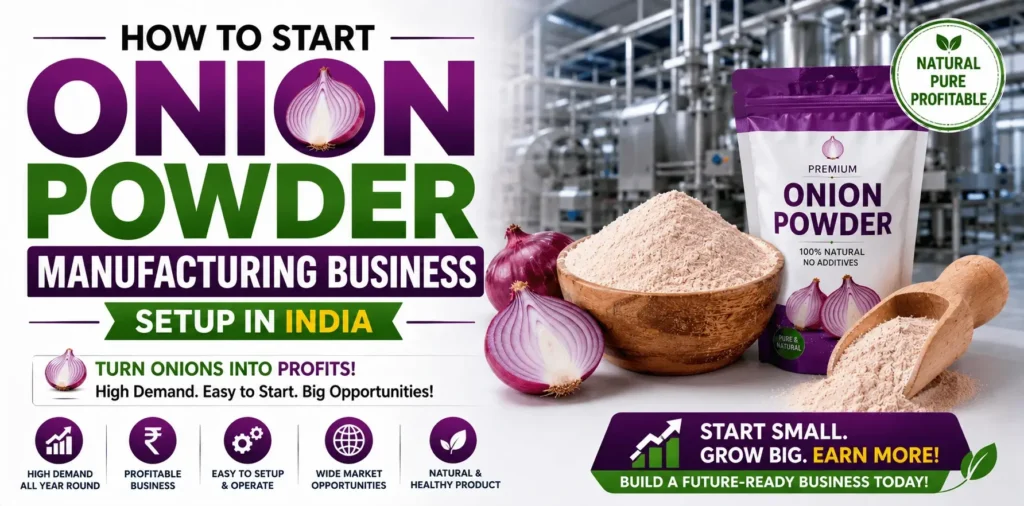
What is Onion Powder Manufacturing? Onion powder manufacturing is a food processing business that converts fresh onions into dehydrated powder through cleaning, slicing, drying, grinding, and packaging processes for seasoning and food industry applications. Onion powder is a widely used seasoning, it adds strong flavor and aroma to dishes and is essential in many food processing industries. With growing demand from fast food chains, restaurants, and households, the onion powder manufacturing business has emerged as a lucrative opportunity for entrepreneurs. This venture is particularly attractive due to the availability of raw materials, simple processing methods, and increasing consumption in domestic and international markets. Why Onion Powder Manufacturing Business is Profitable The onion powder manufacturing business is gaining popularity due to: Rising demand from food processing industries Growing fast-food market Export opportunities Long shelf life compared to fresh onions High value addition Easy storage and transportation Profit margins in onion powder manufacturing can range between 30%–40% depending on raw material sourcing, drying efficiency, and market positioning. Onion Powder Manufacturing Plant Cost in India Small-Scale Onion Powder Unit ₹10 lakh – ₹20 lakh investment Medium-Scale Manufacturing Plant ₹30 lakh – ₹60 lakh investment Major Cost Areas Drying machinery Pulverizer Packaging machines Raw onions Factory setup Labor Electricity Onion Powder Manufacturing Business Plan Include: raw material sourcing machinery setup drying technology packaging distribution export opportunities ROI breakeven Understanding the Onion Powder Manufacturing Process The process of onion powder manufacturing involves several carefully controlled steps to retain the flavor and nutritional quality of onions. It includes procurement, sorting, washing, slicing, drying, grinding, and packaging. Each phase plays a crucial role in ensuring the final product meets market standards. See Also: How to Manufacture Fruit Juice 1. Raw Material Procurement The first step in onion powder manufacturing is sourcing high-quality fresh onions. Medium-sized, white or red onions with low moisture content are ideal. Local markets, contract farming, or direct purchase from farmers can be good sources of supply. Seasonal availability and storage conditions significantly affect production planning. It’s important to ensure a consistent supply chain to maintain year-round operations. 2. Cleaning and Sorting After procurement, the onions are thoroughly cleaned to remove soil, dust, pesticides, and other foreign particles. Mechanical washers or water jets are commonly used for this purpose. Once cleaned, the onions are sorted manually or with grading machines based on size and quality. Spoiled or infected onions are discarded to avoid contamination during processing. 3. Peeling and Slicing The next step in onion powder manufacturing is peeling. Manual or automatic peeling machines can be used, depending on the production scale. After peeling, onions are sliced into uniform thin layers, usually between 2 mm to 5 mm. Uniform slicing is essential for even drying and better quality powder. Some units may also use blanching methods to enhance color retention and microbial safety. 4. Drying/dehydration Process Drying is the most critical part of onion powder manufacturing. The objective is to reduce moisture content to below 5%, which helps in long shelf life. Various drying techniques are used, including: Sun Drying (for small-scale units): Economical but slow and weather-dependent. Mechanical Tray Dryers: Commonly used in medium-scale production. Drying temperature ranges between 55°C to 65°C. Fluidized Bed Dryers or Vacuum Dryers: Used in advanced facilities for higher efficiency and better quality control. Proper drying ensures that the final product is free from microbial growth and retains strong flavor and aroma. 5. Grinding and Milling Once dried, the onion slices are transferred to grinders or pulverizers. This converts the dehydrated flakes into fine powder. The grinding process should be done in an environment that prevents moisture absorption. Mesh size can vary depending on the end-use; finer powders are preferred for seasoning and food mixes, while coarser granules may be used in soups or snacks. 6. Sieving and Quality Testing The ground onion powder is passed through sieves to ensure uniformity in particle size. Quality testing for microbial load, moisture content, and flavor is essential before packaging. Tests are conducted in laboratories to meet FSSAI, ISO, or HACCP standards, especially if the product is for export. 7. Packaging and Storage Packaging is vital in onion powder manufacturing to ensure product safety and extended shelf life. The powder should be packed in moisture-proof, air-tight, food-grade bags or pouches. Common packaging materials include laminated pouches, aluminum foil packs, and HDPE containers. Labels must include product name, weight, ingredients, batch number, manufacturing and expiry dates, and certifications. Store in a cool, dry place away from sunlight to prevent caking and spoilage. See Also: Start Sugarcane Juice Preservation & Bottling Plant Onion Powder Manufacturing Machine & Equipment A typical onion powder manufacturing unit includes the following machinery: Onion washer Peeling machine Slicing machine Tray or conveyor dryer Pulverizer/grinder Sieving machine Packaging machine Weighing scale Sealing machine Optional equipment includes elevators, storage bins, and quality testing instruments. Small-scale units may start with manual methods, while larger facilities require automated or semi-automated setups for efficiency. Investment and Profit Margin The investment required for onion powder manufacturing varies based on production capacity. For a small-scale unit, the setup may cost ?10 lakhs to ?20 lakhs, including equipment, infrastructure, and initial working capital. Medium and large-scale plants can require upwards of ?50 lakhs. Government subsidies under MSME or food processing schemes can reduce initial investment burdens. Profit margins in this business are quite attractive. The cost of raw onions is relatively low, and value addition through dehydration and packaging can increase the selling price significantly. A well-run unit can achieve 30%–40% gross profit, depending on the quality, brand positioning, and distribution network. Marketing and Distribution Channels Effective marketing strategies are key to success in the onion powder manufacturing business. Here are some common channels: B2B sales: Supply to food processing companies, spice manufacturers, and restaurants. Retail outlets: Packaging smaller units for direct sale in grocery stores and supermarkets. Online marketplaces: Selling through Amazon, Flipkart, BigBasket, etc. under a private label. Exports: Huge potential in countries like the USA, UAE, UK, and Canada where Indian spices
Date Fruit Processing, value added Products and utilization Medical Alcohol from Date Juice Concentrate, Animal Feed Using Date Pits, Discarded Dates and Other Ingredients -Project Investment Opportunities
India and many parts of the world have seen a rise in the consumption of nutrient-rich natural foods. One such superfood is the date fruit. With its growing popularity among health-conscious consumers and demand in food processing industries, date fruit processing has become a highly profitable business idea. From snacks to syrups and health products, processed date products offer excellent value addition, longer shelf life, and year-round business potential. Date Fruit Processing Projects | Profitable Product Ideas The date fruit processing industry offers opportunities to manufacture a wide range of value-added products. Whether you are targeting health food segments, traditional sweets, or export markets, setting up a date processing unit can help you tap into a high-margin niche. Moreover, dates are rich in iron, fiber, and natural sugars, making them ideal for both dietary and medicinal products. Entrepreneurs can choose from small-scale setups or invest in semi-automated lines based on capacity and market demand. Read Also :Profitable Manufacturing & Processing Ideas in Himachal Why Invest in Date Fruit Processing? The demand for processed dates is growing due to several reasons: Increasing consumption of healthy and organic snacks Preference for natural sweeteners over processed sugar Year-round availability of raw dates from Indian states like Rajasthan, Gujarat, and import-friendly Gulf countries Government support for food processing startups Moreover, processed date products are versatile and can be marketed to kids, fitness enthusiasts, diabetics, and even the vegan community. Popular Products from Date Fruit Processing There are many high-demand products you can manufacture through date fruit processing, including: Date syrup – A natural sweetener alternative for sugar and honey Date paste – Used in baking, confectionery, and health bars Dehydrated dates – Extended shelf life, great for snacks and gifting Date candies and chocolates – Often combined with nuts or cocoa Date-based energy bars – In demand in gyms, cafes, and health stores Stuffed dates – Premium product with nuts, seeds, or chocolate Date powder – Used in health drinks and baby food Moreover, with innovative packaging and branding, these products can easily find a place in premium retail shelves and export consignments. Machinery and Equipment Required The type of machinery depends on your product line. A basic date fruit processing unit may include: Date washing and sorting machine De-seeding machine Pulping or crushing machine Syrup or paste cooker Vacuum dryer or dehydrator Date packaging machine Cooling and labeling unit Weighing and sealing machines Moreover, for larger units, semi-automatic or automatic lines improve efficiency and reduce labor costs. Raw Material and Storage Your primary raw material is whole date fruits. You can procure these: From Indian date-producing states like Rajasthan, Gujarat, Punjab Through import channels (Oman, UAE, Iran, Tunisia) You’ll also need: Natural preservatives (if needed) Packaging materials (PET jars, pouches, or vacuum packs) Flavoring agents (optional for bars, candy, and syrups) Moreover, store raw dates in clean, cool, pest-free environments to maintain quality before processing. Investment and Profit Estimates Here’s a breakdown of estimated investment and returns for a date fruit processing business: Setup Type Investment Range (INR) Monthly Profit Potential (INR) Small-Scale Unit ?5 – ?10 lakhs ?30,000 – ?1 lakh Medium Unit ?15 – ?30 lakhs ?1.5 – ?3 lakhs Large Unit ?50 lakhs – ?1 crore+ ?4 – ?8 lakhs+ Moreover, your profits will depend on the product line, branding strategy, and distribution network. Target Market and Customers Processed date products appeal to a wide range of customers: Health-conscious individuals Organic food buyers Bakeries and sweet shops Modern retail stores and supermarkets Food exporters and wholesalers Gyms, cafes, and vegan restaurants Moreover, demand for gift packs and premium date varieties surges during festive seasons, Ramadan, and weddings. Licensing and Approvals To legally run your date fruit processing business, ensure you have: FSSAI food license GST registration Udyam (MSME) registration Pollution Control Board NOC (if applicable) Factory license (for large units) IEC code (if exporting) Moreover, product testing and labelling must comply with food safety standards for packaging and nutritional information. Packaging and Branding Attractive and hygienic packaging adds great value to processed dates. Popular formats include: Vacuum pouches Zip-lock packs PET jars or glass bottles (for syrup/paste) Gift boxes for premium items Use food-safe, eco-friendly packaging to appeal to environmentally conscious customers. Moreover, build your brand around health, purity, and quality. Marketing Strategies To grow your date fruit processing business, consider these methods: Sell through organic and gourmet food stores Partner with health food distributors and retailers Offer products on e-commerce platforms (Amazon, Flipkart) Create a brand website with subscription options Use social media for promotions, recipes, and awareness Join food exhibitions, trade fairs, and export events Moreover, sampling and influencer marketing can help build trust and increase visibility in niche segments. Challenges and Solutions Some common challenges include: Maintaining consistent supply of quality dates Short shelf life of some products (like syrup) Standing out in a competitive market To overcome them: Partner with reliable farmers or importers Use preservatives only where necessary Innovate with unique recipes, combos, and packaging Focus on certifications like FSSAI, USDA Organic, or HACCP Moreover, storytelling around local sourcing or health benefits can help differentiate your brand. See Also :Manufacturing & Processing Ideas in Odisha Conclusion The date fruit processing business is a profitable and sustainable venture for today’s food industry. With rising health awareness, demand for organic and natural products is only increasing. Whether you make paste, syrup, bars, or snacks, date processing offers high margins, export potential, and strong year-round demand. Moreover, with smart investment, branding, and the right processing equipment, entrepreneurs can turn this sweet superfruit into a solid business success. Contact Us
Spray Dried Fruit and Vegetables Juice Powder Vegetables and Fruit Juice Powder (Spray Dried Pineapple Juice Powder, Spray Dried Orange Juice Powder, Dehydrated Beetroot Powder, Dehydrated Carrot Powder)Manufacturing Plant, Detailed Project Report, Profile, Business Plan, Industry Trends, Market Research, Survey, Manufacturing Process, Machinery, Raw Materials, Feasibility Study, Investment Opportunities, Cost and Revenue, Plant Economics, Production Schedule, Working Capital Requirement, Plant Layout, Process Flow Sheet, Cost of Project, Projected Balance Sheets, Profitability Ratios, Break Even Analysis
India’s agriculture sector is rich in fruit and vegetable production, but a significant portion goes to waste due to lack of processing and storage infrastructure. To reduce losses and increase shelf life, the demand for Spray-Dried Fruit & Vegetable Powders is rapidly growing in food, beverage, and nutraceutical industries. These powders are used in juices, baby food, seasonings, bakery mixes, instant foods, and health supplements. Moreover, spray drying is an effective and scalable technique to preserve flavor, color, and nutrition. Starting a plant for spray-dried products is a lucrative business idea that combines innovation with rising market needs. Spray-Dried Fruit & Vegetable Powders | Start a Plant Setting up a plant to manufacture Spray-Dried Fruit & Vegetable Powders is a profitable opportunity with long-term benefits. From mango and banana to tomato and spinach, nearly any fruit or vegetable can be converted into a shelf-stable powder using this advanced method. With the growing popularity of clean-label and ready-to-use ingredients, spray-dried powders are now preferred by FMCG companies, exporters, and health-conscious consumers. Moreover, the process allows year-round availability of seasonal produce and opens doors to domestic as well as global markets. Read Also :How to Start a Kids Electronic Toys Factory What is Spray Drying? Spray drying is a dehydration technique that converts liquid pulp or juice into fine powder by rapidly drying it with hot gas. The process is widely used in food and pharma industries for heat-sensitive materials. Key benefits: Retains natural flavor, aroma, and nutrients Ensures long shelf life (6–12 months) Produces easy-to-store and transport products Maintains consistent quality and hygiene Allows bulk production at commercial scale Moreover, spray drying is energy-efficient and suitable for both fruits and vegetables. Popular Spray-Dried Powders You Can Make Some of the most in-demand Spray-Dried Fruit & Vegetable Powders include: Mango powder Banana powder Tomato powder Pineapple powder Lemon powder Spinach powder Beetroot powder Carrot powder Ginger and garlic powders Papaya or guava powders Moreover, combinations or blends (like mixed vegetable soup base or smoothie premixes) add product variety and value. Raw Material and Sourcing Strategy To produce high-quality spray-dried powders, you need fresh, ripe, and blemish-free produce. Partnering with local farmers, APMC markets, or FPOs (Farmer Producer Organizations) ensures steady supply. Key sourcing tips: Choose high-yielding seasonal produce Procure in bulk directly from farms to reduce cost Store raw materials in cool chambers if not processed immediately Use organic-certified or pesticide-free produce for premium products Moreover, sourcing locally reduces transportation costs and ensures freshness. Machinery and Plant Setup A fully functional Spray-Dried Fruit & Vegetable Powders unit includes the following equipment: Washer and peeler Fruit/vegetable pulper Juice extractor or homogenizer Spray dryer unit Powder collection chamber Rotary sieve or classifier Packaging line (weighing, filling, sealing) Cold storage (optional) Capacity: A small-scale plant (100–200 kg/day) can be set up with semi-automatic machinery. Medium and large-scale setups can go up to 1–5 tons/day, requiring advanced automation. Moreover, the entire plant should maintain hygienic design standards as per FSSAI and GMP norms. Licensing and Compliance Starting a manufacturing unit in India requires the following registrations: FSSAI license for food safety compliance Udyam Registration (MSME) Pollution control NOC GST registration Factory license (if employing more than 10 workers) BIS certification (optional for exports) Moreover, ensure batch coding, nutritional labeling, and expiry dates are clearly mentioned on the packaging. Investment and Profit Analysis Here’s a rough idea of capital investment and earnings: Business Scale Investment Range Monthly Profit Potential Small Scale ?12 – ?20 lakhs ?50,000 – ?1.5 lakhs Medium Scale ?25 – ?50 lakhs ?1.5 – ?3 lakhs Large Scale ?70 lakhs+ ?4 – ?10 lakhs+ Profit margins depend on product mix, quality, and sales channels. Moreover, premium or organic powders fetch higher prices in the health and wellness sector. Packaging and Branding Proper packaging ensures longer shelf life and product appeal. Common options include: Aluminum foil pouches (for 50g to 1 kg packs) HDPE or PET containers with moisture lock caps Zip-lock kraft paper pouches (eco-friendly) Sachets for single-serve applications (beverages or soups) Include: Ingredients Usage suggestions Nutritional value FSSAI license number Batch code and expiry Moreover, clean-label, preservative-free, or vegan certifications enhance credibility and help capture niche markets. Target Markets and Distribution The demand for Spray-Dried Fruit & Vegetable Powders is rising across various sectors: Food processing companies Juice and beverage brands Health food and supplement makers Baby food manufacturers Institutional buyers (hotels, bakeries, caterers) Exporters (USA, Europe, UAE, Southeast Asia) Online platforms (Amazon, Flipkart, BigBasket) Moreover, direct-to-consumer sales through your brand’s website or niche health stores can yield higher profit margins. Marketing Strategies To grow your business, focus on: Building a website with detailed product listings SEO and content marketing (blogs, recipes, product usage) Sampling to B2B clients and retail chains Exhibiting at food expos and agri-fairs Collaborating with nutritionists, chefs, and influencers Offering trial packs or subscription models Moreover, visual content showcasing the production process and source farms can help build trust. See Also :Commercial Meat Processing | Opportunities in the Meat Industry Conclusion The rising demand for healthy, natural, and easy-to-use food ingredients is creating a strong market for Spray-Dried Fruit & Vegetable Powders. With relatively low investment and strong scalability, this business offers excellent scope in both domestic and international markets. Moreover, by sourcing fresh produce, using efficient spray-drying technology, and focusing on quality packaging and branding, entrepreneurs can build a sustainable and profitable venture in food processing. Now is the perfect time to tap into this opportunity and start a plant that delivers nutrition with convenience. Contact Us
Dehydrated Onion (Onion Dehydration Plant) Manufacturing Plant, Detailed Project Report, Profile, Business Plan, Industry Trends, Market Research, Survey, Manufacturing Process, Machinery, Raw Materials, Feasibility Study, Investment Opportunities, Cost and Revenue, Plant Economics, Production Schedule, Working Capital Requirement, Plant Layout, Process Flow Sheet, Cost of Project, Projected Balance Sheets, Profitability Ratios, Break Even Analysis
India is one of the largest producers of onions in the world, yet a significant portion of the crop is wasted due to poor storage and market fluctuations. This has paved the way for food processing ventures like Dehydrated Onion Plant Setup, which offers a sustainable and profitable solution. Dehydrated onions are widely used in instant foods, spices, seasonings, ready meals, and restaurant kitchens worldwide. Moreover, their long shelf life, ease of transport, and reduced weight make them ideal for both domestic and export markets. Dehydrated Onion Plant Setup | Business Plan & Report Setting up a Dehydrated Onion Plant Setup is a highly promising business in India’s growing agro-processing sector. With consistent demand from food processors, exporters, and bulk buyers, this project offers year-round production potential and attractive returns. Moreover, onions can be processed into flakes, granules, and powder—each serving a unique segment of the food industry. Read Also :Aluminum Cans Production Types of Dehydrated Onion Products You can produce multiple value-added products based on market demand: Onion flakes – commonly used in soups, ready-to-eat foods, and spice mixes Onion granules – used in seasoning and spice blends Onion powder – widely used in snacks, sauces, fast food, and bakery items Moreover, red, white, and pink onions can be processed depending on flavor profile and customer requirements. Raw Material Sourcing For a successful Dehydrated Onion Plant Setup, consistent supply of good quality onions is essential. Here’s how to ensure that: Source from major onion-producing states: Maharashtra, Gujarat, Madhya Pradesh, Rajasthan Partner directly with farmers or APMC markets to avoid middlemen Use storage facilities to maintain inventory during low-supply months Opt for varieties with lower moisture and higher pungency for better dehydration yield Moreover, timely procurement reduces cost and spoilage during processing. Manufacturing Process of Dehydrated Onions The step-by-step process for onion dehydration is as follows: Sorting and Grading: Remove damaged or oversized onions. Washing and Peeling: Clean and peel onions using automatic peelers. Slicing: Slice onions uniformly using stainless steel slicers. Blanching (Optional): Helps retain color and reduce microbial load. Drying: Use hot air tray dryers or conveyor dryers at 55–65°C until moisture drops below 4%. Milling (for granules/powder): Grind dried flakes into desired particle size. Sieving: Ensure uniformity using mesh classifiers. Packing: Pack products in moisture-proof, air-tight containers. Moreover, using solar-assisted or hybrid dryers can reduce energy costs over time. Machinery and Equipment Required A basic Dehydrated Onion Plant Setup requires the following machinery: Onion cleaning and peeling line Slicing machines Tray dryers / belt conveyor dryers Pulverizer (for powder production) Vibrating sieve Packaging machines (manual or automatic) Storage bins and conveyors For large-scale production, you may also consider cold storage units for raw onion and nitrogen-flushed packaging systems. Licensing and Government Approvals To run a compliant onion processing business in India, secure these registrations: FSSAI License – mandatory for food production Udyam/MSME Registration – for subsidies and benefits Factory License – based on manpower and production scale Pollution Control Certificate – required for waste disposal GST Registration – for tax compliance Export-Import Code (IEC) – if targeting overseas markets Moreover, availing subsidies under PMFME or NABARD food processing schemes can significantly reduce capital burden. Investment and Profit Potential Here’s an approximate investment and return breakdown: Plant Scale Investment Range Monthly Profit Potential Small (100–150 kg/day) ?15 – ?25 lakhs ?60,000 – ?1.5 lakhs Medium (300–500 kg/day) ?35 – ?65 lakhs ?2 – ?4 lakhs Large (1 ton/day+) ?1 crore+ ?6 – ?10 lakhs+ Profit margins are higher for onion powder and export-quality flakes. Moreover, off-season sales or bulk contracts with B2B buyers improve cash flow. Packaging and Storage Proper packaging is critical to retain quality and avoid moisture absorption: Use laminated pouches or HDPE containers Vacuum or nitrogen flushing extends shelf life Pack in 100g, 250g, 1 kg, or bulk 25 kg bags for wholesale Store in a dry, insect-free, and temperature-controlled warehouse. Moreover, implementing FIFO (First-In-First-Out) inventory management reduces stock wastage. Target Markets and Distribution Channels There is a growing demand for Dehydrated Onion Plant Setup products across industries: Spice and seasoning manufacturers Instant food producers (soups, noodles, snacks) Hotels, restaurants, and catering services Retail stores (under your own brand) Online marketplaces and health food stores Exporters targeting USA, UAE, Russia, and Europe Moreover, B2B partnerships offer repeat business and better pricing than retail. Branding and Marketing Tips To position your product effectively: Highlight hygiene, low moisture, and no preservatives Use labels with nutritional facts, FSSAI number, and batch codes Create a website showcasing sourcing, process, and quality standards Offer private labeling for retailers and exporters Participate in food expos and trade fairs Moreover, listing on B2B portals like IndiaMART, TradeIndia, and Amazon B2B can boost your business visibility. See Also :How to Start an LPG Cylinder Manufacturing Plant Conclusion The Dehydrated Onion Plant Setup offers an efficient, profitable, and future-ready business opportunity for Indian entrepreneurs. With rising demand for ready-to-use ingredients and a strong export market, dehydrated onion products are poised for rapid growth. Moreover, the business requires moderate investment, benefits from government schemes, and promotes value addition in the agricultural sector. By ensuring consistent quality, smart branding, and modern packaging, you can build a sustainable and scalable business in this high-demand segment. Frequently Asked Questions (FAQs) FAQ 1: What is a dehydrated onion plant setup and why is it profitable? A dehydrated onion plant setup is a food processing facility that converts fresh onions into dehydrated products like flakes, granules, and powder through a process of drying. These products are widely used in instant foods, spices, seasonings, ready meals, and restaurant kitchens worldwide. Why it is profitable: India is one of the largest onion producers globally Significant crop wastage creates opportunity for value addition Long shelf life and reduced weight make it ideal for export Consistent demand from food processors and bulk buyers Profit margins of 25-35% Government support under food processing schemes With rising demand for ready-to-use ingredients, a dehydrated onion plant setup offers excellent returns on investment. FAQ 2: What is the minimum investment required