
Smart Ways to Make Money from Home: Tips and Strategies

Tips for Making Money from Home 1. Create a Dedicated Workspace Designate a specific area in your home for work to minimize distractions and maximize productivity. Having a dedicated workspace helps you focus on your tasks , stay organized and making work from home more efficient. 2. Set a Schedule Establish a consistent work schedule to maintain a healthy work-life balance and stay focused on your tasks. Setting a schedule ensures that you allocate time for work, family, and personal activities. 3. Stay Organized Keep track of deadlines, tasks, and finances to ensure smooth operations and avoid unnecessary stress. Use tools like calendars, to-do lists, and budgeting apps to stay organized and on top of your responsibilities, especially when working from home Jobs 4. Invest in Technology Equip yourself with the necessary tools and technology to perform your job effectively, whether it’s a reliable computer, high-speed internet, or relevant software. Having the right technology ensures that you can work efficiently and meet client or employer requirements. 5. Network Build relationships with fellow professionals, clients, and potential collaborators to expand your opportunities and grow your business or freelancing career. Networking helps you connect with like-minded individuals, discover new opportunities, and build a supportive community. 6. Continuous Learning Stay updated with industry trends, tools, and techniques through online courses, workshops, and networking events to enhance your skills and remain competitive. Continuous learning allows you to stay relevant in your field and adapt to changing market demands. 7. Seek Feedback Solicit feedback from clients, peers, or mentors to identify areas for improvement and refine your services or products. Feedback helps you understand your strengths and weaknesses, allowing you to deliver better results and satisfy customer needs. 8. Manage Finances Keep track of your income, expenses, and taxes to maintain financial stability and plan for future growth. Managing your finances effectively ensures that you can budget, save, and invest wisely to achieve your financial goals. 9. Stay Persistent Building a successful career from home takes time and effort, so stay persistent in pursuing your goals and overcoming challenges along the way. Stay focused on your long-term objectives and remain resilient in the face of setbacks. 10. Take Breaks Prioritize self-care by taking regular breaks, exercising, and disconnecting from work to avoid burnout and maintain overall well-being. Taking breaks helps you recharge your energy, reduce stress, and improve your productivity when you return to work. Strategies for Making Money from Home 1. Diversify Your Income Streams Explore multiple avenues for generating income, such as freelancing, remote work, passive income, and side hustles, to mitigate risks and maximize earning potential. 2. Focus on Your Strengths Identify your core strengths and skills, and leverage them to find opportunities that align with your expertise and interests, helping you earn money online more effectively. 3. Build a Strong Online Presence Establish a professional online presence through a website, social media profiles, or online portfolios to showcase your work and attract clients or customers, ultimately helping you make money online. 4. Offer Value Focus on providing value to your clients or customers by delivering high-quality work, excellent customer service, and innovative solutions to their needs. 5. Market Yourself Invest time and effort into marketing and promoting your services or products through targeted strategies, such as content marketing, email campaigns, or networking events. 6. Optimize Your Pricing Determine your pricing strategy based on your skills, experience, market demand, and competition to ensure you’re adequately compensated for your work. 7. Seek Feedback and Iterate Continuously seek feedback from clients or customers to improve your offerings and refine your business model for long-term success. 8. Stay Flexible Adapt to changes in the market, technology, or client preferences by staying agile and flexible in your approach to work and business operations. 9. Collaborate with Others Collaborate with fellow professionals, businesses, or influencers to expand your reach, access new markets, and create mutually beneficial opportunities. 10. Invest in Growth Reinvest a portion of your earnings into professional development, marketing initiatives, or business expansion to fuel growth and sustainability over time. Ways to make Money From Home 1. Remote Work Explore remote job opportunities in your field or industry through job boards, company websites, or remote work platforms. 2. Home-Based Business Start a home-based business, such as an online store, consulting firm, or creative agency, leveraging platforms like Etsy, Shopify, or WordPress to reach customers worldwide. 3. Content Creation Create and monetize content on platforms like YouTube, Twitch, or TikTok. Whether you’re a vlogger, gamer, educator, or entertainer, there are opportunities to earn ad revenue, sponsorships, and donations from your audience. 4. Online Store Create your own website or online store to sell your handmade crafts directly to customers. Platforms like Shopify, WooCommerce, and Big Cartel offer user-friendly tools for building and managing your online store. 5. Local Boutiques and Shops Approach local boutiques, gift shops, and galleries to inquire about consignment or wholesale opportunities for selling your handmade crafts. Establishing partnerships with retail stores can help increase your visibility and sales within your community. 6. Freelancing Offer your skills and expertise as a freelancer on platforms like Upwork, Freelancer, and Fiverr. Whether you’re a writer, graphic designer, web developer, or digital marketer, there are countless freelance Work opportunities available. 7. Passive Income Streams Invest in income-generating assets that require minimal ongoing effort, such as rental properties, dividend-paying stocks, peer-to-peer lending, or affiliate marketing. Create content or products that generate royalties or recurring revenue. Conclusion NPCS (Niir Project Consultancy Services) Businessmen and entrepreneurs might benefit from obtaining detailed reports from NPCS (Niir Project Consultancy Services), and they soon recognize this through resource sales. Following are few justifications for purchasing NPCS report: Contact Us
Profitable Business Ideas for Startup
Introduction Have you ever desired to launch your own company but lacked the knowledge of where to begin? If so, you’re not alone—many aspiring entrepreneurs are searching for Profitable Business Ideas For Startups ventures. Some lucrative opportunities include businesses in chocolate production, pre-engineered buildings (P.E.B.) steel construction, lithium oxide extraction from lithium ore, geogrid manufacturing, and the production of herbicides from Artemisia annua. Why not consider starting one of these businesses if you’ve been wanting to operate your own company? In this blog post, we’ll examine the prospects for beginning a business, from locating reliable suppliers to effectively marketing your goods. Start Industry of Chocolate Made from cocoa beans, chocolate is a delectable dish that is appreciated by many. It is made in a variety of shapes, including solid bars, chips, and liquid forms. Chocolate has a variety of uses outside of baking and candy-making, such as in the creation of hot cocoa and sauces for desserts that are flavoured with chocolate. The cocoa bean, which contains a number of compounds that give chocolate its distinct flavour and scent, is where chocolate gets its flavour. Uses and Application Chocolate has a wide range of applications and many diverse purposes. In confectionery goods like candy bars and cakes, chocolate is one of the most widely used ingredients. To generate a variety of flavours and textures, chocolate can be combined with other ingredients. Chocolate can be used in baking in addition to confectionery products. A few of the delectable treats that incorporate chocolate include brownies, cookies, and cakes. Benefit of Starting Chocolate Industry Advantages of launching the chocolate industry establishing a chocolate business can be a terrific way to earn money and build a long-lasting enterprise. Profits from the sale of chocolate products have a lot of potential because the demand for them grows annually on a global scale. The following are a few of the primary advantages of beginning a chocolate business: 1. Simple access to raw resources; 2. Product range expansion; 3. Product diversity 4. Brand loyalty 5. Affordable overhead Overall, beginning a chocolate business has a lot of advantages. Global Market Outlook The estimated size of the worldwide chocolate market in 2021 was USD 113.16 billion, and from 2022 to 2030, it is projected to expand at a CAGR of 3.7%. Consumer awareness of the health benefits of eating premium chocolate, which continues to be the main market driver. The expansion can be ascribed to growing knowledge of the health advantages of dark chocolate, including less risk of cardiovascular illnesses, lower cholesterol, and lower blood pressure, among others. Pre-Engineered Building (P.E.B) Steel Structure Manufacturing Business Metal buildings are manufactured, built, and erected using a sort of building system called a pre-engineered building (PEB) steel structure. The system’s parts are pre-cut and pre-drilled in the factory before being transported to the installation site, where they are swiftly and simply put together with a minimum amount of physical labour. Pre-engineered Building (P.E.B) Steel Structures’ product line includes prefabricated building frames for industrial workshops, schools, hospitals, warehouses and exhibition halls. Benefit of Starting This Industry For those who are considering investing in it, the pre-engineered building (P.E.B) steel structure business has a number of advantages. First off, compared to conventional steel buildings, the cost of materials and labour is lower. More earnings and a quicker return on investment are made possible by this. Furthermore, these structures require less maintenance than conventional steel structures, which results in long-term cost savings. Also, compared to traditional structures, the construction process is substantially quicker, resulting in a shorter lead time for projects. Indian Market Outlook Pre-engineered building sales in India are expected to reach USD 48.4 billion by 2030, growing at a CAGR of 11.66% from 2022 to 2030. In 2021, the market was worth USD 18.1 billion. With a growth rate of 9.5%, India is outpacing China, which is rising at an 8.5% rate, in the PEB construction market. Pre-engineered building sales in India are estimated to be $0.38 billion. Presently, only 33% of Indian construction is based on PEBs, with conventional construction accounting for the remaining 67%. Era BuildSys is attempting to expand across all industries in order to do so. Global Market Outlook By 2030, the market for pre-engineered buildings is anticipated to have grown from USD 12071.0081 million in 2022 to USD 30019.92548 million, with a compound annual growth rate (CAGR) of 13.90%. (2022 – 2030). Walls, columns and beams, roofs and floors, as well as other products, are included in the product-based market segmentation for pre-engineered structures. In 2021, the segment that contributed the most to the market statistics for pre-engineered structures was roofs and floors. Flooring and roofing are significant parts of pre-engineered structures all around the world in terms of value. Setup Plant of Titanium Dioxide from Rutile Ilmenite Ore Titanium dioxide, a naturally occurring mineral made of titanium, oxygen, and other chemicals, is extracted from rutile ilmenite ore. The most prevalent form of titanium in nature is titanium dioxide. Ilmenite and rutile ores deposits are extracted from river bottoms and beach sands all over the world. For its purity and stability, the rutile form of titanium dioxide is widely prized. Typically, sulphate and chloride procedures are used to extract titanium dioxide from ilmenite and rutile ores. Benefit of Titanium dioxide There are various environmental advantages of titanium dioxide as well. By reflecting sunlight back into the atmosphere as opposed to absorbing it like conventional carbon-based materials do, it aids in the reduction of air pollution. This means that by reflecting heat away from the Earth’s surface, it helps to keep the air cooler and more breathable. In addition, titanium dioxide is a non-toxic and biodegradable alternative to conventional materials that is better for the environment. Uses and Application Rutile and ilmenite ores are the source of the naturally occurring mineral titanium dioxide (TiO2). It is one of the minerals that is most widely utilized in the world, and it has a variety of uses, including sunscreen, food
Top 9 Profitable Business Ideas to Start With 8 Lakhs to 40 Lakhs
Micronutrient-fortified food helps to prevent chronic diseases like obesity, diabetes, and heart disease by increasing the intake of micronutrients (vitamins and minerals) that may otherwise be lacking in the diet. There are many micronutrients that play a role in maintaining healthy body weight and blood sugar levels, such as vitamins C and B6, folic acid, zinc, and magnesium. For health reasons, we need to take in certain essential vitamins and minerals every day and if we fail to do so, it can lead to various health issues later on. Deficiencies in one or more micronutrients such as iron, zinc, and vitamin. A are widespread in low- and middle-income countries and compromise the physical and cognitive capacity of millions of people. Food fortification is a cost-effective strategy with demonstrated health, economic and social benefits. Fortified Food Market size is estimated at $172.4 Million in 2020, projected to grow at a CAGR of 6.1% during the forecast period 2021-2026. If you work in the food sector, especially if you deal with peanuts, you’ve probably heard the term Decortication and Packing of Peanuts. Simply said, it comprises removing the outer skin of the peanut and packing it before to shipping or selling it to customers. What does it mean, though, to decorticate peanuts? What does the term “decortication” mean? Before hulling, peanuts have their skins removed. They’re roasted after that. The roasting kills the microorganisms that live naturally on peanut shells, keeping the oils from becoming rancid. After roasting, peanuts are shelled again to remove any remaining shell fragments. This treatment also gets rid of any minute shell fragments that were missed during the decortication process (this can happen if a peanut gets slightly crushed during shelling). Finally, the decorated nuts are pulverized into a fine powder for use in products like peanut butter and protein powders. India is the world’s second-largest producer of groundnuts. Indian groundnuts come in three varieties: Bold or Runner, Java or Spanish, and Red Natal. Peanuts are the most extensively utilized crop in the food sector, and they may be found in a wide range of products. The peanut market is estimated to increase at a CAGR of 4.5 percent from 2021 to 2026. The government has made non-biodegradable plastic illegal, with rigorous regulations in place. Government initiatives to support the industry, as well as increased public awareness of the dangers of non-biodegradables, are likely to fuel growth. A balm is a concentrated, waterless moisturizer that delivers the oil directly to the skin. And because there is no water, there is no need for emulsifiers. Oils blend and beeswax thickens it up. The absence of water also means that balms do not require much preservative, because bacteria cannot grow without water. They are preserved with either essential oils and/or vitamin E. Balm is touted as a multipurpose product that may be used for a wide range of issues, especially pain. Here are some potential uses: The government set up the Ministry of AYUSH (Ayurveda, Yoga, Unani, Siddha and Homoeopathy) in November 2014 to promote the country’s indigenous alternative medicines including education and research. Thus, due to demand it is best to invest in this project. A detergent is a surfactant or a mixture of surfactants with cleansing properties in dilute solutions. These substances are usually alkyl benzene sulfonates, a family of compounds that are similar to soap but are more soluble in hard water, because the polar sulfonate (of detergents) is less likely than the polar carboxylate (of soap) to bind to calcium and other ions found in hard water. Businessmen and entrepreneurs might benefit from obtaining detailed reports from NPCS (Niir Project Consultancy Services), and they soon recognize this through resource sales. Following are few justifications for purchasing NPCS report: Contact Us
Start A Business Today! Mix Plaster, Block Jointer, Tile Adhesive And M 20 Concrete (Micro Concrete) |Are You Ready To Start A Business? Launch now Mix Plaster, Block Jointer, Tile Adhesive and M 20 Concrete (Micro Concrete) Manufacturing Business
Materials frequently used in the building industry include mix plaster, block jointer, tile adhesive, and M 20 Concrete (Micro Concrete), which has a number of uses. Unlike Mix Plaster, which is applied as a base layer on walls or ceilings before painting or decorating, Block Jointer is used to securely bond masonry blocks. Tile adhesive, used alongside M-20 Concrete (Micro Concrete)—a high-strength concrete mix for repairing cracks and building durable structures—helps attach tiles to walls, floors, and other surfaces. In residential, commercial, and industrial contexts, you can use Mix Plaster, Block Jointer, Tile Adhesive, and M 20 Concrete (Micro Concrete) for various applications. Along with levelling floors and walls, you can apply mix plaster to prepare walls for painting or decorative treatments. Block Jointer works best for joining masonry blocks, while Tile Adhesive fastens tiles to both indoor and outdoor surfaces. The last material is M 20 Concrete (Micro Concrete), which is excellent for filling cracks and offering a sturdy surface for heavy loads. The construction industry needs a number of essential components, such as mix plaster, block jointer, tile glue, and M-20 concrete (micro concrete). A few stages in the manufacturing process must be rigorously followed in order to create the highest quality product. Prior to launching a business producing Mix Plaster, Block Jointer, Tile Adhesive, and M 20 Concrete, ascertain the raw materials required for each product (Micro Concrete). The most common raw materials used to make mix plaster are cement, sand, water, and additives like lime or gypsum. Block jointer typically has three ingredients: sand, water, and portland cement. Tile adhesive and M 20 concrete require cement, sand, gravel, and water (micro concrete). The next step is to blend the raw materials in the correct proportions. For mix plaster and block jointer, the proper cement to sand ratio is 1:6, however for tile adhesive and M-20 concrete, it is 1:3. (Micro concrete). It’s crucial to achieve the ideal ratios for the greatest product. As soon as the raw ingredients are ready, a mixing machine should be fed with them. This machine thoroughly mixes the components to create the final product. The length of time and speed of mixing will vary depending on the type of product being produced. After the mixing process is finished, the products can be packaged for sale. Starting a business in the construction industry may be an incredibly rewarding and fruitful endeavour. Creating a business with a focus on producing products like Mix Plaster, Block Jointer, Tile Adhesive, and M 20 Concrete (Micro Concrete) might be quite lucrative. Creating a company that sells M 20 Concrete (Micro Concrete), tile adhesive, mix plaster, and block jointer has a number of advantages. High Demand: Because these materials are used in the building industry, they are always in high demand, therefore you shouldn’t have any trouble selling your products. Which has made it more straightforward than ever. By starting a business that produces M 20 Concrete (Micro Concrete), Tile Adhesive, Mix Plaster, Block Jointer, and Block Jointer, you can gain all of the benefits. If you’re looking for a thrilling opportunity in the construction industry, this firm may be perfect for you! Over the five-year forecast period, it is expected that the ready-mix concrete market in India would develop at a CAGR of more than 9% and surpass USD 15 million in 2020. (2021-2026). an increase in investments and development activities is driving the growth of the construction industry. With a CAGR of 8.2%, it is predicted that the market for ready-mixed concrete would grow from USD 792.2 billion in 2021 to USD 1,374.2 billion in 2028. Construction is one of the largest industries in the world. It has also undergone a large amount of changes during the last few decades. The importance of employing environmentally friendly products and practises that lower carbon emissions has increased significantly in recent years. Ready-mixed plaster, block jointers, tile adhesive, and micro concrete have all experienced a rise in demand as a result of their little environmental impact and lack of water usage during production. Ready mix plasters, which have advantages including quicker installation, requiring less skilled labour, and being less expensive, will see an increase in demand throughout the anticipated period. Contact Us
Start Building the Business of Your Dreams
Starting your own business can be one of the most rewarding decisions you’ll ever make. Whether you’ve been dreaming about it for years or just had a lightbulb moment recently, the path to entrepreneurship is an exciting journey filled with possibilities. But before jumping in, it’s essential to know what it takes to start building the business that reflects your passion, values, and long-term goals. Discover Your Why Before anything else, ask yourself: why do you want to start building the business? This might seem like a simple question, but your “why” will guide your vision, fuel your motivation, and keep you going through tough times. Some people are driven by financial freedom, while others want to solve a problem they deeply care about. Understanding your purpose will not only help shape your brand story but also make your business stand out in a crowded market. Related Business Plan: Manufacturing Business Ginger Oil & Ginger Powder Research Your Idea Thoroughly After identifying your motivation, it’s time to validate your business idea. Don’t rush this step. Take a deep dive into market research. Who is your target audience? What problem are you solving? Are there already businesses offering similar solutions? If yes, what makes your approach unique? Transitioning from a vague idea to a solid business concept requires concrete data. Use tools like surveys, focus groups, and keyword research to understand demand. This groundwork is vital, especially if you’re planning to invest your savings or attract investors. Related Business Plan: Manufacturing Business Ginger Oil & Ginger Powder Create a Business Plan That Works Next, draft a clear and realistic business plan. This is your roadmap. It doesn’t have to be a hundred pages long, but it should cover all the essential aspects: Executive summary Business description Market analysis Organization and management structure Products or services offered Marketing and sales strategy Financial projections Even if you’re not seeking external funding, a business plan keeps you focused and accountable. In fact, many successful entrepreneurs revisit their plans regularly to adapt to changing circumstances. Download Pdf: Let’s Get Started Today Own Dreamer Business Build a Strong Brand Identity Now that you’ve laid the foundation, it’s time to focus on your brand. When you start building the business, remember: your brand is more than just a logo. It’s the tone of voice you use, the promises you make, and the feelings you evoke in your customers. Think about what makes your business different. What are your core values? What do you want people to associate with your brand? From your website to your packaging, every element should align with your brand identity. Read Similar Articles: Production Plant of Ginger Oil Choose the Right Business Structure Transitioning from an idea to a legal entity requires choosing the right business structure. Should you register as a sole proprietorship, a partnership, an LLP, or a private limited company? Each structure has its pros and cons depending on your vision, investment capability, and level of risk you’re willing to take. It’s a good idea to consult with a legal or financial advisor at this stage. That way, you’ll ensure your structure supports both compliance and growth. Visit this Page for more Information: Start a Business in Chemical Industry Projects Set Up the Financial Backbone A business without proper financial management can quickly fall apart. So, once you’ve finalized your structure, open a dedicated business bank account. Invest in reliable accounting software or hire a professional accountant if possible. Furthermore, create a budget. Track every rupee. Understand your cash flow. Knowing your numbers not only boosts your confidence but also builds credibility if you’re applying for a business loan or seeking funding. Related Business Plan: Manufacturing Business of Potassium Permanganate Build an Online Presence Early In today’s digital-first world, an online presence is non-negotiable. Even before your product or service launches, begin crafting your digital footprint. Start with a professional website. Then, claim your business profiles on platforms like Google, Instagram, Facebook, and LinkedIn. By doing so, you lay the groundwork for visibility and engagement. Blogging regularly, optimizing for SEO, and staying active on social media are all cost-effective ways to reach your audience. Remember, your online identity will shape your reputation, especially in the early days. Read our Books Here: The Complete Technology Book on Chemical Industries Start Small but Think Big One common mistake many new entrepreneurs make is trying to do everything at once. Don’t fall into this trap. Start small. Launch with a minimum viable product (MVP) to test your concept. Gather feedback, adapt quickly, and improve. At the same time, keep your long-term vision in mind. Even as you make small moves, align them with your ultimate goals. This balance between short-term execution and long-term strategy is what separates successful businesses from those that fizzle out. Visit this Page for more Information: Start a Business in Export Oriented Units Business Surround Yourself with the Right People No one builds a dream business alone. As you start building the business, look for people who share your enthusiasm and values. These can be co-founders, mentors, freelancers, or even supportive friends and family. Network actively. Join local business groups, attend industry events, and seek mentorship from experienced professionals. Often, the right connection can open doors you didn’t even know existed. Related Business Plan: Business Plan For Trading Embrace the Learning Curve Let’s be honest—entrepreneurship is tough. There will be days when things don’t go as planned. Rejections, delays, financial hiccups—they’re all part of the journey. But each setback is also a lesson. Treat every challenge as an opportunity to learn. Read books, listen to podcasts, take online courses. The more you educate yourself, the more equipped you’ll be to make smarter decisions. Read Similar Articles: Trading/Exporting High Quality Promote, Promote, Promote It’s not enough to create something great—you also need people to know about it. So, create a marketing plan and stick to it. Use a mix of digital and offline marketing tactics, from email newsletters and
Stop Waiting And Start A Business Today
Starting your own business is no longer just a dream—it’s a powerful step toward freedom, financial independence, and personal fulfillment. The good news? You don’t need to wait for perfect conditions. With the right mindset, tools, and planning, you can start a business today and turn your ideas into action. Whether you’re a first-time entrepreneur or someone tired of the 9-to-5 grind, now is the best time to begin. Why You Should Start a Business Today Taking action today means you’re no longer putting your goals on hold. The sooner you start, the sooner you learn, adapt, and grow. Rather than waiting for a “better” time, you get ahead of the curve. Starting now also builds momentum, pushing you to take meaningful steps that lead to long-term success. Business Plan: Best Industry Business Plan Discover Your Business Purpose Before you dive into the logistics, take a moment to understand your “why.” Why do you want to start a business? Is it to solve a problem, gain freedom, or earn extra income? Clarifying your purpose gives you direction and makes your goals more meaningful. This purpose becomes your north star when facing challenges. Visit this Page for More Information: Start a Business in Biodegradable Products Industry Pick an Idea That Solves a Problem Every profitable business exists because it solves a real problem. Look around you—what do people complain about? What’s missing in the market? Find something that combines your skills, passion, and a genuine need. Your business should offer a solution that adds value to your target audience’s life. Read Similar Articles: COPPER PRODUCTS Do Basic Market Research Don’t jump in blindly. Spend time understanding your target market. Who are they? What do they need? What are your competitors doing? Use tools like Google Trends, surveys, and competitor analysis to validate your idea. This step ensures that your business is not just based on guesswork but on real demand. Visit this Page for More Information: Start a Business in Speciality Chemicals Manufacturing Industry Choose a Simple Business Model Avoid overcomplicating things in the beginning. Choose a model that is easy to understand and execute. For instance, if you’re good at baking, start by taking local orders online. If you’re a designer, offer freelance services. Start lean, test fast, and grow as you go. Simplicity allows room for fast learning. Visit this Page for More Information: Start a Business in Chemical Industry Projects Set Up Your Legal and Financial Structure Once your idea is clear, handle the legal and financial basics. Register your business, get any necessary licenses, and open a dedicated business bank account. This shows professionalism and protects you from future complications. Plus, having clear finances from the beginning helps you monitor growth and profits. Related Business Plan: Sulphur Powder Manufacturing Business Build Your Online Presence Your business needs visibility. Even if you haven’t officially launched, begin building an online presence. Start with a simple website and social media profiles. Share valuable content that relates to your product or service. Digital presence builds credibility, reaches a larger audience, and allows you to engage with potential customers early. Related Feasibility Study Reports: Start Business Of Manufacturing Sulphur Powder Create a Quick Action Plan Don’t overthink or get stuck in planning forever. Instead, create a 7-day or 30-day action plan. Include small but specific tasks: build a landing page, call potential customers, or run your first social media post. These quick wins boost your confidence and move your idea closer to reality. Related Business Plan: A Business Plan For ISO Freight Containers Start Small and Test Often Rather than investing too much upfront, launch a minimal version of your product or service—a Minimum Viable Product (MVP). Offer it to friends, family, or a test group. Gather feedback, observe behavior, and adjust. Early testing gives you insights that polished planning never can. Read Similar Articles: CONTAINER Promote Your Business Consistently Promotion is key to visibility. Use social media, word of mouth, email newsletters, and local networks to spread the word. Make sure your message is clear—what are you offering, and why should people care? Over time, consistency will build trust, which is critical to long-term customer loyalty. Visit this Page for More Information: Start a Business in E-Waste Recycling Industry Stay Flexible and Keep Learning The market is constantly changing. What works today may not work tomorrow. So, remain flexible. Learn from your customers, study trends, and be ready to pivot if needed. Online courses, books, and podcasts are great resources to keep upgrading your knowledge and sharpening your edge. Read Similar Articles: WASTE MANAGEMENT AND RECYCLING Monitor Your Progress Track your performance regularly. Use metrics like website visits, sales, customer feedback, and social media engagement to measure growth. This helps you identify what’s working and where you need to improve. Set small, realistic goals and celebrate each milestone to stay motivated. Related Business Plan: Set Up E-Waste Recycling Plant Build a Support Network Don’t try to do it all alone. Connect with other entrepreneurs, mentors, or community groups. Join forums, attend online meetups, and ask for help when needed. A good network can provide advice, encouragement, and even collaboration opportunities that accelerate your business journey. Focus on Customer Experience From day one, make customer satisfaction a top priority. Respond to queries, deliver on time, and ask for feedback. A happy customer is your best marketing asset. They bring repeat business and recommend you to others—helping your business grow organically. Think Long-Term but Act Daily While it’s important to have a big vision, focus on daily actions. Each day, do something—no matter how small—that moves your business forward. Long-term success is built through consistent, focused daily effort. Conclusion: Start a Business Today and Own Your Future Every successful entrepreneur once stood where you are—full of ideas, hopes, and a touch of fear. But what separated them from others was the decision to act. When you start a business today, you’re not just beginning a new venture—you’re taking control of your time,
Bamboo Fiber & Yarn | A Complete Business Plan for Manufacturing Bamboo Fiber & Yarn
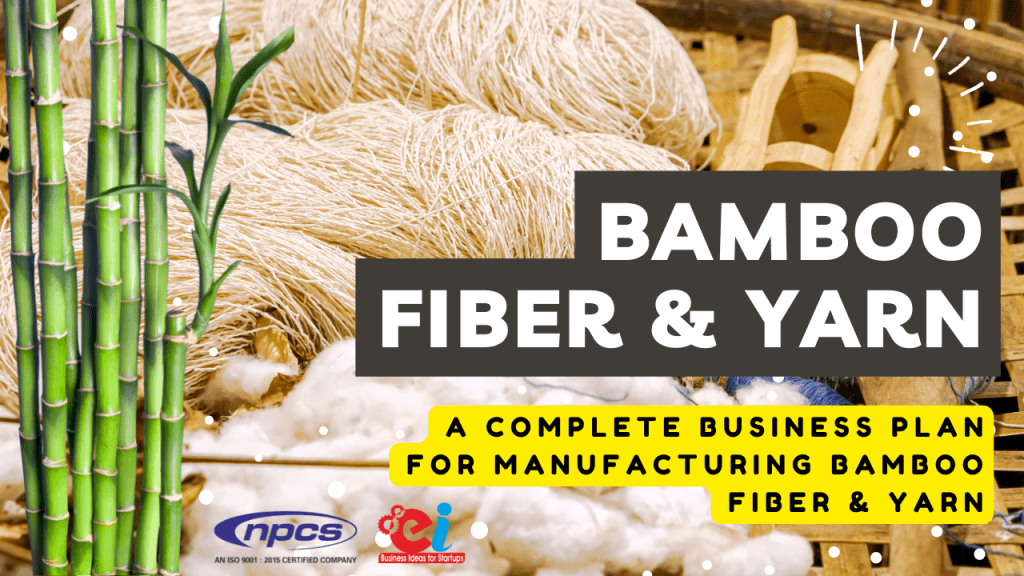
Bamboo fiber yarn is fast becoming a cornerstone in the world of eco-conscious textiles. As industries shift toward more sustainable and ethical practices, bamboo-based materials are emerging as an attractive alternative to traditional synthetic and cotton fibers. Starting a bamboo fiber yarn business not only taps into this growing demand but also contributes positively to the environment by offering a renewable, biodegradable, and highly versatile product. This comprehensive guide will take you through every essential step of launching your bamboo fiber yarn venture—from understanding the market and setting up the production facility to branding and scaling your operations. The Bamboo Fiber Yarn Market – An Eco-Friendly Revolution The textile industry is undergoing a significant transformation. Consumers are becoming more aware of the ecological impact of their choices, demanding materials that are not just stylish and comfortable but also sustainable. Bamboo fiber yarn perfectly meets these criteria. Derived from the cellulose of bamboo plants, this yarn boasts natural antibacterial properties, UV resistance, moisture-wicking capabilities, and a soft texture similar to silk or cashmere. Globally, the demand for eco-friendly yarns is increasing, especially in developed regions like Europe, North America, and parts of Asia. Bamboo yarn is used in making garments, towels, baby clothing, home textiles, and even medical fabrics. Launching a business in this space means capitalizing on a product that is both trendy and environmentally responsible. Step-by-Step Plan to Start a Bamboo Fiber Yarn Business 1. Market Research and Feasibility Analysis Before entering any business, a deep understanding of the market is crucial. Study the domestic and international demand for bamboo yarn. Look into who your potential customers will be—garment manufacturers, weavers, eco-conscious brands, or direct consumers. Identify the size of your target market, pricing patterns, consumption trends, and major players. Additionally, analyze production trends and raw material sourcing options. India, China, and Southeast Asia have an abundance of bamboo resources, making them ideal for raw material procurement. Also, look into trade policies, import/export laws, and government schemes supporting bamboo-based industries. 2. Create a Robust Business Plan A well-structured business plan serves as the backbone of your venture. It guides your strategy and attracts potential investors. Your business plan should include: Executive Summary: Overview of your business goals and mission Market Analysis: Trends, competitor study, and customer segmentation Products and Services: Details on the types of bamboo yarn you’ll offer—combed, carded, dyed, blended, etc. Operations Plan: Description of production processes and logistics Marketing and Sales Plan: Strategy for brand positioning, pricing, and distribution Financial Forecasts: Projected revenues, break-even analysis, and funding needs 3. Choose the Right Business Model You can operate under various business models depending on your budget and vision: Manufacturing-Based Model: Involves full production from raw bamboo to finished yarn. High investment, full control. Outsourcing Model: You outsource production to third-party manufacturers and focus on branding, packaging, and distribution. Wholesale/Retail Model: Buy bulk bamboo yarn and sell to retailers or consumers. Online DTC Model: Set up your eCommerce store and sell bamboo yarn directly to end users. Each model has its pros and cons. Choose the one that matches your capital, expertise, and long-term goals. 4. Legal Compliance and Licensing Operating a bamboo fiber yarn business legally requires registration and compliance with local laws. Obtain: Company Registration (Sole Proprietorship, LLP, or Private Limited Company) GST Registration Trade License from your municipality Import-Export Code (for international trade) Pollution Control Board License (if required) Textile Industry Certifications such as OEKO-TEX®, GOTS, or ISO These certifications also enhance your credibility in global markets. 5. Setting Up the Manufacturing Facility To produce bamboo fiber yarn, you need a facility equipped with advanced machinery and a streamlined production line. The primary steps include: Bamboo Pulping: Raw bamboo is chopped and chemically or mechanically processed to create pulp. Fiber Extraction: The pulp is treated and spun into fibers. Carding and Spinning: The fibers are aligned and twisted into yarn. Dyeing and Finishing: Yarns are dyed naturally or synthetically, then dried and finished. Packaging: The final yarn is packaged for wholesale or retail use. Essential Machinery Includes: Bamboo cutting and grinding machines Steam cooking tanks and chemical treatment vats Fiber extractors and carding machines Ring spinning or open-end spinning machines Dyeing vessels and drying chambers Packaging and winding machines 6. Sourcing Raw Materials Sourcing quality raw bamboo is critical. Partner with certified organic bamboo cultivators who practice sustainable farming. In India, states like Assam, Mizoram, Tripura, and parts of Karnataka and Maharashtra offer vast bamboo plantations. Ensure that your supply chain is ethical and environmentally sustainable. You may also explore partnerships with bamboo cooperatives and forest departments to get bulk raw material at affordable rates. Marketing Strategy for Bamboo Fiber Yarn Business 1. Develop a Green and Responsible Brand Your branding should strongly highlight your sustainable values. Use eco-friendly materials for packaging. Tell your brand story—how your yarn helps reduce environmental impact. Highlight features like: 100% biodegradable Hypoallergenic and breathable Sustainably harvested Fair-trade and cruelty-free 2. Build a Strong Digital Presence Having an SEO-optimized website is essential. Use your primary keyword, “bamboo fiber yarn,” at least seven times throughout your site. Optimize for other related terms like organic yarn, eco-friendly fibers, sustainable textile material, etc. Include: Product pages with detailed descriptions Blog content focused on sustainable fashion and DIY projects Customer testimonials and case studies Tutorials on using bamboo yarn Don’t forget to list on online marketplaces like Amazon, Etsy, IndiaMART, and Shopify. 3. Social Media and Influencer Marketing Use platforms like Instagram, Pinterest, and Facebook to showcase the aesthetic appeal of your yarn and its uses. Collaborate with influencers in the eco-fashion and crafts niche. Host giveaways and user-generated content campaigns to increase visibility. 4. Target B2B Clients Attend textile expos, sustainability summits, and trade fairs. Distribute samples and product catalogs to manufacturers, wholesalers, and designers. Offer customized solutions, bulk discounts, and white-label opportunities. Financial Projections and Cost Estimation Cost Head Estimated Investment (INR) Land and Infrastructure ?20–30 Lakhs Machinery and Equipment ?40–60 Lakhs Raw Material Procurement ?10–15 Lakhs Skilled Labor and Operations
March 2022 Entrepreneur India Monthly Magazine
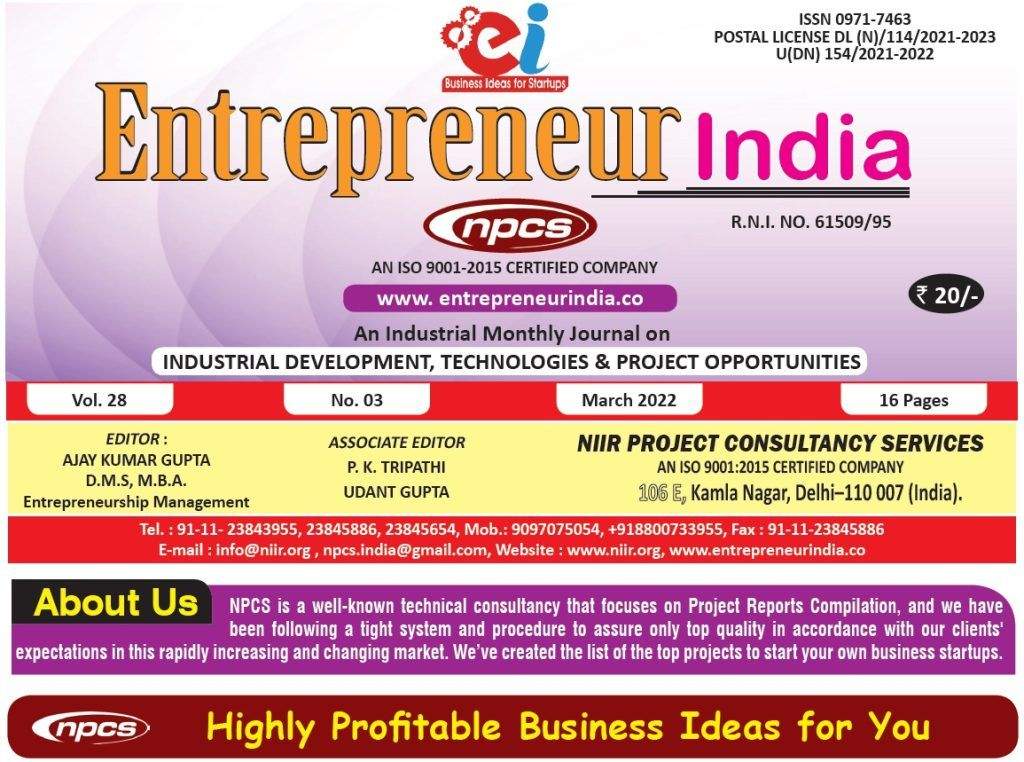
Entrepreneur India March 2022 marked a significant turning point in how we perceive and celebrate innovation, startup resilience, and leadership in the dynamic Indian business landscape. The cover story, along with exclusive features and editorial insights, provided not only inspiration but also actionable ideas for business leaders, aspiring entrepreneurs, and ecosystem enablers. Unveiling the Cover Star: Powering Change Through Vision and Impact The Entrepreneur India March 2022 issue spotlighted a visionary entrepreneur whose innovation and leadership transformed an entire sector. With a legacy rooted in disruptive thinking and sustainable impact, the cover star symbolized the spirit of Indian entrepreneurship. Their journey was one of perseverance, risk-taking, and sheer belief in purpose—a model for startups and legacy businesses alike. The narrative didn’t merely glamorize success; it peeled back layers to showcase grit, failures, pivots, and strategy. We gained insights into building a team culture that thrives under pressure, the necessity of adaptability in post-pandemic economies, and the power of bold decision-making. Emerging Startups to Watch in 2022 The March 2022 issue cast a strong spotlight on India’s rising startups that are shaking up traditional markets with cutting-edge technologies and customer-centric models. From AI-driven healthtech platforms and fintech disrupters to climate-focused agritech ventures, the magazine mapped out the entrepreneurial DNA of tomorrow’s market leaders. These startups exemplified traits critical for modern business success: Scalability with purpose Customer obsession Lean, agile operational models Tech-first product innovation Among the featured enterprises were names like: FinEdge360, revolutionizing personal finance management through AI GreenRoots AgriTech, leveraging data to empower farmers sustainably HealNow, a remote diagnostics platform scaling rural healthcare Women Entrepreneurs Leading the Way A dedicated section in Entrepreneur India March 2022 emphasized the unparalleled rise of women entrepreneurs across industries. It covered stories of women breaking glass ceilings in sectors traditionally dominated by men, such as manufacturing, logistics, and deep tech. The stories weren’t limited to metros. From tier-2 cities like Indore and Kochi, women founders are now building scalable ventures in e-commerce, beauty tech, and edtech. These businesswomen are reimagining what leadership looks like in modern India and building inclusive workplaces focused on diversity, resilience, and impact. Tech Trends Reshaping Business Models Another central theme of the Entrepreneur India March 2022 edition was technology as a business enabler. This feature decoded how Indian businesses—both new-age and traditional—are leveraging: Blockchain for traceability and trust Machine Learning for dynamic customer experiences IoT for real-time supply chain optimization AR/VR for immersive brand experiences These innovations are no longer luxury additions but essential tools driving competitive advantage. Companies featured in the issue revealed how even SMEs are integrating automation and data to unlock growth and efficiency. Funding Outlook and Investor Trends The March edition gave readers an exclusive analysis of India’s funding landscape, highlighting: Top-performing sectors for investment: fintech, SaaS, D2C Investor expectations in 2022: profitability, sustainability, governance Early-stage vs. Late-stage funding: shift towards quality over quantity Several VC leaders interviewed in the issue emphasized the need for founders to build robust financial models and sustainable monetization strategies. Gone are the days of vanity metrics—investors now demand clarity in CAC, LTV, burn rates, and unit economics. Policy and Startup Ecosystem Support The Entrepreneur India March 2022 issue also reviewed India’s evolving policy environment supporting innovation. Key highlights included: Startup India Seed Fund Scheme PLI schemes encouraging manufacturing startups Ease of doing business reforms Tax relaxations for new startups Policy experts and legal analysts explained how these developments are fueling an entrepreneurial boom beyond metros, creating thousands of job opportunities and unlocking regional innovation hubs. Sustainability and ESG as Business Imperatives Sustainability isn’t a buzzword anymore—it’s a boardroom priority. The magazine explored how businesses are embedding Environmental, Social, and Governance (ESG) values into core operations. Brands showcased were those driving impact with: Carbon-neutral operations Circular economy models Diversity and inclusion benchmarks Transparent governance frameworks India Inc. is waking up to the reality that customers, investors, and regulators now expect more than just profits—they demand purpose. And Entrepreneur India March 2022 captured this paradigm shift in vivid detail. Thought Leadership: Voices that Matter An outstanding feature in this issue was the inclusion of thought-provoking editorials and opinion pieces from business icons, economists, and domain experts. Topics ranged from: The future of remote work and hybrid workplaces The reimagining of education through EdTech The post-pandemic consumer psyche These essays provided strategic foresight for navigating upcoming market trends and leveraging change as a catalyst for innovation. Case Studies and Strategy Breakdowns One of the strengths of Entrepreneur India March 2022 was its in-depth business case studies. These real-world examples of strategy execution offered readers a behind-the-scenes view into: Brand repositioning during COVID-19 Digital transformation journeys Turnaround stories post economic slowdowns The case study on a legacy textile brand digitizing its supply chain, for instance, was a lesson in legacy innovation done right. Another standout was how a D2C grooming brand leveraged influencer marketing and community commerce to grow its revenue 5x. Leadership Lessons and Founder Mindset True to its DNA, the issue emphasized the founder’s mindset—tenacity, clarity, and constant learning. Readers were treated to insights into: How to build leadership teams aligned with vision Why mental health matters in the founder journey Balancing innovation with execution discipline Leaders featured in this edition shared their mantras—from dealing with rejection and scaling culture to staying customer-first in every decision. Entrepreneur India March 2022: A Catalyst for Change More than just a magazine, the Entrepreneur India March 2022 issue was a playbook for every Indian founder, innovator, investor, and changemaker. It chronicled a new era of entrepreneurship, where success is measured not just in revenue or scale but in impact, resilience, and adaptability. Whether you are an early-stage entrepreneur or a seasoned executive, the lessons from this issue transcend sectors and size. They reaffirm that India is not just the world’s startup capital in numbers—but in vision, diversity, and action. If you missed this iconic edition, we highly recommend revisiting it for timeless business wisdom. Visit the page Select and Choose the Right Business
A Complete Business Plan to Start a Profitable Business of Zinc Oxide from Zinc Dross

The business of Zinc Oxide from Zinc Dross is a profitable and sustainable opportunity in the field of metal recycling and chemical manufacturing. Zinc dross is a byproduct of the hot-dip galvanizing process, containing a significant amount of usable zinc. Through proper extraction and processing, this dross can be converted into high-purity zinc oxide—a valuable industrial compound used in rubber, ceramics, paints, fertilizers, cosmetics, and pharmaceuticals. With increasing demand for zinc oxide and rising interest in circular economy models, this business offers both environmental and commercial benefits to forward-thinking entrepreneurs. Understanding the Market Demand Zinc oxide is a versatile compound with high global demand due to its diverse industrial applications. It is used as a vulcanizing agent in the rubber industry, an additive in fertilizers, an opacifier in ceramics, and a whitening agent in paints and cosmetics. The Indian market alone imports a significant amount of zinc oxide each year, creating a clear opportunity for localized production through sustainable sources. Establishing a business of Zinc Oxide from Zinc Dross allows companies to capitalize on the ready availability of zinc dross from galvanizing plants while minimizing raw material costs. Moreover, this recycling process aligns well with environmental norms and waste management rules. Industries and government agencies are actively supporting ventures that turn industrial waste into usable products, further encouraging growth in this domain. Visit this Page for More Information: Start a Business in Chemical Industry Projects Raw Material: Zinc Dross and Its Source Zinc dross is the residue formed during hot-dip galvanization, which includes unutilized metallic zinc, iron particles, and impurities. Typically, it contains 80–95% metallic zinc, making it an ideal raw material for zinc oxide production. Galvanizing units, steel fabrication plants, and alloy manufacturers generate zinc dross in substantial quantities, offering a consistent and low-cost supply channel for manufacturers. In the business of Zinc Oxide from Zinc Dross, acquiring quality dross is the first step. The location of the plant should ideally be near galvanizing clusters or industrial hubs where zinc waste is regularly generated. This ensures reliable procurement, lower logistics costs, and improved overall margins. Read Similar Articles: Inorganic and organic Manufacturing Process and Equipment The process of extracting Zinc Oxide from Zinc Dross involves thermal treatment and oxidation in a controlled furnace environment. Here’s how the general workflow unfolds: Pre-cleaning and drying of dross: Removing excess oil, dust, and moisture for consistency Melting and vaporization: Heating dross in a specially designed furnace at 900–1100°C Oxidation in air: Zinc vapor reacts with oxygen to form zinc oxide Collection and cooling: The fine zinc oxide particles are collected in a bag filter system or chamber Sieving and packaging: The final product is refined, sieved, and packed for sale Key equipment includes rotary furnaces, bag filters, dust collectors, heat exchangers, pollution control units, and packaging systems. Modern zinc oxide units often incorporate energy recovery and emission control systems to enhance environmental compliance. Watch other Informative Videos: Chemicals (Organic, Inorganic, Industrial) Capital Investment and Costing To start the business of Zinc Oxide from Zinc Dross, an estimated capital investment of ?50 lakh to ?2 crore may be required depending on plant capacity, technology level, and location. The cost breakdown includes: Furnace and processing equipment: 40% Pollution control and filter systems: 20% Infrastructure, labor, and utilities: 20% Licensing and compliance: 5–10% Working capital for raw material and packaging: 10–15% Zinc dross costs around ?150–200 per kg depending on purity and source, while high-grade zinc oxide can fetch ?250–?300 per kg in the Indian market. With good process control and raw material procurement, the profit margin can range between 20% and 30%. The ROI is usually achievable within 1.5 to 2 years of operation. Read our Books Here: Chemical Technology (Organic, Inorganic, Industrial), Fine Chemicals Legal Permissions and Regulatory Compliance For setting up a business of Zinc Oxide from Zinc Dross, certain approvals and licenses are necessary: MSME/Udyam registration GST registration Factory license and safety clearance Environmental NOC from the Pollution Control Board Consent to establish and operate (CTE/CTO) Hazardous waste authorization (as zinc dross is an industrial waste) BIS certification (optional but helpful for certain buyers) Complying with environmental standards such as emission norms, air filtration, and proper waste disposal is critical for plant operations. Non-compliance may lead to penalties or operational shutdown, so investing in pollution control equipment and certified handling practices is essential.Read our Book Here: The Complete Technology Book on Chemical Industries Target Customers and Sales Channels The end market for zinc oxide includes rubber and tyre manufacturers, paint companies, fertilizer producers, ceramic tile makers, plastic compounders, cosmetic brands, and even pharmaceutical companies. Each of these sectors requires specific zinc oxide grades—active, white seal, or pharma-grade—depending on application. Your marketing strategy in the business of Zinc Oxide from Zinc Dross should focus on: Building B2B supply chains with direct manufacturers Supplying to government fertilizer tenders (if compliant with agro standards) Bulk supply to tyre and rubber processing units Listing products on industrial B2B marketplaces Participating in metal recycling and chemicals trade expos Packaging, branding, and consistent quality testing play a significant role in customer retention and scaling. Environmental and Economic Benefits Apart from being financially rewarding, the business of Zinc Oxide from Zinc Dross promotes circular manufacturing, reducing environmental damage caused by discarded metal waste. It minimizes the need for virgin zinc mining, which is energy-intensive and ecologically damaging. By converting industrial dross into a usable input, this business helps galvanizing units dispose of waste responsibly while contributing to zero-waste manufacturing goals. The by-products generated during the zinc oxide process (like slag or ash) can sometimes be sold to cement or construction companies, further improving overall material efficiency. Future Potential and Expansion As industrial activities grow and galvanization expands, the availability of zinc dross will increase—fueling the long-term potential of this business. With technological upgrades like automated furnaces, better filtration systems, and AI-based quality checks, producers can increase output while maintaining consistent quality. There is also export potential to countries with heavy rubber, paint, and glass manufacturing bases. Additionally,
Why one should Start a Business in Turkey, Middle East
Starting a business in Turkey has become an increasingly attractive opportunity for international entrepreneurs and investors looking to establish operations in a dynamic, rapidly developing economy. Strategically located at the crossroads of Europe and Asia, Turkey offers access to key global markets, a young and skilled workforce, favorable government incentives, and a growing infrastructure base. The Turkish economy is diversified, with strong sectors in manufacturing, tourism, agriculture, automotive, textiles, and information technology. With clear legal frameworks and simplified registration processes, starting a business in Turkey is no longer limited to large corporations—it’s a viable path for small businesses, startups, and multinational expansions alike. Start a Business in Turkey, Click Here Economic Overview and Investment Climate Turkey’s economy is one of the largest in the region, driven by domestic consumption, export-oriented manufacturing, and foreign investment. The government actively encourages entrepreneurship and foreign direct investment (FDI) through its investment office and various public-private partnership programs. Starting a business in Turkey benefits from several bilateral and multilateral trade agreements, including its customs union with the European Union. This provides Turkish-based businesses with seamless access to a market of over 700 million consumers. The country’s population of more than 85 million is predominantly young, with over half under the age of 32. This demographic advantage translates into a digitally aware, tech-savvy consumer base and workforce. Additionally, Turkey’s central location and well-developed logistics infrastructure—including airports, railways, and seaports—make it an ideal hub for regional distribution. Watch Video: Doing Business in Turkey, Middle East Business Structures and Company Registration When it comes to starting a business in Turkey, choosing the right legal structure is critical. The most common types of business entities are: Limited Liability Company (LTD ?T?) Joint Stock Company (A.?.) Branch Office Liaison Office Sole Proprietorship The Limited Liability Company is most preferred by foreign investors due to its simplicity and flexibility. It requires at least one shareholder and one director, with a minimum capital of 10,000 TRY. Company registration is managed through the Central Registry System (MERSIS), where all steps—from reserving a name to finalizing incorporation—are handled digitally. Read Similar Articles: Business Opportunity in Middle East Countries To complete the process, you must prepare articles of association, deposit capital, open a bank account, register with the tax office, and obtain a potential tax number. Foreign shareholders may need to obtain a Turkish tax identification number and notarize required documents, which can be handled by legal advisors or company formation agents. Overall, starting a business in Turkey can be completed within a few weeks with proper documentation. Taxation and Financial Regulations One of the key concerns while starting a business in Turkey is understanding its tax structure. The corporate income tax rate currently stands at 20% (subject to change based on government policy), and value-added tax (VAT) is generally 18%. There are also special consumption taxes and withholding taxes applicable in certain transactions. Turkey has signed double taxation treaties with over 80 countries, allowing foreign investors to optimize their tax planning. Additionally, the country is compliant with OECD’s Common Reporting Standard (CRS) and has strict anti-money laundering laws, ensuring financial transparency and global business credibility. All businesses must maintain accurate accounting records and submit regular tax returns. It’s advisable to partner with a licensed financial consultant or accountant who understands both Turkish regulations and international reporting standards. Read our Books Here: Startup Books for Entrepreneurs Incentives for Foreign Investors To encourage foreign direct investment, the Turkish government provides several incentives depending on the industry and region. These may include: Customs duty and VAT exemptions Income tax reductions Social security premium support Land allocation for industrial facilities Interest support for investment loans For example, technology development zones (Technoparks) and organized industrial zones offer tax holidays and infrastructure support to businesses operating in R&D, software development, and manufacturing. Foreign entrepreneurs starting a business in Turkey in these zones can enjoy up to 100% tax exemptions for several years, making the venture highly cost-effective in the initial stages. Banking, Currency, and Financial Transactions Turkey’s financial system is well-regulated and efficient. Once your business is registered, opening a corporate bank account is straightforward, though KYC (Know Your Customer) checks are stringent. Most banks offer services in English and support international transactions. The official currency is the Turkish Lira (TRY), and businesses can hold accounts in foreign currencies like USD or EUR. With access to SWIFT and international wire transfer systems, cross-border operations are streamlined. However, due to currency fluctuations, many businesses hedge their exposure or transact in multiple currencies. Digital payment systems, mobile banking, and fintech platforms are also widely used, offering additional convenience for online or e-commerce-based businesses. A well-planned banking strategy is a crucial step in starting a business in Turkey and managing operations smoothly. Hiring and Employment Regulations Turkey has a large pool of skilled labor at competitive wage levels. The Labor Law governs employment contracts, working hours, minimum wage, severance pay, and workplace safety. Foreign companies can hire Turkish citizens easily, but employing foreigners requires a valid work permit, which is typically grante once the company is operational and meets certain criteria. Standard working hours are 45 hours per week, and workers are entitled to paid annual leave, social security, and health benefits. The minimum wage is revised regularly and varies slightly depending on sector and region. Businesses must register employees with the Social Security Institution (SGK) and ensure timely contributions. For companies in sectors like IT, construction, and export services, starting a business in Turkey allows you to tap into a young, dynamic workforce willing to engage in innovative, tech-driven work environments. Opportunities Across Industries There are numerous sectors where starting a business in Turkey can yield high returns. These include: Tourism & Hospitality: Capitalize on Turkey’s status as a top global tourist destination Renewable Energy: Solar, wind, and hydro projects receive strong government backing Agribusiness & Food Processing: Huge domestic and export potential in organic and processed foods Real Estate & Construction: Urban development and housing projects are ongoing E-commerce &