
Production Business of Liquid Epoxy Resin | Epoxy Resin Industry
The production business of liquid epoxy resin is gaining immense traction in the industrial chemical segment due to the widespread use of epoxy-based materials in adhesives, coatings, flooring, electrical systems, automotive, and composite manufacturing. Liquid epoxy resin, known for its exceptional strength, durability, chemical resistance, and bonding properties, has become a key ingredient in several high-growth industries. As global demand for lightweight materials and high-performance coatings increases, setting up a liquid epoxy resin production business can be a highly profitable venture for chemical manufacturers and new entrepreneurs with technical and industrial capabilities. Visit this Page for More Information: Start a Business in Epoxy Resin Industry Market Potential and Applications The demand for epoxy resins has surged across sectors such as electronics, construction, marine, aerospace, and renewable energy. A well-planned production business of liquid epoxy resin can supply high-quality resins to paint manufacturers, printed circuit board makers, automotive component producers, and flooring solution providers. The market is witnessing consistent growth due to the increased adoption of resin-based paints and corrosion-resistant coatings. Epoxy resins are also replacing traditional materials in wind turbine blades, electric vehicle (EV) batteries, and structural composites. Read our Book Here: Epoxy Resins Technology Handbook In construction, liquid epoxy resin is used in concrete bonding, waterproofing, and floor coatings. In electronics, it’s critical in encapsulating semiconductors and PCBs. This wide range of applications makes the production business of liquid epoxy resin resilient against market fluctuations, with scope for scaling and diversification. Read Similar Articles: Resins Industry Raw Materials and Chemistry The primary raw materials for the production business of liquid epoxy resin are epichlorohydrin (ECH) and bisphenol-A (BPA). These are reacted through a condensation reaction in the presence of a base like sodium hydroxide to produce bisphenol-A-based epoxy resins, which can be further modified for different viscosities and thermal properties. Some variants also use novolac or aliphatic modifiers for specific performance needs. Sourcing raw materials of consistent purity is critical to ensure product quality. Many manufacturers also add reactive diluents, flexibilizers, or hardeners depending on the target use. As the production involves exothermic reactions and precise temperature control, setting up proper safety and quality protocols is essential. Watch other Informative Videos: Profitable Projects on Paints Plant Setup and Machinery Requirements To start the production business of liquid epoxy resin, one requires a well-equipped chemical manufacturing plant with provisions for handling hazardous and flammable chemicals. Key machinery and equipment include: Stainless steel or glass-lined reactors with temperature and pressure control Condensers and reflux units Storage tanks for raw materials and finished resin Vacuum pumps, filters, and dosing systems Cooling and heating systems Automated packaging units (barrels, drums, or bulk tanks) Fume scrubbers and fire safety systems Depending on the production scale, a 500–1000 sq. m industrial unit may be needed with appropriate zoning and environmental clearance. Manufacturing Process Overview The production business of liquid epoxy resin typically follows a batch-wise or continuous manufacturing method. The general process includes: Charging the reactor with bisphenol-A and epichlorohydrin Initiating reaction with an alkaline catalyst (usually NaOH) Controlling temperature to manage the exothermic reaction Removing byproducts like water and salt Filtering and vacuum stripping of unreacted ECH Cooling, testing, and packing the resin into containers Each batch undergoes stringent QC tests for viscosity, epoxide equivalent weight (EEW), color index, and reactivity. Proper formulation adjustments are made to cater to different industrial requirements. Related Project: Epoxy Resin – Manufacturing Plant Licensing, Safety, and Compliance Since this is a chemical manufacturing unit, the production business of liquid epoxy resin must comply with local industrial, fire, and environmental laws. Key licenses and registrations include: Factory license under the Factories Act Consent to Establish and Consent to Operate from Pollution Control Board Hazardous waste handling approval MSME/Udyam Registration GST Registration and Excise documentation Worker safety and chemical handling training protocols The factory must be equipped with fire extinguishers, eyewash stations, personal protective equipment (PPE), and well-defined safety signage. Hazardous chemical storage protocols must be in place for raw materials like ECH. Branding and Packaging Strategy In the production business of liquid epoxy resin, packaging is usually done in: 30 kg to 220 kg plastic or metal drums Intermediate Bulk Containers (IBCs) Bulk tankers (for industrial supply) Branding plays a less visible role in B2B chemicals, but technical datasheets, product certifications (such as REACH or RoHS), and customer technical support become essential value additions. Having a dedicated sales and technical team helps build trust with industrial clients. Marketing and Distribution Channels The business is primarily B2B, so your production business of liquid epoxy resin should focus on: Bulk buyers like paint manufacturers, composite manufacturers, adhesive companies Distributors and chemical wholesalers Industrial procurement portals like IndiaMART or TradeIndia Direct sales through exhibitions, technical seminars, and online channels Export markets via merchant exporters or direct shipping to Southeast Asia, the Middle East, or Europe A technical brochure with TDS (technical data sheet) and MSDS (material safety data sheet) is crucial to gain industrial clients. Offering bulk discounts, credit terms, and custom formulations also boosts long-term partnerships. Read our Books Here: Synthetic Resins Cost Structure and Profit Margins An indicative cost breakdown for starting a production business of liquid epoxy resin: Plant setup and equipment: ?35–50 lakhs (for small to mid-scale plant) Licensing and pollution compliance: ?3–5 lakhs First batch raw material procurement: ?15–20 lakhs Working capital for 3 months: ?10–15 lakhs Packaging and logistics setup: ?5 lakhs The manufacturing cost per kg of epoxy resin ranges from ?160 to ?200, depending on purity and formulation. Selling prices range from ?220 to ?350 per kg. With bulk production and consistent quality, profit margins can reach 20–30%, and breakeven may occur within 1.5 to 2 years. Future Opportunities and Innovations As industries evolve, epoxy resin formulations are being optimized for sustainability, low VOC emissions, and bio-based feedstocks. The production business of liquid epoxy resin can expand into: Water-based epoxy systems Bio-based resins using plant oils High-temperature resins for aerospace Epoxy nanocomposites for electronics Custom adhesives for EV batteries and solar panels
Spinning Mill Business Plan | Start your own Textile Business
A well-prepared spinning mill business plan is the cornerstone of launching a successful venture in the textile industry. Spinning mills serve as the primary stage of fabric production, where raw fibers like cotton or polyester are converted into yarn. With global demand rising for textiles and clothing, spinning mills have become a lucrative business opportunity for entrepreneurs looking to invest in manufacturing. Crafting a comprehensive spinning mill business plan ensures that operational, financial, and strategic aspects are covered for smooth establishment and sustainable growth. Visit this Page for More Information: Start a Business in Textile Processing Industry Understanding Market Potential and Demand The textile industry, especially in countries like India, Bangladesh, China, and Vietnam, is witnessing consistent demand for yarn. Cotton yarn remains the most consumed material globally, but the shift toward blended and synthetic fibers is also creating new opportunities. A detailed spinning mill business plan should evaluate regional and global demand trends. With initiatives like “Make in India” and rising exports of garments, there is a need for domestic yarn production to reduce dependency on imports. Furthermore, the boom in fashion, e-commerce, and retail sectors continues to drive the need for quality yarn supply. Read Similar Articles: Textile Industry Selecting the Right Type of Spinning Mill Before diving into the technical and financial details, your spinning mill business plan must identify the type of spinning unit to be established. Ring spinning is the most commonly used method for producing fine, strong yarn, especially from cotton. Open-end or rotor spinning, though more cost-effective, produces lower-quality yarn but at higher speeds. Compact spinning offers a high-tech option, minimizing hairiness and increasing yarn strength. Synthetic spinning mills, on the other hand, focus on polyester, viscose, or blended yarns for industrial usage. Each type demands a different scale of investment, machinery, and technical workforce. Related Project Report: Rising Demand in Spinning Mill Core Components of a Spinning Mill Business Plan Your business plan should begin with a clear objective—whether you’re setting up a small-scale unit for local powerlooms or a mid-sized plant targeting garment exporters. Choosing a suitable location is essential; textile hubs like Tamil Nadu, Gujarat, and Maharashtra offer easy access to cotton, labor, and logistics. The legal structure—proprietorship, partnership, LLP, or private limited—must be decided early for funding and compliance purposes. Market analysis is another critical area: determine your target buyers, their volume requirements, and price expectations. Define your production capacity clearly—whether 5,000 or 25,000 spindles—based on market potential and investment bandwidth. Read our Books Here: Textile Spinning Raw Materials and Supply Chain Planning No spinning mill business plan is complete without detailing how raw materials will be sourced. For cotton-based mills, procuring high-quality raw cotton from farmers, ginning mills, or the Cotton Corporation of India is essential. For synthetic yarn, you’ll need reliable suppliers of polyester and viscose fibers. Other inputs like lubricants, bale wires, and packaging materials must also be planned. Establish long-term contracts with vendors to manage price fluctuations and ensure uninterrupted supply. Having a warehouse for storing raw material and finished goods helps manage seasonal volatility in cotton prices and demand cycles. Machinery and Infrastructure Setup Machinery is the biggest capital expense in any spinning mill. Depending on the yarn type and production method, you’ll need blow room machines, carding machines, draw frames, speed frames, ring frames, and winding machines. Automated humidification and waste collection systems can improve efficiency and reduce material loss. Land and infrastructure costs vary based on location and size, but a 25,000-spindle unit would typically require 2 acres of space. A reliable power supply—either from the grid or a captive source like solar—is critical. Proper layout planning ensures seamless material movement, minimal downtime, and optimum worker efficiency. Related Feasibility Study Reports: TEXTILE BLEACHING Financial Requirements and Investment Estimates The capital requirement for a spinning mill depends on scale and automation. A small-scale unit might need ?3–5 crore, while a medium-sized unit can go up to ?15–20 crore. Machinery alone could cost around 60–70% of the total investment. Other costs include land acquisition, construction, utilities setup, and working capital for raw materials and wages. Your spinning mill business plan should include a detailed project report with capital investment, operating expenses, expected revenue, ROI, and breakeven analysis. To fund the project, you may explore term loans, subsidies under the TUFS scheme, MSME loans, and even private equity if the scale is large. Licensing and Regulatory Compliance Running a spinning mill requires several registrations and approvals. These include Udyam (MSME) registration, GST registration, a factory license from the Department of Factories and Boilers, and pollution control clearances. Labor law registrations such as PF and ESI are mandatory once you employ a sizable workforce. Some states offer incentives to textile businesses, including interest subsidies and tax benefits. For export operations, you’ll also need an Importer Exporter Code (IEC). Ensuring all documentation is in place will safeguard your business from legal disruptions and delays in commissioning. Workforce Requirements and HR Planning Manpower planning is another crucial element in your spinning mill business plan. Skilled workers are needed for machinery operation, quality control, packing, and maintenance. Supervisors and shift managers oversee daily production targets, while administrative staff handle procurement, accounting, and compliance. A medium-sized unit may require 100–150 workers across shifts. Providing housing or transport facilities may improve retention in rural areas. Staff training is essential to reduce machine downtime and improve output quality. Labor laws and safety regulations must be strictly adhered to, including regular health checks, safety drills, and insurance. Sales and Marketing Strategy Producing yarn is just half the game—the other half lies in selling it effectively. Your spinning mill business plan should outline marketing channels. These can include selling directly to fabric manufacturers, exporters, powerloom units, or through yarn brokers. Digital platforms like IndiaMART and TradeIndia also offer B2B sales avenues. Participating in textile expos, partnering with apparel manufacturers, and offering consistent quality at competitive rates helps build long-term buyer relationships. Branding your yarn with certifications and quality seals can help gain
Production of Lithium Ion Battery (LiFePO4) | Business Plan
The production of lithium ion battery (LiFePO4) has rapidly become one of the most lucrative and future-ready industries in today’s clean energy revolution. As electric vehicles (EVs), renewable energy storage systems, and portable electronics see exponential growth, LiFePO4 batteries are gaining popularity due to their safety, stability, and longevity. Unlike other lithium-based chemistries, lithium iron phosphate batteries offer superior thermal stability and longer life cycles, making them ideal for diverse applications. Entrepreneurs and manufacturers exploring sustainable and high-growth sectors must seriously consider entering the production of lithium ion battery (LiFePO4) for long-term profitability and global relevance. Visit this Page for More Information: Start a Business in Lithium-Ion Battery Production Market Demand and Scope of Lithium Ion Battery (LiFePO4) Production The increasing adoption of electric mobility and solar power storage is fueling the production of lithium ion battery (LiFePO4) across global markets. The demand is expected to skyrocket in the coming decade, with governments, industries, and consumers seeking greener alternatives to fossil fuels. The compound annual growth rate (CAGR) for lithium iron phosphate batteries is projected to exceed 20% globally. India, China, the U.S., and Europe are investing heavily in battery production facilities, positioning LiFePO4 batteries as a key pillar of their clean energy roadmaps. Read Similar Articles: Battery Projects Why LiFePO4 is the Preferred Battery Chemistry When comparing various lithium-ion battery types, LiFePO4 offers numerous advantages: Enhanced Safety: LiFePO4 batteries are more chemically stable and less prone to overheating or explosion. Longer Life Cycle: They can endure up to 2000–3000 charging cycles without significant capacity loss. Environmental Safety: Contains no cobalt, reducing ethical and environmental concerns. Cost Efficiency: While the initial cost is slightly higher, the longer lifespan and reliability lower long-term costs. These factors make LiFePO4 the most suitable option for electric vehicles, power tools, energy backup systems, and home solar storage. Watch other Informative Videos: Electrical, Electronic Industries and Power Projects Key Raw Materials and Components To begin the production of lithium ion battery (LiFePO4), manufacturers must secure the following raw materials and components: Lithium Iron Phosphate (LiFePO4) as cathode material Graphite or Carbon for the anode Electrolyte Solution (typically lithium hexafluorophosphate in organic solvent) Separator Films (polyethylene or polypropylene-based) Aluminum and Copper Foils as current collectors Battery Casing (aluminum, stainless steel, or polymer enclosures) These materials are combined in a highly controlled production environment to maintain safety, consistency, and efficiency. Step-by-Step Manufacturing Process The production of lithium ion battery (LiFePO4) includes the following critical stages: Material Preparation: Powdered cathode and anode materials are mixed with binders and solvents to form a slurry. Coating: Slurries are coated onto respective metal foils and dried in large ovens. Electrode Cutting: Coated sheets are cut into appropriate sizes for cell assembly. Cell Assembly: Layers of cathode, separator, and anode are stacked or wound (for cylindrical cells). Electrolyte Filling: The electrolyte is injected into sealed cells inside a dry room. Formation & Aging: Cells are charged/discharged multiple times to stabilize the battery chemistry. Testing & Packing: Each cell undergoes capacity, voltage, and safety testing before being packed into modules or packs. Automation and clean-room environments are essential for consistent quality and efficiency in this high-precision process. Related Report: E- Vehicle, E-Rickshaw Machinery and Equipment Required Setting up a plant for the production of lithium ion battery (LiFePO4) requires investment in the following machinery: Slurry Mixers and Coating Machines Roll Press and Electrode Slitting Machines Stacking or Winding Machines Electrolyte Filling Equipment Battery Sealing and Formation Units Testing and Grading Systems Battery Management System (BMS) Integration Tools The scale of the machinery depends on whether you aim for small-scale assembly or full-fledged cell manufacturing. Investment and Plant Setup The capital required for setting up a LiFePO4 battery production facility varies depending on size and automation level. A semi-automated small-scale unit may cost ?5–10 crore (~USD 600K–1.2M), while a fully automated large-scale plant may exceed ?100 crore (~USD 12M+). Key factors affecting cost include: Import vs. domestic sourcing of equipment Availability of skilled technicians Power supply and clean-room requirements Compliance with environmental and safety regulations Government subsidies and startup grants are often available for EV battery or clean energy initiatives. Licensing and Regulatory Compliance For setting up a production unit for lithium ion battery (LiFePO4) in India or abroad, you must comply with: Pollution Control Board clearance Fire and electrical safety approvals ISO 9001 and ISO 14001 certifications BIS (Bureau of Indian Standards) or equivalent regulatory certifications Import/export licenses (for raw materials and machinery) Additionally, your product must meet international safety and performance standards such as UN38.3, IEC 62133, and RoHS directives for global distribution. Applications and Target Markets LiFePO4 batteries serve various high-growth markets: Electric Vehicles (2W, 3W, and 4W) Solar Energy Storage Inverter and UPS Systems Telecom Backup Units Medical Devices Marine and Aviation Sectors Consumer Electronics By customizing cell sizes and energy capacity, manufacturers can cater to diverse industries both domestically and internationally. Challenges in LiFePO4 Battery Production While the production of lithium ion battery (LiFePO4) offers excellent growth prospects, challenges include: Dependency on imported lithium and other critical minerals High initial setup costs Rapidly evolving technology and demand for R&D Need for temperature and humidity-controlled environments Battery recycling and end-of-life management However, with long-term planning, these obstacles can be turned into competitive advantages. Sustainability and Future Outlook The future of the production of lithium ion battery (LiFePO4) is aligned with global trends in sustainability, decarbonization, and energy independence. Ongoing research is enhancing battery density, recycling efficiency, and integration with AI-driven Battery Management Systems. Governments are supporting local production with tax benefits, import duty cuts, and PLI (Production-Linked Incentive) schemes. By investing early and focusing on quality, startups and manufacturers can play a pivotal role in India’s and the world’s green energy revolution. Conclusion In today’s climate-conscious economy, the production of lithium ion battery (LiFePO4) stands at the intersection of innovation, necessity, and sustainability. With growing applications across transportation, renewable energy, and digital infrastructure, LiFePO4 battery manufacturing presents a high-potential, future-oriented business opportunity. By understanding the technical, financial, and
Grain Processing Business Plan | Food processing Sector
A grain processing business plan is the foundation for launching a successful grain milling or processing unit in today’s agri-based economy. With the rising demand for processed grains such as flour, rice, semolina, pulses, and cornmeal, this industry offers immense profitability for entrepreneurs. In India and many other countries, grain processing plays a key role in food supply chains and rural employment. Having a detailed and structured business plan ensures clarity, reduces risks, and paves the way for operational success in a competitive market. Whether you’re looking to start small or aim for a large-scale setup, this business plan will guide you through each step. Why Grain Processing is a Lucrative Opportunity The growing global population and increasing urbanization have created an ever-expanding demand for processed food products, especially grains. A grain processing business addresses this need by converting raw grains into consumable forms, such as wheat flour, rice, corn grits, pulses, and animal feed. The advantage of entering this industry lies in its scalability and versatility—small flour mills or large industrial units both find their space. Additionally, governments offer subsidies and schemes for food processing industries, making the grain processing business plan even more viable for aspiring entrepreneurs. Visit this Page for More Information: Start a Business in Food Processing and Agriculture Based Industry Key Components of a Grain Processing Business Plan A solid grain processing business plan includes several components that serve as the foundation of your enterprise: Business Overview: Start with defining your business model—whether it is a wheat milling plant, rice processing unit, pulse processing, or a multi-grain facility. Market Research: Analyze consumer demand, supply chain networks, competitors, and market pricing. Product Range: Determine the variety of processed grains you plan to produce—flour, semolina, broken rice, maize powder, etc. Target Market: Define if your focus is B2B (wholesalers, restaurants, food companies) or B2C (retail pack). Location Strategy: Choose a place close to grain-producing regions to minimize raw material cost. Legal Structure: Decide your business type—proprietorship, partnership, or private limited company. Each of these factors must be clearly outlined to ensure your grain processing business operates smoothly from the start. Related Project Report: Business Industry of Grain Processing (Grading, Cleaning & Packaging of Rice & Pulses) Machinery and Infrastructure Requirements For a grain processing business plan, having the right infrastructure and equipment is essential. Machinery varies depending on the type of grain and the processing scale. For example: Wheat flour mill: Includes cleaning machines, grinding mills, sifters, and packaging units. Rice processing: Requires de-husking, polishing, sorting, and grading machines. Pulses or legumes: Needs splitting, de-husking, grading, and drying equipment. You’ll also need: Adequate power supply and backup Water access for cleaning processes Storage silos or warehouses Packing machinery for retail sales Having quality machines improves efficiency, reduces waste, and enhances product shelf life, which are critical for a profitable grain processing business. Read Similar Articles: Food Processing and Agriculture Projects Investment and Financial Planning The financial aspect of your grain processing business plan plays a central role in decision-making. Capital requirements vary based on plant capacity: Small-scale setup: ?10 – ?25 lakhs (manual/semi-automated) Medium-scale unit: ?50 lakhs – ?1 crore Large-scale commercial plant: ?2 – ?5 crores and above Costs include: Land or building rent/purchase Equipment and installation Raw materials procurement Staffing and operations Licensing and compliance Branding and marketing Funding sources include term loans, MSME business loans, venture capital, or government subsidies under food processing schemes such as PMFME or NABARD grants. Read our Books Here: Cereal Food, Cereals and Cereal Products Processing Industry Food Processing, Food Industry, Agriculture, Agro Processing Agriculture, Agro Based, Cereal Food, Milk, Cocoa, Chocolate, Ice Cream, Plantation, Farming Licensing and Regulatory Compliance Operating a grain processing business in India or abroad requires several licenses and regulatory approvals: FSSAI Registration for food safety compliance Factory License under local municipality rules Udyam Registration (MSME) for small businesses GST Registration for tax filing Pollution NOC if emissions or waste are involved Trade License from the local authority A detailed grain processing business plan must account for obtaining and renewing these documents to avoid legal troubles and to build trust with buyers. Human Resource and Workforce Planning To run a grain processing unit, you’ll need a well-trained team: Machine operators and technicians Quality control inspectors Packaging staff Logistics and delivery personnel Admin and sales executives Labor availability is crucial, especially in rural areas where the industry often thrives. Training programs and safety protocols must be part of your business operations to ensure smooth, safe, and consistent output. Related Feasibility Study Reports: Food Processing and Agriculture Based Projects Marketing and Distribution Strategy In your grain processing business plan, a well-defined marketing and distribution strategy will determine your reach and profitability. Here’s how to approach it: Branding: Establish a quality-centric, healthy image—especially for B2C markets. Packaging: Invest in airtight, moisture-proof, and attractive packaging. Distribution Channels: Tie up with wholesalers, supermarkets, and online grocery platforms. Online Presence: Launch a website, run social media campaigns, and list on e-commerce portals. Trade Shows and B2B Meetings: Participate in food expos and FMCG buyer meetings to expand your network. Effective branding and distribution allow even new players to compete with established processors by offering fresh, hygienic, and consistent quality. Risk Analysis and Mitigation Strategies Every business plan should include potential risks and mitigation plans. In grain processing, these include: Price Fluctuations in raw grain due to monsoon or supply chain issues. Contamination or Quality Complaints from poor storage or faulty processing. Power Failures or Machinery Downtime affecting daily output. Changing Government Policies or Import-Export Regulations. Market Competition from large-scale players. To manage these, always maintain a stock buffer, use insurance, adopt preventive maintenance, and continuously innovate with value-added products. Sustainability and Waste Management Today’s food processing industry demands sustainability. Your grain processing business plan should include: Waste utilization: Convert husk or bran into cattle feed or biofuel. Water recycling: Use settling tanks and filtration systems. Energy efficiency: Opt for solar panels or energy-efficient motors. CSR and Farmer Engagement: Work
Startup Business Opportunities with Investment of 3.5 Crore (Machinery).
India’s rapidly growing industrial ecosystem has opened the doors to a plethora of startup opportunities for entrepreneurs with significant capital at their disposal. Among the promising investment brackets is the ? 3 – 5 crore machinery investment category, which offers a sweet spot between small-scale and large-scale industrial setups. This range is ideal for high-potential manufacturing units, semi-automated processes, and scalable technologies. With the Indian government encouraging MSMEs, industrial corridors, and Make in India initiatives, investing in mid-sized machinery ventures can deliver robust returns and long-term sustainability. Top Startup Opportunities for ?3–5 Crore Machinery Investment A well-planned ?3–5 crore machinery investment can open the door to several profitable industries ranging from manufacturing to green tech. Below are some of the most viable options: 1. Food Processing Unit India’s food processing industry is booming, driven by rising consumption and demand for packaged foods. A mid-scale setup for processing and packaging fruits, vegetables, dairy, or ready-to-eat meals fits perfectly into this investment range. The capital can be used for procurement of semi-automatic machinery, cold storage, sterilization equipment, and automated packaging lines. Why it works: Ever-growing domestic and export demand Government incentives under PMFME and AIF Margin-rich segment with brand-building potential 2. Sanitary Napkin or Diaper Manufacturing Plant With increasing awareness of hygiene in rural and urban India, sanitary products are witnessing steep demand. A ?3–5 crore machinery investment can establish a fully functional, semi-automated unit for diapers or sanitary napkins, with machinery sourced from India or international vendors. Key highlights: Social impact along with profitability Low operational costs with high margins Room for government contracts and CSR tie-ups 3. Plastic Recycling & Granule Manufacturing With increasing focus on sustainability and the ban on single-use plastics, the recycling industry is experiencing growth. Setting up a plastic recycling plant with sorting, washing, shredding, and granule-making machines falls under this investment bracket. Advantages: Eco-friendly business model with regulatory support High demand for recycled plastic in packaging and construction Low input costs from scrap material 4. Biofuel/Biodiesel Manufacturing A sustainable fuel alternative, biodiesel has growing demand in transport and agriculture sectors. A ?3–5 crore machinery investment can fund the setting up of a biodiesel unit with transesterification reactors, oil extraction machinery, blending systems, and laboratory testing units. Industry potential: Niche but expanding market Government mandates on blending biodiesel with diesel Rural sourcing of raw materials like used cooking oil or non-edible seeds 5. Pharmaceutical Formulation Unit India is a major hub for generic drugs and pharmaceuticals. With this capital, entrepreneurs can establish small-scale pharma formulation plants to produce tablets, capsules, ointments, or syrups. Compliance with GMP (Good Manufacturing Practices) is necessary, and machinery includes mixers, granulators, and blister packaging lines. Why it’s lucrative: Steady demand globally and locally High margin with scalable product line Export-oriented business potential 6. Precision CNC Machine Components Manufacturing Automobile, aerospace, and industrial equipment sectors have growing demand for precision components. Setting up a CNC machine shop using advanced turning centers, milling machines, and CAD/CAM systems can yield profitable returns on a ?3–5 crore machinery investment. Market opportunities: Automotive and EV industries need precision parts High value-added production Export partnerships with OEMs (Original Equipment Manufacturers) 7. Solar Panel Assembly Unit As India accelerates its renewable energy push, solar panel manufacturing and assembly becomes a viable option. With this budget, an entrepreneur can invest in tabbing machines, lamination systems, and solar cell testers to create a panel assembly line. Benefits: Green tech business with long-term future Government subsidies and incentives Growing demand from residential, commercial, and agricultural users 8. Ayurvedic or Herbal Cosmetic Manufacturing The Indian Ayurvedic sector is not only traditional but is becoming globally recognized. With a ?3–5 crore machinery investment, one can establish a cosmetic manufacturing unit to produce creams, oils, powders, and wellness products using Ayurvedic ingredients. Why it works: Natural products gaining popularity Strong export demand in the US, UAE, Europe Potential for online D2C branding 9. Automated Bakery or Snacks Manufacturing Plant India’s bakery and snacks sector has evolved from homegrown units to automated factories. Entrepreneurs can set up units with dough mixers, extrusion lines, baking ovens, and packaging machines for mass production of chips, biscuits, or baked snacks. Success drivers: Mass-market demand Branding opportunities through retail or e-commerce Export-friendly products 10. Glass Bottle and Packaging Unit Beverage and pharmaceutical industries need high-quality glass packaging. With a budget of ?3–5 crore, one can invest in semi-automatic glass molding machines, annealing lehrs, and polishing systems. Growth indicators: Recyclable and sustainable packaging solution High growth in perfume, liquor, and health supplement sectors Value-added packaging can command premium pricing Factors to Consider Before Investing Before diving into a ?3–5 crore machinery investment, consider the following: a. Market Demand & Scalability Choose sectors with increasing domestic and international demand. Products should be scalable and customizable as per market needs. b. Raw Material Availability Ensure consistent and affordable access to raw materials. Proximity to suppliers and logistic ease plays a key role. c. Regulatory Compliance Some sectors (like pharma, food, and energy) require strict certifications like FSSAI, ISO, GMP, or pollution control board approvals. Budget for these during the planning phase. d. Technology & Automation Choose machinery that supports future automation or AI integration. Semi-automatic lines help balance cost with operational efficiency. e. Skilled Workforce Availability of trained manpower to handle technical machinery is crucial. Invest in training if needed to reduce downtime and waste. f. Location & Infrastructure Industrial zones or SEZs often offer tax benefits, better logistics, and shared infrastructure. Select your plant location wisely. Funding Options for Machinery-Based Startups Even if you have the capital for a ?3–5 crore machinery investment, leveraging other financial sources can boost working capital and improve ROI. Key options include: MSME Loans from Banks/NBFCs SIDBI Term Loans Startup India Seed Fund Scheme PMEGP (Prime Minister’s Employment Generation Programme) Equipment Financing via Lease or EMI Marketing and Sales Strategy Once production is ready, ensure a robust go-to-market strategy: Develop B2B tie-ups: Approach distributors, wholesalers, and retailers Build a strong brand: Create digital presence, social
Best Businesses to Start with ?3.5 Crores Investment in Plant & Machinery
In today’s rapidly growing industrial economy, investing in the Plant & Machinery sector has become a profitable and sustainable opportunity for entrepreneurs. With an investment of around ?3.5 crore, aspiring business owners can tap into various segments of manufacturing, automation, and heavy engineering. India, with its Make in India initiative, PLI schemes, and growing demand for localized production, offers fertile ground for such ventures. This capital level allows for the establishment of mid-scale to large-scale production units with proper infrastructure, high-end machinery, and skilled workforce. Profitable Plant & Machinery Business Ideas in India With ?3.5 crore in hand, it’s important to identify business models that offer high ROI, sustainable demand, and scalability. Here are several high-potential Plant & Machinery business ideas you can explore: 1. Plastic Recycling Plant Plastic waste is one of the biggest environmental challenges today. Starting a plastic recycling plant & machinery setup can serve dual purposes—environmental sustainability and profit-making. With the allocated investment, you can acquire advanced sorting, washing, and shredding machines, along with extrusion and pelletizing units. Profit Potential: HighRequired Space: 10,000 to 15,000 sq. ft.Market Demand: Increasing across packaging, textiles, and construction industries. 2. Mini Cement Plant Cement is a critical component in infrastructure development. With ?3.5 crore, you can establish a mini cement manufacturing plant. This involves procuring crushers, rotary kilns, grinding units, and bagging machinery. Key Requirements: Limestone source, electricity supply, and regulatory approvals.Growth Scope: High, especially in Tier II & Tier III cities where construction is booming.Main Keyword Use: A mini cement plant falls under the core scope of a plant & machinery investment, delivering long-term returns. 3. Flour Mill with Packaging Unit Food processing is an evergreen industry. Starting a large-scale flour mill with an automatic packaging unit can cater to both domestic and export markets. Investment can be used to buy roller mills, sifters, grading machines, and automated packaging systems. Target Market: Supermarkets, bakeries, FMCG companies.Technology Advantage: Automation reduces manpower needs and increases consistency.Profit Margin: Moderate to high depending on scale and branding. 4. Sanitary Napkin Manufacturing Plant With growing awareness around menstrual hygiene, this sector offers immense potential. Your investment can fund automated pad manufacturing machinery, sterilization units, packing machines, and branding. Market Demand: Strong support from NGOs, CSR programs, and government.Regulatory Compliance: Need to follow health safety standards.Main Keyword Use: Establishing a sanitary napkin unit requires precision-engineered plant & machinery for quality output. 5. Solar Panel Assembly Plant India’s focus on renewable energy makes solar panel manufacturing a lucrative opportunity. You can use your ?3.5 crore investment to set up an assembly line for PV modules, including tabbing and stringing machines, lamination machines, framing equipment, and testing setups. Industry Growth: Government subsidies and rising demand.Skill Requirement: Need for trained technicians and engineers.Environmental Impact: Positive; adds to your brand’s CSR reputation. 6. Bottled Water Production Unit Packaged drinking water is in high demand across urban and rural areas. This business requires blow molding machines, RO purification units, bottle rinsers, fillers, cappers, and labelers. Branding Opportunity: High with proper quality and hygiene measures.Licensing: BIS certification, FSSAI, and pollution control clearance.Main Keyword Use: A water bottling plant is a solid choice when investing in plant & machinery with fast turnover. 7. AAC Block Manufacturing Plant Autoclaved Aerated Concrete (AAC) blocks are replacing traditional bricks in modern construction due to their lightweight and insulation properties. Setting up an AAC block plant & machinery unit involves autoclave units, mixers, molders, and cutting machines. Construction Sector Need: Preferred by builders and developers.Government Push: Often included in green building initiatives.Profit Projection: 20–30% ROI per year after stabilization. 8. Pharmaceutical Formulation Unit With pharma exports on the rise, setting up a small-scale formulation unit (tablets, syrups, or capsules) is highly promising. ?3.5 crore allows investment in blending machines, coating pans, capsule fillers, blister packaging, and cleanroom setups. Quality Assurance: Adherence to WHO-GMP, ISO standards.Market Scope: Domestic retail + export.Main Keyword Use: A pharmaceutical unit is an excellent example of a high-value plant & machinery business model. 9. Agro Machinery Manufacturing Unit You can venture into manufacturing agri-equipment like power tillers, weeders, and harvesters. This involves casting, forging, assembling, and painting machinery lines. Target Audience: Farmers, agri-startups, state cooperatives.Innovation Potential: High scope for indigenizing and reducing import reliance.Investment Justification: ?3.5 crore helps set up a workshop with CNC machines, hydraulics, and test labs. 10. Paper Bag Manufacturing Plant In the eco-conscious era, paper bag demand is surging. With semi-automatic and fully automatic paper bag machines, printing units, and cutting machines, you can start a high-capacity plant. Client Base: Malls, food outlets, garment stores.Production Scale: 25,000–50,000 bags/day possible.Main Keyword Use: A paper bag unit qualifies as light-duty plant & machinery investment with fast breakeven. Things to Consider Before Starting a Plant & Machinery Business Location: Ensure good connectivity for raw material procurement and product distribution. Industrial zones with subsidies or SEZs offer advantages. Licensing & Compliance: Every sector—whether food, pharma, or construction—requires specific regulatory clearances. Technology Upgradation: Invest in automation and quality control tools to reduce production cost and human error. Workforce: Train and retain skilled operators, technicians, and engineers to ensure quality output and minimal downtime. Raw Material Source: Secure a reliable and consistent raw material chain. Prefer local sources to reduce logistics costs. Market Research: Understand your target market size, pricing models, and competitors before launching. Scalability: Choose a business idea that allows for vertical or horizontal expansion over time. Why ?3.5 Crore is the Ideal Starting Capital A ?3.5 crore investment places you in a sweet spot between micro-units and large-scale enterprises. It allows: Purchase of quality plant & machinery Setup of proper infrastructure (land, power, water) Working capital for 6–12 months Hiring of skilled staff and marketing Compliance and certifications Unlike smaller budgets that limit automation and expansion, this capital gives you the leverage to compete effectively and establish a scalable model. Final Thoughts Starting a plant & machinery business with a ?3.5 crore investment can pave the way to a successful industrial enterprise. The key is to choose a segment aligned
Production of Urea Formaldehyde Concentrate UF85
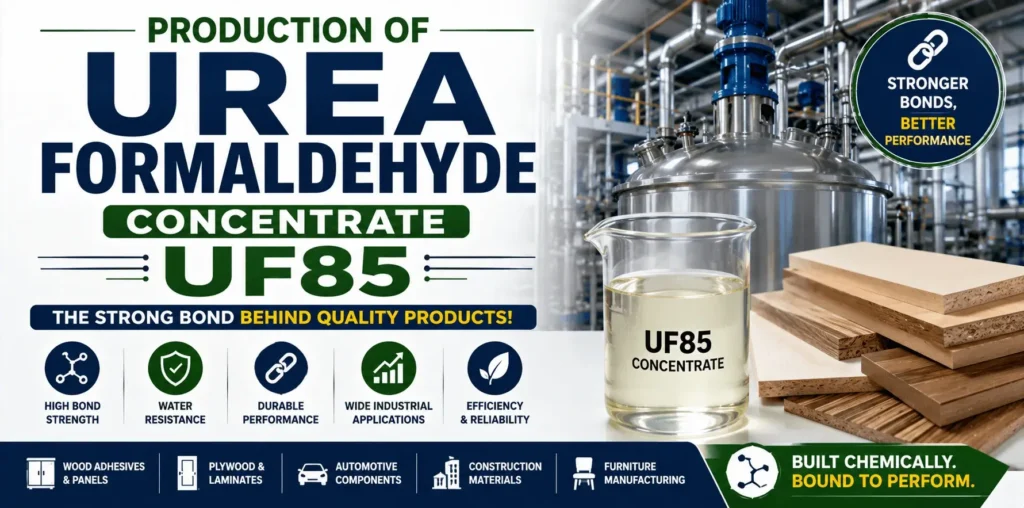
The production of Urea Formaldehyde Concentrate UF85 typically involves a controlled chemical reaction between urea and formaldehyde in the presence of a catalyst. This process is executed under precise conditions of temperature, pH, and reaction time to achieve the desired molecular weight and physical characteristics of UF85 resin. Growing demand from furniture manufacturing, construction materials, and industrial resin sectors continues to drive the global UF85 market. Urea Formaldehyde Concentrate UF85 is one of the most commonly used thermosetting resins, widely used in the production of thermosetting resins, adhesives, plywood, particle boards, MDF boards, laminates, textile finishing chemicals, and fertilizer additives. Due to its excellent bonding strength, high solid content, and cost-effectiveness, UF85 has become one of the most commonly used resin intermediates in the wood-processing and chemical industries. It has extensive use in industrial and commercial applications, understanding the production process of Urea Formaldehyde UF85 is crucial for manufacturers, engineers, and researchers in the field of polymer chemistry. What is Urea Formaldehyde Concentrate UF85? Urea Formaldehyde Concentrate UF85 is a viscous liquid intermediate containing approximately: 60% formaldehyde 25% urea 15% water It is commonly used as a raw material for manufacturing urea formaldehyde resins, adhesives, laminates, and slow-release fertilizers. UF85 is valued for its high reactivity, long storage stability, and strong bonding characteristics in industrial manufacturing applications. Production Process of Urea Formaldehyde Concentrate UF85 Let’s break down the steps involved in producing Urea Formaldehyde UF85. Step 1: Selection and Preparation of Raw Materials The two key raw materials required for manufacturing Urea Formaldehyde UF85 are: Urea (CO(NH?)?): A colorless, crystalline organic compound widely used as a nitrogen-release fertilizer and a base for resins. Formaldehyde (CH?O): A pungent-smelling, colorless gas that is commercially available in aqueous solution (formalin). A typical molar ratio used in the process is between 1:1.6 to 1:2 (urea to formaldehyde). This excess of formaldehyde ensures better cross-linking during polymerization and enhances the resin’s bonding properties. Step 2: Initial Methylolation Reaction The first chemical reaction in the production of Urea Formaldehyde UF85 is methylolation. This step involves mixing urea with formaldehyde at a temperature of about 50–60°C and an alkaline pH (typically 7.5 to 9). A base catalyst like sodium hydroxide (NaOH) is added to initiate the reaction. During methylolation, hydroxymethyl ureas are formed: Urea + Formaldehyde ? Mono-, Di-, and Tri-methylolureas These hydroxymethyl derivatives serve as intermediates for further polymerization. The concentration and time of the reaction at this stage determine the number of methylol groups, which directly influence the curing speed and final resin properties of UF85. Step 3: Condensation Reaction (Polymerization) Once methylolation is complete, the pH is adjusted to acidic conditions (typically pH 4.0 to 5.0) using formic acid or acetic acid, and the temperature is raised to 80–90°C. Under these conditions, the hydroxymethyl groups undergo a condensation reaction, forming methylene and dimethylene ether bridges. Condensation reaction: Hydroxymethylureas ? Linear and Branched Oligomers ? Crosslinked Polymer This step transforms the liquid monomers into a viscous polymeric resin. The degree of polymerization is closely monitored to achieve the specific viscosity and molecular structure characteristic of Urea Formaldehyde UF85. The timing is critical; if the reaction proceeds too far, the resin becomes too thick and unusable. Step 4: Stabilization and pH Adjustment After the desired level of polymerization is achieved, the reaction is stopped by neutralizing the pH back to 7–7.5 using sodium hydroxide or ammonia. This halts the condensation process and stabilizes the resin. At this point, stabilizers and modifiers may also be added to improve shelf life, reduce free formaldehyde content, and fine-tune the resin properties for different applications. Stabilization ensures that Urea Formaldehyde UF85 maintains its performance over time, especially during storage and transportation. Step 5: Concentration and Filtration The UF85 resin is then concentrated to the required solids content, typically 60–65%, through vacuum evaporation or distillation. Filtration is performed to remove any impurities or unreacted materials, ensuring a clean and consistent final product. The resulting viscous liquid is the commercial-grade Urea Formaldehyde UF85. Some manufacturers may further dry the resin into a powdered form depending on the end-use application. Step 6: Quality Testing and Packaging Once the resin is ready, it undergoes stringent quality control tests including: Viscosity Solids content Free formaldehyde content Gel time pH The manufacturer packages the Urea Formaldehyde UF85 resin into drums or containers only after it meets all specified standards, then delivers it to industries like wood panel production, textile finishes, and automotive interior manufacturing. Machinery Used in UF85 Production Major equipment used in the production of Urea Formaldehyde Concentrate UF85 includes: stainless steel reactors condensers vacuum evaporators agitators cooling systems filtration units storage tanks pH control systems packaging machines Modern automated process-control systems help maintain product consistency, quality, and production efficiency. Applications of Urea Formaldehyde UF85 Urea Formaldehyde UF85 is used in numerous applications across various industries: Wood adhesives: For particle board, MDF, and plywood Molded objects: Electrical fittings, buttons, and kitchenware Textiles: As a finishing agent to enhance wrinkle resistance Paper industry: For surface strengthening and gloss The choice of UF85 over other resins is often due to its cost-effectiveness, high reactivity, and favorable mechanical properties. Advantages of UF85 Some of the notable benefits of using Urea Formaldehyde UF85 include: High bond strength Fast curing time Economical production Low color and odor Customizable viscosity and solids content These features make UF85 a preferred material for large-scale industrial applications requiring reliable and consistent resin performance. Environmental and Safety Considerations Despite its advantages, Urea Formaldehyde UF85 does present environmental and health concerns primarily due to the release of formaldehyde gas. To mitigate this: Manufacturers add formaldehyde scavengers such as urea, melamine, or ammonia to reduce free formaldehyde levels. Manufacturers use closed reactor systems and maintain efficient ventilation during production. Workers must follow safety protocols and use personal protective equipment (PPE) during handling and processing. Manufacturers also focus on developing low-emission UF85 variants that comply with environmental regulations such as CARB (California Air Resources Board) and E1 European standards. Global Market Trends and Innovations The demand for
Upcoming Business Ideas with Investment of 30 Million
With a substantial capital like a $30 Million Investment, an entrepreneur has the flexibility to explore highly lucrative, scalable, and sustainable ventures across multiple industries. This amount allows for diversification, tapping into futuristic technologies, and entering markets with high barriers to entry. Whether you are an individual investor, a corporate body, or a fund manager looking to deploy this capital wisely, the following article explores robust business ideas that promise impressive returns over the long term. Top High-Growth Sectors to Consider for a $30 Million Investment 1. Renewable Energy Projects The global push toward sustainability is creating a massive opportunity in renewable energy. With a $30 Million Investment, you can launch a solar or wind energy plant, particularly in high-insolation or wind-rich regions. Solar farms in India, Africa, or the Middle East can offer a high ROI due to lower land and operational costs. Governments worldwide provide incentives and subsidies, further boosting profitability. Investing in battery storage and green hydrogen startups can also diversify your renewable portfolio. 2. Biotechnology and Healthcare Innovation Post-pandemic, biotechnology is one of the fastest-growing sectors. A $30 Million Investment can seed a biotech research firm focusing on advanced therapies like gene editing, personalized medicine, or cancer treatment. Another viable option is setting up high-end diagnostic labs or specialty hospitals in under-served Tier II and Tier III cities, where healthcare infrastructure is still developing. You can also consider investing in telemedicine platforms to meet the demand for virtual care globally. 3. Real Estate Development in Emerging Markets Real estate remains a classic avenue for wealth creation. Your $30 Million Investment can go into mixed-use developments (residential + commercial), smart cities, or retirement communities in fast-developing regions like Southeast Asia, Eastern Europe, or certain African countries. Build-to-rent models are particularly attractive now, driven by younger populations preferring rental over ownership. A well-positioned real estate project can yield long-term rental income along with capital appreciation. 4. Fintech Platform or Digital Bank Digital financial services are booming, especially in regions with low banking penetration. With a $30 Million Investment, you could create a neobank, peer-to-peer lending service, or a decentralized finance (DeFi) platform. The capital will help you acquire regulatory licenses, build secure infrastructure, and market the product across a wide audience. Emerging markets like India, Nigeria, and Brazil offer significant potential for digital banking adoption and expansion. 5. Advanced Manufacturing and Robotics The future of manufacturing lies in automation, smart factories, and AI-driven logistics. Your $30 Million Investment can fund an advanced manufacturing unit producing robotics for agriculture, warehousing, or healthcare. Another option is setting up a semiconductor component plant, especially considering current global shortages. You could also explore precision manufacturing for aerospace or medical device industries, which yield higher margins due to their technical complexity and regulatory standards. 6. E-commerce Aggregator or Brand Incubator Rather than launching a single online store, an increasingly popular trend is acquiring and scaling multiple e-commerce brands under one roof. With a $30 Million Investment, you can build an e-commerce aggregator that acquires DTC (direct-to-consumer) brands in niche markets such as pet supplies, fitness gear, or skincare. Additionally, you could incubate original product lines using proprietary tech and influencer partnerships. The capital helps in acquiring customers and optimizing supply chains. 7. Film Production Studio or Streaming Content Platform The entertainment industry continues to evolve with growing OTT (over-the-top) consumption. A $30 Million Investment can go into launching a mid-sized production studio that creates web series, films, and documentaries for global audiences. Alternatively, you can build a niche streaming platform focusing on regional content, documentaries, or animated storytelling. With the right content strategy and marketing push, such platforms can attract both subscribers and licensing deals. 8. Agri-Tech Solutions and Vertical Farming With global food security challenges and urbanization trends, agri-tech is gaining attention. A $30 Million Investment can set up high-tech vertical farms in urban centers, which use hydroponics and climate control to produce fresh food with minimal water usage. You can also invest in farm management software, AI-powered crop prediction models, or precision drone spraying technologies. These solutions have strong government support and can scale across continents. 9. Franchise Network Development Franchising remains one of the most predictable business models. With your capital, you can acquire a master franchise license for a popular global brand in food, fitness, or education and expand it across an entire region or country. A $30 Million Investment can build multiple outlets, run aggressive marketing, and employ regional teams for faster rollout. Alternatively, if you own a successful business model, you can use the funds to turn it into a franchise and sell licenses globally. 10. AI & SaaS Product Incubation Software-as-a-Service (SaaS) continues to be a top choice for investors. Use your $30 Million Investment to launch or fund a suite of SaaS tools—CRM for small businesses, HR platforms, or niche industry solutions for legal or construction sectors. Pair this with artificial intelligence to offer smart analytics or predictive solutions. The subscription model ensures recurring revenue, and software companies tend to scale rapidly with lower overhead than traditional businesses. 11. Space Tech or Satellite Communication Private space exploration and satellite communication are becoming more accessible. A $30 Million Investment won’t launch rockets like SpaceX, but it can develop small satellite manufacturing, ground station services, or AI-powered imaging analysis for agriculture, defense, and urban planning. These niche segments are attracting interest from larger players looking for partnerships or acquisitions, giving early investors an attractive exit route. 12. Education Technology (EdTech) Platform EdTech has seen explosive growth and shows no signs of slowing down. Whether you’re building a K-12 virtual academy, a coding bootcamp, or an AI-driven tutoring app, a $30 Million Investment offers the runway for technology development, curriculum design, and aggressive student acquisition. Markets in Asia and Africa are highly responsive to affordable, high-quality digital education solutions. 13. Luxury Hospitality or Eco-Resort Chain The hospitality industry is rebounding post-COVID, especially in the luxury and eco-tourism segments. Your $30 Million Investment can establish a boutique chain
Best Manufacturing Business To Start With 30 Million
India’s rapidly evolving economy, coupled with government incentives like the “Make in India” initiative, has paved the way for new-age entrepreneurs to venture into the manufacturing sector. With a capital of ?30 million (?3 crore), aspiring business owners can kickstart a range of profitable and trending manufacturing businesses. This budget is substantial enough to cover factory setup, raw materials, machinery, and even initial marketing, making it ideal for small to medium-scale manufacturing ventures. Best Trending Manufacturing Businesses to Launch in 2025 In this article, we explore some of the most trending manufacturing businesses that can be successfully started with an investment of ?30 million. Each business idea has been selected based on market demand, future scalability, and potential return on investment. 1. Electric Vehicle (EV) Battery Manufacturing With India’s EV market growing rapidly, battery manufacturing is an increasingly promising domain. Lithium-ion batteries are the most in-demand components in electric vehicles, including two-wheelers and e-rickshaws. Why it’s trending: Government subsidies and FAME II policy. High demand from automobile and consumer electronics sectors. Scope for exports. ?30 million breakdown: Machinery and equipment: ?12–15 million Factory lease and setup: ?5 million Raw materials: ?6–7 million Labor and utilities: ?2 million Marketing and compliance: ?1–2 million 2. Solar Panel Assembly Unit As India pushes for renewable energy, the demand for solar panels is skyrocketing. Starting a solar panel assembly unit can be a lucrative venture. Reasons to invest: The solar energy sector is expected to grow by 25% annually. Government provides multiple tax rebates and capital subsidies. Growing demand in rural and urban residential sectors. This business can fit within the ?30 million investment range with funds allocated for technology, manpower, and solar-grade raw materials. 3. Organic Fertilizer Production Organic farming is no longer a niche trend—it’s becoming a norm. Starting an organic fertilizer production unit is one of the trending manufacturing businesses that ensures sustainability along with profitability. Opportunities: Increased awareness of soil health and eco-farming. Growing export opportunities. Low technological barrier to entry. With ?30 million, you can establish a medium-scale facility, procure composting equipment, and ensure full compliance with FSSAI and other agricultural regulations. 4. Biodegradable Packaging Material The ban on single-use plastic and the rise in eco-conscious consumers have opened the door to biodegradable packaging solutions. Entrepreneurs can manufacture items like compostable containers, paper-based packaging, or cornstarch bags. Market trend drivers: FMCG, e-commerce, and food delivery sectors seeking sustainable alternatives. Government regulations enforcing green packaging. Opportunity to create B2B and B2C brands. Within ?30 million, you can set up a facility, purchase biodegradable extrusion and molding machines, and invest in R&D for better product quality. 5. Smart Home Appliances Manufacturing As the smart home trend expands, there’s a rising demand for products like automated lighting, smart plugs, air purifiers, and security cameras. Developing or assembling smart home devices is among the top trending manufacturing businesses due to tech adoption across urban India. Growth factors: Rising urbanization and middle-class income. Integration of IoT and AI. High retail margins and global export potential. A ?30 million investment is enough for importing chipsets, assembling units, hiring electronic engineers, and creating a distribution network. 6. Textile and Garment Manufacturing (Eco-Fashion Focus) India’s garment industry is massive, and there’s a growing demand for sustainable and organic fashion products. You can start a textile manufacturing unit focusing on eco-friendly fabrics like bamboo, hemp, or organic cotton. Why it’s trending: Global shift toward ethical fashion. Massive domestic demand, especially through online marketplaces. Potential to create your own label or serve export markets. Investment will cover machinery, dyeing units, stitching facilities, worker salaries, branding, and distribution. 7. Processed Food Manufacturing Processed and packaged foods—such as frozen snacks, ready-to-cook meals, health bars, or ethnic foods—are highly sought-after. The Indian processed food market is projected to reach $500 billion by 2030. Advantages: Expanding supermarket and e-grocery landscape. Ability to customize product range for regional tastes. FSSAI and ISO certifications can help gain retail credibility. ?30 million is enough to build a medium-scale facility with modern food processing equipment, storage, distribution, and packaging lines. 8. Ayurvedic and Herbal Products Manufacturing Ayurveda is not only a tradition but now a trend. Manufacturing herbal products like face packs, oils, supplements, and wellness teas has emerged as a top business opportunity. Why it’s one of the trending manufacturing businesses: Ayurveda’s rising global recognition. Increasing demand from wellness-conscious consumers. Strong export market and eCommerce adaptability. With ?30 million, you can invest in raw materials, proprietary formulations, GMP-certified production facilities, and digital branding. 9. Water Purification Systems Clean water is a priority across India, especially in rural and semi-urban areas. Manufacturing RO systems, UV purifiers, or water softeners can lead to long-term profits. Key drivers: Water contamination awareness. Household and commercial demand for purification solutions. Opportunity to serve municipal or government contracts. The budget allows for setting up a plant, testing labs, certification, and service teams. 10. 3D Printing for Industrial Prototypes 3D printing is revolutionizing manufacturing across automotive, aerospace, healthcare, and architecture. With rising industrial adoption, a B2B-focused 3D printing service and parts manufacturing unit can be a profitable venture. Benefits: High margins and relatively low competition. Rapid prototyping needs from multiple industries. Ideal for customization-based business models. Initial investment will be spent on industrial-grade 3D printers, CAD design tools, raw materials (resins, metals), and operator training. Final Thoughts on Trending Manufacturing Businesses With ?30 million in hand, you are well-positioned to launch any of the trending manufacturing businesses mentioned above. The key to success lies not just in choosing the right product, but also in combining innovation, operational efficiency, and marketing savvy. Whether you are targeting domestic markets or aspiring to go global, India’s manufacturing landscape is rich with potential. When entering the manufacturing domain, remember to: Do detailed feasibility and market analysis. Ensure compliance with statutory and safety norms. Use digital marketing to promote your products. Innovate continuously to stay ahead of competitors. Choosing from these trending manufacturing businesses gives you a strategic edge in tapping into high-growth sectors while building long-term
Suggested Business Ideas with Investment of 25 Million (Machinery).
In today’s rapidly industrializing economy, entrepreneurs are actively seeking lucrative and scalable investment opportunities. Investing in machinery-based businesses offers immense potential for profitability, automation, and long-term sustainability. A budget of ?25 million (~$300,000) is ideal for launching mid-sized machinery projects with advanced technology and high returns. In this article, we explore some of the most profitable machinery project ideas for startups in India and abroad that fall within this budget. Top ?25 Million Machinery Project Ideas That Guarantee High Returns 1. Automatic Paper Bag Making Machine With increasing restrictions on plastic use, paper bags are becoming mainstream in the retail, grocery, and food sectors. An automatic paper bag making unit with a ?25 million investment can produce flat and gusseted bags at high speed with minimal labor. The demand for eco-friendly packaging is booming across metros and tier-II cities. Machinery Required: Roll feeding paper bag making machine, flexographic printing machine, and punching unit. Output Capacity: 30,000–50,000 bags/day. Profit Margin: 25%–30%. Market Scope: FMCG, food outlets, retail chains, garment stores. This machinery project ensures rapid scalability due to rising demand from B2B and B2C sectors. 2. Mineral Water Bottling Plant The bottled water market in India is growing exponentially, especially in urban and semi-urban areas. Starting a fully automatic mineral water plant under ?25 million is not only viable but highly profitable due to consistent consumption throughout the year. Machinery Required: RO system, UV sterilizer, bottling unit, labeling machine, and shrink wrapping machine. Output Capacity: 2000–5000 bottles/hour. Profit Margin: 40%–45%. Market Scope: Restaurants, hotels, hospitals, corporate offices, and retail. The machinery project thrives on recurring demand and can be diversified into flavored water and juices. 3. CNC Wire Bending and Forming Machine Precision in fabrication is the need of the hour in industries such as automotive, construction, and electronics. A CNC wire bending machine is a powerful investment that can automate the bending process for wires and rods used in various components. Machinery Required: CNC wire bending machine, straightening machine, welding unit. Materials Used: SS, MS, Copper wires. Profit Margin: 35%–50%. Clients: Furniture makers, HVAC companies, appliance manufacturers. This machinery project is known for low manpower dependency and consistent B2B contracts. 4. PET Bottle Recycling Unit India generates more than 9 million tons of plastic waste annually, making recycling an essential business segment. PET bottle recycling machinery transforms waste into reusable plastic granules, flakes, and polyester fibers. Machinery Required: Bottle crusher, washing line, dryer, granulator, extruder. Production Capacity: 300–600 kg/hour. Profit Margin: 40%. Buyers: Textile firms, packaging companies, exporters. This eco-conscious machinery project is supported by government schemes and is a major contributor to circular economy goals. 5. Ready Mix Concrete (RMC) Plant Construction in India is at its peak, and ready-mix concrete has become the backbone of modern infrastructure. Setting up an RMC batching plant offers consistent, high-quality concrete supply to developers and contractors. Machinery Required: Batching unit, mixer truck, aggregate hoppers, control panel. Daily Output: 30–60 cubic meters. Profit Margin: 30%. Major Buyers: Infrastructure companies, builders, local developers. A machinery project in this sector ensures long-term B2B relationships and quick returns. 6. Corrugated Box Manufacturing Unit With the explosion of e-commerce and retail, the demand for corrugated packaging has skyrocketed. Investing in a corrugated box making plant offers consistent orders from logistics and product-based companies. Machinery Required: 5-ply automatic corrugation line, die cutter, folder-gluer machine. Production: 10,000–20,000 boxes/day. Profit Margin: 25%–35%. Clients: Flipkart, Amazon vendors, FMCG brands, local manufacturers. A machinery project in this segment is easy to scale by expanding product sizes and printing options. 7. Extrusion Blow Molding Plant The plastic molding industry is growing steadily, and blow molding machines are extensively used to produce bottles, containers, and industrial plastic parts. With a ?25 million investment, you can install high-speed, multi-cavity machines. Machinery Required: Extrusion blow molding machine, chiller, trimmer, auto loader. Output: 2000–3000 products/hour. Profit Margin: 30%–50%. Market Scope: Lubricants, cosmetics, pharmaceuticals, household products. A highly profitable machinery project, especially in industrial zones or near manufacturing clusters. 8. Biomass Pellet Manufacturing Plant As industries shift towards green energy, biomass pellets are gaining demand as an alternative fuel for boilers and power plants. A pellet manufacturing unit is ideal for semi-rural and agro-cluster zones. Machinery Required: Pellet mill, hammer mill, dryer, conveyor, cooling system. Capacity: 500–1000 kg/hour. Raw Material: Sawdust, agricultural waste, husk. Profit Margin: 40%+. This sustainable machinery project is supported under renewable energy policies and biomass subsidies. 9. Masala/Spice Processing Plant Indian spices are renowned globally, and automated spice grinding and packaging plants are in high demand for local and export markets. With ?25 million, a modern semi-automatic plant can be set up. Machinery Required: Pulverizer, mixer, siever, packing machine, roasting machine. Capacity: 500 kg/hour. Profit Margin: 50%. Markets: HoReCa segment, e-commerce, export. One of the best food-processing based machinery projects with high ROI and quick brand establishment potential. 10. LED Light Manufacturing Unit With India pushing “Make in India” and energy-efficient products, LED lights are now a hot commodity in both residential and industrial sectors. A well-equipped unit can manufacture bulbs, tubes, panel lights, and street lights. Machinery Required: SMT machine, wave soldering, PCB assembly line, aging rack. Production Capacity: 5,000–10,000 units/day. Profit Margin: 30%. Buyers: Electric shops, government tenders, real estate firms. This futuristic machinery project is ideal for tech-savvy startups and is supported by energy efficiency grants. Conclusion: Choosing the Right ?25 Million Machinery Project A ?25 million investment opens doors to several industrial segments—packaging, plastic, energy, construction, food, and electronics. Before choosing your machinery project, conduct a detailed feasibility study, identify local raw material availability, understand market demand, and optimize operations with the right technology. Each of the above ideas is scalable, backed by growing demand, and supported by government schemes like MSME, Startup India, and Make in India. These machinery-based ventures are not just income-generating but also future-ready with automation, environmental impact, and digital integration. Build smart, scale fast, and automate your way to success. Visit the page Select and Choose the Right Business Startup for You for sorting