
Why Rare-Earth Magnet Manufacturing Can Make India a Global Player
To this day, few might know that rare-earth permanent magnets (REPMs) are now powering the most important industries of the century, from drones and missiles to consumer electronics and robotics, as well as EV engines and wind turbines. The global shift to clean and electric energy has made the need for rare-earth magnets reach unprecedented demand. India starting to manufacture rare-earth magnets and other strategically important magnets—especially with the launch of a ?7,280-crore magnet manufacturing facility—goes far beyond industrial growth. It represents a major geopolitical and supply-chain opportunity, particularly well-suited for bootstrap entrepreneurs. Today, rare earth magnet manufacturing in India is among the fastest-growing yet still underdeveloped sectors, creating a powerful chance for new businesses to enter a high-demand global market. Why Rare-Earth Magnet Manufacturing Matters for India National Security and Supply-Chain Independence At present, India relies solely on one country for REPMs, leading to: 1. Supply chain disruptions 2. Increased costs 3. Geopolitical issues India needs to establish a home-grown ecosystem that guarantees the following: 1. Electric vehicles 2. Renewables 3. Aerospace and defense 4. Electronics and automation This needs to be done, and cannot be postponed. Turning Raw Resources into High-Value Output India has rare-earth resources, but as a result of: 1. Exporting inexpensive oxides 2. Overpaying for magnets India can finally shift policies and move up the value chain. This is where the money is at. Global Export Positioning India’s current position allows it to meet these industries’ needs better than its competitors. Many countries are prioritizing trade relationships with other countries rather than India’s cast competitors with China. Many countries worldwide are diversifying away from traditional rare-earth suppliers. India can fill this gap. India has the ability to meet the needs of: If India plays it right, rare-earth magnets can become its next IT or Pharma-level export success. Inside the 7,280-Crore Government Scheme What the Scheme Enables 1. 6,000 MTPA domestic REPM capacity 2. The first competitors in the market will get the biggest advantages 3. Opening new facilities will also attract capital grants 4. There will be initial grants + performance-based benefits for 5 players 5. All levels of production at the same facility (oxide ? alloy ? magnet) 6. Benefits align with the goals of Make in India & Atmanirbhar Bharat It is much more than just a simple subsidy; it is about ecosystem facilitation. And for the first competitors, it is a permanent advantage. Reasons to Focus on Entrepreneurship Absence of Rivals, Great Need No large-scale magnet manufacturers exist in India. If you step in now, you are not up against competitors; you are seizing an opportunity. Tailwinds in Mobility and Clean Energy Demand drivers continue to grow with: 1.2 and 4-wheeled EVs 2. Generators for wind turbines 3. Robotics and solar tracking 4. Electronic devices 5. Modernization of defense systems The need for these products is not cyclical in nature, hence indispensable. Government-Backed Stability The sector receives assistance through: 1. Import substitution policies 2. Long-term procurement plans 3. Incentives, subsidies, and R&D support This significantly reduces the level of risk for businesses. Multiple Entry Models There is no necessity to begin with a billion-rupee plant. Entry models include: 1.Full REPM manufacturing 2. Alloy/oxide supply .3 Custom magnet production 4. Machining and finishing 5. REPM recycling 6. Magnet-based component manufacturing (EV motors, drone motors) There is a variety of different CapEx and risk levels for each of these. Export-Led Growth With production that meets ESG guidelines and a standardized quality, India is able to connect with: 1. U.S. Inflation Reduction Act supply chains 2. European renewable ecosystems 3. Asian EV manufacturing hubs Strategic Business Models (with CapEx Logic) Model CapEx Level Strategic Fit Target Market Full REPM Manufacturing High Vertical control + import substitution India + global Alloy/Oxide Supplier Medium Critical raw input supply Magnet manufacturers Custom Magnet Manufacturing Medium High-value B2B niche EVs, electronics Magnet Recycling Medium ESG-driven circular economy Magnet plants EV/Defense Component Manufacturing Medium Downstream integration OEMs & Tier-1s Execution Roadmap — 10 Steps to Build a Rare-Earth Magnet Business Step-by-Step Breakdown If you skip even one of these steps, your project will stall.Execute this roadmap with precision. India’s Geopolitical Opportunity Rare-earth magnets are valuable outside industrial use. They are a strategic resource.Countries want supply chains that are: India satisfies all of these. And this positions India like how it went on to dominate IT services and generic pharma as a potential global hub for magnets. FAQs 1. What are rare-earth magnets and why are they important? Rare-earth magnets are powerful permanent magnets used in EVs, electronics, wind turbines, medical devices, and defense systems. Their high strength makes them essential for modern industries. 2. Is India capable of manufacturing rare-earth magnets? Yes. India has significant rare-earth reserves and is now boosting its magnet manufacturing capacity through government schemes, investments, and strategic industry partnerships. 3. What government support is available for rare-earth magnet production? India has launched a ?7,280-crore scheme to promote local magnet manufacturing, encourage private sector participation, and reduce dependence on imports. 4. Why is rare-earth magnet manufacturing considered strategic for India? Because magnets are crucial for energy, technology, and defense industries. Local production strengthens national security, cuts imports, and supports Make-in-India goals. 5. What are the business opportunities in India’s rare-earth magnet sector? Opportunities lie in mining, processing, magnet production, EV supply chains, wind energy components, and advanced electronics manufacturing. How NPCS Can Help You to start Rare-Earth Magnet Manufacturing business in india NPCS (Niir Project Consultancy Services) provides end-to-end support for entrepreneurs, including: With expert support, your chances of success in this high-growth sector increase significantly. Contact Us Niir Project Consultancy Services 106-E, Kamla Nagar, Opp. Mall ST, New Delhi-110007, India. Email: info@entrepreneurindia.co Mobile: +91-9097075054 Website: https://www.entrepreneurindia.co
How to Start Paper Water Bottles Manufacturing Business: The Ultimate 2026 Guide

Do you want to start Manufacturing Paper Water Bottles Business in 2026? If yes, you have reached at a right place. The Paper Water Bottles are an innovative and eco-friendly alternative to traditional plastic bottles. As the world becomes more aware of the dangers of plastic pollution, paper-based packaging is emerging as a promising solution. These bottles are typically made from strong paperboard combined with a thin biodegradable or recyclable lining, making them both functional and environmentally responsible. With the rising demand for sustainable packaging, entrepreneurs looking to start Paper Water Bottle Manufacturing Business can tap into a fast-growing and future-ready market. With global and Indian governments pushing for plastic reduction and consumers actively preferring sustainable products, the paper bottle industry is gaining momentum. For entrepreneurs, this is an opportunity to enter a rapidly growing market while contributing to environmental responsibility. This article explores the market outlook, manufacturing process, investment requirements, government support, and key business strategies. Global Market Outlook of Manufacturing Paper Water Bottles The global market for paper bottles is growing at a rapid pace. Early industry estimates valued the paper water bottle market demand at $150–$174 million in the early 2020s. By the early 2030s, projections suggest the market could cross $1–1.5 billion, representing a 20–30% CAGR. Even broader paper-based packaging markets are expanding from $8.5 billion in 2024 to about $22.3 billion in 2033, at ~11% CAGR. Paper Water Bottles, Bioplastics & Biodegradable Products Manufacturing Handbook Key Global Growth Drivers Driver Explanation Plastic bans & environmental regulations Countries like EU members and US states are limiting plastic bottle use, encouraging sustainable packaging. Corporate sustainability goals Major beverage companies (PepsiCo, Coca-Cola, Carlsberg, Diageo) are investing in paper bottle innovation. Consumer demand Millennials and Gen-Z prefer products aligned with environmental values. Advances in materials Better coatings like PLA (biodegradable polymer) are improving leak resistance. Investment in innovation Startups and packaging manufacturers are building capacity for large-scale production. In short, the global market shows consistent double-digit growth, making paper water bottles a future-ready business segment. Related Article:- Paper Industry Indian Market Scenario India is one of the world’s fastest-growing packaging markets. Packaging is the 5th largest sector of the Indian economy and is expanding at 22–25% per year. The overall paper and packaging market in India was about ?7.36 lakh crore (US$84B) in 2024 and is expected to reach ?12.53 lakh crore (US$143B) by 2029. A segment-specific projection places the paper packaging market at $19.07 billion in 2025, growing to $46.43 billion by 2030 (CAGR ~19.5%). Factors Driving Growth in India These conditions make India an ideal environment for manufacturing paper water bottles, both for domestic and export markets. View our:- Books Export Opportunities India exported US$3.02 billion worth of paper and paper products in FY 2022–23, according to CAPEXIL. Major export destinations include: Global buyers are actively looking for sustainable packaging suppliers, and India’s manufacturing capacity is quickly scaling due to: This means Indian paper bottle manufacturers can position themselves as global suppliers, not just domestic sellers. Manufacturing Process Overview A typical paper water bottle has: Core Raw Materials Material Purpose High-quality paperboard or molded fiber Bottle structure Biodegradable/food-grade polymer (e.g., PLA) Liquid barrier Adhesives, prints, labels Branding & sealing Required Machinery For branding, an offset or digital printing line may be included. View our:- Project Reports Plant Size & Layout Capital Investment Depending on capacity: Regulatory Approvals You will need: For export: Market Demand and Use Cases Paper bottles are not limited to packaged drinking water. Their application range is wide: Category Use Examples Beverages Water, flavored drinks, juices Alcoholic beverages Limited edition eco-friendly packaging Personal care Shampoo, body wash, lotion Household liquids Cleaners, detergents Gifting & events Corporate & hospitality eco Campaigns Urban consumers, tourism events, premium beverage brands, and eco-conscious retail chains are early adopters. Government Support The government is indirectly supporting the industry through: Entrepreneurs may also seek MSME loans and subsidy-linked financing under: Opportunities for Entrepreneurs Opportunity Why It Matters Early mover advantage Very few domestic manufacturers currently High export demand Strong interest in the EU, the Middle East, and North America Brand partnerships FMCG and beverage brands want sustainability solutions Premium pricing Eco-friendly appeal allows better margins Diversification Strong interest in EU, the Middle East, and North America Challenges to Consider However, these challenges are temporary; scale and material innovation are lowering costs every year. FAQs What is the cost of paper bottle manufacturing setup? The cost of setting up a paper bottle manufacturing unit generally ranges from ?25 lakh to ?1.5 crore, depending on production capacity, machinery type, automation level, land, and raw material requirements. How to start a paper water bottle business? To start a paper water bottle business, conduct market research and create a business plan, arrange capital, choose appropriate machinery, set up the production unit, source quality paperboard and linings, obtain necessary licenses, implement quality testing, and build distribution and marketing channels. How much money is needed to start a water bottle business? Starting a basic water bottle business may require an investment of ?10 lakh to ?50 lakh for small units. For eco-friendly paper bottle manufacturing with specialized machinery, expect a higher investment of ?25 lakh to ?1.5 crore. Is the water bottle business profitable? Yes — the water bottle industry, especially eco-friendly paper bottles, can be profitable due to growing demand and environmental awareness. Typical profit margins range from 20% to 40%, depending on scale, pricing, and distribution efficiency. Find high-return business ideas based on your budget & ROI Conclusion Manufacturing Paper water bottles is a future-oriented, scalable, and export-friendly business opportunity. Global sustainability trends, India’s booming packaging industry, and government support create a strong foundation for success. Entrepreneurs who invest early in technology, quality, and market positioning can establish leadership in this emerging sector. If planned carefully—with the right raw materials, plant setup, quality standards, and brand partnerships—a paper bottle manufacturing venture can be both profitable and environmentally meaningful. How NPCS Can Help You NPCS (Niir Project Consultancy Services) provides end-to-end support for entrepreneurs, including:
Most Top 10 Profitable Business Ideas for the Next 10 Years

Top 10 profitable business ideas Here are the in deapth guide to start Top 10 profitable business ideas Manufacturing is a major driver of economic development and entrepreneurship. Saline solutions, production of cigarettes, manufacturing and surgical gloves (latex or nitriles) are among the most promising ventures of today. These industries range from essential healthcare products to huge consumer markets, each offering unique advantages, challenges and growth trajectory. This article gives a brief overview of each business opportunity. It examines the market outlook, manufacturing process, and startup considerations. Industry Global Market Size (2025) Projected Market Size CAGR Key Growth Regions IV Saline Solutions $4 Billion (2024) $6.3 Billion (2032) ~7% Asia-Pacific and North America Cigarettes (Tobacco) $1.16 Trillion (2025) $1.38 Trillion (2033) ~2% Asia and Africa Disposable Gloves $11.2 Billion (2025) $23.2 Billion (2034) ~8% North America and Asia-Pacific 1. Saline Manufacturing: A Vital Healthcare Product Saline solution (0.9% sodium chloride) is one of the most widely used fluids in medicine–administered intravenously for hydration, as a drug vehicle, and for wound care. Saline is used in hospitals, clinics, and emergency rooms every day, which ensures a consistent global demand. Market Outlook: The IV saline industry, which was worth $4 billion in 2024, is expected to reach $6 billion by 2032, at a CAGR of approximately 7%. The growth is driven by increased healthcare usage, better hospital infrastructures in developing countries, and an increase in preparedness for emergencies.Asia-Pacific has the fastest-growing market due to its expanding hospital networks, healthcare reforms, and local production. View our:- Books Manufacturing Process: Setup & ComplianceManufacturing needs GMP-certified cleanroom facilities as well as water treatment units and sterilizers. Since saline falls under the category of pharmaceutical products, regulatory approvals are required (e.g., CDSCO in India and FDA in the US). Business InsightAlthough margins are modest, volume-based production assures profitability. Localized supply can reduce transport costs and dependence on imports. Similar infrastructure can be used to diversify into other IV fluids such as dextrose and Ringer’s Lactate. View our:- Project Reports 2. Cigarette manufacturing: a massive but regulated market In spite of health awareness, the cigarette industry remains one of the largest consumer industries in the world, with more than one billion smokers worldwide. Market Overview: The global tobacco and cigarette market is estimated to be worth over $1.16 trillion in 2025 and is projected will reach $1.38 trillion in 2033. This growth rate of 2% could continue into the future.Although the demand volume in developed countries is stable or falling, revenue continues to rise due to premiumization strategies. Manufacturing Process: Raw Material:s Cigarette paper, filters, and adhesives. It is important to maintain a reliable tobacco source. Regulatory landscape:Due to taxation and health concerns, the industry is heavily regulated. The manufacturers are required to have licenses and registrations for excise taxes, as well as comply with packaging laws, including health warnings. Advertising is sometimes restricted. Retail prices are heavily influenced by taxes, which make up a large portion. Opportunities & Challenges: 3. Manufacturing Surgical Gloves: Meeting Global Health and Safety Demand disposable glove industry, including latex and Nitrile gloves, has exploded post-pandemic because of increased hygiene awareness. These gloves are essential in the healthcare industry, laboratories, food handling and industrial safety. Market Outlook: The global glove market, valued at approximately $11 billion dollars in 2025, is expected to exceed $23 billion dollars by 2034. This represents an 8% CAGR. North America is the leader in glove consumption. Asia-Pacific, a hub of glove manufacturing (Malaysia Thailand Indonesia), is rapidly increasing both production and demand. Latex vs. Nitrile: Related Article:- Surgical Drapes, Surgical Gowns, Surgical Table Cover Manufacturing Steps: View our:- Books Facility requirements:A glove plant requires long automated dipping and curing lines, chemical preparation units, water treatment systems, as well as curing ovens. Smaller semi-automatic machines can be used to help start-ups begin modestly and then scale up. Opportunities: Challenges: The glove industry is a highly consumptive industry with high growth. View our:- Project Reports Planning and Feasibility Support Niir Project Consultancy Services specializes on preparing market survey-cum-Detailed Project Reports, which cover technical details, financial forecasts, and regulatory needs. NPCS reports help entrepreneurs make informed decisions, reduce startup risks and get expert advice. Conclusion Each of these manufacturing opportunities–saline solutions, cigarettes, and surgical gloves–offers unique advantages: Success is determined by compliance, quality, and scale. Entrepreneurs who perform detailed feasibility analyses and align themselves with changing market demands can create profitable, sustainable ventures that contribute to economic and industrial growth. FAQs: Top 10 Profitable Business Ideas Which business is most profitable? The most profitable businesses today include digital marketing services, e-commerce, cloud kitchen, real estate consultancy, and manufacturing units. These sectors offer high demand, scalability, and strong margins. What is a 7 step business plan? A 7-step business plan includes: 1) Business idea, 2) Market research, 3) Business model, 4) Marketing strategy, 5) Operations plan, 6) Financial plan, and 7) Growth strategy. This structure helps in starting and scaling any business successfully. Which business gives 1 lakh profit? Businesses like digital marketing agencies, cloud kitchens, tiffin services, boutique manufacturing, printing services, coaching centers, and trading businesses can easily generate ?1 lakh monthly profit with proper execution. Which business is best in 50,000 rupees? With a ?50,000 budget, you can start businesses like homemade food services, online reselling, digital services, graphic design, candle making, handmade product business, and small-scale trading. These require low investment and offer good returns. How to earn 50 lakhs quickly? To earn ?50 lakhs faster, people choose high-growth opportunities such as real estate, export business, stock market trading, high-ticket digital services, franchise ownership, and scalable e-commerce models. Income depends on skill, demand, and investment. Which business gives 2 lakh per month? Businesses like real estate brokerage, wholesale trading, franchise business, digital marketing agency, manufacturing units, and successful cloud kitchens can generate ?2 lakh or more per month with consistent operations. What is the safest business to start? Service-based businesses like digital marketing, consultancy, tuition/coaching, freelancing, home food services, and reselling are considered the safest because they require low investment and have steady demand. How NPCS Can Help You NPCS (Niir Project Consultancy Services) provides end-to-end support for entrepreneurs, including: With expert support, your chances of success in this high-growth sector increase significantly. Contact Us Niir Project Consultancy
3 Profitable Best Manufacturing Business Ideas in 2026
As the world shifts toward sustainability, entrepreneurs have an incredible opportunity to turn environmental challenges into profitable ventures. Stricter waste regulations, the demand for eco-friendly materials, and the rise of circular economy principles are driving a new wave of industrial innovation. here are the guide to 3 Best Manufacturing Business Ideas in 2026 Instead of viewing waste as a problem, modern businesses are learning to treat it as a valuable resource. By converting industrial byproducts into useful materials, these ventures create both environmental and financial value. In this article, we explore three high-potential green manufacturing sectors that blend profitability with sustainability: Each of these represents a practical, scalable, and future-ready business for startups and investors. List of Best Manufacturing Business Ideas in 2026 1. Liquid Carbon Dioxide (LCO?) Production Overview Liquid carbon dioxide (LCO?) is CO? gas that has been compressed and cooled into liquid form. It plays a vital role in several industries—most notably in beverages, food freezing, packaging, and pharmaceuticals. In breweries, LCO? is used for carbonation. Food processors rely on it for quick-freezing and cold storage. Packaging companies use it in modified-atmosphere systems to extend shelf life. LCO? is also a key ingredient for producing dry ice, essential for cold-chain logistics in pharmaceuticals and perishable food transport. LCO? is colorless, odorless, and non-toxic, making it safe for food and medical use. Industrial applications also include welding shields, sterilization, and greenhouse CO? enrichment. Manufacturing Process Read Related:- Books Key Equipment: Market Overview The global LCO? market was valued at around $4.5 billion in 2023 and is expected to reach $7.0 billion by 2032, growing at a 4–5% CAGR. Key growth drivers: The Asia-Pacific region (particularly China and India) is leading production growth, while North America and Europe remain major consumption markets. Startup Insights To succeed, entrepreneurs should: With the right strategy, a liquid CO? venture can turn industrial waste gas into a profitable and eco-friendly product. Project Report:- Liquid Carbon Dioxide 2. Tire Recycling Units Overview Every year, millions of tires reach the end of their life cycle, creating a serious waste problem. Tire recycling offers a sustainable way to manage this waste while generating valuable byproducts like oil, carbon, and steel. The most efficient recycling method is pyrolysis, a process that heats shredded tires in the absence of oxygen. The rubber breaks down into gases, oils, and solids—each of which can be reused. Process Flow Recovered Products Market Outlook The global tire recycling market is growing rapidly, from $9.4 billion in 2024 to an expected $17.9 billion by 2033, at a 4–6% CAGR. Growth drivers: Countries like India, the U.S., and many in Europe now offer incentives such as subsidies or low-interest loans for recycling startups. Startup Considerations To establish a successful tire recycling unit: With steady tire supply and proper processing, tire recycling offers long-term, sustainable profitability. Project Report:- WASTE TYRE (TIRE) UTILIZATION 3. Bagasse-Based Biodegradable Tableware Overview With single-use plastic bans sweeping across countries, biodegradable tableware made from sugarcane bagasse has emerged as an eco-friendly and lucrative alternative. Bagasse is the fibrous residue left after sugarcane is crushed for juice. Instead of burning it as waste, it can be molded into plates, bowls, cups, and takeaway containers. These products are compostable, food-safe, and stylish—ideal for restaurants, caterers, and eco-conscious consumers Project Report:- Bagasse Biodegradable Disposable Tableware. Manufacturing Process Product Range All these items are 100% compostable, typically decomposing within a few months without polluting the environment. Market & Growth The bagasse tableware market is valued at $3.2 billion in 2024 and projected to reach $5.6 billion by 2033, with a 6–7% CAGR. Growth drivers: In Asia-Pacific, especially India, bagasse is abundant and low-cost, making this sector both green and profitable. Many airlines, schools, and event venues have already shifted to bagasse products to meet environmental mandates. Project Report on:- Bagasse Manufacturing Business Startup Advantages This makes bagasse tableware a perfect venture for entrepreneurs entering the sustainable products market. Related Article on:- Biodegradable Products Market Forecast and Comparison Product 2024 Market (USD) 2030s Forecast (USD) Key Industries Liquid CO? ~$4.5 billion ~$7.0 billion (2032) Beverages, refrigeration, pharma Tire Recycling ~$9.4 billion ~$17.9 billion (2033) Construction, fuel, rubber Bagasse Tableware ~$3.2 billion ~$5.6 billion (2033) Foodservice, catering, packaging All three sectors show strong global demand and align with sustainability trends, including carbon reduction goals and plastic waste bans. Entrepreneurs who invest early in these best manufacturing business ideas in 2026 can benefit from long-term regulatory and consumer tailwinds. How to Evaluate These Projects Before launching, entrepreneurs should perform a detailed techno-economic feasibility study, covering: Consultants such as Niir Project Consultancy Services (NPCS) offer in-depth reports on manufacturing processes, plant layouts, raw materials, and financials to guide investment decisions. Conclusion These are the sustainable best manufacturing business ideas in 2026 and it is not just an environmental necessity, instead it’s a business opportunity.From capturing CO? to recycling waste tires or transforming sugarcane residue into tableware, each venture contributes to a cleaner planet while generating profit. For entrepreneurs, these industries represent the future of manufacturing—green, circular, and profitable. By combining innovation with environmental stewardship, today’s startups can build tomorrow’s sustainable economy. Frequently Asked Questions Q1: What are the main uses of LCO??LCO? is used for beverage carbonation, food freezing, sterilization, and dry ice production. It’s also used in welding and greenhouse farming for CO? enrichment. Q2: How does tire recycling create value?Through pyrolysis, old tires are converted into oil, carbon, and steel—all sellable commodities. The oil replaces industrial fuels, and carbon black is reused in rubber goods. Q3: Why is bagasse ideal for biodegradable products?It’s renewable, non-toxic, and fully compostable—unlike plastic or paper alternatives. Using bagasse also prevents open burning and reduces pollution. Q4: Which sector offers the highest growth?While tire recycling has the largest market, bagasse tableware offers the fastest growth due to global plastic bans and consumer eco-awareness. Q5: How can startups get started?Begin with a feasibility report, secure local raw materials, and explore available subsidies or carbon-credit programs for green manufacturing How NPCS Can
Top Manufacturing Opportunities 2026: Cement, Hygiene & Copper Foil
Entrepreneurs are looking for Manufacturing Opportunities 2026 product areas with strong growth in today’s changing industrial landscape. These three areas — Cement (OPC and PPC types); Absorbent Hygiene Products (adult diapers, sanitary napkins, etc.), and PCB grade copper foil – present great opportunities. These industries are geared towards Infrastructure, Health and Hygiene, and Technology. They offer investors a way to align themselves with global trends. here are the list of op Manufacturing Opportunities 2026 Top Manufacturing Opportunities 2026 1. OPC Cement and PPC Cement Understanding OPC vs. PPC The two main cement types used in construction are Portland Pozzolana Cement and Ordinary Portland Cement. Differences between PPC is now the cement of choice for many construction projects. This is especially true in India, where PPC dominates the production. PPC is both sustainable and economical because it uses industrial byproducts such as fly ash. This makes PPC a great choice for new manufacturers. Related Book: Cement Market Outlook Related Article:- Concrete, Cement, and Cement-Based Products 2. Adult Diapers and Sanitary Nappies Adult Diapers: An Emerging Necessity Adult Diaper Market Growing Fast, Driven by Global Aging and Improved Awareness. The population of people over 65 is expected to double by 2050, from 700 million in 2020. The demographic shift fuels the demand for incontinence devices worldwide. Adult diapers have also become more socially acceptable. They are no longer stigmatized and seen as a healthcare aid. Modern designs provide comfort, discretion, and improved performance with superabsorbent materials and polymers. By the early 2030,s the global market for adult diapers is expected to surpass USD $30 billion. This will be a growth of 8-10%. The growth is led by Asia-Pacific and Japan. China and India are also showing great potential. Business Opportunity:Manufacturing is a complex process that requires assembly machines to use fluff, SAP, nonwoven fabrics, and adhesives. Entrepreneurs may choose to target niche markets such as affordable cloth diapers for the emerging market or environmentally friendly variants. The demand from hospitals and elderly care centers provides a stable institutional revenue stream. Project Report:- Sanitary Napkin Sanitary Napkins – Essential and Expanding The menstrual hygiene products are used by billions of women every month. Demand is increasing as awareness increases and taboos are fading, particularly in developing countries. In India, the usage by women has increased from less than 15% a decade back to more than 60% today. This is due to government initiatives and awareness programs. The global market is estimated at USD 28-30 billion and will reach USD 34-35 billion by 2030. (CAGR of 3-5%). As adoption increases, emerging markets in Asia and Africa are growing at double-digit rates. Opportunities For Entrepreneurs: Production Process: Pads are made up of a core of fluff paper, a superabsorbent layer, a nonwoven sheet on top, and a waterproof bottom layer. They are assembled using adhesives. Machines are capable of producing thousands of pads in a minute. Brand success is based on quality, comfort, and reliable distribution. The hygiene products industry combines profitability and social impact – empowering women and improving their health while addressing the needs of aging people. Project Report:- Sanitary Napkins 3. Copper Foil PCB Grade Overview and uses Copper foil is an important electronic material that’s used on printed-circuit boards (PCBs) and Lithium-ion Batteries. Copper foil forms conductive layers, which are essential for the operation of modern devices, from smartphones to computers and renewable energy systems. Two main manufacturing processes exist: The thickness can range from 9 to 70 microns depending on the application. Related Project Report on:- Copper and Copper Products and Projects Market Outlook The copper foil market has a value of USD 10-15 billion, and is projected to reach USD 25-30 billion by early 2030 (8-12% CAGR). Two megatrends are driving demand: Asia-Pacific dominates the production today (China, Japan, and Taiwan), but new manufacturing opportunities are emerging in India, Europe and North America, to localize the electronic and EV supply chain. New Manufacturers: Key Considerations Copper foil production is capital- and technology-intensive, requiring advanced electroplating systems, strict quality control, and environmental safeguards. High-purity copper and reliable electricity are essential inputs. Entrepreneurs who enter this field must consider: Although entry barriers to the industry are high, the potential reward is high with long-term contracts in high-growth sectors and limited global competition. The conclusion of the article is: The manufacturing of cement, hygiene products, and copper foil all represent future-proof opportunities. In these sectors, entrepreneurs can achieve success by aligning themselves with Sustainability and Innovation. To capture market share, it is important to conduct detailed feasibility studies and maintain supply chain efficiency. FAQs: Top Manufacturing Opportunities Which manufacturing industry is most profitable? The most profitable manufacturing industries often include pharmaceuticals, food and beverages, chemicals, electronics, and automotive components due to high demand and consistent market growth. What is the most profitable product to manufacture? Products like pharmaceuticals, electronic gadgets, specialty chemicals, high-end cosmetics, and processed foods are among the most profitable due to high margins and recurring demand. What’s the future of manufacturing? The future of manufacturing is moving towards automation, AI integration, sustainable production, 3D printing, and smart factories to improve efficiency, reduce costs, and meet global demand. Which business gives 1 lakh per month? Small to medium scale manufacturing businesses such as bakery, FMCG products, packaged foods, custom furniture, or local pharma distribution can generate around 1 lakh INR per month depending on location and demand. What are the 4 main industries? The four main industries are: 1) Primary Industry (raw materials), 2) Secondary Industry (manufacturing), 3) Tertiary Industry (services), 4) Quaternary Industry (knowledge-based services). Which business is best for the next 5 years? Future-ready businesses include renewable energy products, electric vehicle components, AI-powered services, health and wellness products, and sustainable packaging solutions. How NPCS Can Help You NPCS (Niir Project Consultancy Services) provides end-to-end support for entrepreneurs, including: With expert support, your chances of success in this high-growth sector increase significantly. Contact Us Niir Project Consultancy Services 106-E, Kamla Nagar, Opp. Mall ST, New Delhi-110007, India. Email: info@entrepreneurindia.co Mobile: +91-9097075054 Website:https://www.entrepreneurindia.co
Top 3 Profitable Manufacturing Opportunities in 2026: Ferrosilicon, Vedic Paint & Bamboo Wood Pellets
Profitable Manufacturing Opportunities in 2026 The global shift toward sustainable materials, renewable energy, and eco-conscious manufacturing is unlocking new business opportunities for entrepreneurs. With industries worldwide focusing on reducing carbon footprints and enhancing material efficiency, the demand for innovative manufacturing ventures is stronger than ever. Among the numerous possibilities, three product categories stand out in 2025: This long-form guide explores these industries from a startup and business perspective, highlighting their composition, production processes, market outlook, and key considerations for setting up a manufacturing unit. 1. Ferrosilicon: Alloying the Future of Steel What Is Ferrosilicon? Ferrosilicon is an iron–silicon alloy containing 45–90% silicon, along with trace elements such as aluminum and carbon. It serves as both a deoxidizer and alloying agent in steelmaking, removing oxygen from molten steel and enhancing its strength, toughness, and corrosion resistance. High-purity grades of ferrosilicon (>90% Si) are used in semiconductor and solar applications, particularly for producing solar-grade silicon. Common grades include FeSi 75, FeSi 72, and FeSi 65, which vary in silicon content. Ferrosilicon Manufacturing Process Ferrosilicon manufacturing primarily involves smelting quartzite (SiO?), coke, and iron scrap in an electric arc furnace. Main steps include: Key resources required: high-purity quartz (>97.5% SiO?), coke (fixed carbon >82%), and reliable electric power, which is a major cost component. Market Outlook and Growth Trends The ferrosilicon market is largely driven by steel production, which consumes about 82% of global output. According to Mordor Intelligence: Demand Drivers Project Report on:- Ferro Alloys Challenges and Risks How to Start a Ferrosilicon Manufacturing Unit Read Article on:- Ferro Alloys 2. Vedic Paint from Cow Dung: Blending Tradition and Sustainability Concept and Composition Vedic Paint (also called Prakritik Paint or Cow Dung Paint) is a natural, eco-friendly coating made from cow dung, lime, clay, and plant-based binders. It offers antibacterial, antifungal, and odor-free protection for walls. This concept, rooted in Indian tradition, has been modernized into a low-VOC, breathable paint with growing market potential. Manufacturing Process Essential equipment: grinders, mixers, dispersion units, and filtration systems. Advantages and Unique Selling Points Related Article:- Paint and Coatings Manufacturing Industry. Market Outlook According to industry estimates: Major drivers: environmental awareness, green building norms, and preference for low-VOC paints. Business Setup Guide Challenges Project Report on:- Paint Industry 3. Bamboo Wood Pellets: A Renewable Fuel Revolution Overview Bamboo wood pellets are compact biomass fuels made from bamboo stalks and sawdust. With high calorific value (~4800 kcal/kg) and low ash content (~1.1%), they are ideal for heating, power generation, and agricultural uses. Bamboo’s rapid growth (up to 1 meter/day) makes it one of the most sustainable biomass feedstocks available. Manufacturing Process Required equipment: drum chippers, hammer mills, dryers, pellet mills, coolers, and packing machines. Applications and Benefits Market Size and Growth As per TechSci Research: Key drivers include renewable energy mandates, the availability of bamboo, and cost-effective biomass energy production. Business Setup Guide Key Challenges Read Article on:- Opportunities in Bamboo Industry Comparative Industry Snapshot Why These Opportunities Matter for Entrepreneurs Each of these manufacturing ventures addresses core global challenges — sustainability, energy transition, and eco-conscious production. For startups and consultants, these sectors offer a balance of profitability, scalability, and environmental relevance. Conclusion The next industrial decade will reward entrepreneurs who combine innovation with sustainability. By conducting feasibility studies, securing raw materials, and leveraging incentives, entrepreneurs can capitalize on these high-potential manufacturing ventures and contribute to a greener industrial future. Project Report:- Bamboo and Bamboo Products FAQ: Profitable Manufacturing Opportunities in 2026 What are the manufacturing trends in 2026? Key trends in 2026 include increased adoption of AI and automation across production lines (digital twins, predictive maintenance), wider use of Industrial IoT and edge computing, faster rollout of factory-level sustainability measures (energy efficiency, circular processes), growth in additive manufacturing (3D printing) for prototyping and small-batch production, and continuing reshoring/regionalization of supply chains to reduce risk. What is the most profitable business to start in 2026? High-potential, profitable businesses for 2026 often sit at the intersection of technology and services — examples include AI/automation consulting, specialized electronics component manufacturing (PCBs, IoT devices), EV/energy-storage component businesses, and data-center or cloud-infrastructure services. Profitability depends on execution, margins, and market fit, but tech-enabled services and niche manufacturing with export potential are strong candidates. Which manufacturing business is most profitable in the future? Over the medium to long term, electronics & semiconductor components, EV/battery and related power-electronics manufacturing, and clean-energy equipment (solar inverters, energy-storage modules) are expected to be among the most profitable manufacturing segments because of structural demand, policy support, and higher value-per-unit margins. Which sector will boom in 2026 in India? In India, multiple sectors look set to boom in 2026 — notable ones include electronics & semiconductors, EV & renewable-energy manufacturing, and large-scale data-centre/cloud infrastructure driven by AI workloads. Macro growth, government incentives (PLI / semiconductor push), and strong private investments are the key drivers. How NPCS Can Help You NPCS (Niir Project Consultancy Services) provides end-to-end support for entrepreneurs, including: With expert support, your chances of success in this high-growth sector increase significantly. Contact Us Niir Project Consultancy Services 106-E, Kamla Nagar, Opp. Mall ST, New Delhi-110007, India. Email: info@entrepreneurindia.co Mobile: +91-9097075054 Website:https://www.entrepreneurindia.co
From Milk to Millions: Dairy Startups in India — Opportunities & Roadmap
Dairy Startups in India: From White Revolution to Global Expansion India is more than just the world’s largest milk producer and Dairy Startups in India. It is also a superpower. India produces more than a quarter of the milk consumed in the world, but this is a story that goes beyond volume. This is about rural empowerment, innovation, and a booming startup ecosystem that will take dairy products beyond their traditional forms and markets. India’s dairy industry is one of the most promising for startups. With its growing domestic market, new export channels, and product categories such as fortified milks, probiotic curds, and vegan alternatives. 1. India’s Dairy Landscape at a Glance Production Size Export potential Cultural Depth India’s cultural and culinary identity is deeply rooted in milk, from curd rice to paneer in the North. This emotional connection not only creates a strong demand in India but also gives “original Indian dairy products” a sense of authenticity to global consumers. 2. Why This Industry Matters for Startups a. Massive Domestic Base India’s domestic market for dairy products is a large consumer base, even before exports are considered. b. Untapped Segment of Value-Added Segment The total amount of processed dairy products is less than 20%, so the possibilities for yogurt, cheeses, functional milk drinks, and dairy-based snacks seem endless. c. Export Upside Indian entrepreneurs who invest in infrastructure and branding can reach premium markets throughout the Middle East, Africa, and Southeast Asia. d. Government Support Subventions, export incentives and technical assistance are provided by schemes under the Ministry of Food Processing Industries and APEDA. Related Article:- Most profitable idea for Milk Processing 3. High-Potential Startup Opportunities in the Dairy Sector a. Fortified Milk and Nutraceutical Beverages b. Organic and A2 cow milk c. Ethnic Dairy Products for export d. Plant-based and vegan alternatives e. Dairy Services Driven by Technology 4. NPCS – Your Partner in Building a Dairy Venture We, at Niir project Consultancy services (NPCS), provide professional consulting in the preparation of market survey cum Detailed Techno-Economic Feasibility Reports when setting up new businesses or industries. The following are included in our reports: We aim to assist entrepreneurs in evaluating industrial projects for feasibility, profitability and scalability. Whether you’re planning a fortified dairy plant, an organic A2 milk supply chain, or an export-focused facility for dairy snacks, NPCS will create a roadmap that is tailored to your vision. 5. Import-Export Data and How Startups Can Use It India exported $270 million worth of dairy products, a small fraction of the global trade. This gap presents major opportunities for startups. The government portals www.apeda.gov.in and Spices Board/NDDB Export Statistics provide insights into import-export patterns. This allows startups to identify niches and design products that are export-ready. 6. Government Support Framework Key Agencies Visit: Why This Matters Government support lowers startup capital costs, lowers barriers to entry, and speeds up time-to-market. 7. MSME Success Stories to Inspire New Entrepreneurs Amul-The Cooperative Model Amul turned India’s milk sector from a scarcity into a surplus. Amul’s cooperative model empowered small farmers in millions and showed that scale and inclusivity could coexist. Mother Dairy, Urban Distribution Pioneer Mother Dairy has created one of India’s most reliable cold chains, setting the benchmark for quality and urban reach. Epigamia: Startup disruption in Yogurt Epigamia, a homegrown startup, introduced Greek yogurt, lactose-free products, and expanded into plant-based options. It appeals to health-conscious young people and is expanding its product line. White Cube – Vegan Dairy Challenger White Cub created India’s first plant-based ice-cream brand. It shows how even a niche segment of the dairy industry can be scaled with good branding and online distribution. These stories demonstrate that Indian milk entrepreneurship is not confined to large dairy cooperatives – agile startups and MSMEs are able to innovate, create niches and go global. 8. Business Models for New Entrepreneurs a. Integrated Dairy Plant Establish a factory for the collection of milk, its processing, and production for value-added products (cheese, butter, yogurt). Investment is high, but quality and branding are tightly controlled. b. Contract Processing Offer processing services to brands or farmer cooperatives that lack infrastructure. Low capital costs, stable income, and the potential to scale up gradually. c. Value-Added Line Focused on Export Build a dedicated facility for export with APEDA assistance. d. Dairy-Tech Platform Develop IoT solutions for herd monitoring, milk testing, and traceability. Sell SaaS as a service to private and cooperative dairies. 9. Sector Challenges and How Startups Can Overcome Them 10. Upcoming Trends Reshaping the Dairy Industry a. Technology meets Tradition Dairy operations are being transformed by apps for the health of cattle, IoT sensors to measure milk quality, drones to survey fodder, and blockchain technology for traceability. b. Fortified and functional dairy Fortified and functional dairy product sales will surpass plain milk as global health awareness grows. c. Green Dairy Revolution The use of biogas plants that are powered by cow dung and water reused in the processing units to reduce methane emissions is becoming more common. d. Direct-to-Consumer Models Urban consumers prefer subscription-based delivery of organic or specialty dairy products, which presents an opportunity for startups that can combine logistics and technology. Project Report on:- Dairy Products & Milk 11. Point-Wise Suggested Products and Opportunities 1. Fortified Milk Powder 2. Cheese and Specialty Dairy Products 3. Drinks and Yogurts with Probiotics 4. Vegan Dairy and Plant-Based Alternatives 5. Dairy Snacks & Ready-to-Eat Desserts 12. Action Plan for Aspiring Entrepreneurs Conclusion – The White Wave Is Just Beginning India’s dairy industry has evolved beyond just producing milk. Now, it is a hub for exports, innovation, and entrepreneurship. Indian dairy is a great opportunity for startups to create businesses that are profitable and have a positive social impact. It has a large domestic market and an unmatched raw materials base. Entrepreneurs who enter this market today, whether it’s in the fortified powders, ethnic exports, or dairy-tech platforms, can be pioneers of the future wave of growth. The path to a global brand can be paved by aligning with government initiatives, leveraging NPCS feasibility studies and adopting innovative business model. Watch:- Youtube Channel FAQs:Dairy Startups in India Is dairy a profitable business in India? Yes — with good breeds, efficient feed management and reliable markets, dairy can be profitable (typical net margins
From Farm to Functional food startups: India’s $25B Ingredient Revolution
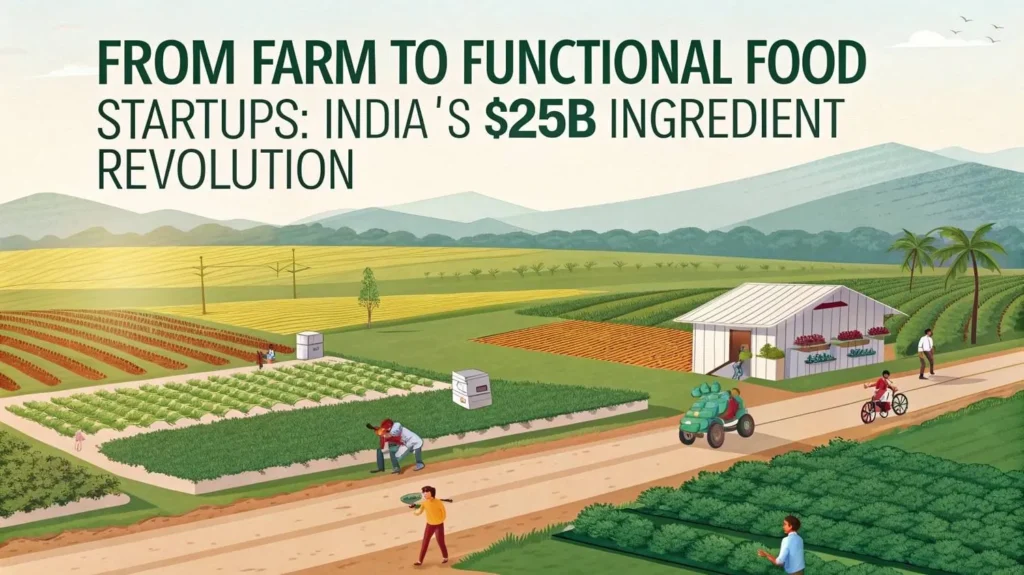
Farm to Functional Food Startups in india is undergoing a transformation. The country’s food industry is undergoing a transformation. It will become a 25 billion dollar functional food ingredient hub over the next few years, thanks to a growing health consciousness, heightened global demand for clean-label and natural products, as well as technological advancements in ingredient processing. This shift is not limited to the big brands. Startups and MSMEs have taken the lead in transforming farm produce into functional ingredients of high value, nutraceutical products, and clean-label products. ingredient innovations led by STEER Lifesciences, and other leading players, are a key driver. Their technologies solve age-old problems like bitterness, poor dispersibility and solubility. They unlock massive potential in functional foods, supplements, and wellness products. The Functional Food Startups Boom in India Market Snapshot Global trends fueling domestic growth India’s varied agro-base – from spices and herbs, to pulses and milk – provides the foundation. Startups that integrate with farm linkages are able to position themselves as high margin suppliers for both domestic brands and international giants. Related Article:- Aluminum and Chitin: The Ultimate Startup Guide for Next-Gen Sustainable Food Packaging Understanding Functional Ingredients Functional ingredients are more than just basic nutrition. They offer additional health benefits, such as: plant-based protein; oils fortified with omega-3 fatty acids; dairy products fortified with vitamins and herbal supplements are examples. STEER Lifesciences is a key player in solving R&D problems for brands – from solubility to stability, and even masking bitterness – enabling mass market adoption. Why This Industry Matters for Startups a. High Growth, Low Saturation India is still developing its functional ingredients market compared to other developed markets. This leaves ample room for innovation. b. Technology & R&D Access Even MSMEs can benefit from cutting-edge technology by collaborating with CFTRI or NIFTEM. c. Government Push The MoFPI and APEDA schemes encourage the establishment of nutraceutical and herb extraction units, with financial and export assistance. d. Global Market Gateway India’s vast pool of agricultural and herbal products gives startups an advantage in supplying functional ingredients based on raw materials abroad. Key High-Potential Segments for Startups a. Plant-Based Proteins b. Nutraceutical Drinks c. Herbal Extracts d. Dairy ingredients that are fortified and functional e. Specialty Starches & Functional Fibers NPCS – Your Partner in Building a Functional Ingredient Venture We, at Niir project Consultancy services (NPCS), provide professional consulting in the preparation of market survey cum Detailed Techno-Economic Feasibility Reports when setting up a new industry or business. The following are included in our reports: We aim to assist entrepreneurs in evaluating industrial projects for feasibility, profitability and scalability. Whether you’re planning a plant protein unit, a beverage nutraceutical line, or a starch facility with functional properties, NPCS will design a roadmap that is tailored to your vision. Import-Export Opportunities India’s exports of functional ingredients are underdeveloped in comparison to the raw spice and herbs. This gap exposes a major opportunity for value-addition. Startups can identify market gaps using APEDA’s export intelligence, buyer-seller meetings and APEDA’s export intelligence. Export facilitation is also provided by the Spices Board, and Ministry of AYUSH. Government Support Framework Key Agencies Visit: MSME Success Stories to Inspire New Entrepreneurs STEER Lifesciences Technology Enabler STEER Lifesciences proprietary ingredient transformation platform helps brands overcome challenges such as poor solubility and dispersibility. This is an example of how licensing technology or partnering with other companies can help startups achieve massive scale. Synthite Industries – Herbal Extraction Pioneer Synthite has transformed from a small oleoresin extraction company to a global leader in flavor and herbal extracts. This is a great example for MSMEs that want to combine the raw material strength with advanced processing. Epigamia- Functional Dairy Leader The company that revolutionized the yogurt market by introducing Greek and lactose free yogurts is now expanding into functional and plant-based beverages. This proves that consumers are willing to pay more for innovative health products. Blue Craft Agro Specialty Starches This company, which focuses on specialty starches derived from maize, shows how MSMEs that focus on ingredients can scale up by serving B2B clients rather than just retail consumers. Business Models for New Entrepreneurs a. Integrated Functional Input Manufacturer Establish a fully-fledged facility with extraction, blending and packaging in-house. Investment but better margins and quality. b. Contract Ingredient Partner Contract manufacturing services are available to brands of nutraceuticals and functional foods that do not have their own infrastructure. Low investment, steady income and scalability with time. c. Export Specialist Focus on one or more high-value functional ingredient (such as plant proteins or extracts of turmeric) and create a premium brand for export. d. OEM Supplier for FMCG Brands Customized functional blends for FMCG companies that produce ready-to-eat foods, snacks, and health supplements. e. Innovation Hub Partner with universities and researchers to create proprietary formulations that you can license to multiple brands. Sector Challenges and How Startups Can Overcome Them Future Trends in Functional Ingredients a. Personalized Nutrition AI-based platforms and data-driven platforms enable the creation of personalized functional ingredient blends to meet individual health goals. b. Sustainable Extraction Supercritical CO2 and green solvents are now standard technologies, which reduce environmental impact while improving purity. c. Bioactive Packaging Combine functional ingredients and biodegradable packaging for extended shelf life. d. Direct-to-Consumer Models Subscribe to receive functional ingredients-based snacks and supplements. Related :- Project Report Point-Wise Suggested Products and Opportunities 1. Plant Protein Isolates 2. Herbal Nutraceutical Extractions 3. Functional Dairy Powders 4. Specialty Fibers & Starches 5. Nutraceutical Drinks Action Plan for Aspiring Entrepreneurs Conclusion – Transforming Indian Agriculture into Functional Wealth India’s transition from farm to functional food marks a seismic change in the food processing industry. Startups can increase profitability, reach global markets, and have a positive social impact by converting raw ingredients into high-value functional foods. The stage is now set for a generation of new entrepreneurs who will build businesses that are at the intersection of sustainability, health and innovation. The path from farm-to-functional food startup is now easier and more profitable than ever by aligning with NPCS and leveraging government programs. FAQs: Farm to Functional Food Startups What are farm to functional food startups? These startups source ingredients directly from farms and turn them into nutrient-rich, clean-label functional foods such as protein snacks, probiotic drinks, superfoods, and fortified products. Why are functional food startups growing in India? Rising health awareness, demand for natural ingredients,
Aluminum and Chitin: The Ultimate Startup Guide for Next-Gen Sustainable Food Packaging
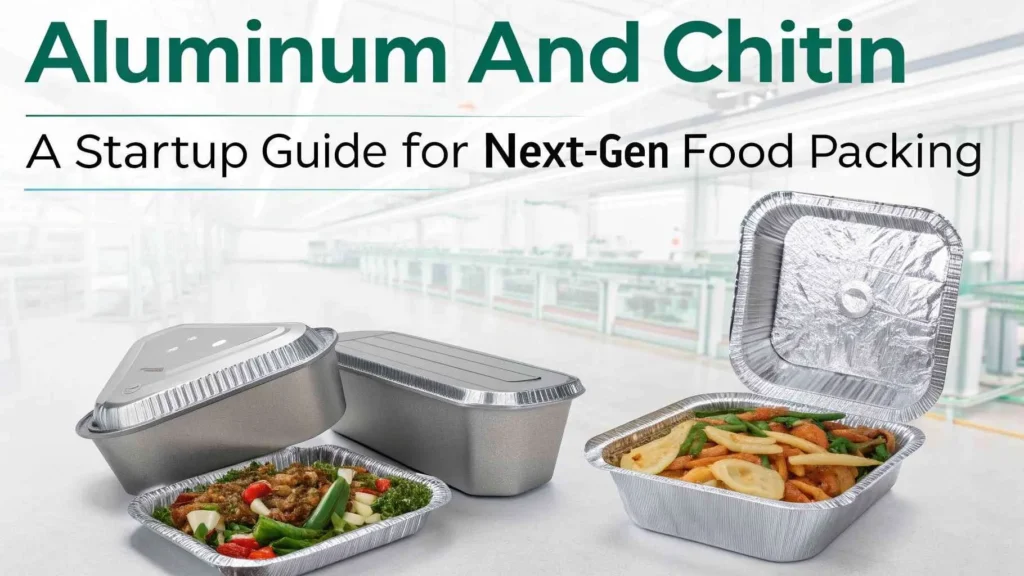
Food safety and sustainability are no longer optional; instead, they are the two key engines driving innovation in the global packaging sector. In particular, India’s rapidly growing e-commerce market, stricter regulations, and rising consumer expectations are transforming the way food is packaged, preserved, and delivered. Aluminum and Chitin, three emerging technologies are proving to be true game changers — namely, chitin-based biopolymer packaging, lightweight yet durable aluminum packaging, and smart systems such as Modified Atmosphere Packaging (MAP). Together, these innovations mark the dawn of Packaging 2.0 — a decisive shift away from conventional plastics towards intelligent, eco-friendly, and high-performance solutions. Ultimately, this transformation is creating new startup opportunities across the entire value chain. 1. Why Packaging 2.0 Matters for Startups Entrepreneurs are not just concerned with materials. They’re also interested in redefining the way food is transported from farm to table. 2. Market Landscape and Growth Potential Global Market Snapshot India Packaging Sector It is a turning point for startups to enter niche segments with high value rather than compete on low-margin packaging. 3. Technology 1 – Chitin-Based Biopolymer Packaging What Is Chitin Packaging Chitin, a natural polymer, is derived from the shells of crustaceans such as shrimp and crab. Notably, it is both biodegradable and renewable, making it an excellent alternative to conventional plastics. Furthermore, chitin can be processed into thin films and composite materials, which can effectively replace plastics in various food packaging applications. Key Benefits Market Opportunity For Startups Startup Angle 4. Technology 2 – Aluminum-Based Packaging Why Aluminum? Aluminum packaging is lightweight and highly recyclable. It also provides an excellent barrier to light, oxyge,n and moisture, which is critical in extending the shelf-life of processed food. Key Benefits Market Opportunity For Startups Startup Angle Related Article:- The Food Industry Revolution 5. Technology 3 – Modified Atmosphere Packaging (MAP) and Smart Systems What is MAP? Modified Atmosphere packaging replaces the air in a food package with a mixture of gases (like N2, CO2, etc.) to slow down spoilage. Combining sensors and smart labels creates an “intelligent package” that can monitor freshness. Key Benefits Market Opportunity For Startups Startup Angle 6. NPCS – Your Partner in Building a Packaging Venture We, at Niir project Consultancy services (NPCS), provide professional consulting in the preparation of market survey cum Detailed Techno-Economic Feasibility Reports when setting up a new industry or business. The following are included in our reports: We aim to assist entrepreneurs in evaluating industrial projects for feasibility, profitability and scalability. Whether you are planning a chitin film unit, an aluminum tray plant, or a MAP facility, NPCS will design a roadmap that is tailored to your vision. 7. Import-Export Opportunities Chitin-Based Packaging Aluminum Packaging Smart Packaging and MAP The government portals www.apeda.gov.in, www.mofpi.gov.in, and the MSME Minister can help entrepreneurs access incentives and markets Related Book:- Aluminium and Aluminium Products 8. Government Support and Policy Framework Key Agencies Visit: 9. MSME Success Stories to Inspire New Entrepreneurs Uflex, India’s Flexible Packaging Giant As a small packaging films manufacturer, it has grown to become a global leader that supplies major FMCG companies worldwide. The company’s growth shows the importance of export markets and R&D. Tube Packaging Innovator – Essel Propack Developed laminated tubes that are widely used in oral care, cosmetics, and food packaging. Moreover, this article illustrates how niche packaging innovations can be strategically leveraged to create and expand global markets. Marine Bio Solutions Sea6 energy – Marine Bio Solutions It is a documentary that focuses on marine biomass but also shows how ocean resources, such as crustacean shells, can be used to create sustainable industrial products and packaging materials. Tetra Pak India High-Tech Packaging This video demonstrates how the combination of processing and packaging innovations can create food products that are ready for export. In addition, these examples highlight that packaging innovation is not limited to large corporations. On the contrary, agile MSMEs and startups can effectively dominate niche markets by leveraging the right technologies and strategic approaches. 10. Business Models for New Entrepreneurs a. Biopolymer film producer b. Manufacturer of Aluminum Foil and Trays c. MAP Service Provider d. Smart Packaging Startup 11. Sector Challenges and How Startups Can Overcome Them Related project Report:- Aluminium and Aluminium Downstream Projects 12. Upcoming Trends in Packaging a. Active Packaging Antimicrobial agents can be added directly to the film for a longer shelf life. b. Edible Coatings Chitosan-based edible films reduce post-harvest loss on fruits and vegetables. c. QR Code Traceability Smart packaging embedded with QR codes allows consumers to track the origin, freshness and authenticity of products. d. Circular Economy Focus Packaging startups support closed-loop recycling programs and composting. 13. Point-Wise Suggested Products and Opportunities 1. Antimicrobial Films Based on Chitosan 2. Aluminum Meal Trays For Airlines 3. Packaged fresh produce in Modified Atmosphere 4. Smart labels and IoT sensors 5. Composite Packaging Solutions 14. Action Plan for Aspiring Entrepreneurs Conclusion – Seizing the Packaging 2.0 Opportunity India’s packaging industry is on the brink of a major transformation. With this shift, entrepreneurs now have a wide range of opportunities — from smart gas-flushed packages to aluminum foils and crustacean shell-based materials. Furthermore, startups can lead this revolution by prioritizing sustainability and regulatory compliance. In doing so, they will not only supply innovative materials but also develop integrated, end-to-end packaging solutions that enhance food safety, minimize waste, and unlock new export opportunities. Moreover, with the support of government initiatives, guidance from industry institutions, and strategic partnerships — such as those with NPCS, which conduct detailed feasibility studies — entrepreneurs can successfully transform Packaging 2.0 into a profitable and scalable business model.. How NPCS Can Help You NPCS (Niir Project Consultancy Services) provides end-to-end support for entrepreneurs, including: With expert support, your chances of success in this high-growth sector increase significantly. Contact Us Niir Project Consultancy Services 106-E, Kamla Nagar, Opp. Mall ST, New Delhi-110007, India. Email: info@entrepreneurindia.co Mobile: +91-9097075054 Website:https://www.entrepreneurindia.co
Top 10 Profitable Pesticides and Insecticides to Manufacture
The agriculture sector in India is the foundation of the economy, providing food to more than 1.4 billion people and sustaining the lives of people in rural areas. As pressure mounts to boost yields on crops and to manage pests sustainably, demand for efficient agrochemicals, specifically Pesticides and Insecticides, has seen steady growth. Entrepreneurs who want to venture into this field can profit from an extremely competitive and recession-proof market that provides both global and domestic opportunities. This article focuses on some of the most successful Pesticides and Insecticides that are available for production in India in light of the current trends in the market as well as the patterns of crop usage and demand for exports. Each product is of strategic importance to Indian agriculture as well as global supply chains. They also offer an opportunity for small- as well as large-scale players. Understanding Market Demand and Growth in Agrochemicals The Indian Agrochemical industry is set to grow at a compound annual rate (CAGR) between 8 and 10 percent through 2029. Pesticide use in India is currently at 0.6 kg/ha, which is lower that the average global which suggests significant growth potential. The government of India’s constant determination to double farmers’ earnings and ensuring food security is accelerating the use of high-quality crops protection products. India is also gaining recognition as a manufacturing hub in the world for insecticides, pesticides, and technical grade, exporting them to Latin America, Southeast Asia as well as Africa. Additionally, several patent-pending molecules from multinational companies are now off-patent, allowing the doors to lucrative possibilities for Indian companies to reverse engineer and create generic chemicals. Let’s look at the most profitable items that are worth making in this growing sector. 1. Chlorpyrifos Chlorpyrifos is an organophosphate with a broad-spectrum insecticide that is widely used in paddy, cotton, sugarcane, and groundnut farming. It affects the insect’s nervous system and is extremely efficient against insects like termites, bollworms, and stem borer. Despite the restrictions placed on it by regulatory authorities in a few Western countries, it is popular throughout Asia and Africa and ensures constant demand for Indian producers, especially to export. 2. Imidacloprid Imidacloprid is a neonicotinoid insecticide is gaining popularity due to its systemic effect and its low toxicity to humans. It is highly effective in battling sucking insects like jassids, aphids and whiteflies. The fact that it is water-soluble permits it to be quickly absorbed by plants and provide long-term protection. It is extensively used in vegetable crops, horticultural cotton, rice, and cotton and is a key product on both export and domestic markets. 3. Cypermethrin Cypermethrin, a synthetic pyrethroid insecticide used to manage the lepidopteran range of beetles and pests. It is popular because of its fast knock-down and integration with integrated pest management (IPM) methods. Cypermethrin can be found in the household and in agricultural application for pest control. The wide use of this molecule allows it to be a profitable chemical to make. 4. Lambda-Cyhalothrin Lambda-Cyhalothrin is a different pyrethroid recognized for its efficacy with a low dose. It is mostly employed in rice, wheat vegetables, cotton, and farming to combat caterpillars armyworms and other chewing insects. It has a wide global market because of its dual application in crop protection and vector control. The molecule’s versatility, its low toxic, and the fact that it has been approved by regulatory agencies make it a desirable product for Indian agricultural chemical manufacturers. 5. Acephate Acephate is an insecticide made of organophosphate that works both systemically and by contact. It is extensively used to control chewing and sucking insects in crops such as the brinjal, chili and cotton paddy, and chili. What is what makes Acephate an effective choice is its rapid degradation in the environment as well as its relatively low toxic residual. The eco-friendly nature of the product increases its popularity among progressive farmers and buyers from around the world. 6. Monocrotophos While it is prohibited or restricted in many countries, Monocrotophos continues to see significant use in the developing world due to its efficiency and low cost. In India it is utilized to cultivate crops such as sugarcane, cotton, as well as pulses. The product is a delicate one that requires care and a strict compliance system, however its popularity across Asia and Africa guarantees a consistent market. Manufacturers who adhere to safety protocols can make use of this product as a high-margin item. Related: How to Start a Contract Manufacturing Business in Agrochemicals 7. Carbendazim (Fungicide-Insecticide Combo) Carbendazim, which is primarily a fungicide it is often used in conjunction with insecticides to provide broad-spectrum protection. The reason it is included in this list is because of its synergistic usage in formulations such as Carbendazim and Imidacloprid and Carbendazim with Cypermethrin. These premixed formulas are now appreciated by farmers due to their ease of use and efficiency. Making combination products improves the value of the portfolio and also helps to satisfy the specific needs of each region. 8. Deltamethrin Deltamethrin is a pyrethroid of the third generation that is particularly efficient against mosquito larvae and agricultural pests. It is widely used for both household and farm pest control. It’s highly regarded for its residual action as well as its security profile. This dual use is a viable manufacturing option, particularly in the case of agri-inputs and the public health market. 9. Fipronil Fipronil is an insecticide containing phenylpyrazole, which works by blocking GABA-gated chloride channels that are present in insects. It is used extensively in treatments for seed sprays for foliar or soil treatments. Its ability to control termites, rootworms, and stemborers in crops like sugarcane, maize, as well as soybean makes it a popular choice for commercial farming. Fipronil is also utilized in household and veterinary products, which offer cross-sectoral growth potential. 10. Pretilachlor (Herbicide-Insecticide Use in Combinations) Pretilachlor is principally an herbicide used to prevent the emergence of new plants; however, its combination with insecticides such as fipronil or chlorpyrifos provides greater protection of