
Top Business Opportunities in India
India is one of the fastest-growing economies in the world. With a booming middle class, increasing digital penetration, and a massive market for goods and services, the country offers incredible opportunities for entrepreneurs. Whether you’re a budding startup or an experienced investor, identifying the 10 most profitable businesses in India can lead you to stable and scalable ventures with high returns on investment. These businesses span across sectors such as technology, healthcare, food, manufacturing, and finance, making them ideal for a diverse range of individuals looking to establish successful enterprises. Top 10 Most Profitable Businesses to Start in India Pharmaceutical Manufacturing India is known as the “pharmacy of the world,” and this reputation is well-deserved. With low production costs and a vast talent pool of chemists and scientists, the pharmaceutical sector ranks high in the list of 10 most profitable businesses in the country. Demand for generic drugs, medical supplies, and over-the-counter products continues to grow both domestically and internationally. Entrepreneurs can start with moderate investment and scale up gradually by targeting hospitals, retailers, and exports. E-commerce and Online Retail The rise of digital payments and internet penetration has fueled the growth of e-commerce in India. Platforms like Amazon, Flipkart, and niche players in fashion, electronics, and groceries have demonstrated the massive potential of this industry. Starting your own e-commerce store, particularly in underserved markets or unique product categories, can be incredibly lucrative. Fulfillment can be streamlined with dropshipping or warehousing partnerships, making it one of the 10 most profitable businesses in recent years. Renewable Energy Projects With increasing environmental concerns and the government’s strong push for clean energy, solar and wind energy ventures are emerging as highly profitable. Entrepreneurs can invest in solar panel installation services, windmill maintenance, or even solar battery manufacturing. Government subsidies and tax incentives further make renewable energy a viable and rewarding business model in India. Edtech and Online Learning Platforms The COVID-19 pandemic brought online education into the spotlight, but even post-pandemic, the demand continues to grow. From K-12 content to professional upskilling courses, there is a huge market for digital education. With low overhead costs and scalable platforms, this business model offers excellent margins. Building a mobile app or website with high-quality content can place your venture among the 10 most profitable businesses in the education sector. Cloud Kitchen and Food Delivery Services The food delivery market in India is expanding rapidly. A cloud kitchen operates without a dine-in facility, focusing only on food delivery through platforms like Swiggy and Zomato. This lowers rental and operational costs while catering to the urban appetite for convenience and variety. If you specialize in a cuisine or create a strong brand identity, this can easily become one of your most profitable ventures. Textile and Garment Manufacturing India’s textile industry is one of the largest contributors to GDP and employment. With rising global demand for Indian garments and fabrics, setting up a textile manufacturing unit—especially one that focuses on eco-friendly and sustainable materials—can be very profitable. This business has a consistent customer base in both domestic and export markets, making it a strong candidate among the 10 most profitable businesses for long-term success. Real Estate Development and Rental Services Real estate continues to be a robust investment in urban and semi-urban India. With rapid urbanization and increasing migration to cities, rental income has become a steady and scalable source of profit. Investing in residential apartments, commercial spaces, or co-working hubs can offer attractive returns. Moreover, property management services are gaining traction, creating another revenue stream within the real estate ecosystem. Digital Marketing and SEO Services With more businesses going online, the need for digital marketing has exploded. Whether it’s search engine optimization (SEO), social media marketing, or paid campaigns, companies are willing to pay a premium for proven results. Starting a digital marketing agency requires minimal investment but delivers high profits once you build a client base. This makes it one of the most accessible and 10 most profitable businesses for tech-savvy individuals. Automobile Spare Parts and Accessories India is one of the world’s largest automobile markets. As vehicle ownership rises, so does the demand for spare parts and accessories like batteries, tires, and performance parts. Starting a dealership or a manufacturing unit for quality auto parts can be very rewarding. With rising fuel prices, electric vehicle (EV) accessories and parts are also becoming a hot area for investment and innovation. Ayurvedic Products and Herbal Cosmetics India has a rich tradition of Ayurveda and herbal medicine. With increasing global interest in natural wellness and beauty products, starting a business in Ayurvedic health supplements, herbal skincare, or organic cosmetics can yield significant profits. Branding and compliance with quality standards are crucial in this sector, but once established, it becomes one of the 10 most profitable businesses with strong export potential. Key Factors That Make These Businesses Profitable While all of the above sectors have different investment requirements and operational models, they share some common traits that contribute to their profitability: Scalability: These businesses can grow with relatively low incremental costs, especially those based on digital platforms or product manufacturing. Market Demand: Each listed business serves a growing market, whether it’s health, education, or lifestyle. Government Support: Many of these industries, especially renewable energy, pharma, and textiles, benefit from government subsidies, incentives, or simplified regulations. High Margins: Several of these businesses—particularly digital services and online platforms—have excellent profit margins due to lower operational costs. Export Potential: With the global interest in Indian products and services, these businesses can also tap into international markets. Final Thoughts Choosing the right business idea involves careful analysis of your interests, skills, investment capacity, and market conditions. The 10 most profitable businesses listed above are not just trending but also sustainable and adaptable to future market changes. Whether you’re a first-time entrepreneur or looking to diversify your investments, these ventures offer solid opportunities for growth and financial success. With smart planning and consistent execution, you can establish a profitable business that thrives in
Profitable Business Ideas for New Startups
Starting your own business can be one of the most rewarding paths to financial independence and personal fulfillment. However, with thousands of business models emerging every year, choosing the right startup idea can be overwhelming. If your goal is to identify the most profitable startup ideas that have both low entry barriers and high growth potential, then you’re in the right place. Whether you’re a first-time entrepreneur or a seasoned investor, these ideas are proven to deliver consistent revenue and long-term scalability in today’s economy. Top 10 Most Profitable Startup Ideas to Launch 1. E-commerce Niche Stores With the explosion of online shopping, launching a niche e-commerce store can be highly lucrative. Instead of competing with giants like Amazon or Flipkart, entrepreneurs are building stores that cater to very specific audiences—such as pet lovers, eco-conscious consumers, or fitness enthusiasts. What makes this one of the most profitable startup ideas is its flexibility. You can operate with minimal inventory using dropshipping models or white-label products. Add in digital marketing strategies like SEO and influencer collaborations, and you’re set to grow quickly with minimal overhead. 2. Digital Marketing Agency In a world where every business needs an online presence, digital marketing services are in constant demand. Starting a digital marketing agency offers services like SEO, social media management, PPC advertising, and content creation to clients across various industries. It’s considered one of the most profitable startup ideas because of its high profit margins and low initial investment. If you already have skills in digital tools and platforms, you can start solo and scale by hiring a remote team. 3. SaaS (Software as a Service) Products Building a SaaS business is a capital-efficient and scalable way to generate recurring revenue. Entrepreneurs are developing tools for CRM, project management, time tracking, invoicing, and even AI-based productivity apps. Though it requires some technical know-how and an initial investment, the long-term returns make SaaS one of the most profitable startup ideas in the tech domain. Subscription models ensure a consistent revenue stream, while automation keeps operational costs low. 4. Health and Wellness Coaching As people become more health-conscious, there is growing demand for personalized fitness training, nutrition advice, and mental health coaching. You can offer virtual sessions via video conferencing, develop subscription-based health plans, or sell digital courses. This makes health and wellness one of the most profitable startup ideas, especially since it requires low capital to start and can generate high fees for personalized programs. Certifications and a strong personal brand can boost credibility and customer loyalty. 5. Mobile App Development With smartphones being indispensable, mobile apps are a hotbed of opportunity. If you can build apps that solve a real problem—like time management, learning, or entertainment—you can monetize through ads, in-app purchases, or subscription models. For tech-savvy entrepreneurs, app development is among the most profitable startup ideas due to the scalability of the product. Once built, apps can reach a global audience without substantial additional costs. 6. Subscription Box Business Consumers love curated experiences, and that’s where subscription boxes shine. Whether it’s beauty products, snacks, fitness gear, or books, subscription boxes cater to niche markets with recurring monthly revenue. This idea lands among the most profitable startup ideas thanks to predictable income and strong customer engagement. Partnering with local suppliers can reduce costs while offering unique value to subscribers. 7. Online Education Platforms Education has moved online, and learners across age groups are seeking flexible, high-quality resources. Whether it’s K-12 tutoring, coding bootcamps, or professional certifications, e-learning is a booming sector. Creating an online education platform—either as a course creator or marketplace—is one of the most profitable startup ideas right now. With minimal infrastructure and a high potential for passive income, it’s a smart choice for knowledge-based entrepreneurs. 8. Green and Sustainable Products Sustainability is not just a trend—it’s a movement. Eco-conscious consumers are actively looking for products that are organic, biodegradable, and sustainable. From bamboo toothbrushes to vegan cosmetics, green products are in high demand. Startups that focus on sustainability are becoming increasingly profitable due to consumer awareness and regulatory support. This makes green innovation a top contender among the most profitable startup ideas for the next decade. 9. Virtual Assistant Services Busy entrepreneurs and small businesses often outsource time-consuming tasks like scheduling, data entry, email management, and customer support to virtual assistants. You can start solo or build an agency offering these services globally. This model is considered one of the most profitable startup ideas because of low startup costs and the ability to work remotely. Platforms like Upwork and Fiverr offer easy entry, while client referrals can lead to rapid scaling. 10. Influencer Management Agency With influencer marketing taking center stage, content creators need help managing their partnerships, branding, and schedules. Starting an influencer management agency gives you the opportunity to earn a commission on brand deals and offer additional services like PR, strategy, and content production. As the creator economy grows, this becomes one of the most profitable startup ideas. It’s a great option for those with experience in media, branding, or talent management. Tips to Choose the Right Startup Idea While exploring the most profitable startup ideas, keep in mind the following factors: Market Demand: Ensure there’s an actual need or gap in the market. Scalability: Choose a model that can grow without proportionally increasing costs. Low Overhead: Start with a lean structure to minimize financial risk. Skill Fit: Align the idea with your expertise and interests. Customer Retention: Opt for models that encourage repeat business or subscriptions. Final Thoughts In today’s digital-first world, launching a business has never been more accessible. Whether you’re starting with limited funds or aiming for long-term scalability, these most profitable startup ideas offer a solid foundation for entrepreneurial success. The key is to start small, validate your idea, and pivot quickly based on market feedback. Remember, the most profitable startup ideas are not just those that generate money quickly but also those that offer value, solve real problems, and can stand the
July 2018 Entrepreneur India Monthly Magazine
The July 2018 Entrepreneur India Magazine Issue captured a critical moment in India’s fast-evolving entrepreneurial ecosystem. As the startup culture gained unprecedented momentum across metro cities and Tier II and Tier III towns, this edition served as both a mirror and a guidepost for aspiring business owners and established entrepreneurs. Packed with stories of resilience, innovation, disruption, and actionable insights, it was a celebration of India’s evolving startup environment. From fintech breakthroughs to eco-conscious businesses, the magazine reflected the spirit of young India aiming to redefine success through entrepreneurship. Highlights of July 2018 Entrepreneur India Magazine Issue The July 2018 Entrepreneur India Magazine Issue featured cover stories and articles that inspired, educated, and empowered readers with the tools and knowledge needed to thrive in business. It brought into the spotlight various industry leaders, emerging founders, and policy influencers who were shaping the new economy of the country. This issue highlighted many verticals including healthtech, edtech, agritech, renewable energy, logistics, and digital transformation. Entrepreneurs were no longer only looking at conventional business ideas; they were exploring socially relevant, tech-driven solutions for longstanding problems in society. One major theme that resonated throughout the issue was how startups were aligning with India’s national goals like Make in India, Digital India, and Startup India. Cover Story: The Disruptors of 2018 One of the most anticipated sections in the July 2018 Entrepreneur India Magazine Issue was the cover story titled “The Disruptors of 2018.” It profiled emerging startups that had broken barriers in their industries. Founders like Byju Raveendran of BYJU’S, Ghazal Alagh of Mamaearth, and Bhavish Aggarwal of Ola were mentioned as prime examples of business model innovation. These stories explored not only their success but also their early failures and how they overcame them. The issue also drew attention to how Indian startups were attracting international venture capital. It explained how founders could tap into cross-border funding, what VCs were really looking for, and how startups could scale sustainably. Women Entrepreneurs in Focus The July 2018 Entrepreneur India Magazine Issue dedicated a significant portion of its content to women entrepreneurs. It discussed the rise of female-led startups in tech, fashion, food, and social enterprises. Inspirational stories of women leaders who challenged the glass ceiling gave hope and motivation to aspiring female business owners. It featured interviews with powerful women leaders like Falguni Nayar (Nykaa), Richa Kar (Zivame), and Shradha Sharma (YourStory), shedding light on their entrepreneurial journeys, struggles, and success formulas. The theme strongly promoted gender inclusivity in the Indian startup space. Startup Ecosystem in Tier II and Tier III Cities Breaking the myth that startups only belong in big metros, the July 2018 Entrepreneur India Magazine Issue covered in detail how smaller cities were becoming startup hotspots. Cities like Jaipur, Bhopal, Lucknow, and Coimbatore were highlighted for their emerging co-working spaces, incubators, and angel investment networks. The issue featured local heroes who had launched scalable businesses from non-metro cities, taking advantage of lower operational costs, strong community support, and less competition. It offered tips for entrepreneurs on building networks, finding mentors, and accessing funding from regional hubs. Government Policies and Entrepreneurial Support Policy plays a significant role in shaping the success of startups. The July 2018 Entrepreneur India Magazine Issue provided a deep dive into policies and initiatives by the Indian government that supported entrepreneurship. It reviewed how schemes like Startup India, Stand-Up India, and MUDRA loans were changing the game for small business owners. There was also an analysis of the ease-of-doing-business rankings and how reforms in GST, digital compliance, and FDI were impacting startup growth. Entrepreneurs were encouraged to leverage the growing number of government-hosted summits, hackathons, and pitch events. Investment Trends and Insights A valuable takeaway from the July 2018 Entrepreneur India Magazine Issue was the breakdown of funding trends in 2018. It covered the types of investors actively funding Indian startups—angel investors, venture capital firms, corporate investors, and even crowdfunding platforms. The magazine provided strategies on how to pitch successfully, build financial models, and scale with limited capital. It discussed the industries receiving the highest investments, such as fintech, edtech, AI-driven services, and health and wellness. Technology and Innovation at the Core Innovation remained a central theme throughout the July 2018 Entrepreneur India Magazine Issue. The magazine showcased startups leveraging AI, blockchain, IoT, and big data to solve real-world problems. From automated customer service bots to blockchain-based supply chain solutions, it was evident that technology was no longer a choice but a necessity. The issue emphasized the importance of having a tech co-founder or partner, especially for non-tech founders who wanted to scale. It also discussed trends like SaaS (Software as a Service), mobile-first business models, and e-commerce automation tools that were gaining popularity. Lifestyle and Productivity Tips for Entrepreneurs Running a startup is not just about business plans and fundraising. In fact, the July 2018 Entrepreneur India Magazine Issue featured a lifestyle section offering mental health and productivity tips. Moreover, articles on work-life balance, mindfulness, nutrition, and time management strongly resonated with its entrepreneurial readers. As a result, the issue underscored the importance of holistic well-being in achieving sustainable success. It provided insights into how successful entrepreneurs stay motivated, manage stress, and maintain a strong team culture. Books, apps, and productivity tools recommended by founders were included in a special feature. Success Stories and Lessons Learned Readers of the July 2018 Entrepreneur India Magazine Issue found immense value in real-life success stories. Not only were these stories about achievements, but they also delved into failures, learning curves, and strategic pivots. More importantly, they highlighted how those moments led to greater resilience. As a result, the narratives felt both authentic and educational. The issue often focused on lesser-known entrepreneurs who had achieved greatness in niche segments such as handcrafted goods, eco-friendly products, and educational content platforms. It reminded readers that success in entrepreneurship comes in many forms—not just unicorn valuations. Conclusion The July 2018 Entrepreneur India Magazine Issue stands as a remarkable testament to India’s growing entrepreneurial
Food Processing for MSMEs and Entrepreneurs
In the era of fast-paced urbanization and evolving dietary preferences, the Food Processing industry has emerged as one of the most dynamic and lucrative sectors in the global economy. Especially in a country like India, with its rich agricultural base and rapidly growing population, food processing offers enormous potential. As we step into 2025, the demand for packaged, ready-to-eat, and value-added food products is projected to rise even further, making this the perfect time to explore opportunities in the Food Processing industry. Why 2025 is the Right Time to Enter the Food Processing Industry The landscape of the Food Processing industry in 2025 is defined by technology, consumer awareness, sustainability, and government support. Technological advancements in automation, packaging, and food safety have significantly improved efficiency and product shelf life. Consumers are also more health-conscious and seek clean-label products, organic ingredients, and convenient yet nutritious food solutions. Moreover, global disruptions such as pandemics and climate challenges have underscored the need for resilient supply chains and local food production units. Governments worldwide, including India’s Ministry of Food Processing Industries (MoFPI), are introducing supportive policies, subsidies, and funding schemes to promote the growth of food processing units, especially in rural and semi-urban areas. This confluence of demand, innovation, and support creates an excellent environment to launch a Food Processing industry venture in 2025. Types of Food Processing Businesses to Consider There are various segments in the Food Processing industry that entrepreneurs can explore, depending on market demand, investment capacity, and resource availability. Some promising niches include: Fruits and Vegetables Processing: Includes making jams, juices, pickles, dehydrated fruits, frozen vegetables, etc. Dairy Processing: Production of milk products like cheese, butter, ghee, paneer, yogurt, and flavored milk. Meat and Poultry Processing: Packaging of processed meat, sausages, nuggets, and frozen poultry products. Grain Milling and Cereal Processing: Involves flour mills, rice mills, and breakfast cereals. Snack and Bakery Products: Manufacturing biscuits, bread, chips, and ready-to-eat snacks. Beverages: Includes soft drinks, fruit juices, energy drinks, and bottled water. Steps to Start a Food Processing Industry Business 1. Conduct Market Research Before starting your business, comprehensive market research is crucial. Identify the target market, consumer preferences, competitors, and pricing. Analyze the demand for the specific product segment you wish to enter. This helps in determining the feasibility and scalability of your business idea. 2. Choose Your Niche Select a category within the Food Processing industry based on your budget, local raw material availability, and personal interest. For example, if you are located in a region with abundant fruit farming, a fruit processing unit could be a smart choice. 3. Prepare a Detailed Business Plan A well-structured business plan outlines your objectives, funding requirements, operational plan, marketing strategy, and financial projections. It serves as a blueprint for your business and is essential when seeking loans or investments. 4. Legal Compliance and Licensing Obtain all necessary licenses and registrations, including: FSSAI License (Food Safety and Standards Authority of India) MSME/SSI registration GST registration Factory License Pollution Control Clearance (if applicable) Trademark registration (for branding) 5. Secure Funding Depending on the scale of your business, you may need financial support. You can seek funding through: Bank loans under government schemes like PMFME (Pradhan Mantri Formalisation of Micro food processing Enterprises) Angel investors or venture capitalists Self-funding or bootstrapping 6. Location and Infrastructure Choose a location with good transportation, water, and electricity facilities. Your processing unit must meet food-grade standards with separate sections for raw material storage, processing, packaging, and finished goods storage. 7. Procure Machinery and Equipment Based on your product line, purchase appropriate machinery such as mixers, dryers, peelers, blenders, sealing machines, sterilizers, etc. Invest in automation where possible to improve productivity. 8. Hire Skilled Workforce Recruit staff with experience in food technology, production, packaging, and quality control. Provide adequate training on hygiene, safety, and operational procedures. 9. Develop a Supply Chain Establish reliable sources for raw materials, packaging supplies, and distribution networks. Build strong relationships with local farmers, traders, and transporters to ensure timely and cost-effective procurement. 10. Marketing and Branding Create a compelling brand with unique packaging and messaging. Utilize both offline and online channels to promote your products. Social media, food expos, local retail networks, and e-commerce platforms can help grow your brand visibility. Technology Trends Shaping the Food Processing Industry Technology is revolutionizing the Food Processing industry in 2025. Some of the major trends include: Automation & AI: Robotics and artificial intelligence help in precision sorting, grading, and packaging, reducing human errors and enhancing speed. IoT Integration: Internet of Things allows real-time tracking of food quality, inventory, and machine performance. Smart Packaging: Biodegradable and intelligent packaging solutions are gaining traction, aligning with consumer demand for eco-friendly products. Cold Chain Logistics: Improved cold storage and transportation facilities are minimizing food wastage and maintaining freshness. Blockchain for Traceability: Ensures transparency in sourcing and manufacturing, boosting consumer trust. Challenges in the Food Processing Industry Despite the vast potential, entrepreneurs must be aware of certain challenges that may arise: High Initial Investment: Setting up a food processing unit involves capital-intensive equipment and infrastructure. Regulatory Compliance: Maintaining consistent adherence to food safety and quality standards is mandatory and closely monitored. Supply Chain Disruptions: Seasonal raw materials, transportation strikes, or climatic conditions can affect supply. Changing Consumer Preferences: Keeping up with evolving tastes and health trends requires continuous innovation. Competition: The market is highly competitive, and establishing brand loyalty takes time and effective marketing. Government Support and Incentives in 2025 The Indian government continues to support the Food Processing industry through various initiatives in 2025: PMFME Scheme: Offers financial support to micro food processing enterprises for upgrading and formalizing operations. Mega Food Parks Scheme: Provides modern infrastructure with common facilities for processing, packaging, and storage. PLI Scheme (Production-Linked Incentive): Encourages large-scale investment by offering financial incentives to manufacturers. NABARD and SIDBI Loans: Special loan products for agri-businesses and food processing units. Export Promotion: Assistance for food exporters through testing labs, certifications, and trade fairs. Sustainability and Eco-Friendly Practices The Food Processing
Profitable Food Processing Small Business
The global food industry is undergoing a remarkable transformation, and India is playing a pivotal role in this shift. With increasing consumer demand for convenience, health-conscious products, and sustainable packaging, the food processing sector is booming. The year 2025 is expected to bring a wave of innovation and opportunity, especially for entrepreneurs aiming to capitalize on changing dietary patterns and market trends. This is the perfect time to explore the most lucrative food processing business ideas for 2025 and take a deep dive into a sector that promises high returns and scalable growth. Top Food Processing Business Ideas 2025 to Consider The Food Processing Business in India is supported by favorable government policies, increased foreign investments, and a growing middle-class population with evolving consumption habits. Entrepreneurs looking to establish themselves in this dynamic industry can explore a variety of niche segments that not only offer profitability but also long-term sustainability. 1. Ready-to-Eat (RTE) and Ready-to-Cook (RTC) Meal Production As urban lifestyles become busier, demand for ready-to-eat and ready-to-cook meals continues to soar. From traditional Indian curries to continental meal kits, consumers are gravitating toward food options that save time without compromising on taste and nutrition. Establishing a Food Processing Business that offers RTE or RTC products, especially with organic or preservative-free tags, can fetch premium prices in both domestic and international markets. 2. Cold-Pressed Juice and Smoothie Manufacturing Health and wellness trends are not slowing down anytime soon. Cold-pressed juices and smoothie packs are becoming staple products in urban households. Launching a cold-pressed juice manufacturing unit can be a promising food processing business idea in 2025. The focus should be on fresh, natural, and immunity-boosting ingredients, which appeal strongly to health-conscious millennials and Gen Z consumers. 3. Organic and Gluten-Free Snack Production With the surge in food allergies and lifestyle diseases like celiac and diabetes, gluten-free and organic snacks are carving out a significant market share. Products like baked chips, granola bars, millet-based puffs, and roasted legumes offer high margins and wide consumer acceptance. A Food Processing Business centered around this niche can cater to both the domestic market and export segments, where demand for healthy Indian snacks is rising. 4. Frozen Food Processing Frozen foods are no longer limited to peas and corn. From frozen parathas, samosas, idlis, and kebabs to entire gourmet meals, consumers are embracing the convenience of frozen food without compromising on flavor. In 2025, this segment is expected to witness exponential growth, especially as cold chain logistics improve across India. Investing in frozen food processing infrastructure, backed by efficient packaging and storage, can be highly profitable. 5. Plant-Based and Vegan Food Products The plant-based food industry is exploding worldwide, and India—with its large vegetarian population—is uniquely positioned to lead this space. Plant-based meats, dairy alternatives, and egg substitutes are seeing increased demand among vegans, flexitarians, and environmentally-conscious consumers. Entrepreneurs can start a Food Processing Business that specializes in plant-based protein sources using pulses, soy, jackfruit, or mushrooms. 6. Pickle and Chutney Manufacturing Traditional Indian pickles and chutneys have always enjoyed popularity, but with modern packaging and hygienic processing methods, they are finding takers globally. Launching a Food Processing Business focused on regional varieties of pickles—like mango, lemon, garlic, or mixed vegetable—and chutneys can lead to a thriving export-oriented venture. Innovations in flavors, spice blends, and packaging can further enhance market penetration. 7. Dairy Processing Unit India is one of the largest producers of milk, and dairy processing remains a strong pillar of the Food Processing Business ecosystem. In 2025, the focus will shift towards value-added dairy products such as flavored yogurts, probiotic drinks, artisan cheeses, and lactose-free milk. Automation, cleanliness, and quality assurance will be key to building brand loyalty in this segment. 8. Pulses and Spices Processing The demand for pre-cleaned, packaged, and branded pulses and spices is growing rapidly. Consumers are leaning toward products that offer hygiene, consistency, and authenticity. A Food Processing Business focusing on sorting, grading, roasting, or grinding of pulses and spices can benefit from both B2C and B2B channels. There’s also scope for export, especially for Indian masalas and lentils, which are in high demand globally. 9. Dehydrated Fruits and Vegetables Dehydrated foods offer long shelf life and retain most nutrients, making them popular among health-conscious buyers and survival food companies. Bananas, carrots, apples, onions, and tomatoes are ideal candidates for dehydration. With the right drying and packing technology, an entrepreneur can build a scalable Food Processing Business that caters to snack companies, hotels, and catering services. 10. Baby Food Manufacturing Parents today are highly discerning about what they feed their children. Organic, additive-free, and preservative-free baby food is becoming a must-have for young parents. Starting a baby food processing business that offers purees, cereals, and snacks made from millet, rice, pulses, and vegetables can be a smart niche entry in 2025. Quality control, trust, and certifications will be critical in this highly sensitive market. 11. Health Supplements and Nutraceuticals From protein powders to dietary supplements made with herbs and natural extracts, the nutraceutical segment is flourishing. Products that boost immunity, digestion, or energy are especially popular post-COVID. Creating a Food Processing Business focused on functional foods or nutritional powders (like spirulina, moringa, or ashwagandha blends) can cater to both fitness enthusiasts and wellness consumers. 12. Traditional Sweets and Snack Packaging Indian sweets like rasgulla, soan papdi, and besan laddoo have a huge market, both domestically and overseas. However, with modern packaging solutions such as vacuum sealing and modified atmosphere packaging, these traditional products can now have extended shelf lives and better transportability. Starting a Food Processing Business that revamps the way Indian snacks and sweets are packaged and preserved can create significant brand value. 13. Ethnic Ready Spice Mixes Spice blends like garam masala, pav bhaji masala, biryani masala, and sambhar powder are household staples. With increasing demand for convenience cooking, pre-mixed and ready-to-use spice blends are flying off the shelves. This is a perfect food processing business idea for small-scale entrepreneurs, especially those with access to
Food Processing Trends and Insights for 2025
The global food processing industry is undergoing a significant transformation as it responds to changes in consumer behavior, environmental concerns, and technological advancements. In 2025, this sector is expected to grow exponentially, driven by demand for healthier, sustainable, and ready-to-eat food products. As food security and food quality become increasingly important to governments and consumers alike, companies in this field must stay abreast of emerging trends and innovations to stay competitive and relevant. This article delves deep into the key developments shaping the future of food processing, offering valuable insights for entrepreneurs, manufacturers, investors, and policymakers. Major Food Processing Trends and Insights for 2025 1. Sustainable and Clean Label Ingredients Consumers are becoming more conscious of what they eat, and they are actively seeking products with clean labels — those free from artificial additives, preservatives, and synthetic ingredients. This has driven a major shift in the food processing industry toward the use of natural, organic, and plant-based ingredients. In 2025, transparency will be key; food labels will not just list ingredients but also trace their origin and sustainability credentials. Brands that adopt clean label practices will enjoy higher consumer trust and loyalty. 2. Plant-Based and Alternative Proteins The rise of plant-based diets continues to influence the direction of the food processing sector. Consumers are shifting from traditional meat and dairy to plant-based and alternative protein sources such as pea protein, soy, lentils, and lab-grown meat. This shift is not only driven by ethical and environmental concerns but also by dietary preferences and health benefits. Companies in the food industry are investing heavily in R&D to innovate and develop textures and flavors that mimic animal-based products. 3. Automation and Smart Technologies Automation has long played a role in food processing, but 2025 will see a much broader application of smart technologies such as AI, machine learning, robotics, and IoT. These technologies will help optimize supply chains, reduce food waste, improve food safety, and ensure consistency in production. Smart sensors and data analytics will enable real-time monitoring and control, minimizing human error and enhancing overall efficiency. 4. Personalized Nutrition One of the most exciting trends in food processing for 2025 is the rise of personalized nutrition. With the help of data-driven solutions and DNA-based diet recommendations, companies are developing food products tailored to individual health needs, allergies, and preferences. From supplements to meal kits, the food industry is poised to provide highly customized dietary solutions that promote wellness and prevent lifestyle diseases. 5. Circular Economy and Waste Reduction Sustainability is no longer optional; it’s a necessity. In the food processing industry, this translates into reducing food waste, reusing by-products, and adopting circular economy models. Innovations in upcycling — turning food waste into usable products — are becoming mainstream. For instance, discarded fruit peels are now being processed into fiber-rich powders for baking and beverages. Packaging innovations, including biodegradable and edible packaging, are also gaining traction. 6. Enhanced Food Safety and Traceability The pandemic highlighted the importance of robust food safety and traceability systems. In 2025, food processing companies will increasingly rely on blockchain technology to ensure transparency throughout the food supply chain. This will not only help in quickly identifying the source of contamination during recalls but also assure consumers of the safety and authenticity of their food. 7. Cloud Kitchens and Ready-to-Eat Products Urbanization and changing lifestyles are boosting the demand for ready-to-eat (RTE) and convenience foods. Cloud kitchens, or delivery-only restaurants, are emerging as major players in this trend. The food processing sector is responding with innovative solutions such as shelf-stable meals, vacuum-sealed packs, and frozen gourmet meals that offer both convenience and nutrition. This market segment is expected to witness robust growth in 2025, especially in metropolitan regions. 8. Rise of Functional Foods and Beverages Health-conscious consumers are increasingly turning to functional foods and beverages that offer more than basic nutrition. These include items enriched with probiotics, omega-3 fatty acids, antioxidants, and adaptogens. The food processing industry is exploring new ways to incorporate these health boosters into daily consumables like snack bars, dairy alternatives, and even carbonated drinks. The integration of Ayurvedic and traditional herbs into modern processed foods is also gaining popularity. 9. Regulatory Compliance and Global Standards With globalization and cross-border trade on the rise, adhering to international food safety and quality standards is critical. In 2025, food processing companies will need to comply with increasingly stringent regulations related to ingredients, labeling, and sustainability. Certifications such as ISO 22000, FSSAI (in India), and FDA (in the USA) will be more important than ever, influencing buyer decisions and market access. 10. Local Sourcing and Hyper-Localization Consumers are showing a strong preference for locally sourced food, not just for its freshness but also for supporting community economies and reducing carbon footprints. The food processing industry is adapting by building more localized supply chains and collaborating with local farmers and cooperatives. Hyper-localized processing facilities and on-demand food production units will redefine how food is produced and consumed in specific regions. Challenges Faced by the Industry Despite these promising trends, the food processing industry in 2025 is not without challenges. Rising raw material costs, global supply chain disruptions, and labor shortages are likely to affect profitability. Moreover, integrating new technologies requires significant capital investment and upskilling of the workforce. Ensuring data privacy and security in smart processing plants will also be crucial. Opportunities for Startups and Entrepreneurs For startups and emerging players, 2025 is a year of immense opportunity in the food processing domain. Niche segments like fermented foods, ethnic cuisine RTE meals, vegan snacks, and clean energy bars are ripe for innovation. With funding flowing into agri-tech and food-tech ventures, there is ample scope to create sustainable and scalable business models that cater to the evolving consumer demands. The Indian Perspective India, with its rich agricultural base and rising middle class, is poised to become a global hub for food processing. Government schemes like PMKSY (Pradhan Mantri Kisan SAMPADA Yojana) and PLI (Production Linked Incentive) are encouraging private sector
Best Industries to Start a Startup in 2025
In today’s fast-paced, innovation-driven economy, choosing the right sector is crucial for the success of a new business. Aspiring entrepreneurs must stay ahead of emerging trends and analyze high-growth sectors to tap into opportunities with maximum potential. With technology evolving rapidly and global demands shifting, the search for profitable industries for startups has become more critical than ever. Startups that enter the right market at the right time can scale quickly, disrupt traditional sectors, and build sustainable business models. Exploring the Most Profitable Industries for New Ventures This article identifies the Top 10 Profitable Industries for Startups, based on market trends, investor interest, and long-term growth projections. These industries offer robust returns, innovation potential, and a supportive ecosystem for startups. 1. Health Tech and Telemedicine The global healthcare landscape has experienced a dramatic transformation, especially after the COVID-19 pandemic. Telemedicine, wearable health devices, AI-powered diagnostics, and virtual care platforms are booming. Startups in the profitable industries of health tech benefit from a rising demand for remote medical services and personalized health monitoring. With an aging population and increasing lifestyle diseases, this industry promises exponential growth. 2. Financial Technology (FinTech) FinTech has disrupted traditional banking by introducing user-friendly, efficient, and secure financial services. Mobile wallets, digital lending, investment platforms, and blockchain-based systems are just a few innovations. The FinTech sector is one of the most profitable industries due to its scalability, relatively low entry barriers, and immense customer base. Governments worldwide are also creating regulatory sandboxes to encourage FinTech startups. 3. E-commerce and D2C Brands The e-commerce sector continues to expand, bolstered by smartphone penetration, digital payments, and changing consumer behaviors. Direct-to-consumer (D2C) brands are leveraging social media, influencer marketing, and personalized experiences to grow rapidly. Whether it’s fashion, health supplements, or home goods, this sector remains one of the most profitable industries for startups with strong branding strategies and niche targeting. 4. Renewable Energy and Sustainability As the world shifts toward clean energy, renewable energy startups are at the forefront of a major transformation. Solar energy, wind power, biofuels, and green hydrogen are gaining attention from investors and governments alike. In addition, climate-focused innovations such as carbon capture, electric vehicles, and sustainable packaging fall under this umbrella. The profitable industries of the future will almost certainly include green tech, as both profitability and environmental impact align in this space. 5. EdTech and Online Learning The pandemic accelerated the shift toward digital education, but the trend is far from temporary. Startups offering remote learning platforms, upskilling programs, and personalized education tools have captured global audiences. From K-12 tutoring to corporate training, EdTech is proving to be one of the profitable industries with a long-term future. There is a significant demand for flexible, cost-effective, and quality learning solutions worldwide. 6. Artificial Intelligence and Machine Learning AI is transforming how businesses operate—from automating customer support to enhancing logistics and personalizing user experiences. Startups in this industry are developing solutions across domains like healthcare, finance, retail, and cybersecurity. With AI adoption projected to contribute trillions to the global economy in the coming years, this is undeniably one of the most profitable industries for startups aiming to lead in innovation. 7. FoodTech and Alternative Proteins Consumer preferences are shifting toward healthier, sustainable, and convenient food options. Startups in FoodTech are revolutionizing how food is grown, prepared, and delivered. From cloud kitchens and meal delivery apps to lab-grown meat and plant-based proteins, this sector is on the rise. With conscious consumption becoming mainstream, FoodTech has emerged as one of the profitable industries where both innovation and impact matter. 8. Cybersecurity and Data Privacy With businesses and individuals storing more data online, the threat of cyberattacks has grown significantly. Startups offering cybersecurity tools, threat detection systems, and data encryption services are in high demand. As governments implement stricter data protection laws and companies increase their cybersecurity budgets, this sector is poised to be one of the most profitable industries in the tech landscape. 9. SaaS and Enterprise Software Software-as-a-Service (SaaS) allows companies to access tools and services on a subscription basis, making them more agile and cost-effective. Whether it’s CRM, HR management, marketing automation, or workflow optimization, SaaS solutions are in high demand. This sector is one of the most profitable industries because of its scalability, recurring revenue models, and global applicability. 10. Gaming and Virtual Reality (VR) Gaming is no longer just entertainment; it’s a massive industry with loyal user bases and high engagement levels. Add to this the rise of virtual and augmented reality, and you have a sector that is ripe for disruption. VR is also being used in education, real estate, healthcare, and design—beyond just games. Startups entering the VR and gaming space are tapping into one of the most rapidly growing and profitable industries of the digital age. Final Thoughts Choosing the right industry can set the foundation for startup success. Each of the sectors mentioned above represents more than just current trends—they offer long-term opportunities aligned with global shifts in consumer behavior, technology adoption, and policy changes. For aspiring entrepreneurs, tapping into profitable industries means doing thorough market research, understanding user pain points, and innovating with purpose. While the startup journey is never without challenges, entering a high-growth industry dramatically increases the odds of success. With the right product-market fit, customer-centric approach, and commitment to agility, startups can scale faster than ever before. For anyone looking to launch a business in 2025 and beyond, these profitable industries provide a robust launchpad for growth, impact, and sustained success. Visit the page Select and Choose the Right Business Startup for You for sorting out the questions arising in your mind before starting any business and know which start-up you can plan. We, at NPCS, endeavor to make business selection a simple and convenient step for any entrepreneur/startup. Our expert team, by capitalizing on its dexterity and decade’s long experience in the field, has created a list of profitable ventures for entrepreneurs who wish to diversify or venture. The list so mentioned is
Profitable Investment Opportunity in LPG Filling Plant, LPG Gas Cylinder Filling Plant
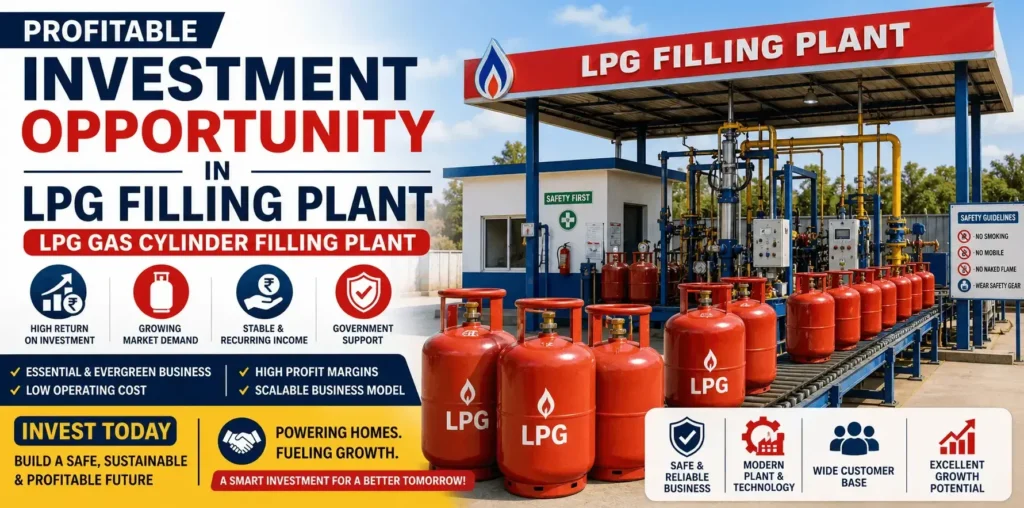
The demand for Liquefied Petroleum Gas (LPG) in India and across the globe is increasing steadily, driven by rising energy needs, urbanization, and the shift towards cleaner fuels. With this surge, the LPG gas filling plant or LPG Gas Cylinder Filling business has emerged as a highly profitable and sustainable investment opportunity. Entrepreneurs looking for a venture with long-term potential and government support should seriously consider setting up an LPG gas filling plant. This article provides a detailed guide on how to start, operate, and profit from an LPG gas filling plant business. Why Start an LPG Gas Filling Plant Business? The LPG gas filling plant business is not only capital intensive but also strategically important in contributing to national energy supply and sustainability. As households, hotels, industries, and transportation sectors increasingly rely on LPG, the need for localized, efficient gas distribution systems grows. Investing in an LPG gas filling plant can yield significant returns due to consistent demand and scope for B2B as well as B2C sales models. Market Demand and Opportunities India’s LPG consumption crossed 28 million metric tonnes in the last fiscal year, with major usage in domestic, commercial, and industrial sectors. The Pradhan Mantri Ujjwala Yojana (PMUY) and other government subsidies have added millions of LPG users from rural and semi-urban areas. Additionally, the growth of urban housing and food processing sectors ensures an ever-expanding market for LPG. This presents a golden opportunity for investors to start their own LPG gas filling plant and become an authorized distributor or independent service provider in the gas supply chain. The margins are attractive, and the ability to expand into LPG cylinder distribution, auto LPG, and even micro bottling units enhances long-term profitability. Types of LPG Gas Filling Plants There are primarily two types of LPG gas filling plants: Bulk LPG Filling Plant: These are large-scale units that receive LPG in bulk through tankers and refill into smaller cylinders of various sizes (5 kg, 14.2 kg, 19 kg, etc.). Mini LPG Filling Plant: These are smaller setups, suitable for rural or semi-urban areas, and often involve semi-automatic or manual filling operations. Both models have their own pros and cons depending on target market, budget, and operational goals. However, the LPG gas filling plant setup, regardless of scale, can generate steady revenue when planned strategically. Licenses and Legal Requirements Establishing an LPG gas filling plant requires multiple licenses and approvals from various government bodies. Here are the key requirements: Explosive License from the Petroleum and Explosives Safety Organization (PESO) NOC from Fire Department Environmental Clearance Factory License Trade License from local authorities Approval from the State Pollution Control Board Weights and Measures Certification for filling equipment All these permits ensure that your LPG gas filling plant meets safety, environmental, and quality standards. Complying with these regulations not only minimizes legal risks but also builds trust with customers and partners. Infrastructure and Equipment Needed Setting up a fully functional LPG gas filling plant involves considerable investment in land, machinery, and infrastructure. Here are the key components: Land Area: Minimum 1 to 2 acres depending on plant size Storage Bullets or Tanks: For bulk storage of LPG Filling Carousel System: Semi or fully automatic depending on capacity LPG Pumps and Compressors Cylinder Testing and Washing Units Safety Equipment: Fire suppression system, alarms, pressure gauges, etc. Admin Office and Control Room The infrastructure must follow safety norms and be designed to handle emergency situations. Automation in filling processes ensures accuracy and reduces labor dependency, which boosts operational efficiency in the LPG gas filling plant. Cost of Starting an LPG Gas Filling Plant The investment required varies depending on the scale and automation level of the plant. Here’s a rough breakdown: Mini Plant Setup: ?50 lakhs to ?1 crore Medium-Scale Plant: ?1 crore to ?2.5 crore Large-Scale Plant: ?3 crore to ?6 crore Additional working capital for staff salaries, licenses, fuel, maintenance, and marketing should also be factored in. While the capital requirement is significant, the LPG gas filling plant offers fast ROI due to bulk demand and margin opportunities. Profit Margin and Revenue Potential Profitability in this business depends on several factors such as plant capacity, distribution reach, operational efficiency, and pricing. Typically, margins in LPG filling range from ?30 to ?80 per cylinder depending on volume and B2B contracts. A plant that fills 3,000–5,000 cylinders per day can earn between ?1 lakh to ?2.5 lakh in daily profits. Adding services like cylinder delivery, auto LPG dispensing, or industrial supply can further increase revenue streams. This makes the LPG gas filling plant a high-margin business when operated with efficiency and scale. Manpower and Management Efficient staffing is crucial to operate a plant smoothly. A typical LPG gas filling plant requires: Plant Manager Technical Supervisors Operators and Filling Staff Safety and Maintenance Officers Administrative and Logistics Personnel All staff should be trained in fire safety, emergency protocols, and machinery handling. Continuous skill development and a strong safety culture will help your LPG gas plant maintain regulatory compliance and operational excellence. Challenges in LPG Gas Filling Plant Business Despite its lucrative nature, the business does come with challenges such as: High Initial Capital Strict Safety Regulations Regular Maintenance Requirements Market Competition from Established Brands Supply Chain Disruptions However, with proper planning, risk mitigation strategies, and adherence to regulations, these challenges can be effectively managed. Partnering with experienced consultants or hiring skilled managers can help overcome operational bottlenecks. Future Outlook and Expansion Possibilities With increasing energy demand and government push for clean fuel, the future of the LPG gas plant business is promising. Entrepreneurs can diversify into: Auto LPG Dispensing Stations Commercial Kitchen Supplies Mobile Micro LPG Filling Units Industrial LPG Supply Franchise or Dealer Networks By tapping into these segments, plant owners can scale their business and multiply revenues. Moreover, upcoming technologies such as IoT-based filling systems, automated leak detection, and AI-enabled logistics will transform the LPG industry further, providing more opportunities for innovation and expansion. Conclusion The LPG gas plant business is undoubtedly
Business Ideas, Projects & Opportunities in Production of Solar Panel & Electronic Toys
In today’s eco-conscious world, solar technology is transforming the way we think about energy, even in the realm of toys. The growing awareness around environmental issues and the shift toward renewable energy sources have sparked interest in products that promote sustainability from a young age. One such emerging niche is the solar panel toy production business, a segment that offers both educational value and entertainment. These toys not only fascinate children but also help them understand the importance of clean energy. If you’re an entrepreneur looking for an innovative and eco-friendly startup idea, launching a business focused on solar panel toys could be a rewarding opportunity. Market Potential and Growth of the Solar Panel Toy Production Business The solar panel toy production business has witnessed significant growth in recent years, driven by increasing demand for STEM (Science, Technology, Engineering, and Math) educational products. Parents and educators are increasingly opting for toys that provide hands-on learning experiences. Solar-powered toys such as cars, robots, and windmills demonstrate basic engineering and energy conversion principles, making them popular among children and teens alike. In addition to the educational sector, the toy industry is under pressure to become more sustainable. Traditional plastic toys powered by disposable batteries are becoming less desirable due to environmental concerns. In contrast, solar panel toys offer a greener alternative, reducing battery waste and using sustainable energy sources. As more governments and educational institutions promote green energy education, the demand for solar-powered learning tools is expected to grow further, giving this niche business excellent long-term prospects. Understanding the Solar Panel Technology in Toys At the heart of a solar panel toy is a mini photovoltaic cell—commonly made of silicon—which converts sunlight into electricity. This electricity powers small motors, lights, or other components in the toy. These cells are typically lightweight, low-cost, and durable, making them ideal for small-scale applications like toys. The appeal of solar panel toys lies in their simplicity. Once exposed to sunlight, they start working—no batteries or wires needed. This simplicity not only captivates children but also reinforces the core concept of renewable energy. From spinning flowers and solar cars to DIY robot kits, there are a wide variety of products that can be developed in this category. How to Start a Solar Panel Toy Production Business Starting a solar panel toy production business requires a combination of technical know-how, creativity, and strategic planning. Here’s a step-by-step guide: 1. Conduct Market Research Before starting any business, it’s vital to understand your target audience. Identify which age group or educational level you wish to serve. Study competitors, analyze their pricing strategies, and pinpoint gaps in the market where your products can stand out. For instance, are there enough solar toys tailored for preschoolers? What about kits for high school science projects? 2. Design Product Line Based on your research, brainstorm a product line. This can include simple toys like spinning fans, or more advanced kits like build-your-own solar robots. Make sure your designs are both fun and educational. Collaborate with designers and engineers to create safe, durable, and visually appealing toys. The incorporation of recyclable materials can further enhance the sustainability of your offerings. 3. Source Materials and Components The main components required for solar panel toy production include: Mini solar panels (polycrystalline or monocrystalline) Small motors Wires and connectors Plastic or wooden parts for the body Instruction manuals for assembly kits Packaging materials Look for reliable suppliers who provide quality solar panels that comply with international safety standards. Partnering with green-certified vendors can also add credibility to your brand. 4. Set Up Manufacturing Unit Depending on your budget, you can either set up an in-house manufacturing facility or outsource production to a reliable third party. If you choose to manufacture in-house, ensure your production space is equipped with the necessary machinery such as injection molding units, soldering tools, and assembly lines. Hiring skilled workers with experience in electronics and toy manufacturing is also crucial for maintaining product quality. 5. Comply with Safety and Certification Standards Toys must adhere to strict safety regulations. Make sure your solar panel toys meet the guidelines set by regulatory bodies such as the Bureau of Indian Standards (BIS), CE (for Europe), or ASTM (for the USA). This includes tests for choking hazards, electrical safety, and the use of non-toxic materials. Proper labeling and age recommendations are also essential. Marketing and Selling Solar Panel Toys A successful solar panel toy production business must have a solid marketing and distribution strategy. Here are key steps to build your brand and drive sales: 1. Build an Educational Brand Position your brand as an educational and eco-conscious company. Use storytelling to highlight how your toys teach children about renewable energy. Partner with schools, science museums, and educational programs to get your products into the hands of your target audience. 2. Create an E-commerce Website Selling directly through an online store allows you to reach a broader audience. Include high-quality product images, engaging descriptions, and video demos to showcase how your toys work. SEO-optimized content with keywords like “solar panel toy,” “eco-friendly learning toys,” and “STEM solar kits” will improve your visibility online. 3. Use Social Media and Influencer Marketing Promote your solar panel toys through platforms like Instagram, Facebook, and YouTube. Collaborate with parenting influencers, toy reviewers, and STEM educators to create buzz around your products. Educational videos demonstrating the use of your toys can go viral and boost brand awareness. 4. List on Marketplaces In addition to your own website, list your toys on popular e-commerce platforms like Amazon, Flipkart, and Etsy. These platforms provide access to millions of buyers and have built-in logistics and marketing tools to simplify order fulfillment. 5. Attend Toy and Education Fairs Participating in trade shows, educational expos, and toy fairs can provide valuable networking opportunities. These events allow you to meet distributors, retailers, and educators who may be interested in bulk purchases or partnerships. Challenges and Solutions in the Solar Panel Toy Production Business Like any new business, this
Investment Opportunities in Production of Caffeine
In today’s fast-paced world, caffeine has become a necessity rather than a luxury. Found in coffee, tea, soft drinks, energy beverages, and even pharmaceuticals, caffeine plays a vital role in energizing the population across the globe. As demand continues to surge due to rising consumption patterns, health awareness, and the growing energy drink market, caffeine production has emerged as a highly lucrative and scalable business opportunity. Whether you’re an entrepreneur exploring manufacturing industries or an investor eyeing high-growth sectors, entering the caffeine production business could offer impressive returns. Understanding the Scope and Process of Caffeine Production Caffeine is a natural stimulant primarily sourced from coffee beans, tea leaves, kola nuts, and guarana. It is also synthesized in laboratories for large-scale production, especially for use in pharmaceuticals and beverages. The caffeine production process involves multiple stages such as extraction, purification, crystallization, and packaging. Producers can choose between natural caffeine extraction and synthetic caffeine production, depending on their target markets and business goals. Natural caffeine is typically extracted from raw materials such as coffee or tea through solvent-based or supercritical carbon dioxide extraction methods. On the other hand, synthetic caffeine is chemically produced from urea and chloroacetic acid. Both variants cater to different sectors – natural caffeine is generally preferred in health-conscious or organic product markets, while synthetic caffeine is cost-effective and widely used in energy drinks, sodas, and medications. Why Caffeine Production Is a Profitable Investment Global Demand Is SoaringCaffeine is a $20+ billion global industry and growing rapidly. An increasing number of consumers are incorporating caffeine into their daily routine for energy, alertness, and improved focus. The rise in remote working culture, longer screen hours, and increased consumption of processed food and beverages are fueling this demand. Diverse Application AreasCaffeine production supports a wide range of sectors – from F&B to cosmetics and pharmaceuticals. Energy drink companies, soft drink manufacturers, and dietary supplement producers are all major buyers of caffeine. Moreover, caffeine is increasingly being used in skincare products for its antioxidant properties. High Margins with ScalabilityThe production process, once established, can yield high margins, especially for synthetic caffeine, which has a lower cost of production. Automation and bulk production can drive costs down significantly while increasing output, making caffeine production an easily scalable venture. Export PotentialIndia and other developing nations are witnessing growing interest in caffeine exports. With proper quality certifications and compliance, caffeine producers can serve global markets including the U.S., Europe, and Southeast Asia. Sustainable and Niche OpportunitiesOrganic caffeine production, derived from green tea and organic coffee, is a booming sub-sector. The growing trend of clean-label products has led to a preference for natural, sustainably sourced caffeine. Entrepreneurs can tap into this niche for premium pricing and branding opportunities. Steps to Start a Caffeine Production Business 1. Market Research and Feasibility StudyBegin by analyzing global and domestic demand trends, major consumers, pricing structures, and existing competitors. Evaluate the type of caffeine you want to produce (natural or synthetic) and identify your target market segment. 2. Business Plan DevelopmentCreate a comprehensive business plan that outlines the production method, machinery, raw material sourcing, labor needs, compliance requirements, logistics, and financial forecasts. Your plan should also cover scalability, packaging, and branding strategies. 3. Legal and Regulatory ComplianceCaffeine production requires licenses from FSSAI, the Pollution Control Board, and Drug Control Authorities if used in pharmaceuticals. Ensure that your production facility follows Good Manufacturing Practices (GMP) and ISO standards. 4. Infrastructure and Machinery SetupSecure land in an industrial zone and design the plant layout. Invest in machinery such as extractors, reactors, centrifuges, evaporators, filtration systems, dryers, and packaging machines. Automation can enhance productivity and reduce labor costs. 5. Raw Material ProcurementFor natural caffeine production, you need a steady supply of green tea leaves, coffee beans, or kola nuts. For synthetic caffeine, source chemicals such as urea and chloroacetic acid from certified suppliers. 6. Skilled Workforce and Quality ControlHire trained chemists, plant operators, and quality assurance personnel. Implement robust testing and safety protocols to ensure high product purity and consistency. Invest in lab equipment for real-time monitoring of product quality. 7. Marketing and Sales StrategyPosition your caffeine brand as premium, organic, or pharma-grade depending on your USP. Reach out to energy drink manufacturers, supplement companies, and F&B industries. Online marketing, participation in trade expos, and B2B networking can boost visibility. Investment and Profit Margins in Caffeine Production Starting a medium-scale caffeine production facility may require an investment of ?1 crore to ?3 crores, depending on capacity, machinery, and licensing. Synthetic caffeine production is generally less capital-intensive than natural caffeine extraction. However, the latter offers access to premium markets. Profit margins can range from 25% to 50% based on the quality and end-use of the caffeine. Export-oriented units may benefit from duty-free incentives under schemes like MEIS or RoDTEP, which further enhances profitability. With growing demand, entrepreneurs can expect ROI within 2-3 years of operation. Challenges and Risk Management Although caffeine production is profitable, it comes with its own set of challenges: Raw material price fluctuations can impact cost structure. Stringent quality requirements from international buyers may require constant investment in R&D and certification. Environmental compliance is essential, especially for solvent-based extraction methods. Health concerns related to overuse of caffeine may lead to tighter regulations in the future. To mitigate risks, it’s essential to diversify product applications, maintain consistent quality, and invest in eco-friendly technologies. Future Prospects of the Caffeine Industry The caffeine market is expected to grow at a CAGR of 6-8% in the next five years, driven by innovation in energy products, lifestyle shifts, and rising health consciousness. Opportunities also lie in value-added products such as caffeine-infused gummies, tablets, and cosmetics. Investors who enter the industry now can leverage early-mover advantages, brand development, and strong B2B relationships. Research and development in alternative caffeine sources such as guayusa and yerba mate also hold promise. With AI-driven production monitoring, automated extraction units, and sustainable sourcing, the industry is poised for technological transformation. Conclusion Caffeine production is not just a business; it’s a gateway