
Railway Sleepers Manufacturing
The railway sleepers manufacturing industry is a crucial segment in railway infrastructure, playing an indispensable role in the safe, smooth, and long-lasting support of railway tracks. With growing investment in railways worldwide—especially in emerging economies—the demand for quality railway sleepers is rising steadily. Entrepreneurs and industrial investors can explore this business as a sustainable and highly profitable manufacturing opportunity with the right setup, resources, and strategy. Understanding the Railway Sleepers Manufacturing Process Railway sleepers, also known as railroad ties, are horizontal supports made of concrete, wood, steel, or composite materials, placed beneath railway tracks to hold them upright and correctly spaced. The process of manufacturing varies slightly depending on the material used but largely involves industrial precision, heavy machinery, and rigorous quality control. Types of Railway Sleepers To succeed in this industry, we must first understand the types of railway sleepers: Concrete Sleepers – Dominant in modern rail infrastructure due to their durability and low maintenance. Wooden Sleepers – Traditional and still used in certain geographies, especially in lower-speed rail tracks. Steel Sleepers – Durable and recyclable, but used selectively due to cost. Composite Sleepers – Made from recycled plastics or polymers and used as an eco-friendly option. Among these, concrete railway sleepers are the most commercially viable for large-scale production. Land, Factory Setup & Machinery To start a railway sleepers manufacturing business, we must acquire a minimum of 2–5 acres of industrial land with proximity to transportation hubs. The factory infrastructure includes: Casting Beds and Molds Batching and Mixing Plants Steam Curing Chambers Demolding and Handling Equipment Crane Systems for Material Movement Quality Testing Lab Storage Yards for Raw Materials and Finished Sleepers A typical plant with a production capacity of 200 sleepers/day requires an investment between ?10–?25 crore depending on automation level and scale. Mini setups can start at ?3–?5 crore. Raw Materials and Procurement Major raw materials required for railway sleepers manufacturing include: Portland Cement (OPC 53 Grade) Coarse Aggregates Fine Sand Admixtures for Strength and Durability High Tensile Steel Wires or Rods Water All materials must adhere to the Indian Railway Standards (IRS) or equivalent, and sourcing from certified vendors ensures compliance and reliability. Manufacturing Process Step-by-Step Designing & Molding: Using steel molds, the design and size of sleepers are customized as per railway norms. Reinforcement Placement: Steel rods or tensioned wires are placed accurately inside molds. Concrete Mixing: High-grade concrete is prepared using automated batching plants to ensure consistent strength. Pouring & Compaction: Concrete is poured into molds, and vibration systems ensure proper compaction. Steam Curing: Sleepers are cured under steam to achieve rapid strength gain. Demolding & Finishing: Sleepers are removed from molds and any excess material is trimmed. Quality Testing: Each sleeper undergoes ultrasonic testing, dimensional checks, and load-bearing tests. Storage & Dispatch: After certification, sleepers are stacked and transported to railway projects. Licensing and Approvals Before starting, we must obtain the following: Factory License Pollution Control NOC Approval from Indian Railways / RDSO GST Registration Company Incorporation (Private Limited / LLP / Partnership) Electricity & Water Connection Labour and Safety Compliance Certification Approval from Research Designs and Standards Organisation (RDSO) is critical as they set the technical guidelines for Indian Railways. Manpower and Technical Staff A plant needs a skilled and semi-skilled workforce including: Civil Engineers Production Supervisors Quality Control Inspectors Machine Operators Maintenance Staff Logistics & Admin Team Training is essential to maintain production efficiency and reduce rejects in railway sleepers manufacturing. Marketing and Sales Strategy The primary clients are government agencies and large infrastructure companies. Strategies include: Registering with Indian Railways & Contractors Participating in Public Tenders Building Partnerships with EPC Companies Demonstrating Capabilities via Pilot Batches Joining Infrastructure Trade Associations Digital presence through a website showcasing technical capability, certifications, and testimonials can build brand authority. Investment and Profitability Analysis Initial investment (?5–25 crore) includes land, plant & machinery, working capital, approvals, and manpower. Operating costs involve: Raw Material Procurement Labour Power & Water Maintenance Transportation Profit margins in railway sleepers manufacturing are 20–30% depending on economies of scale and production efficiency. A well-run facility can break even within 2–3 years. Challenges in Railway Sleepers Manufacturing While the business is lucrative, challenges include: Strict Regulatory Compliance High Capital Requirement Logistics of Heavy Products Seasonal Demand Based on Railway Projects Technological Upgradation Mitigating these through smart partnerships, quality automation, and skilled workforce is key to long-term success. Future Growth and Expansion Opportunities With Indian Railways’ modernization and global rail investments, demand for sleepers is expected to grow. Scope includes: Exporting to Neighboring Countries Manufacturing High-Speed Rail Sleepers Offering Customized Sleepers for Metro Projects Diversifying into Precast Infrastructure Products The shift toward sustainable railway sleepers manufacturing, including use of recycled composites and green cement, also opens up new revenue streams. Conclusion The railway sleepers manufacturing business is a powerful opportunity for industrial entrepreneurs. With strong infrastructure, adherence to quality standards, and efficient management, the business not only serves national infrastructure but also creates a steady source of income with high returns. Visit the page Select and Choose the Right Business Startup for You for sorting out the questions arising in your mind before starting any business and know which start-up you can plan. We, at NPCS, endeavor to make business selection a simple and convenient step for any entrepreneur/startup. Our expert team, by capitalizing on its dexterity and decade’s long experience in the field, has created a list of profitable ventures for entrepreneurs who wish to diversify or venture. The list so mentioned is updated regularly to give you a regular dose of new emerging opportunities. Contact Us
Project Opportunities in Production of Calcium Propionate
Calcium Propionate is a widely used food additive and preservative, especially in the baking and dairy industries. It is particularly effective in preventing the growth of molds and bacteria in food products, thereby extending shelf life. As the global demand for processed and packaged foods continues to rise, the market for Calcium Propionate is expanding. Starting a Calcium Propionate production business can be a profitable venture if approached with the right strategy, compliance, and technology. Market Potential and Application of Calcium Propionate Calcium Propionate has multiple applications in various industries. Its primary use is as a food preservative in bread, baked goods, dairy products, processed meats, and even animal feed. The food-grade and feed-grade varieties both hold significant market share. With rising health consciousness and the growth of the convenience food market, the demand for mold-free, long-lasting products has surged—making Calcium Propionate an essential component. According to global market reports, the Calcium Propionate market is expected to grow at a CAGR of 5-6% over the next few years. Asia-Pacific, led by India and China, is emerging as a key contributor to this growth. India, in particular, offers great opportunities due to increased urbanization, changing food habits, and greater demand for preservative-enhanced foods. This indicates strong market potential for local production units. Key Benefits of Starting a Calcium Propionate Business: Growing Market Demand: Increasing global and domestic consumption in food and feed industries. High Return on Investment: Due to its low production cost and widespread usage. Export Opportunities: Countries with stringent food safety regulations are key markets. Low Market Saturation in India: Relatively few manufacturers cater to growing demand. Step-by-Step Guide to Start Calcium Propionate Production To begin with, you must clearly understand the production process, required machinery, regulatory guidelines, and marketing channels. Here’s a detailed breakdown: 1. Conduct Market Research Before diving into production, it’s crucial to conduct detailed market research. Understand who your buyers are—bakeries, dairy producers, meat processing units, animal feed manufacturers, etc. Identify local and export markets, pricing structures, and competitor offerings. Key Areas to Research: Competitor pricing and packaging. Regional and international demand. Regulatory barriers and certifications. Import-export data (if planning for global supply). 2. Choose a Suitable Location Your production plant should ideally be close to food processing zones, industrial areas, or ports if you’re aiming at exports. Consider accessibility to raw materials, labor, and logistics. Ideal Location Features: Industrial zoning permissions. Adequate water and electricity supply. Waste management systems. Ease of transportation and logistics. 3. Investment and Financial Planning Setting up a Calcium Propionate production unit requires moderate capital investment. For a small to medium-scale plant, the investment may range from ?1.5 crore to ?4 crore depending on capacity and automation. Key Cost Heads: Land and building or lease costs. Machinery and equipment. Raw materials and initial working capital. Licensing and compliance. Marketing and distribution. You can also explore subsidies from the Ministry of Food Processing Industries (MOFPI), bank loans, or MSME financial support schemes. 4. Obtain Necessary Licenses and Approvals You must comply with Indian food safety and environmental laws. The key registrations include: FSSAI License: Mandatory for food additive manufacturers. Pollution Control Board Clearance. Factory License & Labour Law Compliance. MSME/Udyam Registration. GST Registration. Import Export Code (IEC) for global sales. For pharmaceutical-grade Calcium Propionate, additional approvals from the Drug Controller may be needed. 5. Procure Raw Materials The key raw materials for producing Calcium Propionate include: Calcium Hydroxide (slaked lime) Propionic Acid Deionized Water These are generally available in bulk from chemical suppliers. Ensure food-grade quality and consistent supply to meet production timelines. 6. Machinery and Equipment The following equipment is commonly required for the manufacturing of Calcium Propionate: Reactors (SS-lined) Mixing tanks Centrifuge or Filter Press Drying Equipment (Spray Dryer or Tray Dryer) Pulverizer Weighing, Packaging & Labeling Machines Water purification and utility systems A semi-automatic setup helps reduce labor costs while maintaining control over the process. 7. Production Process The chemical reaction for producing Calcium Propionate is relatively straightforward. It involves neutralizing Propionic Acid with Calcium Hydroxide in an aqueous solution. The steps include: Reaction: Mix Propionic Acid with Calcium Hydroxide in water under controlled temperature. Filtration: Remove insoluble particles using a filter press or centrifuge. Evaporation/Drying: Concentrate the filtrate and dry it using spray or tray drying techniques. Milling and Packing: The dried crystals are milled and packed in HDPE bags with inner liners to avoid moisture. Each batch should undergo strict quality checks for pH, purity, moisture, and other food-grade standards. 8. Quality Control and Lab Setup Setting up an in-house lab is essential to ensure every batch meets industry standards. Quality parameters include: Assay (purity) pH Level Moisture Content Appearance (white, odorless powder) Solubility Complying with FSSAI or Codex Alimentarius standards ensures your product is globally acceptable. 9. Branding and Marketing Create a strong brand that emphasizes purity, food safety, and competitive pricing. Tie up with food processing companies and feed manufacturers. Attend industry trade shows, food expos, and online marketplaces like IndiaMART or TradeIndia. Marketing Strategies: B2B cold calling and sampling. Creating a website for global buyers. Export partnerships. Distributor networks in food industry hubs. Having proper product documentation (COA, MSDS, etc.) enhances credibility. 10. Environmental and Safety Measures Calcium Propionate production involves handling acids and chemicals. Ensure safety measures like: PPE (Personal Protective Equipment) for workers. Proper ventilation systems. Spill management protocols. Effluent treatment systems. Also, implement an SOP for chemical handling and emergency response. Future Outlook and Expansion Once the initial setup stabilizes and customer base grows, expansion opportunities include: Increasing capacity. Diversifying into other food additives like Sodium Propionate, Potassium Sorbate. Creating a fully integrated line of preservatives. Exporting to Middle East, Africa, and ASEAN markets. Additionally, with growing awareness of food safety, Calcium Propionate is also gaining traction in natural and organic food segments, where minimal synthetic preservatives are allowed. Manufacturing organic-certified grades can add niche value. Conclusion Starting a Calcium Propionate production business is not only profitable but also future-ready due to the growing food and feed processing sectors.
Optical Fiber Cable Production Industry
The Optical Fiber Cable industry is witnessing unprecedented growth worldwide. With digitalization surging in every sector—telecommunications, healthcare, IT, defense, and even agriculture—the demand for fast, secure, and high-bandwidth data transmission is skyrocketing. Optical fiber cables have emerged as the go-to solution for these modern needs. As data usage explodes globally, industries and governments alike are investing heavily in expanding fiber optic infrastructure to ensure seamless connectivity, low latency, and high-speed internet across urban and rural landscapes. Key Drivers Behind the Growth of the Optical Fiber Cable Industry Several key factors are fueling the rapid expansion of the Optical Fiber Cable industry. One of the primary reasons is the exponential increase in internet consumption, especially after the COVID-19 pandemic. As remote work, online education, digital healthcare, and virtual entertainment become the norm, the pressure on data networks has intensified. Fiber optics, known for their superior performance in speed and data integrity, are being deployed aggressively to replace older copper-based networks. Moreover, the global rollout of 5G technology is another major catalyst. Unlike previous generations, 5G requires ultra-fast and ultra-reliable backhaul networks, and optical fiber cables are the backbone of this infrastructure. As telecom operators race to build 5G capabilities, the demand for fiber cables continues to soar. Another contributor is the shift towards smart cities and the Internet of Things (IoT). Smart homes, autonomous vehicles, digital surveillance systems, and connected public services require real-time communication networks. Optical fiber provides the speed and bandwidth needed to support millions of interconnected devices simultaneously. This further amplifies the necessity for robust fiber networks across geographies. Government Policies and Investments Government initiatives across the globe are significantly supporting the fiber optics industry. In India, for example, the “Digital India” campaign aims to provide broadband connectivity to every village. BharatNet, a government-led project, is laying down extensive optical fiber infrastructure in rural and semi-urban areas. Similarly, the United States has launched the Broadband Equity, Access, and Deployment (BEAD) Program, aiming to invest billions into building reliable fiber networks in underserved regions. China, one of the largest producers and consumers of Optical Fiber Cable, has already achieved deep penetration of fiber to the home (FTTH) networks. Its “Broadband China” initiative aims to ensure that more than 90% of households have access to fiber broadband, further pushing demand in both domestic and international markets. The European Union, under its “Digital Decade” policy, also plans massive investments to ensure every household has access to gigabit-speed internet by 2030. These policies are laying the foundation for a strong and sustained demand for optical fiber solutions globally. Advances in Fiber Optic Technology The Optical Fiber Cable industry is also benefiting from rapid innovations in technology. New fiber types, such as bend-insensitive and multi-core fibers, are being developed to enhance performance and installation flexibility. These innovations reduce installation costs and improve reliability in high-density environments like data centers and metropolitan areas. Manufacturers are also focusing on enhancing the durability of fiber cables to withstand environmental challenges. UV-resistant jackets, waterproofing, and armored cables are now common in outdoor installations. As the applications for fiber optics expand into extreme conditions—like undersea cabling or defense communications—the industry continues to evolve with cutting-edge advancements. In addition, artificial intelligence (AI) and machine learning (ML) are being integrated into fiber network management. These technologies help predict failures, monitor network performance, and optimize traffic, making fiber networks smarter and more efficient than ever before. Rise of Data Centers and Cloud Computing Another massive contributor to the Optical Fiber Cable industry’s growth is the global explosion of data centers and cloud computing. Cloud giants like Amazon Web Services (AWS), Google Cloud, Microsoft Azure, and Alibaba Cloud are expanding their infrastructure rapidly. These companies require high-capacity, low-latency networks to serve clients globally. Fiber optics, with their high data transmission capabilities and low signal degradation, are ideal for linking large-scale data centers and managing data flows. Edge computing is also on the rise, and it brings computing power closer to the end user to reduce latency. Whether it’s in gaming, streaming, e-commerce, or industrial automation, fiber networks are essential to maintain speed and efficiency in edge computing environments. Global Market Trends and Projections According to various market research reports, the global Optical Fiber Cable market is projected to grow from USD 10 billion in 2023 to over USD 20 billion by 2030. This represents a compound annual growth rate (CAGR) of over 10%. Asia-Pacific currently leads the market due to high demand from China, India, and Southeast Asia, but North America and Europe are expected to see significant growth fueled by digital infrastructure investments. Domestic manufacturing of fiber cables is also on the rise. Countries are incentivizing local production to reduce dependence on imports and ensure faster rollouts. This opens up immense business opportunities for entrepreneurs, OEMs, and component suppliers in the fiber optics ecosystem. Challenges and Barriers to Growth Despite its remarkable growth trajectory, the Optical Fiber Cable industry also faces certain challenges. High initial investment is a key barrier, especially in rural and underdeveloped regions. Laying down fiber involves substantial civil work, skilled labor, and coordination with local authorities, which can delay projects. Another concern is the shortage of raw materials like glass preforms and rare earth elements, which are crucial for fiber production. Geopolitical tensions and trade restrictions can impact supply chains, causing delays and price fluctuations. Cybersecurity and data privacy also pose significant risks. As more data flows through fiber networks, ensuring their security becomes paramount. Network providers must invest in advanced encryption and monitoring systems to prevent breaches and protect sensitive information. Furthermore, the industry faces a shortage of skilled technicians capable of installing, splicing, and maintaining fiber networks. Training and upskilling the workforce is critical to ensure the scalability and sustainability of fiber deployment efforts. Future Outlook of the Optical Fiber Cable Industry The future of the Optical Fiber Cable industry looks bright. Emerging technologies such as 6G, AI-driven communication, immersive media (like VR/AR), and smart manufacturing will demand even higher bandwidth and ultra-low latency,
30 Profitable Small Scale Business Ideas Under ₹50 Crore in India

India’s rapidly growing industrial ecosystem is creating massive opportunities for entrepreneurs and investors seeking profitable business ideas under ₹50 crore. With increasing demand for locally manufactured products, government support for MSMEs, expanding export markets, and rising infrastructure development, medium-scale manufacturing and industrial businesses are becoming highly attractive investment opportunities. From food processing and pharmaceuticals to renewable energy, specialty chemicals, medical devices, and packaging industries, businesses under ₹50 crore can offer strong scalability, recurring demand, and long-term profitability. Entrepreneurs investing in plant and machinery-based industries can also benefit from government incentives, industrial subsidies, and Make in India initiatives. What are the Best Business Ideas Under ₹50 Crore? Some of the best business ideas under ₹50 crore include: Food processing units Pharmaceutical manufacturing Solar equipment assembly Biodegradable packaging Medical devices manufacturing Specialty chemicals production EV charging infrastructure Nutraceutical manufacturing CNC precision machining Agro warehousing and cold storage This guide explores some of the best business ideas under ₹50 crore in India that provide excellent growth potential, industrial expansion opportunities, and sustainable returns for investors and startups. Why Small Scale Businesses Are Thriving in India India presents a favorable ecosystem for small scale businesses. The government’s “Make in India” initiative, coupled with MSME schemes and startup-friendly policies, makes launching a business easier than ever. Additionally, the rise in digital infrastructure, improved logistics, and increased demand for specialized goods and services has enabled entrepreneurs to find success in niche markets. Moreover, India’s demographic dividend – a large, young population – provides both a robust workforce and a growing consumer base. Whether it’s food processing, health and wellness, renewable energy, or digital services, there’s a wide spectrum of opportunity awaiting the smart investor. Let’s explore a variety of sectors and ideas for small scale businesses that can be established with an investment between ?1 crore and ?50 crore. 1. Food Processing and Packaging Units India’s agri-rich landscape and large population make food processing one of the most profitable small scale businesses. Setting up a unit to process fruits, vegetables, spices, dairy, or ready-to-eat meals can provide high margins. Investment varies based on automation levels, but a well-equipped facility can start from ?3 crore and go up to ?50 crore for export-standard infrastructure. You can also focus on niche products like organic snacks, cold-pressed oils, or millet-based foods, which are trending among health-conscious consumers. 2. Pharmaceutical and Nutraceutical Manufacturing The pharmaceutical sector in India is globally competitive and ripe for small scale entry. Setting up a tablet, capsule, or syrup manufacturing unit under Good Manufacturing Practices (GMP) standards can be achieved in ?5–25 crore, depending on capacity. Likewise, nutraceuticals – such as dietary supplements, herbal products, and protein powders – offer excellent returns. These businesses benefit from recurring demand and can be scaled with contract manufacturing or private labeling. 3. Recyclable Packaging and Bioplastics With India pushing for sustainability, setting up a business in biodegradable or recyclable packaging is future-proof. Bioplastics, paper straws, molded fiber packaging, and compostable bags are in growing demand. With an investment of ?2–10 crore, a unit using eco-friendly technology and automated machinery can be launched. This is one of the most innovative small scale businesses with export potential and government support under the green initiatives. 4. Solar Equipment Assembly or Installation Business The renewable energy sector is booming, and small scale businesses can thrive by assembling solar panels, inverters, or providing end-to-end solar rooftop installation services. With an initial investment of ?5–20 crore, one can set up a solar component unit or even enter EPC (Engineering, Procurement, and Construction) services for residential and industrial solar setups. Given India’s renewable energy goals, this sector promises long-term viability. 5. Specialty Chemicals or Adhesives Manufacturing The specialty chemical sector serves industries such as textiles, paints, construction, and automobiles. Establishing a plant to manufacture adhesives, water treatment chemicals, or coatings can be capital intensive but rewarding. With ?10–30 crore, you can set up a plant with R&D capability and ISO compliance. These small scale businesses often enjoy high margins and repeat clientele from B2B markets. 6. D2C Cosmetics and Personal Care Manufacturing With rising digital commerce and beauty consciousness, launching your own direct-to-consumer (D2C) cosmetic brand is now more viable. You can either manufacture in-house or invest in a small scale unit to produce skincare, haircare, and wellness products. Investments of ?1–5 crore can cover equipment, R&D, branding, and distribution. With strong online marketing, your small scale businesses can achieve rapid scalability. 7. Precision Machining and CNC Components for Auto/Defense India’s push for indigenization in defense and electric vehicles creates demand for precision-machined parts. CNC-based small scale businesses can serve aerospace, defense, EVs, and industrial machinery. A typical setup can be achieved with ?10–40 crore depending on the machines and certifications required. Once certified, such businesses can supply to OEMs and defense contractors with high value orders. 8. Cold Storage and Agro Warehousing Post-harvest losses in India are significant due to the lack of cold chain infrastructure. Setting up cold storage, especially in regions with fruit and vegetable production, can be highly lucrative. Investments of ?5–50 crore depending on capacity and temperature control technology are common. You can also include ripening chambers, packaging lines, and digital inventory management systems to offer complete agri-logistics services. 9. Electric Vehicle Charging Infrastructure India’s transition to electric mobility opens up new investment opportunities. Installing EV charging stations across urban and highway corridors can be a smart move. With around ?1–3 crore, you can set up a network of fast-charging stations. Tie-ups with commercial real estate, parking lots, and municipal bodies can provide long-term leases and user footfall. These futuristic small scale businesses combine energy and transport tech. 10. Medical Devices and Disposables Unit The Indian government is strongly pushing for Atmanirbhar Bharat in healthcare. Small scale businesses in medical devices like syringes, IV sets, surgical gloves, or diagnostic kits are in high demand. Setting up a compliant plant requires ?10–25 crore. Once certified by Indian or global medical standards (like ISO 13485 or CE), these units can cater
Establishment of new Pharmacy college | B.Pharma and D.Pharma College Setup Success Guide 2026

Establishing a B.Pharma and D.Pharma college in India is one of the most lucrative opportunities in the healthcare education sector. With the growing demand for qualified pharmacists, setting up a B.Pharma and D.Pharma institution offers immense potential. B.Pharma and D.Pharma colleges are witnessing unprecedented student interest, backed by regulatory reforms and industry demand. Whether you’re an investor, educationist, or healthcare entrepreneur, this comprehensive guide will walk you through every critical aspect of launching a successful B.Pharma and D.Pharma institution in 2026. Comprehensive Overview of Pharmacy College Set Up for a B.Pharma & D.Pharma To establish a pharmaceutical institution offering both Bachelor of Pharmacy (B.Pharma) and Diploma in Pharmacy (D.Pharma) courses, a well-structured approach involving regulatory approvals, infrastructural development, curriculum design, and skilled faculty recruitment is essential. 1. Regulatory Approvals and Affiliations To start a B.Pharma & D.Pharma college in India, institutions must secure approvals from: Pharmacy Council of India (PCI) – Mandatory for both B.Pharma and D.Pharma. All India Council for Technical Education (AICTE) – Required for B.Pharma course. State Government Approval – Necessary to operate any professional institution. Affiliation to a Recognized University – Typically for B.Pharma programs. State Pharmacy Council Registration – Allows for recognized practice licenses post-graduation. All applications must be submitted online via the PCI portal by the prescribed dates, usually by early March every academic year. 2. Ideal Land and Infrastructure Requirements Setting up a B.Pharma & D.Pharma college requires significant land investment and modern infrastructure as per PCI norms. Land Area: Minimum 2 acres in metropolitan areas; 3 acres in non-metro regions. Built-up Area: Approx. 45,000–50,000 sq. ft. for combined B.Pharma & D.Pharma programs. Classrooms: Well-ventilated smart classrooms with audio-visual aids. Laboratories: At least 12 fully-equipped labs, including: Pharmaceutics Lab Pharmacology Lab Pharmaceutical Chemistry Lab Pharmacognosy Lab Library: Minimum 2000 reference books with subscriptions to pharmaceutical journals. Computer Lab: 1:5 student-computer ratio with internet connectivity. Additional Facilities: Auditorium, girls’ and boys’ common rooms, administrative offices, placement cell, hostel accommodation. 3. Faculty Recruitment and HR Planning The PCI mandates stringent faculty-to-student ratios. A standard requirement for B.Pharma is 1:15. Each department should have a Head (Ph.D. preferred), associate professors, and assistant professors. Principal: Qualified with Ph.D. and minimum 15 years of experience. Professor/Associate Professors: Minimum 5–10 years experience. Supporting Staff: Lab technicians, non-teaching administrative staff, peons, and IT support. Hiring experienced faculty boosts institutional credibility and attracts student admissions. 4. Investment Requirements and Financial Planning Launching a B.Pharma & D.Pharma college typically involves an initial capital expenditure of ?6 to ?15 crore depending on location and infrastructure scale. Land & Building: ?3–7 crore Equipment & Lab Setup: ?1.5–3 crore Library & Digital Infrastructure: ?50–80 lakhs Faculty Salaries (Annual): ?1–2 crore Marketing & Branding: ?20–50 lakhs annually Institutions can explore financial assistance from education loan schemes, private investors, or PPP (Public-Private Partnership) models. ROI is usually visible within 4–6 years with strategic student intake and efficient management. 5. Curriculum Design and Program Structure Curriculum must strictly follow the syllabus prescribed by PCI. The B.Pharma course is of 4 years (8 semesters), while D.Pharma is a 2-year program (4 semesters). Key subjects include: Human Anatomy & Physiology Pharmaceutical Organic Chemistry Pharmacognosy & Phytochemistry Pharmacology & Toxicology Biopharmaceutics & Pharmacokinetics Hospital & Clinical Pharmacy Pharmaceutical Jurisprudence Focus should be laid on hands-on training, research projects, and industry exposure through MoUs with pharma companies and hospitals. 6. Marketing, Admission Strategy, and Branding To attract quality students in a competitive environment, strategic marketing is essential. This includes: Offline Promotions: Seminars in schools, education fairs, newspaper ads. Online Campaigns: SEO-optimized website, social media ads, lead generation via Google Ads. Admission Helplines: 24/7 query support, virtual counseling sessions. Alumni Engagement: Build credibility through successful alumni case studies. Admissions can be through entrance exams like GPAT, state-level pharmacy CETs, or direct management quotas as per norms. 7. Technology Integration and Smart Campus Initiatives In 2026, the use of technology is vital in education. Your B.Pharma & D.Pharma college should integrate: Learning Management Systems (LMS): Moodle, Google Classroom, etc. Virtual Labs & Simulation Software: For pharmacology and chemistry. Biometric Attendance: For staff and students. ERP Solutions: For administration, academics, HR, and finance. AI Chatbots: For student support and automated query handling. A tech-savvy campus improves operational efficiency and enhances student experience. 8. Placement Cell and Industry Tie-ups An active placement cell is a major value addition. Partner with pharmaceutical companies, hospitals, and research firms for: Internships and industrial training Campus recruitment drives Guest lectures and workshops Industry-sponsored labs and research funding Top recruiters include Cipla, Dr. Reddy’s, Sun Pharma, Apollo Hospitals, and Aurobindo Pharma. 9. Quality Assurance and Accreditation Obtaining accreditations elevates institutional standards: NAAC Accreditation – Ensures overall academic excellence. NBA Accreditation – Specific to the B.Pharma program. ISO Certification – For administrative and service quality. Regular audits, academic reviews, and feedback systems help maintain excellence and compliance. 10. Sustainability and Future Roadmap A successful B.Pharma & D.Pharma institution should plan for: Postgraduate Courses (M.Pharm) in areas like Pharmaceutics, Pharmacology, and Quality Assurance. Research Centers for clinical trials, herbal medicine, and formulation studies. Skill Development Programs in medical coding, regulatory affairs, and pharmaceutical marketing. International Collaborations with pharma colleges abroad for faculty exchange and global exposure. With the Indian pharma sector projected to touch $130 billion by 2030, such expansions will future-proof the institution. Conclusion The opportunity to establish a B.Pharma & D.Pharma college in 2026 is not just about infrastructure and curriculum—it’s about building a trusted academic brand. With regulatory compliance, excellent faculty, modern labs, and strategic outreach, your institution can become a benchmark in pharmaceutical education. Timely execution, proper funding, and quality focus will lead to a profitable and impactful venture in the healthcare education domain. Frequently Asked Questions (FAQ) Q 1: What are the regulatory approvals needed to start a B.Pharma and D.Pharma college? To establish a B.Pharma and D.Pharma college, you need approvals from the Pharmacy Council of India (PCI) for both programs, AICTE approval specifically for B.Pharma, state government permission, affiliation to a recognized university for B.Pharma, and State Pharmacy Council registration. All applications must be submitted through
Production of Bamboo Toothbrush
Bamboo Toothbrush Production has emerged as a sustainable and profitable business idea in response to the global movement against plastic waste. With increasing awareness about environmental pollution caused by plastic toothbrushes, consumers are shifting toward eco-friendly alternatives. Bamboo toothbrushes offer a biodegradable solution without compromising on dental hygiene. As governments, health professionals, and consumers seek greener options, bamboo toothbrush production stands out as a modern manufacturing opportunity that blends sustainability with profitability. Entrepreneurs, startups, and eco-conscious brands can tap into this fast-growing market with low-to-medium investment and high-growth potential. Why Bamboo Toothbrushes Are in Demand The demand for bamboo toothbrushes is rising rapidly due to environmental concerns. Traditional plastic toothbrushes contribute significantly to non-biodegradable waste, with billions discarded each year. In contrast, bamboo is a naturally renewable, fast-growing plant with antimicrobial properties, making it an ideal material for hygiene products. Bamboo toothbrush production caters to a diverse audience—from everyday consumers to eco-retailers, travel kits, hotel chains, and zero-waste brands. Their minimalist appeal, compostable handle, and modern design make them popular among millennials and environmentally conscious buyers. The rising demand on platforms like Amazon, Flipkart, and offline organic stores demonstrates that bamboo toothbrush production is not just a trend but a strong market shift. Manufacturing Process of Bamboo Toothbrushes The bamboo toothbrush production process involves both craftsmanship and technology. It starts with sourcing mature bamboo, which is then cut, shaped, polished, and treated to form durable, splinter-free handles. CNC machines or manual tools are used to carve ergonomic shapes. The handles are often carbonized (heat-treated) to increase moisture resistance and reduce microbial growth. The next step involves drilling holes for the bristles and inserting bristle tufts—typically made from nylon-4 (biodegradable) or plant-based alternatives. The bristles are trimmed to the correct length and angle before undergoing quality checks. After assembly, the brushes are cleaned, sterilized, and packaged using eco-friendly materials such as recycled kraft boxes or corn starch wrappers. Bamboo toothbrush production units can be semi-automated or manual depending on investment. Basic equipment includes bamboo cutting machines, shaping tools, polishing machines, bristle-inserting machines, UV sterilizers, and packaging stations. Raw Materials and Equipment To start a bamboo toothbrush production unit, key raw materials include: Matured bamboo stalks (usually moso bamboo) Biodegradable or recyclable bristles (nylon-4, castor oil-based, or pig hair for natural variants) Non-toxic adhesives (if required) Eco-friendly packaging materials (kraft boxes, printed sleeves, biodegradable bags) Essential equipment includes: Bamboo cutter and splitter Handle shaping and sanding machine Bristle tufting machine Trimming and polishing setup Branding tools (laser engraving or ink stamping) UV sterilizer and packaging line The setup can range from a small manual workshop to a mid-sized automated facility based on your production goals and market reach. Investment and Cost Estimation Starting a small-scale bamboo toothbrush production business can require an investment of ?10–?25 lakhs, while a medium-sized semi-automated unit may go up to ?50 lakhs. The cost structure includes: Machinery and tools: ?8–15 lakhs Raw materials for initial batches: ?2–5 lakhs Factory space and basic infrastructure: ?3–8 lakhs Manpower (5–10 workers): ?30,000–?70,000/month Packaging and branding: ?1–3 lakhs Licensing, utilities, and buffer capital: ?3–5 lakhs Profit margins can range between 25% to 40% depending on scale, product design, and sales channels. With consistent marketing and good supplier connections, a unit can break even within 12–18 months. Legal Compliance and Certifications Like all manufacturing businesses, bamboo toothbrush production must follow proper licensing and safety regulations. The required registrations may include: Udyam (MSME) registration GST registration Factory license (if applicable) Pollution Control Board NOC (especially for water/chemical usage) BIS certification (for bristle material safety) FDA or FSSAI-like compliance (if marketed as a hygiene/healthcare product) Obtaining eco-certifications such as FSC (Forest Stewardship Council) for bamboo sourcing or ISO 9001 for quality control can enhance brand value and boost international sales opportunities. Branding and Sales Strategy In bamboo toothbrush production, branding plays a major role in consumer appeal. Buyers look for aesthetics, sustainability claims, and comfort. Therefore, it’s important to create a strong visual identity with minimalistic, natural-themed branding. Packaging should reflect your eco-commitment—plastic-free, recyclable, and informative. QR codes, product stories, and environmental facts printed on boxes help engage customers. Selling points include: 100% biodegradable bamboo handle BPA-free bristles Eco-friendly packaging Available in family packs, kids’ versions, and travel-friendly designs Option for custom printing (e.g., laser-engraved names or logos) Sales channels include: E-commerce platforms (Amazon, Flipkart, Etsy, niche eco-stores) Retail tie-ups with organic outlets, pharmacies, supermarkets Collaborations with hotels, spas, gifting companies Institutional orders for corporate wellness kits or NGO distributions Export to environmentally progressive countries (Europe, USA, Australia) Private labeling and white-label services can further expand market reach by allowing third-party eco-brands to rebrand your product. Sustainability and Environmental Benefits One of the key appeals of bamboo toothbrush production is its strong alignment with sustainability goals. Bamboo grows without the need for fertilizers or pesticides and can regenerate quickly. Its carbon footprint is significantly lower than plastic, and when composted properly, the bamboo handle decomposes within a few months. Additionally, ethical production practices such as fair wages, zero-waste policies, water recycling, and low-energy processes enhance the business’s reputation. Educating customers on proper disposal of toothbrush parts (e.g., removing bristles before composting) builds trust and brand loyalty. Eco-consciousness isn’t just a marketing tool—it becomes a value system that resonates with a growing consumer segment worldwide. Future Potential and Expansion As sustainability becomes mainstream, the bamboo toothbrush market is expected to grow significantly. You can expand the business by: Introducing bamboo tongue cleaners, combs, or razors Launching kid-friendly toothbrush lines with colors or shapes Creating bulk hygiene packs for travel, offices, or NGOs Collaborating with dentists to launch oral care combos (paste + brush) Expanding into export markets with eco-certifications Setting up regional assembly units to reduce logistics and carbon emissions Government support for biodegradable product industries through startup funding and MSME schemes adds another layer of opportunity. Conclusion Bamboo toothbrush production is more than just a manufacturing business—it’s a green revolution contributing to a plastic-free future. It offers a low-barrier entry into the eco-market,
30 Business Ideas to Start with Investment of 1.25 Crore (Plant and Machinery).
India’s expanding economy and entrepreneurial ecosystem offer a broad range of lucrative business opportunities for those ready to invest between ?1 to ?1.25 crore. This investment bracket opens the door to ventures that are not only profitable but also scalable. In this article, we explore 30 lucrative business ideas that are both innovative and viable for long-term growth. Why ?1–1.25 Crore is a Game-Changing Investment Bracket With an investment of ?1–1.25 crore, aspiring entrepreneurs can enter industries that were previously out of reach due to high capital requirements. This budget allows for state-of-the-art machinery, skilled workforce, marketing outreach, and even franchise tie-ups. From manufacturing to service-based industries, this range unlocks possibilities in both urban and semi-urban markets. Here’s a comprehensive list of the most promising businesses in this range: 1. Packaged Drinking Water Plant A highly regulated yet rewarding business, the packaged water industry sees massive demand from urban and rural areas alike. Invest in ISI-certified plants and automated bottling lines. 2. Ready-Mix Concrete (RMC) Plant A vital component in modern construction, RMC businesses are booming in Tier 1 and Tier 2 cities due to rising infrastructure demands. 3. Microbrewery Urban youth culture and growing social acceptance of craft beers make microbreweries a hot investment. Licensing, equipment, and interior design fall within the ?1–1.25 crore range. 4. Solar Panel Manufacturing As India transitions to renewable energy, solar panel production units are emerging as a high-growth sector. Government subsidies make this even more appealing. 5. Diagnostic Center Healthcare diagnostics are witnessing a surge. With advanced medical equipment and specialized staff, this business assures high margins. 6. Food Processing Unit Setting up a unit to produce packaged snacks, frozen foods, or organic products can be extremely profitable due to growing health consciousness. 7. Cold Storage and Warehousing With the growth of agriculture exports and e-commerce logistics, a cold storage unit can deliver solid returns on investment. 8. Automobile Service and Repair Center A multi-brand car and two-wheeler service station, equipped with advanced diagnostic tools, caters to India’s massive vehicle population. 9. Laundry and Dry Cleaning Franchise Brands like UClean and TumbleDry offer profitable franchise models that fit well in the ?1–1.25 crore budget. 10. Ice Cream Manufacturing With consistent demand throughout the year, especially in warm regions, an ice cream unit ensures steady cash flow and scalability. 11. Organic Fertilizer Production Given the government’s push for sustainable agriculture, this sector is receiving increasing attention and funding. 12. Modular Furniture Manufacturing With booming real estate and urban migration, the demand for modular and space-saving furniture is rising rapidly. 13. Digital Printing and Packaging Industries like food, pharmaceuticals, and FMCG rely on high-quality digital printing and packaging solutions. 14. Hotel or Boutique Resort Locations near tourist hotspots or pilgrimage centers can yield very high occupancy rates and strong ROI. 15. Commercial Kitchen for Cloud Kitchen Brands Support the rise of food delivery platforms by leasing kitchens to delivery-only restaurant brands. 16. EV Charging Station As electric vehicles increase on Indian roads, EV charging infrastructure presents a new wave of growth. 17. Water ATM and Purification Plant Serving rural and semi-urban populations with clean drinking water is both a social and profitable venture. 18. Pet Care and Grooming Center As pet ownership increases in urban areas, premium grooming services are rapidly gaining popularity. 19. Wooden Pallet Manufacturing Used in logistics and transport sectors, wooden pallets are a high-demand, low-maintenance manufacturing idea. 20. Ayurvedic Product Manufacturing India’s traditional medicine market is growing internationally. Investment in an ayurvedic product unit is future-proof and export-oriented. 21. Battery Recycling Plant The surge in electronics and EVs means battery disposal and recycling are becoming increasingly vital. 22. Cloud-Based IT Services Company With minimal physical infrastructure and the right talent, software development, cybersecurity, or SaaS businesses are lucrative. 23. Co-Working Space With hybrid work models becoming the norm, co-working spaces in Tier 2 cities are filling up rapidly. 24. Plastic Recycling Unit A business with both environmental and monetary value. Plastic recycling has potential in urban and industrial zones. 25. Printing Ink Manufacturing Used across packaging, publications, and promotional materials, ink production can be a high-margin niche. 26. Bottling Plant for Juices or Beverages Fruit juice bottling or health drink plants are a big hit among young consumers, especially in summer-heavy regions. 27. Paper Cup and Disposable Cutlery Manufacturing A business that is eco-friendly and high-demand due to the shift away from plastic utensils. 28. Mushroom Farming Setup With a growing demand for unfamiliar mushrooms like shiitake and oyster, controlled-environment mushroom farming is profitable and scalable. 29. High-End Salons and Wellness Centers Branded beauty salons with premium offerings see strong footfall and client loyalty in metro and Tier 1 cities. 30. Franchise of a Renowned Food Chain Investing in franchises of brands like Domino’s, KFC, or Subway assures brand pull, training, and support, reducing risk and improving profitability. Why These 30 Lucrative Business Ideas Make Sense for ?1–1.25 Crore Investment These business opportunities are well-aligned with India’s evolving consumer behavior, digital evolution, and policy direction. The key lies in selecting a domain that resonates with local demand, resource availability, and market saturation levels. Whether it’s a tech-oriented startup, sustainable manufacturing unit, or consumer service brand, the potential for high returns is very real. Moreover, investing ?1–1.25 crore allows for leveraging economies of scale and acquiring professional talent. Unlike low-budget ventures, these enterprises allow for branding, automation, and scalability, which directly impact profitability and sustainability. With the right planning, mentorship, and market analysis, each of these 30 lucrative business ideas has the capacity to build wealth, generate employment, and create a lasting impact. Visit the page Select and Choose the Right Business Startup for You for sorting out the questions arising in your mind before starting any business and know which start-up you can plan. We, at NPCS, endeavor to make business selection a simple and convenient step for any entrepreneur/startup. Our expert team, by capitalizing on its dexterity and decade’s long experience in the field, has created a list of
How to Start a Profitable Camphor Manufacturing Business in India
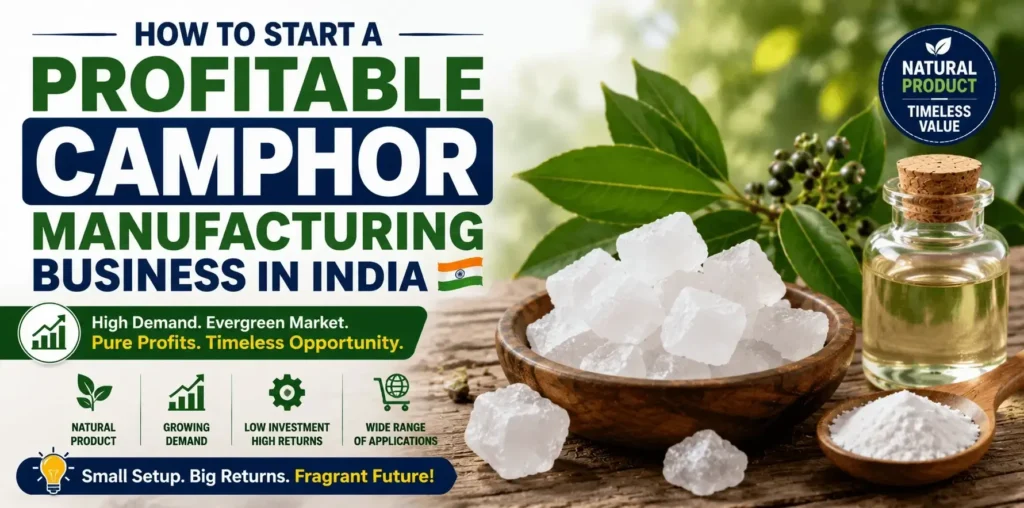
The Camphor Manufacturing Business is emerging as one of the most profitable small-scale manufacturing opportunities in India due to rising demand across religious, pharmaceutical, aromatherapy, and industrial sectors. Camphor, commonly known as Kapoor, is widely used in temples, pooja rituals, ayurvedic products, pain balms, air purification products, and fragrance applications. With relatively low investment, simple machinery setup, and strong year-round demand, many entrepreneurs and small investors are now exploring camphor manufacturing business opportunities in India. From camphor tablets and cones to scented and industrial-grade camphor products, the market continues to expand steadily. What is a Camphor Manufacturing Business? A Camphor Manufacturing Business involves producing camphor tablets, cones, powders, or industrial camphor products using camphor powder, molding machines, and packaging systems for religious, medicinal, and industrial applications. Is Camphor Manufacturing Business Profitable? Yes, the camphor manufacturing business can be highly profitable due to: continuous religious demand growing aromatherapy usage pharmaceutical applications low production cost strong wholesale market Profit margins can range between 25% to 45% depending on production scale, branding, and distribution efficiency. This guide explains the complete camphor manufacturing business setup process including machinery, raw materials, production methods, licensing, packaging, profit margins, and marketing opportunities. Understanding the Camphor Manufacturing Business Setup The foundation of a successful Camphor Manufacturing Business lies in understanding the raw materials, processing steps, machinery requirements, licensing, and market potential. To establish a fully functional camphor production unit, we must begin with well-researched planning, suitable investment, and quality control systems to ensure that our camphor meets market standards. Types of Camphor in the Market There are primarily three types of camphor available in the market: Edible camphor (used in small quantities in food and medicines) Religious camphor (used in temples and rituals) Industrial camphor (used in chemical and pharmaceutical industries) Our business plan should clearly define the target segment, as the machinery and quality parameters vary accordingly. Raw Materials Required To manufacture camphor, the primary raw materials include: Turpentine Oil – The base ingredient in synthetic camphor. Salts and stabilizers Packaging materials – Glass jars, plastic pouches, or aluminum containers. These materials should be sourced from reliable vendors to maintain consistency and quality in production. Machinery and Equipment Setting up a Camphor Manufacturing Business requires semi-automatic or fully automatic machines. The essential machinery includes: Camphor Tablet Press Machine Camphor Mixing Machine Camphor Slab Molding Machine (for slab-based camphor) Packaging Machine Weighing Machine Electric Dryer/Oven (optional for faster processing) A basic semi-automatic plant setup requires a space of around 500–1000 sq. ft. and an investment of ?8–15 lakhs, depending on the capacity. Camphor Manufacturing Process The typical camphor manufacturing process involves: Mixing – Turpentine oil is mixed with appropriate catalysts. Heating – The mixture is subjected to controlled heat to form white crystalline camphor. Cooling – The heated mixture is allowed to cool and harden. Molding/Pressing – Hardened camphor is crushed and molded into tablets, cubes, or slabs. Drying and Finishing – The product is dried and trimmed for final packaging. Packaging – Final camphor pieces are packed and labeled as per market standards. Careful handling and standardized production ensure product purity and safety. Licensing and Legal Compliance To start a Camphor Manufacturing Business, we must comply with local and national regulations: Udyam/MSME Registration Factory License NOC from State Pollution Control Board GST Registration Trademark Registration (optional but recommended) BIS Certification (for industrial camphor) FSSAI License (for edible camphor) Ensuring legal compliance helps avoid penalties and builds consumer trust. Target Market and Applications Camphor has widespread applications, which opens multiple market avenues: Household Use – Pooja rituals, aroma diffusers, cleaning. Pharmaceutical Industry – Balm, ointments, and medicinal vapors. Chemical Industry – Used in explosives and celluloid production. Food Industry – In very limited quantities, edible camphor is used in sweets. Ayurvedic Products – Soaps, oils, and creams. By diversifying the product line, we can tap into multiple revenue streams. Packaging and Branding Strategy Packaging plays a crucial role in the consumer perception of camphor. For this reason: We should use moisture-resistant, odor-proof, and tamper-proof packaging. Invest in attractive labeling with usage instructions and legal declarations. Establish a unique brand identity to build customer loyalty. Private labeling and white labeling options can also expand our market reach. Manpower and Operational Needs A small-scale camphor unit can operate with a modest team: 1 skilled technician to operate machines 2–3 unskilled workers for raw material handling, packaging 1 supervisor/manager for inventory, accounts, and compliance We must ensure proper training for safety and efficiency. Marketing and Distribution Channels To make our Camphor Manufacturing Business profitable, marketing is key: Offline Distribution – Tie-ups with religious shops, general stores, ayurvedic outlets, and chemists. Online Sales – Listing on Amazon, Flipkart, Jiomart, and personal e-commerce website. B2B Sales – Selling in bulk to temples, spas, or industrial buyers. Export Opportunities – Markets like Nepal, Bangladesh, and the Middle East show demand for Indian camphor. Aggressive marketing with digital promotion, social media advertising, and SEO optimization will ensure high visibility. Profit Margin and ROI Analysis The profit margin in the Camphor Manufacturing Business can range from 25% to 45%, depending on scale, sourcing efficiency, and distribution reach. A small unit producing 100 kg/day can expect to break even within 12–18 months under proper management. Key profit boosters include: Reducing raw material costs through bulk purchase Expanding product variety (e.g., scented camphor, camphor cones) Automating packing for large-scale production Challenges and Risk Factors Although profitable, camphor manufacturing has certain risks: Volatility in Turpentine Oil Prices Regulatory Scrutiny on Edible and Industrial Grades Low-quality competition offering substandard products Fire Hazard Risks – Camphor is flammable, so safety measures are crucial Strict quality control, brand differentiation, and robust safety protocols are necessary to mitigate these risks. Sustainability and Innovation Going forward, innovation can reshape the industry: Eco-friendly Camphor made from plant-based essential oils Scented and Designer Camphor Tablets for premium markets Smart Diffusers with Camphor Tablets for homes and offices Refill packs to promote eco-conscious packaging With rising awareness of aromatherapy and natural products, Camphor Manufacturing Business
Mahua Oil and Country Liquor production business
The Mahua tree (Madhuca longifolia), native to the Indian subcontinent, holds tremendous economic potential due to its diverse applications. Its flowers are widely used for the production of Mahua liquor, a traditional alcoholic beverage, while the seeds are processed to extract Mahua oil, a non-edible oil used in soaps, biofuel, and as a lubricant. The rich tribal heritage surrounding this tree has turned it into a lucrative opportunity for entrepreneurs who wish to explore agro-based businesses. With proper licensing, processing techniques, and branding, Mahua Oil & Liquor production can become a high-margin business. Understanding the Scope of Mahua Oil & Liquor Production Mahua has long been a sacred tree in many parts of India, primarily in Madhya Pradesh, Jharkhand, Chhattisgarh, Odisha, and Maharashtra. While traditionally limited to forest-dwelling communities, today, large-scale commercialization is possible due to demand for ethanol-based liquor and plant-derived oils. The dual-use of the Mahua flower and seed allows us to diversify income streams and minimize raw material wastage. From the perspective of tribal welfare and sustainable practices, the Mahua Oil & Liquor industry also receives government support and policy attention in tribal and forested regions. Licensing and Legal Compliance Before starting production, the first step is to obtain legal permissions. For liquor production: State Excise License: Required to manufacture and sell alcohol. Pollution Control Certificate: From the State Pollution Control Board. FSSAI License: For ensuring food-grade safety during fermentation. GST Registration: For proper taxation compliance. For oil extraction: Factory License under the Factories Act. SSI/MSME Registration for subsidies and schemes. Pollution Control NOC for machinery-based operations. Trademark Registration to secure your brand identity. Ensure that your plant location complies with local zoning laws. In forest regions, permissions from Gram Sabhas or local tribal panchayats may also be needed. Raw Material Procurement To ensure smooth production, you will need: Mahua Flowers: Harvested from March to April, they are sun-dried and stored. Sourcing should be from forest cooperatives or tribal producers. Mahua Seeds: Available post-April and processed for oil extraction. Ensure that your suppliers are consistent and that quality is maintained. Building strong relationships with tribal self-help groups (SHGs) ensures sustainability and fair trade practices. Infrastructure and Machinery Setup Depending on the production scale, your setup could be: Small-scale unit (?20–50 lakhs): Manual processing with minimal automation. Mid-scale plant (?1–2 crores): Semi-automatic distillation and oil extraction. Large-scale unit (?5–10 crores): Fully automated continuous production line. Essential Machinery for Mahua Oil Production: Oil Expeller (cold press or rotary) Seed Cleaning and Dehulling Unit Filtration Unit Storage Tanks Packaging Unit Essential Equipment for Mahua Liquor Production: Fermentation Vats Distillation Unit (Copper/SS stills) Aging Tanks or Wooden Barrels Quality Testing Lab Bottling and Labeling Machine Install solar dryers and renewable energy units to reduce long-term costs. Mahua Liquor Production Process Flower Cleaning: Remove dust and debris from dried Mahua flowers. Soaking: Flowers are soaked in water for 48 hours to extract natural sugars. Fermentation: Indigenous yeasts convert sugars to alcohol. Distillation: Alcohol is distilled in copper pot stills for purity. Maturation: The liquor is aged for 3–6 months to enhance flavor. Bottling: Final product is filtered, diluted (if needed), and bottled. Maintain hygiene and consistency to create a premium craft liquor brand. Mahua Oil Extraction Process Seed Cleaning: Clean Mahua seeds to remove dirt and stones. Drying: Ensure moisture content is low for better yield. Pressing: Use mechanical or cold press method to extract oil. Filtration: Remove seed residue and impurities. Packaging: Fill in HDPE drums or bottles depending on the client. Mahua oil is bitter and non-edible but used in soap making, hair oils, and even as biodiesel in rural energy projects. Branding and Product Differentiation Your success depends on how well you brand your Mahua Oil & Liquor products. Go for: Eco-friendly packaging for a tribal, natural appeal. Storytelling: Highlight the traditional roots of Mahua. Geographic Indication (GI) Tag if regionally appropriate. Luxury Branding: Mahua liquor can be positioned as a premium craft spirit similar to tequila or sake. Certifications: Organic, ISO, or FSSAI labels boost credibility. Market Opportunities and Distribution Channels For Mahua Liquor: Tribal liquor markets under state protection. Bars and retail stores under state alcohol distribution licenses. Export opportunities to Europe, Japan, and USA (after legal clearance). For Mahua Oil: Soap and skincare brands. Ayurvedic product manufacturers. Biodiesel producers. Direct B2B sales via trade fairs or export houses. You can also launch D2C brands on e-commerce platforms like Amazon or Flipkart, with health-conscious packaging and storytelling. Financial Projections and Profit Margins Initial Investment Estimate (Mid-Scale): Land & Building: ?50 lakhs Machinery: ?1 crore Licensing & Working Capital: ?50 lakhs Expected Monthly Revenue (Mid-scale): Mahua Oil: ?6–8 lakhs Mahua Liquor: ?15–20 lakhs Profit Margins: Liquor: 35%–50% Oil: 20%–30% ROI is achievable in 18–24 months if operations and marketing are managed efficiently. Sustainability and Government Support Many state governments support Mahua-based industries under tribal development programs. You can apply for: Tribal Co-operative Marketing Development Federation (TRIFED) schemes MSME cluster development initiatives NABARD subsidies for rural food/agro-processing Startup India benefits for product innovation You can also integrate zero-waste processing by using Mahua press cake as fertilizer or cattle feed. Challenges and Risk Management While this business is lucrative, it’s important to mitigate: Seasonal availability: Limited harvesting months. Regulatory hurdles: State liquor policies can be strict. Storage issues: Dried flowers and seeds need moisture control. Public perception: Liquor from forest flowers may need image rebranding. Invest in training and SOPs to ensure consistency, and maintain a quality audit trail for regulatory and export compliance. Conclusion Starting a Mahua Oil & Liquor production business is both culturally enriching and economically promising. It leverages natural resources, supports tribal livelihoods, and opens doors to high-margin markets through thoughtful branding and quality processes. Whether you focus on traditional liquor production or oil extraction for industrial purposes, there is ample room for innovation and growth. Visit the page Select and Choose the Right Business Startup for You for sorting out the questions arising in your mind before starting any business and know which start-up
Production of Biodegradable plastic Products
In recent years, the global conversation around environmental sustainability has accelerated like never before. One major area of concern is the detrimental impact of plastic waste on ecosystems, wildlife, and human health. In this context, the emergence of biodegradable plastic as a viable alternative to conventional petroleum-based plastics has become a groundbreaking solution. If you’re considering entering a future-proof, high-demand sector with strong growth potential, starting a biodegradable plastic production business could be the perfect opportunity for you. Why Biodegradable Plastic Production Is the Future of Sustainable Industry Biodegradable plastic, as the name suggests, is capable of breaking down naturally through the action of microorganisms, heat, and moisture. Unlike traditional plastics that can take hundreds of years to decompose, biodegradable plastics degrade in a few months under the right conditions. This characteristic makes them ideal for applications in packaging, agriculture, medical devices, disposable tableware, and more. According to recent industry research, the global market for biodegradable plastics is expected to surpass USD 20 billion by 2030, growing at a compound annual growth rate (CAGR) of more than 15%. With increasing government regulations banning single-use plastics and heightened consumer awareness about environmental impact, the demand for biodegradable plastic is projected to surge. Countries like India, which are taking firm steps toward environmental reform, offer massive potential for investment in this sector. Understanding Biodegradable Plastic and Its Types To enter this industry, it’s essential to understand the core materials and types of biodegradable plastic. Generally, these plastics are made from renewable raw materials like corn starch, potato starch, sugarcane, cassava, or even algae. The two main types of biodegradable plastics include: PLA (Polylactic Acid): Derived from fermented plant starch (usually corn), PLA is widely used in food packaging, disposable utensils, and medical implants. PHA (Polyhydroxyalkanoates): These are produced by microbial fermentation and are suitable for more industrial applications, such as agricultural films and medical products. Other types include PBS (Polybutylene Succinate), starch blends, and cellulose-based plastics. Each type has unique properties, production methods, and applications. Setting Up the Biodegradable Plastic Manufacturing Plant Starting a biodegradable plastic production business requires careful planning, investment, and compliance with environmental regulations. Here is a step-by-step guide to help you get started: 1. Market Research and Business Planning Begin with thorough market research. Identify your target market—food packaging companies, retail brands, agriculture sector, or medical institutions. Assess your competitors, understand product demand, and estimate your pricing strategy. Draft a detailed business plan covering your production capacity, cost structure, target customers, marketing approach, and projected ROI. 2. Legal Structure and Regulatory Approvals Register your business entity as a Private Limited Company, LLP, or proprietorship. You will also need environmental clearance and manufacturing licenses. In India, for example, you must adhere to guidelines under the Plastic Waste Management Rules, 2016 (amended 2021), BIS certification, and get clearance from the State Pollution Control Board. 3. Land and Infrastructure You’ll need around 5,000 to 15,000 square feet of industrial space depending on production scale. Ensure proper zoning, drainage, electricity, and water supply. The location should be close to raw material suppliers and transportation hubs. 4. Raw Materials and Supply Chain Major raw materials include corn starch, sugarcane, cassava, polylactic acid resin, PHA, and biodegradable additives. Build reliable supply chains, preferably from local agro-industrial companies or import from international suppliers as per requirement. 5. Machinery and Equipment Machinery depends on your product line, but a basic biodegradable plastic manufacturing setup includes: Biopolymer Extrusion Line Plastic Injection Molding Machine Blown Film Extrusion Machine Pelletizing Unit Dryers and Mixers Cutting and Sealing Machines Packaging Units Modern setups also include automation, quality control labs, and composting units for R&D. A small to medium-scale plant may require an initial investment of ?2.5 to ?7 crore. 6. Skilled Workforce and Training Hire professionals for machine operation, chemical processing, R&D, and quality control. Additionally, employ administrative and logistics staff. Regular training on sustainability practices, safety protocols, and quality standards is necessary. 7. Quality Assurance and Testing Your biodegradable plastic products must meet ASTM D6400 or EN 13432 standards for compostability and biodegradability. Set up an in-house lab or collaborate with third-party testing labs to certify each batch before shipment. Financial Projections and ROI A medium-scale plant producing around 5,000 tonnes annually could generate ?15–20 crore in annual revenue with a profit margin of 20–30%, depending on your niche and product quality. ROI is generally expected within 3–5 years, considering increasing demand and expanding applications of biodegradable plastic across various sectors. Governments and environmental agencies also offer financial incentives, subsidies, and tax benefits for green manufacturing units. Applying for grants or availing soft loans under MSME or green-tech schemes can ease the capital burden. Marketing and Distribution Strategy Promoting a biodegradable plastic brand is more than just emphasizing eco-friendliness. Modern consumers look for functionality, design, and reliability alongside sustainability. Here are key marketing tips: Brand Identity: Build a green and conscious brand image. Certifications: Display eco-labels, compostability certifications, and biodegradability marks. Partnerships: Collaborate with e-commerce giants, food chains, hospitals, and agro suppliers. Online Marketing: Invest in digital campaigns, SEO, influencer marketing, and sustainability-driven storytelling. Export Opportunities: Countries like the US, Germany, Canada, and Australia are actively importing biodegradable products. Distribution can be handled via your own logistics team or through distributors and wholesalers. Direct B2B selling also ensures higher margins. Challenges to Consider While the biodegradable plastic business is rewarding, it’s not without challenges: High Initial Investment: Compared to conventional plastic, setup costs and raw material prices are higher. Short Shelf Life: Some biodegradable products degrade faster under humid conditions. Regulatory Hurdles: Constant updates in environmental and industry standards must be followed strictly. Awareness Gaps: Many end-users still prefer cheaper conventional plastic, making market education necessary. Strategically managing these issues through innovation, efficient sourcing, and government collaboration can help overcome barriers. The Future Outlook With increasing climate change concerns, international plastic bans, and consumer pressure, biodegradable plastic will likely become the industry standard in the next decade. Businesses entering now stand to benefit from first-mover advantage, brand loyalty,