
Green Manufacturing: Technologies That Transform Industries for a Sustainable Future
Green manufacturing has become more relevant as the world moves toward a sustainable future. Green business ideas willingly adapt industries so that they conserve carbon footprints while still maintaining productivity and profitability. Innovative technology ensures such changes are embedded within each step-from sourcing raw materials to disposal of manufactured products. The article discusses some of those state-of-the-art technologies that maket he revolution in manufacturing processes toward more sustainable future. The Importance of Green Manufacturing for a Sustainable Future Manufacturing is one of the major contributors to the efforts of the global world in reducing its carbon footprint. The flip side is that technology can migrate the energy divider from manufacturing companies as it strives to streamline efficiency while still achieving profitability. Green manufacturing would prove itself cost-efficient and thus add to its better reputation and make it possible before increasing environmental legislation compliance by all manufacturers. Let us then now consider some technologies that start to change industries into a more sustainable future. Also Read: Jute Shopping Bags Manufacturing Business 1. Additive Manufacturing (3D Printing) Additive manufacturing or, as we generally call it, 3D printing is one of the most innovative emerging technologies for green manufacturing. Unlike traditional forms of subtractive manufacturing, wherein raw materials are cut or sliced to form the shape of the desired object, such as carving an object out of a larger block, 3D printing fabricates objects layer by layer from the ground up. Consequently, it can greatly cut waste and energy consumption. Also Read: Starting a Profitable Printing Technology Business Key Benefits of Additive Manufacturing Waste Reduction: The amount of material utilized in 3D printing is simply that which is necessary to build the object, hence the waste is substantially reduced. Energy Efficiency: Energy use is significantly reduced compared with traditional manufacturing methods, reducing the overall carbon footprint. Customization: Manufacturers are able to develop these products and, quite efficiently, produce highly individualized products as there is no need to commit to mass production and excess stock, thereby creating a waste product that finds its way into landfill sites. Also Read: Set-Up your own EV Charging Stations 2. Renewable Energy Integration Using renewable sources of energy is another important step to take in the direction of carbon footprint reduction in manufacturing. Traditional manufacturing processes use fossil fuels intensively, which enhance greenhouse gas emissions. On the contrary renewable sources of energy include; solar, wind, and hydropower, which will reduce these emissions. Advantages Renewable Energy in Manufacturing: Reduced Operational Costs: Though an initial high investment could cause a challenge, the energy use cost in the future is reduced via renewable energy. Already, a large number of manufacturing industries get back their investments on renewable energy systems in five to ten years. Sustainability: Technologies like solar panels, wind turbines, and renewables permit a manufacturing company to think about making it move towards a resource-efficient, eco-friendly enterprise and global footprint reduction efforts. Less Reliance on Others: By developing their renewable outlets, companies will be able to create energy independence from the external providers, increasing their resilience against price fluctuations in the energy sphere. Such as, Tesla’s Gigafactory in Nevada, partially powered by solar energy, is a model followed by many other manufacturing giants. They will follow this direction in order to avoid carbon footprints and gain savings in the long run. 3. Circular Economy Technologies The use of new materials will be minimized, and their wastage will also be reduced. The conceptual approach from the traditional linear manufacturing, where raw materials are extracted, used, and discarded, is what a circular economy’s promise is. Its aims are to keep materials in use for as long as possible and avoid new resources. Read Our Books Startup Projects for Entrepreneurs: 50 Highly Profitable Small & Medium Industries Entrepreneur’s Start-Up Handbook: Manufacturing of Profitable Household (FMCG) Products with Process & Formulations (2nd Revised Edition) Some of the Key Technologies in Circular Manufacturing: Material Recycling: The advanced sorting systems and chemical recycling technologies allow manufacturers to recycle and reuse materials effectively. It minimizes the raw material requirement and lowers global warming potential for resource extraction. Product Life Extension: By extending the service life of products, manufacturers can avoid the need to replace them frequently, producing less waste. Technology for reparability, refurbishment, and remanufacturing enables companies to extent a product’s lifespan. Closed-Loop Systems: In principle, the closed-loop manufacturing system will have as an input one process undesirable waste from another, which will substantially reduce the consumption of materials and wastes. As an example, Patagonia has now closed the cyclical economy loop by incorporating recycled materials into its products and creating a take-back program for used clothing. In such ways, adopting the new rules of circular economies enables companies to reduce their carbon footprints while creating a supply chain that is more sustainable. Also Read: Best Eco-Friendly Products, Projects & Ideas for Startups 4. Smart Manufacturing and IoT Integration There is an intersection of smart manufacturing with the Internet of Things such that it holds a promising possibility to the industries in harnessing the use of resources, improving operational efficiency while cutting wastage. Real-time collaboration between machines through IoT devices provides better monitoring and control for production processes. This guarantees optimal functional efficiency for such machines. Advantages of Smart Manufacturing Energy Management: Consistently monitor energy consumption with IoT sensors as part of operational processes and automatically adjust as required to save energy waste. The result will be a substantial drop in the carbon footprint. Predictive Maintenance: The device will monitor the health of all machines from a distance. The process will be possible by using IoT technology. Manpower will be reduced in machine downtime and energy consumption due to prediction of failure before it occurs. Process Optimization: Smart manufacturing systems use data analytics to optimize production processes through waste reduction and material efficiency. Our Project Reports: A Business Plan for Bio-Degradable Plastic Polymer
Organic Farming: Types, Method, Pros and Cons
TheTypes of organic farming include relying on green manure, composts, biological pest control mechanisms, and crop rotation to produce crops, animal products, and other consumables. Organic-based agricultural practices promote cycling of resources towards conservation of biodiversity and ecological control. In addition, the primary aspects of organic farming include the use of green manure, cover crops and other plant materials, animal manures, and soil rotation to interrupt the habitats of pests and diseases, improve soil fertility, and maximize the biological activity of soils. In other words, it tends not to allow any sort of synthetic chemical fertilizer, antibiotic, herbicides or pesticides . Thus, in fact, organic farming aims at producing fibers, grains, vegetables, flowers, fruits, foods, and animal products such as milk, eggs and meats in the most natural way. Related Article: Organic Farming and Biofertilizer Production Objective of Organic Farming Organic farming has possible advantages : Generate genetic diversity Initiate use of natural pesticides Cultivation of Soil at Proper Time Maintain and Improve Soil Condition and Fertility Control for pests, diseases and weed Types of Organic Farming Pure This completely depends on the use of organic manures and bio-pesticides neglecting the inorganic chemicals and pesticides. Integrated This incorporates integrated nutrient management; this is integrated pest management. It is that type of farming where one grows crops with the available natural resources. Furthermore having the complete nutritive value and also manages to prevent the crop or plants. Related Book: The Complete Technology Book on Biofertilizer and Organic Farming (Potash, Greenhouse Farming, Hydroponic Farming, Pellet Fertilizer, Seaweed Fertilizer, Biogas with Manufacturing Process, Machinery Equipment Details) 3rd Edition Method of Organic Farming Soil management After its harvest, there is nutrient depletion and degradation of the soil. This metheod taps the beneficial bacteria present in animal manure. These microorganisms make nutrients in the soil more productive and fertile. Weed management Weed is an offshoot or unwanted plant that grows either in the farm or agricultural field. Organic agriculture focuses on the prevention of weeds but not totally eradicating the weeds. The most widely used weed management techniques are: Mulching: Mulching is a method of applying plastic or plant residues on the soil surface to prevent the growth of weed or Weeding by Mowing or cutting: Where there is removal of weeds of top growth. Crop diversity Monoculture is the practice used in the agriculture fields where we harvest and cultivate only type of crop in a particular place. Recently, polyculture has come in existence, where we harvest and cultivate kinds of crops, to meet increasing crop demand and produce the required soil microorganism. Controlling other organism There are both useful and harmful organisms in the agricultural farm which affect the field, So, we need to control the growth of such organisms to protect the soil and the crops. In addition, we can do this by the use of herbicides and pesticides that contain fewer chemicals or are natural. Related Book: Manufacture of Biofertilizer and Organic Farming (2nd Edition) Principle of Organic Farming Principle health: Organic agriculture must contribute to the health and well-being of soil, plants, and animals, human beings all within one earth. The principle of ecological balance: Organic farming must also be modeled on the ecology as a living ecological system. Moreover, the methods must fit the ecological balance and cycle. Principle of fairness: Organic farming really gives a quality life and would help in reducing soil infertility. Principle of care: Organic agriculture should be carried out in a very prudent and responsible manner for the present and future generations and for the environment. Pros of Organic Farming 1) High nutrition values Organic foods supply higher nutrition contents as compared to conventional agriculture food products since organic foods do not contain any form of modified constituents. Time is given to develop natural conditions of growth before being eaten into empty stomachs. 2) Better taste Besides the nutrition, this also delicious tasting minerals, sugar structures in organic foods are developed mature crops grow long enough. It has been proven that the natural organic and environment-friendly farming techniques are behind the much-touted improved taste of organic food products. In fact, organic fruits and vegetables have much superior-tasting properties over those of conventional-grown. 3) Improved human health Organic products are safest in comparison to all other food products for consumption by human beings. Organic products are nutritional-rich, chemical-free, and free from any form of modifications. standards put very strict requirements to ensure every product labeled organic is organic in production and processing to pronounce products really free of synthetic chemical components and produced genetically by technology. 4) Environmental sustainability Achieving enormous mileage in environmental sustainability is what every country dreams for and can partly be realized through organic farming. According to research, organic farming can have excellent mechanisms to improve ecological health, biodiversity, and biological cycles that sustain better lifestyles for the environment. The primary objectives of organic farming encompass soil management and conservation, maintaining the nutrient cycle, promoting ecological balance, and conserving biodiversity. This is the dream in every nation in the world: achieving great sustainability mileage for the environment. In additon, This partly can be made by organic farming. Research shows that organic farming fashion dynamic systems of ecological harmony, biodiversity, and biological cycles. 5) Food security This has always been an imbalance between demand and supply food, which has been consistently driven by climate change and poor farming methods that lead to less crop production. Put no reservations, since starvation surrounds so many people in this world, for it is now a general global phenomenon. There lacks safe and nutritious food to satisfy both food preferences and dietary needs for a healthy and active life. Project Report on: Biofertilizer Cons of Organic farming 1) The Diminished productivity in the long-term The goal of modern world agriculture is great productivity. Although organic farming promises better and healthier produce, it would, however, be short-term in benefits since it excludes massive forms of input like
The Role of Eco-Friendly Packaging in Reducing Carbon Emissions
With the emergence of climate change in his world, businesses tend to look for means of making the environmental effect minimal. Adopting eco-friendly packaging would be one of the most effective means of reducing carbon footprints. This is quite relevant for almost all industries, from food to e-commerce. Sustainable packaging significantly reduces carbon emissions. Therefore, this article covers how many eco-centric business approaches, such as that of sustainable packaging, can help reduce footprints while benefiting businesses in the long run. Why Eco-Friendly Packaging Matters for Carbon Emissions Such packaging materials usually act as the major source of waste and emissions in the world today. Approximately 10 percent of global greenhouse gas emissions are reported to come solely from plastic waste, according to a report from the World Economic Forum. Alternative packaging materials, such as plastic, styrofoam, and unrecyclable cardboard, cause more harm to nature in addition to their production and disposal methods by carrying high carbon footprints. Thus, there is potential for small and big businesses to engage in its course in carbon footprint reduction. Eco-friendly packaging will substantially reduce the environmental burden by ensuring that packaging materials are of renewable, biodegradable, or recyclable origin. That makes it essential in every sustainable business strategy. Also Read: 50 Green Business Ideas for Aspiring Entrepreneurs 1. Eco-Friendly Packaging Materials and Their Impact Types of Eco-Friendly Packaging Materials One of the major ways by which eco-friendly packaging can significantly help reduce carbon footprints is through the use of eco-friendly materials. Here, let us discuss some of the most common eco-friendly materials and their goodness-the facts that follow: Biodegradable packaging. Biodegradable packaging is derived from plant material such as cornflour, mushrooms, or seaweeds and analogously disappears from the environment by itself. This is the notable advantage over standard plastic, which takes hundreds of years to biodegrade. This provides companies with a very effective means of cutting down on the long-term environmental damage and carbon footprint caused by the products they sell. Our Project Reports: A Business Plan for Bio-Degradable Plastic Polymer from Corn A Business Plan for Solar Panel Recycled Materials Packaging produced out of recycled materials, be it paper, plastic, or glass, reduces significantly the carbon emissions involved in their production. The greatest reduction in raw materials saves energy and diminishes the carbon footprint due to packaging production. Minimalist Lightweight Packaging And one possible avenue that businesses could explore in terms of sustainability would be those that would use minimalist packaging, which is to say, less material is used in packaging and therefore light weight. This would significantly reduce raw material input for that packaging as well as the energy consumption in transporting it. Lightweight packaging translates to less fuel used during shipping and hence lower emissions. And it would bring down production costs and waste. Bioplastics Bioplastics are plant-based materials, producing an alternative to petroleum-based plastics. These materials are sourced from renewable plants such as corn, sugarcane, or potatoes. Bioplastics, often compostable or recyclable, are not completely environment-friendly, but they are much better than petroleum-based plastics in terms of reducing carbon footprint. Bioplastics can play a significant role in mitigating plastic pollution and the emission of greenhouse gases. Also Read: Best Eco-Friendly Products, Projects & Ideas for Startups 2. The Benefits of Switching to Eco-Friendly Packaging Switching to eco-friendly packaging will provide an endless number of benefits, including environmental and business advantages. Some of them include: Decrease in Greenhouse Gas Emissions An example of environmentally-friendly packaging is the material that needs less energy, has a lesser environmental effect, and is considered cost-efficient by consistent costs in the overall performance. Ellen MacArthur Foundation has stated that if the whole packaging industry goes to sustainable packaging, CO2 will reduce by 70% by 2050. Reduce Waste Traditional packaging materials contribute a lot to landfills and ocean waste pollution, particularly pollution caused by single-use plastics. On the other hand, recyclable and biodegradable options for eco-friendly packaging provide a solution that waste disposal can reuse or decompose naturally, thus minimising the environmental burden. Saves Cost in the Future The main investment cost to meet eco-friendly packaging requirements; however, it is a future trend worth many benefits in the end. By using recycled materials or decreasing the amount produced, companies reduce the costs involved in production. Environment sustainability fines and regulations from continued use of non-sustainable materials will also be avoided through sustainable packaging. Brand Image and Customer Loyalty Consumers are all eco-ethics-orientated these days. Nielsen’s survey stated that 73 out of 100 worldwide consumers surveyed would really spend an extra dollar on products that are sustainable. By adapting an eco-friendly business plan, companies could give an uplifted brand identity and sales from green customers, as well as the possibility of customer loyalty increasing. Then, journey to huge dividends and high profit can be made. Regulatory Compliance As governments worldwide impose stricter regulations on packaging waste and carbon emissions, it becomes increasingly important to remain compliant in this area. In Europe, for instance, there are regulatory demands for the use of recyclable and biodegradable packaging materials. By their changeover to eco-friendly packaging, companies are thus complying with these regulations, avoiding the possibility of penalties, and adding value to the economy by making it sustainable. Also Read: Set-Up your own EV Charging Stations 3. Case Studies of Businesses Successfully Using Eco-Friendly Packaging Case Study 1: Unilever Particularly when it comes to sustainable packaging, Unilever has already committed itself to great bounds in reducing its carbon footprint. The company wants all plastic packaging to be recyclable, reusable, or compostable by 2025, and it has initiated products in cardboard packs—whole supply chain sustainably sourced—whose help is accounting for the emissions reductions. Case Study 2: Coca-Cola Coca-Cola intends to make 50% of its packaging from recycled materials as of 2030, while in the same scope, the company reduced the size and weight of
How SMEs Can Implement Low-Cost Carbon Footprint Reduction Strategies
Small and medium-sized enterprises (SMEs) are destined to be of great importance when it comes to managing climate change. While big corporations usually have some resources to use when injecting sustainability into their processes, SMEs feel they don’t have the budget or manpower to adopt carbon footprint reduction strategies. In fact, many low-cost practices can help SMEs go green and benefit their bottom line. The paper describes possible practical and cheap eco-friendly business ideas for carbon footprint reduction and can be adopted by any SME. 1. Start with Energy Efficiency Federal funds can cover about 60% of the cost for small or medium enterprises in energy efficiency improvements. According to the US Department of Energy, businesses can reduce their energy use up to 30% by adopting energy-efficient practices. Simple Energy-saving Tips: Switch to LED lighting: Replace incandescent or fluorescent lighting with energy-efficient LED bulbs; this is a very inexpensive investment that pays off in great dividends in energy savings. Upgrade to energy-efficient appliances: Get appliances that have high energy ratings. For example, energy-efficient air conditioners, heaters, and office appliances usually lower electric bills and cut steam in the environment. Switch off appliances when not in use: All lights, electronics, and machinery should be switched off when not in use. Motion-sensor lights or smart plugs can be installed to do that automatically. Such measures reduce energy bills and help the environment because, where the requirement for energy is diminished, the carbon footprint is automatically reduced. Also Read: Set-Up your own EV Charging Stations 2. Embrace Remote Work and Reduce Travel Transportation has, in fact, and Transportation is, way more of a contributor to the carbon footprint of an SME than any other activity. A significant portion of emissions is generated from commuting and business travel. In this age of technology, however, it has also become possible for employees to work from home, hence greatly reducing the driving-to-work distance and, thus, the employees’ carbon footprint reduction. Benefits of remote work: Cut transportation emissions: Allowing employees to work from home reduces the amount of driving done in their day-to-day lives. Thus, emissions are greatly cut down. Reduction of operation costs: Possible: cuts down on space utilisation, and hence saving on rents, utilities, etc. Virtual meetings: Online or physical meetings can be avoided through video conferencing tools like Zoom and Google Meet, which encourages the SMEs to further reduce travelling for business reasons, thus reducing carbon emissions. For that matter, moving to the remote and hybrid work model is not only an environmentally friendly thing to do, but such a move can also increase employee satisfaction and reduce overheads. Also Read: Best Eco-Friendly Products, Projects & Ideas for Startups 3. Optimize Waste Management Waste management is yet another prime area where SMEs can impact their carbon footprint. Waste reduction towards landfills saves resources and, at the same time, reduces methane emissions—a more potent greenhouse gas. Cost-Effective Waste Reduction Strategies Recycling: Establish an office recycling program for paper, plastic, and glass. Employees should be encouraged to separate their waste and dispose of it properly. Digital documentation: Move towards being entirely paperless by adopting digital modes of communication, invoice sending, and document storage. Composting: Food waste for organisations with on-site cafeterias can be composted for a considerable reduction in landfill-bound waste. These waste management strategies are thus endorsed as business ideas for green purposes and also lower disposal costs while improving the green image of the company. 4. Adopt Sustainable Procurement Practices Two important avenues are sustainable sourcing and sustainable procurement, which can greatly reduce the carbon footprint of an organization. Such steps can break even for small businesses when they partner with suppliers that produce or employ sustainable practices and resources. Procurement strategies include: Buy local: Sourcing from local suppliers will thus help SMEs by saving transportation and shipping costs from abroad. Eco-friendly materials: For manufacturing or packaging businesses, opting for recycled or biodegradable materials can reduce the environmental impacts. Work with certified sources: Partnering with suppliers that have, let us say, Fair Trade, FSC, or ISO 14001 certification (Environmental Management) would mean that an organisation can depend on its suppliers and partners to fulfil environmental standards. Not only would this aid in reduced emissions, but it also helps the reputation of your company in the minds of eco-conscious consumers. Our Project Reports: A Business Plan for Bio-Degradable Plastic Polymer from Corn A Business Plan for Solar Panel Also Read: 50 Green Business Ideas for Aspiring Entrepreneurs 5. Invest in Green Certifications It is absolutely one of the best ways for SMEs to demonstrate commitment toward reducing the carbon footprint by obtaining a green certification. While some are costly, there are many cheap or sometimes completely free certifications available to smaller businesses. The most sought-after green certifications Energy Star: Certification helps organisations realise and practice the energy-efficient way of doing business. Green Business Bureau (GBB): A tiered certification that businesses use to assess and improve their sustainability. B Corporation Certification: High-performance, accountability, and transparency standards of social and environmental performance are met through this certification. Such certifications do not only give the businesses credibility but also help attract customers, who tend to prefer sustainable companies in their purchasing decisions. 6. Encourage Sustainable Transportation Options For SMEs with an entrenched workforce that supports full-time commuting, such sustainable transportation options will further add value as a low-cost way to carbon footprint reduction for business. Low-cost transport models: Bike-to-work initiative: Bike racks with incentives for employees to come to work by bicycles will decrease transportation emissions and improve the health of employees. Carpooling or ridesharing: A carpooling system or ridesharing can cause fewer vehicles to travel down the roads. Electric Vehicle (EV) Incentives: If most of their cars are company-owned, adopting electric vehicles leads to lower long-term fuel expenses and lower emissions. Such transport alternatives are not just reducing greenhouse gases but will also
Top 10 Emerging Green Business Ideas for Aspiring Entrepreneurs
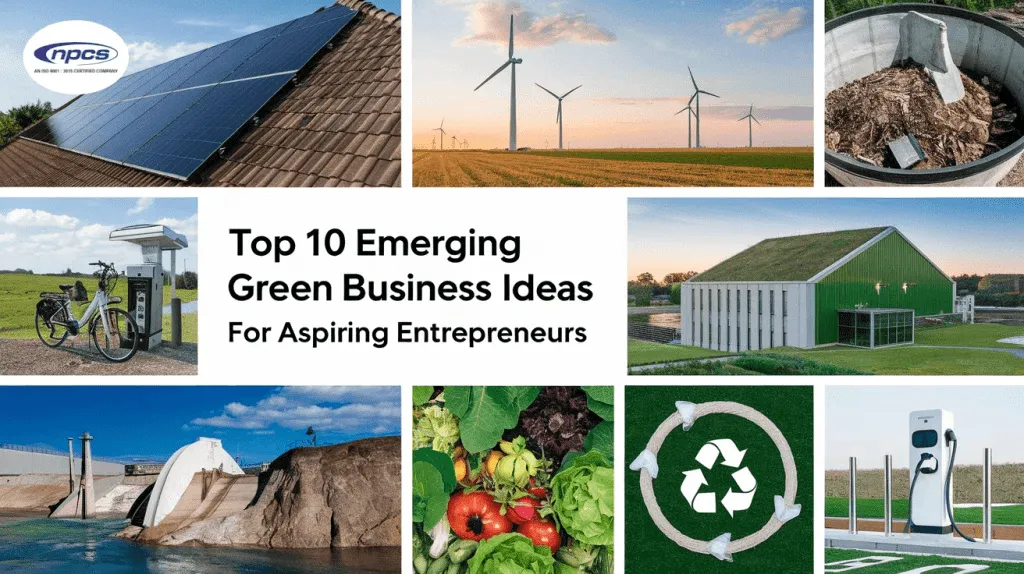
With the world advancing towards green sustainability, eco-friendly business ideas are not left behind and have penetrated every industry segment. Today’s entrepreneurs are generally not interested in profits only but also want to benefit the environment. If you are looking at cashing into this market, here are some eco-friendly business ideas that have a bright promise of making good profits while satisfying environmentally concerned individuals. This article discusses some of the exciting options available to the aspiring entrepreneur passionate about sustainability and carbon footprint reduction. 1. Sustainable Packaging Solutions In this consumer-dominated age, the escalating waste from packaging has become such a matter of great concern among environmentalists. Conventional plastic packaging, on the other hand, contributes to the filling up of landfills and polluted water bodies, as well as air, but the advent of greener alternatives keeps students at school. And green entrepreneurs can fill up the gap in this new trend with business lines like biodegradable bags, reusable containers, or packaging materials made from recycled products. It has also made businesses carbon-neutral and, at the same time, addressed consumer needs to provide environment-friendly products. For instance, the brands EcoEnclose and Noissue are seizing this increasing trend towards sustainable packaging, and any new commerce can similarly adopt this trend by supplying customised solutions to various industries. Also Read: Top Biodegradable FMCG Packaging Startups 2. Solar Energy Installation and Consulting The global revolution giving way to the replacement of fossil fuels by renewable sources is by far the most significant movement toward carbon footprint minimization. Solar energy has become available through much affordability, making it a lucrative business opportunity for entrepreneurs in addition to offering solar panel installation services, consultancy services, and sales of solar energy systems. According to the International Renewable Energy Agency (IRENA), by the end of the decade, solar energy would contribute about 60% to global renewable energy generation. Clean energy options are manifesting a growing spirit of new business opportunity thriving in the sector. 3. Organic Farming and Urban Gardening Organic farming is among the best eco-friendly business ideas for a world where more consumers open their arms to organic and local produce. Urban farming and vertical gardening quickly gripped metropolitan areas that couldn’t cater to much ground space. Entrepreneurs can now start a small-scale organic farm or offer gardening services for urban folks as a business opportunity for increasing demand for fresh, chemical-free food. Such initiatives encourage reduction of carbon footprints because they do away with long-distance food transportation and promote sustainable farm practices. Try setting up community-supported agriculture (CSA) programs for your community, or create farmers’ markets to sell your goods. Our Project Reports: A Business Plan for Bio-Degradable Plastic Polymer from Corn A Business Plan for Solar Panel 4. Electric Vehicle (EV) Charging Stations The spike in demand for charging infrastructure has coincided with the rise of electric vehicles. This is setting up a pretty great green business idea that is going to grow to unforeseen heights within the next few decades. For instance, apart from reducing the carbon footprint of traditional gasoline-powered vehicles, this business idea promises long-term returns for all those who embraced entrepreneurship since it will increase as more people come into the world of electric vehicles. The IEA projects that nearly 230 million electric cars will be on the roads around the world by 2030, behind which charging stations are going to shoot. It becomes a really interesting proposition for budding entrepreneurs to invest in and contribute to the green revolution. Also Read: Set-Up your own EV Charging Stations 5. Eco-Friendly Clothing and Fashion Brands The fashion industry continues to be one of the largest emissive industries in the entire world, with standard textile waste levels and excessive water consumption. To stand against this norm, sustainable fashion brands use organic, recycled, or upcycled materials to manufacture their clothes and other items. Business entrepreneurs can start eco-friendly garment lines based on sustainable production methods, fair wages for workers, and an insignificant impact on the environment. In this space, brands like Patagonia and Stella McCartney are already paving the way ahead of other new entrants, even though renewal sources are still burgeoning. Hence, creating a new business related to the market that caters to eco-conscious minds is an opportunity to earn a profit and at the same time reduce the environmental impact of the fashion world. Also Read: Best Eco-Friendly Products, Projects & Ideas for Startups 6. Green Construction and Eco-Friendly Home Solutions Sustainable living spaces are on the rise, so the construction industry keeps moving toward greener buildings and energy-efficient designs. This is a great encouragement for entrepreneurs to set up eco-businesses in the area of environment-friendly construction and green building solutions such as energy-efficient home insulation, sustainable building materials, or designing houses that consume less energy. According to the World Green Building Council, buildings contribute about 39% of total global carbon emissions, thus making the green building sector an important component in carbon footprint reduction. By entering this field, entrepreneurs would not only be able to make a significant contribution towards the environment but would also be impacting the economy. 7. Eco-Friendly Cleaning Services Most conventional cleaning agents have harmful chemicals that affect both humans and the environment in general. Starting a green cleaning business using non-toxic, biodegradable, and natural products would include homeowners and businesses that want to lessen their impact on the earth, among many other customers. According to a report by Grand View Research, the market for global green cleaning products would be worth USD 11.9 billion by 2025, largely because of the increased awareness of environmental sustainability. There is a clear chance for an entrepreneur to better capitalise on this opportunity by introducing green cleaning services that promote a healthy, green way of living. Also Read: 50 Green Business Ideas for Aspiring Entrepreneurs 8. Waste Management and Recycling Services A million and more several tonnes go to
How to Scale a Construction Business: From Small Projects to Big Contracts
Bringing forth a construction company to work on big projects from simple ones seems to be a rather ambitious dream, but it is practical. Having a planned strategy, the right resources, and a constant commitment to superiority, this ambition is realizable. From learning new construction business ideas to growing one’s existing operations, this guide will give practically doable tips to elevate any business. Understanding the Basics of Scaling Before one goes into the strategies to consider while scaling, one should know clearly what scaling actually means. Scaling one’s firm doesn’t mean just taking bigger jobs. It improves one’s ability to take more within the present means of efficiency and profit. Scalability ensures that a construction firm will not compromise on quality or timeliness regardless of the increasing demand. Also Read: Business Ideas for Construction Materials Shaping Modern Buildings Construction of Bungalow Key Strategies for Scaling Your Construction Business Build a Strong Team They are your workers—the backbone of your firm. This way, you can expand your workforce with talented people, which guarantees expertise in more complex projects. Invest in their continuous training and develop more and more programs just to keep them updated on industry trends and technologies. Diversify Your Construction Business Ideas This is how to scale up for serious fun. Target other complementary services that you can offer, such as renovation, interior design, sustainable construction, or any possible constructs. Such construction business ideas help you reach a wider audience while also ensuring multiple streams of income. Early November Technology Adoption In research, improvement in the efficiency of construction management is made possible by integrating different management software, building information modelling, and drones for site surveys. These include construction technology to change your business from construction into project management, reducing errors, and ensuring schedules are met. Strengthen Your Network Networking is very important for the scaling process. It makes you meet that architect, supplier, or developer in a personal capacity because you may have done hard work meeting a few different capacities or stakeholders that you may have already been talking to. Working with these professionals can lead to larger projects and long-term contracts. Marketing Your Construction Business Effectively Go for digital marketing. The potential clients whose values are so much online will be basically reached through the website, heavily bringing in social media and content marketing to showcase expertise. Have case studies and client testimonials to earn their trust. Make Use of the Available Industry Resources NIIR Project Consultancy Services (NIIR) is actually one of the organisations that provide assistance to all kinds of entrepreneurs in the construction field. They have project reports and feasibility studies, which can really help you, especially when scaling. Get to know more by logging into their website. Build your credibility through certifications. These certifications recognised in the industry improve your credibility and affiliations of your business into a trustful player. The presence of certifications like LEED associated with green buildings or standards by ISO keeps you ahead in winning big contracts. Expanding Operations: Moving Beyond Small Projects The operational challenges become more complex as the construction business matures. Thus, scaling effectively means anticipating and developing a good strategy to address all such challenges. Produce Thorough Financial Plans Construction businesses must have their financial management right in order to scale. It must be a booster for the upliftment of growth. This relates primarily to budgeting, forecasting, and funding. Projects involve budget preparations and must have detailed line items for materials, labour, and contingencies. A well-designed budget spells out cost controls and anticipates liquidity. Besides funding through loans for the business, investor contributions, or a government grant meant to support a business expansion, strong, healthy cash flow is also important because, otherwise, a daily operation cannot be performed successfully, and the company would not take on larger contracts without financial strain. With proper financial management and execution, the doors are wide open for efficient scaling of the business. Getting Down to Streamline Processes Standardise Operations: Set clear standard operating procedures (SOPs) for procurement activities, project management, and a quality control system. Use Technology Effectively: Develop construction software tools like Procore or PlanGrid that would help in scheduling, cost control, and communication during the stages of executing the project. But with a keen focus on efficiency and quality, the business was able to, while avoiding potential fallout from growth, be able to meet the demands of growth by delivering consistently excellent products. Marketing and branding investment. Larger contracts are made possible if you create a place for your brand in the market and your name among the rest. Exhibit Competence: Document successes in highly professional-looking photographs, videos, and case studies. Promote Targeted Marketing to Specific Clients: Price marketing initiatives to clients such as developers, government agencies, or large corporations. Testimonials: Encourage satisfied customers to write reviews and testimonials. An integrated marketing strategy makes a construction firm stay in the minds of customers looking for a reliable contractor for major works. Cultivate customer relations. Growing new clientele is not the only growth; the existing customers should also be held. Defining high standards in service ensures you maintain most customers for the long term. The satisfied clients can turn out to be the most significant brand ambassadors for you while referring you to larger deals. Read Our Book on Construction Materials ( Best Seller )  The Complete Book on Cement & Concrete Products Manufacturing Overcoming Challenges When Scaling Managing the Team and Resources The increase that comes with development can cause increased pressure on your team and resources. Bring in new skilled professionals and subcontractors to relieve the weight on your workforce. Develop partnerships with suppliers you can trust so that your staff have no reasons to complain about delays in the delivery of materials causing bottlenecks and cost overruns. Compliance and Risk Management The compliance
Exploring Lucrative Niche Markets in the Construction Industry
The market for construction keeps changing, coming with a number of specialised opportunities for growth. While major infrastructure is in the news in the world media, niche markets are alternative places where innovative, profitable, and sustainable construction business ideas abound. Exploring such markets is key for entrepreneurs as well as for established organizations. In this way, they will major in difference at competition. Why Focus on Niche Markets in the Construction Industry? Being in niche markets in construction helps businesses address specific needs and keep away from competition with large companies. Niche construction areas also require their own unique skills, materials, or services, which makes these appropriate for companies looking to establish a specific niche in the market. Niche markets are also less saturated, giving maximum revenue at minimum competition and client loyalty. From start-up to established player, niche market entry is often the key ingredient for increased esteem and revenues. Top Lucrative Niche Markets in the Construction Industry 1. Green Buildings and Sustainable Construction The growing need for construction that is environmentally friendly is changing priorities for governments, individuals, and other entities in the countries. Green buildings take energy-efficient materials from renewable energy and use sustainable construction practices. They are becoming widely adopted in both residential and commercial projects. Key Trends: LEED-certified buildings are increasing across national borders. The green construction market is expected to reach $610 billion by 2030 (Source: USGBC). Benefits for an Entrant into the Niche Aspects That Contribute to Sustainability in Completed Building Construction Business. 2. Modular and Prefabricated Buildings Modular construction is the assembling of components of a building at an off-site location, which will then be brought on-site for final installation. This, in fact, cuts project time in half and minimises material wastage, making it much less valuable and very cost-effective. It is now being keenly adopted by industries, particularly healthcare and education, because of its modular feature and speed. One could go without saying that such a market has great potential for anyone offering services or products in prefabrication. 3. Services in Renovation and Restoration Restoration services have become very high-end because a lot of cities are into preserving their history by keeping their historical structures intact. It’s refurbishment of old buildings for more modernisation, putting them at par with the modern standards while keeping their heritage. Home renovation is another fast-growing industry, as homeowners now prefer upgrading their old houses to buying new ones. Pro Tip: Offer customised services for “energy-efficient renovations,” which will give your business a competitive edge. 4. Intelligent Home Setting Smart homes are the most modernised houses of the present, rich, and accommodated with machines, like IoT devices, automation systems, and energy management devices. This new niche was opened mainly by the customers demanding convenience, safety, and energy efficiency. Smart your solutions into your projects, helping your construction firm meet the demands of highly technologically savvy clientele as it positions itself as a leader in the market. 5. Specialty Construction Materials Having unique materials, like recycled products or advanced composites, is another profit-making niche area. Architects and developers wanting to come up with new designs will always look for specialised materials that usually range from durable and lightweight to the most environmentally friendly. Really want to tap into niche opportunities like these? Check out their exhaustive market research reports of NIIR, complete with detailed insights for defining entry into specialised markets. Read further for more construction business ideas. Earthquake-resistant structures. Such natural hazards as hurricanes, earthquakes, and floods create a great necessity to construct these buildings. 6. Deep Head Innovations in This Niche: Individual buildings designed against earthquakes. Flood-proofing homes based on raised foundations and waterproof material. Such projects are mostly funded by the government and NGOs, which makes it one of the promising areas for entrepreneurs. Then, also, your construction company will be attending to a critical societal need while you root it in the forefront of safety-based innovation. 7. Aging-in-Place Construction As older citizens make up an increasing share of the population in many countries, more and more such houses are being built for their use. Ageing-in-place construction uses elements such as wheelchair ramps, non-skid surfaces, or wider doorways to provide accessibility. Important facts to consider: By 2050, the number of adults aged 60 and above will more than double worldwide (source: WHO). Modifications in residences for the age group above 60 will account for a share that is increasingly growing in the renovation industry. This window offers profitability along with the possibility to do something good for communities. Also Read: Business Ideas for Construction Materials Shaping Modern Buildings Construction of Bungalow 8. 3D Printing in Construction 3D printing in construction heralds a major change in the revolutionising construction industry; it can help build buildings faster and at lower costs. This technology is great for small construction projects, prototypes, and even large buildings. Why This Niche Matters: 3D-printed homes can be built in a mere 24 hours. The market is projected to grow by 91.5% between 2023 and 2028 (source: ResearchAndMarkets). Investing in the 3D printing capability will help businesses minimise their overhead costs while bringing innovative solutions to attract forward-thinking clients. 9. Waste Management and Recycling in Construction The construction industry generates a lot of waste and needs a green method of disposal or recycling. Such companies can also collect, process, and repurpose other materials like concrete, metal, and wood. Opportunities This Space Offers: Recycling old construction materials into new products. Creating zero-waste construction processes to attract eco-conscious clients. This niche is particularly aligned with global sustainability goals and offers long-term business viability. 10. Elegant Tiny Houses Today, many people are adopting tiny homes for use, cost-effective and environmentally friendly as it is. Adding a touch of luxury, such as high-end quality finishes and smart home technology, would fit
Sustainable Construction Business Ideas: Building for a Greener Future
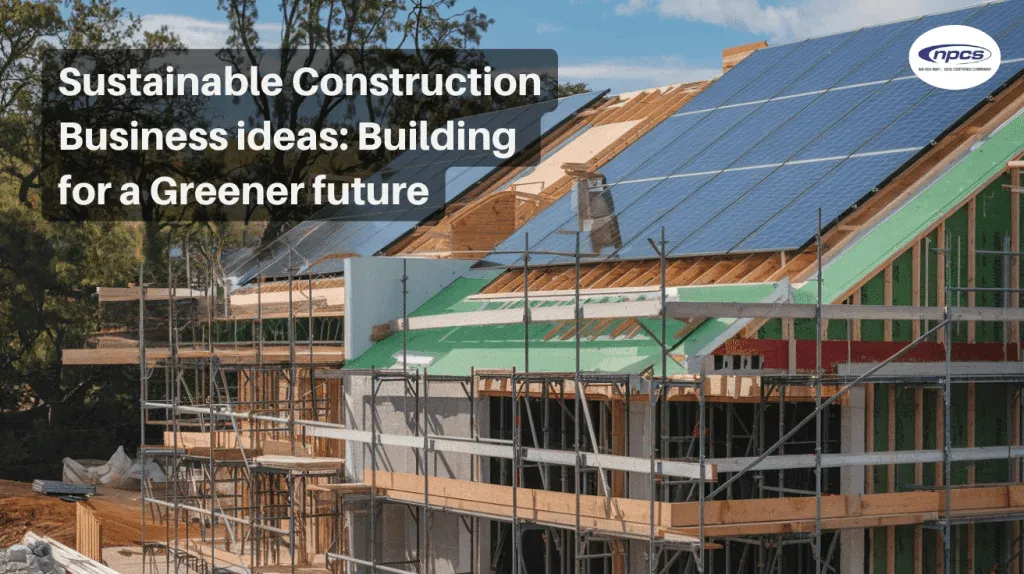
Construction has been the lifeblood of civilisation for thousands of years, but the new paradigm of sustainability is reshaping the way the industry does business today. Today’s game-changing innovations are in green building methods, sustainable material products, and green building designs. The exciting possibilities that this change brings for entrepreneurs are constructing business-in-business ideas for construction-building greener futures, all the while still making profits. Why Sustainability Matters in Construction An industry with an enormous contribution to environmental problems, it accounts for 39% of the total global CO2 emissions, mainly through materials production and operational energy use. Moving towards more sustainable forms could greatly alter this picture since it is also in line with the broader global environment agenda set by, for example, UN Sustainable Development Goals (SDGs). The transformation has ample room for many businesses willing to embrace changing, greener practices. Read Our Book on Construction Materials ( Best Seller )  The Complete Book on Cement & Concrete Products Manufacturing Innovative Sustainable Construction Business Ideas Green Construction Materials Making Traditional building material uses usually have a fairly heavy carbon footprint associated with them. Some construction business ideas for entrepreneurs include creating very friendly materials like: Bamboo-based products are very strong and renewable. Recycled steel—low dependence on raw resources. Low-carbon concrete reduces emissions by 30%. Investing in such materials might satisfy the needs of increasing demand since such more stringent green building measures are being added by the governments. Energy-Efficient Building Services Energy-efficient designs and methods- passive-solar architecture conditions-the energy-efficient HVAC system- all three have become part of the “living” and “indoor living environment.” Builders who provide for these requirements do so by lowering energy bills or ensuring that the entire building meets green certification from programs such as LEED or BREEAM. In addition to all that, another construction company in that specialised niche is likely to offer a renewable energy installation, like solar panels or wind turbines, for the supply of energy off the grid. Modular and Prefab Houses Modular, prefabricated construction tends to support sustainability through: Low material waste generated. Minimal construction time. The use of recyclable materials. There is thus an environmental benefit with modular housing since people and consumers do realise that these houses are going to save bucks as well. Also Read: Business Ideas for Construction Materials Shaping Modern Buildings Construction of Bungalow Smart and Sustainable City Solutions The growth of urbanisation opens windows upon windows to opportunities. Technology has partnered with sustainability to create wonderful smart cities in the future. Developers can incorporate smart energy grids, sustainable drainage systems, or even green rooftops in the spaces of cities. They ensure that resource consumption is reduced and a healthier city for inhabitants is created. Waste and Recycling Management in Construction Among other studies conducted, it would seem that workload corruption booms into tremendous amounts of waste. One study has figured that the entire world generates around 1.3 billion tonnes of waste annually through construction only. Capitalists will surely see the bright side of this—that they can recycle this waste in other forms again as usable materials, like brick made from debris or a pathway formed from reclaimed asphalt. These entrepreneurs help from their profits by decreasing the amount of waste that ends up being deposited into landfills and providing a steady supply of materials to the market. How NIIR Can Help You in Starting Your Construction Business Construction, being a “green” initiative, now demands much more than just resources, expertise, and even insights from the respective black aspects of industry. Yet the National Institute of Industrial Research can afford project reports, feasibility studies, and much-needed technical skills to the energy-starved entrepreneur. Thus, quite remarkably, you get to foresee the opportunities you may have in the market while creating a green practice and building a winning business around this evolving industry. Read More about the Construction Industry Green Certifications and Their Role in Sustainable Construction Being certified green is part of a company’s business strategies in the excellent sustainable buildings construction. Certifications such as LEED (Leadership in Energy and Environmental Design) and BREEAM (Building Research Establishment Environmental Assessment Method) prove that the eco-friendly practices pursued by the company are credible and convert them into a marketable enterprise. These certifications promote: Energy-efficient design that helps reduce carbon emissions. Sustainable material sourcing that promotes recyclability. Water conservation systems such as rainwater harvesting and low-flow fixtures. For entrepreneurs, including requirements for green certification in their construction business ideas will attract eco-minded clients while offering a competitive edge. Government Incentives Supporting Sustainable Construction Governments around the world have incentives for encouraging construction that is more sustainable: Tax relief to buildings that are energy-efficient. Greater access to grants and low-interest loans to projects that have a renewable energy component. Subsidies for businesses that make use of ecological materials in their construction projects. For instance, support towards green building projects is offered by India’s Ministry of New and Renewable Energy. These incentives reduce the initial capital required to change into sustainable practices much more for companies, as it encourages them to adopt such activities into their businesses. Tips for Success in the Sustainable Construction Business Understand Your Market Research local building trends with consideration for the preferences of customers. People in cities will largely be concerned with things like high-rise multipurpose buildings, where most available forms of suites are more energy-efficient than people in rural areas, who are probably going to be interested in offering buildings manufactured in modular forms. Build a Hard-Knitted Team Train your staff in sustainable building techniques. A competent worker will ensure that what he undertakes comes out in superior quality but also adds great reputation to the industry. Partner on Eco-Friendly Material Supply Through associations with credible suppliers of sustainable materials, it would be easy to have a constant supply for your projects. The Use of Technology
How to Start a Profitable Small-Scale Construction Business in India
The upsurge of the construction business in India happens to be one of the most promising industries, providing very interesting entrepreneurial opportunities. Establishing a construction business could be worth your while, yet it requires thorough planning, resource management, and going through all legal formalities. Here is a step-by-step guide to help you kick-start a small-scale and profitable construction business in India. 1. Undertake market research. It is best to know your local market in terms of demand and supply for construction services in your area and in the areas where you really have evaluating competitors. The last will be the gaps in what they offer and find out who your specific target customers would be: What types of construction projects are commonly engaged in (residential, commercial, or industrial)? Most sought-after wants of services? Thorough research could place at ease clearing ways of acknowledging the uniqueness of business in terms of unique solutions created to understand special client needs. 2. Develop a Comprehensive Business Plan No business can progress without a solid business plan. Effective business plans must include Nature of your services. Start-up costs and how they will be funded. How marketing and client acquisition will be done. How equipment and materials will be procured. Might serve as a map for that purpose and does not harm being presented to banks or other investors to raise money. 3. Register Your Business and License The legal ground is covered for the business to run smoothly. To register your business, go for: Choose a business structure (solitary, partnership, or private limited company). Obtain a Director Identification Number (DIN) and Digital Signature Certificate (DSC). Register within the Ministry of Corporate Affairs (MCA) and acquire a certificate of incorporation. Go for GST registration for tax compliance. In accordance with your location and the services you provide, you may also require specific permits or licenses, such as environmental clearance or any other statutorily required license under relevant labour laws. 4. Secure funds Clearly laid down finances sustain a construction business. All construction businesses require money for equipment, raw materials, and labor. Here are various funding options: Bank loans: schemes such as MSME loans or contractor-specific financing options. Investors: Have a business plan to present to potential investors who are interested in supporting the project as a shareholder or profit sharing. 5. Build a Competent Team Your team is crucial to the success of the construction business. You need to hire experienced engineers, architects, and skilled labor. Training and retaining talent can greatly improve the quality of the services it provides and the reputation of the company. Also Read: Business Ideas for Construction Materials Shaping Modern Buildings Construction of Bungalow 6. Invest in Equipment and Technology Invest in modern technology and the best quality equipment for run-of-the-mill operation. Optimise the use of tools such as project management software to improve task handling and productivity. Invest in advanced construction techniques because it can offer a good head start for the business. 7. Focus on Marketing and Networking These services should usually widen a client base. From brochures and advertising to social media platforms, traditional marketing is very important. On the other hand, the whole industry obtained opportunities from networking, formed by strengthening the collaboration between business units and all three types of customers: suppliers, contractors, and clients. 8. Effective Project Management Construction project management mainly revolves around the management of materials, time, and labour. Project management really becomes vital, without which efficiency and cost-saving will not be at their optimum levels. How do you improve this? Adopt Technology: Construction-specific project management software is integrated to provide an effective schedule, monitor progress, and manage resources. This eliminates a lot of hassle and the need for comprehensive software such as MS Project. Quality: Setting clear quality standards to meet customer expectations. Regular inspections and feedback loops help with the identification and fixing of issues before they lead to substantial rework costs. Health and Safety: Compliance with health and safety rules and regulations can protect the employees from injuries as well as save on legal costs. Ensuring that safety guidelines from the Bureau of Indian Standards (BIS) will also heighten the safety in the workplace. 9. Develop Financial Accountability The small construction business deals with financial transactions on a large scale. Hence, robust financial management is very essential. Here’s how to stay on top: Keep personal and business finances separate. Open a separate business bank account to avoid mixing business expenses. Track Expenses: Use accounting software or hire an accountant to track cash flow. Stay tax compliant: Understand your tax liabilities, such as Goods and Services Tax (GST), and file returns on time to avoid penalties. This meant the Indian construction industry was on its way to ₹60 lakh crores in 2025 as reported by Statista. Indian companies should thus have proper financial practices. 10. Centring around customer need Building strong relationships with clients has become the new repeat business and referrals. The main practices include: Connect with requirements and clearly understand the customer’s needs, budgets, and timelines. Build trust by including fine details in the cost breakdown presented in contracts. A satisfied customer is likely to refer your business, and this way generates growth through word of mouth. 11. Strategically Scale Your Business Scaling isn’t necessarily about tackling bigger projects; it can also be about diversifying into different construction project types or extending your reach geographically. This includes some of the following steps: Add-on Services: Add more services like interior designing, renovations, or green-building solutions that target an even wider audience. Franchise Model: When local popularity develops to a certain point of saturation in the local market, think about franchising to further reach up to new geographical markets. Such investments in building infrastructures—whether in terms of logistics or hiring speciality experts for niche functions—will really make your business stand out among others. Read Our Book on Construction Materials ( Best
Top 10 Emerging Construction Trends and Technologies in 2024
Technological innovations have accelerated construction at an unprecedented rate, leading to sustainable practices. If an entrepreneur is interested in modern construction business ideas, then they must have the latest trends in the industry. Individuals are freeing incredible resources by adopting technology, along with an ever-growing attention to green practices. Come 2024, and the changes being introduced on how construction is done will soon be a thing of the past. This article will delve into the top 10 trends that would be making a huge difference in the construction space this year. Read Our Book Construction Materials ( Best Seller ) The Complete Book on Cement & Concrete Products Manufacturing 1. Artificial Intelligence and Machine Learning in Construction AI and machine learning are the levers that the industry has put into work in the field of construction. These tools will complete advanced project management when deciding on whether to “go” or “no-go” and how to allocate and predict resource delays. Unmatched efficiency is brought by Aitools-like, whether in the case of software Buildots, where AI will be keeping watch on construction progress in real-time to totally cut waste and costs. 2. Modular and Prefabricated Construction Rapidly gaining momentum in construction these days for speed and more cost-effective construction among the processes is modular construction. It involves constructing structures off-site under controlled conditions and later assembling them on-site, which will reduce construction time by 50% in many cases. This method also goes hand in hand with sustainable construction business ideas, as construction waste and energy are minimised. 3. 3D Printing in Construction 3D printing is the one revolutionising the construction business now, as it allows making very complicated structures with very fine precision. Within less than twenty-four hours, some of the affordable houses have been created by companies like ICON, using 3D printing techniques. It is indeed a bright future for this technology to make all housing crises across the globe face challenges. 4. Green Building Materials Green building materials are a modern application in building innovations. Recycled steel, bamboo, and hempcrete are some common materials being adopted in the building industry for their green qualities. Such materials minimise carbon footprints in buildings while meeting the needs of increasingly sustainable structures. 5. Building Information Modelling (BIM) The Building Information Modelling (BIM) has revolutionised construction with its digital representation of the combination of the physical and functional characteristics of the building; indeed, BIM allows construction companies to manage different projects within itself while ensuring compliance with easy communication and minimisation of errors. Moreover, costs could reduce by up to 20% at this moment. 6. Energy-Efficient Buildings Optimising the design and technology in the buildings to minimise energy consumption is termed energy-efficient buildings. Features of modern construction are solar panels, smart thermostats, and energy-efficient windows—all of which are incorporated as standard elements in construction today. These innovations save on operating costs but also magnify the appearance and sustainability of these buildings to potentially offer consumers an updated, intelligent experience while saving resources. 7. Smart Construction Technologies With the introduction of smart technologies into the construction industry, the field constructs intelligent infrastructures through integrating IoTs and sensors into a building process. Greatly improved safety measures, structural health monitoring, and energy use enhancers are all part of this as well. For instance, it will help prevent failures since the IoT-enabled sensors will detect cracks or stress in structures. Such technologies are becoming essential to the new-age construction business ideas aimed at endurance and quality. 8. Robotics and Automation in Construction Robots are now really being used in construction to do heavy, repetitive labor. An autonomous robot can lay bricks, paint walls, and inspect hard-to-reach areas. It will be possible to save on labour costs and significantly speed up construction without compromising on quality through the use of robotics. Also Read: Business Ideas for Construction Materials 9. Augmented Reality (AR) and Virtual Reality (VR) Augmented and virtual reality bring a new way to the visualisation and execution of projects. With such technology, all stakeholders will experience the design of the building before the construction begins, creating accuracy in the eventual decision-making. For example, VR simulations can highlight some design flaws at an early stage, thus saving time along with resources. Entrepreneurs can use AR/VR in their construction business ideas to improve customer experience. 10. Sustainable Urban Development Such an emphasis on smart cities and sustainable urban development really incites innovations in the construction business. Vertical gardens, rooftop farming, and net-zero energy buildings are becoming popular concepts in modern city developments. Just like the global call for greener infrastructure development, this novel approach opens great opportunities for business for the innovative construction business idea. For further insight into the high-end technologies concerning construction, you may visit Construction Dive, which has credible industry news and trends. Closing Thoughts The construction industry looks forward to a technological revolution at present. This innovation is responsible for shaping how buildings are designed and executed. It is, therefore, important for entrepreneurs and professionals who are interested in the new-age construction business ideas to catch such trends early. By using project reports and market information from NIIR, you could take your business toward these trends in the ever-changing marketplace. Green practices, robotics, or investment in AR/VR could serve as examples. FAQs What are the latest trends in the construction business for 2024? Some of the most exciting trends at the moment are those linked with artificial intelligence and machine learning, modular construction, 3D printing, green building materials, and smart technologies. From these areas, the transformation of construction processes will be aligned with sustainability goals. What is the process of starting a construction business through modern technologies? Start defining a niche, such as modular or sustainable construction. Employ or involve BIM in your construction with enjoyment from the robotics efficiency. Employ the use of market reports and consultancies such as NIIR to create perfect plans. Why is it important for sustainability in the construction business? Sustainability minimises environmental effects and meets the increased need