
Low Tension Cables, LT Power Cables Manufacturing Industry
The LT Power Cables Manufacturing Industry is a vital part of the electrical infrastructure sector, supplying power distribution systems for homes, commercial buildings, and industrial plants. LT (Low Tension) cables are designed to carry voltages up to 1.1 kV and play an essential role in ensuring efficient and safe electrical transmission. With growing urbanization, infrastructure development, and industrial expansion across India and globally, the demand for reliable and high-quality LT cables continues to surge. This makes the LT Power Cables Manufacturing Industry a profitable and sustainable business opportunity for entrepreneurs. Growing Demand for LT Power Cables The global low-voltage cable market is booming, driven by smart city projects, power grid upgrades, and increasing construction activities. The LT Power Cables Manufacturing Industry serves sectors like real estate, telecom, renewable energy, railways, and defense. Low tension cables are essential for internal wiring, lighting circuits, power distribution boards, and control systems. With rising energy consumption and electrification in rural areas, demand for durable and safe LT cables is rapidly growing in both the public and private sectors. Types of LT Power Cables in the Market The LT Power Cables Manufacturing Industry produces a wide variety of cable types tailored to specific needs. These include: PVC Insulated LT Cables: Used in general domestic and light industrial applications XLPE Insulated LT Cables: Known for higher thermal resistance and load capacity Armoured Cables: Used where physical protection of the cable is necessary Unarmoured Cables: Ideal for fixed installations without risk of mechanical damage FRLS (Flame Retardant Low Smoke) Cables: Preferred for enclosed environments like malls and metros Manufacturers also produce multi-core, single-core, aluminum, and copper-based cables depending on usage and client requirements. Manufacturing Process of LT Cables Setting up a unit in the LT Power Cables Manufacturing Industry requires technical precision, process control, and quality checks. Here’s a typical manufacturing flow: Conductor Preparation: Aluminum or copper wires are drawn and annealed to improve flexibility. Stranding: Multiple strands are twisted together to form the core conductor. Insulation: The conductor is covered with PVC or XLPE material using an extrusion machine. Assembly: For multi-core cables, insulated conductors are laid in proper formation. Armouring (if required): Galvanized steel wires or tapes are applied for mechanical protection. Sheathing: A final layer of PVC or polyethylene sheath is extruded for weather resistance. Testing and Quality Control: Electrical and mechanical tests like insulation resistance, high voltage test, and flame retardancy are conducted. Packaging: Finished cables are coiled or drum-packed with proper labeling and documentation. The process involves high-precision machinery and adherence to BIS/IS specifications for safety and compliance. Machinery Required for Manufacturing Unit The LT Power Cables Manufacturing Industry requires a mix of heavy-duty and semi-automated equipment. Major machines include: Wire drawing and annealing machines Conductor stranding machines Core extrusion (insulation) lines Laying and armouring machines Sheathing extruder High voltage test bench Drum winding and coiling equipment Quality testing laboratory instruments A semi-automated plant for medium-scale production may require an investment of ?1.5 to ?3 crore, depending on the setup and production capacity. Raw Materials Required The primary raw materials for LT cable production include: Copper or aluminum conductor PVC/XLPE compounds for insulation and sheathing Steel wire/tape for armouring Fillers, binders, and tapes Packing materials like wooden drums and shrink wraps Sourcing high-quality materials is critical to maintaining product standards, safety, and performance, which directly impacts your brand’s reputation. Compliance and Certifications To operate in the LT Power Cables Manufacturing Industry, regulatory certifications and quality standards are crucial: BIS certification (IS 694, IS 1554 Part 1) for compliance with Indian standards ISO 9001: Quality management system ISO 14001: Environmental management OHSAS 18001: Occupational health and safety Type Test Certificates from certified labs CE marking for European exports (if applicable) Adhering to these certifications is not only mandatory but also builds customer trust and expands market access. Ideal Location and Infrastructure To establish a successful LT Power Cables Manufacturing Industry unit, you’ll need: A 10,000–20,000 sq. ft. industrial shed Stable power supply for high-load machinery Ventilation and fire safety systems Raw material storage and finished goods warehousing Testing lab and administrative office space Proximity to metal suppliers, industrial hubs, or ports (for export) adds a logistical advantage. Target Market and Customer Segments The key customers of the LT Power Cables Manufacturing Industry include: Government electrical contractors Infrastructure and construction firms Telecom companies Power and energy companies OEMs in the appliance and machinery sectors State electricity boards and railway departments Solar and wind energy EPCs Retail distribution via electrical wholesalers, B2B eCommerce platforms, and authorized dealership networks ensures wide market coverage. Profitability and Return on Investment LT power cables are high-volume, moderate-margin products. However, with steady demand and repeat orders, the LT Power Cables Manufacturing Industry offers excellent returns over time. A mid-sized unit can achieve: Gross profit margin: 20–35% depending on cable type and volume Breakeven period: 18–24 months Net profit margin: 10–15% with steady sales and optimized operations Bulk supply to government tenders and infrastructure projects can significantly enhance revenue. Export Opportunities There is growing global demand for high-quality Indian-manufactured LT cables. Countries in Africa, the Middle East, and Southeast Asia import low-voltage cables for infrastructure and electrification projects. To explore this opportunity: Register with DGFT and obtain an IEC code Attend international trade expos List products on B2B export portals like Alibaba, ExportHub, and IndiaMART Comply with international standards such as IEC and CE Conclusion The LT Power Cables Manufacturing Industry offers a high-growth, sustainable, and infrastructure-linked opportunity for manufacturers and investors alike. With increasing focus on power distribution, urbanization, and renewable energy, the demand for LT cables is set to grow steadily. If you have access to quality raw materials, investment capital, and a strong network of electrical contractors or developers, this industry can be a long-term revenue-generating business with national and international potential. Niir Project Consultancy Services An ISO 9001:2015 Company 106-E, Kamla Nagar, Opp. Spark Mall, New Delhi-110007, India. Email: npcs.ei@gmail.com, info@entrepreneurindia.co Tel: +91-11-23843955, 23845654, 23845886, 8800733955 Mobile: +91-9811043595 Website: www.entrepreneurindia.co, www.niir.org Contact Us
Curry Leaves Essential Oil Extraction Business
The Curry Leaves Essential Oil Extraction Business is gaining momentum as more consumers turn toward natural wellness and Ayurvedic-based products. With curry leaves being a staple in Indian households and rich in medicinal properties, their essential oil is in growing demand across personal care, aromatherapy, and pharmaceutical industries. This business provides entrepreneurs with a profitable, eco-friendly, and scalable opportunity to step into the essential oils market. The increasing preference for organic and herbal formulations worldwide is further boosting the relevance of the Curry Leaves Essential Oil Extraction Business. Why Curry Leaves Essential Oil is in Demand The Curry Leaves Essential Oil Extraction Business benefits from the leaf’s potent anti-inflammatory, antibacterial, and antifungal properties. This essential oil is widely used in: Haircare for promoting hair growth and treating dandruff Skincare for treating acne and infections Aromatherapy for relaxation and mental clarity Ayurvedic treatments for digestion and detoxification Cosmetic formulations as a natural fragrant and active ingredient With the rise of clean beauty and green products, this niche oil is finding a place in formulations marketed globally. Market Potential of the Business India, being the primary grower of curry leaves, gives domestic entrepreneurs a strategic edge. Exporters, herbal cosmetic companies, essential oil resellers, and Ayurvedic brands are consistently sourcing from trusted manufacturers. The Curry Leaves Essential Oil Extraction Business also holds immense potential for export to countries where Ayurveda is gaining ground, such as the USA, Germany, Australia, and the UAE. In the Indian market, this oil is used by: FMCG brands in shampoos and hair oils Ayurvedic companies in medicine Wellness and spa centers Organic and herbal beauty brands The industry is expected to grow with increasing demand for natural therapeutic ingredients. Key Ingredients and Raw Material Sourcing Fresh curry leaves are the main raw material, requiring proper harvesting and handling to retain their oil content. India’s tropical climate ensures year-round supply. To run the Curry Leaves Essential Oil Extraction Business, you need to partner with organic farms or grow the leaves on leased land. Important points: Use pesticide-free, fresh green leaves Oil yield is higher in young, healthy leaves Prompt processing after harvest maintains aroma and composition Consistency in leaf quality impacts the final oil yield and aroma, both of which are crucial for brand trust. Extraction Methods and Process The most widely used method in the Curry Leaves Essential Oil Extraction Business is steam distillation, which helps preserve the volatile oils naturally present in curry leaves. The general process includes: Washing & Drying: Cleaning and air-drying the leaves Steaming: Leaves are steamed to release volatile oil Condensation: Oil vapors are cooled and separated from water Filtration & Storage: The essential oil is filtered and stored in dark glass containers Other less common methods include solvent extraction and cold pressing, which are generally not preferred for essential oils meant for therapeutic or edible use. Required Equipment and Machinery To establish a basic Curry Leaves Essential Oil Extraction Business, you’ll need: Stainless steel steam distillation unit (50–200 liters capacity) Leaf washer and sorter Condenser and separator tanks Oil filtration unit Filling and capping machine Glass bottle packaging station Storage tanks and temperature-controlled warehouse Cost of setting up a small-to-medium plant ranges from ?10 lakhs to ?30 lakhs depending on automation and production scale. Packaging and Branding Strategy Proper packaging and a strong brand identity are crucial to stand out in the market. For the Curry Leaves Essential Oil Extraction Business, the following points must be considered: Use amber glass bottles to protect from UV light Label must include botanical name, batch number, expiry, and usage directions Eco-friendly outer packaging adds appeal Highlight certifications like organic, vegan, cruelty-free, or AYUSH compliant Include QR code linking to lab test or usage video (value-add for tech-savvy buyers) Good branding helps convert first-time users into loyal customers. Licenses and Regulatory Compliance To legally operate a Curry Leaves Essential Oil Extraction Business, ensure the following: FSSAI License (if edible-grade oil is produced) GMP Certification for pharmaceutical-grade use ISO 9001 or ISO 22716 for quality assurance Pollution Control NOC (as per state rules) Trade license, MSME registration, and Udyam certificate Export Import Code (IEC) for selling internationally Following these norms ensures smooth domestic and export business operations. Sales Channels and Customer Segments You can scale the Curry Leaves Essential Oil Extraction Business through: B2B Sales: Herbal and cosmetic manufacturers Ayurveda and pharma companies Spa and wellness product makers Essential oil wholesalers B2C Sales: D2C via your website Online platforms like Amazon, Flipkart, Etsy Health and organic retail chains Ayurveda clinics and beauty salons Reaching influencers, herbal forums, and online wellness communities can also drive organic traffic and orders. Export Opportunities Countries like Germany, USA, UK, and Middle Eastern nations are importers of Indian essential oils. To tap into this, the Curry Leaves Essential Oil Extraction Business must ensure: Batch testing and purity certification Eco-cert or USDA Organic credentials (for organic markets) COA (Certificate of Analysis), MSDS, and relevant safety documentation Tie-ups with global B2B marketplaces and logistics providers Joining trade shows or export councils like APEDA or SHEFEXIL can enhance your visibility. Financial Overview and Profitability Oil yield: ~200–400 ml per 100 kg of fresh leaves Market price: ?1,500–?3,000 per 100 ml (depending on quality) Margins: 35% to 60% (if sold in retail packs or exported) Breakeven: 18–24 months for small-scale units By productizing the oil in different volumes (5 ml, 15 ml, 50 ml) and combinations (e.g., with coconut or castor oil), you can enhance your average order value. Conclusion Starting a Curry Leaves Essential Oil Extraction is a promising venture for anyone interested in the herbal, Ayurvedic, or organic product industry. With rising global demand, low raw material costs, and high value addition, it offers scalable, long-term profitability. Whether you choose to go B2B or build a wellness brand of your own, curry leaves essential oil can become a niche hero product. Niir Project Consultancy Services An ISO 9001:2015 Company 106-E, Kamla Nagar, Opp. Spark Mall, New Delhi-110007, India. Email: npcs.ei@gmail.com , info@entrepreneurindia.co Tel: +91-11-23843955,
Baby Cereal Food Manufacturing Industry
The Baby Cereal Food Manufacturing Industry has witnessed exponential growth in recent years, driven by increasing health awareness, rising birth rates in developing countries, and the growing demand for convenient, nutritious baby food options. Parents today prioritize safe, hygienic, and nutritionally balanced foods for their infants, which has made baby cereal one of the most preferred weaning foods across the globe. The Baby Cereal Food Manufacturing Industry offers a highly profitable and sustainable business opportunity for entrepreneurs looking to tap into the expanding market of infant nutrition. Rising Demand and Market Potential The global baby food market is projected to surpass USD 100 billion by 2030, and cereal-based products form a major chunk of this industry. The Baby Cereal Food Manufacturing Industry benefits from a steady demand due to the essential role these cereals play in a baby’s transition from breast milk to solid foods. Parents seek products that are free from preservatives, made with organic or natural ingredients, and are easy to digest for infants between 6 months to 2 years old. In India and other growing economies, an increase in dual-income households, improved disposable income, and urbanization are fueling the demand for ready-to-eat baby cereals. Brands that focus on safety, fortification with iron, calcium, vitamins, and the absence of allergens are experiencing higher growth rates. Key Ingredients and Nutritional Composition Manufacturing baby cereal food involves selecting ingredients that are rich in essential nutrients and easy on an infant’s digestive system. Common grains include rice, wheat, oats, ragi (finger millet), maize, and barley. Many products are also fortified with: Iron and zinc for brain development Calcium and vitamin D for bone growth DHA and choline for cognitive function Protein and fiber for overall health Fruits like banana, apple, and mango are often added for natural sweetness and flavor. The Baby Cereal Food Manufacturing Industry must ensure all formulations are scientifically tested, nutritionally approved, and adhere to safety standards. Baby Cereal Manufacturing Process The process of manufacturing baby cereal is systematic, hygienic, and involves advanced technology to retain nutritional value. The general steps include: 1. Raw Material Selection and Cleaning: Grains and fruits are sourced and cleaned thoroughly to remove dust, stones, and impurities. 2. Milling and Pre-cooking: The cleaned grains are milled and pre-cooked using methods like drum drying or extrusion to make them digestible for infants. 3. Fortification and Mixing: Vitamins, minerals, and natural flavors are added in controlled quantities to create a balanced formula. 4. Drying and Sieving: The mixture is dried to maintain low moisture content and sieved for a smooth, fine texture suitable for baby consumption. 5. Packaging: The final product is packed in airtight, sterile containers or pouches using nitrogen flushing to retain freshness. 6. Labeling and Coding: Nutritional information, usage instructions, manufacturing and expiry dates, and batch numbers are printed. Ensuring food safety and zero contamination is the backbone of the Baby Cereal Food Manufacturing Industry. Machinery and Equipment Needed Setting up a unit in the Baby Cereal Food Manufacturing Industry requires precision machinery to ensure hygiene, consistency, and compliance with food-grade standards. Essential equipment includes: Grain cleaning machines Roasters or drum dryers Pulverizers and grinders Mixers and fortification units Extruders (for puffed or textured cereals) Sieving and drying systems Automated packaging machines Sterilizers and metal detectors The plant should follow HACCP guidelines with stainless steel equipment to maintain sanitary processing conditions. Investment and Infrastructure The cost to set up a small-to-medium baby cereal processing unit ranges from ?25 lakhs to ?1 crore, depending on automation level, capacity, and production scale. You’ll need: 2000–3000 sq. ft. of hygienic production area Skilled food technologists and quality control staff Water purification systems Testing lab for microbial and nutrient analysis Warehousing space for raw and finished goods The Baby Cereal Food Manufacturing Industry allows flexible scaling, enabling entrepreneurs to start small and expand as demand grows. Regulatory Compliance and Certifications To operate legally and earn consumer trust, your Baby Cereal Food Manufacturing Industry unit must comply with food safety and regulatory norms. These include: FSSAI license for food manufacturing BIS (Bureau of Indian Standards) for quality testing ISO 22000 or HACCP certification Organic certification (if marketing as organic baby food) GMP compliance for manufacturing processes Labeling compliance with nutrition facts, allergens, and expiry dates These certifications help establish credibility, especially when entering modern retail or export markets. Branding and Packaging Strategy Packaging plays a key role in the success of your brand in the Baby Cereal Food Manufacturing Industry. It should be: Leak-proof and air-tight BPA-free and food-grade Easy to scoop or pour Visually appealing with soft pastel colors and baby imagery Informative, highlighting key nutrients and age range Glass jars, laminated pouches, and canisters with resealable lids are popular options. Educational campaigns, pediatrician endorsements, and mother testimonials also add value to branding efforts. Target Audience and Distribution The ideal customers for baby cereal products include: New parents and families with infants Pediatric hospitals and clinics Daycare centers and play schools Organic food retailers and supermarkets Online platforms like Amazon, FirstCry, Flipkart, and your own D2C website Tie-ups with pediatricians and mom-influencers on social media can help build brand awareness and trust. Local distributors, pharma chains, and e-commerce will ensure wide reach. Profit Margin and ROI The Baby Cereal Food Manufacturing Industry offers a profit margin between 30% to 50%, depending on branding, packaging, and pricing strategy. Premium organic or Ayurvedic baby cereals can command higher prices. With consistent demand and growing customer base, breakeven is typically achievable within 18–24 months, with higher profits possible through private labeling and exports. Export Potential Countries in Africa, Southeast Asia, and the Middle East have a growing demand for baby cereals due to changing lifestyles and limited local production. With proper certification and attractive packaging, your business can scale globally via export distributors and international marketplaces. Conclusion The Baby Cereal Food Manufacturing Industry offers an exciting and ethical opportunity for entrepreneurs who want to invest in the nutrition and wellness space. With a growing focus on child health,
Aloe Vera Gel and Powder Manufacturing Business
With rising consumer demand for natural personal care, wellness, and herbal products, Aloe Vera gel and powder manufacturing is emerging as a highly profitable and scalable business. Aloe Vera is widely known for its medicinal, cosmetic, and nutraceutical applications, making it a cornerstone of the herbal and Ayurvedic industries. From skincare brands to health supplements and beverages, the scope of Aloe Vera gel and powder manufacturing has expanded rapidly due to its multipurpose uses, relatively low production cost, and consistent global market demand. Market Potential of Aloe Vera Products The global demand for Aloe Vera-based products continues to rise, driven by increasing awareness of herbal ingredients and their therapeutic benefits. As a result, entrepreneurs who establish Aloe Vera powder manufacturing units can access strong opportunities in both domestic and export markets. Rich in vitamins, enzymes, amino acids, and antioxidants, Aloe Vera serves as a key ingredient across cosmetics, pharmaceuticals, nutraceuticals, and even food products. For instance, manufacturers widely use Aloe Vera gel in moisturizers, sunscreens, aftershave lotions, and anti-acne solutions. Meanwhile, Aloe Vera powder finds application in capsule formulations, herbal teas, and powdered face packs. Notably, the international demand for Aloe Vera powder remains particularly strong in the USA, Germany, Japan, and South Korea. By starting a manufacturing unit for Aloe Vera gel and powder, entrepreneurs can strategically position themselves in both mass-market and premium product categories, leveraging a product that aligns with health-conscious and eco-aware consumer trends. Sourcing and Cultivation of Aloe Vera To set up an Aloe Vera gel and powder manufacturing unit, the first step is to ensure a reliable supply of fresh, mature Aloe Vera leaves. Aloe Vera can be cultivated on degraded land with minimal irrigation and low maintenance. It takes about 8–12 months for the plant to mature, after which it continues to yield leaves for 3–5 years. Many manufacturers partner with contract farmers or cultivate Aloe Vera on leased land to ensure freshness and quality. The gel must be extracted within 4–6 hours of harvest to retain its nutritional properties and preserve its bioactive content. Manufacturing Process of Aloe Vera Gel The basic process for Aloe Vera gel manufacturing involves: 1. Leaf Washing and Sanitization: Harvested leaves are cleaned to remove dirt and bacterial contamination.2. Gel Extraction: The outer rind is removed, and the inner clear gel is carefully separated using mechanical extractors or manual scraping.3. Filtration and Stabilization: The extracted gel is filtered, pasteurized, and stabilized using food-grade preservatives to prevent spoilage.4. Blending and Additives: Aloe Vera gel may be blended with additives like vitamin E, rose water, or herbal extracts to enhance its cosmetic or medicinal value.5. Packaging: The gel is filled into sterilized bottles, tubes, or jars under hygienic conditions and labeled. The shelf life of pure Aloe Vera gel is limited unless processed with preservatives or cold-stored. However, stabilized gel can last 12–18 months. Manufacturing Process of Aloe Vera Powder Aloe Vera powder manufacturing follows a slightly modified process compared to gel production, focusing on nutrient preservation and long shelf life. Extract the Gel: Technicians begin by extracting fresh Aloe Vera pulp from the leaves, just as they do in gel manufacturing. Dehydrate the Gel: Next, they dry the gel using methods like spray drying, freeze drying, or vacuum drying to retain essential nutrients and bioactive compounds. Mill and Sieve the Dried Material: After drying, they grind the solid mass into a fine powder and sieve it to ensure uniform particle size. Blend with Additives (if required): At this stage, they may blend the powder with other herbs or active ingredients, depending on the intended formulation. Package the Final Product: Finally, they pack the powder in moisture-resistant pouches or HDPE jars to protect it from humidity and contamination. This method yields a stable, easy-to-transport product that retains most of Aloe Vera’s active properties. Its extended shelf life and versatility make Aloe Vera powder especially popular in nutraceuticals, functional foods, and bulk exports. Machinery Required To set up a standard unit for Aloe Vera gel and powder manufacturing, you’ll need the following: Aloe leaf washer and cutter Gel extractor (manual or automatic) Filtration unit Mixing tank with stirrers Heating and stabilization unit Spray dryer or freeze dryer (for powder) Pulverizer and sieving machine Bottle/jar filling and sealing machine Labeling machine Quality testing lab equipment The machinery investment can range from ?10–30 lakhs depending on capacity, automation level, and the product range. Investment and Infrastructure A small-to-medium Aloe Vera gel and powder manufacturing unit requires 1,000 to 2,000 sq. ft. of built-up area. If you include farming, you’ll need an additional 2–5 acres for Aloe Vera cultivation. The total investment may range between ?15 lakhs to ?50 lakhs for a processing-only unit with a capacity of 500–1000 kg/day. Higher capacities or value-added products like cosmetic formulations, blended juice, and nutraceutical tablets can increase setup costs but also significantly improve margins. Licenses and Approvals To run an Aloe Vera gel and powder manufacturing business in India, you need the following approvals: FSSAI License (for food-grade and cosmetic-grade gel/powder) AYUSH license (if marketing it as Ayurvedic product) GST Registration MSME/Udyam Registration Factory license and pollution board clearance Trademark registration for your brand name For export, an Import Export Code (IEC) and product certifications (such as USDA Organic, GMP, ISO, or HALAL) are highly beneficial. Target Market and Distribution Strategy You can sell your Aloe Vera products to: Cosmetic manufacturers Ayurvedic and herbal product companies Pharmacies and wellness stores Online platforms (Amazon, Flipkart, Nykaa, etc.) Export distributors Nutraceutical companies Branding is crucial in this sector. High-quality packaging, clinical backing, and clear benefits (moisturizing, healing, anti-aging, detox) help differentiate your product in a competitive space. Selling via your own website and wellness influencers on social media can generate high conversion rates. Profit Margin and ROI Aloe Vera gel and powder manufacturing offers gross profit margins of 35%–60% depending on value addition. Premium formulations or branded consumer products can command even higher margins. Bulk sales to cosmetic or pharma companies usually yield lower profits but
How to Start a Betel Nut Processing Business – Supari Business in 2026
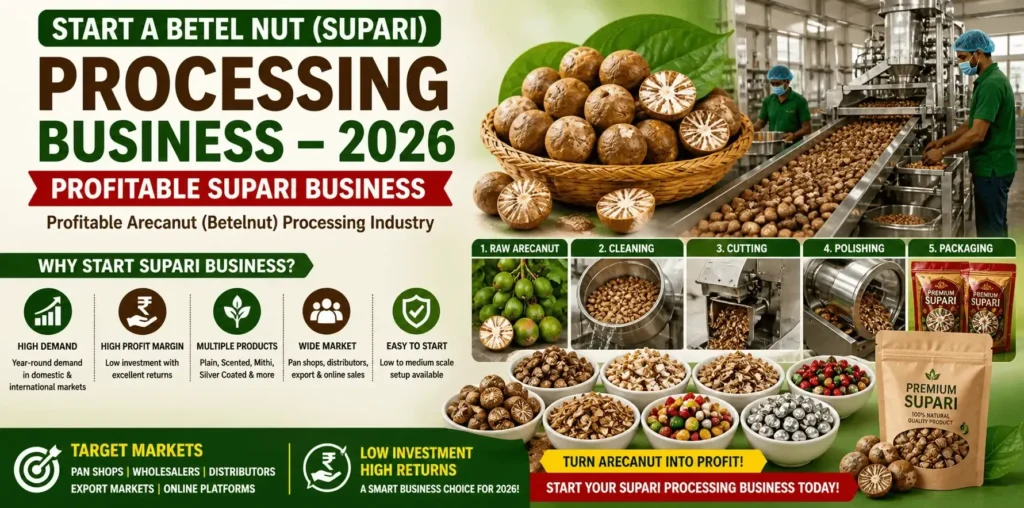
If you’re looking to enter a traditional and profitable agro-based industry, it’s time to start a Betel Nut Supari Processing Business. Betel Nut, also known as areca nut, is widely consumed in India and Southeast Asia in various processed forms – supari, scented supari, gutkha base, and pan masala mix. With a consistently high demand in both rural and urban areas, entrepreneurs can start a Betel Nut processing business to generate sustainable income while adding value to a readily available raw agricultural product. Understanding the Betel Nut Market The decision to start a Betel Nut processing business is backed by the product’s deep cultural roots and high consumption rate in India, Bangladesh, Nepal, and parts of Southeast Asia. India is one of the largest producers and consumers of Betel Nut, making it an ideal base for setting up processing units. As the nut is used in various forms—raw, boiled, dried, flavored, and roasted—it offers scope for product variety, regional customization, and brand development. The demand for premium-quality processed supari is growing in urban markets, where packaging, hygiene, and flavor profile make a big difference in consumer choice. This allows entrepreneurs to position their brand differently even in a saturated market. Types of Betel Nut Processing When you start a Betel Nut processing business, you can choose from several processing methods: 1. Boiled Supari: Nuts are boiled and dried to enhance shelf life and create a soft chewable texture.2. Dried Supari (Chali): Sun-dried whole nuts are cut into thin slices and packed raw or roasted.3. Flavored Supari: Processed slices are coated with sugar, menthol, spices, or cardamom for use in pan masala.4. Masala Supari: Prepared by mixing with saffron, silver leaf (varak), or special aromatic blends.5. Roasted Supari: Dried slices are roasted for enhanced taste and shelf life. Each variant caters to different regional tastes and age groups, offering wide market penetration if you start a Betel Nut processing business with a diverse product line. Raw Materials and Machinery Required To start a Betel Nut processing business, you need access to quality raw areca nuts sourced from Kerala, Assam, Karnataka, or North-Eastern states. In addition, you’ll require: Betel Nut cutting machines (manual or automatic) Roasting pans or driers Flavor mixing drums Polishing and grading machines Weighing and sealing machines Hygienic packaging material (pouches, jars, boxes) A small unit can be start with basic machinery under ?5 lakhs, while an automated plant may require ?10–25 lakhs depending on scale and quality expectations. Processing Flowchart Here’s a simplified workflow to start a Betel Nut Supari processing business: Procurement of raw nuts Cleaning and sorting Cutting into uniform pieces Drying or roasting Flavor mixing (optional) Polishing and grading Packing and labeling The process can be modified based on your product line—raw, flavor, or premium aromatic supari. Regulatory and Legal Considerations Before you start a Betel Nut Supari processing business, obtain the following: FSSAI license (Food Safety and Standards Authority of India) GST registration Factory license or Udyam registration (for MSME benefits) Trademark for brand protection Pollution control board NOC (if required) Ensure hygiene and food safety compliance to gain trust and scalability in both wholesale and retail markets. Target Market and Distribution Strategy Your target audience includes: Retail pan shops Wholesale grocery traders Pan masala manufacturers Online customers through e-commerce platforms Institutional buyers like hotels, wedding caterers, and snack companies A strong regional distribution network combined with smart packaging and branding can help your products reach Tier 1 and Tier 2 cities. Once your unit gains traction, you can start a Betel Nut Supari processing business with multiple product categories and premium offerings. Profitability and ROI The profit margin in the Betel Nut Supari processing business ranges from 20% to 35% depending on scale and processing type. Raw dried supari has lower margins but high volumes, while flavored or premium supari has higher margins and branding potential. On average, small units can recover investment within 12–18 months. Branding and Product Innovation With growing health awareness, customers are shifting to hygienic and well-packaged alternatives. If you start a Betel Nut Supari processing business with a focus on cleanliness, attractive design, and varied flavors, your brand can command higher retail prices. You can also experiment with: Sugar-free supari for diabetic consumers Herbal or ayurvedic variants Paan flavor infusions Gift packs for festivals and weddings Export Potential Processed Betel Nut has strong export demand in Nepal, Bangladesh, Myanmar, UAE, and other countries with Indian diaspora. You can register with APEDA, get IEC (Import Export Code), and connect with global buyers via platforms like Alibaba or IndiaMART to take your products global. Conclusion To Nut or Supari processing business is to invest in a time-tested, culturally ingrained, and consistently profitable agro-processing venture. With low capital requirements, scalable infrastructure, and strong demand across regions, this business is ideal for entrepreneurs looking to enter the FMCG and agro-based sector with minimal risk. References and Useful Government / Institutional Links The following official government and institutional resources are recommended for further reading and for direct application to the schemes discussed in this article. Startup India – Official Portal –https://www.startupindia.gov.in/ Ministry of Micro, Small & Medium Enterprises (MSME) –https://msme.gov.in/ Udyam Registration Portal –https://udyamregistration.gov.in/ Department for Promotion of Industry and Internal Trade (DPIIT) –https://dpiit.gov.in/ Small Industries Development Bank of India (SIDBI) –https://www.sidbi.in/ MUDRA / PMMY Official Portal – https://www.mudra.org.in/ CGTMSE Official Portal –https://www.cgtmse.in/ Ministry of Micro, Small & Medium Enterprises –https://msme.gov.in/ JanSamarth Portal (Government Loan Schemes) –https://www.jansamarth.in/ Niir Project Consultancy Services (NPCS) –https://www.niir.org/ Contact Us
Business Investment Opportunities in Bentonite
The growing demand for natural minerals has created exciting business investment opportunities in Bentonite, a versatile clay with applications across multiple sectors. Bentonite, primarily composed of montmorillonite, exhibits remarkable properties such as water absorption, swelling, viscosity, and binding—making it a valuable component in drilling fluids, foundry sands, animal feed, cosmetics, construction, and pharmaceuticals. With rising consumption in both domestic and global markets, the business investment opportunities in Bentonite are increasingly attracting attention from entrepreneurs, exporters, and industrial manufacturers seeking profitable ventures in the mineral-based industry. Why Invest in the Bentonite Business? The business investment opportunities in Bentonite are backed by rising global demand, diverse industrial use-cases, and an abundant raw material supply—especially in countries like India, China, and the USA. As industries move toward more sustainable and cost-effective raw materials, Bentonite is becoming a preferred natural mineral due to its multifunctional benefits and relatively low processing cost. Whether you’re looking to start a small beneficiation unit, a full-fledged processing plant, or an export business, Bentonite provides scalable and sustainable investment potential. Applications Driving Bentonite Demand Oil and Gas Drilling One of the largest consumers of Bentonite is the oil and gas industry, where it’s used in drilling fluids to maintain borehole stability, cool drill bits, and carry rock cuttings to the surface. This usage presents huge business investment opportunities in Bentonite, especially for processors producing high-grade sodium Bentonite. Iron Ore Pelletizing In the steel industry, Bentonite is used as a binding agent for iron ore fines. With growing steel production worldwide, especially in India, China, and the Middle East, the demand for pellet-grade Bentonite is climbing steadily. Foundry Applications Bentonite serves as a critical binder in green sand molds for metal casting. Foundries across automotive and heavy engineering sectors rely on it for smooth casting processes. Entrepreneurs can tap this demand with a specialized Bentonite blend for foundry use. Construction and Civil Engineering In construction, Bentonite slurry is used for pile foundation boring and tunneling. It is also a preferred sealing material in geotechnical applications and waterproofing membranes. Agriculture and Animal Feed Processed Bentonite is used as a soil conditioner and detoxifying agent in animal feed. This opens doors for investment in agri-grade and feed-grade Bentonite, especially in rural markets. Cosmetics and Pharmaceuticals Cosmetic-grade Bentonite is valued for its ability to cleanse, detoxify, and absorb oil. With the growth of herbal and natural skincare products, there’s rising demand for purified Bentonite in the wellness and cosmetic sectors. Key Business Models in Bentonite Sector Mining and Raw Bentonite Supply Investors can start with the acquisition or leasing of Bentonite-rich land, especially in regions like Gujarat (India), Wyoming (USA), or Turkey. Raw Bentonite can then be sold directly to processors or exported. Processing and Beneficiation Plant A mid-scale business model involves setting up a Bentonite processing unit with machinery for drying, grinding, micronizing, and packaging. This adds value and allows segmentation into different grades (API, foundry, agriculture, cosmetics). Export Business Countries like Indonesia, UAE, Japan, and several African nations import processed Bentonite for multiple industries. With proper certifications, exporters can supply customized Bentonite grades internationally. Private Labeling and Packaging Entrepreneurs can invest in small-scale packaging of cosmetic and wellness products using cosmetic-grade Bentonite. Bentonite face masks, healing clay powders, and detox packs are trending in e-commerce platforms. Machinery and Setup Requirements For a standard processing unit catering to the business investment opportunities in Bentonite, the following infrastructure and machinery are essential: Jaw crushers and hammer mills (for primary crushing) Rotary or fluid bed dryers (for moisture reduction) Grinding mills (Raymond or ball mills) Pulverizers and micronizers (for fine mesh output) Rotary screens or vibratory sieves Weighing, mixing, and packing units Dust collectors and safety systems Factory space of around 10,000 to 20,000 sq. ft. is sufficient for a medium-scale setup. Investment and Profitability A small-to-medium scale Bentonite processing plant requires an initial investment ranging from ?50 lakhs to ?3 crores depending on capacity and product specialization. With growing demand and value addition at every stage (raw ? processed ? packaged), a processor can expect gross profit margins of 25%–35%, especially when catering to specialized grades or export markets. Return on investment (ROI) is achievable within 18–24 months under efficient operational management and market outreach. Regulatory and Compliance Factors To operate in the business investment opportunities in Bentonite, ensure you meet the following: Environmental clearances for mining or mineral handling Bureau of Indian Standards (BIS) certification for industrial grades APEDA or DGFT licenses for export-oriented units FDA or cosmetic safety certifications for skincare products GST registration and pollution control board approvals Having an in-house testing lab can greatly enhance product credibility, especially when dealing with pharmaceutical or cosmetic sectors. Marketing and Distribution Strategy Building a strong distribution network is key to succeeding in the Bentonite industry. Recommended channels include: B2B platforms like IndiaMART, TradeIndia, and Alibaba Government e-marketplaces (GeM) for domestic orders Direct partnerships with foundries, drilling companies, and agri-input suppliers Export agents and international distributors White labeling for wellness and skincare startups Additionally, digital marketing, technical datasheets, product samples, and case studies will help you win long-term industrial clients. Future Trends and Innovation Potential The business investment opportunities in Bentonite will continue to grow as industries seek natural and efficient materials for various applications. Future growth areas include: Nano-Bentonite formulations for advanced oil drilling Organic-certified Bentonite for agro and cosmetic use High-purity Bentonite for pharmaceutical suspensions Ready-to-use Bentonite-based skincare products Eco-friendly Bentonite waterproofing and insulation products Investing in R&D and quality enhancement will keep your business future-proof and allow entry into premium markets. Conclusion The business investment opportunities in Bentonite offer an ideal mix of sustainability, scalability, and profitability. Whether you aim to mine, process, export, or manufacture value-added products, the versatility and high demand of Bentonite make it a smart industrial investment. With growing global awareness toward sustainable raw materials, backed by strong industrial usage and local availability, Bentonite provides a low-risk, high-reward business opportunity for both new and seasoned investors. Niir Project Consultancy Services An ISO 9001:2015 Company 106-E,
Production of Polyanionic Cellulose (PAC)
The production of Polyanionic Cellulose (PAC) plays a vital role in several industries, especially in oil and gas drilling, pharmaceuticals, and construction. Polyanionic Cellulose is a water-soluble cellulose ether derived from natural cellulose through chemical modification. Known for its superior thickening, stabilizing, and water retention properties, it is a preferred additive in drilling fluids and other industrial formulations. With the rising demand for environment-friendly and efficient polymer-based products, the production of Polyanionic Cellulose has emerged as a profitable and sustainable industrial venture. Understanding the Scope of Polyanionic Cellulose Manufacturing The global demand for PAC is steadily increasing due to its diverse applications. The production of Polyanionic Cellulose offers manufacturers an entry into industries that demand high-performance, biodegradable polymers. This includes not only the energy sector but also food processing, pharmaceuticals, adhesives, paints, and personal care products. Its role in improving fluid loss control in drilling operations makes it indispensable to modern oilfield activities. PAC is mainly produced in two grades: low-viscosity and high-viscosity. Each grade has unique functions, particularly in drilling mud formulations and fluid engineering. Entrepreneurs and businesses entering the production of Polyanionic Cellulose can cater to both domestic and international markets with the right technology and quality control. Raw Materials Required for Polyanionic Cellulose Production The core raw material in the production of Polyanionic Cellulose is purified cellulose, often derived from wood pulp or cotton linters. This cellulose undergoes chemical treatment with reagents such as monochloroacetic acid or sodium monochloroacetate in an alkaline medium. The reaction replaces some hydroxyl groups in cellulose with carboxymethyl groups, converting it into a water-soluble anionic polymer. Key raw materials include: Purified cellulose Sodium hydroxide Monochloroacetic acid or sodium monochloroacetate Isopropanol or methanol (as a solvent) Water for neutralization and washing Quality of input cellulose and purity of reagents determine the overall product grade, viscosity, and solubility—critical factors in performance-sensitive applications like oilfield services. Manufacturing Process of Polyanionic Cellulose The production of Polyanionic Cellulose typically involves a batch or semi-continuous process. Here’s a general overview: Alkalization: Cellulose is treated with sodium hydroxide to activate its structure and prepare it for etherification. Etherification: The alkali cellulose reacts with monochloroacetic acid or sodium monochloroacetate to form sodium carboxymethyl cellulose. Neutralization: The slurry is neutraliz using acids or water to bring the pH to a stable level. Washing and Purification: The product is washed with alcohol or water to remove by-products, salts, and unreacted materials. Drying: The wet PAC is dried using rotary or flash dryers. Milling and Sieving: The dried PAC is milled and sieved into fine powders or granules, based on customer specifications. Packaging: Finally, the PAC is packed in moisture-resistant bags for storage and shipping. Maintaining consistent degree of substitution (DS) and viscosity is essential during the production of Polyanionic Cellulose to meet industry-specific application standards. Applications and End-Use Industries Polyanionic Cellulose has wide-ranging applications, including: Oil and Gas Drilling: Used in drilling fluids as a fluid loss reducer and viscosity modifier. It stabilizes boreholes and reduces friction in the drilling process. Pharmaceuticals: Serves as a binder, stabilizer, and thickener in tablets, syrups, and ointments. Construction: Acts as a water retention agent and plasticizer in cement and mortar mixtures. Cosmetics and Personal Care: Used in shampoos, lotions, and gels as a thickening and stabilizing agent. Food Industry: Approved PAC grades are used in food as emulsifiers and thickeners. Due to its non-toxic, non-allergenic, and biodegradable nature, PAC is favored in industries shifting toward greener solutions. Investment and Setup Requirements The production of Polyanionic Cellulose can be establish on a medium scale with the following basic requirements: Plant area: 10,000–15,000 sq. ft. Machinery: Reactors, mixers, filtration systems, dryers, milling units, quality control lab Manpower: Chemists, plant operators, quality analysts, packers Estimated Investment: ?1.5 to ?4 crores (depending on automation and capacity) Production Capacity: Varies between 100 to 500 tons/month Given the continuous demand in international markets and the product’s shelf stability, the business promises long-term returns and export potential. Market Trends and Export Opportunities Global trends favor the production of Polyanionic Cellulose due to the need for eco-friendly and water-soluble polymers. Countries involved in major oil exploration projects, such as the USA, Canada, Russia, and Gulf nations, are consistent buyers of PAC, especially drilling-grade types. India, with its strong chemical manufacturing backbone and cost-effective labor, has the potential to become a leading exporter of Polyanionic Cellulose. By adhering to international quality standards and certifications like ISO and API (American Petroleum Institute), manufacturers can tap into high-value global contracts. Quality Standards and Testing To maintain competitiveness in the production of Polyanionic Cellulose, rigorous quality control is essential. Testing parameters include: Degree of substitution (DS) Viscosity (Brookfield method) Moisture content pH in aqueous solution Sodium chloride content Particle size Lab-scale testing and documentation ensure the product meets the end-user’s exact technical requirements, especially in critical applications like offshore drilling or pharmaceutical formulations. Marketing and Distribution Effective marketing strategies for this business include: Partnering with oilfield services companies and pharmaceutical firms Attending international chemical expos Listing on B2B portals like IndiaMART, Alibaba, and TradeIndia Building an in-house website showcasing applications, certifications, and test reports Supplying PAC to distributors for resale under private labeling Packaging and labeling should comply with regulatory norms and safety data sheet (SDS) guidelines to ensure smooth international trade. Sustainability and Eco-Advantage Polyanionic Cellulose is a biodegradable polymer, making its production process attractive to industries looking for sustainable alternatives to synthetic polymers. Its derivation from natural cellulose ensures a renewable base, which is a plus in today’s environmentally-conscious markets. Manufacturers can further enhance eco-credentials by minimizing solvent use and adopting water-efficient purification methods. Conclusion The production of Polyanionic Cellulose represents a smart investment for manufacturers seeking entry into high-demand, high-utility chemical sectors. With versatile applications, scalable manufacturing, and growing domestic and export needs, PAC manufacturing is a stable and profitable venture. Entrepreneurs with knowledge in chemical processing or industrial operations can capitalize on this opportunity by setting up modern, efficient, and eco-compliant PAC units. As industries worldwide continue to shift toward sustainability and
Start a Profitable Business of LV Control and Power Cables, MV Cables
The profitable business of LV control and power cables, MV cables is gaining significant momentum in both domestic and international markets. As the world continues to modernize and industrialize, demand for reliable electrical infrastructure has increased manifold. From residential buildings to heavy industries, every setup requires power distribution systems—and that’s where these cable types become indispensable. Entrepreneurs looking to step into a high-demand, long-term, and technology-driven sector should consider investing in the business of LV control and power cables, MV cables. Market Overview and Business Potential The profitable business of LV control and power cables, MV cables is fueled by rapid urbanization, smart city projects, renewable energy expansion, and upgrades in national grid infrastructure. LV (Low Voltage) cables are primarily used for domestic and light commercial applications, whereas MV (Medium Voltage) cables are used in industrial and high-load environments like substations, manufacturing units, and mining operations. The global cable market is expected to reach billions in value within the next few years, offering enormous export potential for Indian manufacturers. Government schemes like “Make in India” and infrastructure incentives provide added support for new entrants in this domain. Key Types of Cables and Their Applications LV Control and Power Cables Low Voltage cables are typically rated up to 1,000 volts and are used in home wiring, control panels, lighting systems, and communication circuits. These are essential for electrical installations in homes, offices, hospitals, and hotels. LV cables can be produced using copper or aluminum conductors and are designed to operate in safe environments. MV Cables Medium Voltage cables are used to transmit electricity at voltages between 1 kV and 33 kV. These are ideal for industries, transformers, and underground power distribution. MV cables require higher insulation, tougher sheathing materials, and strict compliance with IS/IEC standards. The production process also includes more advanced testing protocols compared to LV cables. Machinery and Manufacturing Process Starting a profitable business of LV control and power cables, MV cables requires a well-equipped manufacturing unit with machinery such as: Conductor stranding machines Extrusion lines (for insulation and sheathing) Armoring machines (for protective outer layer) High voltage testing units Cable coiling and cutting machines The production process includes drawing raw wire, stranding, insulation with PVC/XLPE, sheathing, armoring, and final packaging. Quality checks are mandatory at every stage to ensure compliance with national and international standards. Raw Materials Required To set up a cable manufacturing unit, the following raw materials are essential: Copper or aluminum conductors XLPE (cross-linked polyethylene) or PVC for insulation Steel tapes or wires for armoring (MV cables) PVC compound for outer sheathing Binding tapes, fillers, and packing materials Sourcing high-quality raw materials is critical, especially for MV cables where the margin of error must be extremely low due to higher voltage applications. Investment and Setup Requirements The initial investment for a small-to-medium scale unit in the business of LV control and power cables, MV cables ranges from ?1 crore to ?5 crores depending on plant capacity, automation level, and product range. Space requirement: approx. 10,000 to 30,000 sq. ft.Manpower: Engineers, machine operators, quality control specialists, and administrative staff This setup can yield an ROI of 20%–30% annually with high scalability over time. Regulatory Compliance and Certifications For credibility and market access, your unit must adhere to: BIS certification (IS 1554, IS 7098 standards) ISO 9001:2015 for quality management Routine, type, and special tests as per IEC/IS codes Environmental and fire-retardant norms (for safety cables) Complying with these standards will help your business win large government and private tenders. Target Market and Customer Segments The profitable business of LV control and power cables, MV cables serves a wide range of sectors: Real estate developers Electrical contractors Infrastructure companies Renewable energy projects (solar and wind farms) Government and municipal bodies Power utilities and state electricity boards Industrial plants and substations Additionally, with a strong distributor network, you can tap into Tier 2 and Tier 3 cities, where rural electrification is gaining pace. Export Opportunities Countries in Africa, Southeast Asia, and the Middle East are heavily investing in electrification projects. This opens up excellent export potential for Indian manufacturers who produce cost-effective, durable, and standard-compliant cables. Participating in global trade expos and listing with government export promotion councils can help you access these markets. Profit Margins and Growth Potential LV cable production yields around 15%–20% gross margin, while MV cables, due to their complex manufacturing process and high-value demand, can offer margins up to 25%–30%. Moreover, once your plant is established, you can diversify into: High Voltage (HV) cables Fiber optic cables Instrumentation and control cables Fire-resistant and solar cables Such product line expansion will increase your profitability and position your brand as a comprehensive cable solution provider. Marketing and Branding Strategy To succeed in this sector, a strong B2B marketing strategy is essential. This includes: Creating a brand website and digital portfolio Participating in industry trade shows and government e-marketplace (GeM) Building relationships with EPC contractors and electrical consultants Leveraging LinkedIn and business networks for B2B outreach Offering product catalogs, certifications, and test reports transparently A dedicated sales team and after-sales support will build credibility and secure recurring orders. Challenges and Solutions Challenges in the Bicycle and Cycle Rickshaw Manufacturing Industry include: Price volatility in copper and aluminum Competition from Chinese imports Lengthy certification processes Maintaining consistent product quality To counter these, manufacturers can: Sign bulk-rate contracts with raw material suppliers Automate quality control systems Focus on niche or customized cable types Apply for export and infrastructure development subsidies Conclusion The profitable business of LV control and power cables, MV cables offers tremendous scope for entrepreneurs who want to enter a robust, utility-driven, and high-demand industry. As India and other nations continue to upgrade their power infrastructure and expand smart cities, the need for quality electrical cabling will only grow. With the right investment, compliance, and marketing strategy, your business can generate strong returns, build a solid brand reputation, and even expand into global markets. Niir Project Consultancy Services An ISO 9001:2015 Company 106-E, Kamla Nagar,
Investment Opportunity in Bicycle and Cycle Rickshaw Manufacturing Industry
The Bicycle and Cycle Rickshaw Manufacturing Industry has seen a resurgence in recent years, driven by eco-conscious mobility solutions, rising fuel prices, and growing urban congestion. As cities worldwide promote greener and healthier transportation options, both bicycles and traditional cycle rickshaws are gaining popularity not just in developing nations, but also in sustainable urban planning globally. Entrepreneurs looking for a manufacturing business with relatively low capital investment and long-term relevance should seriously consider entering the Bicycle and Cycle Rickshaw Manufacturing Industry, which blends traditional demand with modern innovation. Opportunities and Growth Scope in the Bicycle and Cycle Rickshaw Manufacturing Industry The Bicycle and Cycle Rickshaw Manufacturing Industry is one of the most resilient and accessible manufacturing sectors. It supports a broad customer base, from students and daily commuters to small-scale transport workers. With government incentives on non-motorized transport and an increasing focus on carbon-neutral cities, this industry presents a unique opportunity for small and medium-scale entrepreneurs. Rising Demand for Bicycles in Urban Areas Bicycles are no longer just a low-cost mode of transport; they’re now promoted as health-conscious and eco-friendly alternatives to motor vehicles. In metro cities and tier-2 towns, public bike-sharing systems and dedicated cycling lanes are expanding. This has significantly boosted the scope of the Bicycle and Cycle Rickshaw Manufacturing Industry for manufacturers supplying city bikes, mountain bikes, electric bicycles, and children’s bicycles. Cycle Rickshaws – A Cultural and Economic Essential Cycle rickshaws, particularly in India, Bangladesh, Nepal, and Southeast Asia, still serve as essential last-mile transportation. Whether it’s for ferrying passengers or delivering goods in dense urban settings, they offer employment to thousands. Manufacturing robust, lightweight, and ergonomically improved rickshaws opens up consistent demand for suppliers. Electric Rickshaws – The Hybrid Evolution While the traditional rickshaw market remains strong, electric cycle rickshaws (e-rickshaws) are growing fast. Manufacturers who already work in the Bicycle and Cycle Rickshaw Manufacturing Industry can easily expand into this adjacent segment by incorporating basic electric drive systems and batteries. This hybrid offering caters to drivers who want higher efficiency and earnings with the same non-license-based driving model. Government Support for Non-Motorized Vehicles Across several Indian states, incentives, subsidies, and urban development policies encourage the adoption of non-polluting transport like bicycles and rickshaws. MSMEs entering the Bicycle and Cycle Rickshaw Manufacturing Industry may qualify for government schemes, low-interest loans, and priority procurement in public bike-sharing projects. Local Manufacturing and Job Creation Unlike high-tech automobile production, the cycle and rickshaw segment can be manufactured locally with simple tools, jigs, and assembly setups. This makes it ideal for small-scale manufacturers in both rural and urban clusters. The supply chain can support welding workers, painters, mechanics, and metal fabricators—all contributing to localized employment. Raw Materials and Equipment Needed To start a unit in the Bicycle and Cycle Rickshaw Manufacturing Industry, the basic materials include steel tubes, metal rods, rubber tires, brake components, bearings, and upholstery materials. Basic manufacturing machinery like welding machines, pipe benders, paint booths, and hand tools are sufficient for a low to mid-scale setup. For e-rickshaws, battery packs, motor kits, and controllers are additional components required. Customization and Niche Markets One of the major advantages of this industry is its potential for customization. You can cater to specific market needs: Cargo rickshaws for intra-city goods movement Tourist cycle rickshaws with canopy designs and seat cushions Ladies bicycles with lightweight frames and baskets Kids and sports bicycles with add-on gears and graphics Such diversification helps a manufacturing unit stand out and build a loyal customer base. Low Entry Barriers with High Scalability The entry-level investment in the Bicycle and Cycle Rickshaw Manufacturing Industry is significantly lower than in other vehicle manufacturing businesses. You can start with a small fabrication and assembly unit and gradually scale up to automated frame welding, robotic painting, and in-house part production. Many successful brands in India started from backyard workshops. Export Potential and Global Demand Developing countries across Africa and South-East Asia still rely heavily on bicycles and cycle rickshaws for both urban and rural transportation. Lightweight, affordable cycles are in constant demand in export markets. Indian manufacturers who maintain quality can tap into this market through government-backed export promotion councils and trade fairs. After-Sales Service and Parts Business Once you start a bicycle or rickshaw brand, the after-sales market for replacement parts—chains, seats, frames, brakes, lights, tires—can be a steady source of recurring revenue. A well-distributed dealer network and servicing points will ensure customer retention and long-term brand trust. Challenges and Solutions Like any other sector, the Bicycle and Cycle Rickshaw Manufacturing Industry also comes with a few challenges—rising raw material costs, competition from imported Chinese products, and skilled labor shortage. These can be mitigated by: Bulk purchasing from domestic steel and rubber suppliers Designing low-maintenance, easy-to-assemble models Partnering with ITIs for training and workforce development Conclusion The Bicycle and Cycle Rickshaw Manufacturing Industry is not just a legacy sector but a future-facing opportunity as well. With rising awareness about health, sustainability, and affordable mobility, this industry fits perfectly into the global shift toward green living and last-mile logistics. Entrepreneurs can enter the market with modest investment, build a sustainable business, and contribute meaningfully to both the environment and the economy. Whether you are planning a small fabrication shop or envisioning a large-scale bicycle brand, this is the right time to start. Backed by the right marketing, product innovation, and community engagement, success in this industry is both achievable and rewarding. Niir Project Consultancy Services An ISO 9001:2015 Company 106-E, Kamla Nagar, Opp. Spark Mall, New Delhi-110007, India. Email: npcs.ei@gmail.com , info@entrepreneurindia.co Tel: +91-11-23843955, 23845654, 23845886, 8800733955 Mobile: +91-9811043595 Website: www.entrepreneurindia.co , www.niir.org Contact Us
Small and Medium Scale Industries, Project Profiles for Entrepreneurs
In today’s dynamic business environment, Small and Medium Scale Industries (SMEs or MSMEs) play a crucial role in driving economic growth, generating employment, and encouraging innovation. These industries are the backbone of many developing economies, including India, as they contribute significantly to GDP and exports. Whether operating in manufacturing, services, or agriculture-related sectors, small and medium enterprises provide opportunities for entrepreneurship at local and national levels. The flexibility, low entry barriers, and potential for scalability make Small and Medium Scale Industries a preferred choice for aspiring business owners and investors. Key Opportunities and Sectors for Small and Medium Scale Industries Small and Medium Scale Industries thrive across a wide range of sectors, each offering a unique blend of growth potential and return on investment. These industries are well-suited for entrepreneurs seeking manageable capital requirements, easy operational structures, and diverse market reach. Below are some of the most promising sectors to explore. Food Processing Units Food processing is one of the most profitable domains for small industries. Entrepreneurs can start ventures like spice grinding, pickling, frozen snacks, or fruit pulp extraction. As consumer demand for packaged and processed foods rises, small food units can cater to local and export markets alike with minimal setup costs and quick returns. Textile and Garment Manufacturing Clothing, stitching, and textile-related businesses make up a significant portion of India’s Small and Medium Scale Industries. Entrepreneurs can launch units for readymade garment production, handloom weaving, or specialized products like uniforms and ethnic wear. With e-commerce integration, even small-scale tailors can now reach global customers. Herbal and Organic Products With health consciousness growing worldwide, SMEs that focus on organic cosmetics, herbal teas, or ayurvedic supplements are booming. These industries benefit from low raw material costs, strong demand, and government encouragement. Branding and packaging play a major role in expanding reach for these products. Paper Products Manufacturing From paper bags and notebooks to disposable plates and cups, the paper product industry is thriving. Governments banning plastic have fueled demand for eco-friendly alternatives, making this a highly viable domain for small setups. With semi-automatic machines, even single-person units can scale over time. Plastic Recycling Units Recycling and sustainability-focused businesses are rapidly gaining traction. Small plastic recycling units can turn waste into pellets, pipes, or raw materials used by bigger manufacturers. It’s a scalable and environmentally responsible segment within Small and Medium Scale Industries. Engineering and Fabrication Workshops For those with technical expertise, setting up small fabrication units that manufacture parts, tools, or machinery for construction and agriculture can be highly rewarding. These setups require skilled labor but offer good margins and repeat demand, especially in industrial zones. Packaging Industry SMEs in the packaging sector manufacture corrugated boxes, flexible pouches, shrink wraps, and product labels. With the growth of FMCG, online retail, and exports, small packaging units are in constant demand and can quickly become profitable with bulk orders. Bakery and Confectionery Units Starting a bakery, cookie brand, or traditional sweets manufacturing unit is a great idea for entrepreneurs with culinary interest. It offers good margins, local appeal, and growth potential through modern branding and delivery partnerships. This business can start from home and expand into commercial kitchens. Woodworking and Furniture Making Carpentry businesses focusing on customized furniture, modular kitchens, or wooden décor are excellent small industry options. Local sourcing, customized designs, and online selling platforms make it easier than ever to serve interior designers, offices, and homeowners. Printing and Packaging Design Small-scale printing presses offering business cards, banners, brochures, or packaging designs can operate in urban areas with strong B2B demand. With digital printers and design software, the investment is manageable and profitability is high, especially with recurring client work. Mobile Repair and Refurbishment As smartphone penetration increases, mobile repair services and resale of refurbished devices are rapidly expanding. These services are especially profitable in semi-urban areas where affordability is key. This is a skill-based, low-investment sector in Small and Medium Scale Industries. Leather Product Manufacturing SMEs producing leather wallets, belts, bags, and shoes are in high demand domestically and internationally. With proper machinery and artisan support, one can create handcrafted items or small-scale manufacturing units that appeal to both B2C and export buyers. Dairy and Milk-Based Product Units Setting up mini-dairy processing units to produce curd, paneer, ghee, or flavored milk products ensures steady demand. With local milk supply and proper hygiene, such ventures are ideal for rural or semi-rural entrepreneurs looking to tap into FMCG markets. Auto Components Manufacturing From nuts and bolts to specific vehicle components, small-scale units that cater to the auto industry supply chain can be highly profitable. This segment requires moderate investment and adherence to quality standards but offers excellent scalability. Toy and Stationery Manufacturing Toys, puzzles, art supplies, and school kits are in constant demand. SMEs can cater to educational institutions or sell via online marketplaces. With a focus on eco-friendly or educational value, this sector holds immense growth opportunities. Conclusion The future of Small and Medium Scale Industries looks bright, driven by technology adoption, consumer awareness, and government incentives like MSME registration, financial aid, and tax exemptions. These industries serve as stepping stones for entrepreneurship, community development, and job creation. Choosing the right industry based on your location, skills, and investment capacity is key. From traditional sectors like food and garments to modern ventures like recycling and tech repair, there are countless ways to start your journey. Whether you are starting small or preparing to scale, SMEs offer stability, profitability, and purpose in today’s entrepreneurial ecosystem. Niir Project Consultancy Services An ISO 9001:2015 Company 106-E, Kamla Nagar, Opp. Spark Mall, New Delhi-110007, India. Email: npcs.ei@gmail.com , info@entrepreneurindia.co Tel: +91-11-23843955, 23845654, 23845886, 8800733955 Mobile: +91-9811043595 Website: www.entrepreneurindia.co , www.niir.org Contact Us