
The Green Manufacturing Revolution: Paper Water Bottles, Bioplastics & Biodegradable Products
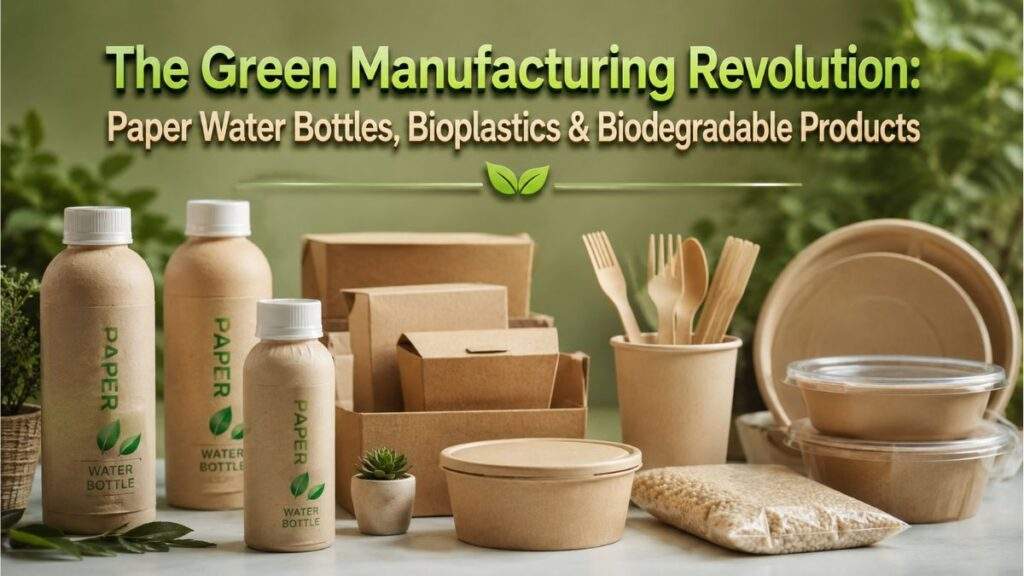
Biodegradable products manufacturing in India Plastic pollution is no longer just an environmental problem; it’s one of today’s greatest business opportunities. Governments, consumers and big companies around the globe are phasing out conventional plastics and adopting more eco-friendly alternatives like biodegradable plastic. The green manufacturing revolution is generating a whole new industrial economy, ranging from paper water bottles to compostable food packaging. Sustainability was a somewhat esoteric idea a couple of years ago. Today it shapes the way that companies produce their goods, how restaurants package their food and even how consumers choose which brands to support. This shift is occurring at an accelerated pace, due to increased global awareness of the long-term environmental effects of plastic waste, especially on oceans, soil, and human health. India produces millions of tones of plastic waste in a year. Much of this waste is hard to recycle and will eventually be dumped in landfills, rivers and oceans. To mitigate the issue, the Government of India has banned a large number of single-use plastic items from July 2022. This policy sparked immediate need for biodegradable alternatives and offered tremendous opportunity for manufacturers. As a result, industries are now actively searching for sustainable packaging solutions such as: Biodegradable carry bags Compostable food containers Paper straws Sugarcane bagasse plates Starch-based bioplastics Paper water bottles These products are not anymore experimental products. They are being produced commercially and sold all over the world. The global bioplastics market is already larger than $1 billion and is projected to rise sharply during the next 10 years. Get Detailed Insights from This Book: Paper Water Bottles and Bioplastics Manufacturing Handbook Why India Has a Huge Advantage India is placed in a very good position in order to be a global name in manufacturing biodegradable products. There are plenty of raw materials of agriculture in the country that can be processed into environmentally friendly raw material. In India some of the most important raw materials are: Sugarcane bagasse Rice husk Corn starch Cassava starch Potato starch Wheat bran Agricultural residues can be utilized in the production of sustainable packaging and biodegradable products, rather than as waste. This not only helps to minimize environmental impacts but also generates new livelihood and business opportunities for farmers and rural industries. The other great benefit is the low-cost manufacturing setup in India. Indian biodegradable products are very competitive in the global markets as compared to that of Europe or North America as production costs are much low in India as compared to them. Paper Water Bottles: The Next Big Packaging Innovation Paper water bottles are receiving vast attention worldwide among all eco-friendly packaging products. As consumers become more environmentally conscious of packaging, large beverage companies are already investing in the technology for paper bottles. Paper water bottles are designed with: A paper shell outer shell The inside lining is biodegradable or recyclable. Eco-friendly barrier coatings The idea is simple: reduce plastic usage while maintaining the convenience of bottled beverages. The combination of relatively low competition and increased demand makes paper water bottles particularly appealing to Indian entrepreneurs. Environmentally friendly packaging is a quick way for consumers to make sense of environmentally friendly brands and companies, helping to establish trust and a good reputation. Over the next couple of years, the hospitality sector, airports, luxury retailers and eco-conscious beverage brands will be significant purchasers of paper bottle packaging. The Rising Demand for Biodegradable Packaging The biggest business opportunity is to replace common plastic products with alternatives that are more environmentally friendly. The following industries are contributing to this demand: Restaurants and cafés Food delivery companies Cloud kitchens Hotels and resorts Hospitals Retail stores FMCG companies Airline catering services Consumers and government regulations are forcing many businesses to decrease their use of plastic. Consequently, plates, bowls, trays and carry bags that biodegrade are becoming more popular. Other biodegradable plastics, such as PLA (Polylactic Acid) and PHA (Polyhydroxyalkanoate), are also becoming popular due to their durability and biodegradability. Access Complete Business Plan: Biodegradable & Eco-Friendly Plastics and Packaging Challenges in the Industry The market for biodegradable products is huge, but entrepreneurs need to know the difficulties of entering the market. The greatest problem is the production cost. The prices of biodegradable products are generally higher than those of conventional plastic products. In markets where price is a major consideration, consumers could be reluctant unless sustainable alternatives are mandated by regulations. An additional challenge is certification. Biodegradable or compostable products are those that comply with the following recognized standards: EN 13432 ASTM D6400 BIS certification in India Manufacturers might encounter challenges in exports and in commercial sales on a large scale without proper certification. Another factor is the supply of raw materials is not consistent. The key to sustaining product quality and price stability is the dependable sourcing network a business can have. Opportunities for Entrepreneurs and Startups With all of the difficulties, the future of this industry is looking bright. There are various levels of investment that entrepreneurs can make within the sector, depending on their resources and expertise. Small-scale opportunities include: Compostable cups Sugarcane bagasse plates Paper straws Biodegradable carry bags Medium & large opportunities: PLA manufacturing Paper water bottle production Bio-based packaging films Industrial compostable packaging units The expanding start-up ecosystem and support from the government on green industries are helping new entrepreneurs to enter the market. Identify high-growth industries before others do NPCS: Trusted Industrial Guidance for Entrepreneurs If a businessman wants to open a business for manufacturing biodegradable products, he will have to take proper industrial instructions. This is where NPCS (Niir Project Consultancy Services) comes into play. National Institute for Industrial Research is one of the premier industrial consultancy and project report organizations in India. NPCS has been assisting startups, MSMEs, Manufacturers and investors for decades in understanding profitable manufacturing opportunities. Their website called Entrepreneur India offers useful business-related information on: Manufacturing project reports Market research studies Machinery details Techno-economic feasibility reports Startup business ideas Industrial investment guidance These resources can help
Top 10 Profitable Small Business Ideas in Bahrain for Indian Entrepreneurs (2026)
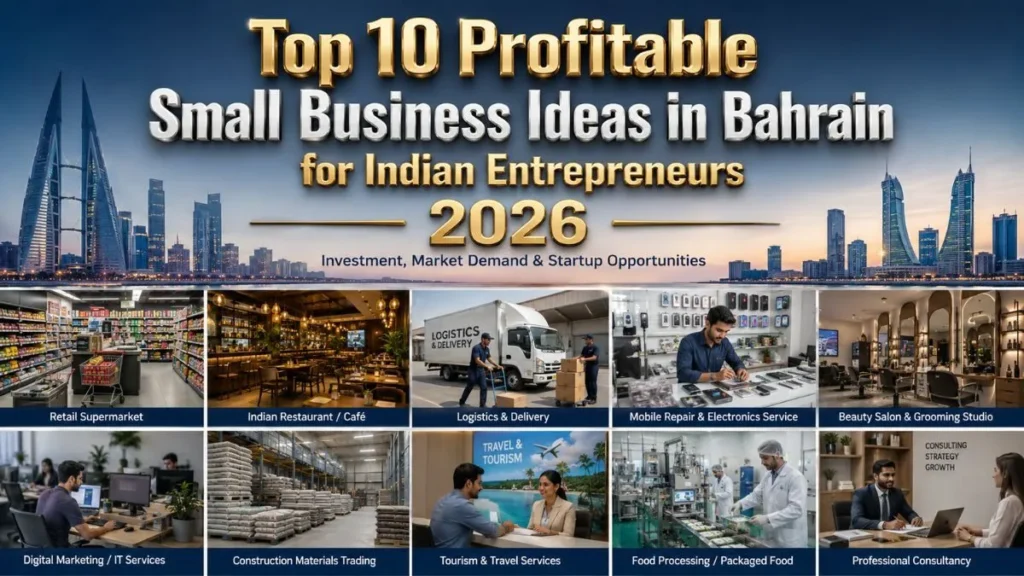
Profitable small business ideas in Bahrain for Indian entrepreneurs When it comes to making plans for a business in the Gulf region, most of the Indian businessmen, think about Dubai. But in recent years, Bahrain has emerged as one of the most profitable and affordable countries for starting a small business. The country has low tax rates, registering companies is very convenient, the purchasing power is high, and there are many Indians in the country. There are over 320,000 Indians in Bahrain and their needs are vast for Indian food, education, beauty services, manpower, healthcare and digital solutions. Entrepreneurs from India also have an easier time to start businesses in Bahrain, as 100% foreign ownership is permitted in many industries. The competition in Bahrain is less as compared to other Gulf countries and the other advantage is that it provides the entrepreneurs and MSMEs with better growth prospects in the long run. Get Detailed Insights from This Book: Just For Starters: How To Start Your Own Export Business Why Bahrain is a Good Market for Indian Businesses Bahrain’s economy continues to grow off of oil. Government is promoting investment in technology, healthcare, retail, tourism and logistics industries. This has paved the way for the Indian entrepreneurs who already have some experience in service-based businesses. Major Advantages of Starting a Business in Bahrain No income taxes for the individual. No tax on personal income. Quick business registration process The office and shop rents are affordable. Good customer base in India. Robust customer base in India. Good connectivity to the GCC markets High internet usage, and high usage of the smart phone. Given these benefits, Bahrain is starting to become one of the most accessible places in the Gulf for small businesses to grow. 1. Indian Restaurant and Tiffin Service Due to the high number of Indians working in food businesses in Bahrain, they are doing very well. Every day, thousands of workers and professionals are looking for cheap and healthy Indian food. There are still a lot of places where there are no organized tiffin service and medium Indian eateries. A cloud kitchen or a delivery service can be a good place to begin if you want to launch your restaurant. Estimated Investment ₹25–40 lakh for a medium sized unit For smaller kitchens, the initial capital can be lower. Why This Business Works High repeat customers Daily cash flow business Stronger demand from expatriates from India. Delivered via easy-to-scale delivery apps A good restaurant will pay for itself in 2-3 years. 2. IT and Digital Marketing Agency While businesses in Bahrain are accelerating the process of shifting to online, there are still not many affordable digital agencies present. This opportunity can be capitalized on by Indian IT professionals to create profitable businesses. The services that are in demand are SEO, website development, social media management, and Google Ads. Services You Can Do Website development SEO and content marketing Social media management App development Graphic design services Key Benefits Low startup cost High profit margins Minimal inventory required Easy remote operations Digital businesses are likely to be more profitable than traditional businesses in a shorter period of time. 3. Healthcare & Wellness Clinic With its steadily increasing expatriate population, healthcare demand is steadily rising in Bahrain. There is a good future potential for affordable wellness centres and clinics. The credibility of Indian doctors, physiotherapists, nutritionists and fitness experts are already established in the Gulf countries. The most popular wellness businesses are: Physiotherapy clinics Dental centres Ayurvedic wellness services Fitness and nutrition studios Licensing will require time, but healthcare businesses will generate income that is relatively secure for the long-term. Access Complete Business Plan — BEST OPTION: Healthcare and Medical Businesses 4. E-commerce and Logistics Business The pandemic has seen a surge in online shopping in Bahrain. Today, consumers want to have groceries, electronics and everyday goods delivered to their houses. Entrepreneurs may create niche e-commerce stores catering to Indian products and go into logistics and delivery businesses. Profitable E-commerce Categories Indian groceries Ethnic clothing Ayurvedic products Home essentials Packaged food items This industry will expand at a significant pace over the next couple of years. Read the Complete Book Here: Food Packaging Technology Handbook (4th Revised Edition) 5. Event Management Company Events are growing in Bahrain due to wedding occasions, company meetings, exhibitions and personal events. This business isn’t a money intensive one, but rather a business that asks for creativity and networking. The services you can provide are: Wedding planning Stage decoration Sound and lighting setup Corporate event management Coordinating photography and videography. Prizes and vendor connections can lead to good profits for event administration firms. 6. Indian Food Export Business The nation of Bahrain is an importer of most of its food products and thus this presents excellent opportunities for Indian exporters. There is already a strong demand for Indian snacks, spices, frozen foods and ready to eat snacks. Food processors and food wholesale traders can enter Bahrain by export partnerships. High-Demand Indian Products Spices and masalas Pickles and snacks Frozen Indian meals Sweets, bakery products Ready-to-cook food items The entrepreneurs build direct retail distribution network, which raises the profitability of this business. Related Article: Spice Processing & Packaging Unit Business Guide: Setup, Cost, Profit and Market Opportunity in India 7. EdTech and Coaching Centers The investment of parents in quality education in Bahrain is of high magnitude in India. This has resulted in high demand for tutoring centers and e-learning services. Examples of popular education services include Competitive Exam Coaching, Cbse Tuition, Coding Classes, Spoken English. Why This Business Performs Well Low operating cost High student retention Recurring monthly income Easy online expansion Small home-based startups can grow into large businesses in the EdTech space. 8. Cleaning and Facility Management Services Along with the development of commercial and residential infrastructure in Bahrain, the demand for cleaning and maintenance services is rising as well. Professional cleaning companies can be given a long-term contract from offices, malls, apartments, and hotels.
India-Vietnam 13 MoUs: The Project Planning Framework Indian Entrepreneurs Need
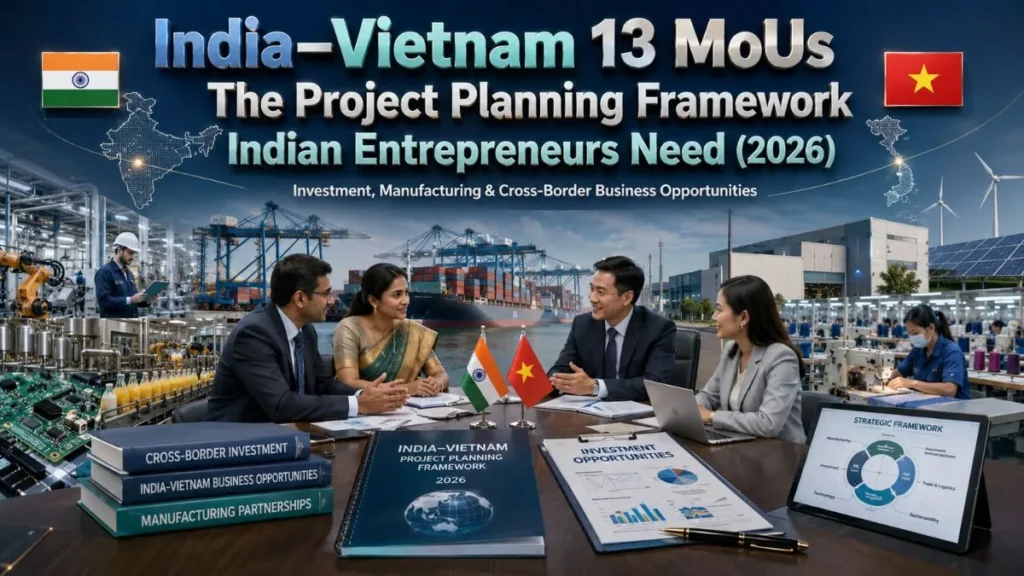
India Vietnam business opportunities The recent signing of 13 Memorandums of Understanding (MoUs) between India and Vietnam has been a great boost for Indian entrepreneurs to make a foothold in the fast-growing ASEAN markets. There are several industries open today from manufacturing to digital services, but not picking the industry that is popular this year will not bring success. Most entrepreneurs fall in failure due to the lack of proper evaluation, not due to the weakness of the opportunity. Structured planning techniques are very useful, such as NIIR Project Consultancy Services (NPCS). Related Article: India-Vietnam Trade Deal: 6 Manufacturing Projects Now Worth a Detailed Feasibility Study The Real Mistake Entrepreneurs Make The first thing you want to ask when you hear a trade deal is the question, “What business should I start?” That is a confusing question, it results in random searches and risky decisions. It probably would be better to ask, “Which opportunity is in my budget, location and skills?” This small change makes a huge difference! It makes you think practically, not emotionally. The majority of the projects that fail do so because of similar issues with them: Failing to identify the right trend to pursue due to a wrong sector selection. Too little capital investment and working capital Lacks of understanding of regulations No proper project documentation Typical errors occur at a later stage – when going for loans or when production begins. The Six Sectors: Where the Real Opportunities Are Six key sectors have been unlocked under the India–Vietnam agreement. There are varying degrees of risks and investments involved. Agri-processing is extensively regarded as the most approachable option. It is suitable for agricultural areas for entrepreneurs and is a steady demand. Rare earth processing is influenced by changes in the global supply chain and has a high export potential but needs a permit for the environmental processing. Pharmaceutical Production is a lucrative and complicated industry and it is so much required to be compliant. Renewables vs. Components for balanced growth with limited investment and, FinTech has a low cost, high scalability but strong competition. Defence manufacturing is at the top, and needs high capital investment and a long approval process. To make your life easier: Agri-processing: Best for beginners, stable demand Rare earth processing: High demand, moderate complexity Pharma manufacturing: High profit, high regulation Renewable components: Balanced growth opportunity FinTech: Low investment, high competition Defence manufacturing: High barrier, long-term returns Choosing the right sector depends less on hype and more on your situation. Get Detailed Insights from This Book: Drugs & Pharmaceutical Technology Handbook Why Proper Planning Matters More Than the Idea If you don’t plan an idea, it’s a risk. Many businessmen think that once they decide on a business, they will have success. But in truth execution is all. Through a proper evaluation, you can be sure that: All your raw materials are available Your location is conducive to logistics and exports. Your investment can help support early operations. All permissions and licenses are easy to deal with. That’s why it’s best to begin with a project report like this one to invest in someone’s expertise. These reports are created by organizations like NIIR Project Consultancy Services (NPCS) to minimize uncertainties. DPR vs Feasibility Study: Understanding the Difference You have to be sure of what you’re getting into before you invest and the best way to find out is with the proper paperwork. A Detailed Project Report (DPR) provides a comprehensive view of the industry. It provides an understanding of how the business operates, the costs associated with it and what to expect in terms of returns. This is the first and most critical step for most novices. A feasibility study delves further. Tailored for your strategy and can answer reasonable questions like ‘Is my position appropriate?’ and ‘Is my investment sufficient. In simple terms: You can learn about the business through the help of DPR if you are having problems. A feasibility study is used to validate your business. This step is frequently missed and results in future financial and operational issues. View Full Project Details: Renewable Energy Sector and Green Power Realistic Expectations: The Truth About Profits There are lots of entrepreneurs that start with a vision that is too great. They believe that they are able to grow quickly and make quick profits – something that is not common in manufacturing or exports. In reality: Businesses take time to reach full production Delays in payments, particularly in exports, can occur In the first couple of months, cash flow control is crucial. Better way to do it is to make a plan for gradual growth rather than immediate success. It’s more important to have stability during the first year than to expand aggressively. Common Mistakes That Lead to Failure Staggering opportunities are not being utilized because they are not being executed well. Here are some of the most frequent errors: Not accounting for working capital needs Overestimating first-year revenue Delaying regulatory approvals Choosing sectors without understanding operations The following are some of the pitfalls you should avoid to increase your odds of success. Choose the right startup backed by real market demand How NPCS Helps Entrepreneurs NIIR Project Consultancy Services (NPCS) has a rich experience of more than 45 years in providing assistance to the entrepreneurs for the planning and implementation of industrial project. Their support includes: Industry-specific project reports Techno-economic feasibility studies The participation of the bank in the financial planning and in the documentation of loans. Advice regarding equipment and standards These reports are a favorite of banks and financial institutions for funding and execution. A Simple Strategy to Choose the Right Sector Rather than over thinking, stick to a practical filtering approach: Use the amount of money that you have. Use the capital you have. Look at the advantages of your place. Think about place strengths. Evaluate your technical knowledge or experience This obviously limits your choices and enables you to concentrate on viable opportunities. Conclusion: Preparation Is
Top 5 Green Manufacturing Business Ideas in Bahrain (Cost, Profit & Setup Guide)
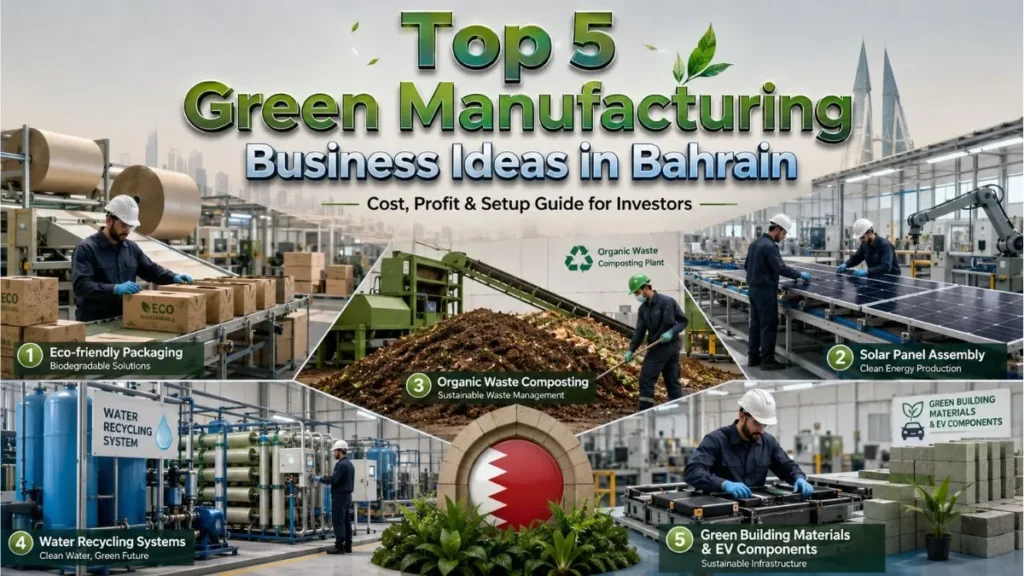
Introduction: Green manufacturing business in Bahrain Bahrain is fast establishing itself as a top destination of sustainable industry growth in the Gulf region. Although most countries are still in the process of developing long-term environmental plans, Bahrain has already embarked on the implementation of policies that proactively encourage green manufacturing and business practices that are eco-friendly. This shift is not merely environmentally motivated- it is creating some major business and investment opportunities to entrepreneurs and MSME investors. Presently, most of the environmentally friendly products consumed in Bahrain including biodegradable packaging, solar products, water recycles, etc., are imported. This causes a definite supply gap in the local market. To the investors who can look ahead, this gap can be viewed as a strategic entry point into high-demand, low-competition industry with long-term growth projections. Why Bahrain is an Ideal Destination for Green Manufacturing Bahrain presents a rare set of policy, geographic and market demand that make it very appealing to green manufacturing companies. Strong Government Support The Bahraini government is working hard to ensure sustainability by industrial policies in line with the net-zero targets. Companies that are situated in environmentally friendly fields enjoy: Simplified approval processes Financial incentives and subsidies. Workforce training assistance. It minimizes the barriers to entry as well as operational risk of new businesses. High Dependence on Imports A large percentage of environmentally friendly products is now imported into Bahrain. The local manufacturing of this sector is still underdeveloped and therefore new entrants have a competitive edge in terms of pricing, delivery time and customization. Strategic GCC Location Bahrain has direct access to the key markets in the Gulf (Saudi Arabia and the UAE). This enables business to expand outside of the local market and access a regional customer base. Business-Friendly Environment Being regarded as one of the most investor-friendly economies in the Middle East, Bahrain allows complete foreign ownership of business in many sectors, has low taxation, and well-developed infrastructure. Top Green Manufacturing Business Ideas in Bahrain The following are the most likely profitable environmentally-friendly manufacturing opportunities in accordance with the current demand and viability. 1. Eco-Friendly Packaging Manufacturing It is among the most viable and high demand business opportunities in Bahrain. As single-use plastic constraints are used more and more, companies are turning to biodegradable options. Common products include: Bagasse food containers Paper cups and plates. Compostable carry bags Restaurants, supermarkets, and food delivery businesses are the main sources of demand and guarantee the stability of B2B revenues. Get Detailed Project Report (DPR): Paper Cup Manufacturing Business Plan & Feasibility Report 2. Solar Panel Assembly Bahrain is making a lot of investments in renewable energy. Rather than manufacturing complete size solar panels, most enterprises specialize in the assembly of solar panels using imported materials. Advantages include: Less startup cost than full production. Increasing residential and commercial demand. Government promotion of the use of renewables. This is a good industry to invest in when one has technical or engineering expertise. Get Detailed Insights from This Book: Solar PV Power and Solar Products Handbook 3. Organic Waste Composting The management of food waste is emerging as a significant issue in Bahrain, especially in its cities. A composting business is the collection of organic waste materials by: Hotels Restaurants Food processing units This is then used to create compost which can be sold to the farms, landscaping companies, and nurseries. Key benefits: Inexpensive raw materials (usually free) Strong environmental impact Increasing agricultural demand. 4. Water Recycling Equipment Manufacturing Water shortage is a critical problem in Bahrain and industries are being increasingly demanded to adopt water recycling solutions. Assembling or producing water filtration systems and recycling systems is a high-value opportunity. The systems are implemented in: Factories Commercial buildings Construction projects This is a technologically demanding sector with high margins and long-term contracts. 5. Green Building Materials & EV Components These are emerging sectors and the future looks bright. The development of the green construction industry, due to its increasing demand: Insulated panels Recycled construction materials Energy-efficient building solutions Similarly, given that electric vehicles are evolving at a gradual rate, the production of electric vehicle related parts, charging accessories will perhaps turn out to be very profitable. Related Article: Union Budget 2026: EV Battery Manufacturing Business Opportunity for MSMEs in India Step-by-Step Setup Process Licensing and registration of business. Choosing of industrial location. Purchasing and installation of plant. Recruitment and training of workforce. The production of trials and quality checks. The whole process normally takes 5-8 months before a full-scale production commences. Profitability and Return on Investment The green manufacturing companies in Bahrain have high financial returns as opposed to the traditional industries. Expected Returns (Eco-Packaging Unit) Net profit margin: 18% to 24% Consistent monthly sales on B2B deals. Payback period: 2.5-3 years. The main benefit is the local production. The businesses are able to save costs on logistics and provide faster delivery than the imported products, thus becoming more competitive. Government Incentives and Support In Bahrain, there is a high institutional support of manufacturing businesses, especially sustainable businesses. Key incentives include: Machinery and workforce training subsidies. Lower costs of leasing industrial lands. Quickly processed approvals by government agencies. Government procurement preference, in Favor of environmentally friendly products. These advantages greatly lower the start-up expenses and enhance profitability in the long-term. Find high-return business ideas based on your budget & ROI Role of NIIR Project Consultancy Services (NPCS) Planning is a prerequisite before embarking on a manufacturing business. It is here that NPCS is of significance. NPCS offers comprehensive project reports, which assist investors in knowing the entire business concept. Their reports include: Technical feasibility analysis Planning cost and investment. Supplier and machinery information. Market demand insights With this kind of report, investors minimize the risk and make good decisions prior to investing. Conclusion Green manufacturing in Bahrain is an effective blend of sustainability and profitability. The country presents a special opportunity to new businesses to find a home in an expanding market with the strong support of the government,
Business Opportunities in Bahrain for Indians: Investment, Profit & Setup Guide
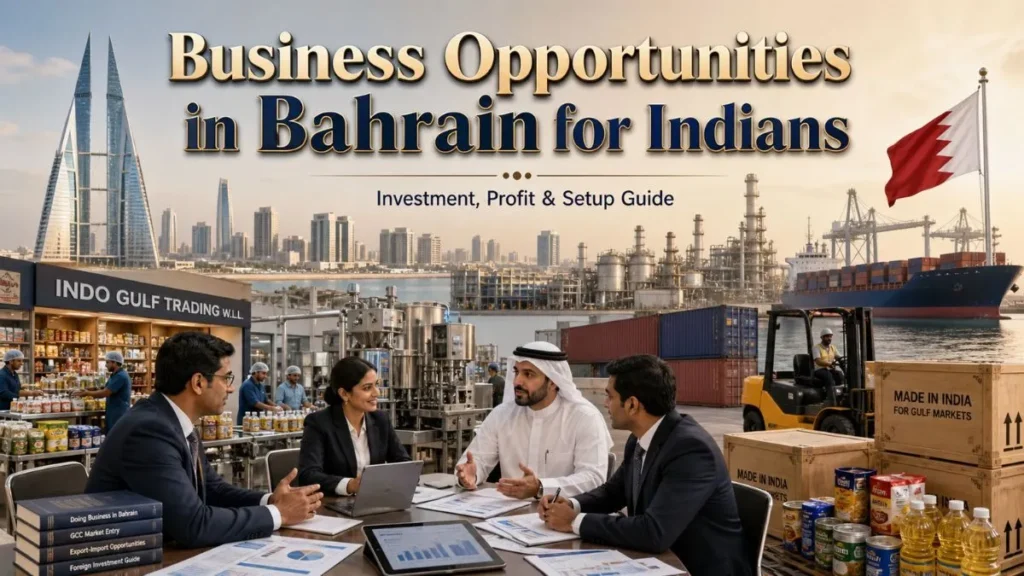
Business Opportunities in Bahrain for Indians Bahrain is becoming one of the most viable and lucrative global destinations to Indian entrepreneurs. Although many business owners automatically consider options in Dubai, Bahrain is a cheaper and less complex option, particularly to MSMEs and first-time global investors. The greatest advantage is this: in Bahrain you are free to own 100 percent of your business, free to pay no personal income tax and in most industries no corporate tax. This is to imply that the profit you make remains with you. This, in itself, can make a big difference to the overall returns, especially to the owners of Indian businesses who are accustomed to high compliance costs and taxation. But it is more than paying less in taxes. Bahrain provides you with direct access to the entire GCC market – a market which imports more than 400 billion worth of goods annually. Indian businesses are able to create their own presence and sell at the same time rather than having to sell through intermediaries and make their margins. Related Article: 5 High-Demand Business Opportunities in Bahrain (2026): A Practical Guide for Indian MSMEs Why Bahrain Makes Sense for Indian Investors A large number of Indian exporters already sell products to the Gulf, however, most of the time through middlemen located in the UAE. This lowers the profitability and brand recognition. Bahrain addresses this issue by serving as a catapult into the GCC region. The location of the country is strategically strong. It is directly linked to Saudi Arabia and has close logistic connections with other Gulf countries. This ensures that distribution is more efficient and quicker. Meanwhile, there is a large Indian community in Bahrain, comprising of more than 350,000 individuals. In the case of new businesses, this serves as a ready-made customer base and support system and makes getting into the market easier. The actual difference in Bahrain is its ease of entry: Registration of the company is quick and completely online. Regulations are transparent and in English There is no need to have a local sponsor in most sectors. There are fewer costs of setting up business as compared to UAE. This mix renders it particularly appealing to the small investors who desire to go global without unduly risking it. High-Potential Business Opportunities in Bahrain Various industries provide various benefits, yet some are evident to Indian MSMEs. One of the best opportunities is food and beverage manufacturing. Most of the food imported into Bahrain, and products of Indian origin already have a large following. Products such as spices, ready meals and snacks do exceptionally well due to the consumption of these products by both locals and the expatriates. Another significant opportunity is the IT and software industry. The fintech ecosystem is on the rise in Bahrain, and Indian companies specializing in SaaS, ERP systems, and digital payments can enter with a relatively low entry cost and scale quite fast. Other businesses that are on the upswing are logistics and warehousing businesses since Bahrain is centrally located in the Gulf. Firms that engage in e-commerce fulfilment or freight services can take advantage of the growing levels of trade. Other prospective industries are: Export of textile and garments, particularly uniforms and quality fabrics. Construction materials such as tiles, sanitary ware. Healthcare products such as generics and Ayurvedic solutions. All these areas are in tandem with the current strengths of India which gives better growth chances and is natural. Get Detailed Project Report (DPR): Understanding the Service Sector: From Healthcare to Hospitality How to Start a Business in Bahrain The ease of setting up a business in Bahrain is not as difficult as most businesspeople perceive. This is organized and yet not too complex. It normally starts with the choice of the correct business structure. The most popular option of choice is that of WLL (With Limited Liability) company as it is flexible and applicable in many industries. After reaching a decision on the structure, registration is affected via an internet government portal. The process is normally less than a week which is very short as compared to most other countries. Once the registration is made, the following steps include establishing a physical presence and making sector-specific approvals. A small flexi-office can be used to start a service-based business and manufacturing and logistics operations must be housed in an industrial space. There are other approvals that are based on the type of the business. For example: Food establishments must be cleared by the health authority. The central bank has to approve fintech companies. Transport and customs licenses are required by logistics companies. In as much as these steps are required, they are well structured and backed by government agencies and this makes the process manageable even by first time investors. Download the Full Guide: Handbook on Fruits, Vegetables & Food Processing with Canning & Preservation (3rd Edition) Investment Required and Expected Returns The size of investment you have to make depends on the nature of the business you want to establish. Companies that depend on services generally have fewer capital requirements whereas manufacturing facilities require more capital because of equipment and infrastructure. The ranges of investments on average appear as follows: Service businesses: ₹25–40 lakh Trading businesses: ₹35–60 lakh Manufacturing units: ₹55 lakh to ₹2 crore The attraction of Bahrain is not only the level of investment, but also the returns. The business is able to make a consistent income once the business is opened and since there is minimal or no corporate tax, profits are much higher than in India. A business that is well managed can expect: Monthly increases in revenue in the first year. Net profit margins of about 1828. Break-even within 2–3 years In the case of entrepreneurs who manage to obtain good distribution channels at a young age, the payback period can be even shorter. How NIIR Project Consultancy Services (NPCS) Supports Investors The process of planning the international business expansion can be daunting, particularly to first-time investors.
Asia Pacific Business Press Inc. Launches Definitive Manufacturing Handbook on Paper Water Bottles, Bioplastics & Biodegradable Products
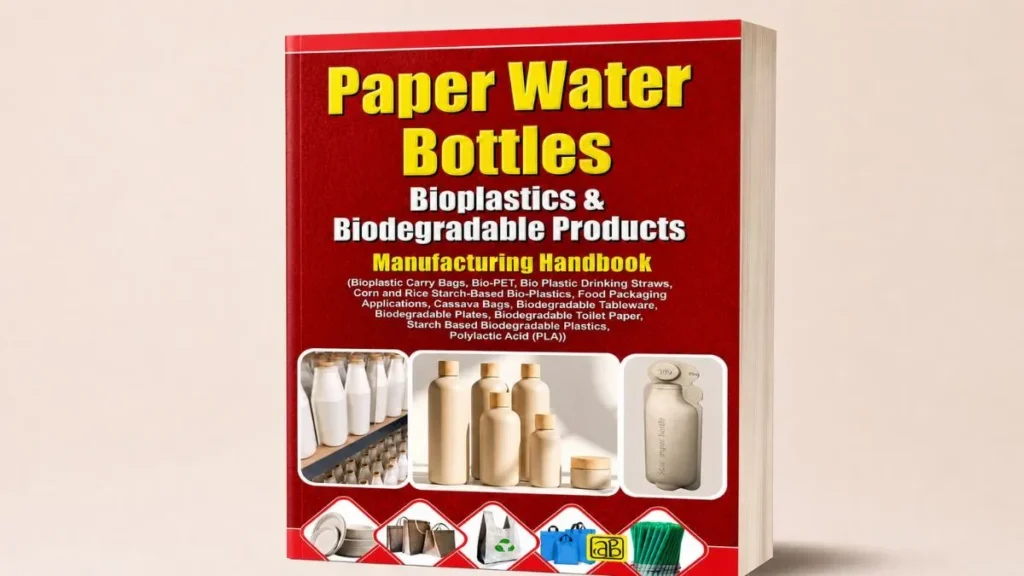
Biodegradable products manufacturing business Publication Equips Entrepreneurs, Startups and Manufacturers to take part in the rapidly expanding world global green economy. The publication of its new comprehensive handbook: Paper Water Bottles, Bioplastics and Biodegradable Products Manufacturing Handbook has been announced by Asia Pacific Business Press Inc. which is one of the most trusted industrial and technical publishing houses in Asia. The most comprehensive, practical and commercially oriented guide to biodegradable manufacturing in the Indian market and beyond, this handbook covers key product categories such as bioplastic carry bags and biodegradable tableware to corn-based starch materials, cassava bags, biodegradable toilet paper, and polylactic acid (PLA). A Crisis Demanding Action — and a Market Demanding Innovation Every year, the world generates hundreds of millions of tones of plastic waste. The vast majority of this pollution consists of single-use plastics, such as shopping bags, straws, food containers, water bottles, etc. Sensible amounts of microplastics can now be measured in oceans, rivers, soil and even the human bloodstream. This is not a mere environmental tale to traders and investors: it is an economic message of titanic proportions. The governments of other countries are also reacting to this by enacting laws to prohibit single-use plastics. The nationwide ban on identified single-use plastic products in India, the European Union guidelines on sustainability of packaging, and sustainability commitments of its corporate brands by world-renowned brands are all coming together to generate an unprecedented demand on biodegradable alternatives. To those willing to take action, this change is one of the most exciting and profitable manufacturing opportunities of the decade. This handbook has been created with a specific purpose to enable entrepreneurs, startup founders, small enterprises, and established manufacturers to take advantage of this opportunity with confidence. What Makes This Handbook Unique This handbook is constructed upon a foundation of practical industrial guidelines as opposed to an academic text or a generic environmental report. Its material has been edited to accomplish only one major task, which is to prepare the reader with all necessary materials to plan, set up and run a successful biodegradable products manufacturing unit. The handbook incorporates technical rigour with commercial transparency in a number of key dimensions: Full specifications of manufacturing process – starting with the acquisition of raw materials, up to the final product. Specific plant layout specifications and flow charts of production. Specifications of machinery requirements and directions of suppliers in every category of products. Market size, growth forecast and demand analysis of India and worldwide markets. Regulatory environment such as government regulations, and compliance. Business viability analysis and insights on investment planning. Opportunities to export and to certify international markets. Spotlight: Paper Water Bottles — The Next Big Green Opportunity Of all the products that are discussed in this handbook, the paper water bottles are given a lot of attention that is dedicated and extensive – and rightly so. One of the largest types of beverages in the world is the global bottled water market which generates billions of plastic bottles of bottled water every year. Small artisanal manufacturers and multinational giants in the beverage industry are actively exploring scalable, cost-effective solutions to small, single-use plastic water bottles. The most commercially viable solution is emerging as paper water bottles, which are made of sustainably sourced paperboard with little or no plastic coating. The handbook is end-to-end guidance on this product category, including barrier coating technology, structural engineering issues, filling line integration, shelf-life management, and branding customization. It also looks at the business case in detail: what it takes to invest, how scalable the production will be, what pricing strategies will be involved, which customer segment are the most promising entry points to new manufacturers? To the entrepreneurs who are in need to create a unique, high demand product that is not only environmentally responsible but also commercially compelling, the manufacturing of the paper water bottle is a first-mover advantage of extraordinary values. This handbook contains all the technical and business information that is required to get started. Comprehensive Product Coverage Across the Biodegradable Spectrum The coverage of the handbook spans across the entire spectrum of commercially viable biodegradable and bioplastic products that are presently in the process of gaining momentum in both Indian and global markets: Bioplastic Carry Bags — a blend of starch and PLA, adherence to standards of Indian carry bags, and positioning against conventional plastic bags. Bio-PET – the manufacturing of bio-based polyethylene terephthalate and its utilization in bottles, textiles and packaging. Bio-Plastic Drinking Straws – the production of PLA-based and paper straws, taking into account the performance and cost maximization requirements. Corn and Rice Starch-Based Bioplastics – extraction, compounding and conversion technologies of the rich agricultural byproducts available in India. Food Packaging Applications — films, trays, clamshells and wraps that are food safe and 100 percent compostable. Cassava Bags: leveraging cassava starch in water-soluble and fully biodegradable shopping bags, a product that has been gaining regulatory approval across several countries. Biodegradable Tableware – plates, bowls, cups and cutlery made of bagasse, bamboo, wheat straw and areca palm leaf. Biodegradable Toilet Paper – manufacturing of the product using recycled fiber and bamboo pulp and position the product in the rapidly expanding eco-personal care segment. Starch-Based Biodegradable Plastics — formulations based on potato, wheat and mixed starch sources to make flexible or rigid products. Polylactic Acid (PLA) – manufacturing, grades, properties and full-spectrum uses in packaging, medical devices and consumer goods. India’s Green Manufacturing Opportunity: Why Now Is the Time to Act India is at a strategic cross-road of regulatory reform, the maturing consumerism and the industrial preparation. The large agricultural sector in the country, which produces large quantities of corn, rice, cassava, sugarcane and potato, furnishes a low-cost, domestically-available source of raw materials on which bioplastics can be manufactured. Meanwhile, the growing middle-income group of India is proving to be more and more willing to pay a premium price to purchase environmentally responsible products in the urban centres. Policymakers are busy developing a regulatory framework that will incentivize
How to Start a Plastic Recycling Plant in India: Cost, Profit, Machinery & Licenses
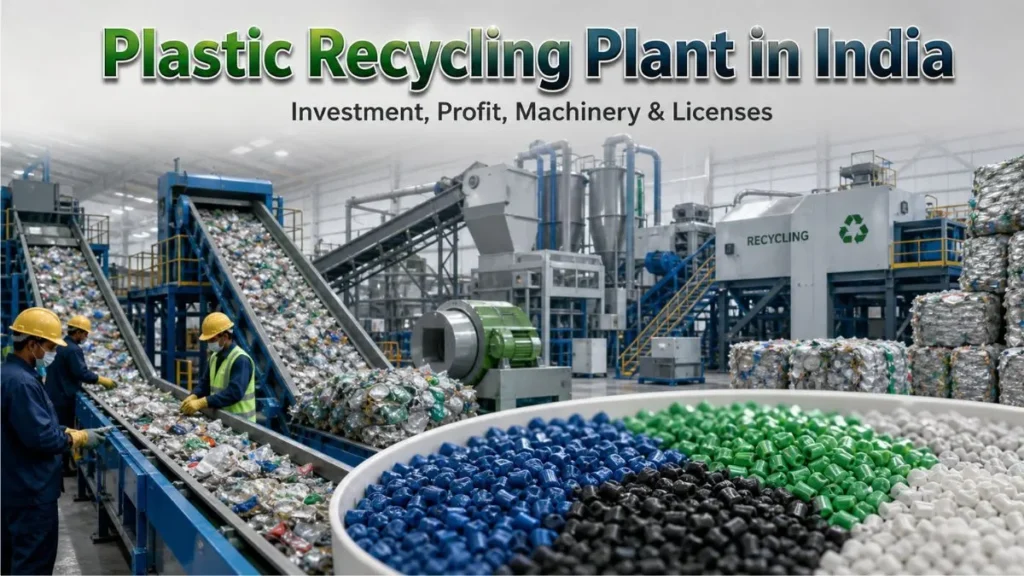
A Profitable Industry Hidden in Waste Plastic recycling plant in India has become one of the most viable and future oriented manufacturing ventures. Millions of tonnes of plastic waste are generated in India annually, yet much of it continues to go unprocessed or informally managed. Meanwhile, recycled plastic is now a legal requirement of the industries because of the environmental policies, such as Extended Producer Responsibility (EPR). This discrepancy between the production of waste and industrial need has provided a good business opportunity. Entrepreneurs no more deal with the garbage: they are constructing lucrative manufacturing plants that transform plastic scrap into industrial raw material. A properly designed recycling facility can bring about constant revenue every month and growth over time with moderate investment. Download the Full Guide: Medical, Municipal and Plastic Waste Management Handbook Why Plastic Recycling Is Growing Rapidly in India There are three key reasons as to why the plastic recycling demand in India is on the rise. To begin with, the consumption of plastics is increasing annually because of the growth of the packaging, e-commerce, and FMCG. Second, recycling facilities are not well developed. Third, companies are being compelled by government regulations to use recycled plastic. The important drivers are: Stringent EPR (Extended Producer Responsibility) policies. Rising demands on rPET, rHDPE and rPP in industries. Lack of qualified recycling facilities. Growing export of recycled granules. Due to these reasons, recycled plastic is now a stable industrial good and not an act of waste management. Types of Plastic Recycling Plants You Can Start The first thing to do before initiating it is the selection of the appropriate kind of plastic recycling business. All the categories vary in terms of machinery requirements, level of investment and profit margins. The most popular option is PET recycling as it transforms bottles into flakes or granules that can be utilized in the textile and packaging industries. Recycling of HDPE is also applied to the recycling of products such as pipes, containers and industrial packaging. Automobile parts and molded plastic products are recycled through PP. The types each have their benefits, although the majority of small entrepreneurs choose PET or HDPE due to the stable demand and simplified operations. Get Detailed Project Report (DPR): Plastic Waste Recycling Plant Investment Required to Start the Business The investment is based on the size of production and level of automation. About 500 kg per day is a small recycling plant that needs ₹25 lakh to ₹40 lakh. The medium-scale plant may cost ₹70 lakh to 1.1 crore. The key items of cost are machinery, infrastructure, working capital, and compliance establishment. A great number of entrepreneurs begin by leasing industrial sheds to take the edge off the start-up cost. Machinery and Production Process The process of a plastic recycling plant has a basic yet organized production system. It starts with the collection and sorting of plastic waste to eliminate undesired materials. The plastic is sorted and then the granulator machine is used to shred the plastic into small pieces. Then the substance is thoroughly washed to get rid of dirt, labels and impurities. After cleaning it is dried with mechanical or thermal dryers. The plastic is then melted using an extruder machine to form long strands of the dry plastic. Such strands are sliced into minute pellets, and they are the end product. Main machinery used in a recycling plant includes: Shredder or granulator Washing line (float sink tank and friction washer) Dryer system Extruder machine Pelletizer unit This arrangement is the main component of the whole recycling process. Raw Material Supply Strategy One of the most significant aspects of this business is raw material. No efficient production is possible without a constant supply of plastic waste. Plastic waste is generally obtained through: City garbage collection systems. Scrap traders (kabadi networks) Industrial plastic waste FMCG packaging waste. EPR-based corporate contracts Among them, EPR agreements are the most consistent as the companies are legally obliged to guarantee recycling goals. This establishes a relationship in the long run between recyclers and brands in terms of supply. Build a profitable business with the right idea Licenses and Legal Requirements. The establishment of a plastic recycling plant must have appropriate legal approvals in order to be in line with environmental and industrial regulations. The important registrations are MSME Udyam registration, GST registration, factory license and pollution control board clearance. Also, you will need to be registered as a plastic waste processor under the EPR regulations when you intend to deal with big corporate clients. Approval may require a few weeks or few months based on the state and quality of the documentation. Profitability and Business Potential Recycling of plastics is a good manufacturing enterprise due to the steady demand and steady prices. Prices of recycled plastic granules range between 40 and 90 per kg, based on the quality and type. A small plant can earn monthly between 10 lakh and 7 lakh rupees when running at 60 percent capacity and with full capacity, the plant can earn much more. The average profit margins are 18-25 percent. Profitability is further enhanced when it is added to EPR credit income. When the business is maintained effectively, it tends to gain back initial investment in 2.5 to 4 years. Government Support and Financial Assistance Indian government encourages recycling companies in its sustainability initiatives. There are a number of schemes that relieve entrepreneurs of financial load. The major support systems are PMEGP subsidies, CGTMSE collateral-free loans, and MUDRA financing of small units. Most states also have other incentives such as electricity subsidies, tax incentives and industrial land support to green industries. With such schemes, first time entrepreneurs are now able to venture into the recycling business with ease. Related Article: How to Start Pulp-Based Beverage Packaging Unit in India (Plastic Ban Opportunity) Role of NPCS in Setting Up the Plant NIIR Project Consultancy Services (NPCS) is significant to assist entrepreneurs in establishing plastic recycling facilities in India. It is a reputable consultancy firm that
Bio Acetic Acid Manufacturing Business in India: Cost, Profit & Setup Guide
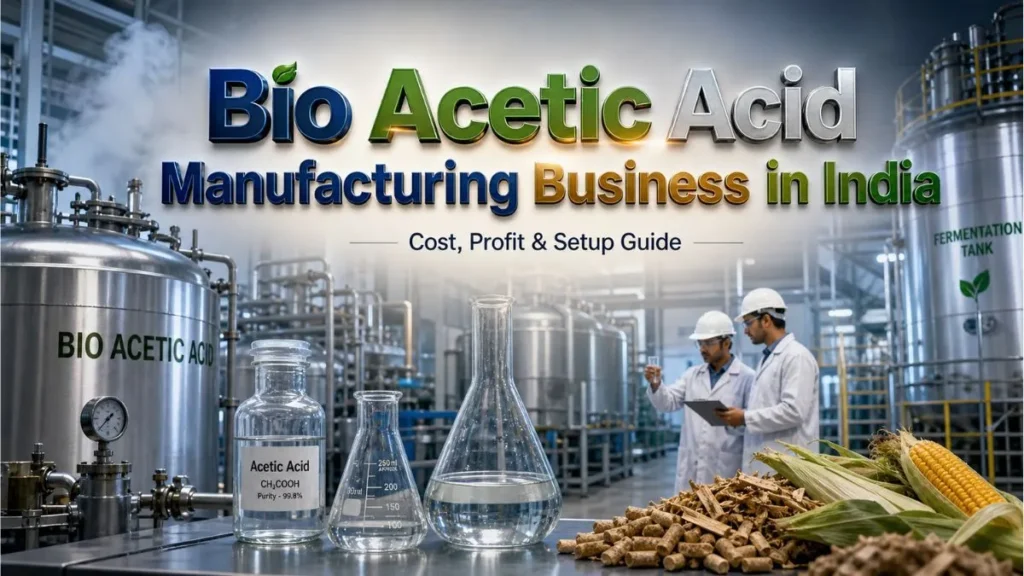
Bio Acetic Acid Manufacturing Business in India While bio-acetic acid may not be a widely recognized name it plays an important role in Indian industry. It is utilized in pharmaceuticals, preservatives, textiles, dyes and plastics. Despite its important role India still imports large quantities of acetic acid on an annual basis. This gives small businesses a fantastic market. As business trends move toward environmentally sound and region-sourced chemicals, bio-acetic acid production is becoming one of the most profitable small-scale chemical manufacturing business possibilities in India. Download the Full Guide: Handbook On Chemical Industries (Alcohol Based) Why Bio-Acetic Acid Manufacturing Is Growing Rapidly India is a major user of acetic acid (over 600,000 tonnes are consumed annually, a majority imported). Meanwhile there is high demand from many industries for bio-based chemicals due to environmental and export restrictions. This opens up opportunities for the domestic manufacturers. Local manufacturing helps keep transportation costs lower and enables quicker delivery to customers. A few of the factors for this growth are: Growth in demand from pharmaceutical and textiles Growing demand for green chemicals High level of import substitution potential Government encouragement for MSME manufacturing Investment and Profit Potential The investment required to set up a bio-acetic acid plant is not very high compared to the big chemical plants. A small-scale plant can be easily established with a limited budget and gradually expanded. Typical financial overview: Capital requirement: ₹46 lakh-72 lakh Annual production: 150-200 MT Annual revenue: ₹80 lakh to ₹120 lakh Net profit margin: 18% to 24% Return on Investment: approx. 2-3 years The figures make it an attractive business opportunity for MSMEs and new entrepreneurs. Get Detailed Project Report (DPR): Glacial Acetic Acid Project Report & Business Plan Step-by-Step Process to Set Up the Plant Setting up of a bio-acetic acid producing plant can be achieved with proper planning but the procedures involved are quite simple. First, register the business. The two most popular choices for entrepreneurs are Private Limited Company or LLP. And, Udyam Registration is necessary to avail government benefits. GST is also essential for the sale of chemicals. Once the legal procedures are done, the next step is to establish infrastructure. For a plant, 2,000-3,000 sq ft space of covered area and some storage is required. It is recommended that the plant should be set up at industrial locations in states such as Gujarat, Maharashtra and Tamil Nadu because of the better infrastructure and ease of operation. After this, machinery installation takes place. The manufacturing process involves fermentation and purification. Equipment needed includes: Fermentation vessel (SS 316L) Aeration and agitation system Distillation column Cooling tower and heat exchanger Storage tanks and testing equipment These are the core of your production equipment. Raw Material Availability in India The great advantage of this business is the availability of raw materials in India. Bio-acetic acid is made from renewable feedstocks that are readily available. Common raw materials include: Sugarcane molasses (cheap and readily available) Mahua flowers Crop waste such as rice straw and cassava peel Maharashtra, Uttar Pradesh, Karnataka and Tamil Nadu are good sources. Direct sourcing from suppliers ensures smooth production and higher margins. Build a profitable business with the right idea Licences and Approvals Required A number of licences are required to start the business. Although it is time consuming, it is not difficult like in heavy chemicals. You will need: Factory Licence (from the state) Pollution Control Board approval (CTE & CTO) FSSAI licence (if for food-grade) BIS certificate (for industrial clients) Fire safety clearance Typically, approvals can be done in 3 to 5 months, depending upon documentation Government Schemes and Financial Support The Indian government has various schemes to promote small manufacturing enterprises, particularly those committed to sustainability. Some important schemes include: PMEGP: Offers 25% – 35% subsidy on project cost CGTMSE: Provides collateral-free loans up to ₹2 crore MUDRA Loans: Good for smaller loans State subsidies: Power tariff and tax subsidies Such scheme schemes considerably reduce the capital costs and bring projects within affordable means. Why Proper Planning Is Important (NPCS Role) Not all entrepreneurs fail due to demand, but due to planning. For example, starting a chemical manufacturing business without technical know-how may result in wrong decisions. Here, NIIR Project Consultancy Services come in handy. They offer project reports containing: Complete manufacturing process Machinery and cost estimation Financial projections Market analysis Bank loan documentation Their reports are well accepted by banks and can help get funding for schemes such as PMEGP and CGTMSE. This advice can help minimise the risk for new entrepreneurs. Related Article: India Imports 85% Acetic Acid: The ₹10,000 Crore Chemical Manufacturing Opportunity (2026–2031) Marketing and Sales Strategy Bio-acetic acid is easier to market than other products because there is a market. The trick is to start small and establish a relationship with customers. Rather than going after a large market, go after: Local pharmaceutical companies Food processing units Textile and dye manufacturers Delivering quality and quantity will help you build repeat business. You can scale up your plant once it is in steady production. Challenges to Consider The business has great prospects but it’s essential to know the risks. It is necessary to produce high quality product, particularly if the customer is an industrial firm. Fermentation must be carefully supervised as a single error can reduce yields. The availability of raw materials needs to be effectively managed. Multiple vendors minimise the risk of shortages and production stops. These tasks can be managed by planning and employing a good team. Conclusion: A Feasible and Scalable Venture The production of bio-acetic acid is one of the rare business opportunities in India with high demand, low investment and government incentives. It’s not a pie-in-the-sky concept, but a reality in many states. This business is not only lucrative in the long run, but also stable, if the entrepreneur is willing to take some risks and work hard. The key to success is to start small, keep quality high and develop a network of buyers. Frequently Asked Questions
Best Manufacturing Opportunities in India Under PM Modi: MSME Growth, PLI Scheme & High-Profit Sectors
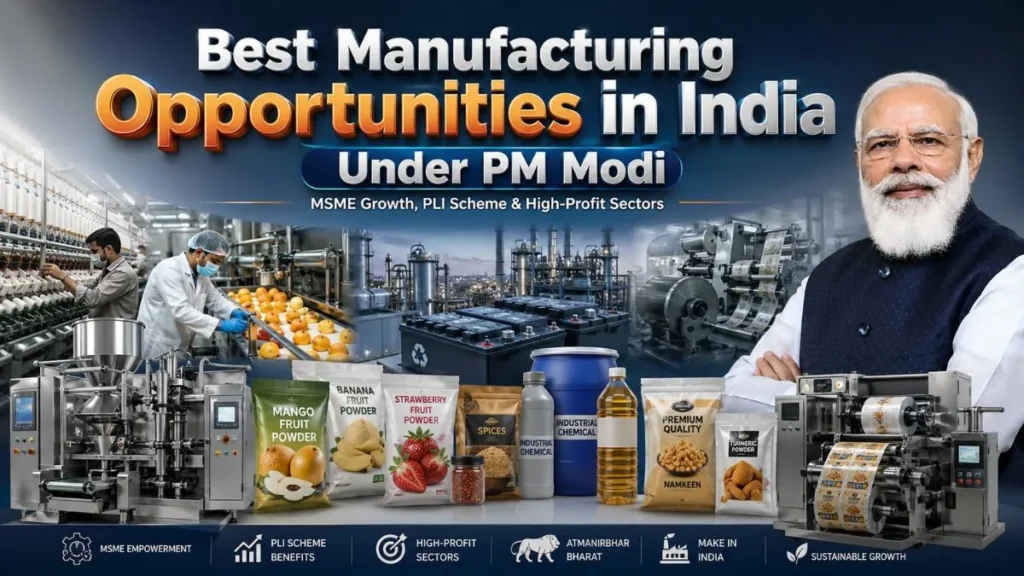
Introduction: Manufacturing Business Opportunities in India India is witnessing a transformation in its manufacturing and industrial sector. The new prime minister (PM), Narendra Modi, is leading the country into a period where industry is not only concentrated in traditional centres, but is also growing at a large pace in new industrial cities and clusters in India. This time it is not just a matter of policy announcements, but also the movement of capital, establishment of new factories and expansion of supply chains. The approach toward manufacturing is now more strategic, rather than traditional. Electronics, EV components, chemicals, food processing and medical devices are all growing today in India. MSMEs are playing a pivotal role in this growth. Related Article: Industrial Opportunity in India Under PM Modi: MSME Growth, PLI Scheme & Profitable Manufacturing Businesses Policy Drivers Behind India’s Industrial Growth The acceleration in India’s industrial production is not accidental but part of specific policy reforms that are working on improving efficiency in production, infrastructure and investment friendly nature. 1. Production Linked Incentive (PLI) Scheme The government’s most influential policy is the Production Linked Incentive (PLI) scheme. The PLI scheme is different from traditional subsidies as companies are rewarded based on the actual output. This has brought a massive amount of investment into: Electronics manufacturing Pharmaceuticals Automotive components Electrical appliances (ACs, refrigerators) This scheme has helped decrease imports and strengthened Indian indigenous manufacturing. 2. PM Gati Shakti Infrastructure Program The PM Gati Shakti programme ensures the holistic infrastructure planning by integration between railways, waterways, airways and roadways along with the logistics. Key benefits include: Reduced transportation delays Lower logistics costs Improved industrial corridor development Shorter execution times This has further accelerated the competitiveness of India’s manufacturing. 3. MSME Reforms and Financial Inclusion The policy support for MSMEs has been substantial and was directed towards: Udyam registration simplification Collateral-free credit schemes Credit Guarantee Fund Trust (CGTMSE) Online payment systems such as Tred’s These programs have helped with credit availability and formalized lending. Key Sectors Driving MSME-Led Industrial Growth Industrial growth in India has been uneven as various sectors have grown at varying rates influenced by the demand from these sectors and also by the possibilities of importing the substitute goods and further export. 1. Electronics Manufacturing India is a large importer of electronic components like semiconductors, PCBs (printed circuit boards), and connectors. The huge opportunity this is creating is in: PCB manufacturing Mobile components Consumer electronics assembly India offers a potential option as the world is shifting their supply chains out of China. Get Detailed Insights from This Book: Electronic Products Handbook With Circuit Diagrams 2. Electric Vehicle (EV) Ecosystem India’s EV industry is rapidly growing. Opportunities are in: Battery assembly and recycling Charging infrastructure Motor controllers and electronics Lightweight components The growth is also being helped by government subsidies. 3. Specialty Chemicals and Pharmaceuticals India is emerging as a leading pharmaceutical manufacturing and chemical intermediates hub. Growth is driven by: Export demand China relocation of supply chains Healthy domestic demand Access Complete Business Plan: Pharmaceutical Drugs and Fine Chemical Intermediates Guide 4. Food Processing Industry India has good raw material supply for food processing industries. High-potential segments include: Millet-based products Ready-to-eat foods Packaged snacks Organic processed foods 5. Medical Devices & Healthcare Manufacturing COVID-19 exposed India’s reliance on imports for medical devices. Now, there are good opportunities in: Surgical instruments Diagnostic kits Medical disposables Hospital equipment High-Growth Manufacturing Segments (Key Opportunities) There are a few MSME-favourable segments with low barriers and high demand visibility: Electronic parts such as PCBs and connectors EV battery packs and chargers Specialty chemical intermediates Medical disposables and surgical kits Millet and processed food products Valves and castings These industries offer both opportunities for import substitution and increasing domestic demand, and so represent a good choice for entrepreneurs. How MSME Founders Should Approach Manufacturing Manufacturing business in India needs planning, not just investment. First-time manufacturers may not fully appreciate operating complexities and working capital needs. Crucially, it’s the profitability. Even though gross margins in manufacturing may be appealing, net margins can be smaller due to raw material price variability, labour, logistics and interest expenses. Key planning principles for founders: Don’t go for full capacity setup Lock in at least 1-2 key buyers Keep tight control of working capital for 90-120 days Don’t over-rely on one supplier or customer Avoid delays in approvals for regulatory and environmental requirements This increases the likelihood of survival in the first 2-3 years. Import Substitution and Export Opportunity India imports a substantial number of industrial products including components for electronics, machinery and special chemicals. This may provide a useful import substitution avenue for Indian industry. The growth of demand for exports (in particular, engineering goods, pharmaceuticals and textiles) makes the manufacturing sector vital for Indian growth. Most promise will be for those who can supply to both. Risks Entrepreneurs Must Understand However, manufacturing has risks too-which need to be managed with caution. Some key challenges include: Import dependency for some industries Time-consuming and cumbersome environmental and regulatory clearances Late payments, particularly in government contracts Exchange rate variations impacting cost of inputs Seasonal demand in cyclical sectors Enterprising entrepreneurs may minimize risks by using multiple suppliers, phased expansion and locking in buyer orders. Identify high-growth industries before others do Role of NPCS in Industrial Project Planning NPCS (Niir Project Consultancy Services) is also the key functionaries for entrepreneur’s keen on manufacturing in India. NPCS provides with Detailed Project Reports (DPRs), feasibility reports and market research so that an investor can decide beforehand whether it is a profitable venture to invest in, or not. These reports typically include: Market demand analysis Details of machinery and processes Cost and financial analysis Sourcing suggestions for raw materials Risk and sensitivity analysis This will be very important for an entrepreneur making the first investment, and avoid a sub optimal or overpriced business model. NPCS provides with the ability for entrepreneurs to take decisions based on facts. Conclusion: Manufacturing Growth Depends on Execution, Not Just Opportunity India’s
India New Zealand FTA Benefits 2026: MSME Manufacturing Export Opportunities Explained
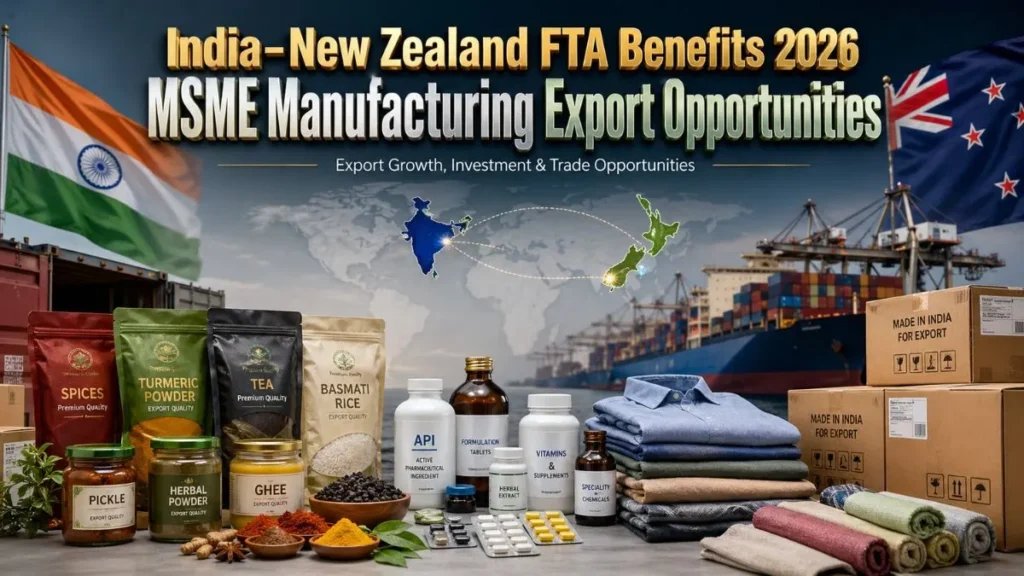
Introduction: India New Zealand FTA MSME export opportunities The Free Trade Agreement (FTA) signed between India and New Zealand is a major trade opportunity for Indian MSME manufacturers. This FTA differs from many other traditional trade agreements, which confer a limited level of benefit, in that it provides almost fully duty-free access to Indian products in New Zealand. This agreement offers MSME manufacturers in leather, processed food, engineering products and herbal products a new export opportunity. But the key to success is readiness for quality control, certification, and exporting. This is more than a policy shift; it is an opportunity for Indian small manufacturers to be more competitive. Related Article: India–New Zealand FTA 2026: Key Export Sectors and MSME Opportunities What the India–New Zealand FTA Actually Changes On the surface, the deal eliminates duties on most Indian exports to New Zealand. Indian exporters used to pay duties ranging from 5% to 10% which put them at a disadvantage compared to other exporters. This is no longer the case. Key structural changes include: New Zealand has removed tariffs from almost 100% of the tariff lines India has liberalised a substantial part of its market but has safeguarded sensitive areas Trade between the countries is set to increase from the current USD 1.3 billion These may seem macro in nature but the impact is at the MSME level where prices, margins and competitiveness go up immediately. Why MSMEs Should Take This Seriously The pact is not just for exports for MSME manufacturers, but it is about re-entering the market. Earlier slightly premium products are now competitively priced. But this doesn’t guarantee success. New Zealand is a highly regulated market and buyers are concerned with: Product consistency International certifications Factory audits Packaging and labelling In other words, no tariffs, higher quality. For MSMEs, early recognition of this is key. Leather and Footwear Industry: A Strong Export Opportunity The leather industry in India, particularly in Agra, Kanpur and Tamil Nadu, can take advantage of this. Previously, a 5% duty made exports less competitive in the NZ retail market. The FTA eliminates this handicap. The export of leather wallets, belts, handbags and shoes become more viable. Key advantages for MSMEs: Good availability of raw materials in clusters Export experience in many units Growing demand in high end retail But New Zealand buyers demand high standards and consistency. Even minor defects can lead to rejection of consignments. Processed Food and Spices: A Demand-Driven Sector Spices and processed foods are already a major export product for India. The FTA will enhance this by eliminating import tariffs. This is an attractive market as the Indian diaspora in New Zealand provides a ready market. High demand products consist of: Masalas and spices Ready-to-eat meals Prepared ethnic foods Organic and natural food items However, exporters have to conform to Food Safety norms. Minimum requisites for export: FSSAI certification Hygienic processing standards Export-grade packaging Phytosanitary compliance Without this even the best food products don’t reach to market. Get Detailed Insights from This Book: Handbook on Spices Engineering Goods: Competing on Quality, Not Price Alone Indian engineering and auto components MSMEs already enjoy a good international reputation. The FTA opens the door for them to access New Zealand’s industrial sector duty free. These include parts for agricultural equipment, industrial equipment and mechanical components. Why this sector is promising: Many engineering parts are imported into New Zealand There is a growing need for suppliers Businesses are looking to spread the risk of sourcing from one country But the competition is on quality, not price. MSMEs must invest in: ISO certification CNC machining capabilities Quality testing systems Barring these, it is hard to penetrate this market. AYUSH and Herbal Products: A High-Margin Export Segment Perhaps the most intriguing aspect of the FTA is the acknowledgement of traditional and AYUSH systems of medicine. This opens up a niche for export for health products. Increased market demand for natural products across the globe and in New Zealand as well. Opportunities in this segment: Herbal supplements Ayurvedic wellness products Natural health formulations Key compliance requirements: AYUSH GMP certification Scientific documentation of formulations Correct claims and labelling High profit margins but also high regulatory risks. Get Detailed Project Report (DPR): Comprehensive Guide to Herbal and Ayurvedic Products Investment Planning for MSMEs The most common failure of MSMEs in export is unplanned investment. The FTA provides opportunity, but investment planning is key to success. Prior to entering the market, MSMEs should define: Demand for their product type Costs of certification and regulations Production scalability Export logistics expenses Expected profit margins Without knowing this, even a great opportunity can be distressing. Why Feasibility Study Is Critical Before Entering Export Markets Export markets are not like local markets. Competitive pricing does not automatically lead to sales – compliance, consistency and documentation are as important. This is where business consultancy services can assist. Companies such as Niir Project Consultancy Services (NPCS) help MSMEs to plan a project by creating reports and feasibility studies. They offer services such as: Market survey and analysis Plant setup planning Machinery selection guidance Estimation of financials and profit Export readiness assessment The feasibility study will help a first-time exporter to make effective decisions and minimize risk. Identify high-growth industries before others do Conclusion: Opportunity Is Real, But Execution Matters More Real opportunities exist for Indian MSMEs under India-New Zealand FTA for exporting the products from Leather, food processing, engineering and AYUSH sector to New Zealand, because the duty elimination increases the export competitiveness and access to new markets. But this is not a sure-fire win. New Zealand is a quality- and compliance-driven market where customers expect quality, documentation and reliability. MSMEs that approach export as a business system rather than a sales channel will be successful. Put simply, the FTA provides access, but it is up to you to see how far you can reach within it. Frequently Asked Questions (FAQ) What’s the key advantage of the India-New Zealand FTA for MSMEs? 100% duty-free access which