
6 Profitable Agri-Chemical Business Ideas That Can Earn ₹2–8 Crore Per Year in India
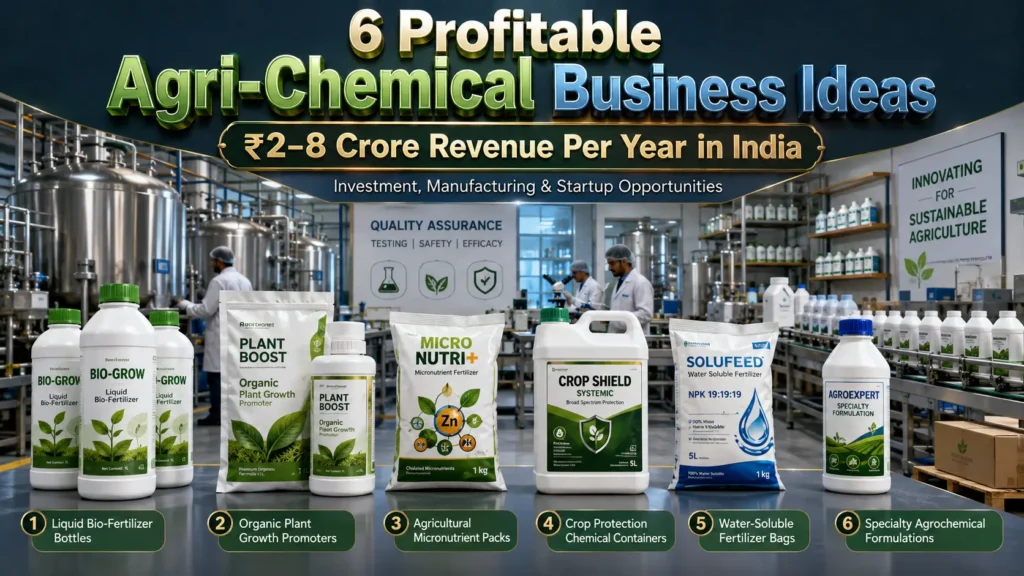
Profitable Agri Chemical Business Ideas India Why These Six Business Ideas Deserve Your Attention Right Now India’s most successful manufacturing entrepreneurs have one common thing; they did not take the path of glamorous products. Instead, they selected unromantic chemicals, raw materials which travelled between factories without all the fanfare. The use of synthetic camphor, sodium silicate, urea fertilizer, 2,4-D herbicide and potassium permanganate are not popular topics on social media. But they are found in nearly all critical supply chains, from the farm to the drug manufacturing plant or the food processing facility. These six products are among the most under-explored business areas in India for those entrepreneurs who are looking for viable manufacturing business ideas with structural demand. The drive towards import substitution, growth in domestic agri-chemical demand and increased scale-up of MSMEs due to PLI and various government incentives for industrial policies have created a rare opportunity. Specialty chemical imports remain at almost 30 percent penetration for some sub-segments, according to government data. With that gap directly comes a market opportunity to well capitalised Indian manufacturers who are ready to take action. In this article, all products will be reviewed individually as a business venture that could be started on its own or in combination with others. In each of these, we will discuss the fundamentals of manufacturing, important demand factors, and what a realistic expectation of profitability is for a serious MSME promoter. The aim isn’t to sell up — it’s to arm entrepreneurs with a clear view of what these businesses are about and why the timing can’t be better. 1. White Petroleum Jelly — The Multi-Industry Workhorse White petroleum jelly is a semi-solid hydrocarbon mixture that’s obtained from the petroleum refining process. It has no smell, is unreactive and thermally stable, hence its widespread use in industry. Who Buys It and Why It is employed as a base for dermatological preparations and topical ointments in the pharmaceutical industry. It is used by cosmetic companies in hair care products, moisturisers and lip balms. It is useful as a corrosion inhibitor and lubricant to industrial users. Food grade petrolatum is used in food processing as a release agent in bakery, confectionery and packaging. The slack wax fraction from lubricating oil refining is used to make the production wax. This is then subjected to hydrotreating (a high-pressure process in a pressure vessel with hydrogen and a catalyst) to give the pharmaceutical grade petrolatum or food grade petrolatum. Slack wax can be sourced from Gujarat or Rajasthan refineries and the production can be cost competitive. Financial Outlook The capital investment required for a plant of 500 to 2,000 MT/year varies from ₹1.5 crore to ₹6 crore depending on the level of automation of the plant. Pharmaceutical grade has a price premium ranging between 20-35 percent, gross margins of 22-28 percent. The pharmaceutical industry in India is expanding at the rate of nearly 11 percent per year, while the cosmetics industry is expanding at a rate of 9-10 percent. It is estimated that the domestic market is 85,000-95,000 MT per year, which is one of the highest demand-stable entries on this list. Parameter Detail Domestic Market Size ~90,000 MT/year Growth Rate 8–10% p.a. Key End-Uses Pharma, Cosmetics, Cables, Auto Indicative CapEx ₹1.5–6 Crore Gross Margin (Pharma Grade) 22–28% Get Detailed Project Report (DPR): Petroleum Jelly Manufacturing Plant Report 2. Potassium Permanganate — The Oxidiser That Crosses Sectors Potassium permanganate (KMnO4) is an industrial oxidising agent. Water treatment facilities employ it as a means to oxidize iron, manganese and hydrogen sulphide in raw water sources. In India, the supply of KMnO4 is directly connected with the initiatives of the municipal water supplies to scale up the treatment facilities in Tier 2 and Tier 3 cities. Its applications also extend into a wide range of other areas such as textile bleaching, pharmaceutical intermediates, food sanitisation and agricultural fungicide applications, providing manufacturers with various revenue streams from a single product. Why Demand Stays Resilient The solid demand theme is the investment in water infrastructure, as required by the government. The Jal Jeevan Mission in India is an initiative to provide access to tap water to more than 190 million people living in rural areas. All new treatment plants within that network are potential customers. Furthermore, wastewater treatment standards in industry are also constant with no relation to consumer sentiment. Domestic price of pharmaceutical grade KMnO4 is ₹130-180 per kilogram. Investment range of a plant of 300-800 MT/year is ₹3 – ₹9 crore. With good raw material procurement strategies, margins of 18 to 24 percent can be expected. Related Article: Potassium Schoenite Manufacturing Business in India: Investment, Profit Margin & Setup Guide for Entrepreneurs End-Use Sector Demand Share Growth Outlook Water Treatment 42% High (9–11% p.a.) Pharmaceuticals 20% Moderate-High (8–10%) Textiles 15% Moderate (5–7%) Agriculture 12% Growing (7–9%) Other Industrial 11% Stable (4–6%) 3. Urea Fertilizer — Foundation of India’s Agrarian Economy Almost 50% of the total consumption of nitrogenous fertilizer in India is done by urea. The annual demand is between 33-35 million metric tonnes which is highest for the second time in the world after China. India has 31 operating production plants, but still imports 7-9 million MT per year to meet the demand. The MSME Entry Point Economically feasible urea production involves large natural gas quantities and very high capital investment (in the range of thousands of crores of rupees). This means that primary production is not in the reach of MSMEs. But there are some easy business ideas for smaller manufacturers in the surrounding ecosystem: Sub-micron elements (such as iron, manganese, zinc, copper, and boron) at lower levels, mainly as chelates Coated and slow-release urea with sulphur or polymer membrane Fertilizer blends with micronutrients, specific to crop The distribution of agricultural inputs and branded retail downstream. The price premium for slow-release urea is in the range of 30-60 percent on top of conventional urea. The demand is building up across Maharashtra, Karnataka and Tamil Nadu, among horticulture, floriculture and
China Earns ₹150–400 Cr/Year Selling LLINs to India — Why Not Your Factory?
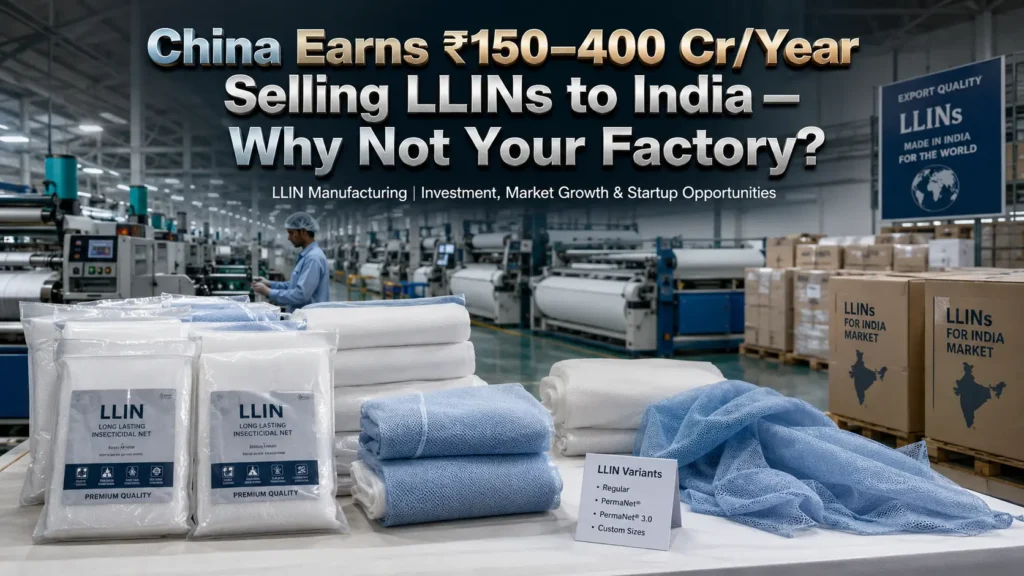
LLIN Manufacturing Plant in India Malaria is by no means solved in India. The country has an unusually high burden of malaria in the South-East Asia Region of the WHO and vector control is the least expensive of the public health arsenal. Mosquito nets that are treated to kill or repel mosquitoes for up to three to five years are known as Long Lasting Insecticidal Nets (LLINs) and they are recommended by the WHO. For a long period of time, India has relied on imports for supplying institutional demand of the Ministry of Health and Family Welfare, state health departments, defence forces, and para-military forces. Now that that dependency is about to split open a realistic domestic manufacturing opportunity. The introduction of HIL (India) Limited in the LLIN manufacturing, where they have developed one product named as HILNET at their Rasayani plant in Maharashtra, is a positive sign for private participation in this sector. The initial capacity already in place is 10 million nets a year. Now, the Indian entrepreneurs have only one question to answer: will they be moving before the import window is closed? Why This Sector Is a Strong Startup Opportunity Demand signal is clear and institutionalized. The Ministry of Health and Family Welfare (MoHFW) is the buyer of LLINs under the National Vector Borne Disease Control Programme (NVDCP), and the demand for LLINs has been estimated to be at the rate of tens of millions of nets per year. There is also a contribution from the Central Armed Police Forces (CAPFs), defence establishments and NGO distribution chains. Historically all this procurement has been done through imports from countries such as Thailand, China, Sri Lanka etc which make India vulnerable to price volatility and supply disruptions. This has left the government with a proactive drive to develop locally manufactured options. In the Annual Report 2025-26 of Ministry of Chemicals and Fertilizers, Government of India, Limited developed and commercialized LLINs with a motive to minimize dependence on imports and contribute to the Atmanirbhar Bharat programme. The report further states that the following agencies are being supplied: Ministry of Health and Family Welfare, state health departments, defence forces, CAPFs, PSUs and NGOs — which means that any private LLIN manufacturing company in India would be their direct target. Investment-wise, this is a sector that has proven institutional buyers, provable import substitution rationale and policy support. It is unusual to find that combination. For the majority of manufacturing startups, it’s an imperative that they build demand. LLIN entrepreneurs can enter into an already established, funded demand curve. However, there are real entry barriers that are not prohibitive. An Indian LLIN manufacturing plant which includes the polyethylene monofilament extrusion line, net-weaving machine, insecticide treatment line, and quality testing facilities generally requires an investment of Rs. in the project. 8 crores to Rs. The cost, depending on size and automation, is 25 crores. The licensing requirements are that it must be registered with the Central Insecticide Board and Registration Committee (CIB&RC) and meet the WHO standards (PES 60 denier standard). High density polyethylene (HDPE) granules, LLDPE granules and alpha-cypermethrin / deltamethrin active ingredients are all available domestically as raw materials. The government scheme support is available via PMEGP (small units up to Rs. 20 lakh project cost under manufacturing, CGTMSE collateral free facilities for MSMEs and potential PLI benefits to LLIN nets in specialty textile and technical textile categories. Related Article: India vs China Manufacturing: Best Business Opportunities, High Profit Sectors & Startup Ideas in India Business Selection Logic and Margin Structure There are two decisions involved in the profitability of LLIN manufacturing: product specification and buyer segmentation. WHO-prequalified LLINs cost more in institutional procurement, and have a higher level of investment in testing, documentation and compliance. Non-pre-qualified nets for domestic level buyers of MSMEs or government schemes of sub-national level are characterized by lower entry cost, but are subjected to margin pressure. A mid-scale LLIN manufacturing plant, capable of producing 2-3 million LLINs per annum, can have an EBITDA margin of 18-24% with institutional supply contracts. Polymer granules, which account for approximately 35-40 percent of cost of goods sold, and insecticide active ingredients, which account for approximately 12-15 percent, are the two most significant cost drivers, as is energy. The cost of labour is significantly lower in Tier-2 manufacturing hubs such as Nagpur, Nashik and Aurangabad compared to metros. Modular investment in extrusion lines is required to achieve scalability from a pilot unit of 500,000 nets per year to a medium size unit of 5 million nets. The capital equipment used is mostly conventional, adapted to technical requirements — not fancy. The learning curve will be manageable to technical textile promoters, agri- nets promoters, and shade nets promoters. Here, being aware of the danger is important. The regulatory risk is the most acute one: WHO prequalification is not a straightforward process, and CIB&RC registration requires time. The risk that comes from the government’s demand side is that the number of tenders or the volume of demand for a year may change. Raw material risk, particularly in the case of insecticide active ingredients, can be addressed, to a certain extent, by contract manufacturing agreements or in-house blending. However, those entrepreneurs, who establish direct relationships with the NHM procurement officers, instead of depending on the open tenders, get much better capacity utilisation. LLIN Manufacturing: Project Opportunity Matrix Project Type Production Scale Target Buyer Capex Range Margin Outlook LLIN Net Weaving Unit (Pilot) 0.5–1 million nets/annum State health depts, NGOs Rs. 4–8 Cr 12–16% Integrated LLIN Plant (Mid-Scale) 2–5 million nets/annum MoHFW, CAPFs, Defence Rs. 10–20 Cr 18–24% WHO Prequalified Export Unit 5–10 million nets/annum Africa via WHO/UNICEF tenders Rs. 20–35 Cr 22–28% Net Finishing & Treatment Hub 2–3 million retreated nets MoHFW, state depts Rs. 3–6 Cr 14–18% Polymer Yarn Extrusion (Upstream) 500–1,000 MT yarn/annum LLIN manufacturers Rs. 6–12 Cr 16–20% Product and Project Opportunities Under the LLIN Sector 1. Integrated LLIN Manufacturing Plant (Full Value Chain) This is the opportunity
ABS Resin Manufacturing Plant in India: ₹20 Crore Revenue in 2 Years?
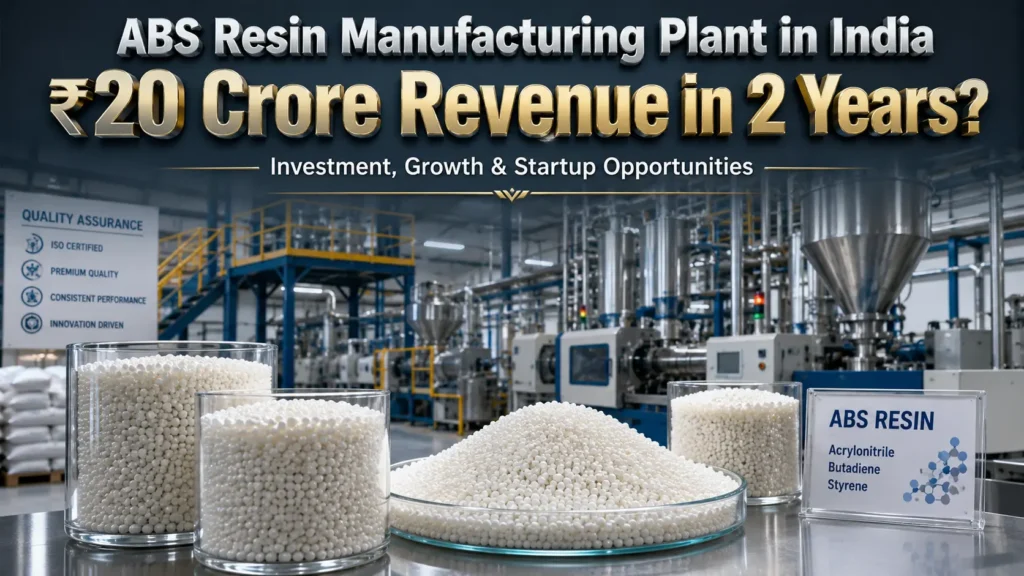
ABS resin manufacturing plant in India ABS (Acrylonitrile butadiene styrene) is a hard-working thermoplastic. It flows inside consumer electronics cases, home appliances, automotive dashboards, medical devices and pipes. It is both manufactured and imported in India. Until recently, it was able to withstand the competition of inferior foreign goods. It has however changed with the enforcement of the Bureau of Indian Standards Quality control order on ABS resin (IS 17077:2019) which comes with the requirement of BIS certification for all ABS imported or produced in the country. If an entrepreneur is considering a new manufacturing venture, this change in regulations significantly increases the investment case. Why This Sector Has Real Growth Behind It ABS resin is a product of the performance plastics group of India’s petrochemicals industry. According to the Ministry of Chemicals and Fertilizers, Government of India’s Annual Report 2025-26, the production of ABS is 176,540MT with the installed capacity of 203,000MT, which represents a CAGR of 9.7% over 4 years. That compounded growth rate is better than all other products in the Performance Plastics segment such as nylon, SAN, and PET chips. The capacity utilization of about 87% is indicative of a deficient supply side. This is not a sector that has spare capacity that awaits demand. Demand is there. The only question is: can production catch up? Demand Drivers are structural, NOT cyclical. ABS is used in Indian automotive application such as dashboards, pillar trim, bumper, interior parts. ABS housings, keyboards, and enclosures are being pulled by consumer electronics, which continues to grow in Tier-2 and Tier-3 cities. ABS pipes and fittings are employed in the construction industry. There’s no clear justification for any of these demand channels to turn around. Get Detailed Project Report (DPR): Plastics, Polymers and Resins: A Comprehensive Guide The BIS QCO: A Regulatory Wall That Protects Domestic Producers The Ministry of Chemicals and Fertilizers has been diligently implementing the mandatory BIS standards in the chemicals and petrochemicals value chain in a systematic way. Currently in effect, the ABS Quality Control Order mandates that all units of ABS resin (domestic and imported) must be marked with the BIS Standard Mark. The foreign exporters have to secure certification under the Foreign Manufacturers Certification Scheme (FMC Scheme) which introduces cost, time and compliance burden on the exporters. In the case of a domestic ABS resin manufacturing line or compounding line, this means a competitive floor. However, the lower cost Chinese and South Korean imports that once put domestic goods at a price competition disadvantage are now beset with a very real compliance challenge. The entrepreneur who establishes a certified and quality consistent operation is not playing on the level playing field with uncertified imports, the QCO levels the playing field in the entrepreneur’s Favor. Capex Range and Plant Setup Reality Before setting up an ABS manufacturing plant in India it is necessary to have clarity of what kind of plant is being established. There are three different entry points. Small-scale ABS compounding unit — This involves processing imported or domestically procured ABS base resin and adding colorants, fillers, flame retardants, and stabilizers to produce specialty compounds. Capacity range: 2,000–5,000 MT per year. Capital investment: Rs. 3–6 crore for machinery and equipment, plus Rs. 1–2 crore for civil works, utilities, and working capital. Target buyers include injection moulders, auto ancillary manufacturers, and electronics OEMs. Gross margins at this scale run 14–20%, tightening as resin input prices rise with crude. Mid-Scale Compound / Blending Plant — 5 Kilo to 15 Kilo per year, with a production of several specialty grades. Capital requirement: Rs. The cost for plant and machinery is ₹12 crore, for civil construction, ₹30–40 lakh and for six months of working capital, ₹40 lakh. Direct OEM supply and reasonable grade diversification can achieve 10-16% net margins before tax. Break-even is usually achieved between 18 and 28 months after commissioning. Greenfield ABS polymerization plant — It refers to the polymerization of the ABS base resin made by emulsion and continuous mass polymerization method from acrylonitrile, butadiene rubber and styrene monomers. The minimum amount of capital required: Rs. In the range of 80-200 crore, depending on technology licensing, logistics of feedstocks and location. It is no MSME’s land. It is suitable for big industrial groups that have access to feedstocks and already established relationships in the polymer market. Related Article: Why Performance Plastics Manufacturing Is India’s Next Big MSME Opportunity Business Selection Logic for MSME Promoters Integrated petrochemical complexes are more desired for base resin polymerization. The profit-making entry point for an MSME-type promoter is specialty compounding, which involves modifying off-the-shelf ABS grades to be more suited to a specific application. The segmentation matters. The automotive grade ABS is heat and impact resistant and has a premium price compared to commodity grades. There are also dedicated buyer profiles for flame-retardant grades for electronics; these have annual supply contracts. The UV stabilized grades are in a somewhat narrower market, but have stronger relationships with customers. The risks are not concealed. Acrylonitrile, butadiene and styrene are products of crude oil. They fluctuate in price, sometimes drastically, with world cycles in petroleum chemicals. If feedstock prices increase steadily, the margin for compounders can be reduced by as much as eight percent in 2 quarters. Most of the small compounders are facing difficulties in working capital management to maintain lean raw material inventory while holding finished goods in inventory for the buyers. Commodore-grade without application differentiations is a low-margin dead end. The winning strategy: Find a niche application, build consistency to that niche, and get OEM or distributor relationships before the plant is up and running. That’s how Indian polymer businesses have been created – on application-specific positioning and not on volume bets. Indian Entrepreneur Case References Kanoria Chemicals and Industries Ltd. (R.V. Kanoria) evolved into a specialty chemicals and polymers business due to product specialization. They would be less exposed to pure commodity price fluctuations because of their approach, technical grade manufacturing and application-specific supply. The lesson to
लघु व कुटीर उद्योग यानी स्मॉल स्केल इंडस्ट्रीज़ – भारत के उद्यमियों के लिए असली अवसर 2026
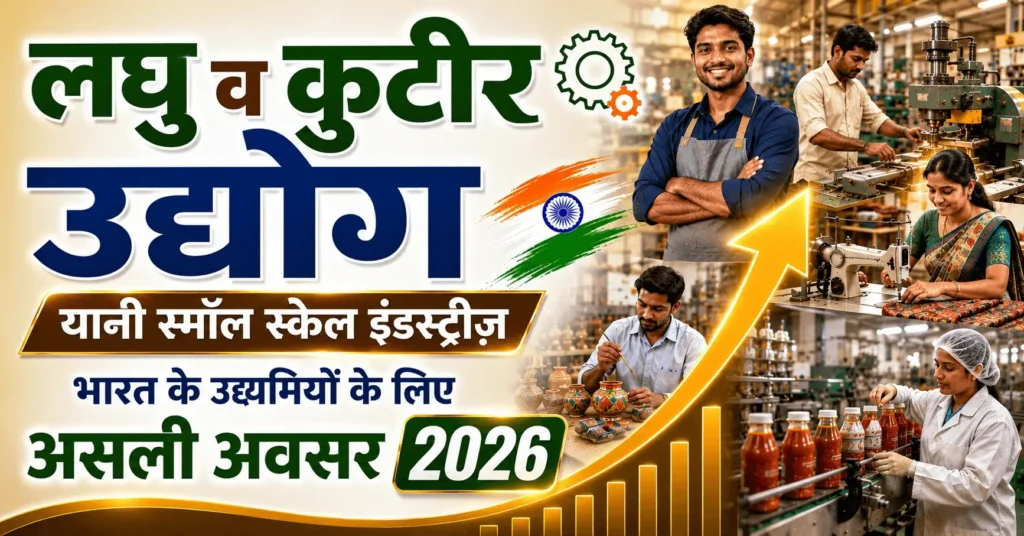
भारत के उद्यमियों के लिए असली अवसर कहाँ हैं? भारत में हर साल हजारों पहली पीढ़ी के उद्यमी एक सवाल लेकर आते हैं — ‘कम पूँजी में कहाँ से शुरू करूँ?’ इसका जवाब उन्हें अक्सर इंटरनेट पर मिलता है, लेकिन वह जवाब ज्यादातर गलत होता है। लघु व कुटीर उद्योग यानी स्मॉल स्केल इंडस्ट्रीज़ — यह सेक्टर भारत की अर्थव्यवस्था की असली रीढ़ है। आज भारत में 7.47 करोड़ से ज्यादा MSME इकाइयाँ हैं। ये इकाइयाँ GDP में 31% योगदान देती हैं और निर्यात में लगभग 48.58% हिस्सेदारी रखती हैं। कृषि के बाद सबसे ज्यादा रोजगार इसी सेक्टर से आता है — करीब 32.82 करोड़ लोग। [IBEF MSME Report] लेकिन इन आँकड़ों से परे एक दूसरी तस्वीर भी है। बहुत से उद्यमी गलत उत्पाद चुनते हैं। कुछ बाजार की माँग समझे बिना निवेश कर देते हैं। और कुछ सरकारी योजनाओं की जानकारी न होने से लाखों रुपये का नुकसान उठाते हैं। यह लेख उन लोगों के लिए है जो निर्णय लेना चाहते हैं — सिद्धांत नहीं पढ़ना। Get Detailed Insights from This Book: लघु व कुटीर उद्योग (स्मॉल स्केल इण्डस्ट्रीज़) यह सेक्टर मजबूत स्टार्टअप अवसर क्यों है बाजार की माँग और विकास चालक लघु उद्योग की मजबूती एक कारण से नहीं आती — यह कई कारणों की परत पर टिकी है। पहली बात: घरेलू माँग। भारत का मध्यम वर्ग तेजी से बढ़ रहा है। टियर-2 और टियर-3 शहरों में खपत पहले से कहीं ज्यादा है। मुजफ्फरपुर से मदुरै तक — हर जिले में उपभोक्ता हैं जो स्थानीय उत्पाद खरीदते हैं। इस खपत को पूरा करने की क्षमता बड़ी कंपनियों में नहीं है। वही जगह छोटे उद्यमियों के लिए खुली है। दूसरी बात: आयात प्रतिस्थापन। सरकार की ‘Make in India’ नीति के तहत कई क्षेत्रों में आयात पर रोक लगी है या शुल्क बढ़ा है। खिलौने, बर्तन, खाद्य प्रसंस्करण, हस्तशिल्प — इन सभी क्षेत्रों में घरेलू उत्पादन की माँग बढ़ रही है। तीसरी बात: औद्योगिक मूल्य वर्धन। लघु उद्योग क्षेत्र भारत के कुल औद्योगिक सकल मूल्य वर्धन में लगभग 40% का योगदान करता है। ₹10 लाख के निवेश पर यह सेक्टर औसतन ₹46.2 लाख की वस्तु या सेवा उत्पन्न करता है। मोरादाबाद के पीतल उत्पाद और कांचीपुरम की साड़ियाँ आज भी करोड़ों रुपये की विदेशी मुद्रा कमाती हैं। हस्तशिल्प, खाद्य उत्पाद, जैविक सामग्री और पारंपरिक वस्त्र — इन सभी की वैश्विक बाजार में माँग है। फूड प्रोसेसिंग इंडस्ट्रीज़ (खाद्य प्रसंस्करण एवं कृषि आधारित उद्योग परियोजनाएं) सरकारी योजनाएं और सब्सिडी PMEGP (प्रधानमंत्री रोजगार सृजन कार्यक्रम) इस सेक्टर की सबसे व्यावहारिक योजनाओं में से एक है। इस योजना के तहत विनिर्माण के लिए ₹50 लाख तक का ऋण मिलता है। सब्सिडी 15% से 35% तक होती है — सामान्य वर्ग के लिए 15-25%, SC/ST, महिला और विशेष वर्ग के लिए 25-35%। अब तक PMEGP के तहत 80 लाख से ज्यादा लोगों को रोजगार मिल चुका है। [Ministry of MSME Annual Report 2024-25] Top MSME Government Schemes in India CGTMSE — बिना संपत्ति गिरवी रखे ऋण CGTMSE (क्रेडिट गारंटी फंड ट्रस्ट) के जरिए ₹2 करोड़ तक का कोलेटरल-फ्री ऋण मिल सकता है। यानी संपत्ति गिरवी रखे बिना भी बैंक से पैसा लेना संभव है। RAMP स्कीम ₹6,000 करोड़ के परिव्यय के साथ पाँच साल के लिए लागू की गई है। MSE-CDP क्लस्टर डेवलपमेंट कार्यक्रम साझा बुनियादी ढाँचे के निर्माण में मदद करता है। PMEGP में ऑनलाइन आवेदन kviconline.gov.in पर किया जा सकता है। आवेदन के लिए आधार, शैक्षणिक प्रमाण, बिजनेस प्लान और बैंक खाता पर्याप्त है। DIC (District Industries Centre) या KVIC कार्यालय के जरिए भी मदद मिलती है। [KVIC — PMEGP Portal] प्रवेश बाधाएं — वास्तविकता क्या है? छोटे उद्योगों में प्रवेश की बाधाएं कम हैं, लेकिन शून्य नहीं। Capex की रेंज ₹3 लाख से शुरू होकर ₹50 लाख तक जाती है। खाद्य उत्पादन के लिए FSSAI पंजीकरण, रसायन इकाइयों के लिए PCB NOC और कुछ उत्पादों के लिए BIS प्रमाणन जरूरी है। कच्चे माल की पहुँच अगर स्थानीय है, तो लागत कम रहती है — यह सबसे महत्वपूर्ण जोखिम कारक भी है। बिजनेस चयन का तर्क लाभप्रदता और मार्जिन संरचना लघु उद्योग में EBITDA मार्जिन 15% से 35% के बीच रहता है — उत्पाद पर निर्भर करता है। अचार, मुरब्बा, मसाले जैसे खाद्य उत्पादों में 25-30% तक का नेट मार्जिन संभव है। हस्तशिल्प और हाथ से बनी वस्तुओं में मार्जिन और भी अधिक होता है, लेकिन उत्पादन की गति धीमी है। राजस्थान के अजमेर के रहने वाले महेंद्र सोनी ने ₹8 लाख के निवेश से एक मसाला प्रसंस्करण इकाई शुरू की। तीन साल में उनकी मासिक बिक्री ₹4 लाख को पार कर गई। यह उस सेक्टर की सामान्य ताकत है, बशर्ते उत्पाद का चुनाव सही हो। स्केलेबिलिटी रोडमैप पायलट से मध्यम आकार की इकाई तक का रास्ता तीन चरणों में समझें। पहला चरण: ₹3-10 लाख के Capex में घर-आधारित या किराये की जगह में उत्पादन शुरू करें। स्थानीय थोक विक्रेताओं को माल बेचें। गुणवत्ता स्थिर करना इस चरण का सबसे जरूरी काम है। दूसरा चरण: माँग स्थिर होने पर ₹20-50 लाख निवेश में उत्पादन क्षमता बढ़ाएं। Amazon, Flipkart, Meesho पर बिक्री शुरू करें। Udyam पंजीकरण करें ताकि PMEGP और CGTMSE योजनाओं का लाभ मिल सके। पंजीकरण नि:शुल्क है और 15 मिनट में पूरा होता है। [Udyam Portal] तीसरा चरण: निर्यात बाजार में प्रवेश करें। APEDA (Agricultural and Processed Food Products Export Development Authority) खाद्य और कृषि उत्पादों के निर्यातकों को पंजीकरण, प्रशिक्षण और बाजार संपर्क में सहायता करता है। यूरोप, जापान और खाड़ी देशों में भारतीय खाद्य उत्पादों की माँग लगातार बढ़ रही है। [APEDA — Export Development Authority] जोखिम — जो कोई नहीं बताता कच्चे माल की कीमत में अस्थिरता सबसे बड़ा जोखिम है। 2022 में खाद्य तेल की कीमतें दोगुनी हुईं — कई खाद्य प्रसंस्करण इकाइयाँ नुकसान में चली गईं। इसलिए ऐसे उत्पाद चुनें जहाँ कच्चा माल स्थानीय और विविध स्रोतों से मिलता हो। ट्रेंड पर आधारित उत्पाद अचानक बाजार खो सकते हैं। FSSAI मानकों में बदलाव या पर्यावरण नियमों की सख्ती से उत्पादन लागत बढ़ सकती है। इन जोखिमों को पहले से समझना और बिजनेस प्लान में शामिल करना जरूरी है। परियोजना अवसर 1. अचार और मुरब्बा उत्पादन यह भारत के सबसे कम जोखिम वाले खाद्य उत्पादन क्षेत्रों
Compressed Biogas Export India Opportunities That Can Earn ₹8 Cr/Year
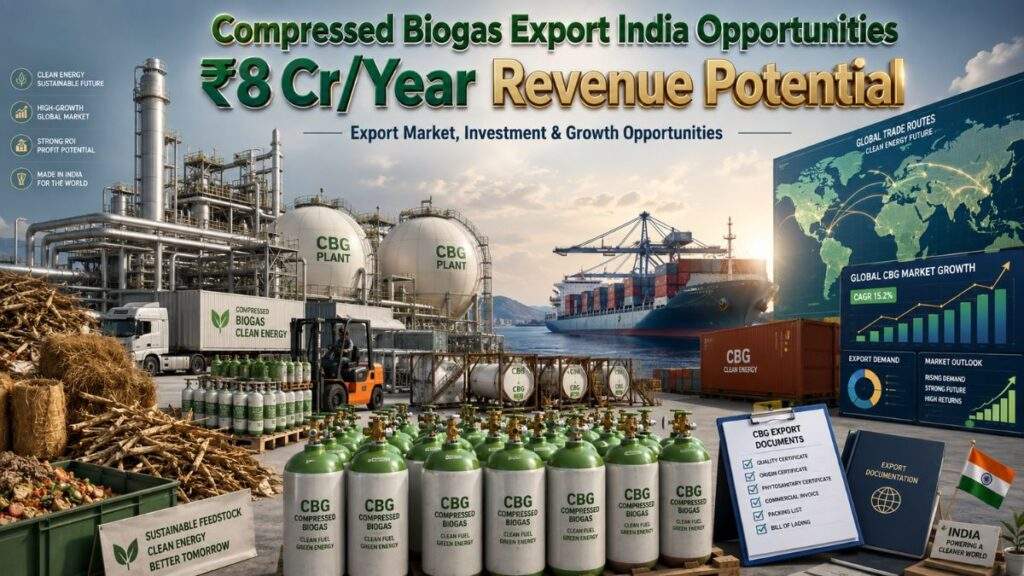
Compressed Biogas Export from India The export India story on compressed biogas is still in its nascent stages but the message is clear. The nation has a huge biomass surplus which can be harvested from agricultural waste, municipal solid waste, dung of cattle etc. which is something that most of the energy importing countries can only dream of. Domestic CBG production is growing and the policy machinery is already geared up for a much bigger play. The CBG-CGD synchronization scheme has led to the successful blending in 54 Geographical Areas of the City Gas Distribution network. The obligation to blend starts in FY 2025-26. Industry is getting regulatory support of this magnitude at an early stage and so is the export potential. India is now not only capable of producing enough CBG but whether entrepreneurs will outpace the other suppliers to catch the global opportunity in a CBG structured around them or not. Why CBG Deserves Serious Startup Attention Right Now The Domestic Foundation Is Being Laid at Speed By March 31st, 2025, the number of CBG and biogas plants commissioned in India is 100 and the total production capacity is around 700 MT per day. India has 100 CBG and biogas plants with an installed capacity of around 700 MT per day as on March 31st, 2025. Around 336 retail outlets have started the sale of CBG. Indian Oil has commissioned 44 plants and sold about 8.9 thousand metric tons of CBG so far under the SATAT initiative and has 714 active Letters of Intent. Get Detailed Insights from This Book: Biogas Applications Handbook These are not pilot numbers. This is industrial-scale momentum. The CBG Blending Obligation (CBO) framework stipulates that 1% CBG blending is required in total CNG/PNG consumption in FY 2025-26 and the target will be increased to 3% in FY 2026-27, 4% in FY 2027-28 and 5% from FY 2028-29 onwards. This is a form of domestic offtake that is guaranteed by law, and that’s what export-grade production needs as a financial backstop. The Export Logic Is Simple but Compelling There are also strong importers of green gas in Europe, Japan, South Korea and some Asian states in Southeast Asia. Germany has been a big producer of bioenergy in the form of biogas in Germany, but feedstock restrictions are slowing the growth. The cost of the LNG imports to Japan is in the tens of billions of dollars per year and the substitution of green gas is a national priority. With year-on-year biomass availability, different agriculture waste streams and now a policy supported CBG sector, India is well poised to take a bow. The compressed biogas export India opportunity is not about sending CBG in cylinders, the freight economics do not work at the current scale. The real export model is the conversion of CBG to liquefied biomethane (bio-LNG) in ISO containers and with the use of conventional LNG infrastructure. Bio-LNG is already being purchased in Europe for long-term contracts. Structural cost advantage on paddy price lies with Indian producers with access to near zero-cost feedstocks like paddy straw, press mud, and municipal waste, versus the European producers. Government Policy: What’s Actually on the Table More comprehensive than most sector founders realize, the Ministry of Petroleum and Natural Gas has developed an architecture of support. Several high-value enablers are confirmed by data from the Annual Report 2024-25 of the Ministry of Petroleum and Natural Gas, Government of India. The SATAT scheme offers a structure for Oil and Gas Marketing Companies to access CBG from private entrepreneurs through the bidding process under the EoI, thereby eliminating the above-mentioned major risk for the first-time CBG plant owner – the off-take question. In addition to procurement guarantees, the policy stack comprises central financial assistance under the National Bio Energy Programme of MNRE, classification of the sector as priority sector by the RBI, exemption from excise duty on payment of GST on CBG blended in CNG, development of pipeline infrastructure scheme for CBG injection into CGD network, and market development assistance of ₹1,500 per MT on Fermented Organic Manure produced as by-product. The subsidy for biomass aggregation machinery, which is applicable till FY 2026-27, tackles the biggest operational challenge for rural CBG units i.e., logistics of collecting biomass. Project Opportunities for Entrepreneurs Paddy Straw-Based CBG Plant (Tier-2 Agrarian Belts) The paddy straw is burnt in millions of tonnes in Punjab, Haryana and in western UP during rabi season. The capex for a 15 – 20 TPD CBG plant based on paddy straw ranges from ₹15 – 22 crores depending on the technology of anaerobic digestion. The gross margins could be as high as 28-34% in case of full utilization at the current OMC procurement price of ₹46-54 / kg along with FOM as a revenue co-stream. The current SATAT LOI are offered to Target Buyers like Indian Oil, BPCL and the HPCL. If the biomass is aggregated from day one in contract, then the scalability path is from 15 TPD to 50 TPD within 3 years. Capital recovery: 6-8 years on equity-based structure, 4-5 years with support from MNRE grant. Get Detailed Project Report (DPR): Industrial Biotechnology: Enzymes, Biofertilizers and Biogas Municipal Solid Waste (MSW) Based CBG Plant Wet waste is a problem for urban local bodies in Tier-2 cities due to Swachh Bharat Mission. This is a place that should be attractive to entrepreneurs who can obtain a long-term concession contract from a municipal corporation. The capex needed for the MSW based CBG plants of 5–10 TPD is ₹8–14 crore. Central assistance, apart from the MSW, is offered by the Ministry of Housing and Urban Affairs, which significantly enhances returns for CBG projects. EBITDA margin profile: 22–28% with tipping fees from the municipality factored in to the concession structure. Bio-LNG Production Unit for Export (Joint Venture Model) This is the most expensive and most profitable. Additional infrastructure cost of bio-LNG unit attached to a 50 TPD CBG plant comes to ₹12–18 crore. Total project cost: ₹35–50 crore. Under
Entrepreneur India May 2026 Is Here — Download Free & Explore India’s Most Profitable Manufacturing Business Ideas
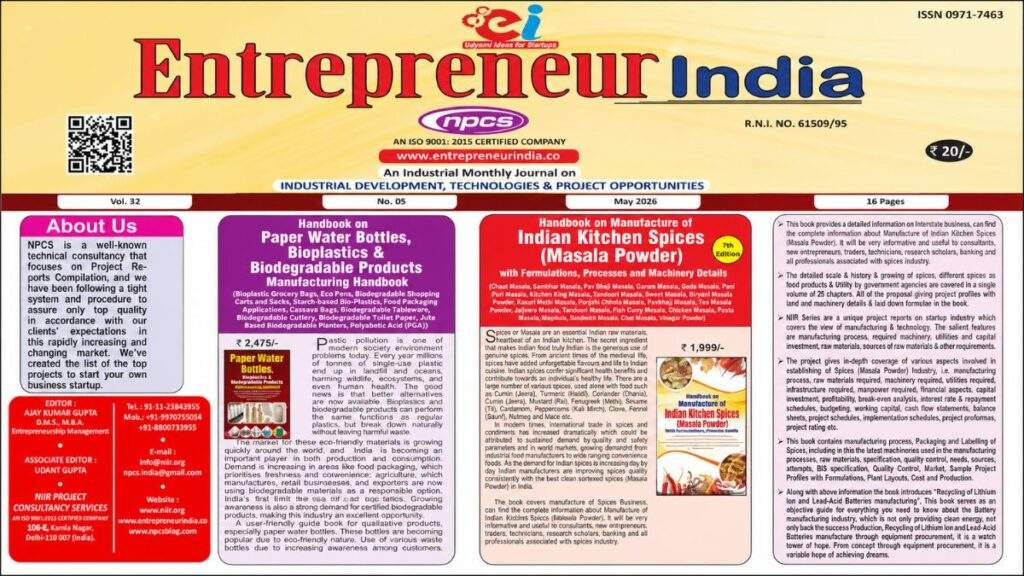
India is going through a strong period of industrialization. Rapid infrastructure development, government support, growing domestic demand and boosted exports are generating huge opportunities for manufacturing startups. Economists nationwide are now focusing on new, high-growth, manufacturable industries that have long-term potential, as opposed to the traditional jobs. NIIR Project Consultancy Services (NPCS) publishes the latest issue of Entrepreneur India May 2026 which is one of the best resources to find these opportunities. This issue contains a lot of detailed manufacturing business ideas, market analysis, project cost estimates and future trends of industry which can help the entrepreneurs to make better business decisions. As a startup founder, investor, MSME owner, or a first-time entrepreneur, this issue offers you valuable insights into some of the fastest-growing industries in India. Get Detailed Insights from This Book: Just For Starters: How To Start Your Own Export Business What is Entrepreneur India Magazine? Entrepreneur India is one of India’s most prominent industrial magazines covering manufacturing, new technologies and project opportunities. The magazine has been the navigational guide of entrepreneurs and industrial investors for over 30 years now published by NIIR Project Consultancy Services (NPCS). Entrepreneur India is not a regular business blog that just gives general information, it provides detailed industrial information, which is backed by research and actual project data. The magazine includes: Manufacturing business ideas Plant and machinery cost estimates Market demand analysis The rate of return and break-even information. Industrial technology insights Future growth opportunities This is very useful for business owners who are going to venture into manufacturing. Related Article: India’s Healthcare Manufacturing Sector Is Booming —5 High-Return Businesses. Entrepreneur India May 2026 Free Download of Entrepreneur India May 2026 The Entrepreneur India May 2026 issue is available for free download online through the official website. Download Here: Entrepreneur India May 2026 PDF Official Website: Entrepreneur India Top Manufacturing Business Ideas Featured in Entrepreneur India May 2026 Bioplastics and Paper Bottle Manufacturing One of the most standout features of the May 2026 edition is sustainable packaging and eco-friendly production methods. Governments across the globe have curbed the use of plastic; and organizations are moving quickly towards adopting environmentally friendly alternatives. The magazine delves into the opportunities in: Bioplastic carry bags Compostable products PLA-based materials Paper water bottles Eco-friendly packaging solutions The world’s largest beverage manufacturers are testing sustainable packaging systems, making paper bottle production one of the hottest start-up areas. This business holds a great potential, because of the following: Growing environmental awareness Government assistance to green industries Rising export opportunities The growth of demand from FMCG companies. This is a business sector that is future ready with the increased demand for biodegradable products in the coming decade. Explore This Book: Paper Water Bottles and Bioplastics Manufacturing Handbook Moringa Powder Manufacturing Business Due to its nutritional content and health benefits, Moringa is sometimes referred to as the “Miracle Tree”. India is the biggest producer of moringa and the demand for moringa powder has been rising in the world. Moringa powder will be utilized for: Health supplements Herbal products Nutritional foods Health and beauty products The Entrepreneur India May 2026 issue includes comprehensive details on project cost estimates for establishing a moringa powder manufacturing unit. Project Cost Estimate Capacity: 907 Kg per day Plant & Machinery: Rs. 134 Lakhs Total Project Cost: Rs. 466 Lakhs Rate of Return: 25% Break Even Point: 80% Since the consumers with interest on health is increasingly looking for natural products, the moringa business is expected to have considerable growth in international market. WPC Boards from Rice Husk The magazine also emphasizes on the increasing need for Wood Plastic Composite (WPC) boards using rice husk. India produces a huge amount of rice husk annually, and the modern technologies are available to use the agricultural waste product for useful industrial products. WPC products are used extensively in: Furniture manufacturing Modular kitchens Wall cladding Outdoor construction Interior decoration These boards are used extensively due to their: Waterproof Termite-resistant Eco-friendly Durable and long-lasting With the adoption of sustainable construction products, the WPC manufacturing has become a lucrative industrial opportunity in India. Blood Bag Manufacturing Business Healthcare manufacturing is one of the most secure and stable of all manufacturing industries. Blood bags and medical disposable products market is growing in the market, which is talked about in Entrepreneur India May 2026. The increase in hospitals, blood banks, and healthcare facilities is driving the demand for blood storage systems market. Growing number of hospitals, blood banks, and healthcare facilities is fueling the blood storage systems market. This kind of business offers the following benefits: Stable long-term demand Growing healthcare infrastructure High-value medical products Export opportunities Healthcare products are a critical business in any economic climate, so it’s generally regarded as somewhat recession-proof. Access Complete Business Plan: Blood Bags Manufacturing Plant Report Gas Atomized Aluminum Powder Manufacturing Gas atomized aluminum powder manufacturing is another high potential opportunity mentioned in the issue. It is an advanced industrial material with applications in the field of aviation, electric vehicles, military and 3D printing. Applications include: Aerospace components Electric vehicle manufacturing Defense equipment Advanced metallurgy Industrial 3D printing The rising interest in EV and industrialization in India is driving the demand for quality aluminum powder. This is a business that demands technical skills and of course a higher investment, but has a high level of profit, and a relatively low level of competition. About NIIR Project Consultancy Services (NPCS) NIIR Project Consultancy Services (NPCS) is one of the most trusted industrial consultancy firms in India. Over the past 30 plus years, NPCS has assisted entrepreneurs in business opportunities that are economically viable via industrial research, market analysis, and project consultancy. NPCS specializes in: Detailed Project Reports (DPR) Techno-economic feasibility studies Manufacturing startup guidance Market survey reports Industrial project identification Business investment analysis They are reported by and used by: Entrepreneurs MSMEs Industrial investors Manufacturing companies Banks and financial institutions NPCS is being used by thousands of businesses throughout India for hands-on guidance for industry and project
Profitable Manufacturing Projects in Afghanistan
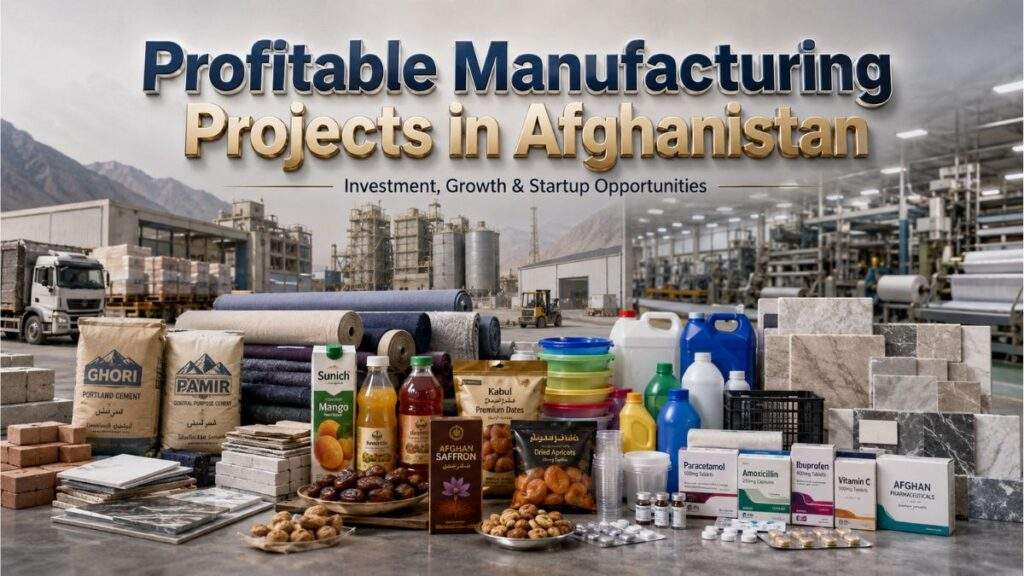
Manufacturing Business in Afghanistan Although Afghanistan is not often cited as a manufacturing hub, it provides one of the best industrial opportunities in Asia. There are significant gaps in local manufacturing in Afghanistan and many developing markets are already saturated with competition. It is a country with high level of agricultural and mineral resources; however, its processing facilities are less. This imbalance means the export of raw materials is done at a more affordable price than the import of finished goods. This is a huge opportunity for those who are entrepreneurs who are willing to be among the early entrants. Afghanistan has a wide export of raisins, almonds, pistachios, saffron and dried fruits each year. But, most of these products are not cleaned, graded, branded and packaged within the country. International companies process the articles in UAE, Europe and India and take the biggest benefits. It is the same in the case of construction materials and pharmaceuticals. Though there are high demand in Afghanistan, but Afghanistan is importing most of the building materials and medicines from neighboring countries. This is a golden opportunity for Indian entrepreneurs and MSME investors to play a first-mover advantage. Why Afghanistan Has Strong Manufacturing Potential Business opportunities can be the largest when the supply chain is incomplete. This is evident from the economy of Afghanistan. The country is still relying on imports for products which can be produced locally. There are some major market gaps such as: Limited facilities for food processing. Higher dependency on imports for medicines Low local production of construction materials Agricultural production that is big but not adequately processed. The increased demand in the cities of Kabul, Kandahar and Herat. This means that manufacturers have good profit margins available due to the combination of raw material availability and low competition. One of the other key benefits is that of exports. Afghan saffron, raisins, almonds and apricots already enjoy a good reputation in the international markets. The lack of an industrial processing and branded packaging layer. It is here that manufacturing companies can really make healthy margins. Related Article: Best Import Substitution Industries in Afghanistan Dry Fruit Processing: The Best Low-Risk Manufacturing Opportunity Dry fruit processing is the most feasible business opportunity for the entrepreneurs in all the manufacturing sectors in Afghanistan. Afghanistan already has high-quality: Raisins Pistachios Almonds Dried apricots Saffron But the major products are exported in their raw state. These products can have their market value enhanced significantly when the businesses involved in their cleaning, sorting, grading, packaging and branding do so. Why This Business Works The raw material supply is already available and there is a steady demand for exports in the following markets: UAE Germany Saudi Arabia India United Kingdom The investment in the medium scale processing unit is in the range of ₹64 lakh to ₹1.10 crore depending upon the level of automation and production capacity. Basic Machinery Required A machine used to clean and de-stone. Colour sorting machine Grade and size equipment Packaging line Cold storage unit Moisture testing devices The majority of the machinery can be obtained from industrial cities in India like Ahmedabad, Ludhiana and Pune. One of the most significant benefits of this sector is that it is non-violent. It is easier to meet the regulatory requirements than for pharmaceuticals. The margins on exports are much greater than in heavy construction manufacturing. Dry fruit processing is probably the best and most secure venture for the first time industrial entrepreneurs. Get Detailed Insights from This Book: Drying & Milling of Cereal Foods Construction Material Manufacturing: A Growing Domestic Market The cities of Afghanistan are growing at a high rate, however the capacity to produce building materials is low. Hence contractors heavily depend upon import from Pakistan, Iran and China. It provides good prospects in the following industries: Hollow concrete blocks Marble processing Tiles and stone finishing Cement-based products Another attractive manufacturing option for hollow concrete blocks is that the setup cost is relatively low and a demand exists. Why Demand Is Rising Across Kabul and other cities urban development projects are still on the rise. Construction materials are needed for residential buildings, commercial buildings, warehouses, and roads. A medium sized block manufacturing unit can manufacture thousands of blocks in a day and deliver to local contractors. Key Advantages Lower setup cost Simple machinery requirements Immediate domestic demand Stable recurring orders Another sector that has potential is the marble processing sector since Afghanistan has great reserves of marble, but lacks modern finishing facilities. The majority of the marbles produced are not cut or polished and the value added is left for foreign processors. Pharmaceutical Manufacturing: High Investment, High Margins Pharmaceuticals are the greatest opportunity in Afghanistan with a high barrier to entry and some great long-term returns. Medicines, including basic generic medicines, are mostly imported in Afghanistan. Most of the products used, such as painkillers, antibiotics, vitamin tablets and so on are imported. This gives a huge opportunity to local pharmaceutical formulation plants. The selection of products with strong demand. Tablets Capsules Antibiotics Vitamin supplements Pain relief medicines The cost of a pharmaceutical manufacturing project is typically between ₹1.5 crore and ₹4 crore, depending on the scale of production and the standards for compliance. Major Requirements WHO-GMP compliance Regulatory approvals Skilled technical workforce Clean-room infrastructure Set-up is more complex but operation margins can be very high after approvals are given, due to limited competition. It is the best place for experienced industrial investors who can deal with the regulatory and operational complexity. Access Complete Business Plan: India Pharmaceutical API Market Report Why Indian Entrepreneurs Have an Advantage Indian companies currently are well established at using: Food processing Pharmaceutical manufacturing Industrial machinery Packaging solutions Export management Geographical proximity and ready access to machinery are other advantages for Indian entrepreneurs. Technical support and the availability of spare parts are relatively easy in the case of Industrial equipment import from India. Indian MSMEs have a good strategic edge in the rapidly growing manufacturing sector of Afghanistan.
Entrepreneur India April 2026: India’s Industrial Transformation Is Creating Business Opportunities Worth Billions
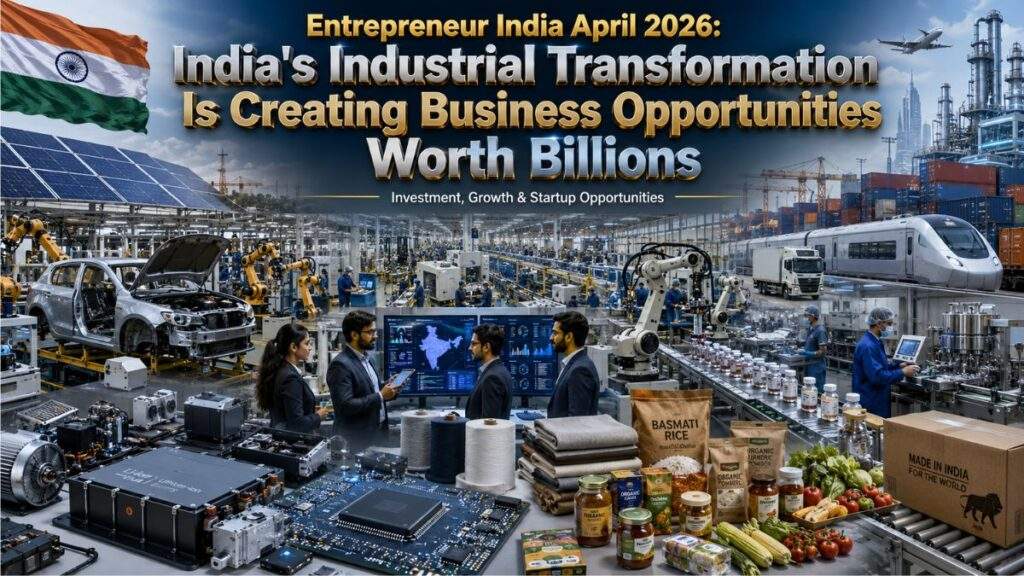
Entrepreneur India April 2026 India is now in a new phase of growth in the field of industries. The country is experiencing one of the biggest manufacturing growths in decades with the introduction of electric vehicles, use of advanced materials, green packaging solutions, and agro-processing as a few examples. Businesses that can be developed today in the right industries will be very lucrative over the next decade. NIIR Project Consultancy Services (NPCS), April 2026 issue of Entrepreneur India Magazine, features some of the most promising industrial opportunities that are now available in India. Entrepreneur India is different from the regular magazines which bring to light start-up stories or corporate news, it is all about real business opportunities supported by industrial research and project feasibility analysis. At a time when India is witnessing the growth of manufacturing sector due to various factors such as strong government support, escalating domestic demand, infrastructure development, and the global China+1 strategy, this edition comes at a perfect time. International companies are seeking manufacturing alternatives other than China, and India is among the most significant beneficiaries of this trend. Related Article: Entrepreneur India April 2026 Is Here — And It Could Change the Way You Look at Indian Manufacturing Why India’s Manufacturing Sector Is Growing So Fast Indian industry is on the rise due to a number of strong influences. The government is promoting domestic investment in manufacturing through various schemes such as Make in India and Production Linked Incentive (PLI) scheme in several industries. Concurrently, the growing urban demand and the surge in the demand of sustainable products are generating new business opportunities. The following are key factors in this growth: Expansion of EV and battery manufacturing Increasing demand for green products The development of infrastructure and logistics. Import substitution opportunities Growing demand for specialty chemicals. To give more attention to the use of renewable energy resources The April 2026 edition of Entrepreneur India delves into the sectors that are directly benefiting from these long-term economic shifts. High-Growth Business Opportunities Featured in Entrepreneur India April 2026 One of the best features of this issue is that it concentrates on industries that are scalable for the long-term and have a high future demand. Lithium-Ion Battery Assembly The Indian electric vehicle industry is rapidly expanding, leading to a significant demand for lithium-ion batteries and energy storage solutions. It is expected that Battery Manufacturing will be one of the largest industrial sectors in the near future in the country. There are opportunities in this sector for work in the following occupations: EV battery packs Solar energy storage Industrial battery systems Consumer electronics batteries Indian Government is also giving a push to electric mobility and entrepreneurs interested in this business might reap huge benefits in the coming years. Get Detailed Insights from This Book: Lithium-Ion & Lead-Acid Battery Production Get Detailed Insights from This Book: Just For Starters: How To Start Your Own Export Business Rice Husk Biodegradable Cutlery As regulations start to take effect and plastic bags are enforced for all consumers, there is a growing need for biodegradable options. Rice husk biodegradable cutlery is an ongoing business that emerges as profitable since it helps the conversion of agricultural waste to eco-friendly products. The following are some of the key benefits of this enterprise: Low-cost raw materials Growing export demand Eco-friendly market positioning The support for sustainable manufacturing is provided by government. It’s a good example of the conversion of waste materials to commercially useful materials. Carbon Fiber Reinforced Polymer (CFRP) The applications of carbon fiber reinforced polymer are in the fields of aerospace, automotive, railways, renewable energy and construction. India currently has significant import dependence on CFRP products, thus presenting a high level of import substitution potential for domestic CFRP manufacturers. The sector has potential due to: High industrial demand Strong profit margins Advanced manufacturing growth Long-term infrastructure expansion View Full Project Details: Carbon Composite Fiber Manufacturing Plant Report Hesperidin and Pectin Extraction The magazine also makes an in-depth focus on opportunities for citrus peel processing. Citrus waste has been used to extract hesperidin and pectin, which are relevant for the food processing, cosmetic, pharmaceutical, and nutraceutical industry. This business model is desirable because: Raw materials will cost less. The finished products are of high value. Demand is increasing globally Increased profitability due to waste utilization. Circular Economy Manufacturing Is Becoming a Major Trend One of the key topics in the April 2026 issue is circular economy manufacturing. Agricultural waste, food waste, or industrial waste are increasingly being used for profit by businesses. Entrepreneurs are now converting waste into: Biodegradable packaging Nutraceutical ingredients Industrial chemicals Eco-friendly consumer products These businesses can usually enjoy high profitability as the raw material costs are low, and there is a demand from the consumer for “green” products, which entitle them to premium prices. The push towards sustainability in the environment is likely to bring even more opportunities from this segment in India in the coming decade. Why Import Substitution Businesses Have Huge Potential India still has a high dependence level on imports for many industrial products and specialty materials. This opens up huge possibilities for Indian entrepreneurs to set up indigenous manufacturing units. The following industries have high import substitution potential: Specialty chemicals Battery materials Advanced engineering products Industrial minerals High-performance materials The government actively encourages domestic production by providing incentives, subsidies and infrastructure support. There is potential for policy-driven growth as well as strong demand for entrepreneurs to enter these sectors. How NPCS Helps Entrepreneurs Start Manufacturing Businesses NIIR Project Consultancy Services (NPCS) is one of the most experienced project consultancy and industrial research firms in India having over 45 years of experience. NPCS provides support for entrepreneurs through: Detailed Project Reports (DPRs) Techno-economic feasibility studies Market research reports Plant setup guidance Financial projections Bank loan documentation Selecting suitable machinery and processes Thousands of entrepreneurs, MSMEs, investors, financial institutions use the NPCS reports to assess the manufacturing opportunities and industrial projects. The main strength of NPCS is its specialization
Export Business from India: Soda Ash Market, Top Buyers & Margins
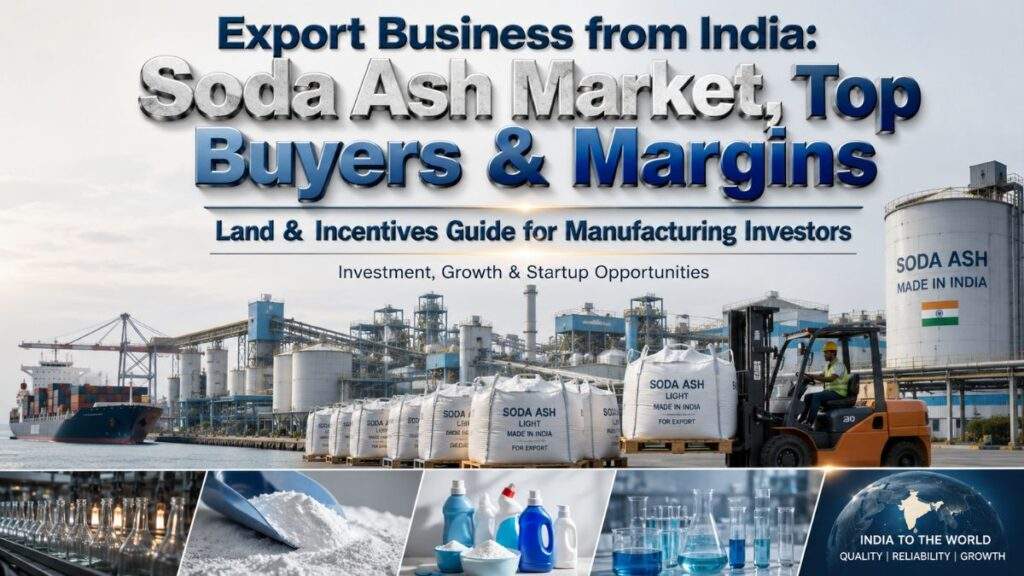
soda ash export business India India is emerging as one of the world’s leading producers of soda ash. Although many of the entrepreneurs are involved with food processing or export of textiles or pharmaceuticals, the real business of the future is not going to be picked up in these businesses, but rather in industrial chemicals especially in the export of soda ash Business in India market. The soda ash production in India reached 3,279 thousand MT during 2024-25 and the installed production capacity is over 3,714 thousand MT. This advantage is a huge one to the exporters of India in the international market. The Ministry of Chemicals and Fertilizers, Government of India says that the sector is witnessing a massive scale of industrialization as the alkali chemicals industry now accounts for over 71% of India’s chemical production. Sodium carbonate, or soda ash, is used in many applications, such as: Glass manufacturing Detergent production Textile processing Water treatment Paper industry Metallurgy Chemical manufacturing The demand for soda ash is continuing to increase rapidly as construction and packaging and consumer industries expand throughout Africa and Southeast Asia. This presents a big opportunity to the Indian MSMEs and traders of Chemicals. Access Complete Business Plan: Soda Ash Market in MENA – Growth & Forecast to 2029 Why Soda Ash Export Business is Growing Fast Demand for soda ash is growing world-wide due to increased industrial production in developing nations. New glass factories are being established in African countries and beverage packaging facilities are growing in Southeast Asian countries, and manufacturing of textile and detergent is expanding. India is a big advantage due to Gujarat’s cost-effective chemical ecosystem. There are large industrial clusters of soda ash manufacturing in Mithapur, Sutrapada and Saurashtra with competitive price. Ports like Mundra, Kandla, Pipavav are located nearby, which also lowers shipping costs and enhances efficiency in exports. Thereby, it enables Indian exporters to be competitive against the Chinese and European suppliers. Major Growth Markets for Indian Soda Ash Kenya Tanzania Nigeria Ethiopia Vietnam Indonesia Bangladesh UAE The countries are augmenting their imports as local production of soda ash is still limited in these countries. Get Detailed Insights from This Book: Just For Starters: How To Start Your Own Export Business Why This Business is Attractive for New Entrepreneurs The biggest advantage of this sector is that the entrepreneur does not have to invest in a large scale manufacturing plant in the beginning. A full-scale soda ash plant requires a large investment, but export trading and processing business can be started with comparatively lower investment. A trading export business primarily concentrates on: Purchasing soda ash from Indian manufacturers Managing export logistics Handling buyer relationships Ensure quality and documentation International shipping coordination Through this model, the MSMEs can be a part of the export of chemicals without investing hundreds of crores on manufacturing infrastructure. Related Article: Caustic Soda Flakes Business Opportunity: High‑Demand Chemical Startup Model for Import Substitution & Exports Most Profitable Soda Ash Business Models 1. Dense Soda Ash Export Trading This is the simplest means of entry for first-time exporters. Entrepreneurs procure sodas from the manufacturers in India and sell it to the foreign buyers. Investment Required: Rs. 60-80 lakh Expected Margin: 4-6% Benefits Lower startup investment Fast business scalability No manufacturing setup required Risks Freight cost volatility Thin margins Delays in buyer’s payments 2. Light Soda Ash Reprocessing In detergent and textile industries light soda ash is preferred due to its quick dissolution rate. Dense soda ash can be processed into light soda ash by grinding and calcination system, which is suitable for use by entrepreneurs. Investment Required: Rs. 3-5 crore Expected Margin: 18-22% This is much more profitable than trading. 3. Soda Ash + Sodium Bicarbonate Business It is one of the most profitable sectors in chemical export business. Sodium bicarbonate is made from soda ash and is used extensively in: Food processing Pharmaceuticals Baking industry Industrial cleaning Investment Required: Rs. 8-12 crore Expected Margin: 25-35% Bicarbonate products fetch premium prices and so the exporters making bicarbonate products get better profits. Get Detailed Insights from This Book: Handbook on Fruits, Vegetables & Food Processing with Canning & Preservation (3rd Edition) Why Gujarat is the Hub of Soda Ash Export Business Gujarat is the leading state in the production of soda ash in India due to: Well-developed research and development capabilities Availability of marine salt and limestone Export-friendly ports Established industrial clusters Lower logistics costs The biggest manufacturers are: Tata Chemicals GHCL Limited Nirma Limited DCW Limited Gujarat has a good supply chain, warehousing, transportation and export facilities for MSMEs. Government Support for Chemical Exporters Indian Government offers several benefits to export companies in the chemical sector. Key Benefits Available RoDTEP export incentives CGTMSE has introduced collateral-free MSME loans. Udyam registration benefits The export credit insurance provided by ECGC. PCPIR for infrastructure of industries Chemical investment regions such as Dahej PCPIR in Gujarat enable businesses to cut down on their operational costs by leveraging shared infrastructure and logistics facilities. Biggest Risks in Soda Ash Export Business All exporting activities are risky and exports of soda ash are no exception. Major Challenges Chinese price dumping in global markets Sudden rise in freight charges International payment risks USD-INR currency fluctuations Successful exporters reduce these risks through: Long-term buyer contracts ECGC insurance coverage Supplier diversification Currency hedging strategies Choose the right startup backed by real market demand How NPCS Helps Entrepreneurs For first-generation entrepreneurs, launching an export business could be a risky venture, if conducted without proper planning. NPCS (Niir Project Consultancy Services) does professional project report preparation and feasibility studies for businesses. NPCS services include: Detailed Project Reports (DPR) Market demand analysis Financial projections Break-even analysis Machinery planning Export marketing studies and analyses Bank loan documentation support A professional DPR enhances the odds of getting financing and assists a business owner in his/her understanding of real profitability before investing. Conclusion Today, India’s soda ash export business is one of the best in the chemical export segment. India has:
Plastic Waste Recycling Plant in India: Setup Cost & CIPET-Backed Business Model
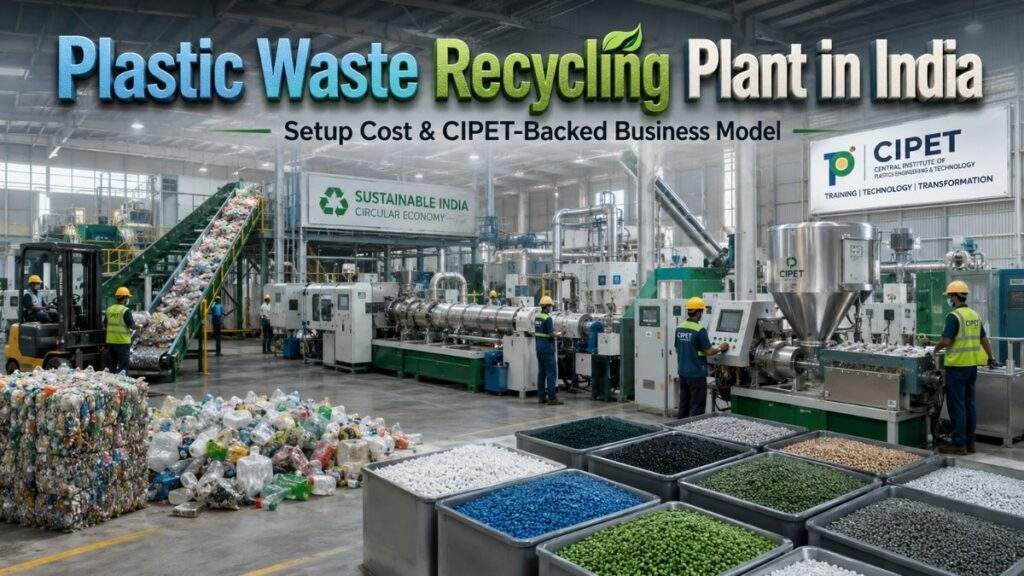
plastic waste recycling plant India India produces over 3.5 million tones of plastic waste annually, with less than 5% of it being recycled via formal processes. The rest of the waste goes into the rivers, drains, landfills and open dump sites. This is a problem that is increasingly emerging across the environment, but also a huge business opportunity for those who wish to join the recycling industry. The plastic waste recycling plant India market is witnessing a rapid growth as industries actively look for recycled plastic material and the plastic waste is faced as a problem. Now recycled PET, HDPE and PP are being purchased on a large scale by packaging companies, textile manufacturers, pipe manufacturers, and automotive suppliers. Government support is one of the biggest factors contributing to this growth. The Annual Report 2025-26 issued by Ministry of Chemicals and Fertilizers, Government of India, states that CIPET has established Plastic Waste Management Centres in Bengaluru, Bhagalpur and Varanasi with another center being set up at Sanand, Gujarat. This indicates India is investing in long term infrastructure for recycling sector. Related Article: How to Start Pulp-Based Beverage Packaging Unit in India (Plastic Ban Opportunity) Why Plastic Recycling is a Huge Company Opportunity. The demand for recycled plastic has grown rapidly, due to: India has experienced a significant increase in the use of plastics. EPR (Extended Producer Responsibility) rules Export market sustainability requirements Increasing industrial demand for recycled raw material Government focus on circular economy In today’s day and age, certified recycled plastic is needed to comply with environmental regulations. This has established a consistent industrial buyers’ market for recycling units. Concurrently, the availability of raw materials has also increased, thanks to the scrap dealers and municipal waste collection systems as well as the waste collection in Housing Societies. Setup Cost of Plastic Recycling Plant in India The investment amount varies according to the types of plastic waste and production capacity. Approximate Investment Range Plant Type Capacity Investment HDPE/PP Recycling Unit 500 kg/hour Rs. 1.5–2.5 Crore PET Bottle Recycling Plant 3–5 MT/day Rs. 2.5–4 Crore Multi-Layer Plastic Unit 2–5 MT/day Rs. 80 Lakh–1.5 Crore E-Waste Plastic Recycling 500 kg/hour Rs. 1.8–3 Crore The main machinery is basically comprised of: Plastic shredder Washing system Dryer machine Extruder Pelletizer Sorting conveyor Testing equipment The first step taken by most entrepreneurs is to lease industrial property instead of buying so as to avoid the strain of capital. Get Detailed Insights from This Book: Just For Starters: How To Start Your Own Export Business Most Profitable Plastic Recycling Segments PET Bottle Recycling Plant PET recycling is one of the best opportunities in India as the demand for recycled polyester is growing swiftly in the textile industry. Main buyers include: Textile manufacturers Polyester fibre companies Packaging manufacturers rPET film producers Surat, Tirupur, and Panipat are promising cities due to their high demand for textiles. Get Detailed Insights from This Book: Speciality Plastics, Foams (Urethane, Flexible, Rigid) Pet & Preform Processing Technology Handbook HDPE & PP Pellet Recycling Unit One of the top-rated MSME manufacturing enterprises is that it has moderate setup cost and a stable demand in the industry. The recycled HDPE and PP pellets are widely used in: Pipe manufacturing Plastic furniture Packaging products Automotive components If raw material sourcing is done in an efficient manner, a healthy profit margin can be achieved in the recycling unit. Multi-Layer Plastic Processing Multi-layer plastic waste consists of: Chips packets Biscuit wrappers Flexible packaging waste They are hard to recycle using traditional methods, and can be turned into: Alternative fuel Cement kiln feedstock Pyrolysis oil This segment is expanding due to the generation of tremendous amount of plastic packaging waste in India, which have lower value. E-Waste Plastic Recycling E-waste plastic recycling is a lucrative industry due to engineering plastics’ high market value. These plastics include: ABS HIPS Polycarbonate The recycled material is utilized by the electronics manufacturers and industrial component suppliers. Get Detailed Project Report (DPR): E-Waste Recycling Plant Business Plan How CIPET Supports Plastic Recycling Entrepreneurs CIPET has a significant contribution towards India recycling ecosystem. It’s Plastic Waste Management Centres offer: Material testing Quality certification Technical consultancy Skill development training Recycling technology support The new Sanand center in Gujarat will further bolster the western recycling network. This is crucial for MSMEs, as their initial stage might involve the establishment of an in-house testing laboratory, which can be costly. Licenses Required for Plastic Recycling Plant For a recycling plant to be legally running in India the entrepreneurs need: Consent to Establish (CTE) Consent to Operate (CTO) Pollution Control Board approval GST registration MSME Udyam registration Plastic Waste Management registration Other approvals may be needed for pyrolysis and/or fuel recovery projects. Build a profitable business with the right idea Importance of NPCS Before Starting the Project NPCS (Niir Project Consultancy Services) will assist to prepare Detailed Project Reports (DPRs) and feasibility study for manufacturing businesses. The typical NPCS reports contain the following: Market demand analysis Machinery selection Manufacturing process flow Plant layout planning Financial projections Break-even analysis Profitability calculations These reports can be helpful for entrepreneurs during the application process for: Bank loans MSME schemes Government approvals Investor funding A well prepared DPR helps mitigate business risk and enhances project planning. Future of Plastic Recycling Industry in India The future of the plastic recycling business India market looks extremely strong because sustainability regulations are becoming stricter every year. Large companies now require recycled content in packaging and manufacturing processes. There is not enough organized recycling capacity in India, and as a result demand will probably continue at a high level for many years. Entrepreneurs who focus on: Quality certification Stable raw material sourcing EPR compliance Industrial buyer networks Will be significantly better than the long-term in this industry. It can be easily understood with the increase of CIPET infrastructure and governmental backing that plastic recycling has developed into a significant industry in India. FAQs Q1. What is the minimum investment to be made in a plastic recyclers