Our Categories

Our Categories

NPCS

Smart Manufacturing

Startup Ideas in the Age of Smart Manufacturing: Opportunities in 2025

Startup Ideas in the Age of Smart Manufacturing: Opportunities in 2025 Read More »

As 2025 approaches, smart manufacturing increasingly becomes a touchstone of industrial transformation, throwing up numerous opportunities for the most brilliant entrepreneurial minds and ideas. Advanced technologies redefine production processes, and supply chain optimization has become increasingly critical. Smart startups take advantage of these trends in addressing some pressing challenges and, in turn, unlocking new business models. Redefining Supply Chains with Technology Integration Supply chain optimization is now priority number one because of the complexities of world trade and the pressure to create resilient systems. Startups looking at real-time tracking or predictive analytics with the use of digital twins can reap these benefits. Logistics IoT-enabled AI, for example, may even predict and advise alternative routes for disruptions to improve delivery times and minimize costs. Digital twin technology is supposed to virtualize physical assets so that manufacturers can glean insights that reduce downtime and improve efficiency. Also Read: Waste Management and Recycling Nearshoring, relocating production within closer reach of key markets, provides additional opportunities for startups to create platforms for vendor collaboration and local sourcing. Consequently, newer markets, such as Mexico, are beginning to boom with investments from these shifts, thus becoming attractive markets for innovating supply chain solutions. Revolutionizing Manufacturing Through Industrial Automation Put an effective step forward in the smart manufacturing world with startups that industrial automation could bring yet. When you bring on board artificial intelligence, robotics, and even machine learning, it’s all about the advanced ingenuity startups have in efficiency and reducing human errors. Some of the examples include adaptable robots in high-mix manufacturing environments or using an AI vision platform that does some autonomous automation and welding; those are major game changers in the industry. Automation, on the other hand, makes it possible to scale production easily, custom manufacturing, or flexible batch sizes without sacrificing quality. Startups moving into the domain should target developing solutions that fit with existing manufacturing ecosystems so real-time adjustments and predictive maintenance could be carried out. Project Reports: Best Business Opportunities in Mozambique, Africa Sustainability as a Catalyst for Innovation The adoption of sustainable manufacturing is no longer a burgeoning trend but is, instead, developed into a necessity. Start-ups can conceptualize ideas such as closed-loop systems capable of recycling materials, energy-efficient production technologies, and support solutions of the circular economy. 3D printing, for instance, can produce things locally and waste-free, while renewable energy integration minimizes reliance on non-renewable sources. Furthermore, the global sustainability movement is also advancing innovations in packaging and product lifecycle management, where startups could develop biodegradable materials or software tracking solutions to minimize carbon footprints. As well, consumers and businesses alike will only continue to swell market numbers for startups whose innovations focus on sustainability. Also Read  Food Processing and Packaging Industry Customization at Scale: The Role of Additive Manufacturing Additive manufacturing, or 3D printing, is now unlocking new avenues for mass customization. With this technology, even a startup can reach the niche markets quickly. It is all about producing complex parts with minimum wastage that makes it a friendlier option to conventional manufacturing. The new-age startups, which can use 3-D printing technology for specialized verticals like aerospace, healthcare, and consumer goods, have been seen to adopt lightweight aircraft components that cut down fuel consumption and prosthetics that add a totally new dimension in health care services. With the added benefit of rapid prototyping, this would shorten the time taken to roll out any product, which means a lot in dominating competitive markets. Startups can then create models that can be scaled to bridge the gap between industrial and consumer requirements. With applications of additive manufacturing in AI and IoT, it becomes more precise and adaptable for better integration into the manufacturing environment at the other end. Data-Driven Decisions: AI in Smart Manufacturing The AI technology stimulated the transition to smart manufacturing. AI start-up companies can bring into existence tools that will optimize production schedules, monitor quality, and predict equipment maintenance needs. AI could power supply chain optimization platforms that, for instance, forecast raw material shortages and propose alternatives to ensure seamless production continuity. Predictive analytics is another hot cake that start-ups can cash in on; this involves insights that disclose customer preferences so that the manufacturer will deliver exactly what the appraisal gives. Startups can, however, create solutions for cybersecurity to allow the connected systems to be fortified against vulnerabilities regarding data management and network security. These start-ups are certainly working their way towards artificial intelligence, which spells out for efficiency in manufacturing and somewhat broader goals toward resilience and sustainability in the industry’s future context. Also Read Food Processing and Packaging Industry PET Bottle Recycling Manufacturing Exploring Opportunities in Digital Twin Technology Digital twin technology, which translates to virtual models of physical assets, is reengineering manufacturing. Through it, startups can essentially put up platforms that will provide real-time monitoring of various production processes for predictive maintenance and resource optimization. A good example is how a manufacturer using digital twins can simulate the impact of changes to the design before it is actually done to minimize error and reduce costs. Tailored digital twin solutions are also now emerging in specific applications across different industries like automotive and pharma, where accuracy and assuredness are crucial. Thus, taking on supply chain optimization straight with digital twins ensures operations are carried out uninterrupted, even in disturbances. Investments in digital twin technologies will increase phenomenally, creating opportunities for startups to innovate and establish leadership within the smart manufacturing ecosystem. Conclusion The present times are not only offering new opportunities to the smartest businesses but are also changing the face of entrepreneurship. They are providing opportunities for enterprising individuals to establish startups with a focus on next-generation advanced manufacturing technologies, including artificial intelligence, additive manufacturing, and digital twin systems. While addressing critical industry needs such as supply chain management, operational efficiency, and sustainability issues.  The markets won’t cause enormous impacts, but they will actively push the boundaries of current capabilities and drive progress toward resilient, environmentally friendly manufacturing ecosystems. That is, 2025
smart manufacturing

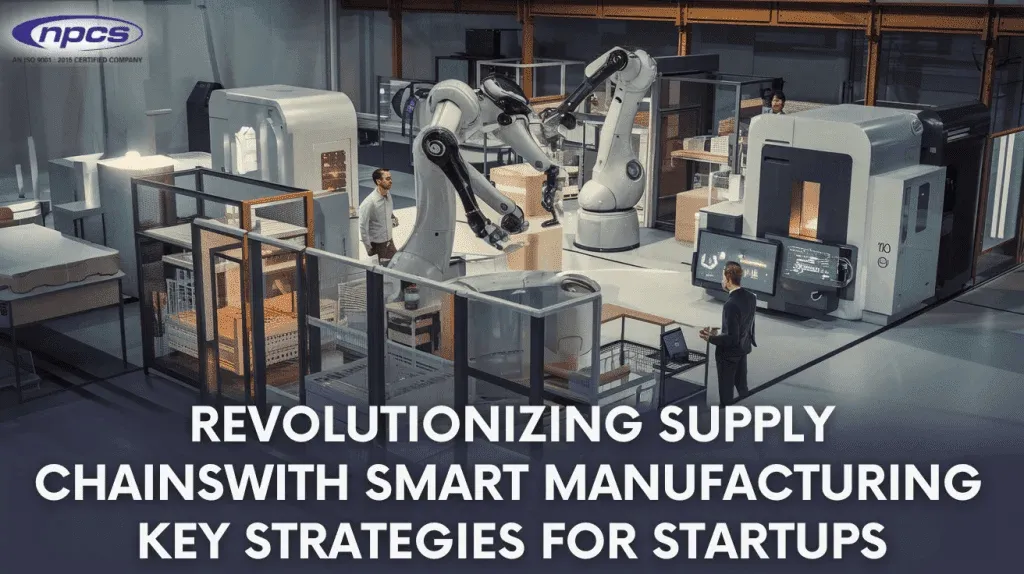
Supply Chains with Smart Manufacturing: Key Strategies for Startups

Supply Chains with Smart Manufacturing: Key Strategies for Startups Read More »

The choice of adopting sustainability practices is no longer a choice but a necessity to adapt to today’s changing food processing industry. The whole rethink on product sourcing and manufacturing to delivery is all aimed at reduction in the impacts on the environment through the performance of efficiency. Effective supply chain optimization cumulates the effort for achieving all these objectives; thus, it serves as a bridge between sustainable practices and business profitability. Here are the ways in which the food processing industry can address all supply chain challenges towards achieving a more sustainable future. Embracing Technology to Achieve Supply Chain Optimization The latest technologies integrated into the process work like IoT, cites AI and blockchain technology businesses that spent. However, startups need these technology processes and streamlined activities with optimal supply chain management. IoT-Integrations: Using IoT-enabled devices gives real-time visibility to goods, inventories, and transportation. For instance, the start-up in the food industry can use these sensors to monitor temperature-sensitive products during transportation, ensuring they are still in excellent condition and waste is minimized. Artificial Intelligence. It better forecasts demand tendencies, minimizes lead time, and facilitates improved decision-making through AI-driven analytics. For companies operating just above profit margins, AI is particularly beneficial. Blockchain: Blockchain guarantees transparency and instills confidence into the supply chain as it provides a secure ledger of transactions along with tracking every movement of the product. Read our Books Entrepreneur’s Start-Up Handbook: Manufacturing of Profitable Household (FMCG) Products with Process & Formulations (2nd Revised Edition) Handbook on Production, Recycling of Lithium-Ion and Lead-Acid Batteries (with Manufacturing Process, Machinery Equipment Details & Plant Layout) Not only do these technologies cut costs, but they also help startups increase customer satisfaction. As per the report of niir.org in 2024, roughly 30% effectiveness improvement was seen for adopting tech-driven strategies by companies in their supply chain performance. Developing Resilient Supply Chains Through Smart Manufacturing Smart manufacturing also uses advanced robotics and machine learning, as well as data-derived insights, and advances the nature of adaptive processes in manufacturing. By adopting this approach, the new startups can be able to make their processes more operationally efficient and reduce traditional dependency. Flexible Manufacturing System (FMS): This allows startup firms to switch production lines to meet changing consumer demands quickly, without incurring too much downtime. Predictive Maintenance: With AI and sensors, startups can predict before a breakdown happens and can avoid costly downtimes. Digital Twins: Companies will be able to create a digital twin of manufacturing and test new scenarios to improve processes without the risk in the real world. Sustainability as a Cornerstone of Supply Chain Optimization We will not have an alternative to sustainability; it is a necessity. To take up any sustainable practices in the supply chains, startups are not only reducing costs by doing so but are also learning to meet the growing consumer expectations of eco-friendliness in operations. Green Logistics: Startups can minimize their carbon footprints through optimized transportation routes and the use of electric and hybrid vehicles. Eco-friendly Packaging: It emphasizes biodegradable and recyclable materials that can reduce environmental impacts and boost brand image. Energy Efficiency in Manufacturing: Using renewable energy sources and energy-efficient machines contributes to smart and cost-effective manufacturing. Project Reports: Best Business Opportunities in Morocco, Africa Data-Driven Decision-Making for Enhanced Supply Chain Optimization With evolving technology, data has become a valuable asset to drive innovation in supply chain optimization. Startups use big data analytics and machine learning to gain actionable insights. These insights help startups improve operational efficiency and make better decisions. Startups use historical data and AI to detect demand patterns and supply chain breakpoints. Predictive analytics helps identify market trends for better decision-making. This enables companies to align production with real demand. As a result, waste and excess inventory are reduced. Real-Time Data Monitoring: Startups can deploy smart sensors and IoT devices that tend to monitor supply chains in real time and assure all issues are discovered and rectified as soon as they happen. This improves the resource-minimalization effort and delays in the supply chain. Supply Chain Visibility: Data integration tools allow startups to manage and track all their supply chains, from raw material sourcing to completion and delivery. The result of better visibility is that more informed decisions can be made faster and more accurately. Read Our Books:  Business Ideas for Startups in the Drugs & Pharmaceutical Industry with Project Profiles (3rd Edition) Building Strong Supplier Relationships with Smart Manufacturing Tools Establishing strong ties with suppliers has always been a major component in optimizing supply chains. Employing intelligent manufacturing tools, startups can build collaborative ecosystems in their supply lines, benefiting their suppliers and manufacturers. Real-time Data Analytics for Supplier Performance Monitoring: This is to monitor and assess supplier performance based on real-time data analytics to ensure they meet the quality standards as well as delivery requirements. It tends to trust and minimize the chances of supply chain disruptions. Automated Ordering Systems: Automated as smart manufacturing technologies turn it into just-in-time ordering, eliminate unnecessary inventories, and reduce the occurrences of stockouts. In this case, startup companies can ensure an effective, smooth process from suppliers to production.  Collaborative Platforms: Cloud-based platforms allow better communications between suppliers and the startup, improving order statuses, production schedules, and shipment updates. This makes the supply chain highly agile and flexible to changes in the market. Visit this Page for More Information Food Processing and Packaging Industry Agility in Supply Chain Management: The Role of Smart Manufacturing for Startups Indeed, startups have to keep themselves ever agile to survive, let alone thrive in the dynamic marketplace of today. At the heart of such agility lies smart manufacturing, the process of establishing agile supply chains that quickly adapt to changes in demand, market conditions, and other external disruptions. On-Demand Production: With advanced automation and robotics, startups are capable of adjusting production capabilities on the fly: ramping up or ramping down the output to reflect demand in real time. This makes it impossible for a business to overproduce; indeed, it only

msme new rules

MSME New Rules 2026: What Every Entrepreneur Needs to Know

MSME New Rules 2026: What Every Entrepreneur Needs to Know Read More »

With the new reforms, the Indian government has now transformed the Micro, Small, and Medium Enterprises (MSMEs) sector with new policies in order to develop environmental innovation, enhance operational efficiency, and enlarge its economically efficient contribution. The new MSME rules for 2024 would change the face of fund accessibility and monetarism for compliance streamlining and mooting taxes from government incentives. The updates are especially for field entrepreneurs to help them remain relevant and in compliance. This guide takes you through a number of notable extensions, like how to obtain an MSME certificate under the new regime. What’s New in MSME Classification in 2026? The 2024 reforms redefine the classification of MSMEs into more intrinsic and global categories. This classification now integrates investments in plant and machinery criteria with the threshold for annual turnover. The purpose of these thresholds is to simplify access to benefits from small companies while reducing the ambiguity regarding qualifications. For example, enterprises starting from a self-declaration of investment during the first period after establishment now have clearly specified lengths of time after which formal documentation becomes requisite. Startups aspiring to obtain MSME certificates from the very outset are now able to do so and gain access to the benefits of several government schemes, such as interest subventions or priority lending. These are without any turnover from exports. Hence, its financial benefit would boost MSMEs towards international trading competitiveness. Related Project Reports  Top Manufacturing Business Ideas List of Business with Huge Profits Project Profiles for Entrepreneurs Simplified MSME Certificate Process for Entrepreneurs Now getting an MSME certificate with the rules of 2026 is very easy. The digitized systems would have to be adopted by entrepreneurs bringing a streamlined procedure directed at reducing bureaucracy grudges. This is how it works: Unified Udyam Registration: It is done through a centralized registration and is integrated through the Udyam portal, where multiple registrations across departments are eliminated. GST Integration: Enterprises with valid GSTINs have automatic eligibility to apply under the easy applications, ensuring accurate turnover reporting and compliance with the new norms. Entitlements of Certificate: Grants MSME Certificate access to tenders and financial assistance and subsidies from the government, and now dah referring to the new rules applies to digitalized verification, which minimizes chances of fraud and ensures transparency. Enhanced Financial Assistance Programs for MSMEs The financial aid programs have been designed and revamped in such a way that they cater to both existing and aspiring entrepreneurs under the 2024 reforms. Though the Credit Guarantee Scheme for Micro and Small Enterprises (CGTMSE) has started to offer not just wider coverage but also lesser collateral in its scope to all MSMEs under valid certification, the government’s relationship with private lenders is a fast-track approval process. Furthermore, programs such as the Performance and Credit Rating Scheme have also seen an expansion to guarantee that the MSMEs have access to affordable loans; low-interest rates mostly feature highly rated firms. Increased emphasis has also been put on financial literacy, empowering the MSME segments to maximize these incentives. For budding entrepreneurs, this definitely requires the right resources to facilitate the changes ahead. Visit NIIR to access industry reports, business strategies, and detailed guides on how to strategically leverage the MSME new rules. These resources should enable your business to flourish in the dynamic environment. Streamlined Compliance and Reduced Red Tape for MSMEs One of the most significant features of the MSME Rules 2026 is that they will take the program closer to its objective of a minimal bureaucratic structure, almost micro-level into business-micro-level without institutional collaborations. In addition, compliance has made way without observing it fully, as follows: Totally without documentation, also simplified. Therefore, small businesses may now move towards growth rather than paperwork. Previous Conditions of Documentation  The entrepreneur had to face all the authority involved in different processes before the new guidelines brought these punctuation marks under one roof. The integration facility of uploading and tracking documents is going to be available through this portal for the entrepreneurs. It will also serve for the renewal of MSME certificates in a seamless manner. Integrated Tax Filing and Reporting  Thus, the alignment of the two portals, i.e., the GST and income tax portals, ensures that enterprises can submit their financial details without repeating entries. Less effort exerted would mean that compliance would be easier with minimal errors. Grievance Redressal There was hardly any ‘day-to-day’ business for MSMEs as far as they got a traditional helpline or grievance mechanism to resolve problems related to registrations and approvals. The new framework now allows a business continuity approach to the problems with helpline numbers as well as grievance mechanisms. Also Read: List of Small Scale Industries Boosting Market Access and Export Potential for MSMEs These rules for 2024 focus on empowering MSMEs to broaden their domestic and international trade footprints. This has been followed by new policies further simplifying the access of government tenders and enhancing grants related to the exports. Subsidized Participation in Exhibitions Eligible and certified MSME’s can apply for a subsidy of up to 95% for participation in trade fairs and exhibitions, which lets them expose their products on international platforms and establish collaboration across borders. Government Procurement The specific quota section will allow a certain percentage of government purchases for certified MSMEs, especially women and marginalized sections running these. Businesses bid for contracts with relaxed norms and price considerations. Digital Marketing Support Speaking about the government schemes, digital marketing efforts are actually subsidized and provide training for businesses to develop their online presence. All these efforts intend to make Indian MSMEs competitive, especially in e-commerce, in the global market. Read Our Handbooks Profitable Small Scale Industries: Money-Making Business Ideas for Startups (When You Don’t Know What Industry to Start)2nd Revised Edition Profitable Small, Cottage & Home Industries  Laghu V Kutir Udyog (Small Scale Industries) 5th Revised Edition (Hindi Language) Startup Projects for Entrepreneurs: 50 Highly Profitable Small & Medium Industries (2nd Revised Edition) Revised Benefits for Women Entrepreneurs in MSMEs Women-managed businesses are receiving particular

msme loan

MSME Loans Demystified: Funding Your Business Growth Made Easy

MSME Loans Demystified: Funding Your Business Growth Made Easy Read More »

Indeed, micro, small, and medium enterprises have done wonders in changing the face of India regarding its economy. In fact, the entire funding they have access to in the form of MSME loan is highly inaccessible to them. This would include knowing what goes on with loans in an MSME context, the very basic procedure of MSME Udyam Registration, and what it entails in benefits for business owners to allow them access funding for expansion. This is an easy and straightforward direction, so you are in an excellent position to make confident financial decisions. Understanding MSME Loans and Their Significance MSME loans are specific-purpose financial products meant for micro, small, and medium enterprises. Very important for supporting business activities like working capital, equipment purchase, as well as projects regarding expansion. Unlike conventional loans, this money comes with flexible eligibility criteria, compelling interest rates, and long repayment terms. Characteristics of MSME Loans: Flexibility: Tailored to many business needs. Collateral-Free Options: Most of the MSME loans are unsecured; thus, there are fewer barriers to access. Speed of Disbursement: The entire process has been consequently fast-tracked so as to permit fund allocation within the shortest possible time.  Also Read Features of MSME Loan These loans are promoted in part by governments and financial institutions as ways of promoting entrepreneurship and, consequently, bolstering the economy of India. According to the ministry of MSME, MSME Udyam Registration has defined the eligibility term for these loans in a simple manner for easier reach by aspiring entrepreneurs. Explore online resources like NIIR for comprehensive business guidance to make the most of these opportunities. The Role of MSME Udyam Registration in Accessing Loans This MSME Udyam Registration is really a government certificate that gives your enterprise identification as a legal MSME. Other than making it easy for you to access loans from any MSME, it altogether brings you different types of subsidies and tax advantages. In-depth about Udyam Registration: Clear Documentation: It is simple in the loan application process. Excellent Government Schemes: It makes you eligible for such schemes as the Credit Guarantee Fund Trust for Micro and Small Enterprises (CGTMSE). Reduced Interest Rates: Most lenders avail special rates for Udyam-registered MSMEs. Steps for MSME Udyam Registration Go to the Udyam registration portal. Enter details of Aadhaar and PAN. Provide information regarding business and investment. Submit the application for instant acknowledgment. Registered MSMEs find credibility in the financial ecosystem, thereby becoming attractive to lenders in this respect. Read more about it on Entrepreneur India, where they talk about using Udyam certification to grow. Related Project Reports Top Manufacturing Business Ideas List of Businesses with Huge Profits Project Profiles for Entrepreneurs Top Benefits of MSME Loans for Business Growth These loans remove many hindrances that could have been there and serve as a cushion in times of strain for the long-term business development efforts of small business owners who want their businesses to grow and develop.  Large Benefits of MSME Loans: Increased Cash Flow: Helps a business smoothen seasonal effects and adjust its inventory requirements. Modernization: Investment in state-of-the-art technology and machines could be possible. Market Expansion: Improved operation and scaling to new areas or new customer bases. Working Capital Support: Day-to-day conduct and its needs would not have to be adjusted. For full glimpses of market opportunities and financial planning, visit NPCS Blog, and these resources come with actionable strategies to help the MSMEs face challenges. Read Our Handbooks Profitable Small Scale Industries: Money-Making Business Ideas for Startups (When You Don’t Know What Industry to Start)”2nd Revised Edition Profitable Small, Cottage & Home Industries Laghu V Kutir Udyog (Small Scale Industries) 5th Revised Edition (Hindi Language)  Startup Projects for Entrepreneurs: 50 Highly Profitable Small & Medium Industries (2nd Revised Edition) How to Choose the Right MSME Loan for Your Business Especially due to the multiplicity of lenders and loan types nowadays, determining the appropriate MSME loan could become a critical step in aligning finance with business goals. The right choice can save time, reduce costs, and generally offer a better environment for financial stability. Components to Consider When Choosing an MSME Loan Purpose of Loan: Specify if it is to be taken as working capital or perhaps for expansion or purchase of equipment. Interest Rates: Compare the rates between banks and NBFCs with government schemes and preferably give attention to those higher for Udyam-registered businesses. Tenure Repayment: Choose a figure that corresponds to your revenue cycle. Collateral Requirements: Such as whether it should be the opposite of secured or unsecured loans, that would depend on the level of your assets or your risk tolerance.  Find online loan comparison engines and read reviews on various lenders. Sites such as Entrepreneur India offer credible lender insights with their updates on loan eligibility conditions.  All these would therefore mean that your MSME loans would be in line with your capacity and trajectory towards growth. Also Read: List of Small Scale Industries Government Schemes That Support MSME Growth Here are some initiatives that have been instituted by the government of India for uplifting MSMEs and making finances available to them. Most of the schemes linked with MSME Udyam Registration provide benefits to small and medium enterprises to a great extent. The popular government schemes for MSMEs include the following: Credit Linked Capital Subsidy Scheme (CLCSS): Grants subsidy assistance for technology upgradation. Prime Minister’s Employment Generation Programme (PMEGP): Financing of startups and rural industries. Stand-Up India Scheme: for SC/ST and women entrepreneurs for loans from ₹10 lakh up to ₹1 crore. Credit Guarantee Fund Trust for Micro and Small Enterprises (CGTMSE): Offers an unsecured credit facility to MSME units. In Which All the Following Schemes Count Minimize the financial burden to be carried by the new entrepreneurs. Encourage innovation and competition in the marketplace. Encourage inclusive entrepreneurship. Also Read: MSME and Its Importance to the Economy Tips for Ensuring a Successful MSME Loan Application An MSME loan is not a matter of filling out forms; it requires much preparation and strategic planning.

startup ideas

Top Startup Ideas for 2026: Transforming MSMEs into Success Stories

Top Startup Ideas for 2026: Transforming MSMEs into Success Stories Read More »

Micro, small, and medium enterprises have long been the shoulders that most economies around the world have rested on. As we head into top startup ideas for 2026 On the other hand, startup ideas are emerging as transformative tools to propel MSMEs to unprecedented levels. Registration for MSMEs is becoming easier, and at this moment, an opportunity can be unlocked to turn innovative ideas into msme business concepts that solve some of the key challenges faced by these enterprises. Digital Transformation Services for MSMEs As MSMEs grow in the digital economy, it becomes more obvious that they need to use technology in their operations. However, a majority of them still do not understand what kind of tools or platforms they need to do all this. A startup that is into digital transformation can prove really helpful for these MSMEs. What Would You Offer? Custom Software Development: Create solutions according to the specifications needed for MSMEs and provide them with everything from inventory management systems to CRM tools.  Digital Marketing Services: Enable MSMEs to have an online presence with SEO, social media, and paid advertising. E-Commerce Enablement: Facilitate their entry into online marketplaces like Amazon or Flipkart. Read Our Handbooks Profitable Small Scale Industries: Money-Making Business Ideas for Startups (When You Don’t Know What Industry to Start)”2nd Revised Edition Profitable Small, Cottage & Home Industries  Laghu V Kutir Udyog (Small Scale Industries) 5th Revised Edition (Hindi Language)  Startup Projects for Entrepreneurs: 50 Highly Profitable Small & Medium Industries (2nd Revised Edition) Why This Works This is tackling amajorg problem in changing the ways these businesses conduct themselves. Digital transformation not only will bring them up to speed in terms ofefficiency, but also allow them to discover sources of revenue that were previously unavailable to them. Startups providing such services would reach millions of MSMEs with low-cost, scalable solutions. Also Read: List of Small Scale Industries Sustainable Packaging Solutions for Small Manufacturers However, with all this talk of environmental awareness, most MSMEs in manufacturing find itchallengingd to get sustainable packaging for customer use and government requirements. Thus, the businesses with new startup ideas offering an eco-friendly packaging system provides the means for businesses to be aligned with sustainability. Product Ideas Plant-based biodegradable materials: Providing compostable materials as packaging solutions for plant-based products.  Reusable Packaging Systems: These includereturnable,e reusable packaging for industries such as food delivery or logistics. Custom Branding Services: Eco-friendly personalized packaging services that give an edge to MSMEs in their market. Also Read Food Packaging Industry Future of Packaging Industry Market Opportunity Sustainable packaging is projected to grow at a CAGR of over 7% between 2024 and 2028. Theexcellentt thing about MSMEs with sustainable practices is that they have a competitive advantage and also build brand loyalty. Targeting MSMEs is going to be a great opportunity for such a startup to re-establish itself in thevar-lucrative space. Explore sustainable material sourcing for MSMEs on entrepreneurindia.co. Financial Literacy and Compliance Solutions for MSMEs Finance and compliance remain a tough nut to crack for most MSMEs. Your startup could be crucial by providing specialized financial literacy and MSME registration. Service Areas: Assistance in MSME Registration: Demystifying the registration process online for start-ups; different types of MSMEs have different restrictions on online registrations. Financial Applications: Applications for tracking expenses, calculating taxes, or forecasting revenue. Workshops, Seminars, and Other Training: Training programs for MSME owners on budgeting, credit management, and financial planning. Importance Financial mismanagement is a major reason for the failure of MSMEs; hence, such solutions are critical, particularly towards making the gap smaller. Growing advocacy can be seen from such initiatives as government support for Udyam Registration. Read Our Handbooks: Profitable Small Scale  Industries:- Money-Making Business Ideas for  Start-ups when you Don’t Know What Industry to Start)”2nd Revised Edition Small Scale Industry: Concept Status and Policy Laghu V Kutir Udyog (Small Scale Industries) 5th Revised Edition (Hindi Language)  Small Scale Poultry Production AI-Powered Customer Support Platforms for MSMEs MSMEs often neglect customer support because of the constraint of resources. Developing AI-enabled customer services would do away with spending extra costs for the over heads and help MSMEs improve the standard of customer satisfaction. What will your startup offer? Chatbots for 24/7 Support: Facilitate basic customer inquiries with the use of AI chatbots instead of human agents spending hours to resolve the most complex issues. Multilingual Capabilities: Avail AI tools that offer understand and respond with capabilities to serve multiple languages for diverse customers. Applications of Popular Integrations: Develop solutions to integrate with common social media or use WhatsApp, email, or any of the social media channels most used by MSMEs. Benefits for MSMEs Operational cost reductions from automating repetitive tasks. Shorter response-time improvement in customer service. Scalability with highly effective ways of managing increasing clients. AI-enabled support in terms of customer relation is empowering to MSMEs and also facilitates increased competition with bigger organizations when it comes to the selling of their products. Skill Development Platforms for MSME Employees Sooner or later, most growing MSMEs find there is a skills shortage. New online or hybrid training providers for employees of MSMEs can fill the gap. This is important for emerging entrepreneurs with innovative startup ideas.  Features to be Included in the Course  Customizable Training Modules: Covering critical skills like information technology sales, marketing, and operations.  Certification Programs: To be accompanied by certificates recognized by the industry for boosting their employee credentials.  Interactive Learning Tools: Learning would have been made playful, also with real-world simulations. Why This Idea would Make Money Investing in learning by MSMEs translates to productivity improvement and greater innovation, as well as lower turnover of employees. Your start-up would therefore play a catalytic role in their growth as it explores a market eager for this kind of value. Local Supply Chain Optimization Platforms A common issue for MSMEs, especially those dependent on local suppliers and distributors, is the efficient management of their supply chains. A start-up developing supply chain optimization platforms could enable an MSME to achieve substantial cost

How to Apply for MSME Certificate

Unlocking the Power of MSME Certificates: Benefits and How to Apply

Unlocking the Power of MSME Certificates: Benefits and How to Apply Read More »

Micro, small, and medium enterprises (MSMEs) are the lifeblood of India’s economy, facilitating innovation and employment generation. The MSME certificate is an enabling document under which any business is classified under that category and is entitled to various benefits such as financial assistance, tax concessions, and simple compliance mechanisms. Whether you are an aspiring entrepreneur or an experienced businessman, MSME registration conversion will be nothing short of revolutionizing the way you operate. Hence, you should try to understand the importance and process of applying for it. What is an MSME Certificate and Why Does It Matter? An MSME certificate is an official recognition by the Government of India, affirming a business’s status as a micro, small, or medium enterprise under the MSMED Act of 2006. It is not merely a document but a gateway to numerous benefits for support and growth. Key Importance Simplified Loan Approvals: MSME registration makes businesses eligible for collateral-free loans under the Credit Guarantee Fund Trust for Micro and Small Enterprises (CGTMSE). Tax Benefits: Enterprises enjoy reduced direct tax liability and exemption from certain excise duties. Market Access: MSMEs registered can preferentially participate in public procurements and government tenders. Intellectual Property Support: Rebates on trademark and patent filing fees can provide affordable protection of innovations for businesses. Some Illustrative Practical Examples: For example, a small textile manufacturer with an MSME certificate can now get working capital loans at marginal rates of interest, thus ensuring uninterrupted production during specific seasons of high demand. Also Read List of Small Scale Industries Who Can Apply for MSME Registration? Eligibility and Criteria According to the government, the eligibility for MSME registration is based on the investment and turnover of an entity. Revised Classification Norms (as updated in 2020) Micro Enterprises: Up to ₹1 crore investment, up to ₹5 crore turnover Small Enterprises: Investment up to ₹10 crore and turnover up to ₹50 crore Medium Enterprises: Up to ₹50 crore investment, turnover up to ₹250 crore. Entities Eligible Any proprietorships, partnerships, private limited companies, and LLPs can apply and even take up manufacturing, services, and, recently, some retail and whole businesses. Application Steps Self-Assessment: Analyze the financial parameters of your business to check whether it qualifies. Udyam Portal Registration: This is mandatory Udyam registration for making an application. One-stop online platform by the government for applications. Upload Papers: Make sure your Aadhaar, PAN, GSTIN, and bank details are ready. Read Our Handbooks Profitable Small Scale Industries: Money-Making Business Ideas for Startups (When You Don’t Know What Industry to Start)”2nd Revised Edition Profitable Small, Cottage & Home Industries Laghu V Kutir Udyog (Small Scale Industries) 5th Revised Edition (Hindi Language)  Startup Projects for Entrepreneurs: 50 Highly Profitable Small & Medium Industries (2nd Revised Edition) Benefits of MSME Certification: Financial and Beyond Gaining an MSME certificate is much more than just the financial benefits. It reduces entry barriers to a plethora of avenues that could put in place the machinery for ramping up growth and development of an industry. Subsidized Loans: MSME loans are very economical, with interest rates starting from about 7-8% to fund activity states where businesses do not hit anything above their financial responsibilities in state expansions. Export Assistance: Subsidies on export shipping lines and reduced shipping costs are some of the perks for MSME enterprises that engage in the competition outside their countries. Technology Upgrades: Adoption for small businesses through government grants on technology makes them be at par with the economy, which now is all-round-the-way to digital. Legal Safeguards: Any MSME under the Delayed Payments Act promises immediate payment from buyers, mostly multinationals. This is how and by what benefits many business establishments not only survive today but thrive in competitive markets. A number of such case studies on success tracked by an MSME are available at Entrepreneur India. How to Apply for an MSME Certificate: A Step-by-Step Guide The procedure for obtaining an MSME certification has become very easy through the online Udyam portal. Here is a detailed guide to help facilitate the registration process: Navigate to the Udyam Portal If you have decided to upgrade your MSME company, the Udyam Register portal is now the official government website for MSME registration. It requires authentication by using a mobile number linked to Aadhaar. Enter Business Information Input your business name, address, PAN, and GSTIN (if applicable). For any person carrying on more than one business, each of them will require separate registration. Classification of Your Company On the basis of the capital investment and turnover, choose the category of micro, small, and medium. You can make use of the calculator available on the portal for the verification of these metrics. Upload Documents: Most of the paperless are Requires Aadhaar and PAN numbers for persons.  GSTIN for businesses liable for GST. Last Submit and Receive Certificate: On reviewing your application and making the submission, you will receive the MSME certificate in your email with a unique registration number for official usage.  Related Project Reports:  Top Manufacturing Business Ideas List of Businesses with Huge Profits Project Profiles for Entrepreneurs, Stratus Also Read MSME Business Ideas Common Mistakes to Avoid During MSME Registration However, though the process itself is very simple, there are several mistakes that can occur that can cause delays or rejections. Then avoid them to have a successful registration. Discrepancy in Information: The information mentioned on Aadhaar, PAN, and GSTIN should match each other. Any minuscule mismatch might create an error in the application. Wrong Classifying of Enterprises: By miscalculating the investment and turnover, most of the companies wrongfully classify themselves. Verify them by using the criteria of the government. Not Mentioning GST-Topline Businesses: A company liable for registering under GST should state its GSTIN while carrying out registration. This omission can cause a delay in the issuance of certificates. Ignoring the Renewals Now: Udyam registration does not imply renewal; however, all businesses must update their information in case of a change in the investment or turnover figures. This way, you will be able to prevent

msme registration

MSME Registration Simplified: A Step-by-Step Guide to Kickstart Your Business

MSME Registration Simplified: A Step-by-Step Guide to Kickstart Your Business Read More »

The adventure of starting a business is thrilling but also has its disadvantages. For micro, small, and medium enterprises in India, MSME registration is important for availing of government schemes, taking loans, and many such things. Here is a guide that provides you the MSME registration process and unlocks business growth opportunities. What is MSME Registration and Why Does Your Business Need It? It is true that the Micro, Small, and Medium Enterprises (MSMEs) are the very backbone of the Indian economy in terms of GDP and employment. To encourage them actively, the government of India announces various incentives for those businesses completing their MSME Udyam registrations. Key Benefits of MSME Registration Financial Support: The registered MSMEs under different government schemes are entitled to avail themselves of collateral loans. Exemption in Taxes: Most of such businesses are eligible for proving tax subsidy exemptions. Easy Access to Market: Registered units are preferred in all government tenders. It is a legal remedy for delayed payments: MSMEs can claim legal protection against delayed payment by buyers. What is MSME Udyam Registration? MSME Udyam registration is completely electronic registration that was launched in 2020 to simplify the process. The online procedure supersedes the previous Udyog Aadhaar Memorandum (UAM) scheme to ensure that there is transparency and application without hassle. Also Read  List of Small Scale Industries Step-by-Step Guide to MSME Udyam Registration Whether you’re an aspiring entrepreneur or formally establishing an existing business, the MSME registration is a very easy process. Eligibility Criteria However, before registration commences, check if your business qualifies under the following MSME classifications, such as: Micro: investment in plant and machinery up to ‚¹1 crore; turnover not exceeding ‚¹5 crore. Small: investment not exceeding ‚¹10 crore and turnover up to ‚¹50 crore. Medium: investment not exceeding ‚¹50 crore and turnover up to ‚¹250 crore. Gather Required Documents These documents are necessary to ensure smooth processing: Aadhaar number of the owner of the business. PAN card and GSTIN. Business information (such as kind of entity, industry sector, etc.) Online Registration Process Go to the Udyam Registration portal. Use an Aadhaar number, which must be verified using an OTP. Fill in the information in regard to the business address, type of organization, and bank details. Confirm the information entered and obtain your unique Udyam registration number. Also Read  MSME  Modern India’s Development Engine Common Mistakes to Avoid During MSME Registration While being a simple-to-use process, MSME Udyam registration contains a few errors that can result in delays or rejection of applications. Here are tips to lessen the common pitfalls: Incorrect Business Classification It is essential to classify your enterprise accurately under the micro, small, or medium category. Mismatched data would then affect your eligibility for benefits. Refer to government guidelines for clarity. Skipping GSTIN Registration GSTIN is not mandatory for all MSMEs, but it’s convenient to have that for the registration process and avail more benefits. Misleading Financial Information Figures of investments and turnover must be consistent with all statutory documents, such as balance sheets and income tax returns. Any misrepresentation can be treated at a later date as a legal complication. Not Updating Details If there are any changes in the structure of business, turnover, or contact details, then add them as changes on the Udyam portal. Otherwise, your registration is considered inactive. Read Our Handbooks Profitable Small Scale Industries: Money-Making Business Ideas for Startups (When You Don’t Know What Industry to Start)”2nd Revised Edition Profitable Small, Cottage & Home Industries  Laghu V Kutir Udyog (Small Scale Industries) 5th Revised Edition (Hindi Language)  Startup Projects for Entrepreneurs: 50 Highly Profitable Small & Medium Industries (2nd Revised Edition) How to Renew and Update Your MSME Registration Even though MSME Udyam registration had been done once, it should be updated regularly. The registration does not really have an expiry date; once in a while, if there is a change in any detail of your business or the turnover, it has to be updated soon so that you keep availing yourself of the benefits. Renewal The Udyam Registration Portal does not allow renewal as was required under the erstwhile Udyog Aadhaar scheme. The only thing that businesses have to do is: To change the particulars of either investment or turnover. Notify the changes in ownership or in the form of the establishment. Updating Your Details For updating information regarding MSME registration: Login to your Udyam portal account by using your registration numberfollowed by thed OTP linked to Aadhar. Choose the “Update” choice. Provide the necessary information to be updated. Updating Is Important To make government schemes and loans available for you. To prevent discrepancies during audits or verifications. Keeps in accordance with the MSME classification criteria. Check for more tips on compliance maintenance at Entrepreneur India. Government Schemes and Incentives for MSMEs The government of India has instituted several beneficial schemes towards the empowerment of small enterprises by boosting their growth and innovation in this sector. This is to say that as a registered MSME, the benefits are at your disposal to widen the scope of your operations. Most Popular Government Schemes Credit Guarantee Scheme (CGTMSE): MSMEs will be provided collateral-free loans that reduce financial entry barriers. Prime Minister’s Employment Generation Program (PMEGP): Subsidy is provided to smaller units to start or grow activities by small businesses. Technology Upgradation Fund Scheme (TUFS): Provides funds to MSMEs for modernization of equipment and applications of new technology. Benefits of MSME Udyam Registration Reduced interest rate on loans. Access to the e-marketplace (GeM) of the government for procurement opportunities. Reimbursement of costs incurred in acquiring the ISO certification. These schemes can be utilized to their advantage. Keep yourself updated on the news regarding the schemes; regularly visit sites such as NIIR to access details about these entries into proposed tie-ups for effective navigation through the programs by businesses. Low-investment ideas are lucrative for young entrepreneurs in India. Related Project Reports  Top Manufacturing Business Ideas List of Businesses with Huge Profits Project Profiles for Entrepreneurs Tips to Maximize

Young Entrepreneurs in India

Young Entrepreneurs in India: Shaping the Future with Innovation and Passion

Young Entrepreneurs in India: Shaping the Future with Innovation and Passion Read More »

There lives the entrepreneurial spirit of India, which blossoms, with a lot of bright new minds that can be found. Young entrepreneurs in India revolutionize the business world and impact the national economy considerably. It gives new startup ideas and overcomes obstacles to inspire budding entrepreneurs. The Rise of Young Entrepreneurs in India Young entrepreneurs have become quite prolific change agents in India. They create solutions with startup ideas to very real problems by tapping into the company’s diversified talent pool and increasing technological access. Whether it’s in the area of climate change, improving education, or transforming healthcare, their impact is very real. Buddha’s country is a country of youthful creativity, with more than 50 percent below 25. This age-demographic advantage has made a huge contribution to the entrepreneurial euphoria. A generation of youth is turning their braver ideas from start-ups into successful businesses. There are legends like Byju Raveendran, the founder of Byju’s, who transformed the education sector, and Ritesh Agarwal, who has, say, redefined affordable hospitality with OYO. With this, government initiatives such as Startup India and Digital India have further boosted the entrepreneurs. These have important funding and mentorship support to lure youth into entrepreneurship and to think about innovative startup ideas.  Also  Read Best Industry for Business Innovative Startup Ideas Shaping the Indian Market They were all bright young minds capable of thinking outside of the box, and for most of them, the idea behind their startups is derived from challenges encountered daily by millions. They include diverse ideas in fields such as technology, sustainability, or society at large. By this, stock trading becomes a free affair for Zerodha and Nithin Kamath. The new-age innovators break taboos and spread awareness on women’s issues like health by setting up firms, such as Aditi Gupta’s Menstrupedia. Such entrepreneurship goes beyond innovation; it talks about the social good society, making it a tool for upliftment. Read Our Books Business Ideas for Startups in the Drugs & Pharmaceutical Industry with Project Profiles (3rd Edition) Profitable Small Scale Industries: Money-Making Business Ideas for Startups (When You Don’t Know What Industry to Start)”2nd Revised Edition The Complete Technology Book on Pesticides, Insecticides, Fungicides, and Herbicides (Agrochemicals) with Formulae, Manufacturing Process, Machinery & Equipment Details, 4th Revised Edition (New Arrival) Select & Start Your Own Industry (4th Revised Edition) (Best Seller) Challenges Faced by Young Entrepreneurs in India Young entrepreneurs in India have that spirit of innovation within them, but unfortunately, they have plenty of challenges to overcome. Funding is, of course, the greatest challenge. Most young innovators do not have access to enough resources to realize their start-up ideas. Investors, often in the guise of angels or venture capitalists, tend to be selective as they peruse requirements like proof of concept or traction before committing funds. Another mountain to scale is the tricky Indian market. Its diversity in culture, language, and consumer preferences makes it not easy to know the target audiences. To add to these challenges are several bureaucratic obstacles grossly annoying new entrants: lengthy registrations and compliance issues. Many budding entrepreneurs suffer from a lack of mentorship and guidance. It will take resilience, collaboration, and, of course, continued support from the government to overcome these challenges. Also Read Profitable Business in Automobile Sector Key Success Factors for Young Entrepreneurs in India A bunch of key factors shape the road to success for young business owners in India. They stand out in the tough market because they have a strong vision that blends with their ability to adapt, learn, and keep improving. Many entrepreneurs who’ve done well in India say, “To be a winner, you need to see failure not as a roadblock, but as a chance to learn something new.” Also, a startup needs a unique selling point to stand out from opponent companies. This can come from new ideas in the product, how they treat customers, or how well they run things. If we take Swiggy, for example. Sriharsha Majety, Nandan Reddy, and Rahul Jaimini started it. The company changed how food gets delivered in India. They focused on being fast and good, which helped them grab a big part of the market. Networking and forming strategic alliances are the final touches in adding foundation strength. Building partnerships with other companies, investors, and even competitors allows young entrepreneurs to pool their resources and knowledge. The growth of a business and its sustainability depend on the ability to surround itself with a conducive ecosystem of mentors, peers, and employees. The Role of Technology in Empowering Young Entrepreneurs Young Indian entrepreneurs nowadays employ technology as a booster to scale their businesses. It incessantly drives some of the most successful start-up ideas in the country, from AI-run solutions to data analytics. Through technology, these young businessmen simplified their operations, improved customer experience, and enhanced their decision-making on data. An example here is fintechs such as Paytm, which use mobile technology to provide smooth digital payments, fulfilling a requirement in largely cash-dominated India. This holds true for startups in fields like health care, which use telehealth and AI to bring their services to more areas lacking in health care. The rise of platforms such as e-commerce, Software as a Service (SaaS), and cloud computing has made it easier to enter various industries. Minimal initial investment is required from young entrepreneurs, allowing them to easily set up and grow their businesses like never before. In addition to that, these entrepreneurs reach an audience worldwide and compete on an international level as they adapt to the new digital trend and innovativeness. Also Read Top 12 Business Ideas & Opportunities for Start-Ups Conclusion Amazing is it that young entrepreneurs of India find a channel to the future of their own country through innovative solutions in problem-solving. They have the tendency of going beyond the run-of-the-mill industries, creating more opportunities for the generations ahead. What matters the most from these students is cultivated into successful innovation despite all the struggle in funds and markets. The entrepreneurial

manufacturing industries

Emerging Trends in Manufacturing Industries: Transparency Market Insights

Emerging Trends in Manufacturing Industries: Transparency Market Insights Read More »

It is the manufacturing industries that first embrace innovation and bring it to their economy and daily life. As reported in Transparency Market Research, the transformation of this sector by technology, sustainability, and global trends has pushed the manufacturing industries into revolutionary changes. This article attempts to list the recent developments and some insights into the manufacturing trends that continue to evolve. Automation and Smart Factories: The Digital Revolution Smart factories are revolutionizing the manufacturing industry. By automated systems, manufacturers have automated practically everything in routine production lines using AI, IoT, and, of course, robotics. Their integration eliminates redundancy and time-consuming operations while improving efficiency. For example, dealers with a preventive maintenance program based on prediction use AI-enabled components to prevent the failure of the machinery before the breakdown occurs and reduce measured inactivity.  IoT devices are used to collect current data in real-time and provide a basis for actions that should improve a process. According to a report released by Transparency Market Research, more than half of world’s manufactures will be early adopters in 2030, moving them toward advanced automation systems.  The biggest success in this regard is that of Gigafactories built by Tesla which uses robotics extensively so that productivity can be enhanced and maintained without compromising precision. As more businesses begin to work towards digitalization, redefining production processes will go a long way to increasing scalability. Also Read Profitable Business in Automobile Sector Related Project Reports Top Small scale Manufacturing Business Small scale business in India Sustainability: Green Manufacturing and Circular Economy Manufacturing companies are no longer permitted to consider sustainability optional. The transformation of the business model to sustainable practices, for example, is also required by more stringent environmental laws and by consumer demand for green products. A very promising circular economy model is also in use, eliminating waste and reusing resources in a way that is effective.  Green manufacturing practices, including the adoption of renewables and waste reduction, will be central to the business strategies of companies, according to Transparency Market Research. Companies such as Unilever and Apple have set high targets to make their entire operations carbon neutral.  There has also been an increase in investments in green technologies, such as solar panels and machinery that consumes less energy. Industries are also using less biodegradable materials and recycling initiatives, all of which contribute to reducing an individual’s carbon footprint. Adopting sustainability gives manufacturers not only the protection of the land but also the edge needed in the market. For in-depth resources on starting sustainable manufacturing ventures, read How to Start Recycling Businesses on NIIR’s blog. Advanced Materials: Revolutionizing Product Design Advanced materials are changing the landscape of product design for manufacturing sectors right through lightweight composites to bio-based plastics. This enables the manufacturers to come up with better, cheaper and even greener products. Companies like aerospace, automotive, and electronics lay emphasis on the application of advanced materials, according to the Transparency Market Research report. For example, graphene-a steel stronger than steel yet incredibly light-finds its applications in the batteries and flexible displays. Carbon fiber-reinforced polymers are taking the place of usual materials in construction due to their high strength and durability. These technological advancements will improve product quality and reduce production costs, which would benefit both parties: business, as well as customers. Manufacturers interested in leveraging the potential of advanced materials will have to increase their spending on research and development along with sourcing new suppliers to retain a competitive edge. Read Our Books Business Ideas for Startup in Drugs & Pharmaceutical Industry with Project Profiles (3rd Edition) Profitable Small Scale Industries- Money making Business Ideas for Startup (when you don’t know what industry to start)-2nd Revised Edition The Complete Technology Book on Pesticides, Insecticides, Fungicides and Herbicides (Agrochemicals) with Formulae, Manufacturing Process, Machinery & Equipment Details 4th Revised Edition ( New Arrival ) Select & Start Your Own Industry (4th Revised Edition) ( Best Seller ) Global Supply Chain Resilience: Adapting to Market Volatility Emerging global scenario and global political tensions have indicated the exposure of the whole manufacturing industry supply chains to vulnerabilities in a new paradigm. It has made manufacturers incline towards resilience and flexibility in their supply chain strategies. As per Transparency Market Research, trends such as nearshoring and regionalization have gained momentum. Companies are factoring distances into their production systems to control excessive dependency on very long ones with extremely complicated supply chains. For example, this would mean that industries located in Europe and North America actually increase their local manufacturing capacity, thus reducing overseas operational risks. Technological advancements-such as blockchain and real-time data analytics-are significant enablers in creating visibility in supply chains. Blockchain would ensure traceability and transparency in the sourcing of materials, while data analytics would provide quick decision-making while disruptions occur. Manufacturers can maintain themselves against future uncertainty by adopting such measures. For additional insights into supply chain innovations, explore this article on Global Supply Chain Trends by McKinsey & Company. Customization and Personalization: Meeting Consumer Demands But with modern consumerism comes the entire push toward mass customization among manufacturing industries-in that they have personalized products fit for specific needs. Advanced technologies such as 3D printing and AI-inherited design pave the way to allow manufacturers to offer personalized solutions at scale. 3D printing is no longer restricted to the confines of a single industry. As indicated in reports released by Transparency Market Research, 3D printing is venturing into industries such as healthcare and automotive. While prosthetics and even dental implants can be customized precisely for individual specifications, so vehicles are now engineered by automakers using AI to offer custom features down to aesthetic choices. This process not only increases customer satisfaction but also creates brand loyalty among consumers. The catch, however, is that it requires investment in flexible manufacturing systems and software solutions. For the sake of provision comfort, competition will be tight in the provision of personalized products. Also Read:  Small Scale Business Plans MSME Business loan? Conclusion Transparency Market Research explains that the

Small?scale business planning in India step by step

How to Start a Small Scale Business in India: A Step-by-Step Guide

How to Start a Small Scale Business in India: A Step-by-Step Guide Read More »

India’s small-scale industries (SSIs) form the basis of the economy by taking a lead role in employing its citizens and supporting exports as well. They generally operate with a smaller manpower and bear limited capital investment and localised markets. The industries range over different sectors, including textiles, agro-based industries, food processing, etc. Entrepreneurs are looking for small-scale business ideas. here are the complete guide to start How to Start a Small Scale Business in India.  The ministry for MSMEs states that the small businesses contribute over 30% towards India’s GDP, and millions of people work for them. Their decentralised nature allows them to thrive in both urban as well as rural locations. For this, the government provides a number of incentives, such as financial assistance, providing training, and supporting machinery costs. Related Project Reports Step to How to Start a Small Scale Business in India Identifying Profitable Small-Scale Business Ideas Picking the right business idea is a very important requirement for building a foundation. Consider five trending aspects businesses would like to dive into: Also Read Features of SME/MSME Business Loans First, take note of the factors that either qualify or disqualify a business idea, such as your experience, market demand, and available resources. All this will further assure that the idea you end up selecting is the best fit as viable and scalable for your end goals. Conducting Market Research Every good business starts with understanding the target audience. Market research allows a company to get an idea of consumer needs, competition, and potential profitability. Here’s how to perform effective research:  Indeed, solid market research makes it possible for you to develop a product or service that suits customer needs, which therefore increases the chances of success. Fulfilling Legal Requirements Well, these are essential for the smooth running of your business in terms of regulatory compliance: a checklist of legal formalities: Resources like NIIR Project Consultancy Services provide detailed guidance on complying with these legal requirements. Securing Funding and Managing Finances Initial capital is the biggest constraint for small-scale industries in India. Luckily, several means of finance are available:  Also Read  Efficient financial management is equally important. Such money-managing software includes Tally or Zoho to capture the flow of cash, expenses, and profits. Building a Strong Brand Identity Branding is what differentiates your services from the services you offer your competitors, and it helps you identify them with your audience. Here is how you can create a powerful brand: In building a strong and long customer relationship, trust and credibility are the main elements. Marketing and Selling Your Products Advertising is indeed for all initiatives that require their activities to be made known, as well as driving the actual sales. The mix of online and offline techniques can be most effective for small-scale industries in India on:  Scaling Your Business Once you have reached a level of stability in business, shift your attention to the area of expansion. Scaling might include: Reinvesting profits back into one’s business for growth that lasts. Conclusion Though starting a small-scale business might seem terrifying in India, it’s possible only if you plan and do it well. All the possible steps, from choosing the right small-scale business ideas to scaling up to operation levels, form very important steps in the business journey. Government schemes, marketing investments, and continuous innovations will take you away from the crowd.  FAQ’s What is the meaning of small-scale business in India?  Small-scale businesses are those having small start-up capital requirements, government subsidies, and specialised finance schemes available specifically for MSMEs. They provide flexibility in operations and the ability to tap into local markets with an opportunity to develop into larger enterprises over time. What are the best ways to choose an idea for a small-scale business? Start from a self-assessment of all interests, skills, and market demand. Research on how the customer needs and competitors can be judged. You can also rely on feasibility studies and trend analysis tools like Google Trends to get viable ideas. What is the legal requirement to start a small-scale business in India?  Some of the most critical requirements include the registration under Udyam for the MSME benefits, getting GST registration, obtaining a license according to the industry (FSSAI for food), and trademark registration for one’s brand identity. What are some government schemes available for funding small businesses? Programs like the Prime Minister’s Employment Generation Programme (PMEGP), Mudra Loans, and Stand-Up India provide loans and grants at low interest to entrepreneurs and aim at self-employment/self-growth.  What is the full form of MSME?  MSME refers to Micro, Small, and Medium Enterprises (MSME). What kind of issues do I face when starting a small-scale business, and how do I solve them?  Most challenges are related to securing funds, managing stiff competition, and finding skilled labor. Government financing has possible options to mitigate these. Contact Us

Have a business idea? Let's make it happen together-contact us now!


Contact Form Demo

This will close in 0 seconds

Translate »