Drone Manufacturing Business in India
The Number That Should Make Every MSME Founder Stop Scrolling
India relies on almost 100% of its components for drones, such as circuit boards, sensors, motors, and gimbals, from China. This is in a market that is already worth around ₹13,200 crore and growing at a CAGR of more than 20%. As per the ministry of Defence, the defence establishment has been placing procurement orders with startups and MSMEs under iDEX programme worth of ₹2,326 crore. And the government has now made it a point to ban the import of fully-fledged drones, with every drone sold in the country now being assembled in the country.
That’s an expenditure agenda worth ₹2,326 crore for procurement of Indian products which are yet to be produced in large numbers. Reflect on that for a while. The demand is guaranteed. The Buyer, in this case the Indian Armed Forces, is the most credit worthy buyer in the Country. But what is lacking is manufacturing capacity on the ground. It is that space that is the opportunity.
This is no prediction of the future. Ten months ago, in May, Operation Sindoor was a live battle field exercise that proved the need of indigenous drones for India’s national security. The government’s response was prompt – the spending on drones will be tripled in the next 12-14 months, says Drone Federation of India, which has more than 550 member companies. One of the most real opportunities that are available right now to the first-generation entrepreneurs and MSME founders who have even basic precision assembly capacity.
Related Article: Camera Drone Manufacturing: A Comprehensive Business Guide for Entrepreneurs and Industry Leaders
The Gap: 80% Imported, Zero Room for Complacency
As of early this year, the Directorate General of Civil Aviation (DGCA) has registered 29,501 drones in India. Delhi accounted for 4,882 units, Tamil Nadu 3,689 units, Maharashtra 2,516, Haryana 1,928 and Karnataka 1,928. Delhi led with 4,882 units followed by Tamil Nadu with 3,689, Maharashtra with 2,516, Haryana with 1,928 and Karnataka with 1,928. These are the states where the demand for drone is highest and no coincidence that these states are home to the industrial and defence clusters.
The problem is structural. While the government has banned import of fully-knitted drones from (effective from February 2022, per the Directorate General of Foreign Trade), India still has a small registered drone fleet and a projected increase in this number, which is not sufficient to support the country’s domestic production of enough drone components. Propulsion systems, flight controllers, LiDAR sensors and high-resolution cameras continue to be received from Chinese and Taiwanese sources as separate components. The import duty on parts of drones is in between 28% to 35% on HS Code 8806 (Central Board of Indirect Taxes and Customs). It drives up the costs for all Indian assemblers.
The dependence is critical for defence purposes. Surveillance drones are required for India’s land border of 15,106 kms and its coastline of 7,516 kms. Currently, the Indian army has drones from Israeli, American and domestic manufacturers, but with the political and strategic momentum going in favor of the post Operation Sindoor efforts, the army would like to have a large number of indigenous supplies. It’s at the component level where the MSME opportunity exists. Precision motor coils, polycarbonate frames, ESCs (electronic speed controllers) and payload enclosures are the components that can be produced in a 2,000/5,000 sq ft plant with an investment of ₹30/60 lakh in machines and equipment that makes news in the finished-drone market.
TABLE 1: State-wise Drone Demand, Registered Units & Key Industrial Clusters
| State | Registered Drones | Key Demand Sector | Industrial Cluster |
| Delhi / NCR | 4,882 | Surveillance, Logistics | Manesar, Noida Electronics |
| Tamil Nadu | ~3,200 | Agri, Defence, Inspection | Chennai Aerospace Corridor |
| Maharashtra | ~3,100 | Industrial, Film, Agri | Pune, Nashik Defence Hub |
| Haryana | 3,689 | Agri, Border Security | Gurugram Tech & MSME Zone |
| Karnataka | 2,516 | IT-Drone Integration, R&D | Bengaluru Aerospace SEZ |
| Telangana | 1,928 | Agri, Pharma Delivery | Hyderabad Drone Corridor |
| Gujarat | 1,338 | Port, Energy, Industrial | Surat, Ahmedabad Mfg Belt |
| Uttar Pradesh | ~1,200 | Agri, Border Use | Lucknow, Kanpur Defence MSME |
Source: DGCA Digital Sky Platform; Drone Federation of India (dronefederation.in)
The Opportunity: Policy Wind, Defence Demand, and ₹2,000 Crore Waiting
Indian manufacturers have found a fine but potent entry window at the confluence of three factors. The initial PLI scheme for drones and drone components had an outlay of ₹120 crore for a period of 2025-28 as per the Ministry of Civil Aviation, Press Information Bureau, and has been extended with a 20% incentive on value addition and minimum value addition of 40%. The minimum turnover threshold for MSMEs is as low as ₹20 lakh per annum. It’s really accessible.
Second, under the iDEX (Innovations for Defence Excellence) programme, grants are offered under the SPARK programme (and under the ADITI programme for deep-tech) for prototypes up to ₹1.5 crore. More than 400 procurement contracts have been inked with startups & MSMEs. The Defence Ministry has sanctioned orders worth ₹2,400 crore this year with iDEX firms, which is actual tendered value, and not estimates.
Third, the rate of GST on drones has been reduced to 5% (from 18–28%). This lowers the tax burden for consumers and makes domestic drones cost competitive with smuggled or grey market drones. DGCA has also enabled BVLOS (Beyond Visual Line of Sight) corridors in Telangana, Ladakh and Andhra Pradesh and has enabled delivery and survey work cases using a commercial drone.
In the case of the MSME entrepreneur, it is easy to see that the available entry points are the agricultural spraying drone, the defence-grade surveillance frames, the drone component sub-assemblies (which are available from larger OEMs) and the drone servicing and repair networks. All these need to be different levels of capital and skill. The most cost-effective approach is to build a small-batch drone assembly and component manufacturing facility as outlined in the sections below.
Get Detailed Insights from This Book: Handbook on Electric Vehicles Manufacturing
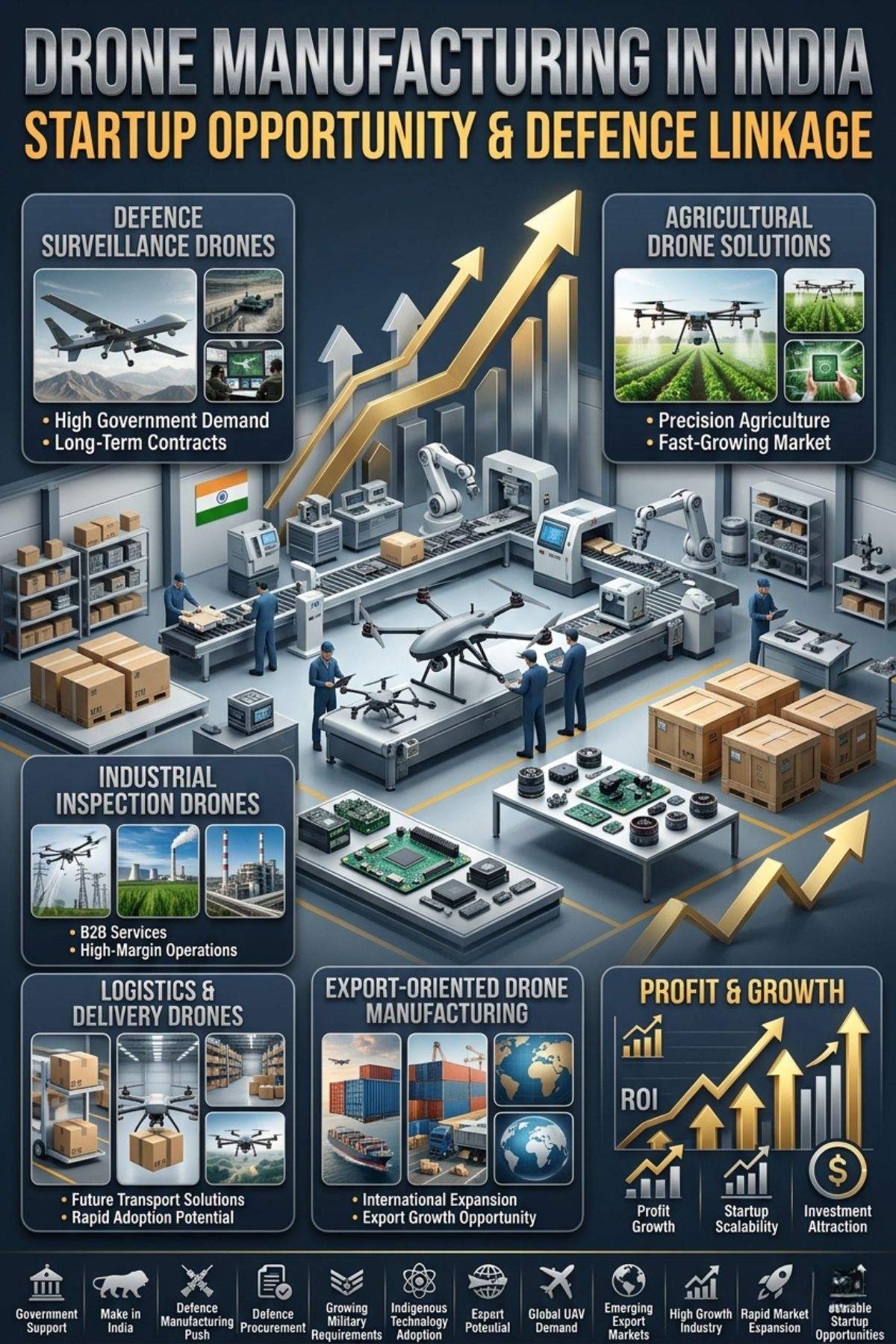
TABLE 3: Applicable Government Schemes, Eligibility & Benefit for a Drone Manufacturing MSME
| Scheme | Administered By | Benefit | MSME Eligibility Bar |
| PLI for Drones (₹2,000 Cr) | Ministry of Civil Aviation | 20% incentive on value addition; 40% min value-add threshold | Turnover ≥ ₹20 lakh (drones) / ₹5 lakh (components) |
| iDEX / DISC / SPARK | Ministry of Defence / DIO | Prototype grants up to ₹1.5 Cr (SPARK); up to ₹25 Cr (ADITI) | Any DPIIT-recognised startup or MSME under MSME Act 2006 |
| MUDRA – Kishor / Tarun | SIDBI / Scheduled Banks | Collateral-free loans ₹5 lakh–₹10 lakh (Kishor); up to ₹20 lakh (Tarun) | Business > 2 years, MSME-registered |
| CGTMSE | SIDBI / MoMSME | Credit guarantee up to ₹2 crore, no collateral | All eligible MSMEs with Udyam Registration |
| Startup India – DPIIT Recognition | DIPP, Ministry of Commerce | Tax exemption (3 years), fast-track IPR, self-certification | Entity < 10 years, turnover < ₹100 crore |
| Make in India – Defence Offset | Ministry of Defence | Mandatory 30–50% offsets for foreign OEM procurements, routed to Indian MSMEs | MSME with Udyam; DPB registration recommended |
Sources: PIB (pib.gov.in); DDPMOD iDEX Portal (ddpmod.gov.in); SIDBI (sidbi.in); Startup India (startupindia.gov.in)
How to Set It Up: A Realistic Step-by-Step Guide
Choose your entry segment first. The top three most easy-to-enter business ideas for a first-time entrepreneur with Rs 30 to 80 lakh funds are: (A) Agricultural drone assembly for agri-spraying (mass market, government subsidy-supported), (B) manufacturing of structural frame and enclosure for OEM supply (lower regulatory hurdles) and (C) drone servicing and DGCA-certified repair centre (recurring revenue, lower capex). This guide has been written for the full assembly (A) which is the widest assembly requirement.
- Register the Business — 2-4 Weeks: Business is registered as Private Limited Company or LLP at the Ministry of Corporate Affairs (MCA21 portal). Get Udyam Registration (free, udyamregistration.gov.in) — this is required to avail of CGTMSE credit guarantees and PLI benefits. Get DPIIT Startup India recognition (for entities with less than 10 years old and turnover under ₹100 crore). GST registration is required for an annual turnover exceeding ₹20 lakh.
- Secure Location and Infrastructure — 4–6 Weeks: Assembly space of at least 2,000 sq. ft with clean and dust-controlled environment is suitable for small batch production of up to 50 drones per month. The rental costs of industrial sheds in SIDCO estates in Tamil Nadu, rent a shed in MIDC zones in Maharashtra or GIDC clusters in Gujarat are in the range of ₹18 per sq. ft per month to ₹35 per sq ft per month. Whether you’re going to have access from the ground level, 3 phase power or good ventilation, these are all essentials.
- Machinery and Equipment — Budget ₹18–₹35 Lakh: Core equipment includes PCB soldering stations (₹1.5–₹2.5 lakh), reflow ovens for making SMDs (₹3–₹6 lakh), drone testing bench with vibration dampers (₹2–₹4 lakh), ESC programming and calibration rigs (₹80,000–ₙ1.2 lakh), 3D printers for prototype frames (₹60,000–ₙ1.5 lakh), and precision CNC router for carbon-fibre frames (₹6–ₙ12 lakh). Additional environmental testing equipment worth ₹4-₹8 lakh consists of basic environmental testing equipment including temperature and humidity chamber.
- Raw Material Sourcing: Flight controllers and sensors: Start from the importers in SP road in Bengaluru and Lajpat Rai market in Delhi, and eventually move towards domestic supply. Domestic suppliers of carbon-fibre tubes and sheets are Hindustan Composites Ltd. (Mumbai) and Tata Advanced Materials (Bengaluru). Motors and ESCs: Both Garuda Aerospace and Marut Drones have begun supplying to smaller assemblers. Domestic supply from companies making their base in Pune’s Rajiv Gandhi IT Park is beginning to come up for LiPo battery packs.
- Critical Path: (i) If you want to sell your drone commercially, you need to obtain the DGCA Type Certification (ii) Apply for Licence and Regulatory Approvals from DGCA on eGCA portal (egca.dgca.gov.in). This is the longest lead-time item– you can expect a new design to be available in 6-12 months. (iii) Wireless Planning and Coordination (WPC) Wing Equipment Type Approval for the frequencies used (2.4 GHz / 5.8 GHz). (iii) Registration of electronic components used (IS 616 and related standards) by Bureau of Indian Standards (BIS). (iv) Udyam Registration, GST, Factory Licence from state industries department.
- Team to Start: 1 R&D/design engineer (preferably with DGCA Remote Pilot Certificate), 4 assembly technicians (ITI or diploma level, can be trained in 3-4 weeks), 1 quality control technician, 1 procurement and stores person, 1 accounts/compliance person, 1 business development/sales person (who can target government tenders and agri-cooperative buyers).
- Timeline Estimate: Registration to first production: 9-14 months (DGCA Type Certificate is the limiting factor). With CKD (completely knocked down) assembly of an already-certified design on a licensed design, it takes 3–5 months.
TABLE 2: Investment Breakdown for a 30–50 Unit/Month Drone Assembly Unit
| Cost Head | Low Estimate (₹) | High Estimate (₹) | Notes |
| Factory Setup (rent deposit + fit-out) | 3,00,000 | 6,00,000 | 2,000 sq ft, 6-month deposit |
| Core Machinery & Equipment | 18,00,000 | 35,00,000 | Soldering, CNC, test rigs, 3D printer |
| Initial Raw Material Stock (3 months) | 8,00,000 | 15,00,000 | Frames, motors, ESC, sensors, batteries |
| DGCA Type Certification Fees & Testing | 3,00,000 | 8,00,000 | Depends on drone category |
| WPC / BIS Approvals & Legal | 1,00,000 | 2,50,000 | One-time regulatory cost |
| Working Capital (salaries, 3 months) | 7,00,000 | 12,00,000 | Team of 8–12 persons |
| Contingency (10%) | 4,00,000 | 7,85,000 | Buffer for delays/overruns |
| TOTAL CAPITAL REQUIRED | ₹44,00,000 | ₹86,35,000 | Realistic central: ~₹60 lakh |
Source: Industry interviews, SMERGERS MSME profiles, iDEX project documentation. Central estimate assumes semi-urban industrial zone, Tamil Nadu or Maharashtra.
Get Detailed Project Report (DPR): Electric Vehicles and E-Rickshaws
ENTREPRENEUR SPOTLIGHT
Agnishwar Jayaprakash | Garuda Aerospace | Chennai, Tamil Nadu
At a time when the entire word drone was not even in use in the Indian regulatory jargon, A. Agnishwar started Garuda Aerospace in Chennai. He launched his first agri-spraying drone model, worked directly with DGCA to develop the Drone Rules 2021 and even created India’s first company to get Type Certification and RPTO pilot-training approvals. Today Garuda holds a 25% market share in the Indian drone market, sells Kisan drones to NTPC, ISRO, and Indian Army and has pre-orders for more than 2500 Kisan Drones at a price of ₹4.5 lakh each. The lesson learned: “get to the regulatory room early.” The ones that helped to write the rules are the ones that are going to get the contracts.
Financial Snapshot: What the Numbers Actually Look Like
Capital Expenditure: ₹44 lakh (lean) to ₹86 lakh (full capacity). Central estimate for the operation of 30 units/month: ₹60 lakh (usually, the term loan is taken from CGTMSE bank with interest rates ranging from 9.5–11.5% at 30 units/loantime).
Monthly Operating Cost: At 30 units/month capacity, the salary bill is between ₹3.5–₹4.5 lakh, raw materials between ₹12–₱18 lakh (Cost per drone unit is ₹40,000–₱60,000 with respect to agricultural spraying drone), and rent and utilities ₹60,000–₱90,000. The total monthly burn is about ₹16–23 lakh.
Revenue at 60% Capacity (18 units/month): If sold at a conservative price of ₹1.1 lakh per agri drone (as per the subsidy window of the government) then the monthly income is around ₹19.8 lakh. Gross margin at this stage: 30-34%.
Revenue at 100% Capacity (30 units/month): Monthly revenue of ₹33 lakh. The net margin with full capacity is 18-24%. The annual revenue on full run is ₹3.96 crore. Net annual profit: ₹71 lakh – ₹95 lakh.
Payback Period: 26 – 38 months at realistic capacity utilisation ramp (60% Y1, 85% Y2, full by M30). If those contracts are won then it can be shortened to 18-22 months because of the per-unit margins (defence-grade drones are 35-50% more expensive than commercial-grade drones).
Identify high-growth industries before others do
Planning Your Entry: A Note on Project Preparation
Before investing money, a serious entrepreneur should carry out a techno-economic feasibility study; not a back of envelope calculation. For more than 20 years, entrepreneurindia.co and niir.org have been churning out detailed project reports and plant layout designs for a host of manufacturing units, including defence components, electronics assembly, precision engineering and more. These are the report types that are produced for their drone and UAV manufacturing project that a first-time founder needs prior to heading to a bank for a term loan or applying for PLI benefits: equipment specifications, sourcing maps for raw materials, regulatory compliance checklists, the financial projections at various scales, and worked examples of factory layouts. If you are taking on this field, the self-evident thing is that, if you are to make an application, it is not an alternative to independent technical validation of your business plan; it is a difference.
What You Should Do This Week
However, the window is not permanent. There have been accelerated defence procurement cycles by the Indian armed forces since Op Sindoor, DGCA clearances for commercial drone corridors, reduction in GST and increased PLI by 7 times. The only way out for India would be to start to increase manufacturing capacity at home, else in a few more quarters to come, the existing players in this market – OEMs like idea Forge, Garuda Aerospace, Raphe mPhibr – would strengthen their existing hold.
The single most actionable advice at this juncture is: choose the sector you are getting in, get one high quality, in-depth project report prepared which can serve as your loan application,PLI application and iDEX challenge application as they’re 80% similar to each other, do it in a concurrent, rather than a sequential manner.
You are probably already qualified, be it for electronics assembly, fabrication or even the automotive supply industry – this is about quality under high tolerance, not about building a rocket! What India’s armed forces require from you is to sort this out. niir.org. This week is fine.
Frequently Asked Questions
Q1. What is the minimum investment for setting up a drone manufacturing unit in India?
A minimum viable setup for assembly only would need about 44 to 60 lakhs capital investment including plant and equipment setup, initial raw material stock, DGCA certification and 3 months of working capital. A larger unit capable of producing 100+ drones per month will need between 1.5 to 2.5 crore. Loans can be obtained from SIDBI member banks, CGTMSE can provide credit cover up to 2 crores without collaterals to encourage founders lacking fixed assets to show as security.
Q2. What licenses and approvals are mandatory to sell drones in India?
DGCA Type Certification for each drone model to be sold in India is the main requirement. The Type certification can be obtained through eGCA.dgca.gov.in. In addition, WPC Equipment Type Approval for usage of radio frequency, GST registration, Udyam (MSME) registration, BIS for specific electronics, and state factory license are needed. Selling drones without Type certification can attract legal action under the new Drone Rules 2021.
Q3. Where do I buy raw materials for drone manufacturing in India?
Carbon fiber/composite materials are available through Hindustan Composites (Mumbai) or Tata Advanced Materials (Bengaluru). Electronic components, including motors, propellers, sensors, ESCs are sourced from authorized importers (e.g. In Lajpat Rai Market in Delhi, SP Road in Bengaluru) and domestic assemblers (e.g. Battery packs in Pune). Flight controllers can be bought through Indian distributors of those brands approved under current rules. As the PLI scheme provides incentives, it can serve as a medium-term goal for establishing domestic sourcing for components.
Q4. What are the expected profit margins for a drone manufacturing unit?
A unit with full capacity production (30 units per month of Agricultural spraying drone @ INR 1.1 lakh per drone) can achieve revenue around 3.96 crore per year. With operating profit margins in the range of 18 to 24% (at full capacity), the net profit can be between INR 71 to 95 lakhs per year. Defence drones, under contract from iDEX can offer 35 to 50% higher per-unit margins. Payback period is usually around 26-38 months for regular production.
Q5. What kind of government support can I leverage for a drone manufacturing MSME?
There are three government support schemes to consider; i) the production-linked incentive (PLI) scheme on drone manufacturing with incentives up to 20% value-added through the Ministry of Civil Aviation; ii) iDEX/DISC grants for prototyping, and up to INR 25 crore under ADITI projects for prototypes from ddpmod.gov.in; and iii) CGTMSE for collateral-free credit guarantees for loans up to INR 2 crore through SIDBI member banks. It is beneficial to utilize one of these schemes rather than solely relying on one, as they may be complementary.
Q6. Where can I access project reports and consulting for drone manufacturing?
Niir Project Consultancy Services (NPCS) publishes very detailed drone and UAV manufacturing project reports available at niir.org, which cover plant design, equipment requirements, cost estimations, regulatory procedures, market analysis etc. Entrepreneur India (entrepreneurindia.co) also produces comprehensive business plan/report series on various sectors. Both are excellent for understanding what documents are required for bank loans, PLI and iDEX applications.
Data Sources & Citations
- Ministry of Defence – iDEX Portal (ddpmod.gov.in)
- Press Information Bureau – India’s Drone Ecosystem, Feb 2026 (pib.gov.in)
- DGCA Digital Sky Platform – Drone Registration (digitalsky.dgca.gov.in)
- Directorate General of Foreign Trade – Drone Import Notification (dgft.gov.in)
- Drone Federation of India – Industry Data (dronefederation.in)
- Startup India – DPIIT Recognition Scheme (startupindia.gov.in)