
How to Start a Crumb Rubber Powder Plant: ₹1.5 Crore Investment, ₹6 Crore Revenue
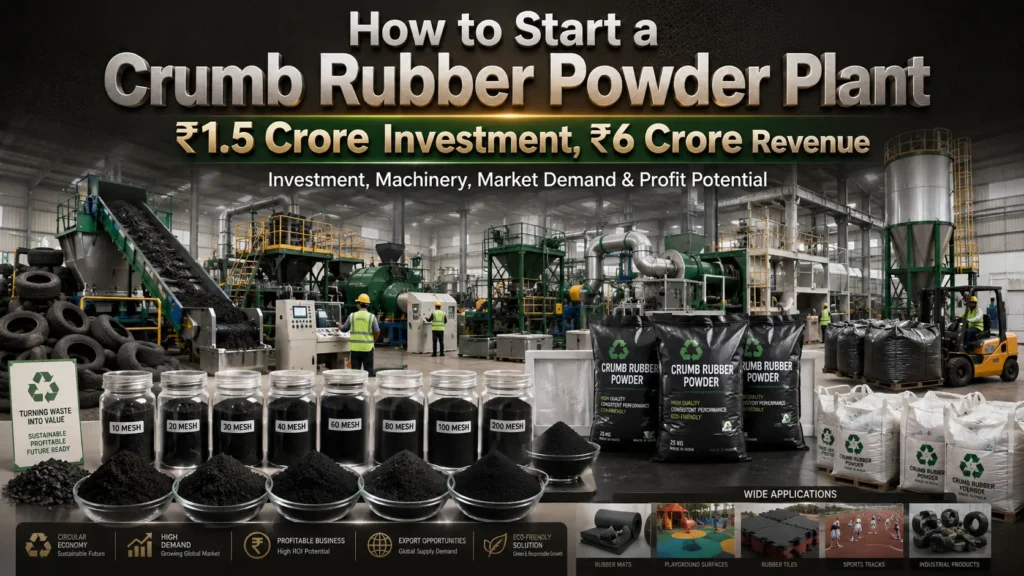
Crumb Rubber Powder Plant in India A Business Idea the Recycling Economy Is Crying Out For In the field of environmental-friendly manufacturing, a crumb rubber powder plant is one of the most missed out business ideas in India for a simple reason, waste tyres are everywhere and the demand for manufactured rubber granules is increasing rapidly. Entrepreneurs who know this are entering a business with solid profit margins, abundant raw material supplies and government tailwinds rolling down the road ahead. Not a niche opportunity — it’s a real industrial play with a real scalability. The Ministry of Environment, Forest and Climate Change numbers show that India produces more than 1.1 million metric tonnes of end-of-life tyres every year. The majority of this rubber is deposited in uncontrolled dump sites, thereby not only posing a threat to the environment, but also creating a raw material that could not be used. This waste is transformed at a crumb rubber powder plant into a high-value industrial input: used in roads, sports surface, automotive component and construction material. The economic arguments are strong. The total project investment is around ₹1.5 crores and a well-managed plant can yield an annual revenue of anywhere between ₹5–6 crore, which means first-generation entrepreneurs and MSME investors will get a handsome return on their investment. Get Detailed Insights from This Book: The Complete Book on Rubber Processing and Compounding Technology Why This Sector Is Growing Fast The crumb rubber industry is a dynamic area of business poised at the crossroads of two trends: the circular economy and the wave of infrastructure expansion. An increasing number of industries are experiencing a surge in demand for crumb rubber powder (also known as recycled rubber granules). Road construction accounts for the greatest use. Rubberised bitumen (with crumb rubber as a modifier) provides an extended service life, improved skid resistance and reduced maintenance costs for pavements. The National Highways Authority of India (NHAI) has issued orders for several NH projects to use rubberised bitumen, taking the demands away from the processors. On the other hand, sports infrastructure, which includes artificial turf, running tracks, playgrounds etc., is booming in tier-2 and tier-3 cities. A lot of crumb rubber infill is needed for each installation. Demand is also on the rise for exports, especially to South Asia and Middle East, where there is not enough tyre recycling facility. So entrepreneurs who are coming in to this industry are not only going to benefit from domestic consumption; they are investing in export revenues as well. The raw material side is also very good. The amount of end-of-life tyres is large, low cost and increasing. Tyres are produced every day by steel mills, transportation companies, logistics companies and municipalities. Since it is an expense to dispose of, many suppliers would be willing to sell scrap tyres at close to zero cost. It helps to lower input costs and maintain solid profit margins, even during recessions. Government Policies and Incentives Supporting This Business Extended Producer Responsibility (EPR) and Waste Tyre Regulations The Central Pollution Control Board (CPCB) has issued notification of EPR rules for Hazardous and Other Wastes Management Rules relating to waste tyres. Tyres must be passed through registered tyre recyclers and processors under these regulations. As a result, tyre Original Equipment Manufacturers (OEMs) are actively looking for authorized crumb rubber processors. For new plants, it is the formalisation of raw material linkages right from the beginning, which gives them a major competitive edge over unorganised players. MSME Credit and Subsidy Schemes MSME Ministry has launched a collateral-free loan facility for MSMEs for manufacturing projects with the Credit Guarantee Trust for Micro and Small Enterprises (CGTMSE) scheme, which offers loans of up to ₹2 crore. The scheme reduces the financing costs of an investment project worth ₹1.5 crore to a great extent. Moreover, the Government offers capital subsidy of 15-35% under its Prime Minister’s Employment Generation Programme (PMEGP) scheme for manufacturing MSME based on the category and geographical area. These should be investigated by new business owners before they approach the banks directly. Make in India (DPIIT) also facilitates green manufacturing projects by having single window clearance systems and facilitation cells in most states. Some of the state governments such as Rajasthan, Gujarat and Maharashtra provide extra subsidy on land cost and rebate on power tariff for recycling units and green manufacturing units. Environmental Clearance and Registration Crumb rubber plants come under the category of Orange Environmental Regulation and are to be gotten proper Consent to Establish (CTE) and Consent to Operate (CTO) from the State Pollution Control Board. The registration procedure is not complicated but is streamlined for small units. Planning for environmental clearances for a new plant takes 60-90 days, so this should be added to the project schedule. Get Detailed Project Report (DPR): Crumb Rubber Powder from Waste Tyre Manufacturing: A Promising Venture for Startups Multiple Business Ideas Within the Crumb Rubber Powder Sector 1. Standard Crumb Rubber Powder Manufacturing Unit The entry point is the most direct – a standard crumb rubber powder making plant, which processes the old tyres into granules with different mesh sizes such as 10-mesh chips, 40-mesh granules, 80-mesh powder etc. Ambient temperature processing mechanical shredding line is used in the unit. Main equipment refers to a primary shredder, secondary granulator, cryogenic or wire separator, and a vibrating sieve classifier. An entrepreneur can have a plant installed for commissioning which will have a capacity of 5–8 tonne per day for a ₹1.5 crore investment. The key is product diversification, however, and selling 10-40 mesh granules to sports surface installers, 40-60 mesh to automotive sealing product manufacturers and fine 60-80 mesh to paint and coating manufacturers. The combination of these product lines optimises the revenue per tonne and lessens the reliance on a single customer segment. 2. Cryogenic Crumb Rubber Processing for Premium Applications The tyres are frozen in a cryogenic tank with liquid nitrogen prior to size reduction, which results in a cleaner, more uniform crumb rubber particle
Microbial Inoculants Market 2026: Global Size, Growth Drivers, and Investment Opportunities for MSMEs
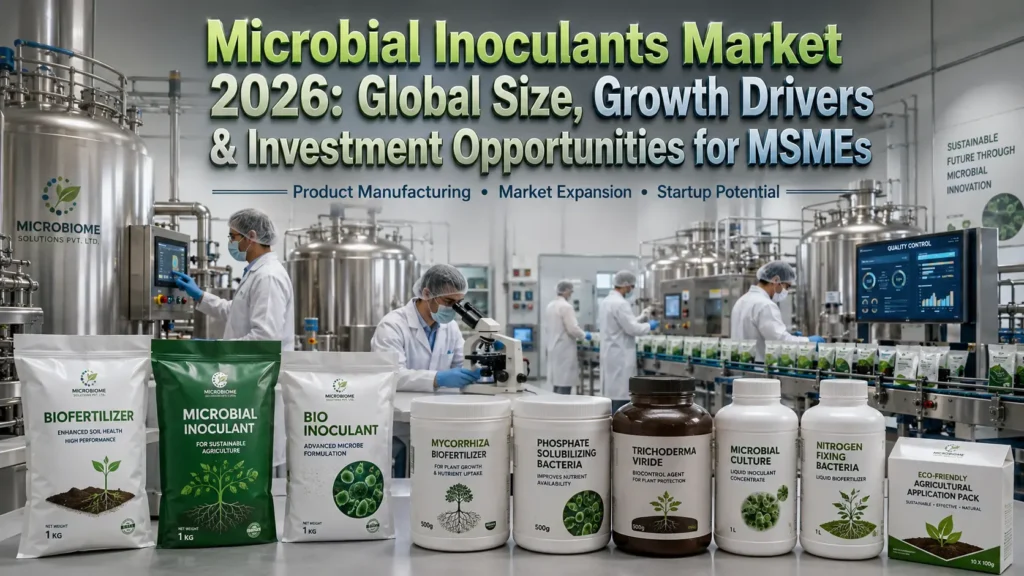
Microbial Inoculants Manufacturing Business in India The global agricultural system is changing in its very foundations from a synthetic chemical dependence to an agriculture with active organic and biologically sustainable crop nutrition. Microbial inoculants are at the heart of the transition. They are seed treatments or root dips based on live beneficial microorganisms (bacteria, fungi or mixtures) that improve nutrient uptake, stimulate root growth, inhibit pathogens in the soil and can decrease by more than 50% the need for chemical fertilizers. Microbial inoculants are one of the most commercially interesting and technically achievable verticals in the agri-input business for potential investors or first-generation entrepreneurs. It’s evolved from a specialty agronomic technique into a multi-billion-dollar worldwide business. Market intelligence for the 2021-2032 forecast period predicts that global production value of microbial inoculants will be steeply rising, as a result of regulatory pressure to use fewer chemicals, increases in organic farms and deeper understanding of how soil microbiome’s function. Soil biodiversity is a key element for sustainable agricultural systems, as constantly emphasized by the Food and Agriculture Organization (FAO), thereby directly supporting the commercial rationale behind the use of microbial inoculants worldwide. This market can be divided into three segments: bacterial inoculants, fungal inoculants, and composite inoculants. They are each used for different agronomic purposes. The most commercially mature segment is based on the use of bacterial inoculants, such as legume rhizobium, Azospirillum, Bacillus and Pseudomonas strains in legume and cereal production. Mycorrhizal fungi-based fungal inoculants are becoming very popular in specialty horticulture and high value vegetable crops. The fastest growth product type is composite inoculants containing multiple microbial species with multi-functional agronomic benefits in a single product. Related Article: 5 Smart Food Manufacturing Business Ideas That Can Generate ₹50 Lakh/Year in India Competitive Landscape: Who Dominates the Global Microbial Inoculants Industry? The global microbial inoculants market is moderately fragmented at the tier-1 level and a few multi-national companies have their production volumes and distribution network. The key players are Bayer, DuPont, Novozymes, BASF, Monsanto (now a part of the crop science division of Bayer), Becker Underwood, Premier Tech, Verdesian Life Sciences, Advanced Biological, GreenMax AgroTech, MBFi, Compost Junkie and EMNZ. These companies make up a major portion of value of global output for the 2021-2026 base period. Novozymes is a world-leader in industrial and agricultural biologicals with large-scale fermentation facilities and a huge strain portfolio. Biologicals are a key part of Bayer’s expansion strategy, which has been aggressive in the field through strategic acquisitions. BASF’s biologicals business has focused its R&D efforts on building its pipeline of next generation inoculant formulations that have longer shelf life. Premier Tech and Becker Underwood have established competitive moats based on proprietary peat-based and liquid carrier technologies that deliver superior microbial viability across the range of climatic conditions. Table 1: Global Microbial Inoculants — Key Player Market Positioning (Illustrative Tier Structure) Tier Representative Players Estimated Market Share Core Strength Tier 1 Bayer, Novozymes, BASF, DuPont ~55–60% Global scale, diversified strain portfolio Tier 2 Premier Tech, Becker Underwood, Verdesian Life Sciences ~20–25% Specialty formulations, regional expertise Tier 3 Advanced Biological, GreenMax AgroTech, MBFi, EMNZ, Compost Junkie ~15–20% Niche products, emerging markets, local distribution Source: Global Microbial Inoculants Market Report, 2026 | Compiled by Research Division Strategic alliances such as mergers and acquisitions and joint ventures are becoming more significant in the competitive landscape. The acquisition of several tier-2 and tier-3 players by bigger agri-chemical players to expand their biological’s portfolio is an example of the changing landscape of ‘chemical-to-bio’ shift in crop protection and crop nutrition. The top consolidation results in white space for new market entrants in different regional, customised and organic product segments. Regional Production Dynamics and the India Opportunity Historically, North America and Europe have been the largest producers of microbial inoculants, primarily due to the presence of well-developed biotechnology sectors, higher levels of funding for microbial inoculants research and development, and favorable government policies for biologically derived crop inputs. But the growth frontier is clearly Asia Pacific, Latin America and Sub Saharan Africa – where smallholder farmer density is highest and dependence on costly synthetic fertilisers is the greatest, where the need for more affordable biological alternatives can be seen. India has a special role to play in this regional narrative. The Government of India has prioritised the use of biofertilisers and microbial inoculants as policy instruments because of the huge subsidy burden associated with chemical fertilisers in the country, estimated to be in the tens of thousands of crores per annum. The Ministry of Agriculture & Farmers Welfare has actively promoted the use of biofertiliser with the introduction of National Mission for Sustainable Agriculture (NMSA) and Paramparagat Krishi Vikas Yojana (PKVY). The Fertiliser Control Order (FCO), which sets the standards for the biofertiliser quality, has been continuously modified to include more microbial strains as a signal for regulatory thinking for manufacturers and investors in their product go-to-market strategies. The production of domestic microbial inoculants has increased in India, but it is still far below the market demand as estimated by the cultivated area and the government’s emphasis on integrated nutrient management efforts in the country. Based on industry estimates, less than 15% of the total Indian farmland that consumes fertiliser is using any microbial inoculant/biofertiliser and this translates to more than 85% addressable market. Application Segments: Cereals, Oil Crops, Fruits & Vegetables The microbial inoculants are used in four main crop groups – cereals, oil crops, fruits and vegetables, and others (which includes pulses, legumes, fodder crops and plantation crops). The growth curve of each segment is different with its own agronomic needs. 1 Cereals — The Volume Segment The volume of application of cereals (wheat, rice, maize and sorghum) is the biggest. Even marginal use of microbial inoculants is a huge tonnage of marketable cereal. The workhorses here are the Azospirillum and Bacillus based inoculants which stimulate nitrogen fixation, phosphate solubilisation, and the production of growth hormones which are measurable and result in increased yields. The cereal segment is
6 Green Manufacturing Business Ideas in Afghanistan with 35% Margins and Growing Demand
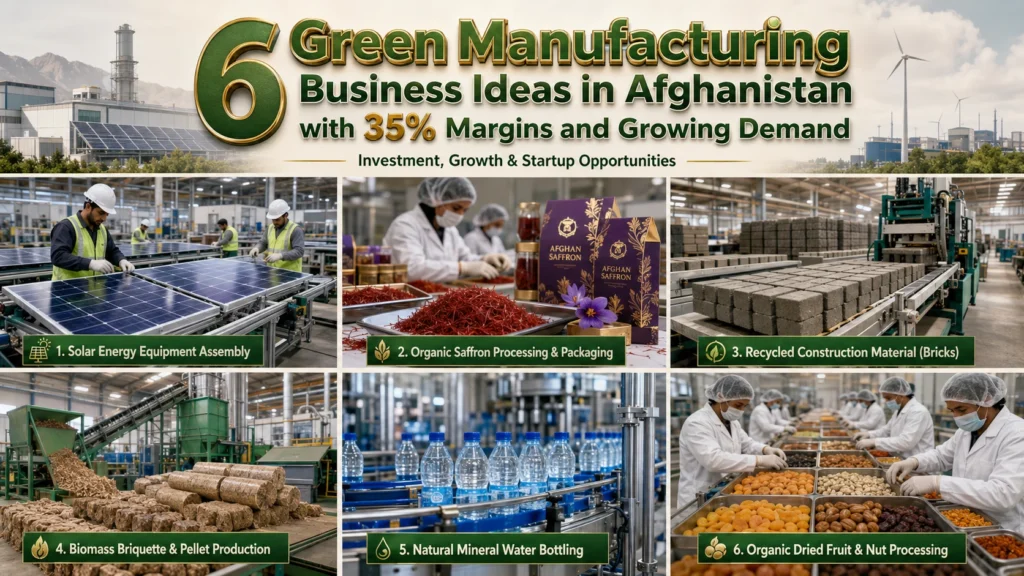
Green Manufacturing Business Ideas in Afghanistan In Afghanistan, the average annual amount of sunshine is over 300 days. It receives an average solar irradiance of more than 5.5 kWh/m2/day, higher than most of Europe and comparable to the belt of the deserts in Rajasthan, as per solar resource data available in the Global Solar Atlas published by World Bank. However, more than 70% of its citizens still do not have access to reliable electricity. Businesses run generators. Hospitals operate on borrowed electricity! For six to eight hours a day, factories sit idle due to the failure of the grid to deliver. This paradox, of a vast abundance of natural resources and a grinding poverty of industry, is no tragedy for those who merely look on. An investor or a green entrepreneur or a manufacturer, it is a signal. Such a market niche will not remain unoccupied for long. The Afghan country is also a major producer of saffron, the spice, which fetches INR 3.5–4 lakh per kilogram in international markets. The United States Geological Survey (USGS) has identified some of the most abundant deposits of lithium, copper and rare earth elements in the world in its mountains. It is an agriculture-based area that yields apricots, pomegranates, figs and almonds used in Central Asia and the Middle East. This is hardly processed locally. Related Article: Profitable Green Manufacturing Business Ideas in India: Waste to Wealth Opportunities The Market Gap: Resource-Rich, Processing-Poor Put it in numbers. The importation of manufactured consumer goods into Afghanistan accounts for approximately 80% of imports. Electricity generation capacity is less than 700 MW for a population of 40 million compared to Nepal’s 2,000 MW and Pakistan’s 40,000 MW for 300 and 220 million people respectively. Solar energy alone could power the entire electricity demand of Afghanistan multiple times while IRENA (International Renewable Energy Agency) has identified Afghanistan’s renewable energy potential as one of the least tapped in Central Asia. On the green side in particular: solar panel imports have been increasing by more than 18 per cent a year for several years now, but there is, to date, no significant solar panel assembly plant in the country. All panels are imported from China, India and UAE with import duty, freight charges and dealer margins. If assembled locally, even at a small scale, a 20-28% reduction in the landed cost of an imported unit can be achieved by a locally assembled panel. Saffron has a more pointed tale. There are approximately 20,000–25,000 tonnes of raw saffron filaments produced in Afghanistan every year. More than 85% of which is exported unprocessed to Iran and UAE, where much value is lost, as detailed by the Food and Agriculture Organization (FAO) . Iran cleans, grades, repackages it, gives it its own name and sells it to Europe at four to five times the farm-gate price. The benefits of the capturing in the Afghan units are currently enriching Iranian intermediaries. Another important gap is the lack of biomass briquettes. For more than 60% of Afghan households, wood fuel and animal dung fuel continue to be their main source of heat. These industrial briquettes, which are made from agricultural waste, such as wheat straw, cotton stalks, or almond shells, are burned with fewer pollutants, for a longer duration and to help significantly reduce indoor air pollution by up to 70%. Demand from urban areas is strong and growing. There is virtually no organized supply. Table 1: Key Green Manufacturing Sectors in Afghanistan — Opportunity Snapshot Green Business Sector Key Advantage Priority Regions Est. Investment (INR) Market Demand Solar Energy Equipment Assembly High solar irradiance (300+ days/yr) Kabul, Herat, Kandahar INR 42–65 Cr Growing rapidly Organic Saffron Processing & Packaging World’s top saffron producer Herat, Farah INR 8–18 Cr High — export-driven Recycled Construction Material (Bricks) Massive post-conflict reconstruction Kabul, Jalalabad INR 6–12 Cr Very High Biomass Briquette & Pellet Production Critical heating fuel shortage All major provinces INR 3–7 Cr Very High Natural Mineral Water Bottling Untapped aquifer resources Bamyan, Nuristan INR 5–10 Cr Moderate–High Organic Dried Fruit & Nut Processing Global demand for Afghan dried fruit Kandahar, Helmand, Farah INR 4–9 Cr High — USD-earning Source: UNAMA trade data, Afghan Ministry of Commerce, NPCS Market Research estimates. All INR figures are indicative investment ranges. Get Detailed Insights from This Book: Solar PV Power and Solar Products Handbook How to Set It Up: Solar Panel Assembly Unit Among the green manufacturing sectors presented above, the assembly of solar panels has the lowest technology risk, the highest local demand alignment, and the shortest payback period. This is a step-by-step guide to setting up a small to medium assembly unit. Minimum Investment The total capital expenditure needed for a functional assembly unit of 5 MW per year would be between INR 65-100 lakh, which includes the plant setup, machinery, and working capital for 3 months. The cost of the put together system is Rs. 22-30 lakh per MW/year in micro scale, and sharply improved at the 5 MW scale. Land and Space Requirements There should be 500–800 square metres of factory space available that is covered. Clean, dust-controlled environment is required for lamination and cell tabbing. There are industrial areas in Herat and Kabul where plots are available. The cost of a month in the industrial zone of Herat is currently USD 0.4 to USD 0.6 per sq metre. Key Machinery Equipment Cost Range (INR) Solar cell tabber and stringer machine ₹12–18 lakh Laminator (EVA film press) ₹6–9 lakh Solar simulator and IV curve tester ₹4–6 lakh Frame assembly jig and junction box attachment station ₹2–4 lakh EL imaging system for defect detection ₹3–5 lakh Raw Material Sourcing Solar cells are manufactured using monocrystalline or polycrystalline wafers from China (the leading world supplier) and usually have a lead time of 30-45 days. EVA encapsulant film, backsheet, aluminium frames and junction boxes also come in from their main supplier China. Logistics planning from the outset should include a reliable import route, either via the Herat–Islam
Entrepreneur India April 2026: India’s Industrial Transformation Is Creating Business Opportunities Worth Billions
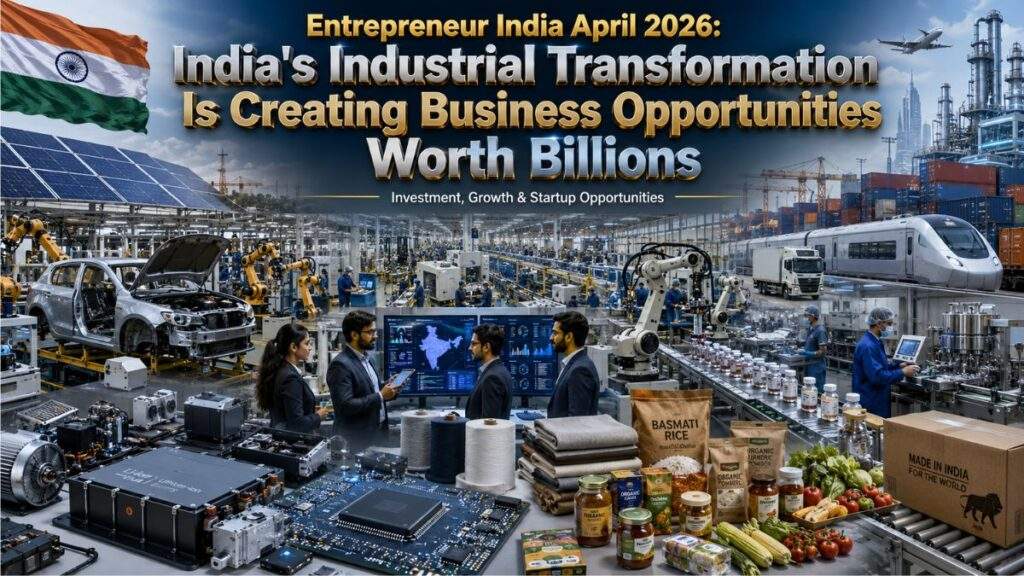
Entrepreneur India April 2026 India is now in a new phase of growth in the field of industries. The country is experiencing one of the biggest manufacturing growths in decades with the introduction of electric vehicles, use of advanced materials, green packaging solutions, and agro-processing as a few examples. Businesses that can be developed today in the right industries will be very lucrative over the next decade. NIIR Project Consultancy Services (NPCS), April 2026 issue of Entrepreneur India Magazine, features some of the most promising industrial opportunities that are now available in India. Entrepreneur India is different from the regular magazines which bring to light start-up stories or corporate news, it is all about real business opportunities supported by industrial research and project feasibility analysis. At a time when India is witnessing the growth of manufacturing sector due to various factors such as strong government support, escalating domestic demand, infrastructure development, and the global China+1 strategy, this edition comes at a perfect time. International companies are seeking manufacturing alternatives other than China, and India is among the most significant beneficiaries of this trend. Related Article: Entrepreneur India April 2026 Is Here — And It Could Change the Way You Look at Indian Manufacturing Why India’s Manufacturing Sector Is Growing So Fast Indian industry is on the rise due to a number of strong influences. The government is promoting domestic investment in manufacturing through various schemes such as Make in India and Production Linked Incentive (PLI) scheme in several industries. Concurrently, the growing urban demand and the surge in the demand of sustainable products are generating new business opportunities. The following are key factors in this growth: Expansion of EV and battery manufacturing Increasing demand for green products The development of infrastructure and logistics. Import substitution opportunities Growing demand for specialty chemicals. To give more attention to the use of renewable energy resources The April 2026 edition of Entrepreneur India delves into the sectors that are directly benefiting from these long-term economic shifts. High-Growth Business Opportunities Featured in Entrepreneur India April 2026 One of the best features of this issue is that it concentrates on industries that are scalable for the long-term and have a high future demand. Lithium-Ion Battery Assembly The Indian electric vehicle industry is rapidly expanding, leading to a significant demand for lithium-ion batteries and energy storage solutions. It is expected that Battery Manufacturing will be one of the largest industrial sectors in the near future in the country. There are opportunities in this sector for work in the following occupations: EV battery packs Solar energy storage Industrial battery systems Consumer electronics batteries Indian Government is also giving a push to electric mobility and entrepreneurs interested in this business might reap huge benefits in the coming years. Get Detailed Insights from This Book: Lithium-Ion & Lead-Acid Battery Production Get Detailed Insights from This Book: Just For Starters: How To Start Your Own Export Business Rice Husk Biodegradable Cutlery As regulations start to take effect and plastic bags are enforced for all consumers, there is a growing need for biodegradable options. Rice husk biodegradable cutlery is an ongoing business that emerges as profitable since it helps the conversion of agricultural waste to eco-friendly products. The following are some of the key benefits of this enterprise: Low-cost raw materials Growing export demand Eco-friendly market positioning The support for sustainable manufacturing is provided by government. It’s a good example of the conversion of waste materials to commercially useful materials. Carbon Fiber Reinforced Polymer (CFRP) The applications of carbon fiber reinforced polymer are in the fields of aerospace, automotive, railways, renewable energy and construction. India currently has significant import dependence on CFRP products, thus presenting a high level of import substitution potential for domestic CFRP manufacturers. The sector has potential due to: High industrial demand Strong profit margins Advanced manufacturing growth Long-term infrastructure expansion View Full Project Details: Carbon Composite Fiber Manufacturing Plant Report Hesperidin and Pectin Extraction The magazine also makes an in-depth focus on opportunities for citrus peel processing. Citrus waste has been used to extract hesperidin and pectin, which are relevant for the food processing, cosmetic, pharmaceutical, and nutraceutical industry. This business model is desirable because: Raw materials will cost less. The finished products are of high value. Demand is increasing globally Increased profitability due to waste utilization. Circular Economy Manufacturing Is Becoming a Major Trend One of the key topics in the April 2026 issue is circular economy manufacturing. Agricultural waste, food waste, or industrial waste are increasingly being used for profit by businesses. Entrepreneurs are now converting waste into: Biodegradable packaging Nutraceutical ingredients Industrial chemicals Eco-friendly consumer products These businesses can usually enjoy high profitability as the raw material costs are low, and there is a demand from the consumer for “green” products, which entitle them to premium prices. The push towards sustainability in the environment is likely to bring even more opportunities from this segment in India in the coming decade. Why Import Substitution Businesses Have Huge Potential India still has a high dependence level on imports for many industrial products and specialty materials. This opens up huge possibilities for Indian entrepreneurs to set up indigenous manufacturing units. The following industries have high import substitution potential: Specialty chemicals Battery materials Advanced engineering products Industrial minerals High-performance materials The government actively encourages domestic production by providing incentives, subsidies and infrastructure support. There is potential for policy-driven growth as well as strong demand for entrepreneurs to enter these sectors. How NPCS Helps Entrepreneurs Start Manufacturing Businesses NIIR Project Consultancy Services (NPCS) is one of the most experienced project consultancy and industrial research firms in India having over 45 years of experience. NPCS provides support for entrepreneurs through: Detailed Project Reports (DPRs) Techno-economic feasibility studies Market research reports Plant setup guidance Financial projections Bank loan documentation Selecting suitable machinery and processes Thousands of entrepreneurs, MSMEs, investors, financial institutions use the NPCS reports to assess the manufacturing opportunities and industrial projects. The main strength of NPCS is its specialization
Plastic Waste Recycling Plant in India: Setup Cost & CIPET-Backed Business Model
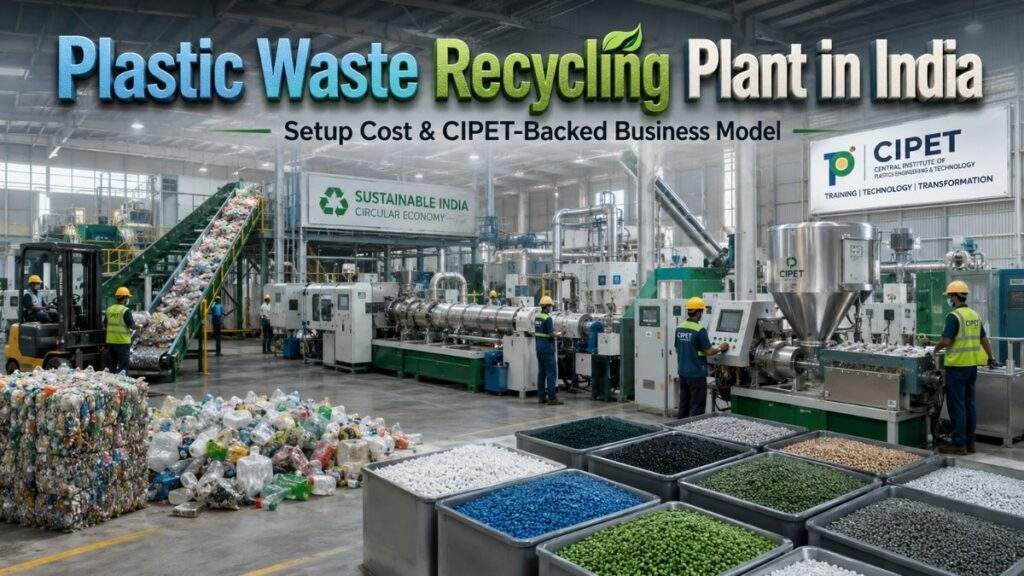
plastic waste recycling plant India India produces over 3.5 million tones of plastic waste annually, with less than 5% of it being recycled via formal processes. The rest of the waste goes into the rivers, drains, landfills and open dump sites. This is a problem that is increasingly emerging across the environment, but also a huge business opportunity for those who wish to join the recycling industry. The plastic waste recycling plant India market is witnessing a rapid growth as industries actively look for recycled plastic material and the plastic waste is faced as a problem. Now recycled PET, HDPE and PP are being purchased on a large scale by packaging companies, textile manufacturers, pipe manufacturers, and automotive suppliers. Government support is one of the biggest factors contributing to this growth. The Annual Report 2025-26 issued by Ministry of Chemicals and Fertilizers, Government of India, states that CIPET has established Plastic Waste Management Centres in Bengaluru, Bhagalpur and Varanasi with another center being set up at Sanand, Gujarat. This indicates India is investing in long term infrastructure for recycling sector. Related Article: How to Start Pulp-Based Beverage Packaging Unit in India (Plastic Ban Opportunity) Why Plastic Recycling is a Huge Company Opportunity. The demand for recycled plastic has grown rapidly, due to: India has experienced a significant increase in the use of plastics. EPR (Extended Producer Responsibility) rules Export market sustainability requirements Increasing industrial demand for recycled raw material Government focus on circular economy In today’s day and age, certified recycled plastic is needed to comply with environmental regulations. This has established a consistent industrial buyers’ market for recycling units. Concurrently, the availability of raw materials has also increased, thanks to the scrap dealers and municipal waste collection systems as well as the waste collection in Housing Societies. Setup Cost of Plastic Recycling Plant in India The investment amount varies according to the types of plastic waste and production capacity. Approximate Investment Range Plant Type Capacity Investment HDPE/PP Recycling Unit 500 kg/hour Rs. 1.5–2.5 Crore PET Bottle Recycling Plant 3–5 MT/day Rs. 2.5–4 Crore Multi-Layer Plastic Unit 2–5 MT/day Rs. 80 Lakh–1.5 Crore E-Waste Plastic Recycling 500 kg/hour Rs. 1.8–3 Crore The main machinery is basically comprised of: Plastic shredder Washing system Dryer machine Extruder Pelletizer Sorting conveyor Testing equipment The first step taken by most entrepreneurs is to lease industrial property instead of buying so as to avoid the strain of capital. Get Detailed Insights from This Book: Just For Starters: How To Start Your Own Export Business Most Profitable Plastic Recycling Segments PET Bottle Recycling Plant PET recycling is one of the best opportunities in India as the demand for recycled polyester is growing swiftly in the textile industry. Main buyers include: Textile manufacturers Polyester fibre companies Packaging manufacturers rPET film producers Surat, Tirupur, and Panipat are promising cities due to their high demand for textiles. Get Detailed Insights from This Book: Speciality Plastics, Foams (Urethane, Flexible, Rigid) Pet & Preform Processing Technology Handbook HDPE & PP Pellet Recycling Unit One of the top-rated MSME manufacturing enterprises is that it has moderate setup cost and a stable demand in the industry. The recycled HDPE and PP pellets are widely used in: Pipe manufacturing Plastic furniture Packaging products Automotive components If raw material sourcing is done in an efficient manner, a healthy profit margin can be achieved in the recycling unit. Multi-Layer Plastic Processing Multi-layer plastic waste consists of: Chips packets Biscuit wrappers Flexible packaging waste They are hard to recycle using traditional methods, and can be turned into: Alternative fuel Cement kiln feedstock Pyrolysis oil This segment is expanding due to the generation of tremendous amount of plastic packaging waste in India, which have lower value. E-Waste Plastic Recycling E-waste plastic recycling is a lucrative industry due to engineering plastics’ high market value. These plastics include: ABS HIPS Polycarbonate The recycled material is utilized by the electronics manufacturers and industrial component suppliers. Get Detailed Project Report (DPR): E-Waste Recycling Plant Business Plan How CIPET Supports Plastic Recycling Entrepreneurs CIPET has a significant contribution towards India recycling ecosystem. It’s Plastic Waste Management Centres offer: Material testing Quality certification Technical consultancy Skill development training Recycling technology support The new Sanand center in Gujarat will further bolster the western recycling network. This is crucial for MSMEs, as their initial stage might involve the establishment of an in-house testing laboratory, which can be costly. Licenses Required for Plastic Recycling Plant For a recycling plant to be legally running in India the entrepreneurs need: Consent to Establish (CTE) Consent to Operate (CTO) Pollution Control Board approval GST registration MSME Udyam registration Plastic Waste Management registration Other approvals may be needed for pyrolysis and/or fuel recovery projects. Build a profitable business with the right idea Importance of NPCS Before Starting the Project NPCS (Niir Project Consultancy Services) will assist to prepare Detailed Project Reports (DPRs) and feasibility study for manufacturing businesses. The typical NPCS reports contain the following: Market demand analysis Machinery selection Manufacturing process flow Plant layout planning Financial projections Break-even analysis Profitability calculations These reports can be helpful for entrepreneurs during the application process for: Bank loans MSME schemes Government approvals Investor funding A well prepared DPR helps mitigate business risk and enhances project planning. Future of Plastic Recycling Industry in India The future of the plastic recycling business India market looks extremely strong because sustainability regulations are becoming stricter every year. Large companies now require recycled content in packaging and manufacturing processes. There is not enough organized recycling capacity in India, and as a result demand will probably continue at a high level for many years. Entrepreneurs who focus on: Quality certification Stable raw material sourcing EPR compliance Industrial buyer networks Will be significantly better than the long-term in this industry. It can be easily understood with the increase of CIPET infrastructure and governmental backing that plastic recycling has developed into a significant industry in India. FAQs Q1. What is the minimum investment to be made in a plastic recyclers
The Green Manufacturing Revolution: Paper Water Bottles, Bioplastics & Biodegradable Products
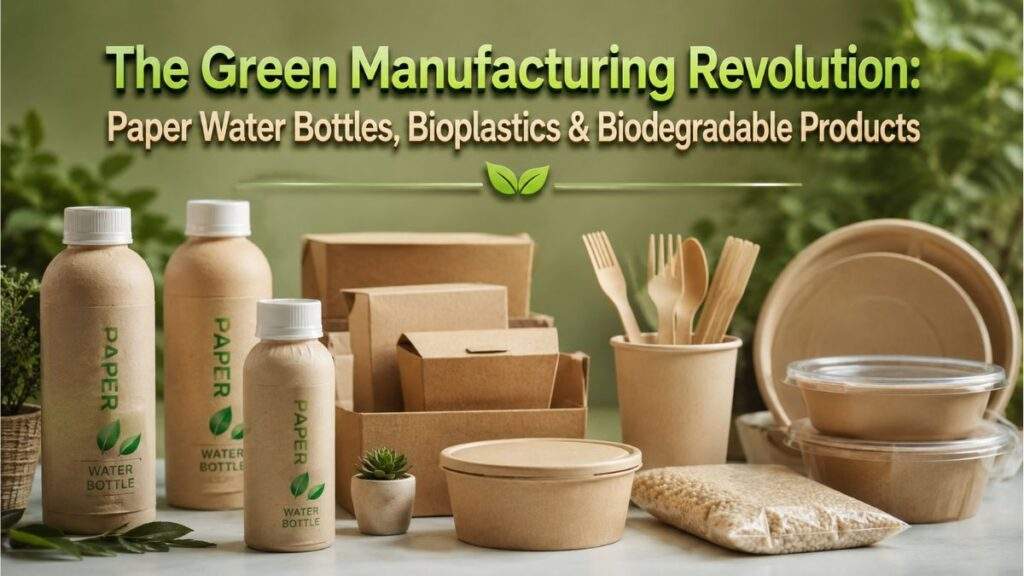
Biodegradable products manufacturing in India Plastic pollution is no longer just an environmental problem; it’s one of today’s greatest business opportunities. Governments, consumers and big companies around the globe are phasing out conventional plastics and adopting more eco-friendly alternatives like biodegradable plastic. The green manufacturing revolution is generating a whole new industrial economy, ranging from paper water bottles to compostable food packaging. Sustainability was a somewhat esoteric idea a couple of years ago. Today it shapes the way that companies produce their goods, how restaurants package their food and even how consumers choose which brands to support. This shift is occurring at an accelerated pace, due to increased global awareness of the long-term environmental effects of plastic waste, especially on oceans, soil, and human health. India produces millions of tones of plastic waste in a year. Much of this waste is hard to recycle and will eventually be dumped in landfills, rivers and oceans. To mitigate the issue, the Government of India has banned a large number of single-use plastic items from July 2022. This policy sparked immediate need for biodegradable alternatives and offered tremendous opportunity for manufacturers. As a result, industries are now actively searching for sustainable packaging solutions such as: Biodegradable carry bags Compostable food containers Paper straws Sugarcane bagasse plates Starch-based bioplastics Paper water bottles These products are not anymore experimental products. They are being produced commercially and sold all over the world. The global bioplastics market is already larger than $1 billion and is projected to rise sharply during the next 10 years. Get Detailed Insights from This Book: Paper Water Bottles and Bioplastics Manufacturing Handbook Why India Has a Huge Advantage India is placed in a very good position in order to be a global name in manufacturing biodegradable products. There are plenty of raw materials of agriculture in the country that can be processed into environmentally friendly raw material. In India some of the most important raw materials are: Sugarcane bagasse Rice husk Corn starch Cassava starch Potato starch Wheat bran Agricultural residues can be utilized in the production of sustainable packaging and biodegradable products, rather than as waste. This not only helps to minimize environmental impacts but also generates new livelihood and business opportunities for farmers and rural industries. The other great benefit is the low-cost manufacturing setup in India. Indian biodegradable products are very competitive in the global markets as compared to that of Europe or North America as production costs are much low in India as compared to them. Paper Water Bottles: The Next Big Packaging Innovation Paper water bottles are receiving vast attention worldwide among all eco-friendly packaging products. As consumers become more environmentally conscious of packaging, large beverage companies are already investing in the technology for paper bottles. Paper water bottles are designed with: A paper shell outer shell The inside lining is biodegradable or recyclable. Eco-friendly barrier coatings The idea is simple: reduce plastic usage while maintaining the convenience of bottled beverages. The combination of relatively low competition and increased demand makes paper water bottles particularly appealing to Indian entrepreneurs. Environmentally friendly packaging is a quick way for consumers to make sense of environmentally friendly brands and companies, helping to establish trust and a good reputation. Over the next couple of years, the hospitality sector, airports, luxury retailers and eco-conscious beverage brands will be significant purchasers of paper bottle packaging. The Rising Demand for Biodegradable Packaging The biggest business opportunity is to replace common plastic products with alternatives that are more environmentally friendly. The following industries are contributing to this demand: Restaurants and cafés Food delivery companies Cloud kitchens Hotels and resorts Hospitals Retail stores FMCG companies Airline catering services Consumers and government regulations are forcing many businesses to decrease their use of plastic. Consequently, plates, bowls, trays and carry bags that biodegrade are becoming more popular. Other biodegradable plastics, such as PLA (Polylactic Acid) and PHA (Polyhydroxyalkanoate), are also becoming popular due to their durability and biodegradability. Access Complete Business Plan: Biodegradable & Eco-Friendly Plastics and Packaging Challenges in the Industry The market for biodegradable products is huge, but entrepreneurs need to know the difficulties of entering the market. The greatest problem is the production cost. The prices of biodegradable products are generally higher than those of conventional plastic products. In markets where price is a major consideration, consumers could be reluctant unless sustainable alternatives are mandated by regulations. An additional challenge is certification. Biodegradable or compostable products are those that comply with the following recognized standards: EN 13432 ASTM D6400 BIS certification in India Manufacturers might encounter challenges in exports and in commercial sales on a large scale without proper certification. Another factor is the supply of raw materials is not consistent. The key to sustaining product quality and price stability is the dependable sourcing network a business can have. Opportunities for Entrepreneurs and Startups With all of the difficulties, the future of this industry is looking bright. There are various levels of investment that entrepreneurs can make within the sector, depending on their resources and expertise. Small-scale opportunities include: Compostable cups Sugarcane bagasse plates Paper straws Biodegradable carry bags Medium & large opportunities: PLA manufacturing Paper water bottle production Bio-based packaging films Industrial compostable packaging units The expanding start-up ecosystem and support from the government on green industries are helping new entrepreneurs to enter the market. Identify high-growth industries before others do NPCS: Trusted Industrial Guidance for Entrepreneurs If a businessman wants to open a business for manufacturing biodegradable products, he will have to take proper industrial instructions. This is where NPCS (Niir Project Consultancy Services) comes into play. National Institute for Industrial Research is one of the premier industrial consultancy and project report organizations in India. NPCS has been assisting startups, MSMEs, Manufacturers and investors for decades in understanding profitable manufacturing opportunities. Their website called Entrepreneur India offers useful business-related information on: Manufacturing project reports Market research studies Machinery details Techno-economic feasibility reports Startup business ideas Industrial investment guidance These resources can help
Top 5 Green Manufacturing Business Ideas in Bahrain (Cost, Profit & Setup Guide)
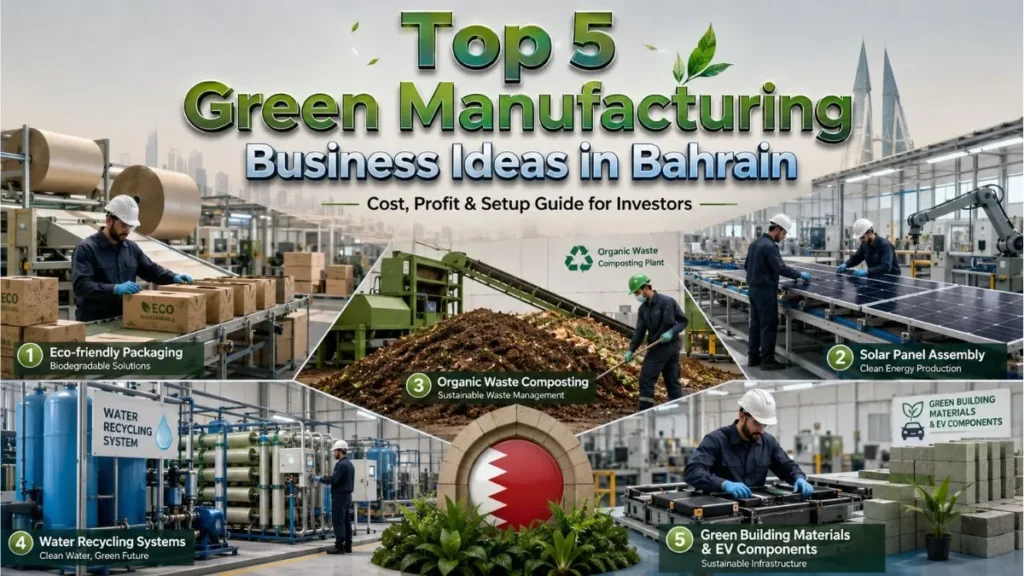
Introduction: Green manufacturing business in Bahrain Bahrain is fast establishing itself as a top destination of sustainable industry growth in the Gulf region. Although most countries are still in the process of developing long-term environmental plans, Bahrain has already embarked on the implementation of policies that proactively encourage green manufacturing and business practices that are eco-friendly. This shift is not merely environmentally motivated- it is creating some major business and investment opportunities to entrepreneurs and MSME investors. Presently, most of the environmentally friendly products consumed in Bahrain including biodegradable packaging, solar products, water recycles, etc., are imported. This causes a definite supply gap in the local market. To the investors who can look ahead, this gap can be viewed as a strategic entry point into high-demand, low-competition industry with long-term growth projections. Why Bahrain is an Ideal Destination for Green Manufacturing Bahrain presents a rare set of policy, geographic and market demand that make it very appealing to green manufacturing companies. Strong Government Support The Bahraini government is working hard to ensure sustainability by industrial policies in line with the net-zero targets. Companies that are situated in environmentally friendly fields enjoy: Simplified approval processes Financial incentives and subsidies. Workforce training assistance. It minimizes the barriers to entry as well as operational risk of new businesses. High Dependence on Imports A large percentage of environmentally friendly products is now imported into Bahrain. The local manufacturing of this sector is still underdeveloped and therefore new entrants have a competitive edge in terms of pricing, delivery time and customization. Strategic GCC Location Bahrain has direct access to the key markets in the Gulf (Saudi Arabia and the UAE). This enables business to expand outside of the local market and access a regional customer base. Business-Friendly Environment Being regarded as one of the most investor-friendly economies in the Middle East, Bahrain allows complete foreign ownership of business in many sectors, has low taxation, and well-developed infrastructure. Top Green Manufacturing Business Ideas in Bahrain The following are the most likely profitable environmentally-friendly manufacturing opportunities in accordance with the current demand and viability. 1. Eco-Friendly Packaging Manufacturing It is among the most viable and high demand business opportunities in Bahrain. As single-use plastic constraints are used more and more, companies are turning to biodegradable options. Common products include: Bagasse food containers Paper cups and plates. Compostable carry bags Restaurants, supermarkets, and food delivery businesses are the main sources of demand and guarantee the stability of B2B revenues. Get Detailed Project Report (DPR): Paper Cup Manufacturing Business Plan & Feasibility Report 2. Solar Panel Assembly Bahrain is making a lot of investments in renewable energy. Rather than manufacturing complete size solar panels, most enterprises specialize in the assembly of solar panels using imported materials. Advantages include: Less startup cost than full production. Increasing residential and commercial demand. Government promotion of the use of renewables. This is a good industry to invest in when one has technical or engineering expertise. Get Detailed Insights from This Book: Solar PV Power and Solar Products Handbook 3. Organic Waste Composting The management of food waste is emerging as a significant issue in Bahrain, especially in its cities. A composting business is the collection of organic waste materials by: Hotels Restaurants Food processing units This is then used to create compost which can be sold to the farms, landscaping companies, and nurseries. Key benefits: Inexpensive raw materials (usually free) Strong environmental impact Increasing agricultural demand. 4. Water Recycling Equipment Manufacturing Water shortage is a critical problem in Bahrain and industries are being increasingly demanded to adopt water recycling solutions. Assembling or producing water filtration systems and recycling systems is a high-value opportunity. The systems are implemented in: Factories Commercial buildings Construction projects This is a technologically demanding sector with high margins and long-term contracts. 5. Green Building Materials & EV Components These are emerging sectors and the future looks bright. The development of the green construction industry, due to its increasing demand: Insulated panels Recycled construction materials Energy-efficient building solutions Similarly, given that electric vehicles are evolving at a gradual rate, the production of electric vehicle related parts, charging accessories will perhaps turn out to be very profitable. Related Article: Union Budget 2026: EV Battery Manufacturing Business Opportunity for MSMEs in India Step-by-Step Setup Process Licensing and registration of business. Choosing of industrial location. Purchasing and installation of plant. Recruitment and training of workforce. The production of trials and quality checks. The whole process normally takes 5-8 months before a full-scale production commences. Profitability and Return on Investment The green manufacturing companies in Bahrain have high financial returns as opposed to the traditional industries. Expected Returns (Eco-Packaging Unit) Net profit margin: 18% to 24% Consistent monthly sales on B2B deals. Payback period: 2.5-3 years. The main benefit is the local production. The businesses are able to save costs on logistics and provide faster delivery than the imported products, thus becoming more competitive. Government Incentives and Support In Bahrain, there is a high institutional support of manufacturing businesses, especially sustainable businesses. Key incentives include: Machinery and workforce training subsidies. Lower costs of leasing industrial lands. Quickly processed approvals by government agencies. Government procurement preference, in Favor of environmentally friendly products. These advantages greatly lower the start-up expenses and enhance profitability in the long-term. Find high-return business ideas based on your budget & ROI Role of NIIR Project Consultancy Services (NPCS) Planning is a prerequisite before embarking on a manufacturing business. It is here that NPCS is of significance. NPCS offers comprehensive project reports, which assist investors in knowing the entire business concept. Their reports include: Technical feasibility analysis Planning cost and investment. Supplier and machinery information. Market demand insights With this kind of report, investors minimize the risk and make good decisions prior to investing. Conclusion Green manufacturing in Bahrain is an effective blend of sustainability and profitability. The country presents a special opportunity to new businesses to find a home in an expanding market with the strong support of the government,
Asia Pacific Business Press Inc. Launches Definitive Manufacturing Handbook on Paper Water Bottles, Bioplastics & Biodegradable Products
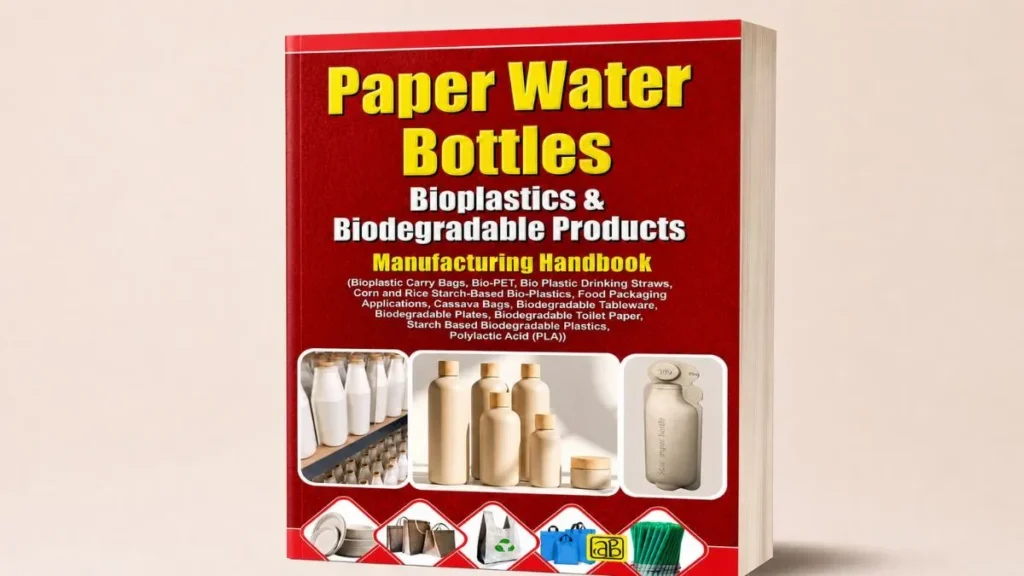
Biodegradable products manufacturing business Publication Equips Entrepreneurs, Startups and Manufacturers to take part in the rapidly expanding world global green economy. The publication of its new comprehensive handbook: Paper Water Bottles, Bioplastics and Biodegradable Products Manufacturing Handbook has been announced by Asia Pacific Business Press Inc. which is one of the most trusted industrial and technical publishing houses in Asia. The most comprehensive, practical and commercially oriented guide to biodegradable manufacturing in the Indian market and beyond, this handbook covers key product categories such as bioplastic carry bags and biodegradable tableware to corn-based starch materials, cassava bags, biodegradable toilet paper, and polylactic acid (PLA). A Crisis Demanding Action — and a Market Demanding Innovation Every year, the world generates hundreds of millions of tones of plastic waste. The vast majority of this pollution consists of single-use plastics, such as shopping bags, straws, food containers, water bottles, etc. Sensible amounts of microplastics can now be measured in oceans, rivers, soil and even the human bloodstream. This is not a mere environmental tale to traders and investors: it is an economic message of titanic proportions. The governments of other countries are also reacting to this by enacting laws to prohibit single-use plastics. The nationwide ban on identified single-use plastic products in India, the European Union guidelines on sustainability of packaging, and sustainability commitments of its corporate brands by world-renowned brands are all coming together to generate an unprecedented demand on biodegradable alternatives. To those willing to take action, this change is one of the most exciting and profitable manufacturing opportunities of the decade. This handbook has been created with a specific purpose to enable entrepreneurs, startup founders, small enterprises, and established manufacturers to take advantage of this opportunity with confidence. What Makes This Handbook Unique This handbook is constructed upon a foundation of practical industrial guidelines as opposed to an academic text or a generic environmental report. Its material has been edited to accomplish only one major task, which is to prepare the reader with all necessary materials to plan, set up and run a successful biodegradable products manufacturing unit. The handbook incorporates technical rigour with commercial transparency in a number of key dimensions: Full specifications of manufacturing process – starting with the acquisition of raw materials, up to the final product. Specific plant layout specifications and flow charts of production. Specifications of machinery requirements and directions of suppliers in every category of products. Market size, growth forecast and demand analysis of India and worldwide markets. Regulatory environment such as government regulations, and compliance. Business viability analysis and insights on investment planning. Opportunities to export and to certify international markets. Spotlight: Paper Water Bottles — The Next Big Green Opportunity Of all the products that are discussed in this handbook, the paper water bottles are given a lot of attention that is dedicated and extensive – and rightly so. One of the largest types of beverages in the world is the global bottled water market which generates billions of plastic bottles of bottled water every year. Small artisanal manufacturers and multinational giants in the beverage industry are actively exploring scalable, cost-effective solutions to small, single-use plastic water bottles. The most commercially viable solution is emerging as paper water bottles, which are made of sustainably sourced paperboard with little or no plastic coating. The handbook is end-to-end guidance on this product category, including barrier coating technology, structural engineering issues, filling line integration, shelf-life management, and branding customization. It also looks at the business case in detail: what it takes to invest, how scalable the production will be, what pricing strategies will be involved, which customer segment are the most promising entry points to new manufacturers? To the entrepreneurs who are in need to create a unique, high demand product that is not only environmentally responsible but also commercially compelling, the manufacturing of the paper water bottle is a first-mover advantage of extraordinary values. This handbook contains all the technical and business information that is required to get started. Comprehensive Product Coverage Across the Biodegradable Spectrum The coverage of the handbook spans across the entire spectrum of commercially viable biodegradable and bioplastic products that are presently in the process of gaining momentum in both Indian and global markets: Bioplastic Carry Bags — a blend of starch and PLA, adherence to standards of Indian carry bags, and positioning against conventional plastic bags. Bio-PET – the manufacturing of bio-based polyethylene terephthalate and its utilization in bottles, textiles and packaging. Bio-Plastic Drinking Straws – the production of PLA-based and paper straws, taking into account the performance and cost maximization requirements. Corn and Rice Starch-Based Bioplastics – extraction, compounding and conversion technologies of the rich agricultural byproducts available in India. Food Packaging Applications — films, trays, clamshells and wraps that are food safe and 100 percent compostable. Cassava Bags: leveraging cassava starch in water-soluble and fully biodegradable shopping bags, a product that has been gaining regulatory approval across several countries. Biodegradable Tableware – plates, bowls, cups and cutlery made of bagasse, bamboo, wheat straw and areca palm leaf. Biodegradable Toilet Paper – manufacturing of the product using recycled fiber and bamboo pulp and position the product in the rapidly expanding eco-personal care segment. Starch-Based Biodegradable Plastics — formulations based on potato, wheat and mixed starch sources to make flexible or rigid products. Polylactic Acid (PLA) – manufacturing, grades, properties and full-spectrum uses in packaging, medical devices and consumer goods. India’s Green Manufacturing Opportunity: Why Now Is the Time to Act India is at a strategic cross-road of regulatory reform, the maturing consumerism and the industrial preparation. The large agricultural sector in the country, which produces large quantities of corn, rice, cassava, sugarcane and potato, furnishes a low-cost, domestically-available source of raw materials on which bioplastics can be manufactured. Meanwhile, the growing middle-income group of India is proving to be more and more willing to pay a premium price to purchase environmentally responsible products in the urban centres. Policymakers are busy developing a regulatory framework that will incentivize
How to Start a Plastic Recycling Plant in India: Cost, Profit, Machinery & Licenses
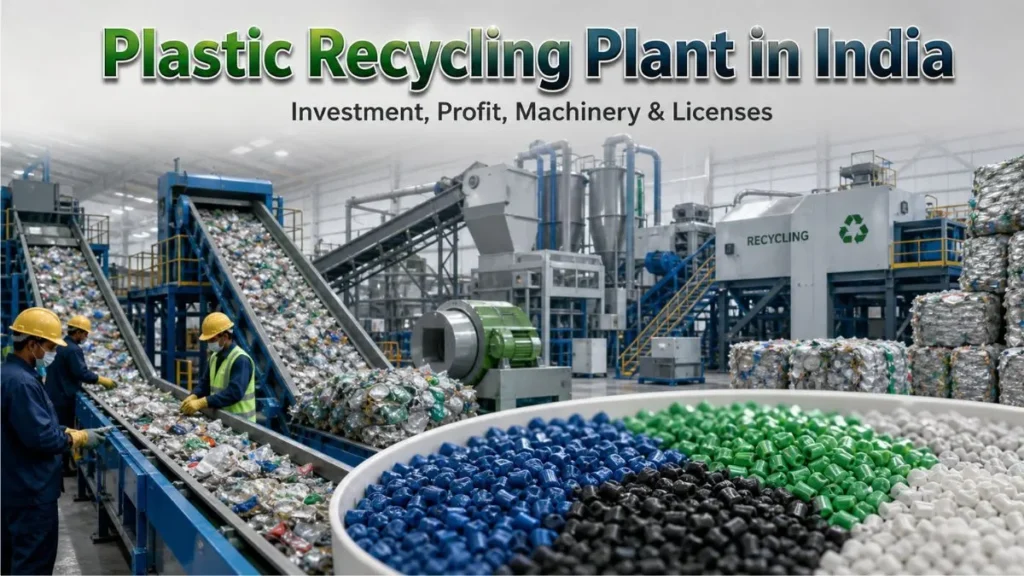
A Profitable Industry Hidden in Waste Plastic recycling plant in India has become one of the most viable and future oriented manufacturing ventures. Millions of tonnes of plastic waste are generated in India annually, yet much of it continues to go unprocessed or informally managed. Meanwhile, recycled plastic is now a legal requirement of the industries because of the environmental policies, such as Extended Producer Responsibility (EPR). This discrepancy between the production of waste and industrial need has provided a good business opportunity. Entrepreneurs no more deal with the garbage: they are constructing lucrative manufacturing plants that transform plastic scrap into industrial raw material. A properly designed recycling facility can bring about constant revenue every month and growth over time with moderate investment. Download the Full Guide: Medical, Municipal and Plastic Waste Management Handbook Why Plastic Recycling Is Growing Rapidly in India There are three key reasons as to why the plastic recycling demand in India is on the rise. To begin with, the consumption of plastics is increasing annually because of the growth of the packaging, e-commerce, and FMCG. Second, recycling facilities are not well developed. Third, companies are being compelled by government regulations to use recycled plastic. The important drivers are: Stringent EPR (Extended Producer Responsibility) policies. Rising demands on rPET, rHDPE and rPP in industries. Lack of qualified recycling facilities. Growing export of recycled granules. Due to these reasons, recycled plastic is now a stable industrial good and not an act of waste management. Types of Plastic Recycling Plants You Can Start The first thing to do before initiating it is the selection of the appropriate kind of plastic recycling business. All the categories vary in terms of machinery requirements, level of investment and profit margins. The most popular option is PET recycling as it transforms bottles into flakes or granules that can be utilized in the textile and packaging industries. Recycling of HDPE is also applied to the recycling of products such as pipes, containers and industrial packaging. Automobile parts and molded plastic products are recycled through PP. The types each have their benefits, although the majority of small entrepreneurs choose PET or HDPE due to the stable demand and simplified operations. Get Detailed Project Report (DPR): Plastic Waste Recycling Plant Investment Required to Start the Business The investment is based on the size of production and level of automation. About 500 kg per day is a small recycling plant that needs ₹25 lakh to ₹40 lakh. The medium-scale plant may cost ₹70 lakh to 1.1 crore. The key items of cost are machinery, infrastructure, working capital, and compliance establishment. A great number of entrepreneurs begin by leasing industrial sheds to take the edge off the start-up cost. Machinery and Production Process The process of a plastic recycling plant has a basic yet organized production system. It starts with the collection and sorting of plastic waste to eliminate undesired materials. The plastic is sorted and then the granulator machine is used to shred the plastic into small pieces. Then the substance is thoroughly washed to get rid of dirt, labels and impurities. After cleaning it is dried with mechanical or thermal dryers. The plastic is then melted using an extruder machine to form long strands of the dry plastic. Such strands are sliced into minute pellets, and they are the end product. Main machinery used in a recycling plant includes: Shredder or granulator Washing line (float sink tank and friction washer) Dryer system Extruder machine Pelletizer unit This arrangement is the main component of the whole recycling process. Raw Material Supply Strategy One of the most significant aspects of this business is raw material. No efficient production is possible without a constant supply of plastic waste. Plastic waste is generally obtained through: City garbage collection systems. Scrap traders (kabadi networks) Industrial plastic waste FMCG packaging waste. EPR-based corporate contracts Among them, EPR agreements are the most consistent as the companies are legally obliged to guarantee recycling goals. This establishes a relationship in the long run between recyclers and brands in terms of supply. Build a profitable business with the right idea Licenses and Legal Requirements. The establishment of a plastic recycling plant must have appropriate legal approvals in order to be in line with environmental and industrial regulations. The important registrations are MSME Udyam registration, GST registration, factory license and pollution control board clearance. Also, you will need to be registered as a plastic waste processor under the EPR regulations when you intend to deal with big corporate clients. Approval may require a few weeks or few months based on the state and quality of the documentation. Profitability and Business Potential Recycling of plastics is a good manufacturing enterprise due to the steady demand and steady prices. Prices of recycled plastic granules range between 40 and 90 per kg, based on the quality and type. A small plant can earn monthly between 10 lakh and 7 lakh rupees when running at 60 percent capacity and with full capacity, the plant can earn much more. The average profit margins are 18-25 percent. Profitability is further enhanced when it is added to EPR credit income. When the business is maintained effectively, it tends to gain back initial investment in 2.5 to 4 years. Government Support and Financial Assistance Indian government encourages recycling companies in its sustainability initiatives. There are a number of schemes that relieve entrepreneurs of financial load. The major support systems are PMEGP subsidies, CGTMSE collateral-free loans, and MUDRA financing of small units. Most states also have other incentives such as electricity subsidies, tax incentives and industrial land support to green industries. With such schemes, first time entrepreneurs are now able to venture into the recycling business with ease. Related Article: How to Start Pulp-Based Beverage Packaging Unit in India (Plastic Ban Opportunity) Role of NPCS in Setting Up the Plant NIIR Project Consultancy Services (NPCS) is significant to assist entrepreneurs in establishing plastic recycling facilities in India. It is a reputable consultancy firm that
How to get in on the Booming Business of Bamboo Toothbrush Manufacturing
The bamboo toothbrush industry has been around for ages, and yet its still just getting started! Why? Because weve only recently discovered how well bamboo brushes clean teeth, and with their natural antimicrobial properties, the impact on oral health care in the developed world could be huge! With this in mind, you may want to consider opening your own bamboo toothbrush manufacturing plant to capitalize on the sudden surge in demand. Visit this Page for More Information: Start a Business in Bamboo Industry Why Bamboo Toothbrushes Are Important? Bamboo toothbrushes are hypoallergenic, vegan, biodegradable, eco-friendly and contain no animal fats or dyes. This can reduce the spread of viruses and bacteria in your mouth. You’ll be helping our environment by using a more sustainable plant product to clean your teeth that also reduces waste that contributes to deforestation and pollution. Bamboo is one of the fastest growing plants on earth meaning it doesn’t require much energy input to grow new bamboo plants. It’s an excellent renewable resource with naturally antimicrobial properties. It also has natural antibacterial qualities which make it an ideal material for brushing your teeth because you’re less likely to develop any harmful bacteria in your mouth when you use this type of brush than you would if you were using a plastic toothbrush with artificial bristles. If you have braces, bamboo brushes are gentle enough to not scratch them but strong enough to get all the plaque off your teeth. They last three times longer than regular brushes so they’re worth their higher cost upfront over time. Read Similar Articles: BAMBOO AND BAMBOO PRODUCTS Manufacturing Process of Bamboo Toothbrush One of the first steps in producing a bamboo toothbrush is harvesting the bamboo, which begins with selecting the proper stalks and trimming them to size. Once they are cut, they are ground into thin strips that resemble wood planks. They are then heated until they are softened and ready for use. The next step involves pressing the bamboo pieces together until they form a tight sheet, creating what is called biscuit. The biscuit is left out to dry. Lastly, it’s trimmed and cut into various sizes before being packaged. After it has been dried, the now solid piece of bambootoothpaste is shaved down to its final thickness by a saw. It goes through another round of cutting and shaving before an adhesive is applied to one side so that bristles can be glued on top. Finally, the brush heads are set aside for packaging as well as sterilization and distribution. Once the brushes have been made, they’re ready to be shipped off to different retailers around the world. Related Business Plan: Bamboo and Bamboo Products, Value-Added Bamboo Products Benefits of Starting This Business Benefits of manufacturing bamboo toothbrushes are the sustainability, cost and ease of the product. With such high demand for sustainable products, many people have been drawn to this option. Bamboo is quickly renewable and sustainable; there’s more demand than supply! In addition, bamboo also has a low carbon footprint meaning that it won’t pollute our environment like other materials. As well as, it being cheap which makes this a great opportunity for all entrepreneurs looking to break into the market. Furthermore, you don’t need any special skills or equipment to start this business. Lastly, the process for making these brushes is relatively easy because they’re naturally biodegradable. All in all, it’s a good idea to get in on this business before it booms even further. There are so many opportunities with no drawbacks. Click here to send your queries/Contact Us Indian Market Outlook of Bamboo Toothbrush India has a huge population of about 1.3 billion, a growing middle class and limited clean water. Many Indians also use a brush once or twice before discarding it. This practice leaves millions of toothbrushes going to landfills every day, causing an ecological nightmare and creating extra cost for the patient due to constant visits to the dentist. A bamboo toothbrush could help solve this issue. Bamboo is renewable resource that can be grown on any type of soil without needing pesticides, fertilizers or irrigation. Its biodegradable, durable and can grow as much as one meter in just one year! So imagine what you can do with all those discarded toothbrushes! You can recycle them by shredding them down into a pulp which will be used to make into eco-friendly products like toothpaste, sugarcane bags, newspapers and paper. You’ll have fulfilled your social responsibility while being economical at the same time. Related Feasibility Study Reports: Start Bamboo Fiber & Yarn Manufacturing Business Visit the page Select and Choose the Right Business Startup for You for sorting out the questions arising in your mind before starting any business and know which start-up you can plan. We, at NPCS, endeavor to make business selection a simple and convenient step for any entrepreneur/startup. Our expert team, by capitalizing on its dexterity and decade’s long experience in the field, has created a list of profitable ventures for entrepreneurs who wish to diversify or venture. The list so mentioned is updated regularly to give you a regular dose of new emerging opportunities. Global Market Outlook of Bamboo Toothbrush Nowadays, bamboo toothbrushes are becoming more and more popular all over the world as people become more and more conscious of the importance of using the product to protect the environment. The bamboo brush has many advantages, including the fact that it is chemical-free, naturally antibacterial, and promotes sustainability. Demand is being accelerated by the government’s initiative to create regulations to reduce the use of plastic. For instance, India has stated its intention to eliminate single-use plastic within three years, according to a Washington Post piece that was published in October 2019. The demand for the product is also being driven up by hotels throughout the world using more environmentally friendly items. The increased demand for the product has been greatly influenced by the rising use of sustainable items around the world. For instance,