
Investment Opportunities in Manufacturing Business of Bromelain Enzyme from Pineapple Stems.
In the age of green innovation and sustainable entrepreneurship, the Bromelain enzyme business presents a unique opportunity. This valuable enzyme, found primarily in pineapples, has wide-ranging applications across pharmaceuticals, cosmetics, food processing, and agriculture. Extracting bromelain from pineapple waste not only supports zero-waste practices but also offers an economically viable model for new businesses. As global awareness of environmental sustainability rises, utilizing agricultural by-products such as pineapple peels, cores, and stems to extract bromelain opens doors for a low-cost, high-value venture. Why Bromelain Enzyme is a Booming Opportunity Bromelain is a complex mixture of proteolytic enzymes derived from the pineapple plant (Ananas comosus). Traditionally, the extraction of this enzyme focused on the juice or stem, but recent innovations have made it possible to efficiently extract bromelain from pineapple waste. This makes the business highly attractive in regions with large-scale pineapple production like India, Thailand, the Philippines, Brazil, and parts of Africa. With the global bromelain enzyme market expected to grow steadily due to increasing demand in health supplements, wound healing, meat tenderizing, and anti-inflammatory applications, now is an ideal time to invest in bromelain enzyme production. Here’s a detailed guide to understanding the bromelain enzyme business, especially focusing on its manufacturing process from pineapple waste. Understanding Bromelain and Its Uses What is Bromelain? Bromelain is a group of enzymes that break down protein molecules. It is naturally found in the pineapple fruit and stem, but the highest concentration is in the stem and waste parts, such as the core and peel. It has powerful anti-inflammatory, digestive, and therapeutic properties. Key Applications of Bromelain Enzyme Pharmaceuticals: As a natural anti-inflammatory, bromelain is used in treating arthritis, sinusitis, and post-operative swelling. Nutraceuticals: Included in dietary supplements for digestion support and immune boosting. Cosmetics: Used in skin rejuvenation creams and anti-aging formulas due to its exfoliating properties. Food Industry: Acts as a meat tenderizer and is used in brewing, baking, and clarification of juices. Agriculture: Enhances nutrient absorption in animals and improves feed conversion in poultry. The Business Model: Extracting Bromelain from Pineapple Waste Step-by-Step Manufacturing Process Extracting bromelain enzyme from pineapple waste involves multiple stages. Here is a comprehensive view of the process: 1. Collection and Preparation of Raw Material Pineapple waste such as peels, cores, and stems are collected from juice plants or fruit markets. These parts are rich in bromelain and often discarded. 2. Cleaning and Crushing The collected waste is washed thoroughly to remove any dirt or chemical residue. It is then crushed or ground into pulp using industrial grinders. 3. Extraction Mix the pulp with a cold buffer solution, often phosphate buffer at pH 7.0. This solution helps release the enzyme. Then, filter the mixture to separate the juice containing the enzyme. 4. Filtration and Centrifugation The juice is filtered and centrifuged to eliminate insoluble particles, leaving behind a clear solution rich in bromelain. 5. Purification Advanced techniques like ammonium sulfate precipitation, dialysis, and column chromatography are used to purify bromelain. 6. Drying The purified enzyme is freeze-dried or spray-dried to convert it into powder form, making it suitable for commercial packaging. 7. Packaging The dried bromelain enzyme powder is packed in moisture-proof containers under hygienic conditions for distribution. Investment Requirements and Plant Setup h3: Infrastructure and Equipment Setting up a Bromelain enzyme manufacturing unit requires a semi-industrial plant with: Stainless steel reactors and mixers Centrifuge machines Freeze dryers or spray dryers Filtration systems Cold storage units Quality testing lab h4: Estimated Capital Investment Small-scale unit: ?20–25 lakhs (USD $25,000–$35,000) Medium-scale plant: ?50–60 lakhs (USD $60,000–$75,000) The investment can vary depending on automation levels, location, and availability of raw materials. Licensing and Compliance Starting a Bromelain enzyme business involves certain legal and regulatory steps: FSSAI license for food-grade bromelain GMP certification for pharmaceutical-grade production Pollution Control Board clearance Factory license under the Factories Act IEC code for exports Market Demand and Export Potential Growing Global Demand The bromelain enzyme market will surpass $60 million by 2030, growing at a CAGR of 6–8%. Rising preference for plant-based enzymes and natural therapeutic agents drives this demand. Key Export Markets USA Germany Japan Canada South Korea With India being a major pineapple producer, entrepreneurs here can leverage cost-effective raw materials and labor to tap into this global demand. Profit Margins and ROI Extracting Bromelain enzyme from pineapple waste not only reduces raw material costs but also supports environmental sustainability. The cost of waste collection is minimal, and the market price of bromelain powder ranges from ?2,000 to ?6,000 per kg depending on purity. On average: Yield: 3–5 kg of bromelain per ton of pineapple waste Monthly revenue: ?3–5 lakhs for small-scale units ROI: Within 1.5 to 2 years under proper management Challenges in Bromelain Enzyme Business Key Hurdles to Address Raw Material Consistency: Seasonal availability of pineapple may affect year-round production. Extraction Efficiency: Enzyme yield can vary depending on process optimization. Storage: Bromelain is temperature-sensitive; hence, cold chain logistics is essential. Regulatory Hurdles: Export regulations and certifications can be complex for pharmaceutical applications. Sustainability and Environmental Impact One of the biggest advantages of the Bromelain enzyme business is its eco-friendliness. By converting waste into wealth, the process minimizes landfill burden and promotes circular economy principles. Additionally, minimal chemical usage makes the process safer for workers and the environment. Future Outlook and Innovation What Lies Ahead? The future of bromelain enzyme production is bright, especially with growing interest in green biotechnology. Advanced extraction methods like enzyme-assisted extraction and membrane filtration are increasing yield and purity. Furthermore, research is underway to genetically modify microbes for bromelain synthesis, potentially reducing dependence on pineapple entirely. Startups and researchers are also exploring combinations of bromelain with other enzymes like papain and trypsin to develop multi-functional enzyme complexes, expanding its application base. Final Thoughts Starting a Bromelain enzyme manufacturing business using pineapple waste is a promising venture for those looking to combine profitability with sustainability. With rising global demand, affordable raw materials, and growing awareness of natural enzymes, this business offers strong ROI and export potential.
Investment Opportunities in Business of Sugar from Sugar Beet. Highly Profitable Business of Beet Sugar.
Sugar production has always played a critical role in the agro-based economy, especially in countries where agriculture is a primary occupation. While sugarcane is traditionally the dominant crop for sugar extraction, sugar beet is rapidly gaining attention as a viable, profitable, and more sustainable alternative. With increasing awareness around climate change, land usage efficiency, and water conservation, cultivating sugar from sugar beet offers an appealing business proposition for farmers, investors, and agro-industrialists alike. Why Sugar Beet is Emerging as a Smart Investment Choice Sugar beet is a root crop that grows best in temperate climates and is highly productive in terms of sugar yield per hectare. Unlike sugarcane, which requires about 12–18 months to mature, sugar beet can be harvested in just 5–6 months, making it a more flexible option for crop rotation and planning. As the global demand for sugar continues to rise due to the expanding food and beverage industry, this root-based alternative offers a lucrative opportunity for stakeholders in the agro-sector. Understanding the Sugar Beet Plant and Its Benefits The sugar beet is a conical, white, and fleshy root containing 16–20% sucrose content by weight. This is comparable, and in some cases superior, to sugarcane in terms of extractable sugar yield. Sugar beet plants grow well in moderate climates and can even thrive in relatively marginal soils where sugarcane might struggle. This gives sugar beet a geographic advantage, allowing sugar production in regions previously unsuitable for sugarcane cultivation. Key advantages of sugar beet include: Shorter growth cycle (120–180 days) Lower water consumption compared to sugarcane Better suitability for mechanized farming High sugar recovery percentage Capability to be grown in crop rotation systems All these attributes make sugar beet a cost-effective and eco-friendly choice for sugar production. Market Demand and Growth Trends The global sugar industry has been evolving with an increasing demand for sustainable and efficient production systems. Countries like Russia, the United States, France, and Germany already rely significantly on sugar beet for domestic sugar production. In India and other tropical nations, where sugarcane dominates, there’s now a visible shift toward diversification with sugar beet farming being considered in areas like Punjab, Haryana, Maharashtra, and Uttar Pradesh. The processed sugar market, including refined white sugar, brown sugar, and specialty sugars, is projected to grow at a CAGR of over 5% through 2030. As food processing industries, confectionery manufacturers, beverage companies, and bakeries continue to expand, reliable sugar sources will be critical. Sugar beet, with its faster yield and lower environmental impact, is poised to meet this demand effectively. Sugar Beet Cultivation: What Investors Should Know Investing in sugar beet cultivation requires a keen understanding of agricultural practices, access to arable land, and some technical know-how in sugar extraction. However, with advancements in biotechnology and mechanized farming, the learning curve has become more manageable. Steps in sugar beet farming and processing include: Land preparation: Sugar beet requires well-drained loamy soil, neutral in pH. Seed sowing: High-quality hybrid beet seeds are sown with precision drills. Irrigation and nutrient management: Requires 35–50% less water than sugarcane, and a balanced supply of nitrogen, phosphorus, and potassium. Weeding and pest control: Less prone to pests, requiring fewer pesticides. Harvesting: Typically done mechanically for large-scale operations. Processing: The beets are cleaned, sliced, and diffused to extract sugar content. The juice is then purified, concentrated, and crystallized. By investing in processing plants closer to beet farms, investors can cut down on transportation costs and improve sugar recovery rates. Profitability Outlook The cost of cultivating sugar beet is generally lower than that of sugarcane. It also offers faster cash flow cycles due to its short harvesting period. In many countries, government subsidies and incentives are offered for crops that support sustainable agriculture, which can further improve the return on investment for sugar beet ventures. Estimated cost and revenue per hectare: Cost of cultivation: ?45,000–?60,000 Yield: 35–40 tonnes per hectare Average sugar content: 16–18% Revenue from sugar sales: ?1,00,000–?1,20,000 per hectare Profit margin: 40–50% These numbers vary depending on location, scale, labor availability, and market access, but they show a strong case for the economic viability of investing in sugar from sugar beet. Diversified Revenue Streams Sugar beet doesn’t just offer value from sugar extraction. Its by-products also hold commercial importance: Pulp: Can be sold as livestock feed. Molasses: Used in fermentation industries and ethanol production. Leaves and tops: Can be used as organic manure or fodder. Ethanol: Growing biofuel demand opens another revenue avenue. This diversification cushions against price volatility in the sugar market and maximizes profits from a single crop. Environmental and Social Benefits In addition to economic gains, sugar beet offers several environmental benefits. Its cultivation demands less water, making it suitable for drought-prone or water-scarce areas. It helps in soil improvement through deep rooting, which breaks compacted layers, improving soil health for subsequent crops. Further, sugar beet cultivation and processing generate employment opportunities in rural areas, supporting local economies and enhancing livelihoods. With the growing emphasis on sustainable agriculture, sugar beet presents a compelling solution that aligns with global environmental goals. Challenges and Considerations Despite its potential, there are certain challenges that must be addressed: Limited awareness and adoption in traditional sugarcane zones. Need for specialized equipment for sowing and harvesting. Initial capital investment for setting up processing units. Logistics and storage challenges due to the perishable nature of beets. However, with strategic planning, stakeholder collaboration, and policy support, these hurdles can be overcome. Government Support and Policy Framework Governments in countries like India, Brazil, and the EU are actively promoting alternative crops to reduce the burden on water and energy resources. Sugar beet fits well into this narrative. Subsidies for micro-irrigation, mechanization, and sugar processing technology are offered through various agricultural schemes. Investors should keep an eye on local and national policies promoting crop diversification, ethanol blending mandates, and sugar import/export frameworks to position themselves advantageously. Strategic Partnerships and Business Models For maximum profitability, forming strategic partnerships with: Agri-tech companies for best farming practices Research institutions for seed and
Vinegar Manufacturing Business Idea – An Emerging Business Investment Opportunities in Food Processing Sector
Vinegar, a product as ancient as civilization itself, has stood the test of time due to its wide-ranging applications. From being a culinary staple and a preservative to having medicinal and cleaning properties, vinegar remains a product with constant demand. With the growing trend toward organic and healthy food products, the demand for different types of vinegar has increased globally. Starting a vinegar manufacturing business in 2026 is not only a promising idea but also one that aligns well with the shift toward sustainable, value-added food processing businesses. Starting a Vinegar Manufacturing Business in 2026 To launch a vinegar manufacturing business, you must understand the science behind vinegar production and identify your target market. Vinegar is essentially a dilute solution of acetic acid made through the fermentation of ethanol. It is produced from a variety of sources including fruits (like apple or grape), grains (like rice), or industrial alcohol. There are two main processes involved in vinegar production: the slow fermentation method and the fast fermentation method. The slow method is traditional and results in superior flavor—ideal for premium vinegars such as balsamic or apple cider. On the other hand, the fast method involves industrial fermenters and is suitable for mass production, ensuring quick turnover and higher profits. The market for vinegar spans multiple sectors: food and beverage, healthcare, cleaning products, and even cosmetics. With rising health awareness, especially post-pandemic, more people are incorporating organic apple cider vinegar and other specialty vinegars into their diet. This health-driven trend can be a significant growth factor for the vinegar manufacturing industry. Market Potential and Demand Forecast The global vinegar market is experiencing robust growth. According to various industry reports, it is expected to reach over USD 15 billion by 2030, driven by demand for organic and flavored vinegars. In India alone, the urban middle class is rapidly adopting apple cider vinegar as a health supplement. Restaurants and food processing industries use large quantities of white vinegar, creating bulk B2B opportunities. This market trend indicates that entering vinegar manufacturing in 2026 could be a highly profitable move, especially if you focus on quality and differentiation. Small-scale vinegar units with unique offerings—like herbal infusions, fruit-based flavors, or certified organic status—are becoming more popular among health-conscious consumers. Steps to Start a Vinegar Manufacturing Business To establish a successful vinegar business, a step-by-step approach is essential: 1. Market Research and Product Selection: Begin with in-depth market analysis. Decide whether you want to manufacture industrial vinegar, culinary vinegar (like white, malt, or wine vinegar), or premium health vinegars (like apple cider or rice vinegar). Study consumer trends, competitor brands, and pricing. 2. Choose the Production Method: For small-scale production, traditional fermentation using fruit or rice in wooden barrels is suitable. For larger scale, invest in acetators (machines used for fast fermentation), stainless steel tanks, and bottling machines. 3. Location and Infrastructure: Your production unit should be in a location with easy access to raw materials (fruits, grains, sugar), clean water supply, electricity, and transportation facilities. A 1000–1500 sq ft area is typically sufficient for a small unit. 4. Obtain Licenses and Registrations: Compliance with food safety regulations is crucial. You’ll need: FSSAI Registration (India) GST Registration Factory License MSME Udyam Registration Pollution Control Certification Trademark for branding 5. Machinery and Equipment: Depending on your scale, equipment may include: Fermentation tanks Heating and cooling systems Acetator (for fast vinegar production) Filtration units Bottling and labeling machines 6. Sourcing Raw Materials: Use quality fruits, grains, or molasses for fermentation. If producing apple cider vinegar, ensure a consistent supply of fresh apples or apple juice concentrate. For white vinegar, ethanol and sugar are required. 7. Skilled Workforce: Hire staff familiar with fermentation techniques, quality control, packaging, and marketing. While automation can reduce manpower needs, initial operations often require manual oversight. 8. Branding and Packaging: Today’s consumer is influenced by packaging and story. Highlight organic ingredients, traditional processes, or health benefits on your product label. Use eco-friendly bottles and attractive designs to enhance shelf appeal. 9. Marketing and Distribution: Distribute through supermarkets, health stores, restaurants, and online platforms like Amazon and Flipkart. Tie up with nutritionists, wellness centers, or dieticians for product endorsements. Attend food expos to showcase your brand. 10. Quality Control and Certification: Ensure batch testing and consistent pH and acetic acid levels in your vinegar. Certifications like ISO, HACCP, and organic standards can boost consumer trust and expand export potential. Investment and Profitability Setting up a small vinegar manufacturing unit in India can cost between ?15 lakh to ?40 lakh, depending on automation and capacity. A mini plant producing 1000 liters/day of vinegar can yield significant margins, especially if targeting niche markets with value-added products. Profit margins range between 30% to 60%, depending on your scale, branding, and distribution model. For example: Cost of production for 1 liter of apple cider vinegar: ?20–?30 Selling price in retail (premium market): ?120–?250 By scaling operations and adding variants, monthly profits can reach ?1 lakh to ?5 lakh within the first two years of operation. Future Trends in Vinegar Manufacturing Business 2026 and beyond will witness increasing demand for: Organic Vinegar: With organic lifestyles gaining traction, vinegar made without synthetic additives will dominate shelves. Infused Vinegars: Flavored with herbs, spices, or fruit, these offer both taste and health benefits. Export-Oriented Units: Indian entrepreneurs are exploring export potential in Europe, Southeast Asia, and the Gulf where demand for natural products is high. Eco-Friendly Packaging: Sustainable packaging adds brand value and appeals to environmentally aware consumers. Moreover, with AI and IoT entering food manufacturing, expect intelligent fermentation monitoring systems that can optimize yield and quality, reducing waste and improving profitability. Challenges in the Business Like any industry, vinegar manufacturing has its hurdles: Raw Material Fluctuation: Prices of fruits, sugar, or alcohol may fluctuate based on season and supply. Market Competition: Low entry barriers mean more players; unique branding is key. Regulatory Compliance: Food and beverage regulations are becoming more stringent, especially for health claims on packaging. Storage and Shelf Life: Vinegar has
Project Opportunities in Production of Calcium Propionate
Calcium Propionate is a widely used food additive and preservative, especially in the baking and dairy industries. It is particularly effective in preventing the growth of molds and bacteria in food products, thereby extending shelf life. As the global demand for processed and packaged foods continues to rise, the market for Calcium Propionate is expanding. Starting a Calcium Propionate production business can be a profitable venture if approached with the right strategy, compliance, and technology. Market Potential and Application of Calcium Propionate Calcium Propionate has multiple applications in various industries. Its primary use is as a food preservative in bread, baked goods, dairy products, processed meats, and even animal feed. The food-grade and feed-grade varieties both hold significant market share. With rising health consciousness and the growth of the convenience food market, the demand for mold-free, long-lasting products has surged—making Calcium Propionate an essential component. According to global market reports, the Calcium Propionate market is expected to grow at a CAGR of 5-6% over the next few years. Asia-Pacific, led by India and China, is emerging as a key contributor to this growth. India, in particular, offers great opportunities due to increased urbanization, changing food habits, and greater demand for preservative-enhanced foods. This indicates strong market potential for local production units. Key Benefits of Starting a Calcium Propionate Business: Growing Market Demand: Increasing global and domestic consumption in food and feed industries. High Return on Investment: Due to its low production cost and widespread usage. Export Opportunities: Countries with stringent food safety regulations are key markets. Low Market Saturation in India: Relatively few manufacturers cater to growing demand. Step-by-Step Guide to Start Calcium Propionate Production To begin with, you must clearly understand the production process, required machinery, regulatory guidelines, and marketing channels. Here’s a detailed breakdown: 1. Conduct Market Research Before diving into production, it’s crucial to conduct detailed market research. Understand who your buyers are—bakeries, dairy producers, meat processing units, animal feed manufacturers, etc. Identify local and export markets, pricing structures, and competitor offerings. Key Areas to Research: Competitor pricing and packaging. Regional and international demand. Regulatory barriers and certifications. Import-export data (if planning for global supply). 2. Choose a Suitable Location Your production plant should ideally be close to food processing zones, industrial areas, or ports if you’re aiming at exports. Consider accessibility to raw materials, labor, and logistics. Ideal Location Features: Industrial zoning permissions. Adequate water and electricity supply. Waste management systems. Ease of transportation and logistics. 3. Investment and Financial Planning Setting up a Calcium Propionate production unit requires moderate capital investment. For a small to medium-scale plant, the investment may range from ?1.5 crore to ?4 crore depending on capacity and automation. Key Cost Heads: Land and building or lease costs. Machinery and equipment. Raw materials and initial working capital. Licensing and compliance. Marketing and distribution. You can also explore subsidies from the Ministry of Food Processing Industries (MOFPI), bank loans, or MSME financial support schemes. 4. Obtain Necessary Licenses and Approvals You must comply with Indian food safety and environmental laws. The key registrations include: FSSAI License: Mandatory for food additive manufacturers. Pollution Control Board Clearance. Factory License & Labour Law Compliance. MSME/Udyam Registration. GST Registration. Import Export Code (IEC) for global sales. For pharmaceutical-grade Calcium Propionate, additional approvals from the Drug Controller may be needed. 5. Procure Raw Materials The key raw materials for producing Calcium Propionate include: Calcium Hydroxide (slaked lime) Propionic Acid Deionized Water These are generally available in bulk from chemical suppliers. Ensure food-grade quality and consistent supply to meet production timelines. 6. Machinery and Equipment The following equipment is commonly required for the manufacturing of Calcium Propionate: Reactors (SS-lined) Mixing tanks Centrifuge or Filter Press Drying Equipment (Spray Dryer or Tray Dryer) Pulverizer Weighing, Packaging & Labeling Machines Water purification and utility systems A semi-automatic setup helps reduce labor costs while maintaining control over the process. 7. Production Process The chemical reaction for producing Calcium Propionate is relatively straightforward. It involves neutralizing Propionic Acid with Calcium Hydroxide in an aqueous solution. The steps include: Reaction: Mix Propionic Acid with Calcium Hydroxide in water under controlled temperature. Filtration: Remove insoluble particles using a filter press or centrifuge. Evaporation/Drying: Concentrate the filtrate and dry it using spray or tray drying techniques. Milling and Packing: The dried crystals are milled and packed in HDPE bags with inner liners to avoid moisture. Each batch should undergo strict quality checks for pH, purity, moisture, and other food-grade standards. 8. Quality Control and Lab Setup Setting up an in-house lab is essential to ensure every batch meets industry standards. Quality parameters include: Assay (purity) pH Level Moisture Content Appearance (white, odorless powder) Solubility Complying with FSSAI or Codex Alimentarius standards ensures your product is globally acceptable. 9. Branding and Marketing Create a strong brand that emphasizes purity, food safety, and competitive pricing. Tie up with food processing companies and feed manufacturers. Attend industry trade shows, food expos, and online marketplaces like IndiaMART or TradeIndia. Marketing Strategies: B2B cold calling and sampling. Creating a website for global buyers. Export partnerships. Distributor networks in food industry hubs. Having proper product documentation (COA, MSDS, etc.) enhances credibility. 10. Environmental and Safety Measures Calcium Propionate production involves handling acids and chemicals. Ensure safety measures like: PPE (Personal Protective Equipment) for workers. Proper ventilation systems. Spill management protocols. Effluent treatment systems. Also, implement an SOP for chemical handling and emergency response. Future Outlook and Expansion Once the initial setup stabilizes and customer base grows, expansion opportunities include: Increasing capacity. Diversifying into other food additives like Sodium Propionate, Potassium Sorbate. Creating a fully integrated line of preservatives. Exporting to Middle East, Africa, and ASEAN markets. Additionally, with growing awareness of food safety, Calcium Propionate is also gaining traction in natural and organic food segments, where minimal synthetic preservatives are allowed. Manufacturing organic-certified grades can add niche value. Conclusion Starting a Calcium Propionate production business is not only profitable but also future-ready due to the growing food and feed processing sectors.
Pickle Manufacturing Industry
India, a land of diverse culinary traditions, boasts an enduring and passionate relationship with pickles. From fiery mango pickles in Rajasthan to tangy lime varieties in Tamil Nadu, pickles are an indispensable part of the Indian palate. Over generations, pickles have evolved from home-kitchen recipes to commercial food products that are not only relished across the country but also exported worldwide. The pickle manufacturing industry in India stands as a testimony to how traditional food products can become lucrative business ventures with high domestic and international demand. Growth Potential of Pickle Manufacturing Industry in India The Indian pickle market is undergoing a transformative phase, shifting from informal home-based production to organized industrial-scale operations. Increasing globalization, urbanization, and health consciousness among consumers have led to a surge in demand for hygienically prepared, attractively packaged, and flavor-rich pickles. This changing landscape opens up enormous opportunities for entrepreneurs, startups, and established food brands in the pickle manufacturing industry. The industry caters to both vegetarian and non-vegetarian consumers, offering a wide range of flavors, styles, and ingredient bases. From oil-based pickles to vinegar-cured varieties, and from spicy blends to mild and sweet flavors, the Indian market remains richly diversified and regionally segmented. Rising Demand and Expanding Market Scope As per recent industry estimates, the Indian pickle market is projected to reach a value of ?15,000 crore by 2027, expanding at a compound annual growth rate (CAGR) of 6-8%. This growth is fueled by multiple factors: Busy lifestyles: Increasing preference for ready-to-eat and shelf-stable foods. Diaspora demand: Growing Indian population abroad craving traditional flavors. E-commerce boom: Easy online availability through platforms like Amazon, Flipkart, and BigBasket. Health and nutrition trends: Rise in organic, preservative-free, and probiotic-rich pickles. Moreover, small businesses and local artisans are entering niche markets such as vegan, gluten-free, or sugar-free pickles to tap into health-conscious consumer segments. Key Regions Dominating Pickle Production India’s vast geographical and agricultural diversity enables the production of a wide variety of raw materials essential for pickling. Certain regions have emerged as dominant centers for the pickle manufacturing industry due to their unique local recipes, spices, and fruits: Andhra Pradesh & Telangana: Known for Avakaya (raw mango pickle) and Gongura (sorrel leaves). Tamil Nadu: Specializes in garlic, lemon, and gooseberry pickles. Kerala: Recognized for seafood-based pickles such as prawns and fish pickles. Punjab & Haryana: Celebrated for tangy mixed vegetable and stuffed chili pickles. Uttar Pradesh & Bihar: Popular for traditional mango, jackfruit, and karonda pickles. Maharashtra & Gujarat: Known for sweet and spicy mango and chhundo varieties. These regions supply both traditional and modern markets with high-quality pickles, often bearing a strong identity tied to their state’s cultural food heritage. Understanding the Manufacturing Process The pickle manufacturing process involves a careful blend of tradition and scientific food processing. Below are the key stages in a commercial setup: Raw Material Procurement: Selecting high-grade fruits, vegetables, spices, oils, and preservatives. Washing and Sorting: Ensuring complete hygiene and quality control. Cutting and Grating: Slicing ingredients as per required size using manual or automatic slicers. Spice Blending: Preparing proprietary spice mixes that define flavor profiles. Mixing and Curing: Combining ingredients with salt, oil, vinegar or lemon juice, followed by curing in jars or fermentation tanks. Filling and Sealing: Automated bottling or packing in jars, pouches, or PET containers. Labeling and Storage: Proper labeling with nutritional info, expiry date, and batch number. Depending on the recipe and market requirement, curing may last from a few days to several weeks. Some pickles are fermented naturally, which adds to their probiotic properties, while others are preserved using oil or vinegar for longer shelf life. Machinery and Equipment for Commercial Units To run an efficient pickle manufacturing industry operation, the following machinery is typically required: Fruit and vegetable washer Peeling and cutting machines Mixing and blending tanks Oil and spice mixing units Fermentation tanks (SS) Automatic filling and sealing machines Labeling and coding machines The scale of the machinery depends on whether the business is small-scale, medium, or large-scale. While traditional pickling methods are still used in cottage industries, mechanized production ensures hygiene, consistency, and scalability. Licensing, Compliance, and Safety Regulations Operating a pickle manufacturing unit requires compliance with several regulatory norms: FSSAI Registration: Mandatory for all food processing units. BIS Certification: For maintaining product standards and packaging norms. GST Registration: Essential for taxation and supply chain management. Udyam Registration: To avail subsidies under MSME schemes. ISO 22000 / HACCP: Recommended for export units for food safety. Import-Export Code (IEC): Required for international trade. Pollution and Fire Safety Compliance: To ensure factory adherence to environmental laws. Quality control, batch testing, shelf-life analysis, and microbial safety checks are critical components for ensuring product safety and market credibility. Investment Required and Business Economics Starting a pickle manufacturing industry in India can cost anywhere from ?5 lakhs to ?1 crore, based on the scale and sophistication. Here’s a breakdown of major costs: Land and infrastructure Machinery and tools Raw materials Labor and packaging Licensing and quality certifications Marketing and logistics On average, small and medium-sized pickle units generate a profit margin of 25% to 40%, especially when selling to urban, niche, or international markets. Export-oriented units can command even higher margins with premium product lines and attractive packaging. Export Opportunities and Global Demand The global appetite for Indian pickles is growing, especially among Non-Resident Indians (NRIs) and international food lovers. Top destinations for Indian pickle exports include: United States United Kingdom United Arab Emirates Canada Australia Singapore Malaysia Exporters must meet stringent international food safety norms, labeling requirements, and documentation. Partnering with international distributors, attending food expos, and leveraging global e-commerce platforms helps in increasing market reach. Marketing Strategies and Distribution Channels An effective marketing strategy is critical to build a successful brand in the pickle manufacturing industry. Key tactics include: Brand Identity: Focus on authenticity, regional specialty, and hygienic preparation. Packaging: Use eco-friendly, leak-proof, attractive packaging with clear labeling. Online Presence: Maintain a dedicated website, SEO-rich blog, and social media accounts. Distribution: Work with retailers, supermarkets,
Tomato Paste Packaging Industry
The Tomato Paste Packaging Industry is rapidly evolving, driven by the increasing global demand for ready-to-use food products and convenient cooking solutions. Tomato paste, a thick concentrate of ripe tomatoes, is a staple in both household and commercial kitchens. It’s used in sauces, soups, curries, ready-to-eat meals, and fast food products. As consumption grows, manufacturers are focusing not just on quality production but also on advanced and efficient packaging methods. The Tomato Paste Packaging Industry plays a vital role in ensuring long shelf life, product freshness, ease of transportation, and brand value enhancement. What is Tomato Paste Packaging? Tomato paste packaging refers to the process of enclosing tomato concentrate in suitable containers to preserve its flavor, color, and nutritional content while preventing microbial spoilage. Packaging is crucial to maintain product integrity from factory to table. In the Tomato Paste Packaging Industry, a wide range of materials and technologies are used to suit different markets—retail, HoReCa (Hotel/Restaurant/Catering), and exports. Types of Packaging in the Industry The Tomato Paste Packaging Industry offers multiple packaging options based on target consumers, shelf life expectations, and transport conditions: Flexible Pouches (with spouts or without): Lightweight and economical for retail use Aluminum or Tin Cans: Popular in the export market due to their durability Glass Jars: Premium packaging with good visibility and perceived value PET Bottles: Squeeze bottles for ketchup-style paste applications Bag-in-Box Systems: Ideal for bulk buyers like hotels or food processing companies Aseptic Pouches or Cartons: Extended shelf life, minimal preservatives required Each format has its own market segment. The key goal across all packaging types is to preserve the paste’s quality while maintaining cost-efficiency and appeal. Essential Machinery and Equipment Starting a unit in the Tomato Paste Packaging Industry requires both food processing and packaging equipment. Key machinery includes: Vacuum Evaporators: To concentrate tomato pulp into paste Sterilizers: To kill bacteria and increase shelf life Filling Machines: To fill paste into pouches, cans, or jars Sealing Machines: To hermetically seal containers Labeling and Batch Coding Machines: For product identification Shrink Wrapping Units: For bundling retail packs Automation level can vary depending on scale—from semi-automatic for small setups to fully automated lines for large-scale operations. Required Infrastructure and Setup Area A medium-scale Tomato Paste Packaging Industry setup requires approximately 5,000 to 10,000 sq. ft. of space. This includes: Raw material handling and processing zone Pasteurization and sterilization section Filling and sealing line Quality testing lab Packaging material storage Finished goods warehouse Ensuring hygiene and food-grade infrastructure is critical. Floors must be washable, water supply must be filtered, and a waste treatment system should be in place for by-products like tomato skins and seeds. Raw Materials and Inputs Needed The primary inputs for the Tomato Paste Packaging Industry include: Fresh ripe tomatoes (sorted and washed) Citric acid or other food-grade stabilizers Packaging materials (laminated films, tin cans, glass jars, etc.) Preservatives and antioxidants (optional for longer shelf life) Steam, electricity, and clean water For value-added packaging, you may also include tear-notch pouches, zip locks, or custom-printed rolls for flexible packaging machines. Investment and Profitability The capital investment in the Tomato Paste Packaging Industry depends on the automation level and capacity: Small-scale unit: ?20–30 lakhs (semi-automatic) Medium-scale unit: ?50 lakhs–?1 crore Large-scale unit: ?2–5 crores+ Tomato paste retails between ?40–?150 per kg depending on quality, packaging, and market (bulk vs retail). Profit margins range between 25–40%, especially when selling under your own brand or exporting. ROI is typically achieved within 18–24 months of operation. Regulatory Approvals and Licensing Starting a business in the Tomato Paste Packaging Industry requires: FSSAI License (Food Safety and Standards Authority of India) GST Registration Factory License / MSME/Udyam Registration Pollution Control NOC ISO 22000 or HACCP Certification (for export or B2B clients) Trademark Registration (for brand building) Maintaining clean and hygienic operations with batch-wise traceability is essential to pass audits from large buyers and regulatory bodies. Market Opportunities and Demand There is strong demand in both domestic and export markets for packaged tomato paste: Retail Market: Supermarkets, grocery stores, e-commerce HoReCa Sector: Restaurants, caterers, and cloud kitchens Food Processing Companies: Ready-to-eat meal producers, snack manufacturers Export Markets: Middle East, Africa, and Southeast Asia Demand spikes during the off-season when fresh tomatoes are costlier, giving manufacturers seasonal advantage. Selling under private labels or bulk supplies for third-party brands is also common in the Tomato Paste Packaging Industry. Expansion Possibilities The Tomato Paste Packaging Industry offers several routes for growth: Launch your own brand: Build visibility in the FMCG retail space Add complementary products: Tomato puree, ketchup, sauces Upgrade packaging: Introduce single-serve sachets, QR-coded packs Expand distribution: Sell through Amazon, Flipkart, and D2C platforms Set up contract packaging: Offer white-label services for startups or exporters A well-positioned tomato paste unit can grow into a full-fledged tomato product processing brand over time. Conclusion The Tomato Paste Packaging Industry presents an exciting business opportunity for food entrepreneurs. With high demand, relatively simple technology, and wide-ranging applications, it’s a low-risk, high-reward sector. Whether you aim to sell to retail, serve institutional clients, or export to high-demand regions, a tomato paste packaging unit offers scalability, sustainability, and consistent profitability. Investing in automation, food safety, and creative packaging can further enhance market positioning and consumer appeal. Niir Project Consultancy Services An ISO 9001:2015 Company 106-E, Kamla Nagar, Opp. Spark Mall, New Delhi-110007, India. Email: npcs.ei@gmail.com , info@entrepreneurindia.co Tel: +91-11-23843955, 23845654, 23845886, 8800733955 Mobile: +91-9811043595 Website: www.entrepreneurindia.co , www.niir.org Contact Us
Peanut Butter Manufacturing Industry
The Peanut Butter Manufacturing Industry is booming worldwide as consumers shift toward high-protein, plant-based, and healthy snack options. Peanut butter, once seen primarily as an American household staple, is now gaining popularity in developing nations as well due to its nutritional profile, long shelf life, and versatility. With the health food market growing rapidly and fitness trends becoming mainstream, the demand for natural and flavored peanut butter continues to surge. Launching a business in the Peanut Butter Manufacturing Industry offers excellent prospects for entrepreneurs, food processors, and health food brands aiming to tap into this lucrative market. Rising Demand for Peanut Butter Peanut butter is a nutrient-dense product made by grinding roasted peanuts into a smooth or crunchy paste. It contains healthy fats, protein, fiber, vitamins, and minerals, making it a popular choice among health-conscious consumers, athletes, and vegetarians. The increasing awareness of plant-based diets and protein alternatives has pushed the consumption of peanut butter in both domestic and international markets. The Peanut Butter Manufacturing Industry benefits from consistent demand in multiple sectors including retail grocery chains, health food outlets, sports nutrition brands, e-commerce platforms, and export markets. Offering variants such as organic, unsweetened, chocolate, or honey-infused peanut butter allows manufacturers to cater to diverse tastes and dietary needs. Types of Peanut Butter Products To gain a competitive edge in the Peanut Butter Manufacturing Industry, businesses often diversify their product line. Common types include: Creamy Peanut Butter: Smooth texture and classic taste Crunchy Peanut Butter: Contains small peanut bits for added texture Natural or Organic Peanut Butter: No hydrogenated oils or artificial preservatives Flavored Peanut Butter: Chocolate, cinnamon, honey, or protein-enhanced varieties Unsweetened or Sugar-Free: Suitable for diabetic or keto consumers Fortified Peanut Butter: Added vitamins, minerals, or protein powders for fitness markets Offering value-added packaging (sachets, jars, pouches) also helps in brand positioning and reaching different market segments. Raw Materials and Ingredients The core raw material in the Peanut Butter Manufacturing Industry is high-quality, dried, and roasted peanuts. Additional ingredients may include: Salt (optional, for flavor balance) Sugar or Honey (based on target audience) Vegetable Oil (to stabilize texture and prevent separation) Stabilizers (optional for long shelf life) Cocoa Powder or Natural Flavors (for flavored versions) Sourcing peanuts from trusted farmers or agricultural cooperatives ensures consistent quality and supports traceability, especially for organic or export-focused businesses. Manufacturing Process Overview Setting up a Peanut Butter Manufacturing Industry involves a streamlined production process. Here are the main steps: Raw Peanut Selection and CleaningPeanuts are sorted, cleaned, and passed through magnetic separators to remove impurities. RoastingPeanuts are roasted at controlled temperatures to enhance flavor and aroma. Cooling and PeelingRoasted peanuts are cooled and their outer skin is removed using blanching machines. GrindingPeeled peanuts are ground into a smooth or coarse paste depending on the product variant. Mixing and FlavoringIngredients such as salt, sugar, and stabilizers are blended to achieve the desired taste and consistency. HomogenizationThe mixture is further refined to ensure uniform texture and product stability. Filling and SealingPeanut butter is filled into jars or sachets using automated filling machines and sealed hygienically. Labeling and PackagingEach unit is labeled with nutritional details, expiry date, and batch number before packaging. Adhering to hygiene standards and food safety norms is critical during each stage of the Peanut Butter Manufacturing Industry process. Machinery and Equipment Required A medium-scale Peanut Butter Manufacturing Industry unit requires the following machinery: Peanut roaster Blanching and peeling machine Conveyor systems Grinder or colloid mill Mixing tank with agitator Homogenizer Filling and sealing machine Labeling machine Packaging equipment Quality control lab instruments Modern units may also invest in nitrogen-flushing systems for extended shelf life and preservation of flavor. Infrastructure and Space Requirements A well-planned facility for the Peanut Butter Manufacturing Industry should include: 3,000 to 6,000 sq. ft. of area Separate zones for raw material storage, roasting, grinding, packaging, and finished goods storage Ventilated and pest-controlled premises Access to clean water and power supply Fire safety and hygiene infrastructure Compliance with food-grade construction standards (epoxy flooring, stainless steel processing surfaces) is essential. Licenses and Regulatory Compliance To legally operate in the Peanut Butter Manufacturing Industry, the following licenses and approvals are necessary: FSSAI License (Food Safety and Standards Authority of India) Factory License and MSME Registration GST Registration Pollution Control Board Consent (if applicable) ISO 22000 or HACCP Certification (for exports and premium markets) Trademark Registration (to protect your brand) Labels must comply with FSSAI norms, including nutritional facts, ingredient list, storage instructions, and shelf life. Investment and Profit Margins Starting a Peanut Butter Manufacturing Industry unit requires moderate investment: Small-scale unit: ?10–15 lakhs Medium-scale unit: ?25–50 lakhs Large-scale automated unit: ?80 lakhs – ?1.5 crore Recurring costs include raw materials, utilities, labor, marketing, and logistics. Peanut butter has a net profit margin of 20–30%, especially for premium and flavored varieties. High demand, low perishability, and online sales contribute to strong ROI. Market Strategy and Sales Channels To scale in the Peanut Butter Manufacturing Industry, strong marketing and diversified sales strategies are vital: Retail Partnerships: Supply to supermarkets and local grocery stores E-commerce Platforms: Sell on Amazon, Flipkart, BigBasket, or your own website Exports: Middle East, Africa, and Southeast Asia offer high potential Health and Fitness Brands: Partner with gyms and protein supplement brands Institutional Sales: Supply to hotels, bakeries, and airlines Effective packaging, influencer marketing, and offering combo packs can enhance your brand’s visibility and reach. Sustainability and Waste Utilization Eco-conscious practices are increasingly relevant in the Peanut Butter Manufacturing Industry. Consider the following: Using peanut skins and shells for biofuel or animal feed Composting organic waste Offering glass jars or recyclable plastic alternatives Minimizing energy consumption through solar or energy-efficient equipment Sustainable manufacturing enhances brand image and appeals to the environmentally conscious consumer segment. Challenges and Risk Factors While the Peanut Butter Manufacturing Industry offers great potential, businesses may face challenges such as: Price fluctuations of peanuts due to seasonal or climate variations High competition in retail and online markets Regulatory scrutiny for food quality and hygiene Distribution
Tomato Products Manufacturing Business
The Tomato Products Manufacturing Business is one of the most promising sectors in the food processing industry. With the increasing demand for ready-to-eat and processed foods, tomato-based products such as ketchup, sauces, puree, paste, and juices have seen substantial growth in both domestic and export markets. As tomatoes are available in abundance during peak seasons, processing them not only reduces wastage but also adds value to the agricultural output. Entrepreneurs and food manufacturers are now actively investing in the Tomato Products Manufacturing Business due to its profitability, scalability, and versatility across multiple product lines. Scope and Market Demand Tomato-based products are widely used in homes, restaurants, food joints, cloud kitchens, and packaged food industries. The surge in fast food consumption and convenience foods has created a booming market for ketchup, sauces, and tomato concentrates. With increasing shelf life and attractive packaging, these products have become household staples. The Tomato Products Manufacturing Business caters to a wide range of markets including retail customers, bulk buyers, food chains, caterers, and institutional clients. Moreover, export opportunities to countries like the UAE, Bangladesh, Sri Lanka, and African nations are steadily growing, making this business model sustainable and future-proof. Raw Materials and Procurement The main raw material in the Tomato Products Manufacturing Business is fully ripened, red tomatoes with high pulp content and low water percentage. Varieties like Pusa Ruby, Roma, and Arkavikas are ideal for processing. During the peak harvest season, tomatoes are readily available at lower prices, allowing businesses to procure them in bulk and store or process them effectively. Other essential ingredients include sugar, salt, vinegar, stabilizers, preservatives, and spices depending on the product being manufactured. Packaging materials such as glass bottles, plastic pouches, metal cans, and tamper-proof seals also play a significant role in branding and shelf stability. Key Tomato-Based Products The Tomato Products Manufacturing Business can focus on a wide range of value-added items based on market demand: Tomato Ketchup: Most consumed tomato product with widespread use in households and restaurants. Tomato Sauce: Includes varieties like Chinese-style, spicy, sweet & sour, and Italian. Tomato Puree: Semi-thick pulp used in curries, gravies, and food processing. Tomato Paste: Highly concentrated product with longer shelf life, widely used in ready meals and exports. Tomato Juice: A nutritious beverage consumed for its antioxidant and lycopene content. Tomato Powder: Dehydrated form used as a seasoning or food ingredient in mixes. Businesses can start with 2–3 products and scale up gradually as demand grows. Manufacturing Process Overview A typical Tomato Products Manufacturing Business operates through a structured and hygienic process to ensure consistent product quality and food safety: Clean and Sort Tomatoes: Operators wash fresh tomatoes to remove dirt and debris, then sort them manually or with mechanical graders to ensure uniform quality. Crush and Pulp: They feed the sorted tomatoes into pulping machines, which crush the fruit and separate the seeds and skins from the pulp. Concentrate Pulp: Technicians heat the extracted pulp in steam-jacketed kettles or vacuum evaporators until it reaches the desired thickness and concentration. Blend and Cook: They add ingredients such as salt, sugar, and spices to the concentrated pulp and cook the mixture to prepare tomato ketchup, puree, or sauces. Pasteurize: Staff heat-treat the final product to eliminate pathogens and ensure extended shelf life without compromising flavor or texture. Fill and Seal: They fill the hot product into sterilized bottles, jars, or pouches and seal them immediately to maintain sterility. Label and Package: Workers apply branding labels, batch numbers, and barcodes before packing the products for storage and shipment. Throughout the production process, teams follow strict hygiene protocols and good manufacturing practices (GMP) to ensure food safety, regulatory compliance, and high product standards. Machinery and Infrastructure To set up a Tomato Products Manufacturing Business, you’ll need the following basic equipment: Tomato washer and sorter Pulping machine Steam-jacketed kettles or vacuum concentrators Blending and mixing tank Homogenizer (for sauces) Pasteurizer Filling and sealing machines Labeling and shrink-wrap machines A small-scale unit can be set up in 1,500–2,000 sq. ft. of space, while medium to large-scale facilities may require 5,000–10,000 sq. ft. with cold storage or warehousing. Investment and Profitability The initial investment in the Tomato Products Manufacturing Business depends on capacity and product range. A rough estimate: Small-scale unit: ?15–25 lakhs Medium-scale unit: ?40–60 lakhs Large-scale setup: ?1 crore or more This includes the cost of machinery, utilities, raw materials, packaging, and labor. The profit margins range from 25% to 35%, depending on the product mix and marketing efficiency. The business becomes more profitable when brands secure institutional buyers or export contracts. Licensing and Regulatory Requirements For a legally compliant Tomato Products Manufacturing Business, you need the following: FSSAI license for food safety and hygiene Udyam MSME registration Factory license and labor registration Pollution clearance from local boards GST registration for taxation ISO 22000 or HACCP certification for export markets Proper labeling with ingredients, manufacturing and expiry dates, batch numbers, and nutritional info is mandatory under FSSAI rules. Marketing and Sales Channels A strong marketing strategy ensures the success of your Tomato Products Manufacturing Business. You can promote your products through: Retail distribution in grocery stores, supermarkets, and food marts Online marketplaces like Amazon, Flipkart, and BigBasket Bulk B2B supply to restaurants, caterers, and hotels Modern trade tie-ups with hypermarkets and departmental chains Export through merchant exporters or direct overseas buyers Offering attractive packaging, combo packs, and seasonal discounts can help boost early sales and create a loyal customer base. Government Schemes and Support The Government of India supports the food processing sector through schemes under: Ministry of Food Processing Industries (MoFPI) Pradhan Mantri Formalization of Micro Food Enterprises (PMFME) Mega Food Park and Cold Chain Schemes NABARD subsidy and loan schemes These offer capital subsidies, technical guidance, soft loans, and training to boost agro-processing startups and encourage rural entrepreneurship. Conclusion The Tomato Products Manufacturing Business is a scalable, profitable, and impactful venture in the processed food domain. With strong demand, easy access to raw materials, and wide product versatility, this
Fruit Processing Industry
The Fruit Processing Industry has emerged as a powerful pillar of the global agro-economy, offering both value addition and sustainability to the agricultural supply chain. With rising consumer demand for ready-to-consume and healthy food options, fruit processing has become essential for extending shelf life, reducing wastage, and supplying a variety of products like juices, jams, concentrates, purees, dried fruits, and canned fruits. The Fruit Processing Industry not only supports rural farmers by increasing their market access but also opens doors for entrepreneurs to tap into domestic and international markets. Overview and Importance of the Fruit Processing Industry The Fruit Processing Industry plays a vital role in transforming perishable fruits into value-added, shelf-stable products that reach wider markets. It bridges the gap between seasonal harvests and year-round availability of fruit-based items. This industry encompasses various stages, including cleaning, grading, pulping, pasteurization, freezing, dehydration, canning, and packaging. Globally, the industry has seen significant growth, fueled by the increasing awareness of nutritional wellness and lifestyle changes. Countries like India, Brazil, China, and the U.S. are major contributors to fruit production and processing. As consumption of processed fruit products rises, the Fruit Processing Industry is expected to grow at a robust pace, offering high profitability for businesses that invest in modern technology and hygienic production methods. Key Segments in the Fruit Processing Industry The Fruit Processing Industry is categorized based on the end product types, processing methods, and scale of production. Some key segments include: Fruit Juice Production: Includes fresh juices, concentrates, and packaged drinks. Mango, orange, apple, and pineapple are the most processed. Jams, Jellies, and Preserves: Popular for breakfast use, these products involve boiling fruit pulp with sugar and pectin. Canned and Tinned Fruits: Fruits are preserved in syrup or juice, used in desserts or ready-to-eat meals. Dehydrated and Dried Fruits: Includes raisins, dates, dried apples, and banana chips—demanded for snacks and bakery inputs. Fruit Purees and Pulps: Used in baby foods, yogurt, sauces, and confectionery. Frozen Fruits and Ready-to-Eat Packs: Preferred in urban and export markets for convenience and long shelf life. Each segment caters to specific consumption needs and contributes to the industry’s overall value chain. Machinery and Technology Used To ensure hygiene, efficiency, and product consistency, the Fruit Processing Industry relies on specialized machinery: Fruit Washers and Blanchers: For cleaning and softening fruits before processing. Pulper Machines: To extract pulp while removing seeds and skin. Pasteurizers and Sterilizers: For preserving products without chemical additives. Vacuum Evaporators: Used in juice concentration to retain flavor and nutrients. Dehydrators and Freeze Dryers: For making high-quality dried fruits. Canning Lines and Packaging Machines: To seal fruits in jars, pouches, or tins. Technological upgrades such as automated conveyors, CIP (clean-in-place) systems, and computerized monitoring enhance productivity and reduce labor dependency. Raw Materials and Sourcing Strategy The success of the Fruit Processing Industry depends heavily on quality raw materials. Commonly processed fruits include mangoes, bananas, guavas, pineapples, strawberries, papayas, apples, oranges, and grapes. Seasonality and perishability require timely procurement strategies. Many processors establish direct linkages with farmers or cooperatives to ensure a consistent and cost-effective fruit supply. Cold chain infrastructure is critical for transporting raw produce to processing units while maintaining freshness. Organic fruit processing is another emerging trend that demands chemical-free cultivation and traceability. It has carved a niche in export markets, especially in Europe and North America. Setting Up a Fruit Processing Unit Starting a unit in the Fruit Processing Industry requires careful planning in the following areas: Location: Preferably near fruit-growing regions to cut transportation costs. Land and Infrastructure: A processing unit requires 5,000 to 20,000 sq. ft., depending on scale. Machinery Installation: Semi-automated or fully automated lines can be chosen based on capacity and budget. Labor: Skilled and semi-skilled staff needed for handling, sorting, operating machines, and quality control. Utilities: Power, water, and waste disposal systems must be planned as per FSSAI norms. A small-scale unit can start with an investment of ?25–50 lakhs, while a mid-sized setup may require ?1–2 crore or more. Regulatory Compliance and Licensing The Fruit Processing Industry is regulated to ensure food safety and hygiene. Some essential licenses and certifications include: FSSAI Registration (Food Safety and Standards Authority of India) Factory License and Trade License GST Registration ISO 22000 / HACCP Certification for food safety management BIS Certification (optional, for certain categories) APEDA Registration (for export units) Proper documentation and periodic audits are crucial for compliance and trust building with consumers and buyers. Market Opportunities and Export Potential The Fruit Processing Industry enjoys a massive market both domestically and internationally. Processed fruits are in demand in supermarkets, hotels, restaurants, airline catering, schools, and army canteens. With rising e-commerce and health-conscious customers, there is an increasing appetite for natural, preservative-free fruit snacks and beverages. India exports large quantities of mango pulp, guava pulp, canned fruits, and dried fruits to the Middle East, Europe, and North America. Export-oriented processing units can tap into lucrative opportunities by adhering to international food quality standards and certifications. Challenges and Solutions While the Fruit Processing Industry holds great potential, it also faces some challenges: Raw material wastage due to spoilage and seasonal glut High energy consumption in refrigeration and processing Quality inconsistency due to smallholder farming practices Logistics issues in remote sourcing areas Limited awareness among small entrepreneurs about cold chain and tech Solutions include investment in cold storages, collaboration with Farmer Producer Organizations (FPOs), government subsidies under PMFME and MIDH schemes, and tech-based quality testing tools. Future Trends in the Fruit Processing Industry The Fruit Processing Industry is heading toward innovation, sustainability, and personalization. Some trends shaping the future include: Clean label products (no artificial preservatives or colors) Functional fruit-based foods enriched with vitamins, fiber, and antioxidants Fruit-based plant milk and vegan products Ready-to-blend smoothie packs Eco-friendly packaging like biodegradable pouches and glass jars Blockchain traceability to track fruit origin and process transparency Adopting these trends early will help businesses stay ahead and appeal to new-age consumers. Conclusion The Fruit Processing Industry stands at the intersection of agriculture, technology, and
Top 10 Best Fruit Processing Business Ideas & Opportunities
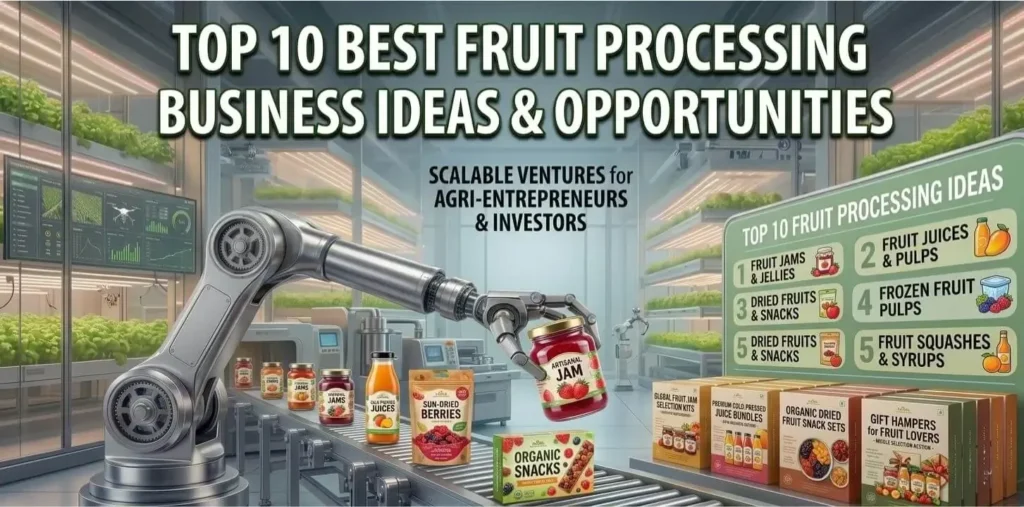
In 2026, the global food and beverage industry continues to undergo a massive transformation, with consumers increasingly turning to healthy, natural, and organic alternatives. Among the most promising segments in this transition is the fruit processing business, which combines agricultural abundance with food innovation. With rising demand for packaged fruits, juices, jams, dehydrated snacks, and fruit-based condiments, there is enormous scope for entrepreneurs to explore a wide range of profitable ventures in this field. Top 10 Fruit Processing Business Ideas in 2026 Below is a list of the top 10 fruit processing business ideas that can be launched with varying levels of investment and infrastructure. Each idea caters to a different market segment, offering entrepreneurs flexibility in terms of scale, product range, and distribution channels. 1. Fruit Juice Manufacturing Fresh fruit juices are always in demand due to their health benefits and natural appeal. Starting a fruit juice unit involves sourcing seasonal fruits, using a juicing and pasteurization unit, and packaging the juice in bottles or tetra packs. You can target health-conscious consumers, gym-goers, or office-goers with convenient and nutritious beverage options. The market includes a wide range of products like cold-pressed juice, mixed fruit juice, sugar-free juice, and even probiotic fruit drinks. With proper branding and cold chain logistics, this fruit processing business idea is a scalable venture. Handbook on Fruits, Vegetables & Food Processing with Canning & Preservation 2. Jam and Jelly Production Fruit jams, jellies, and marmalades are staple items in many households, especially in urban and semi-urban areas. Using fruits like mango, guava, strawberry, or mixed fruit, you can create premium quality spreads with high shelf life. This business involves boiling fruit pulp with sugar and pectin, then packaging in glass or plastic jars. It can be done on a small scale from home kitchens or expanded into a commercial setup. Organic and low-sugar jams are gaining popularity in 2026, presenting a niche market opportunity within the fruit processing business segment. 3. Dehydrated Fruit Snacks Drying fruits like apples, bananas, mangoes, or pineapples into chips or bite-sized snacks is a growing trend. These products are highly favored by fitness enthusiasts, travelers, and school children. Vacuum dehydration, freeze-drying, or sun-drying are commonly used methods. Dehydrated fruits are lightweight, nutrient-rich, and easy to package and distribute. They can be sold online or through supermarkets. The market is moving toward preservative-free, non-GMO products, giving a further push to this branch of the fruit processing business. 4. Canned Fruits Production Canned fruits are convenient options for urban consumers and are especially popular in export markets. By slicing fruits like peaches, lychees, and pineapples and preserving them in sugar syrup or natural juice, you can create products that last for over a year. The process requires proper sterilization, sealing, and labeling techniques to ensure food safety. Though initial investment might be higher due to equipment needs, canned fruit production is a long-term sustainable idea within the fruit processing business domain. 5. Fruit Pulp and Puree Unit Fruit pulp is the base for many products like juices, yogurts, ice creams, and confectionery items. Setting up a unit that extracts and preserves pulp from seasonal fruits can serve as a B2B business, supplying to larger food manufacturers. Mango pulp, tomato puree, guava pulp, and papaya concentrate are especially in demand across food and beverage industries. With the growing popularity of ready-to-use fruit ingredients, this fruit processing business idea is perfect for entrepreneurs looking for bulk production and wholesale distribution. 6. Pickle and Chutney Manufacturing India has a rich tradition of fruit-based pickles and chutneys. Using raw mangoes, gooseberries, lemons, or even tamarind, you can create a range of tangy, spicy, and sweet products. These can be sold in local markets, fairs, or online platforms under a homegrown brand. Consumer demand is shifting toward artisanal, preservative-free pickles with authentic flavors, making this an attractive low-investment fruit processing business to start in 2026. 7. Fruit Vinegar and Fermented Products Fruit vinegar—such as apple cider vinegar or pineapple vinegar—is a rapidly growing health and wellness product. Fermentation of fruit juice in a controlled environment results in vinegar rich in probiotics and beneficial acids. People use these in cooking, salad dressings, and even for medicinal purposes. The production process is simple, and with good hygiene and packaging, small-scale units can thrive. Fermented fruit-based drinks and tonics are also gaining ground, adding depth to this fruit processing business niche. 8. Ready-to-Eat Fruit Salads and Bowls Urban populations, especially working professionals and millennials, are increasingly opting for pre-packaged fresh fruit bowls. Producers combine multiple fruits into ready-to-eat packs and sell them through supermarkets, cafes, and delivery apps. Though this business requires a cold storage chain and quick turnover, the margins can be high due to premium pricing. Hygiene, aesthetic packaging, and sourcing fresh fruit are key to success. This segment of the fruit processing business is expected to grow rapidly in metropolitan regions. 9. Frozen Fruit Cubes and Smoothie Mixes Frozen fruits retain most of their nutrients and people widely use them in smoothies, shakes, and desserts. Processing fruits by cleaning, cutting, and freezing them in small cubes or blends allows you to cater to a ready-made smoothie market. These products are used in cafes, restaurants, gyms, and by individuals at home. The trend of frozen smoothie packs is picking up due to health trends and convenience. Entrepreneurs can explore tie-ups with fitness chains and eCommerce platforms under this branch of the fruit processing business. 10. Unfamiliar Fruit Processing and Export Fruits like dragon fruit, kiwi, passionfruit, and avocado are becoming popular across global and domestic markets. You can focus on processing these fruits into dried pieces, jams, purees, or juices aimed at premium customers. Export markets like the Middle East, Europe, and North America have a steady demand for tropical and unfamiliar fruit products. Setting up a processing unit near growing regions and ensuring international packaging and certification can make this fruit processing business highly profitable in 2026. Conclusion The fruit processing business in 2026 offers a