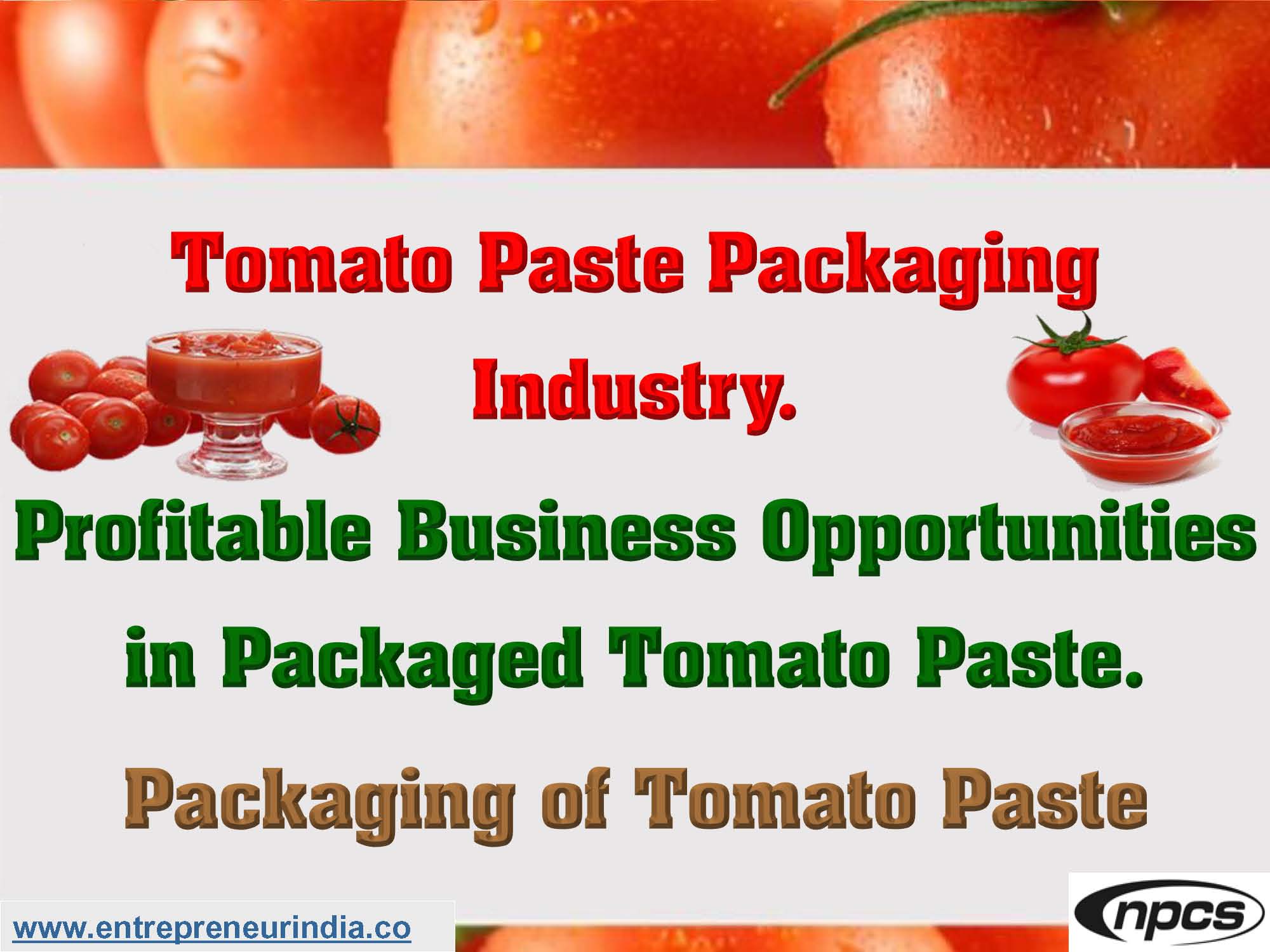
The Tomato Paste Packaging Industry is rapidly evolving, driven by the increasing global demand for ready-to-use food products and convenient cooking solutions. Tomato paste, a thick concentrate of ripe tomatoes, is a staple in both household and commercial kitchens. It’s used in sauces, soups, curries, ready-to-eat meals, and fast food products. As consumption grows, manufacturers are focusing not just on quality production but also on advanced and efficient packaging methods. The Tomato Paste Packaging Industry plays a vital role in ensuring long shelf life, product freshness, ease of transportation, and brand value enhancement.
What is Tomato Paste Packaging?
Tomato paste packaging refers to the process of enclosing tomato concentrate in suitable containers to preserve its flavor, color, and nutritional content while preventing microbial spoilage. Packaging is crucial to maintain product integrity from factory to table. In the Tomato Paste Packaging Industry, a wide range of materials and technologies are used to suit different markets—retail, HoReCa (Hotel/Restaurant/Catering), and exports.
Types of Packaging in the Industry
The Tomato Paste Packaging Industry offers multiple packaging options based on target consumers, shelf life expectations, and transport conditions:
Flexible Pouches (with spouts or without): Lightweight and economical for retail use
Aluminum or Tin Cans: Popular in the export market due to their durability
Glass Jars: Premium packaging with good visibility and perceived value
PET Bottles: Squeeze bottles for ketchup-style paste applications
Bag-in-Box Systems: Ideal for bulk buyers like hotels or food processing companies
Aseptic Pouches or Cartons: Extended shelf life, minimal preservatives required
Each format has its own market segment. The key goal across all packaging types is to preserve the paste’s quality while maintaining cost-efficiency and appeal.
Essential Machinery and Equipment
Starting a unit in the Tomato Paste Packaging Industry requires both food processing and packaging equipment. Key machinery includes:
Vacuum Evaporators: To concentrate tomato pulp into paste
Sterilizers: To kill bacteria and increase shelf life
Filling Machines: To fill paste into pouches, cans, or jars
Sealing Machines: To hermetically seal containers
Labeling and Batch Coding Machines: For product identification
Shrink Wrapping Units: For bundling retail packs
Automation level can vary depending on scale—from semi-automatic for small setups to fully automated lines for large-scale operations.
Required Infrastructure and Setup Area
A medium-scale Tomato Paste Packaging Industry setup requires approximately 5,000 to 10,000 sq. ft. of space. This includes:
Raw material handling and processing zone
Pasteurization and sterilization section
Filling and sealing line
Quality testing lab
Packaging material storage
Finished goods warehouse
Ensuring hygiene and food-grade infrastructure is critical. Floors must be washable, water supply must be filtered, and a waste treatment system should be in place for by-products like tomato skins and seeds.
Raw Materials and Inputs Needed
The primary inputs for the Tomato Paste Packaging Industry include:
Fresh ripe tomatoes (sorted and washed)
Citric acid or other food-grade stabilizers
Packaging materials (laminated films, tin cans, glass jars, etc.)
Preservatives and antioxidants (optional for longer shelf life)
Steam, electricity, and clean water
For value-added packaging, you may also include tear-notch pouches, zip locks, or custom-printed rolls for flexible packaging machines.
Investment and Profitability
The capital investment in the Tomato Paste Packaging Industry depends on the automation level and capacity:
Small-scale unit: ?20–30 lakhs (semi-automatic)
Medium-scale unit: ?50 lakhs–?1 crore
Large-scale unit: ?2–5 crores+
Tomato paste retails between ?40–?150 per kg depending on quality, packaging, and market (bulk vs retail). Profit margins range between 25–40%, especially when selling under your own brand or exporting. ROI is typically achieved within 18–24 months of operation.
Regulatory Approvals and Licensing
Starting a business in the Tomato Paste Packaging Industry requires:
FSSAI License (Food Safety and Standards Authority of India)
GST Registration
Factory License / MSME/Udyam Registration
Pollution Control NOC
ISO 22000 or HACCP Certification (for export or B2B clients)
Trademark Registration (for brand building)
Maintaining clean and hygienic operations with batch-wise traceability is essential to pass audits from large buyers and regulatory bodies.
Market Opportunities and Demand
There is strong demand in both domestic and export markets for packaged tomato paste:
Retail Market: Supermarkets, grocery stores, e-commerce
HoReCa Sector: Restaurants, caterers, and cloud kitchens
Food Processing Companies: Ready-to-eat meal producers, snack manufacturers
Export Markets: Middle East, Africa, and Southeast Asia
Demand spikes during the off-season when fresh tomatoes are costlier, giving manufacturers seasonal advantage. Selling under private labels or bulk supplies for third-party brands is also common in the Tomato Paste Packaging Industry.
Expansion Possibilities
The Tomato Paste Packaging Industry offers several routes for growth:
Launch your own brand: Build visibility in the FMCG retail space
Add complementary products: Tomato puree, ketchup, sauces
Upgrade packaging: Introduce single-serve sachets, QR-coded packs
Expand distribution: Sell through Amazon, Flipkart, and D2C platforms
Set up contract packaging: Offer white-label services for startups or exporters
A well-positioned tomato paste unit can grow into a full-fledged tomato product processing brand over time.
Conclusion
The Tomato Paste Packaging Industry presents an exciting business opportunity for food entrepreneurs. With high demand, relatively simple technology, and wide-ranging applications, it’s a low-risk, high-reward sector. Whether you aim to sell to retail, serve institutional clients, or export to high-demand regions, a tomato paste packaging unit offers scalability, sustainability, and consistent profitability. Investing in automation, food safety, and creative packaging can further enhance market positioning and consumer appeal.
Niir Project Consultancy Services
An ISO 9001:2015 Company
106-E, Kamla Nagar, Opp. Spark Mall,
New Delhi-110007, India.
Email: npcs.ei@gmail.com , info@entrepreneurindia.co
Tel: +91-11-23843955, 23845654, 23845886, 8800733955
Mobile: +91-9811043595
Website: www.entrepreneurindia.co , www.niir.org