
Toothpaste Manufacturing Business
In today’s fast-paced world, personal hygiene and dental care are among the top priorities for individuals of all ages. One essential product that contributes significantly to oral health is toothpaste. With increasing awareness about dental hygiene and the expanding consumer base in urban and rural areas alike, starting a toothpaste manufacturing business is a lucrative venture. The demand is constant, and the market offers potential for innovation and niche products like herbal, medicated, or whitening toothpaste. If you’re considering entering this field, here’s a complete guide on how to start a successful toothpaste manufacturing business. Understanding the Market and Planning the Business Before diving into the actual manufacturing process, it’s vital to research the toothpaste industry thoroughly. Toothpaste is a daily-use item, meaning its market has steady and recurring demand. The global dental hygiene market has been growing steadily, and with increasing oral health awareness, the consumption of toothpaste is expected to rise even more in the coming years. You need to decide on the scale of your toothpaste manufacturing business—whether you plan to start a small-scale unit catering to local markets or a large-scale plant aimed at national or international distribution. Identifying your target market will also help you determine your product line—regular fluoride-based toothpaste, herbal formulations, gel-based toothpaste, or specialized products for sensitivity, whitening, or children’s oral care. Legal and Regulatory Requirements To launch your toothpaste manufacturing business, you must comply with all legal and regulatory requirements. These include: Company Registration: Register your business under a suitable structure—proprietorship, partnership, or private limited company. Trade License: Obtain a trade license from the local municipal authority. GST Registration: Mandatory for taxation purposes. FSSAI License: Since toothpaste is a personal care item that enters the human body (through the mouth), an FSSAI (Food Safety and Standards Authority of India) license is essential. BIS Certification: The Bureau of Indian Standards sets quality norms for toothpaste. You must comply with IS 6356 for toothpaste. Environmental Clearance: If your plant will have effluents or waste output, you may need clearance from the pollution control board. Trademark and Branding: Secure a trademark for your brand name and logo to protect your intellectual property. Setting Up the Manufacturing Unit Choosing the right location for your toothpaste manufacturing unit is key to operational efficiency. The space should be sufficient for raw material storage, production, packaging, and warehousing. Accessibility to transportation, water, and electricity is crucial. You’ll also need to invest in the necessary equipment, which typically includes: Mixing tanks Heating tanks Paste filling machines Tube sealing machines Packaging and labeling machines Water purification system Quality testing laboratory equipment Depending on your product line, you may also need specialized equipment for gel-based or herbal formulations. Setting up a standard laboratory for quality control is highly recommended to ensure product consistency and compliance. Raw Materials and Formulation The primary ingredients used in toothpaste manufacturing include: Abrasives (e.g., calcium carbonate, silica) for removing dental plaque and stains. Binders (e.g., cellulose gum) to give consistency to the paste. Humectants (e.g., glycerin, sorbitol) to retain moisture. Fluorides (e.g., sodium fluoride) to prevent tooth decay. Flavoring agents (e.g., mint, clove) to enhance taste and freshness. Sweeteners (e.g., saccharin) for flavor. Preservatives and colorants for product longevity and visual appeal. If you’re venturing into herbal or natural toothpaste, common ingredients include neem, clove oil, charcoal, and herbal extracts. It’s essential to work with a qualified chemist to develop safe and effective formulations. Adherence to BIS standards is a must, especially in ingredient composition and fluoride content. Manpower Requirements A toothpaste manufacturing plant will require trained and semi-skilled labor to manage production, quality testing, and packaging. The team may include: Production manager Lab technician/chemist Machine operators Packers and sorters Administrative staff Hiring experienced personnel can help maintain efficiency, reduce wastage, and ensure high product quality. Proper training in hygiene standards and handling of chemicals is also necessary. Packaging and Branding Packaging plays a significant role in consumer appeal. Tubes are the most common packaging option for toothpaste, but the design, material quality, and labeling should align with your target market. Invest in good-quality, tamper-proof, and leak-proof packaging. Branding is critical in a highly competitive segment like toothpaste. Your brand should communicate trust, quality, and value. This involves: Logo and label design Taglines that highlight product features (e.g., herbal, fluoride-free) Certifications and usage instructions Manufacturing and expiry dates Make sure your packaging complies with applicable labeling regulations, including ingredient lists and safety warnings. Marketing and Distribution An effective marketing strategy is crucial for the success of your toothpaste manufacturing business. You can explore several distribution channels: Retail stores Supermarkets and hypermarkets Pharmacies and health stores E-commerce platforms Direct-to-consumer (D2C) through your own website Marketing efforts can include: Digital marketing (SEO, PPC ads, social media) Traditional advertising (TV, radio, newspapers) Collaborations with dentists or dental clinics Free samples and in-store promotions Loyalty programs or discount schemes Focus on building a brand that resonates with your audience, whether it’s health-conscious urban consumers, budget-conscious rural markets, or niche segments like eco-friendly users. Financial Aspects and Investment The capital requirement for setting up a toothpaste manufacturing unit depends on the scale of your operations. A small-scale plant may require an investment of ?20-50 lakhs, while a medium to large-scale setup can go upwards of ?1 crore or more. Key costs include: Land and building Machinery and equipment Licensing and certification Raw materials procurement Staff salaries Marketing and branding Working capital You can seek financial assistance through bank loans, government subsidies, or venture capital if your business plan shows promise. Programs like MSME loans or subsidies under the Make in India initiative can be helpful. Quality Control and Compliance To succeed in toothpaste manufacturing, product quality and safety are non-negotiable. Establish a robust quality control system where raw materials, in-process goods, and final products are tested regularly. Testing should cover: pH level Fluoride content Microbial load Viscosity and spreadability Shelf life Regular audits and sample testing help in maintaining brand reputation and building consumer trust. Follow Good Manufacturing Practices (GMP)
Potassium Iodate Manufacturing Industry
Potassium Iodate is an essential chemical compound widely used in various industries such as pharmaceuticals, food fortification, and radiation protection. It appears as a white crystalline powder and serves as a strong oxidizing agent. The global demand for this compound has been steadily increasing due to its application in iodine supplementation programs to prevent iodine deficiency disorders, especially in salt iodization. The potassium iodate manufacturing industry has seen a boost in production capacity and technological advancement due to the expanding healthcare needs and public health initiatives around the world. Understanding the Potassium Iodate Manufacturing Process The Potassium Iodate Manufacturing process typically involves chemical synthesis using potassium hydroxide and iodine or its derivatives under controlled conditions. The production process starts with the reaction between iodine and potassium hydroxide (KOH), leading to the formation of potassium iodide and potassium iodate in a two-step oxidation process. The mixture is then filtered, evaporated, and crystallized to isolate potassium iodate in a pure form. The manufacturing plant must ensure high-purity output, as potassium iodate is often used in food-grade or pharmaceutical-grade applications. The reaction parameters such as temperature, pressure, and pH levels are strictly monitored during the synthesis to achieve high yields. Additionally, maintaining an inert atmosphere during the oxidation process helps prevent unwanted side reactions that may affect product quality. In industrial setups, modern methods also integrate automated reactors and filtration systems to ensure consistency and reduce operational errors. Post-synthesis, drying and packaging under contamination-free environments are crucial for maintaining product stability. Manufacturers also conduct quality checks, including titration, purity analysis, and residual iodine tests before shipment. Applications of Potassium Iodate The most notable use of potassium iodate is in the iodization of table salt. This compound is preferred in tropical and high-humidity regions where potassium iodide is prone to oxidation and degradation. Potassium iodate is more stable and retains its iodine content even in less-than-ideal storage conditions. Consequently, governments and NGOs across the world rely on this compound in mass nutrition programs. Apart from salt iodization, potassium iodate finds applications in: Pharmaceuticals: It is used in thyroid-related treatments and as a radiation prophylactic to protect the thyroid gland from radioactive iodine exposure. Food industry: Acts as a maturing agent in baking and flour treatment. Chemical research: Used in laboratories for redox titrations and other analytical applications. Photography and dyes: Occasionally used as an oxidizer in chemical formulations. Its diverse utility across sectors makes Potassium Iodate Manufacturing a highly viable and scalable industry. Market Demand and Growth Potential The global potassium iodate market is experiencing steady growth due to increased health awareness, especially concerning iodine deficiency. According to recent reports, iodine deficiency affects more than 2 billion people globally. Governments are taking proactive measures to address this issue through mandatory salt iodization programs. This has translated into a higher demand for potassium iodate among salt producers. The Asia-Pacific region holds a significant market share in potassium iodate demand, with countries like India, China, and Bangladesh leading consumption due to their large populations and national health programs. Africa and Latin America are emerging markets, particularly where the WHO and UNICEF have intensified iodine deficiency control initiatives. In terms of CAGR, the potassium iodate manufacturing industry is expected to grow by approximately 5–7% over the next five years. This projection is backed by an increase in pharmaceutical applications, strategic partnerships, and the development of advanced production facilities. Regulatory and Quality Standards Manufacturers must comply with several regulatory requirements to ensure the safe production and distribution of potassium iodate. These include: Pharmacopeia standards (USP, BP, IP): Specifications for pharmaceutical-grade compounds. Food safety compliance (FSSAI, FDA, Codex): Required when used as a food additive. Hazard communication: As an oxidizer, potassium iodate must be labeled and transported following the UN Dangerous Goods codes. Environmental regulations: Proper waste disposal and emission control practices must be followed. Additionally, certifications such as ISO 9001 for quality management and GMP (Good Manufacturing Practices) help improve credibility and market access. Investment and Startup Requirements Starting a Potassium Iodate Manufacturing unit requires a moderate to high capital investment depending on the scale of operations. Key areas to invest in include: Land and infrastructure: Space for manufacturing plant, storage, and administrative offices. Machinery and equipment: Reactors, crystallizers, centrifuges, dryers, and packaging units. Raw materials: Iodine, potassium hydroxide, distilled water, and filtering agents. Skilled labor and chemists: For overseeing chemical reactions and quality control. Licensing and regulatory approvals: Environmental clearance, chemical handling permits, factory registration, etc. A small-scale plant may need an investment of around INR 1–2 crore in India, while larger units may require INR 5 crore or more. Profit margins are healthy if bulk supply contracts are secured with pharmaceutical or salt iodization companies. Challenges in Potassium Iodate Manufacturing Despite its potential, the Potassium Iodate Manufacturing industry does face certain challenges: Raw material availability: Iodine, being a naturally limited resource, can fluctuate in price and availability. Strict compliance needs: Handling of oxidizing agents and their residues requires advanced safety protocols. Market competition: Large established players may have better pricing leverage and brand trust. Storage and handling risks: Oxidizing properties demand careful packaging, limiting bulk storage in some conditions. However, these challenges can be mitigated with advanced manufacturing technologies, strategic sourcing partnerships, and adherence to safety standards. Sustainability and Future Outlook Sustainability is becoming a focal point in the Potassium Iodate Manufacturing landscape. Green chemistry principles are being adopted to minimize waste and energy consumption. R&D efforts are also directed toward optimizing yields, reducing effluent discharge, and enhancing product stability. In the coming years, digital integration with AI-driven process controls, predictive maintenance of equipment, and blockchain-based traceability systems will likely redefine how potassium iodate is manufactured and distributed. Moreover, as iodine-based nutrition becomes a higher public health priority, governments may offer subsidies and incentives to potassium iodate manufacturers to expand their capacities. Another promising area is the expansion of its pharmaceutical applications. As more nations implement nuclear safety measures, potassium iodate may see increased use as a preventive medicine for radiation exposure, thereby opening up
White Cement Manufacturing Industry
White cement manufacturing is a complex industrial process that involves the use of carefully selected raw materials and advanced technology to produce a high-purity product with distinctive whiteness and strength. Unlike ordinary Portland cement (OPC), which is grey in color due to the presence of iron and manganese oxides, white cement is produced with minimal impurities to achieve its characteristic brilliant white finish. This type of cement is widely used for architectural and decorative applications such as terrazzo flooring, precast panels, tiles, and aesthetic concrete structures. It not only offers structural durability but also aesthetic appeal, making it a preferred material in both residential and commercial construction sectors. The Unique Features of White Cement Manufacturing The white cement manufacturing process is distinct from that of grey cement, primarily due to the requirement to reduce iron and manganese content that affects the color. White cement is manufactured using raw materials like limestone, kaolin, sand, and gypsum with minimal traces of chromophores (color-producing elements). Here’s a detailed step-by-step look at the process: 1. Selection and Preparation of Raw Materials The journey of white cement begins with the selection of raw materials. High-purity limestone and clay are the primary ingredients. In white cement manufacturing, the raw materials must have very low iron and manganese content to avoid any discoloration. Kaolin clay and white sand are preferred due to their low impurity levels. Once sourced, these materials are crushed and ground to fine particles to prepare a homogenous raw mix. 2. Homogenization and Preheating The finely ground raw mix is stored in silos and thoroughly homogenized to ensure consistent composition. This is followed by preheating in a cyclone preheater where the raw mix is heated to around 800°C using waste heat from the kiln. This step reduces the energy demand of the kiln and initiates partial calcination. 3. Clinker Formation in Kiln The most crucial stage of white cement manufacturing is clinker formation. The preheated raw mix is fed into a rotary kiln and subjected to very high temperatures—typically up to 1450°C. At this temperature, the raw materials undergo complex chemical reactions to form clinker, a nodular intermediate product. To preserve whiteness, a reducing atmosphere is maintained inside the kiln to prevent the oxidation of iron. 4. Rapid Cooling of Clinker In white cement manufacturing, clinker must be rapidly cooled upon exiting the kiln to retain its white color and prevent further oxidation. This is achieved using water spray or high-speed air cooling systems. Unlike grey cement clinker which can be cooled slowly, white clinker demands more careful handling to maintain its brightness and chemical integrity. 5. Grinding and Mixing The cooled white clinker is then blended with gypsum and sometimes small quantities of limestone to control setting time and improve performance. This mixture is ground in ball mills or vertical roller mills to produce fine white cement powder. During grinding, care is taken to avoid contamination from iron parts or grinding media that may alter the color of the final product. 6. Quality Control and Packaging The final white cement product undergoes rigorous quality control testing for parameters such as whiteness index, setting time, fineness, and compressive strength. Once approved, it is packaged in moisture-proof bags or bulk containers and dispatched to construction sites or retail outlets. Proper packaging ensures the product maintains its quality and does not absorb moisture during storage and transport. Key Considerations in White Cement Manufacturing White cement manufacturing involves a combination of raw material purity, process optimization, and equipment precision. Every stage of production must be meticulously monitored to avoid contamination that can compromise whiteness or strength. The process is energy-intensive and requires specialized technology to maintain the required standards. Factors like kiln atmosphere, cooling rates, and grinding equipment play a decisive role in the final quality of white cement. Environmental and Energy Aspects Given its stringent quality requirements, white cement manufacturing consumes more energy than ordinary Portland cement. However, manufacturers are increasingly adopting environmentally sustainable practices such as waste heat recovery systems, alternative fuels, and advanced emission control mechanisms. Modern white cement plants aim to minimize their carbon footprint while maintaining product quality. Applications of White Cement White cement is valued for its aesthetic appeal and is often used in architectural and decorative applications. Some of its common uses include: Terrazzo Flooring: For decorative flooring with colored aggregates. Precast Panels: For facades and wall elements requiring a clean white finish. Mosaic and Tiles: In combination with pigments for custom designs. Plaster and Grouts: For smooth, bright interior and exterior finishes. Garden Ornaments and Sculptures: Due to its clean appearance and durability. Its ability to be tinted with pigments without compromising brightness makes it ideal for artistic and ornamental construction projects. Global Market Overview The global demand for white cement is steadily growing, particularly in developing countries with booming construction sectors. Asia-Pacific and the Middle East are key markets, driven by infrastructure development and increasing urbanization. The global white cement manufacturing industry is also becoming more competitive, with players investing in technology upgrades and capacity expansions. Challenges in the Industry White cement manufacturing faces several challenges, including: High Production Cost: Due to stringent material and energy requirements. Raw Material Availability: Not all regions have access to high-purity limestone or kaolin. Environmental Regulations: Stringent emission norms require costly control systems. Competition from Substitutes: Alternatives like polymer-based white construction products. Despite these hurdles, the outlook remains positive as the demand for high-performance, aesthetically pleasing construction materials continues to grow. Future Trends and Innovations Technological innovation in white cement manufacturing is focused on reducing energy consumption and carbon emissions. Key trends include: Use of Alternative Fuels: Such as biomass and industrial waste. Digital Process Control: For precision and efficiency. Recycling Waste Heat: To lower energy costs and emissions. Blended White Cements: With pozzolanic materials to improve sustainability. These innovations not only enhance environmental performance but also help manufacturers remain competitive in an evolving global market. Conclusion White cement manufacturing is a highly specialized process that requires advanced technology, quality raw
Workwear, Factory Uniforms, Work Clothing Suits Manufacturing Business
In today’s fast-paced industrial world, workplace safety, brand identity, and employee comfort are paramount. This has led to the growing demand for durable, functional, and custom-designed uniforms and clothing suits across sectors such as construction, hospitality, healthcare, manufacturing, and logistics. Entrepreneurs looking for a profitable and scalable business idea are increasingly drawn to the Workwear Factory model. Establishing a Workwear Factory that specializes in uniforms and clothing suits not only serves a vital need in multiple industries but also offers a consistent and growing market. Why the Workwear Factory Business is Thriving in 2025 The surge in awareness about workplace safety, hygiene, and professional presentation has resulted in exponential growth in the global workwear market. Uniforms have evolved from being simple functional attire to stylish, brand-enhancing garments. Businesses across sectors now understand the psychological and practical benefits of uniforms—enhancing teamwork, enforcing discipline, and improving public perception. The Workwear Factory sector has embraced automation, high-performance fabrics, and customization options, making it an attractive venture for manufacturers. Whether it’s flame-resistant suits for welders, lab coats for healthcare workers, or logo-embossed hospitality wear, the opportunities are immense. This has created a niche that rewards innovation, quality, and on-time delivery. Key Segments in the Workwear Factory Industry A Workwear Factory typically manufactures various types of uniforms tailored to specific professions and industries. Understanding the product segments is crucial for success: Industrial Workwear: This includes coveralls, boiler suits, safety vests, and protective jackets designed for harsh environments like oil rigs, mining, and factories. These require compliance with specific industry safety standards. Corporate Uniforms: Designed for customer-facing roles in banks, retail, and offices. Style, fit, and branding are crucial. Hospitality and Culinary Wear: Chefs’ coats, aprons, waiter uniforms, and housekeeping attire need to be functional, stylish, and easy to clean. Healthcare Uniforms: Lab coats, nursing scrubs, and PPE (personal protective equipment) require hygiene standards, comfort, and flexibility. Customized Branded Uniforms: Many companies now require branding on their uniforms, like logos, color schemes, or slogans, which makes customization an essential service offering. Setting Up a Workwear Factory: Step-by-Step Establishing a Workwear Factory requires a mix of business acumen, knowledge of garment manufacturing, and marketing strategy. Here’s a detailed step-by-step guide: 1. Market Research and Business Plan Understand the demand in your region or target market. Is there a concentration of manufacturing plants, hospitals, or schools? Study competitors, suppliers, pricing models, and customer preferences. Draft a business plan that covers investment needs, pricing, marketing, and financial projections. 2. Legal Registration and Compliance Register your business entity, obtain necessary textile manufacturing licenses, and follow labor laws and safety regulations. If you’re exporting, look into international standards like ISO or OSHA compliance. 3. Factory Setup and Equipment Choose a spacious facility with adequate ventilation and lighting. Invest in cutting, sewing, overlocking, buttonhole, embroidery, and ironing machines. Modern Workwear Factories often use CAD software for pattern making and automated cutting tables to speed up production. 4. Material Sourcing Source durable, breathable, and wash-resistant fabrics. Consider blends like polyester-cotton, flame-retardant materials, or antimicrobial fabrics, depending on your target segment. 5. Skilled Workforce Hire experienced tailors, cutters, designers, and machine operators. Also, ensure you have staff for quality control, logistics, and sales. Training and employee safety should be integral to your operations. 6. Customization Capabilities To differentiate yourself, offer embroidery, screen printing, and heat transfer printing. Clients appreciate logos, name tags, and color-coded uniforms for departments. 7. Quality Control Workwear must meet performance and comfort standards. Implement quality checks for stitching strength, size accuracy, color fastness, and branding consistency. 8. Marketing and Sales Create a strong digital presence through a website, social media, and eCommerce platforms. Network with procurement heads in industries, participate in trade expos, and offer free samples or catalogues to attract B2B clients. Investment & Profitability Starting a Workwear Factory can require an initial investment between ?15 lakhs to ?50 lakhs, depending on the scale and machinery involved. However, bulk orders from corporates or government tenders can quickly recover costs. With a smart procurement system and efficient production, profit margins can range from 20% to 35% on uniforms. To maintain consistent revenue, consider offering service contracts or AMC (Annual Maintenance Contracts) for uniform replacement, cleaning, or resizing. Subscription models are also emerging in developed markets. Challenges in the Workwear Factory Business Though lucrative, the Workwear Factory business faces a few challenges: Fierce competition: Many small units offer cheaper alternatives. To stay ahead, focus on quality and service. Inventory management: Stockpiling fabric or unsold inventory can lock up capital. Labor issues: Hiring and retaining skilled labor is vital. Workers must be trained and managed efficiently. Evolving fashion trends: Even uniforms now follow trends in color, fit, and sustainability. Being adaptable and embracing continuous improvement is the key to long-term success. Sustainability and Eco-Friendly Trends Today’s consumers and corporations increasingly prioritize sustainability. A modern Workwear Factory can gain a competitive edge by: Using organic cotton or recycled polyester Adopting waterless dyeing technologies Reducing plastic packaging Offering uniform recycling services These initiatives also make the factory eligible for certain green certifications and government subsidies. Export Opportunities With rising international demand, a Workwear Factory in India or similar markets can tap into export avenues. GCC countries, Africa, and Southeast Asia present high potential due to large-scale construction and healthcare activities. Registering under export promotion councils and obtaining certifications can streamline entry into foreign markets. Government initiatives like Make in India, PLI schemes, and export incentives have also boosted textile manufacturing, making this a perfect time to start a Workwear Factory with global aspirations. Case Study: Success of a Mid-Sized Workwear Manufacturer Consider the story of “SafeGear Textiles,” a mid-sized Workwear Factory based in Gujarat. Starting with a five-member team in 2018, they focused on high-quality industrial uniforms for construction firms. By 2022, they expanded into hospitality and healthcare uniforms and introduced a mobile app for order tracking. In 2024, they bagged a government contract for supplying uniforms to over 1500 municipal employees. Their strategy: consistency in delivery, free alterations, and eco-conscious packaging. Today,
Soft Drinks and Fruit Juices Business
The demand for refreshing, flavorful, and health-oriented beverages has seen remarkable growth in recent years. In both urban and rural markets, consumers are increasingly opting for ready-to-drink products like soft drinks and fruit juices, making this sector one of the most lucrative opportunities for aspiring entrepreneurs. The Soft Drinks & Fruit Juices business combines creativity, food science, and marketing into a venture that can cater to all age groups, from children to the older people. Whether it’s a fizzy cola, sparkling water, or a nutrient-packed mango juice, there’s space for innovation, branding, and profit. The Growing Market for Soft Drinks & Fruit Juices The global beverages industry, particularly the Soft Drinks & Fruit Juices segment, has witnessed consistent expansion due to evolving lifestyles, increased disposable income, and a growing health consciousness among consumers. In India and across Asia, tropical fruits like mango, guava, and litchi are popular juice bases, while flavored carbonated drinks still hold a strong appeal, especially among younger demographics. Additionally, the shift toward natural and low-sugar alternatives has opened doors for startups that can combine health with taste. Starting a Soft Drinks & Fruit Juices business is not just about bottling beverages—it’s about understanding consumer needs, leveraging local flavors, and creating a product that balances taste, shelf life, and nutrition. With the right equipment, a well-thought-out product line, and a solid marketing strategy, this business can be both impactful and profitable. Planning and Market Research Before launching your Soft Drinks & Fruit Juices enterprise, conducting comprehensive market research is essential. Understand what consumers in your target area prefer—whether it’s fizzy lemon drinks, natural pomegranate juice, or unfamiliar blends like kiwi-lime or beetroot-carrot. Analyze your competitors, pricing strategies, and seasonal trends. You should also decide your business model: Will you be focusing on mass production for retail chains or boutique-style beverages for niche health markets? Another major consideration is whether you’ll produce under your own brand or manufacture on behalf of others (white labeling). Understanding the answers to these questions will shape every decision from production to branding. Legal Requirements and Compliance To start a Soft Drinks & Fruit Juices business in India or abroad, one must obtain several licenses and adhere to local food safety and manufacturing standards. In India, the essential licenses include: FSSAI registration/license GST registration Business incorporation (as LLP, Pvt. Ltd., or proprietorship) Pollution control clearance (for manufacturing plants) Factory license (if production volume is large) Trademark registration for brand protection Following packaging and labeling standards is also crucial. Labels should clearly mention nutritional facts, ingredients, expiry date, batch number, and FSSAI logo. These compliances build trust with customers and prevent legal troubles. Setting Up Production Infrastructure To manufacture Soft Drinks & Fruit Juices, you need an organized production facility equipped with machines such as: Fruit washers and peelers Juice extractors and pulping machines Filtration and pasteurization units Carbonation equipment (for soft drinks) Bottle-filling and sealing machines Cold storage units for raw materials The size and scale of the production unit depend on your budget, distribution plans, and production targets. While a small-scale juice unit may require ?10-15 lakhs, a medium-sized Soft Drinks & Fruit Juices plant may demand an investment of ?30 lakhs to ?1 crore, depending on automation and brand positioning. Make sure your facility maintains hygiene and adheres to Good Manufacturing Practices (GMP). Using stainless steel equipment, trained staff, and regular lab tests are essential for quality assurance. Product Development and Branding This is the heart of your Soft Drinks & Fruit Juices business. Focus on taste, packaging, and visual appeal. Develop multiple flavors and test them with a focus group. Keep an eye on trends like low-calorie drinks, sugar-free sodas, or fortified juices with vitamins and minerals. Packaging plays a major role in catching consumer attention. Invest in good design and choose packaging that ensures freshness and durability. Common packaging types include PET bottles, tetra packs, glass bottles, and cans. Your brand should communicate trust, refreshment, and taste. Come up with a catchy name, a memorable logo, and a tagline that resonates with your audience. Branding is what transforms a simple beverage into a household name. Distribution Channels and Sales Strategy Once you have your Soft Drinks & Fruit Juices ready, the next step is to get them into the hands of consumers. Here are some common sales channels: Distributors and wholesalers Retail outlets and supermarkets Online platforms (Amazon, Flipkart, Swiggy Instamart) Own e-commerce website Cafes, restaurants, and hotels Institutional buyers like schools and offices You can also set up your own mobile vans or kiosks to sell directly to customers in crowded markets, malls, or near schools. Offering discounts, sampling, and bundle deals can attract first-time buyers and encourage word-of-mouth promotion. Ensure your pricing is competitive but also covers costs and delivers profit margins. You may consider different pricing for different regions or retail partners, but always keep your brand positioning in mind. Marketing and Promotion Marketing is critical to the success of any Soft Drinks & Fruit Juices brand. Start with a strong digital presence—build social media accounts, create content around your products (like health tips or behind-the-scenes production videos), and engage with customers online. Offline marketing can include hoardings, sponsorships, radio ads, or point-of-sale materials like posters and standees. Influencer marketing and local celebrity endorsements can boost your brand visibility further. Participating in food and beverage expos, trade fairs, and festivals can help you network with buyers, investors, and other entrepreneurs. Distribute free samples at events to gain valuable feedback and potential bulk orders. Sustainability and Innovation Modern consumers are looking for environmentally conscious brands. If you can integrate sustainability into your Soft Drinks & Fruit Juices business—such as using eco-friendly packaging, sourcing local fruits, or reducing water waste—it can strengthen your brand image. Innovation is equally important. Try experimenting with: Superfruit blends like acai-berry or moringa-mango Low-GI sugar alternatives like stevia Functional drinks (probiotic, electrolyte-rich, or immunity boosters) Cold-pressed juices or smoothies Stay updated with international beverage trends and explore partnerships with research institutions for
Polyvinyl Alcohol (PVA) Manufacturing Industry
Polyvinyl Alcohol (PVA) is a versatile, water-soluble synthetic polymer widely used in various industrial and commercial applications. Known for its excellent film-forming, emulsifying, and adhesive properties, PVA plays a critical role in sectors such as textiles, paper, construction, packaging, and pharmaceuticals. With the global demand for environment-friendly and biodegradable materials on the rise, Polyvinyl Alcohol (PVA) is increasingly being adopted as a sustainable alternative in multiple domains. This article provides a comprehensive guide on the manufacturing process of Polyvinyl Alcohol (PVA), highlighting its raw materials, process steps, quality standards, applications, and market potential. Understanding the Polyvinyl Alcohol (PVA) Manufacturing Process Polyvinyl Alcohol (PVA) is not directly produced from polymerization of vinyl alcohol because vinyl alcohol is unstable and readily tautomerizes to acetaldehyde. Instead, PVA is manufactured through the polymerization of vinyl acetate to form polyvinyl acetate (PVAc), followed by hydrolysis (alcoholysis) to remove acetate groups, resulting in Polyvinyl Alcohol (PVA). This two-step process involves complex chemical engineering procedures, which must be precisely managed to ensure the production of high-quality PVA. Raw Materials Required The essential raw materials for the production of Polyvinyl Alcohol (PVA) include: Vinyl Acetate Monomer (VAM): The starting material for the polymerization process. Methanol or Ethanol: Used as a solvent during the hydrolysis phase. Catalysts: Often used to initiate and sustain the polymerization reaction. Sodium Hydroxide or Potassium Hydroxide: Common catalysts in the alcoholysis stage. Additional additives may be included depending on the desired viscosity and application of the final product. Step-by-Step Manufacturing Process 1. Polymerization of Vinyl Acetate: The process begins with the free-radical polymerization of vinyl acetate monomers. This is carried out in a solvent medium, typically water or methanol, in the presence of initiators like benzoyl peroxide or azo compounds. The reaction forms a polyvinyl acetate (PVAc) solution of the desired molecular weight. 2. Alcoholysis or Hydrolysis: In this stage, methanol or ethanol and a suitable alkaline or acidic catalyst partially or completely hydrolyze the PVAc. This reaction replaces the acetate groups in PVAc with hydroxyl groups, transforming the polymer into Polyvinyl Alcohol (PVA). The degree of hydrolysis (ranging from 85% to 99%) greatly affects the solubility and performance of the final product. 3. Precipitation and Filtration: After hydrolysis, the process often involves cooling the solution to precipitate the Polyvinyl Alcohol (PVA). Technicians then filter and wash the precipitate multiple times to remove residual catalysts, solvents, and byproducts. 4. Drying and Granulation: The wet PVA mass is then dried in rotary or tray dryers under controlled temperature conditions. The process granulates the dried material into flakes or powder, depending on market requirements. 5. Packaging and Storage: The final Polyvinyl Alcohol (PVA) product is packaged in moisture-proof bags or drums to maintain its integrity and prevent contamination. Proper storage conditions are essential to preserve its solubility and performance characteristics. Quality Control Measures Quality assurance is a crucial aspect of Polyvinyl Alcohol (PVA) manufacturing. Manufacturers must ensure: Degree of Polymerization (DP): Affects mechanical strength and film-forming ability. Degree of Hydrolysis: Determines water solubility and compatibility with other materials. Residual Acetate Content: Should be minimal to enhance biodegradability. Moisture Content: Critical for ensuring shelf life and ease of handling. Standard tests include viscosity measurement, pH analysis, ash content evaluation, and solubility testing. Applications of Polyvinyl Alcohol (PVA) Polyvinyl Alcohol (PVA) has widespread applications across industries due to its adaptability and non-toxic nature: Textile Industry: Used as a sizing agent to strengthen yarn and reduce breakage. Paper Industry: Enhances surface strength and improves ink absorbency. Adhesives and Coatings: Acts as a binder and film former in water-based adhesives and paints. Construction: Used in cement and mortar as a modifier to improve workability and adhesion. Packaging: Manufacturers use water-soluble films made from PVA for single-dose detergents and agrochemicals. Pharmaceuticals: Employed as a tablet binder, coating agent, and component of artificial tears. Cosmetics and Personal Care: Found in facial masks, shampoos, and skincare products for its film-forming ability. Environmental and Safety Considerations Specific microorganisms can biodegrade Polyvinyl Alcohol (PVA), making it an environmentally friendly polymer. However, manufacturers must adhere to stringent environmental regulations during the production process, especially concerning solvent recovery, waste management, and emissions control. Waste Treatment: Treat effluents containing alcohols and byproducts in accordance with local environmental laws. Solvent Recovery Systems: Experts recommend closed-loop systems to minimize loss and ensure safe recycling of methanol or ethanol. Worker Safety: Proper ventilation, protective gear, and regular monitoring of VOC levels are mandatory in PVA production units. Market Trends and Growth Prospects Rising demand for biodegradable and water-soluble materials is driving steady growth in the global market for Polyvinyl Alcohol (PVA). Asia-Pacific, particularly China and India, dominates the market owing to the presence of numerous end-user industries such as textiles, adhesives, and construction. Emerging trends include: Eco-Friendly Packaging: The demand for water-soluble and compostable films is boosting PVA consumption. Pharmaceutical Innovations: Pharmaceutical and healthcare industries increasingly use PVA in drug delivery systems and formulations. 3D Printing Applications: Fused deposition modeling (FDM) 3D printing uses water-soluble PVA as a support material. Investors consider Polyvinyl Alcohol (PVA) manufacturing a strategic business move due to its growing relevance in sustainable and high-performance materials. Investment and Setup Considerations Setting up a Polyvinyl Alcohol (PVA) manufacturing unit requires significant investment in technology, equipment, and skilled manpower. Key elements include: Land and Infrastructure: Industrial-grade facilities with adequate space for reactors, storage tanks, drying units, and laboratories. Machinery: Polymerization reactors, hydrolysis units, dryers, granulators, filtration systems, and packaging equipment. Compliance and Licensing: Necessary environmental clearances, factory licenses, and safety certifications. Utilities: Reliable access to electricity, water, and solvent handling systems. The initial capital expenditure can range from INR 10–50 crore depending on the scale and automation level of the unit. Operational costs include raw materials, energy, labor, and maintenance. Challenges in Polyvinyl Alcohol (PVA) Manufacturing Despite its advantages, the Polyvinyl Alcohol (PVA) manufacturing industry faces several challenges: Raw Material Price Volatility: Fluctuations in vinyl acetate monomer prices affect production economics. Technological Expertise: High-quality PVA production demands expertise in chemical engineering and process control. Environmental Regulations: Stringent pollution
How to Start a Profitable Polylactic Acid (PLA) Production Business: Complete 2026 Guide
In recent years, the demand for sustainable and eco-friendly materials has increased drastically across various industries. Among the many biodegradable alternatives to conventional plastics, Polylactic Acid (PLA) stands out as one of the most promising. Derived from renewable resources such as corn starch, sugarcane, or cassava, PLA is widely used in packaging, agriculture, textiles, medical devices, and especially 3D printing. But how exactly is this environmentally conscious polymer created? Understanding the manufacturing process of Polylactic Acid (PLA) is essential to appreciate its significance and widespread adoption. Step-by-Step Process of Polylactic Acid (PLA) Production The production of Polylactic Acid (PLA) involves several key steps, beginning with the extraction of natural sugars and ending with the polymerization into a plastic-like material. Let us explore each phase in detail: 1. Raw Material Selection and Preparation The first step in producing Polylactic Acid (PLA) is sourcing the raw materials. PLA is synthesized from fermentable sugars, most commonly derived from corn starch in the United States or sugarcane in countries like Brazil. These raw materials are selected for their high carbohydrate content, which serves as the foundation for lactic acid production. The crops are harvested and then mechanically processed to extract the starch or sugar. In the case of corn, the kernels are ground, and the starch is separated through a wet milling process. This starch is then enzymatically hydrolyzed to release simple sugars, primarily glucose. 2. Fermentation of Sugars into Lactic Acid Once the fermentable sugars are extracted, they undergo microbial fermentation. In this biological process, specific strains of bacteria (such as Lactobacillus) are introduced to the sugar solution. These bacteria consume the glucose and convert it into lactic acid through anaerobic fermentation. Temperature, pH, and oxygen levels are carefully regulated to maximize lactic acid yield. This process typically takes between 24 to 48 hours. Once complete, the lactic acid is separated from the fermentation broth, purified through filtration and distillation, and then concentrated for further processing. 3. Lactic Acid to Lactide Conversion The next phase in manufacturing Polylactic Acid (PLA) involves transforming lactic acid into a more reactive intermediate compound called lactide. This is achieved through a condensation reaction, where two molecules of lactic acid combine and lose water to form lactide – a cyclic dimer of lactic acid. The reaction must be precisely controlled to prevent unwanted side reactions and to ensure high-purity lactide. The resulting lactide mixture typically contains different isomers (D-lactide, L-lactide, and meso-lactide), and the selection of specific isomers influences the properties of the final PLA material, such as its crystallinity and melting temperature. 4. Polymerization of Lactide into PLA Lactide is then polymerized through a process called ring-opening polymerization (ROP). This chemical reaction involves the use of catalysts such as tin(II) octoate or other metal complexes. Under controlled heat and vacuum conditions, the lactide molecules open up and link together to form long chains of Polylactic Acid (PLA). The molecular weight of the resulting PLA polymer can be adjusted by varying the reaction time and conditions. High molecular weight PLA is generally more durable and suitable for industrial applications, while lower molecular weight PLA is used in applications like biomedical implants where biodegradability is a priority. Handbook On Chemical Industries (Alcohol Based) 5. Pelletizing and Drying Once the polymerization is complete, the PLA resin is cooled and cut into small pellets. These pellets are then thoroughly dried to remove any residual moisture, as PLA is highly sensitive to hydrolysis. Drying is essential for preserving the polymer’s mechanical strength and thermal stability during processing. These dried PLA pellets are the final product of the manufacturing process and can be shipped to converters and manufacturers who mold, extrude, or 3D-print them into various end-use products. 6. PLA Fabrication and Applications Manufacturers use the PLA pellets to produce a wide array of products, often through methods like injection molding, thermoforming, or extrusion. PLA is particularly valued for its transparency, biocompatibility, and ability to degrade under industrial composting conditions. Some of the common applications of Polylactic Acid (PLA) include: Disposable food packaging (cups, cutlery, containers) Medical implants and sutures Agricultural films 3D printing filaments Textiles and nonwoven fabrics Its versatility and biodegradability make it a highly preferred material in both commercial and industrial contexts. 7. Environmental Impact and Sustainability A crucial reason for the growing interest in Polylactic Acid (PLA) is its positive environmental profile. Unlike petroleum-based plastics, PLA is derived from renewable resources and has a significantly lower carbon footprint. It also decomposes under industrial composting conditions into water and carbon dioxide within a few months, making it an attractive alternative in efforts to reduce plastic pollution. However, it’s important to note that PLA does not readily degrade in standard landfills or natural environments. Proper composting infrastructure is necessary to fully realize its environmental benefits. Moreover, there are ongoing innovations in improving PLA’s performance in terms of heat resistance and mechanical properties to broaden its applicability. Challenges in PLA Production Despite its benefits, the production of Polylactic Acid (PLA) is not without challenges. Some of the issues include: The cost of raw materials, which can be affected by agricultural crop prices. The energy requirements for fermentation and polymerization. The need for efficient composting systems to manage PLA waste. Researchers and companies are actively working on overcoming these obstacles by developing more cost-effective processes, genetically engineered bacteria for better lactic acid yield, and novel catalysts that reduce environmental impact during polymerization. Future Outlook The future of Polylactic Acid (PLA) looks promising as both regulatory bodies and consumers push for greener alternatives to traditional plastics. Advances in biotechnology, synthetic chemistry, and industrial processing are continually enhancing the quality and efficiency of PLA production. With better recycling and composting technologies, PLA could become a mainstream material across a variety of sectors. Additionally, hybrid composites and blends with other biodegradable materials are being explored to address PLA’s limitations and expand its usability in high-performance applications such as automotive parts, electronics casings, and durable consumer goods. Conclusion In summary, the production of Polylactic Acid (PLA)
HDPE and uPVC Pipes Production
The demand for efficient and long-lasting piping solutions has led to a significant rise in the manufacturing of HDPE & UPVC pipes across the globe. These pipes are widely used in agriculture, construction, water supply, sewage systems, and various industrial applications due to their durability, corrosion resistance, lightweight nature, and cost-effectiveness. Entrepreneurs and investors looking for a promising manufacturing business can consider venturing into the HDPE & UPVC pipes segment. This article explores the essential steps to start an HDPE & UPVC pipes manufacturing unit, covering raw materials, machinery, production process, market outlook, and regulatory requirements. Overview of HDPE & UPVC Pipes Manufacturing Industry The HDPE & UPVC pipes industry in India and globally is growing steadily, fueled by infrastructure development, increasing urbanization, and government investments in irrigation and sanitation projects. HDPE (High-Density Polyethylene) pipes are known for their flexibility, high strength, and chemical resistance, making them suitable for water distribution, gas pipelines, and underground cabling. On the other hand, UPVC (Unplasticized Polyvinyl Chloride) pipes are rigid, cost-effective, and used in building construction, drainage systems, and electrical conduits. Starting a manufacturing unit for HDPE & UPVC pipes requires proper planning, technical know-how, and a clear understanding of the production process. This sector offers high potential for profitability due to consistent demand in rural and urban areas. Step-by-Step Guide to Start HDPE & UPVC Pipes Manufacturing 1. Market Research and Feasibility Study Before setting up a plant, conduct a detailed market study to understand the demand trends, target customers, local competition, and pricing strategy. Identify the most required pipe sizes and applications in your intended market—agriculture, plumbing, sewerage, or industrial use. A feasibility report helps determine the financial viability and expected ROI from the business. 2. Choose a Suitable Location Select a location with good transportation access, availability of skilled labor, and proximity to raw material suppliers. Industrial zones with infrastructure facilities like power, water, and logistics are ideal. The location must comply with local zoning and pollution control regulations. 3. Company Registration and Legal Compliance Register your business under the applicable structure—Proprietorship, Partnership, LLP, or Private Limited Company. Apply for necessary licenses such as: GST Registration UDYAM (MSME) Registration Factory License Pollution Control Board NOC Fire Safety Certificate You may also need BIS certification for quality assurance and to legally market HDPE & UPVC pipes in India. 4. Investment and Project Costing The initial investment for setting up a HDPE & UPVC pipes manufacturing unit depends on production capacity, automation level, and scale. A small-scale plant may need an investment of INR 25–50 lakhs, while medium to large-scale operations may require INR 1–5 crore or more. The main cost components include: Land and Building Machinery and Equipment Raw Materials Power and Utilities Labor and Salaries Working Capital 5. Machinery and Equipment Selection Selecting the right machinery is crucial for high productivity and quality output. Some of the essential machines used in HDPE & UPVC pipes manufacturing are: Extrusion Machine (HDPE and UPVC compatible) Pipe Die Heads (of varying sizes) Vacuum Calibration Tanks Cooling Tanks Haul-off Unit Cutter Machine Printing and Marking Unit Socketing Machine Testing Equipment (Hydro test, pressure test, etc.) Choose machines based on your targeted production volume (kg/hr or meters/day) and automation preference. Local and imported options are available in the market. 6. Raw Materials Procurement The quality of raw materials greatly influences the final product. The major raw materials include: HDPE Granules (PE 63, PE 80, PE 100 grades) UPVC Resin (K-67 grade) Additives like stabilizers, lubricants, pigments, fillers, and processing aids Reliable suppliers and quality checks are essential to ensure consistency. Bulk procurement can help reduce material costs. 7. Manufacturing Process The manufacturing of HDPE & UPVC pipes involves the following steps: Raw Material Preparation: The polymer resin and additives are mixed in proper ratios. Extrusion: The mixture is fed into the extruder, where it melts and is shaped into pipes through die heads. Vacuum Calibration and Cooling: Pipes are cooled and solidified in a vacuum tank to maintain shape and dimension. Haul-off and Cutting: Pipes are pulled out at uniform speed and cut to required lengths using an automatic cutter. Socketing and Printing: Pipes are heated to form sockets and printed with size, type, and manufacturer information. Testing and Quality Check: Finished pipes undergo pressure testing, impact resistance, and dimensional accuracy checks. Efficient quality control ensures your HDPE & UPVC pipes meet IS standards and customer expectations. 8. Packaging and Dispatch Pipes are bundled, labeled, and packed for safe handling and transportation. Use protective coverings to avoid damage during shipping. Maintain an organized dispatch process for timely deliveries. 9. Workforce Requirements Depending on the scale, you may need 10–30 employees to manage production, quality control, administration, and logistics. Ensure they are trained in equipment handling, safety protocols, and maintenance. 10. Marketing and Distribution Strategy Develop a multi-channel marketing strategy to reach builders, contractors, irrigation departments, dealers, and plumbing companies. Participate in trade fairs, industry expos, and use digital platforms to increase visibility. Partner with distributors in different regions to expand your market reach. 11. Profitability and ROI The HDPE & UPVC pipes industry promises good margins, especially with bulk production. Profitability depends on efficient operations, minimal wastage, quality product delivery, and competitive pricing. On average, ROI can be achieved within 2–3 years of consistent production and sales. 12. Sustainability and Waste Management Incorporate sustainable practices like recycling scrap materials, optimizing energy use, and maintaining clean operations. Set up systems to manage pipe rejections and reprocess defective units, reducing overall waste. Future Outlook of HDPE & UPVC Pipes Industry The future of HDPE & UPVC pipes manufacturing appears robust due to ongoing infrastructure development and the need for reliable water supply and waste management systems. Government initiatives like Jal Jeevan Mission, AMRUT, and Smart City projects are major demand drivers. Technological advancements in extrusion and raw material quality will further enhance product durability and cost-efficiency. As more sectors opt for non-corrosive and long-life piping systems, manufacturers who deliver quality and scale operations can build a
Top 10 Best Fruit Processing Business Ideas & Opportunities
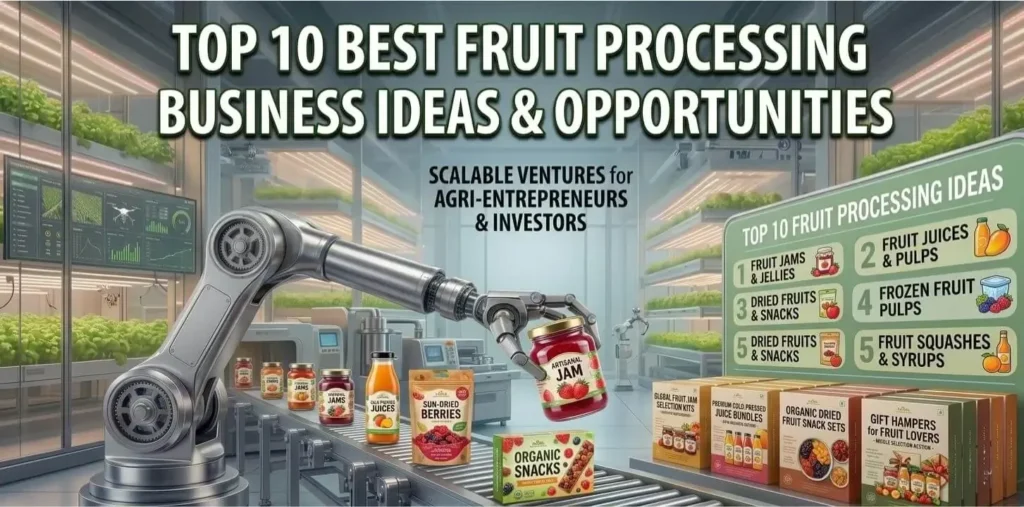
In 2026, the global food and beverage industry continues to undergo a massive transformation, with consumers increasingly turning to healthy, natural, and organic alternatives. Among the most promising segments in this transition is the fruit processing business, which combines agricultural abundance with food innovation. With rising demand for packaged fruits, juices, jams, dehydrated snacks, and fruit-based condiments, there is enormous scope for entrepreneurs to explore a wide range of profitable ventures in this field. Top 10 Fruit Processing Business Ideas in 2026 Below is a list of the top 10 fruit processing business ideas that can be launched with varying levels of investment and infrastructure. Each idea caters to a different market segment, offering entrepreneurs flexibility in terms of scale, product range, and distribution channels. 1. Fruit Juice Manufacturing Fresh fruit juices are always in demand due to their health benefits and natural appeal. Starting a fruit juice unit involves sourcing seasonal fruits, using a juicing and pasteurization unit, and packaging the juice in bottles or tetra packs. You can target health-conscious consumers, gym-goers, or office-goers with convenient and nutritious beverage options. The market includes a wide range of products like cold-pressed juice, mixed fruit juice, sugar-free juice, and even probiotic fruit drinks. With proper branding and cold chain logistics, this fruit processing business idea is a scalable venture. Handbook on Fruits, Vegetables & Food Processing with Canning & Preservation 2. Jam and Jelly Production Fruit jams, jellies, and marmalades are staple items in many households, especially in urban and semi-urban areas. Using fruits like mango, guava, strawberry, or mixed fruit, you can create premium quality spreads with high shelf life. This business involves boiling fruit pulp with sugar and pectin, then packaging in glass or plastic jars. It can be done on a small scale from home kitchens or expanded into a commercial setup. Organic and low-sugar jams are gaining popularity in 2026, presenting a niche market opportunity within the fruit processing business segment. 3. Dehydrated Fruit Snacks Drying fruits like apples, bananas, mangoes, or pineapples into chips or bite-sized snacks is a growing trend. These products are highly favored by fitness enthusiasts, travelers, and school children. Vacuum dehydration, freeze-drying, or sun-drying are commonly used methods. Dehydrated fruits are lightweight, nutrient-rich, and easy to package and distribute. They can be sold online or through supermarkets. The market is moving toward preservative-free, non-GMO products, giving a further push to this branch of the fruit processing business. 4. Canned Fruits Production Canned fruits are convenient options for urban consumers and are especially popular in export markets. By slicing fruits like peaches, lychees, and pineapples and preserving them in sugar syrup or natural juice, you can create products that last for over a year. The process requires proper sterilization, sealing, and labeling techniques to ensure food safety. Though initial investment might be higher due to equipment needs, canned fruit production is a long-term sustainable idea within the fruit processing business domain. 5. Fruit Pulp and Puree Unit Fruit pulp is the base for many products like juices, yogurts, ice creams, and confectionery items. Setting up a unit that extracts and preserves pulp from seasonal fruits can serve as a B2B business, supplying to larger food manufacturers. Mango pulp, tomato puree, guava pulp, and papaya concentrate are especially in demand across food and beverage industries. With the growing popularity of ready-to-use fruit ingredients, this fruit processing business idea is perfect for entrepreneurs looking for bulk production and wholesale distribution. 6. Pickle and Chutney Manufacturing India has a rich tradition of fruit-based pickles and chutneys. Using raw mangoes, gooseberries, lemons, or even tamarind, you can create a range of tangy, spicy, and sweet products. These can be sold in local markets, fairs, or online platforms under a homegrown brand. Consumer demand is shifting toward artisanal, preservative-free pickles with authentic flavors, making this an attractive low-investment fruit processing business to start in 2026. 7. Fruit Vinegar and Fermented Products Fruit vinegar—such as apple cider vinegar or pineapple vinegar—is a rapidly growing health and wellness product. Fermentation of fruit juice in a controlled environment results in vinegar rich in probiotics and beneficial acids. People use these in cooking, salad dressings, and even for medicinal purposes. The production process is simple, and with good hygiene and packaging, small-scale units can thrive. Fermented fruit-based drinks and tonics are also gaining ground, adding depth to this fruit processing business niche. 8. Ready-to-Eat Fruit Salads and Bowls Urban populations, especially working professionals and millennials, are increasingly opting for pre-packaged fresh fruit bowls. Producers combine multiple fruits into ready-to-eat packs and sell them through supermarkets, cafes, and delivery apps. Though this business requires a cold storage chain and quick turnover, the margins can be high due to premium pricing. Hygiene, aesthetic packaging, and sourcing fresh fruit are key to success. This segment of the fruit processing business is expected to grow rapidly in metropolitan regions. 9. Frozen Fruit Cubes and Smoothie Mixes Frozen fruits retain most of their nutrients and people widely use them in smoothies, shakes, and desserts. Processing fruits by cleaning, cutting, and freezing them in small cubes or blends allows you to cater to a ready-made smoothie market. These products are used in cafes, restaurants, gyms, and by individuals at home. The trend of frozen smoothie packs is picking up due to health trends and convenience. Entrepreneurs can explore tie-ups with fitness chains and eCommerce platforms under this branch of the fruit processing business. 10. Unfamiliar Fruit Processing and Export Fruits like dragon fruit, kiwi, passionfruit, and avocado are becoming popular across global and domestic markets. You can focus on processing these fruits into dried pieces, jams, purees, or juices aimed at premium customers. Export markets like the Middle East, Europe, and North America have a steady demand for tropical and unfamiliar fruit products. Setting up a processing unit near growing regions and ensuring international packaging and certification can make this fruit processing business highly profitable in 2026. Conclusion The fruit processing business in 2026 offers a
Biodegradable Plastic Bag Manufacturing Industry
In an age where environmental sustainability has become more than a buzzword, biodegradable plastic bags are increasingly gaining prominence. With global concerns surrounding plastic pollution, governments and organizations are encouraging alternatives that are eco-friendly and sustainable. This shift in awareness has created a profitable opportunity in the biodegradable plastic bag manufacturing sector. These bags decompose naturally by microorganisms, reducing the harmful impact on ecosystems and wildlife. If you are planning to enter this market, understanding the manufacturing process, required machinery, market demand, and regulatory frameworks is crucial to establishing a successful venture. Understanding Biodegradable Plastic Bag Manufacturing Biodegradable plastic bag manufacturing involves converting plant-based or biodegradable synthetic polymers into usable carry bags. These bags can be made from raw materials like cornstarch, PLA (polylactic acid), PBAT (polybutylene adipate terephthalate), or other compostable substances. Unlike traditional plastic bags that take hundreds of years to decompose, biodegradable bags can break down in a matter of months under the right conditions. The industry is being shaped by rising consumer awareness, governmental policies banning single-use plastics, and the demand from retail and foodservice sectors for sustainable packaging solutions. As such, manufacturers can expect a growing market with consistent demand. Moreover, the production line for biodegradable bags is relatively similar to conventional plastic bags, making it easier for existing manufacturers to pivot or expand. Raw Materials Used The raw materials required for biodegradable plastic bag manufacturing vary based on the type of biodegradable polymer you choose. Some of the commonly used materials include: Cornstarch: A popular bio-based option that is renewable and easily available. PLA (Polylactic Acid): Derived from fermented plant starch (usually corn), known for its compostable properties. PBAT: A petroleum-based biodegradable plastic often blended with PLA or starch for added flexibility and durability. Cassava starch: Becoming popular in certain regions due to its fast degradability. Blending these materials in the right proportion is critical to achieving strength, flexibility, and environmental performance in the final product. Manufacturing Process The biodegradable plastic bag manufacturing process involves several key steps: Mixing and Compounding: The chosen raw materials are blended using a compounding machine. Additives may be introduced to enhance properties like color, UV resistance, and flexibility. Extrusion: The blended material is fed into an extruder where it is melted and formed into a thin film. This film serves as the base for making bags. Blown Film Processing: The molten material is blown into a tubular film using compressed air. This step defines the thickness and width of the bags. Printing (Optional): If branding or labeling is required, the film can be printed using eco-friendly ink. Cutting and Sealing: The film is then cut and heat-sealed to form individual bags of the desired size and shape. Packaging: Finished bags are bundled and packed for distribution. This process can be semi-automatic or fully automatic depending on the scale of operations and investment capacity. Required Machinery To set up a biodegradable plastic bag manufacturing unit, you’ll need the following machinery and equipment: Compounding machine Blown film extrusion machine Flexographic printing machine (optional) Bag cutting and sealing machine Quality testing and packaging equipment The cost of setting up the plant will depend on the machinery type (manual, semi-automatic, or automatic), production capacity, and desired product range. A small-scale unit may require an investment of ?25–50 lakhs, whereas a medium-to-large scale plant can go up to ?2 crores or more. Location and Infrastructure Selecting the right location is vital. Industrial zones with proper waste management systems and proximity to raw material suppliers can reduce logistics costs and improve operational efficiency. Ensure the site has: Adequate space for manufacturing and storage Power supply with backup Water availability Ventilation and fire safety measures Compliance with local zoning laws and environmental norms Legal Compliance and Certifications In India and many other countries, biodegradable plastic bag manufacturing is regulated under specific environmental laws. You may need the following licenses and approvals: Company registration (as Proprietorship, LLP, or Pvt. Ltd.) Factory license from the local authority Pollution Control Board clearance GST registration Bureau of Indian Standards (BIS) certification ISO certification for quality management (optional but recommended) Trademark registration for your brand Getting a compostability certificate from a recognized body will help build consumer trust and access to larger markets. Market Trends and Opportunities The market for biodegradable plastic bag manufacturing is expanding rapidly due to growing environmental consciousness and stricter government regulations against conventional plastics. Here are a few trends and opportunities to capitalize on: Retail and E-commerce: Major players prefer eco-friendly packaging options to enhance brand image. Food and Hospitality Sector: Restaurants, cafes, and hotels need biodegradable carry bags for delivery and takeaway services. Government Supply Contracts: Municipalities and public departments are adopting sustainable alternatives for various use cases. Exports: Biodegradable products are in high demand in Europe, the USA, and Australia due to stringent environmental laws. This dynamic demand creates ample room for innovation in terms of bag designs, thicknesses, and specialty applications like compostable garbage bags or courier pouches. Profit Margins and ROI Profitability in biodegradable plastic bag manufacturing depends on multiple factors including raw material cost, production scale, and distribution strategy. Typically, the cost of producing a biodegradable bag is higher than a conventional plastic one. However, due to premium pricing and consumer willingness to pay more for sustainable alternatives, manufacturers can achieve healthy profit margins. On average, net profit margins may range from 10% to 25% depending on operational efficiency and market positioning. Break-even can usually be achieved within 1.5 to 2 years for small and medium-scale setups if managed properly. Marketing and Distribution Strategy A robust marketing plan can make your biodegradable plastic bag manufacturing business stand out. Here are some effective strategies: B2B Partnerships: Collaborate with supermarkets, retail chains, and foodservice businesses. Online Presence: Build a strong digital presence through a website, social media, and e-commerce platforms. Certifications as USPs: Highlight environmental certifications and biodegradability metrics to appeal to conscious buyers. Trade Shows and Expos: Participate in sustainability and packaging trade fairs to expand network and visibility. You