
List of Fast-Growing Industries for Hot Start-Ups in 2018.
Starting a business can be one of the most rewarding journeys in life, but it also comes with significant risk. Many budding entrepreneurs struggle with choosing the right project or business idea that offers not just profitability, but also sustainability in the long run. The “NPCS 2018 Guide to Profitable Projects and Startup” serves as an insightful manual for entrepreneurs, helping them identify high-potential sectors, assess market demand, and plan their ventures effectively. Published by the National Project Consultancy Services (NPCS), the guide is tailored for Indian markets but also offers globally applicable insights. Why the NPCS 2018 Guide Is a Valuable Resource for Profitable Projects and Startup The guide stands out because of its focus on practical implementation and real-time profitability assessment. It doesn’t just list business ideas—it provides in-depth feasibility reports, market potential analyses, estimated investment costs, and detailed manufacturing processes. The NPCS 2018 Guide to Profitable Projects and Startup empowers entrepreneurs to move from ideation to execution efficiently. Industry Trends and Sectors Covered One of the strengths of the NPCS 2018 edition is the variety of sectors it covers. From agro-based industries and chemical manufacturing to food processing, pharmaceuticals, and eco-friendly technologies, the guide details over 100 business ideas. These are carefully curated based on current market demand and future trends, ensuring that each business idea is in line with consumer and industry needs. For example, the guide explores projects like: Organic Farming and Processed Foods: As health-consciousness grows, organic food items have witnessed a rise in demand, both domestically and internationally. Waste Recycling and Renewable Energy: With environmental sustainability taking center stage, projects in solar energy, e-waste recycling, and biofuel are becoming more viable. Cosmetics and Personal Care: This sector continues to expand, especially with herbal and Ayurvedic products gaining popularity. Petroleum Derivatives and Lubricants: Despite global shifts toward green energy, these products remain in high demand in industrial and automotive sectors. Textile and Garment Manufacturing: As a labor-intensive industry, it offers scope for job creation and export earnings. The NPCS 2018 Guide to Profitable Projects and Startup examines each of these sectors by breaking them down into technical, financial, and commercial aspects. Key Components of a Profitable Startup Plan To launch a successful startup, one must follow a well-structured approach. According to the NPCS 2018 Guide to Profitable Projects and Startup, here are essential elements every entrepreneur should consider: Market Research: Understand your target audience, their preferences, and gaps in the market. Feasibility Study: Evaluate the technical and financial aspects of the project. The guide provides templates for this. Business Plan Development: Include marketing strategies, competitive analysis, pricing models, and projected ROI. Licensing and Regulations: Ensure compliance with local and national legal frameworks. Funding Options: Explore sources like bank loans, angel investors, and government schemes like Startup India or Mudra Yojana. The guide offers extensive insights into how each of these areas contributes to developing profitable projects and startup ideas that are scalable and resilient. Startup Case Studies and Success Models Another impressive feature of the NPCS guide is its case studies section. These real-world examples provide a roadmap for aspiring entrepreneurs. The book details how small ideas have transformed into large enterprises through strategic planning and execution. Take for instance a featured case study of a small-scale honey processing unit in Uttarakhand. With an initial investment of just ?10 lakhs, the business scaled operations over five years to become a regional supplier to major grocery chains. Similarly, the guide outlines how one entrepreneur capitalized on the demand for ready-to-eat meals in metro cities, turning a home kitchen into a packaged food company. Each of these stories showcases how applying the principles outlined in the NPCS 2018 Guide to Profitable Projects and Startup can turn a modest idea into a sustainable business. Financial Planning and Investment Costing The financial section of the guide is highly detailed and practical. It walks you through cost estimations, machinery investment, working capital needs, and profit margins for each listed project. This allows potential entrepreneurs to compare and choose the most suitable option based on their budget. Some highlighted examples include: Biodegradable Cutlery Manufacturing: Investment: ?18 lakhs; Break-even: 18 months Solar Panel Assembly Unit: Investment: ?35 lakhs; Break-even: 24 months Essential Oils Distillation Plant: Investment: ?22 lakhs; Break-even: 15 months These projections are not just arbitrary numbers; they are based on real-time market analysis, which adds credibility to the NPCS 2018 Guide to Profitable Projects and Startup. Government Incentives and Support Schemes In recent years, the Indian government has introduced numerous schemes to foster entrepreneurship. The NPCS guide doesn’t overlook this and provides a well-researched section on how to benefit from: Startup India Mission PMEGP (Prime Minister’s Employment Generation Programme) MSME subsidies and tax exemptions Skill India training and support By aligning your business with these schemes, your startup gains not only financial relief but also credibility and networking opportunities. The NPCS 2018 Guide to Profitable Projects and Startup helps navigate these programs, providing step-by-step processes for registration, documentation, and compliance. Emerging Business Models to Watch While traditional manufacturing and processing industries continue to thrive, the guide also emphasizes new-age models. These include: Digital Services and SaaS Models: Especially in Tier 2 and Tier 3 cities, there’s a growing demand for IT solutions, online education platforms, and fintech services. Eco-Conscious Consumer Goods: From bamboo toothbrushes to biodegradable packaging, sustainable products are not just trendy but commercially viable. Home-Based Enterprises: The guide highlights low-investment options like handmade soap production, craft businesses, and cloud kitchens that require minimal capital but offer decent profits. Such innovative models open up opportunities for a new generation of entrepreneurs who seek flexible, technology-driven, and scalable ideas. Long-Term Success: Tips from Experts The NPCS 2018 Guide to Profitable Projects and Startup doesn’t stop at just business ideas. It shares wisdom from industry experts and consultants on long-term success: Continuous Market Feedback: Always keep refining your product based on customer needs. Reinvestment and Scaling: Don’t rush expansion. Focus on reinvesting profits for sustained growth. Skilled Workforce: Invest
List of Highly Profitable Projects on Hygiene Products.
The hygiene products industry has seen an incredible transformation over the last decade, especially in the wake of rising health awareness and post-pandemic consciousness. Consumers are increasingly seeking hygiene products that promise cleanliness, safety, and convenience. Whether it’s for personal, household, or industrial use, the demand is booming and offers great entrepreneurial opportunities. From hand sanitizers and disinfectants to sanitary napkins and biodegradable wipes, the market is vast and diverse. Launching a Hygiene Products business today is not just profitable but also socially impactful, as it promotes healthier living environments and reduces the spread of disease. Lucrative Opportunities in the Hygiene Products Industry The hygiene products sector spans a wide variety of sub-categories, each offering unique benefits and target markets. Here’s a closer look at some of the most profitable avenues within this space: 1. Sanitizers and Disinfectants These products became household essentials during the COVID-19 pandemic and have remained a staple ever since. Starting a line of alcohol-based or herbal sanitizers can cater to a wide customer base. Similarly, disinfectant sprays and surface cleaners have a steady demand in homes, offices, hospitals, and public facilities. 2. Sanitary Napkins and Feminine Hygiene Products Feminine hygiene is a growing concern, especially in rural and semi-urban areas where awareness is spreading rapidly. Setting up a low-cost, high-quality sanitary napkin manufacturing unit can be both profitable and socially meaningful. Innovations like biodegradable pads and reusable menstrual cups are carving out a niche in the eco-conscious market segment. 3. Baby Care and Diaper Manufacturing The baby hygiene sector, particularly diapers and wet wipes, remains a robust segment. If you venture into eco-friendly, chemical-free baby wipes and diapers, it will give you a competitive edge in today’s environmentally aware marketplace. 4. Personal Care Hygiene This includes soaps, handwashes, shampoos, and body washes. Launching a brand that focuses on antibacterial or organic hygiene products can attract a strong customer base. Ayurveda-based or herbal hygiene solutions have seen growing popularity in India and globally. 5. Toilet Hygiene Products These products range from toilet cleaners, seat sanitizers, and urinal mats to toilet papers. A Hygiene Products business catering to commercial washroom maintenance can tap into B2B markets like malls, hotels, offices, and hospitals. 6. Household Cleaning Products Floor cleaners, dishwashing liquids, and laundry disinfectants are essential in every household. Launching a brand that offers plant-based or chemical-free cleaning products can attract consumers concerned with health and sustainability. 7. Antimicrobial Fabrics and Wearables Post-pandemic, the market for antimicrobial clothing, reusable masks, and gloves has expanded. Starting a niche brand that blends hygiene and fashion is an innovative idea gaining traction. Market Demand and Trends The global Hygiene Products market is expected to surpass $250 billion by 2030, driven by growing health concerns and changing consumer behavior. Key trends include: Natural & Organic Products: There’s a clear shift toward plant-based and chemical-free ingredients. Brands focusing on sustainable raw materials and minimal packaging are becoming increasingly popular. Subscription Models: Delivering hygiene essentials on a subscription basis (e.g., monthly sanitary napkin or diaper deliveries) ensures steady revenue and builds customer loyalty. Men’s Hygiene Products: A relatively untapped niche, men’s grooming and hygiene products like intimate washes, wipes, and deodorants are gaining traction. Portable and Travel-friendly Packs: In our fast-paced lives, convenient packaging is essential. Launching travel-sized hygiene kits is a smart, practical idea. Eco-conscious Solutions: Bamboo toothbrushes, biodegradable wipes, and refillable handwash bottles are appealing to environmentally responsible consumers. Manufacturing and Setup To start a Hygiene Products business, you’ll need a manufacturing unit with proper licenses like: Factory License and Pollution NOC BIS Certification (especially for sanitizers, soaps) Drug License for alcohol-based products GST Registration Depending on your product line, you may also require FDA approvals and packaging compliance certifications. It’s crucial to maintain hygienic manufacturing conditions and rigorous quality control standards to ensure product safety. Investment and Budget The investment required to start a Hygiene Products business varies with scale. A small-scale unit can be launched with an initial investment of ?10–15 lakhs, while a medium-sized setup may require ?25–50 lakhs. Major costs include: Machinery and equipment Raw materials (alcohol, surfactants, essential oils, etc.) Packaging and labeling Marketing and distribution Regulatory compliance Modern automation and contract manufacturing can reduce production costs significantly while improving efficiency. Marketing Strategies To make your Hygiene Products brand stand out in a crowded market, an effective marketing strategy is key. Consider the following approaches: Brand Positioning: Highlight unique selling points like “100% organic,” “kills 99.9% of germs,” or “zero waste packaging.” Digital Presence: Create an SEO-optimized website and promote your products through social media, influencer partnerships, and Google Ads. Retail Partnerships: Tie up with pharmacies, supermarkets, and e-commerce platforms like Amazon, Flipkart, or niche health marketplaces. Free Samples and Introductory Offers: Distribute free product samples in clinics, schools, and corporate offices to generate word-of-mouth referrals. CSR & NGO Collaborations: Partner with non-profits to distribute hygiene kits in rural areas, increasing your social impact while building goodwill. Profit Margin and ROI With proper branding and quality assurance, the Hygiene Products business offers a high profit margin — ranging from 20% to 50%, depending on the category. Products like sanitizers, sanitary pads, and soaps offer excellent margins with low production costs. By the second year, with consistent sales and expanded distribution, most small-scale hygiene product businesses begin generating a decent return on investment. As the brand scales, bulk orders from hospitals, hotels, and institutions can significantly boost profitability. Challenges and Solutions While starting a Hygiene Products business is rewarding, it’s not without its challenges: High Competition: The FMCG space is crowded. You’ll need to differentiate through innovation, quality, and packaging. Regulatory Hurdles: Strict compliance and regular audits can slow down operations if not managed professionally. Consumer Trust: Hygiene is personal. Building trust through transparent labeling, third-party testing, and certifications is essential. Sustainability Issues: Packaging waste and chemical runoff are major concerns. Eco-friendly materials and ethical sourcing help address these problems. Conclusion The Hygiene Products sector is a goldmine for aspiring entrepreneurs looking to build a sustainable, socially
HDPE Pipe Production Business Plan – Profitable Startup Guide
The demand for HDPE pipes has grown significantly over the past few decades due to their durability, flexibility, corrosion resistance, and cost-effectiveness. From irrigation and sewage to industrial and urban water supply systems, HDPE pipes serve diverse sectors. Launching an HDPE pipe production business is a smart move for entrepreneurs looking to enter the infrastructure and construction industry. This venture not only promises profitability but also contributes to sustainable development by supporting modern water management systems. Why Start an HDPE Pipe Production Business? With the increasing government focus on rural water supply, smart city development, and agricultural efficiency, the need for reliable piping systems is soaring. HDPE (High-Density Polyethylene) pipes are the most preferred alternative to traditional metal and PVC piping. They offer a longer lifespan, low maintenance costs, and environmental friendliness, which makes the HDPE pipe production industry highly lucrative. Market Demand and Scope The global HDPE pipe market is projected to surpass USD 20 billion in the next few years, with India being one of the key contributors due to massive infrastructure projects like Jal Jeevan Mission and PMKSY (Pradhan Mantri Krishi Sinchayee Yojana). In both urban and rural areas, water distribution systems are seeing a shift towards HDPE pipe production, pushing the market forward at an aggressive pace. Urbanization and industrialization are further adding to the demand for modern, durable pipe systems. Agricultural irrigation systems, bore wells, drainage systems, chemical transportation, and even telecom cable ducting rely on HDPE piping, opening a wide market for manufacturers. Business Model Overview Setting up an HDPE pipe production unit requires detailed planning, substantial investment, and a robust marketing strategy. Your business model should cover production, quality assurance, pricing, distribution, and customer service. Here’s how you can structure your business model: Manufacturing: Involves sourcing raw materials like HDPE granules and setting up a production line with extrusion machinery. Sales Channels: Direct sales to construction companies, dealers, and wholesalers, as well as tenders for government projects. Revenue Streams: Product sales (different diameters, pressure ratings), after-sales support, and customized solutions for industries or farmers. Investment and Machinery The initial investment to start an HDPE pipe production plant varies depending on the scale. A small-scale unit may need INR 30–50 lakhs, while a medium or large-scale plant could require over INR 1 crore. Key machinery required includes: HDPE pipe extrusion machine Vacuum sizing tank Cooling tank Haul-off (puller) Cutter Pipe coiler or stacker Mixer and granule feeder Additionally, space (2000–5000 sq. ft. minimum), labor, and power supply are essential for smooth operations. Raw Material Procurement HDPE granules are the primary raw material for pipe manufacturing. These granules can be sourced from petrochemical companies like Reliance, GAIL, IOCL, or imported if necessary. Ensure the material meets BIS (Bureau of Indian Standards) specifications for quality assurance. Besides granules, other materials like color masterbatches, anti-oxidants, and UV stabilizers may be added during processing to enhance pipe performance. Manufacturing Process The HDPE pipe production process includes several stages: Mixing and Feeding: HDPE granules are mixed with additives and fed into the hopper of the extrusion machine. Extrusion: The granules are melted and extruded into a pipe form using a die of specific diameter. Vacuum Sizing and Cooling: Pipes pass through vacuum and cooling tanks to set the shape and strength. Hauling and Cutting: The pipe is pulled continuously and cut to required lengths. Testing and Quality Control: Pipes are subjected to pressure, tensile, and elongation tests to ensure they meet national and international standards. Automating the line helps maintain consistency and minimizes human error, improving efficiency and output quality. Licensing and Legal Compliance To operate legally, your HDPE pipe production unit must comply with the following: Company Registration: As an MSME or private limited company. GST Registration Factory License and Pollution Control Board NOC BIS Certification (IS 4984:2016 for water supply pipes) Trade License from local municipality ESI & PF Registration for employee welfare These certifications ensure that your products are accepted in both public and private sector procurement. Marketing and Sales Strategy Marketing is essential to the success of your HDPE pipe production business. Focus on a multi-channel strategy to reach contractors, builders, farmers, and government agencies. Key approaches include: Website and SEO: A professional website with detailed product specs, certifications, and use cases helps build credibility. Dealer Network: Appoint regional distributors and retailers for regular supply. Direct Sales: Engage with large-scale consumers such as construction firms or irrigation departments. Participation in Trade Shows: Events like IndiaPlast, PlastIndia, or BuildTech provide excellent exposure. Online B2B Portals: Register on platforms like IndiaMART, TradeIndia, and JustDial to increase visibility. Also, maintain a portfolio of certifications, past projects, and client testimonials to boost trust. Financial Projections and Profit Margins On average, the production cost per meter of HDPE pipe ranges from INR 10 to INR 25 depending on size and grade. Selling price varies from INR 20 to INR 50 per meter, giving a decent profit margin of 20–35%. Assuming a moderate production capacity of 2000 kg/day and efficient operations, monthly revenue can reach INR 15–20 lakhs with net profits between INR 2–4 lakhs. Break-even is typically achieved within 12–18 months, provided there’s consistent demand and quality assurance. Challenges and Risk Management Despite its advantages, HDPE pipe production comes with its own set of challenges: Raw Material Price Fluctuations: HDPE granules prices vary depending on crude oil prices. Market Competition: You’ll be competing with both local and branded players. Product Rejection: Poor-quality production may result in large-scale rejections and financial losses. Power Interruptions: Production relies on consistent electricity; backup is necessary. To mitigate risks: Maintain strict QC (Quality Control) standards. Negotiate bulk raw material contracts. Diversify client base across agriculture, urban development, and industry. Implement lean manufacturing and cost control practices. Sustainability and Future Trends As the world shifts towards greener practices, HDPE pipe production aligns well with sustainability goals. HDPE pipes are recyclable and energy-efficient to produce. Innovations like solar-powered production units and recycled plastic granules are being introduced, reducing carbon footprint and boosting brand reputation. Government initiatives
10 Profitable Biotech Manufacturing Business Opportunities in India
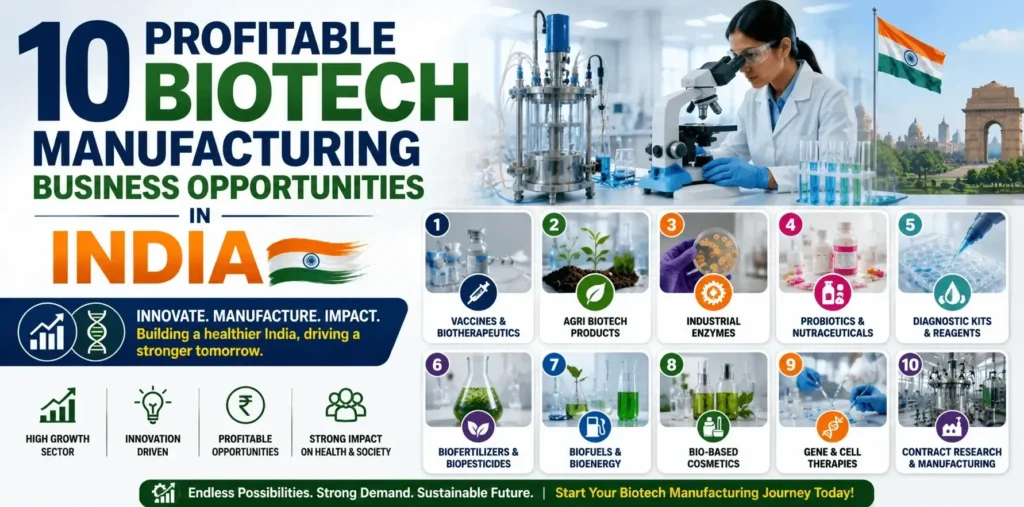
India’s biotechnology sector is rapidly emerging as one of the most profitable and future-focused industries for entrepreneurs, startups, and investors. With rising demand for healthcare innovation, sustainable agriculture, diagnostics, nutraceuticals, industrial enzymes, and bio-based products, biotech manufacturing business opportunities in India are expanding at an unprecedented pace. Today, small and medium-scale entrepreneurs can enter the biotechnology manufacturing industry with innovative and scalable business models. From biofertilizer production and diagnostic kits to probiotics and tissue culture labs, the biotech industry offers multiple high-growth opportunities for startups and investors. What are Biotech Manufacturing Business Opportunities? Biotech manufacturing business opportunities involve producing biotechnology-based products such as biofertilizers, probiotics, diagnostic kits, nutraceuticals, industrial enzymes, tissue culture plants, and sustainable bio-products for healthcare, agriculture, food processing, and environmental industries. This guide explores some of the most profitable biotech manufacturing business opportunities, startup ideas, investment sectors, and future-ready biotech industries in India. Top Biotech Manufacturing Business Opportunities in India Small investors looking to enter the biotech business space must focus on ideas that combine affordability with scalability. Thanks to outsourcing models, contract research organizations (CROs), and shared lab spaces, the initial barrier to entry has lowered significantly. Below are some of the most promising biotech startup concepts suited for small investors: 1. Tissue Culture Plant Nursery Setting up a tissue culture lab to propagate plants in a controlled environment is a lucrative biotech venture. This business model is suitable for small investors because it requires relatively low capital and can be operated in small spaces. The plants grown via tissue culture are disease-free and uniform in size and quality, which makes them ideal for commercial farming and exports. High-value crops like bananas, orchids, strawberries, and medicinal plants are particularly in demand. 2. Probiotic and Fermented Products With increasing awareness of gut health, demand for probiotic supplements and fermented foods like kefir, kombucha, and sauerkraut is growing. Entrepreneurs can establish a small-scale biotech business focused on manufacturing and marketing natural probiotic products. The formulation and fermentation processes are simple, and the startup costs are minimal. Additionally, partnerships with dietitians and wellness influencers can boost brand visibility and market reach. 3. Diagnostic Kits and Reagents Manufacturing The global pandemic has shown the world the importance of rapid diagnostics. Starting a diagnostic kit manufacturing unit is a profitable idea for small investors. These kits can be for infectious diseases, pregnancy testing, blood sugar monitoring, or food contamination. Manufacturing diagnostic reagents and kits under proper licensing and quality standards can serve local clinics, pathology labs, and government tenders. Moreover, localization reduces reliance on imported kits, boosting market demand. 4. Organic Bio-Fertilizers Production With the organic farming movement gaining traction, bio-fertilizers and bio-pesticides are in high demand. These are eco-friendly alternatives to chemical fertilizers and enhance soil fertility naturally. Starting a small production unit for bio-fertilizers made from nitrogen-fixing bacteria, mycorrhiza, or phosphate-solubilizing microorganisms is an excellent biotech business idea. This venture supports sustainable agriculture and aligns with government subsidies and eco-policy initiatives. 5. Microalgae Cultivation for Bio-products Microalgae such as Spirulina and Chlorella are rich in proteins, vitamins, and antioxidants. Cultivating microalgae is a scalable and profitable biotech business. Small investors can set up photobioreactors or open pond systems in rural or semi-urban areas. The harvested algae can be processed into food supplements, cosmetic ingredients, or even animal feed. With increasing vegan and health-conscious consumer bases, the demand for such natural ingredients is expected to rise. 6. CRISPR-Based Genetic Testing Startups Though slightly more technical, starting a small genetic testing service using CRISPR-based tools is feasible with the right partnerships. These startups can offer services like ancestry testing, inherited disease detection, or genome profiling. Investors can collaborate with academic researchers and laboratories for access to platforms and expertise. As this sector matures, licensing CRISPR-related applications can yield high returns for early adopters. 7. Bioinformatics Services and Data Analytics Not all biotech startups require wet-lab setups. Bioinformatics is a data-driven biotech business field involving software development, genome analysis, and drug discovery support. If you have a background in IT or can partner with a software expert, starting a bioinformatics consulting firm can be profitable. These services support pharmaceutical companies, research labs, and hospitals with customized data solutions. 8. Bioplastics and Biodegradable Packaging As plastic pollution becomes a global concern, bioplastics—derived from biological sources like starch, corn, or algae—are becoming essential alternatives. A small biotech business focusing on bioplastic production or biodegradable packaging materials can find ample buyers in the food, fashion, and e-commerce industries. The capital requirement is moderate, and innovations in material sciences continue to reduce production costs. 9. Stem Cell Storage and Therapy Advisory Services Although stem cell banks are capital-intensive, small investors can still benefit by providing allied services. These include stem cell therapy advisory, patient education, and collaboration with hospitals for lead generation. You can also offer logistics solutions for sample transport and storage coordination. This model allows entrepreneurs to participate in a highly promising sector without owning a full-fledged lab. 10. Nutraceutical Formulation and Packaging Nutraceuticals, which include dietary supplements, functional foods, and herbal products, combine nutrition and pharmaceuticals. With the rising demand for preventive healthcare, small-scale manufacturing or white-label branding of nutraceuticals is a good entry point into the biotech business. Entrepreneurs can focus on immunity boosters, anti-aging formulas, joint health supplements, and stress management products using naturally derived ingredients. 11. DNA-Based Personalized Nutrition Plans A highly trending concept in healthtech-biotech convergence is DNA-based diet recommendations. Businesses in this niche collect DNA samples from clients and offer diet charts based on genetic predispositions. The data is analyzed using genome sequencing services (outsourced) and interpreted through proprietary algorithms. Starting such a venture needs basic infrastructure, but once built, it allows scalability with low variable costs. 12. Aquaculture Biotechnology Biotech solutions for aquaculture include vaccines for fish, improved breeds, disease diagnostics, and feed supplements. A small biotech business in this area could focus on developing or distributing biotech-based inputs for fish farmers. India, China, and Southeast Asia are seeing a boom in fish farming, making this
Want to Start Business in Raipur, Chhattisgarh in 2026?

Raipur, the capital of Chhattisgarh, has rapidly evolved into one of the most promising cities in Central India for budding entrepreneurs and business owners. Starting Business in Raipur, Chhattisgarh is a big opportunity, it is strategically located and well-connected by road, rail, and air. Raipur is not only the political and administrative hub of the state but also a major commercial and industrial center. Its pro-business policies, expanding infrastructure, availability of raw materials, and a large workforce make it an ideal destination for investments in various sectors. Whether you’re a local resident or an outstation investor, exploring the right industry is crucial for establishing a successful business in Raipur. Emerging and Profitable Industries to Start Business in Raipur 1. Steel and Iron Industry Raipur has earned the title of “Steel City of Central India” due to its thriving steel and iron industry. The city hosts numerous rolling mills, sponge iron plants, and steel manufacturing units. With raw materials such as coal and iron ore easily accessible from nearby regions like Bastar and Korba, starting a small-scale manufacturing or trading unit can be extremely lucrative. Additionally, due to Raipur’s proximity to mining belts and industrial zones, there is a steady demand for equipment, transport, and auxiliary services, making it a great opportunity for setting up ancillary businesses. 2. Agriculture and Food Processing Agriculture remains a primary occupation in Chhattisgarh, and Raipur serves as a major trading and processing center for grains, pulses, oilseeds, and fruits. The state government offers subsidies and incentives to entrepreneurs looking to enter agro-processing, packaging, cold storage, and warehousing. Starting a business in Raipur that focuses on millet-based foods, organic farming, or food export can be highly profitable. The rise in demand for health-conscious and organic products opens even more doors in this sector. 3. Education and Coaching Centers With increasing literacy levels and a growing middle class, Raipur has become a hotspot for educational institutions, coaching classes, and skill development centers. Students from rural and semi-urban areas flock to Raipur for better educational opportunities. Starting a coaching center for competitive exams, spoken English classes, or skill-based vocational training programs can yield excellent returns. A tech-based educational startup or e-learning platform can also flourish in this digitally adaptive environment. 4. Real Estate and Construction The expansion of Raipur into a smart city and the presence of large-scale projects like Naya Raipur (now Atal Nagar) have increased the demand for housing, office spaces, and commercial complexes. Construction material suppliers, architecture firms, and real estate consultants are in high demand. Starting a business in Raipur in real estate brokerage, construction, or modular interiors can be a smart move, especially with continuous urbanization and migration from rural areas. 5. Tourism and Hospitality Chhattisgarh is home to breathtaking waterfalls, ancient temples, wildlife sanctuaries, and tribal heritage sites. Raipur serves as the gateway to many of these attractions. With an increase in both domestic and international tourists, the hospitality industry is booming. Starting a budget hotel, travel agency, café, or cultural tour operation offers vast potential. Eco-tourism and tribal tourism are niche yet promising business verticals, especially if paired with digital marketing and authentic local experiences. 6. Healthcare and Wellness With improvements in medical infrastructure, Raipur has become a regional hub for quality healthcare. Hospitals, diagnostic centers, nursing homes, and wellness clinics are on the rise. Entrepreneurs can consider investing in pharmacies, telemedicine services, physiotherapy centers, or health-focused apps. In a city where people from nearby rural districts come for treatment, setting up a healthcare-related business in Raipur is both a noble and profitable venture. 7. Textile and Garment Manufacturing Raipur has a long-standing association with handloom and textile products. Sarees from Chhattisgarh, especially from areas like Tussar and Kosa silk, are famous nationwide. With the right blend of tradition and technology, starting a garment unit, tailoring shop, or fabric printing setup can be beneficial. There is also scope in establishing export-focused units that cater to international fashion markets. 8. Logistics and Transport Services Raipur’s location makes it a logistical hub, connecting many parts of central and eastern India. With major highways, a strong railway network, and an airport, goods movement is seamless. Starting a business in Raipur in goods transportation, cold chain logistics, last-mile delivery, or even freight brokerage can serve a wide client base. E-commerce logistics is another rapidly growing opportunity as more people shop online. 9. Renewable Energy and Waste Management Chhattisgarh’s focus on sustainability and clean energy has opened up several green business opportunities. Solar panel installations, biomass energy production, and e-waste recycling plants are supported by government schemes. Setting up a solar energy consultancy, waste segregation facility, or bio-composting unit in Raipur can contribute to environmental health while generating revenue. 10. IT and Digital Services While not traditionally an IT hub, Raipur is witnessing growth in startups offering software, web development, digital marketing, and app-based solutions. With high internet penetration and a young workforce, the digital services industry has ample space to grow. An IT-based business in Raipur can cater to local clients or serve global clients remotely. Freelancing hubs, coworking spaces, and cloud services are other potential segments to explore. 11. Retail and Franchising The retail market in Raipur is flourishing, thanks to malls, shopping complexes, and a young, urban customer base. From apparel and electronics to cosmetics and groceries, demand is steady. Franchising national or international brands in food, fashion, or education can be a low-risk, high-return business model. Entrepreneurs can also explore local brands with strong market appeal. 12. Printing and Packaging As manufacturing and agriculture sectors grow, so does the need for effective packaging and branding. Raipur has opportunities in paper packaging, plastic alternatives, labeling, and industrial printing services. Starting a business in Raipur in eco-friendly or customized packaging can serve clients across industries from food processing to retail and pharma. Key Tips for Starting a Business in Raipur Understand Local Demand – Do thorough market research to assess what products or services are lacking in the region. Leverage Government Schemes –
What Industry Should I Start in Food Processing?
India’s food processing industry is one of the largest in the world, contributing significantly to the economy through value addition, employment generation, and global trade. With rising consumer demand, evolving lifestyles, and the increasing popularity of packaged and ready-to-eat food, the food processing businesses has become one of the most lucrative sectors for entrepreneurs. If you are looking to venture into this dynamic domain, there are numerous innovative and profitable business ideas you can explore. Profitable Food Processing Business Ideas to Start Today 1. Ready-to-Eat (RTE) Meals Manufacturing Urbanization, busy lifestyles, and increasing disposable incomes have led to a surge in demand for ready-to-eat meals. These include heat-and-eat curries, rice dishes, pastas, and even desserts. This food processing business requires investment in automated packaging and food preservation technologies such as retort packaging or freezing. RTE products offer long shelf life and cater to a vast market ranging from students and working professionals to travelers and international buyers. 2. Fruit and Vegetable Processing Fruits and vegetables have a short shelf life, and processing them into purees, juices, frozen packs, and dehydrated products can significantly increase their value. This includes mango pulp, mixed fruit jam, tomato ketchup, and frozen green peas or spinach. Small and medium-scale units can easily tap into the regional and export markets with proper cold chain infrastructure and FSSAI certification. 3. Dairy Processing Unit India is the world’s largest producer of milk, making dairy an evergreen food processing business. You can process raw milk into cheese, paneer, curd, flavored yogurt, butter, ghee, and ice creams. Value-added dairy products, especially organic and probiotic varieties, are seeing consistent demand. The key to success in this area is hygiene, efficient supply chain management, and branding. 4. Bakery and Confectionery Products Starting a bakery or confectionery manufacturing unit is a popular and scalable option. Products such as bread, cakes, cookies, biscuits, muffins, and energy bars are staples in every household. With the growth of e-commerce and home delivery platforms, bakeries can now reach customers nationwide. Moreover, the demand for gluten-free, vegan, or low-sugar alternatives has opened up niche markets within the food processing business sector. 5. Flour Milling and Grain Processing Grain-based products like wheat flour, rice flour, multigrain atta, and semolina are daily essentials. Setting up a modern milling unit with packaging facilities can be highly profitable, especially if you focus on hygiene and branding. There is also demand for organic and stone-ground flour, which can help you target the premium customer base. 6. Meat and Seafood Processing Meat and seafood are perishable items, and processing them into sausages, nuggets, marinated cuts, frozen fillets, and dried seafood products adds immense value. With rising health awareness, there’s growing interest in lean cuts and hygienically processed meat. Licensing from regulatory bodies such as FSSAI and APEDA is mandatory for such businesses. 7. Snack Food Manufacturing India has a thriving snack industry, from traditional namkeens to modern chips, extruded snacks, and health-conscious options like baked or protein-rich items. This food processing business idea allows entrepreneurs to blend taste and innovation. You can create region-specific products (like banana chips in the south or bhujia in the north) or focus on low-calorie snacks for urban consumers. 8. Cold-Pressed Oil Extraction Cold-pressed oils like groundnut oil, mustard oil, sesame oil, and coconut oil are gaining popularity due to their health benefits. Unlike refined oils, these are chemical-free and retain essential nutrients. A small-scale cold-pressed oil mill can be established with modest investment and serve both local markets and online customers. 9. Pickle and Chutney Manufacturing India’s love for pickles and chutneys is timeless. With unique flavors across different regions, this segment of the food processing business has strong potential. Modern packaging, standardized recipes, and proper labeling can turn a traditional recipe into a mass-market product. Export demand is also significant, especially for mango pickle, lime pickle, and coconut chutney. 10. Spices Processing and Packaging India is the world’s largest producer and exporter of spices. Processing spices into powdered, blended, or paste form—such as turmeric, garam masala, and curry paste—can be highly profitable. Ensure hygienic processing and attractive packaging to stand out. Spices are in demand both in domestic kitchens and restaurants, as well as in international markets. 11. Organic and Health Food Products There is a growing consumer base seeking organic, plant-based, and nutritional food products. Items like millet-based snacks, organic pulses, sugar substitutes, herbal teas, and protein-rich ready mixes are gaining popularity. Health-conscious millennials and fitness enthusiasts are driving this trend. If you can establish your brand as clean-label and eco-conscious, this food processing business idea could deliver high margins. 12. Frozen Foods and IQF Products Freezing technology such as Individual Quick Freezing (IQF) preserves the texture and nutrients of foods. You can manufacture frozen vegetables, fruits, seafood, parathas, momos, or snacks. This segment is growing fast due to convenience, especially in metros. Cold storage, logistics, and consistency in product quality are critical success factors. 13. Instant Mixes and Premixes Ready-to-cook premixes for dosa, idli, cake, poha, and soup are in high demand. They save time and effort while delivering home-cooked taste. You can also innovate with international cuisines like pasta sauces, soup bases, or baking mixes. This food processing business idea suits urban nuclear families, working women, and students living away from home. 14. Bottled Beverages and Functional Drinks From fruit juices, flavored milk, and herbal teas to protein shakes and energy drinks, bottled beverages are one of the fastest-growing segments. Innovation in flavors, health benefits, and low-sugar alternatives are in demand. You can also tap into the Ayurvedic and immunity-boosting drinks segment post-COVID. 15. Baby Food and Nutrition Products The infant and toddler food market requires strict quality control and regulatory compliance but offers high margins and customer loyalty. You can manufacture organic baby cereals, fruit purees, or toddler snacks. Trust and branding are crucial, and FSSAI compliance is mandatory. 16. Nut and Dry Fruit Processing Processing nuts and dry fruits into roasted, salted, chocolate-coated, or powdered forms is another attractive food processing
Fastest Growing & Best Industries for Starting a Business.
In today’s rapidly evolving economic environment, identifying and investing in the fastest growing industries can provide a strong foundation for entrepreneurs aiming to build profitable and sustainable businesses. Whether driven by emerging technologies, global health challenges, environmental awareness, or digital transformation, several sectors are witnessing explosive growth. Entrepreneurs who stay ahead of the curve and align their ventures with these booming industries can expect robust returns and long-term stability. Why Entrepreneurs Should Focus on the Fastest Growing Industries The most successful startups often emerge in markets that are not just large, but growing quickly. Investing in the fastest growing industries allows business owners to ride the wave of increased demand, benefit from market gaps, and position themselves as early leaders. High-growth sectors often attract increased consumer interest, government support, and investor funding—factors that can accelerate business development significantly. Let’s explore the top industries leading the charge in 2025 and beyond. 1. Renewable Energy and Clean Technology With climate change taking center stage globally, the renewable energy sector has evolved from a niche market to a thriving industry. Solar panel installations, wind farms, green hydrogen production, and battery storage systems are reshaping how energy is produced and consumed. Governments and corporations are investing heavily in carbon neutrality and green infrastructure, making clean tech one of the fastest growing industries today. Entrepreneurs can enter this market through solar installation services, energy auditing, electric vehicle (EV) infrastructure development, or manufacturing eco-friendly products. As regulations tighten and fossil fuel costs fluctuate, the demand for alternative energy solutions continues to soar. 2. Health and Wellness Technology Healthtech and wellness innovations have seen exponential growth since the COVID-19 pandemic. From telemedicine and wearable health monitors to mental wellness apps and personalized nutrition, this sector is experiencing robust demand. Aging populations, increasing chronic illnesses, and rising healthcare costs are fueling the need for smart, efficient, and accessible health solutions. Digital health startups offering remote diagnostics, AI-based treatment recommendations, or virtual therapy platforms are thriving. Additionally, wellness-focused ventures such as organic skincare, supplements, and fitness apps fall within the scope of this rapidly expanding market. 3. E-commerce and Digital Retail The digital retail revolution continues to be one of the fastest growing industries in the world. Online shopping has become the default mode for millions of consumers, accelerated by better logistics, secure payment gateways, and mobile commerce. From fashion and electronics to groceries and digital goods, e-commerce offers endless opportunities. Aspiring business owners can launch niche-specific online stores, dropshipping operations, or private label brands. Emerging trends such as livestream shopping, social commerce, and AI-powered product recommendations make this sector dynamic and highly lucrative. 4. Artificial Intelligence and Machine Learning AI and machine learning are no longer just buzzwords; they are the driving forces behind automation, analytics, and innovation across all industries. Whether it’s in finance, healthcare, education, or customer service, AI is revolutionizing how decisions are made and services are delivered. Businesses in this domain range from developing AI-powered SaaS products to providing custom AI solutions for enterprises. As companies seek to optimize operations, reduce costs, and predict consumer behavior, the AI industry remains one of the fastest growing industries with high scalability. 5. Cybersecurity As digital transformation accelerates, so do threats to data security. With increasing incidents of data breaches, ransomware attacks, and digital fraud, cybersecurity has become a top priority for organizations and individuals alike. From cloud security to mobile app protection, the market for cyber defense is growing rapidly. Entrepreneurs can capitalize on this by offering penetration testing services, developing encryption tools, or creating security awareness training programs. The demand for skilled cybersecurity solutions is at an all-time high, making it a prime sector to enter. 6. Fintech and Digital Payments The financial technology sector is reshaping traditional banking and financial services. Mobile wallets, online lending platforms, robo-advisors, and blockchain-based services are gaining widespread acceptance. Consumers are embracing digital finance for its convenience, speed, and transparency. Entrepreneurs in this space can develop peer-to-peer lending apps, neobanks, or blockchain-powered transaction systems. As financial inclusion and digital literacy grow worldwide, fintech remains one of the most vibrant and fastest growing industries. 7. Sustainable Products and Green Consumer Goods Modern consumers are increasingly eco-conscious, preferring products that are sustainable, ethically made, and low on carbon impact. From biodegradable packaging and plant-based foods to zero-waste personal care products, the demand for green alternatives is skyrocketing. Starting a business in this niche can involve manufacturing or distributing sustainable products, curating eco-friendly lifestyle boxes, or offering recycling and upcycling services. With the environmental movement gaining strength, green business ideas are both ethical and economically viable. 8. Educational Technology (EdTech) Education has undergone a paradigm shift with the advent of EdTech. Online learning platforms, gamified education, skill-based courses, and AI tutors are transforming how knowledge is delivered. This trend was supercharged by the pandemic and continues to evolve with hybrid and remote learning models. Opportunities in this space include creating e-learning platforms, developing curriculum content, launching tutoring apps, or offering corporate training services. Given the global emphasis on reskilling and upskilling, EdTech stands out as one of the fastest growing industries. 9. Virtual and Augmented Reality VR and AR technologies are not limited to gaming anymore. They are being integrated into real estate, retail, education, tourism, and even healthcare. Virtual showrooms, immersive learning experiences, and AR-based instructions are reshaping consumer interactions. Entrepreneurs can explore opportunities in VR content creation, AR mobile app development, or hardware distribution. As devices become more affordable and accessible, VR/AR applications are expected to grow exponentially. 10. Personalized Nutrition and Food Tech The food and beverage industry is being revolutionize by data and biotechnology. Consumers are seeking healthier, tailored food solutions, and businesses are responding with lab-grown meats, plant-based alternatives, and AI-driven meal planning. This intersection of health, sustainability, and technology makes personalized nutrition one of the fastest growing industries. Entrepreneurs can innovate with smart kitchen appliances, diet-coaching apps, or health-focused meal delivery services. Final Thoughts Understanding and investing in the fastest growing industries is a strategic
List of Profitable Projects on Printing Inks Manufacturing Industry.
India’s growing demand for packaging, advertising, newspapers, and textile printing has significantly increased the consumption of printing ink. From offset printing and gravure to digital formats, printing ink plays a crucial role in various industries. Entrepreneurs with a strategic business approach and understanding of manufacturing processes can tap into this growing market by starting a printing ink manufacturing unit. With the right planning, technology, and marketing efforts, this venture can become a highly profitable one. Steps to Start a Profitable Printing Ink Manufacturing Unit in India 1. Market Potential and Demand The Indian printing ink market is poised for rapid growth, driven by the packaging sector, increased consumerism, digital printing, and the booming e-commerce industry. The rise of flexible packaging for food, cosmetics, and pharmaceuticals directly impacts the demand for high-quality ink. Additionally, the growth of regional newspapers and educational publishing adds to the opportunity for localized ink manufacturing. 2. Types of Printing Ink Before starting your printing ink manufacturing unit, it’s important to decide which types of ink you’ll produce. The major types include: Offset Ink: Used in newspapers, magazines, and books. Gravure Ink: Used in high-volume printing such as packaging and gift wraps. Flexographic Ink: Suitable for non-porous substrates such as plastic and metallic films. Digital Ink: Inkjet and toner inks used for digital printing. Screen Printing Ink: Used for textiles and industrial printing. You can choose to specialize in one or manufacture a combination based on market demand and investment capacity. 3. Investment and Financial Planning The initial investment for a small to medium-scale printing ink manufacturing unit can range between ?25 lakhs to ?1 crore, depending on capacity, automation level, and the types of ink. Key costs include: Land and building (owned or leased) Machinery and equipment Raw materials and chemicals Working capital for salaries, marketing, electricity, and logistics Licenses, certifications, and insurance 4. Location and Infrastructure Choose an industrial location that complies with environmental regulations and has good access to transportation, utilities, and labor. The facility should include separate sections for raw material storage, formulation, processing, quality control, and packaging. Adequate ventilation and safety measures are crucial due to the use of flammable solvents and chemicals. 5. Machinery and Equipment The manufacturing process of printing ink involves mixing, grinding, and filtering raw materials. Equipment needed includes: Mixing tanks and high-speed stirrers Ball mills or triple roll mills Filtration units Heating systems and agitators Filling and packaging machines Quality testing equipment Automating part of the process improves consistency, efficiency, and safety. 6. Raw Materials Used in Printing Ink Manufacturing Essential raw materials for printing ink manufacturing include: Pigments (organic and inorganic) Resins (alkyds, acrylics, polyamides) Solvents (mineral oil, toluene, ethanol) Additives (wetting agents, driers, stabilizers) Waxes for improved durability Your choice of raw materials will depend on the type of ink produced. Sourcing high-quality raw materials ensures product reliability and customer satisfaction. 7. Manufacturing Process Overview While the exact process can vary based on the type of ink, the general steps include: Formulation: Preparing a base recipe of pigment, resin, and solvents. Mixing: Uniform dispersion of pigment into the binder using stirrers. Grinding: Using mills to reduce pigment particle size and ensure a smooth texture. Filtering: Removing impurities to enhance the ink’s finish. Packaging: Filling the ink into cans or cartridges for sale. Quality Control: Testing viscosity, color strength, drying time, and other properties. 8. Legal Requirements and Compliance Setting up a printing ink manufacturing unit requires adherence to legal and environmental standards. You need to obtain: Company registration (MSME/Udyam) Factory license under the Factories Act NOC from the State Pollution Control Board GST registration Fire safety certification ISO 9001 and ISO 14001 certification for better credibility (optional) Compliance with hazardous chemicals regulations is mandatory due to the flammable and toxic nature of some solvents used. 9. Marketing and Distribution Strategy A strong marketing and distribution network is essential to reach printing presses, packaging companies, publishers, and advertising agencies. Your marketing plan can include: Direct B2B sales and industrial partnerships Participation in trade expos and printing exhibitions Digital marketing and SEO for your brand website Appointing regional distributors or sales agents Offering product samples and customization options Packaging your ink in user-friendly formats and ensuring after-sales support builds customer loyalty. 10. Quality Control and Innovation To stay competitive, maintain strict quality standards and invest in R&D. Innovating new eco-friendly or fast-drying inks can provide a niche advantage. Customers are increasingly looking for inks that are non-toxic, water-based, and compliant with safety norms, especially in food and pharma packaging. 11. Sustainability Considerations With increasing environmental regulations, consider integrating sustainable practices such as: Using water-based or vegetable oil-based inks Installing effluent treatment plants (ETPs) Recycling solvent waste Minimizing emissions and energy consumption Not only do these steps reduce environmental impact, but they also improve your brand image and long-term viability. 12. Profit Margin and ROI The profit margins in printing ink manufacturing depend on the type and quality of ink, production volume, and operational efficiency. Typically, margins range from 20% to 35% for industrial-grade inks. A well-managed unit can achieve a break-even point within 2–3 years, especially if marketing and supply chains are optimized. 13. Challenges in the Ink Manufacturing Industry While the sector has significant potential, entrepreneurs should be prepared to handle: Fluctuating raw material prices Stringent environmental regulations Technological obsolescence Increasing demand for customized ink formulations Competition from established brands Constant innovation, quality focus, and smart sourcing can help mitigate these challenges. 14. Future Trends and Opportunities The future of printing ink manufacturing in India is expected to be shaped by: The rise of UV-curable and water-based inks Growth in 3D printing and specialty ink segments Exports of ink to Southeast Asia and Africa Automation and digital transformation in manufacturing Sustainable and biodegradable ink demand Entrepreneurs who adapt to these trends early can secure a competitive edge in both domestic and international markets. Conclusion Setting up a printing ink manufacturing unit in India is a promising and scalable venture, provided you approach it with the
Welding Electrode Manufacturing Plant.
Starting a welding electrode manufacturing plant can be a highly profitable venture, given the rapid industrialization and the ever-growing demand for welding applications in construction, automotive, infrastructure, and other sectors. Welding electrodes, which are consumable materials used in various welding processes, are essential in joining metal parts. With the increasing need for infrastructure development in countries like India, the demand for welding electrodes has significantly risen. Hence, entrepreneurs looking for a sustainable and scalable industrial business idea should consider entering this field. This article will guide you through every critical aspect of setting up a successful welding electrode manufacturing plant. Understanding the Welding Electrode Manufacturing Industry The welding electrode manufacturing industry is an integral part of the broader welding consumables market. Welding electrodes come in different types, including bare electrodes, coated electrodes, and specialty electrodes designed for specific metal types and welding positions. Coated electrodes are the most commonly used due to their ability to provide protection against contamination and to improve weld quality. India’s market for welding consumables is expanding at a steady pace, driven by growth in sectors like oil & gas, shipbuilding, power, and railways. The government’s initiatives like “Make in India” and major investments in the manufacturing sector are further pushing this demand upward. Hence, setting up a welding electrode manufacturing plant not only caters to domestic consumption but also presents export opportunities, especially in countries with similar development needs. Steps to Set Up a Welding Electrode Manufacturing Plant To successfully launch a welding electrode manufacturing unit, you need a detailed understanding of the production process, legal requirements, market demand, and financial investment. Here’s a step-by-step breakdown: 1. Market Research and Feasibility Analysis Before making any investments, conduct thorough market research. Identify your target market: is it domestic, export-based, or both? Understand the demand for different types of electrodes – mild steel electrodes, stainless steel electrodes, hard-facing electrodes, etc. You should also analyze your competitors, their product range, pricing strategies, and market reach. Feasibility studies will help determine the ideal plant size, production capacity, and estimated return on investment (ROI). Consult with industry experts, analyze trends, and use data to forecast profitability. 2. Location and Infrastructure The location of your welding electrode manufacturing plant is crucial. Ideally, the unit should be close to industrial hubs or transportation facilities (highways, railways, ports) for easy procurement of raw materials and distribution of finished goods. Availability of electricity, water, skilled labor, and space for expansion are also critical factors. A typical small-to-medium manufacturing plant may require 5,000 to 15,000 sq. ft. of built-up area, which includes spaces for raw material storage, production, drying, packing, and office administration. 3. Legal and Regulatory Requirements Register your business as an MSME (Micro, Small & Medium Enterprises) under the Ministry of MSME. Obtain GST registration, factory license, NOC from the pollution control board, and fire safety clearance. Also, apply for the Bureau of Indian Standards (BIS) certification since many welding electrodes must meet IS specifications (like IS 814 for covered electrodes). Additionally, comply with labor laws and environmental regulations. For export, you’ll need Import-Export Code (IEC) registration and possibly international certifications like ISO 9001. 4. Raw Materials and Supply Chain The primary raw materials required for welding electrode manufacturing are: Mild steel wire rods (core wire) Rutile Ferro alloys (manganese, silicon, titanium, etc.) Binding agents (sodium silicate) Potassium and sodium salts Iron powder Cellulose (for some types) Source these materials from trusted vendors to ensure consistent product quality. You can either import high-purity materials or buy from domestic suppliers, depending on your quality standards and pricing strategy. 5. Machinery and Equipment The following machinery is typically required to set up a welding electrode manufacturing plant: Wire straightening and cutting machine Dry mixer and wet mixer Extruder machine Wire feeder unit Electrode coating press Conveyor belt system Baking oven (400-500°C) Inspection and testing equipment Packing machine The machinery setup cost varies depending on production capacity. For example, a plant producing 1 ton/day might cost between ?25 lakhs to ?50 lakhs (USD 30,000–60,000), while larger setups require higher investments. 6. Manufacturing Process The welding electrode manufacturing process consists of several stages: Wire Preparation: Wire rods are straightened and cut to the desired length. Flux Preparation: The coating mixture is prepared by mixing minerals, binders, and alloying elements. Coating: The cut wires are fed into a coating machine where flux material is extruded onto the core wire. Drying and Baking: Coated electrodes are dried and then baked in a high-temperature oven to remove moisture and strengthen the coating. Finishing: After baking, electrodes are inspected, tested for quality, and packed in moisture-resistant boxes. 7. Manpower and Staffing A medium-scale unit typically requires a team of 15–30 people including: Skilled machine operators Quality control personnel Electrical/mechanical maintenance staff Administrative and sales personnel Ensure that staff is trained on safety protocols and equipment handling since the manufacturing process involves exposure to high heat, dust, and chemicals. 8. Quality Control and Testing To ensure the performance and safety of welding electrodes, rigorous testing is mandatory. Key quality control tests include: Tensile strength Impact resistance Chemical composition of the weld Slag detachability Arc stability Use testing equipment like tensile testers, X-ray machines (for weld analysis), and hardness testers to validate the electrodes’ properties. Ensure that all batches comply with Indian or international welding standards. 9. Marketing and Sales Strategy Develop a multi-channel marketing strategy to sell your welding electrode manufacturing products. Options include: Direct sales to industries and welding contractors Channel partners and dealers Online industrial marketplaces (like IndiaMART, TradeIndia) Export to countries in Africa, South Asia, or the Middle East Offer sample batches to large buyers for trial, and emphasize on the quality, strength, and reliability of your electrodes. Trade exhibitions and industry expos are also great platforms to showcase your products. 10. Financial Considerations and Profitability Initial investment can vary between ?40 lakhs to ?1.5 crores depending on your production capacity, land cost, and automation level. Here’s a rough cost breakdown: Land and Building: ?10–30 lakhs Machinery and
List of Industrial, Medical and Specialty Gases Manufacturing Project Ideas.
The industrial and medical gases industry is a rapidly evolving sector that plays a vital role in healthcare, manufacturing, food processing, and electronics. In particular, medical gases manufacturing has emerged as a high-potential field due to the growing demand for quality healthcare and the increasing number of hospitals and homecare facilities worldwide. From oxygen and nitrous oxide to medical air and carbon dioxide, these gases are essential for patient treatment and surgical procedures. With 2025 on the horizon, new technological innovations and policy incentives are reshaping the industry, making this the perfect time for entrepreneurs and investors to explore opportunities in medical gases production. Emerging Opportunities in Medical Gases Manufacturing Medical gases refer to a variety of gases used in healthcare settings for treatment, diagnostics, and patient care. These include oxygen, nitrous oxide, carbon dioxide, helium, medical air, and nitrogen. The medical gases manufacturing industry must comply with stringent safety and purity standards, as even minor contamination can pose serious health risks. In recent years, the demand for these gases has skyrocketed due to the rise in chronic diseases, increased hospital admissions, and the COVID-19 pandemic that highlighted the need for medical-grade oxygen. As we move into 2025, the focus is shifting towards automation, quality assurance, and eco-friendly production processes. This transition opens the door for modern entrepreneurs to set up manufacturing units that are compliant, efficient, and profitable. Key Gases in Medical Gases Manufacturing Oxygen (O?):The most vital gas in any healthcare facility, oxygen is used in respiratory treatments, anesthesia, intensive care, and neonatal care. In medical gases manufacturing, oxygen must be produced at very high purity levels—typically 99% or more—and supplied in cylinders or bulk tanks. Nitrous Oxide (N?O):Commonly known as laughing gas, nitrous oxide is used for its anesthetic and analgesic properties, particularly in dental surgeries and childbirth. Its manufacturing process includes purification and liquefaction under controlled environments. Carbon Dioxide (CO?):While CO? is widely known as a greenhouse gas, in medical applications, it is used for insufflation during laparoscopic surgeries and as a component in medical mixtures. High-purity carbon dioxide is essential for patient safety. Medical Air:Comprising oxygen and nitrogen in specific ratios, medical air is used in respiratory therapy and anesthesia. It is often produced on-site in hospitals but can also be manufactured and supplied externally. Nitrogen (N?):Nitrogen is used to power medical devices, preserve biological samples, and prevent oxidation. Its inert nature makes it ideal for a range of applications in healthcare settings. Helium (He):Though less commonly used, helium is critical for magnetic resonance imaging (MRI) machines and as a component in gas mixtures for respiratory treatments. Setting Up a Medical Gases Manufacturing Unit To start a medical gases manufacturing business in 2025, several key steps must be followed: 1. Market Research and Business Planning Start by analyzing the market demand in your target region. Identify the most in-demand gases, potential customers (hospitals, clinics, emergency services), and current competitors. Create a detailed business plan outlining your production goals, investment needs, revenue projections, and marketing strategy. 2. Regulatory Compliance Manufacturing medical gases requires licenses and certifications from government health departments and drug control authorities. In India, for example, compliance with the Drugs and Cosmetics Act is mandatory. ISO certification, Good Manufacturing Practices (GMP), and FDA approvals (for export) are also recommended. 3. Site Selection and Infrastructure Choose a location that complies with zoning regulations and is near hospitals or transportation hubs. The facility should have proper ventilation, fire safety systems, and contamination control zones. Separate areas for gas generation, purification, filling, and storage are essential. 4. Machinery and Equipment Modern medical gases manufacturing plants use advanced technology for cryogenic distillation, pressure swing adsorption (PSA), and membrane separation. Equipment required includes: Air compressors Purifiers and filters Cryogenic storage tanks Gas analyzers Cylinder filling stations Leak detection systems Automation systems help maintain consistency and safety, reducing human error. 5. Quality Assurance and Testing Every batch of medical gas must be test for purity, pressure, and absence of contaminants. Testing should follow pharmacopeia guidelines (like IP, USP, BP) using gas chromatographs and other precision instruments. Ensure thorough documentation and traceability of each batch produced. 6. Packaging and Distribution Medical gases are typically store in high-pressure cylinders or liquid form in insulate tanks. Proper labeling, color coding, and barcoding are essential for safety and compliance. Develop partnerships with logistics providers who can ensure safe, timely delivery to hospitals and clinics. 7. Workforce and Training Hire qualified engineers, chemists, and operators. Regular training on safety protocols, equipment handling, and emergency procedures is critical. A safety officer should oversee operations to ensure adherence to occupational health standards. Investment and Profitability The initial investment in a small-scale medical gases manufacturing unit ranges from ?2 crore to ?10 crore, depending on scale, automation, and location. Key cost components include land, machinery, labor, licenses, and working capital. However, the return on investment (ROI) is high, with profit margins ranging from 20% to 35%, especially when contracts are secure with government hospitals, nursing homes, and private healthcare chains. Technological Innovations in 2025 In 2025, several advancements are expected to revolutionize medical gases manufacturing: Green Hydrogen Integration: Hydrogen, a byproduct in some processes, can be convert into medical-grade gases with minimal carbon footprint. AI & IoT for Quality Control: Predictive maintenance, real-time monitoring, and automated alarms can significantly enhance product safety and reduce downtime. Modular Plants: Compact and mobile gas generation units are gaining traction, especially for remote or rural hospitals. Remote Monitoring: Cloud-based platforms allow plant managers to track pressure, purity, and cylinder inventory from anywhere. Challenges and Risk Management While the industry is lucrative, it comes with challenges: Regulatory Scrutiny: Non-compliance can result in plant shutdowns or legal penalties. Safety Hazards: Gases under pressure are inherently risky. Leakages or explosions must be prevent with rigorous safety protocols. Supply Chain Disruptions: Raw materials or cylinder shortages can delay production. Diversifying suppliers is essential. Competition: The rise in demand has led to a surge in new entrants. A strong value proposition is key to standing out.