
Polycrystalline and Monocrystalline Solar Panel Manufacturing Unit
Starting a Polycrystalline and Monocrystalline Solar Panel manufacturing unit is a high-potential venture in today’s renewable energy-driven economy. With governments around the world pushing for clean energy adoption and solar power leading the way, investing in the production of solar panels can bring long-term profits, sustainability benefits, and national-level contribution to the green energy movement. These two types of panels—polycrystalline and monocrystalline—are currently the most widely used in residential, commercial, and industrial solar projects. A dedicated manufacturing unit for both allows you to tap into a broad client base with diverse efficiency and budget requirements. Understanding the Market Potential The global demand for Polycrystalline and Monocrystalline Solar Panel solutions continues to grow rapidly, driven by climate change policies, net-zero goals, and rising electricity prices. In India, the solar sector is one of the fastest-growing industries with government initiatives like PM-KUSUM, Solar Rooftop Yojana, and Make in India driving large-scale solar adoption. International markets, especially in Europe, Africa, and Southeast Asia, are also importing solar panels in huge volumes due to growing clean energy demand. Establishing a Polycrystalline and Monocrystalline Solar Panel manufacturing unit today means you’re entering a future-proof business with scalable market demand. These solar panels are not just powering homes—they are being used in schools, hospitals, offices, farms, and infrastructure projects, with policy support for local production and subsidies enhancing the investment opportunity. Visit this Page for More Information: Start a Business in Renewable Energy Industry Differences Between Polycrystalline and Monocrystalline Panels Before setting up a Polycrystalline and Monocrystalline Solar Panel unit, it’s important to understand the technical and market differences. Monocrystalline panels are made from single-crystal silicon and offer higher efficiency, longer lifespan, and better performance in low light. They are preferred in urban and high-performance projects where space is limited. On the other hand, polycrystalline panels are made from melted silicon fragments, resulting in slightly lower efficiency but a more cost-effective manufacturing process. They are ideal for large, budget-conscious installations such as agricultural, industrial, or rural electrification projects. Having both product lines in your facility ensures you cater to all segments—from premium to mass-market customers. Related Feasibility Study Reports: Renewable Energy Sector, Green Power, Solar Energy, Biofuel, Hydroelectric, Wind, Geothermal, Biomass, Non-conventional Energy, New and Renewable Energy Projects Manufacturing Process and Plant Setup Setting up a Polycrystalline and Monocrystalline Solar Panel manufacturing unit involves several key stages. The process begins with sourcing high-purity silicon, followed by ingot casting, wafer slicing, cell fabrication, panel assembly, lamination, and quality testing. Specialized machinery is required for each stage, including: Crystal growth and wafer cutting machines Diffusion furnaces for doping Anti-reflective coating chambers Automated stringers and tabbers for assembling cells Laminators, framing machines, and EL testers for final panels A standard mid-scale plant can start with a capacity of 25–50 MW per annum, with a modular design allowing upgrades. You’ll need 15,000–30,000 sq. ft. of covered area, cleanroom sections for cell assembly, and adequate power supply to support continuous operations. Setting up your Polycrystalline and Monocrystalline Solar Panel unit close to industrial clusters or solar parks ensures better supply chain connectivity and logistics efficiency. Read our Books Here: Environmentally Friendly, Eco-Friendly Products, Natural Products, Biodegradable Plastics, Natural Dyes and Pigments, Jute Products, Natural Fibers Required Investment and Cost Structure Initial investment for a Polycrystalline and Monocrystalline Solar Panel unit depends on scale and automation level. For a 25 MW capacity plant, you can expect to invest ?12–18 crore. Major cost components include: Machinery and equipment: 45% Raw materials and silicon wafers: 30% Infrastructure and utilities: 10% Labor and staff: 5% Testing, R&D, certifications, and miscellaneous: 10% Raw material prices, especially silicon, glass, and EVA sheets, fluctuate with global markets, so efficient procurement and inventory planning are crucial. Government schemes offer capital subsidies and reduced duties on imported machinery, reducing your upfront financial burden. Read Similar Articles: Renewable Energy Regulatory Requirements and Certifications To manufacture and sell Polycrystalline and Monocrystalline Solar Panel products in India or abroad, certain certifications and registrations are necessary. These include: BIS Certification (Compulsory for all solar panels in India) IEC 61215, IEC 61730, and IEC 61853 series for international export ALMM registration (Approved List of Models and Manufacturers for Indian tenders) Factory License and Pollution NOC GST registration and MSME Udyam registration Fire safety and power load permissions Following these regulations ensures your plant remains legally compliant and qualifies for government-backed tenders and subsidies. Export-focused units can also benefit from SEZ or EPCG schemes. Business Plan: Solar Panel (both type of the PV Cells: Polycrystalline and Monocrystalline) Sales Strategy and Distribution A strong distribution strategy is essential for success in the Polycrystalline and Monocrystalline Solar Panel business. You can sell your products through the following channels: Direct supply to EPC contractors handling solar projects Wholesale to solar product dealers and distributors OEM partnerships with inverter or battery companies Online B2B platforms and government e-marketplaces (GeM) Export orders via international agents or trade expos Building a reliable dealer network in both urban and rural areas ensures regular order inflow. Offering product customization, warranty, installation support, and after-sales service enhances brand loyalty. Partnering with state electricity boards and rural electrification programs can generate bulk sales opportunities. Business Opportunities and Profitability The profitability of a Polycrystalline and Monocrystalline Solar Panel manufacturing unit is influenced by scale, raw material sourcing, and quality consistency. With economies of scale, the cost per panel can be significantly reduced while keeping the selling price competitive. Profit margins typically range from 15% to 25% for large orders and up to 30% for retail sales or high-efficiency modules. With India’s solar energy target of 500 GW by 2030 and a rising push for domestic manufacturing, this industry offers long-term profitability, export potential, and recurring income from AMC or service contracts. Future Scope and Expansion The demand for Polycrystalline and Monocrystalline Solar Panel systems is set to multiply in the coming decade. Floating solar, rooftop installations, EV charging infrastructure, and agricultural solar pumps will all require quality panel supply. Manufacturers with an early start and strong
Grow Your Business With Our Calcium Sennoside From Senna Leaves Production Business Plan
The production of Calcium Sennoside from Senna Leaves is a growing business opportunity in the herbal and pharmaceutical industries. Calcium sennoside is a natural laxative derived from the dried leaves of the Senna plant (Cassia angustifolia), widely used in herbal medicine and OTC digestive remedies. Its demand has seen a global rise due to increasing preference for plant-based ingredients in personal care and wellness products. By setting up a processing unit for this botanical extract, entrepreneurs can tap into both domestic and international pharmaceutical supply chains that require consistent, high-quality herbal ingredients. Market Overview and Demand Drivers The global herbal extract market has witnessed significant growth, and Calcium Sennoside from Senna Leaves remains among the top-selling plant-based active compounds. It is widely used in laxative tablets, herbal teas, capsules, and syrups for constipation relief. Countries like the U.S., Germany, Japan, and the Middle East import large quantities of calcium sennoside for pharma-grade formulations. Senna grows abundantly in India, especially in regions like Tamil Nadu, Rajasthan, and Gujarat. With ample availability of raw Senna leaves, producers in India have a unique advantage in building scalable businesses. Health-conscious consumers are also shifting from synthetic drugs to herbal alternatives, boosting long-term demand. If you are exploring a sustainable, export-oriented venture, Calcium Sennoside from Senna Leaves production offers high profitability with moderate investment. Business Plan: Calcium Sennosides from Senna Leaves Production Business Plan Raw Material and Botanical Source Senna, known botanically as Cassia angustifolia, is a drought-resistant shrub whose leaves contain compounds called sennosides A and B. These glycosides are responsible for the plant’s laxative effects. For Calcium Sennoside from Senna Leaves production, dried leaves are the primary raw material. India is the world’s largest producer of senna, making it easy to procure high-quality leaves directly from farmers or herbal suppliers. The potency of the final extract depends on leaf maturity, drying method, and storage. Leaves harvested during peak season (typically October to February) contain the highest sennoside concentration. Ensuring raw material quality through standardized drying and grading is crucial for consistent output and market approval. Visit this Page for More Information: Start a Business in Herbal Products Industry Extraction and Manufacturing Process The process of Calcium Sennoside from Senna Leaves production involves multiple stages of botanical extraction, purification, and standardization. Here is a brief overview: Raw leaf cleaning and pulverization: Dried Senna leaves are cleaned to remove dust and debris, then ground into a fine powder. Solvent extraction: The powdered leaves are mixed with aqueous or alcoholic solvents in extraction tanks to separate active glycosides. Filtration and concentration: The extract is filtered and concentrated under vacuum to remove excess solvent. Precipitation and purification: Calcium salts are added to the concentrated extract to precipitate calcium sennoside. Drying and milling: The precipitate is dried using a tray or vacuum dryer and then milled into a uniform powder. Packaging and labeling: The final product is packed in moisture-proof, food-grade containers with batch numbers and expiry dates. Proper quality control is vital throughout the process to meet pharmacopeial standards such as USP or IP. The final product usually contains 10–20% total sennoside content standardized per application requirement. Read our Books Here: Herbal Products Machinery and Infrastructure Requirements To start Calcium Sennoside from Senna Leaves production on a commercial scale, the following machinery is needed: Leaf grinder and pulverizer Stainless steel extraction vessels Filter press or centrifuge Rotary vacuum evaporator Precipitation and crystallization tanks Tray dryer or vacuum dryer Sifting and powdering machines Weighing, packaging, and sealing units An area of 3,000 to 5,000 sq. ft. is sufficient for a mid-scale plant. Good ventilation, water supply, and temperature control systems are essential to maintain extract quality. A laboratory for quality control testing (HPLC, TLC, or UV-spectroscopy) is also recommended for consistency and compliance. Investment and Financial Outlook Setting up a small to medium-scale Calcium Sennoside from Senna Leaves unit requires an estimated investment of ?80 lakh to ?1.5 crore, depending on automation level. The investment covers: Machinery and equipment: 40–50% Factory setup and utilities: 20% Working capital and raw material: 20% Licensing, certification, branding: 10% Raw senna leaves cost ?50–?100 per kg depending on grade and season. The market rate of calcium sennoside powder ranges from ?2,000 to ?4,000 per kg depending on purity and packaging. A well-managed unit can expect 25–30% profit margins with monthly sales between ?10–20 lakhs once operational. Legal and Regulatory Compliance Compliance with both herbal product standards and pharmaceutical safety norms is essential in Calcium Sennoside from Senna Leaves production. You will need the following registrations: Udyam MSME registration FSSAI license for herbal supplements Drug license (for medicinal applications) GST registration Pollution control NOC Export licenses and phytosanitary certification (for global markets) ISO 9001, GMP (Good Manufacturing Practices), and USDA Organic or EU Organic certifications will increase credibility and open doors to premium customers globally. Related Feasibility Study Reports: Herbs and Herbal Based Products Marketing and Sales Strategy The primary target market for Calcium Sennoside from Senna Leaves includes: Ayurvedic medicine manufacturers Herbal supplement brands Exporters of nutraceuticals Pharma companies making OTC laxatives Health tea brands and contract manufacturers Sales channels can include direct B2B supply, participation in pharmaceutical trade fairs, online B2B platforms, and partnerships with herbal extract exporters. Building a strong digital presence with datasheets, certifications, and COAs (Certificates of Analysis) will improve credibility and visibility in a competitive herbal market. Opportunities for Value Addition and Expansion Beyond standalone Calcium Sennoside from Senna Leaves production, there are related product lines that can increase revenue: Senna leaf powder for tea brands Herbal tea blends containing senna and other herbs Capsule or tablet formulation units Export-oriented Senna value chain with contract farming and traceability Developing own branded OTC natural laxative product line Collaborations with herbal medicine clinics, international wellness chains, and organic product distributors can further expand your business reach. Conclusion Investing in Calcium Sennoside from Senna Leaves production offers a unique opportunity to merge herbal tradition with modern industry. With growing global demand for plant-based medicines, ample raw material availability in
Start your own Manufacturing Business of Concrete Railway Sleepers

The business of concrete railway sleepers is a lucrative industrial venture aligned with infrastructure development and transportation modernization. Concrete sleepers have replaced traditional wooden and steel sleepers in rail networks around the world due to their superior durability, strength, and cost-effectiveness. With growing investments in railway expansion, high-speed rail projects, and metro rail connectivity, the demand for precast concrete sleepers is rising steadily. For entrepreneurs and construction-focused enterprises, setting up a manufacturing unit for concrete railway sleepers offers long-term profitability and steady market demand backed by government tenders and private contracts. Growing Demand in Railway Infrastructure India, like many developing and developed nations, is investing heavily in modernizing its railway infrastructure. The Indian Railways, one of the largest railway networks globally, has adopted concrete sleepers as the standard for all future track laying. The business of concrete railway sleepers is expected to grow with the doubling and electrification of railway lines, construction of freight corridors, and introduction of bullet trains. Globally, countries in Africa, Southeast Asia, and Eastern Europe are following similar paths, making this business not only domestically viable but also suitable for exports. Concrete railway sleepers provide better stability, resistance to weathering, and minimal maintenance compared to traditional alternatives. Their uniform design and compatibility with mechanized track laying systems make them the preferred choice for modern railway networks. As governments aim to improve safety, increase train speeds, and reduce lifecycle costs, concrete sleeper usage is becoming mandatory in all new projects. Businesses that enter the industry now can tap into multiple segments—from government railways to metro lines and private logistic corridors. Business Plan: Concrete Railway Sleepers Manufacturing Plant Manufacturing Process and Required Setup Setting up a unit for the business of concrete railway sleepers requires a precise understanding of the manufacturing process and adherence to technical specifications. The production process includes several stages such as mold preparation, concrete mixing, pre-stressing wire placement, casting, curing, and quality testing. Sleepers are produced using high-grade cement, aggregates, water, and pre-stressed steel wires or tendons. These materials are placed into heavy-duty steel molds aligned with the rail fastening systems. After vibration and compaction, the sleepers are left to cure under controlled conditions. Post-curing, they are demolded and stored for 28 days before being tested for load-bearing capacity, dimensions, and resistance to stress. A typical factory setup includes batching plants, pre-stressing equipment, hydraulic jacks, mold assemblies, curing chambers, and handling cranes. The production facility should have an open yard for curing and storing sleepers, along with an in-house testing laboratory. Automation can be introduced gradually to increase output and improve consistency. Visit this Page for More Information: Start a Business in Cement and Cement Based Products Industry Investment and Cost Structure Starting the business of concrete railway sleepers requires a moderate to high capital investment depending on the production capacity. For a plant with a capacity of 200–300 sleepers per day, the estimated investment would be ?4–7 crore. Key cost components include: Machinery and molds: 40% Civil infrastructure and layout: 20% Pre-stressing steel and raw materials: 25% Utilities, labor, and transport: 10% Quality testing and certification: 5% Production cost per sleeper typically ranges from ?1,200 to ?2,500 depending on size and material grade. The selling price can vary from ?2,000 to ?4,000 per unit, depending on contract volume, location, and technical specifications. Profit margins are attractive, especially in long-term contracts and bulk supplies. Additionally, tie-ups with Indian Railways or urban metro authorities offer bulk demand, predictable revenue, and assured payments. Enterprises entering this field with government registration can bid for EPC tenders, public-private partnerships, or subcontracted manufacturing work. Related Feasibility Study Reports: Concrete, Cement and Cement based Products Licensing, Standards, and Approvals To establish a compliant and reputable unit in the business of concrete railway sleepers, the manufacturer must obtain several industry certifications and approvals. These include: Factory License and Pollution Control Board clearance Udyam MSME registration (optional but useful) ISO 9001 certification for quality management RDSO (Research Designs & Standards Organisation) approval for Indian Railways Load testing and technical validation from a certified lab GST registration and PAN In India, RDSO approval is critical, as it certifies that your sleeper design and material meet railway standards. Without RDSO accreditation, businesses cannot supply to railway zones, metro authorities, or public sector undertakings. Complying with IS: 458 and IRS-T-39 standards for concrete sleeper dimensions and tolerances is also mandatory for institutional clients. Read Similar Articles: Construction & Building Materials Projects Target Market and Sales Channels The business of concrete railway sleepers targets a specialized but large customer base. Your primary clients will include: Indian Railways and zonal divisions Metro Rail Corporations (DMRC, CMRL, etc.) Freight Corridor Corporations of India (DFCCIL) Railway contractors and EPC players Mining and port railway track developers Private infrastructure companies with internal rail yards Sales are typically finalized through long-term supply contracts, tenders, or subcontract manufacturing partnerships. Participation in rail infrastructure expos, engineering forums, and construction summits helps establish brand presence. Providing pre-approved designs, quality certifications, and after-sales technical support improves chances of repeat orders. Some companies also diversify into export markets where emerging countries are investing in railway upgrades. African nations, Southeast Asia, and Latin America offer growing markets for standard and broad gauge concrete sleepers. Advantages and Long-Term Benefits Starting a business of concrete railway sleepers offers multiple strategic advantages. It is a capital-intensive but low-competition space where market demand is guaranteed for the foreseeable future due to massive infrastructure development. Unlike volatile industries, the sleeper business enjoys year-on-year procurement from railway departments and contractors. Once certified, your plant becomes a key supplier for both national and regional projects. With each sleeper having a life span of over 30 years, your product becomes an integral part of critical infrastructure—adding credibility and trust to your brand. The relatively low operational cost after setup, availability of raw materials, and possibility of automation ensure high productivity and scalability. Moreover, the demand for concrete sleepers will increase with the global focus on freight mobility, electrification, and high-speed rail deployment. By staying
Invest in Production of Bio-Organic Fertilizer from Tea Waste
The production of Bio-Organic Fertilizer from Tea Waste presents a sustainable and profitable business opportunity in the agriculture and waste recycling industries. Tea is one of the most consumed beverages globally, and its production and processing generate substantial amounts of waste. When managed correctly, this organic waste—rich in nutrients and organic matter—can be transformed into high-quality bio-fertilizers. These fertilizers not only promote soil health and increase crop productivity but also contribute to circular economy practices. Starting a venture in this domain helps reduce environmental waste while generating income through green innovation. Growing Demand for Organic Solutions in Agriculture Farmers and agribusinesses are increasingly shifting from synthetic chemical fertilizers to organic alternatives due to soil degradation, water pollution, and rising awareness about eco-friendly cultivation. This shift is opening doors for new ventures in organic input production. Bio-Organic Fertilizer from Tea Waste is emerging as a smart solution that aligns with sustainable farming goals. It offers essential nutrients like nitrogen, potassium, phosphorus, and carbon—vital for plant growth—while improving soil microbial activity and moisture retention. Tea waste is abundantly available from tea processing units, tea stalls, canteens, and households. Rather than being discarded in landfills, it can be collected, processed, and converted into a high-value product. Governments and agricultural departments are also promoting organic fertilizer use through subsidy schemes and awareness campaigns, which further enhances the market demand for natural fertilizers derived from biodegradable waste. Visit this Page for More Information: Start a Business in Fertilizer Industry Tea Waste as a Raw Material Tea waste consists of used tea leaves, residues from tea factories, and rejected grades of tea unsuitable for consumption. These materials are rich in organic carbon, cellulose, tannins, and polyphenols, making them highly beneficial for composting and microbial activity. When processed appropriately, Bio-Organic Fertilizer from Tea Waste becomes an excellent soil conditioner. The key to successful production lies in sourcing clean, uncontaminated tea waste. Industrial tea processors, hotels, and local vendors can be tied up with to ensure a steady raw material supply. Pre-treatment methods such as drying, shredding, and microbial inoculation are usually required to enhance the decomposition process and minimize any potential odor or mold issues. Business Plan: Production of Bio-Organic Fertilizer from Tea Waste Manufacturing Process and Techniques The production of Bio-Organic Fertilizer from Tea Waste typically involves aerobic composting or vermicomposting methods. The process is relatively simple, scalable, and eco-friendly. Here’s how it works: Collection and sorting: Tea waste is collected and sorted to remove non-biodegradable impurities like plastic or wrappers. Pre-processing: The waste is dried slightly and shredded for faster decomposition. Composting: Tea waste is mixed with cow dung, agricultural residues, or microbial cultures, then left to decompose under controlled moisture and temperature conditions for 30–45 days. Turning and aeration: The compost piles are turned periodically to allow air circulation and microbial activity. Curing and sieving: Once fully decomposed, the compost is cured, dried, and sieved to obtain fine granules. Packaging: The final product is packed into moisture-resistant bags and labeled for retail or wholesale sale. This process may be enhanced with the addition of bio-agents like Trichoderma or Azospirillum to convert it into a functional bio-organic fertilizer with pest control or nitrogen-fixing properties. Read Similar Articles: Fertilizers – Inorganic and organic Investment and Infrastructure Starting a small to medium-scale Bio-Organic Fertilizer from Tea Waste unit can require an investment ranging from ?8 to ?25 lakh. This includes: Land or rental shed (1,000–5,000 sq. ft.) Composting pits or windrow systems Shredders and sieving machines Packaging and labeling setup Labor, water tanks, and microbial inoculants The operational cost is low, and raw material procurement is often free or inexpensive. Profit margins are healthy since organic fertilizer sells at ?10–?30 per kg based on quality and branding, while production costs are relatively minimal. Return on investment can be achieve within the first 1–2 years if operate efficiently, especially with contracts from nurseries, organic farms, and state agriculture departments. Legal Permissions and Quality Standards For establishing a Bio-Organic Fertilizer from Tea Waste business, the following registrations and certifications are typically need: Udyam MSME registration GST registration Fertilizer Control Order (FCO) license from the agriculture department Pollution control board NOC Organic certification (NPOP or similar) for retail marketing Trademark registration for product branding Testing the product for parameters like nitrogen, phosphorus, carbon content, pH, and microbial load is essential to meet FCO standards. Certification not only builds trust but also enables participation in government supply chains. Related Feasibility Study Reports: Fertilizers, Fertilisers, Inorganic Fertilizers (Mineral Fertilizer) Marketing and Distribution Strategy The target market for Bio-Organic Fertilizer from Tea Waste includes: Organic farmers and cooperatives Horticulture and floriculture units Greenhouse and polyhouse operators Nurseries, gardeners, and landscape designers Agriculture input dealers and distributors Sales can be boost through online platforms, local agricultural expos, Krishi Vigyan Kendras, and collaborations with FPOs (Farmer Producer Organizations). Educational marketing about the product’s eco-friendly benefits, improved soil health, and long-term yield advantages helps in customer acquisition. Packaging in 5 kg and 25 kg bags with branding and usage instructions makes it retail-ready. Government support through tenders or rural development schemes also creates steady institutional demand for high-quality organic fertilizers. Npcsblog Environmental and Social Impact One of the biggest advantages of the Bio-Organic Fertilizer from Tea Waste business is its contribution to environmental sustainability. This model reduces landfill pressure, encourages organic farming, and lowers chemical residue in crops and soil. It promotes responsible waste management at the source, especially in tea-centric regions where industrial waste is high. Expansion Opportunities As the business matures, producers can consider: Adding herbal compost or bio-pesticide components Launching liquid bio-fertilizer variants Contract manufacturing for organic brands Exporting to organic farming regions abroad Building franchise or dealership networks You can also set up mobile composting units near tea processing hubs for decentralized production. These innovations not only diversify your product portfolio but also enhance brand value and customer loyalty. Conclusion Starting a Bio-Organic Fertilizer from Tea Waste business is a smart move in today’s eco-conscious and agriculture-driven economy. It turns everyday
Bioplastics & Biodegradable Products Manufacturing Handbook
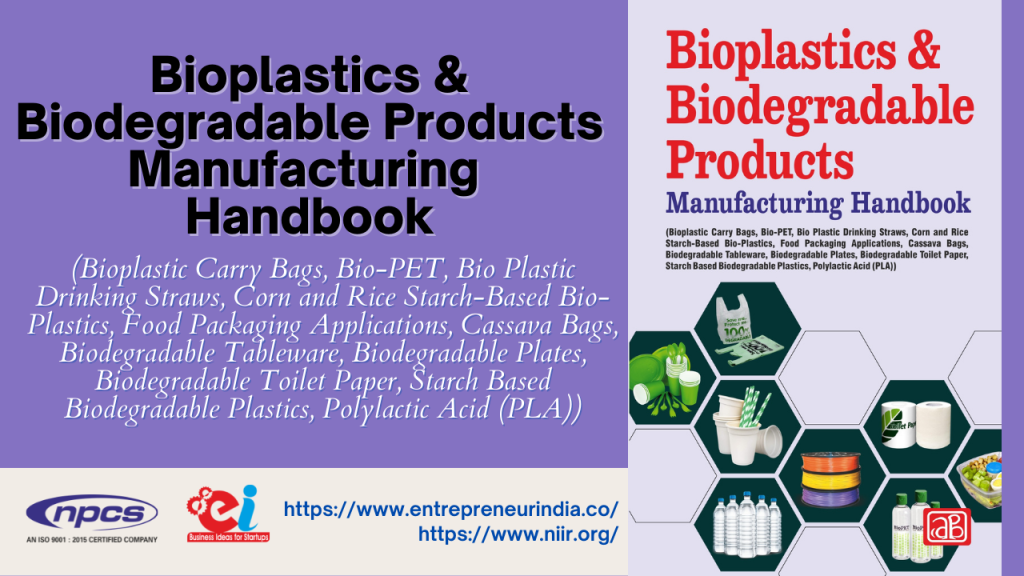
The Bioplastics & Biodegradable Products Manufacturing industry is emerging as a revolutionary sector in the global effort to combat plastic pollution. With governments, corporations, and consumers moving toward sustainable alternatives, bioplastics are gaining traction across packaging, agriculture, medical, and consumer goods industries. Bioplastics, derived from renewable sources like corn starch, sugarcane, or cellulose, offer eco-friendly properties such as biodegradability and compostability. For entrepreneurs and manufacturers, this is a high-potential, future-ready industry that aligns profitability with planet-positive impact. Investing in bioplastics and biodegradable manufacturing can future-proof your business while serving growing demand. Market Potential and Growth Drivers The global bioplastics and biodegradable market is projected to exceed $25 billion by 2027, growing at a rapid pace due to stringent environmental policies, rising awareness, and corporate sustainability goals. In India, the government has already banned single-use plastic items, encouraging manufacturers to switch to alternatives. This gives a massive boost to the Bioplastics & Biodegradable Products Manufacturing sector. Key industries fueling this demand include food packaging, agriculture films, disposable cutlery, bags, and medical disposables. With customers increasingly seeking green certifications and plastic alternatives, a manufacturing setup can cater to both B2B bulk buyers and eco-conscious retail markets. Startups in this field are also receiving funding support from sustainability-focused investors, further increasing its feasibility and growth prospects. Books Link: Bioplastics & Biodegradable Products Manufacturing Handbook (Bioplastic Carry Bags, Bio-PET, Bioplastic Drinking Straws, Corn and Rice Starch-Based Bioplastics, Food Packaging Applications, Cassava Bags, Biodegradable Tableware, Biodegradable Plates Raw Materials and Feedstock Sources Raw materials for Bioplastics & Biodegradable Products Manufacturing typically include renewable, plant-based resources such as corn starch, tapioca, sugarcane bagasse, and cellulose. Some specialty polymers like PLA (Polylactic Acid), PHB (Polyhydroxybutyrate), and PBS (Polybutylene Succinate) are also widely used. Depending on the end-use, other materials like starch blends or bio-PET may be added to enhance performance. India’s agricultural diversity provides easy access to feedstock like cassava, maize, and agricultural waste that can be processed to produce biodegradable polymers. Partnerships with sugar mills, starch industries, or agro-waste processing plants can help reduce input costs while ensuring sustainability. Waste valorization from food or crop industries also adds value to the supply chain and strengthens the green story of your business. Read Similar Articles: Biodegradable products Manufacturing Process and Machinery The Bioplastics & Biodegradable Products Manufacturing process involves polymer extraction or compounding followed by product molding or extrusion. The exact process depends on the desired output—bags, cutlery, films, containers, or packaging sheets. The basic steps include: Polymer mixing and plasticization Extrusion or injection molding Product shaping and finishing Cooling, trimming, and packing Machinery requirements include extruders, injection molding machines, thermoforming units, pelletizers, and film blowers. Fully automatic systems are available for high-speed production. Temperature and moisture control are critical during processing, as biodegradable materials often have different thermal behaviors than petroleum-based plastics. A typical medium-sized plant requires 5,000–10,000 sq. ft. of production space. Start a Business in Biodegradable Products Industry, Click Here Investment and Profit Margins Setting up a Bioplastics & Biodegradable Products Manufacturing unit involves a moderate to high investment depending on scale, automation, and product diversity. A small-scale setup with film extrusion and bag making capabilities may start from ?35–50 lakh, whereas a mid-sized multiproduct unit may need ?1.5–2.5 crore. Breakdown of costs includes: Machinery and equipment: 40–50% Infrastructure and utilities: 20% Raw materials and packaging: 20% Certifications and legal compliance: 5–10% The selling price of bioplastic products is usually 2–3x that of conventional plastic due to material and processing cost, but customers pay the premium for environmental benefits. Gross margins can be as high as 30% in retail products and 15–20% in bulk B2B orders. Long-term contracts with FMCG brands, exporters, and packaging companies ensure consistent returns. Related Feasibility Study Reports: Biodegradable Products, Recyclable, Disposable, Eco-Friendly Plastics, Bioplastics, Compostable, Biodegradable Packaging for Food Products, Bio-based Polymers, Oxo-biodegradable Plastics, Bio-nanocomposites using Maize, Corn, Sugarcane Bagasse Licensing and Regulatory Compliance Operating a Bioplastics & Biodegradable Products Manufacturing unit in India requires you to meet specific legal and environmental guidelines. These include: Udyam MSME registration GST registration Pollution Control Board clearance BIS certification for biodegradable bags CPCB (Central Pollution Control Board) approvals ISO 14001 (Environmental Management) and ISO 9001 (Quality) for larger plants For compostable products, your material needs to pass IS/ISO 17088 testing and obtain CPCB approval to be recognized as “certified biodegradable.” Exporters also require FDA or EU Food Contact certifications depending on destination markets. Transparent labeling, quality consistency, and documentation are key to building trust with regulatory bodies and end-users. Related Books: Environmentally Friendly, Eco-Friendly Products, Natural Products, Biodegradable Plastics, Natural Dyes and Pigments, Jute Products, Natural Fibers Marketing and Sales Strategy The demand for Bioplastics & Biodegradable Products Manufacturing output spans multiple industries. Your sales strategy should target: Food & beverage brands E-commerce and retail packaging suppliers Supermarkets and organic stores Pharma and medical equipment makers Agro film users (mulching films, plant pots) Sales channels include distributor networks, online platforms (B2B and B2C), trade shows, and CSR-aligned partnerships. Storytelling is important—highlighting eco-benefits, carbon savings, and certifications in your brand positioning enhances appeal. Offering private labeling or custom molds for business buyers also increases value and loyalty. Sustainability and Long-Term Impact The biggest advantage of Bioplastics & Biodegradable Products Manufacturing lies in its contribution to sustainability. It reduces dependency on fossil fuels, minimizes landfill load, and aligns with global climate targets. These products decompose in natural conditions, leaving no toxic residue, making them safe for soil, water, and wildlife. This business contributes to a circular economy by turning biomass or waste into valuable, non-polluting products. It empowers industries to meet their EPR (Extended Producer Responsibility) obligations and gain carbon credits. For businesses, it’s not just profit—it’s purpose-driven innovation. Future Scope and Expansion As the world transitions away from petroleum-based plastics, the Bioplastics & Biodegradable Products Manufacturing sector is poised for explosive growth. The future includes: Edible or water-soluble films Biodegradable PPE and medical disposables Compostable courier packaging for e-commerce Bioplastic 3D printing filaments Integration with AI-based waste sorting systems The technology and
A Complete Business Plan to Start a Profitable Business of Zinc Oxide from Zinc Dross

The business of Zinc Oxide from Zinc Dross is a profitable and sustainable opportunity in the field of metal recycling and chemical manufacturing. Zinc dross is a byproduct of the hot-dip galvanizing process, containing a significant amount of usable zinc. Through proper extraction and processing, this dross can be converted into high-purity zinc oxide—a valuable industrial compound used in rubber, ceramics, paints, fertilizers, cosmetics, and pharmaceuticals. With increasing demand for zinc oxide and rising interest in circular economy models, this business offers both environmental and commercial benefits to forward-thinking entrepreneurs. Understanding the Market Demand Zinc oxide is a versatile compound with high global demand due to its diverse industrial applications. It is used as a vulcanizing agent in the rubber industry, an additive in fertilizers, an opacifier in ceramics, and a whitening agent in paints and cosmetics. The Indian market alone imports a significant amount of zinc oxide each year, creating a clear opportunity for localized production through sustainable sources. Establishing a business of Zinc Oxide from Zinc Dross allows companies to capitalize on the ready availability of zinc dross from galvanizing plants while minimizing raw material costs. Moreover, this recycling process aligns well with environmental norms and waste management rules. Industries and government agencies are actively supporting ventures that turn industrial waste into usable products, further encouraging growth in this domain. Visit this Page for More Information: Start a Business in Chemical Industry Projects Raw Material: Zinc Dross and Its Source Zinc dross is the residue formed during hot-dip galvanization, which includes unutilized metallic zinc, iron particles, and impurities. Typically, it contains 80–95% metallic zinc, making it an ideal raw material for zinc oxide production. Galvanizing units, steel fabrication plants, and alloy manufacturers generate zinc dross in substantial quantities, offering a consistent and low-cost supply channel for manufacturers. In the business of Zinc Oxide from Zinc Dross, acquiring quality dross is the first step. The location of the plant should ideally be near galvanizing clusters or industrial hubs where zinc waste is regularly generated. This ensures reliable procurement, lower logistics costs, and improved overall margins. Read Similar Articles: Inorganic and organic Manufacturing Process and Equipment The process of extracting Zinc Oxide from Zinc Dross involves thermal treatment and oxidation in a controlled furnace environment. Here’s how the general workflow unfolds: Pre-cleaning and drying of dross: Removing excess oil, dust, and moisture for consistency Melting and vaporization: Heating dross in a specially designed furnace at 900–1100°C Oxidation in air: Zinc vapor reacts with oxygen to form zinc oxide Collection and cooling: The fine zinc oxide particles are collected in a bag filter system or chamber Sieving and packaging: The final product is refined, sieved, and packed for sale Key equipment includes rotary furnaces, bag filters, dust collectors, heat exchangers, pollution control units, and packaging systems. Modern zinc oxide units often incorporate energy recovery and emission control systems to enhance environmental compliance. Watch other Informative Videos: Chemicals (Organic, Inorganic, Industrial) Capital Investment and Costing To start the business of Zinc Oxide from Zinc Dross, an estimated capital investment of ?50 lakh to ?2 crore may be required depending on plant capacity, technology level, and location. The cost breakdown includes: Furnace and processing equipment: 40% Pollution control and filter systems: 20% Infrastructure, labor, and utilities: 20% Licensing and compliance: 5–10% Working capital for raw material and packaging: 10–15% Zinc dross costs around ?150–200 per kg depending on purity and source, while high-grade zinc oxide can fetch ?250–?300 per kg in the Indian market. With good process control and raw material procurement, the profit margin can range between 20% and 30%. The ROI is usually achievable within 1.5 to 2 years of operation. Read our Books Here: Chemical Technology (Organic, Inorganic, Industrial), Fine Chemicals Legal Permissions and Regulatory Compliance For setting up a business of Zinc Oxide from Zinc Dross, certain approvals and licenses are necessary: MSME/Udyam registration GST registration Factory license and safety clearance Environmental NOC from the Pollution Control Board Consent to establish and operate (CTE/CTO) Hazardous waste authorization (as zinc dross is an industrial waste) BIS certification (optional but helpful for certain buyers) Complying with environmental standards such as emission norms, air filtration, and proper waste disposal is critical for plant operations. Non-compliance may lead to penalties or operational shutdown, so investing in pollution control equipment and certified handling practices is essential.Read our Book Here: The Complete Technology Book on Chemical Industries Target Customers and Sales Channels The end market for zinc oxide includes rubber and tyre manufacturers, paint companies, fertilizer producers, ceramic tile makers, plastic compounders, cosmetic brands, and even pharmaceutical companies. Each of these sectors requires specific zinc oxide grades—active, white seal, or pharma-grade—depending on application. Your marketing strategy in the business of Zinc Oxide from Zinc Dross should focus on: Building B2B supply chains with direct manufacturers Supplying to government fertilizer tenders (if compliant with agro standards) Bulk supply to tyre and rubber processing units Listing products on industrial B2B marketplaces Participating in metal recycling and chemicals trade expos Packaging, branding, and consistent quality testing play a significant role in customer retention and scaling. Environmental and Economic Benefits Apart from being financially rewarding, the business of Zinc Oxide from Zinc Dross promotes circular manufacturing, reducing environmental damage caused by discarded metal waste. It minimizes the need for virgin zinc mining, which is energy-intensive and ecologically damaging. By converting industrial dross into a usable input, this business helps galvanizing units dispose of waste responsibly while contributing to zero-waste manufacturing goals. The by-products generated during the zinc oxide process (like slag or ash) can sometimes be sold to cement or construction companies, further improving overall material efficiency. Future Potential and Expansion As industrial activities grow and galvanization expands, the availability of zinc dross will increase—fueling the long-term potential of this business. With technological upgrades like automated furnaces, better filtration systems, and AI-based quality checks, producers can increase output while maintaining consistent quality. There is also export potential to countries with heavy rubber, paint, and glass manufacturing bases. Additionally,
February 2022 Entrepreneur India Monthly Magazine
The February 2022 Entrepreneur India Monthly Magazine issue is a celebration of leadership, innovation, and community-building. Featuring viral-star-turned-activist Prajakta Koli on its digital cover magzter.com+6instagram.com+6niir.org+6, the issue explores the journeys of India’s next-gen entrepreneurs, the booming startup ecosystem, and evolving business strategies. It showcases high-growth trends—like wellness, digital communities, and sustainable impact—while diving deep into the 35under35 special edition that highlights rising trailblazers across sectors magzter.com. Through inspiring stories and practical advice, the February 2022 Entrepreneur India Monthly Magazine delivers both motivation and insight for ambitious professionals and founders. Spotlight on Rising Talent & Business Trends This February 2022 Entrepreneur India Monthly Magazine dedicates a major section to its “35under35” special—profiling inspiring young leaders who are shaping India’s business future. These changemakers reflect a new era of self-reliant, impact-focused entrepreneurship, leveraging digital platforms, social missions, and consumer engagement strategies . Beyond individual stories, the magazine examines macro trends: the meteoric rise of India’s unicorn count, new-age marketing via digital creators like Prajakta Koli, and the growing synergy between purpose and profit. With in?depth features on scalable startups and strategic playbooks, the issue serves as a guidepost for aspiring entrepreneurs navigating today’s dynamic business landscape. Featured Content & Business Insights Strategic profiles of 35under35 achievers—detailing how youthful leadership is redefining industries. Business lessons from social media influencers turned social-issue advocates, exemplified by cover star Prajakta. Articles showing how digital marketing, personal branding, and community-building are central to business success. Practical guidance on scaling startups, strengthening brand reach, and adapting to the digital-first economy. A mix of formats—from interviews and case studies to trend analyses and toolkits for founders. A look at evolving investment themes and the digital pivot in traditional industries. Why February 2022 Is Essential Reading This February 2022 Entrepreneur India Monthly Magazine issue is a playbook for modern entrepreneurship—offering both inspiration and tools. For professionals and startups, it provides clarity on leveraging digital identity, funding momentum, and youth-driven innovation. For investors and mentors, it highlights where next-gen talent is channeling their energy, and what opportunities lie ahead in sectors like digital media, sustainability, and tech-enabled services. Whether you’re a business aspirant or a seasoned executive, this issue offers a valuable roadmap for thriving in India’s new-age business ecosystem. February Magazine Link: February 2022 Entrepreneur India Monthly Magazine Projects Covered in this Issue: IV Fluids (BFS Technology) Maize Processing Plant with Cogeneration Plant Active Pharma Ingredients (Metformin and Ciprofloxacin) Plastic Optical Lenses Recycling of Lithium Ion Battery Bamboo Fiber & Yarn Manufacturing Printed Circuit Board (PCBs) AAC Blocks from Silica Sand & Lime Stone Powder Glass Vials for Medicine (for Cosmetic & Other Injectable) Micronutrient Fortified Energy Dense Food Ethanol from Broken Rice Abrasive Grinding Wheels Cocoa Processing Unit Cocoa Butter, Cocoa Couverture and Cocoa Powder (Further Processed Products: Spreads and Chocolate Syrups) NIIR PROJECT CONSULTANCY SERVICES, DELHI An ISO 9001:2015 Company ENTREPRENEUR INDIA 106-E, Kamla Nagar, Opp. Mall ST, New Delhi-110007, India. Email: npcs.ei@gmail.com info@entrepreneurindia.co Tel: +91-11-23843955, 23845654, 23845886 Mobile: +91-9097075054, 8800733955 Website: https://www.entrepreneurindia.co https://www.niir.org Contact Us
January 2022 Entrepreneur India Monthly Magazine
The January 2022 Entrepreneur India Monthly Magazine issue kicks off the year with a sharp focus on emerging industries and practical business ventures. This edition from NPCS?published Entrepreneur India offers an in?depth look at high-growth opportunities like bio?organic fertilizer production, sterile water for injection, e?waste recycling, lithium?ion batteries, and more instagram.com+8entrepreneurindia.co+8facebook.com+8entrepreneur.com+6en.wikipedia.org+6niir.org+6. With curated project profiles, startup insights, and financial benchmarks, the January 2022 Entrepreneur India Monthly Magazine serves as both a strategic guide and investment roadmap for aspiring entrepreneurs and SME decision makers. Top Project Ventures & Investment Highlights The January 2022 Entrepreneur India Monthly Magazine delivers a treasure trove of curated business plans with technical and financial analysis. You’ll find turnkey project reports on ventures like bio-organic fertilizer from tea waste, sterile water for injection, epoxy resin, highway guard crash barriers, lithium-ion batteries, zinc oxide from zinc dross, solar panels, and more entrepreneurindia.coentrepreneurindia.co+1entrepreneurindia.co+1. Each profile includes capacity details, plant layouts, project cost breakdowns, ROI estimates, and break-even points—making the January 2022 Entrepreneur India Monthly Magazine a must-read toolkit for anyone planning a production-centric startup or SME expansion. Why This Issue Is Essential Reading This January 2022 Entrepreneur India Monthly Magazine stands out by combining technical depth with actionable business insights. Unlike casual industry magazines, it delves into economic viability, technical sourcing, and feasibility forecasting for each project venture. For entrepreneurs, this issue provides clarity on emerging opportunities—from micronutrient?fortified foods to concrete sleepers and aluminium cans—and equips readers with ready-to-implement templates. If you’re evaluating a greenfield project or considering diversification in 2022, this issue is a high-value reference to align strategy with execution. For More Details Read our Magazine: https://www.niir.org/entrepreneur/January%202022%20Entrepreneur%20India%20Monthly%20Magazine.pdf Projects Covered in this Issue: Medical College with Hospital Sodium Hydrosulphite Granulated Fertilizers Lithium Ion Battery (LiFePO4) E-Waste Recycling Plant Epoxy Resin (Liquid) Highway Guard Crash Barrier, Traffic barriers, Highway Safety Guardrail (Roll Forming with Metal Beam and Galvanizing Plant) Calcium Sennoside from Senna Leaves Activated Alumina (Spherical Balls) Solar Panel (both type of the PV Cells: Polycrystalline and Monocrystalline) Zinc Oxide from Zinc Dross (White Seal) Bio-Organic Fertiliser from Tea Waste Aluminium Cans for Beverages Prestressed Concrete Sleepers Steel Containers (Cargo Containers) Micronutrient Fortified Energy Dense Food Camphor Powder (Technical Grade) Sterile Water for Injection Polyester Texturised Yarn from Used Pet Bottle NIIR PROJECT CONSULTANCY SERVICES ENTREPRENEUR INDIA 106-E, Kamla Nagar, Opp. Mall ST, New Delhi-110007, India. Email: npcs.ei@gmail.com info@entrepreneurindia.co Tel: +91-11-23843955, 23845654, 23845886 Mobile: +91-9097075054, 8800733955 Website: https://www.entrepreneurindia.co https://www.niir.org Contact Us
The Complete Technology Book on Pesticides, Insecticides, Fungicides and Herbicides
The Book on Pesticides, Insecticides, Fungicides and Herbicides is a comprehensive guide for individuals, professionals, and entrepreneurs interested in the agrochemical industry. With the growing demand for agricultural productivity and crop protection, this sector has become vital to global food security. This book provides in-depth insights into chemical classifications, formulations, application methods, manufacturing processes, safety standards, and regulatory requirements. Whether you’re a startup investor, agribusiness developer, or academic researcher, the Book on Pesticides, Insecticides, Fungicides and Herbicides offers essential knowledge to navigate and thrive in this complex yet rewarding domain. Scope and Relevance of Agrochemicals in Modern Farming The global agricultural industry relies heavily on pesticides and related agrochemicals to enhance crop yields and reduce losses caused by pests, diseases, and weeds. In this context, the Book on Pesticides, Insecticides, Fungicides and Herbicides provides a clear and comprehensive explanation of how each category contributes uniquely to crop protection—pesticides serving as the umbrella term, insecticides specifically targeting insect pests, fungicides combating fungal infections, and herbicides effectively managing unwanted weeds. Given the backdrop of rising food demand and increasingly limited cultivable land, the importance of precision agriculture and chemical crop protection has grown significantly. Accordingly, the book showcases a wide spectrum of solutions—ranging from time-tested chemical agents to modern, science-driven formulations—that align with sustainable farming practices and integrated pest management (IPM) systems. In addition, it explores the expanding role of biopesticides and eco-friendly alternatives, thereby making the content especially valuable not only to conventional chemical manufacturers but also to green entrepreneurs and sustainability-focused stakeholders. Crucially, the book addresses both the challenges and the emerging opportunities in transitioning toward safer, biodegradable, and residue-free agro-inputs. Altogether, this volume equips readers with the knowledge required to navigate the evolving landscape of crop protection—where innovation, safety, and sustainability must converge. Book Link: The Complete Technology Book on Pesticides, Insecticides, Fungicides and Herbicides (Agrochemicals) with Formulae, Manufacturing Process, Machinery & Equipment Details 2nd Revised Edition Manufacturing Processes and Formulation Techniques A major highlight of the Book on Pesticides, Insecticides, Fungicides and Herbicides is its comprehensive and practical explanation of the manufacturing techniques involved in producing agrochemical compounds. To begin with, it thoroughly describes the synthesis of active ingredients, selection of appropriate carriers, and classification of formulation types such as wettable powders, emulsifiable concentrates, granules, suspension concentrates, and encapsulation technology. This foundational knowledge is essential for ensuring product stability, ease of application, and target-specific efficacy in field conditions. Moreover, the book elaborates on the essential industrial machinery required for each stage of the production process—including reactors, mixers, distillation columns, filtration units, drying chambers, packaging lines, and effluent treatment systems. By doing so, it provides a clear blueprint for equipment planning and integration in production facilities. Entrepreneurs exploring agrochemical manufacturing will especially appreciate the step-by-step technical guidance, plant layout recommendations, and scale-up strategies that support the launch of medium- to large-scale operations. In addition to conventional practices, the book also delves into cutting-edge innovations such as nano-formulations, controlled release technologies, and drone-assisted spray delivery systems. These forward-looking sections ensure the content remains highly relevant for stakeholders involved in both traditional and emerging agritech ecosystems. Altogether, this book serves not only as a technical manual but also as a strategic resource for building a competitive and future-ready agrochemical enterprise. Start a Business in Agrochemicals Industry, Click Here Regulatory and Licensing Landscape The Book on Pesticides, Insecticides, Fungicides and Herbicides thoroughly outlines the regulatory framework surrounding agrochemicals in India and globally. It emphasizes the importance of registration under the Insecticides Act, 1968, mandatory quality certifications, packaging and labeling guidelines, and environmental safety protocols. Before any pesticide or insecticide is manufactured or sold, it must be registered with the Central Insecticides Board & Registration Committee (CIBRC). The book provides a complete checklist of documentation needed, including toxicology reports, field trial data, manufacturing license applications, and BIS standards for product testing. For businesses looking to export, it explains the harmonization of Indian regulations with FAO guidelines, REACH (Europe), and EPA (USA) norms. Entrepreneurs will appreciate the book’s focus on compliance, as failure to meet these standards can result in heavy penalties or business closure. Market Trends and Business Potential The Book on Pesticides, Insecticides, Fungicides and Herbicides includes valuable market research and demand analysis. It shows how Asia-Pacific, particularly India and China, is becoming a global hub for pesticide production due to availability of raw materials, skilled workforce, and lower manufacturing costs. The book details the most in-demand products by crop type—rice, wheat, cotton, vegetables—and seasonal usage patterns. It highlights the rising consumption of fungicides in horticulture, selective herbicides in no-till farming, and insecticide rotation practices to avoid pest resistance. With the Indian agrochemical industry projected to reach ?80,000+ crore by 2030, this book positions entrepreneurs to tap into growing domestic and export opportunities. It also features a section on business planning—cost estimation, break-even analysis, distribution strategies, and ROI benchmarks for small-to-medium pesticide ventures. Read our Books Here: Agrochemicals, Pesticides, Insecticides, Fungicides, Herbicides, Biofertilizer, Vermicompost Manufacturing Safety Measures and Environmental Impact One of the most critical chapters in the Book on Pesticides, Insecticides, Fungicides and Herbicides is focused on safety, both in production and application. It outlines safe handling practices, personal protective equipment (PPE), storage requirements, transportation norms, and proper waste disposal. The book stresses the environmental impact of pesticide misuse—such as soil degradation, water contamination, and harm to non-target species—and offers solutions like buffer zones, drift reduction methods, and education campaigns for farmers. For modern readers, there is also an exploration of organic substitutes, biopesticides, neem-based formulations, and microbial fungicides that minimize ecological damage. This approach makes the book not just a technical manual but a responsible guide that balances industrial ambition with environmental stewardship. Read Similar Articles: Agrochemicals Who Should Read This Book? The Book on Pesticides, Insecticides, Fungicides and Herbicides is ideal for a wide range of readers. These include: Aspiring entrepreneurs planning a pesticide or herbicide manufacturing unit Agrochemical traders, importers/exporters, and formulators Agricultural extension officers and agribusiness consultants Environmental health and safety (EHS) professionals R&D scientists
start your own Business of Wax Polish Manufacturing
The Business of Wax Polish Manufacturing is a low-investment, high-demand industry with wide applications in domestic, industrial, and automotive segments. Wax polishes are essential for providing shine, protection, and longevity to surfaces like wood, metal, marble, leather, and vehicle exteriors. Whether for household furniture, shoe care, or car detailing, wax polish is a staple product used globally. With evolving consumer preferences for eco-friendly, easy-to-apply products, starting a wax polish manufacturing unit offers a profitable opportunity for entrepreneurs aiming to enter the fast-moving consumer goods (FMCG) or industrial supplies market. Understanding the Market Scope The demand for wax polish products spans across industries—automobile care, construction, leather goods, and household care. India’s growing middle class and urban lifestyle have increased the use of cars, premium wooden furniture, and leather accessories, thereby driving the need for quality surface polish products. This makes the Business of Wax Polish Manufacturing a consistent revenue-generating opportunity. In addition, the hospitality and real estate sectors often require bulk supplies of floor and surface polishers, further widening the market. Export potential is also strong, with demand from Southeast Asia, Africa, and the Middle East for affordable, versatile polishing products. Offering both retail-ready SKUs and bulk formulations can help manufacturers target multiple customer segments. Types of Wax Polish Products Wax polish comes in a variety of formulations based on application and finish. The most common types include furniture polish, floor polish, car wax, leather polish, and shoe polish. Each formulation may be solvent-based, water-based, or emulsion-type, depending on customer requirements. The Business of Wax Polish Manufacturing allows flexibility in product lines—from basic solid wax bars to aerosol sprays and liquid emulsions. With a little R&D, manufacturers can develop polish blends that include natural ingredients like carnauba wax, beeswax, and mineral oils for a smoother, shinier, and more environmentally friendly finish. These options not only serve mainstream demand but also cater to the growing eco-conscious consumer base. Manufacturing Process and Raw Materials The manufacturing process for wax polish is relatively simple and does not require highly complex machinery. It involves melting waxes, blending them with oils and solvents, followed by cooling, mixing, and packaging. The key raw materials include: Paraffin wax Beeswax or carnauba wax Turpentine oil Mineral oil or linseed oil Emulsifying agents and stabilizers Fragrance and coloring agents (optional) For the Business of Wax Polish Manufacturing, machinery needs may include melting kettles, mixing tanks, filling machines, weighing scales, and packaging units. The setup can be scaled from a small unit producing 500 kg/day to a larger operation handling several tons daily. Manufacturing is usually done in batches and the production cycle is fast, meaning more units can be produced in less time, improving turnaround and profitability. Proper ventilation and fire safety are important due to the flammable nature of some ingredients. Investment and Cost Structure Setting up a small-scale Business of Wax Polish Manufacturing unit can start from ?10–15 lakhs, covering machinery, basic infrastructure, raw materials, and initial labor costs. For a mid-size setup, the cost may go up to ?30–40 lakhs with semi-automatic operations. Here’s a simplified cost breakdown: Machinery & equipment: 30% Raw materials (for first 3 months): 25% Labor and operations: 15% Utilities and rent: 10% Packaging and branding: 10% Licensing and working capital: 10% Profit margins range between 20% to 35% depending on the type of product, packaging quality, and distribution efficiency. Products like car polish and specialty furniture waxes often yield higher margins due to their premium pricing. Legal Requirements and Certifications The Business of Wax Polish Manufacturing must comply with standard manufacturing and safety guidelines. Key registrations and licenses include: Udyam (MSME) registration GST registration Factory license (if applicable) Fire and safety compliance Pollution Control Board NOC (if solvents are used) Trade license from local municipal authority BIS certification for certain product types (optional but beneficial) Since some wax polish variants use flammable solvents or petroleum derivatives, adherence to safety norms during storage and manufacturing is critical. For export, certifications like ISO 9001 and product labeling compliance with international standards are helpful. Marketing and Sales Strategy A well-thought-out marketing plan is crucial to succeed in the Business of Wax Polish Manufacturing. Manufacturers can tap into different markets such as: Automotive showrooms and detailing centers Furniture and interior design outlets Hardware and general retail stores Online marketplaces like Amazon and Flipkart Institutional buyers like hotels, cleaning services, and malls Brand positioning should focus on product benefits like long-lasting shine, easy application, eco-friendliness, or suitability for luxury items. Attractive packaging in tins, jars, or squeeze bottles, along with demo videos or user guides, can enhance marketability. Retail success often depends on creating product lines (e.g., basic vs. premium), while B2B contracts require consistency, timely delivery, and cost efficiency. Sampling and demo kits are effective in winning initial clients and building brand awareness. Environmental and Quality Considerations With increasing regulations on chemical safety and eco-conscious products, many customers now prefer non-toxic and biodegradable alternatives. In the Business of Wax Polish Manufacturing, incorporating natural waxes like carnauba or beeswax can serve both quality and sustainability goals. Quality control is key—ensuring uniform texture, fragrance, melting point, and application performance. Consistent batch testing and feedback mechanisms help maintain product integrity. Reducing the use of harsh solvents and switching to water-based emulsions can also improve workplace safety and product appeal. Environmentally friendly production methods, recyclable packaging, and responsible sourcing of materials not only build a brand’s credibility but also help in tapping into premium markets and export opportunities. Expansion and Diversification Opportunities Once the core product line is established, businesses can expand into related categories such as: Spray waxes and polish wipes Dashboard and leather care products Industrial-grade floor polish Wood treatment oils Natural polish lines (organic, plant-based) The Business of Wax Polish Manufacturing also presents white-labeling opportunities. Many retail brands and cleaning service providers prefer outsourcing manufacturing to third-party units while branding it under their own label. This opens the door to B2B collaborations and scalable contracts. With the rise in DIY cleaning and car detailing culture,