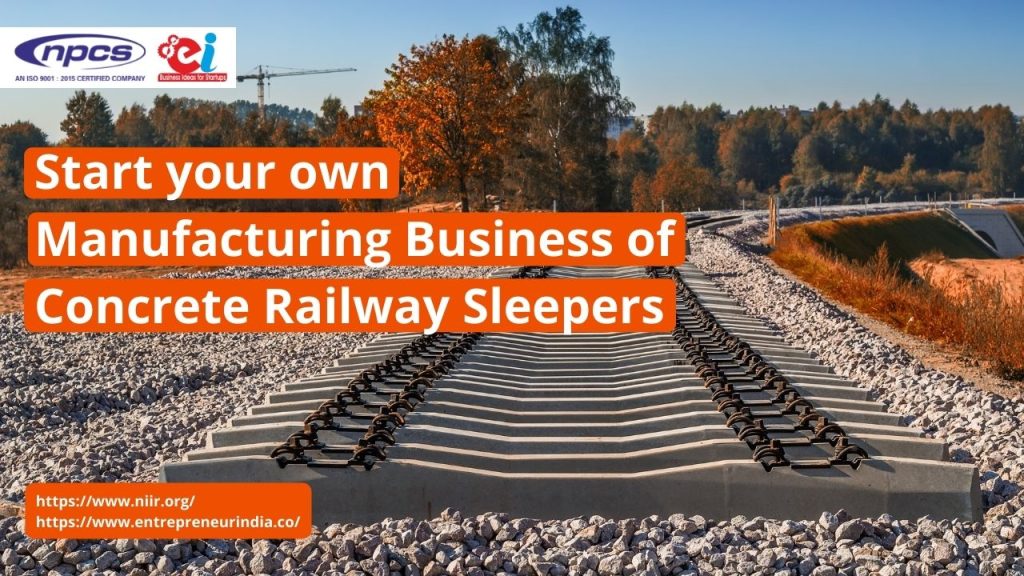

The business of concrete railway sleepers is a lucrative industrial venture aligned with infrastructure development and transportation modernization. Concrete sleepers have replaced traditional wooden and steel sleepers in rail networks around the world due to their superior durability, strength, and cost-effectiveness. With growing investments in railway expansion, high-speed rail projects, and metro rail connectivity, the demand for precast concrete sleepers is rising steadily. For entrepreneurs and construction-focused enterprises, setting up a manufacturing unit for concrete railway sleepers offers long-term profitability and steady market demand backed by government tenders and private contracts.
Growing Demand in Railway Infrastructure
India, like many developing and developed nations, is investing heavily in modernizing its railway infrastructure. The Indian Railways, one of the largest railway networks globally, has adopted concrete sleepers as the standard for all future track laying. The business of concrete railway sleepers is expected to grow with the doubling and electrification of railway lines, construction of freight corridors, and introduction of bullet trains. Globally, countries in Africa, Southeast Asia, and Eastern Europe are following similar paths, making this business not only domestically viable but also suitable for exports.
Concrete railway sleepers provide better stability, resistance to weathering, and minimal maintenance compared to traditional alternatives. Their uniform design and compatibility with mechanized track laying systems make them the preferred choice for modern railway networks. As governments aim to improve safety, increase train speeds, and reduce lifecycle costs, concrete sleeper usage is becoming mandatory in all new projects. Businesses that enter the industry now can tap into multiple segments—from government railways to metro lines and private logistic corridors.
Business Plan: Concrete Railway Sleepers Manufacturing Plant
Manufacturing Process and Required Setup
Setting up a unit for the business of concrete railway sleepers requires a precise understanding of the manufacturing process and adherence to technical specifications. The production process includes several stages such as mold preparation, concrete mixing, pre-stressing wire placement, casting, curing, and quality testing.
Sleepers are produced using high-grade cement, aggregates, water, and pre-stressed steel wires or tendons. These materials are placed into heavy-duty steel molds aligned with the rail fastening systems. After vibration and compaction, the sleepers are left to cure under controlled conditions. Post-curing, they are demolded and stored for 28 days before being tested for load-bearing capacity, dimensions, and resistance to stress.
A typical factory setup includes batching plants, pre-stressing equipment, hydraulic jacks, mold assemblies, curing chambers, and handling cranes. The production facility should have an open yard for curing and storing sleepers, along with an in-house testing laboratory. Automation can be introduced gradually to increase output and improve consistency.
Visit this Page for More Information: Start a Business in Cement and Cement Based Products Industry
Investment and Cost Structure
Starting the business of concrete railway sleepers requires a moderate to high capital investment depending on the production capacity. For a plant with a capacity of 200–300 sleepers per day, the estimated investment would be ?4–7 crore. Key cost components include:
Machinery and molds: 40%
Civil infrastructure and layout: 20%
Pre-stressing steel and raw materials: 25%
Utilities, labor, and transport: 10%
Quality testing and certification: 5%
Production cost per sleeper typically ranges from ?1,200 to ?2,500 depending on size and material grade. The selling price can vary from ?2,000 to ?4,000 per unit, depending on contract volume, location, and technical specifications. Profit margins are attractive, especially in long-term contracts and bulk supplies.
Additionally, tie-ups with Indian Railways or urban metro authorities offer bulk demand, predictable revenue, and assured payments. Enterprises entering this field with government registration can bid for EPC tenders, public-private partnerships, or subcontracted manufacturing work.
Related Feasibility Study Reports: Concrete, Cement and Cement based Products
Licensing, Standards, and Approvals
To establish a compliant and reputable unit in the business of concrete railway sleepers, the manufacturer must obtain several industry certifications and approvals. These include:
Factory License and Pollution Control Board clearance
Udyam MSME registration (optional but useful)
ISO 9001 certification for quality management
RDSO (Research Designs & Standards Organisation) approval for Indian Railways
Load testing and technical validation from a certified lab
GST registration and PAN
In India, RDSO approval is critical, as it certifies that your sleeper design and material meet railway standards. Without RDSO accreditation, businesses cannot supply to railway zones, metro authorities, or public sector undertakings. Complying with IS: 458 and IRS-T-39 standards for concrete sleeper dimensions and tolerances is also mandatory for institutional clients.
Read Similar Articles: Construction & Building Materials Projects
Target Market and Sales Channels
The business of concrete railway sleepers targets a specialized but large customer base. Your primary clients will include:
Indian Railways and zonal divisions
Metro Rail Corporations (DMRC, CMRL, etc.)
Freight Corridor Corporations of India (DFCCIL)
Railway contractors and EPC players
Mining and port railway track developers
Private infrastructure companies with internal rail yards
Sales are typically finalized through long-term supply contracts, tenders, or subcontract manufacturing partnerships. Participation in rail infrastructure expos, engineering forums, and construction summits helps establish brand presence. Providing pre-approved designs, quality certifications, and after-sales technical support improves chances of repeat orders.
Some companies also diversify into export markets where emerging countries are investing in railway upgrades. African nations, Southeast Asia, and Latin America offer growing markets for standard and broad gauge concrete sleepers.
Advantages and Long-Term Benefits
Starting a business of concrete railway sleepers offers multiple strategic advantages. It is a capital-intensive but low-competition space where market demand is guaranteed for the foreseeable future due to massive infrastructure development. Unlike volatile industries, the sleeper business enjoys year-on-year procurement from railway departments and contractors.
Once certified, your plant becomes a key supplier for both national and regional projects. With each sleeper having a life span of over 30 years, your product becomes an integral part of critical infrastructure—adding credibility and trust to your brand. The relatively low operational cost after setup, availability of raw materials, and possibility of automation ensure high productivity and scalability.
Moreover, the demand for concrete sleepers will increase with the global focus on freight mobility, electrification, and high-speed rail deployment. By staying compliant, technologically updated, and well-networked in government infrastructure programs, this business can be scaled across regions with predictable returns.
Read our Books Here: Cement, Asbestos, Ceramics, Bricks, Limestone and Construction Materials Manufacturing Technology
Conclusion
The business of concrete railway sleepers is a practical and scalable industrial venture aligned with national infrastructure priorities. It serves a fundamental role in the safe, modern, and efficient movement of goods and passengers by rail. With government incentives, long-term tenders, and standardized requirements, a sleeper manufacturing unit promises high output, steady income, and a robust customer base.
For entrepreneurs looking to invest in a construction-related manufacturing unit with institutional buyers, minimal marketing dependency, and stable demand, this is a smart and future-ready business model. With the right technical expertise, regulatory approvals, and efficient plant layout, your unit can become a recognized name in railway modernization and public infrastructure development.
Watch other Informative Videos: Construction & Building Materials Projects
See More Links:
- Start a Business in Asia
- Start a Business in Potential Countries for Doing Business
- Best Industry for Doing Business
- Business Ideas with Low, Medium & High Investment
- Looking for Most Demandable Business Ideas for Startups
- Startup Consulting Services
- Start a Business in Africa
- Start a Business in India
- Start a Business in Middle East
- Related Videos
- Related Books
- Related Projects
NIIR PROJECT CONSULTANCY SERVICES
An ISO 9001:2015 Company
ENTREPRENEUR INDIA
106-E, Kamla Nagar, Opp. Mall ST,
New Delhi-110007, India.
Email: npcs.ei@gmail.com
Tel: +91-11-23843955, 23845654, 23845886
Mobile: +91-9097075054, 8800733955
Website: https://www.entrepreneurindia.co
https://www.niir.org