
Top 6 High Profit Manufacturing Business Ideas in India (2026)
High profit manufacturing business The manufacturing sector of India is currently experiencing strong growth because domestic demand is rising and international supply chains are changing and government support programs are being implemented. The Make in India initiative and the Ministry of MSME policies enable entrepreneurs to develop export-focused businesses that can grow beyond their initial capacities. For the aspiring entrepreneur and investor, this is a unique opportunity to enter industries where the demand already exists and is continually growing. The manufacturing industry contains multiple segments that generate high profits through their operational activities, which demonstrate sustainable growth potential in the market for many years. The article presents six manufacturing business concepts, which will exist in India during 2026, along with their advantages and difficulties and their future business prospects. 1. Silica from Rice Husk Ash: Converting Waste into Value Rice husk ash (RHA) serves as a by-product of rice milling operations which people usually consider to be waste material. However, it has a high percentage of silica which is extractable and can be processed into a valuable industrial material. Silica obtained from RHA finds a wide range of applications in industries such as rubber, paints, coatings, adhesives and cosmetics. With India being one of the largest producers of rice in the world, the availability of raw material is ample and cheaply available. Key Advantages Cheap and readily available raw material High demand of tyre and chemical industries Opportunity to substitute imported silica Challenges Requires controlled processing conditions Consistent quality is extremely important to industrial buyers Business Potential This is a classic example of a waste to wealth model. Entrepreneurs who establish dedicated quality control systems together with streamlined operational procedures will achieve superior profit margins while accessing global markets. Get Detailed Insights from This Book: Rice Husk & RHA Value-Added Products (3rd Edition) 2. Pea Protein Isolate: Taking Advantage of the Plant-Based Trend The worldwide movement to increase plant-based nutrition has opened up a booming industry for alternative protein sources. Pea protein isolate is becoming more popular because of its high protein content, ability to be allergen free and compatible with vegan diets. It is commonly used in protein powders, health supplements, plant-based meat alternatives, and functional foods. Why This Business Stands Out Rapidly increasing health and fitness market Strong export demand Premium pricing over traditional protein sources Challenges Major factors of success include: – Taste and solubility Requires advanced processing technology Market Outlook With the growing awareness in the fitness and sustainability spaces, pea protein is predicted to be a high-growth segment worldwide. Entrepreneurs who invest in product quality and branding can establish a good competitive advantage. Get Detailed Project Report (DPR): Setup Plant Of Pea Protein Isolate/Concentrate 3. Gau Mutra Ark: Traditional Product with a Modern Need Gau Mutra Ark is a distilled product of cow urine and is generally used in Ayurveda and organic farming. While it has classical roots, its business potential is growing thanks to the growing demand for natural and chemical-free products. It is used in herbal medicines, agricultural products and wellness products. Best Suited For Rural entrepreneurs Small-scale manufacturing units Regions having access of gaushalas Advantages Low investment requirement Simplest of manufacturing processes Increasing demand in organic agriculture Key Considerations Hygiene and quality standards are to be maintained Adherence to AYUSH regulations is critical Business Insight This segment is perfect for entrepreneurs who are seeking low investment, stable demand opportunities, especially in the rural areas. 4. Solar PV Module Manufacturing: The Future of Energy The Indian renewable energy industry experiences rapid expansion because solar energy serves as its primary development driver. Solar PV (photovoltaic) modules are important constituents used to produce electricity from sunlight. The combination of government incentives and high electricity prices and sustainability requirements has resulted in widespread adoption across residential and industrial and agricultural sectors. Growth Drivers “Policy support and subsidies” Increasing energy demand Corporate commitments on sustainability Advantages High scalability Strong long-term demand Export opportunities Challenges High initial investment Requires technical expertise and compliance Future Outlook The solar manufacturing sector represents one of the fastest expanding business areas in India. The sector provides opportunities for entrepreneurs who possess adequate capital and a vision to build substantial and profitable businesses. Related Article: How to Start a Solar Manufacturing Business in India: Profitable Segments & Insights 5. Steel Fabrication and Galvanizing: Supporting Infrastructure Expansion Steel fabrication serves as an essential component for building infrastructure through its use in creating structures like construction sites and industrial buildings and transmission towers and renewable energy facilities. The product gains additional worth through the combination of galvanizing, which applies a zinc protective coating, since this process increases product durability and protects against corrosion. Business Strengths Increasing demand for infrastructure projects, which are: Solar and industrial sectors – “Solar has more potential,” 656 withdrawal of plants Opportunities in solar and industrial sectors Better margins with integrated operations Why It Works The infrastructure push in India through its development of roads and railways plus energy systems and urban areas will create continuous need for fabricated steel products. Pro Tip Entrepreneurs that merge fabrication and galvanizing processes can simultaneously increase efficiency and profitability in a big way. 6. Magnesium Sulphate Heptahydrate: A Stable Chemical Business Magnesium sulphate or Epsom salt is a widely used micronutrient in agriculture. The compound has additional applications in the pharmaceutical industry and the textile sector and the production of personal care items. Key Benefits Stable and constant demand Simple manufacturing process Wide range of applications Market Demand Magnesium sulphate functions as an agricultural resource that improves soil fertility and enables constant crop production throughout all seasonal periods. Business Insight Although margins can be moderate, this business is one of the most reliable and long-term, making it perfect for risk-averse business entrepreneurs. Choose the right startup backed by real market demand How to Select the Right Manufacturing Business Choosing the right manufacturing venture relies on a variety of factors. The entrepreneurs should analyse the market as well as their capacity before taking a
Profitable Manufacturing Ideas in India: Packaging, Auto Parts, and Rice Husk Ash
Profitable Manufacturing Business Ideas The manufacturing scene in India is undergoing a rapid set of changes, and the lucrative opportunities are becoming available for entrepreneurs, MSMEs and first-generation industrialists. The metal packaging industry for plant-based beverages and three-wheeler auto body parts and rice husk ash production have developed into profitable business sectors which exist outside traditional industrial operations. The industries provide products which maintain constant demand patterns together with investment requirements which business owners can manage and the potential for expansion which exists in both domestic markets and international markets. For anyone looking into manufacturing businesses in India these three opportunities provide solid paths for success. Get Detailed Project Report (DPR): White Cement Paper Bag Manufacturing Plant Tin Cans Almond Drink Packaging The plant-based beverage market in India has been growing at a steady pace. Increasing consumer interest in vegan diets and lactose-free alternatives as well as health-conscious options have fueled the demand for almond drink. To maintain the quality of the product and its shelf life, tin cans are the ideal packaging solution. Tin cans protect contents from light and oxygen while extending product shelf life and enabling recyclability. While they are used to serve mainly almond drinks, they are also extensively used for cold coffee, protein shakes, energy drinks, and functional beverages. Beverage companies use tin-plated steel cans or aluminum cans for their consistency in quality and branding. Why invest in the tin can industry? High demand by plant-based beverage brands Long term supply contracts and recurring orders Potential for Export to International Beverage Markets The manufacturing process involves multiple stages which begin with sheet preparation and proceed to cup formation and continue through shaping and coating and printing and sealing. Modern Plants incorporate automated two-piece or three piece can production technologies. Key materials are tin-coated steel or aluminum sheets, food-grade lacquers, inks, adhesives and sealing compounds. Strict adherence to food safety standards is a must. The Indian plant-based beverage market is expected to grow at more than 12% every year, so tin can manufacturing is one venture that is a good investment opportunity for any entrepreneur looking to scale up. Auto Body Parts: Three-Wheeler Three-wheelers are an integral part of India’s transport system. They are necessary for urban transportation, goods haulage and last mile delivery and for the widening e-commerce industry. With the emergence of electric three-wheelers, the need for a reworked body is on the rise. Manufacturing auto body parts includes sheet metal cutting, pressing, welding, and surface finishing. MSMEs are often tier-2 or tier-3 suppliers of the larger vehicle manufacturers, and produce items such as driver cabins, roof panels, passenger compartments, doors, metal frames, and chassis covers. Reasons that are responsible for this sector being attractive: Large domestic market- hundreds of thousands of vehicles sold annually Recurring demand of aftermarket replacement parts Opportunities to provide OEMs and e-mobility startups Success requires good vendor networks, uniform product quality and supply chain reliability. Moderate investment and being part of India’s vast automotive ecosystem make this a sustainable manufacturing venture. Get Detailed Insights from This Book: Manufacture of Value Added Products from Rice Husk (Hull) and Rice Husk Ash (RHA) (3rd Edition) Rice Husk Ash Production India is one of the biggest producers of rice worldwide producing millions of tons of rice husks every year. These husks, which are often considered agricultural waste, can be transformed into rice husk ash (RHA), and are very rich in amorphous silica. RHA has several industrial uses such as in cement and concrete production, refractory materials, rubber and plastics, and soil stabilization. The production process is relatively simple but must be precisely controlled because rice husks are collected, dried and burned in specially designed furnaces to create ash with a high silica content. The ash is then ground, classified and packaged. Low raw material cost makes this venture very profitable. Choose the right startup backed by real market demand Main benefits of RHA manufacturing: Low investment with high-profit margins Steady domestic industrial demand Export opportunities to cement industry, silica industry, and refractory industry Government initiatives supporting waste-to-wealth and circular economy programs provide further support to its market potential. This makes RHA production a very attractive choice for small and medium enterprises. Comparing Opportunities While all three sectors are promising they differ in terms of investment, stability of demand and potential for export: Sector Investment Demand Stability Export Potential Tin Beverage Cans High Very High High Three-Wheeler Body Parts Medium High Medium Rice Husk Ash Low-Medium High High A number of factors should be considered by entrepreneurs in selecting a venture, including the availability of raw materials, production technology, market demand, and long-term scalability. Detailed feasibility studies can help to mitigate risk and guarantee profitability Related Article: Rice Husk Ash Silica Manufacturing in India: Market Demand, Plant Cost & Profit Outlook (2026–2032) https://youtu.be/NoAliG5d2vw Conclusion The industrial growth in India creates new business prospects which manufacturers can exploit. The health-conscious drinking market is growing because it increases demand for plant-based beverages packaged in tin cans. The three-wheeler auto body industry in India derives advantages from the country’s extensive transportation system. Rice husk ash production transforms agricultural waste into a valuable resource which industrial facilities can use. The three sectors require efficient production systems together with reliable supply chains and strong buyer partnerships to achieve their objectives. The Indian manufacturing sector will develop sustainable businesses through proper planning and market research and a strong focus on quality. Frequently Asked Questions (FAQ) Which venture is most profitable for small scale startups? Rice husk ash production often provides the quickest return on investment because of the low cost of raw material and the steady industrial demand. Is auto component manufacturing conducive to MSMEs? Yes. Many large automotive companies depend upon MSME for sheet metal components. What are the Beverage Can Making Certifications? Manufacturers have to meet strict food safety and packaging standards. Can rice husk ash be exported? High-quality RHA is in demand abroad especially in the cement industry and the silica industry according to Yes.
Particle Board Manufacturing Business in India: Cost, Profit, Market Size & Startup Guide (2026 – 2031)
Particle Board Manufacturing Business India’s engineered wood industry is growing well and particle board production is one of the most promising areas of the building materials ecosystem. Rapid urbanization, rise in the demand for modular furniture and growth in real estate construction are driving the consumption of particle boards in the country. Particle boards are very commonly used in modern interior because they are cheap and easy to process, used for mass furniture production. As consumer tastes lean towards modular kitchens, wardrobes and ready-to-assemble furniture, the manufacturers have turned to the engineered wood panel in place of the traditional solid timber. Another important development that helps shape the industry is the more stringent quality regulations that have been introduced by the Bureau of Indian Standards. These regulations mandate particle board manufacturers to seek BIS compliance licenses. There are many small and antiquated mills that are unable to meet these standards and are gradually being removed from the market. The current transition cycle creates a new requirement gap which modern production facilities can address. For entrepreneurs and MSMEs intending to move to manufacturing business, there is an enormous opportunity to invest in particle board production between 2026 and 2031. Read More: Products From Waste (Industrial & Agro Waste) 2nd Edition Market Size and Growth of Particle Board Industry India’s particle board market has witnessed steady growth in the last decade. The industry reports show that the market value will reach between USD 720 million and USD 780 million during the 2024-25 period while the market will expand to USD 1.16 billion by 2030. Several factors are contributing to this growth, such as the growth of furniture manufacturing, more and more housing construction, and the growing demand for organized solutions for the interior. Some of the key market indicators are: The furniture and cabinetry sector is responsible for over 60% of particle board consumption. The overall market is expected to grow at CAGR of around 10% between 2025 and 2030. Urban housing projects and commercial office spaces are the large consumers of engineered wood panels. These numbers demonstrate the strong potential of growth in the industry going forward in the next several years. Why Is Demand for Particle Boards Growing The growing demand for particle boards is closely related to the changes in the furniture and construction industries. Modern furniture manufacturers prefer particle boards due to the consistency of the product and the suitability of the boards for mass production. There are several major trends driving this demand. Growth of Modular Furniture Modern homes have increasingly switched to modular kitchen, wardrobe and storage systems. Particle boards are very popular for these applications due to their light weight, low cost and ease of laminating. Global furniture brands like IKEA make use of particle boards widely in the design of ready-to-assemble furniture. Growth of Real Estate Development Large infrastructure projects like Delhi-Mumbai Industrial Corridor and new smart cities like Dholera Smart City are boosting construction all over India. Residential and commercial buildings use interior furniture, partition, cabinets and decorative panels all of which make heavy use of particle boards. Growth of Office Spaces and Co-Working Spaces The emergence of flexible working spaces has led to a growing demand for standard office furniture. Companies like WeWork, Awfis are growing rapidly in the big Indian cities and this brings in a steady demand for office interiors and modular furniture components. Read More: Particle Board – Manufacturing Plant, Detailed Project Report, Profile, Business Plan, Industry Trends, Market Research, Survey, Manufacturing Process, Machinery, Raw Materials, Feasibility Study, Investment Opportunities, Cost and Revenue, Plant Layout Demand – Supply Gap in Indian Market Despite the growing demand, the particle board manufacturing capacity of India is limited. The organized sector is dominated by a handful of large manufacturers, but many smaller mills have been forced to shut down because of more stringent standards of compliance. Some of the top companies that work in this sector include: Century Plyboards (India) Ltd. Action TESA Greenply Industries Ltd. Associate Decor Ltd. Shirdi Industries Even with these manufacturers, the amount of particle boards supplied has not been able to catch up with the ever growing demand. Imports are resorted to fill the gap still and the cost of imports has been on the rise in recent years. Another important issue is geographic concentration. Most of the manufacturing plants are found in western and southern India, mostly in the state of Gujarat, Maharashtra and Tamil Nadu. However, there is a fast-growing demand in the north and east which rely on long distance transportation of particle boards from existing manufacturing hubs. This kind of geographic imbalance leaves big opportunities for the setting-up of new factories in areas such as Uttar Pradesh, Rajasthan, Madhya Pradesh and Bihar. Read More: Rice Husk, Rice Hull, Rice Husk Ash (Agricultural Waste) based Projects, (Precipitated Silica, Activated Carbon, Cement, Electricity, Ethanol, Hardboard, Oxalic Acid, Paper, Particle Board, Rice Husk Briquettes, Rice Husk Pellet, Silicon, Sodium Silicate) Raw Materials used in Making Particle Board The manufacturing of particle boards involves the compression of wood particles using adhesives and high temperature and pressure. Traditionally, the feedstock for this process was wood-based materials. Common raw materials used in the production include: Wood chips and sawdust from sawmills Shavings of wood from furniture factories Sugar can bagasse from sugar mills Agricultural residues such as rice husk and wheat straw Bagasse has emerged as a key material because it exists in abundant supply throughout India and delivers sustainable environmental advantages. By turning agricultural waste into industrial products, manufacturers can save money while adopting environmentally friendly production practices. Read More: Startup Selector Investment Needed to Establish a Particle Board Plant The setting up of a particle board manufacturing facility requires a huge investment in machinery and infrastructure. However, the industry does provide great long-term returns when the planning of projects is done efficiently. For MSME entrepreneurs, the investment in a small to medium scale plant ranges between a mere Rs. 15 crores to Rs. 40 crores depending
10 Best Manufacturing Business Ideas in India for 2026 (Low Investment & High Profit)
Introduction: Best Manufacturing Business Ideas India is fast emerging as one of the most attractive destinations of the Manufacturing Business Ideas. With vigorous economic growth, increasing domestic consumption and positive government policies, the manufacturing sector is in a new phase of growth. Entrepreneurs, Start-ups and Small Business owners have more opportunities now than ever before to set up profitable manufacturing units. Government initiatives like Make in India by Government of India have given huge boost to the manufacturing activity in the country. In addition, various Production Linked Incentive (PLI) schemes are reviving domestic production and de-dependence on imports. Another important driving force of growth is the global “China +1” strategy. International companies are expanding their supply chains by selecting India as their secondary manufacturing base. The shift brings new business openings to local manufacturers who operate in electronics, packaging and healthcare product manufacturing. business owners who want to establish a manufacturing company in 2026 should consider the many industries which show strong demand and potential for future expansion. Some of the most profitable manufacturing business ideas in India are mentioned below. Read More: Production of Paper Cups, Plates and Boxes 1. Manufacturing of Corrugated Packaging Box The booming popularity of e-Commerce and logistic companies have led to huge need of packaging materials. Corrugated boxes are widely used for sending products, and storing goods, and protecting sensitive goods during the shipping process. Major online platforms such as Amazon, Flipkart, etc., are highly dependent on the corrugated packaging in their day-to-day functioning. As online shopping continues to grow, the need for packaging solutions is expected to grow significantly. Why This Business is Profitable Constant demand from e-commerce and logistics companies Order in bulk from businesses often Moderate investment as compared to heavy manufacturing industries Fast scalability with the right machineries 2. Non-Woven Fabric Bag Manufacture With a rise in awareness of environmental problems and the government limitation on the use of single-use plastic bags, non-woven fabric bags have become popular. Such bags are reusable, durable and are also eco-friendly. Retail stores, supermarkets and promotional campaigns frequently use non-woven bags for packaging and branding. Products that you can manufacture Shopping carry bags Promotional bags Agricultural covers Medical disposable fabrics This business can be started with moderate investment and it has good demand both in the urban and rural markets. Read More: Handbook on Biodegradable Plastics (Eco Friendly Plastics) 3. Biodegradable Packaging Products Sustainable packaging is booming across the world. Businesses are taking serious steps to switch from plastic packaging to biodegradable packaging to comply with environmental regulations as well as meet consumer expectations. A few examples of biodegradable products are: Paper cups and plates Food containers Compositable packaging materials; Eco-friendly takeaway boxes Restaurants, cloud kitchen, airlines, food delivery companies are some of the biggest buyers of such products. With the elevation on the sustainable plan, this sector has a huge scope for growth. 4. CNC- Produced Auto Components India has one of the largest automobile markets in the world. Vehicle manufacturing requires thousands of precision-engineered parts, many of which are the products of CNC machining technology. Leading automobile manufacturers such as Tata Motors and Mahindra & Mahindra have large number of component suppliers. Opportunities for this Industry Engine components Transmission parts Brake assemblies Precision metal parts Although the investment is higher than small manufacturing businesses but the long term Contracts and the export opportunities make this sector very profitable. Read More: E- Vehicle, E-Rickshaw, Hybrid Electric Scooter, Battery Operated Vehicle, Electric Vehicles, Battery Operated Electric Rickshaw 5. Production of Electric Vehicle Components Electric vehicles are transforming the face of the car industry all over the globe. India is also fast moving to the path of electric mobility with support of Ministry of Heavy Industries through various EV promotion programs. Despite the fact that the adoption rate of an EV increases rapidly, the majority of the components of EVs are imported. This is leaving a great opportunity for domestic manufacturers. High-demand EV components Battery management systems Charging connectors Wiring harnesses Thermal management components Entrepreneurs who get a leg up in this market early enough may be able to capitalize on the explosive growth of the electric vehicle market in the coming decade or so. Read More: Top 20 Medical Plastics and Disposable Business Ideas 6. Medical Disposable Manufacturers The healthcare industry requires a continuous supply of medical wastes for disposal that is used in hospitals and clinics. These things are necessary to be on hygienic and to be prevented from infections. Some of the common medical consumables are: Syringes Surgical gloves IV sets Disposable surgical kits Healthcare expansion programs led by organizations such as World Health Organization and national healthcare initiatives are driving up the demand for reliable medical supplies. Manufacturers if maintain good quality also have the option of exporting these products in the international market. 7. Nutraceutical/Ayurvedic Product Manufacture The health and wellness industry is exploding in recent years. Nutraceuticals, herbal supplements and Ayurvedic medicines are used in large scale nowadays for preventive healthcare and supporting the immunity. India has a major edge in traditional herbal medical with the help of institutions like ministry of AYush. Manufacturing opportunities include Herbal capsules and tablets Ayurvedic syrups and tonics Nutrition supplements Protein powders Contract manufacturing for known health brands are other lucrative business models in this sector as well. 8. Spice Processing and Packaging India is the biggest producer of spices in the world. However, many farmers sell raw spices without processing which impedes profitability. Processing and packaging of spices can add enormously to their market value. The processing of spices includes in most cases: Cleaning and sorting Grinding and blending Packaging and branding Branded spice companies such as MDH and Everest have established big businesses from packaged spice items. Entrepreneurs, who have a location near the production areas of spices, can save on raw material and can increase the profit margin. Read More: Top 3 Profitable Manufacturing Businesses in India (Silicon, ABS & Bentonite) 9. Cold pressed oil manufacturing Health conscious consumers
Top 8 Food Processing Business Opportunities in India (2026–2031 Guide)
Introduction: Food Processing Business Opportunities India’s food processing industry is going through a phase of transformation between 2025 and 2031. With increasing urbanization, evolving lifestyles of consumers, organized retail expansion and government supported schemes like Production Linked Incentive (PLI) schemes and Mega Food Parks, the sector is fast emerging as a structured ecosystem of manufacturing. India is, however, already the second largest producer of fruits and vegetables in the world, largest producer of milk and one of the leading producers of cereals, spices, pulses and marine products. Despite this huge agricultural output, the level of added value through food processing is still comparatively low. This imbalance between the production of raw agricultural goods and processed food goods results in great opportunities for entrepreneurs and investors. From the point of view of techno-economic perspective food processing is no longer an agribusiness, but a scalable industrial sector, which has strong domestic demand and export potential. In this article, wediscuss the significant demand-supply gaps and high growth investment opportunities in the food processing industry of India from 2025 to 2031. Read More: Detailed Project Profiles on Dairy & Dairy Products (Dairy Industry, Dairy Packaging, Dairy Farming & Dairy Products, Chocolate Confectionery Plant, Cheese Analogue, Milk Processing, Skimmed Milk Powder & UHT Milk Plant) (3rd Edn.) 1. Dairy Processing: Value Added Dairy Products Market Overview India is the largest milk producer in the world, producing over 220 million tonnes of milk every year. However, only 35-40% of milk is processed through organized channels.(Food Processing Business Opportunities) While liquid milk remains dominant in the market, value added dairy products have grown in a big way in the market as some of the products that have been developed are cheese, yoghurt, whey protein, lactose powder and probiotic drinks. Industry estimates indicate that the Indian dairy market could be valued at more than USD 250 billion by 2030 with value added dairy segments growing at 12-15% a year. Demand–Supply Gap Despite India being the largest milk producer in the world, it is an importer of dairy products such as whey protein and lactose derivatives. The problem, however, is not the availability of raw milk, but the lack of processing capacity for dairy ingredients. Investment Opportunity Medium-scale units which can be set up by entrepreneurs include: Whey protein concentrate Casein and lactose powder Mozzarella cheese Milk powder, dairy ingredients Institutional demand from bakeries, QSR chains, confectionery manufacturers, and health supplement brands makes demand stable.(Food Processing Business Opportunities) 2. Processing of Fruits and Vegetables Market Overview India produces more than 350 million tonnes of horticulture produce a year, but less than 10% gets processed, which is more than 60% of the produce in the developed countries.(Food Processing Business Opportunities) This results in huge post-harvest losses of between 15-20% – primarily because of poor cold chain infrastructure. Demand for the following products is rising, both in the country and internationally: Frozen vegetables Ready-to-cook mixes Aseptic fruit pulp Dehydrated fruit and vegetable powders Demand–Supply Gap Large quantities of mango, tomato, onion and peas are exported in the form of raw or semi-processed commodities because of the lack of advanced processing facilities. Investment Opportunity Setting up cluster-based processing units close to agricultural production zones can save a lot of logistics costs. Examples of high potential segments are: Mango pulp processing Tomato paste and puree plants Dehydrated onion flakes/powders Frozen vegetables processing units (IQF technology) These products have very good demand in export countries, foodservice chains, and packaged food companies.(Food Processing Business Opportunities) Read More: Fruits and Vegetables Value addition, Food Processing, Dehydration, Canning and Preservation, Processed Food Projects 3. Ready to Eat (RTE) and Ready to Cook (RTC) Foods Market Overview Urbanization, nuclear families, and busy lifestyles are putting more pressure on the need for convenience foods. Ready-to-Eat Market and Ready-to-Cook Market in India is growing at 15-18% CAGR. Demand is no longer restricted to metropolitan cities and is fast spreading to Tier II and Tier III cities. Institutional buyers including: Airlines Railways Defence forces Online grocery platforms are further driving growth. Demand–Supply Gap Production capacity is concentrated among a few big brands and regional segments of cuisine remain underserved.(Food Processing Business Opportunities) Investment Opportunity Entrepreneurs can launch regional cuisine based RTE food brands using retort pouch technology. Examples include: General Tips for Consuming Healthy Food: – Ready-to-eat dal and curry meals Instant biryani mixes Traditional Regional Dishes Small-scale retort processing lines enable MSMEs to launch based on easily scalable investments.(Food Processing Business Opportunities) 4. Edible Oil Refining, Specialty Oils Market Overview India is one of the biggest importers of edible oil in the world, with imports of more than 55 – 60% of consumption.(Food Processing Business Opportunities) Total consumption of edible oil is more than 25 million tonnes per year and the demand is increasing with an increase in population. Demand–Supply Gap While the refining capacity is available, domestic oilseed crushing and specialty oil production is insufficient. Investment Opportunity High-growth niches include: Cold-pressed edible oils Rice bran oil production Fortified edible oils Institutional bulk oil packaging Integrated oilseed crushing and refining plants located close to agricultural areas can enhance profitability and ease import dependence.(Food Processing Business Opportunities) Read More: Ready to Eat Food (Retort Packaging) (Vegetable Pulao, Dal Makhani, Palak, Rajmah, Potato Peas & Mutter Mushroom )- Manufacturing Plant, Detailed Project Report, Profile, Business Plan, Industry Trends, Market Research, Survey, Manufacturing Process 5. Meat and Poultry Processing Market Overview India is one of the largest producers of poultry and buffalo meat, but a huge portion of the meat is sold as live or minimal processed products. Demand for processed poultry products is growing as a result of the rapid growth of the following: Quick-service restaurants (QSRs) Modern retail chains Frozen food markets Demand–Supply Gap Automated and hygienic meat processing plants are still limited in many areas. Investment Opportunity Examples of potential investments include: Automated poultry processing plants Frozen and marinated chicken products unit Export oriented buffalo meat processing facilities These products have a good export demand in the Middle East
15 Profitable Chemical Business Ideas in India (Low Investment Manufacturing Guide)
Introduction: Chemical Business Ideas in India India’s chemical industry is one of India’s fastest-growing manufacturing economy sectors. From pharmaceuticals and agriculture, to textiles and plastics, nearly every industrial sector is highly dependent on chemical products. As industrialization exists and more consumers want more, the need for chemicals is rapidly growing. Despite this strong demand, India is still importing a huge quantity of industrial chemicals every year. As per the Government reports, we can see that the imports of chemicals and petrochemicals have been increasing to a great extent over the last decade. This increasing import dependence is a great opportunity for domestic entrepreneurs and startups. The Indian government is also encouraging local chemical production through programmes such as Make in India, Plastic Parks and Petroleum Chemical and Petrochemical Investment Regions (PCPIRs). Such programs include infrastructure support, subsidies and favourable regulatory approvals for businesses. For those entrepreneurs who are looking to set up a manufacturing venture, the chemical industry offers a number of high growth opportunities. Below are fifteen chemical business ideas that have a good demand potential in India.(Chemical Business Ideas in India) Read More: Handbook On Chemical Industries (Alcohol Based) 1. Methanol Production Methanol is an important industrial chemical used in the production of formaldehyde, plastics, adhesives, and fuels. It is also becoming popular as a cleaner alternative fuel for transportation and industrial uses. India has a very high consumption of methanol, but it has domestic production of only a small share of the consumption. As a consequence, huge amounts of methanol are imported annually. Why the production of methanol is a good business opportunity: Strong demand from different industries Increasing use as alternative fuel Large import dependency in India Startups can look at medium-scale methanol production based on natural gas or coal technologies.(Chemical Business Ideas in India) 2. Acetic Acid Manufacturing Acetic acid is widely used in the textiles, pharmaceuticals and food processing industries. Also a key intermediate chemical for the production of vinyl acetate monomer and acetates ester. India imports a significant part of its requirement of acetic acid as the domestic production capacity is limited. Entrepreneurs who get into this sector can profit from the stable industrial demand. Modern manufacturing technologies also enable the manufacture of bio-based acetic acid from agricultural waste and therefore it is more sustainable.(Chemical Business Ideas in India) 3. Chlor-Alkali Chemicals (Caustic Soda and Chlorine) The chlor-alkali industry manufactures important chemicals for a range of industrial processes. Caustic soda and chlorine are used in paper making, textiles, soap making and water treatment. Demand for these chemicals is constantly growing as the industrial output of India grows. While there are some large companies dominating the sector, there are still regional supply gaps. Major industries that use chlor-alkali chemicals are: Textile processing units Paper & pulp manufacturers Water treatment plants Chemical processing industries Small size regional plants can efficiently serve nearby industrial clusters.(Chemical Business Ideas in India) 4. Soda Ash Production Soda ash is an important raw material in glass making, detergents and various chemical processes. The expansion of the construction sector and solar panels industry have boosted the demand for soda ash in recent years. Domestic manufacturers are now operating near capacity. With the continuous increase in demand, the supply may be short in the coming years in India. This makes soda ash production a good business opportunity for chemical entrepreneurs in the long term.(Chemical Business Ideas in India) Read More: Modern Technology of Industrial Chemicals 5. Manufacturing of Phenol and Acetone Phenol and acetone are very commonly used chemicals in plastics, laminates, adhesives and pharmaceutical manufacturing. Phenol is especially significant for the production of bisphenol-A, which is used for engineering plastics, as well as epoxy resins. India has a much higher consumption than domestic production of phenol, hence heavy dependence on imports. Entrepreneurs venturing into this sector can take advantage of the increasing demand in the car and electronics sectors. Downstream products such as epoxy resins and specialty plastics can be used to further increase the profit.(Chemical Business Ideas in India) 6. Linear Alkyl Benzene (LAB) Linear alkyl benzene is the prime raw material used in the production of detergents. As the population of India increases and the standards of living improve with time, the consumption of detergents is increasing on a steady pace. Factors driving the LAB demand include: Growth of the FMCG sector Increasing consumption in rural areas Rising hygiene awareness These factors make LAB manufacturing a stable and scalable business opportunity. 7. Production of Styrene and Polystyrene Styrene is an important chemical that is used to make polystyrene plastics and synthetic rubber. These materials are very popular for packaging, consumer goods and electronics. India imports a major part of its styrene requirement. Entrepreneurs can exploit opportunities in polystyrene manufacturing, which is relatively lower than investing in large petrochemical plants. Expandable polystyrene which is used in packaging and in insulation materials is especially popular.(Chemical Business Ideas in India) 8. Purified Terephthalic Acid (PTA) PTA is a major raw material in the case of polyester fiber and PET bottle manufacturing. Textile industry in India is one of the largest in the world and polyester continues to grow in popularity because of its durability and low cost. Demand for PTA is also increasing as demand in the textile and packaging industries grows. Although India has several PTA plants, the consumption is still higher than the domestic supply. Entrepreneurs can also consider downstream businesses such as polyester chips, recycled PET products. Read More: Chemicals (Organic, Inorganic, Industrial) Projects 9. Polycarbonate Manufacturing Polycarbonate is a high performance plastic that has a reputation for being strong as well as clear. This is used in automotive parts, electronics, medical equipment and construction materials. Currently, bulk of the polycarbonate demand of India is met through imports. As industries move towards advanced materials, it is likely that there will be a significant increase in the demand for polycarbonate products. The production of polycarbonate sheets and moulded parts is a lucrative business for those who are starting out.(Chemical
Maize Processing Industry in India: Starch, Glucose, Dextrose & Sorbitol Market Outlook to 2032
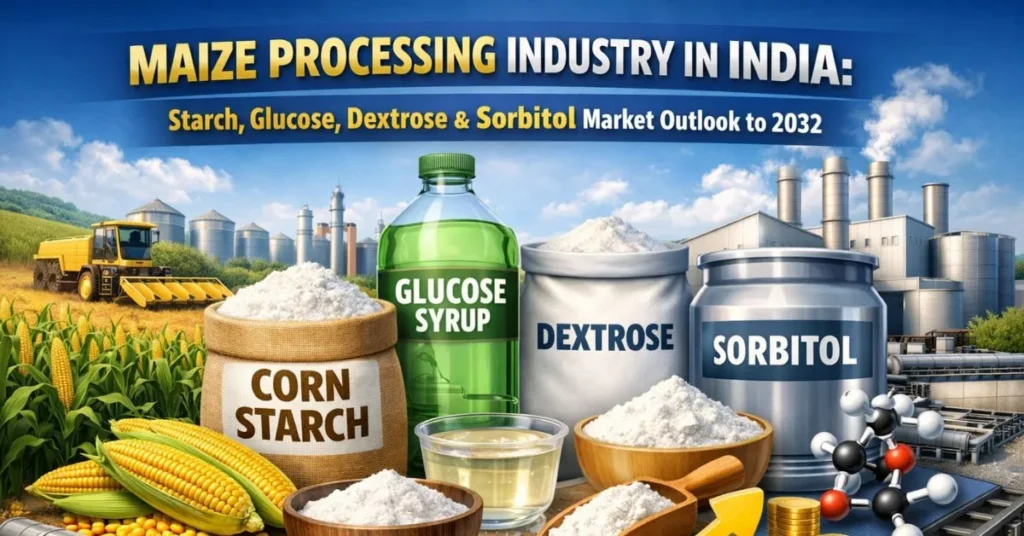
Introduction: Maize Processing Industry in India India’s maize processing industry has seen a steady shift from the traditional grain milling operation to value-added biochemical processing industry. Today, maize-based derivatives are important in providing the raw materials for pharmaceuticals, food processing, textiles, paper industries, personal care products and fermentation industries. This transformation has been furled by rapid growth of FMCG, growing pharmaceutical production and growing domestic consumption of processed food products. India produces over 36-38 million metric tonnes of maize per year but less than 25% is made into industrial derivatives. This low penetration of processing, coupled with growing downstream demand, leaves a large opportunity for new investments in maize-based starch and sweetener manufacturing.(Maize Processing Industry in India) Read More: Maize (Corn) Products in India (Starch, Glucose, Dextrose, Sorbitol) Trends, Opportunities, Market Analysis and Forecasts (Upto 2030-31) Structure of Maize Processing Industry Of India Indian maize processing industry is mainly developed around four major derivatives used by various industries: Maize starch, used in large amounts in textiles, paper, pharmaceuticals and food applications Liquid glucose syrup (consumed by confectionery, bakery and fermentation industries) Dextrose monohydrate, a widely used ingredient in IV fluids, ORS and nutraceutical formulations Sorbitol, an important ingredient in toothpaste, cosmetics and pharmaceutical syrups These products guarantee a regular industrial demand all year round and shelter the manufacturers from seasonal fluctuations.(Maize Processing Industry in India) Industrial Demand Trends and Growth Factors Maize starch continues to dominate the market for starch derivatives due to the wide use in the textile sizing, paperboard manufacturing, pharmaceutical tablets binding and adhesives production. Growth in organized textiles, packaging and healthcare has ensured steady consumption through India.(Maize Processing Industry in India) Liquid glucose demand has grown in tandem with the confectionery and bakery segments, especially due to urbanization and the changing lifestyles. Additionally, industries based on fermentation, such as antibiotics, enzymes and organic acids, are extremely dependent on glucose syrups, further reinforcing demand. Dextrose Monohydrate has become one of the fastest growing maize derivatives because of the growing pharmaceutical manufacturing. The pharmaceutical industry alone is responsible for over 30% of total domestic dextrose consumption with strong demand coming from Gujarat, Maharashtra, Telangana and Himachal Pradesh. Sorbitol demand has increased steadily with the growth of the oral care, personal hygiene and cosmetics industry. Domestic averment is still feeble in comparison to the high demand for the pharmaceutical grade, although it suffices as a craver from the import business.(Maize Processing Industry in India) Read More: Maize (Corn) Products in India (Starch, Glucose, Dextrose, Sorbitol) Trends, Opportunities, Market Analysis and Forecasts (Upto 2017) Import Dependency and Market Gap Despite being a large producer of maize, India imports refined corn derivatives because of the lack of high purity processing infrastructure. This dependency makes it more costly for downstream manufacturers and exposes them to global price fluctuations. Key gaps in the present market include: Shortage of pharmaceutical grade sorbitol and glucose syrups Limited domestic production of specialty and modified starches Regional imbalance in supply in South and Central India These gaps clearly show high import substitution potential for integrated maize processing units.(Maize Processing Industry in India) Read More: Why India Imports Sorbitol Despite High Maize Production – A Golden MSME Manufacturing Opportunity Integrated Maize Wet Milling Business Feasibility Integrated maize wet milling plants have excellent economics because of diverse product production. In such facilities, maize is processed into starch that can be sold directly or further processed into glucose, dextrose and sorbitol. Major benefits of integrated plants are: Ability to serve various industries at the same time Higher capacity utilization and operational flexibility Additional income from by-products such as maize germ oil and gluten feed This multi-product structure helps to reduce risk to the business and helps improve long-term profitability. Key Players and Competitive Scenario Organised processing industry of maize in India includes some established manufacturers such as Gujarat Ambuja Exports Ltd., Sukhjit Starch & Chemicals Ltd., Riddhi Siddhi Gluco Biols Ltd. and Roquette India Pvt Ltd. These players mostly serve large FMCG and pharmaceutical clients. However, production facilities are clustered into few regions, thus leaving gaps in supply near emerging clusters of pharmaceutical and food processing industries. This provides scope for MSME-scale decentralized units.(Maize Processing Industry in India) Read More: Maize, Corn and its By Products, value added Products, Derivatives, Maize Processing Industry, Corn Starch, Dextrose, Liquid Glucose, Sorbitol, Oil, Gluten, Germ Oil, Wet Milling, Maize Starch Plant & related Products, High-Fructose Corn Syrup (HFCS) Government Support and Incentives The Government of India is actively involved in maize processing under various agro-industrial schemes. Entrepreneurs can benefit from: capital subsidies on plant and machinery Infrastructure support for integrated processing units Incentives at state level under industrial policies In addition, the growth of the pharmaceutical sector under the PLI scheme is likely to generate a considerable increase in the demand for maize based excipients.(Maize Processing Industry in India) Read More: Maize Processing Industry in India: Starch, Sorbitol & Value-Added Products Market Opportunity https://youtu.be/_Ojb64-SfK0?si=F1ck3AWZG6d2454M Market Outlook and Forecast Up To 2032 India’s maize derivatives market is expected to have a steady growth until 2032, aided by the growth in pharmaceutical manufacturing, growth in processed food consumption, demand for personal care products and fermentation-based chemical manufacturing. Important growth opportunities include: Import substitution in sorbitol & specialty glucose Drivers of manufacturing in India: – Regional cluster of manufacturing – Pharma and FMCG Value addition through integrated processing Entrepreneurs who ventured into this sector with proper plan and linkage with the market will surely anticipate scalable operations and stable returns in the long run.(Maize Processing Industry in India) Frequently Asked Questions (FAQ) Is maize processing profitable in India? Yes, as a result of diverse product output, good industrial demand and because of government incentives, maize processing has attractive returns. Why is sorbitol still imported? Due to limited domestic capacity for use of pharmaceutical grade sorbitol, which results in import dependency. Which industries are the heaviest consumers of maize derivatives? Pharmaceutical, food processing, textiles, paper, personal care and fermentation industries. Are there subsidies for maize processing
Top 15 Chemical Manufacturing Business Ideas in India with Huge Import Substitution Potential
Chemical Manufacturing Business Ideas in India The chemical industry in India is growing faster than the manufacturing capacity. Growth in construction, automobiles, packaging, FMCG, electronics, textiles and renewable energy has severely impacted an increased demand for chemicals, while domestic supply is lagging. This mismatch has sent India’s import of chemical and petrochemicals (minus pharmaceuticals and fertilisers) to over ?2.27 lakh crore in 2023-24. For MSMEs and new entrepreneurs, this is a rare opportunity in this gap. With government support in the form of Plastic Park and PCPIR along with capital subsidies of up to 50%, manufacture of chemicals is not a preserve to ‘big’ corporates and ‘big’ players. Below are fifteen chemical manufacturing opportunities where import substitution, steady demand and scalability combine. Read More: Handbook On Chemical Industries (Alcohol Based) 1. Vinyl Acetate Monomer (VAM) Vinyl Acetate Monomer is a basic raw material for adhesives, emulsion paints, packaging films and EVA Polymers. Currently, India does not have a large-scale VAM manufacturing industry and imports more than 1470 crore rupees worth of VAM every year. Why VAM is attractive Strong demand from construction adhesives and paints Near-total import dependence Clear scope for integration with ethylene & acetic acid A domestic VAM unit which is close to a petrochemical hub can easily get high capacity utilisation because of strong downstream demand.(Chemical Manufacturing Business Ideas in India) 2. Ethylene Vinyl Acetate (EVA) EVA is used widely in footwear soles, solar panel encapsulants, hot-melt adhesives, and flexible packaging. While the domestic capacity is limited, the imports remain more than ?3,100 crore. Business potential Rapid industrial growth in footwear and solar energy The benefits of this process include the following: – Opportunity in EVA compounding and sheet manufacturing Lower capital requirement in comparison with polymerisation plants 3. Acrylonitrile Acrylonitrile is necessary to ABS plastics, acrylic fibres and nitrile rubber. India is entirely reliant on imports of almost 1800 crore per year. Instead of immediately investing in large-scale production, MSMEs have an option to focus on downstream segments like ABS moulded components, nitrile rubber compounding and acrylic fibre based products.(Chemical Manufacturing Business Ideas in India) 4. Butyl Rubber Butyl rubber is important in tyre inner tubes and in pharmaceutical closures. Even after the commissioning of the first major plant in India, the imports still seem to be in excess of ?1,000 crores every year. Where MSMEs fit in Manufacturing of inner tube and bladder Pharmaceutical bamboo stoppers Sealing products for the automotive sector 5. Styrene-Butadiene Rubber (SBR) SBR is a backbone of the tyre industry. Despite domestic production, imports of SBR is still above Rs 2,000 crore because of increased automobile demand. MSMEs can successfully work in the rubber compounding and customised SBR formulations for tyres, footwear and industrial belts.(Chemical Manufacturing Business Ideas in India) Read More: Modern Technology of Industrial Chemicals 6. Polybutadiene Rubber (PBR) Polybutadiene rubber has high levels of resilience and abrasion resistance, which makes it ideal for use in tyre treads and industrial products. Imports amounting to around Rs 1700 crore show the gap in supply. Key opportunities High performing rubber blends Tyre tread compound modification Export oriented specialty grades 7. EPDM Rubber EPDM rubber is commonly used in automotive weather seals, roofing membranes, and cable insulation. India does not have any domestic EPDM manufacturing which has led to imports of more than 1100 crore. For MSMEs there is constant demand for EPDM extrusion, gasket production and sealing systems for vehicles and buildings.(Chemical Manufacturing Business Ideas in India) 8. Unsaturated Polyester Resin (UPR) UPR is a base material for FRP tanks, panels, boat hulls, and wind energy components. Imports are around more than a 1000 crore a year because of infrastructure growth. Small and medium UPR plants and FRP product manufacturing suit those MSMEs with regional market orientation. 9. Polyacetal Resin (POM) Polyacetal is an engineering plastic for precision automotive and electrical components. India is still completely dependent on imports. Why POM is promising Increase in automobiles and electronics High value-added applications Opportunity in compounding and precision moulding Read More: Project Reports & Profiles 10. Mono Ethylene Glycol (MEG) MEG is necessary in polyester fibres and PET bottles. Imports are more than a rupee four thousand three hundred crore per year despite domestic production. MSMEs can reach this segment through bio-based MEG, polyester yarn spinning and PET recycling as per the sustainability goals.(Chemical Manufacturing Business Ideas in India) 11. Polycarbonate Polycarbonate has a high impact strength and transparency, which makes them ideal for helmets, EV parts and electronics. Imports are more than 5000 crore every year. MSME entry points Polycarbonate sheets and roofing (panels) Auto parts and electrical components Safety and glazing products 12. Toluene Toluene has a wide variety of applications as a solvent and as a feedstock for chemical derivatives. Domestic supply is lacking and imports amount to almost crore 4800. MSMEs can concentrate on purification, specialty solvent grades and derivative products for pharmaceuticals and specialty chemicals.(Chemical Manufacturing Business Ideas in India) 13. EDC and VCM (PVC Feedstocks) EDC and VCM are important for making PVC. Due to demand for PVC exceeding the domestic capacity, imports of these feedstocks continue to be high. Downstream scope PVC compounding Wire and cable insulation Flooring, medical grade PVC 14. Hydrogen Peroxide Hydrogen peroxide is applied in the textiles, pulp and paper, chemicals and water treatment industries. High capacity utilisation is a sign of tightness in the supply. Regional production, dilution units and specialty grades are viable MSME opportunities.(Chemical Manufacturing Business Ideas in India) 15. Titanium Dioxide Titanium dioxide is the most commonly used white pigment in paints and plastics. Domestic production is limited in spite of good demand. Value-added opportunities TiO2 masterbatch manufacturing Paint and plastic additives Import substitution on coatings industry Read More: Best PCPIR for Chemical Manufacturing in India: Dahej, Paradeep or Vizag? Strategic Roadmap for MSMEs Across these segments, the pattern is clear: growing demand, import dependency and policy support. Entrepreneurs who identify the right product, location (within industrial clusters) and technology (which may be proven) can assemble scalable
Phenol and Acetone Manufacturing in India: Business & Investment Opportunities
Phenol and Acetone Manufacturing India’s chemical industry is experiencing a fast growth, but some of the strategic intermediates are significantly import-dependent. Phenol and acetone are two excellent examples of these compounds in that they are key raw materials used to produce laminates, adhesives, resins, pharmaceuticals, and polycarbonates. With domestic demand exceeding domestic production, India is a promising investment destination in phenol and acetone manufacturing – in line with the government’s Atmanirbhar Bharat initiative. In this article, we examine the phenol and acetone scenario in India in terms of trends in production, gaps in consumption, the key players, downstream opportunities for MSMEs, and import substitution.(Phenol and Acetone Manufacturing) Read More: Phenolic Resins Technology Handbook (2nd Revised Edition) What Are Phenol and Acetone? Phenol is an aromatic organic compound which is mainly used for the making of bisphenol-A (BPA), phenolic resins and caprolactam. It is an important component in high-pressure laminates, adhesives, brake linings and electronics applications. Acetone, one of the co-products of phenol production from the cumene process, is an industrial solvent with wide applications in the pharmaceutical, paints, coatings, nail polish removers and cosmetics sectors. Both of these chemicals are of strategic importance as they are the base for several downstream industries such as polycarbonates, epoxy resins and specialty chemicals.(Phenol and Acetone Manufacturing) The Domestic Manufacturing Landscape in India India’s phenol and acetone market is presently in a duopoly that is dominated by Deepak Phenolics Ltd and Hindustan Organic Chemicals Ltd (HOCL). Hindustan Organic Chemicals Ltd (HOCL) HOCL’s Kochi plant commissioned in 1987-88 produces phenol, acetone and hydrogen peroxide. The Rasayani facility was closed down and Kochi became the only operational unit. HOCL’s capacity is modest: Phenol: 40,000 tonnes per annum (tpa) Acetone: 24,600 tpa Production has been volatile with the output of FY 2023-24 totalling 47,518 t phenol and 29,613 t acetone dropping to 34,874 t and 21,790 t respectively in FY 2024-25 due to market and working capital constraints. Deepak Phenolics Ltd (DPL) DPL, a subsidiary of Deepak Nitrite, has the largest phenol and acetone facility in India at Dahej in Gujarat: Phenol: 330 kta Acetone: 200 kta In 2025, DPL announced a total investment of Rs 3,500 crores for the construction of a greenfield facility, with another 300 kta of phenol, 185 kta of acetone and 100 kta of isopropyl alcohol (IPA), for import substitution and a combination with polycarbonate. Other Players Smaller producers such as Shree Ram Chemicals and the yet to be commissioned projects of Haldia Petrochemicals and Aarti Industries contribute marginally. Despite these efforts, Deepak Phenolics holds around 57% of the domestic market and HOCL covers the remaining market.(Phenol and Acetone Manufacturing) Read More: PHENOL/ACETONE – Manufacturing Plant, Detailed Project Report, Profile, Business Plan, Industry Trends, Market Research, Survey, Manufacturing Process, Machinery, Raw Materials, Feasibility Study, Investment Opportunities, Cost and Revenue, Plant Economic Production, Consumption and Trade Trends Installed Capacity vs. Production. Phenol installed capacity (government-monitored): 76.8 kta Phenol production FY 2023-24: 47.5 kt Acetone installed capacity 47.1 kta Acetone production FY 2023-24: 29.6 kt Capacity utilization is currently averaging 62% for phenol, and 63% for acetone – constrained by cyclical cumene availability, global price volatility, and working capital issues.(Phenol and Acetone Manufacturing) Demand–Supply Gap India’s phenol consumption has increased from 179.6 kt of 2019-20 to 261.1 kt in 2023-24. Acetone consumption from 97.7kt to 131.3kt happened in the same period. Phenol supply gap: ~213 kt Acetone supply gap: ~102 kt This deficit is now covered by imports, pointing to the existence of high potential for domestic producers.(Phenol and Acetone Manufacturing) Import Dependency India imports a large amount of phenol and acetone: Phenol: Net imports worth ($1,708 crore) (FY 2023-24), mostly from Thailand, Singapore and South Korea. Acetone: 148.21 kt imported in 2024 at ~$147.9 million. The main sources of data are Thailand which accounts for 47.7% South Korea which provides 22.1% Singapore which contributes 5.1% and China which supplies 2.7% of the total data. India depends on imports for over 50% of its acetone needs because the country requires acetone for its industrial operations which makes the industry vulnerable to price and supply changes.(Phenol and Acetone Manufacturing) Read More: Project Reports & Profiles Demand Factors of Phenol and Acetone Laminates & Plywood: The phenolic resins based on phenol play a key role in high pressure laminates, marine plywood and industrial applications. India has a laminate industry that grows 8-10% a year. Adhesives & Coatings: BPA and epoxy resins which manufacturers produce through phenol and acetone processing serve as essential components for coatings and adhesives and circuit boards and composite materials. The adhesive industry in India is expected to grow to USD 3 billion by 2030. Pharmaceuticals: Acetone functions as a primary solvent which people use to create pharmaceuticals and vitamins and cosmetics and personal care products while the pharmaceutical industry needs acetone to support its projected growth which will reach a USD 130 billion market size by 2030.(Phenol and Acetone Manufacturing) Construction & Automotive: Phenol-formaldehyde and epoxy resins for automotive brake pads, moulding compounds and lightweight EV composites. Growing in the construction and infrastructure sectors increases phenol demand. Investment Opportunities for Phenol and Acetone Large-Scale Manufacturing World scale plants (>200 kta phenol) are economically viable. Estimated cost for 100 kta plant: Rs 3000 to 4000 crore Integration with polycarbonate, BPA, or resin plants, which lowers the risk in the market. PCPIRs at Dahej, Paradip, Visakhapatnam and Cuddalore provide incentives & infrastructure support. Downstream Opportunities for MSME Phenolic Resins & Moulding Compounds. 5,000 – 10,000 tpa plants for laminates, brake linings and foundry binders. Bisphenol-A & Epoxy Resins: 10,000 tpa units, potential for higher value integrated products. Solvent Recovery & Formulations: Acetone and phenol serve as recycling materials in the pharmaceutical and cosmetic industries. Polycarbonate Compounding: Providing flame retardant and glass fiber reinforced PC for automobile and electrical applications. Read More: Top 20 Chemical Imports to India Financial Viability Large-scale plants: IRR 14–18%, investment ?3,000–5,000 crore. MSME resin units: 20-25% IRR, investment: 15-50 crore, payback period: 3-4 years. Raw materials (cumene, methanol); utilities;
Why India Still Imports Sorbitol? Maize Processing Industry Capacity & Business Opportunity
Introduction: Maize Processing Industry India India’s maize processing industry has undergone a tremendous transformation during the past decade from being primarily an agriculture-driven enterprise to being a strategic industrial sector. Processed maize derivatives like starch, liquid glucose, dextrose monohydrate and sorbitol have become key raw materials for pharmaceutical, food processing, textiles, paper, adhesives, fermentation, and personal care industries. Despite being one of the largest producers of maize in the world, India still has a structural deficit in industrial maize processing capacity. This demand-supply gap has led to persistent reliance on imports for refined maize derivatives, in particular, pharmaceutical-grade sorbitol and specialty glucose syrups. As a result, maize wet milling has become a high potential manufacturing and investment opportunity for organized sector players and MSME entrepreneurs.(Maize Processing Industry India) Read More: Maize (Corn) Products in India (Starch, Glucose, Dextrose, Sorbitol) Trends, Opportunities, Market Analysis and Forecasts (Upto 2030-31) Maize Production Scenario in India India is one of the leading maize producing countries in the world. According to the data released by the ministry of agriculture and farmers welfare, more than 36 million metric tonnes of maize is produced in the country every year. Maize cultivation is concentrated in states in: Karnataka Madhya Pradesh Maharashtra Telangana Andhra Pradesh Bihar These states have benefited from favourable agro-climatic conditions, availability of hybrid seeds and increasing mechanization. However, high agricultural production has not been matched by equivalent levels of industrial processing, and a disconnect of the farm production with the utilization of it in the industries has developed.(Maize Processing Industry India) Utilization Pattern of Maize in India The pattern of domestic consumption of maize reveals the limitations of the processing infrastructure in India: 55-60% used in poultry and animal feed 10–15% consumed directly as food 20-25% used for industrial processing Developed economies, on the other hand, use a much higher proportion of maize in value-added industrial products. India’s low processing share is the reason that industries are still importing refined derivatives despite good availability of maize domestically.(Maize Processing Industry India) Read More: Handbook on Maize (Corn) Processing and Manufacture of Maize Products Industrial Demand for Maize Products The demand for maize derivatives has grown steadily because of growth in a range of end use industries. Each derivative has a different and critical industrial function: Important Derivatives and Uses of Maize Maize Starch Used in textile sizing, paperboard manufacture, corrugated box adhesives and pharmaceutical tablets binding. Liquid Glucose Widely used in confectionery, bakery products, ice creams, jams and other medicinal syrups, and infant foods. Dextrose Monohydrate Essential for intravenous (IV) fluids, fermentation industries, nutraceuticals and energy supplements. Sorbitol Extensively used in toothpaste, oral care products, cosmetics, the development of vitamin C, pharmaceutical preparations; According to the industry insights from Ministry of Food Processing Industries, the increased intake of packaged and processed food items has directly increased the demand for starch and glucose syrups. Simultaneously, because of rapid expansion of pharmaceutical manufacture under the Department of Pharmaceuticals, there is a significant increase in the requirement for pharmaceutical grade sorbitol.(Maize Processing Industry India) Major Maize Processing Companies in India and Capacity The maize wet milling capacity in India is concentrated amongst a few organized players. Some of the major companies are: Gujarat Ambuja Exports Ltd. The largest player, with estimated processing capacity of more than 4000 tonnes per day, producing starch, liquid glucose, sorbitol and by-products. Riddhi Siddhi Gluco Biols Ltd. A leading supplier of starch derivatives to the food and pharmaceutical industries. Sukhjit Starch & Chemicals Ltd.The company employs one of its most experienced players who has extensive knowledge of both national and international markets. Roquette India Pvt. Ltd. Focused on Specialty starches and Pharmaceutical Excipients. Gulshan Polyols Ltd. A leading manufacturer of sorbitol and other polyols. Despite their combined output, existing capacity is too low to keep pace with the rapidly growing demand from the pharmaceuticals, food processing and personal care sectors.(Maize Processing Industry India) Read More: Maize, Corn and its By Products, value added Products, Derivatives, Maize Processing Industry, Corn Starch, Dextrose, Liquid Glucose, Sorbitol, Oil, Gluten, Germ Oil, Wet Milling, Maize Starch Plant & related Products, High-Fructose Corn Syrup (HFCS) Import Dependency & Regional Demand Gap However, India continues to import considerable amounts of refined sorbitol and specialty glucose syrups. Pharmaceutical manufacturing clusters in Gujarat, Telangana, Himachal Pradesh and Maharashtra often purchase sorbitol from Chinese, Indonesian and European suppliers. Due to this import dependence there are: Higher procurement costs Exposure to volatility of foreign exchange Longer lead times Vulnerability to Disruptions in Global Supplies For domestic manufacturers, this avails a significant import substitution opportunity. Industrial buyers receive faster product delivery because maize wet milling units operate closer to consumption locations. The units simultaneously provide customers with competitive pricing and reliable product delivery.(Maize Processing Industry India) Overview of the Maize Wet Milling Process The major steps in a typical, integrated maize wet milling plant are: Steeping – Maize kernels are put in a soaking phase to soften the endosperm Grinding and Separation – grinding and Starch gluten fiber and germ are separated Starch Refining – purification and concentration of starch slurry Hydrolysis – It is the conversion of starch to glucose syrup by the use of enzymes Crystallization – Dextrose Monohydrate Formation Hydrogenation – Glucose is converted to sorbitol Valuable By-Products Maize germ (edible oil) Corn gluten meal (animal feed) Corn Fiber – feed & industrial uses Sale of by-products makes overall project much more profitable.(Maize Processing Industry India) Read More: 3 Profitable Green Manufacturing Business Ideas in 2026: Bio-CNG, Maize Starch & Palm Oil Mill Importance of Techno-Economic Feasibility Studies Before investing in maize processing projects, entrepreneurs need to undertake a detailed technical and financial evaluation. A professional feasibility study is helpful to investors who want to know: Market demand and price trends Best product mix and capacity selection Technology alternatives and plant configuration Raw material sourcing and logistics Project cost, ROI and break even period Organizations like Niir Project Consultancy Services offer Market Survey-cum-Detailed Techno-Economic Feasibility Reports which go a long way