
Our Categories

Our Categories

Best Business Opportunities in India

India’s rapidly growing economy presents numerous promising best business opportunities in India that can help entrepreneurs and startups cater to an entire industry and scale their business. The market globally is evolving, and the key to success is recognizing and capturing the right opportunities.

We have provided insight into best business opportunities in India that are segmented based on industry verticals, including manufacturing, technology, food processing, renewable energy, and services. We analyze most opportunities to assist entrepreneurs in their final decision-making.

We have attempted to reduce the bridge between an individual’s business conception and its realization through this content by presenting actionable business models, emergent methodologies, and new approaches to low or medium-investment startups. We have directed the content toward both novice and experienced entrepreneurs in trying to provide clear insight into best business opportunities in India.

By evaluating these opportunities, entrepreneurs can find potential saturated markets and define the scope of their startup to ensure that it meets the requirements of an evolving market.

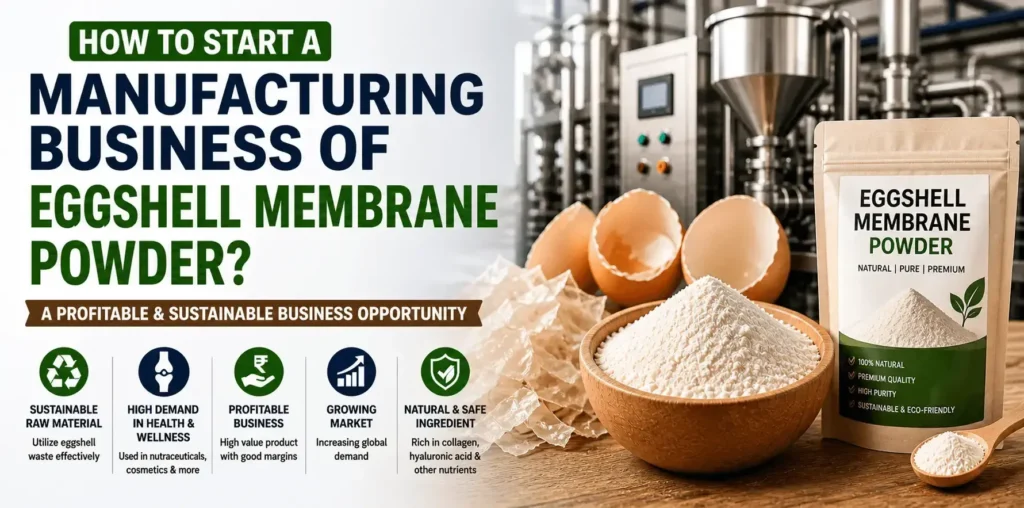
How to Start a Manufacturing Business of Eggshell Membrane Powder?

How to Start a Manufacturing Business of Eggshell Membrane Powder?

How to Start a Manufacturing Business of Eggshell Membrane Powder? Read More »

  The manufacturing business of eggshell is an emerging sector that taps into the sustainable reuse of agro-waste materials. Eggshells, once considered mere food waste, are now recognized for their rich calcium carbonate content, which can be utilized across various industries—from fertilizers and animal feed to bioplastics, pharmaceuticals, ceramics, and even bio-composites. Market Potential of Eggshell Products Eggshell waste is generated in millions of tons globally each year. Countries with large poultry industries generate substantial volumes of this waste, opening the door to a revenue-generating recycling industry. The demand for natural calcium sources and eco-friendly raw materials is rapidly growing, giving the eggshell processing market a highly favorable growth trajectory. Target industries include: Agriculture (organic fertilizer and soil pH balancer) Animal Husbandry (calcium-rich poultry feed additive) Cosmetics & Skincare (natural exfoliant and calcium ingredient) Biomedical applications (bone graft materials, dental fillers) Bioplastics and eco-construction materials Visit this Page for More Information: Start a Business in Livestock Farming Sector Manufacturing Process of Eggshell Products A standardized manufacturing process ensures high-quality, contamination-free products ready for diverse applications. Here’s a step-by-step guide to the typical eggshell processing operation: Collection & Transportation In the Manufacturing Business of Eggshell, the first step is the efficient collection and transportation of raw eggshells. Collected eggshell waste is transported from designated collection points in sealed, hygienic containers. This helps maintain the quality and safety standards essential for a successful Manufacturing Business of Eggshell. Washing & Disinfection To ensure premium-grade products, eggshells undergo thorough washing to eliminate egg membrane residues, dirt, and other contaminants. In the Manufacturing Business of Eggshell, disinfection is carried out using antibacterial solutions to uphold microbiological safety—especially when the end product is intended for pharmaceutical or cosmetic applications. Drying A critical step in the Manufacturing Business of Eggshell involves drying the washed shells using tray dryers or fluidized bed dryers. Controlled temperatures (90–110°C) are applied to eliminate all moisture content, ensuring that the shells are shelf-stable and free from microbial growth. Pulverizing After drying, the shells are pulverized into powder using industrial-grade pulverizer machines. The Manufacturing Business of Eggshell may vary the fineness based on end-use. Ultra-fine powder is ideal for medical or cosmetic use, while coarser material suits fertilizer or construction-grade products. Sieving To maintain consistent quality, the powdered eggshell is sieved to separate oversized particles. The Manufacturing Business of Eggshell relies on this step to produce graded powder that meets specific industrial standards. The processed powder is then stored in airtight containers to maintain purity. Packaging In the final phase of the Manufacturing Business of Eggshell, the powder is packaged using food-grade or industrial-grade materials depending on the product’s target market. Packaging includes vital information such as product grade, date of manufacture, and batch numbers to ensure traceability and compliance. Read Similar Articles: Livestock Farming Projects Click here to send your queries/Contact Us Machinery & Equipment Required To start a small to medium-scale eggshell powder manufacturing unit, the following machines are typically required: Conveyor belts and bins Industrial washers Tray dryers or fluidized bed dryers Pulverizer machine Industrial sieves Dust collectors Packaging unit Advanced setups may also include automated washing and drying lines, UV sterilizers, and robotic packagers to increase productivity and hygiene. Investment & Setup Cost Initial capital depends on the scale of operation and level of automation. Here’s a general cost breakdown: Land & Building: ?10–15 lakh (for 1000–1500 sq. ft. space) Machinery & Equipment: ?8–20 lakh Utilities & Setup: ?2–3 lakh Labor & Overheads (6 months): ?3–5 lakh Working Capital (Raw materials, logistics, etc.): ?2–5 lakh Estimated total setup cost: ?25–45 lakh for a small-to-medium unit. Related Feasibility Study Reports: Livestock Farming Business Ideas Licenses & Regulatory Compliance Starting an eggshell manufacturing business requires certain licenses and registrations: Udyam Registration (MSME) FSSAI License (for products used in feed or food) Pollution Control Board clearance GST registration Factory license (if applicable) Trademark registration (for branding) Read our Books Here: Livestock Farming, Development Marketing & Distribution Strategy Marketing plays a crucial role in penetrating industry segments. Here’s how to make a strong market entry: Online B2B Platforms – IndiaMART, TradeIndia, Alibaba Industry Exhibitions & Trade Shows – Target chemical, agricultural, cosmetic, and pharma expos Social Media Campaigns – Highlighting the eco-friendly and organic benefits of eggshell products Direct Outreach – To poultry feed manufacturers, organic fertilizer producers, and bioplastic startups Distributor Networks – Building partnerships in key manufacturing zones Sustainability & Environmental Benefits The eggshell business is not only profitable but also environmentally sustainable. Key benefits include: Reduction in landfill waste and methane emissions Replacement of synthetic calcium additives Lower carbon footprint compared to mining calcium carbonate Encouragement of circular economy practices By transforming agro-waste into value-added products, the business supports green manufacturing goals and aligns with global ESG (Environmental, Social, Governance) standards. Challenges and Risk Management While promising, this industry faces a few challenges: Seasonal variation in eggshell supply Strict hygiene protocols for food-grade use Market education about eggshell-based product benefits High initial investment for automation and compliance To mitigate risks: Partner with multiple suppliers to stabilize raw material flow Invest in R&D for diversified product lines Create awareness via educational marketing content Apply for government subsidies and green initiative grants Future Outlook and Expansion Possibilities As sustainability becomes a driving force across industries, biogenic waste utilization will grow. The eggshell business can expand into: Calcium tablets and nutraceuticals Bio-ceramic materials Green construction additives Pet food supplements Cosmetic-grade exfoliants Technological innovation, strong branding, and niche targeting can transform a small eggshell unit into a multi-crore business venture. Conclusion: Although it is intended for the newly created eggshell membrane powder to replace and improve upon the deficiencies of the traditional insulators, such as glass wool, cotton, and wood, it is very possible that eggshell membrane powder sales will increase. NIIR should be your first pick if you’re thinking about the Manufacturing Business of Eggshell Membrane Powder.  They are simple and inexpensive to build on-site using an extrusion procedure. There should be room for new businesses to prosper given the enormous demand for these products. Click here to send your queries/Contact
How to Start a Manufacturing Business of Seaworthy Containers?

How to Start a Manufacturing Business of Seaworthy Containers? Read More »

The shipping and logistics industry is growing rapidly with the expansion of global trade. In this scenario, the manufacturing of seaworthy containers has emerged as a highly profitable and sustainable business opportunity. These containers are specially designed to withstand harsh marine environments, protect cargo during long-distance ocean transport, and comply with international safety standards. With India becoming a logistics hub and exports rising steadily, entering the seaworthy container manufacturing sector can be a smart investment choice. If you’re looking for a business opportunity in manufacturing Business of seaworthy Containers, get in touch with NIIR Project Consultancy Services. In the world of business, NPCS has established a reputation as a trustworthy provider of comprehensive technical consulting services.  Click here to send your queries/Contact Us See More Links:

How to Start the Manufacturing Business of Bromine Chemical from Sea Water?

How to Start the Manufacturing Business of Bromine Chemical from Sea Water? Read More »

Bromine is a versatile chemical element with applications ranging from pharmaceuticals and flame retardants to oil drilling fluids and water purification. Extracted primarily from brine and seawater, bromine has gained significant industrial importance over the years. Starting a manufacturing business of bromine chemical from sea water offers a highly profitable opportunity for entrepreneurs with access to coastal regions. With a steady demand from multiple sectors, this business model promises long-term sustainability and high return on investment. Why Invest in Bromine Chemical Manufacturing? The global demand for bromine is consistently growing, driven by industries such as oil & gas, electronics, agriculture, and sanitation. India, with its extensive coastline and increasing chemical production capabilities, offers an ideal environment to manufacture bromine from sea water. Bromine’s high value, combined with relatively low raw material costs, makes this a lucrative business for those seeking a niche in the specialty chemicals sector. What is Bromine Chemical from Sea Water? Bromine is a reddish-brown liquid element that occurs naturally in sea water and underground brine pools. It is extracted using oxidation and distillation processes, followed by purification. The bromine chemical from sea water is then converted into various compounds such as sodium bromide, ethylene dibromide, and hydrogen bromide, which are used in industrial and agricultural applications. Visit this Page for More Information: Start a Business in Chemical Industry Projects Applications of Bromine-Based Compounds Bromine’s diverse applications make it a strategic industrial chemical: Flame Retardants – Used in textiles, plastics, and electronics to reduce fire hazards. Oil & Gas Drilling Fluids – Adds density to fluids, aiding in pressure control. Water Treatment – Disinfects and purifies water in swimming pools and cooling towers. Pharmaceuticals – Used in sedatives and other drug formulations. Photography and Dyes – A key ingredient in photographic emulsions and dye production. This wide range of applications ensures consistent market demand. Related Business Plan: Chemicals (Organic, Inorganic, Industrial) Raw Materials Required The key raw material for bromine extraction is sea water, which contains approximately 65 parts per million (ppm) of bromine. Other materials include: Sulfuric acid Chlorine gas or bleach (oxidizing agents) Activated carbon Anti-scaling agents Fresh water for washing and processing Being a naturally available resource, sea water makes the production process cost-efficient, especially near coastal belts. Read Similar Articles: CHEMICAL INDUSTRY Manufacturing Process of Bromine from Sea Water The bromine extraction and purification process involves the following steps: Sea Water Intake – Large volumes of sea water are pumped into storage tanks. Oxidation – Chlorine or bleach is added to oxidize bromide ions into bromine. Air Stripping – Air is bubbled through the solution to strip out elemental bromine. Absorption – The bromine vapor is absorbed in sulfuric acid to form bromine solution. Purification & Distillation – The solution is then distilled to remove impurities and obtain high-purity bromine. Packaging – The bromine is cooled and packaged in corrosion-resistant containers for storage or transport. This process requires strict monitoring and handling due to bromine’s toxic and corrosive nature. Click here to send your queries/Contact Us Machinery and Equipment Needed For setting up a bromine chemical manufacturing unit, the following equipment is essential: Sea water intake and filtration system Oxidation reactors Air stripping columns Absorption towers Distillation units Storage tanks (glass-lined or lead-lined) Safety gear and ventilation systems Investing in automation and control systems ensures safety, efficiency, and consistent product quality. Related Feasibility Study Reports: Chemicals (Organic, Inorganic, Industrial) Projects Infrastructure and Space Requirements You will need at least 15,000 to 20,000 sq. ft. of land near the coastline for a medium-scale unit. The infrastructure must include: Chemical processing sheds Wastewater treatment plant Control and monitoring room Packaging and storage area Employee safety and rest zones Proximity to ports or industrial corridors will further reduce logistics and raw material costs. Read our Books Here: Chemical Technology (Organic, Inorganic, Industrial), Fine Chemicals Licenses and Government Approvals As a chemical business handling hazardous substances, multiple regulatory approvals are necessary: Pollution Control Board (PCB) clearance Factory license and land approvals Environmental Impact Assessment (EIA) MSME registration or Udyam certificate Hazardous Waste Handling License Fire safety NOC and safety audit certification Strict compliance is crucial to avoid penalties and ensure smooth operations. Investment and Profitability Setting up a small to mid-sized bromine manufacturing plant from sea water may require an initial investment of ?3 to ?7 crore. Major cost heads include: Plant and machinery Land development Utilities and safety infrastructure Raw materials and chemicals Licensing and consultant fees Depending on market linkages and production capacity, businesses can earn profits of 20–35% with ROI expected within 3 to 5 years. Safety and Environmental Considerations Due to the corrosive and toxic nature of bromine, safety must be prioritized: Install gas leak detectors and emergency shutdown systems. Provide workers with personal protective equipment (PPE). Treat all waste and effluents before disposal. Train staff for handling chemical spills and emergencies. Follow local and global environmental safety protocols. Sustainable practices not only protect the environment but also improve brand credibility. Market Opportunities and Buyers Key buyers of bromine and bromine compounds include: Chemical manufacturers Oil exploration companies Water treatment plants Agrochemical producers Pharmaceutical and dye industries Developing strategic alliances, participating in chemical expos, and listing on B2B platforms can help scale your customer base globally. Challenges in the Bromine Manufacturing Business Despite its high-profit potential, this business faces certain challenges: High regulatory compliance and safety standards Skilled workforce requirement Waste management complexities Volatility in chemical prices and demand cycles These can be tackled through proper training, process automation, and government support schemes like Production Linked Incentive (PLI) and Make in India initiatives. Future Growth Potential With growing demand in sectors like energy, electronics, and pharma, bromine-based compounds are expected to gain even more prominence. India’s push toward self-reliance in specialty chemicals and green technologies further supports this business model. Innovations in waste-free bromine extraction and circular processing systems also promise long-term sustainability. Final Thoughts Launching a bromine chemical from sea water manufacturing unit is an intelligent move for entrepreneurs looking to

The Business of Aloe Vera Juice and Gel: Increasing Opportunities for Growth

The Business of Aloe Vera Juice and Gel: Increasing Opportunities for Growth Read More »

Aloe Vera is often hailed as the “plant of immortality” due to its exceptional medicinal, nutritional, and cosmetic properties. With a booming demand for wellness and natural skincare products, the business of Aloe Vera juice and gel has become a highly lucrative and sustainable opportunity. From health supplements to herbal cosmetics and skincare brands, Aloe Vera-based products are now indispensable in daily life. Setting up a business in this sector allows you to tap into a vast, evergreen market with strong growth prospects. Why Enter the Aloe Vera Juice and Gel Industry? The Aloe Vera industry has seen a surge due to the rising consumer preference for organic and herbal products. This versatile plant contains over 75 active compounds, including vitamins, enzymes, amino acids, and antioxidants—making it suitable for: Health drinks and detox tonics Skincare and anti-aging products Hair care and dandruff solutions Ayurveda and herbal medicines Starting a business of Aloe Vera juice and gel requires low investment, ensures high returns, and contributes to natural health and beauty trends. What is Aloe Vera Juice and Gel? Aloe Vera juice is a hydrating drink made from the inner pulp of Aloe Vera leaves. It is rich in antioxidants, supports digestion, boosts immunity, and helps in detoxification. Aloe Vera gel, on the other hand, is the transparent, soothing gel extracted from Aloe Vera leaves. It is used topically in skincare, sunburn relief, hair conditioning, and wound healing products. The gel can also be processed into creams, shampoos, and moisturizers. Both products are in high demand for health, wellness, and cosmetic uses. Visit this Page for More Information: Start a Business in Herbal Products Industry Applications of Aloe Vera Juice and Gel The dual product offering opens multiple market segments: Health Industry – For weight management, diabetes care, liver health, and digestion Skincare and Cosmetics – In creams, lotions, face masks, and after-sun gels Hair Care – Used in shampoos, conditioners, and anti-hair fall serums Nutraceuticals – Formulated as dietary supplements and immunity boosters Ayurveda – Aloe Vera is a key ingredient in several herbal formulations These versatile applications ensure year-round product demand. Related Business Plan: Herbs and Herbal Based Products Raw Materials and Availability The primary raw material is fresh Aloe Vera leaves, which can be cultivated on-site or sourced from Aloe farms. India’s climate supports Aloe Vera cultivation in states like Rajasthan, Gujarat, Uttar Pradesh, and Tamil Nadu. Other required materials include: Purified water Preservatives (citric acid, potassium sorbate) Stabilizers (for gel products) Packaging containers (PET bottles, tubes, jars) Natural flavoring agents (for juice) Cultivating Aloe Vera on your land can further reduce costs and improve product quality. Read Similar Articles: HERBS AND HERBAL BASED PRODUCTS Manufacturing Process of Aloe Vera Juice and Gel Here’s a simplified process for both products: 1. Harvesting and Washing – Fresh Aloe leaves are harvested and thoroughly washed.2. Leaf Trimming – The thorns and outer green skin are removed.3. Gel Extraction – The clear pulp is scooped out manually or using an automated extractor.4. Filtration – The gel is filtered to remove fibers and impurities.5. Juice Preparation – For juice, the gel is diluted with purified water and mixed with stabilizers and preservatives.6. Gel Formulation – For gel products, the pulp is thickened and enhanced with fragrances or botanical extracts.7. Bottling and Packaging – The final product is bottled, sealed, labeled, and stored for distribution. A hygienic and temperature-controlled environment is essential for maintaining quality. Read our Books Here:   Herbal Products, Aromatic Plant Cultivation Machinery and Equipment Required To start a small to medium-scale Aloe Vera processing unit, you’ll need: Aloe Vera leaf washer Gel extractor or pulper Filtration unit Juice mixer and homogenizer Pasteurizer (for juice) Filling and sealing machine Labeling unit and packaging station Refrigerated storage (optional) A semi-automated plant helps maintain hygiene and production efficiency while keeping investment moderate. Related Feasibility Study Reports: Herbs and Herbal Based Products Infrastructure and Space Requirement A production unit for Aloe Vera juice and gel typically needs 5,000 to 8,000 sq. ft. of area, including: Raw material reception area Processing and filtration zones Quality control lab Bottling and labeling line Storage and warehouse Office and administration area A separate cleanroom for gel formulation ensures compliance with cosmetic-grade product standards. Licensing and Legal Requirements To run the business of Aloe Vera juice and gel, you must obtain the following: FSSAI license (for juice production) Cosmetic manufacturing license (for gel products) MSME/Udyam Registration Factory license Pollution Control Board NOC GMP Certification (for export and credibility) Trademark registration (for your brand) Proper documentation ensures market entry, product trust, and long-term sustainability. Financial Requirements and Profit Margin The average investment required for a small to medium-scale Aloe Vera juice and gel business is ?20 to ?50 lakhs. This includes: Machinery and infrastructure Working capital (raw material, wages, utilities) Licensing and compliance costs Branding and marketing Packaging and distribution Profit margins can range from 30% to 45%, especially if you sell directly to end users or via e-commerce. The return on investment (ROI) is typically achieved within 18–24 months. Market Opportunities and Buyers Your potential buyers include: Ayurvedic and herbal product companies Cosmetic and skincare brands Online retailers (Amazon, Flipkart, Meesho) Wellness and nutrition shops Supermarkets and organic stores Exporters of herbal products You can also create your own brand and sell directly via D2C websites, health expos, and retail chains. Challenges and Their Solutions Common Challenges: Maintaining hygiene and shelf life Ensuring consistent product quality Navigating regulatory approvals Competing with established brands Solutions: Use food-grade and GMP-certified facilities Invest in R&D and quality testing Differentiate with unique formulations (like aloe + turmeric juice) Focus on niche branding and packaging Building a strong USP and targeting the right market can help overcome competition. Growth Potential and Future Scope The demand for Aloe Vera-based products is expected to rise sharply in coming years due to the global push for natural, organic, and chemical-free solutions. There’s scope to expand into: Aloe Vera face washes, creams, and soaps Herbal supplements and

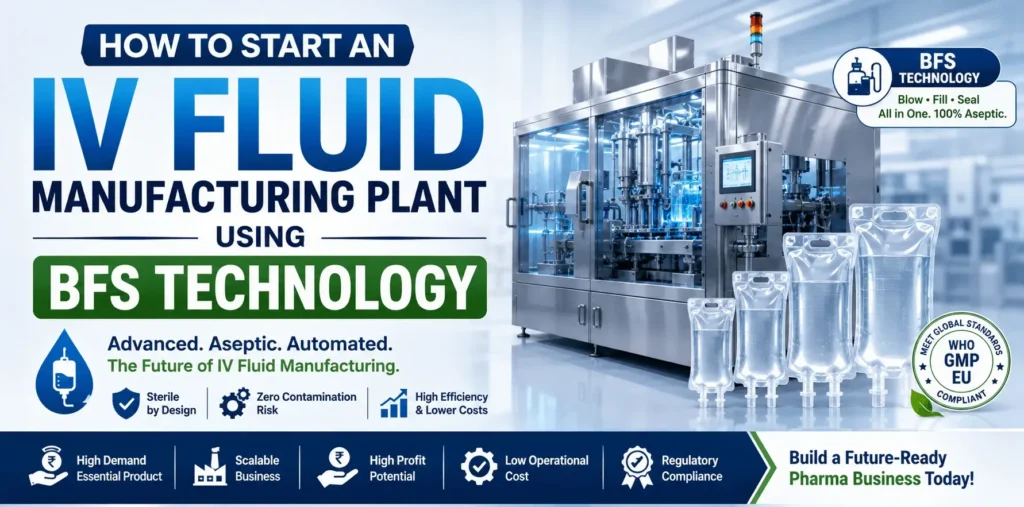
How to Start an IV Fluid Manufacturing Plant Using BFS Technology - NPCS Blog

How to Start an IV Fluid Manufacturing Plant Using BFS Technology

How to Start an IV Fluid Manufacturing Plant Using BFS Technology Read More »

The IV Fluid Manufacturing Plant industry is witnessing rapid growth due to increasing demand for sterile injectable solutions across hospitals, emergency healthcare services, clinics, and pharmaceutical supply chains. Intravenous (IV) fluids are essential in hydration therapy, surgery, trauma care, electrolyte replacement, and drug administration, making this sector one of the most important segments in healthcare manufacturing. With advancements in Blow-Fill-Seal (BFS) technology, modern IV fluid manufacturing plants now achieve higher sterility, automation, and production efficiency while meeting global pharmaceutical standards. India is emerging as a major hub for IV fluids manufacturing due to increasing healthcare infrastructure, government support, export opportunities, and rising domestic demand. How are IV Fluids Made? The IV fluid manufacturing process generally includes: Water purification (WFI generation) Solution preparation Sterile filtration Blow-Fill-Seal packaging Leak testing and inspection Labeling and packaging Sterility testing and quality control This guide explains the complete IV fluid manufacturing plant setup process including BFS technology, plant investment, machinery, manufacturing process, licensing requirements, and profitability analysis. What is an IV Fluid Manufacturing Plant? An IV Fluid Manufacturing Plant is a pharmaceutical production facility that manufactures sterile intravenous fluids such as saline, dextrose, and electrolyte solutions using automated technologies like Blow-Fill-Seal (BFS) systems. Modern manufacturing units use BFS (Blow-Fill-Seal) Technology, which is a highly automated process that forms the container, fills it with fluid, and seals it—all in one continuous operation. This minimizes human contact and ensures maximum sterility, a must in the pharmaceutical industry. Applications of IV Fluids IV fluids play a critical role in the healthcare and medical industry. Common applications include: Hydration therapy for dehydration and fluid loss Electrolyte replacement during surgery or trauma Parenteral nutrition for patients who cannot eat Drug dilution and delivery for antibiotics and anesthetics Blood volume expansion in emergency care The constant demand from hospitals, nursing homes, and healthcare centers makes this business highly sustainable. Visit this Page for More Information: Start a Business in Intravenous Fluids Industry Why Use BFS Technology in IV Fluid Manufacturing? Blow-Fill-Seal technology revolutionized pharmaceutical packaging. Unlike traditional glass bottles or manually filled containers, BFS offers: Aseptic production with minimal human intervention Single-use packaging ideal for sterility and disposal Low contamination risk High-speed and cost-effective production Compact unit design with smaller footprints WHO-GMP compliance Adopting BFS technology ensures compliance with international regulatory bodies like WHO, FDA, and GMP. Read Similar Articles: PHARMACEUTICAL INDUSTRY Types of IV Fluids You Can Manufacture A well-planned IV Fluids Manufacturing unit can produce various types of fluids such as: Normal Saline (0.9% Sodium Chloride Solution) Dextrose Solutions (5%, 10%, 25%) Ringer’s Lactate Solution Dextrose-Saline Combination Mannitol Injections Sterile Water for Injection Multivitamin and Electrolyte Fluids Each product serves different clinical purposes and ensures a broad customer base. Related Business Plan: IV Fluids, I.V. solutions Raw Materials Required Key raw materials for manufacturing IV fluids include: Pharmaceutical-grade water (WFI – Water for Injection) Sodium chloride, dextrose, potassium chloride, calcium chloride Plastic granules (for BFS containers) Sterile filters and cartridges Labels, cartons, and secondary packaging Quality sourcing and strict vendor controls are vital to ensure patient safety and compliance with drug regulations. Related Feasibility Study Reports: I. V. Fluids IV Fluids Manufacturing Process (Using BFS) The IV Fluids Manufacturing process using Blow-Fill-Seal technology involves: Water Purification – Raw water is purified using RO + UV + EDI systems and converted into WFI. Solution Preparation – Precise quantities of solutes (like sodium chloride) are dissolved in WFI in a stainless-steel mixing tank. Filtration – The solution is filtered to remove any microbial or particulate impurities. BFS Operation – The plastic container is blow-molded, filled with fluid, and sealed—all in a sterile environment. Leak Test & Inspection – Each unit is checked for leakage, particulate matter, and clarity. Labeling and Packaging – The final product is labeled, packed, and stored in controlled conditions before distribution. This process ensures high sterility and scalability for bulk orders. Read our Books Here: Pharmaceutical, Drugs, Proteins Technology Handbooks Equipment and Machinery Required To set up a BFS-based IV Fluids manufacturing plant, the following machinery is essential: BFS Machine (Blow-Fill-Seal Unit) WFI Generation System RO Water Treatment Plant Mixing Vessels (SS316 grade) Sterile Filtration Units Online Leak Detection Machine Visual Inspection Unit Labeling and Packing Machines HVAC and Clean Room Setup A fully automated plant reduces labor requirements and enhances quality consistency. Infrastructure and Layout A medium-scale IV fluids plant will require around 10,000–20,000 sq. ft., divided into: Raw material storage Water treatment zone Sterile manufacturing (Class 100 or Class 10,000 clean room) BFS and packaging area Quality control laboratory Warehouse for finished goods Office and utility space Adherence to WHO-GMP, Schedule M, and ISO standards is mandatory for layout planning. Regulatory Approvals and Compliance The IV fluids business falls under the pharmaceutical sector, hence requires several licenses: Drug Manufacturing License under the Drugs & Cosmetics Act FSSAI license (if applicable) GMP and WHO-GMP certification Pollution Control Board NOC Fire and Factory License ISO 9001 and ISO 13485 (recommended for credibility) CDSCO and FDA approval (for exports) Proper documentation and audit readiness are essential to operate legally. Cost of Setting Up IV Fluids Manufacturing Unit The capital investment for setting up an IV fluids unit using BFS technology ranges from ?5 crores to ?15 crores, depending on: Plant capacity (number of vials/bottles per day) Degree of automation Clean room setup and certifications Location and utility costs Regulatory compliance expenses Working capital must also account for raw materials, utilities, staff salaries, and distribution. Profitability and ROI Despite high initial investment, IV Fluids Manufacturing promises strong returns: Bulk demand from hospitals and healthcare distributors High margin on sterile products (up to 30% per unit) Scalability with export opportunities Quick turnover and recurring orders You can expect to reach break-even in 3 to 5 years, especially if you establish contracts with government or private hospitals. Target Market and Sales Channels Your customers include: Government and private hospitals Emergency medical services Nursing homes and clinics Medical distributors and wholesalers Export agents and pharma chains Distribution can be done through medical

The Business of Fatty Alcohols: Opportunities for Growth

The Business of Fatty Alcohols: Opportunities for Growth Read More »

If you’re looking to grow your business, it might be time to consider expanding into the alcohol industry. Fatty alcohols (typically referred to as fatty alcohols) are used in every kind of personal care product, and they make up the bulk of ingredients in industrial products like paints and varnishes too. Producing and developing products of fatty alcohol may not be as well-known as some other varieties of alcoholic beverages. But as research has found more and more benefits to these types of alcohol, it seems inevitable that this will grow into the next big thing for businesses who sell these type of alcoholic beverages. In fact, many companies are already starting to produce new drinks with fatty alcohols because the demand is there. Visit this Page for More Information: Start a Business in Alcohol Industry Personal Care Applications for Fatty Alcohols Include Related Business Plan: Alcohol Benefits of Starting Business of Manufacturing of Fatty Alcohols Production of fatty alcohols is a great way to get into the business of beverage manufacturing. It has a more prominent foothold than say, other types of beverages such as alcohol, wine, and coffee. Fatty alcohols are less niche in their consumer base since they are found within popular food and drink items like margarine and ice cream. This type of production also operates much differently than traditional spirit production with the ability to make adjustments on the fly without having any large consequences. Along with its versatility, this particular type of production produces more consistent results which many manufacturers will find attractive. In addition to this flexibility and consistency in results, there is an ever-growing market for these types of products making it a lucrative investment for those looking to start their own business. Fatty alcohols are typically made from natural materials that are rich in fatty acids, like oilseeds. The production process usually begins with a solvent and ends with a number of chemically altered compounds which can be used for different purposes, such as cosmetics and pharmaceuticals. Applications and Booming Opportunities in the Fatty Alcohol Industry Fatty alcohols also have numerous applications when it comes to food additives. These include hardening agents and flavor enhancers, just to name a few. Due to their versatility, they are the ideal ingredients for cooking or baking. In addition, they have many industrial uses too- especially in the paint industry. With these facts in mind, there is no doubt that these products will continue to grow as an industry. There are many benefits to using these products, such as high resistance to water and other chemicals found in paints. They are also eco-friendly because of how easily renewable sources can create them! With all of these qualities combined, it’s easy to see why the opportunities in this business sector are booming. Read Similar Articles: ETHANOL AND ALCOHOL INDUSTRY Global Market Outlook of Fatty Alcohol Business The global fatty alcohol market size was USD 5.08 billion in 2019 and is projected to reach USD 7.40 billion by 2027, exhibiting a CAGR of 5.2% during the forecast period. The market is divided into three segments based on product: C6-C10, C11-C14, and C15-C22. In 2019, the C11-C14 market segment had the lion’s share of the market. Its extensive use in the soap and detergent industry is credited with this rise. The C15-C22 category is anticipated to have rapid expansion because of the personal care industry’s growing demand. The need for C15-C22 alcohols is rising as a result of the rising demand for cosmetics items like shampoos, lotions, vanishing creams, lipsticks, and shaving creams. Click here to send your queries/Contact Us Application-Wise Market Segmentation and Growth Outlook The market is divided into applications for soaps & detergents, personal care, lubricants, amines, and others. During the projection period, the soaps and detergents category is anticipated to generate a significant market share. The expansion of this market will likely be fueled by rising personal hygiene awareness and rising standards of living in developing economies. The category is also anticipated to grow because to the increased demand for home and industrial cleaners to maintain a hygienic atmosphere. During the forecast period, the personal care segment is anticipated to be the second-largest segment. Due to increased consumer spending power, personal care products including shampoos, lotions, and essential oils are in great demand from Asia Pacific. Related Feasibility Study Reports: Alcohol From Tapioca Starch Simplifying Business Selection with Expert Guidance and Emerging Opportunities Visit the page Select and Choose the Right Business Startup for You for sorting out the questions arising in your mind before starting any business and know which start-up you can plan. We, at NPCS, endeavor to make business selection a simple and convenient step for any entrepreneur/startup. Our expert team, by capitalizing on its dexterity and decade’s long experience in the field, has created a list of profitable ventures for entrepreneurs who wish to diversify or venture. The list so mentioned is updated regularly to give you a regular dose of new emerging opportunities. Regional Market Trends and Growth Drivers in the Surfactant and Personal Care Industry In 2019, the Asia Pacific market had a value of USD 1.47 billion. Due to the growing demand from the personal care & cosmetics and surfactant sectors, it is the main driver of market growth. The market would expand exponentially under the influence of rising disposable incomes in South Korea, China, and India. Additionally, China, which is home to several of the world’s largest soap and detergent producers, is showing signs of rising usage. The market expansion in North America is related to the increasing demand for surfactants. The COVID-19 outbreak would also increase demand for sanitizers and household cleaning supplies in this area, which would encourage use. The personal care industry’s explosive demand is what distinguishes the European market. The market is expanding as a result of consumers’ growing demand for liquid soaps. Around 12.6 million tonnes of soaps and detergents were produced in the European Union in 2018, with 19%

How to Start Manufacturing Business of Ferrochrome

How to Start Manufacturing Business of Ferrochrome Read More »

The Ferrochrome manufacturing business focuses on producing a vital alloy used to make stainless steel. Ferrochrome is formed by combining iron and chromium, with a chemical formula of Cr?O? – FeO. This metal oxide compound finds extensive application across various industries. The main elements in ferrochrome include iron, chromium, and manganese. The Ferrochrome manufacturing business supports industries by supplying ferrochrome as an additive in stainless steel production, an oxidizing agent in steel manufacturing, and a pigment in paints. Visit this Page for More Information: Start a Business in Ferroalloys Production Hematite ore, silica sand, and coke are the primary basic materials used to make ferrochrome. In a refinery, these three components are heated collectively until they melt. The liquid is then passed through towers, where it exits as liquid ferrochrome on one side and slag on the other. Following this procedure, the black solid and liquid are separated by placing them both in two sizable tanks with various levels. Due to its significantly lower density than ferrochrome, black solid tends to collect at the bottom of these tanks. The black solid can be utilised to create household appliances and automotive parts since, when cooled, it becomes harder than conventional steel. Why you should start the business of manufacturing ferrochrome? A metal called ferrochrome can be used to make stainless steel. As a result, during the past few years, demand for ferrochrome has been continuously rising. Additionally, this industry has very low entry barriers because it just needs a small investment of time and money. This makes it a fantastic chance for business owners wishing to launch a new venture. You must take into account a wide range of factors before starting your own ferrochrome manufacturing business. You must choose the process type you wish to employ and seek out vendors who can give you the required raw materials. Related Business Plan: Ferroalloys, Ferro Alloys, Manganese Alloys (Ferromanganese, Silicomanganese), Ferrosilicon, Chrome Alloys, Noble Ferro Alloys (Ferromolybdenum, Ferrovanadium, Ferrotungsten, magnesium ferrosilicon, Ferro Boron, Ferrotitanium) Projects You should think about how you want to market your goods after your business is up and operating. Finally, once you have identified these crucial elements, you will need to apply for all legal permissions required so that your manufacturing process conforms with legal requirements. You may create high-quality ferrochrome this way while also fulfilling all applicable regulatory standards. Read Similar Articles: Ferroalloys Projects What will be the expected future demand for the ferrochrome plant? Over the following ten years, there will likely be a major increase in demand for ferrochrome. The demand for this product has increased as a result of the development of new technology, and it will only expand as more nations depend on steel production. Additionally, it is anticipated that natural resources like nickel and chromium would become less accessible. So purchasing a ferrochrome factory can be the best option for you if you want to profit from these growing trends. Fortunately, starting your own ferrochrome production firm doesn’t have to be expensive; any corporation with some basic equipment can launch their own venture. A furnace and vacuum system are first required, but after that, it’s just a matter of buying raw materials like coal, iron ore, and nickel ore. Naturally, do your homework on the prices associated with the procurement of raw materials before making any investments. Click here to send your queries/Contact Us Global Opportunities and Market Dynamics The Ferrochrome manufacturing business plays a vital role in the global metals and alloys industry, especially due to its close connection with stainless steel production. As demand for stainless steel continues to grow, the scope for Ferrochrome production is expanding rapidly. Let’s explore the key market trends, segments, and global growth opportunities in the Ferrochrome industry. Global Market Outlook for Ferrochrome The global Ferrochrome market is on track to grow at a CAGR of 4.25% and reach approximately US$26.68 billion by 2029. Asia Pacific leads this growth, producing over 70% of the world’s stainless steel, making it the largest consumer of Ferrochrome, followed by Europe and North America. The region’s booming construction, transportation, and metallurgical industries continue to push the demand for stainless steel—and, by extension, Ferrochrome. Manufacturers increasingly rely on Ferrochrome for its chromium content, which strengthens stainless steel by enhancing its corrosion resistance, durability, and hardness. Market Segmentation: Charge Chrome and High Carbon Ferrochrome The Ferrochrome manufacturing business primarily focuses on producing charge chrome and high carbon variants. These segments dominate the market due to their ability to enhance stainless steel’s performance. High carbon Ferrochrome, especially from South Africa, constitutes the largest share of global production. Smaller segments include low and intermediate carbon types. Industries value high carbon Ferrochrome for its cost-effectiveness and ability to meet alloy-grade specifications. Stainless Steel Demand: A Key Growth Driver The growth in the Ferrochrome manufacturing business closely follows stainless steel demand. As manufacturing increases in Asia Pacific—supported by foreign investment—the need for chromium-grade alloys rises. Stainless steel production, driven by the construction, consumer goods, and automotive industries, ensures consistent demand for Ferrochrome. The transportation sector also increasingly adopts chromium and chromium-manganese graded stainless steel, further boosting Ferrochrome consumption globally. Foreign Investment and Industrial Expansion Foreign direct investment (FDI) plays a crucial role in expanding manufacturing capacity. For example, Asia received the highest inward FDI globally in 2017, with a rate of 9.1%, according to the United Nations Conference on Trade and Development. This surge in investment has supported infrastructure development and industrial manufacturing across emerging markets—indirectly strengthening the Ferrochrome manufacturing business. Construction, heavy machinery, and the automobile sectors benefit from this capital inflow, creating more avenues for Ferrochrome applications. Planning Your Ferrochrome Venture If you’re considering launching a Ferrochrome manufacturing business, it’s essential to align your startup plans with current market trends and feasibility insights. Visit our Select and Choose the Right Business Startup page to explore viable opportunities that suit your investment goals. At NPCS, we simplify the process of business selection. With decades of experience, our team curates profitable project ideas across

How to Start Manufacturing Business of Biodegradable Plastics and Polymers

How to Start Manufacturing Business of Biodegradable Plastics and Polymers Read More »

The business of biodegradable plastics and polymers is emerging as one of the most promising industries today. As environmental concerns grow and governments push for sustainable alternatives to traditional plastics, biodegradable plastics offer an eco-friendly solution that is reshaping the materials market worldwide. Why Choose the Business of Biodegradable Plastics and Polymers? Biodegradable plastics and polymers break down naturally over time, reducing pollution and dependence on fossil fuels. Consumers and industries alike are demanding greener options, which creates huge market potential for entrepreneurs. According to industry reports, the global biodegradable plastics market is expected to grow at over 20% annually over the next several years, reflecting surging demand across sectors like packaging, agriculture, and healthcare. In India, the market is especially vibrant, projected to expand at a compound annual growth rate (CAGR) of over 22%, driven by increasing environmental awareness and government policies supporting sustainable materials. Setting Up Your Manufacturing Plant Starting a manufacturing unit for biodegradable plastics and polymers requires investment in specific machinery and equipment, including: Compounding machines to blend raw materials Blow molding and extrusion machines for shaping products Recycling and processing units Auxiliary tools like conveyor belts and cooling tanks You will also need access to raw materials such as corn starch, sugarcane bagasse, and other biomass feedstocks, along with chemicals like resin and caustic soda. Visit this Page for More Information: Start a Business in Biodegradable Products Industry Navigating Regulations and Compliance Manufacturers in this sector must comply with environmental and safety regulations. In the U.S., for example, the Toxic Substances Control Act (TSCA) requires companies to notify the Environmental Protection Agency (EPA) when producing or importing large quantities of biodegradable plastics. Good Manufacturing Practices (GMP) and annual chemical reporting are also mandatory. Understanding and adhering to these regulations is critical to operating smoothly and gaining consumer trust. Related Business Plan: Biodegradable Products Benefits of Investing in Biodegradable Plastics and Polymers Launching a business of biodegradable plastics and polymers offers multiple advantages: Sustainability: You contribute to reducing plastic pollution. Cost-Effectiveness: Bioplastics often require less energy to produce. Market Growth: Increasing consumer and industrial demand opens new sales opportunities. Versatility: Products can serve in packaging, agriculture, medical devices, and more. Government Incentives: Many countries provide subsidies and support for green businesses. Read Similar Articles: Biodegradable Products Market Outlook and Opportunities Globally, Europe leads in consumption and innovation, accounting for about 25% of production capacity. Asia-Pacific dominates manufacturing, with over half the global production located in China, India, and surrounding countries. North America’s growing demand for lightweight and eco-friendly products is fueling steady market growth. As the world transitions toward sustainability, the business of biodegradable plastics and polymers stands to benefit immensely from technological advancements, regulatory support, and rising consumer preferences. Related Feasibility Study Reports: Biodegradable Products Leading Companies in the Industry Key players in the biodegradable plastics and polymers market include: NOVAMONT S.p.A. (Italy) Solvay SA (Belgium) Advance Bio Material P. Ltd. (India) BASF SE (Germany) Braskem (Brazil) Toray Industries, Inc. (Japan) Collaborating with or learning from these industry leaders can provide valuable insights into best practices and emerging trends. Paper Water Bottles, Bioplastics & Biodegradable Products Manufacturing Handbook Final Thoughts The business of biodegradable plastics and polymers offers a sustainable, profitable opportunity for entrepreneurs willing to invest in eco-friendly innovation. With growing environmental awareness, supportive regulations, and expanding global markets, now is an ideal time to explore this sector. If you’re considering starting a biodegradable plastics manufacturing venture, focus on acquiring the right machinery, understanding compliance requirements, and building partnerships to stay competitive. Your business can play a vital role in shaping a greener future while achieving strong growth. Read our Books Here: Bioplastics & Biodegradable Products Manufacturing Handbook Key Players Involved Niir Project Consultancy Services (NPCS) provides detailed Project Report, Business Plan for Manufacturing Plant, Start-up Ideas, Business Ideas for Entrepreneurs, Start up Business Opportunities, entrepreneurship projects, Successful Business Plan, Industry Trends, Market Research, Manufacturing Process, Machinery, Raw Materials, project report, on various segments. A lot of engineers, project consultant & industrial consultancy firms in India and across the globe have taken benefit from the project report provided by NPCS. You can also get project report and books from the official website of NPCS. Click here to send your queries/Contact Us Reasons for Buying NIIR Report: Our research report helps you get a detailed picture of the industry by providing an overview of the industry along with the market structure and classification. Our report provides market analysis covering major growth driving factors for the industry, the latest market trends and the regulatory framework of the industry. Our Report provides an analysis and in-depth financial comparison of major Players / Competitors. Our Report provides indispensable buyers data with their company financials as well as the contact details, which can be an important tool in identifying the target customers. Our report provides forecasts of key parameters which help to anticipate the industry performance. We use reliable sources of information and databases. And information from such sources is processed by us and included in the report. See More Links: Contact Us

How to Start Manufacturing Business of ISO Freight Containers

How to Start Manufacturing Business of ISO Freight Containers Read More »

The manufacturing business of ISO freight containers is a lucrative and growing industry driven by the ever-expanding global trade and logistics sectors. ISO freight containers, also known as shipping containers, serve as the backbone for transporting goods worldwide, offering secure, standardized, and efficient solutions for cargo movement. Why Start the Manufacturing Business of ISO Freight Containers? As global commerce continues to rise, the demand for high-quality, durable shipping containers grows in parallel. These containers simplify international shipping, reduce transportation costs, and ensure the safety of goods during transit. The global shipping container market is expected to grow significantly due to the increasing volume of containerized cargo, booming e-commerce, and the need for efficient supply chains. Entrepreneurs entering the manufacturing business of ISO freight containers can tap into diverse markets, including shipping companies, logistics providers, exporters, and even the growing demand for container-based modular homes and storage units. Visit this Page for More Information: Start a Business in Shipping Container Industry Key Machinery and Equipment Needed Setting up a manufacturing unit for ISO freight containers requires specialized machinery and skilled labor. Essential equipment includes: Heavy-duty welding machines for assembling container panels Hydraulic bending and cutting machines for steel sheet shaping Painting and coating equipment to prevent corrosion CNC machines for precision cutting and fabrication Quality testing tools for ensuring container strength and durability In addition to machinery, securing a steady supply of high-grade steel sheets, insulation materials, and hardware components is crucial for producing ISO-compliant containers. Related Business Plan: ISO Freight Containers Compliance and Quality Standards ISO freight containers must meet strict international standards, primarily set by the International Organization for Standardization (ISO), to ensure uniformity, safety, and compatibility across shipping networks. Manufacturers must comply with ISO 668 standards, which define container dimensions and ratings, and adhere to certifications like CSC (Convention for Safe Containers) to guarantee safety during transport. Implementing stringent quality control and adhering to environmental regulations not only ensure compliance but also build trust with clients worldwide. Read Similar Articles: Ideal Business Plan of ISO Freight Containers Manufacturing Benefits of the Manufacturing Business of ISO Freight Containers Starting a container manufacturing business offers several benefits: High Demand: Global trade expansion continuously fuels the need for shipping containers. Steady Market: Containers are reusable and essential assets, ensuring consistent demand. Diversification: Beyond shipping, containers serve as mobile offices, homes, and storage units. Export Potential: Manufacturing ISO-certified containers opens doors to international markets. Scalability: Production can scale with growing orders and customized container solutions. Click here to send your queries/Contact Us Market Outlook and Growth Opportunities The global shipping container market is expected to witness steady growth driven by increased international trade and logistics infrastructure development. Asia-Pacific, particularly China, remains the largest manufacturing hub and consumer market for ISO freight containers. North America and Europe also show significant demand due to advanced logistics networks and e-commerce growth. Innovations such as smart containers equipped with IoT sensors for real-time tracking further enhance market prospects. Read our Books Here: See Our Books and Databases Leading Industry Players Key players in the ISO freight container manufacturing sector include: CIMC (China International Marine Containers) Singamas Container Holdings Limited Dong Fang International Container Maersk Container Industry CXIC Group Learning from these market leaders can provide valuable insights into technology, quality standards, and global distribution. Related Feasibility Study Reports: How to Start ISO Freight Containers Manufacturing Business Conclusion The manufacturing business of ISO freight containers offers a profitable opportunity for entrepreneurs seeking to leverage global trade growth. By investing in advanced machinery, maintaining rigorous quality standards, and staying updated with industry regulations, you can establish a successful container manufacturing enterprise. Whether you aim to supply shipping companies, logistics firms, or the modular construction market, this business has strong potential for growth and long-term profitability. Click here to send your queries/Contact Us Reasons for Buying NIIR Report: Our research report helps you get a detailed picture of the industry by providing an overview of the industry along with the market structure and classification. Our report provides market analysis covering major growth driving factors for the industry, the latest market trends and the regulatory framework of the industry. Our Report provides an analysis and in-depth financial comparison of major Players / Competitors. Our Report provides indispensable buyers data with their company financials as well as the contact details, which can be an important tool in identifying the target customers. Our report provides forecasts of key parameters which help to anticipate the industry performance. We use reliable sources of information and databases. And information from such sources is processed by us and included in the report. See More Links: Contact Us

Start Your Own Triacetin Production | Setup the Plant of Triacetin

Start Your Own Triacetin Production | Setup the Plant of Triacetin Read More »

Triacetin production plays a crucial role in supplying industries such as food, pharmaceuticals, cosmetics, and explosives with this versatile organic compound, also known as glycerol triacetate. This clear, colorless, and oily liquid functions as a plasticizer, solvent, and humectant, highlighting its adaptability as a chemical additive. Its chemical formula, C9H14O6, reveals its structure as the triester of glycerol and acetic acid. Due to its stability, non-toxic nature, and compatibility with other ingredients, Triacetin has become a staple in formulations requiring improved texture, moisture retention, and chemical stabilization. Understanding the production process of Triacetin is essential for manufacturers and stakeholders seeking to meet the growing market demand with high-purity outputs. Raw Materials Required for Triacetin Production The production of Triacetin involves a chemical reaction between glycerol (propane-1,2,3-triol) and acetic acid (or acetic anhydride). The core raw materials include: Glycerol: A by-product from biodiesel or soap manufacturing. Acetic Acid or Acetic Anhydride: Acts as an acetylating agent. Catalysts:Manufacturers typically use mineral acids like sulfuric acid or p-toluenesulfonic acid as catalysts to speed up the esterification reaction. The choice between acetic acid and acetic anhydride directly affects the process’s efficiency and by-product profile. While acetic anhydride delivers higher conversion rates, many prefer acetic acid due to its lower cost and easier handling. Visit this Page for More Information: Start a Business in Chemical Industry Projects Step-by-Step Triacetin Production Process 1. Esterification Reaction The primary method for Triacetin production is the esterification of glycerol with acetic acid or acetic anhydride. Reaction Equation:C3H5(OH)3 + 3 CH3COOH ? C3H5(OCOCH3)3 + 3 H2O This reaction occurs under acidic conditions with constant stirring and heating (typically at 100–140°C). The reaction vessel must be made from corrosion-resistant material due to the acidic environment. 2. Catalyst Addition and Reaction Control A catalyst such as sulfuric acid is introduced to enhance the rate of reaction. The mixture is stirred continuously to maintain homogeneity and prevent local overheating. Reaction time can vary from 2 to 8 hours, depending on the desired yield and purity. 3. Water Removal Water is a by-product of the esterification process. To drive the reaction to completion, azeotropic distillation is performed using a solvent like toluene or xylene to remove water continuously. This step shifts the equilibrium towards Triacetin formation. 4. Product Separation and Purification Once the reaction concludes, the mixture undergoes: Neutralization: Addition of sodium carbonate or similar base to neutralize excess acid. Phase Separation: The aqueous layer is separated from the organic layer. Distillation: The Triacetin is distilled under reduced pressure to separate it from unreacted glycerol and mono-/di-acetins. 5. Final Quality Testing The final product is subjected to GC-MS (Gas Chromatography-Mass Spectrometry) and FTIR (Fourier Transform Infrared Spectroscopy) to verify its purity level, which typically exceeds 98% for industrial-grade Triacetin. Related Business Plan: Manufacturing Business of Triacetin Alternative Production Techniques In recent years, enzymatic esterification has gained attention due to its eco-friendly and selective approach. Using lipase enzymes, glycerol and acetic acid are reacted at milder conditions, resulting in fewer by-products and higher selectivity. Although costlier, this method aligns with green chemistry principles and is ideal for pharmaceutical-grade Triacetin. Read Similar Articles: CHEMICAL INDUSTRY Applications of Triacetin Across Industries Food Industry Triacetin functions as a food additive (E1518) used as: Moisture-retaining agent Solvent for flavorings Plasticizer for food packaging films Its safety has been approved by FAO/WHO and the FDA, making it ideal for direct consumption applications. Pharmaceuticals In drug formulations, Triacetin acts as: A plasticizer in capsule shell manufacturing A carrier solvent for drugs in topical formulations A stabilizing agent for APIs (Active Pharmaceutical Ingredients) Its high stability and non-reactivity make it suitable for controlled-release systems. Cosmetics and Personal Care Used in: Lipsticks and skin creams as a texture enhancer Deodorants and fragrances for prolonging scent retention Its emollient properties help in smooth application and skin hydration. Tobacco Industry Triacetin is a key ingredient in cigarette filter production, improving the mechanical strength and adhesion of cellulose acetate fibers. Read our book here: Chemical Technology (Organic, Inorganic, Industrial), Fine Chemicals Global Market Demand and Industry Trends The global market for Triacetin is experiencing consistent growth due to its multi-industry utility. Key drivers include: Increasing demand for bio-based additives Expansion in food processing and pharmaceutical sectors Growing emphasis on biodegradable plasticizers Countries such as China, India, Germany, and the U.S. are major players in both production and consumption. Emerging technologies like biocatalytic synthesis and waste glycerol utilization promise to enhance sustainability and improve cost-efficiency. Download PDF: Most Profitable Business Idea of Triacetin Start Your Own Business of Triacetin Quality Standards and Regulatory Compliance For industrial use, Triacetin must meet several quality benchmarks, including: ASTM D5472: For plasticizers FCC and USP standards: For food and pharmaceutical applications Producers must also ensure compliance with REACH and GHS guidelines, especially for exports to Europe and North America. Related Feasibility Study Reports: Setup A Business Of Manufacturing Triacetin Challenges in Triacetin Manufacturing By-product Formation: Mono- and diacetins can form if the reaction isn’t tightly control. Raw Material Fluctuations: Prices of glycerol and acetic acid can vary seasonally. Waste Disposal: Acidic waste and distillation residues must be handled under environmental norms. Optimizing reaction parameters and adopting continuous manufacturing techniques can help in overcoming these challenges. Conclusion Triacetin is an indispensable compound with broad industrial applications, and its production process, while relatively straightforward, requires precise control and quality assurance to ensure high yields and regulatory compliance. Advancing technologies and rising demand for sustainable ingredients are driving the Triacetin production industry toward robust expansion in the coming years. Click here to send your queries/Contact Us See More Links: Contact Us

Have a business idea? Let's make it happen together-contact us now!


Contact Form Demo

This will close in 0 seconds

Translate »