
Our Categories

Our Categories

Best Business Opportunities in India

India’s rapidly growing economy presents numerous promising best business opportunities in India that can help entrepreneurs and startups cater to an entire industry and scale their business. The market globally is evolving, and the key to success is recognizing and capturing the right opportunities.

We have provided insight into best business opportunities in India that are segmented based on industry verticals, including manufacturing, technology, food processing, renewable energy, and services. We analyze most opportunities to assist entrepreneurs in their final decision-making.

We have attempted to reduce the bridge between an individual’s business conception and its realization through this content by presenting actionable business models, emergent methodologies, and new approaches to low or medium-investment startups. We have directed the content toward both novice and experienced entrepreneurs in trying to provide clear insight into best business opportunities in India.

By evaluating these opportunities, entrepreneurs can find potential saturated markets and define the scope of their startup to ensure that it meets the requirements of an evolving market.

Flourishing Business of Graphite Electrodes: Why This Industry is Booming

Flourishing Business of Graphite Electrodes: Why This Industry is Booming Read More »

As the steel industry continues to expand globally and in India, the demand for critical consumables like graphite electrodes has surged. These high-conductivity carbon-based rods are essential for electric arc furnace (EAF) steel production, which is gaining popularity due to its energy efficiency and eco-friendliness. With India targeting to become the second-largest steel producer globally, the business of graphite electrodes is emerging as a highly profitable and industrially strategic opportunity. Graphite electrodes are cylindrical rods used to conduct electric current into the furnace during the steel melting process. Their high thermal resistance, strength, and conductivity make them indispensable. The global graphite electrode market is projected to grow at a CAGR of over 6.5% till 2030, driven by steelmaking, foundries, and the battery industry. With India’s push for infrastructure and green energy, the business of graphite electrodes offers excellent potential for MSMEs and mid-sized enterprises ready to step into high-tech manufacturing. Visit this Page for More Information: Start a Business in Mechanical and Engineering Goods Industry Overview of the Graphite Electrodes Industry Graphite electrodes are used primarily in: Electric Arc Furnace (EAF) steel production Foundry and smelting applications Ferroalloy manufacturing Electric discharge machining (EDM) Lithium-ion battery production (as anode materials in synthetic form) India Insight: India produced over 135 million tonnes of steel in FY 2023–24, with EAF methods accounting for 35% of total capacity—a number expected to rise. Related Business Plan: Graphite Electrode for Arc Furnace 1. Raw Materials for Graphite Electrode Manufacturing High-quality, low-ash carbon materials are needed, including: Needle Coke (Petroleum or Coal-based): ~60% of cost Coal Tar Pitch: Used as a binder Petroleum Coke (Pet Coke) Additives: Iron oxide, silica, carbon black Electricity: High-energy processes Note: Needle coke is the most critical and costly raw material. India currently imports a significant portion, but local production is being encouraged. Read Similar Articles: ENGINEERING GOODS PROJECTS 2. Manufacturing Process The business of graphite electrodes involves a multi-step, high-temperature process: Mixing: Raw materials blended in fixed proportions Molding: Formed into cylindrical shapes using extrusion or pressing Baking: First baking at 800–1000°C to carbonize the pitch Impregnation: Pores filled with coal tar pitch Rebaking: Repeated to increase density Graphitization: Heated to 2800–3000°C to convert to crystalline graphite Machining: Threads and dimensions finished as per industry standard Duration: Full cycle may take 2–3 months, making planning and inventory management crucial. Related Feasibility Study Reports: Graphite Electrode For Arc Furnace 3. Required Land, Machinery & Setup A typical medium-sized plant will need: Land: 1 to 2 acres minimum Machinery: Mixers and kneaders Pressing/extrusion equipment Baking furnace Graphitization furnace (Acheson or LWG type) Impregnation unit CNC lathes for machining Utilities: High-power transformers, water cooling, dust filters Capital Investment: ?20–50 crore for a medium-scale unitProduction Capacity: 5,000 to 10,000 MT per year (depending on scale) Read our Books Here: Electroplating, Anodizing, Metal Treatment 4. Legal Approvals and Compliance As this falls under heavy industry and hazardous materials, approvals include: MSME/Udyam Registration Factory License and Fire Clearance Consent to Establish/Operate from Pollution Control Board Hazardous Waste Authorization Power Load Sanction (typically >1 MW) BIS Certification for product quality (IS 1895) 5. Market Demand and Applications Graphite electrodes are used across: Steel Manufacturing (EAF route) Ferroalloy Plants Foundries and Metal Recycling Units Automotive Industry (EDM electrodes) Battery Manufacturing (synthetic graphite use for anodes) Export Scope: Countries like Turkey, Japan, South Korea, and the USA import large volumes of graphite electrodes due to their dependency on EAF. 6. Revenue Model and Profitability Selling Price: ?1,00,000 to ?2,00,000 per MT depending on size and quality Monthly Production (for 500 MT capacity): ?5–10 crore turnover Profit Margin: 15% to 22% after energy, raw material, and labor costs Key Revenue Drivers: High-purity large-diameter electrodes Repeat contracts from steel plants Export at premium pricing 7. Sales Channels and Buyers Direct to Steel Plants: Primary buyers (JSW, Tata Steel, SAIL) Foundries and Forging Units Industrial Distributors Exports via merchant exporters and OEMs Online B2B Platforms like IndiaMART, Alibaba for visibility Business Tip: Offer machining and threading services along with the product to increase value. 8. Government Support and Schemes PLI Scheme for Specialty Materials and Graphite Credit Linked Capital Subsidy Scheme (CLCSS) Technology Upgradation Fund (TUFS) State Industrial Promotion Subsidies (especially in Gujarat, Odisha, Chhattisgarh) Import Duty Benefit for raw materials like needle coke 9. Challenges and Solutions Challenge Suggested Solution Needle Coke Price Fluctuation Secure long-term supply contracts or explore import alternatives High Power Usage Invest in energy-efficient furnaces and consider solar backup Environmental Regulations Use emission scrubbers, closed-loop water systems Long Production Cycle Forecast demand accurately and maintain staggered production lines   10. Why Start the Business of Graphite Electrodes? Strategic component for steel and foundry industries High product value with limited domestic manufacturers Strong global demand with export potential Scope for product differentiation (UHP, HP, RP electrodes) Government push for domestic manufacturing of critical inputs Final Thoughts The business of graphite electrodes is capital-intensive but immensely rewarding. With India’s growing steel production and electric arc furnace adoption, the domestic demand is set to increase steadily. Entrepreneurs entering this space with a strong production plan, quality control, and strategic partnerships can establish a scalable and high-revenue enterprise. Whether you’re a large investor or an MSME seeking industrial expansion, graphite electrode manufacturing is a future-facing opportunity with global relevance. If you need information about the Business of Graphite Electrodes, then contact NPCS. The project report from Entrepreneur India enables you to choose a profitable project for investing. If you are thinking about starting a business, one of the first things you should do is contact NPCS. They offer a range of services that can help you get your business off the ground, including project management, feasibility studies, and market research. Now is the time to do it. NPCS can help you get started. Click here to send your queries/Contact Us Reasons for Buying NIIR Report: Our research report helps you get a detailed picture of the industry by providing an overview of the industry along with the market structure and classification.
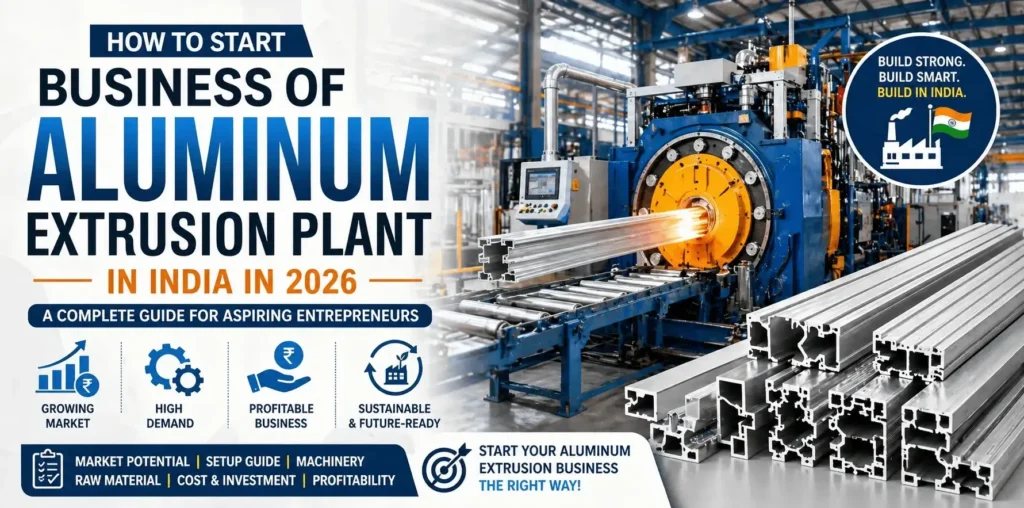
How to Start Business of Aluminum Extrusion Plant in India in 2026

How to Start Business of Aluminum Extrusion Plant in India in 2026

How to Start Business of Aluminum Extrusion Plant in India in 2026 Read More »

Aluminum is one of the most versatile and widely used non-ferrous metals in the world. Its lightweight, corrosion-resistant, and high-strength properties make it an ideal material for construction, transportation, consumer goods, solar panel frames, electronics, and more. One of the most important processes in the aluminum industry is extrusion, which allows the metal to be shaped into complex profiles for countless applications. With rapid urbanization, infrastructure growth, and the electric vehicle boom, the business of aluminum extrusion plant is becoming an increasingly attractive opportunity for entrepreneurs and MSMEs in India. Aluminum extrusion involves heating aluminum billets and forcing them through a die to create long, uniform profiles like channels, angles, rods, tubes, and custom designs. With growing demand from industries like real estate, automotive, railways, and electronics, starting a business of aluminum extrusion plant offers excellent growth and revenue potential. In this blog, we’ll explain the setup process, machinery, investment, market trends, and profitability of entering this sector. Visit this Page for More Information: Start a Business in Aluminium Downstream Sector Scope of the Business of Aluminum Extrusion Plant The global aluminum extrusion market is expected to reach USD 130 billion by 2030, growing at a CAGR of over 6%. In India alone, aluminum consumption is projected to reach 10 million tonnes by 2030, with extrusions making up 25–30% of this usage. Key Application Sectors: Construction and infrastructure Renewable energy (solar and wind) Automobiles and electric vehicles Electrical and electronics Consumer products and modular furniture Starting the business of aluminum extrusion plant gives you access to both B2B and B2C markets with high customization flexibility and growing demand. Read our Books Here: The Complete Technology Book on Aluminium and Aluminium Products

Thriving Business of Manufacturing Alu-Alu Blister Packaging for Medicines

Thriving Business of Manufacturing Alu-Alu Blister Packaging for Medicines Read More »

In the highly regulated and quality-sensitive pharmaceutical industry, packaging plays a vital role in preserving the potency, integrity, and shelf life of medicines. Among various types of pharmaceutical packaging, Alu-Alu blister packaging for medicines has emerged as the gold standard, especially for moisture-sensitive and high-value drugs. This packaging solution not only ensures extended product protection but also complies with stringent international regulatory norms. Due to the rising demand for durable, contamination-free packaging, the business of manufacturing Alu-Alu blister packaging for medicines is thriving and offers remarkable growth opportunities for MSMEs and large-scale investors alike. Alu-Alu blister packs are formed using aluminum-based cold-forming technology that provides an impermeable barrier to light, oxygen, and moisture. As India’s pharmaceutical exports grow year after year, the demand for high-grade packaging materials like Alu-Alu foil is also expanding rapidly, making this a highly profitable and essential B2B venture. Visit this Page for More Information: Start a Business in Packaging  Industry Why Alu-Alu Blister Packaging for Medicines is in High Demand Alu-Alu packaging is preferred for: Heat- and moisture-sensitive medicines High-end tablets and capsules Export-quality pharmaceutical products Long shelf-life drug formulations Due to its multi-layer barrier properties (aluminum + nylon + PVC), Alu-Alu blister packaging for medicines provides the highest protection level in the pharma sector, ensuring that drugs remain effective till the expiry date. Related Business Plan: Packaging Industry 1. What is Alu-Alu Blister Packaging? Alu-Alu blister packaging (also known as cold-form foil packaging) consists of: Aluminum Foil (Alu) – Provides full light and gas barrier Nylon Film – Adds flexibility and puncture resistance PVC or PVdC Film – Provides formability It involves a cold-forming process where the foil is shaped into cavities without heat and sealed with another aluminum foil to create an air-tight blister pack. Common Products: Antibiotics, cardiovascular drugs, hormone tablets, nutraceuticals, and export pharmaceuticals. Read our Books Here: The Complete Technology Book on Aluminium 2. Growing Market Opportunity India’s Pharma Packaging Market is projected to reach $3.2 billion by 2026, with blister packaging holding the lion’s share Exports: Over 200 countries import Indian medicines, requiring international-grade packaging like Alu-Alu Regulatory Push: Alu-Alu is often a compliance requirement under US FDA, EMA, and WHO-GMP standards for sensitive formulations The demand for Alu-Alu blister packaging for medicines is expected to grow at a CAGR of 6.8% globally till 2030. Read Similar Articles: How to Start Packaging Business 3. How to Start Alu-Alu Blister Packaging Manufacturing Business To begin this venture, you’ll need: Land & Infrastructure: Covered space: 5000–8000 sq. ft. Controlled environment for GMP compliance Separate areas for raw material, processing, and storage Key Machinery: Alu-Alu Blister Packing Machine Cold Forming Station Roller Sealing Station PVC/Alu Feeding Unit Dehumidifier and Dust Control Systems Die Set and Punch Tools Automatic Cutting and Stamping Machine Cost of Machinery: ?50 lakh – ?2 crore based on speed and automation level Click here to send your queries/Contact Us 4. Raw Materials Used Aluminum Foil (45–60 microns) Nylon Film PVC/PVdC Film Heat-Seal Lacquer Printing Ink (for brand labeling) Desiccants (optional for packing) All raw materials must be of pharmaceutical-grade quality as per Pharmacopeia standards. Related Feasibility Study Reports: Aluminium Foil (food Packaging And Pharmaceuticals Foils) 5. Manufacturing Process Cold Forming: Laminated film is fed and formed into cavity blisters using cold-forming dies Filling: Tablets or capsules are automatically dropped into cavities Sealing: Top aluminum foil is heat-sealed over the cavity Printing: Batch number, expiry, and brand details are printed Cutting & Packing: Packs are cut into standard sizes and packed in cartons 6. Licensing & Regulatory Requirements Udyam/MSME Registration Factory License GMP Certification FSSAI License (if for nutraceuticals) Pollution Control Board NOC BIS or ISO 15378:2017 Certification (optional but recommended) 7. Estimated Investment & ROI Cost Component Estimated Range Land & Setup ?50 lakh – ?1 crore Machinery ?50 lakh – ?2 crore Raw Material (initial stock) ?20 lakh – ?50 lakh Utilities, Staff, Licensing ?15 lakh – ?30 lakh   Total Startup Cost: ?1.5 crore – ?3.5 croreProfit Margins: 15%–25%Monthly Revenue Potential (for 10 lakh blister capacity): ?50 lakh – ?1 crore 8. Clients & Marketing Strategy Pharmaceutical Companies Third-Party Drug Manufacturers Exporters and Contract Packers Hospitals and Government Tender Vendors B2B Marketing Channels: Pharma exhibitions (CPHI, IPHEX) IndiaMART, TradeIndia, ExportHub LinkedIn B2B Campaigns Pharmaceutical consultants and sourcing agents 9. Challenges in the Industry Challenge Solution Strict quality norms Adopt ISO and GMP systems Price pressure from large pharma buyers Offer value-added services (custom dies, printing) Limited access to pharma companies Partner with PCD franchise distributors Fluctuating raw material costs Bulk procurement contracts or long-term supplier tie-ups   10. Advantages of Alu-Alu Packaging Business High demand and recurring ordersLow product rejection if GMP is followedLucrative B2B marginsScope for automation and scaleExport opportunity with compliant setup Final Thoughts The business of Alu-Alu blister packaging for medicines is one of the most promising industrial ventures aligned with India’s booming pharmaceutical exports and healthcare growth. With the right setup, compliance, and connections, this venture can deliver sustainable profits and global relevance. It’s a capital-intensive business but comes with high credibility, brand partnerships, and long-term growth. Click here to send your queries/Contact Us Alu-Alu Blister Packaging for Medicines Manufacturing Industry Is one of the project reports by Niir Project Consultancy Services (NPCS). The project report covers all the aspects of business, from analyzing the market, confirming availability of various necessities such as plant & machinery, raw materials to forecasting the financial requirements. The project report by NPCS has benefited engineers, project consultants & industrial consultancy firms not only in India but worldwide. With the project reports on various business plans, NPCS also publishes technology, technical, reference, self-employment and startup books, directory, business and industry database, and a lot more which you can check on the official website. Reasons for Buying NIIR Report: Our research report helps you get a detailed picture of the industry by      providing an overview of the industry along with the market structure and classification. Our report provides market analysis covering major growth driving factors for the

The Complete Book on Coconut Products

The Complete Book on Coconut Products Read More »

The coconut tree, often referred to as the “Tree of Life,” offers a wide variety of high-value products ranging from food and beverages to cosmetics, industrial raw materials, and biofuels. With increasing demand for health-conscious, natural, and eco-friendly alternatives globally, coconut products have gained immense popularity in both domestic and international markets. The Complete Book on Coconut Products versatility of this tropical fruit enables entrepreneurs to explore numerous profitable ventures with high market scalability and export potential. The Complete Book on Coconut Products is designed for aspiring entrepreneurs, agro-based manufacturers, and investors who wish to dive into the thriving world of coconut processing. Whether it’s virgin coconut oil, coconut water, coir, activated carbon, or flour, this book covers every major coconut-based product, its processing, market trends, investment requirements, and profitability. Visit this Page for More Information: Start a Business in Food Processing and Agriculture Based Industry Chapter 1: Understanding the Coconut Value Chain Overview of coconut cultivation and production Coconut-producing states in India and key global regions Seasonal harvesting and yield potential Export hubs and processing clusters Read Similar Articles: FOOD PROCESSING AND AGRICULTURE PROJECTS 2: Virgin Coconut Oil (VCO) Manufacturing What is VCO and its benefits Cold pressing vs fermentation method Machinery required Investment estimate and ROI Packaging, shelf life, and FSSAI norms Domestic and export market Download PDF: The Complete Book on Coconut & Coconut Products Chapter 3: Coconut Water Bottling Business Nutritional value and demand in the health beverage sector Processing and preservation (pasteurization, aseptic bottling) Packaging options (PET, tetra packs) BIS & FSSAI licensing Market channels: modern retail, airlines, exports Read our Books Here: Modern Technology of Food Processing  4: Desiccated Coconut Powder Manufacturing Grating, drying, and powdering process Industrial uses in confectionery, bakery, and snacks Required plant area and machinery Profit margins and buyer segments Related Feasibility Study Reports: Coconut and Coconut Products Chapter 5: Coconut Milk & Cream Production Differences between milk and cream Applications in vegan and lactose-free diets UHT processing and packaging Export compliance for US, EU, and Asian markets Chapter 6: Copra and Coconut Oil Extraction Dry copra and edible oil varieties Traditional expeller units vs modern continuous plants Quality standards (FFA value, moisture) Price volatility and oilcake by-product sales 7: Coconut Shell Activated Carbon Use in air/water purification, gold recovery, pharma Carbonization and activation process High-margin export-oriented business Environmental compliance and pollution control Chapter 8: Coir and Coir-Based Products Extraction of coir fiber and pith Products: mats, ropes, geo-textiles, grow bags High demand in agriculture, gardening, and erosion control Coir board schemes and machinery subsidy Chapter 9: Coconut Sugar & Neera Products Health benefits over regular sugar Evaporation and drying process Neera tapping and fermentation risks Licensing and sweetener market potential 10: Tender Coconut Processing (RTD Drinks & Snacks) Ready-to-drink (RTD) tender coconut juice Coconut chips, ice cream, and jelly Shelf-stable products using cold chain or preservatives Branding and FMCG marketing strategies Chapter 11: Packaging and Branding for Coconut Products Labeling norms, expiry, and storage Eco-friendly packaging trends Brand positioning and online/offline sales channels Export labeling (USFDA, EU organic, Halal) Chapter 12: Business Setup, Investment & Profitability Land, infrastructure, and machinery cost Working capital estimate Project report templates and loan assistance Government subsidies and MSME schemes (SFAC, Coconut Development Board, PMFME) 13: Export Opportunities and Compliance Top coconut product importing countries Trade HS codes and export registration Quality certifications: ISO, HACCP, FSSAI, APEDA Participation in global trade fairs Chapter 14: Success Stories & Industry Insights Case studies of successful coconut startups in India and abroad Interviews with coconut farmers turned entrepreneurs Challenges and solutions in scaling coconut ventures Chapter 15: 50 Coconut-Based Product Ideas You Can Start Virgin coconut oil Flavored coconut water Coconut milk ice cream Desiccated coconut for bakery Activated carbon tablets Coir pots for gardening Organic coconut flour Coconut sugar sachets Coir-based biodegradable planters Coconut shell handicrafts… (List continues to 50 items) Conclusion With its deep cultural roots and massive commercial potential, the coconut is not just a fruit but a full-fledged industry. From food and beverage to health, beauty, agriculture, and export, the opportunities are vast and increasing rapidly. This complete book on coconut products provides actionable knowledge, real-world business models, and the latest insights that can help you build a profitable coconut-based business from scratch. Click here to send your queries/Contact Us See More Links: NIIR PROJECT CONSULTANCY SERVICES, DELHI An ISO 9001:2015 Company ENTREPRENEUR INDIA 106-E, Kamla Nagar, Opp. Mall ST, New Delhi-110007, India. Email: npcs.ei@gmail.com info@entrepreneurindia.co Tel: +91-11-23843955, 23845654, 23845886 Mobile: +91-9097075054, 8800733955 Website: https://www.entrepreneurindia.co  Contact Us

The Perfect Business to Start Your Journey in Aluminum Industry

The Perfect Business to Start Your Journey in Aluminum Industry Read More »

The business of aluminium beverage cans has emerged as a highly scalable and eco-friendly venture in the global packaging industry. With the rapid increase in consumption of soft drinks, energy drinks, ready-to-drink juices, and alcoholic beverages, aluminium cans are now the preferred choice for beverage companies due to their lightweight, recyclability, and extended shelf life. As the demand for sustainable packaging grows, aluminium beverage cans offer entrepreneurs a golden opportunity to enter a booming sector with long-term profitability and export potential. India’s beverage packaging market is expanding at a CAGR of over 5.4%, and the market for aluminium cans is a significant contributor. Giants like Coca-Cola, PepsiCo, Red Bull, and several Indian startups prefer aluminium packaging due to its convenience and environmental benefits. Whether you’re looking to set up a manufacturing unit or invest in a contract packaging facility, the business of aluminium beverage cans offers high margins, scalable operations, and a future-proof market. Visit this Page for More Information: Start a Business in Aluminium Downstream Sector Why the Business of Aluminium Beverage Cans Is Profitable The business of aluminium beverage cans is profitable due to several factors: High demand from the beverage industry (soft drinks, juices, beers, energy drinks) Eco-conscious consumers preferring recyclable packaging Durability and transport-friendliness of aluminium cans Growing export demand from Asia-Pacific, Middle East, and Europe Support from government initiatives like Extended Producer Responsibility (EPR) and Swachh Bharat Aluminium is 100% recyclable without loss in quality, which makes this business sustainable and future-ready. Related Business Plan: Aluminium and Aluminium Downstream Projects 1. Market Scope and Demand Overview India consumes over 20 billion beverage cans annually Aluminium can market is expected to surpass ?4,000 crore by 2027 Recyclability rate of aluminium is over 90%, making it a preferred material Growing trend of ready-to-drink (RTD) beverages and premium drinks in cans Export market potential: UAE, Bangladesh, Nepal, African countries Read Similar Articles: ALUMINIUM PRODUCTS PROJECT 2. Investment Required for Aluminium Can Manufacturing Unit Component Estimated Cost (INR) Land & Factory Setup (30,000+ sq. ft.) ?1 – ?2 crore Aluminium Sheet Rolling Line ?2 – ?3 crore Cupper Press and Bodymaker Machine ?4 – ?6 crore Trimmer, Necking & Flanger Units ?1.5 – ?2.5 crore Inside Coating and Printing Line ?2 – ?4 crore Curing Oven and Packing Line ?1 – ?1.5 crore Utility Equipment (Compressor, ETP) ?50 – ?70 lakh Working Capital ?1 – ?2 crore   Total Investment: ?12 crore to ?20 croreROI: 18–25% annually depending on capacityBreak-even: Within 3–4 years Related Feasibility Study Reports: Aluminum Cans Production 3. Types of Aluminium Cans You Can Produce Standard 250ml and 330ml cans (used for soft drinks and beer) Sleek 180ml energy drink cans 500ml and 1L large-sized cans Aerosol-type aluminium containers for deodorants or sprays (diversification) You can also offer printed cans as OEM for beverage companies or produce plain blanks for third-party printers. 4. Raw Materials Required Aluminium Coil (Sheet stock): Main raw material for cup making Lacquers and Inks: For inner coating and exterior branding Pull tabs and ends (lids): With ring-pull mechanisms Lubricants and gas (for forming process) Packaging Materials: Cardboard trays, shrink wrap Most raw materials can be sourced domestically, or imported from China, UAE, or Europe. 5. Manufacturing Process of Aluminium Beverage Cans Sheet Feeding & Cup Making: Aluminium coil is fed into a cupping press Body Forming: Cups are drawn and ironed into long cylindrical can shapes Trimming & Necking: Height is trimmed; top portion is necked for lid Washing & Drying: Cleaned to remove any lubricant or particles Inside Coating: Special lacquer is sprayed inside and cured Outside Printing: High-speed rotary offset printing for brand labels Curing & Drying: High-temperature ovens to cure ink and coating Lid Seaming: Cans are fitted with pull-tab lids (after beverage filling) Packing & Palletizing: Cans are shrink-wrapped or tray-packed Read our Book Here: The Complete Technology Book on Aluminium and Aluminium Products 6. Licensing and Registration Needed To start the business of aluminium beverage cans, you’ll need: MSME/Udyam Registration Factory License and Pollution Control NOC FSSAI (if filling with beverages as a co-packer) GST Registration Fire Safety and Electrical Clearance ISO 9001 and ISO 22000 for quality and food safety (optional) BIS certification for raw materials (if required) For exports, obtain IEC code and comply with destination country labeling laws. 7. Clientele and Target Market Beverage manufacturers (Coca-Cola, Pepsi, Paper Boat, Bira, Kingfisher) Bottling companies and co-packers Energy drink brands (Red Bull, Monster, Tzinga) Export buyers for plain/printed cans Craft beer and RTD beverage startups 8. Marketing and Distribution Participate in packaging expos and food & beverage trade shows Register on IndiaMART, TradeIndia, Alibaba for B2B buyers Offer custom printing services for beverage startups Tie-up with regional beverage bottlers for bulk orders Leverage green packaging trend in your brand messaging 9. Challenges and How to Overcome Them Challenge Solution High capex Consider leasing equipment or JV with a beverage brand Raw material price fluctuations Secure long-term aluminium contracts Regulatory compliance Hire legal consultant for EPR and food safety Need for constant bulk orders Diversify into aerosol or food-grade containers   10. Future Scope and Expansion Start co-packing RTD juices or cold brews in your own cans Expand into bi-metallic cans or eco-friendly variants Sell printed cans as a value-added service Collaborate with brewery chains and startups Conclusion The business of aluminium beverage cans is booming with the rising demand for sustainable, transport-friendly, and consumer-preferred packaging solutions. Though capital-intensive, this business offers strong margins, repeat demand, and global scalability. With the right technology, regulatory setup, and partnerships, you can build a successful venture in one of the fastest-growing segments of the packaging industry. If you need information about the Business of Aluminium beverage cans, then contact NPCS. The project report from Entrepreneur India enables you to choose a profitable project for investing. If you are thinking about starting a business, one of the first things you should do is contact NPCS. They offer a range of services that can help you get your business off

The Business of Edible Oil | A Booming Business Idea for Food and Cosmetics Industry

The Business of Edible Oil | A Booming Business Idea for Food and Cosmetics Industry Read More »

The business of edible oil is one of the most essential and consistently profitable sectors in the food processing industry. With rising global population, increased health consciousness, and growing demand for diverse cooking oils, this industry presents a significant business opportunity for entrepreneurs, SMEs, and even large-scale investors. Edible oils such as mustard, sunflower, soybean, palm, groundnut, and rice bran oil are household staples, making this a recession-proof and high-demand venture. India is the world’s second-largest consumer of edible oils, with annual consumption crossing 25 million metric tons. The country imports more than 60% of its edible oil needs, leaving vast scope for domestic manufacturers. Starting a business of edible oil allows you to cater to regional tastes, establish a local brand, and even target international markets with organic and cold-pressed oils. Visit this Page for More Information: Start a Business in Edible and Non-Edible Oil Industry H2: Why Start the Business of Edible Oil? The business of edible oil is a lucrative option because: It’s a basic household necessity, ensuring consistent demand Government is promoting Atmanirbhar Bharat in edible oil production Scope to target both B2C (retail consumers) and B2B (hotels, restaurants, industries) Opportunity to export organic and premium-grade oils Consumers are shifting towards cold-pressed, unrefined, and fortified oils With India’s edible oil market expected to grow at a CAGR of 5.1% till 2028, the business outlook is very promising. Related Business Plan: Edible Oil Refinery 1. Types of Edible Oils You Can Manufacture Mustard Oil – High demand in North & East India Soybean Oil – Popular and protein-rich Sunflower Oil – Known for heart-health benefits Groundnut Oil – Common in South India Rice Bran Oil – Health-focused premium segment Palm Oil – Widely used in processed food industry Coconut Oil – Both edible and cosmetic usage Sesame Oil – Used in traditional Indian and Asian cooking Blended Oils – Mix of two oils for price and health balance Read Similar Articles: OILS AND FATS 2. Market Demand and Trends India consumes over 25 million tons of edible oil annually Consumption per capita is rising year after year Health-conscious urban populations are shifting towards cold-pressed oils E-commerce and D2C brands are boosting sales of niche oils Government initiatives are encouraging domestic production over imports The edible oil market in India is projected to reach ?5 lakh crore by 2027. Click here to send your queries/Contact Us 3. Investment Required to Start an Edible Oil Business Expense Head Estimated Cost (INR) Land and Factory Setup (Rural) ?15 – ?40 lakh Oil Expeller and Refining Plant ?20 – ?80 lakh Storage Tanks & Filtration Units ?10 – ?25 lakh Packaging Machines ?8 – ?15 lakh Lab Equipment & Quality Testing ?3 – ?5 lakh Working Capital ?10 – ?25 lakh   Total Investment: ?60 lakh – ?2 croreProfit Margin: 15–25%Break-even Point: 18–24 months (depending on scale and location) Related Feasibility Study Reports: Edible Oils Projects 4. Raw Materials Required Oil Seeds – Mustard, soybean, sunflower, peanuts, sesame, etc. Solvents (for extraction) Packaging Materials – HDPE bottles, tin cans, pouches Labels, cartons, and sealing tapes Preservatives and antioxidants (for refined oil) Tie-ups with local farmers or FPOs can reduce raw material costs significantly. Read our Books Here: Modern Technology of Oils, Fats & Its Derivatives (2nd Revised Edition) 5. Manufacturing Process of Edible Oil Seed Cleaning & De-husking Oil Extraction – Via mechanical expellers or solvent extraction Oil Filtration – To remove residue, wax, gum, and particles Refining (Optional) – Neutralizing, bleaching, and deodorizing Fortification – Adding vitamins A & D (mandatory for retail) Packaging – Automated filling, sealing, and labelling You can choose between refined oil production or cold-pressed oil depending on your target market. 6. Licensing and Regulatory Requirements To run a business of edible oil, you will need: FSSAI License – Mandatory for all food-related businesses Udyam/MSME Registration GST Registration Factory License & Local Trade License Pollution Control Board NOC Agmark Certification (for grading oil) ISO 22000 or HACCP (for food safety – optional but beneficial) Watch other Informative Videos: Investment Opportunity in Edible Oil Manufacturing Unit  7. Target Customers and Sales Channels Retail Consumers – Branded edible oil in 1L, 2L, 5L packs Hotels, Restaurants, and Canteens (HoReCa) – 15L and 20L tins Wholesalers and Distributors – B2B bulk packaging Supermarkets and Grocery Chains – Regional brand tie-ups Export Markets – Focus on organic/cold-pressed oil You can also explore private label manufacturing for large food brands. 8. Marketing Strategies to Grow Your Brand Position your product as “pure, local, and health-friendly” Use WhatsApp, Facebook, and Instagram for rural and urban outreach List your product on Amazon, Flipkart, BigBasket, Jiomart Conduct tasting campaigns and food exhibitions Provide bulk discounts to food caterers and canteens Create educational content on healthy cooking oils 9. Challenges and Risk Factors Challenge Solution Price volatility of oil seeds Contract farming or long-term supply deals Consumer trust in new brands Emphasize purity, quality checks, and origin Competition from large brands Focus on niche products like cold-pressed Storage and shelf-life issues Use nitrogen flushing and proper packaging   10. Growth Potential and Future Trends Launch value-added products like flavored oils or infused oils Expand into export markets with organic certifications Build a D2C brand with e-commerce and subscription models Diversify into edible oil soaps, cosmetics, and cake (residue) for cattle feed Invest in eco-friendly packaging and carbon-neutral production Conclusion The business of edible oil is a high-potential venture driven by daily demand, evolving health preferences, and India’s growing food economy. Whether you focus on bulk refined oil or small-scale cold-pressed varieties, this business ensures scalability, brand-building opportunities, and long-term sustainability. With the right blend of quality, packaging, and marketing, your edible oil brand can become a household name in no time. Click here to send your queries/Contact Us Reasons for Buying NIIR Report: Our research report helps you get a detailed picture of the industry by providing an overview of the industry along with the market structure and classification. Our report provides market analysis

Start a Manufacturing Business of Soda Ash

Start a Manufacturing Business of Soda Ash Read More »

The Manufacturing Business of Soda Ash is a highly rewarding industrial opportunity in the chemical manufacturing sector. Soda Ash, scientifically known as sodium carbonate (Na?CO?), is a versatile chemical used in several industries including glass production, detergents, chemicals, textiles, paper, metallurgy, and water treatment. With India’s expanding industrial base and rising demand for soda ash across sectors, establishing a soda ash manufacturing unit is both profitable and scalable. India is among the top five global producers of soda ash, but domestic consumption continues to rise, especially due to growth in the glass and detergent industries. Starting a Soda Ash manufacturing business requires careful planning, significant capital investment, and strict environmental compliance—but the market potential makes it a compelling venture. Visit this Page for More Information: Start a Business in Chemical Industry Projects Why Start the Manufacturing Business of Soda Ash? The Manufacturing Business of Soda Ash is vital to industrial manufacturing. Its non-toxic nature, wide usage, and growing demand across glass, detergent, and textile sectors make it a strong investment opportunity. With supportive government policies and industrial infrastructure, India is ideal for setting up soda ash production units. Related Business Plan: Soda Ash 1. What is Soda Ash? Soda Ash is a white, odorless, and water-soluble chemical used for pH regulation, cleaning, softening water, and manufacturing glass. It exists in two forms: Light Soda Ash – Used in detergents, chemicals, pulp & paper Dense Soda Ash – Primarily used in glass manufacturing Key Properties: Chemical formula: Na?CO? pH: ~11.5 (alkaline) Non-flammable and stable under normal conditions Read Similar Articles: Soda Ash (Light & Soda Ash Dense) Production 2. Market Overview and Demand Global Market Size (2024): USD 20+ Billion India’s Production (FY2023): 3.9 million tonnes Expected CAGR (2024–2030): 4.5% globally Major Consumers: Glass industry (~50% usage), detergents (~25%), chemicals, metallurgy India’s growing demand for flat glass (automotive and construction) and eco-friendly detergents is pushing soda ash consumption higher. Click here to send your queries/Contact Us 3. Types of Soda Ash Manufacturing Processes The most common processes are: A. Solvay Process (Most Widely Used) Involves reaction of sodium chloride (salt) and limestone (CaCO?) with ammonia. Reactions: CaCO? ? CaO + CO? CO? + NH? + H?O + NaCl ? NaHCO? + NH?Cl NaHCO? ? Na?CO? + CO? + H?O Related Feasibility Study Reports: Soda Ash (light & Dense) B. Trona Ore Processing (Used in USA) Not viable in India due to absence of Trona reserves. 4. Raw Materials Required Raw Material Purpose Salt (NaCl) Main source of sodium Limestone (CaCO?) Source of calcium and CO? Ammonia (NH?) Intermediate reactant (recycled) Water For reaction and crystallization Coal/Gas For heating and CO? generation Anti-caking agents For powder stability   India has ample salt and limestone reserves, making raw material procurement cost-effective. Read our Books Here: Detailed Project Profiles On 9 Selected Chemical Industries (2nd Edition) 5. Manufacturing Process Flow Limestone Calcination: CaCO? is heated to release CO? Ammoniation of Brine: NH? is dissolved in brine Carbonation: CO? passed through ammoniated brine to form NaHCO? Precipitation: NaHCO? crystallizes out and is filtered Calcination of NaHCO?: Heated to form soda ash Ammonia Recovery: NH? is recovered using lime and recycled Drying and Packaging Watch other Informative Videos: Calcium Carbonate Production 6. Machinery and Equipment Required Equipment Approximate Cost (INR) Limestone Kiln/Calciner ?3–?5 crore Carbonation Towers ?2 crore Ammonia Recovery Unit ?2–?3 crore Crystallizers and Filters ?2 crore Calciner Furnace ?3 crore Drying and Screening Systems ?1.5 crore Material Handling & Storage ?1.5 crore Packaging and Bagging Machines ?1 crore   Total Setup Cost (Machinery only): ?15 – ?20 crore for a medium-sized unit 7. Infrastructure and Power Requirements Land: Minimum 3–5 acres in an industrial zone Power Load: 500–800 kW depending on plant size Water Requirement: High (for processing and ammonia recovery) Labor: 40–60 employees (technical, production, safety) Proximity to raw material and logistics hub is ideal 8. Legal and Regulatory Approvals License / Requirement Authority Company & Factory Registration Registrar of Companies, Labor Dept GST Registration GST Portal Environmental Clearance (EC) MoEFCC and State PCB Consent to Establish & Operate State Pollution Control Board Hazardous Waste Authorization SPCB Explosives/Storage Licenses PESO (if needed)   The Solvay process emits CO? and uses ammonia, so environmental compliance is critical. 9. Investment and Profitability Cost Component Estimated Investment (INR) Land and Civil Work ?5–?7 crore Machinery and Equipment ?15–?20 crore Licensing & Approvals ?1 crore Working Capital (6 months) ?5–?6 crore   Total Investment: ?25 – ?35 croreNet Profit Margin: 15% – 25%Payback Period: 2.5 – 3 years 10. Target Markets and Buyers Glass manufacturers (Saint Gobain, Asahi, Gold Plus) Detergent companies (HUL, P&G, Nirma) Textile mills and dyeing units Pulp and paper manufacturers Water treatment plants Export markets: Middle East, Africa, Southeast Asia Positioning the product as high-purity and eco-compliant will attract premium clients. 11. Marketing Strategies Join chemical industry associations Participate in trade exhibitions (e.g., Chemexpo India) List on B2B portals (IndiaMART, TradeIndia, Alibaba) Offer bulk supply contracts to large factories Highlight cost-efficiency and purity levels in packaging and branding 12. Challenges and Risk Management Challenge Solution CO? emissions Install carbon capture or scrubbers Raw material price fluctuations Long-term supplier contracts High setup cost Explore soft loans or SIDBI schemes Technical manpower requirements Train local staff or hire experts   Conclusion The Manufacturing Business of Soda Ash is an ideal opportunity for industrial entrepreneurs seeking to enter a high-demand, recession-resilient chemical sector. With soda ash being a cornerstone of multiple essential industries, especially glass and detergents, the long-term prospects remain strong. By ensuring compliance, efficient production, and targeted marketing, a soda ash unit can yield sustainable returns for decades. Click here to send your queries/Contact Us Reasons for Buying NIIR Report: Our research report helps you get a detailed picture of the industry by providing an overview of the industry along with the market structure and classification. Our report provides market analysis covering major growth driving factors for the industry, the latest market trends and the regulatory framework of the industry. Our Report provides

Why Ferro Manganese Is An Important Part Of The Production Business?

Why Ferro Manganese Is An Important Part Of The Production Business? Read More »

The significance of Ferro Manganese in production business cannot be overstated. As an essential ferroalloy composed primarily of iron and manganese, it plays a crucial role in the steel and metallurgical industries. This compound is used extensively to enhance the strength, hardness, and wear resistance of steel, making it indispensable for the production of construction materials, automotive components, railways, shipbuilding, and other heavy machinery. Ferro Manganese acts as a deoxidizer and desulfurizer, helping remove oxygen and sulfur from molten steel during manufacturing. As a result, the final steel product gains better tensile strength and corrosion resistance. Considering India’s expanding infrastructure, construction, and manufacturing sectors, the demand for Ferro Manganese in production business continues to grow, making it a critical input for industrial development and a valuable segment for entrepreneurs to invest in. Visit this Page for More Information: Start a Business in Ferroalloys Production Importance of Ferro Manganese in Production Business The use of Ferro Manganese in production business is vital for several reasons. It ensures quality enhancement of metals, especially steel, which is the backbone of industrial growth. The ferroalloy helps in refining steel and improving its mechanical properties, making it essential for mass production in construction, transportation, and engineering. Additionally, it supports the sustainability and cost-effectiveness of steel manufacturing processes by minimizing wastage and ensuring uniformity in product quality. As global steel demand increases, so does the reliance on high-grade ferroalloys like Ferro Manganese. Related Business Plan: FERROALLOYS-FERROMANGANESE 1. What Is Ferro Manganese? Ferro Manganese is a ferroalloy composed of: Manganese (70–80%) Iron (remainder) Sometimes contains carbon in high or medium amounts There are three main types of Ferro Manganese used in production: High Carbon Ferro Manganese Medium Carbon Ferro Manganese Low Carbon Ferro Manganese Each type is suited for different industrial applications based on the carbon content required in the final product. Read Similar Articles: FERROALLOYS 2. Role of Ferro Manganese in Steel Manufacturing Steel manufacturing is the largest consumer of Ferro Manganese. Its roles include: Deoxidization: Removes oxygen from molten steel Desulfurization: Eliminates sulfur impurities Alloying Agent: Improves hardness, toughness, and wear resistance Grain Refinement: Enhances the microstructure of steel Strength Enhancement: Provides high tensile strength Without Ferro Manganese, it would be difficult to produce high-quality steel used in bridges, buildings, pipelines, and machinery. Related Feasibility Study Reports: High Carbon Ferro Manganese 3. Application Areas of Ferro Manganese Construction Industry – Rebars, structural steel Automobile Industry – Engine parts, axles, transmission components Railways – Rails, wheels, and other components Shipbuilding – Hulls, frames, and reinforcement structures Heavy Engineering – Mining equipment, machine tools Power Plants – Boilers, pressure vessels 4. Global and Indian Market Outlook The global ferroalloys market was valued at over USD 45 billion in 2023 and is projected to grow steadily. India is the second-largest producer of steel, after China, and thus a major consumer of Ferro Manganese. The Indian ferroalloy market is driven by domestic demand and exports to countries like Japan, Korea, and the Middle East. Odisha, Chhattisgarh, and Jharkhand are major hubs of Ferro Manganese manufacturing in India. According to the Indian Bureau of Mines, India produced over 300,000 metric tonnes of Ferro Manganese in 2023. Read our Books Here: The Complete Book on Ferroalloys 5. Why Entrepreneurs Should Consider Ferro Manganese Production Consistent Demand: Steel demand is rising due to urbanization and infrastructure growth Export Potential: High-quality Indian ferroalloys are in demand globally Raw Material Availability: India has rich reserves of manganese ore Government Support: Under “Make in India,” metallurgy and manufacturing sectors are prioritized Good ROI: High-margin product with scope for long-term contracts 6. Manufacturing Process of Ferro Manganese Raw Material Preparation – Manganese ore, coke, and iron scrap Smelting in Submerged Arc Furnace – Reduction of ore at high temperatures Separation – Slag and molten alloy separated Casting and Cooling – Molten alloy poured into molds and cooled Crushing and Screening – Broken down to specified sizes Packing and Dispatch The setup requires a submerged arc furnace, raw material handling units, and pollution control systems. Watch other Informative Videos: Opportunities in the Ferroalloy Sector 7. Key Challenges in Ferro Manganese Business Challenge Mitigation Strategy High energy consumption Invest in energy-efficient equipment Pollution control compliance Install ESPs and follow environmental norms Raw material price fluctuation Establish long-term supplier contracts Global market volatility Diversify clients and export destinations   8. How to Start a Ferro Manganese Production Business Land and Factory Setup – Preferably near mining hubs Machinery Purchase – Furnace, crushers, conveyor systems Raw Material Procurement – Link with NMDC or private mines License & Approvals – Factory license, pollution control, power agreements Skilled Workforce – Engineers, metallurgists, furnace operators Marketing & Sales – Partner with steel plants, forging units, and foundries 9. Investment and Profitability Component Estimated Cost (INR) Land & Building ?50 – ?100 lakh Furnace & Equipment ?200 – ?300 lakh Pollution Control Setup ?50 – ?75 lakh Working Capital ?100 – ?150 lakh   Total Investment: ?4 crore – ?6 croreNet Profit Margin: 20–30%Breakeven Period: 2–3 years depending on production scale Conclusion The importance of Ferro Manganese in production business lies in its indispensable role in manufacturing superior quality steel and alloys. As India’s construction and manufacturing sectors continue to grow, so will the demand for ferroalloys. Entrepreneurs looking for an industrial venture with strong fundamentals, global demand, and long-term sustainability should seriously consider investing in this sector. With the right technology, compliance, and partnerships, the Ferro Manganese business can yield both stability and profitability. Click here to send your queries/Contact Us Reasons for Buying NIIR Report: Our research report helps you get a detailed picture of the industry by providing an overview of the industry along with the market structure and classification. Our report provides market analysis covering major growth driving factors for the industry, the latest market trends and the regulatory framework of the industry. Our Report provides an analysis and in-depth financial comparison of major Players / Competitors. Our Report provides indispensable buyers’ data with their company financials as well

How to Start a Successful Manufacturing Business of Silico Chrome?

How to Start a Successful Manufacturing Business of Silico Chrome? Read More »

The manufacturing business of Silico Chrome is a significant part of the ferroalloy and metallurgy industries. Silico Chrome is a ferroalloy composed primarily of silicon (Si), chromium (Cr), and iron (Fe), widely used as an additive in the production of stainless steel and other corrosion-resistant alloys. It acts as a deoxidizer and alloying agent, improving the mechanical and chemical properties of the final metal product. As the global demand for stainless steel rises due to infrastructural development, automotive advancements, and heavy engineering requirements, the market for Silico Chrome is growing consistently. The manufacturing business of Silico Chrome is becoming increasingly attractive for entrepreneurs looking to enter the metallurgical sector, thanks to India’s abundant mineral resources, favorable government policies, and growing industrial base. Why Silico Chrome Manufacturing Is a Smart Industrial Investment The manufacturing business of Silico Chrome offers high growth potential due to its essential role in stainless steel production and specialty alloy manufacturing. With chromium sourced from chromite ores and silicon available through silica reduction processes, India is strategically placed to scale this business with strong export potential. The alloy’s unique ability to enhance corrosion resistance, hardness, and thermal stability makes it indispensable in the manufacturing of knives, surgical instruments, turbines, exhaust systems, and industrial tools. Visit this Page for More Information: Start a Business in Ferroalloys Production 1. What is Silico Chrome? Silico Chrome, also known as Ferro Silicon Chromium or FeSiCr, is an alloy that generally contains: Silicon (30–40%) Chromium (50–60%) Iron (balance) Low carbon content, which is desirable for stainless steel applications This alloy is used as a master alloy in steel plants for refining and enhancing steel characteristics. Related Business Plan: Ferroalloys 2. Applications of Silico Chrome Stainless Steel Production – Enhances corrosion resistance Tool Steel Manufacturing – For making durable cutting tools Heat-Resistant Alloys – Used in furnace parts and turbines Industrial Valves and Pumps – Ensures anti-corrosive and high-performance usage Superalloys – Used in aerospace and defense components Its widespread application across critical sectors ensures continuous demand in domestic and export markets. Read Similar Articles: FERROALLOYS 3. Market Demand and Industry Outlook India is the second-largest stainless steel producer in the world The global ferroalloy market is expected to surpass USD 62 billion by 2030 Growing demand from infrastructure, automotive, and machinery sectors Export potential to Europe, the Middle East, Southeast Asia, and Africa The Indian metallurgical market is poised for 7–9% CAGR over the next five years, boosting demand for ferroalloys like Silico Chrome. Related Feasibility Study Reports: Ferro Alloys,Ferroalloys,Manganese Alloys 4. Manufacturing Process of Silico Chrome The production of Silico Chrome involves carbothermic reduction in an electric submerged arc furnace. Here’s the step-by-step process: Raw Material Preparation Chromite ore (Cr?O?) Quartzite or silica (SiO?) Coke or charcoal (carbon source) Iron scrap (optional for alloy balance) Mixing and Charging Raw materials are mixed in precise ratios and fed into the furnace. Smelting High temperature (above 1600°C) melts the mix; carbon reduces the oxides. Tapping and Casting Molten Silico Chrome is tapped and cast into molds. Cooling and Crushing The alloy is cooled, crushed, and graded into specific sizes. Screening and Packaging Sorted for uniformity and packed for dispatch. The entire operation must adhere to ISO, BIS, and environmental safety standards. Read our Books Here: The Complete Book on Ferroalloys 5. Machinery and Equipment Required Submerged Arc Furnace (SAF) – 5 MVA or higher Raw material crushers and feeders Weighing and batching system Cooling conveyors and crushers Pollution Control Unit (Fume extraction and dust filters) Power transformers and panels Laboratory setup for QC and metallurgical analysis 6. Raw Material Sources Raw Material Source Location in India Chromite Ore Odisha, Karnataka, Jharkhand Silica/Quartzite Rajasthan, Andhra Pradesh Coke/Charcoal Chhattisgarh, Jharkhand Iron Scrap Industrial zones (PAN India)   Long-term agreements with mines or NMDC will help ensure steady supply. Watch other Informative Videos: How to Start Production of Ferroalloys | Ferro Manganese | Ferro Molybdenum | Ferro Niobium 7. Investment and Profitability Item Estimated Cost (INR) Land & Building (Industrial) ?1 – ?2 crore Furnace & Machinery Setup ?4 – ?6 crore Pollution Control Equipment ?50 – ?80 lakh Working Capital (6 months) ?1.5 – ?2 crore Licensing & Other Infrastructure ?50 lakh – ?1 crore   Total Investment: ?7 – ?11 croreGross Profit Margin: 20–30%Breakeven Period: 2.5 – 3 years 8. Licensing and Compliance To start the manufacturing business of Silico Chrome, you need: Factory License Pollution Control Board NOC Power Connection Agreement DGFT Certificate (for exports) ISO 9001 and ISO 14001 Certifications MSME/Udyam Registration Labour and Fire Safety Approvals Compliance ensures uninterrupted production and eligibility for government incentives. 9. Marketing Strategy Target steel and alloy manufacturers directly Join associations like IFAPA (Indian Ferro Alloy Producers’ Association) Set up B2B connections via IndiaMART, Alibaba, TradeIndia Participate in Metallurgical Expos like IME and IFEX Offer bulk pricing and quality guarantees to lock long-term clients Explore export partnerships in Europe, South Asia, and Africa 10. Challenges in Silico Chrome Manufacturing Challenge Solution High energy consumption Use energy-efficient furnaces and power deals Pollution control compliance Install ESPs, bag filters, and recycle systems Price fluctuation in raw materials Secure bulk purchase contracts Skilled labor shortage Train local youth and offer retention plans   Conclusion The manufacturing business of Silico Chrome is a lucrative and technically rewarding industrial opportunity. With rising steel demand, availability of raw materials in India, and robust domestic and export markets, this business holds long-term potential. Entrepreneurs with access to capital, technical know-how, and compliance orientation can establish a strong foothold in the ferroalloy sector. Click here to send your queries/Contact Us Reasons for Buying NIIR Report: Our research report helps you get a detailed picture of the industry by providing an overview of the industry along with the market structure and classification. Our report provides market analysis covering major growth driving factors for the industry, the latest market trends and the regulatory framework of the industry. Our Report provides an analysis and in-depth financial comparison of major Players / Competitors. Our Report provides indispensable

Why Ferroalloys Demand Is Increasing In The Business World?

Why Ferroalloys Demand Is Increasing In The Business World? Read More »

In recent years, the global industrial and manufacturing sectors have seen a marked rise in the use of specialty materials—and among the most vital of these are ferroalloys. The phrase “Ferroalloys demand is increasing” isn’t just a market observation—it reflects the underlying transformation of key sectors like steel, infrastructure, automotive, aerospace, and clean energy. Ferroalloys, which are alloys of iron with a high proportion of other elements such as manganese, silicon, chromium, and molybdenum, are essential in producing high-quality steels and alloys. The increasing demand for sustainable construction, electrification, high-speed transport, and renewable energy technologies is fueling the growth of the ferroalloy industry. Emerging economies like India, Brazil, and Southeast Asian nations are investing heavily in infrastructure and industrial capacity, thus contributing to why ferroalloys demand is increasing globally. With growing global steel production and advanced metallurgical applications, ferroalloys have emerged as an irreplaceable component of modern manufacturing and technological progress. Visit this Page for More Information: Start a Business in Ferroalloys Production The Reason Behind Why Ferroalloys Demand Is Increasing Rapidly The main reason ferroalloys demand is increasing is due to the widespread expansion of industries that require high-strength, corrosion-resistant steel and metal alloys. From bridges and skyscrapers to electric vehicles and solar panels, ferroalloys are indispensable. Their ability to enhance steel properties like ductility, hardness, and wear resistance makes them essential in today’s evolving manufacturing processes. Related Business Plan: Ferroalloys, Ferro Alloys, Manganese Alloys 1. Growth in Global Steel Production Steel production is the backbone of the ferroalloy industry. Ferroalloys such as Ferro Manganese, Ferro Silicon, and Ferro Chrome are added to molten iron to improve steel quality. Global crude steel production in 2023 exceeded 1.85 billion metric tonnes India became the second-largest steel producer after China Each tonne of steel requires about 10–15 kg of ferroalloys, highlighting their importance As long as steel remains a vital material for construction and manufacturing, the ferroalloys demand will keep increasing. Read Similar Articles: FERROALLOYS 2. Infrastructure Development in Emerging Economies Countries like India, Indonesia, and African nations are focusing on rapid urbanization and infrastructure expansion: Smart cities, metro rail, flyovers, and airports are on the rise Government projects like PM Gati Shakti and Bharatmala in India are steel-intensive Ferroalloys are used to produce TMT bars, structural beams, rails, and heavy-duty pipelines As a result, ferroalloys demand is increasing with every new infrastructure milestone. Click here to send your queries/Contact Us 3. Automotive and Electric Vehicle Boom Modern automotive manufacturing relies on lightweight yet strong steel alloys for: Engine components Gear parts Chassis and suspension systems Battery enclosures in EVs With global EV sales rising by 31% in 2023, manufacturers are using high-performance steels enhanced by ferroalloys to reduce vehicle weight and increase fuel efficiency. This shift is a strong indicator of why ferroalloys demand is increasing year over year. Related Feasibility Study Reports: Ferro Alloys,Ferroalloys,Manganese Alloys 4. Renewable Energy Sector Growth Wind turbines, solar panel frames, and hydro power plants demand corrosion-resistant steel alloys: Wind turbine blades use steel strengthened with Ferro Vanadium and Ferro Silicon Solar farms use steel structures to support panels Hydropower uses alloyed steel turbines for long-term durability The push toward clean energy is pushing metallurgical innovation, where ferroalloys play a vital role. 5. Technological Advancements in Metallurgy With the demand for lightweight, high-strength, and wear-resistant materials: New grades of steel and superalloys are being developed Aerospace, defense, and marine sectors need metals with extreme strength-to-weight ratios Ferroalloys like Ferro Titanium and Ferro Niobium are used in aerospace components These innovations ensure that ferroalloys demand is increasing with every leap in technology. 6. Expanding Export Markets India, South Africa, China, and Brazil are top producers of ferroalloys and serve international demand: India’s ferroalloy exports grew by 18% in 2023, especially to Europe and the Middle East Strategic trade partnerships and free trade agreements are opening new markets Ferroalloy producers are gaining from rising steel demand in construction-heavy countries like UAE and Indonesia Hence, not only domestic but global ferroalloys demand is increasing with robust trade flows. 7. Government Support and Industrial Incentives Many governments, including India’s, are supporting ferroalloy industries by: Providing subsidies under PLI schemes Easing mining and mineral transportation Offering incentives for setting up steel clusters and industrial corridors This support helps entrepreneurs and existing industries expand, contributing to why ferroalloys demand is increasing steadily. 8. Ferroalloy Applications Across Key Industries Industry Ferroalloy Used Purpose Construction Ferro Manganese, Ferro Chrome Strength & corrosion resistance Automotive Ferro Silicon, Ferro Niobium Lightweight alloy manufacturing Aerospace Ferro Titanium High-temperature resistance Energy Ferro Vanadium Durability in turbines & equipment Foundries Ferro Silicon, Ferro Boron Deoxidizing and refining applications   Such widespread usage across sectors is why ferroalloys demand is increasing every quarter. 9. Profitability for Manufacturers and Traders With rising demand, ferroalloy manufacturers and suppliers enjoy: Higher margins on specialized ferroalloys Bulk contracts with steel plants Export opportunities to developed and emerging markets Scope for automation in production to reduce cost Entrepreneurs entering the ferroalloy space are finding it a capital-intensive but highly rewarding business segment. 10. Future Outlook: Why the Trend Will Continue Global steel demand projected to grow by 3.1% annually till 2030 Electric vehicle manufacturing to triple by 2028 Construction of climate-resilient cities and green buildings Investment in next-generation alloys and metallurgical R&D All these trends confirm that ferroalloys demand is increasing and will continue to rise over the next decade. Conclusion The industrial world is transforming rapidly, and at the core of this transformation lies the increasing use of advanced materials. One of the major players in this evolution is the ferroalloy sector. Whether in steel manufacturing, renewable energy, automobiles, or aerospace, the applications are endless—explaining why ferroalloys demand is increasing consistently in the business world. For investors, manufacturers, and industrialists, this presents a strong opportunity. As economies modernize and industries become more tech-driven, ferroalloys will only grow in strategic importance. Now is the right time to understand, invest, and innovate in this dynamic field. Read our Books Here: Steel, Iron, Ferrous, Non-Ferrous

Have a business idea? Let's make it happen together-contact us now!


Contact Form Demo

This will close in 0 seconds

Translate »