Our Categories

Our Categories

Best Business Opportunities in India

India’s rapidly growing economy presents numerous promising best business opportunities in India that can help entrepreneurs and startups cater to an entire industry and scale their business. The market globally is evolving, and the key to success is recognizing and capturing the right opportunities.

We have provided insight into best business opportunities in India that are segmented based on industry verticals, including manufacturing, technology, food processing, renewable energy, and services. We analyze most opportunities to assist entrepreneurs in their final decision-making.

We have attempted to reduce the bridge between an individual’s business conception and its realization through this content by presenting actionable business models, emergent methodologies, and new approaches to low or medium-investment startups. We have directed the content toward both novice and experienced entrepreneurs in trying to provide clear insight into best business opportunities in India.

By evaluating these opportunities, entrepreneurs can find potential saturated markets and define the scope of their startup to ensure that it meets the requirements of an evolving market.

Handbook on Production, Recycling of Lithium Ion and Lead-Acid Batteries

Handbook on Production, Recycling of Lithium Ion and Lead-Acid Batteries Read More »

Battery recycling has emerged as a critical component of sustainable energy management in the 21st century. As the use of batteries grows exponentially across industries—from electric vehicles (EVs) and renewable energy storage to consumer electronics—so does the need for efficient and eco-friendly recycling methods. Among the most widely used batteries are lithium-ion and lead-acid batteries. This Battery Recycling Handbook: Lithium-Ion & Lead-Acid provides in-depth insights into how industries recycle these batteries, the technologies they use, the environmental impacts they cause, and the economic value they generate when properly reclaimed. Importance of Battery Recycling Environmental Protection The improper disposal of lithium-ion and lead-acid batteries can lead to serious environmental damage. These batteries contain toxic metals such as lead, cadmium, and lithium that can contaminate soil and groundwater. Recycling mitigates these risks and reduces the need for raw material extraction. Resource Recovery Recycling allows valuable materials such as lead, lithium, cobalt, and nickel to be recovered and reused. This reduces the pressure on mining resources and supports the circular economy. Regulatory Compliance Governments worldwide have introduced regulations mandating the safe disposal and recycling of batteries. Non-compliance can result in hefty penalties and damage to a company’s reputation. Battery Types: Lithium-Ion vs. Lead-Acid Lithium-Ion Batteries Manufacturers use lithium-ion batteries in laptops, mobile phones, electric vehicles, and renewable energy storage systems. These batteries offer high energy density and lightweight properties. Composition Lithium Nickel Cobalt Graphite Electrolytes Applications Electric Vehicles (EVs) Solar Energy Storage Consumer Electronics Lead-Acid Batteries Lead-acid batteries are among the oldest and most reliable battery technologies. They are most commonly found in automotive engines, backup power supplies, and industrial applications. Composition Lead plates Sulfuric acid electrolyte Plastic casing Applications Automobiles UPS systems Industrial forklifts Lithium-Ion Battery Recycling Process Step 1: Collection and Transportation Used batteries are collected from households, businesses, and recycling centers. Proper packaging is crucial to prevent short circuits or leakage during transit. Step 2: Discharging and Dismantling Before processing, batteries are fully discharged to eliminate residual charge, which can be hazardous. They are then manually or mechanically dismantled to separate the casing, electronics, and battery cells. Step 3: Mechanical Separation Crushing and shredding machines break down battery cells into smaller components. Operators then separate plastics, metals, and active materials using techniques like sieving, magnetic separation, and flotation. Step 4: Hydrometallurgical Processing This involves the use of chemical solvents to dissolve and extract metals like lithium, cobalt, and nickel. The process then purifies the solution and recovers the metals through precipitation. Step 5: Pyrometallurgical Processing An alternative method involving high-temperature smelting, which helps recover valuable metals but consumes more energy compared to hydrometallurgy. Lead-Acid Battery Recycling Process Step 1: Collection and Inspection Lead-acid batteries are collected, visually inspected for damage or leakage, and sent to recycling plants. Step 2: Breaking and Separation Batteries are placed in a hammer mill or shredder. The broken parts are passed through water tanks where lead, plastic, and acid components separate based on density. Step 3: Lead Recovery The lead components are melted in furnaces and refined to remove impurities. Recovered lead is then molded into ingots for reuse. Step 4: Acid Neutralization Sulfuric acid is neutralized using lime or converted into sodium sulfate, a compound used in laundry detergents and glass manufacturing. Step 5: Plastic Recycling The plastic casing is cleaned, shredded, and melted to form plastic pellets, which can be used to manufacture new battery casings or other plastic items. Challenges in Battery Recycling Safety Risks Both lithium-ion and lead-acid batteries pose fire and explosion hazards if not handled correctly during recycling. Technological Complexity Lithium-ion batteries have complex chemistries, making it difficult to develop a universal recycling process. Each battery type may require different treatments. Economic Viability Recycling lithium-ion batteries is currently more expensive than extracting raw materials. Innovations and government incentives are essential to make recycling profitable. Informal Sector Practices In many developing countries, unregulated, informal sectors recycle batteries, exposing workers to hazardous conditions and causing environmental pollution. Opportunities and Innovations Second-Life Applications Companies can repurpose some lithium-ion batteries for second-life use in low-demand applications like solar storage systems before recycling them. Advanced Sorting Technologies Companies are developing AI and robotic systems to improve sorting efficiency and reduce manual labor in battery recycling facilities. Closed-Loop Recycling Companies are investing in closed-loop systems and reusing recycled materials to manufacture new batteries, which reduces dependency on virgin materials. Global Regulations and Policies Europe The EU’s Battery Directive mandates recycling targets and extended producer responsibility (EPR). New policies aim to boost recycling rates of lithium-ion batteries. United States The U.S. Environmental Protection Agency (EPA) encourages battery recycling through partnerships and public awareness programs. However, federal regulations are still evolving. India India’s Battery Waste Management Rules (2022) require producers and recyclers to register and report their activities, ensuring compliance and safe practices. Economic Impact of Battery Recycling The global battery recycling market reached over $11 billion in 2023 and will grow exponentially as electric vehicle adoption increases. Lithium-ion and lead-acid battery recycling is not just a sustainability practice—it is a billion-dollar industry offering employment, innovation, and a solution to resource scarcity. How Businesses Can Contribute Implement Take-Back Programs Companies can set up battery take-back schemes to encourage responsible disposal among consumers. Partner with Certified Recyclers Working with licensed recycling firms ensures compliance with environmental laws and proper handling of hazardous waste. Educate Employees and Customers Creating awareness about safe battery disposal methods can amplify recycling rates and build brand reputation. Conclusion The Battery Recycling Handbook: Lithium-Ion & Lead-Acid emphasizes the urgent need to implement efficient and responsible recycling systems for two of the most widely used battery types. With proper processes in place, we can recover valuable resources, reduce environmental impact, and transition toward a circular energy economy. As the demand for batteries continues to rise, so too does our responsibility to manage their end-of-life sustainably. Whether you are a business, policymaker, or individual, understanding and participating in battery recycling is a step forward toward a cleaner, greener future. Visit the page Select and Choose
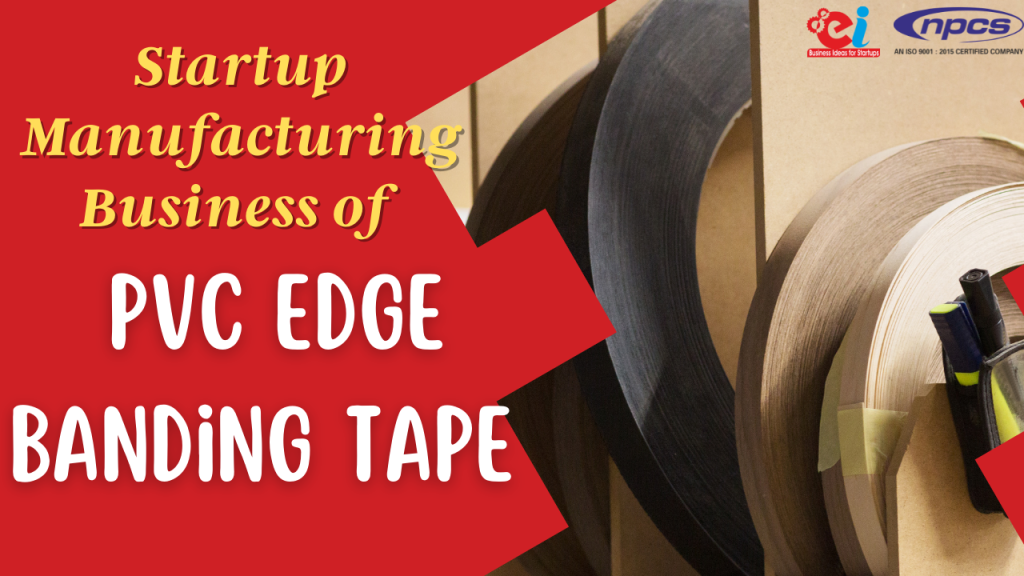

Startup Manufacturing Business of PVC Edge Banding Tape

Startup Manufacturing Business of PVC Edge Banding Tape Read More »

Starting a PVC Edge Banding Tape business can be a highly profitable and sustainable venture in today’s fast-evolving interior design and modular furniture industry. As the demand for aesthetic yet durable furniture products continues to grow, PVC edge banding becomes indispensable for furniture manufacturers. In this in-depth guide, we explore every facet of setting up a successful PVC edge banding tape business, from market analysis to manufacturing and marketing strategies. Understanding the PVC Edge Banding Tape Industry What is PVC Edge Banding Tape and Why It Matters PVC edge banding tape is a thermoplastic strip applied to the raw edges of furniture made from MDF, plywood, or particle board. It acts as both a functional and decorative layer, protecting the furniture from moisture, dust, and chipping while enhancing its appearance. Available in various textures such as wood grain, high gloss, and matte, PVC edge banding is used extensively in the production of office furniture, modular kitchens, wardrobes, and shop interiors. The tape is generally made from polyvinyl chloride (PVC) and is processed with additives like plasticizers, lubricants, stabilizers, and colorants to achieve desired flexibility, adhesion, and finish. Why the Market for PVC Edge Banding Tape is Growing Rapidly The PVC edge banding industry has witnessed exponential growth due to: Surge in modular furniture adoption Expanding urban population and real estate sector Increased consumer spending on home and office decor Export demand from countries in the Middle East, Africa, and Southeast Asia According to industry estimates, the global edge banding materials market is projected to grow at a CAGR of over 7% in the next five years, presenting vast opportunities for new players entering the market. Steps to Start a Successful PVC Edge Banding Tape Business Step 1: Market Research and Competitor Analysis Start by conducting detailed market research on your target regions, product demand, pricing models, and competitors. Evaluate customer preferences such as the thickness (0.45mm to 2mm), width (12mm to 54mm), finishes, and colors. Survey existing PVC edge banding tape sellers to understand supply gaps and value-added services you can offer, such as custom shades or faster deliveries. Step 2: Prepare a Comprehensive Business Plan A strong business plan will act as a roadmap for success. Your business plan should include: Market insights and goals Budget breakdown (machinery, labor, materials) Product range Funding sources SWOT analysis Break-even analysis Risk management plan This document is also essential for presenting to banks and investors when applying for loans or venture capital. Step 3: Legal Compliance and Business Registration To operate legally, register your business under an appropriate entity such as Proprietorship, LLP, or Private Limited Company. Obtain the following licenses: GST Registration MSME/Udyam Registration Pollution Control Certification Factory License (if manufacturing) Import Export Code (IEC) if planning to export These licenses are crucial to avoid legal hassles and to apply for government subsidies. Step 4: Choose Your Business Model – Trading or Manufacturing You can either trade or manufacture PVC edge banding tape: Trading: You source tape from manufacturers and supply to furniture makers or distributors. Lower investment, faster ROI. Manufacturing: You produce edge banding from raw materials. Higher profit margin, brand control, scalable. Many entrepreneurs begin with trading and transition into manufacturing once they understand the market and have built a client base. Step 5: Set Up Your Manufacturing Plant If you choose manufacturing, setting up a well-planned production facility is vital. Essential machinery includes: PVC Extruder Machine: For melting and shaping the tape Printing Machine: For applying wood grain and textured finishes Calibrating Machine: To maintain exact thickness Cooling Line: Ensures consistency Slitting and Cutting Machines: For precision finishing Packing Machine: To roll and seal the product Install all equipment following industrial safety standards. Maintain proper air ventilation, waste disposal, and fire safety equipment. Step 6: Source High-Quality Raw Materials Key materials required: PVC Resin (Base material) Plasticizers (Improve flexibility) Heat stabilizers (Increase thermal stability) Color masterbatches (Add color) Lubricants (Enhance processing) Printing inks (For textured patterns) Establish contracts with multiple reliable suppliers to ensure consistent production. Step 7: Hire and Train Your Workforce To run your unit efficiently, hire: Plant Manager Machine Operators Quality Inspectors Warehouse & Logistics Staff Sales and Admin Staff Train your team on safety protocols, machine handling, and quality assurance. Efficient Production Process for Quality Edge Banding Maintaining High Standards of Quality Control Quality control is crucial for market reputation. Key parameters to monitor: Tape thickness uniformity Accurate color matching Bonding strength with substrate Surface smoothness Roll length and weight Regular inspections and sample testing help reduce defects and maintain consistency. Packaging and Logistics Neatly packaged rolls ensure product safety during transit. Use waterproof, tear-resistant materials and print your brand logo and product details on the labels. Offer customization in roll lengths for larger orders. Establish distribution points in major cities to reduce delivery times. Marketing and Scaling Your PVC Edge Banding Tape Business Develop a Strong Distribution Network Approach: Furniture factories Interior designers Carpenters and contractors Modular kitchen manufacturers Hardware and plywood shops Offer volume-based pricing, free samples, and credit periods to gain trust. Boost Your Online Presence Create a professional website showcasing your PVC edge banding tape range with HD product images, downloadable catalogs, and client testimonials. Optimize for SEO using relevant keywords such as: PVC edge banding tape manufacturer PVC edge banding tape suppliers in India Edge banding for modular furniture Leverage social media platforms like LinkedIn, Instagram, and Facebook. List your products on B2B platforms like IndiaMART, TradeIndia, and Alibaba for global exposure. Participate in Industry Exhibitions Trade fairs such as: DelhiWood IndiaWood Acetech Interzum (Germany) offer excellent opportunities to network, find bulk buyers, and stay updated on the latest trends in PVC edge banding tape technology. Financial Planning and Profitability Cost Breakdown and ROI Initial Investment: ?30–?50 lakhs (for manufacturing) Machinery: ?20–?30 lakhs Raw materials: ?5–?10 lakhs (monthly) Labor & utilities: ?1–?2 lakhs/month Break-even: 12–18 months (average) With strategic planning, manufacturers can expect profit margins of 20–30%, while traders may earn 10–15% based on volumes and market penetration.

5 Best Startup Business Ideas You Can Start

5 Best Startup Business Ideas You Can Start Read More »

As we transition into a more digitally connected, sustainability-focused, and convenience-driven economy, the landscape for starting a new business has never been more exciting or accessible. The year 2025 is expected to bring forward a new wave of innovation, driven by changing consumer behaviors, rapid advancements in technology, and an increased emphasis on health, wellness, and environmental impact. If you’re looking to capitalize on this momentum, exploring the best startup business ideas can put you on the path to success. In this detailed guide, we unveil the top 5 startup business ideas that are primed for profitability, scalability, and relevance in 2025. Each idea is supported by current market trends, consumer demand, and technological enablers that make them easier and cheaper to launch than ever before. Top Startup Business Ideas to Launch in 2025 1. Eco-Friendly Packaging Solutions: Sustainable & Scalable Environmental concerns have pushed businesses and consumers alike to re-evaluate the way products are packaged and delivered. As a result, eco-friendly packaging is no longer just a trend—it is a necessity. Starting a company that focuses on biodegradable, recyclable, or compostable packaging materials is not only environmentally impactful but highly lucrative. Market Insights According to reports, the global sustainable packaging market is expected to reach over $470 billion by 2027. With governments imposing strict regulations against single-use plastic and brands aiming to achieve sustainability targets, this industry presents one of the most promising startup business ideas. What You Need to Start Access to manufacturers of biodegradable materials such as kraft paper, cornstarch, PLA (polylactic acid), or mushroom packaging. Certifications like ISO 14001 or FSC. Branding and marketing that highlights your product’s sustainability. Revenue Streams Selling to ecommerce businesses. Subscription-based packaging supply services. White labeling your products for other eco-brands. Why It Works The conscious consumer is here to stay. Offering green alternatives can help businesses meet regulatory standards while enhancing their brand image. This makes eco-packaging startups essential in 2025 and beyond. 2. AI-Powered Virtual Assistant Agency: Automate the Future Artificial Intelligence has matured rapidly, and its integration into everyday business operations is no longer optional but necessary. A startup offering AI-powered virtual assistant services can meet the growing need for productivity, automation, and cost-efficiency. Business Model Explained Start by recruiting skilled virtual assistants and equipping them with AI tools such as ChatGPT, Jasper, or Copy.ai. These assistants can then handle repetitive tasks, customer service, email management, and lead generation for small and medium enterprises (SMEs). Initial Investment Requirements Licensing for AI tools and CRM platforms. Training modules for onboarding VAs. A sleek website and a client onboarding system. Scalability & Income You can create tiered subscription plans based on services offered, including: Basic admin support. Content creation using AI. Sales funnel and CRM automation. The 2025 Opportunity With remote work becoming normalized, virtual support is a necessity. Combine it with AI and you create one of the most forward-thinking startup business ideas for tech-savvy entrepreneurs. 3. Personalized Health & Wellness Coaching: Health is Wealth Post-pandemic lifestyles have propelled health and wellness to the top of personal and professional priorities. People are now seeking personalized wellness solutions—from fitness routines and meal planning to stress management and sleep optimization. Why the Market is Hot Health-conscious consumers are moving away from generic advice. They want data-driven, customized plans that fit their bodies, goals, and lifestyles. This demand is fueling a multibillion-dollar global wellness market. Business Possibilities One-on-one virtual coaching. Selling tailored wellness kits. Creating mobile apps offering personalized advice. Offering virtual consultations with nutritionists, fitness coaches, and therapists. Tools for Success Integration with wearables (Fitbit, Garmin, Apple Watch) Wellness platforms like Trainerize or MyFitnessPal Creating content for social platforms to build community Revenue Streams Paid memberships. eBooks, downloadable guides, and wellness product sales. Affiliate links for supplements and fitness gear. This niche presents one of the most meaningful and impact-driven startup business ideas you can pursue in 2025. 4. Hyperlocal Delivery Services: Serve Your Neighborhood Today’s consumers want their products delivered faster and more conveniently than ever before. By 2025, launching a hyperlocal delivery service focused on essential and niche products will give you a solid edge in urban and semi-urban markets. Service Areas You Can Cover Groceries and fresh produce Pet supplies Medicines and wellness products Specialty foods (organic, vegan, gluten-free) Technology Stack A geo-location-enabled mobile app Real-time order tracking Integration with digital payment platforms How to Monetize Delivery fees (flat or distance-based) Monthly subscription for unlimited deliveries B2B partnerships with local businesses Competitive Advantage You’re not competing with Amazon—you’re offering speed, familiarity, and reliability. By being community-focused, you build trust, which translates into customer loyalty. Hyperlocal logistics is among the most accessible startup business ideas for first-time founders with a low barrier to entry. 5. EdTech Microlearning Platforms: Knowledge in Minutes The traditional education system is being replaced by microlearning — short, focused, and highly engaging content designed for busy professionals and learners. In 2025, education will continue to decentralize, and platforms that offer bite-sized lessons will see explosive growth. Platform Features Courses that last 5–15 minutes Gamification to enhance learning retention AI-based tutoring and progress tracking Mobile-first design to engage smartphone users Subjects You Can Focus On Coding & Software Development Business Skills & Entrepreneurship Soft Skills (communication, leadership) Test Prep (IELTS, CAT, GMAT) Monetization Models Free courses with paid certifications Subscription-based content Corporate training partnerships White labeling your platform for educational institutions Why Microlearning Works Shorter attention spans and packed schedules mean that learners prefer engaging, quick, and digestible content. The low cost of content creation and the potential for virality make it one of the smartest startup business ideas for digital entrepreneurs. Conclusion: Your Future Begins Now The year 2025 brings a golden window for innovation and entrepreneurship. From sustainability and automation to health and education, these startup business ideas cater to the evolving demands of consumers and businesses alike. The key is to find a problem you’re passionate about solving, start lean, validate quickly, and scale smartly. Each of the five ideas outlined here

6 Profitable Business Ideas for Making Money Fast

6 Profitable Business Ideas for Making Money Fast Read More »

In today’s dynamic economy, identifying profitable business ideas that are quick to launch and easy to scale is more important than ever. Entrepreneurs are looking for ventures that offer high ROI, low startup costs, and flexible operation. Whether you’re starting out with a shoestring budget or are ready to invest in a scalable model, the following business ideas offer lucrative pathways to success in 2025. Why Choosing a Profitable Business Idea Matters Every successful business begins with a solid idea. However, not every idea translates into profitability. The difference lies in market demand, execution strategy, operational costs, and scalability. We believe that profitable business ideas should not only generate revenue but also offer room for growth, automation, and stability in changing markets. Let’s explore six of the most promising, fast-start business models you can begin working on today. 1. E-commerce Reselling: Start Your Digital Retail Empire With the booming digital economy, e-commerce reselling remains one of the most profitable business ideas globally. As a reseller, you don’t need to manufacture products or maintain huge inventories. You can either dropship items or purchase in bulk at low cost and resell at a markup. How to Get Started Choose a profitable niche (e.g., fitness gear, pet supplies, eco-friendly products). Set up an online store using Shopify or WooCommerce. List products from suppliers or manufacturers. Promote through digital ads and SEO. Smart branding, customer service, and SEO-optimized listings can quickly differentiate your store and accelerate revenue generation. 2. Digital Marketing Agency: Help Brands Grow & Earn Big As more businesses shift online, the need for digital visibility has skyrocketed. This makes starting a digital marketing agency one of the most viable and profitable business ideas. You don’t need a physical office to begin—just skills, strategy, and tools. Services You Can Offer SEO (Search Engine Optimization) PPC Campaigns (Google Ads, Facebook Ads) Social Media Marketing Video Editing & Content Creation Email Automation Campaigns Outsourcing technical tasks to freelancers or automation tools can keep your business lean while you focus on strategy and client acquisition. Monthly retainers and performance-based contracts help build consistent cash flow. 3. Food Truck Business: Cook, Move & Serve Profitably The food industry offers timeless value, and food trucks combine flexibility with customer engagement. A well-branded food truck with a unique menu can attract huge daily footfall. Steps to Launch Select a cuisine with local appeal and low ingredient cost. Acquire required licenses and a modified truck. Invest in marketing—think social media, events, and local SEO. Partner with food delivery apps for hybrid sales. With strategic parking spots and daily sales, a food truck can earn significantly more than a fixed-location restaurant with lower operating costs and faster ROI. 4. Niche Freelance Marketplace: Build the Next Big Platform The gig economy is surging. Instead of competing on platforms like Upwork, why not create your own? A niche-specific freelance marketplace can become a magnet for skilled professionals and businesses needing services. Potential Niches Virtual Assistants for Startups Legal & Compliance Freelancers Fitness & Nutrition Experts Local Tutors & Online Instructors The core idea is to build trust and convenience for both buyers and freelancers. Charging listing fees, commissions, and featured service promotions can turn this into a recurring income model—definitely a profitable business idea in 2025. 5. Affiliate Blogging: Monetize Your Passion for Writing Affiliate marketing through blogging remains an untapped goldmine for many. With the right SEO strategy, a blog can drive passive income through affiliate commissions, display ads, and sponsored content. Blog Monetization Tips Target long-tail keywords with high buyer intent. Use internal linking and structured schema for better SEO. Promote products through tutorials, reviews, and comparisons. Build email lists and use affiliate newsletters. Once your blog starts gaining organic traffic, your income scales without needing additional time or resources—a perfect profitable business idea for solopreneurs. 6. Online Coaching & Course Selling: Share Knowledge, Earn Respect E-learning is not just a trend; it’s the future. Platforms like Teachable, Kajabi, or Thinkific make it simple to build and launch your own courses. The key is to focus on high-demand skills and provide structured learning paths. Popular Niches for Online Courses Digital Marketing UI/UX Design Language Learning Yoga & Wellness Finance & Investment You can monetize via one-time course sales, memberships, or coaching packages. Building a strong personal brand on LinkedIn or YouTube enhances visibility and leads to more conversions. Additional Profitable Business Ideas Worth Exploring While the top 6 are already powerful, here are a few bonus ideas with fast ROI potential: Mobile Car Wash Services: High demand, low investment, and eco-friendly options available. Pet Grooming Business: Pet owners spend big on grooming—especially in urban areas. Social Media Influencer Agency: Represent local influencers and connect them with brands. Print-on-Demand Store: Sell custom t-shirts, mugs, and stationery without holding inventory. Each of these models caters to a growing niche, requires low overhead, and can be launched quickly with minimal infrastructure. Final Thoughts: Your Path to Business Success Starts Now Starting a business doesn’t require massive funding or a fancy office anymore. What matters is market demand, execution, and consistency. Whether you’re aiming to create a solo business or scale with a team, these profitable business ideas provide a strong foundation. Focus on solving real problems. Use digital tools to automate and scale. Keep testing and refining your business model. The sooner you act, the faster you can reach financial independence. There has never been a better time to begin. Visit the page Select and Choose the Right Business Startup for You for sorting out the questions arising in your mind before starting any business and know which start-up you can plan. We, at NPCS, endeavor to make business selection a simple and convenient step for any entrepreneur/startup. Our expert team, by capitalizing on its dexterity and decade’s long experience in the field, has created a list of profitable ventures for entrepreneurs who wish to diversify or venture. The list so mentioned is updated regularly to give you a regular dose of

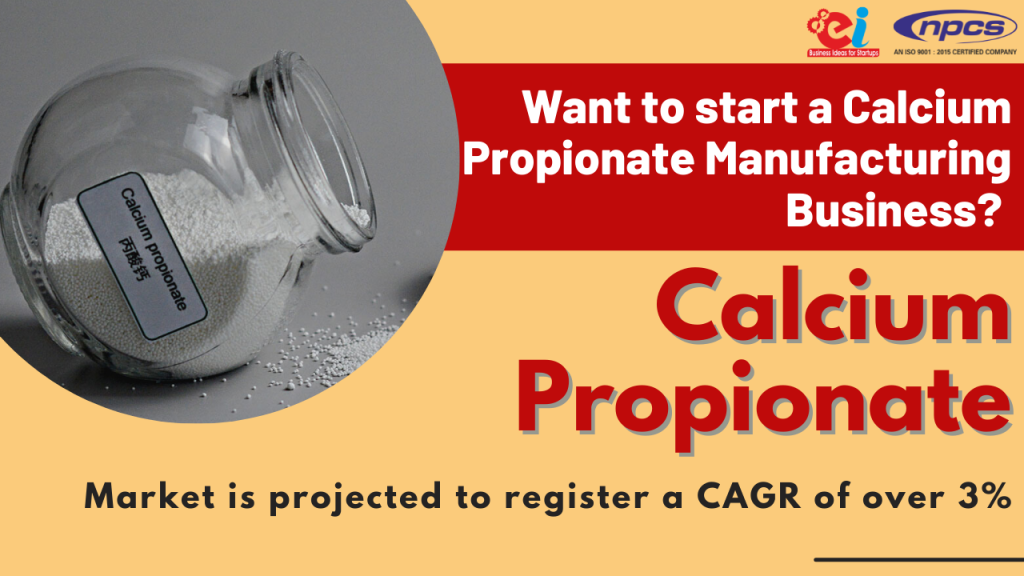
Calcium Propionate. It’s time to start your own Calcium Propanoate Manufacturing Business

Calcium Propionate. It’s time to start your own Calcium Propanoate Manufacturing Business Read More »

The Calcium Propionate industry is witnessing an increasing demand driven by its wide usage in the food preservation and animal feed sectors. As awareness grows regarding the prevention of mold and bacteria in perishable goods, the global market for Calcium Propionate continues to thrive. For entrepreneurs aiming to venture into a profitable manufacturing domain, establishing a Calcium Propionate manufacturing business is both a strategic and sustainable choice. What is Calcium Propionate? Calcium Propionate (chemical formula: Ca(C?H?COO)?) is a white, crystalline, odorless powder used widely as a food preservative, particularly in bakery products. It inhibits the growth of mold and other microorganisms, extending the shelf life of products. Its application extends to dairy, beverages, processed meat, and also animal feed as a mold inhibitor. Market Potential and Demand Analysis The global market for Calcium Propionate is experiencing robust growth. Factors contributing include: Rising demand for preservative-free yet long-lasting food products Growth in processed and packaged food industries Need for effective mold inhibitors in livestock feed Asia-Pacific, particularly India, is emerging as a key player due to increasing food safety awareness, making it an ideal geography to launch a Calcium Propionate manufacturing business. Licensing and Regulatory Approvals To set up a compliant manufacturing unit in India, the following steps are essential: FSSAI License: For food-grade Calcium Propionate Pollution Control Board Clearance: For managing chemical emissions Factory License and Local Municipality Approval GST Registration Drug and Cosmetic Act Certification (if supplying to pharma companies) ISO Certification for quality assurance (optional but recommended) Raw Materials Required The key raw materials for Calcium Propionate manufacturing include: Calcium Hydroxide (Ca(OH)?) Propionic Acid (CH?CH?COOH) Water These chemicals are readily available from domestic chemical suppliers. It’s advisable to partner with vendors offering bulk rates and reliable delivery timelines. Manufacturing Process of Calcium Propionate The Calcium Propionate production process involves a chemical reaction between Propionic Acid and Calcium Hydroxide. The standard procedure includes: Reacting StagePropionic acid is slowly added to a solution of calcium hydroxide in a stirred tank reactor. The reaction is exothermic and should be temperature-controlled (preferably below 30°C). Filtration and SeparationThe reaction mixture is filtered to remove any insoluble impurities. A clear calcium propionate solution is obtained. EvaporationWater is removed from the solution through vacuum evaporation. CrystallizationThe concentrated solution is cooled to crystallize Calcium Propionate. Drying and MillingCrystals are dried in tray or rotary dryers and then milled to a fine powder. PackagingFinal product is packed in HDPE bags with inner linings or paper bags for dispatch. Machinery and Equipment Required To set up a semi-automated or fully-automated plant, the following machinery is essential: Reactor vessel (SS304/SS316) Agitators and stirrers Filtration unit Crystallizer Dryer (tray or rotary) Pulverizer and milling unit Packaging machines (semi or fully automatic) Quality control laboratory setup Initial investment for a small to medium scale plant ranges between ?50 lakhs to ?1.5 crores depending on automation, capacity, and compliance standards. Location and Infrastructure A Calcium Propionate manufacturing business requires a pollution-compliant zone with: Access to water and electricity Proximity to chemical suppliers Good transportation infrastructure for logistics Availability of skilled labor A 5000–8000 sq. ft. industrial plot should suffice for a 5–10 ton/day capacity plant. Manpower Requirement A typical setup will need: Production Manager Chemical Engineers Machine Operators Quality Assurance Experts Packaging and Warehouse Staff Sales and Distribution Team Staffing should be optimized to balance operational efficiency and cost-effectiveness. Quality Standards and Testing Ensuring quality is non-negotiable. Key quality control tests include: Purity % by titration Moisture Content pH of 10% solution Heavy metal traces Microbial contamination (especially mold & bacteria) Adhering to international standards like FCC, USP, or EINECS ensures global acceptability of the product. Marketing and Distribution Strategy To successfully launch and grow your Calcium Propionate business, adopt the following strategies: B2B Marketing: Target food processing companies, bakeries, dairy manufacturers, and animal feed companies. Online Presence: Build a professional website, leverage platforms like IndiaMART, TradeIndia, Alibaba, etc. Partnerships: Collaborate with distributors, wholesalers, and chemical dealers. Export Potential: Register under DGFT for export license. Target markets like the Middle East, Southeast Asia, and Africa. Certifications: ISO 22000, FSSAI, and Kosher/Halal for enhanced credibility. Cost and Profitability Analysis Startup Capital: Land & Infrastructure: ?20–30 lakhs Machinery: ?25–50 lakhs Raw Material (Initial Stock): ?10–15 lakhs Labor & Working Capital: ?10–20 lakhs Licensing, Branding & Marketing: ?5–10 lakhs Operating Cost Per Kg (approx.): Raw Material: ?70–?90 Utilities & Labor: ?10–?15 Packaging & Miscellaneous: ?5–?10 Selling Price (2025 Market Avg): ?130–?180 per kg Gross Profit Margin: 30%–50% depending on scale and sourcing efficiency. Risks and Challenges Volatility in raw material pricing Strict compliance and regulatory checks Need for consistent product quality High competition from Chinese and European suppliers Mitigation strategies include long-term vendor contracts, automation to reduce errors, and continuous market analysis. Future Opportunities and Expansion With increasing demand for clean-label and long-lasting food, the Calcium Propionate market is set to expand further. Business expansion can include: Launching new preservative compounds (e.g., sodium propionate, potassium sorbate) White-label manufacturing Export-focused operations Vertical integration into food ingredients and additives By establishing a Calcium Propionate manufacturing business, entrepreneurs are not only tapping into a lucrative chemical segment but also contributing to safer and longer-lasting food systems globally. Visit the page Select and Choose the Right Business Startup for You for sorting out the questions arising in your mind before starting any business and know which start-up you can plan. We, at NPCS, endeavor to make business selection a simple and convenient step for any entrepreneur/startup. Our expert team, by capitalizing on its dexterity and decade’s long experience in the field, has created a list of profitable ventures for entrepreneurs who wish to diversify or venture. The list so mentioned is updated regularly to give you a regular dose of new emerging opportunities. Contact Us

Stand Up India scheme launched by Government of India.

Stand Up India scheme launched by Government of India. Read More »

India’s economic growth story is incomplete without the empowerment of underrepresented communities. The Stand-Up India Scheme is a flagship initiative by the Government of India that promotes inclusive entrepreneurship among Scheduled Castes (SCs), Scheduled crews (STs), and women entrepreneurs. Launched in April 2016, the scheme aims to provide financial support and facilitate a sustainable entrepreneurial ecosystem that drives both economic and social upliftment. What is the Stand-Up India Scheme? The Stand-Up India Scheme is tailored to offer bank loans between ?10 lakh and ?1 crore to at least one SC/ST borrower and at least one woman borrower per bank branch for setting up a greenfield enterprise. The term “greenfield” indicates a new business venture in the manufacturing, services, agri-allied or trading sector. The scheme is managed by the Department of Financial Services (DFS), Ministry of Finance, Government of India. The core mission is to create a level playing field by addressing the financial hurdles faced by marginalized groups who wish to enter the world of entrepreneurship. Eligibility Criteria for Stand-Up India Scheme To avail of benefits under the Stand-Up India Scheme, the following conditions must be met: The applicant must be either a Scheduled Caste (SC), Scheduled crew (ST), or a woman entrepreneur. The applicant must be 18 years or older. The loan must be used for a greenfield project in manufacturing, services, trading, or agri-allied activities. In case of a non-individual enterprise, at least 51% shareholding and controlling stake should be held by either an SC/ST or woman entrepreneur. The applicant should not be in default to any bank or financial institution. Objectives and Importance of the Stand-Up India Scheme The Stand-Up India Scheme is not merely a loan disbursal program—it is a bold step towards inclusive nation-building. The key objectives are: Bridging the gap in access to credit for SC/ST and women entrepreneurs. Fostering job creation by empowering first-time business owners. Encouraging innovation and self-reliance among underrepresented groups. Promoting inclusive economic development and reducing socio-economic disparities. By offering structured support and access to capital, the scheme enhances the capacity of new entrepreneurs to contribute meaningfully to the national economy. Loan Structure and Repayment Terms The Stand-Up India Scheme provides composite loans (including term loan and working capital) between ?10 lakh to ?1 crore. These loans can be used for business setup, acquisition of assets, working capital needs, and more. Key features of the loan include: Interest rate: Competitive rates, not exceeding MCLR + 3% + tenor premium. Repayment period: Maximum of 7 years, with a moratorium period of up to 18 months. Collateral: The loan may be secured through credit guarantee under the Credit Guarantee Scheme for Stand-Up India loans. The flexible and favorable repayment structure eases the burden of loan servicing for new entrepreneurs. Role of SIDBI and Handholding Support To ensure effective implementation, the Small Industries Development Bank of India (SIDBI) has developed an extensive Stand-Up India portal. The portal serves as a digital bridge connecting entrepreneurs with banks, training centers, and other handholding agencies. Support includes: Preparation of business plans Skill development training Financial literacy programs Legal and operational guidance This handholding support is crucial for aspiring entrepreneurs who lack prior business experience. Benefits of the Stand-Up India Scheme The Stand-Up India Scheme stands out for its inclusive and development-oriented benefits: Empowers women and marginalized communities to become job creators. Facilitates access to formal banking channels, often denied to SC/ST and women entrepreneurs. Drives regional and rural development by promoting businesses across diverse sectors. Enhances credit culture and strengthens the micro and small enterprise ecosystem. With over 1.5 lakh loans sanctioned since its inception, the scheme has made remarkable progress in reshaping India’s entrepreneurial landscape. Steps to Apply for the Stand-Up India Scheme Applying for the Stand-Up India Scheme involves a systematic and guided approach: Visit the official portal: www.standupmitra.in Register and fill in details about the proposed business. Select handholding support if needed—this includes mentorship, training, and guidance. Choose your bank and submit the application for loan processing. Track the application status online through the portal. Applicants can also visit their nearest bank branch or contact District Industries Centres (DICs) for in-person assistance. Sectors Supported Under Stand-Up India Scheme The scheme is sector-agnostic, encouraging participation across a broad range of industries: Manufacturing: Small-scale units, machinery production, apparel units Services: IT services, salons, repair workshops, mobile service centers Trading: Retail outlets, supply chains, wholesale trading Agri-allied: Poultry farms, dairy units, organic farming, agro-processing This sectoral diversity allows entrepreneurs to pursue ventures aligned with their skills, regional demands, and innovation capacity. Success Stories and Impact of the Scheme Over the years, the Stand-Up India Scheme has transformed thousands of lives: Rural women entrepreneurs have successfully set up tailoring units, bakeries, and dairy farms. SC/ST tech entrepreneurs have launched IT-enabled services and digital platforms. First-generation business owners from tier-2 and tier-3 cities have achieved financial independence and inspired community-level change. These success stories reinforce the transformative power of the scheme in nurturing dreams into scalable enterprises. Challenges Faced and Way Forward Despite its success, the Stand-Up India Scheme faces some challenges: Lack of awareness in remote and rural areas Initial hesitancy among banks in lending to first-time borrowers Skill and digital literacy gaps To address these, a multi-stakeholder approach involving government departments, NGOs, banks, and training institutes is essential. Improved awareness campaigns, simplified procedures, and localized training can further enhance the scheme’s outreach and effectiveness. Why the Stand-Up India Scheme is a Game-Changer Systemic inequalities often hinder entrepreneurship in the country, but the Stand-Up India Scheme emerges as a game-changer. By democratizing access to credit and creating an enabling environment, it brings inclusive growth to the forefront of India’s economic strategy. It is more than just a loan program—it’s a nation-building movement that empowers the marginalized to dream big and contribute to India’s vibrant startup ecosystem. Conclusion The Stand-Up India Scheme is a bold and transformative initiative that plays a vital role in fostering inclusive entrepreneurship across India. By offering structured financial support and extensive handholding,

India is Geared for Energy Transition and Climate Action. This is the Time to Invest in Renewable Energy

India is Geared for Energy Transition and Climate Action. This is the Time to Invest in Renewable Energy Read More »

Introduction: A Nation on the Brink of a Green Revolution India is undergoing a monumental energy transformation. As one of the world’s fastest-growing economies, the country faces the dual challenge of meeting surging energy demand while reducing its carbon footprint. Fortunately, the rise of clean, sustainable power has positioned India at the forefront of a global green shift. India’s renewable energy boom is no longer a possibility—it’s an undeniable reality driving economic growth, technological advancement, and environmental sustainability. With over 417 GW of installed power capacity, India is rapidly transitioning from fossil fuels to renewables. By embracing this momentum, investors, policymakers, and corporations have a rare opportunity to shape the next chapter of India’s development, anchored firmly in sustainability. The time to act is now, and the rewards—for business, society, and the planet—are immense. India’s Clean Energy Potential: An Overview of Untapped Riches India is blessed with abundant renewable resources, making it an ideal location for sustainable energy investment. The country receives nearly 300 sunny days a year, offering immense potential for solar energy. Additionally, with a coastline exceeding 7,500 kilometers and wind-rich states like Tamil Nadu and Gujarat, India is primed to become a global wind energy superpower. Moreover, the country’s hydroelectric capacity, biomass reserves, and emerging opportunities in green hydrogen production further reinforce the diverse landscape of renewable power. Solar Power Potential: Estimated at over 750 GW, solar energy leads India’s green energy march. Wind Power Potential: More than 300 GW, both onshore and offshore. Biomass and Waste-to-Energy: Over 25 GW of scalable potential. Green Hydrogen: With a target to produce 5 million tonnes per annum by 2030, India is aiming to become a global hub for green hydrogen. These massive reserves, combined with proactive government planning and investment support, are creating fertile ground for the India’s renewable energy boom to flourish further. Strategic Government Policies Empowering the Renewable Ecosystem The Government of India has emerged as a catalyst for change, building a robust framework of policies, regulations, and financial incentives that support clean energy growth. Key Initiatives Driving Change: National Solar Mission: Aims to achieve 280 GW of installed solar power capacity by 2030. Faster Environmental Clearances: Streamlined approvals for solar and wind projects ensure rapid deployment. 100% FDI in Renewable Energy: Encourages foreign capital and technology transfer. Renewable Purchase Obligations (RPOs): Mandate power distribution companies and industries to buy a specific percentage of electricity from renewable sources. PLI Scheme for Solar Modules: A ?24,000 crore incentive to promote domestic manufacturing of high-efficiency solar PV modules. Such policy frameworks are not only enhancing investor confidence but are also propelling India closer to its net-zero carbon emissions target by 2070, positioning India’s renewable energy boom as a model for sustainable development. Massive Infrastructure Development and Grid Modernization India’s push towards renewables is being matched by unparalleled infrastructure growth. The country is developing: Ultra-Mega Renewable Energy Parks: Massive projects like the 30 GW hybrid renewable energy park in Gujarat set global benchmarks. Green Energy Corridors: Special transmission lines dedicated to renewable power, ensuring efficient integration with the national grid. Battery Energy Storage Systems (BESS): India’s first grid-scale storage facilities are being established to resolve intermittency issues in solar and wind energy. Modernizing India’s transmission and distribution networks is crucial for stabilizing the grid, increasing capacity, and ensuring long-term scalability of renewable energy sources. Investment Surge: Global Confidence in India’s Clean Future India is attracting significant international capital in its renewable sector. Private equity firms, sovereign funds, and infrastructure giants have committed billions to harness this momentum. Recent Investment Highlights: Adani Green Energy Ltd. has committed over $20 billion towards green infrastructure. ReNew Power became India’s first renewable energy unicorn and went public via a SPAC on NASDAQ. Brookfield Renewable, Temasek, and GIC are aggressively expanding their Indian portfolios. World Bank, ADB, and AIIB are backing infrastructure and micro-grid initiatives across the country. India’s policy clarity, long-term contracts (PPAs), and transparent bidding processes are encouraging global investors to be part of India’s renewable energy boom. Tech-Driven Transformation: Innovation Fuels the Boom Technology is a major enabler of India’s energy transition. From real-time analytics to next-gen battery systems, cutting-edge innovations are ensuring that the country’s renewable infrastructure is future-ready. Artificial Intelligence & IoT: Real-time performance tracking of solar panels and wind turbines to increase efficiency. Blockchain in Energy Trading: Enables decentralized energy markets and peer-to-peer energy trading. Floating Solar Plants: Utilizing unused water bodies to generate solar power while reducing evaporation. Agri-Voltaics: Combining solar energy production with agricultural use to increase land efficiency. This integration of innovation ensures that renewable energy is not only sustainable but also smart, reliable, and adaptable to India’s diverse geography. Socioeconomics Impact: Renewable Energy as a Nation Builder Beyond environmental benefits, India’s renewable energy boom is bringing life-changing improvements to millions. Job Creation: Estimates suggest over 1.3 million new jobs in renewable sectors by 2030. Women Empowerment: Programs like ‘Solar Sahelis’ are training women in solar installation and maintenance. Energy Access for All: Clean microgrids are electrifying remote villages, improving education, healthcare, and productivity. These widespread benefits make renewable energy an inclusive growth strategy that touches every stratum of Indian society. Challenges to Address and Opportunities to Seize While the momentum is undeniable, challenges remain that require smart resolution: Land Acquisition and Litigation: Delays in land approval and zoning laws need to be streamlined. Power Purchase Agreements (PPAs): Ensuring price certainty and minimizing tariff renegotiations will foster long-term investor trust. Financing for MSMEs: Small and mid-sized renewable developers need easier access to green capital. At the same time, opportunities abound: Offshore Wind Farms in Tamil Nadu and Gujarat. Urban Rooftop Solar with net-metering benefits. Waste-to-Energy projects in urban clusters. EV Charging Infrastructure integrated with renewable energy. A Compelling Case for Immediate Investment There has never been a more opportune time to invest in India’s clean energy future. Here’s why: Global Clean Energy Race: India is poised to lead the global south in sustainable energy. Rapid Urbanization: Rising middle-class consumption will increase demand for reliable green

The Government’s Measures to Boost Agricultural Exports are Bearing Fruit as The Country’s Agriculture Exports are on The Rise

The Government’s Measures to Boost Agricultural Exports are Bearing Fruit as The Country’s Agriculture Exports are on The Rise Read More »

Introduction India, long celebrated for its agricultural heritage, is now gaining international attention for its surging agricultural exports. With increasing government support and favorable policies, Indian farmers and agribusinesses are tapping into global markets like never before. The remarkable rise in agricultural exports is not merely an economic trend—it is a testament to the resilience of Indian agriculture and the power of policy-driven growth. In this article, we explore the reasons behind this surge, the key export products, government initiatives, and future prospects. A Record-Breaking Surge in Agricultural Exports India’s agricultural exports hit new highs in the last two fiscal years. According to the Ministry of Commerce and Industry, the country exported over $50 billion worth of agricultural products in FY2023, marking a substantial increase from previous years. This growth has been consistent across a range of commodities, including rice, spices, sugar, marine products, fruits, and vegetables. This boom comes despite global disruptions such as the COVID-19 pandemic, climate challenges, and geopolitical instability. India’s agricultural exports have shown strong resilience, buoyed by proactive government support, improved logistics, and diversification of international markets. Key Drivers Behind the Export Growth Several factors are driving the current momentum in agricultural exports, including: 1. Government Policy Reforms One of the biggest enablers has been the government’s active role in policy-making. The Agricultural and Processed Food Products Export Development Authority (APEDA), under the Ministry of Commerce, has launched several schemes to encourage agricultural exports. These include export subsidies, infrastructure development, branding initiatives, and assistance in certification for organic and GI-tagged products. 2. Digitalization and Farmer Education The government’s push for digital tools in agriculture has improved transparency and access to global markets. Initiatives like e-NAM (National Agriculture Market) and the Agri-Export Policy have empowered farmers and agribusinesses to connect directly with international buyers, eliminating middlemen and enhancing profitability. 3. Investment in Cold Chains and Logistics Quality control and timely delivery are critical for agricultural exports, especially for perishables. The government’s investment in integrated cold chains, food parks, and export-oriented logistic hubs has played a major role in reducing post-harvest losses and ensuring product quality for overseas markets. 4. International Trade Agreements India has signed numerous bilateral and multilateral trade agreements that have reduced tariffs and opened up export channels. FTAs (Free Trade Agreements) with ASEAN countries, the UAE, and ongoing negotiations with the EU and UK are enhancing market accessibility for Indian agricultural goods. Major Export Commodities India’s agricultural exports are diverse, ranging from traditional staples to high-value items. Some of the top export products include: Basmati and non-basmati rice: India is the world’s largest exporter of rice, with major markets in the Middle East, Europe, and Africa. Spices: Indian spices like turmeric, cardamom, black pepper, and cumin are highly valued worldwide. Fruits and vegetables: Mangoes, bananas, grapes, and onions dominate fruit and vegetable exports. Sugar: India has become one of the leading exporters of sugar, supported by government quotas and subsidies. Marine products: Shrimp and fish are key contributors to foreign exchange through agricultural exports. Organic products: There is growing global demand for India’s certified organic produce such as tea, pulses, and millets. Role of Agricultural Export Zones (AEZs) Agricultural Export Zones (AEZs) were established to provide region-specific export infrastructure and services. These zones focus on high-potential crops and clusters such as grapes in Maharashtra, mangoes in Andhra Pradesh, and basmati rice in Punjab and Haryana. AEZs are contributing significantly to the rise in agricultural exports by offering targeted support in production, quality control, processing, and marketing. Impact on Farmers and Rural Economy The boost in agricultural exports has had a positive ripple effect on the rural economy. Increased export demand raises the prices farmers receive for their produce, enhancing their income and livelihood. Export-oriented farming also encourages the adoption of better farming practices, higher quality standards, and crop diversification. Additionally, rural employment has been stimulated through value-added activities like grading, packaging, transportation, and warehousing, further strengthening agrarian communities. Sustainability and Challenges While the growth in agricultural exports is impressive, it does come with challenges. Key concerns include: Quality Standards: International buyers have strict regulations on pesticide use, contaminants, and packaging, requiring Indian exporters to maintain high compliance. Climate Change: Erratic rainfall and extreme weather events pose risks to consistent production and supply. Logistics and Port Infrastructure: Although improving, certain ports and transport facilities still face bottlenecks, particularly for perishable goods. Global Competition: Other major exporters like Brazil, Vietnam, and Thailand offer stiff competition in various commodity segments. However, India is actively addressing these challenges through improved agricultural research, climate-resilient crops, and public-private partnerships. Government Initiatives Driving the Surge The following initiatives have directly contributed to the growth of agricultural exports: 1. Agri-Export Policy (AEP) 2018 This landmark policy aims to double farmer income by promoting export-oriented agriculture. It provides a framework for institutional support, product-specific clusters, and branding. 2. PM Gati Shakti National Master Plan This multi-modal infrastructure plan is designed to ensure faster movement of goods, including agricultural exports, through coordinated logistics and seamless connectivity. 3. One District One Product (ODOP) ODOP focuses on identifying and promoting district-level products for the global market. This initiative has helped local farmers and small businesses enter the export value chain. 4. APEDA’s Export Promotion Programs APEDA has been instrumental in organizing trade fairs, buyer-seller meets, and online marketplaces to connect Indian exporters with international buyers. The Road Ahead The future of India’s agricultural exports looks bright, with the government setting ambitious goals to reach $100 billion in agri-exports by 2030. Continued investment in agri-infrastructure, farmer training, export diversification, and sustainability practices will be essential to maintain momentum. Emerging opportunities such as exporting millets (declared International Year of Millets 2023 by the UN), processed foods, and nutraceuticals are expected to play a key role. Moreover, the growing global demand for health-oriented and organic products aligns well with India’s agricultural strengths. Conclusion The surge in agricultural exports is a clear reflection of India’s evolving agro-economy. Government backing, infrastructural development, and global market integration are collectively transforming

5 Manufacturing Business Ideas for your Next Startup

5 Manufacturing Business Ideas for your Next Startup Read More »

In a rapidly evolving economy, manufacturing business ideas are opening doors to promising opportunities for aspiring entrepreneurs and seasoned investors alike. With technological advancement, increased demand for localized production, and a growing preference for sustainability and innovation, manufacturing has transformed into a highly dynamic and lucrative sector. Manufacturing plays a pivotal role in driving economic growth, creating employment opportunities, and supporting the rise of MSMEs. Entrepreneurs looking to establish a strong presence in the business world should seriously consider these five high-potential manufacturing business ideas to build wealth and scale sustainably. 1. Eco-Friendly Packaging Manufacturing Environmental consciousness is reshaping consumer behavior, pushing companies to shift towards sustainable practices. This change is fueling demand for eco-friendly packaging, making it one of the most viable and impactful manufacturing business ideas in the modern era. Why This Idea Stands Out Environmental regulations are banning single-use plastics globally. Large corporations are committing to sustainable supply chains. Consumers are increasingly supporting brands that align with green values. Investment and Setup To start this business, you’ll need: Automatic die-cutting and heat-sealing machines. Biodegradable raw materials such as bagasse, cornstarch, PLA, and recycled kraft paper. A medium-sized facility that complies with environmental safety standards. Growth Projections According to market research, the global green packaging industry is expected to reach $413 billion by 2032, growing at a CAGR of over 5%. This represents a massive opportunity for new entrants who can deliver quality and scalability. As companies continue to prioritize ESG (Environmental, Social, and Governance) goals, this manufacturing business idea will remain a profitable long-term play. 2. Custom Furniture Manufacturing Personalization is the future of retail. The demand for custom furniture is booming as customers increasingly prefer products that match their personal style, comfort, and functional needs. This is one of the best manufacturing business ideas for entrepreneurs with a flair for design and an understanding of consumer preferences. Market Drivers Surge in real estate and interior décor spending. Growth of remote work culture, increasing demand for ergonomic furniture. Rising influence of social media aesthetics and Pinterest-inspired homes. Startup Requirements Invest in CNC wood-cutting machines, upholstery units, and finishing tools. Hire skilled carpenters, designers, and upholsterers. Use 3D design software to visualize and create custom concepts before production. Sales Strategy Start with an online store or tie up with interior designers and architects. Online platforms like Etsy, Pepperfry, and Urban Ladder have made it easier than ever to enter this space and grow exponentially. With the right branding, this manufacturing business idea can transform into a sought-after interior lifestyle label. 3. Organic Skincare Product Manufacturing The clean beauty trend is here to stay. The market for organic skincare is expanding rapidly as more consumers become aware of the harmful effects of synthetic chemicals. Starting an organic skincare manufacturing unit is not only a profitable manufacturing business idea, but also one with a meaningful purpose. Popular Products to Manufacture Herbal face creams, sunscreens, and body lotions. Ayurvedic soaps and shampoos. Essential oils, serums, and facial scrubs. Raw Materials and Compliance To manufacture high-quality organic skincare products, you need: Natural ingredients like aloe vera, turmeric, neem, sandalwood, and rose water. Proper storage conditions and hygiene protocols. Licenses from the FSSAI, FDA, and certifications like GMP and ISO 22716. Revenue Channels Sell through: Health and wellness stores. Online marketplaces like Amazon and Nykaa. Exporting to organic-conscious countries in Europe and North America. With growing demand for chemical-free beauty, this manufacturing business idea can lead to a global wellness brand if scaled strategically. 4. Smart LED Lighting Manufacturing As cities transform into smart urban centers, the demand for smart LED lighting is skyrocketing. Energy efficiency, app control, and IoT integration are redefining home and office lighting systems. Market Dynamics Governments worldwide are offering subsidies to promote energy-efficient lighting. Builders and smart city planners are incorporating automation-ready lighting in new developments. LED technology is replacing incandescent bulbs at an exponential rate. Infrastructure and Equipment Investment in surface mount technology (SMT) lines for circuit boards. Procurement of LED drivers, resistors, and smart sensors. R&D department for continuous feature enhancements. Target Markets Real estate developers and interior designers. Retail chains, hospitals, malls, and co-working spaces. E-commerce platforms targeting tech-savvy customers. This manufacturing business idea benefits from high repeat demand, especially if you introduce energy-saving and customizable lighting features that appeal to both residential and commercial buyers. 5. Disposable Medical Supplies Manufacturing The pandemic underscored the need for self-reliance in medical supplies manufacturing. Gloves, syringes, face masks, PPE kits, and disposable gowns are now essentials in hospitals, dental clinics, labs, and even households. Why You Should Invest Health infrastructure development is a global priority. A growing middle class is seeking better hygiene and protection. Large scope for international exports, especially to developing countries. Setup Essentials A dust-free, sterile facility with Class 100,000 cleanroom certification. Fully automatic machinery for mask-making, gloves, and packaging. Quality control labs for bacterial filtration efficiency (BFE) and other certifications. Distribution Channels Direct contracts with hospitals and pharma chains. Government supply contracts through tenders. Exporting through authorized global medical supply networks. If you’re looking for a resilient and purpose-driven manufacturing business idea, this sector offers strong margins and growing demand with proper execution. How to Succeed in Manufacturing Business To thrive in the competitive manufacturing space, it’s essential to build operational excellence and customer trust from day one. 1. Streamline Production Adopt lean manufacturing techniques to minimize waste and optimize efficiency. Use Six Sigma or Kaizen for continuous improvement. 2. Build a Skilled Team Hire experienced professionals and train them in safety, quality control, and equipment handling. Happy employees ensure high product quality. 3. Digital Transformation Incorporate ERP, CRM, and marketing automation tools. Maintain an SEO-optimized website and sell through B2B portals and social media. 4. Product Differentiation Use high-quality materials and innovation to stand out from competitors. Create USPs around design, functionality, and sustainability. 5. Focus on Branding A strong brand voice builds trust and drives loyalty. Design attractive packaging and invest in storytelling through digital channels. Conclusion The future of

5 Business Ideas to start your own Business and Become an Entrepreneur

5 Business Ideas to start your own Business and Become an Entrepreneur Read More »

In today’s fast-paced and dynamic world, many individuals are turning toward entrepreneurship as a means of taking control of their financial destiny. Whether you’re fresh out of college, looking to escape the 9-to-5 grind, or simply dreaming of building something from the ground up, the journey of entrepreneurship can be incredibly rewarding. The key lies in selecting the right business idea that aligns with your skills, interests, and market demand. This article explores five powerful and practical business ideas that can kickstart your entrepreneurial journey. These ideas are designed to be accessible, profitable, and scalable — making them ideal for aspiring business owners. If you’re ready to embrace the spirit of entrepreneurship, then read on to discover the perfect launching pad for your success. Why Entrepreneurship Matters Today Entrepreneurship is more than just starting a company. It’s about solving problems, creating value, and bringing innovation to life. It’s what drives economic growth, opens up job opportunities, and transforms communities. In 2025, entrepreneurship is no longer limited to tech geniuses or billion-dollar investors — it’s for anyone with ambition, resilience, and a strong idea. With digital platforms, affordable tools, and global connectivity, launching a business has never been easier. Entrepreneurship empowers individuals to control their career paths and achieve financial independence on their terms. 1. Online Coaching or Consulting Business If you have professional experience or expertise in a specific area — be it marketing, business strategy, fitness, finance, or mental wellness — starting an online coaching or consulting business could be your golden ticket. Thanks to the digital era, you can connect with clients across the globe without leaving your home. Platforms like Zoom, Kajabi, and Thinkific allow entrepreneurs to package knowledge into services or courses that can be delivered virtually. Why this idea works for entrepreneurship: Low overhead and startup costs. Scalable with digital courses or group sessions. Positions you as a subject matter expert. This form of entrepreneurship thrives on reputation and results, so the more value you provide, the more your business can grow through referrals and testimonials. 2. E-commerce Store (Niche Products) E-commerce has exploded in recent years, and it continues to be a lucrative option for first-time entrepreneurs. Rather than trying to compete with big giants like Amazon or Flipkart, the secret lies in focusing on a niche — such as eco-friendly products, custom jewelry, or pet accessories. You can use platforms like Shopify, WooCommerce, or Etsy to set up your store and integrate dropshipping or in-house fulfillment strategies. Why this idea aligns with entrepreneurship: Unlimited market reach through the internet. Passive income potential with the right automation. Creative freedom in product design and branding. For those new to entrepreneurship, e-commerce offers hands-on experience with marketing, customer service, and supply chain management — all vital components of running a successful business. 3. Social Media Management Agency With millions of businesses going online, the demand for skilled social media managers is on the rise. If you have a knack for content creation, strategy, and analytics, launching a social media management agency can be a smart move. Start by managing social media profiles for local businesses, startups, or influencers. Over time, you can expand your services to include content creation, ad management, and influencer collaborations. Entrepreneurship potential in this field: High demand across industries. Recurring income through retainer clients. Ability to scale with a team or freelancers. Entrepreneurship in this sector lets you blend creativity with strategy, helping brands grow their online presence while building a reputable business for yourself. 4. Eco-Friendly Products Manufacturing Sustainability is no longer a trend — it’s a movement. Eco-conscious consumers are actively seeking alternatives to plastic, chemical-laden goods, and wasteful packaging. If you’re passionate about the environment, consider starting a business focused on eco-friendly products like bamboo toothbrushes, reusable bags, or biodegradable tableware. This form of entrepreneurship has long-term viability as more people and businesses aim to reduce their carbon footprint. Why this is a top business idea for entrepreneurship: Addresses a growing social and environmental issue. Potential for government grants or subsidies. High customer loyalty in the green market. With the right marketing strategy and transparent messaging, eco-businesses can quickly gain traction and dominate their niche. 5. Digital Content Creation (YouTube, Podcasts, Blogs) We’re living in the era of creators. If you love storytelling, teaching, or entertaining — digital content creation is a powerful form of entrepreneurship. Starting a YouTube channel, podcast, or blog requires consistency, creativity, and audience understanding, but it can lead to diverse monetization avenues. You can earn through ad revenue, affiliate marketing, sponsorships, paid subscriptions, and even merchandise. Entrepreneurship advantages in content creation: Freedom to express your voice and vision. Scalable income with minimal capital investment. Opportunities to build a loyal online community. This is one of the most accessible paths to entrepreneurship for individuals with limited startup funds but strong ideas and personality. How to Choose the Right Business Idea While all the above ideas offer strong potential, the success of your entrepreneurship journey depends on picking the right fit for you. Consider the following when evaluating your options: Passion and interest: Choose something you genuinely enjoy. Skills and experience: Leverage your existing strengths. Market demand: Make sure there’s a real need for your product or service. Scalability: Think long-term — can your business grow? Resources: Be realistic about your financial and time investment. The beauty of entrepreneurship lies in experimentation. Start small, test your idea, learn from failures, and iterate. Final Thoughts: The Future of Entrepreneurship The world is full of problems waiting to be solved — and entrepreneurship is the bridge between those problems and impactful solutions. As more people embrace innovation and autonomy, the ecosystem for new business ideas continues to thrive. The five ideas listed above are just starting points. With creativity, strategy, and persistence, you can build a business that not only generates income but also delivers purpose and pride. If you’re ready to take the first step toward entrepreneurship, don’t wait for the perfect moment — start where

Have a business idea? Let's make it happen together-contact us now!


Contact Form Demo

This will close in 0 seconds

Translate »