Our Categories

Our Categories

Best Business Opportunities in India

India’s rapidly growing economy presents numerous promising best business opportunities in India that can help entrepreneurs and startups cater to an entire industry and scale their business. The market globally is evolving, and the key to success is recognizing and capturing the right opportunities.

We have provided insight into best business opportunities in India that are segmented based on industry verticals, including manufacturing, technology, food processing, renewable energy, and services. We analyze most opportunities to assist entrepreneurs in their final decision-making.

We have attempted to reduce the bridge between an individual’s business conception and its realization through this content by presenting actionable business models, emergent methodologies, and new approaches to low or medium-investment startups. We have directed the content toward both novice and experienced entrepreneurs in trying to provide clear insight into best business opportunities in India.

By evaluating these opportunities, entrepreneurs can find potential saturated markets and define the scope of their startup to ensure that it meets the requirements of an evolving market.

Top 7 Manufacturing Business Ideas | Best Startup Businesses

Top 7 Manufacturing Business Ideas | Best Startup Businesses Read More »

The manufacturing industry plays a crucial role in economic development and job creation across the globe. In 2025, as entrepreneurs search for high-potential startup opportunities, manufacturing business ideas have emerged as some of the most lucrative and scalable ventures. With growing demand, access to better technology, and government support for small-scale industries, there has never been a better time to dive into the manufacturing sector. This article will explore the best 7 manufacturing business ideas for startups that promise excellent returns, long-term sustainability, and potential for innovation. Each idea is carefully chosen based on market trends, investment feasibility, and scalability. Whether you’re a first-time entrepreneur or an experienced investor, these ideas can guide you toward building a profitable manufacturing business in 2025. 1. Eco-Friendly Packaging Material Manufacturing As environmental consciousness rises worldwide, the need for eco-friendly packaging solutions is exploding. Governments are banning single-use plastics, and consumers are actively seeking sustainable alternatives. Starting a manufacturing business that focuses on biodegradable and recyclable packaging materials can be both profitable and impactful. What You Can Manufacture: Paper bags Cardboard cartons Biodegradable food containers Compostable pouches Why This Works: Eco-conscious brands, e-commerce platforms, restaurants, and retail businesses are increasingly replacing plastic with biodegradable options. The global sustainable packaging market is expected to surpass $500 billion by 2030. Startup Needs: Bag-making machines Paper roll feeders Heat press units Skilled labor and quality assurance This manufacturing business idea offers startup entrepreneurs the chance to create a brand aligned with the green economy, ensuring future growth and customer loyalty. 2. Organic Fertilizer Manufacturing The agricultural sector is witnessing a paradigm shift as farmers transition from chemical to organic farming methods. This shift is creating a massive demand for organic fertilizers, making it one of the best manufacturing business ideas in 2025. What You Can Manufacture: Vermicompost Cow dung-based compost Biofertilizers using natural microbes Liquid foliar sprays Why It’s Profitable: With a growing awareness of soil health and food safety, organic farming practices are being promoted by governments and NGOs alike. Organic fertilizer manufacturing is a low-cost, high-demand business that can scale with ease. Setup Essentials: Composting pits or mechanized composters Raw material collection system Packing and weighing units Local farming community network Starting this manufacturing business also offers potential to collaborate with agricultural co-operatives and retail chains to ensure wide distribution. 3. Candle Manufacturing Candle manufacturing is no longer just about creating sources of light; it has become a booming lifestyle industry. Scented, decorative, and therapeutic candles are in high demand, especially in the wellness, hospitality, and gifting sectors. Product Variants: Soy candles Beeswax aromatherapy candles Luxury jar candles with essential oils Festival-themed and customized candles Business Benefits: With the rise of online marketplaces and the popularity of homemade and artisanal goods, candle making is a low-investment, high-margin business. It’s perfect for small setups and home-based manufacturing units. Infrastructure Needs: Melting and pouring equipment Molds and containers Fragrances, dyes, and wicks Branding and packaging Among the best manufacturing business ideas, this one stands out for its creative flexibility, low operational cost, and strong market demand. 4. Paper Cup and Disposable Plate Manufacturing With environmental restrictions on plastic products, paper cup and disposable plate manufacturing is a booming business with rising domestic and commercial demand. From tea stalls to corporate offices, the use of disposable eco-friendly serving items is increasing. Target Customers: Caterers and event planners Food trucks and small restaurants Offices and schools FMCG product manufacturers Key Equipment: Paper cup and plate forming machines Hydraulic die machines Printing units (for branding) Raw materials (coated/uncoated paper rolls) This manufacturing business idea requires relatively low startup capital and can generate returns quickly due to the high turnover of disposable items. 5. Herbal and Ayurvedic Products Manufacturing The global wellness market is witnessing exponential growth, especially in herbal and ayurvedic products. With ancient remedies making a comeback and people turning to natural healing, this is one of the most promising manufacturing business ideas in 2025. Popular Product Lines: Herbal juices and tonics Organic skincare and haircare Ayurvedic tablets and powders Bath and body essentials Why It’s a Game-Changer: India, as a hub of Ayurveda, offers a rich supply of raw herbs and a favorable regulatory environment. With the right certifications, these products can be marketed both locally and internationally. Compliance Requirements: FSSAI License AYUSH certification GMP and ISO for quality control This startup manufacturing idea is ideal for health-focused entrepreneurs looking to enter a high-growth, export-friendly industry. 6. Detergent and Cleaning Products Manufacturing The demand for cleaning and hygiene products has witnessed a massive surge post-pandemic, and it continues to remain strong. The detergent manufacturing industry caters to homes, hospitals, hospitality, and industrial cleaning needs. Products to Manufacture: Washing powders and liquids Dishwashing gels Toilet cleaners Floor disinfectants Market Potential: The FMCG cleaning sector is growing at 8–10% annually. Entry-level startups can begin with a few basic products and expand with new formulations and scents. Setup Requirements: Mixing and blending machines Filling and sealing machines Labeling units Chemical handling safety protocols As a recurring-use product line, this manufacturing business idea ensures consistent demand and is ideal for startups focused on household essentials. 7. 3D Printing Manufacturing and Prototyping 3D printing is revolutionizing how businesses prototype, manufacture, and customize products. From dental implants to fashion accessories, this high-tech manufacturing business idea offers limitless potential. Profitable Applications: Prototyping for product developers Customized gifts and accessories Educational and architectural models Industrial components and machine parts Technology Requirements: Fused Deposition Modeling (FDM) 3D printers CAD software SLS or SLA printers for specialized materials Though capital-intensive, 3D printing allows for precision, customization, and small-batch production that is otherwise impossible with traditional methods. It’s ideal for tech-savvy entrepreneurs seeking futuristic growth. Additional Tips to Succeed in a Manufacturing Startup Starting a manufacturing venture isn’t just about machines and materials. Success depends on how well you plan and execute: Understand Your Market: Research your niche thoroughly. Identify customer pain points and solve them with your product. Focus on Quality: Never compromise on quality. Repeat customers
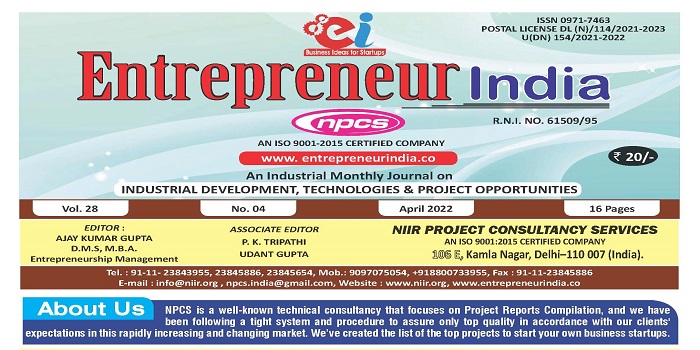

April 2022 Entrepreneur India Monthly Magazine

April 2022 Entrepreneur India Monthly Magazine Read More »

The world of entrepreneurship continues to evolve rapidly, and keeping pace with this dynamic transformation is essential for every business leader. Entrepreneur India April 2022 Magazine is a crucial edition that captures the pulse of emerging business trends, innovative startups, and strategic advice for the Indian entrepreneurial ecosystem. For budding entrepreneurs, business owners, and investors alike, this edition delivers a treasure trove of insights and actionable strategies. Let’s take a closer look at what made the Entrepreneur India April 2022 Magazine an unmissable read and how it reflected the changing landscape of business in India. The Evolving Business Landscape in 2022 As the world emerged from the worst of the pandemic, businesses began reimagining how they operated. Digital adoption accelerated at an unprecedented rate. Work-from-home models evolved into hybrid ecosystems. Consumers became more conscious of health, sustainability, and digital convenience. The Entrepreneur India April 2022 Magazine highlighted how Indian entrepreneurs were adapting to this shift. With an emphasis on resilience and innovation, the magazine showcased various startups that not only survived the pandemic but emerged stronger by redefining their business models. From digital-first health platforms to tech-enabled agriculture, the business narrative was all about agility and forward-thinking. Top Stories and Entrepreneurial Insights The Entrepreneur India April 2022 Magazine featured several in-depth cover stories and interviews with top business leaders who are shaping the future of Indian entrepreneurship. Among the standout pieces was an interview with a leading D2C (Direct-to-Consumer) brand founder, who spoke about how customer-centric innovation and social media marketing played pivotal roles in rapid scaling. Other spotlight segments in the issue included: The Rise of India’s FinTech Stars: The edition explored how the financial technology space is evolving with players like Cred, Razorpay, and BharatPe offering next-gen financial solutions. Green Entrepreneurship: A growing trend in sustainable businesses and eco-friendly startups was covered in detail, reflecting a rising awareness of climate change among Indian entrepreneurs. Women Entrepreneurs Leading the Charge: Empowering narratives about women breaking stereotypes and leading successful ventures added depth to the edition’s coverage. Entrepreneur India April 2022 Magazine reflected the dynamic spirit of India’s evolving startup ecosystem. Emerging Sectors and Startups to Watch One of the magazine’s most valuable contributions was its forecast of emerging industries and high-potential startup verticals in India. AI, blockchain, clean energy, and creator platforms highlight key sectors for investors and entrepreneurs to watch. Some sectors that were spotlighted in the Entrepreneur India April 2022 Magazine include: HealthTech: Startups offering telemedicine, mental wellness apps, and fitness tech saw exponential growth. AgriTech: With the government’s increasing support for rural digitization, agriculture-based technology firms found fertile ground to grow. EdTech Evolution: As hybrid learning models became the norm, EdTech players reimagined learning for K-12 and professional upskilling markets. The magazine didn’t just list names—it offered a deep dive into how these startups were disrupting traditional models and capturing consumer attention in record time. Investment Trends and VC Activity Entrepreneur India April 2022 Magazine revealed key funding trends and insights for aspiring founders and investors. A detailed analysis of venture capital activity in the first quarter of 2022 revealed several key investment patterns: Investors were betting big on climate tech and social impact ventures. Seed and early-stage investments saw significant traction, indicating investor confidence in India’s startup pipeline. There was a renewed focus on profitability and sustainable growth rather than just top-line numbers. The magazine also featured perspectives from top venture capitalists and angel investors about what they were looking for in potential investments in 2022 and beyond. Technology’s Role in Business Innovation No edition of Entrepreneur India would be complete without examining the role of technology in driving business success. The Entrepreneur India April 2022 Magazine took a comprehensive look at how Indian startups were embracing new-age technologies like artificial intelligence, machine learning, cloud computing, and the metaverse. The feature story on “Business in the Metaverse” opened up a whole new world of possibilities—from virtual product launches to immersive customer experiences. It emphasized how future-focused companies were building presence in virtual reality and blockchain-based ecosystems. Brand Building and Marketing in 2022 A standout section of the Entrepreneur India April 2022 Magazine was its focus on branding, storytelling, and digital marketing. As consumer behaviors shift and attention spans dwindle, brands must become more intentional and authentic in their outreach. The edition covered: Influencer collaborations and how micro-influencers are outperforming celebrities in engagement. Building brand loyalty through purpose-driven campaigns. Leveraging vernacular content for deeper regional penetration in Bharat markets. Real-world case studies of Indian brands that successfully leveraged Instagram reels, YouTube Shorts, and regional content helped readers take away practical lessons. Leadership, Strategy & Mental Health Leadership during uncertain times requires not only strategic acumen but also emotional intelligence. The Entrepreneur India April 2022 Magazine addressed this crucial aspect by spotlighting mental health awareness in the entrepreneurial journey. Stories of founder burnout, resilience, and support systems highlight vulnerability and tough decision-making under pressure. Expert columns also discussed how business leaders can build more inclusive, empathetic workplaces. Conclusion: Why This Edition Still Matters Even today, the Entrepreneur India April 2022 Magazine stands out as a rich archive of business intelligence and trend analysis. It captured a unique moment in India’s entrepreneurial journey—one marked by recovery, transformation, and opportunity. Revisit Entrepreneur India April 2022 for timeless strategies, startup insights, and inspiration for ventures and investments. It emphasized the need for continuous innovation, adaptation, and above all, purpose-led business building. Key Takeaways from Entrepreneur India April 2022 Magazine Innovation is the key to survival: Businesses that adapted quickly thrived. Digital transformation isn’t optional: It’s foundational to growth across all sectors. Sustainability is a serious business: Green and ethical businesses are gaining traction. Authentic storytelling builds strong brands: Consumers value brands that stand for something real. Investors are valuing impact along with profit: Social, climate, and tech-forward startups are in demand. If you’re an aspiring business leader, a startup founder, or an investor looking for your next big move, the Entrepreneur India April 2022 Magazine offers a lens into

6 Most Profitable Manufacturing Business to Start

6 Most Profitable Manufacturing Business to Start Read More »

In today’s dynamic economy, starting a manufacturing business offers the perfect blend of growth, stability, and profit. Unlike service-based businesses, manufacturing allows you to produce tangible products with control over quality, branding, and scalability. If you’re considering launching a profitable manufacturing business, the time to act is now. Global demand for quality, locally-made products is surging, and with the right strategy, you can tap into a market that guarantees long-term sustainability and revenue. Below are six profitable manufacturing business ideas you can start now. These ideas are suitable for beginners and seasoned entrepreneurs alike. Each offers significant potential, requires manageable investment, and can be scaled quickly. 1. Candle Manufacturing Business The candle market is booming, with demand fueled by increasing use in home décor, aromatherapy, spas, and religious activities. Consumers are now looking beyond traditional utility and opting for aesthetic and fragrant options that enhance ambiance and well-being. Why It’s Profitable: Low startup capital: You can start a home-based operation with as little as ?50,000. Raw materials are cheap and easily available – wax (paraffin, soy, or beeswax), wicks, essential oils, molds, and dyes. Profit margins can exceed 50% for premium candles, especially in niches like luxury, organic, and personalized candles. Simple manufacturing process makes it easy to scale from a one-person setup to a full-scale workshop. With creative packaging and a strong brand story, this manufacturing business can thrive online via platforms like Etsy, Amazon, or even your own e-commerce store. 2. Paper Bag Manufacturing The global movement toward eco-friendly and sustainable products has turned paper bag manufacturing into one of the most promising and profitable manufacturing businesses today. Governments worldwide, including India, are phasing out plastic usage, driving massive demand for biodegradable alternatives. Why It’s Profitable: The initial investment is moderate – approximately ?2 to ?5 lakhs for a semi-automatic machine setup. Paper bags are in high demand across retail, grocery, food delivery, and fashion sectors. Paper, adhesives, and ink used in manufacturing are readily available. Production is scalable with minimal manpower requirements. By offering customization, logo printing, and catering to bulk B2B clients, your paper bag unit can become a key supplier to local and national businesses. 3. Agarbatti (Incense Stick) Manufacturing India has a deep-rooted cultural and religious association with incense sticks. With growing exports and daily domestic consumption, the agarbatti manufacturing business is a proven winner. Why It’s Profitable: Low-cost entry: Setup costs are as low as ?1 lakh, including machinery and raw materials. Requires bamboo sticks, fragrance oils, charcoal powder, and jigat powder. Machines can produce over 150-200 sticks per minute. High-profit margins, especially for premium or export-quality varieties. To boost your business, explore fragrance innovations such as sandalwood, lavender, and floral scents. A focus on eco-friendly, charcoal-free options can help attract premium buyers. 4. Disposable Paper Plate Manufacturing With rising hygiene consciousness and the ban on plastic disposables, paper plate manufacturing has emerged as a practical and high-demand venture. Disposable plates are a must-have at events, food stalls, corporate cafeterias, and more. Why It’s Profitable: Entry-level investment begins around ?75,000 to ?3 lakhs, depending on machine type. Basic raw materials include silver-coated paper, pulp board, or biodegradable materials. Production can be fully automated with high daily output. Steady and year-round demand, especially during festivals and wedding seasons. By producing a variety of sizes and designs, and targeting institutional clients, event managers, and wholesalers, you can establish a strong regional presence. 5. Detergent Powder Manufacturing A staple in every household, detergent powder manufacturing is one of the most consistent and recession-proof businesses. As hygiene and cleanliness become top priorities, demand continues to rise in urban and rural areas alike. Why It’s Profitable: Investment of ?2–?5 lakhs can launch a small-scale unit. Raw materials like acid slurry, soda ash, sodium tripolyphosphate, and perfume are easily sourced. The process involves blending, drying, and packaging, which can be semi-automated. Huge scope for private labeling, institutional supply, and white-label deals. Offering eco-friendly, skin-safe, and affordable products can differentiate your brand in this competitive manufacturing business sector. 6. Toy Manufacturing Driven by rising incomes, digital learning trends, and government incentives like “Make in India,” the toy manufacturing industry is expanding rapidly. Parents today are investing more in educational and sustainable toys that aid development. Why It’s Profitable: Investment starts from ?5–?20 lakhs depending on scale and product category. High demand for STEM toys, wooden toys, plush toys, and DIY kits. Ample opportunity in exports, school supplies, and e-commerce. Government schemes are supporting toy clusters and providing financial assistance to manufacturers. Focus on safety certifications (BIS/IS 9873), innovation, and eco-conscious designs to target conscious parents and international buyers. With branding and distribution, this can become a multi-crore manufacturing business. Essential Tips to Succeed in the Manufacturing Business A. Comprehensive Market Research Before you start any manufacturing business, understand the demand-supply gap, competitor pricing, and customer expectations. Use market surveys, industry reports, and test runs to validate your product. B. Invest in Quality and Efficiency While low-cost production is tempting, quality should never be compromised. Investing in reliable machinery, skilled labor, and quality control systems will reduce returns and build customer trust. C. Strong Branding and Packaging Your product’s appearance can make or break its market success. Eye-catching, informative, and eco-friendly packaging adds value and builds brand recognition. D. Embrace Digital Transformation List your products on e-commerce platforms, create your own website, and run digital ads. Combine it with SEO content marketing to boost organic visibility for your manufacturing business online. E. Ensure Legal Compliance Obtain necessary licenses, tax registrations, safety certifications, and environmental clearances. Compliance improves credibility and unlocks funding and export opportunities. Conclusion The manufacturing business landscape is brimming with opportunities for ambitious entrepreneurs. By choosing the right niche and implementing a solid plan, you can build a sustainable venture that generates long-term profits. From candles to toys, these six industries offer low-to-medium entry barriers with strong potential for ROI. Each idea discussed above can evolve from a modest setup to a full-fledged manufacturing empire with strategic scaling,

Need a Business Idea? Here Are 50 Highly Profitable Small & Medium Industries to start

Need a Business Idea? Here Are 50 Highly Profitable Small & Medium Industries to start Read More »

The dream of starting a business and becoming your own boss is more achievable today than ever before. With the rise of technology, social media, and digital platforms, even the smallest idea can turn into a thriving venture. Whether you are looking to start something full-time or as a side hustle, there are plenty of small business ideas that can deliver high profits with relatively low investment. This article explores 50 of the best small business ideas that are perfect for beginners, professionals, homemakers, and anyone seeking financial independence. Why Start a Small Business? Starting a small business comes with multiple advantages: Low Startup Cost Flexibility of Work Creative Freedom High Profit Potential More importantly, you don’t always need an MBA or huge capital to succeed. All you need is a great idea, passion, and a willingness to work hard. Let’s explore the most profitable and trending small business ideas that you can start today. 1. Digital Marketing Services Offer SEO, social media, email, and ad campaign services to small companies looking to grow online. 2. Dropshipping Create an online store and sell products without keeping inventory. Suppliers handle shipping for you. 3. Blogging Start a blog on food, fashion, travel, or finance. Monetize through ads, affiliate links, or sponsored posts. 4. Freelance Writing Work as a content writer for websites, digital agencies, or publication houses. 5. Virtual Assistant Help businesses with emails, scheduling, data entry, and social media—remotely. 6. Handmade Crafts Make candles, jewelry, or resin art and sell on Etsy or local markets. 7. Meal Prep Services Provide homemade, healthy meals to working professionals and fitness-conscious people. 8. Social Media Influencer Create content, grow followers, and earn through brand collaborations. 9. Resume Writing Help job seekers craft professional resumes and LinkedIn profiles. 10. Affiliate Marketing Promote products online and earn a commission for each sale. Technology-Based Small Business Ideas 11. App Development Develop Android or iOS apps for businesses or consumer use. 12. Website Design Build websites for small businesses and individuals. 13. SaaS Startup Develop a software product that solves a specific business problem. 14. Tech Repair Services Offer mobile, computer, or gadget repair services from home or a shop. 15. Online Tech Support Assist individuals or companies with remote troubleshooting. Low-Cost Small Business Ideas 16. Print-on-Demand Design T-shirts, mugs, and tote bags, and let a third-party company print and ship them. 17. Mobile Recharge Store Start a kiosk for recharges, bill payments, and SIM cards. 18. YouTube Channel Create engaging videos in your niche and earn via ads, sponsors, and products. 19. Freelance Photography Do product shoots, wedding photography, or event coverage. 20. Voice-over Artist Use your voice for ads, audiobooks, and video narration projects. Home-Based Small Business Ideas 21. Daycare Service Provide childcare from home in a safe and nurturing environment. 22. Tiffin Service Deliver home-cooked meals to working professionals and students. 23. Tailoring Services Offer clothing alterations or custom stitching. 24. Homemade Beauty Products Make and sell organic skincare, soaps, and oils. 25. Pet Care Services Provide grooming, boarding, or pet walking services in your locality. Women-Focused Small Business Ideas 26. Boutique Clothing Start your own fashion label or curate ethnic/western wear. 27. Makeup Artist Offer bridal, party, and fashion makeup services. 28. Cooking Classes Teach baking, cooking, or specialty cuisines online or offline. 29. Jewelry Making Design and sell handmade or imitation jewelry. 30. Event Planning Organize birthdays, weddings, and corporate functions. Unique and Innovative Small Business Ideas 31. Subscription Boxes Curate and deliver niche products like snacks, books, or beauty items monthly. 32. Eco-Friendly Products Sell sustainable alternatives like bamboo brushes, reusable bags, or steel bottles. 33. Custom Gifting Create personalized gifts for birthdays, anniversaries, and festivals. 34. Drone Photography Capture aerial shots for real estate, weddings, and events. 35. Online Language Classes Teach English, Spanish, or any native language globally. Rural or Semi-Urban Small Business Ideas 36. Organic Farming Sell vegetables, fruits, and herbs grown without chemicals. 37. Dairy Products Produce and sell paneer, ghee, butter, or flavored milk. 38. Grocery Delivery Start a hyperlocal delivery service for essential products. 39. Tractor or Equipment Rentals Rent out tractors or machinery to local farmers. 40. Mobile Repair Training Center Teach basic skills in phone or appliance repair. High-Profit Margin Ideas 41. Digital Course Creation Create and sell online courses in your area of expertise. 42. Stock Market Consultancy Help individuals invest wisely in the stock market. 43. Real Estate Brokering Earn commissions by facilitating property sales and rentals. 44. Personal Fitness Trainer Guide people on workouts, diet, and fitness online or at home. 45. Coaching Center Start a coaching institute for school or competitive exams. Creative and Artsy Business Ideas 46. Podcasting Start a podcast and earn via sponsorships or crowdfunding. 47. Interior Design Help clients beautify their homes and offices. 48. Animation Services Create explainer videos and animations for businesses. 49. Music Classes Teach instruments or singing via live or recorded sessions. 50. Translation Services Translate documents and websites for clients worldwide. Final Thoughts Starting a business is no longer reserved for those with big budgets. These small business ideas prove that with the right mindset and a little creativity, anyone can step into the world of entrepreneurship. Choose an idea that aligns with your skills and passion. Test your market, create a business plan, and use online platforms to promote your offerings. Remember, the journey might be tough initially, but the reward of running your own successful venture makes it worthwhile. Whether you’re looking for a part-time gig or a full-time hustle, these small business ideas are perfect stepping stones toward financial independence and long-term success. Visit the page Select and Choose the Right Business Startup for You for sorting out the questions arising in your mind before starting any business and know which start-up you can plan. We, at NPCS, endeavor to make business selection a simple and convenient step for any entrepreneur/startup. Our expert team, by capitalizing on its dexterity and decade’s long experience in the field,

Top 6 New Profitable Manufacturing Business Ideas for Entrepreneurs

Top 6 New Profitable Manufacturing Business Ideas for Entrepreneurs Read More »

Manufacturing business ideas for entrepreneurs are increasingly relevant as India and many other nations focus on “Make in India,” self-reliance, and export potential. Entrepreneurs looking to step into manufacturing are often met with opportunities in diverse sectors—ranging from everyday consumer goods to high-tech industrial products. The appeal of starting a manufacturing business lies in its potential for scalability, consistent demand, and strong margins if executed right. Whether you’re a first-time founder or a seasoned businessperson looking to diversify, identifying the right product to manufacture is the first crucial step. In this blog, we’ll explore practical, profitable, and future-oriented manufacturing business ideas that cater to various budgets and experience levels. Visit this Page for More Information: Start a Business in Fertilizer Industry Watch Video: – Want to invest in Production of Bio-Organic Fertilizer from Tea Waste? Find out more. Read our Books Here: Biofertilizer, Biofertiliser, Biogas, Organic Farming, Vermicompost, Vermiculture, Biotechnology Why Manufacturing is a Smart Move for Entrepreneurs Manufacturing Business Ideas for Entrepreneurs control over the production process, brand quality, and cost structure. Unlike trading or retailing, manufacturing allows you to build long-term value through innovation, product differentiation, and production efficiency. Key advantages include: High potential for brand building Greater control over product quality and pricing Opportunities for export and global markets Job creation and contribution to the local economy Ability to customize products to niche markets Now, let’s explore the top manufacturing business ideas that are both viable and in demand. Visit this Page for More Information: Start a Business in Herbal Products Industry 1. Paper Products Manufacturing The demand for eco-friendly paper products is rising as bans on plastic intensify across the globe. Manufacturing Business Ideas for Entrepreneurs items like paper bags, disposable paper cups, notebooks, and packaging materials. Why it’s a great idea: Low to medium investment High demand from FMCG, retail, and food industries Support from government policies on sustainability Easily scalable with semi-automatic machinery Paper product manufacturing offers good margins and high local consumption, especially with businesses seeking green alternatives. Watch Video: – A Complete Business Plan of Calcium Sennoside from Senna Leaves Manufacturing 2. Ayurvedic and Herbal Products Manufacturing The global wellness and organic product industry is booming, and India’s ancient ayurvedic knowledge gives entrepreneurs a unique edge. Starting an ayurvedic product manufacturing business can range from skincare items to dietary supplements and immunity boosters. Growth potential: Trusted by domestic and global consumers Government promotion under AYUSH schemes Natural raw materials available locally Excellent online and export marketing opportunities With the right formulations, licenses, and branding, this segment can generate recurring revenue and loyal customers. Read our Books Here: Herbal Products 3. Plastic Alternatives: Biodegradable Products With increased focus on climate change and environment, businesses and governments are actively replacing plastic with biodegradable alternatives. Entrepreneurs can enter the space of manufacturing biodegradable cutlery, plates, straws, and packaging items using materials like sugarcane bagasse or corn starch. Visit this Page for More Information: Start a Business in Aluminium Downstream Sector Benefits of this business: Aligns with sustainable development goals (SDGs) Fast-growing demand in catering, hospitality, and FMCG sectors Encouragement through subsidies and eco-label certifications High margin potential with niche positioning Biodegradable product manufacturing is future-proof and is ideal for entrepreneurs who want to mix purpose with profit. Read our Books: – Chemical Technology (Organic, Inorganic, Industrial), Fine Chemicals 4. Ready-to-Eat and Packaged Food Manufacturing Convenience food is no longer a trend—it’s a necessity. Urban lifestyles and busy work schedules have increased the demand for instant snacks, ready-to-eat curries, pre-mixed spices, and frozen foods. Manufacturing such products can be a game-changer for food entrepreneurs. Why it works: Strong domestic and export demand Huge scope for regional and ethnic food packaging Easy distribution via eCommerce and modern retail Government compliance and FSSAI registration manageable From millet snacks to healthy meal boxes, packaged food manufacturing is a high-potential sector with broad appeal. Visit this Page for More Information: Start a Business in Renewable Energy Industry 5. 3D Printing and Customized Product Manufacturing Technology-driven entrepreneurs can tap into the rising trend of 3D printing. This business is ideal for customized product creation like prosthetics, jewelry designs, architectural models, spare parts, and prototype development. High-tech benefits: Low material wastage and flexible design capabilities Opportunities in B2B and D2C markets Ideal for small-batch, high-margin products Great for industrial clients, educational institutions, and designers Though initial investment in equipment may be higher, the flexibility and innovation potential make it a rewarding niche. Visit this Page for More Information: Start a Business in Chemical Industry Projects 6. Handmade and Craft-Based Manufacturing For entrepreneurs with a creative streak, handmade product manufacturing offers a unique space with emotional and cultural appeal. Think handmade soaps, candles, textile crafts, home décor, or even luxury stationery. Why go handcrafted: Strong appeal in gifting, lifestyle, and premium markets Low startup cost, high customization potential Platforms like Etsy, Amazon Handmade, and local exhibitions support sales Brand storytelling and aesthetics drive customer loyalty Handmade manufacturing is also a great way to promote local artisanship and build a sustainable micro-enterprise. Watch video: – Manufacture Solar Panels (Polycrystalline and Monocrystalline). Invest in Renewable Energy. 7. Nutraceuticals and Dietary Supplement Manufacturing With more people embracing wellness lifestyles, the nutraceutical industry—which includes protein powders, energy bars, herbal capsules, and immunity boosters—is experiencing tremendous growth. Industry drivers: High consumer awareness of health and fitness Backed by scientific innovation and food safety standards High margin business with premium price potential Good scope for export under private labels Setting up a GMP-compliant facility and getting FSSAI and other clearances are prerequisites, but the payoff is significant. Read our Books Here: Environmentally Friendly 8. Construction Material Manufacturing Entrepreneurs with access to land and infrastructure can venture into construction-related manufacturing like fly ash bricks, cement blocks, ready-mix concrete, or PVC pipes. With real estate and infrastructure constantly growing, demand stays stable. Why it’s lucrative: Huge and recurring demand from real estate Raw material access is often local and affordable Machinery and automation reduce labor dependency High-volume B2B orders ensure

Highway Guard Crash Barrier Manufacturing: Investment Opportunities in Highway Guard Crash Barrier Production

Highway Guard Crash Barrier Manufacturing: Investment Opportunities in Highway Guard Crash Barrier Production Read More »

Highway guard crash barrier manufacturing is a crucial segment in the road safety and infrastructure industry. With the rapid expansion of highways, expressways, and urban road networks, the demand for effective crash protection systems has grown significantly. Crash barriers are engineered metal or concrete systems installed along roadsides, medians, and flyovers to prevent vehicles from veering off the road or colliding with hazardous obstacles. This booming sector not only ensures safety for commuters but also presents a lucrative business opportunity for manufacturers and entrepreneurs looking to invest in infrastructure-related industries. From public tenders to private highway projects, the market scope for highway crash barrier systems is robust and expanding. Visit this Page for More Information: Start a Business in Industrial & Engineering Products Industry Market Overview and Scope The highway infrastructure sector in India and globally is witnessing exponential growth, with increasing budget allocations for road safety measures. The installation of crash barriers has become mandatory in many regions, especially in accident-prone zones, ghat sections, highways, and bridges. Read Similar Articles: ENGINEERING GOODS PROJECTS Key market drivers: Government mandates and road safety norms Rapid infrastructure development (Smart Cities, Bharatmala Project, etc.) Growing awareness of road accident prevention Highway modernization and upgradation projects India alone is expected to invest trillions of rupees in highway development by 2030, creating consistent demand for guardrail systems and safety components. Types of Crash Barriers in Manufacturing Manufacturing crash barriers involves producing a variety of structures designed to absorb the impact and redirect vehicles safely. 1. W-Beam Crash Barriers These are the most commonly used guardrails made from hot-dip galvanized steel. Their W-shaped design provides excellent tensile strength and flexibility upon impact. 2. Thrie-Beam Crash Barriers Thrie-beam barriers have an extra corrugation compared to W-beams, making them suitable for areas requiring higher impact resistance such as flyovers and sharp curves. 3. Wire Rope Safety Barriers These use high-tension steel cables mounted on posts and are widely used on medians to prevent cross-over crashes. 4. Concrete Barriers Though not always manufactured in the same facilities, some companies also produce reinforced concrete crash barriers for rigid protection in urban zones. Each type has its specific application, depending on road geometry, speed limits, and expected impact loads. Raw Materials and Machinery Used To set up a highway guard crash barrier manufacturing unit, the following materials and equipment are generally required: Raw Materials: Hot-rolled or cold-rolled steel sheets Galvanized steel coils Zinc for galvanization Bolts, nuts, washers Paints and primers (for anti-corrosion coating) Machinery: Roll forming machines (for shaping W and Thrie beams) Hydraulic press Punching and cutting units Hot-dip galvanizing plant Shot blasting machine Material handling equipment Advanced units may also include CNC punching, robotic welding, and testing equipment for crash simulation and tensile strength checks. Manufacturing Process The manufacturing process is a mix of mechanical, chemical, and thermal operations to ensure strength and durability. Here’s a step-by-step overview: Steel Sourcing – High-quality steel coils are procured and quality-checked. Roll Forming – The steel is passed through roll-forming machines to shape into W-beam or Thrie-beam profiles. Punching & Cutting – Holes are punched, and the formed sections are cut to standard lengths. Hot-Dip Galvanizing – Components are dipped in molten zinc to prevent corrosion. Quality Inspection – Final inspection of dimensions, galvanizing thickness, and tensile strength. Packing & Dispatch – Components are bundled and shipped to installation sites. Licensing and Compliance For manufacturing crash barriers, it’s essential to comply with national and international standards to ensure product reliability and eligibility for government contracts. Mandatory Certifications: IS 2062 / IS 5986 / IS 10748 (for steel grades) MORTH Specifications (Ministry of Road Transport & Highways, India) EN 1317 / AASHTO M180 (for export markets) BIS Certification and ISO 9001 (for quality management) Approval from road safety authorities is also necessary for public infrastructure supply tenders. Business Opportunities and Profitability With increasing road construction activity and public-private partnerships (PPPs) in infrastructure, highway crash barrier manufacturing is a capital-intensive but highly profitable business. Revenue Sources: Direct supply to NHAI, PWD, and Road Development Authorities Private contractors in Smart City and township projects Industrial safety zones, toll plazas, and flyovers Export to developing countries needing safety solutions Profit Margins: Average margins range from 15–25% depending on production scale, automation, and contracts. The demand for repair, replacement, and maintenance of old barriers adds a recurring revenue stream. Investment and Setup Cost A medium-scale manufacturing unit with a galvanizing plant can be set up with an initial investment of ?2–5 crore (USD $250K–600K), depending on land, machinery, automation level, and production capacity. Cost Components: Land and Building Roll-forming machinery setup Galvanizing plant (optional but recommended) Labour and Utilities Testing Lab & Quality Control Marketing and Government liaison ROI (Return on Investment) is generally observed within 2–3 years in high-demand regions. Challenges in the Industry Like any business, highway guard crash barrier manufacturing has its share of challenges: Steel price volatility impacting raw material cost Stringent quality requirements and tender eligibility High capital investment for machinery and certification Logistics challenges for bulky product transportation Need for regular compliance and audits However, these challenges can be mitigated with proper planning, technical consultants, and efficient vendor management. Future Outlook The future of the crash barrier manufacturing business is highly promising with increased focus on: Road safety automation and smart highway systems Demand from developing countries and export potential Innovations in eco-friendly, recyclable steel designs Integration of sensors and IoT in crash barrier technology Greenfield and brownfield infrastructure projects will continue to fuel demand for crash barriers in India and across the globe. Conclusion Highway guard crash barrier manufacturing is more than just a business—it’s a contribution to public safety and national infrastructure development. With rising traffic, expanding highways, and growing safety awareness, the need for high-quality crash barriers is at an all-time high. If you have the capital, resources, and technical know-how, setting up a manufacturing unit can be a highly profitable and sustainable venture in the long run. Partnering with government agencies and infrastructure developers ensures

What is the best business to start in Uttar Pradesh?

What is the best business to start in Uttar Pradesh? Read More »

Identifying the right business to start in Uttar Pradesh can lead to long-term success, thanks to the state’s vast population, evolving infrastructure, and supportive government policies. As one of India’s largest and most populous states, Uttar Pradesh (UP) offers a rich mix of urban and rural markets, diverse industries, skilled labor, and increasing demand for products and services across sectors. Whether you are an aspiring entrepreneur, a startup founder, or an established investor, UP presents abundant opportunities in agriculture, manufacturing, services, and digital enterprise. Agriculture-Based Food Processing Given UP’s agrarian strength, food processing is one of the most viable business models in the state. From sugarcane and wheat to mangoes and milk, the raw materials are easily available across various districts. Entrepreneurs can set up flour mills, packaged spice units, fruit pulp extraction plants, or cold storage-linked ventures. Government schemes under PM FME and the One District One Product (ODOP) initiative further enhance the feasibility of these ventures. For example, mango pulp units in Malihabad, potato chips processing in Farrukhabad, or rice milling units in Eastern UP offer high scalability with moderate investment. Choosing food-related manufacturing is a strategic business to start in Uttar Pradesh for consistent demand and raw material access. Visit this Page for More Information: Start an Industry in Uttar Pradesh Textile and Handloom Products Uttar Pradesh has a historic legacy in textile production. Cities like Varanasi, Lucknow, and Bhadohi are global exporters of silk sarees, chikankari, and carpets respectively. Setting up a textile workshop, garment unit, or handloom product eCommerce store can create a strong foundation. Small-scale businesses can work with local artisans and leverage government subsidies for craft preservation. Even home-based women-led units producing dupattas, kurtas, or cushion covers can scale quickly with proper branding and online sales. Tapping into the growing interest in sustainable and handmade fashion is a smart business to start in Uttar Pradesh, especially for those with access to cultural clusters and artisan networks. Related Feasibility Study Reports: Best Business Opportunities in Uttar Pradesh- Identification and Selection of right Project, Thrust areas for Investment, Industry Startup and Entrepreneurship Projects Dairy and Organic Farming Dairy is another highly profitable segment due to strong rural involvement and growing urban demand. With increasing awareness around A2 milk, organic ghee, and chemical-free paneer, there is scope to launch branded dairy products even from Tier-2 towns. Bundelkhand and Western UP have high cattle population and milk yield, making them perfect locations for mini dairy farms, milk chilling units, or ghee production setups. Similarly, organic farming of vegetables, grains, and herbs (like tulsi or giloy) in peri-urban areas like Meerut, Badaun, and Barabanki can serve direct-to-consumer and B2B segments. Agripreneurs can even explore contract farming and farm tourism, making it a future-ready business to start in Uttar Pradesh. Read Similar Articles: Best Business Opportunities in India Educational and Skill Development Centers With a large young population and numerous students preparing for competitive exams, starting coaching institutes, tuition centers, or digital learning platforms is a profitable venture. Cities like Prayagraj, Lucknow, and Kanpur are major education hubs where demand for quality coaching in NEET, UPSC, SSC, and IIT-JEE is consistently high. Additionally, setting up skill development centers focusing on technical trades, digital marketing, coding, or spoken English aligns well with both government incentives and job market demand. For entrepreneurs passionate about training and transformation, this is a value-driven business to start in Uttar Pradesh with recurring revenue and societal impact. Read our Books Here: Startup Books for Entrepreneurs, Small Scale Industry (SSI) Business Ideas, Hi-Tech Projects, Self-Employment, Women Entrepreneurship, Home Businesses, Profitable Small & Cottage Industries, Books on Startup Business Plan Tourism and Cultural Experiences Uttar Pradesh is a land of heritage, religion, and festivals. Cities like Varanasi, Ayodhya, Mathura, and Agra attract millions of domestic and international tourists every year. This makes tourism-based ventures highly promising. You can start heritage homestays, offer boat rides, curate cultural event packages, or develop travel planning apps. Retail opportunities include selling souvenirs and local handicrafts to culturally engaged visitors. Pilgrimage tourism has surged since the construction of the Ram Mandir. Meanwhile, spiritual and yoga retreats—similar to those in Rishikesh—are gaining popularity around Varanasi. Tourism businesses often need minimal infrastructure and can deliver quick returns. This makes them ideal low-investment opportunities with strong cultural relevance in Uttar Pradesh. E-commerce Fulfillment and Warehousing As e-commerce giants expand their footprint into rural and semi-urban areas of India, Uttar Pradesh’s location becomes strategically important for logistics. Setting up warehouses, delivery hubs, or 3PL (third-party logistics) services near expressways like Purvanchal Expressway or Yamuna Expressway can be a very profitable play. Even opening dark stores for last-mile delivery, or starting packaging and inventory services for Amazon or Flipkart sellers, is a lucrative model. Small towns like Etawah, Unnao, Barabanki, and Shahjahanpur are now seeing a boom in storage and B2B logistics demand. This makes it a high-growth, infrastructure-backed business to start in Uttar Pradesh for long-term scalability. Digital and IT Services Tier-2 cities like Lucknow, Kanpur, and Gorakhpur are seeing a rise in demand for digital services. If you have experience in IT, web development, digital marketing, app development, or content creation, you can start an agency that caters to local businesses, schools, and startups. As awareness of online presence grows, even traditional shopkeepers are opting for websites, SEO, and social media services. Freelancers or small teams can build a steady clientele without having to move to metro cities. For tech professionals returning to their hometowns post-pandemic, this is a rewarding business to start in Uttar Pradesh with low overheads and global potential. Renewable Energy and Solar Products With rising electricity demand in rural areas and increasing emphasis on green energy, solar-based businesses are picking up in UP. Selling, installing, and maintaining solar panels for homes, schools, and small businesses is a promising opportunity. Government subsidies under PM Kusum and MNRE make it feasible for end-users and profitable for vendors. You can also sell solar-powered water pumps, solar street lights, and solar battery kits. Districts

Polycrystalline and Monocrystalline Solar Panel Manufacturing Unit

Polycrystalline and Monocrystalline Solar Panel Manufacturing Unit Read More »

Starting a Polycrystalline and Monocrystalline Solar Panel manufacturing unit is a high-potential venture in today’s renewable energy-driven economy. With governments around the world pushing for clean energy adoption and solar power leading the way, investing in the production of solar panels can bring long-term profits, sustainability benefits, and national-level contribution to the green energy movement. These two types of panels—polycrystalline and monocrystalline—are currently the most widely used in residential, commercial, and industrial solar projects. A dedicated manufacturing unit for both allows you to tap into a broad client base with diverse efficiency and budget requirements. Understanding the Market Potential The global demand for Polycrystalline and Monocrystalline Solar Panel solutions continues to grow rapidly, driven by climate change policies, net-zero goals, and rising electricity prices. In India, the solar sector is one of the fastest-growing industries with government initiatives like PM-KUSUM, Solar Rooftop Yojana, and Make in India driving large-scale solar adoption. International markets, especially in Europe, Africa, and Southeast Asia, are also importing solar panels in huge volumes due to growing clean energy demand. Establishing a Polycrystalline and Monocrystalline Solar Panel manufacturing unit today means you’re entering a future-proof business with scalable market demand. These solar panels are not just powering homes—they are being used in schools, hospitals, offices, farms, and infrastructure projects, with policy support for local production and subsidies enhancing the investment opportunity. Visit this Page for More Information: Start a Business in Renewable Energy Industry Differences Between Polycrystalline and Monocrystalline Panels Before setting up a Polycrystalline and Monocrystalline Solar Panel unit, it’s important to understand the technical and market differences. Monocrystalline panels are made from single-crystal silicon and offer higher efficiency, longer lifespan, and better performance in low light. They are preferred in urban and high-performance projects where space is limited. On the other hand, polycrystalline panels are made from melted silicon fragments, resulting in slightly lower efficiency but a more cost-effective manufacturing process. They are ideal for large, budget-conscious installations such as agricultural, industrial, or rural electrification projects. Having both product lines in your facility ensures you cater to all segments—from premium to mass-market customers. Related Feasibility Study Reports: Renewable Energy Sector, Green Power, Solar Energy, Biofuel, Hydroelectric, Wind, Geothermal, Biomass, Non-conventional Energy, New and Renewable Energy Projects Manufacturing Process and Plant Setup Setting up a Polycrystalline and Monocrystalline Solar Panel manufacturing unit involves several key stages. The process begins with sourcing high-purity silicon, followed by ingot casting, wafer slicing, cell fabrication, panel assembly, lamination, and quality testing. Specialized machinery is required for each stage, including: Crystal growth and wafer cutting machines Diffusion furnaces for doping Anti-reflective coating chambers Automated stringers and tabbers for assembling cells Laminators, framing machines, and EL testers for final panels A standard mid-scale plant can start with a capacity of 25–50 MW per annum, with a modular design allowing upgrades. You’ll need 15,000–30,000 sq. ft. of covered area, cleanroom sections for cell assembly, and adequate power supply to support continuous operations. Setting up your Polycrystalline and Monocrystalline Solar Panel unit close to industrial clusters or solar parks ensures better supply chain connectivity and logistics efficiency. Read our Books Here: Environmentally Friendly, Eco-Friendly Products, Natural Products, Biodegradable Plastics, Natural Dyes and Pigments, Jute Products, Natural Fibers Required Investment and Cost Structure Initial investment for a Polycrystalline and Monocrystalline Solar Panel unit depends on scale and automation level. For a 25 MW capacity plant, you can expect to invest ?12–18 crore. Major cost components include: Machinery and equipment: 45% Raw materials and silicon wafers: 30% Infrastructure and utilities: 10% Labor and staff: 5% Testing, R&D, certifications, and miscellaneous: 10% Raw material prices, especially silicon, glass, and EVA sheets, fluctuate with global markets, so efficient procurement and inventory planning are crucial. Government schemes offer capital subsidies and reduced duties on imported machinery, reducing your upfront financial burden. Read Similar Articles: Renewable Energy Regulatory Requirements and Certifications To manufacture and sell Polycrystalline and Monocrystalline Solar Panel products in India or abroad, certain certifications and registrations are necessary. These include: BIS Certification (Compulsory for all solar panels in India) IEC 61215, IEC 61730, and IEC 61853 series for international export ALMM registration (Approved List of Models and Manufacturers for Indian tenders) Factory License and Pollution NOC GST registration and MSME Udyam registration Fire safety and power load permissions Following these regulations ensures your plant remains legally compliant and qualifies for government-backed tenders and subsidies. Export-focused units can also benefit from SEZ or EPCG schemes. Business Plan: Solar Panel (both type of the PV Cells: Polycrystalline and Monocrystalline) Sales Strategy and Distribution A strong distribution strategy is essential for success in the Polycrystalline and Monocrystalline Solar Panel business. You can sell your products through the following channels: Direct supply to EPC contractors handling solar projects Wholesale to solar product dealers and distributors OEM partnerships with inverter or battery companies Online B2B platforms and government e-marketplaces (GeM) Export orders via international agents or trade expos Building a reliable dealer network in both urban and rural areas ensures regular order inflow. Offering product customization, warranty, installation support, and after-sales service enhances brand loyalty. Partnering with state electricity boards and rural electrification programs can generate bulk sales opportunities. Business Opportunities and Profitability The profitability of a Polycrystalline and Monocrystalline Solar Panel manufacturing unit is influenced by scale, raw material sourcing, and quality consistency. With economies of scale, the cost per panel can be significantly reduced while keeping the selling price competitive. Profit margins typically range from 15% to 25% for large orders and up to 30% for retail sales or high-efficiency modules. With India’s solar energy target of 500 GW by 2030 and a rising push for domestic manufacturing, this industry offers long-term profitability, export potential, and recurring income from AMC or service contracts. Future Scope and Expansion The demand for Polycrystalline and Monocrystalline Solar Panel systems is set to multiply in the coming decade. Floating solar, rooftop installations, EV charging infrastructure, and agricultural solar pumps will all require quality panel supply. Manufacturers with an early start and strong

Grow Your Business With Our Calcium Sennoside From Senna Leaves Production Business Plan

Grow Your Business With Our Calcium Sennoside From Senna Leaves Production Business Plan Read More »

The production of Calcium Sennoside from Senna Leaves is a growing business opportunity in the herbal and pharmaceutical industries. Calcium sennoside is a natural laxative derived from the dried leaves of the Senna plant (Cassia angustifolia), widely used in herbal medicine and OTC digestive remedies. Its demand has seen a global rise due to increasing preference for plant-based ingredients in personal care and wellness products. By setting up a processing unit for this botanical extract, entrepreneurs can tap into both domestic and international pharmaceutical supply chains that require consistent, high-quality herbal ingredients. Market Overview and Demand Drivers The global herbal extract market has witnessed significant growth, and Calcium Sennoside from Senna Leaves remains among the top-selling plant-based active compounds. It is widely used in laxative tablets, herbal teas, capsules, and syrups for constipation relief. Countries like the U.S., Germany, Japan, and the Middle East import large quantities of calcium sennoside for pharma-grade formulations. Senna grows abundantly in India, especially in regions like Tamil Nadu, Rajasthan, and Gujarat. With ample availability of raw Senna leaves, producers in India have a unique advantage in building scalable businesses. Health-conscious consumers are also shifting from synthetic drugs to herbal alternatives, boosting long-term demand. If you are exploring a sustainable, export-oriented venture, Calcium Sennoside from Senna Leaves production offers high profitability with moderate investment. Business Plan: Calcium Sennosides from Senna Leaves Production Business Plan Raw Material and Botanical Source Senna, known botanically as Cassia angustifolia, is a drought-resistant shrub whose leaves contain compounds called sennosides A and B. These glycosides are responsible for the plant’s laxative effects. For Calcium Sennoside from Senna Leaves production, dried leaves are the primary raw material. India is the world’s largest producer of senna, making it easy to procure high-quality leaves directly from farmers or herbal suppliers. The potency of the final extract depends on leaf maturity, drying method, and storage. Leaves harvested during peak season (typically October to February) contain the highest sennoside concentration. Ensuring raw material quality through standardized drying and grading is crucial for consistent output and market approval. Visit this Page for More Information: Start a Business in Herbal Products Industry Extraction and Manufacturing Process The process of Calcium Sennoside from Senna Leaves production involves multiple stages of botanical extraction, purification, and standardization. Here is a brief overview: Raw leaf cleaning and pulverization: Dried Senna leaves are cleaned to remove dust and debris, then ground into a fine powder. Solvent extraction: The powdered leaves are mixed with aqueous or alcoholic solvents in extraction tanks to separate active glycosides. Filtration and concentration: The extract is filtered and concentrated under vacuum to remove excess solvent. Precipitation and purification: Calcium salts are added to the concentrated extract to precipitate calcium sennoside. Drying and milling: The precipitate is dried using a tray or vacuum dryer and then milled into a uniform powder. Packaging and labeling: The final product is packed in moisture-proof, food-grade containers with batch numbers and expiry dates. Proper quality control is vital throughout the process to meet pharmacopeial standards such as USP or IP. The final product usually contains 10–20% total sennoside content standardized per application requirement. Read our Books Here: Herbal Products Machinery and Infrastructure Requirements To start Calcium Sennoside from Senna Leaves production on a commercial scale, the following machinery is needed: Leaf grinder and pulverizer Stainless steel extraction vessels Filter press or centrifuge Rotary vacuum evaporator Precipitation and crystallization tanks Tray dryer or vacuum dryer Sifting and powdering machines Weighing, packaging, and sealing units An area of 3,000 to 5,000 sq. ft. is sufficient for a mid-scale plant. Good ventilation, water supply, and temperature control systems are essential to maintain extract quality. A laboratory for quality control testing (HPLC, TLC, or UV-spectroscopy) is also recommended for consistency and compliance. Investment and Financial Outlook Setting up a small to medium-scale Calcium Sennoside from Senna Leaves unit requires an estimated investment of ?80 lakh to ?1.5 crore, depending on automation level. The investment covers: Machinery and equipment: 40–50% Factory setup and utilities: 20% Working capital and raw material: 20% Licensing, certification, branding: 10% Raw senna leaves cost ?50–?100 per kg depending on grade and season. The market rate of calcium sennoside powder ranges from ?2,000 to ?4,000 per kg depending on purity and packaging. A well-managed unit can expect 25–30% profit margins with monthly sales between ?10–20 lakhs once operational. Legal and Regulatory Compliance Compliance with both herbal product standards and pharmaceutical safety norms is essential in Calcium Sennoside from Senna Leaves production. You will need the following registrations: Udyam MSME registration FSSAI license for herbal supplements Drug license (for medicinal applications) GST registration Pollution control NOC Export licenses and phytosanitary certification (for global markets) ISO 9001, GMP (Good Manufacturing Practices), and USDA Organic or EU Organic certifications will increase credibility and open doors to premium customers globally. Related Feasibility Study Reports: Herbs and Herbal Based Products Marketing and Sales Strategy The primary target market for Calcium Sennoside from Senna Leaves includes: Ayurvedic medicine manufacturers Herbal supplement brands Exporters of nutraceuticals Pharma companies making OTC laxatives Health tea brands and contract manufacturers Sales channels can include direct B2B supply, participation in pharmaceutical trade fairs, online B2B platforms, and partnerships with herbal extract exporters. Building a strong digital presence with datasheets, certifications, and COAs (Certificates of Analysis) will improve credibility and visibility in a competitive herbal market. Opportunities for Value Addition and Expansion Beyond standalone Calcium Sennoside from Senna Leaves production, there are related product lines that can increase revenue: Senna leaf powder for tea brands Herbal tea blends containing senna and other herbs Capsule or tablet formulation units Export-oriented Senna value chain with contract farming and traceability Developing own branded OTC natural laxative product line Collaborations with herbal medicine clinics, international wellness chains, and organic product distributors can further expand your business reach. Conclusion Investing in Calcium Sennoside from Senna Leaves production offers a unique opportunity to merge herbal tradition with modern industry. With growing global demand for plant-based medicines, ample raw material availability in

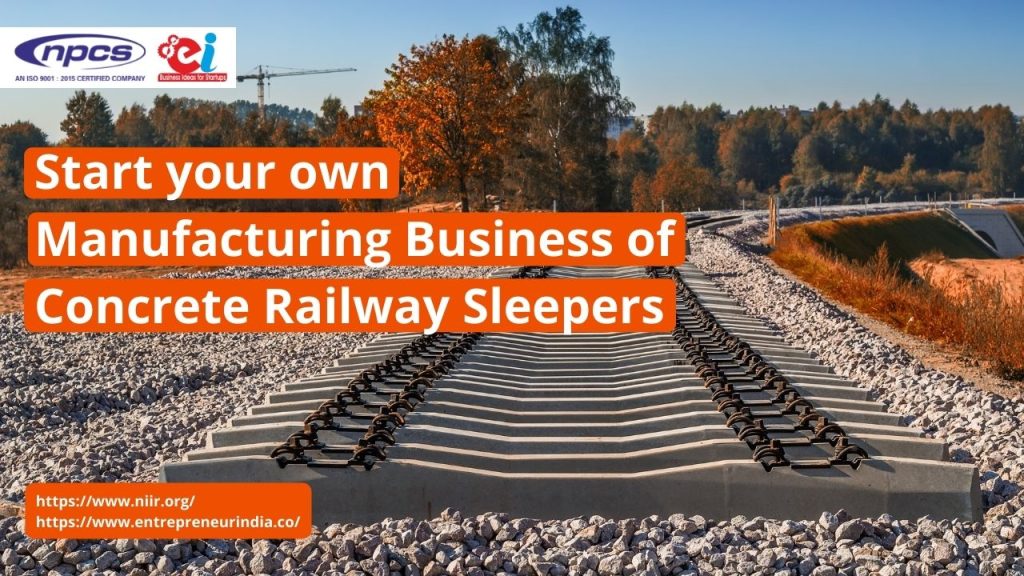
Start your own Manufacturing Business of Concrete Railway Sleepers

Start your own Manufacturing Business of Concrete Railway Sleepers Read More »

The business of concrete railway sleepers is a lucrative industrial venture aligned with infrastructure development and transportation modernization. Concrete sleepers have replaced traditional wooden and steel sleepers in rail networks around the world due to their superior durability, strength, and cost-effectiveness. With growing investments in railway expansion, high-speed rail projects, and metro rail connectivity, the demand for precast concrete sleepers is rising steadily. For entrepreneurs and construction-focused enterprises, setting up a manufacturing unit for concrete railway sleepers offers long-term profitability and steady market demand backed by government tenders and private contracts. Growing Demand in Railway Infrastructure India, like many developing and developed nations, is investing heavily in modernizing its railway infrastructure. The Indian Railways, one of the largest railway networks globally, has adopted concrete sleepers as the standard for all future track laying. The business of concrete railway sleepers is expected to grow with the doubling and electrification of railway lines, construction of freight corridors, and introduction of bullet trains. Globally, countries in Africa, Southeast Asia, and Eastern Europe are following similar paths, making this business not only domestically viable but also suitable for exports. Concrete railway sleepers provide better stability, resistance to weathering, and minimal maintenance compared to traditional alternatives. Their uniform design and compatibility with mechanized track laying systems make them the preferred choice for modern railway networks. As governments aim to improve safety, increase train speeds, and reduce lifecycle costs, concrete sleeper usage is becoming mandatory in all new projects. Businesses that enter the industry now can tap into multiple segments—from government railways to metro lines and private logistic corridors. Business Plan: Concrete Railway Sleepers Manufacturing Plant Manufacturing Process and Required Setup Setting up a unit for the business of concrete railway sleepers requires a precise understanding of the manufacturing process and adherence to technical specifications. The production process includes several stages such as mold preparation, concrete mixing, pre-stressing wire placement, casting, curing, and quality testing. Sleepers are produced using high-grade cement, aggregates, water, and pre-stressed steel wires or tendons. These materials are placed into heavy-duty steel molds aligned with the rail fastening systems. After vibration and compaction, the sleepers are left to cure under controlled conditions. Post-curing, they are demolded and stored for 28 days before being tested for load-bearing capacity, dimensions, and resistance to stress. A typical factory setup includes batching plants, pre-stressing equipment, hydraulic jacks, mold assemblies, curing chambers, and handling cranes. The production facility should have an open yard for curing and storing sleepers, along with an in-house testing laboratory. Automation can be introduced gradually to increase output and improve consistency. Visit this Page for More Information: Start a Business in Cement and Cement Based Products Industry Investment and Cost Structure Starting the business of concrete railway sleepers requires a moderate to high capital investment depending on the production capacity. For a plant with a capacity of 200–300 sleepers per day, the estimated investment would be ?4–7 crore. Key cost components include: Machinery and molds: 40% Civil infrastructure and layout: 20% Pre-stressing steel and raw materials: 25% Utilities, labor, and transport: 10% Quality testing and certification: 5% Production cost per sleeper typically ranges from ?1,200 to ?2,500 depending on size and material grade. The selling price can vary from ?2,000 to ?4,000 per unit, depending on contract volume, location, and technical specifications. Profit margins are attractive, especially in long-term contracts and bulk supplies. Additionally, tie-ups with Indian Railways or urban metro authorities offer bulk demand, predictable revenue, and assured payments. Enterprises entering this field with government registration can bid for EPC tenders, public-private partnerships, or subcontracted manufacturing work. Related Feasibility Study Reports: Concrete, Cement and Cement based Products Licensing, Standards, and Approvals To establish a compliant and reputable unit in the business of concrete railway sleepers, the manufacturer must obtain several industry certifications and approvals. These include: Factory License and Pollution Control Board clearance Udyam MSME registration (optional but useful) ISO 9001 certification for quality management RDSO (Research Designs & Standards Organisation) approval for Indian Railways Load testing and technical validation from a certified lab GST registration and PAN In India, RDSO approval is critical, as it certifies that your sleeper design and material meet railway standards. Without RDSO accreditation, businesses cannot supply to railway zones, metro authorities, or public sector undertakings. Complying with IS: 458 and IRS-T-39 standards for concrete sleeper dimensions and tolerances is also mandatory for institutional clients. Read Similar Articles: Construction & Building Materials Projects Target Market and Sales Channels The business of concrete railway sleepers targets a specialized but large customer base. Your primary clients will include: Indian Railways and zonal divisions Metro Rail Corporations (DMRC, CMRL, etc.) Freight Corridor Corporations of India (DFCCIL) Railway contractors and EPC players Mining and port railway track developers Private infrastructure companies with internal rail yards Sales are typically finalized through long-term supply contracts, tenders, or subcontract manufacturing partnerships. Participation in rail infrastructure expos, engineering forums, and construction summits helps establish brand presence. Providing pre-approved designs, quality certifications, and after-sales technical support improves chances of repeat orders. Some companies also diversify into export markets where emerging countries are investing in railway upgrades. African nations, Southeast Asia, and Latin America offer growing markets for standard and broad gauge concrete sleepers. Advantages and Long-Term Benefits Starting a business of concrete railway sleepers offers multiple strategic advantages. It is a capital-intensive but low-competition space where market demand is guaranteed for the foreseeable future due to massive infrastructure development. Unlike volatile industries, the sleeper business enjoys year-on-year procurement from railway departments and contractors. Once certified, your plant becomes a key supplier for both national and regional projects. With each sleeper having a life span of over 30 years, your product becomes an integral part of critical infrastructure—adding credibility and trust to your brand. The relatively low operational cost after setup, availability of raw materials, and possibility of automation ensure high productivity and scalability. Moreover, the demand for concrete sleepers will increase with the global focus on freight mobility, electrification, and high-speed rail deployment. By staying

Have a business idea? Let's make it happen together-contact us now!


Contact Form Demo

This will close in 0 seconds

Translate »