
Epoxy Resins Technology Handbook 3rd Edition
(Synthesis, Epoxy Resin Adhesives, Epoxy Coatings) with Manufacturing Process and Machinery Equipment Details Epoxy resins Technology Handbook properly based on a class of chemicals knowledge. Chemicals usually composed of an epoxide cross-linked to a compound containing at least one hydroxyl group. They can be polymerized, or cured, using heat or UV light. Curing is often done in two stages, where the first stage creates a gel of mostly liquid resin, followed by hardening into a solid material. Epoxy resins have many uses, such as for adhesives, glues and coatings. Epoxies can also be used as insulating coatings on metal wires or electrical components; they provide abrasion resistance and good dielectric properties. Adhesive applications include bonding wood to composites (such as fiberglass) for boatbuilding; manufacturers typically apply the adhesive to both surfaces and then press them together under heavy pressure. Alternatively, the glue can be applied to one surface which is then spread out over another surface. In this method it may not be necessary to add additional pressure. An Overview on Epoxy Resins Technology Industry Epoxy refers to the basic components and the cured end products of epoxy resins, and also serves as a colloquial name for the epoxide functional group. Epoxy resins form a class of thermoset materials that engineers use extensively in structural and specialty composite applications because they offer a unique combination of properties unavailable in other thermoset resins. Epoxies are monomers or prepolymers that further reacts with curing agents to yield high performance thermosetting plastics. They have gained wide acceptance in protecting coatings, electrical and structural applications because of their exceptional combination of properties such as toughness, adhesion, chemical resistance and superior electrical properties. Epoxy resins contain a three-membered cyclic ether group, commonly known as an epoxy group, 1,2-epoxide, or oxirane. Manufacturers primarily use diglycidyl ethers of bisphenol-A, which they derive from bisphenol-A and epichlorohydrin. Global Market of Epoxy Resins Technology The market of epoxy resins are growing day by day. Today the total business of this product is more than 100 crores. Epoxy resins are used for about 75% of wind blades currently produced worldwide, while polyester resins account for the remaining 25%. A standard 1.5-MW (megawatt) wind turbine has approximately 10 tonnes of epoxy in its blades. Traditionally, demand in markets such as adhesives, building and civil construction, electrical insulation, printed circuit boards, and protective coatings for consumer durables has driven the growth of epoxy resins. Conclusion The major contents of the Epoxy resins Technology Handbook is  synthesis and characteristics of epoxy resin, manufacture of epoxy resins, epoxide curing reactions, the dynamic mechanical properties of epoxy resins, physical and chemical properties of epoxy resins, epoxy resin adhesives, epoxy resin coatings, epoxy coating give into water, electrical and electronic applications, analysis of epoxides and epoxy resins and the toxicology of epoxy resins and photographs of machinery with suppliers contact details. A total guide to manufacturing and entrepreneurial success in one of today’s most epoxy resin industry. This book is one-stop guide to one of the fastest growing sectors of the epoxy resin industry, where opportunities abound for manufacturers, retailers, and entrepreneurs. This is the only complete handbook on the commercial production of epoxy resin product. It serves up a feast of how-to information, from concept to purchasing equipment. Also Read: 5 Reasons Why Market Research is Vital for Start-ups Contact Us
Perfumes and Flavors Manufacturing: Formulations, Processes, and Business Insights
In today’s rapidly evolving consumer landscape, perfumes and flavors manufacturing stands out as a promising industry blending sensory science with business potential. From high-end fragrances and body sprays to everyday food flavorings and pharmaceuticals, these products play an integral role in our daily experiences. The formulations and production processes behind them are not only rooted in deep chemistry but also in creative innovation. With increasing consumer demand for unique, sustainable, and organic ingredients, the perfume and flavor market is booming. Global brands are constantly innovating, while startups are finding profitable niches with customized blends and clean-label products. For aspiring entrepreneurs and manufacturers, understanding the technical know-how of this business—from formulation to packaging—can open doors to a highly rewarding venture. This blog provides a detailed explanation of the processes, ingredients, and opportunities involved in building a successful perfumes and flavors manufacturing business. Understanding Perfumes and Flavors Manufacturing Formulations and Processes Manufacturing perfumes and flavors involves precision, creativity, and science. These products are used extensively across multiple sectors such as: Cosmetics and personal care (perfumes, deodorants, body mists) Food and beverages (essence, extracts, seasoning) Pharmaceuticals (flavored syrups, ointments) Household products (room fresheners, detergents, incense sticks) The industry thrives on carefully crafted formulations that combine natural extracts and synthetic chemicals. These mixtures go through standardized manufacturing processes to ensure consistency, quality, and sensory appeal. Visit this Page for More Information: Start a Business in Cosmetic Industry Key Ingredients Used in Perfumes and Flavors Formulation A successful formulation starts with the right ingredients. Each type of product uses a carefully selected combination of natural and synthetic substances. For Perfumes: Essential Oils: Natural oils extracted from flowers, fruits, resins, and woods (e.g., lavender, rose, sandalwood). Aroma Chemicals: Synthetic molecules such as linalool, coumarin, and aldehydes used to enhance or imitate natural scents. Solvents: Usually ethanol or a mix of alcohol and water that helps dissolve and carry fragrance components. Fixatives: Ingredients like musk or ambergris ensure that the scent lasts longer by slowing down the evaporation of volatile compounds. For Flavors: Natural Extracts: Derived from plants and fruits such as vanilla, mint, orange peel, or cocoa. Artificial Flavoring Agents: Lab-made compounds like ethyl vanillin and methyl anthranilate used when natural sources are unavailable or too costly. Carriers and Solvents: Substances like propylene glycol or vegetable oil that help dissolve and stabilize flavoring agents. Emulsifiers: Ensure proper mixing of oil- and water-based ingredients for homogeneity. The selection depends on the end-use of the product, safety standards, regional preferences, and cost factors. Related Business Plan: Cosmetics, Perfumery Compounds Perfume and Flavor Formulation Process Explained 1. Research and Concept Development This step involves market research, consumer trends analysis, and ingredient feasibility. The objective is to define what the end product should smell or taste like and determine its application. 2. Prototype Creation Chemists and perfumers (called “noses”) begin mixing raw materials in small batches, balancing top, middle, and base notes for perfumes or sweet, savory, and umami profiles for flavors. 3. Testing and Sensory Evaluation These prototypes are evaluated for smell, taste, strength, longevity, and performance in real-world conditions. Sensory panels may include experts or targeted consumers. 4. Final Formulation and Documentation After refinement, the final formula is documented with all ingredient percentages, safety data, regulatory compliance records, and performance benchmarks. Read Similar Articles: COSMETIC AND BEAUTY PRODUCTS Perfume and Flavor Manufacturing Process – Step-by-Step The manufacturing process transforms lab-tested formulations into market-ready products. Here’s how it works: Step 1: Raw Material Preparation All ingredients are measured, filtered, and stored under appropriate conditions to maintain quality. Ingredient traceability is crucial, especially for exports. Step 2: Mixing and Blending Ingredients are combined in mixing tanks. Temperature, pH, and blending speed are carefully controlled. This stage varies based on the product: Perfumes: Oils and solvents are blended, often aged for days or weeks. Flavors: Emulsions or suspensions are created, sometimes using ultrasonic homogenizers. Step 3: Filtration and Stabilization The mixture is filtered to remove particulates. Stabilizers or preservatives may be added to increase shelf life and product integrity. Step 4: Bottling and Packaging Automated or semi-automated machines fill the final mixture into bottles, sachets, or containers. Labeling is done according to industry standards. Step 5: Quality Control and Batch Testing Each batch undergoes final testing to ensure aroma/taste consistency, safety, microbial limits, and regulatory compliance. Certificates of analysis (CoA) may be generate. Read our Books Here: Perfumes and Flavours Technology Handbook with Manufacturing Formulations Equipment Required for Manufacturing Perfumes and Flavors To ensure efficiency and quality, investing in modern equipment is key: Stainless Steel Mixing Tanks with controlled temperature and agitation systems. Ultrasonic Emulsifiers for flavor emulsions. Vacuum Pumps and Agitators for perfume blending. Cartridge and Micron Filters for purity. Filling Machines (manual or automated) for precise bottling. Labeling and Coding Machines for batch traceability. Gas Chromatography Equipment for analytical testing. Download PDF: Perfumes and Flavours Technology Handbook with Manufacturing Safety, Regulatory, and Compliance Standards Perfumes and flavors must comply with strict industry guidelines and safety regulations: IFRA (International Fragrance Association) guidelines for fragrance components. FEMA (Flavor and Extract Manufacturers Association) regulations for food-grade flavors. FSSAI, FDA, and EU Regulations for regional compliance. MSDS and Allergen Declarations for consumer safety. REACH and GHS Compliance for export and labeling standards. Keeping up with documentation and certifications is essential for global trade. Business Opportunities in Perfumes and Flavors Manufacturing The perfumes and flavors industry is ripe with possibilities. Entrepreneurs can explore: Private Label Manufacturing: Produce custom perfumes or flavors for other brands. White Label Products: Create standard formulas that businesses can rebrand. Direct to Consumer (D2C): Build your own brand and sell via e-commerce platforms. Contract Manufacturing: Partner with large brands for scalable production. Export Business: Essential oils and organic flavors from India are in high demand globally. Aromatherapy and Wellness: With rising interest in natural healing, this niche is growing rapidly. Related Feasibility Study Reports: Cosmetics, Perfumery Compounds Trends Shaping the Future of Perfumes and Flavors Sustainable Sourcing: Brands are shifting toward eco-friendly, traceable raw materials. AI in Formulation:
The Increasing Demand for Manufacturing Business of Wax and Polishes
The business of wax and polishes stands as a reliable and profitable venture across various sectors, including automotive care, furniture maintenance, shoe manufacturing, floor treatments, and even the cosmetic industry. As demand for surface enhancement, protection, and aesthetic appeal rises, the market for waxes and polishes continues to expand, offering lucrative opportunities for manufacturers, resellers, and exporters. Waxes and polishes serve as essential finishing products that not only protect surfaces but also improve their shine and longevity. Whether for metal, leather, wood, or skin, consumers and industries alike depend on effective polishing solutions. With a relatively low barrier to entry and broad customer base, the wax and polish business is an excellent option for entrepreneurs looking to establish a sustainable and scalable manufacturing or distribution operation. Scope and Market Potential of Wax and Polish Products The wax and polish business benefits from consistent demand across both domestic and industrial sectors. Automotive detailing services use high-performance waxes for paint protection and shine, while furniture manufacturers and homeowners seek wood polishes to maintain finish and texture. Additionally, floor polishes are used in hospitals, hotels, commercial buildings, and schools to preserve cleanliness and aesthetic standards. According to market research reports, the global polish and wax market is expected to grow steadily, driven by increasing consumer awareness about maintenance, durability, and presentation. Furthermore, eco-friendly, water-based, and biodegradable polish products are gaining popularity, opening new niche segments. Visit this Page for More Information: Start a Business in Wax and Polish Industry Key Product Categories in Wax and Polish Business 1. Automotive Wax and Polish -Business of Wax and Polishes Car waxes and polishes form the largest market segment. These products enhance vehicle shine, protect the paint from oxidation, and repel dust and water. Demand for ceramic and synthetic waxes has surged with the rise in car detailing services. 2. Furniture and Wood Polish Furniture waxes and polishes are applied to tables, chairs, cabinets, and wooden flooring to maintain sheen and prevent moisture absorption. Natural waxes like beeswax and carnauba are especially preferred for antique wood restoration. 3. Shoe Polish Shoe polish is an evergreen product used for leather shoes and boots. It comes in various forms including wax paste, cream, and liquid polish, providing nourishment, waterproofing, and color restoration. 4. Floor Polish Commercial and residential establishments use floor wax and polish for maintenance and to create slip-resistant, glossy surfaces. These products are essential in facility management. 5. Cosmetic Wax Paraffin and beeswax are widely used in cosmetic formulations such as lip balms, lotions, and hair removal wax. This segment continues to grow with the rise in personal grooming. Related Business Plan: Wax and Polish, Wax Starting the Wax and Polish Manufacturing Business To succeed in the business of wax and polishes, one must develop a clear strategy that includes product development, sourcing of raw materials, compliance with safety standards, and distribution. 1. Product Formulation and Research Formulating an effective wax or polish requires a basic understanding of chemistry. The formulation typically includes waxes (natural or synthetic), solvents, oils, emollients, fragrances, and colorants depending on the end-use. R&D can help create specialized variants like water-resistant, scented, or eco-friendly polishes. 2. Procurement of Raw Materials Key raw materials for manufacturing include: Natural waxes (carnauba, beeswax, candelilla) Synthetic waxes (polyethylene wax, paraffin) Solvents (turpentine, petroleum distillates, water) Additives (emulsifiers, preservatives, perfumes) Establishing reliable supplier networks ensures consistent production. 3. Equipment and Infrastructure Setting up a wax and polish production unit involves: Mixing vessels Heating equipment Homogenizers Filling and packaging machines Labeling units Adequate ventilation and fire safety systems are critical due to the use of flammable ingredients. 4. Packaging and Branding Packaging must be durable, leak-proof, and visually appealing. The label should include usage instructions, safety precautions, ingredients, and compliance markings. Branding is a major driver of success in this industry, especially for consumer-facing products. 5. Legal Compliance and Quality Control Comply with relevant health and safety regulations like BIS (Bureau of Indian Standards) for polish quality, MSDS (Material Safety Data Sheet), and environmental norms. Quality control checks must monitor consistency in texture, shine, drying time, and fragrance. Read Similar Articles: WAX AND POLISH INDUSTRY Marketing and Distribution Strategy Marketing is a key driver for the wax and polish business. With both B2B and B2C customer bases, you can sell your products through: Retailers and wholesalers Automobile workshops and service centers Furniture showrooms and carpenters Online marketplaces (Amazon, Flipkart) Export channels and industrial buyers Engaging packaging, digital marketing campaigns, and offering free samples or trial kits can significantly boost visibility and consumer trust. Click here to send your queries/Contact Us Challenges and Solutions Challenges: Competition from established brands Volatile raw material prices Storage and flammability issues Consumer loyalty to legacy brands Solutions: Focus on product innovation (e.g., eco-friendly, multi-purpose) Maintain strict quality and consistency Offer competitive pricing and bulk deals Build a strong digital presence Related Feasibility Study Reports: Wax and Polish Opportunities for Growth and Expansion The wax and polish industry offers scope for: Contract manufacturing for established brands Private label production for retailers and eCommerce companies Eco-friendly alternatives with biodegradable ingredients Customized products for luxury car showrooms, boutique hotels, and premium furniture stores Scaling operations to include export potential can further enhance profitability. Countries in Africa, the Middle East, and Southeast Asia have growing demand for affordable maintenance products. Read our Books Here: Read Our Books & Databases Conclusion The business of wax and polishes is a high-potential, evergreen industry with broad applications across automotive, home care, footwear, and personal care sectors. With manageable startup costs, wide product variety, and strong market demand, entrepreneurs can build a successful and sustainable business. By focusing on product quality, market trends, safety standards, and smart branding, you can secure your position in this competitive and profitable space. Click here to send your queries/Contact Us See More Links: Contact Us
How to Manufacture and Process Maize Products?
Types of Maize-Based Products 1. Corn Flour (Maize Flour) Widely used in food products such as tortillas, snacks, and baked goods. 2. Corn Starch (Maize Starch) An essential thickening agent used in confectionery, paper, textiles, and pharmaceuticals. 3. Corn Oil Extracted from germ, used in cooking oils and industrial lubricants. 4. Corn Grits and Semolina Used in cereals, snack foods, and brewery products. 5. Liquid Glucose and Dextrose Used in confectionery, beverages, jams, and pharmaceutical syrups. 6. Bioethanol A clean fuel alternative derived from maize fermentation. 7. Animal Feed By-products like bran, fiber, and protein meal are excellent for livestock feed. Related Business Plan: Maize, Corn and its By Products The Maize Processing Workflow: Step-by-Step Manufacturing Process Efficient maize product manufacturing involves several technical stages, each tailored to the final product line. Here’s how a typical maize processing plant operates: 1. Raw Maize Cleaning and Grading Maize is cleaned using sieves, aspirators, and magnetic separators to remove dust, stones, and foreign particles. Proper grading ensures uniformity and quality in the final product. 2. Conditioning and Degermination The cleaned maize is conditioned with moisture to soften the kernel. Degermination separates the endosperm, germ, and bran. The germ is used for oil extraction, while the endosperm proceeds for starch and flour production. 3. Milling and Grinding Milling involves dry or wet grinding: Dry milling yields grits, semolina, and flour. Wet milling produces starch, gluten, and by-products for glucose and ethanol production. 4. Sieving and Sifting Maize flour and grits are sieved into different grades depending on the mesh size, catering to specific food and industrial applications. 5. Starch Extraction and Conversion In wet milling, starch is separated and purified. It can be converted into: Liquid glucose through enzymatic hydrolysis. Dextrose and maltodextrin through further processing. 6. Oil Extraction Germs are pressed or solvent-extracted to obtain corn oil. Residue is utilized as feed. 7. Drying, Packing, and Storage Final products are dried (if required), packaged in moisture-proof materials, and stored under controlled conditions to prevent contamination. Read Similar Articles: Maize Related Projects Click here to send your queries/Contact Us Machinery and Equipment Required A maize processing unit can be semi-automatic or fully automated depending on production capacity. Key machinery includes: Maize cleaning machines Conditioners and degerminators Milling and grinding equipment Sieving and sifting units Centrifugal separators Hydrocyclone systems for starch extraction Fermentation tanks and distillation columns (for ethanol) Oil expellers and solvent extractors Packaging machines Automation enhances precision, hygiene, and throughput. Related Feasibility Study Reports: See Our Project Reports & Profiles Quality Control and Regulatory Compliance Maintaining consistent quality is essential in food-grade maize products. Manufacturers should comply with: FSSAI (Food Safety and Standards Authority of India) Agmark certification ISO 22000: Food safety management systems GMP and HACCP compliance Pollution Control Board approvals (especially for ethanol and oil units) Lab testing for moisture content, microbial load, starch purity, and oil quality ensures product reliability. Read our Books Here: Read Our Books & Databases Profitability and Business Potential Setting up a maize product manufacturing plant can yield high ROI, especially when value-added products are diversified. Estimated Setup Costs: Small-scale flour/starch unit: ?25–50 lakh Medium ethanol/oil/glucose unit: ?1–3 crore Full-line automated plant: ?5 crore and above Gross Profit Margins: Corn flour and starch: 25–35% Corn oil and glucose: 30–40% Ethanol (biofuel): 35–50% Raw Material to Product Conversion: 1 ton maize can yield: ~550 kg flour ~450 kg starch ~200 liters ethanol ~100 kg germ (for oil) Export Potential and Target Markets Indian maize products have a strong international demand. Export opportunities exist in: Middle East and Africa for corn oil and starch Southeast Asia for glucose and dextrose Europe for GMO-free maize flour USA and Brazil for ethanol Registering with APEDA and adhering to global quality standards can unlock export channels. Sustainability and Circular Economy Aspects Maize processing supports zero-waste manufacturing through efficient by-product utilization. For instance: Bran and fiber: Livestock and poultry feed Starch slurry: Bioplastics and adhesives Oil-cake: Organic manure Ethanol residue: Fuel blending or biomass Solar-powered dryers and rainwater harvesting can make the plant energy-efficient and eco-friendly. Handbook on Maize Processing and Manufacture of Maize Products Conclusion: Turn Corn into a Golden Business Opportunity The manufacture and process of maize products presents an evergreen, diverse, and profitable business model that serves multiple high-demand industries. With rising awareness about food security, clean energy, and plant-based ingredients, maize processing becomes a smart industrial investment. Whether you start with a single product or a multi-line integrated unit, this business offers scope for rural employment, value addition, and domestic as well as international market growth. Click here to send your queries/Contact Us See More Links: Contact Us
Fertilizers Manufacturing Handbook
The Fertilizers Manufacturing Handbook serves as an essential guide for entrepreneurs, chemical engineers, and investors looking to enter the ever-growing agrochemical industry. With the world population steadily increasing and global food security becoming a priority, the demand for agricultural productivity is soaring. Fertilizers play a pivotal role in enhancing crop yield and soil fertility, making them indispensable to modern farming. The Indian fertilizer industry ranks among the largest in the world, supported by government subsidies, increasing rural awareness, and mechanized agriculture. Whether it’s urea, NPK blends, potash, phosphates, or organic bio-fertilizers, each type plays a crucial role in sustainable crop production. This Fertilizers Manufacturing Handbook will walk you through market scope, raw materials, machinery, formulation processes, legal compliance, and profitability. Why You Should Start a Fertilizer Manufacturing Business The fertilizer industry is recession-proof and driven by essential needs. With India being an agrarian economy, the consumption of fertilizers grows annually. The government supports the sector through subsidies and policies promoting balanced nutrient usage. Moreover, the rising popularity of organic and customized fertilizers offers new entrepreneurial avenues. Visit this Page for More Information: Start a Business in Fertilizer Industry 1. Market Scope and Industry Insights Global Fertilizer Market Size (2024): USD 210 billion India’s Fertilizer Consumption (2023): 63.6 million tonnes Expected CAGR (2024–2030): 4.1% Top Consumers: China, India, USA, Brazil India imports over 50% of its potash and DAP needs, presenting a significant opportunity for domestic production. Click here to send your queries/Contact Us 2. Types of Fertilizers and Their Applications Type Composition Use Case Nitrogenous (Urea, CAN) High nitrogen content Promotes leaf and stem growth Phosphatic (SSP, DAP) Contains phosphorus Strengthens roots, flowering Potassic (MOP, SOP) High potassium Improves drought resistance, yield NPK Compound Fertilizers Balanced mix All-round plant development Organic/Bio-Fertilizers Natural origin (manure, bacteria) Soil-friendly and sustainable Liquid Fertilizers Soluble nutrients in fluid form Drip or foliar application 3. Raw Materials Required Fertilizer Type Major Raw Materials Urea Ammonia, Carbon Dioxide DAP Ammonia, Phosphoric Acid NPK Urea, DAP, MOP, Fillers Organic Animal manure, Compost, Microbes SSP Rock Phosphate, Sulfuric Acid India has abundant urea and ammonia capacity, while phosphate and potash are mostly imported. Related Business Plan: MINI FERTILIZER PLANT 4. Manufacturing Processes (Overview) A. Urea Production (Ammonia + CO? under pressure) Ammonia synthesis from natural gas Reaction with CO? to form urea Granulation and drying Cooling and bagging B. NPK Blending Plant Dry mixing of urea, DAP, MOP Granulation (optional) Screening and coating Packaging C. Organic Fertilizer Unit Composting of animal dung/organic matter Curing for 30–45 days Crushing, drying, and sieving Enrichment with bio-cultures Packaging in 50kg/25kg bags Automated plants ensure better consistency and higher volumes. Download PDF: Fertilizers Manufacturing Handbook 5. Machinery and Equipment Equipment Name Application Cost (Approx. INR) Granulators For NPK or urea pelletizing ?15–25 lakh Mixing Units Uniform blending ?8–12 lakh Compost Turners For organic composting ?5–10 lakh Crushers and Sievers Particle size control ?5–8 lakh Dryers and Coolers Moisture removal ?15–20 lakh Packaging Machines Automated bagging ?10–15 lakh 6. Investment Requirements Cost Component Small Plant (INR) Medium Plant (INR) Land and Shed ?10 – ?15 lakh ?30 – ?50 lakh Machinery & Installation ?20 – ?50 lakh ?1 – ?2 crore Working Capital ?10 – ?25 lakh ?50 lakh – ?1 crore Licensing & Compliance ?5 – ?10 lakh ?15 – ?20 lakh Estimated ROI: 20% – 35%Payback period: 2–3 years 7. Licenses and Legal Compliance License/Approval Issuing Authority Fertilizer Manufacturing License Agriculture Department Factory Registration & MSME Udyam State Govt/UDYAM Portal Pollution Control Consent (CTE/CTO) State Pollution Control Board GST Registration GST Portal BIS Certification (For Urea/DAP) Bureau of Indian Standards (BIS) Packaging Standards Compliance Legal Metrology Department 8. Marketing and Distribution Strategy Dealer Networks – Tie-ups with agro-dealers and rural retailers FPOs and Cooperatives – Bulk sales to farming groups Digital Platforms – List on AgriBazaar, DeHaat, Amazon Kisan Government Tenders – Supply to state fertilizer corporations Branding & Trust – Emphasize purity, certification, and high yield results 9. Challenges in Fertilizer Manufacturing Challenge Solution Fluctuating raw material prices Long-term contracts and sourcing Environmental regulations Install emission and effluent systems Seasonal demand variations Diversify product line (organic/NPK) Transportation to remote areas Use local distributors and stockists 10. Future Trends in the Fertilizer Industry Customized Nutrient Blends based on soil testing Slow-Release and Nano-Fertilizers for precision agriculture Eco-friendly and Organic Inputs due to sustainability push Public-Private Partnerships for subsidy-linked production Exports to Africa and Southeast Asia with government incentives Read our Books Here: Fertilizers Manufacturing Handbook Conclusion The Fertilizers Manufacturing Handbook outlines everything you need to build a profitable business in one of the world’s most vital industries. From inorganic to organic production, India’s strong agricultural base offers fertile ground for both large-scale plants and small entrepreneurs. By adopting smart technology, complying with legal norms, and delivering quality, your fertilizer brand can grow hand-in-hand with India’s green revolution. Related Feasibility Study Reports: Fertilizers, Fertilisers, Inorganic Fertilizers See More Links: Start a Business in Asia Start a Business in Potential Countries for Doing Business Best Industry for Doing Business Business Ideas with Low, Medium & High Investment Looking for Most Demandable Business Ideas for Startups Startup Consulting Services Start a Business in Africa Start a Business in India Start a Business in Middle East Related Videos Related Books Related Projects Related Market Research Reports NIIR PROJECT CONSULTANCY SERVICES, DELHI An ISO 9001:2015 Company ENTREPRENEUR INDIA 106-E, Kamla Nagar, Opp. Mall ST, New Delhi-110007, India. Email: npcs.ei@gmail.com info@entrepreneurindia.co Tel: +91-11-23843955, 23845654, 23845886 Mobile: +91-9097075054, 8800733955 Website: https://www.entrepreneurindia.co https://www.niir.org Contact Us
17 Best Startup Books You Should Read | Start Your Own Industry in Booming Sectors
If you’ve ever dreamed of launching your own industrial venture, there’s no better time than now. As the global economy undergoes rapid technological and social transformations, several booming sectors are emerging with high profitability, scalability, and future-proof potential. Start Your Own Industry in Booming Sectors not only offers financial rewards but also provides long-term sustainability and growth. The concept to start your own industry in booming sectors is not limited to large corporations anymore. With government support for MSMEs, access to digital platforms, and industry-specific automation tools, even small and medium enterprises can establish production units in areas like green energy, food processing, health tech, and smart packaging. This article explores top-performing industries you can enter and offers key guidance to help you launch successfully. Visit Our Bookstore: BOOKS & DATABASES Why Start Your Own Industry in Booming Sectors? Starting your own industry in booming sectors gives you a competitive edge because you are building in areas with growing demand, consumer shift, and government incentives. These industries are not only resilient in uncertain economic times but also poised for long-term growth due to innovation, policy support, and evolving consumer behavior. Download PDF: 17 Best Startup Books You Should Read | Start Your Own Industry in Booming Sectors Top 10 Booming Sectors to Start Your Own Industry 1. Renewable Energy and Solar Panel Manufacturing The shift toward sustainable energy is global. India alone aims to reach 500 GW of non-fossil fuel capacity by 2030. Entrepreneurs can invest in: Solar panel assembly Solar inverter production Battery storage systems Initial investment: ?25–50 lakhsROI period: 2–3 years 2. EV Components and Charging Infrastructure As electric vehicles (EVs) gain momentum, there’s a parallel rise in demand for EV parts and accessories like: EV batteries Motors and controllers Charging station installation Startup cost: ?10–30 lakhsGrowth potential: Extremely high till 2035 and beyond 3. Packaged Food and Ready-to-Eat Meals Urbanization and busy lifestyles have fueled demand for packaged, hygienic, and instant food options. You can start units for: Instant snacks and namkeens Frozen parathas, curries Millets-based products FSSAI compliance is crucial in this segment. 4. Biodegradable Packaging and Tableware With single-use plastics being phased out globally, biodegradable packaging made from sugarcane bagasse, corn starch, or bamboo pulp is booming. Manufacture: Plates, bowls, containers Paper straws Eco-friendly shopping bags This aligns well with ESG and sustainability goals. 5. Ayurvedic and Herbal Products Manufacturing India’s ancient wellness knowledge is becoming a global business. You can manufacture: Herbal supplements Skincare and haircare Immunity-boosting tonics Initial setup can start from ?7–15 lakhs with access to medicinal herb supply chains. 6. Smart Home Appliances and IoT Devices This sector is ideal if you have tech expertise. With smart living gaining popularity, there’s demand for: Smart lighting and thermostats Voice-activated home gadgets IoT security devices Investment is high-tech but returns are premium with export potential. 7. Health and Diagnostic Devices Manufacturing India’s health sector is growing at 20% CAGR post-COVID. MSMEs can manufacture: Blood pressure monitors Glucose meters Digital thermometers Demand is increasing in both urban and rural healthcare centers. 8. Water Purification and Wastewater Treatment Units Water scarcity and pollution issues have created a huge market for: RO purifier systems Industrial effluent treatment plants Rainwater harvesting devices Ideal for industrial hubs and export markets in Africa and Southeast Asia. 9. Organic Fertilizers and Bio-Pesticides Agritech and sustainable farming are growing. You can start an industry producing: Vermicompost Bio-fungicides Seaweed-based fertilizers Supported by Agri Startups and NABARD schemes. 10. 3D Printing and Customized Manufacturing From automotive to medical devices, 3D printing is becoming a revolutionary production model. Industries can explore: Prosthetics Automobile prototypes Architectural models Low labor, high precision, and minimal inventory make this sector future-proof. Steps to Start Your Own Industry Step 1: Choose the Right Sector Assess your expertise, budget, and long-term goals. The booming sectors listed above offer different ROI periods, tech requirements, and market scalability. Step 2: Prepare a Feasibility Report This includes: Market demand analysis Competitor benchmarking Raw material sourcing Profit and break-even estimates A detailed DPR (Detailed Project Report) will help you get funding and approvals. Click here to send your queries/Contact Us Step 3: Register and Get Required Licenses Common registrations include: MSME/Udyam Registration GST and PAN Pollution clearance (if applicable) BIS/FSSAI certifications Factory License Step 4: Arrange Capital and Funding Sources include: Bank loans under CGTMSE Mudra Loans for MSMEs SIDBI assistance Venture capital (for tech sectors) Government subsidies in priority sectors Step 5: Procure Machinery and Start Production Choose semi-automated or fully-automated machinery based on scale. Partner with local manufacturers or importers for cost-effective procurement. Step 6: Build a Marketing and Distribution Network Target both B2B (distributors, wholesalers) and B2C (direct retail, e-commerce) depending on the product. For international markets, explore: Amazon Global Alibaba Export Promotion Councils Government Schemes to Support New Industries Scheme Sector Targeted Support Offered Production Linked Incentive (PLI) EVs, Solar, Electronics Cash incentives, tax breaks PMEGP All MSMEs ?10–25 lakh funding Start-Up India Tech, Agri, Biotech Seed funding, tax exemption SFURTI (Khadi/Organic) Rural & Tribal Clusters Infrastructure grants Conclusion To start your own industry in booming sectors, you don’t need to reinvent the wheel—you just need to pick the right opportunity, create value, and scale smartly. With strong government backing, tech tools, and global market demand, now is the perfect time to turn your entrepreneurial dream into a thriving industrial business. Need a Business Idea? Here are useful books for startups Niir Project Consultancy Services (NPCS) can provide project reports. The report covers – Manufacturing Plant, Detailed Project Report, Profile, Business Plan, Industry Trends, Market Research, Survey, Manufacturing Process, Machinery, Raw Materials, Feasibility Study, Investment Opportunities, Cost and Revenue, Plant Economics. The project report provided by NPCS gives a detailed market review. The report analyses the market confirms the availability of various necessities such as plant & machinery, raw materials and tells about the forecasting financial requirements. A lot of professionals have taken benefit from the project reports if you are interested in the manufacturing business, get in
Essential Oil Industry with Manufacturing Formulations
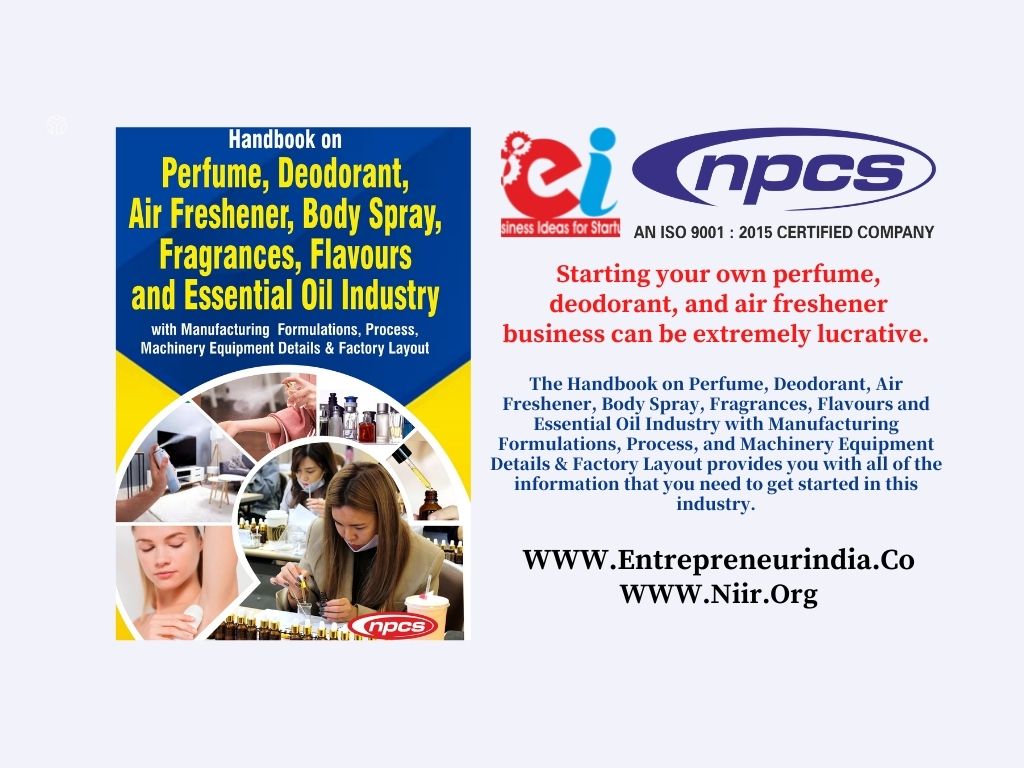
2 The Essential Oil Industry with Manufacturing Formulations is booming globally, driven by the growing demand for natural remedies, aromatherapy, clean beauty, and plant-based products. Essential oils—extracted from flowers, leaves, seeds, and bark—are widely used in cosmetics, wellness, perfumery, food flavoring, and pharmaceuticals. As the world turns to nature for holistic well-being and chemical-free alternatives, the essential oil market is gaining unprecedented momentum. According to market data, the global essential oil market was valued at over USD 21 billion in 2023 and is expected to cross USD 35 billion by 2030, growing at a CAGR of over 7%. This growth is not just led by consumer demand but also by small and medium-scale enterprises entering the space with locally sourced botanicals and customized blends. If you are looking to start a natural, sustainable, and highly scalable venture, exploring the essential oil industry with manufacturing formulations is an excellent opportunity. Whether it’s lavender oil for stress relief or tea tree oil for acne, every formulation meets a real consumer need, making this industry a rich blend of science, nature, and business. Visit this Page for More Information: Start a Business in Cosmetic Industry Why the Essential Oil Industry Is a Smart Business Investment The essential oil industry with manufacturing formulations holds significant advantages over other FMCG or wellness segments. Essential oils have applications in personal care, spa and massage therapies, household cleaning, and even medicine. What makes this industry so attractive is the low entry barrier, availability of raw materials in India (a biodiversity-rich country), and high-profit margins due to concentrated formulations. From Ayurvedic clinics to organic stores, the market for essential oils is only expanding. Consumers are now reading labels, avoiding synthetic fragrances, and seeking nature-backed alternatives. This gives entrepreneurs a chance to build honest, herbal, and health-driven brands with a loyal customer base. Related Business Plan: Cosmetics, Perfumery Compounds Key Essential Oils in Demand Globally Understanding demand helps in selecting which oils to produce. Here are some top-selling oils you can focus on: Lavender Oil – Relaxation, skin care, sleep aid Peppermint Oil – Cooling effect, muscle relief, oral care Eucalyptus Oil – Respiratory relief, anti-inflammatory Tea Tree Oil – Anti-acne, antimicrobial Lemon Oil – Skin brightening, mood-lifting, degreaser Rosemary Oil – Hair growth, cognitive support Frankincense Oil – Meditation, skincare, luxury perfume By combining these with unique manufacturing formulations, you can create signature products and target niche wellness needs. Read Similar Articles: COSMETIC AND BEAUTY PRODUCTS Essential Oil Manufacturing Formulations Explained The core of the essential oil industry with manufacturing formulations lies in two parts: extraction and blending/formulating. 1. Extraction Methods: Steam Distillation: Most common method. Plant material is steamed, and vapors are collected to separate the oil. Cold Pressing: Used mostly for citrus oils. Peels are mechanically pressed to extract oil. Solvent Extraction: Used for delicate flowers like jasmine. Chemical solvents pull oils from petals. CO? Extraction: Advanced method using carbon dioxide; yields pure oils with no residue. Download PDF: Handbook on Perfume 2. Formulation Process: Once oils are extracted, they can be used individually or blended for specific applications. A formulation includes: Base Oils/Carrier Oils: Like coconut, jojoba, or almond oil to dilute essential oils. Concentration Ratios: Typically 2-5% essential oil in body oils or lotions. Stability Additives: Natural antioxidants like Vitamin E to prolong shelf life. Preservatives (if water-based): Natural ones like Potassium Sorbate or Grapefruit Seed Extract for lotions and sprays. Watch Video: Production of Perfumes and Flavours with Formulations Example Formulation – Hair Oil Blend for Growth: Rosemary Oil – 10 ml Lavender Oil – 5 ml Peppermint Oil – 5 ml Castor Oil – 40 ml Coconut Oil – 40 ml Vitamin E – 1 capsule This mix can be bottled, labeled, and sold under your brand. Such customized formulations add value and brand uniqueness. Related Feasibility Study Reports: Cosmetics Machinery and Equipment Required Starting a small to medium-scale essential oil manufacturing unit requires specific equipment: Steam Distillation Unit – ?5 to ?10 lakh (based on size and output) Cold Pressing Machine – ?3 to ?7 lakh Oil Separators – For clean extraction Filtration System – To remove impurities Mixing Tanks/Blenders – For formulation Bottle Filling Machine – ?2 to ?5 lakh Labeling & Packaging Units Setting up a small plant can cost around ?15–25 lakh, while larger setups may require ?50 lakh to ?1 crore. However, the high retail price of essential oils ensures fast ROI if marketed right. Read our Books Here: Cosmetics and Beauty Products (Ayurvedic, Herbal) Formulation and Manufacturing Technology Regulatory and Safety Compliance To operate legally and safely, your essential oil industry with manufacturing formulations must comply with: FSSAI license (if for food-grade oils) AYUSH license (for therapeutic use) MSME/SSI Registration ISO 22716 (Good Manufacturing Practices for cosmetics) Proper labeling as per Drugs & Cosmetics Act or Cosmetic Rules 2020 Essential oils must also be tested for purity, allergens, and shelf life. A partnership with a NABL-certified lab is advisable. Marketing and Distribution Channels A successful essential oil industry with manufacturing formulations must also have a powerful go-to-market strategy: D2C Online Store: Sell blends, essential oils, and skin/hair care via Shopify, WooCommerce, or marketplaces. Retail Distribution: Supply to wellness stores, salons, spas, and Ayurveda centers. Corporate Gifting & Subscription Boxes: Bundle wellness kits for offices or monthly skincare programs. Export Market: India is a top producer of lemongrass, citronella, and vetiver oil. Get APEDA or DGFT registration and start exporting. White Labeling Services: Offer to formulate and manufacture for small brands. Profit Margin and Return on Investment Essential oils sell at high markups. A 10ml bottle that costs ?30–?50 to produce can retail between ?200–?600 depending on quality, certification, and branding. Customized blends fetch even higher margins. A small unit can break even within 6–12 months if sales are optimized through digital marketing and recurring customers. Challenges and Solutions 1 Challenge: Maintaining consistency in aroma and quality due to crop variationSolution: Source from contract farmers or grow your own herbs under organic guidelines. Challenge: Limited shelf
Just Released: Handbook on Electric Vehicles Manufacturing
As the world shifts toward cleaner, more sustainable transportation, electric vehicles (EVs) are no longer a futuristic concept—they are a present-day revolution. India, driven by government initiatives like FAME (Faster Adoption and Manufacturing of Hybrid and Electric Vehicles) and increased environmental awareness, is experiencing a surge in electric vehicle adoption. For entrepreneurs, manufacturers, and investors, this evolving sector offers an enormous opportunity. Whether you aim to manufacture electric two-wheelers, cars, buses, or EV components, this handbook on electric vehicle manufacturing will guide you through the key steps, infrastructure needs, and strategic decisions involved in building an EV business. Visit this Page for More Information: Start a Business in Electric Vehicle Industry Understanding the EV Manufacturing Ecosystem The electric vehicle manufacturing industry isn’t just about assembling cars—it’s an ecosystem comprising battery technology, power electronics, motor production, software integration, and charging infrastructure. Each component offers a business opportunity. From building a full-fledged EV assembly line to supplying batteries, motors, or software systems, this sector allows entry at multiple levels based on budget and expertise. Read Similar Articles: E- Vehicle Projects 1. Types of Electric Vehicles to Manufacture Depending on market demand and your investment capacity, you can choose to manufacture one of the following types: Electric Two-Wheelers (E-Scooters, E-Bikes): High in demand due to affordability and lower regulatory hurdles. Electric Cars: A capital-intensive segment requiring advanced R&D and safety compliance. Electric Commercial Vehicles (Buses, Trucks): Often government-backed with larger profit margins. Three-Wheelers (E-Rickshaws, Cargo Loaders): Popular in urban and semi-urban logistics. Each segment has its own target customer base, technology requirements, and compliance norms. Read our Books Here: Electric Vehicles Manufacturing 2. Core Components of EV Manufacturing To manufacture an electric vehicle, you need to integrate multiple sub-systems, each of which plays a critical role: a. Battery Pack The battery is the heart of any EV. Lithium-ion batteries dominate the market due to high energy density. Key factors include: Cell Sourcing (local or imported) Battery Management System (BMS) design Thermal management for safety Swappable battery architecture (for 2-3 wheelers) b. Electric Motor Motors convert electrical energy into mechanical motion. Common types include: Brushless DC (BLDC) motors – used in scooters and bikes Induction motors – used in larger vehicles Permanent Magnet Synchronous Motors (PMSM) – efficient but expensive Related Feasibility Study Reports: E- Vehicle, E-Rickshaw c. Controller & Inverter These components regulate the power supply from battery to motor and influence vehicle speed, efficiency, and safety. d. Chassis & Body Design You can design your own chassis or use existing templates. Materials range from aluminum alloys to reinforced plastics. e. Software Systems Includes dashboard displays, mobile app integration, vehicle diagnostics, and battery monitoring. Download PDF: Handbook on Electric Vehicles Manufacturing 3. Manufacturing Setup and Investment Setting up an EV manufacturing plant involves: Location selection (industrial area with logistics support) Land and building cost Machinery: welding units, painting booths, assembly lines, testing equipment Tooling and fixtures R&D and testing labs Labor and automation Estimated investment: ?1–2 crore for small-scale e-bike or e-rickshaw manufacturing ?10–50 crore for mid-sized car or commercial vehicle manufacturing Government subsidies and state-level EV policies can reduce initial capital requirements A detailed guide on Handbook on Electric Vehicles Manufacturing 4. Licensing, Certification & Compliance Manufacturing EVs in India requires adhering to several standards: Central Motor Vehicle Rules (CMVR) ARAI or ICAT certification (for safety, emission, and performance) Pollution Control Board clearance FAME-II Subsidy Compliance (for accessing incentives) BIS certification for battery and electronic components Additionally, you’ll need: GST registration Udyam MSME registration Factory and labor law compliance 5. Sourcing and Supply Chain Management The EV manufacturing ecosystem depends heavily on both domestic and imported components. Key supply chains include: Battery cells and electronics – mostly imported from China, Korea, or Japan Motors and controllers – can be sourced from Indian OEMs or built in-house Plastic and fiber body panels Wiring harnesses, tires, and lighting systems To reduce dependency and costs, many companies are now investing in localizing component manufacturing under the “Make in India” initiative. 6. Testing, Quality Control & R&D EVs must undergo rigorous testing for: Battery performance Vehicle safety Crash testing Range, charging time, thermal management Setting up an in-house R&D facility or collaborating with certified labs like NATRiP, ARAI, or ICAT can enhance product quality and credibility. 7. Branding, Distribution & After-Sales Service Once your EV is ready for market, strong branding and distribution networks are critical. You can: Sell via dealerships or franchise models Set up exclusive experience centers Leverage e-commerce for two-wheelers Partner with fleet operators or delivery companies After-sales service is a key differentiator. Offering warranty, battery replacement, and remote diagnostics can increase customer trust. 8. Government Incentives and Financial Support India offers several incentives to promote Handbook on Electric Vehicles: FAME-II subsidies for manufacturers and buyers State EV policies offering tax exemptions, capital subsidies, and land allotments PLI Scheme for ACC batteries and auto components Interest subsidies and soft loans via SIDBI, NABARD, and EV-focused NBFCs Staying updated with policy changes can help in cost planning and expansion. Final Thoughts Electric vehicle manufacturing is not just a business—it’s a transformation. With increasing demand, supportive government schemes, and global environmental urgency, this is the perfect time to step into the EV sector. Whether you’re an established manufacturer looking to pivot or a startup founder passionate about clean mobility, EVs offer a sustainable, profitable path forward. This handbook on electric vehicles manufacturing is just the beginning. Success lies in strategic planning, quality control, and a deep understanding of both technology and market needs. With the right vision and execution, you can become a key player in India’s electric revolution. See More Links: Start a Business in Asia Start a Business in Potential Countries for Doing Business Best Industry for Doing Business Business Ideas with Low, Medium & High Investment Looking for Most Demandable Business Ideas for Startups Startup Consulting Services Start a Business in Africa Start a Business in India Start a Business in Middle East Related Videos Related Books Related Projects Related Market
Handbook on Electric Vehicles Manufacturing
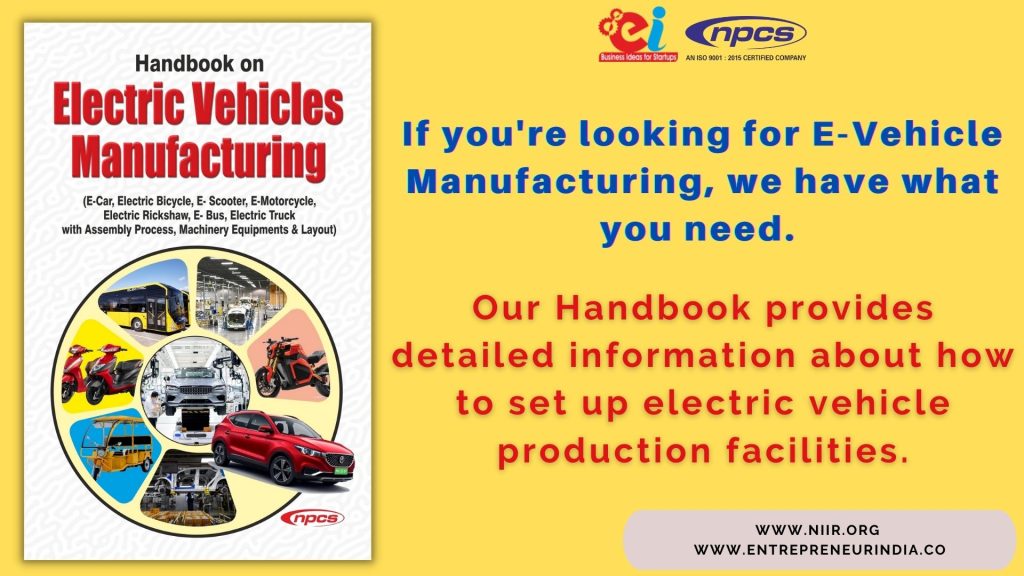
The global shift toward sustainable energy and reduced carbon emissions has accelerated the adoption of electric vehicles (EVs). What was once considered an experimental concept has now become a rapidly growing industry, with EVs dominating future mobility discussions. From startups to established automobile manufacturers, businesses around the world are investing in electric vehicle manufacturing. India, too, is experiencing a surge in EV interest, driven by favorable government policies, rising fuel prices, and increased environmental awareness. If you are an entrepreneur, engineer, or investor eyeing the EV space, this handbook on electric vehicles manufacturing will guide you through the fundamentals of EV production—from components and processes to setup, cost, and compliance. Visit this Page for More Information: Start a Business in Electric Vehicle Industry Understanding Electric Vehicle Manufacturing The process of manufacturing an electric vehicle is significantly different from that of traditional internal combustion engine (ICE) vehicles. EVs require a deep integration of mechanical engineering, electrical systems, software, and clean energy components. The major parts of an electric vehicle include a battery, motor, power control systems, chassis, and an interface system. The EV ecosystem includes: Electric two-wheelers (scooters, bikes) Three-wheelers (rickshaws, loaders) Four-wheelers (cars and vans) Heavy commercial vehicles (buses, trucks) Each segment offers opportunities based on investment, target market, and technology capabilities. Read Similar Articles: E- Vehicle Projects 1. Core Components of an Electric Vehicle Manufacturing EVs involves assembling and integrating multiple critical systems. Here’s a breakdown: a. Battery Pack Usually made of lithium-ion cells Determines the range and performance of the vehicle Includes a Battery Management System (BMS) for monitoring, temperature control, and safety b. Electric Motor Converts electric energy into mechanical power Common types: BLDC (Brushless DC Motor), PMSM (Permanent Magnet Synchronous Motor), and Induction Motor Motor selection depends on vehicle size and usage c. Controller and Inverter Controls power flow between the battery and the motor Affects vehicle speed, torque, and energy efficiency d. Vehicle Chassis and Body Can be modified from traditional automotive platforms or newly designed for lightweight and better battery housing e. Software and IoT Integration Enables diagnostics, battery monitoring, smart dashboards, GPS, and mobile app integration Plays a crucial role in customer experience and maintenance Read our Books Here: Electric Vehicles Manufacturing 2. EV Manufacturing Process Flow EV manufacturing is a blend of mechanical assembly and electronic integration. The typical steps include: Design and Prototyping CAD design and digital simulations Performance, battery capacity, and safety tests Component Sourcing Motors, batteries, controllers, chargers, wiring, and software systems Components can be locally sourced or imported Body Fabrication Sheet metal or fiber molds for the vehicle body Integration of lightweight materials for efficiency Assembly Line Setup Frame welding, motor fitting, battery placement Wiring and control unit installation Quality Testing Road tests for stability, range, charging time Electrical safety and emissions compliance Branding and Finishing Logo placement, body paint, accessory fittings Packaging and Distribution Ready vehicles are distributed through dealerships or direct-to-consumer platforms Related Feasibility Study Reports: E- Vehicle 3. Plant Setup and Infrastructure Establishing an EV manufacturing plant requires the following: Land and Factory Building Area needed: 10,000–50,000 sq. ft. (depending on output) Should have space for R&D lab, assembly area, testing zone, and inventory storage Machinery and Tools Welding machines, hydraulic lifts, painting booths Assembly stations, testing benches, power backup systems Manpower Requirements Electrical engineers, mechanics, software developers, quality controllers, assembly workers Utilities High-load electrical connection, water treatment, dust-free environment Download PDF: Handbook on Electric Vehicles Manufacturing 4. Licenses and Regulatory Compliance Before launching your EV manufacturing business, acquire the following licenses: Company Registration (Private Ltd., LLP, or MSME) GST Number Factory License Pollution Control Certificate FAME-II Eligibility Certification (if availing subsidies) Approval from ARAI or ICAT for vehicle compliance and roadworthiness BIS Certification for battery safety standards 5. Government Policies and Subsidies India is aggressively promoting EV adoption. You can benefit from: FAME-II (Faster Adoption and Manufacturing of Hybrid & Electric Vehicles) Offers subsidies for both manufacturers and buyers State-level EV Policies (Delhi, Maharashtra, Tamil Nadu, Gujarat offer capital subsidies, tax rebates, and power discounts) Production-Linked Incentive (PLI) Scheme For battery and auto component manufacturing Startup India Incentives for innovative EV technologies Watch other Informative Videos: Automobile Industry 6. Target Market and Business Models You can enter the EV market through several approaches: OEM Manufacturing Design and produce complete vehicles under your brand White Labeling Manufacture EVs that other companies sell under their brand Component Manufacturing Specialize in batteries, chargers, BMS, or motors EV Conversion Kits Offer kits to convert petrol/diesel vehicles into electric Franchise or Dealership Models Sell ready-made EVs via distributor channels 7. Cost Estimation and ROI Cost of setting up an EV manufacturing unit: Small-Scale Unit (2-wheelers, 10–20/day): ?1.5 to ?3 crore Mid-Scale (3-wheelers or 100 units/month): ?5 to ?10 crore Large-Scale (cars, buses, or exports): ?25 crore and above ROI Timeline: 2 to 4 years depending on production capacity, sales model, and market demand. Margins can range between 15%–35%, with higher profits in niche or B2B segments (e.g., delivery vehicles, fleet services). 8. Marketing and Distribution Strategy To sell electric vehicles successfully, consider: Building a strong brand identity Creating product demo videos and test ride events Listing on EV directories and B2B platforms Partnering with last-mile delivery companies and ride-share platforms Setting up service stations and charging points for brand loyalty Digital platforms (website, YouTube, LinkedIn, and Facebook Ads) are powerful tools for reaching early adopters and sustainability-conscious consumers. 9. Challenges in EV Manufacturing Despite the opportunities, several challenges persist: Battery sourcing and cost volatility Lack of charging infrastructure Skilled manpower shortage Compliance complexities and testing delays Limited access to high-end EV software tech Overcoming these requires innovation, strategic partnerships, and continuous improvement. Final Thoughts The electric vehicle manufacturing business is a golden opportunity for forward-thinking entrepreneurs and investors. As India aims to make 30% of vehicles electric by 2030, the demand for high-quality, affordable EVs is exploding. This handbook on electric vehicles manufacturing outlines the fundamentals of entering and growing in this industry. By focusing on quality production,
Find out How to Start Your Own Export Business
In the era of globalization and digital transformation, entrepreneurs are increasingly turning to the export business to unlock higher profit margins, broader market reach, and long-term growth. With the right strategy, knowledge of international trade regulations, and a product in demand, you can start your own export business and tap into the booming global economy. Whether you’re exporting agricultural produce, handicrafts, textiles, or manufactured goods, this guide provides a comprehensive roadmap for launching and scaling a successful export venture. Related Projects: Trade, Commodities Why Start an Export Business? The export business offers a wealth of advantages that make it one of the most attractive opportunities for new-age entrepreneurs: Higher profit margins due to international pricing Increased market size beyond domestic boundaries Government support through subsidies, schemes, and export promotion councils Brand value enhancement with global exposure Diversification of business risk across multiple countries Starting an export business is no longer limited to big corporations. Today, MSMEs, individual entrepreneurs, and even home-based manufacturers are tapping into international markets with the help of online platforms and eCommerce. Get Detailed Insights from This Book: Just For Starters: How To Start Your Own Export Business Step-by-Step Guide to Start Your Own Export Business 1. Choose the Right Product for Export The foundation of a successful export business lies in choosing a product that is in global demand, easy to source, and profitable. Popular export categories include: Agricultural products (spices, tea, rice, pulses) Textiles and garments Leather goods Handicrafts and home décor Processed food items Herbal and ayurvedic products Engineering goods and auto components Tip: Focus on unique, high-quality, or niche products that are hard to replicate locally in other countries. Related Books: Project Profiles 2. Register Your Export Business Legal registration is essential to operate an export business officially. Here’s what you need to do: Register your business entity (Proprietorship, LLP, Pvt. Ltd., etc.) Obtain PAN & GST registration Open a current account with a bank authorized for forex transactions Get an Import Export Code (IEC) from the Directorate General of Foreign Trade (DGFT) Register with Export Promotion Councils for your industry (e.g., APEDA, FIEO, etc.) 3. Conduct Market Research and Select Target Countries Before you begin exporting, you must analyze where your product has high demand and fewer trade barriers. Use these steps: Study global demand and pricing trends Evaluate trade policies, import duties, and competitor pricing Select 2–3 target countries to focus your initial marketing efforts Use government portals like Export India, DGFT, and EXIM Bank to access country-specific reports 4. Find International Buyers Securing international buyers is a critical part of launching your export business. Here’s how: List your products on B2B portals like Alibaba, IndiaMART, TradeIndia, GlobalSources Participate in international trade fairs and buyer-seller meets Join export promotion councils that connect exporters with verified foreign buyers Use LinkedIn and cold-email marketing to reach importers, wholesalers, and retailers Build a professional export website with product catalogs and inquiry forms 5. Set Up Packaging, Logistics, and Compliance The export process doesn’t end with getting a buyer; fulfilling an order involves multiple logistics and documentation tasks: Choose export-quality packaging based on international standards Coordinate with freight forwarders or shipping agents for sea or air transport Understand Incoterms (FOB, CIF, etc.) to define buyer-seller responsibilities Prepare all documents: Commercial invoice Packing list Bill of lading/airway bill Certificate of origin FSSAI/agriculture/laboratory certificates (if required) Comply with destination country regulations (labeling, customs duty, banned substances) 6. Receive Payment and Manage Foreign Exchange Managing international payments securely is vital for profitability. Use these best practices: Agree on LC (Letter of Credit), TT (Telegraphic Transfer), or Advance Payment Partner with a bank that offers foreign exchange services and export incentives Understand currency conversion, hedging, and export benefits under the Foreign Trade Policy Claim export incentives like MEIS/RODTEP, tax refunds under GST, and interest subsidy schemes 7. Scale and Expand Your Export Operations Once you’ve successfully completed a few export cycles, you can start scaling up: Add more products to your catalog Expand into new markets and regions Build partnerships with overseas distributors Consider setting up a warehousing and distribution model abroad Invest in digital marketing and SEO for your export website to attract inbound leads Pro Tips for New Exporters Always verify buyer credentials before shipping Maintain proper documentation to avoid customs delays Keep track of international trade regulations and certifications Start small, test markets, and grow gradually Use insurance policies to protect goods in transit Build a reliable supply chain with trusted vendors and manufacturers Conclusion Starting your own export business is one of the most rewarding decisions an entrepreneur can make today. With growing international demand for Indian goods and favorable government policies, now is the right time to explore the export market. All it takes is research, commitment, and smart execution to build a globally recognized export brand. See More Links: Start a Business in Asia Start a Business in Potential Countries for Doing Business Best Industry for Doing Business Business Ideas with Low, Medium & High Investment Looking for Most Demandable Business Ideas for Startups Startup Consulting Services Start a Business in Africa Start a Business in India Start a Business in Middle East Related Videos Related Books Related Projects Related Market Research Reports NIIR PROJECT CONSULTANCY SERVICES, DELHI An ISO 9001:2015 Company ENTREPRENEUR INDIA 106-E, Kamla Nagar, Opp. Mall ST, New Delhi-110007, India. Email: npcs.ei@gmail.com info@entrepreneurindia.co Tel: +91-11-23843955, 23845654, 23845886 Mobile: +91-9097075054, 8800733955 Website: https://www.entrepreneurindia.co https://www.niir.org Contact Us