
NIIR Project Consultancy Service released a book on Food Projects & Agriculture Based Business Ideas
The NIIR Project Consultancy Service released a book on Food Projects & Agriculture Based Business Ideas, offering a comprehensive guide for entrepreneurs looking to tap into India’s booming agribusiness sector. The book provides detailed project reports, technical guidance, and feasibility insights on launching profitable ventures in food processing, organic farming, herbal products, and agro-based industries. With rising demand for natural, organic, and packaged food products globally, this release is a timely and valuable resource for startups and small businesses aiming to build successful agriculture-based enterprises. Unlocking the Potential of Food Projects and Agriculture-Based Businesses India’s agricultural economy is evolving rapidly. With a large consumer base, increasing health awareness, and favorable government policies, the market for food and agriculture-based businesses has expanded significantly. The book from NIIR Project Consultancy Service explores dozens of high-return business ideas across various sectors like organic farming, cold-pressed oil production, dairy processing, and more. It serves as a one-stop reference for identifying, planning, and executing sustainable food-based businesses. Aloe Vera Gel and Juice Processing One of the most profitable agriculture business ideas featured in the book is aloe vera processing. The gel and juice extracted from aloe vera have applications in the cosmetic, health, and beverage industries. With minimal land and low investment, a processing unit can generate high returns. NIIR’s guide provides details on extraction methods, stabilization processes, bottling, and packaging. Organic Vegetable Farming with Direct Sales With increasing demand for pesticide-free produce, organic farming has gained popularity across urban and semi-urban markets. The book outlines how to establish certified organic farms and sell directly to consumers via subscription models or online platforms. Topics include crop planning, natural pest control, organic certification, and logistics management. Cold Pressed Edible Oil Manufacturing The health-conscious population is turning towards cold-pressed oils for daily cooking. Starting a cold-pressed oil manufacturing unit using seeds like mustard, sesame, groundnut, and coconut is a viable and scalable business. The NIIR book explains the machinery setup, cold extraction process, filtration, and branding essentials for this model. Fruit and Vegetable Dehydration Dehydrated fruits and vegetables like mango slices, dried tomatoes, and onion flakes are in high demand in snack manufacturing and international markets. This business requires solar or mechanical drying systems, proper storage, and efficient packaging. The guide outlines startup costs, space requirements, and profit margins. Ready-to-Eat Packaged Meals The book emphasizes the growing demand for ready-to-eat foods due to urban lifestyles. From curries and biryanis to parathas and snacks, these meals can be stored using retort or vacuum packaging. NIIR’s guide offers insights into recipe standardization, shelf-life testing, and compliance with FSSAI regulations. Mushroom Cultivation Business Mushroom cultivation is an ideal small-scale business with high returns and short growing cycles. The NIIR book discusses varieties like button, oyster, and shiitake mushrooms. Topics include climate control techniques, compost preparation, harvesting, and value-added product creation such as mushroom pickles and dried packs. Herbal Tea and Wellness Beverages There is a rising trend in herbal teas and natural beverages made with tulsi, ashwagandha, ginger, and hibiscus. These products have captured the premium health market. The book provides insights on sourcing herbs, drying and blending techniques, packaging, and online marketing strategies to reach wellness consumers. Dairy Product Manufacturing Setting up a dairy unit to produce paneer, yogurt, flavored milk, and ghee is a stable and rewarding business. NIIR’s guide explains milk procurement, pasteurization, processing techniques, hygienic packaging, and distribution. It also includes regulatory advice and government schemes for dairy development. Spice Grinding and Blending Unit India is known for its diverse range of spices. A spice processing unit can grind, blend, and pack masalas like garam masala, turmeric powder, and chili powder for retail and export. The guide offers machine specifications, sourcing strategies, and labeling guidelines to ensure compliance and brand success. Flour Milling and Multigrain Flour Production Processing whole wheat, rice, and millets into refined and multigrain flour is another staple business idea. The NIIR book discusses flour mill setup, enrichment of flour with nutrients, and packaging to meet daily household demand. It’s ideal for local market penetration and health-focused product lines. Licensing and Regulatory Compliance The book thoroughly explains the licenses required to start a food processing business in India: FSSAI License for food safety GST Registration for taxation Udyam (MSME) Registration for small business benefits Pollution Control NOC for applicable industries ISO/HACCP Certification for export and quality assurance Legal compliance helps in building trust, securing funding, and expanding into regulated markets. Government Schemes and Financial Support To boost food entrepreneurship, the Indian government offers funding and support through schemes such as: PMFME (PM Formalisation of Micro Food Processing Enterprises) PMKSY (Pradhan Mantri Kisan Sampada Yojana) Mega Food Park Scheme NABARD Subsidies and MSME Support NIIR’s book explains how to access these schemes and prepare a successful business proposal. Digital Marketing for Agro-Based Products Marketing plays a critical role in the success of food businesses. The book outlines strategies for promoting agriculture-based products via: Social media platforms SEO-optimized websites Influencer marketing Product sampling Collaborations with eCommerce platforms like Amazon and BigBasket A strong brand story and clear product value can help build a loyal customer base. Conclusion The NIIR Project Consultancy Service released a book on Food Projects & Agriculture Based Business Ideas that acts as a complete toolkit for modern agri-entrepreneurs. With detailed technical, financial, and marketing guidance, this book is a must-have for anyone planning to enter the food and agriculture business space. Whether you are a farmer, startup founder, or investor, the ideas and frameworks provided can help you launch profitable and sustainable businesses with clarity and confidence. Visit the page Select and Choose the Right Business Startup for You for sorting out the questions arising in your mind before starting any business and know which start-up you can plan. We, at NPCS, endeavor to make business selection a simple and convenient step for any entrepreneur/startup. Our expert team, by capitalizing on its dexterity and decade’s long experience in the field, has created a list of profitable ventures for entrepreneurs who
55 Most Profitable Food & Agri Startup Ideas for Micro, Small, Medium Scale Food Processing (Processed Food)
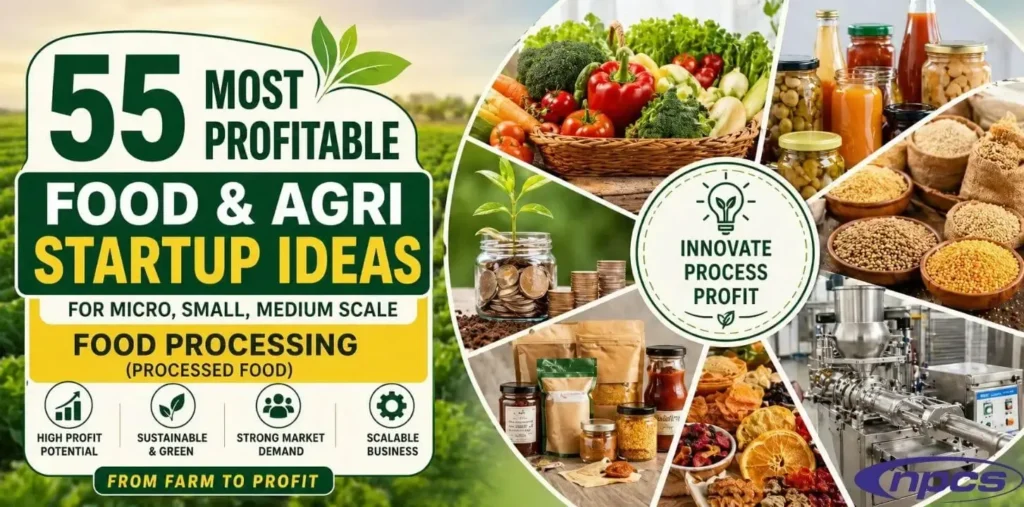
India, with its rich agricultural heritage and booming food sector, offers vast opportunities for small and medium-sized enterprises (MSMEs). Entrepreneurs are increasingly exploring food & agri startup ideas that promise both profitability and sustainability. With growing consumer demand for healthier options, organic produce, and innovative food services, this sector is ripe for innovation. From farm to fork, there are countless niches in Food & Agri Startup Ideas waiting to be tapped by creative minds who want to make a difference and build scalable businesses. Exploring the Best Food & Agri Startup Ideas for MSME 2026 The 2026 market is defined by three pillars: Transparency, Technology, and Taste. Today, food & agri startup ideas aren’t just limited to traditional farming or food stall, they include value-added products, agri-tech platforms, supply chain optimization, and export-focused manufacturing units. Consumers now demand to know exactly where their food comes from and how it was processed. This shift has expanded the scope of Food & Agri Startup Ideas beyond the field and into agri-tech platforms, eco-friendly manufacturing, and hyper-local supply chains. Below is a curated list of 55 high-impact ideas designed to inspire the next generation of Indian entrepreneurs. 1. Category 1: Modern Agricultural Farming & Precision Agriculture , 1. Organic Vegetable Farming High demand from urban consumers makes organic farming a profitable idea. Use compost-based fertilizers and cater to local organic stores and supermarkets. 2. Hydroponic Farming A modern technique where plants grow without soil, hydroponics is ideal for space-constrained urban areas and yields faster crops. 3. Mushroom Cultivation Low investment and high returns define this niche. Oyster and button mushrooms are especially popular in restaurants and homes. 4. Vertical Farming Utilize small urban spaces efficiently by growing crops in vertical layers. A great solution to the lack of farming land. 5. Beekeeping and Honey Production Natural honey is always in demand. Beekeeping is sustainable and helps in crop pollination, boosting the ecosystem. 6. Fish Farming (Aquaculture) Fish like Rohu and Catla are widely consumed in India. With proper setup and care, this business offers excellent returns. 7. Goat Farming Goat meat has a steady market. Start with a small herd and scale based on demand and grazing area. 8. Poultry Farming Egg and meat production are core elements of India’s food economy. Focus on hygiene and automation for better productivity. 9. Dairy Farming With rising milk consumption, small-scale dairy setups with 10–15 cows or buffaloes are viable and expandable. 10. Cold Storage Units India loses a large portion of its produce due to lack of cold storage. Setting up a small facility can support local farmers and food businesses. 11. Packaged Millet Products Millets are rich in nutrients and ideal for health-conscious consumers. Sell them as ready-to-cook packs or flour. 12. Tomato Processing (Puree/Ketchup) A small tomato processing plant can yield ketchup, puree, and sauces, which are popular in Indian and international markets. 13. Fruit Juice Manufacturing Fresh juices from mango, orange, or pineapple can be sold under a local brand name with organic or preservative-free tags. 14. Pickle Manufacturing Unit India’s pickle varieties have loyal fans. Explore regional recipes and package them in eco-friendly jars. 15. Papad & Namkeen Making Home-based or small units can produce these snacks, especially with automated rollers and frying machines. 16. Organic Tea & Herbal Infusions Tulsi, lemongrass, and moringa teas are trending globally. A small unit can create blends for niche markets. 17. Spice Powder Production Turmeric, chili, coriander, and more—buy from farmers, grind, and package under your brand. 18. Rice Mill with Packaging Buy paddy, mill it into rice, and sell it in branded bags. Target local or urban supermarkets. 19. Nut & Seed Butter Manufacturing Almond, peanut, and sesame seed butters are in high demand among fitness lovers. 20. Ready-to-Eat Meal Packs Create meal kits or frozen curries targeting working professionals, hostel students, and travelers. 21. Baby Food Manufacturing Parents seek organic, preservative-free baby foods. Make fruit and cereal-based products to meet this demand. 22. Gluten-Free Food Products Serve a niche market with celiac-friendly products—bread, snacks, and ready mixes. 23. Plant-Based Protein Snacks Pea protein chips, lentil-based puffs, and soy protein bars are ideal for gym-goers and athletes. 24. Vegan Cheese & Dairy Alternatives Use nuts, oats, or soy to make cheese and milk alternatives for lactose-intolerant or vegan customers. 25. Edible Cutlery Manufacturing An eco-friendly innovation—spoons, forks, and cups made from rice or wheat flour that can be eaten or composted. 26. Solar-Powered Food Dryers Build or supply units that help farmers or small processors dehydrate fruits, herbs, or vegetables with solar heat. 27. Organic Fertilizer Production Compost waste, add microbes, and package as organic fertilizer. An eco-conscious agri startup with recurring demand. 28. Drip Irrigation System Setup Provide design and installation services to small farmers looking to save water and increase crop output. 29. Mobile Soil Testing Kits Develop a mobile app + kit that helps farmers test soil quality and get fertilizer recommendations instantly. 30. AI-Based Crop Monitoring Tools Build AI systems using drones and cameras to monitor crop health, pest invasion, and yield projections. 31. Farm-to-Home Delivery Platforms Directly connect farmers with urban consumers, eliminating middlemen and boosting farmer incomes. 32. Local Farmer’s Market Franchise Set up or franchise weekend organic markets where small farmers sell directly to city dwellers. 33. Farm Equipment Rental App Allow farmers to rent tractors, harvesters, or drip kits via mobile apps—like Uber for farm tools. 34. Agricultural Drone Services Use drones for pesticide spraying, seed dropping, or yield mapping, helping large farms optimize operations. 35. Contract Farming Service Provider Bridge brands and farmers. You provide training, inputs, and buy-back guarantees to farmers under contracts. 36. Cattle Feed Manufacturing Blend corn, grain, and protein additives into nutritious cattle feed for dairy and poultry farmers. 37. Food Waste Composting Solutions Develop community-level composting systems using restaurant and household waste. 38. Culinary Herb Farming Grow herbs like rosemary, basil, oregano, and thyme for restaurants and premium food brands. 39. Indoor Microgreens Cultivation Microgreens have short growth
Production of Automobile Components Auto Parts Manufacturing Industry.
The Indian automobile industry is a major contributor to the nation’s economy and one of the largest in the world. With the growing demand for vehicles, the need for quality auto parts has never been more critical. The auto parts manufacturing sector has emerged as a lucrative industry, offering a diverse range of opportunities from small-scale units to large-scale industrial setups. Whether it’s producing essential components like engine parts, brakes, or valves, or catering to aftermarket needs, this industry is a cornerstone of the automotive supply chain. Scope of Auto Parts Manufacturing in India India’s thriving auto industry, supported by policy reforms such as the Production Linked Incentive (PLI) scheme and Make in India initiative, has created a fertile ground for investment in auto parts manufacturing. The sector is diverse, covering everything from casting and forging to precision machining and assembly of parts like engine blocks, gear systems, brake pads, and filters. With both domestic and international OEMs (Original Equipment Manufacturers) sourcing from India, manufacturers have opportunities to serve both local and global markets. The expansion of electric vehicles (EVs) is further pushing the boundaries of this industry. Traditional parts such as pistons and exhausts are giving way to electric motors, battery casings, and control modules. Yet, the demand for internal combustion engine (ICE) components remains robust, especially in commercial vehicles, two-wheelers, and rural applications. Manufacturers that can cater to both ICE and EV segments are likely to gain a competitive edge. Key Components in Auto Parts Manufacturing The auto parts manufacturing industry includes several key components essential for vehicle functionality, performance, and safety. Below is a breakdown of major categories: Engine Parts Engine components are at the heart of automotive performance. Manufacturers produce cylinder heads, pistons, camshafts, crankshafts, oil pumps, and fuel injectors. These parts require high precision and durability, as they endure extreme temperatures and pressures. CNC machining, heat treatment, and quality control systems are critical to ensure consistency and reliability. Brake Systems Brakes are fundamental to vehicle safety. Brake pads, rotors, calipers, master cylinders, and ABS modules form the core of braking systems. Friction materials used in brake pads require rigorous testing and compliance with international safety standards. Advancements such as regenerative braking systems in EVs have opened up newer manufacturing segments in this area. Suspension and Steering Components These parts determine the handling and comfort of vehicles. Manufacturers produce shock absorbers, control arms, tie rods, ball joints, and power steering pumps. These components must be lightweight yet robust, often made with forged or cast aluminum alloys. Transmission Systems Gears, shafts, clutches, torque converters, and differentials are manufactured with high-grade metals and sophisticated metallurgical processes. The shift towards automatic and CVT transmissions is increasing demand for advanced components that reduce friction and increase fuel efficiency. Electrical and Electronic Systems Modern vehicles are equipped with a host of electronic systems including ECUs, sensors, ignition systems, lighting, and wiring harnesses. With the rise of smart vehicles, connectivity and embedded software have become integral parts of auto parts manufacturing. Valves and Fuel Systems Valves, carburetors, fuel pumps, and injectors form part of the fuel delivery mechanism. Precision is key in these components to ensure optimum engine performance and emission control. Steps to Start an Auto Parts Manufacturing Business Starting an auto parts manufacturing business involves careful planning, capital investment, technical know-how, and compliance with industrial regulations. Here’s a roadmap: 1. Market Research and Feasibility Study Analyze the demand for specific components in your target market. Evaluate competitors, potential customers (OEMs or aftermarket retailers), and profitability. Identifying a niche—like two-wheeler engine parts or commercial vehicle brake systems—can help narrow your focus and increase your chances of success. 2. Business Plan and Investment A detailed business plan should include the type of parts to be manufactured, production capacity, machinery, workforce, suppliers, and marketing strategies. The investment can vary depending on the scale—from ?10 lakhs for small machining setups to ?10 crores for fully automated assembly lines. 3. Location and Factory Setup Set up your unit in an industrial zone or auto cluster to benefit from shared infrastructure and easier supply chain management. Availability of skilled labor and proximity to OEMs or ports for export can also influence location choice. 4. Machinery and Technology CNC machines, hydraulic presses, injection molding machines, and testing equipment form the backbone of auto parts manufacturing. Invest in reliable and scalable machinery that can maintain tight tolerances and produce consistent quality. 5. Quality Certifications and Compliance Auto parts must adhere to national and international quality standards such as ISO 9001, TS 16949, and AIS (Automotive Industry Standards). Environmental compliance and worker safety measures under the Factories Act and Pollution Control Board norms are also mandatory. 6. Workforce and Training Skilled workers, engineers, machine operators, and quality control specialists are vital to smooth operations. Regular training on lean manufacturing, Six Sigma, and Kaizen can enhance productivity and reduce waste. 7. Supply Chain and Distribution Build strong relationships with raw material suppliers (steel, rubber, plastic), logistics providers, and distributors. Establish tie-ups with OEMs, tier-1 suppliers, or auto part retailers. Participation in trade fairs and B2B platforms can help expand your network. Growth Opportunities and Trends Several macroeconomic and industry-specific trends are shaping the future of auto parts manufacturing: Electric Vehicles (EVs): With government incentives and rising awareness, EVs are driving demand for new parts like e-axles, electric drive units, and lightweight materials. Localization: OEMs are reducing dependency on imports by sourcing parts domestically. This opens doors for Indian manufacturers to become preferred suppliers. Export Potential: Indian auto parts are exported to over 150 countries. Strategic partnerships, quality focus, and cost competitiveness give Indian manufacturers an edge globally. Digitization: Industry 4.0 technologies like IoT, predictive maintenance, and AI-based quality inspection are revolutionizing factory operations. Aftermarket Expansion: The growing number of vehicles on the road boosts the aftermarket segment—spare parts, accessories, and service kits offer high-margin opportunities. Challenges in Auto Parts Manufacturing Despite its potential, auto parts manufacturing comes with challenges: High Initial Investment: Setting up a modern facility requires significant
Textile Processing with Effluent Treatment
Woollen textile manufacturing is a vast industry that plays a critical role in the global apparel and home furnishings markets. Known for its warmth, durability, and versatility, wool is transformed through a series of processes to become finished textile products. One of the vital stages in this transformation involves spinning—the method by which fibers are converted into yarns. Among the various spinning techniques used, melt spinning and dry spinning are notable for their effectiveness in certain synthetic or blended woollen fibers. Though not traditional to natural wool, these methods are increasingly adopted in woollen textile manufacturing to enhance product qualities, integrate synthetics, and improve cost-effectiveness. See Also:Ready Mix Concrete plant Understanding Melt and Dry Spinning Techniques Spinning techniques form the backbone of yarn production, and their choice significantly influences the end product’s texture, durability, and application. dry and melt spinning, although traditionally associated with synthetic fibers, are gaining traction in woollen textile manufacturing, especially where wool is blended with polymers or used in composite materials. Melt Spinning in Woollen Textile Manufacturing Melt spinning involves melting a polymer and then extruding it through a spinneret to form continuous filaments. These filaments are cooled and solidified as they emerge, then collected and wound onto bobbins. While natural wool cannot be melt-spun due to its organic composition, wool blended with thermoplastic polymers (like polyester) can be processed using this technique. In woollen textile manufacturing, melt spinning offers several advantages: High Production Speed: Melt spinning is continuous and faster than other methods. Cost Efficiency: It reduces labor and energy costs in large-scale manufacturing. Product Consistency: The technique allows for uniform filament production, ensuring consistent quality. Thermal Bonding: It creates opportunities for integrating wool with heat-fusible synthetics for enhanced functionality. Applications of melt-spun wool blends include performance wear, technical textiles, and fire-retardant fabrics. By using melt spinning, manufacturers can enhance the mechanical strength and weather resistance of woollen textiles, catering to niche markets like outdoor apparel and military uniforms. Dry Spinning in Woollen Textile Manufacturing Dry spinning is a process where a polymer is dissolved in a volatile solvent and then extruded through a spinneret. As the solvent evaporates, solid fibers are left behind and collected. This method is particularly suited for polymers that cannot withstand the high temperatures required in melt spinning. In woollen textile manufacturing, dry spinning is used for creating lightweight, stretchable, and soft yarns from wool-polymer blends. It is beneficial in the following ways: Fiber Fineness: Enables production of ultra-fine, high-quality filaments ideal for premium woollen garments. Enhanced Flexibility: Produces fibers with improved elongation and elasticity. Design Versatility: Offers more freedom in creating textures and patterns. One common example is wool blended with elastane or polyurethane, used in garments requiring both warmth and stretchability, like fitted winterwear and yoga pants. Dry spinning is also employed in producing wool composites for high-end upholstery and decorative textiles. Traditional vs. Modern Spinning Methods Historically, wool spinning was done using ring or mule spinning, which are mechanical methods suitable for staple fibers. However, these methods, though ideal for pure wool, fall short when producing high-performance or blended fabrics. As demand grows for durable, multifunctional textiles, woollen textile manufacturing is increasingly adopting melt and dry spinning processes. Melt and dry spinning not only facilitate the blending of wool with synthetic fibers but also make it possible to control fiber characteristics at a molecular level. Manufacturers can engineer fibers with specific properties like moisture-wicking, flame resistance, or UV protection. This level of customization is difficult to achieve through traditional methods. Environmental and Economic Considerations While melt and dry spinning offer technical and economic benefits, they also raise environmental concerns, particularly regarding energy usage and solvent emissions. However, the woollen textile manufacturing industry is addressing these through innovations such as: Closed-Loop Solvent Systems: In dry spinning, these systems capture and recycle solvents, minimizing pollution. Eco-Friendly Polymers: New biodegradable or bio-based polymers are being used in blends, making the process more sustainable. Energy Optimization: Modern spinning units employ energy-efficient heating and cooling systems to reduce carbon footprints. Moreover, melt and dry spinning processes are more automated, reducing manual labor and ensuring safety. With proper management, these methods can significantly lower manufacturing costs and environmental impacts. Integration with Wool Blends and Technical Textiles The versatility of melt and dry spinning lies in their ability to process wool blends—an essential trend in modern woollen textile manufacturing. Some common blends include: Wool-Polyester: For wrinkle resistance and quick drying. Wool-Nylon: For abrasion resistance and toughness. Wool-Spandex: For stretchability in sportswear. Wool-Acrylic: For colorfastness and soft touch. These blends can be fine-tuned during the spinning process to meet the demands of technical textiles—products used in industrial, medical, and high-performance applications. For instance, wool blended with flame-retardant polymers through melt spinning is used in aerospace textiles. Dry spinning, on the other hand, can create ultralight fabrics for luxury fashion. Challenges and Innovations Despite the advantages, implementing melt and dry spinning in woollen textile manufacturing involves challenges: Compatibility Issues: Not all wool types blend well with polymers. Process Complexity: Requires sophisticated machinery and expertise. Cost of Raw Materials: High-performance polymers can be expensive. Nevertheless, innovation is ongoing. Researchers are working on: Smart Wool Blends: Embedding sensors or conductive fibers for smart clothing. Nanofiber Spinning: Creating extremely fine fibers for medical and filtration applications. Low-Temperature Spinning: Reducing energy consumption while preserving fiber quality. These advancements are transforming the landscape of woollen textile manufacturing, making it more dynamic and future-ready. See Also:Agrochemical & Disinfectant Projects Conclusion Melt and dry spinning are redefining possibilities in woollen textile manufacturing, enabling producers to go beyond traditional wool products. These techniques support the creation of new wool blends with enhanced performance, aesthetic, and functional properties. Although initially developed for synthetics, their adaptation for wool-based materials marks a significant step toward innovation and sustainability in textile manufacturing. With evolving consumer preferences, sustainability norms, and performance demands, manufacturers embracing melt and dry spinning are better positioned to thrive. As technology advances, these spinning methods will continue to shape the next generation of woollen
Paints, Varnishes and Resins Testing
Paints, varnishes, and resins are essential materials in construction, automotive, furniture, and industrial sectors. They serve both protective and decorative functions, offering durability and aesthetic enhancement. Among all, understanding the different types of paints is crucial for manufacturers, contractors, and end-users. Each type varies in its formulation, application, and performance. Moreover, the growing demand for specialized coatings—such as eco-friendly or heat-resistant paints—makes it vital to choose the right product for the job. Whether you are working on a wooden cabinet or an industrial structure, the proper knowledge of paint and coating types ensures quality and longevity. Types of Paints, Varnishes & Resins | Basic Guide Paints, varnishes, and resins differ in composition and use. Paints contain pigments that offer color and coverage. Varnishes provide a clear protective finish. Resins act as binders in both, influencing adhesion and durability. Below is a breakdown of the major categories and their typical applications. See Also : September 2017 Entrepreneur Water-Based and Oil-Based Paints Water-based paints, also known as emulsion paints, are ideal for interior walls. They dry quickly, are low in odor, and easy to clean. Acrylic emulsions are the most popular due to their washability and vibrant finish. In contrast, oil-based paints are used for metal, wood, and outdoor surfaces. These offer superior durability and gloss but take longer to dry. They are commonly used for doors, railings, and furniture. Moreover, water-based paints are more environmentally friendly due to low VOC content. Enamel, Emulsion & Epoxy Paints Among the many types of paints, enamel paints stand out for their glossy, hard finish. They’re excellent for surfaces needing frequent cleaning, such as kitchen walls or industrial equipment. Emulsion paints are breathable and suitable for damp-prone interiors. They also offer great coverage with fewer coats. Epoxy paints are known for their chemical resistance and are widely used on floors and machinery. Moreover, epoxy coatings are suitable for factories, hospitals, and commercial kitchens where hygiene and toughness are essential. Specialty Paints and Applications There are many specialty types of paints created for unique needs: Heat-resistant paints – For chimneys, boilers, and engines Anti-fungal paints – For kitchens and bathrooms Textured paints – For artistic and decorative finishes Reflective paints – For road markings and safety signs Metallic paints – For automotive and decorative use Moreover, manufacturers now offer green alternatives with bio-based resins and zero-VOC formulations. Varnishes: Types and Uses Varnishes are transparent finishes that enhance wood grain and protect surfaces from moisture and scratches. Common types include: Oil-based varnishes – Durable and glossy Polyurethane varnishes – Water-resistant and long-lasting Spar varnishes – UV-resistant, ideal for outdoor woodwork Varnishes are used on furniture, floors, wooden frames, and musical instruments. Moreover, they extend the life of wood by sealing pores and reducing surface wear. Role of Resins in Paints and Varnishes Resins are binding agents that form the film when paint or varnish dries. Different types offer different properties: Acrylic resins – Fast-drying, water-resistant, and color-stable Alkyd resins – Excellent adhesion and gloss for oil-based coatings Epoxy resins – Exceptional chemical resistance and durability Polyurethane resins – High scratch and UV resistance Moreover, resin selection influences drying time, finish, flexibility, and shelf life of the final product. Industrial and Decorative Paints The types of paints are broadly classified into: Decorative paints – For homes, offices, and commercial buildings Industrial paints – For equipment, machinery, ships, and floors Protective coatings – For corrosion prevention in bridges, pipelines, etc. Each of these segments uses different formulations and additives to match environmental stress and substrate types. Moreover, smart paints with thermal, anti-static, or self-healing properties are gaining traction in advanced applications. Choosing the Right Paint or Varnish When selecting among the various types of paints, consider: Surface type – Wood, metal, concrete, or drywall Indoor or outdoor use – UV and weather resistance matters Desired finish – Glossy, matte, satin, or textured Drying time and ease of application Environmental impact – VOC levels, lead-free options Moreover, always follow the manufacturer’s instructions for priming, application, and curing. Read More :Business to Start in Haryana Conclusion Understanding the different types of paints and their related products like varnishes and resins helps ensure the right choice for every project. From home interiors to industrial coatings, each type serves a unique purpose. Moreover, with rising awareness about sustainability and performance, manufacturers and users alike are seeking durable, eco-conscious, and high-performance options. Whether you’re a builder, supplier, or DIY enthusiast, knowing these differences will guide better decisions and deliver better results. Contact Us
Expanded Plastics, Polyurethane, Polyamide and Polyester Fibres
Expanded plastics and polymers have revolutionized multiple industries due to their lightweight, durable, and insulating properties. These materials, which include various foam-based products, are manufactured by expanding plastic resins using heat and gas. As a result, they form cellular structures that are flexible yet strong. Today, expanded plastics & polymers are used in packaging, automotive parts, thermal insulation, construction panels, and even in sports gear. Moreover, their cost-effectiveness and recyclability make them attractive in both commercial and industrial sectors. Businesses and manufacturers are increasingly turning to these solutions for sustainable and efficient material choices. Read More :oil processing Types and Uses of Expanded Plastics & Polymers The applications of expanded plastics & polymers are diverse and growing rapidly. To understand their full impact, it’s essential to explore the different types and their uses in various industries. Expanded Polystyrene (EPS) Expanded Polystyrene is one of the most common types of expanded plastics. It is lightweight, white, and made by expanding polystyrene beads. EPS is widely used in packaging fragile items, thermal insulation in buildings, and disposable food containers. Moreover, it offers shock absorption, making it ideal for electronic and pharmaceutical packaging. Extruded Polystyrene (XPS) XPS differs slightly from EPS but has a closed-cell structure, offering better moisture resistance. It’s used extensively in construction for floor and wall insulation. Expanded plastics & polymers like XPS are preferred where strength and water resistance are critical. Moreover, XPS panels are easy to handle and cut, making them ideal for on-site construction work. Expanded Polyethylene (EPE) Expanded Polyethylene is a flexible, resilient foam that provides excellent cushioning. It is often used in protective packaging for electronics, glassware, and automotive components. EPE is also water-resistant and non-toxic, which makes it suitable for reusable packaging. Moreover, its lightweight nature helps reduce shipping costs, a major plus for e-commerce businesses. Expanded Polypropylene (EPP) EPP is a high-performance foam with superior energy absorption, making it perfect for automotive bumpers, seat cores, and sports helmets. It is also recyclable and maintains its shape even after multiple impacts. As a result, expanded plastics & polymers like EPP are widely adopted in industries prioritizing safety and reusability. Polyurethane Foams Polyurethane foams are commonly used in furniture, bedding, automotive seating, and insulation. They are available in flexible and rigid forms. Moreover, rigid polyurethane is used in refrigeration and wall insulation, while flexible forms find use in upholstery. This versatility makes polyurethane one of the most valuable expanded plastics & polymers in consumer and industrial products. Applications in Packaging Industry In the packaging industry, expanded plastics & polymers are essential for protecting goods during transport and storage. Their shock-absorbing nature helps minimize damage to fragile items like electronics, appliances, and glassware. Moreover, their lightweight quality reduces transportation costs, which is vital in bulk logistics. Construction and Insulation Thermal insulation is another key area where expanded plastics & polymers shine. Materials like EPS, XPS, and rigid polyurethane are used in roofing, wall insulation, and underfloor systems. They not only reduce heat transfer but also offer moisture resistance, improving a building’s energy efficiency. As a result, they help reduce energy bills and carbon footprints. Automotive and Aerospace Uses In the automotive sector, EPP and polyurethane foams are commonly used for impact protection and weight reduction. These materials help vehicles meet safety standards without compromising performance. In aerospace, expanded polymers are used in insulation panels and seating to maintain cabin comfort while keeping overall weight low. Consumer Goods and Electronics From yoga mats to helmet liners, expanded plastics & polymers are deeply embedded in everyday products. Their ability to be molded into various shapes while retaining impact resistance makes them ideal for electronics packaging, home appliances, and sports goods. Moreover, the demand for durable and ergonomic consumer products continues to drive innovation in this segment. Sustainability and Recycling One concern about expanded plastics & polymers is their environmental impact. However, advancements in recycling technologies now allow materials like EPS and EPP to be reused. Mechanical recycling, chemical recycling, and take-back programs by manufacturers are helping to create a circular economy for expanded plastics. Moreover, some manufacturers have begun using bio-based or biodegradable polymers to reduce plastic pollution. See Also : Aluminium Downstream Projects Conclusion The growing importance of expanded plastics & polymers in modern industry cannot be overstated. From construction and packaging to consumer products and automotive safety, these materials offer unmatched advantages in weight, durability, and insulation. Their cost-effectiveness and performance make them ideal for a variety of uses. Moreover, with advances in recycling and sustainable alternatives, the environmental footprint of these materials is steadily being reduced. Entrepreneurs and manufacturers looking for innovative and scalable material solutions should seriously consider the wide-ranging applications of expanded plastics and polymers. Contact Us
Electroplating, Phosphating, Powder Coating and Metal Finishing
Electroplating & metal finishing are essential processes in modern manufacturing. They improve the appearance, durability, and resistance of metal parts against corrosion and wear. Used widely in industries like automotive, electronics, aerospace, and jewelry, these techniques not only enhance aesthetic value but also extend product life. Moreover, the rise of precision engineering and microfabrication has increased demand for advanced surface finishing methods. Businesses that rely on high-quality metal components must understand the principles and options available within electroplating & metal finishing to ensure long-term performance and cost-efficiency in production. Electroplating & Metal Finishing | Types & Techniques Electroplating is a process that involves depositing a thin layer of metal onto the surface of another material through an electric current. This enhances characteristics like corrosion resistance, conductivity, and surface appearance. On the other hand, metal finishing includes a broader range of surface treatment methods like polishing, coating, anodizing, and brushing. Together, electroplating & metal finishing play a crucial role in improving both the functionality and appeal of metal products across various sectors. See Also : Business to Start in Arunachal Pradesh Common Electroplating Methods Electroplating & metal finishing begin with choosing the right plating method based on the end-use. Here are common techniques: Chrome Plating: Offers a shiny finish and strong corrosion resistance. Popular in automotive parts and tools. Nickel Plating: Used for both decorative and industrial applications. It provides a uniform surface with added strength and rust protection. Gold & Silver Plating: Common in electronics and jewelry for their conductivity and luxurious finish. Copper Plating: Enhances electrical conductivity and acts as an underlayer for other metals. Moreover, each method requires precise control over chemical composition, temperature, and electric current for desired results. Types of Metal Finishing Processes Beyond plating, metal finishing includes other surface treatment techniques. These are widely used to refine the texture, protect the base material, or prepare the surface for additional processing. Buffing and Polishing: Smoothens the surface and creates a mirror-like shine. Often used in stainless steel and aluminum components. Anodizing: A surface oxidation technique primarily used for aluminum. It increases resistance to corrosion and allows dyeing in various colors. Powder Coating: Involves applying a dry powder that’s cured under heat to form a protective layer. It is environmentally friendly and durable. Sandblasting and Shot Peening: Mechanical methods to clean or strengthen the surface. Ideal for preparing surfaces before painting or coating. Moreover, many industries combine multiple finishing steps to achieve specific performance and visual effects. Industrial Applications of Electroplating The widespread adoption of electroplating & metal finishing techniques stems from their versatility and reliability across many sectors: Automotive Industry: Chrome and nickel plating enhance engine parts, bumpers, and decorative trims. Electronics Manufacturing: Gold and silver plating provide conductivity and prevent oxidation in connectors and circuit boards. Jewelry & Fashion: Electroplating provides a premium finish at a lower cost while preserving appearance over time. Aerospace & Defense: Precision finishing ensures parts withstand extreme conditions without compromising integrity. Medical Devices: Surface treatments make surgical instruments more durable and biocompatible. Moreover, industries are increasingly demanding eco-friendly and REACH-compliant plating processes to reduce environmental impact. Environmental and Safety Considerations Traditional electroplating & metal finishing involve toxic chemicals and generate hazardous waste. As a result, modern facilities must adopt strict environmental and safety protocols: Wastewater Treatment Systems: Remove heavy metals and neutralize acidic residues before disposal. Fume Extraction and Ventilation: Ensure worker safety and reduce airborne contaminants. Eco-Friendly Alternatives: Non-cyanide plating baths and water-based coatings are growing in popularity. Moreover, automation and closed-loop systems reduce waste and enhance operational efficiency in advanced finishing plants. Quality Control in Plating & Finishing Consistent quality is vital in electroplating & metal finishing, especially when dealing with high-value components or mass production. Thickness Measurement: Tools like X-ray fluorescence (XRF) ensure uniform coating layers. Adhesion Testing: Pull tests and bend tests confirm that the metal layer properly bonds to the base. Visual Inspection: Identifies defects such as blisters, pits, or uneven coverage. Corrosion Testing: Accelerated salt spray tests assess durability under harsh conditions. Moreover, ISO and ASTM standards help maintain global quality benchmarks across industries. Emerging Trends in Metal Finishing The world of electroplating & metal finishing is evolving quickly with new technologies and market needs: Nanocoatings: Provide ultra-thin, invisible protection for high-precision components. Green Chemistry: Involves biodegradable solutions and safer chemicals to meet environmental regulations. 3D Printing Integration: Post-processing of 3D printed metal parts includes specialized finishing for surface refinement. Automation and AI: Robotic arms and computer vision systems streamline plating and finishing lines for higher consistency and reduced errors. Moreover, these advancements are making metal finishing more sustainable, efficient, and scalable. Setting Up a Plating & Finishing Facility For entrepreneurs and investors, setting up a metal finishing and electroplating plant involves several critical steps: Site Selection: Choose a location with proper ventilation, water supply, and zoning permissions. Equipment Installation: Plating tanks, rectifiers, filtration units, drying ovens, and polishing machines are essential. Chemical Procurement: Maintain a reliable supply of plating solutions, acids, and cleaning agents. Skilled Workforce: Operators must be trained in chemical handling, safety compliance, and process control. Licensing & Compliance: Adhere to environmental regulations and industry standards for waste disposal, chemical use, and worker safety. Moreover, investing in automation and real-time monitoring systems can significantly enhance efficiency and quality. Read More :Bitumen Emulsion Conclusion Electroplating & metal finishing remain fundamental to modern manufacturing by improving product life, performance, and aesthetics. From chrome plating a car bumper to powder-coating a kitchen appliance, these processes deliver immense value across industries. Moreover, ongoing innovations in green chemistry, automation, and precision control are pushing the boundaries of what’s possible. Businesses that understand and invest in advanced finishing techniques are better equipped to meet industry demands and sustainability goals. Whether you’re a manufacturer, technician, or entrepreneur, mastering the essentials of electroplating & metal finishing gives you a competitive edge in quality, compliance, and innovation. Contact Us
Cultivation of Medicinal Herbs with Uses
Medicinal herb cultivation is gaining popularity as people turn to natural remedies and wellness products. Growing medicinal herbs involves planting and caring for plants known for their healing properties, such as neem, tulsi, aloe vera, and ashwagandha. These herbs are used in herbal medicines, cosmetics, and supplements worldwide. Moreover, cultivating medicinal herbs offers farmers an opportunity to diversify crops and tap into a growing market for organic and herbal products. With the right growing techniques and knowledge of soil, climate, and harvesting, medicinal herb cultivation can be both profitable and sustainable. Read More :Small Scale Food Processing Overview of Medicinal Herb Cultivation: Uses and Techniques Medicinal herb cultivation combines traditional knowledge with modern farming methods to produce high-quality herbs for health and wellness products. These herbs contain bioactive compounds that support treatment of ailments ranging from inflammation to digestive issues. Proper cultivation ensures these compounds remain potent. Moreover, understanding the right soil types, irrigation, and pest control is key to successful herb farming. Whether grown on small farms or large plantations, medicinal herbs require careful handling from planting to harvest to maintain their medicinal value. Common Medicinal Herbs and Their Uses Many medicinal herbs have well-known benefits. For example, tulsi (holy basil) is prized for its immune-boosting and stress-relief properties. Aloe vera is widely used for skin care and digestive health. Ashwagandha supports vitality and reduces anxiety, while neem has antibacterial and antifungal qualities. These herbs are used in teas, ointments, capsules, and extracts. Cultivating such herbs meets the rising demand for natural health products, especially in Ayurveda and herbal supplements. Best Growing Practices for Medicinal Herbs Successful medicinal herb cultivation starts with selecting the right location and soil. Most herbs prefer well-drained, fertile soil with adequate sunlight. Proper spacing and crop rotation help reduce disease risk. Organic fertilizers and natural pest control maintain soil health and product purity. Irrigation must be managed carefully—overwatering can damage roots while drought stresses the plants. Harvesting at the right time is crucial because bioactive compounds vary with growth stages. Post-harvest drying and storage techniques also affect herb quality. Market Potential and Economic Benefits The market for medicinal herbs is expanding globally, driven by increasing interest in natural and herbal medicines. Products made from cultivated herbs sell well in domestic and international markets. Farmers benefit from higher returns compared to many conventional crops. Moreover, value addition through processing herbs into oils, powders, or extracts increases profitability. Government schemes and organic certification programs often support medicinal herb cultivation, making it a viable business opportunity. See Also : July 2017 Entrepreneur Final Thoughts on Medicinal Herb Cultivation In summary, medicinal herb cultivation offers a promising path for farmers and entrepreneurs interested in natural health products. By combining traditional wisdom with good agricultural practices, growers can produce high-quality herbs that meet growing consumer demand. Moreover, focusing on sustainable methods and proper post-harvest care ensures the herbs retain their healing properties. As the market for herbal products expands, medicinal herb cultivation will continue to grow as a profitable and eco-friendly venture. Contact Us
Compendium of Herbal Plants Panicum Pilosum, Papaver Rhoeas
The therapeutic use of medicinal herbs has gained renewed global interest, blending ancient practices with modern science. A well-organized compendium of herbal plants serves as a valuable reference for researchers, healthcare professionals, and herbal product developers. These plants are rich in natural bioactives—such as flavonoids, alkaloids, and essential oils—that support human health in various ways. From anti-inflammatory and antioxidant effects to anti-cancer and sedative properties, each species offers unique healing benefits. This article highlights select medicinal herbs like Rosmarinus officinalis, Taxus baccata, and Sambucus racemosa, underscoring their importance in both traditional and contemporary formulations. Notable Species in the Compendium of Herbal Plants This section provides concise insights into the most prominent entries in the compendium of herbal plants, focusing on their ethnobotanical uses, active constituents, and health benefits. See Also : Essential Oils & Oleoresins Extraction Panicum pilosum: Wild Grass for Gut Health This underutilized wild grass holds promise as a source of dietary fiber and micronutrients. Traditionally, Panicum pilosum has been used to aid digestion and improve soil fertility. Though often overlooked in commercial settings, its nutritional properties make it valuable in herbal gut-support tonics and rural healthcare diets. Its resilience also supports regenerative farming practices. Papaver rhoeas (Common Poppy): Natural Sedative Papaver rhoeas is famous for its mild sedative and cough-suppressant effects. The red petals contain alkaloids that are non-addictive yet helpful in reducing anxiety and calming respiratory distress. Teas and syrups made from the flower are often used for children. Its soothing actions secure its spot in any trusted compendium of herbal plants. Phaseolus trilobus: Functional Legume with Antidiabetic Potential This lesser-known legume plays a significant role in traditional Indian medicine, particularly for blood sugar regulation. Its enzyme-enhancing properties aid digestion and carbohydrate metabolism. Rich in protein and fiber, Phaseolus trilobus supports metabolic health and is gaining attention in herbal diabetes management research. Rhus toxicodendron (Poison Oak): Homeopathy Staple Though toxic in raw form, Rhus toxicodendron becomes a potent homeopathic remedy once diluted. It is widely used for relieving arthritis, sciatica, and skin rashes. This plant is especially helpful in conditions that worsen in cold, damp climates. Despite its poisonous reputation, it proves how even dangerous plants, when properly handled, can earn a place in the compendium of herbal plants. Ribes nigrum (Black Currant): Antioxidant-Rich Berry This medicinal berry contains high levels of vitamin C and anthocyanins, known for their immune-boosting and anti-inflammatory effects. The leaves are used in teas for treating arthritis and urinary tract issues, while the berries enhance cardiovascular health. The growing popularity of herbal teas and supplements has reinforced Ribes nigrum’s value in herbal pharmacopoeias. Rosmarinus officinalis (Rosemary): Herbal Brain Booster Rosemary has a long history as a memory-enhancing and mood-lifting herb. Its essential oils contain compounds like cineole and camphor, which improve cognitive performance and circulation. Rosemary is also effective as a digestive tonic, anti-inflammatory, and preservative in herbal cosmetics. Its versatility makes it a key inclusion in every compendium of herbal plants. Sambucus racemosa (Red Elderberry): Immune-Modulating Herb Red elderberry is recognized for its powerful antiviral and immune-boosting actions. Used traditionally in syrups and lozenges, it helps relieve colds, coughs, and flu symptoms. Proper processing is essential, as raw berries can be toxic. Nonetheless, its global appeal in natural immune care earns it a respected spot in herbal databases. Schleichera trijuga: Ayurvedic Skin & Liver Cleanser Used in Ayurveda, Schleichera trijuga yields oil from its seeds, effective in treating skin infections and inflammation. Decoctions from its bark are used to detoxify the liver and cleanse the blood. It is also valued for its wound-healing abilities. As a lesser-known plant, it strengthens the diversity of the compendium of herbal plants. Sedum acre (Stonecrop): Anti-ulcer and External Healer This hardy succulent has anti-inflammatory and demulcent properties. Its traditional uses include treating ulcers, wounds, and minor burns. The mucilage in Sedum acre soothes irritated tissues and promotes healing. Though small and easily overlooked, it contributes significantly to traditional medicine and deserves its recognition. Taxus baccata (Yew Tree): Source of Anticancer Agents The leaves and bark of Taxus baccata are the original source of paclitaxel (Taxol), a compound widely used in chemotherapy. While the plant itself is toxic, its carefully extracted phytochemicals have saved countless lives. This species exemplifies the dual nature of herbal plants—dangerous yet medicinal—and remains a pillar in pharmacognosy. Read More :Metal Finishing Conclusion The compendium of herbal plants continues to grow as traditional wisdom meets scientific validation. From everyday herbs like rosemary and elderberry to potent species like yew and poison oak, each plant brings a unique therapeutic value. Documenting these plants not only preserves ancient ethnomedicinal knowledge but also guides sustainable and effective healthcare solutions. As consumer interest in plant-based wellness rises, this compendium becomes an essential resource for future herbal innovations and evidence-based natural medicine. Contact Us
Formulas and Production Process of Polishes
Industrial development has brought transformative changes to agriculture and public health through the creation and widespread use of essential goods such as fertilizers and insecticides. These two categories, although distinct in their functions, serve a common goal: to enhance productivity and ensure sustainable management of crops and ecosystems. Industrial products like fertilizers are vital in nourishing plants and boosting yields, while insecticides are crucial in protecting crops and stored food from pest damage. As global demand for food and resources increases, the techniques for producing these goods efficiently and safely are constantly evolving. See Also: Aluminium Fabrication Advanced Manufacturing Techniques in Fertilizers and Insecticides Industrial products like fertilizers require a sophisticated mix of raw materials, processing steps, and quality controls to meet the requirements of modern agriculture. Fertilizers are typically manufactured through chemical reactions involving nitrogen, phosphorus, and potassium – the primary macronutrients plants need. Nitrogen-based fertilizers, for instance, are synthesized through the Haber-Bosch process, where atmospheric nitrogen is combined with hydrogen under high pressure and temperature to produce ammonia. Phosphatic fertilizers often rely on mining phosphate rock, which is then treated with sulfuric acid to create phosphoric acid – the precursor for various phosphate fertilizers. Potassic fertilizers, sourced mainly from potash deposits, are refined through flotation or crystallization processes to increase their solubility and usability in soils. The production of insecticides, on the other hand, involves organic synthesis methods. Active ingredients in synthetic insecticides are manufactured using advanced chemical engineering, sometimes involving multiple steps of reactions, purifications, and isolations. Techniques like microencapsulation are employed to control the release of active ingredients, reduce toxicity, and improve efficiency. Additionally, the growing demand for bio-insecticides has led to the adoption of fermentation and biotechnological methods for production. Raw Material Sourcing and Quality Control For both fertilizers and insecticides, sourcing high-quality raw materials is essential. Industrial products like fertilizers rely on consistent sources of natural gas, phosphate rock, and potash. Similarly, insecticide production depends on fine chemicals, solvents, and stabilizing agents. Supply chain management plays a vital role in maintaining cost-effectiveness and ensuring that the final product meets international standards. Quality control begins with testing raw materials and extends through every phase of manufacturing. In fertilizer plants, parameters like nutrient content, particle size, and moisture level are monitored. In insecticide manufacturing, quality control ensures proper concentration of active ingredients, pH stability, emulsifiability, and shelf life. These checks are conducted using sophisticated instruments like gas chromatographs, spectrophotometers, and high-performance liquid chromatography (HPLC) systems. Automation and Process Optimization Modern industrial plants adopt automation to improve efficiency, reduce human error, and enhance safety. For industrial products like fertilizers, automation involves the use of distributed control systems (DCS) and programmable logic controllers (PLCs) that regulate temperature, pressure, flow rate, and mixing speed. In insecticide production, automation helps in accurate dosing, controlled chemical reactions, and real-time monitoring of volatile organic compounds (VOCs). Process optimization techniques such as Lean Manufacturing, Six Sigma, and Just-In-Time (JIT) inventory systems are implemented to reduce waste, lower costs, and maintain production schedules. Energy efficiency is another critical aspect, especially in fertilizer plants where processes are energy-intensive. Technologies like heat exchangers, energy recovery systems, and renewable energy integration are becoming standard practices. Packaging and Distribution Strategies After production, industrial products like fertilizers are granulated or pelletized and then packaged in moisture-resistant bags. Insecticides are either liquid-based or solid formulations and are packaged in sealed containers to prevent leaks, contamination, and degradation. Packaging must comply with environmental safety standards and be labeled correctly to guide users on proper usage and storage. Distribution strategies involve partnerships with agricultural cooperatives, wholesalers, and direct-to-farm delivery models. Temperature-controlled storage and transport are essential for some insecticide products, especially biological ones that have a limited shelf life. GPS-enabled tracking systems and IoT devices are now used in logistics to ensure product safety and timely delivery. Environmental Considerations and Green Alternatives The environmental impact of industrial products like fertilizers and insecticides has long been a subject of concern. Over-application of fertilizers leads to soil degradation, water pollution, and greenhouse gas emissions. Similarly, indiscriminate use of insecticides can harm beneficial insects, contaminate water bodies, and result in pesticide resistance among pests. To address these concerns, industries are developing eco-friendly alternatives. For fertilizers, this includes controlled-release formulations, organic fertilizers derived from compost, and biofertilizers that utilize microorganisms to fix nitrogen or solubilize phosphorus. In the case of insecticides, bio-based formulations using neem, pyrethrin, and Bacillus thuringiensis (Bt) are gaining traction. Integrated Pest Management (IPM) techniques combine chemical, biological, and mechanical controls to reduce reliance on synthetic insecticides. Regulatory Compliance and Safety Protocols Industrial products like fertilizers and insecticides are governed by strict regulatory frameworks. In India, the Fertilizer Control Order (FCO) regulates the quality, labeling, and sale of fertilizers. Similarly, the Insecticides Act ensures that insecticide products meet safety, efficacy, and environmental standards before being sold in the market. Safety protocols during manufacturing include the use of personal protective equipment (PPE), hazard communication systems, fire prevention measures, and emergency response plans. Worker training and adherence to Occupational Health and Safety (OHS) norms are critical in preventing accidents and ensuring smooth plant operations. Additionally, manufacturers must comply with international standards such as ISO 9001 (Quality Management), ISO 14001 (Environmental Management), and ISO 45001 (Occupational Health & Safety Management). Product registration with agricultural and environmental authorities ensures accountability and traceability in the supply chain. Future Trends and Innovations The future of industrial products like fertilizers and insecticides lies in innovation. Nanotechnology is being explored to create nano-fertilizers and nano-insecticides with higher efficiency, lower dosages, and targeted delivery. Drones and remote sensing technologies are enabling precision agriculture, where the application of fertilizers and insecticides is data-driven and site-specific. Artificial Intelligence (AI) and Machine Learning (ML) are being integrated into agricultural practices to predict nutrient deficiencies and pest outbreaks, enabling timely and optimal use of agrochemicals. Furthermore, blockchain technology is emerging as a tool for improving traceability, ensuring that fertilizers and insecticides used in food production are safe and compliant with quality standards. Startups and research institutions