
R717 Refrigerant (Ammonia): India’s Coldest Industrial Opportunity
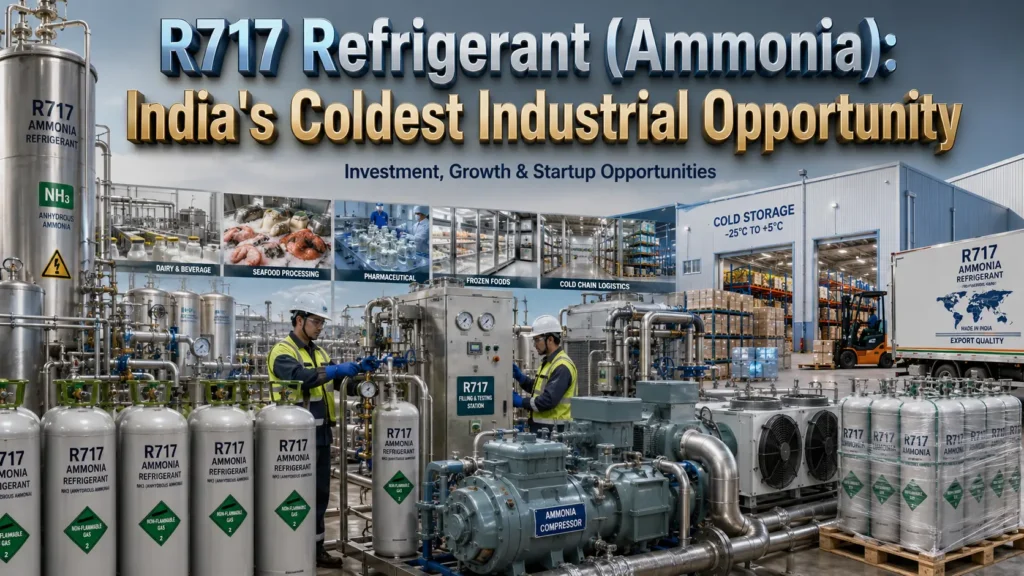
R717 Refrigerant Manufacturing Business in India Market Insight: The global R717 (ammonia) refrigerator market is valued at USD 1.8 billion and is expected to grow at 5.2% CAGR throughout the decade, thanks to the growth in cold chain infrastructure, food processing and fertiliser industry. India is estimated to be a USD 180 – 200 million market with the majority of demand in industrial refrigeration, food storage, breweries, and pharmaceutical cold chains. Why R717 Refrigerant Is Regaining Its Industrial Crown Known as R717 by the ASHRAE refrigerant classification, ammonia is one of the oldest and most thermodynamically efficient refrigerants used in industry. It has zero ozone depletion potential (ODP) and global warming potential (GWP) as compared to synthetic fluorocarbon refrigerants, now phased out under international climate accords. The Kigali Amendment on the Montreal Protocol will force countries, including India, to reduce the use of HFCs by more than 80% by 2047, making R717 the only ‘old-school industrial option’ again. The future proof solution that is attracting new investments and policy interest throughout the global cold chain supply chain. The industrial demand for industrial refrigerants is increasing with the expansion of food processing capacity, advancement of cold chain logistics infrastructure under various Government initiatives such as PM Kisan Sampada Yojana and the booming pharmaceutical manufacturing sector. R717 combines all the properties of efficiency, environmental friendliness and cost-economics and thus is the refrigerant for large-scale industrial applications. Entrepreneurs and MSMEs joining this market now will be at a competitive advantage to a structural change that India’s refrigeration industry will undergo in the next ten years. Related Article: Green Ammonia & Methanol from Odisha’s Coastal Ports: The Industrial Chemical That Could Power India’s Decarbonisation Global Market Landscape and Key Participants Essentially, the R717 refrigerant market is fragmented between a mix of multi-national industrial gas major companies and regionally dominant specialty chemical companies. The market is somewhat consolidated at the global level, with some large players controlling a significant capacity, but is rather fragmented at regional and national levels such as India, with ample opportunities for entry. The leading global players influencing R717 supply, pricing and technology specifications are: Company Country / Region Market Role Danfoss Group Denmark / Global Industrial refrigeration systems & ammonia-compatible components The Linde Group Germany / Global Largest industrial gas supplier; major R717 producer & distributor Dehon Group France / Europe Specialty refrigerant distributor; strong European market presence National Refrigerants USA North American R717 supply; reclamation & recycle services Sinochem Group China Leading Chinese producer; growing Asia-Pacific supply chain Tazzetti Italy / Europe Specialty gas and refrigerant distributor across EU A-Gas International UK / Global Refrigerant lifecycle management, recovery, and resale Harp International UK Specialty gas blending and distribution Aditya Air Products India Domestic industrial gas and refrigerant supplier Jai Maruti Gas Cylinders India Ammonia cylinder filling and distribution Brooktherm Refrigeration South Africa / Africa African market refrigeration gas supply Engas Australasia Australia / NZ Australasian industrial refrigerant distribution Hychill Australia Australia Natural refrigerant promotion and supply Data from the United Nations Environment Programme (UNEP) Ozonation indicates that more than 50% of the refrigerant capacity installed in large industrial refrigeration systems worldwide are ammonia (R717). This dominance is due to its superior Coefficient of Performance (COP), 0 climate impact and its well-established supply chain in industrial economies. India Market Overview: Consumption Trends and Growth Drivers The five end-use sectors namely food processing, cold storage, breweries and beverages, dairy processing, and fertiliser plant refrigeration systems are the key customers for R717 refrigerant in India. These sectors account for the majority of domestic ammonia refrigerant usage, and the cold chain logistic sector is the fastest-growing demand segment. End-Use Sector Estimated Demand Share (%) Growth Outlook Cold Storage & Warehousing 32% High — driven by PM Kisan Sampada Yojana & e-commerce logistics Food Processing & Dairy 26% High — National Mission on Food Processing support Breweries & Beverages 18% Moderate-High — rapid capacity expansion Pharmaceutical Cold Chain 13% Very High — post-pandemic pharma investment surge Fertiliser & Chemical Plants 11% Stable — existing captive ammonia infrastructure The cold chain industry in India, backed by the Ministry of Food Processing Industries (MoFPI) is gaining momentum in investments. According to government estimates, India requires more than 50 million metric tonnes of extra cold storage units to counter the losses of food in the post-production chain, which currently account for more than 15-18% of the total food produced. The moderate-size cold stores consume 50 to 150 MT of ammonia refrigerant, and the demand is recurring and increasing, which domestic cold store producers have not yet been able to meet on their own. Get Detailed Project Report (DPR): Fertilizers & NPK: A Complete Guide Demand–Supply Gap: India’s Critical Dependency Demand–Supply Gap: Domestic production of R717 in India is concentrated at a few small and big integrated fertiliser complexes and single small to medium-sized standalone industrial gas producers and is estimated to be covering only about 60–65% of the total addressable refrigerant-grade ammonia market. The situation is especially critical for the shortfall of high purity anhydrous ammonia as per IS 799:2002 and BIS requirement for precision refrigeration application. This disparity forces buyers in industry to find supplies from other sources, which adds to cost and supply assurance risks. Most of the ammonia produced in India is used in the production of fertilizers and purity requirements for the ammonia used for refrigerants is more stringent, while nitrogen-grade ammonia is produced in bulk. The supply chain of the dedicated R717 refrigerant (anhydrous ammonia) is not as well developed as the expanding industrial refrigeration market, covering aspects such as purification, pressurised filling of cylinders and cold chain distribution. Import data from the Directorate General of Foreign Trade (DGFT) and trade intelligence sources suggest that India imports large quantities of refrigerant grade ammonia and its related refrigerant gases every year from China, EU and Middle East. High purity anhydrous ammonia demand for precision cooling has increased the import dependency of this market, indicating a clear opportunity for investment in domestic production.
5 Green Chemical Business Ideas in Odisha That Can Generate ₹2 Cr+/Year
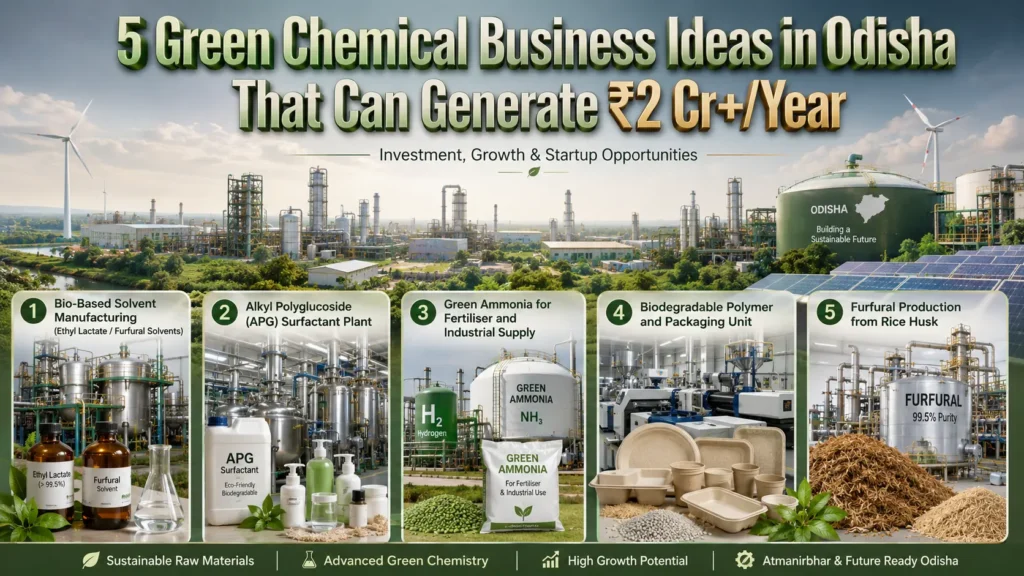
Green Chemical Business in Odisha The Green Chemistry Opportunity India Cannot Afford to Miss The size of India’s green chemicals market is now over USD 15 billion and it’s expanding by more than 10% annually. However, most chemical business owners are still trying to find a business concept that involves the same sort of products that were created 30 years ago. That is a big error! Green chemistry—biodegradable, bio-based and low-carbon specialty chemicals—is the next 10 years of Indian specialty chemicals, consumer demand and preference, and regulatory requirements of global buyers. The advantage that Odisha, which is located on a world class port, huge agricultural biomass and has a government supported petrochemical anchor at Paradip, is unparalleled in the eastern part of the country. There is no question about the growth of the green chemicals market. But who will construct it first? Why Green Chemicals — and Why Odisha? Sustainability is a hard trend. It is difficult to do this as a hard rule. Bio content for cleaning and personal care products is required for all products sold in 27 EU countries under European Union’s Green Deal requirements. Methanol and ammonia are being replaced with green alternatives by shipping lines. Exporters of pharmaceuticals to the US FDA and EMA are increasingly being encouraged to use bio-based solvents as a result of the laws and regulations concerning solvent usage in India. As the laws and regulations pertaining to solvent usage in India are moving more towards bio-based solvents, the pharmaceutical exporters are increasingly encouraged to use it for export to US FDA and EMA. All Indian manufacturers have to go green otherwise they have to lose the business in these markets. Among the three, Odisha has three attributes, which make it uniquely suited for green chemical manufacturing. The first plant, Indian Oil Paradip Petrochemical Complex, will manufacture all the key intermediates used in green formulation chemistry (IPA, phenol, MEG) with an investment of ₹61,077 crore. Second, the rice husk and agricultural biomass produced in Odisha is in millions of tonnes each year, which is the raw material for making bio-based chemicals. Third, Paradip Port has been officially named one of the three Green Hydrogen Hubs under the National Green Hydrogen Mission, which provides a policy and infrastructure benefit that no landlocked port can offer. Source: Invest India – Chemicals Sector Get Detailed Insights from This Book: The Complete Book on Biomass Based Products (Biochemicals, Biofuels, Activated Carbon) Government Policies Supporting Green Chemical Manufacturing The Union Budget has specifically provided money for the Ministry of Chemicals and Fertilizers. It has also launched three chemical parks based on clusters on a plug-and-play basis, which were developed specifically to boost specialty and green chemical manufacturing. Furthermore, the PCPIR policy in Paradip provides shared effluent, power and jetty facilities, and this significantly decreases the project setup costs. The National Green Hydrogen Mission (NGHM) offers financial incentives and financial grants to the manufacturers of green ammonia and green methanol. The SIGHT Scheme provides government offtake guarantees which lowers the risk of the revenue stream for the green chemical projects of the first movers. Another positive lever is the Production Linked Incentive (PLI) scheme for specialty chemicals. Moreover, the MSME and Large Industry policy of Odisha also offers capital subsidy of 15–25%, duty waiver on electricity for 5 years and exemption from stamp duty for qualified manufacturing unit. Source: DPIIT – PCPIR Policy Framework Source: MNRE – National Green Hydrogen Mission Green Chemical Business Ideas for Startups in Odisha Business Idea 1: Bio-Based Solvent Manufacturing (Ethyl Lactate / Furfural Solvents) VOC regulations, and buyer demand, are driving the replacement of toluene, xylene, and methyl ethyl ketone in pharmaceuticals, coatings, electronics cleaning and more with bio-based solvents. The one green solvent in this category that is most versatile is ethyl lactate which is made from lactic acid and ethanol. A small-scale ethyl lactate manufacturing plant in Odisha, using locally available broken rice to produce lactic acid and then esterifying it with bio-ethanol, could generate income of ₹80-250 per kg of ethyl lactate, whereas petro-chemical based ethyl lactate can generate income of only ₹25-35 per kg. The Paradip Pharma cluster is an indigenous buyer. The export potential for such solvents to Europe—the region where these solvents are required for pharmaceutical production — is significant. The investment required for setup is in the range of ₹15 crore to ₹50 crore, depending on the scale. Related Article: Bio-Based Chemical Business Idea: Furfural Plant Cost, Profit and Market Demand in India Business Idea 2: Alkyl Polyglucoside (APG) Surfactant Plant APG surfactants are bio-based; they are made from glucose and fatty alcohols. They’re the highest quality in personal care products – baby shampoos, personal luxury products hand washes, and sulphite-free products. They are 100% biodegradable and can be used under EU Ecolabel. There are no major APG production units in the East India. A manufacturer setting up an APG unit at or close to the port of Paradip has direct access to fatty alcohol through coastal shipping from Tamil Nadu, Andhra Pradesh and to glucose from the starch industry in Odisha. APG is priced 40-80% higher than “traditional” surfactants, and European personal care companies continue to demand it steadily making this one of the highest margin green chemical business opportunities in the country today. Capital requirement: ₹30–100 crore. Business Idea 3: Green Ammonia for Fertiliser and Industrial Supply ACME Group has already pledged a green methanol plant of capacity 200,000 TPA in Odisha. SECI will also provide ACME with 370,000 MT per year green ammonia supply under an 10-year offtake agreement to Indian fertiliser companies through its SIGHT Scheme. This indicates that the infrastructure for green ammonia offtake in Odisha is already in place. For the entrepreneur who is looking to enter this area at a smaller level of 20,000 to 100,000 TPA, the opportunities include the industrial refrigeration market, ammonium nitrate for mining chemicals, specialty nitrogen applications for agriculture, etc. By designating the port as a green hydrogen hub, it ensures
6 Profitable Agri-Chemical Business Ideas That Can Earn ₹2–8 Crore Per Year in India
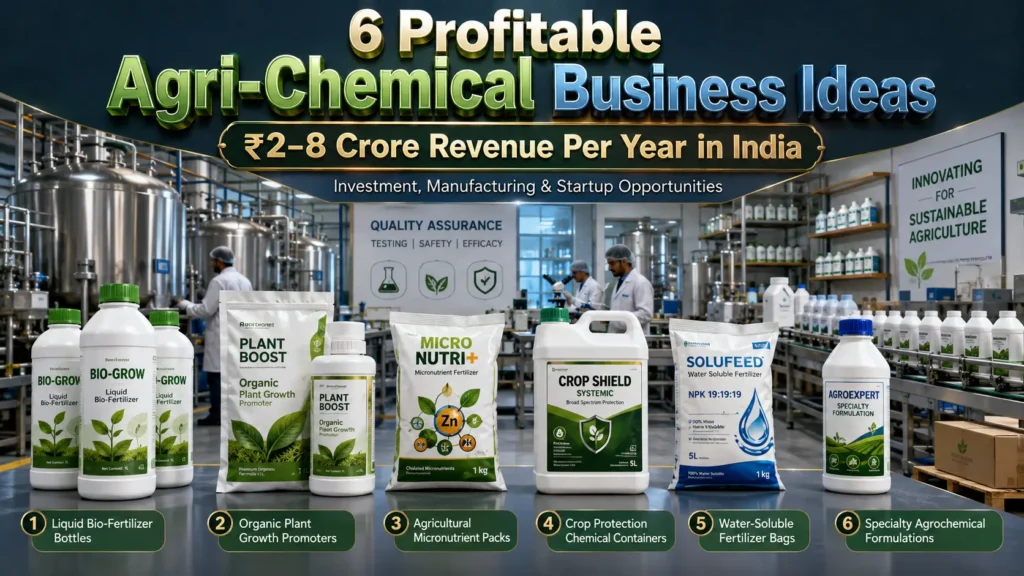
Profitable Agri Chemical Business Ideas India Why These Six Business Ideas Deserve Your Attention Right Now India’s most successful manufacturing entrepreneurs have one common thing; they did not take the path of glamorous products. Instead, they selected unromantic chemicals, raw materials which travelled between factories without all the fanfare. The use of synthetic camphor, sodium silicate, urea fertilizer, 2,4-D herbicide and potassium permanganate are not popular topics on social media. But they are found in nearly all critical supply chains, from the farm to the drug manufacturing plant or the food processing facility. These six products are among the most under-explored business areas in India for those entrepreneurs who are looking for viable manufacturing business ideas with structural demand. The drive towards import substitution, growth in domestic agri-chemical demand and increased scale-up of MSMEs due to PLI and various government incentives for industrial policies have created a rare opportunity. Specialty chemical imports remain at almost 30 percent penetration for some sub-segments, according to government data. With that gap directly comes a market opportunity to well capitalised Indian manufacturers who are ready to take action. In this article, all products will be reviewed individually as a business venture that could be started on its own or in combination with others. In each of these, we will discuss the fundamentals of manufacturing, important demand factors, and what a realistic expectation of profitability is for a serious MSME promoter. The aim isn’t to sell up — it’s to arm entrepreneurs with a clear view of what these businesses are about and why the timing can’t be better. 1. White Petroleum Jelly — The Multi-Industry Workhorse White petroleum jelly is a semi-solid hydrocarbon mixture that’s obtained from the petroleum refining process. It has no smell, is unreactive and thermally stable, hence its widespread use in industry. Who Buys It and Why It is employed as a base for dermatological preparations and topical ointments in the pharmaceutical industry. It is used by cosmetic companies in hair care products, moisturisers and lip balms. It is useful as a corrosion inhibitor and lubricant to industrial users. Food grade petrolatum is used in food processing as a release agent in bakery, confectionery and packaging. The slack wax fraction from lubricating oil refining is used to make the production wax. This is then subjected to hydrotreating (a high-pressure process in a pressure vessel with hydrogen and a catalyst) to give the pharmaceutical grade petrolatum or food grade petrolatum. Slack wax can be sourced from Gujarat or Rajasthan refineries and the production can be cost competitive. Financial Outlook The capital investment required for a plant of 500 to 2,000 MT/year varies from ₹1.5 crore to ₹6 crore depending on the level of automation of the plant. Pharmaceutical grade has a price premium ranging between 20-35 percent, gross margins of 22-28 percent. The pharmaceutical industry in India is expanding at the rate of nearly 11 percent per year, while the cosmetics industry is expanding at a rate of 9-10 percent. It is estimated that the domestic market is 85,000-95,000 MT per year, which is one of the highest demand-stable entries on this list. Parameter Detail Domestic Market Size ~90,000 MT/year Growth Rate 8–10% p.a. Key End-Uses Pharma, Cosmetics, Cables, Auto Indicative CapEx ₹1.5–6 Crore Gross Margin (Pharma Grade) 22–28% Get Detailed Project Report (DPR): Petroleum Jelly Manufacturing Plant Report 2. Potassium Permanganate — The Oxidiser That Crosses Sectors Potassium permanganate (KMnO4) is an industrial oxidising agent. Water treatment facilities employ it as a means to oxidize iron, manganese and hydrogen sulphide in raw water sources. In India, the supply of KMnO4 is directly connected with the initiatives of the municipal water supplies to scale up the treatment facilities in Tier 2 and Tier 3 cities. Its applications also extend into a wide range of other areas such as textile bleaching, pharmaceutical intermediates, food sanitisation and agricultural fungicide applications, providing manufacturers with various revenue streams from a single product. Why Demand Stays Resilient The solid demand theme is the investment in water infrastructure, as required by the government. The Jal Jeevan Mission in India is an initiative to provide access to tap water to more than 190 million people living in rural areas. All new treatment plants within that network are potential customers. Furthermore, wastewater treatment standards in industry are also constant with no relation to consumer sentiment. Domestic price of pharmaceutical grade KMnO4 is ₹130-180 per kilogram. Investment range of a plant of 300-800 MT/year is ₹3 – ₹9 crore. With good raw material procurement strategies, margins of 18 to 24 percent can be expected. Related Article: Potassium Schoenite Manufacturing Business in India: Investment, Profit Margin & Setup Guide for Entrepreneurs End-Use Sector Demand Share Growth Outlook Water Treatment 42% High (9–11% p.a.) Pharmaceuticals 20% Moderate-High (8–10%) Textiles 15% Moderate (5–7%) Agriculture 12% Growing (7–9%) Other Industrial 11% Stable (4–6%) 3. Urea Fertilizer — Foundation of India’s Agrarian Economy Almost 50% of the total consumption of nitrogenous fertilizer in India is done by urea. The annual demand is between 33-35 million metric tonnes which is highest for the second time in the world after China. India has 31 operating production plants, but still imports 7-9 million MT per year to meet the demand. The MSME Entry Point Economically feasible urea production involves large natural gas quantities and very high capital investment (in the range of thousands of crores of rupees). This means that primary production is not in the reach of MSMEs. But there are some easy business ideas for smaller manufacturers in the surrounding ecosystem: Sub-micron elements (such as iron, manganese, zinc, copper, and boron) at lower levels, mainly as chelates Coated and slow-release urea with sulphur or polymer membrane Fertilizer blends with micronutrients, specific to crop The distribution of agricultural inputs and branded retail downstream. The price premium for slow-release urea is in the range of 30-60 percent on top of conventional urea. The demand is building up across Maharashtra, Karnataka and Tamil Nadu, among horticulture, floriculture and
ABS Resin Manufacturing Plant in India: ₹20 Crore Revenue in 2 Years?
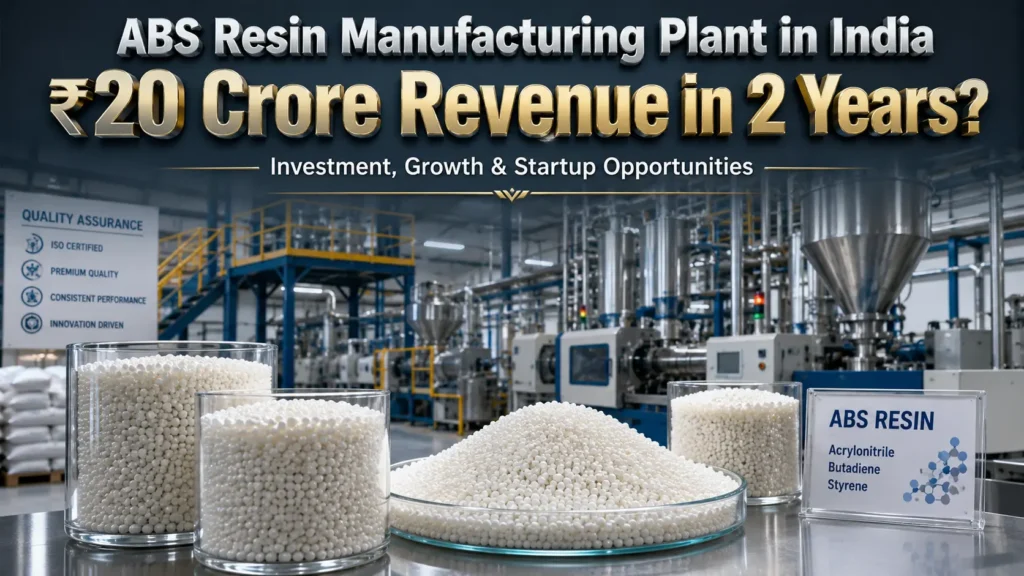
ABS resin manufacturing plant in India ABS (Acrylonitrile butadiene styrene) is a hard-working thermoplastic. It flows inside consumer electronics cases, home appliances, automotive dashboards, medical devices and pipes. It is both manufactured and imported in India. Until recently, it was able to withstand the competition of inferior foreign goods. It has however changed with the enforcement of the Bureau of Indian Standards Quality control order on ABS resin (IS 17077:2019) which comes with the requirement of BIS certification for all ABS imported or produced in the country. If an entrepreneur is considering a new manufacturing venture, this change in regulations significantly increases the investment case. Why This Sector Has Real Growth Behind It ABS resin is a product of the performance plastics group of India’s petrochemicals industry. According to the Ministry of Chemicals and Fertilizers, Government of India’s Annual Report 2025-26, the production of ABS is 176,540MT with the installed capacity of 203,000MT, which represents a CAGR of 9.7% over 4 years. That compounded growth rate is better than all other products in the Performance Plastics segment such as nylon, SAN, and PET chips. The capacity utilization of about 87% is indicative of a deficient supply side. This is not a sector that has spare capacity that awaits demand. Demand is there. The only question is: can production catch up? Demand Drivers are structural, NOT cyclical. ABS is used in Indian automotive application such as dashboards, pillar trim, bumper, interior parts. ABS housings, keyboards, and enclosures are being pulled by consumer electronics, which continues to grow in Tier-2 and Tier-3 cities. ABS pipes and fittings are employed in the construction industry. There’s no clear justification for any of these demand channels to turn around. Get Detailed Project Report (DPR): Plastics, Polymers and Resins: A Comprehensive Guide The BIS QCO: A Regulatory Wall That Protects Domestic Producers The Ministry of Chemicals and Fertilizers has been diligently implementing the mandatory BIS standards in the chemicals and petrochemicals value chain in a systematic way. Currently in effect, the ABS Quality Control Order mandates that all units of ABS resin (domestic and imported) must be marked with the BIS Standard Mark. The foreign exporters have to secure certification under the Foreign Manufacturers Certification Scheme (FMC Scheme) which introduces cost, time and compliance burden on the exporters. In the case of a domestic ABS resin manufacturing line or compounding line, this means a competitive floor. However, the lower cost Chinese and South Korean imports that once put domestic goods at a price competition disadvantage are now beset with a very real compliance challenge. The entrepreneur who establishes a certified and quality consistent operation is not playing on the level playing field with uncertified imports, the QCO levels the playing field in the entrepreneur’s Favor. Capex Range and Plant Setup Reality Before setting up an ABS manufacturing plant in India it is necessary to have clarity of what kind of plant is being established. There are three different entry points. Small-scale ABS compounding unit — This involves processing imported or domestically procured ABS base resin and adding colorants, fillers, flame retardants, and stabilizers to produce specialty compounds. Capacity range: 2,000–5,000 MT per year. Capital investment: Rs. 3–6 crore for machinery and equipment, plus Rs. 1–2 crore for civil works, utilities, and working capital. Target buyers include injection moulders, auto ancillary manufacturers, and electronics OEMs. Gross margins at this scale run 14–20%, tightening as resin input prices rise with crude. Mid-Scale Compound / Blending Plant — 5 Kilo to 15 Kilo per year, with a production of several specialty grades. Capital requirement: Rs. The cost for plant and machinery is ₹12 crore, for civil construction, ₹30–40 lakh and for six months of working capital, ₹40 lakh. Direct OEM supply and reasonable grade diversification can achieve 10-16% net margins before tax. Break-even is usually achieved between 18 and 28 months after commissioning. Greenfield ABS polymerization plant — It refers to the polymerization of the ABS base resin made by emulsion and continuous mass polymerization method from acrylonitrile, butadiene rubber and styrene monomers. The minimum amount of capital required: Rs. In the range of 80-200 crore, depending on technology licensing, logistics of feedstocks and location. It is no MSME’s land. It is suitable for big industrial groups that have access to feedstocks and already established relationships in the polymer market. Related Article: Why Performance Plastics Manufacturing Is India’s Next Big MSME Opportunity Business Selection Logic for MSME Promoters Integrated petrochemical complexes are more desired for base resin polymerization. The profit-making entry point for an MSME-type promoter is specialty compounding, which involves modifying off-the-shelf ABS grades to be more suited to a specific application. The segmentation matters. The automotive grade ABS is heat and impact resistant and has a premium price compared to commodity grades. There are also dedicated buyer profiles for flame-retardant grades for electronics; these have annual supply contracts. The UV stabilized grades are in a somewhat narrower market, but have stronger relationships with customers. The risks are not concealed. Acrylonitrile, butadiene and styrene are products of crude oil. They fluctuate in price, sometimes drastically, with world cycles in petroleum chemicals. If feedstock prices increase steadily, the margin for compounders can be reduced by as much as eight percent in 2 quarters. Most of the small compounders are facing difficulties in working capital management to maintain lean raw material inventory while holding finished goods in inventory for the buyers. Commodore-grade without application differentiations is a low-margin dead end. The winning strategy: Find a niche application, build consistency to that niche, and get OEM or distributor relationships before the plant is up and running. That’s how Indian polymer businesses have been created – on application-specific positioning and not on volume bets. Indian Entrepreneur Case References Kanoria Chemicals and Industries Ltd. (R.V. Kanoria) evolved into a specialty chemicals and polymers business due to product specialization. They would be less exposed to pure commodity price fluctuations because of their approach, technical grade manufacturing and application-specific supply. The lesson to
Export Business from India: Soda Ash Market, Top Buyers & Margins
soda ash export business India India is emerging as one of the world’s leading producers of soda ash. Although many of the entrepreneurs are involved with food processing or export of textiles or pharmaceuticals, the real business of the future is not going to be picked up in these businesses, but rather in industrial chemicals especially in the export of soda ash Business in India market. The soda ash production in India reached 3,279 thousand MT during 2024-25 and the installed production capacity is over 3,714 thousand MT. This advantage is a huge one to the exporters of India in the international market. The Ministry of Chemicals and Fertilizers, Government of India says that the sector is witnessing a massive scale of industrialization as the alkali chemicals industry now accounts for over 71% of India’s chemical production. Sodium carbonate, or soda ash, is used in many applications, such as: Glass manufacturing Detergent production Textile processing Water treatment Paper industry Metallurgy Chemical manufacturing The demand for soda ash is continuing to increase rapidly as construction and packaging and consumer industries expand throughout Africa and Southeast Asia. This presents a big opportunity to the Indian MSMEs and traders of Chemicals. Access Complete Business Plan: Soda Ash Market in MENA – Growth & Forecast to 2029 Why Soda Ash Export Business is Growing Fast Demand for soda ash is growing world-wide due to increased industrial production in developing nations. New glass factories are being established in African countries and beverage packaging facilities are growing in Southeast Asian countries, and manufacturing of textile and detergent is expanding. India is a big advantage due to Gujarat’s cost-effective chemical ecosystem. There are large industrial clusters of soda ash manufacturing in Mithapur, Sutrapada and Saurashtra with competitive price. Ports like Mundra, Kandla, Pipavav are located nearby, which also lowers shipping costs and enhances efficiency in exports. Thereby, it enables Indian exporters to be competitive against the Chinese and European suppliers. Major Growth Markets for Indian Soda Ash Kenya Tanzania Nigeria Ethiopia Vietnam Indonesia Bangladesh UAE The countries are augmenting their imports as local production of soda ash is still limited in these countries. Get Detailed Insights from This Book: Just For Starters: How To Start Your Own Export Business Why This Business is Attractive for New Entrepreneurs The biggest advantage of this sector is that the entrepreneur does not have to invest in a large scale manufacturing plant in the beginning. A full-scale soda ash plant requires a large investment, but export trading and processing business can be started with comparatively lower investment. A trading export business primarily concentrates on: Purchasing soda ash from Indian manufacturers Managing export logistics Handling buyer relationships Ensure quality and documentation International shipping coordination Through this model, the MSMEs can be a part of the export of chemicals without investing hundreds of crores on manufacturing infrastructure. Related Article: Caustic Soda Flakes Business Opportunity: High‑Demand Chemical Startup Model for Import Substitution & Exports Most Profitable Soda Ash Business Models 1. Dense Soda Ash Export Trading This is the simplest means of entry for first-time exporters. Entrepreneurs procure sodas from the manufacturers in India and sell it to the foreign buyers. Investment Required: Rs. 60-80 lakh Expected Margin: 4-6% Benefits Lower startup investment Fast business scalability No manufacturing setup required Risks Freight cost volatility Thin margins Delays in buyer’s payments 2. Light Soda Ash Reprocessing In detergent and textile industries light soda ash is preferred due to its quick dissolution rate. Dense soda ash can be processed into light soda ash by grinding and calcination system, which is suitable for use by entrepreneurs. Investment Required: Rs. 3-5 crore Expected Margin: 18-22% This is much more profitable than trading. 3. Soda Ash + Sodium Bicarbonate Business It is one of the most profitable sectors in chemical export business. Sodium bicarbonate is made from soda ash and is used extensively in: Food processing Pharmaceuticals Baking industry Industrial cleaning Investment Required: Rs. 8-12 crore Expected Margin: 25-35% Bicarbonate products fetch premium prices and so the exporters making bicarbonate products get better profits. Get Detailed Insights from This Book: Handbook on Fruits, Vegetables & Food Processing with Canning & Preservation (3rd Edition) Why Gujarat is the Hub of Soda Ash Export Business Gujarat is the leading state in the production of soda ash in India due to: Well-developed research and development capabilities Availability of marine salt and limestone Export-friendly ports Established industrial clusters Lower logistics costs The biggest manufacturers are: Tata Chemicals GHCL Limited Nirma Limited DCW Limited Gujarat has a good supply chain, warehousing, transportation and export facilities for MSMEs. Government Support for Chemical Exporters Indian Government offers several benefits to export companies in the chemical sector. Key Benefits Available RoDTEP export incentives CGTMSE has introduced collateral-free MSME loans. Udyam registration benefits The export credit insurance provided by ECGC. PCPIR for infrastructure of industries Chemical investment regions such as Dahej PCPIR in Gujarat enable businesses to cut down on their operational costs by leveraging shared infrastructure and logistics facilities. Biggest Risks in Soda Ash Export Business All exporting activities are risky and exports of soda ash are no exception. Major Challenges Chinese price dumping in global markets Sudden rise in freight charges International payment risks USD-INR currency fluctuations Successful exporters reduce these risks through: Long-term buyer contracts ECGC insurance coverage Supplier diversification Currency hedging strategies Choose the right startup backed by real market demand How NPCS Helps Entrepreneurs For first-generation entrepreneurs, launching an export business could be a risky venture, if conducted without proper planning. NPCS (Niir Project Consultancy Services) does professional project report preparation and feasibility studies for businesses. NPCS services include: Detailed Project Reports (DPR) Market demand analysis Financial projections Break-even analysis Machinery planning Export marketing studies and analyses Bank loan documentation support A professional DPR enhances the odds of getting financing and assists a business owner in his/her understanding of real profitability before investing. Conclusion Today, India’s soda ash export business is one of the best in the chemical export segment. India has:
Bio Acetic Acid Manufacturing Business in India: Cost, Profit & Setup Guide
Bio Acetic Acid Manufacturing Business in India While bio-acetic acid may not be a widely recognized name it plays an important role in Indian industry. It is utilized in pharmaceuticals, preservatives, textiles, dyes and plastics. Despite its important role India still imports large quantities of acetic acid on an annual basis. This gives small businesses a fantastic market. As business trends move toward environmentally sound and region-sourced chemicals, bio-acetic acid production is becoming one of the most profitable small-scale chemical manufacturing business possibilities in India. Download the Full Guide: Handbook On Chemical Industries (Alcohol Based) Why Bio-Acetic Acid Manufacturing Is Growing Rapidly India is a major user of acetic acid (over 600,000 tonnes are consumed annually, a majority imported). Meanwhile there is high demand from many industries for bio-based chemicals due to environmental and export restrictions. This opens up opportunities for the domestic manufacturers. Local manufacturing helps keep transportation costs lower and enables quicker delivery to customers. A few of the factors for this growth are: Growth in demand from pharmaceutical and textiles Growing demand for green chemicals High level of import substitution potential Government encouragement for MSME manufacturing Investment and Profit Potential The investment required to set up a bio-acetic acid plant is not very high compared to the big chemical plants. A small-scale plant can be easily established with a limited budget and gradually expanded. Typical financial overview: Capital requirement: ₹46 lakh-72 lakh Annual production: 150-200 MT Annual revenue: ₹80 lakh to ₹120 lakh Net profit margin: 18% to 24% Return on Investment: approx. 2-3 years The figures make it an attractive business opportunity for MSMEs and new entrepreneurs. Get Detailed Project Report (DPR): Glacial Acetic Acid Project Report & Business Plan Step-by-Step Process to Set Up the Plant Setting up of a bio-acetic acid producing plant can be achieved with proper planning but the procedures involved are quite simple. First, register the business. The two most popular choices for entrepreneurs are Private Limited Company or LLP. And, Udyam Registration is necessary to avail government benefits. GST is also essential for the sale of chemicals. Once the legal procedures are done, the next step is to establish infrastructure. For a plant, 2,000-3,000 sq ft space of covered area and some storage is required. It is recommended that the plant should be set up at industrial locations in states such as Gujarat, Maharashtra and Tamil Nadu because of the better infrastructure and ease of operation. After this, machinery installation takes place. The manufacturing process involves fermentation and purification. Equipment needed includes: Fermentation vessel (SS 316L) Aeration and agitation system Distillation column Cooling tower and heat exchanger Storage tanks and testing equipment These are the core of your production equipment. Raw Material Availability in India The great advantage of this business is the availability of raw materials in India. Bio-acetic acid is made from renewable feedstocks that are readily available. Common raw materials include: Sugarcane molasses (cheap and readily available) Mahua flowers Crop waste such as rice straw and cassava peel Maharashtra, Uttar Pradesh, Karnataka and Tamil Nadu are good sources. Direct sourcing from suppliers ensures smooth production and higher margins. Build a profitable business with the right idea Licences and Approvals Required A number of licences are required to start the business. Although it is time consuming, it is not difficult like in heavy chemicals. You will need: Factory Licence (from the state) Pollution Control Board approval (CTE & CTO) FSSAI licence (if for food-grade) BIS certificate (for industrial clients) Fire safety clearance Typically, approvals can be done in 3 to 5 months, depending upon documentation Government Schemes and Financial Support The Indian government has various schemes to promote small manufacturing enterprises, particularly those committed to sustainability. Some important schemes include: PMEGP: Offers 25% – 35% subsidy on project cost CGTMSE: Provides collateral-free loans up to ₹2 crore MUDRA Loans: Good for smaller loans State subsidies: Power tariff and tax subsidies Such scheme schemes considerably reduce the capital costs and bring projects within affordable means. Why Proper Planning Is Important (NPCS Role) Not all entrepreneurs fail due to demand, but due to planning. For example, starting a chemical manufacturing business without technical know-how may result in wrong decisions. Here, NIIR Project Consultancy Services come in handy. They offer project reports containing: Complete manufacturing process Machinery and cost estimation Financial projections Market analysis Bank loan documentation Their reports are well accepted by banks and can help get funding for schemes such as PMEGP and CGTMSE. This advice can help minimise the risk for new entrepreneurs. Related Article: India Imports 85% Acetic Acid: The ₹10,000 Crore Chemical Manufacturing Opportunity (2026–2031) Marketing and Sales Strategy Bio-acetic acid is easier to market than other products because there is a market. The trick is to start small and establish a relationship with customers. Rather than going after a large market, go after: Local pharmaceutical companies Food processing units Textile and dye manufacturers Delivering quality and quantity will help you build repeat business. You can scale up your plant once it is in steady production. Challenges to Consider The business has great prospects but it’s essential to know the risks. It is necessary to produce high quality product, particularly if the customer is an industrial firm. Fermentation must be carefully supervised as a single error can reduce yields. The availability of raw materials needs to be effectively managed. Multiple vendors minimise the risk of shortages and production stops. These tasks can be managed by planning and employing a good team. Conclusion: A Feasible and Scalable Venture The production of bio-acetic acid is one of the rare business opportunities in India with high demand, low investment and government incentives. It’s not a pie-in-the-sky concept, but a reality in many states. This business is not only lucrative in the long run, but also stable, if the entrepreneur is willing to take some risks and work hard. The key to success is to start small, keep quality high and develop a network of buyers. Frequently Asked Questions
Specialty Chemicals Manufacturing in Tamil Nadu: A Prime Import Substitution Opportunity
Specialty Chemicals Manufacturing in Tamil Nadu India is a contradiction within the chemical industry. Although the country is one of the major manufacturers of basic chemicals including caustic soda, soda ash and sulphuric acid, the country is greatly reliant on imports of high-value specialty chemicals. Hyderabad pharmaceutical firms depend on imported solvents, Bengaluru electronics firms are importing precision etching agents and Tirupur textile units are importing performance dyes. These specialty segments are dominated by major players such as China, Germany, the United States and Japan and this creates a widening gap among Indian entrepreneurs. Tamil Nadu is the perfect place to take advantage of this opportunity among the Indian states. Tamil Nadu has a fully developed chemical manufacturing ecosystem, access to industrial consumers, modern ports and favourable government policies, which makes it a strategic platform to manufacture specialty chemicals. Understanding Specialty Chemicals Bulk commodity chemicals are different as compared to specialty chemicals. They are not characterized by the cost of raw material only but by functionality, performance and value. These chemicals are usually manufactured in low quantities and have particular industrial uses and are required to be of high quality. Key characteristics: Performance determines the price and not the cost of raw materials. Manufactured in low quantities as opposed to commodity chemicals. Industry-specific (textiles, electronics, construction, and water treatment). India is currently estimated to have a specialty chemicals market worth USD 32-35 billion and it is expected to grow to USD 60-65 billion in 5-7 years. Although this has increased, 30-40 percent of the high-value specialty chemicals are imported, which presents a profitable domestic market. Read the Complete Book Here: Handbook On Chemical Industries (Alcohol Based) Why Tamil Nadu is the Best Choice. The industrial geography of Tamil Nadu in favor of various specialty chemical sectors: Textile Belt: The dyeing and processing units in Tirupur, Coimbatore, and Erode are highly concentrated and absorb specialty textile auxiliaries. Automobile Corridor: Specialty Coatings, lubricants and metalworking chemicals are in demand in Chennai-Hosur region. Electronics manufacturing: Sriperumbudur and the surrounding region is the source of demand of electronic grade chemicals. Water Treatment: Due to the industrial estates and municipal projects, there is always a demand on treatment chemicals. Proximity to buyers saves on logistics expenses, working capital stress and time-to-market and is defensibly competitive among startups. Potential Specialty Chemical Segments that are high. 1. Textile Processing Chemicals A natural fit of the Tamil Nadu based manufacturers is textiles. A large portion of the specialty softeners, fixing agents and optical brighteners are imported, although they can be manufactured domestically with moderate investment in mid-scale plants. Textile experienced entrepreneurs can use the available customer base to acquire early adopters. Investment range: ₹1.5–3 crore. Identify high-growth industries before others do 2. Water Treatment Chemicals Water treatment chemicals represent a rapidly expanding segment due to more stringent regulations and the increased city programmes. Technologies are available, the buyer is heterogeneous, and the potential of import substitution is great. The properly designed plant may be commercialized in 18-24 months. Investment range: ₹1–4 crore. 3. Construction Chemicals Growth in infrastructure provides impetus to the consumption of products such as superplasticizers, waterproofing compounds, repair mortars and protective coatings. This has a fragmented domestic supply, where startups can differentiate by producing high-quality and reliable products. Investment range: ₹2–5 crore. 4. Agrochemical Intermediates These have high margins but they have to strictly adhere to regulations. The ports and infrastructure in Tamil Nadu support local delivery and exports. Entrepreneurs will be able to focus on manufacturers in India and the other places particularly the US, Brazil and Europe. Investment range: ₹5–15 crore. Get Detailed Project Report (DPR): Inorganic Fertilizers and Nutrient Management: NPK, SSP, Urea and DAP 5. Specialty Surfactants and Green Chemistry. The world is increasingly demanding bio-based surfactants, green solvents and enzyme-based formulations that find application in textiles, food processing, and cleaning of industries. Environmentally friendly products attract local and international consumers and this is the future segment. Investment range: ₹3–8 crore. Lessons from Indian Industrial Leaders Good Indian industrialists offer a model to specialty chemical projects: Kiran Mazumdar-Shaw (Biocon): Began with one fermentation product and used the advantages of raw materials to expand incrementally. Narayana Murthy (Infosys): Showed that disciplined processes and quality certifications made a difference among companies over time. Aarti Industries: Leadership based on systematically replacing imports, backward integration, and experimenting export markets. Similar strategies can be used by specialty chemicals startups: specialize in one defensible product, focus on quality, and grow gradually. Government Subsidies on Producers. The central and state policies in India contribute to feasibility: Central Initiatives: PLI Scheme, CGTMSE collateral-free loans and MUDRA loans decrease barriers to initial investment. State-Level Infrastructure: SIPCOT estates offer ready-to-use plots, whereas TIDCO offers bigger plots. Export Assistance: CAPEXIL and APEDAS make it easy to access the markets. This kind of support will reduce the risk and ensure a fast entry into the market. The way NPCS Assists Business Starters. Niir Project Consultancy Services (NPCS) offers end to end advice in specialty chemicals manufacturing: Market survey and demand analysis. Techno-economic feasibility reports (DPRs). Production, equipment and sourcing of raw materials. Financial models including profitability and ROI. Export strategy and regulatory compliance. Using NPCS expertise, entrepreneurs reduce risk, plan capital effectively, and confirm market demand prior to risking their money. Risks and Challenges Entrepreneurs should strategize on: Raw Material Volatility: The prices of petrochemical feedstocks may vary. Regulatory Compliance: There are the environmental clearance, hazardous waste management as well as labor laws that are obligatory. Technology Access: Proprietary processes can be subject to licensing particularly agrochemical and electronic grade products. Some mitigation measures involve the selection of convenient product categories, licensing technologies, and establishment of strategic alliances. Related Article: Top Specialty Chemical Manufacturing Opportunities in India (2026): High-Profit Ideas for Startups & MSMEs Export Potential The international demand of specialty chemicals produced by Tamil Nadu is very high: Agrochemical intermediates: USA, Europe, Brazil. Textile processing chemicals: Bangladesh, Vietnam, Middle East. Water treatment chemicals, Africa, South Asia. Green specialty surfactants → Europe,
Furfuryl Alcohol Production Plant in India: Cost, Process, Profit Margin & Investment Guide
Introduction: Furfuryl Alcohol Production Plant in India India’s chemical manufacturing industry is growing rapidly, and this is causing new opportunities for entrepreneurs and investors. Among the many specialty chemicals that are drawing attention, Furfuryl Alcohol is a hot topic, as it is a high demand industrial chemical market with a good market potential. It is widely used for foundry casting, construction materials, resins and industrial coating. Despite an increase in demand, domestic production is limited and industries have to rely heavily on imports. This supply gap provides a good opportunity for MSMEs and new entrepreneurs to set up local manufacturing units. The Furfuryl Alcohol production plant operates as a profitable business through effective execution of its planning activities and raw material procurement and operational processes. Get Detailed Insights from This Book: Handbook On Chemical Industries (Alcohol Based) What is Furfuryl Alcohol and Why is it Important in Furfuryl Alcohol is a chemical compound of organic origin obtained from furfural, which is obtained from agricultural waste like sugarcane bagasse and rice husk. India produces huge amounts of by-products of agriculture annually, which makes this country suitable for the manufacturing of this chemical. The significance of Furfuryl Alcohol is that it can find a wide variety of industrial applications. It is used as a binding agent, solvent and intermediate chemical in several industries. Due to the critical role that it plays in manufacturing processes, industries are dependent on a consistent supply and quality. Important Uses of Furfuryl Alcohol Foundry industry for sand casting Molds Corrosion resistant materials construction sector Well cementing in the oil and gas industry Chemical manufacturing for resins and polymers Pharmaceutical and specialty chemical production| The various uses of the product create continuous market which extends throughout all twelve months of the year. Get Detailed Project Report (DPR): Alcohol-Based Fuel Gel Manufacturing Plant Market Demand & Growth Potential in India India is currently one of the world’s fastest growing industrial economy. The government’s priorities in infrastructure development, domestic manufacturing and export promotion have led to a growing demand for industrial chemicals. The foundry industry alone uses a major part of the Furfuryl Alcohol produced worldwide. Another critical factor in the demand is the ongoing dependence of India on imports. When domestic manufacturers enter the market they can take advantage of shorter delivery times, lower logistics costs, and the improvement of customer relationships. Companies with good quality are often rewarded with long-term contracts with industrial buyers. Export opportunities are growing also as many developing countries demand industrial chemicals but do not have adequate capacity for producing them. Indian manufacturers are able to take advantage of cheap production costs and geographical proximity to target international markets. Raw Materials Needed in Furfuryl Alcohol Production The availability and cost of raw materials has a direct effect on the profitability of this business. Luckily, the main raw materials Furfuryl Alcohol needs are easily available in India. Main Raw Materials Furfural (from agricultural residues) Hydrogen gas Catalyst (copper-based) Water and utilities Packaging materials India’s strong agricultural base provides a stable supply of raw materials, which helps to ensure stable production and competitive pricing. Process Of Production Step By Step Raw Material Preparation Furfural is cleaned and purified before it is processed. Hydrogenation Reaction Furfural undergoes hydrogen reaction at specific temperature and pressure conditions through the use of a catalyst. Distillation and Purification The purification process starts with the distillation of crude product which allows for the removal of undesired substances and the creation of pure material. Cooling and Storage The storage tanks contain the chemical material which has undergone purification through a process that requires the substance to be cooled. Packaging and Distribution The ultimate product is packed and delivered to industrial customers. The maintenance of correct temperature and pressure values together with proper catalyst operation remains essential for sustaining product quality throughout the entire production process. Find high-return business ideas based on your budget & ROI Investment Cost of Establishing a Furfuryl Alcohol Plant The investment needed to set up a manufacturing plant depends on the production capacity, location and the choice of technology. A small to medium range plant is usually good for MSME entrepreneurs. Estimated Project Cost (MSME Scale) Land and site development: INR 20 – 40 Lakhs Civil construction and building: INR – 60 – 120 Lakhs Plant and machinery): INR 150 – 280 Lakhs Utilities and effluent treatment: INR 30 – 60 Lakhs Pre-operative expenses: INR 15- 25 Lakhs Working capital: INR 80 – 140 Lakhs Total Estimated Investment: INR 3.5 Crore to INR 6.5 Crore Entrepreneurs who already have land or infrastructure ownership may cut down on their startup costs considerably. Profit Margin, and Return on Investment Furfuryl Alcohol manufacturing can boast some of the best financial returns because they have a steady demand and have the same industrial customers in place again and again. Once the plant is in a steady production, the business will usually have predictable revenue and controllable operating costs. Estimates of Financial Performance Net profit margin: 18% to 24% Payback period: 4 to 6 years Break-even period: About 3 years Potential Revenue per year: INR 8 to 15 Crore Profitability is enhanced if supply of raw materials is contracted over the long term or if production systems are integrated. Related Article: Furfuryl Alcohol Manufacturing Business in India: Complete Industry Guide, Investment, Demand and Profit Potential Best Places to Establish Furfuryl Alcohol Manufacturing Plant Selecting the right location is among the most important decisions of any manufacturing business. The ideal location for a plant should have easy access to raw materials, transportation systems, and utilities. Appropriate States for Setting up Plants Uttar Pradesh Maharashtra Gujarat Punjab Haryana Tamil Nadu These states have good agricultural production, industrial base and skilled manpower in that place. Government Subsidies and Financial Aid The Government of India offers various financial aid schemes in favor of manufacturing business. These schemes help reduce the cost for starting up and better access to funding. Major Government Schemes PMEGP Scheme – Granted subsidy
15 Profitable Chemical Business Ideas in India (Low Investment Manufacturing Guide)
Introduction: Chemical Business Ideas in India India’s chemical industry is one of India’s fastest-growing manufacturing economy sectors. From pharmaceuticals and agriculture, to textiles and plastics, nearly every industrial sector is highly dependent on chemical products. As industrialization exists and more consumers want more, the need for chemicals is rapidly growing. Despite this strong demand, India is still importing a huge quantity of industrial chemicals every year. As per the Government reports, we can see that the imports of chemicals and petrochemicals have been increasing to a great extent over the last decade. This increasing import dependence is a great opportunity for domestic entrepreneurs and startups. The Indian government is also encouraging local chemical production through programmes such as Make in India, Plastic Parks and Petroleum Chemical and Petrochemical Investment Regions (PCPIRs). Such programs include infrastructure support, subsidies and favourable regulatory approvals for businesses. For those entrepreneurs who are looking to set up a manufacturing venture, the chemical industry offers a number of high growth opportunities. Below are fifteen chemical business ideas that have a good demand potential in India.(Chemical Business Ideas in India) Read More: Handbook On Chemical Industries (Alcohol Based) 1. Methanol Production Methanol is an important industrial chemical used in the production of formaldehyde, plastics, adhesives, and fuels. It is also becoming popular as a cleaner alternative fuel for transportation and industrial uses. India has a very high consumption of methanol, but it has domestic production of only a small share of the consumption. As a consequence, huge amounts of methanol are imported annually. Why the production of methanol is a good business opportunity: Strong demand from different industries Increasing use as alternative fuel Large import dependency in India Startups can look at medium-scale methanol production based on natural gas or coal technologies.(Chemical Business Ideas in India) 2. Acetic Acid Manufacturing Acetic acid is widely used in the textiles, pharmaceuticals and food processing industries. Also a key intermediate chemical for the production of vinyl acetate monomer and acetates ester. India imports a significant part of its requirement of acetic acid as the domestic production capacity is limited. Entrepreneurs who get into this sector can profit from the stable industrial demand. Modern manufacturing technologies also enable the manufacture of bio-based acetic acid from agricultural waste and therefore it is more sustainable.(Chemical Business Ideas in India) 3. Chlor-Alkali Chemicals (Caustic Soda and Chlorine) The chlor-alkali industry manufactures important chemicals for a range of industrial processes. Caustic soda and chlorine are used in paper making, textiles, soap making and water treatment. Demand for these chemicals is constantly growing as the industrial output of India grows. While there are some large companies dominating the sector, there are still regional supply gaps. Major industries that use chlor-alkali chemicals are: Textile processing units Paper & pulp manufacturers Water treatment plants Chemical processing industries Small size regional plants can efficiently serve nearby industrial clusters.(Chemical Business Ideas in India) 4. Soda Ash Production Soda ash is an important raw material in glass making, detergents and various chemical processes. The expansion of the construction sector and solar panels industry have boosted the demand for soda ash in recent years. Domestic manufacturers are now operating near capacity. With the continuous increase in demand, the supply may be short in the coming years in India. This makes soda ash production a good business opportunity for chemical entrepreneurs in the long term.(Chemical Business Ideas in India) Read More: Modern Technology of Industrial Chemicals 5. Manufacturing of Phenol and Acetone Phenol and acetone are very commonly used chemicals in plastics, laminates, adhesives and pharmaceutical manufacturing. Phenol is especially significant for the production of bisphenol-A, which is used for engineering plastics, as well as epoxy resins. India has a much higher consumption than domestic production of phenol, hence heavy dependence on imports. Entrepreneurs venturing into this sector can take advantage of the increasing demand in the car and electronics sectors. Downstream products such as epoxy resins and specialty plastics can be used to further increase the profit.(Chemical Business Ideas in India) 6. Linear Alkyl Benzene (LAB) Linear alkyl benzene is the prime raw material used in the production of detergents. As the population of India increases and the standards of living improve with time, the consumption of detergents is increasing on a steady pace. Factors driving the LAB demand include: Growth of the FMCG sector Increasing consumption in rural areas Rising hygiene awareness These factors make LAB manufacturing a stable and scalable business opportunity. 7. Production of Styrene and Polystyrene Styrene is an important chemical that is used to make polystyrene plastics and synthetic rubber. These materials are very popular for packaging, consumer goods and electronics. India imports a major part of its styrene requirement. Entrepreneurs can exploit opportunities in polystyrene manufacturing, which is relatively lower than investing in large petrochemical plants. Expandable polystyrene which is used in packaging and in insulation materials is especially popular.(Chemical Business Ideas in India) 8. Purified Terephthalic Acid (PTA) PTA is a major raw material in the case of polyester fiber and PET bottle manufacturing. Textile industry in India is one of the largest in the world and polyester continues to grow in popularity because of its durability and low cost. Demand for PTA is also increasing as demand in the textile and packaging industries grows. Although India has several PTA plants, the consumption is still higher than the domestic supply. Entrepreneurs can also consider downstream businesses such as polyester chips, recycled PET products. Read More: Chemicals (Organic, Inorganic, Industrial) Projects 9. Polycarbonate Manufacturing Polycarbonate is a high performance plastic that has a reputation for being strong as well as clear. This is used in automotive parts, electronics, medical equipment and construction materials. Currently, bulk of the polycarbonate demand of India is met through imports. As industries move towards advanced materials, it is likely that there will be a significant increase in the demand for polycarbonate products. The production of polycarbonate sheets and moulded parts is a lucrative business for those who are starting out.(Chemical
Top 15 Chemical Manufacturing Business Ideas in India with Huge Import Substitution Potential
Chemical Manufacturing Business Ideas in India The chemical industry in India is growing faster than the manufacturing capacity. Growth in construction, automobiles, packaging, FMCG, electronics, textiles and renewable energy has severely impacted an increased demand for chemicals, while domestic supply is lagging. This mismatch has sent India’s import of chemical and petrochemicals (minus pharmaceuticals and fertilisers) to over ?2.27 lakh crore in 2023-24. For MSMEs and new entrepreneurs, this is a rare opportunity in this gap. With government support in the form of Plastic Park and PCPIR along with capital subsidies of up to 50%, manufacture of chemicals is not a preserve to ‘big’ corporates and ‘big’ players. Below are fifteen chemical manufacturing opportunities where import substitution, steady demand and scalability combine. Read More: Handbook On Chemical Industries (Alcohol Based) 1. Vinyl Acetate Monomer (VAM) Vinyl Acetate Monomer is a basic raw material for adhesives, emulsion paints, packaging films and EVA Polymers. Currently, India does not have a large-scale VAM manufacturing industry and imports more than 1470 crore rupees worth of VAM every year. Why VAM is attractive Strong demand from construction adhesives and paints Near-total import dependence Clear scope for integration with ethylene & acetic acid A domestic VAM unit which is close to a petrochemical hub can easily get high capacity utilisation because of strong downstream demand.(Chemical Manufacturing Business Ideas in India) 2. Ethylene Vinyl Acetate (EVA) EVA is used widely in footwear soles, solar panel encapsulants, hot-melt adhesives, and flexible packaging. While the domestic capacity is limited, the imports remain more than ?3,100 crore. Business potential Rapid industrial growth in footwear and solar energy The benefits of this process include the following: – Opportunity in EVA compounding and sheet manufacturing Lower capital requirement in comparison with polymerisation plants 3. Acrylonitrile Acrylonitrile is necessary to ABS plastics, acrylic fibres and nitrile rubber. India is entirely reliant on imports of almost 1800 crore per year. Instead of immediately investing in large-scale production, MSMEs have an option to focus on downstream segments like ABS moulded components, nitrile rubber compounding and acrylic fibre based products.(Chemical Manufacturing Business Ideas in India) 4. Butyl Rubber Butyl rubber is important in tyre inner tubes and in pharmaceutical closures. Even after the commissioning of the first major plant in India, the imports still seem to be in excess of ?1,000 crores every year. Where MSMEs fit in Manufacturing of inner tube and bladder Pharmaceutical bamboo stoppers Sealing products for the automotive sector 5. Styrene-Butadiene Rubber (SBR) SBR is a backbone of the tyre industry. Despite domestic production, imports of SBR is still above Rs 2,000 crore because of increased automobile demand. MSMEs can successfully work in the rubber compounding and customised SBR formulations for tyres, footwear and industrial belts.(Chemical Manufacturing Business Ideas in India) Read More: Modern Technology of Industrial Chemicals 6. Polybutadiene Rubber (PBR) Polybutadiene rubber has high levels of resilience and abrasion resistance, which makes it ideal for use in tyre treads and industrial products. Imports amounting to around Rs 1700 crore show the gap in supply. Key opportunities High performing rubber blends Tyre tread compound modification Export oriented specialty grades 7. EPDM Rubber EPDM rubber is commonly used in automotive weather seals, roofing membranes, and cable insulation. India does not have any domestic EPDM manufacturing which has led to imports of more than 1100 crore. For MSMEs there is constant demand for EPDM extrusion, gasket production and sealing systems for vehicles and buildings.(Chemical Manufacturing Business Ideas in India) 8. Unsaturated Polyester Resin (UPR) UPR is a base material for FRP tanks, panels, boat hulls, and wind energy components. Imports are around more than a 1000 crore a year because of infrastructure growth. Small and medium UPR plants and FRP product manufacturing suit those MSMEs with regional market orientation. 9. Polyacetal Resin (POM) Polyacetal is an engineering plastic for precision automotive and electrical components. India is still completely dependent on imports. Why POM is promising Increase in automobiles and electronics High value-added applications Opportunity in compounding and precision moulding Read More: Project Reports & Profiles 10. Mono Ethylene Glycol (MEG) MEG is necessary in polyester fibres and PET bottles. Imports are more than a rupee four thousand three hundred crore per year despite domestic production. MSMEs can reach this segment through bio-based MEG, polyester yarn spinning and PET recycling as per the sustainability goals.(Chemical Manufacturing Business Ideas in India) 11. Polycarbonate Polycarbonate has a high impact strength and transparency, which makes them ideal for helmets, EV parts and electronics. Imports are more than 5000 crore every year. MSME entry points Polycarbonate sheets and roofing (panels) Auto parts and electrical components Safety and glazing products 12. Toluene Toluene has a wide variety of applications as a solvent and as a feedstock for chemical derivatives. Domestic supply is lacking and imports amount to almost crore 4800. MSMEs can concentrate on purification, specialty solvent grades and derivative products for pharmaceuticals and specialty chemicals.(Chemical Manufacturing Business Ideas in India) 13. EDC and VCM (PVC Feedstocks) EDC and VCM are important for making PVC. Due to demand for PVC exceeding the domestic capacity, imports of these feedstocks continue to be high. Downstream scope PVC compounding Wire and cable insulation Flooring, medical grade PVC 14. Hydrogen Peroxide Hydrogen peroxide is applied in the textiles, pulp and paper, chemicals and water treatment industries. High capacity utilisation is a sign of tightness in the supply. Regional production, dilution units and specialty grades are viable MSME opportunities.(Chemical Manufacturing Business Ideas in India) 15. Titanium Dioxide Titanium dioxide is the most commonly used white pigment in paints and plastics. Domestic production is limited in spite of good demand. Value-added opportunities TiO2 masterbatch manufacturing Paint and plastic additives Import substitution on coatings industry Read More: Best PCPIR for Chemical Manufacturing in India: Dahej, Paradeep or Vizag? Strategic Roadmap for MSMEs Across these segments, the pattern is clear: growing demand, import dependency and policy support. Entrepreneurs who identify the right product, location (within industrial clusters) and technology (which may be proven) can assemble scalable