
Phenol and Acetone Manufacturing in India: Business & Investment Opportunities
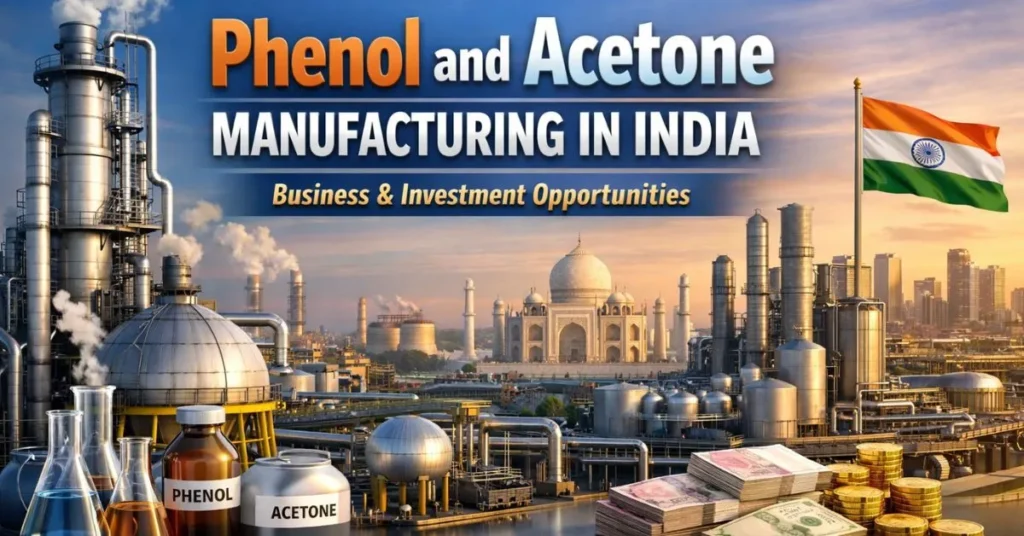
Phenol and Acetone Manufacturing India’s chemical industry is experiencing a fast growth, but some of the strategic intermediates are significantly import-dependent. Phenol and acetone are two excellent examples of these compounds in that they are key raw materials used to produce laminates, adhesives, resins, pharmaceuticals, and polycarbonates. With domestic demand exceeding domestic production, India is a promising investment destination in phenol and acetone manufacturing – in line with the government’s Atmanirbhar Bharat initiative. In this article, we examine the phenol and acetone scenario in India in terms of trends in production, gaps in consumption, the key players, downstream opportunities for MSMEs, and import substitution.(Phenol and Acetone Manufacturing) Read More: Phenolic Resins Technology Handbook (2nd Revised Edition) What Are Phenol and Acetone? Phenol is an aromatic organic compound which is mainly used for the making of bisphenol-A (BPA), phenolic resins and caprolactam. It is an important component in high-pressure laminates, adhesives, brake linings and electronics applications. Acetone, one of the co-products of phenol production from the cumene process, is an industrial solvent with wide applications in the pharmaceutical, paints, coatings, nail polish removers and cosmetics sectors. Both of these chemicals are of strategic importance as they are the base for several downstream industries such as polycarbonates, epoxy resins and specialty chemicals.(Phenol and Acetone Manufacturing) The Domestic Manufacturing Landscape in India India’s phenol and acetone market is presently in a duopoly that is dominated by Deepak Phenolics Ltd and Hindustan Organic Chemicals Ltd (HOCL). Hindustan Organic Chemicals Ltd (HOCL) HOCL’s Kochi plant commissioned in 1987-88 produces phenol, acetone and hydrogen peroxide. The Rasayani facility was closed down and Kochi became the only operational unit. HOCL’s capacity is modest: Phenol: 40,000 tonnes per annum (tpa) Acetone: 24,600 tpa Production has been volatile with the output of FY 2023-24 totalling 47,518 t phenol and 29,613 t acetone dropping to 34,874 t and 21,790 t respectively in FY 2024-25 due to market and working capital constraints. Deepak Phenolics Ltd (DPL) DPL, a subsidiary of Deepak Nitrite, has the largest phenol and acetone facility in India at Dahej in Gujarat: Phenol: 330 kta Acetone: 200 kta In 2025, DPL announced a total investment of Rs 3,500 crores for the construction of a greenfield facility, with another 300 kta of phenol, 185 kta of acetone and 100 kta of isopropyl alcohol (IPA), for import substitution and a combination with polycarbonate. Other Players Smaller producers such as Shree Ram Chemicals and the yet to be commissioned projects of Haldia Petrochemicals and Aarti Industries contribute marginally. Despite these efforts, Deepak Phenolics holds around 57% of the domestic market and HOCL covers the remaining market.(Phenol and Acetone Manufacturing) Read More: PHENOL/ACETONE – Manufacturing Plant, Detailed Project Report, Profile, Business Plan, Industry Trends, Market Research, Survey, Manufacturing Process, Machinery, Raw Materials, Feasibility Study, Investment Opportunities, Cost and Revenue, Plant Economic Production, Consumption and Trade Trends Installed Capacity vs. Production. Phenol installed capacity (government-monitored): 76.8 kta Phenol production FY 2023-24: 47.5 kt Acetone installed capacity 47.1 kta Acetone production FY 2023-24: 29.6 kt Capacity utilization is currently averaging 62% for phenol, and 63% for acetone – constrained by cyclical cumene availability, global price volatility, and working capital issues.(Phenol and Acetone Manufacturing) Demand–Supply Gap India’s phenol consumption has increased from 179.6 kt of 2019-20 to 261.1 kt in 2023-24. Acetone consumption from 97.7kt to 131.3kt happened in the same period. Phenol supply gap: ~213 kt Acetone supply gap: ~102 kt This deficit is now covered by imports, pointing to the existence of high potential for domestic producers.(Phenol and Acetone Manufacturing) Import Dependency India imports a large amount of phenol and acetone: Phenol: Net imports worth ($1,708 crore) (FY 2023-24), mostly from Thailand, Singapore and South Korea. Acetone: 148.21 kt imported in 2024 at ~$147.9 million. The main sources of data are Thailand which accounts for 47.7% South Korea which provides 22.1% Singapore which contributes 5.1% and China which supplies 2.7% of the total data. India depends on imports for over 50% of its acetone needs because the country requires acetone for its industrial operations which makes the industry vulnerable to price and supply changes.(Phenol and Acetone Manufacturing) Read More: Project Reports & Profiles Demand Factors of Phenol and Acetone Laminates & Plywood: The phenolic resins based on phenol play a key role in high pressure laminates, marine plywood and industrial applications. India has a laminate industry that grows 8-10% a year. Adhesives & Coatings: BPA and epoxy resins which manufacturers produce through phenol and acetone processing serve as essential components for coatings and adhesives and circuit boards and composite materials. The adhesive industry in India is expected to grow to USD 3 billion by 2030. Pharmaceuticals: Acetone functions as a primary solvent which people use to create pharmaceuticals and vitamins and cosmetics and personal care products while the pharmaceutical industry needs acetone to support its projected growth which will reach a USD 130 billion market size by 2030.(Phenol and Acetone Manufacturing) Construction & Automotive: Phenol-formaldehyde and epoxy resins for automotive brake pads, moulding compounds and lightweight EV composites. Growing in the construction and infrastructure sectors increases phenol demand. Investment Opportunities for Phenol and Acetone Large-Scale Manufacturing World scale plants (>200 kta phenol) are economically viable. Estimated cost for 100 kta plant: Rs 3000 to 4000 crore Integration with polycarbonate, BPA, or resin plants, which lowers the risk in the market. PCPIRs at Dahej, Paradip, Visakhapatnam and Cuddalore provide incentives & infrastructure support. Downstream Opportunities for MSME Phenolic Resins & Moulding Compounds. 5,000 – 10,000 tpa plants for laminates, brake linings and foundry binders. Bisphenol-A & Epoxy Resins: 10,000 tpa units, potential for higher value integrated products. Solvent Recovery & Formulations: Acetone and phenol serve as recycling materials in the pharmaceutical and cosmetic industries. Polycarbonate Compounding: Providing flame retardant and glass fiber reinforced PC for automobile and electrical applications. Read More: Top 20 Chemical Imports to India Financial Viability Large-scale plants: IRR 14–18%, investment ?3,000–5,000 crore. MSME resin units: 20-25% IRR, investment: 15-50 crore, payback period: 3-4 years. Raw materials (cumene, methanol); utilities;
Top High-Growth Chemical Manufacturing Businesses New Entrepreneurs Can Start
High growth chemical business, plant consultants, and industrial buyers for long enough and one truth becomes obvious. In the chemical manufacturing industry, demand is never a guarantee of success. Many projects with strong market demand fail as feasibility assumptions, working capital requirements, quality consistency, or compliance costs are under-estimated. The chemical and petrochemical industry is therefore attracting first-generation entrepreneurs who are willing to build systematically and not chase trends. The quiet power of chemicals in agriculture, pharmaceuticals, packaging, automobiles, construction, textiles, paints, detergents and infrastructure. This multi-sector dependence gives them a stability that is hard to match for other manufacturing industries. Why the Time Is Right for New Chemical Manufacturing Ventures Chemical manufacturing currently enjoys structural demand but not speculation. High capacity utilization across multiple segments suggests that buyers are actively sourcing in an effort to keep their operations running, not on an experiment basis with new suppliers. When downstream manufacturers have strong utilization, it is by design that they have alternative vendors to mitigate the company’s supply risk. Among the signals that are important to new entrepreneurs are three: Demand is already created and replicable Dependency of buyers on reliable suppliers is growing The ecosystem backs MSME participation by means of skilled manpower, vendors and logistics Together, these things make chemical manufacturing a lot more accessible than it was ten years ago.(high growth chemical business) Read More: Modern Technology of Industrial Chemicals How First Time Entrepreneurs Should Choose the Right Chemical Project Many first-time founders decide what to found based on popularity or short-term margins. Both approaches may be dangerous. Popular products face intense competition among their prices and niche high-margin products are often accompanied by complicated buyer approvals and regulatory hurdles. The typical common features of high-growth chemical projects are five in number: Raw materials are available through transparent and stable supply channels Product quality can be ensured in a reliable process control Cash cycles are predictable and do not tie up capital in receivables or inventory Capacity can be added in stages without redesigning the entire plant Environmental and safety compliance is manageable at MSME scale Projects that meet these criteria require some discipline and patience over time.(high growth chemical business) Specialty Chemical Blends & Performance Additives Specialty chemical blends are among the best entrepreneur-friendly breaks into chemical manufacturing. These products are widely used in plastics, rubber, paint, coating, adhesive, construction chemicals and textile process. Buyers in these industries do not really buy on price alone. Instead, they appreciate consistency, stability of shelf life and technical reliability. The primary reasons that make this segment scalable for first-time founders are: Strong repeat ordering once a formulation is approved High stickiness of suppliers as a result of process dependency at the customer end Scalability by means of additional blending capacity, not heavy capex Margins come in specialty blends from formulation discipline and quality assurance, not from commodity pricing power.(high growth chemical business) Read More: Industrial Chemicals Technology Hand Book Polymer Processing Inputs & Plastic Intermediates The petrochemical value chain is massive, but first-time entrepreneurs are better placed at the downstream end, as opposed to the capital-intensive upstream end. Polymer processing inputs and intermediates permit participation in large volume markets without excessive financial risk. This segment usually consists of: Special compounds of polymer for automotive and electrical applications Additive masterbatches – Colour and additive masterbatches Reinforced grades or flame-retardant grades of polymers Moulding Compounds Used by OEMs and Ancillaries Due to the standard specifications and good shelf life of polymer-based products, they also provide a natural path for exports once quality systems are instituted.(high growth chemical business) Formulation Based Agrochemicals and Cleaning Chemicals in the Industrial World Formulation-led chemical businesses enable manufacturers to develop both production and market. The cycles of agrochemical formulations are seasonal, but are predictable and repeated year after year. Under the conservative management of inventory levels and receivables, profitability improves considerably. Industrial and institutional cleaning chemicals are used in factories, hospitals, hotels, food plants and logistics centres. Buyers in this segment often have a preference for long-term supply relationships which leads to stable demand and healthier cash flows. Some of the most important operational advantages in formulation businesses include: Lower capital intensity than bulk chemical manufacturing Ability to differentiate through packaging, branding and service Repeat demand driven by consumption not one-time projects Read More: Project Reports & Profiles Water Treatment and Chlor-Alkali Downstream Chemicals While chlor-alkali production itself requires heavy investment, the downstream ecosystem offers a number of MSME friendly opportunities. Water treatment chemicals, effluent treatment formulations, pH control products and industrial salts are ongoing requirements for consumption because of regulatory and operational requirements. This segment is increasing steadily because: Demand is based on compliance and not trends in the market Industrial buyers do not prefer frequent change of suppliers Quality consistency is more important than lowest price As a result of this, disciplined manufacturers benefit from long term customer retention.(high growth chemical business) Rubber and Elastomer Compounding Inputs Rubber and elastomer compounding falls somewhere between design technical complexity and production scale. Automotive parts, industrial hoses, belts, gaskets, and footwear manufacturers rely on the uniformity of compounding materials. A common growth path for this segment includes: Starting off with a small range of products Qualifying with Local OEMs or Ancillary Units Expanding of SKUs after process stabilization Strengthening lab and testing capability Gradually entering into export markets This step-by-step expansion helps to control the risk, while building credibility.(high growth chemical business) Read More: How to Start a Pesticides and Insecticides (Agrochemicals) Manufacturing Business Why Industrial Clusters Are More Important than Product Choice Chemical manufacturing almost never works alone. Plants function more efficiently when they are part of a larger industrial ecosystem. Chemical parks and industrial clusters offer common utilities, waste treatment facilities, logistics facilities, and a pool of skilled manpower that are ready for employment. For the first-time entrepreneurs, cluster-based locations help to reduce: Delay in approval and compliance Utility reliability issues Raw material and dispatch logistics cost Early stage operational uncertainty In many
How to Start a Profitable Alum Manufacturing Business

Alum is a chemical compound that has many uses, from paper production to water purification. Alum, called potassium aluminum sulfate or ammonium aluminum sulfate depending on the type, provides powerful antiseptic and coagulating properties. Entrepreneurs in the chemical sector should consider manufacturing alum because demand remains strong. Manufacturers use alum in municipal water treatment, industrial effluent treatment, textile dyeing, and cosmetics. Alum demand continues to be driven by the global shift towards clean water, stricter environmental norms and growth in paper production and textile production. Alum manufacturing is a good option for startups and MSMEs because it offers a simple production process, constant market demand and growth opportunities both domestically and internationally. For more information check our Handbooks Understanding What is Alum Alum is an astringent, antibacterial substance that has a colorless crystalline structure. Most common types are: Potassium Alum – Also known as Potash Alum, it is used in cosmetics and food processing. Ammonium Alum is widely used in textile dyeing, tanning and tannining. Soda Alum is used in the paper industry. The primary function of alum in water purification is to coagulate impurities, making them easier to remove. Alum is a chemical that can be used in municipal corporations and industrial treatment plants because of this characteristic. Market Outlook Alum is in high demand both in developed and emerging economies. Here is a summary of trends in India and globally: Region/Market Market Size (by 2024) Forecast (2029). CAGR (2024-2029). Key Demand Drivers Global USD 780 Million US $1.05 billion ~6% Water treatment, paper production, textile processing and pharmaceuticals India USD 120 Million USD 170 Million ~7% Rural sanitation projects, textile hubs and growing paper industries, urban water supply projects Key Insights Infrastructure upgrades in water systems in developing countries, in particular, are sustaining the global demand. Government-led initiatives in India, such as Jal Jeevan Mission or Swachh Bharati Abhiyan, drive consumption of municipal and rural water projects. The textile belts of Gujarat, Maharashtra, and Tamil Nadu consume large quantities of ammonium alum. Related: How to Start a Profitable Alum Manufacturing Business Applications and Demand Drivers Alum’s diverse applications ensure that the market is stable and grows. Alum helps water treatment facilities remove suspended particles, ensuring cleaner drinking water, and it serves as a sizing agent in paper production to enhance texture and printability. Textiles use alum to fix dyes, and the leather tanning sector uses it to prepare hides before processing. It also tightens the skin. Alum is used in traditional medicine, food processing, and even for cosmetics. Its preservative properties and refinement capabilities are very useful. The variety of applications spreads the demand across many industries and reduces the risk of dependence on one market. Manufacturing Process Overview Alum is a relatively easy chemical product to manufacture, so it’s accessible to small and medium-scale entrepreneurs. Raw Material Preparation Producers make alumina mainly from bauxite and aluminum hydroxide, adding potassium or ammonium sulfate; some processes also use sulfuric acid. Reaction Process In reactors, raw materials are dissolved in a controlled temperature and under agitation. This results in the formation of an alum-solution. Crystallization Cooling the alum solution will encourage crystallization. The crystals can grow until they reach the desired size. Separation of the Drying and Separation To remove impurities, the crystals are washed and dried after being separated from the liquid. Packaging The dried alum comes in bags that are moisture-proof for transport and storage. Modern plants incorporate continuous processing units and filtration systems to ensure high purity. For more detailed information, check out our Project Reports on Ferric Alum – Manufacturing Plant Startups have many opportunities Alum manufacturing offers many opportunities. Increased Municipal Demand: Due to urbanization and the scarcity of water, municipal bodies are increasing their investment in treatment facilities. Industrial Expansion: The growth of paper mills and textile processing units as well as leather tanning units, continues to increase industrial alum demand. Export Potential: Alum is imported by many developing countries, including those in Africa, Southeast Asia and Latin America, for the treatment of water. This presents a lucrative opportunity to export. Startups may also want to explore niche markets, such as high-purity alum used in cosmetics and pharmaceutical-grade products that command premium prices. For more information, check out this related video Sustainability and Challenges While the outlook for the alum market is positive, there are certain challenges that alum producers face, such as fluctuating prices of raw materials and environmental concerns about production waste. It is important to comply with pollution control standards. Sustainability trends create opportunities for businesses. Renewable energy used in manufacturing Recycle process water to reduce waste. Eco-friendly packaging of industrial chemicals. Companies that adopt sustainable practices better satisfy global buyers’ needs and stand out in the marketplace. Find the Best Idea for Yourself With our Startup Selector Tool The conclusion of the article is: Alum production is a stable and profitable industry with many applications, including water treatment, textiles, and paper. As governments and industries prioritize clean water and sustainable practices, demand will rise in domestic and international markets. Niir Project Consultancy Services prepares detailed techno-economic feasibility reports for alum production and other industries. The reports contain detailed manufacturing processes and raw materials requirements, as well as plant layouts and financial projections. NPCS assists entrepreneurs in assessing the feasibility of setting-up new industries. They also provide them with the necessary technical and market insight to ensure success.
Tata Chemicals Soda Ash Manufacturing Process: A Blueprint for Your Own Plant

Introduction: A Forgotten Industrial Hero In the grand conversation around innovation and startups, the focus often leans toward software, e-commerce, and AI. Yet, Tata chemicals quietly power every corner of our modern world—from the glass in your windows and screens to the detergents in your home and the lithium batteries in your electric vehicle. At the heart of this industrial backbone lies a vital compound: soda ash. Among global producers, Tata Chemicals has emerged as a leader in both scale and sustainability. With plants in India, the UK, Kenya, and the U.S., the company is at the forefront of soda ash innovation. But the real story here is not just about Tata’s success—it’s about how you can follow a similar path. This isn’t a closed club. With the right planning, tech, and partners, a first-generation entrepreneur or MSME can launch a profitable soda ash plant. Why Soda Ash Has Moved Back Into the Spotlight Soda ash is traditionally linked to glass and detergents, but recent shifts in energy, environment, and consumer markets have significantly broadened its relevance. It is now a crucial component in solar panel glass, water treatment systems, textile dyeing processes, and the processing of lithium carbonate—a key raw material in electric vehicle batteries. As the world transitions toward clean energy and smart infrastructure, demand for soda ash is no longer just stable—it is accelerating. In India, domestic demand already exceeds 4.5 million metric tonnes annually, and market trends suggest a rise to over 6.5 million metric tonnes by 2030. This growth is not speculative; it is anchored in rapid industrialization, expanding middle-class consumption, and government mandates for water sanitation and renewable energy. Countries across Asia and Africa are also importing increasing volumes of soda ash, offering export potential for any producer with a cost-efficient operation. For the right entrepreneur, this is a golden alignment of market pull, supply chain gaps, and scalable technology. Related: Profitable Opportunities in India’s Soda Ash Business Industry Decoding the Tata Model: Natural vs Synthetic Soda Ash The Trona-Based Natural Process (Magadi, Kenya) Tata Chemicals Magadi facility in Kenya operates near Lake Magadi, a natural trona deposit. This is one of the cleanest sources of sodium carbonate in the world. Here, soda ash is made from naturally occurring sodium sesquicarbonate. The process is elegant and sustainable: Slurry is pumped from the lakebed using dredgers. This is washed and filtered to remove silts and impurities. The purified slurry undergoes calcination in rotary kilns, producing dense soda ash. After cooling and grading, the final product is packaged and shipped globally. Unlike synthetic processes, this method has a lower carbon footprint, and Tata’s facility makes efficient use of solar drying and minimal water withdrawal. The Solvay Process at Mithapur, Gujarat Closer to home, Tata Chemicals’ Mithapur facility in Gujarat produces soda ash through the Solvay process, one of the most widely used synthetic methods globally. It begins by reacting brine and ammonia with carbon dioxide, generating sodium bicarbonate crystals. These are filtered, washed, and calcined to produce soda ash. Importantly, both ammonia and CO? are recycled back into the system, minimizing waste and cost. Tata’s process is energy-optimized through co-generation systems, smart waste recovery, and IoT-enabled monitoring. Their transition to digital twins helps forecast yield, predict maintenance needs, and reduce downtimes. Inside Tata Chemicals’ Dual Manufacturing Strategy Tata Chemicals has built its global capacity through two distinct but equally sophisticated processes: the natural soda ash process and the synthetic Solvay process. Understanding both is critical for anyone looking to enter this space. At Lake Magadi in Kenya, Tata harnesses one of the world’s few naturally occurring trona deposits. The trona slurry is dredged directly from the lakebed, a process that avoids traditional mining and minimizes environmental disruption. This slurry is purified to remove silts and insoluble materials and is then sent through rotary kilns for calcination, converting the trona into high-grade soda ash crystals. The result is a dense, durable product with minimal residual waste and a relatively low carbon footprint. The simplicity and sustainability of this model make it a prime candidate for replication in regions with similar natural resources. In Gujarat, the Mithapur facility showcases a different strategy—one built around the Solvay process. This synthetic approach uses brine, limestone, and ammonia in a series of chemical reactions, beginning with the creation of ammoniated brine and followed by carbonation to form sodium bicarbonate crystals. These crystals are filtered, washed, and then calcined to yield soda ash. A key feature of this process is the regeneration and recycling of ammonia and carbon dioxide, reducing both operating cost and waste generation. Over decades, Tata has embedded co-generation, digital automation, and zero liquid discharge principles into this facility, turning it into one of the most advanced chemical plants in the country. Related: Electrolytic Manganese Dioxide Production: Analyzing Techno-Economic Feasibility Engineering the Plant: From Concept to Commercialization To emulate the Tata model, a startup must understand not only the chemistry but the broader engineering ecosystem that supports production. Every soda ash plant—regardless of size—relies on a series of interlinked operations. It begins with material preparation, where raw salt and limestone are processed for purity and granulometry. Ammonia storage and circulation systems are designed with pressure integrity and leak management in mind, given the chemical’s volatility. The heart of the operation lies in the carbonation and calcination units. Carbonation requires precise control of temperature and CO? flow to achieve maximum reaction efficiency. Calcination, meanwhile, is an energy-intensive stage that transforms sodium bicarbonate into soda ash through thermal decomposition. To reduce energy costs, many plants today integrate waste heat recovery systems or deploy fluidized bed calciners with variable speed drives and real-time monitoring. Water and air management are equally important. Plants must include filtration units, dewatering systems, and condensate recovery to ensure environmental compliance. Effluent treatment, dust collection, and chimney emissions must meet increasingly strict regulatory norms, especially for plants located near urban or agricultural zones. Automating these utilities not only
Electrolytic Manganese Dioxide Production: Analyzing Techno-Economic Feasibility
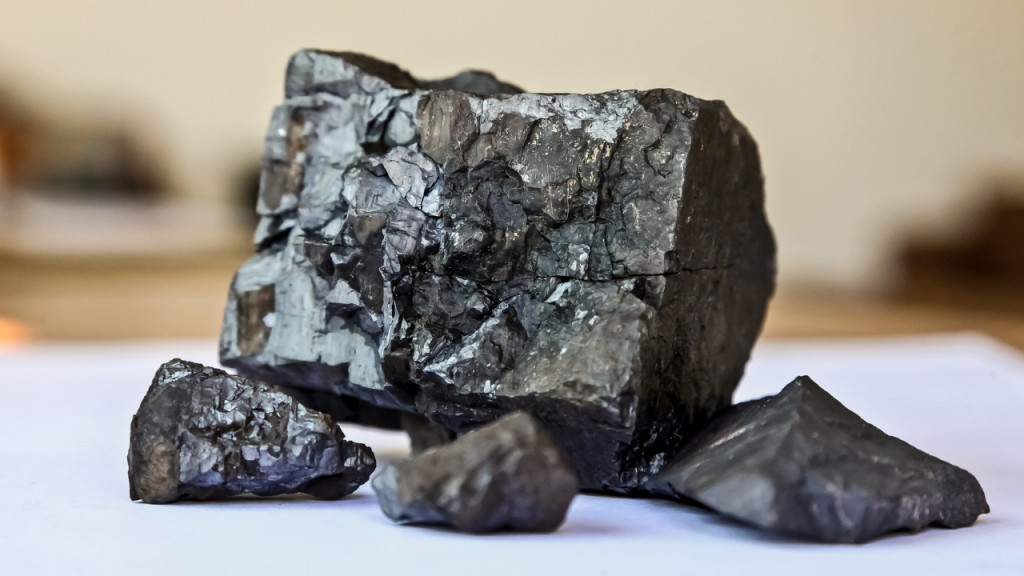
Electrolytic manganese dioxide (EMD) production is an important ingredient used in the manufacture of batteries, especially ion and lithium ion batteries. The production of EMD involves the electrolysis of magnesium sulphate and sulphuric acid. The techno-economic analysis, including the profitability of EMD production, can be divided into several areas: Availability of Raw Materials and Cost: The primary raw material for electrolytic manganese dioxide production is manganese ore. Manganese ore availability, quality, and cost directly affect production cost. Abundant manganese resources exist in India, hence local production seems to be more feasible. Sulphuric acid is also a major ingredient in the process by which magnesium sulphate is produced. Availability and price fluctuation of both of these materials can cause huge variation in the overall cost structure. Production Process The electrolytic manganese dioxide production process involves several key steps: Leaching: Magnesium sulphate is extracted from manganese ore by treatment with sulphuric acid. Electrolysis: Secondly, electrolysis of magnesium sulphate solution produces EMD. Purification: The EMD resulting from this process may require further purification for use, for example, in battery applications. The process of high-quality output and highest efficiency comes with precision and careful control on each stage of the activity. For more information, visit this page: Starting a Business in Chemical Industry Projects Energy Costs Energy consumption is a major factor in electrolytic manganese dioxide production. The high power requirement of the electrolysis process is very sensitive to electricity costs, which can really hurt your production costs. In India, electricity prices tend to vary by region, and the price of energy should be taken into account when contemplating the feasibility of EMD production. Renewable energy sources such as solar or wind power could be used in order to decrease these costs, and the process could become a cost-efficient and environmentally friendly one. Related Business Plan: Electrolytic Manganese Dioxide Capital Costs Setting up a facility for electrolytic manganese dioxide production requires significant capital investment. These also include costs for setting up reactors, power cells, electrolytic apparatus, and other such necessary infrastructure. Also, it is required to maintain machinery and equipment regularly in order to run regularly. As a result, these initial and ongoing capital expenditure decisions are essential. Operating Costs Operational costs for electrolytic manganese dioxide production include expenses related to labour, water, electricity, raw material procurement, and waste management. Raw material and energy costs are the largest, but proper resource management can be used to constrain these costs. With this, it is also possible to reduce overall operating costs if you optimise the production process and keep the supply chain streamlined. Market Demand and Price The demand for electrolytic manganese dioxide production is largely driven by the growing battery industry, particularly the demand for lithium-ion batteries used in electric vehicles (EVs) and renewable energy storage. As India accelerates its adoption of EVs and increasingly renewable energy, India’s need to produce high-quality EMD will continue to grow. If demand goes up and supply is low, prices rise, and manufacturers may become more profitable. Environmental and Legal Issues Electrolytic manganese dioxide production can result in emissions and waste that need to be managed carefully. Local environmental regulations mean the waste management must mix with them or else they will have legal issues. In addition, water consumption is an important issue in places where water resources are restricted. Responding to environmental concerns does not only fulfil compliance but also makes the production process more sustainable. Technological Progress Advancements in technology can significantly reduce the costs of electrolytic manganese dioxide production and increase overall efficiency. One example of this is the reduction in energy consumed through improved design of electrolytic cells or use of renewable energy technology. Further investment in research and development can also give rise to innovation that allows a company to do things better, perhaps to reduce waste, making output more efficient. Competitive Landscape The electrolytic manganese dioxide production industry is competitive, both in India and globally. Improving processes, reducing costs, and maintaining product quality are key reasons why manufacturers need to keep ahead of the game. Market prices and competition are controlled by other local and international manufacturers. Moreover, advantages of local production include cost of transportation reduction and better control of the supply chain. Risk Management EMD production is no different from other manufacturing to that extent, and there are several risks, such as fluctuation of raw material prices, operational interruptions, and unpredicted market changes. To help address these risks, manufacturers can lock up firm long-term contracts for raw material supplies, do regular maintenance, and make sure workers are safe and well trained. Risk management should be properly exercised for one to move forward with long-term success. Strategic Partnerships Forming strategic partnerships can provide a competitive advantage in electrolytic manganese dioxide production. Some other examples include collaborating with battery manufacturers to always have a steady demand for EMD or collaborating with raw material suppliers to always get better prices and long-term supply agreements. These partnerships cut costs and give stability in the supply chain. Read our books here: Chemical engineering, fine chemistry Socioeconomic and Global Consideration It has a positive socioeconomic impact because it will create employment and help boost the local economy. Nevertheless, key factors such as trade laws, tariffs, and currency fluctuations can affect export opportunities on a global scale. For planning international sales, these factors must be understood. Also Read: Establishing Own Electrolytic Manganese Dioxide (EMD) Manufacturing Startup Conclusion The electrolytic manganese dioxide production process offers significant potential, especially with India’s growing battery industry. Yet, to make this production economically viable, raw material costs, energy demand, technological advancements, and demand in the market must be weighed. Through paying attention to efficient production methods, strategic partnerships, and risk management, EMD production provides the means to turn India towards sustainable energy solutions. Visit Our Website For More Details : www.niir.org Contact Us
Acrylonitrile Butadiene Styrene(ABS) Market
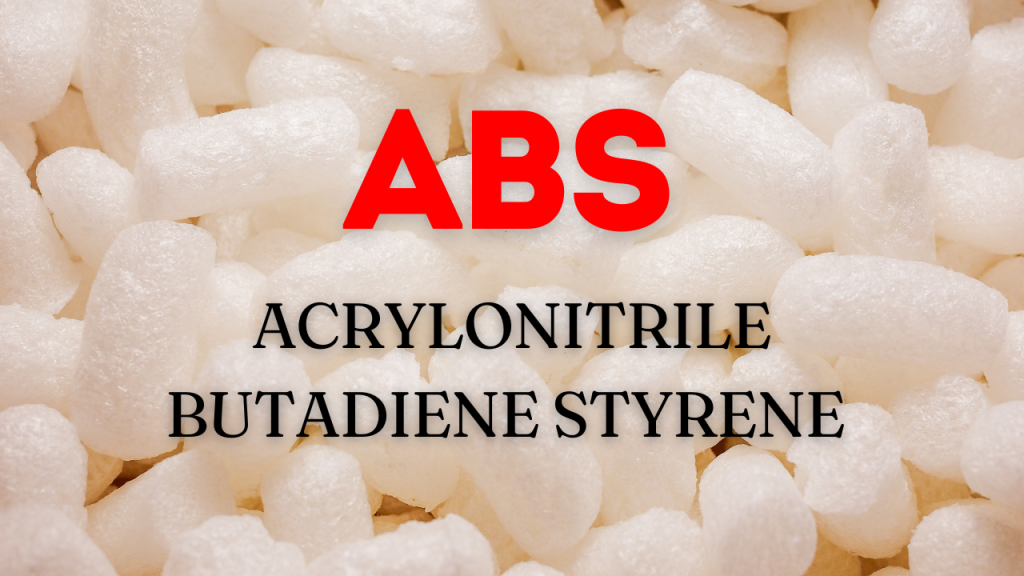
Acrylonitrile Butadiene Styrene (ABS) is a ubiquitous polycarbonate polymer found in various day-to-day products such as LEGO blocks or automobile parts. Its outstanding toughness, ease of processing, and ability to be recycled make it an attractive option for manufacturers. Also, this short paper will review the usefulness and financial viability of abdominal manufacturing and make an argument for investment in this area. Arylonitrile Butadiene Styrene Market Size and Share The global abdominal market is trending upwards. Momentum built from demand for sectors such as automotive, electronic devices, and consumer durables, suggests an expanding abdominal market size in the coming years. The Asia-Pacific region, led by rapid automation in countries like China and India, holds the largest market share. In addition, as sustainability becomes a focal point, ABDOMINAL MUSCLE, as a recyclable product, will have a leading position relative to other polymers. Patterns and Analysis Sustainability: Sustainability: As noted, the recyclability of abdominal muscle gives it an advantage on the sustainability spectrum. In additon, demand for green products will serve to enhance Arylonitrile Butadiene Styrene market presence. Electronics Boom: The electronics industry, particularly smartphones and additional consumer electronic devices, continue to use ABDOMINALS as a preferred material because of dimensional stability and electrical insulation properties. SWOT Evaluation Strengths: Strengths: Durability; flexibility; recycled nature. Weaknesses: Production is driven by petrochemicals; raw material supplies costs can fluctuate. Opportunities: Increasing need in emerging markets; innovation in ABS blends. Threats: Government regulations change; competition from alternative polymers. Profitability Evaluation Profitability in ABS will rest upon economies of scale, an understanding of efficient supply chain management, and advancing production technologies. Moreover, Margins can be increased based upon using emerging markets, securing raw material purchases, and introducing process advancements. Worldwide Expansion and Localization While the ABDOMINAL market is global, localized aspects in markets likely exist. Customizing manufacturing processes to address regional differences in demand, using a local workforce, and being sensitive to local regulatory considerations can make the difference between success and mediocrity. Supply Chain A strong supply chain is vital. Raw materials such as propylene, butadiene, and acrylonitrile come from the petrochemical industry. Sufficient raw materials will buffer the manufacturer from emerging price fluctuations. A defined distribution network will also help guarantee the product is shipped globally. Branding and Advertising Important to building a strong Acrylonitrile Butadiene Styrene brand is an emphasis on product quality, sustainability, and technology. Also, manufacturers can boost the strength of their brand by displaying the quality of their ABS, the sustainability of the product, and promoting new innovations within the R&D processes. Regulative Changes and Sector Compliance Rules Rules, especially regarding the environment, are getting more stringent. Manufacturers need to comply with global standards to ensure their Acrylonitrile Butadiene Styrene is compliant and sustainable. Technical Innovation The future lies in ABS blends and composites with superior properties. Investment in R&D can lead to new ABS variants with enhanced resistance to heat, durability, or even biocompatibility. Rival Analysis Against other polymers, especially polystyrene and polypropylene, Arylonitrile Butadiene Styrene is a popular polymer, but it does have competition. To remain competitive, you will need to fully understand those products and continue to iterate on ABS properties to stay ahead. Visit this Page for More Information:Start a Business in Plastics and Polymers Industry Future Opportunities Applications Beyond Mainstream Uses Apart from the highly popular applications, ABS has the potential for a wide range of uses. One area being explored is the medical market, as the elastomer is highly biocompatible and suitable for medical devices, and possibly some dental implants. In addition to its biocompatibility, ABS’s durability also makes it a strong candidate for aerospace or mechanical applications involving high stress. Integration with Nanotechnology ABS, when combined with nanotechnology, can exhibit even greater mechanical, thermal, and electrical properties. A nanocomposite of Arylonitrile Butadiene Styrene with various nano-fillers such as carbon nanotubes or graphene can result in ABS with superior properties compared to conventional ABS, opening new opportunities for market applications. Sustainability and Environmental Issues The manufacturing of Acrylonitrile Butadiene Styrene typically relies on petrochemical resources. With increasing concerns about fossil fuel consumption and emissions, there has been a shift towards bio-based routes to produce ABS. Research into bio-based feedstocks, such as bio-based nitriles, could significantly reduce the environmental impact of ABS. This also presents a marketing opportunity, especially considering the inevitable depletion of fossil fuel reserves and the market volatility of their availability and pricing. Custom and 3D Printed Products The combination of 3D printing and the versatility of ABS has disrupted traditional manufacturing processes. Industries ranging from automotive to fashion have embraced this new product offering, utilizing ABS in conjunction with 3D printing. Regional Market Analysis North America: North America remains the largest market, with a strong history in the automotive and electronics industries. The future market profile may focus less on volume growth and more on value and differentiated applications of ABS material. Partnerships play an increasingly important role in the global ABS landscape. Collaborations with raw material suppliers ensure a reliable supply of feedstocks, while partnerships in technology are crucial for innovation. Additionally, partnerships in regional markets help in understanding local customs, mitigating risks, and tailoring offerings to meet local preferences. Risk Management The ABS supply chain faces several risks, including: Price Volatility: As Acrylonitrile Butadiene Styrene raw materials are sourced from petrochemicals, price fluctuations in oil can significantly affect profitability. Environmental Concerns: Improper disposal or recycling of Acrylonitrile Butadiene Styrene can harm the environment. Also, negative press on environmental issues can also impact consumer confidence. Competition from Innovators: With the constant development of new materials, ABS producers must stay competitive to maintain their market position. Also Rad: Setting up a Plastics Material and Resin Manufacturing Business User Behavior and Brand Loyalty Consumer behavior in an evolving market is critical. Modern customers are informed, environmentally conscious, and value quality. Brands that align with market trends, focus on after-sales service, environmental responsibility, and uphold corporate values will build a loyal customer base and gain a dominant position in the market. Investment in ABS
Establishing Own Electrolytic Manganese Dioxide (EMD) Manufacturing Startup
What is electrolytic manganese dioxide? A high-quality product called electrolytic manganese dioxide manufacturing is made by combining electrolysis with chemical processes. It is a specific type of manganese dioxide that is created by an electrolytic method, guaranteeing excellent purity and reliable quality. A naturally occurring mineral called manganese dioxide has been used for many years in a variety of industries. However, the electrolytic method used to produce EMD raises the bar for manganese dioxide synthesis substantially. Manufacturers can create a product with greater performance and reliability by applying this novel technique. EMD can be used for a variety of purposes, making it a flexible option for producers across industries. Also, it is frequently used in the manufacture of batteries, where it improves battery performance and lifespan. It also aids in fertiliser production since it increases fertiliser effectiveness and encourages higher crop yields. EMD is also used in the production of chemicals, where it improves the performance of numerous chemicals. Related Business Plan: ELECTROLYTIC MANGANESE DIOXIDE Uses and Application Electrolytic manganese dioxide manufacturing has numerous industrial applications. Its main application is in the production of batteries, especially alkaline and zinc-carbon batteries, where it serves as a trustworthy cathode material to ensure long-lasting and effective battery operation. The remarkable electron-storing and transmission capability of EMD substantially improves battery performance. Additionally, EMD serves as a catalyst in water treatment procedures for the oxidation-based removal of pollutants. Additionally useful in the construction of ceramics and electronics, its stability, conductivity, and catalytic abilities. Overall, electrolytic manganese dioxide manufacturing is shown to be a versatile material that is essential for manufacturing, energy storage, and environmental management. Read Similar Article: Analysing the Feasibility of Electrolytic Manganese Dioxide (EMD) Business Production Method of Electrolytic Manganese Dioxide Electrolysis and chemical reactions are combined in a properly designed process to produce electrolytic manganese dioxide manufacturing, a high-quality product. The earth’s raw manganese dioxide ore must be extracted as the initial step in the manufacturing process. After that, the ore is processed to get rid of impurities and make pure manganese dioxide. The electrolytic technique is subsequently used to purify the manganese dioxide. An electric current is used to electrolyse a manganese dioxide-containing solution. Manganese dioxide is then deposited on the electrode as a result of a chemical reaction. Also, the electrolytic method guarantees the high purity and consistent quality of the finished product. Benefits of Using Electrolytic Manganese Dioxide in Manufacturing Benefits of Manufacturing Using electrolytic manganese dioxide manufacturing. When utilised in manufacturing procedures, electrolytic manganese dioxide (EMD) has many advantageous properties. EMD is first and foremost known for its excellent purity and consistent quality, which guarantees dependable and high-performance production materials. As a result, there are fewer errors and less wastage, which raises production and efficiency. EMD can also be applied in a variety of industries, improving the performance of goods like batteries, fertiliser, and chemicals. EMD can help producers create higher-quality products that satisfy consumer demand, ultimately raising customer happiness and assisting in the attainment of production goals. EMD’s cost-effectiveness is a big advantage as well. Compared to conventional processes, the electrolytic process utilised in EMD manufacture enables efficient manufacturing at a cheaper cost. Also, the fulfilment of production goals can be further expedited by reinvesting this cost savings in increasing production capacity. Read our Books Here: Chemical Technology (Organic, Inorganic, Industrial), Fine Chemicals Market Demand for Electrolytic Manganese Dioxide: By 2029, the electrolytic manganese dioxide market is projected to be worth USD 3698.59 million. How quickly is the market for electrolytic manganese dioxide growing? During the forecast period of 2022 to 2029, the market for electrolytic manganese dioxide manufacturing is expected to expand at a CAGR of 8.40%. Because EMD is one of the most often utilised cathode materials for lithium manganese primary batteries, supercapacitors, and alkaline batteries. Rechargeable batteries made of lithium, sodium, and magnesium ions frequently contain it. In addition, EMD has a low cost of manufacture, is environmentally friendly, has a high redox potential, can operate at high rates, performs better relative to performance over a wide temperature range, and has a long storage life. NPCS (Niir Project Consultancy Services) Businessmen and entrepreneurs might benefit from obtaining detailed reports from NPCS (Niir Project Consultancy Services), and they soon recognize this through resource sales. Following are few justifications for purchasing NPCS report: Detailed Market Analysis NPCS reports include market research reports to understand market size, growth rates, and demand and supply volumes of the particular special area, as well as the analysis of key players. Feasibility Studies Derived feasibility studies or reports on how doable are those projects enable potential investors to ascertain if they have an opportunity/exist together with the returns and risks involved. Industry Trends and Forecasts NPCS Reports enables the stakeholders to recognize some emerging trends along with potential upcoming forecasts, which can facilitate an organization in their strategic decision-making. Technological Insights File reports under technological insights to show how new technologies impact a specific sector. Regulatory Framework Understanding the regulatory background of an industry or market will be a key variable for business planning. The NPCS reports, provide all the details relating to formulating regulations and possible modifications. Competitive Landscape NPCS reports further describes the competitive landscape within an industry which includes top comprehensive company profiling of leading players and analysis of each player such as a company overview, revenue shares, market forecast. SWOT Analysis These reports include SWOT (Strengths, Weaknesses, Opportunities and Threats) analysis relative to the sector to make clear for investors how those factors will help in gaining or losing more from this sector. Investment Guidance NPCS reports are perfect reason for the entrepreneurs wishing to know more about facets of the industry and for fresh assays, buyers and other interested parties in it. Business Planning Having a business plan in place is a must for establishing or advancing an existing venture. RPCS market research reports cover forecasts, sales, strategies, and market share to help you understand your business. Tailored Information Furthermore, it allows for specific requirements related
Soda Ash Market of Middle East/North Africa (MENA)
Overview of the Soda Ash Market in MENA The Soda Ash Market in the Middle East and North Africa (MENA) region is witnessing a significant transformation, marked by increasing industrial demand, infrastructure expansion, and rising consumer needs. Soda ash, also known as sodium carbonate (Na?CO?), is a vital raw material used across diverse sectors such as glass manufacturing, detergents, chemicals, water treatment, and pulp & paper. The strategic geographic positioning of MENA countries, paired with rich natural resources and industrialization, has turned the region into a lucrative zone for soda ash production and consumption. Current Trends Shaping the MENA Soda Ash Market 1. Industrialization and Urban Development Rapid industrial growth and urbanization in nations like Saudi Arabia, the United Arab Emirates, Egypt, and Morocco are driving the demand for construction materials and glass products. As soda ash is a critical component in the glass manufacturing process, this surge in demand is directly influencing the soda ash market positively. Additionally, infrastructure megaprojects such as NEOM in Saudi Arabia and New Administrative Capital in Egypt further bolster consumption. 2. Increased Demand in Detergents and Household Products With rising awareness of hygiene and health across the region, there is a notable increase in the demand for soaps, detergents, and household cleaners. Soda ash serves as a builder and pH regulator in detergent formulations, making it indispensable for manufacturers. The expanding middle-class population and higher disposable income levels are reinforcing this upward trajectory. 3. Strategic Government Initiatives and Investments Governments across MENA are actively supporting industrial development through Vision 2030 (Saudi Arabia), UAE Industrial Strategy 2031, and similar initiatives, which aim to diversify economies beyond oil. This strategic pivot is catalyzing growth in the chemicals and materials sectors, where soda ash plays a foundational role. Production Landscape and Supply Chain Dynamics 1. Key Producers and Market Players The MENA region, though not a major global producer of natural soda ash, is increasingly focusing on synthetic soda ash production due to the scarcity of natural trona deposits. However, countries like Egypt and Algeria have developed robust synthetic soda ash plants. Leading players involved in the region’s supply include: OCI N.V. Qatar Industrial Manufacturing Company Tata Chemicals Europe (regional partnerships) CIECH Group (logistics collaborations) 2. Import-Export Dependencies MENA countries, particularly the Gulf Cooperation Council (GCC) states, heavily rely on imports from the US, China, and Turkey to meet domestic demand. However, there is a noticeable shift towards local production to reduce dependency and improve supply chain resilience. Port infrastructure in Jebel Ali (UAE), Dammam (Saudi Arabia), and Port Said (Egypt) play crucial roles in enabling bulk soda ash imports and regional redistribution. Applications and End-Use Industries in MENA 1. Glass Manufacturing The glass industry is the largest consumer of soda ash, accounting for over 50% of total demand. The MENA region is witnessing a rise in: Architectural glass for modern buildings Container glass for food and beverage packaging Solar panel glass driven by clean energy initiatives With regional ambitions to become renewable energy leaders, demand for solar glass is especially gaining momentum. 2. Chemical Manufacturing Soda ash is essential in the production of various chemicals like sodium silicates, sodium bicarbonate, and percarbonates. As chemical parks and industrial zones expand in the region, especially in KIZAD (UAE) and Yanbu Industrial City (Saudi Arabia), consumption of soda ash in chemical synthesis continues to rise. 3. Water Treatment and Environmental Applications Governments in MENA are investing heavily in water desalination and treatment projects. Soda ash is used in the softening of water, pH adjustment, and removal of heavy metals. The expansion of municipal water systems and industrial wastewater treatment plants is a key driver of demand in this sector. Market Challenges and Opportunities 1. Environmental Concerns and Sustainability The soda ash production process, especially synthetic variants, can be energy-intensive and environmentally taxing. There is mounting pressure on manufacturers to adopt greener technologies and circular economy practices. The introduction of carbon capture systems and zero-liquid discharge (ZLD) in manufacturing units are positive developments in this direction. 2. Competitive Landscape and Pricing Volatility Global market fluctuations in energy and transportation costs can impact soda ash pricing in the MENA region. However, the development of regional free trade agreements, such as the Greater Arab Free Trade Area (GAFTA), provides a buffer against some of these volatilities by easing cross-border trade and improving supply chain efficiency. 3. Investment in R&D and Innovation The region is gradually investing in R&D to enhance process efficiency and product quality. Universities and private firms are collaborating to explore alternative raw materials and cleaner synthesis methods, which will shape the future competitiveness of local soda ash producers. Future Outlook of the Soda Ash Market in MENA The MENA soda ash market is expected to grow at a CAGR of 4.5% to 6.2% over the next five years, driven by construction booms, industrial expansion, and sustainability goals. Countries like Saudi Arabia, UAE, Egypt, and Morocco are poised to become regional powerhouses in soda ash consumption, with ambitions to localize more of the supply chain. Key future developments include: Establishment of local soda ash manufacturing units Integration of renewable energy sources in production processes Expansion of industrial ports and logistical capabilities Public-private partnerships for chemical sector growth Conclusion The Soda Ash Market in the MENA region is undergoing a pivotal shift, driven by industrial dynamism, government backing, and evolving end-use applications. While challenges like environmental impact and import dependence remain, the long-term trajectory points toward sustained growth, localization, and innovation. With strategic investments and market-driven policies, the MENA region is well-positioned to enhance its presence in the global soda ash landscape. NPCS (Niir Project Consultancy Services) Businessmen and entrepreneurs might benefit from obtaining detailed reports from NPCS (Niir Project Consultancy Services), and they soon recognize this through resource sales. Following are few justifications for purchasing NPCS report: Detailed Market Analysis NPCS reports include market research reports to understand market size, growth rates, and demand and supply volumes of the particular special area, as well as the analysis of key
How to Start Zeolite 4a (Detergent Grade) Plant| Best Ideal Business Plan for Zeolite 4a (Detergent Grade)
The Product Zeolite 4a (Detergent Grade) is a premium granular additive for use in laundry detergent. It offers a unique mixture of natural minerals that have been demonstrated in experiments to soften hard water, increase the cleaning power of detergents, and leaving clothing softer and more vibrant. The main component of the product, zeolite 4a, is an excellent absorbent and adsorbent material that is effective at binding dirt, oils, and odours. Zeolite 4a has been demonstrated to be substantially more effective than traditional phosphate-based detergents, which are known to be harmful to the environment. Using the lotion around kids and animals is also safe. Market Zeolite 4a has exceptional cleaning properties, which is why the market for this product is growing swiftly. Detergent and related product manufacturers are increasingly using this zeolite as a material. Zeolite 4a is a fantastic alternative for cleaning hard surfaces since it is less corrosive than other treatments, can absorb more water, and is more effective at eliminating dirt and other impurities. It is projected that the demand for this material will soon increase as new products are developed that take use of Zeolite 4a’s exceptional cleaning qualities. A solid business plan that covers both the production and marketing aspects of this material is therefore essential. In a zeolite 4a business plan, a thorough examination of market trends and an estimation of future demand should be presented (detergent grade). A pricing structure, a marketing strategy, and precise strategies for expanding distribution should also be included in the plan. The conclusion should also include a financial analysis to demonstrate the viability and sustainability of the business. Uses and Application Zeolite 4a (Detergent Grade) is a versatile, incredibly powerful, and affordably priced material used in a variety of applications. The detergent industry relies on Zeolite 4a for its exceptional cleaning capabilities. It delivers outstanding cleaning performance even at lower active ingredient concentrations, works effectively in both liquid and powder detergents, and helps manufacturers reduce production costs. Due to its reputation for reducing the creation of soap scum while in use, zeolite 4a is an excellent choice for applications involving hard water. Also, by protecting detergents from hardness ions due to its unusually high cation exchange capacity, hard water reduces the likelihood of product failure. As a result, zeolite 4a has become more widely used as an ingredient in laundry detergents, dishwashing detergents, and other household cleaning products. Zeolite 4a is also used for a variety of industrial purposes, such as water softening, oil refining, and odour control. Companies considering include Zeolite 4a in their company plans should consider the numerous benefits the material might provide given its wide variety of uses and applications. Benefit For companies wishing to profit from the expansion of the zeolite industry, a business plan for Zeolite 4a (Detergent Grade) can be quite helpful. Zeolite 4A is one of the most widely used varieties of detergent-grade zeolite because of its high efficacy in both detergency and water softening applications. By developing a thorough business plan for the product, businesses can better understand the market dynamics and evaluate the potential profit margins for zeolite 4A. This business plan helps companies identify the most effective and economical production techniques and methods to ensure the highest quality product. Ultimately, a Zeolite 4a (Detergent Grade) business plan can assist organizations in assessing the potential risks and opportunities connected to manufacturing and marketing the product. A business plan provides valuable insight into the competitive landscape and helps outline strategies a company can use to stay ahead of the competition. It also plays a crucial role in projecting future revenues and profits by building a detailed financial model that considers production costs, pricing strategies, and target market segments. A business strategy also aids in locating possible vendors who can provide Zeolite 4a at cost-effective rates that are advantageous to a company’s bottom line. A well-written business plan could even suggest alternative markets or revenue streams that a company should investigate further. In the end, a business plan for Zeolite 4a (Detergent Grade) offers a solid framework for any company wishing to enter the zeolite market. The Production Process Making Zeolite 4a (Detergent Grade) is a reasonably simple process. Two of the main minerals utilized as raw materials to make this product are sodium chloride and diatomaceous earth. They then undergo a number of stages of processing, starting with the reduction of the size of the raw material through crushing and grinding, followed by heating and drying. Workers subject the minerals to a process involving chemicals like ammonia and sulfuric acid, then pass them through several filtering devices. Once they wrap the item, it is ready for shipping. Future Entrepreneurs who wish to establish a successful and lucrative detergent manufacturing company must have a Zeolite 4a (Detergent Grade) business plan. You can describe the measures required to grow and extend your firm in the future with the help of this strategy. Together with an evaluation of the competition, production costs, and prospective profit margins, the strategy should also include analyses of the market, industry, and target audience. You should also think about the legal and regulatory requirements for producing detergent using Zeolite 4a (Detergent Grade). Making a financial prediction that accounts for the costs of production, packaging, marketing, and distribution is also crucial. Last but not least, you should think about how employing Zeolite 4a (Detergent Grade) in your products would affect the environment. You may confidently move on with creating a prosperous business if you have a thorough business plan for Zeolite 4a (Detergent Grade). Also Read: 5 Reasons Why Market Research is Vital for Start-ups Contact Us What exactly is Zeolite 4A (Detergent Grade) and why is it used in detergents? Zeolite 4A (detergent grade) is a synthetic aluminosilicate compound widely used as a builder in laundry detergents. It acts as an effective water softening agent, helping remove calcium and magnesium ions from hard water so detergents work
Carbon Black N990: The Best Business Model for Industrial Innovation
Carbon black N990 is a high-performance material with several applications in the automotive, aerospace, and industrial fields. It is a strong, durable substance with good thermal and electrical properties. When created and used appropriately, it can provide products that are superior to those made with other materials. You can gain a variety of benefits by starting the production of Carbon Black N990, including: Durability: Carbon Black N990 is so strong and durable that it’s the ideal material for high-impact applications like automotive and aerospace parts. Thermal and Electrical Properties: Carbon Black N990’s superior thermal and electrical properties make it the ideal substance for use in electronic components. Cost-savings: Since Carbon Black N990 is made at a competitive price, It is an affordable substance for mass manufacture. Versatility: Carbon Black N990 is used in a variety of applications, including as automotive and aerospace parts. By starting to produce Carbon Black N990, you’ll be able to take advantage of all these benefits and create products of superior quality that are more durable and affordable. Before the product is made, it is essential to analyses the potential market for Carbon Black N990. Paint, ink, rubber, and plastic are just a few of the products that use the specialty black pigment, Carbon Black N990. This item has been on the market for some time and is recognized as a high-end pigment. As a result, Carbon Black has a vast and diverse market that encompasses the automotive, industrial, and cosmetics industries. The primary market for this product is rubber manufacturing, which makes use of Carbon Black as a crucial ingredient in the production of tyres. The need for Carbon Black N990 has increased as a result of the continual rise in tyre demand over time. Some markets, like those for paints and plastics, have expanded as a result of technological and material advancements. As a result, Carbon Black has a big potential market, creating an excellent opportunity for anyone looking to start the product’s production. Carbon Black N990 shows strong growth potential as an economical and durable material, especially in the rubber and tyre industry. Its affordability and performance make it a preferred choice for manufacturers. Beyond tyres, research is exploring its use in paints, plastics, coatings, and printing inks, opening new opportunities for production and applications. Manufacturers aiming to improve production efficiency will benefit from Carbon Black N990’s reliable performance and cost-effectiveness. As technology evolves, it remains essential in the rubber and tyre industries due to its versatile applications and growing demand. Starting production of Carbon Black N990 involves building a strong foundation through smart use of available resources and strategic planning. The initial focus should be on identifying the target market and understanding customer needs. A well-thought-out pricing strategy is essential to remain competitive while ensuring profitability. Equally important are decisions about sourcing raw materials and selecting the most efficient shipping methods. Additionally, having clear plans for marketing, advertising, and customer support will help build brand visibility and trust. A successful business plan should bring together all these elements to support long-term growth and sustainability. Contact Us