
Indias Chemical Industry | Sector Overview
Overview of India’s Chemicals Industry India’s chemicals industry stands as one of the most dynamic sectors of the economy, contributing significantly to the nation’s industrial and export growth. Ranked sixth largest in the world and third in Asia, the sector plays a pivotal role in supplying essential raw materials across diverse verticals including agriculture, textiles, pharmaceuticals, construction, and automotive industries. In the fiscal year 2023, the Indian chemicals industry was valued at over $220 billion, and it is projected to touch $300 billion by 2025, driven by both domestic consumption and global exports. Robust Growth Trajectory & Key Drivers The growth in India’s chemicals sector is underpinned by various factors: Cost-effective manufacturing Government support through PLI schemes Increasing global demand for specialty chemicals Surging domestic demand due to rapid industrialization Additionally, India benefits from a strong talent pool of chemical engineers, low per capita consumption (indicating growth potential), and a vibrant start-up ecosystem focused on sustainable and green chemicals. FDI and Strategic Investments India has been consistently attracting Foreign Direct Investment (FDI) in the chemicals sector. According to the Department for Promotion of Industry and Internal Trade (DPIIT), FDI inflow in chemicals (excluding fertilizers) reached over $21 billion between April 2000 and March 2023. Global corporations are now establishing their R&D centers and production bases in India, recognizing the cost advantages and quality standards upheld by local firms. Major Investments in the Industry: BASF and Adani Group announced a multi-billion-dollar investment in a petrochemical complex in Gujarat. Aramco and ADNOC are exploring refining and chemical collaborations with Indian entities. Specialty chemicals manufacturers such as SRF, Aarti Industries, and Atul Ltd have scaled up their capacities to serve global supply chains. Key Segments Driving Growth Specialty Chemicals: The New Frontier India is emerging as a global hub for specialty chemicals. With tightening environmental regulations in China and rising demand from Europe and North America, Indian companies are capturing the market with high-quality, competitively priced alternatives. Key Specialty Chemical Sub-sectors: Agrochemicals: India is the fourth largest producer globally and a major exporter. Dyes and Pigments: Over 16% of global demand is met by Indian firms. Polymer Additives and Coatings: Widely used in automotive, electronics, and construction. Surfactants and Ingredients: Major supply to FMCG and personal care industries. Petrochemicals and Bulk Chemicals India’s growing middle class and infrastructural push have spurred the demand for plastics, resins, and polymers. Companies like Reliance Industries, Indian Oil Corporation, and ONGC Petro Additions Ltd are significantly investing in integrated petrochemical plants. Agrochemicals and Fertilizers India’s dependence on agriculture has made agrochemicals an indispensable segment of the chemicals industry. With the increasing shift towards precision farming and crop protection, this sector continues to witness strong growth and technological innovation. Pharmaceutical Intermediates and APIs India is often called the “Pharmacy of the World”. The chemicals industry supports this position by manufacturing active pharmaceutical ingredients (APIs) and intermediates for global markets. Recent policies have incentivized backward integration to reduce dependence on imports. Geographical Hotspots of Chemical Manufacturing Gujarat: The Chemicals Capital Gujarat contributes to over 60% of India’s chemicals exports, with key industrial clusters in Dahej, Vapi, and Ankleshwar. The Gujarat Industrial Development Corporation (GIDC) has facilitated state-of-the-art infrastructure for chemical parks and SEZs. Maharashtra and Tamil Nadu: Innovation Hubs These states focus heavily on specialty and green chemicals. With proximity to ports and a skilled workforce, Maharashtra and Tamil Nadu are leading destinations for R&D investments and export-oriented units. Andhra Pradesh and Odisha: The New Growth Corridors These eastern states are attracting investments through industrial corridors, single-window clearance systems, and land banks for mega chemical zones. Market Trends and Export Potential Growing Export Base India exports chemicals to over 175 countries, with key markets including the US, China, Brazil, Indonesia, and Germany. Exports of organic chemicals, agrochemicals, and dyes have surged over the last five years, earning India recognition as a reliable global supplier. Shifting Supply Chains Global trade disruptions and the “China+1” strategy have encouraged multinational companies to source from India. This trend has positioned India as an alternate manufacturing destination in global chemical supply chains. Green Chemistry and Sustainability Initiatives With global focus on ESG (Environmental, Social, and Governance) goals, Indian chemical companies are embracing green chemistry, bio-based alternatives, and circular economy models. Adopting zero-liquid discharge (ZLD) processes, investing in renewable energy, and integrating IoT and automation for cleaner operations are becoming the norm. Policy Support and Regulatory Reforms PLI Schemes and Tax Benefits The Indian government’s Production Linked Incentive (PLI) Scheme for chemicals provides financial incentives to boost domestic manufacturing. This initiative is particularly beneficial for APIs, bulk drugs, and specialty chemicals, offering a competitive edge. REACH Compliance and Export Regulations To cater to European and US markets, Indian companies are ensuring REACH compliance, good manufacturing practices (GMP), and ISO certifications. The Chemical (Management and Safety) Rules, 2020 have also provided a comprehensive regulatory framework for the safe management of chemicals in India. Challenges and the Road Ahead Despite the enormous potential, the chemicals industry in India faces several challenges: Raw material import dependence, especially for specialty intermediates Environmental concerns and regulatory clearances delays Skilled manpower shortages in advanced chemical processes Infrastructure gaps in certain regions To address these issues, stakeholders are collaborating on industry-academia partnerships, improving logistics connectivity, and ensuring digital transformation in compliance and monitoring. Future Outlook: Towards Global Leadership India’s chemicals industry is on a clear path to global leadership, with the potential to become a $1 trillion industry by 2040. By aligning with global demand trends, embracing digital and sustainable practices, and fostering public-private partnerships, India can transform into a preferred global manufacturing hub. In the coming decade, chemical innovation, enhanced R&D infrastructure, and digital supply chain integration will dictate the pace of growth. Emerging areas like bioplastics, electronic chemicals, and advanced materials offer new avenues for investment. Visit the page Select and Choose the Right Business Startup for You for sorting out the questions arising in your mind before starting any business and know which start-up you can plan. We,
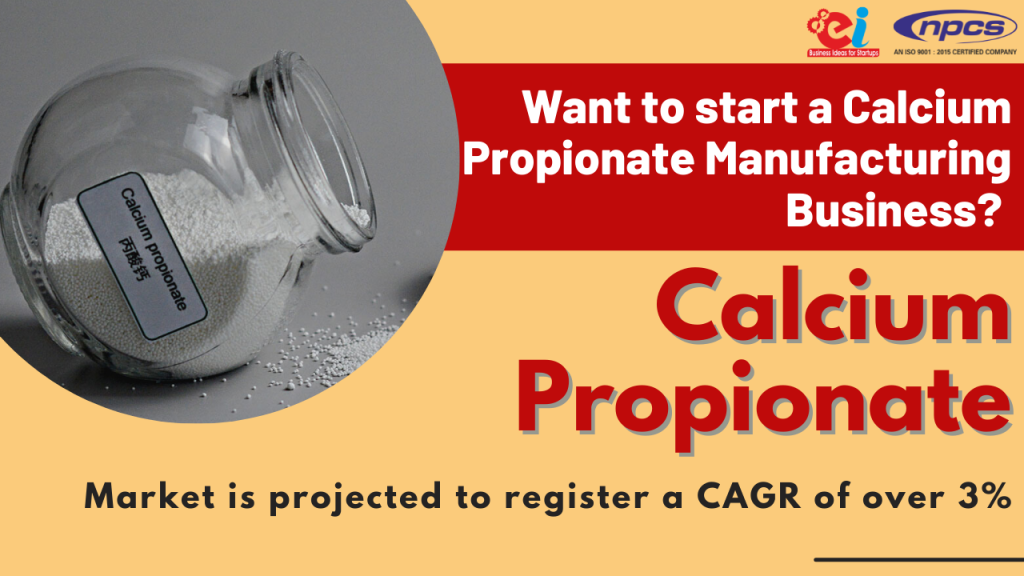
Calcium Propionate. It’s time to start your own Calcium Propanoate Manufacturing Business
The Calcium Propionate industry is witnessing an increasing demand driven by its wide usage in the food preservation and animal feed sectors. As awareness grows regarding the prevention of mold and bacteria in perishable goods, the global market for Calcium Propionate continues to thrive. For entrepreneurs aiming to venture into a profitable manufacturing domain, establishing a Calcium Propionate manufacturing business is both a strategic and sustainable choice. What is Calcium Propionate? Calcium Propionate (chemical formula: Ca(C?H?COO)?) is a white, crystalline, odorless powder used widely as a food preservative, particularly in bakery products. It inhibits the growth of mold and other microorganisms, extending the shelf life of products. Its application extends to dairy, beverages, processed meat, and also animal feed as a mold inhibitor. Market Potential and Demand Analysis The global market for Calcium Propionate is experiencing robust growth. Factors contributing include: Rising demand for preservative-free yet long-lasting food products Growth in processed and packaged food industries Need for effective mold inhibitors in livestock feed Asia-Pacific, particularly India, is emerging as a key player due to increasing food safety awareness, making it an ideal geography to launch a Calcium Propionate manufacturing business. Licensing and Regulatory Approvals To set up a compliant manufacturing unit in India, the following steps are essential: FSSAI License: For food-grade Calcium Propionate Pollution Control Board Clearance: For managing chemical emissions Factory License and Local Municipality Approval GST Registration Drug and Cosmetic Act Certification (if supplying to pharma companies) ISO Certification for quality assurance (optional but recommended) Raw Materials Required The key raw materials for Calcium Propionate manufacturing include: Calcium Hydroxide (Ca(OH)?) Propionic Acid (CH?CH?COOH) Water These chemicals are readily available from domestic chemical suppliers. It’s advisable to partner with vendors offering bulk rates and reliable delivery timelines. Manufacturing Process of Calcium Propionate The Calcium Propionate production process involves a chemical reaction between Propionic Acid and Calcium Hydroxide. The standard procedure includes: Reacting StagePropionic acid is slowly added to a solution of calcium hydroxide in a stirred tank reactor. The reaction is exothermic and should be temperature-controlled (preferably below 30°C). Filtration and SeparationThe reaction mixture is filtered to remove any insoluble impurities. A clear calcium propionate solution is obtained. EvaporationWater is removed from the solution through vacuum evaporation. CrystallizationThe concentrated solution is cooled to crystallize Calcium Propionate. Drying and MillingCrystals are dried in tray or rotary dryers and then milled to a fine powder. PackagingFinal product is packed in HDPE bags with inner linings or paper bags for dispatch. Machinery and Equipment Required To set up a semi-automated or fully-automated plant, the following machinery is essential: Reactor vessel (SS304/SS316) Agitators and stirrers Filtration unit Crystallizer Dryer (tray or rotary) Pulverizer and milling unit Packaging machines (semi or fully automatic) Quality control laboratory setup Initial investment for a small to medium scale plant ranges between ?50 lakhs to ?1.5 crores depending on automation, capacity, and compliance standards. Location and Infrastructure A Calcium Propionate manufacturing business requires a pollution-compliant zone with: Access to water and electricity Proximity to chemical suppliers Good transportation infrastructure for logistics Availability of skilled labor A 5000–8000 sq. ft. industrial plot should suffice for a 5–10 ton/day capacity plant. Manpower Requirement A typical setup will need: Production Manager Chemical Engineers Machine Operators Quality Assurance Experts Packaging and Warehouse Staff Sales and Distribution Team Staffing should be optimized to balance operational efficiency and cost-effectiveness. Quality Standards and Testing Ensuring quality is non-negotiable. Key quality control tests include: Purity % by titration Moisture Content pH of 10% solution Heavy metal traces Microbial contamination (especially mold & bacteria) Adhering to international standards like FCC, USP, or EINECS ensures global acceptability of the product. Marketing and Distribution Strategy To successfully launch and grow your Calcium Propionate business, adopt the following strategies: B2B Marketing: Target food processing companies, bakeries, dairy manufacturers, and animal feed companies. Online Presence: Build a professional website, leverage platforms like IndiaMART, TradeIndia, Alibaba, etc. Partnerships: Collaborate with distributors, wholesalers, and chemical dealers. Export Potential: Register under DGFT for export license. Target markets like the Middle East, Southeast Asia, and Africa. Certifications: ISO 22000, FSSAI, and Kosher/Halal for enhanced credibility. Cost and Profitability Analysis Startup Capital: Land & Infrastructure: ?20–30 lakhs Machinery: ?25–50 lakhs Raw Material (Initial Stock): ?10–15 lakhs Labor & Working Capital: ?10–20 lakhs Licensing, Branding & Marketing: ?5–10 lakhs Operating Cost Per Kg (approx.): Raw Material: ?70–?90 Utilities & Labor: ?10–?15 Packaging & Miscellaneous: ?5–?10 Selling Price (2025 Market Avg): ?130–?180 per kg Gross Profit Margin: 30%–50% depending on scale and sourcing efficiency. Risks and Challenges Volatility in raw material pricing Strict compliance and regulatory checks Need for consistent product quality High competition from Chinese and European suppliers Mitigation strategies include long-term vendor contracts, automation to reduce errors, and continuous market analysis. Future Opportunities and Expansion With increasing demand for clean-label and long-lasting food, the Calcium Propionate market is set to expand further. Business expansion can include: Launching new preservative compounds (e.g., sodium propionate, potassium sorbate) White-label manufacturing Export-focused operations Vertical integration into food ingredients and additives By establishing a Calcium Propionate manufacturing business, entrepreneurs are not only tapping into a lucrative chemical segment but also contributing to safer and longer-lasting food systems globally. Visit the page Select and Choose the Right Business Startup for You for sorting out the questions arising in your mind before starting any business and know which start-up you can plan. We, at NPCS, endeavor to make business selection a simple and convenient step for any entrepreneur/startup. Our expert team, by capitalizing on its dexterity and decade’s long experience in the field, has created a list of profitable ventures for entrepreneurs who wish to diversify or venture. The list so mentioned is updated regularly to give you a regular dose of new emerging opportunities. Contact Us
Zinc Stearate: Successful Manufacturing Business Ideas in Chemical Industry
Zinc stearate is a powerful compound with widespread industrial usage across plastics, rubber, pharmaceuticals, and cosmetics. Starting a zinc stearate business offers immense potential for profitability and scalability. As demand for specialized lubricants and release agents grows globally, venturing into the zinc stearate market can be a lucrative endeavor—provided you execute it strategically. In this comprehensive guide, we will cover how to start your zinc stearate chemical business from scratch, step-by-step, with real-world best practices, critical regulatory considerations, raw material sourcing, equipment needs, and key marketing strategies to ensure your business stands out in a competitive landscape. What is Zinc Stearate? Zinc stearate is a white, hydrophobic powder composed of zinc and stearic acid. It is widely known for its properties as a release agent, lubricant, and anti-caking additive. Commonly used in plastic processing, rubber production, cosmetics formulation, and pharmaceuticals, zinc stearate plays an essential role in both performance enhancement and product longevity. Its chemical stability, non-reactivity, and excellent thermal resistance make it an ideal choice in multiple industries, contributing significantly to product quality. Step 1: Conduct In-Depth Market Research Before starting your zinc stearate chemical business, begin by identifying the industries you want to cater to—plastics, rubber, paints, or pharmaceuticals. Analyze competitors in your region and globally. Pay attention to: Current price points and margins. Key buyers and distributors. Import/export data. Regulatory trends. Understanding supply chain dynamics and end-user needs will allow you to craft a business plan that’s both profitable and sustainable. Step 2: Choose the Right Business Model There are multiple ways to enter the zinc stearate market: Manufacturing – Full control over production quality, pricing, and branding. Trading/Distribution – Easier entry, minimal infrastructure, lower risks. Contract Manufacturing – Outsourcing production to established plants under your brand. While manufacturing offers the best margins, it requires high initial capital. Many entrepreneurs start as distributors and scale into production later. Step 3: Setup and Licensing Requirements To legally establish your zinc stearate chemical business, follow these steps: Register your company under the applicable legal structure (LLP, Pvt Ltd, etc.). Apply for a Pollution Control Board (PCB) license, as chemical production involves emissions. Obtain a Factory License and Drug License if targeting cosmetics or pharmaceuticals. File for GST registration to comply with taxation rules. Seek ISO Certification to boost trust and gain access to global markets. Engage a compliance consultant to help navigate local chemical safety and environmental laws efficiently. Step 4: Procure Raw Materials and Equipment Key raw materials required for zinc stearate production include: Zinc oxide Stearic acid Solvents (if using wet process) Common manufacturing methods include: Dry fusion process Precipitation (wet) method Choose based on your budget, scale, and environmental compliance readiness. Essential equipment: Reaction vessels with agitation systems. Cooling/heating jackets. Centrifuges or filtration systems. Dryers (rotary or tray). Pulverizers and packaging units. Ensure your machinery is corrosion-resistant and compliant with Good Manufacturing Practices (GMP). Step 5: Formulate the Product Zinc stearate must meet industry standards such as: Particle size (micro-fine for cosmetics). Purity (>98% typically). Moisture content (<1%). Color (white to off-white). Lab testing and third-party quality certifications help maintain consistency and attract high-quality buyers. Consider developing different grades based on the target industry: Technical grade for plastics and paints. Pharmaceutical grade for health and beauty products. Step 6: Branding and Packaging Professional packaging enhances product appeal and ensures safety during transportation. Invest in: Moisture-proof, anti-static bags or HDPE containers. Clear labeling with batch number, MFG & EXP dates, grade, and safety warnings. Create a strong brand name associated with zinc stearate reliability. Develop a professional website showcasing your plant, safety standards, product specifications, and certifications. Step 7: Marketing and Sales Strategy An effective marketing plan is essential to establish your zinc stearate chemical business in a competitive market. Offline marketing: Attend chemical expos and B2B trade fairs. Partner with plastic, rubber, and pharma associations. Reach out to manufacturers directly via phone or email. Online marketing: Launch a SEO-optimized website with product listings, blogs, and safety data sheets (SDS). List on B2B platforms like IndiaMART, TradeIndia, and Alibaba. Use keywords such as “zinc stearate supplier,” “buy zinc stearate,” “zinc stearate manufacturers in India”. Leverage LinkedIn for direct engagement with procurement managers and decision-makers. Step 8: Logistics and Distribution Timely and safe delivery of zinc stearate is crucial, especially when catering to pharmaceutical or export clients. Partner with logistics companies offering chemical transportation solutions. Maintain inventory in secure warehouses near key industrial hubs. Offer bulk and small packaging formats to cater to diverse client needs. If exporting, register with the Director General of Foreign Trade (DGFT) and acquire the Import Export Code (IEC). Step 9: Financial Planning and Funding Starting a small to medium-scale zinc stearate chemical business requires an investment between ?25 lakhs to ?2 crores, depending on capacity and automation. Breakdown: Machinery: ?10–25 lakhs Licenses & Compliance: ?2–5 lakhs Working Capital: ?5–20 lakhs Marketing: ?1–3 lakhs You can approach MSME loans, SIDBI schemes, or venture capital for funding. Maintain detailed financial projections to impress lenders and partners. Step 10: Scale and Diversify Once stable, expand your zinc stearate product line to include: Calcium stearate Magnesium stearate Sodium stearate You can also introduce custom blends for clients needing tailored specifications. Diversifying across industry verticals—such as cosmetics, textiles, and construction—protects your business from market volatility and increases revenue streams. Conclusion Launching a zinc stearate chemical business demands technical knowledge, rigorous quality control, and strategic marketing. However, the high demand and broad industrial usage make it an exceptionally rewarding venture. From sourcing raw materials to scaling production and marketing effectively, following a structured path will help you build a strong brand in the specialty chemical market. Zinc stearate is not just a chemical—it’s an opportunity for entrepreneurs to tap into an evergreen and expanding market. Visit the page Select and Choose the Right Business Startup for You for sorting out the questions arising in your mind before starting any business and know which start-up you can plan. We, at NPCS, endeavor to make business selection a simple
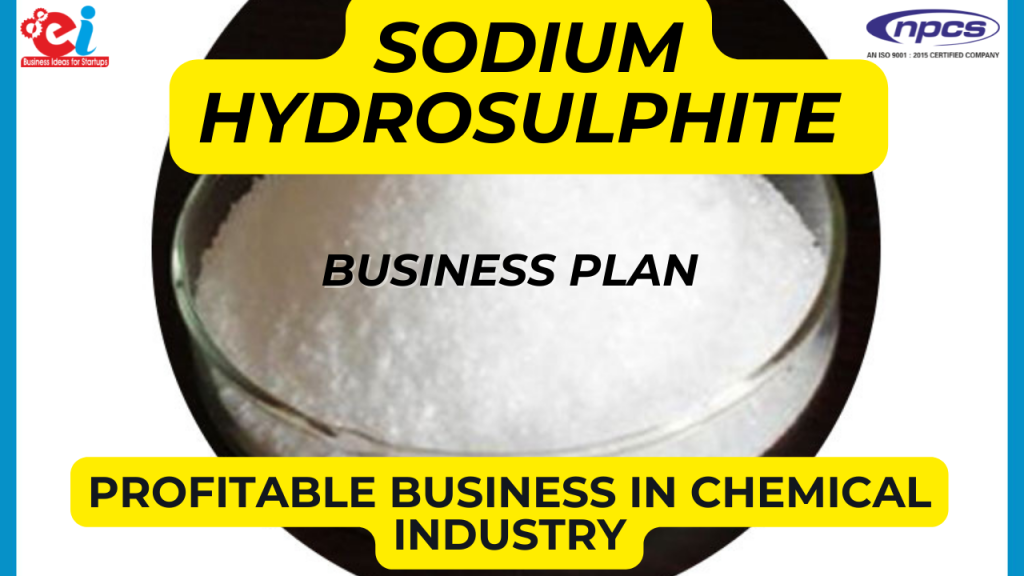
Sodium Hydrosulphite Business Plan
A well-structured Sodium Hydrosulphite business plan can unlock opportunities in a niche but highly demanded sector of the chemical industry. Sodium hydrosulphite (Na?S?O?), also known as sodium dithionite, is a powerful reducing agent primarily used in textile dyeing, paper and pulp bleaching, and various chemical synthesis processes. Its applications in industrial cleaning, electronics, and even pharmaceuticals continue to grow, making it a viable business proposition for chemical manufacturers looking to tap into both domestic and international markets. Market Scope and Industrial Applications When you develop a Sodium Hydrosulphite business plan, understanding its key industrial uses helps to identify your target sectors. The textile industry is the largest consumer, using sodium hydrosulphite to reduce vat dyes and sulfur dyes. In paper and pulp, it’s used to brighten recycled paper and remove ink. Additionally, it is utilized in water treatment, kaolin clay bleaching, leather processing, and some pharmaceutical formulations. The global sodium hydrosulphite market is growing steadily, with increasing demand in Asia-Pacific due to the thriving textile and paper industries. India, China, and Vietnam are major consumers, offering domestic manufacturers a substantial market opportunity. A well-optimized plant with consistent quality output can quickly gain traction in both B2B supply and international trade. Visit this Page for More Information: Start a Business in Chemical Industry Projects Manufacturing Process and Technology A critical section of the Sodium Hydrosulphite business plan is the manufacturing route selection. Sodium hydrosulphite can be manufactured through several methods: Formate Process – Reaction between sodium formate and sodium bisulfite using zinc or sodium borohydride as a reducing agent. Zinc Process – Using zinc dust with sulfur dioxide and sodium hydroxide. Sodium Borohydride Process – High purity but more expensive. Among these, the formate process is widely adopted due to lower costs, moderate safety risks, and reliable product quality. The process typically involves preparing a reaction mixture, carrying out the reduction under controlled temperature and pressure, filtering the slurry, drying the product, and packaging under moisture-free conditions since sodium hydrosulphite is hygroscopic and unstable in air. The plant should be equipped with reactors, filter presses, drying ovens or spray dryers, dust-free packaging lines, and safety systems like scrubbers and gas monitors. Read Similar Articles: Chemical Industry Raw Materials and Utilities A comprehensive Sodium Hydrosulphite business plan must factor in the availability and pricing of raw materials, which include: Sodium formate Sodium bisulfite Zinc dust or sodium borohydride Sodium hydroxide Sulfur dioxide gas (can be generated in-house) Process water and steam Since the chemical is sensitive to moisture and oxygen, strict atmospheric control is needed during production and packaging. The plant must also be designed to manage gas emissions and effluents as per environmental safety standards. Utilities like uninterrupted power supply, industrial water, exhaust ventilation, and backup systems are essential for continuous and safe operation. Related Project: Production of Sodium Hydrosulphite Licensing, Environmental Compliance, and Safety As with any chemical production unit, your Sodium Hydrosulphite business plan should detail the necessary compliance and safety certifications. These may include: MSME/Udyam registration Factory license under local industrial laws GST registration and PAN Consent to Establish (CTE) and Consent to Operate (CTO) from the Pollution Control Board Hazardous waste handling registration Environmental clearance and fire safety NOC Sodium hydrosulphite can decompose to release sulfur dioxide if not stored properly, so your plan must include robust safety measures like explosion-proof storage areas, emergency containment systems, and trained staff with access to PPE (personal protective equipment). All operating procedures should follow Material Safety Data Sheet (MSDS) guidelines and global hazard classification standards (GHS/REACH). Watch other Informative Videos: Chemicals (Organic, Inorganic, Industrial) Project Cost and Capital Investment The Sodium Hydrosulphite business plan must break down the financial investment based on plant capacity and automation level. For a basic 5 MT/day plant, your costs may look like this: Land and building (rented or owned): ?20–25 lakhs Machinery and equipment: ?60–80 lakhs Pollution control and safety setup: ?10–15 lakhs Licensing, design & consultancy: ?5–10 lakhs Initial working capital: ?20–30 lakhs Total estimated project cost: ?1.2–1.6 crore For higher capacity plants with advanced automation, the investment could reach ?2.5–3 crores. You can seek funding through SIDBI, state chemical promotion boards, or private investors. Presenting a solid financial model with ROI, breakeven, and cash flow forecast strengthens your business plan for investment purposes. Profitability and ROI Forecast With bulk buyers from the textile, paper, and chemical sectors, sodium hydrosulphite can be sold at competitive rates while still offering decent margins. The cost of production per kilogram ranges between ?45–60 depending on raw material procurement and process efficiency. Wholesale market prices often vary from ?75–90/kg based on quality, moisture content, and packaging. This gives a gross margin of around 25%–35%. A medium-sized plant producing 100–150 MT/month can achieve monthly revenue upwards of ?1 crore with a well-established distribution network. With proper capacity utilization and quality consistency, breakeven is achievable within 18–24 months. Your Sodium Hydrosulphite business plan should include a projected income statement, cash flow analysis, and sensitivity analysis based on raw material fluctuation or seasonal demand dips. Related Feasibility Study Reports: Chemicals,Chemicals Organic, Chemicals Inorganic Marketing and Sales Strategy A successful Sodium Hydrosulphite business plan outlines how you’ll acquire and retain customers. Your target buyers include: Textile dyeing mills Paper and pulp companies Water treatment plants Industrial chemical distributors Exporters of bulk industrial chemicals Marketing strategies can include: Listing on B2B portals like IndiaMART, TradeIndia, Alibaba Direct industry visits and distributor onboarding Participation in chemical expos or trade fairs Export marketing through merchant exporters or DGFT schemes Offering lab-tested quality, flexible packaging, and reliable delivery helps retain industrial clients. Ensuring batch consistency and technical support also increases buyer loyalty. Risk Factors and Mitigation No Sodium Hydrosulphite business plan is complete without identifying risks and planning for them. Potential challenges include: Volatility in zinc and formate prices Environmental scrutiny due to SO? emissions Handling and storage safety concerns Transportation restrictions due to hazardous classification To mitigate these, maintain long-term supplier contracts, invest in emission scrubbers, train your workforce regularly, and ensure your
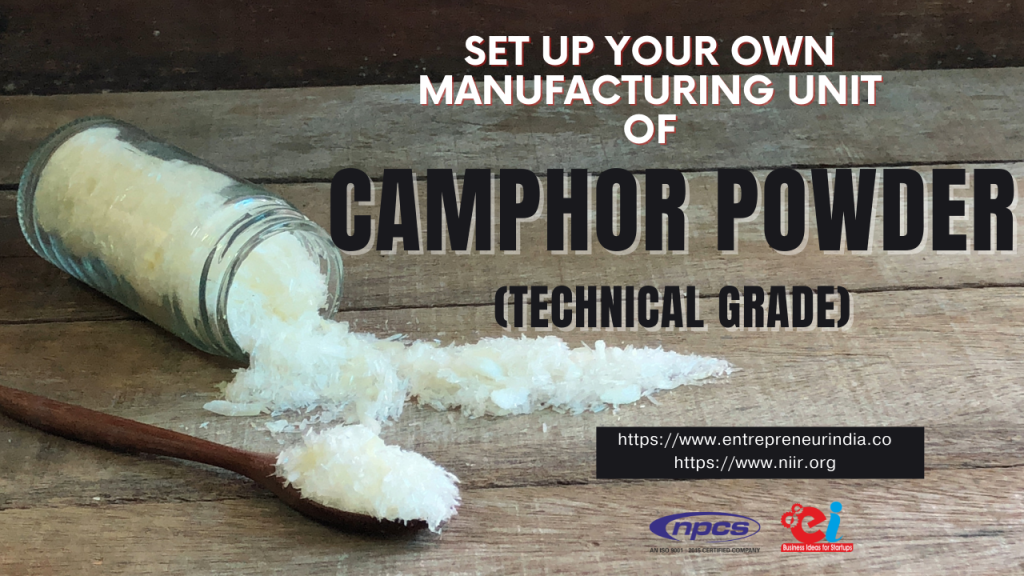
Set up your own Manufacturing Unit of Camphor Powder (Technical Grade)
Setting up a manufacturing unit of camphor powder can be a highly profitable venture, especially in a country like India where camphor holds deep cultural, religious, and industrial importance. Camphor powder is derived from camphor crystals and is widely used in the production of incense, pooja items, ayurvedic medicines, balms, mosquito repellents, and other household products. With growing awareness about organic and natural products, the demand for camphor is steadily increasing across domestic and international markets, making this a promising business opportunity for new-age entrepreneurs. Market Demand and Business Scope The use of camphor is not limited to religious rituals. In modern industries, it plays a key role in pharmaceuticals, cosmetics, and even agrochemical formulations. The demand for camphor powder is rising, driven by consumer preferences for herbal and ayurvedic solutions over synthetic alternatives. When you establish a manufacturing unit of camphor powder, you’re entering a market that is both culturally rooted and industrially scalable. In India, camphor is in constant demand by temple suppliers, pooja stores, Ayurvedic product manufacturers, and even spiritual wellness brands. Internationally, countries like the UAE, Malaysia, Indonesia, and the USA import camphor-based products in large quantities. With the right certifications and packaging standards, export can open new revenue streams for your business. Business Plan: Camphor Powder (Technical Grade) Making Business Raw Materials and Production Process The primary raw material for the manufacturing unit of camphor powder is refined camphor crystals. These are typically derived from turpentine oil through a distillation and crystallization process. If you’re setting up only a powder manufacturing plant (and not producing the crystals), you can directly source bulk camphor blocks or tablets from certified suppliers and focus on grinding, filtering, and packaging them into fine powder. The process includes: Sourcing high-grade camphor blocks or tablets Crushing and grinding them into uniform powder Filtering for purity and particle size consistency Adding optional ingredients like menthol (if applicable) Packaging in air-tight, tamper-proof containers Since camphor is volatile and flammable, the entire production process must be conducted in a controlled environment with safety measures in place. Proper ventilation, flame-proof equipment, and dust collection systems are essential for worker safety. Visit this Page for More Information: Start a Business in Chemical Industry Projects Equipment and Factory Setup To establish a successful manufacturing unit of camphor powder, you need machinery that ensures consistency, efficiency, and safety. The basic setup includes: Camphor grinder or pulverizer Sieve shaker (for uniform particle size) Air filtration and ventilation system Dust collector and spark arrestors Weighing, filling, and sealing machines Labeling machine and batch coding printer Fire extinguishers and flame-proof electrical fittings A small-scale unit can be set up in 500–800 sq. ft. with basic utilities like power supply, exhaust system, water for cleaning, and storage area for raw materials and finished goods. The machinery investment for a basic unit starts around ?7–10 lakhs, while a semi-automated line with higher capacity may cost ?15–20 lakhs. Read Similar Articles: Chemical Industry Legal Requirements and Safety Norms Since camphor is a flammable substance, compliance with safety and environmental regulations is essential when setting up a manufacturing unit of camphor powder. You will need the following licenses and approvals: Udyam (MSME) registration GST registration Factory license from local authorities Fire Safety NOC Pollution Control Board NOC Drug License (if used in pharmaceutical or Ayurvedic products) Trademark registration (for brand protection) It’s also advisable to install flame detectors, fire-resistant flooring, and spark-proof motor systems in the production area. Adequate PPE (gloves, masks, goggles) should be provided to all workers handling raw camphor powder to minimize health hazards. Read our Books Here: Chemical Technology (Organic, Inorganic, Industrial), Fine Chemicals Packaging and Branding Strategy In the camphor industry, packaging plays a key role in product appeal, safety, and shelf life. The volatile nature of camphor requires packaging that is both airtight and leak-proof to avoid evaporation and maintain aroma and potency. You can offer the product in: Plastic or HDPE containers with screw caps Laminated pouches with zipper locks Glass jars (for premium variants) Refill packs for institutional buyers Branding should emphasize purity, religious authenticity, and natural formulation. Clear labelling about intended use—whether for pooja, medicinal, or aromatic use—helps in targeting the right customer base. A strong local and online presence via platforms like IndiaMART, Amazon, Flipkart, and your own D2C website can rapidly boost market penetration. Cost and Profit Estimation The total investment for a basic manufacturing unit of camphor powder can range from ?10 lakhs to ?20 lakhs depending on scale and automation. A breakdown of costs for a small-scale setup might look like this: Machinery and tools: ?7–8 lakhs Raw material (first stock): ?1.5–2 lakhs Packaging material: ?50,000–1 lakh Licensing and compliance: ?1 lakh Branding and launch: ?50,000 Working capital reserve: ?2–3 lakhs Camphor powder has a good profit margin, typically ranging from 25% to 40%, depending on the quality of raw material and target market. A small unit producing 500 kg per month can generate revenue of ?3–4 lakhs with consistent supply and distribution, achieving breakeven within 12–18 months. Related Feasibility Study Reports: Chemicals (Organic, Inorganic, Industrial) Projects Marketing and Distribution Channels To ensure success in your manufacturing unit of camphor powder, building a strong marketing and distribution strategy is vital. Your potential buyers include: Pooja item wholesalers and retailers Ayurvedic medicine manufacturers Aromatherapy and spiritual product sellers Online consumers seeking natural remedies Export merchants dealing in spiritual and herbal products Offline channels like spiritual fairs, temple towns, wholesale bazaars, and ayurvedic expos are ideal for sampling and bulk orders. Digital marketing through social media ads, influencer promotions, and eCommerce listings can help create a strong brand identity and consumer following. Private labeling opportunities are also available for resellers who prefer to outsource manufacturing under their brand. Offering this service can help scale your operations while reducing dependence on one distribution channel. Challenges and Mitigation Strategies Although the manufacturing unit of camphor powder has great potential, it does face certain risks: Volatility in camphor crystal prices Seasonal demand spikes (during festivals) Evaporation
A Complete Business Plan for Activated Alumina (spherical Balls) Manufacturing
The Alumina (Spherical Balls) manufacturing industry plays a critical role in various industrial applications, ranging from petrochemical refining and water treatment to electronics and ceramics. These small, high-density, and thermally stable balls are produced using high-purity aluminum oxide and are known for their exceptional mechanical strength, wear resistance, and inertness to chemical reactions. As industries demand more durable and efficient catalysts, filter media, and grinding materials, the global need for spherical alumina balls continues to rise. This creates a compelling opportunity for entrepreneurs and manufacturers aiming to enter a high-value, niche industrial segment. Visit this Page for More Information: Start a Business in Aluminium Downstream Sector Market Demand and Industrial Applications The global demand for Alumina (Spherical Balls) manufacturing is rising due to their versatile uses across multiple sectors. One of the largest consumers is the petrochemical industry, where these balls are used as catalyst bed supports in reactors. Their high crush strength and thermal conductivity make them ideal for this purpose. In water filtration plants, alumina balls are used as filtering agents due to their non-reactive and porous properties. Another major sector is electronics manufacturing, where these balls serve as a key component in thermal interface materials used in devices requiring high thermal dissipation. In addition, ceramic industries use alumina balls in grinding applications, especially in ball mills that need abrasion-resistant media for consistent product quality. The growth of sectors such as semiconductors, renewable energy, and environmental engineering is pushing the demand even further. For any company considering Alumina (Spherical Balls) manufacturing, tapping into these industries ensures both sustainability and scalability. Read Similar Articles: Chemical Industry Raw Materials and Manufacturing Process The primary raw material used in Alumina (Spherical Balls) manufacturing is high-purity aluminum oxide powder, typically over 99% pure. Depending on the application, the size and surface area of the final spherical balls can vary from a few millimeters to several centimeters. The process starts with blending alumina powder with binders and additives to enhance plasticity and facilitate shaping. This mixture is then shaped into spherical forms using a specialized spheronizer or granulation equipment. The spheres are dried and preheated to remove moisture and binders, followed by high-temperature sintering (around 1500°C) in a rotary or tunnel kiln. This sintering process solidifies the structure, improves density, and enhances the mechanical properties of the alumina balls. After sintering, the balls are subjected to quality control checks including crush strength testing, density analysis, and surface smoothness verification. The final product is then classified by size and packed in moisture-proof containers for dispatch. Watch Video: Production of Activated Alumina Spherical Balls. Profitable Business Opportunity Machinery and Factory Setup Establishing an Alumina (Spherical Balls) manufacturing unit requires investment in advanced processing and heat-treatment equipment. Essential machinery includes: Alumina mixing and granulation system Spheronizing machine or pelletizer High-temperature kilns (rotary or tunnel) Sieving and size classification system Strength and density testing units Dust collection and safety systems Packaging and sealing equipment The plant layout should include zones for raw material storage, forming, drying, sintering, inspection, and packaging. Depending on capacity, the floor area requirement ranges between 5,000 to 10,000 sq. ft. with a stable electricity supply and proper exhaust and ventilation systems to manage high heat zones. A medium-scale unit with semi-automation may need an investment of ?1.5 to ?2.5 crore, while a high-end plant with robotic handling and computer-controlled kilns can go upwards of ?5 crore. However, the profit margins are substantial due to high per-unit pricing in industrial-grade product categories. Watch other Informative Videos: Chemicals (Organic, Inorganic, Industrial) Licensing, Compliance, and Certifications For entering into Alumina (Spherical Balls) manufacturing, the business must comply with industrial safety, pollution control, and export-related regulations. Required approvals and registrations include: Udyam MSME registration GST registration Factory license from local authorities Fire and safety clearance Environmental clearance (especially for kiln emissions) ISO 9001 and ISO 14001 (optional but preferred for exports) REACH certification (for exports to EU markets) Compliance with these standards ensures smooth operations and enhances credibility when dealing with international clients. Many petrochemical companies and EPC (Engineering, Procurement, and Construction) firms prefer to work only with certified manufacturers. Related Project: A Complete Business Plan for Activated Alumina (spherical Balls) Manufacturing Packaging and Logistics Since Alumina (Spherical Balls) manufacturing involves industrial and export-level logistics, packaging is a vital element. Alumina balls are typically packed in: 25 kg polypropylene bags with liners 500 kg jumbo bags Vacuum-sealed pouches (for moisture-sensitive applications) Palletized loads with shrink-wrap Export-oriented units must follow packaging norms as per the destination country’s trade regulations. Proper labeling (including material specs, batch number, and safety symbols) must be adhered to. High precision and contamination-free packaging also make the product more reliable and professional in competitive bidding environments. Related Feasibility Study Reports: Chemicals,Chemicals Organic Costing and Profitability Analysis The cost structure of an Alumina (Spherical Balls) manufacturing unit includes raw material costs, electricity (especially for high-temperature kilns), labor, quality testing, and logistics. A typical cost breakdown might look like: Raw materials (alumina and binders): 40% Energy and utilities: 20% Labor and staff: 15% Maintenance and spares: 10% Packaging and logistics: 10% Miscellaneous (licenses, insurance, depreciation): 5% Selling prices can vary between ?200 to ?1,000 per kg depending on application, purity, and size. Specialized catalyst carriers or thermally enhanced grades command even higher rates. Monthly sales from a mid-sized plant can reach ?20–30 lakhs, offering a net profit margin of 20–25% after all expenses. This makes it a highly lucrative space for those who enter with the right technical setup and market positioning. Sales Channels and Market Strategy To succeed in the Alumina (Spherical Balls) manufacturing industry, one must focus on both B2B direct sales and long-term supply contracts. Potential clients include: Petrochemical companies and refineries Water filtration system integrators Ceramic and tile manufacturers Thermal management and electronics companies Export houses dealing in industrial chemicals and catalysts Trade shows like ChemTECH, IndiaCeramics, and global engineering expos are good platforms to showcase your product. Additionally, digital marketing through technical datasheets, industry directories, and LinkedIn outreach can
Invest in Production of Bio-Organic Fertilizer from Tea Waste
The production of Bio-Organic Fertilizer from Tea Waste presents a sustainable and profitable business opportunity in the agriculture and waste recycling industries. Tea is one of the most consumed beverages globally, and its production and processing generate substantial amounts of waste. When managed correctly, this organic waste—rich in nutrients and organic matter—can be transformed into high-quality bio-fertilizers. These fertilizers not only promote soil health and increase crop productivity but also contribute to circular economy practices. Starting a venture in this domain helps reduce environmental waste while generating income through green innovation. Growing Demand for Organic Solutions in Agriculture Farmers and agribusinesses are increasingly shifting from synthetic chemical fertilizers to organic alternatives due to soil degradation, water pollution, and rising awareness about eco-friendly cultivation. This shift is opening doors for new ventures in organic input production. Bio-Organic Fertilizer from Tea Waste is emerging as a smart solution that aligns with sustainable farming goals. It offers essential nutrients like nitrogen, potassium, phosphorus, and carbon—vital for plant growth—while improving soil microbial activity and moisture retention. Tea waste is abundantly available from tea processing units, tea stalls, canteens, and households. Rather than being discarded in landfills, it can be collected, processed, and converted into a high-value product. Governments and agricultural departments are also promoting organic fertilizer use through subsidy schemes and awareness campaigns, which further enhances the market demand for natural fertilizers derived from biodegradable waste. Visit this Page for More Information: Start a Business in Fertilizer Industry Tea Waste as a Raw Material Tea waste consists of used tea leaves, residues from tea factories, and rejected grades of tea unsuitable for consumption. These materials are rich in organic carbon, cellulose, tannins, and polyphenols, making them highly beneficial for composting and microbial activity. When processed appropriately, Bio-Organic Fertilizer from Tea Waste becomes an excellent soil conditioner. The key to successful production lies in sourcing clean, uncontaminated tea waste. Industrial tea processors, hotels, and local vendors can be tied up with to ensure a steady raw material supply. Pre-treatment methods such as drying, shredding, and microbial inoculation are usually required to enhance the decomposition process and minimize any potential odor or mold issues. Business Plan: Production of Bio-Organic Fertilizer from Tea Waste Manufacturing Process and Techniques The production of Bio-Organic Fertilizer from Tea Waste typically involves aerobic composting or vermicomposting methods. The process is relatively simple, scalable, and eco-friendly. Here’s how it works: Collection and sorting: Tea waste is collected and sorted to remove non-biodegradable impurities like plastic or wrappers. Pre-processing: The waste is dried slightly and shredded for faster decomposition. Composting: Tea waste is mixed with cow dung, agricultural residues, or microbial cultures, then left to decompose under controlled moisture and temperature conditions for 30–45 days. Turning and aeration: The compost piles are turned periodically to allow air circulation and microbial activity. Curing and sieving: Once fully decomposed, the compost is cured, dried, and sieved to obtain fine granules. Packaging: The final product is packed into moisture-resistant bags and labeled for retail or wholesale sale. This process may be enhanced with the addition of bio-agents like Trichoderma or Azospirillum to convert it into a functional bio-organic fertilizer with pest control or nitrogen-fixing properties. Read Similar Articles: Fertilizers – Inorganic and organic Investment and Infrastructure Starting a small to medium-scale Bio-Organic Fertilizer from Tea Waste unit can require an investment ranging from ?8 to ?25 lakh. This includes: Land or rental shed (1,000–5,000 sq. ft.) Composting pits or windrow systems Shredders and sieving machines Packaging and labeling setup Labor, water tanks, and microbial inoculants The operational cost is low, and raw material procurement is often free or inexpensive. Profit margins are healthy since organic fertilizer sells at ?10–?30 per kg based on quality and branding, while production costs are relatively minimal. Return on investment can be achieve within the first 1–2 years if operate efficiently, especially with contracts from nurseries, organic farms, and state agriculture departments. Legal Permissions and Quality Standards For establishing a Bio-Organic Fertilizer from Tea Waste business, the following registrations and certifications are typically need: Udyam MSME registration GST registration Fertilizer Control Order (FCO) license from the agriculture department Pollution control board NOC Organic certification (NPOP or similar) for retail marketing Trademark registration for product branding Testing the product for parameters like nitrogen, phosphorus, carbon content, pH, and microbial load is essential to meet FCO standards. Certification not only builds trust but also enables participation in government supply chains. Related Feasibility Study Reports: Fertilizers, Fertilisers, Inorganic Fertilizers (Mineral Fertilizer) Marketing and Distribution Strategy The target market for Bio-Organic Fertilizer from Tea Waste includes: Organic farmers and cooperatives Horticulture and floriculture units Greenhouse and polyhouse operators Nurseries, gardeners, and landscape designers Agriculture input dealers and distributors Sales can be boost through online platforms, local agricultural expos, Krishi Vigyan Kendras, and collaborations with FPOs (Farmer Producer Organizations). Educational marketing about the product’s eco-friendly benefits, improved soil health, and long-term yield advantages helps in customer acquisition. Packaging in 5 kg and 25 kg bags with branding and usage instructions makes it retail-ready. Government support through tenders or rural development schemes also creates steady institutional demand for high-quality organic fertilizers. Npcsblog Environmental and Social Impact One of the biggest advantages of the Bio-Organic Fertilizer from Tea Waste business is its contribution to environmental sustainability. This model reduces landfill pressure, encourages organic farming, and lowers chemical residue in crops and soil. It promotes responsible waste management at the source, especially in tea-centric regions where industrial waste is high. Expansion Opportunities As the business matures, producers can consider: Adding herbal compost or bio-pesticide components Launching liquid bio-fertilizer variants Contract manufacturing for organic brands Exporting to organic farming regions abroad Building franchise or dealership networks You can also set up mobile composting units near tea processing hubs for decentralized production. These innovations not only diversify your product portfolio but also enhance brand value and customer loyalty. Conclusion Starting a Bio-Organic Fertilizer from Tea Waste business is a smart move in today’s eco-conscious and agriculture-driven economy. It turns everyday
A Complete Business Plan to Start a Profitable Business of Zinc Oxide from Zinc Dross
The business of Zinc Oxide from Zinc Dross is a profitable and sustainable opportunity in the field of metal recycling and chemical manufacturing. Zinc dross is a byproduct of the hot-dip galvanizing process, containing a significant amount of usable zinc. Through proper extraction and processing, this dross can be converted into high-purity zinc oxide—a valuable industrial compound used in rubber, ceramics, paints, fertilizers, cosmetics, and pharmaceuticals. With increasing demand for zinc oxide and rising interest in circular economy models, this business offers both environmental and commercial benefits to forward-thinking entrepreneurs. Understanding the Market Demand Zinc oxide is a versatile compound with high global demand due to its diverse industrial applications. It is used as a vulcanizing agent in the rubber industry, an additive in fertilizers, an opacifier in ceramics, and a whitening agent in paints and cosmetics. The Indian market alone imports a significant amount of zinc oxide each year, creating a clear opportunity for localized production through sustainable sources. Establishing a business of Zinc Oxide from Zinc Dross allows companies to capitalize on the ready availability of zinc dross from galvanizing plants while minimizing raw material costs. Moreover, this recycling process aligns well with environmental norms and waste management rules. Industries and government agencies are actively supporting ventures that turn industrial waste into usable products, further encouraging growth in this domain. Visit this Page for More Information: Start a Business in Chemical Industry Projects Raw Material: Zinc Dross and Its Source Zinc dross is the residue formed during hot-dip galvanization, which includes unutilized metallic zinc, iron particles, and impurities. Typically, it contains 80–95% metallic zinc, making it an ideal raw material for zinc oxide production. Galvanizing units, steel fabrication plants, and alloy manufacturers generate zinc dross in substantial quantities, offering a consistent and low-cost supply channel for manufacturers. In the business of Zinc Oxide from Zinc Dross, acquiring quality dross is the first step. The location of the plant should ideally be near galvanizing clusters or industrial hubs where zinc waste is regularly generated. This ensures reliable procurement, lower logistics costs, and improved overall margins. Read Similar Articles: Inorganic and organic Manufacturing Process and Equipment The process of extracting Zinc Oxide from Zinc Dross involves thermal treatment and oxidation in a controlled furnace environment. Here’s how the general workflow unfolds: Pre-cleaning and drying of dross: Removing excess oil, dust, and moisture for consistency Melting and vaporization: Heating dross in a specially designed furnace at 900–1100°C Oxidation in air: Zinc vapor reacts with oxygen to form zinc oxide Collection and cooling: The fine zinc oxide particles are collected in a bag filter system or chamber Sieving and packaging: The final product is refined, sieved, and packed for sale Key equipment includes rotary furnaces, bag filters, dust collectors, heat exchangers, pollution control units, and packaging systems. Modern zinc oxide units often incorporate energy recovery and emission control systems to enhance environmental compliance. Watch other Informative Videos: Chemicals (Organic, Inorganic, Industrial) Capital Investment and Costing To start the business of Zinc Oxide from Zinc Dross, an estimated capital investment of ?50 lakh to ?2 crore may be required depending on plant capacity, technology level, and location. The cost breakdown includes: Furnace and processing equipment: 40% Pollution control and filter systems: 20% Infrastructure, labor, and utilities: 20% Licensing and compliance: 5–10% Working capital for raw material and packaging: 10–15% Zinc dross costs around ?150–200 per kg depending on purity and source, while high-grade zinc oxide can fetch ?250–?300 per kg in the Indian market. With good process control and raw material procurement, the profit margin can range between 20% and 30%. The ROI is usually achievable within 1.5 to 2 years of operation. Read our Books Here: Chemical Technology (Organic, Inorganic, Industrial), Fine Chemicals Legal Permissions and Regulatory Compliance For setting up a business of Zinc Oxide from Zinc Dross, certain approvals and licenses are necessary: MSME/Udyam registration GST registration Factory license and safety clearance Environmental NOC from the Pollution Control Board Consent to establish and operate (CTE/CTO) Hazardous waste authorization (as zinc dross is an industrial waste) BIS certification (optional but helpful for certain buyers) Complying with environmental standards such as emission norms, air filtration, and proper waste disposal is critical for plant operations. Non-compliance may lead to penalties or operational shutdown, so investing in pollution control equipment and certified handling practices is essential.Read our Book Here: The Complete Technology Book on Chemical Industries Target Customers and Sales Channels The end market for zinc oxide includes rubber and tyre manufacturers, paint companies, fertilizer producers, ceramic tile makers, plastic compounders, cosmetic brands, and even pharmaceutical companies. Each of these sectors requires specific zinc oxide grades—active, white seal, or pharma-grade—depending on application. Your marketing strategy in the business of Zinc Oxide from Zinc Dross should focus on: Building B2B supply chains with direct manufacturers Supplying to government fertilizer tenders (if compliant with agro standards) Bulk supply to tyre and rubber processing units Listing products on industrial B2B marketplaces Participating in metal recycling and chemicals trade expos Packaging, branding, and consistent quality testing play a significant role in customer retention and scaling. Environmental and Economic Benefits Apart from being financially rewarding, the business of Zinc Oxide from Zinc Dross promotes circular manufacturing, reducing environmental damage caused by discarded metal waste. It minimizes the need for virgin zinc mining, which is energy-intensive and ecologically damaging. By converting industrial dross into a usable input, this business helps galvanizing units dispose of waste responsibly while contributing to zero-waste manufacturing goals. The by-products generated during the zinc oxide process (like slag or ash) can sometimes be sold to cement or construction companies, further improving overall material efficiency. Future Potential and Expansion As industrial activities grow and galvanization expands, the availability of zinc dross will increase—fueling the long-term potential of this business. With technological upgrades like automated furnaces, better filtration systems, and AI-based quality checks, producers can increase output while maintaining consistent quality. There is also export potential to countries with heavy rubber, paint, and glass manufacturing bases. Additionally,
5 Most Profitable Manufacturing Business Ideas
If you’re looking to launch a profitable venture in the industrial sector, then exploring the 5 most profitable manufacturing business ideas is the right place to start. Manufacturing is the backbone of many strong economies because it transforms raw materials into tangible products that are needed every day. The potential for growth, market demand, and government support in manufacturing is enormous. Whether you want to begin small or scale fast, these 5 most profitable manufacturing business ideas give you options that are practical, in demand, and financially rewarding. Related Project Report: Profitable Business of Magnesium Sulphate 5 Most Profitable Manufacturing Business Ideas Food Processing and Packaging Business Among the 5 most profitable manufacturing business ideas, the food processing and packaging business stands tall because food will always be in demand. With changing consumer lifestyles and increased focus on convenience, processed foods like snacks, sauces, condiments, spice blends, and frozen items are gaining popularity. You can start with a simple setup that includes mixing, grinding, cooking, and packaging equipment. Registering under FSSAI, ensuring proper hygiene standards, and targeting a niche segment—like organic or regional products—can give you an edge in the market. This business scales quickly, especially if you sell via online platforms like Amazon, Flipkart, or your own D2C website. The government also supports agro-processing businesses under various MSME and food ministry schemes, making this idea even more attractive. That’s why food processing is a core part of the 5 most profitable manufacturing business ideas today. Visit this Page for More Information: Start a Business in Chemical Industry Projects Related Project: Production Business of Zinc Sulphate Read our Book Here: The Complete Technology Book On Chemical Industries Eco-Friendly Paper Bags and Sustainable Packaging Another powerful entry among the 5 most profitable manufacturing business ideas is eco-friendly paper bag and sustainable packaging manufacturing. With rising environmental concerns and increasing bans on plastic products across the globe, the demand for biodegradable packaging is booming. You can produce kraft paper bags, recycled wrapping paper, corrugated boxes, or compostable food containers. This business requires low capital investment, basic machinery, and raw materials like recycled paper or plant-based packaging materials. Retailers, food vendors, ecommerce sellers, and event organizers are actively seeking packaging solutions that align with green initiatives. By offering customization and bulk supply, you can create long-term business partnerships. Eco-conscious consumers and regulations both support this venture, making it a strong candidate in the list of 5 most profitable manufacturing business ideas. Visit this Page for More Information: Start a Business in Food Processing Disposable Tableware Manufacturing from Natural Materials Disposable tableware made from sugarcane bagasse, areca leaf, or corn starch is gaining popularity for its biodegradable nature. As large-scale events, restaurants, and food delivery apps seek plastic alternatives, this business presents tremendous growth. This is one of the 5 most profitable manufacturing business ideas because it needs relatively simple equipment to start. A small unit can manufacture plates, trays, bowls, and cutlery with materials that are compostable and eco-safe. The target market includes wedding planners, food stalls, eco-cafes, temples, and corporate event managers. Government grants and subsidies are available to businesses that contribute to reducing single-use plastics. With rising awareness and demand, this business idea is low-risk and offers consistent returns, making it one of the smartest choices among the 5 most profitable manufacturing business ideas. Related Project Report: Business Industry of Grain Processing Detergent and Household Cleaner Manufacturing Another profitable and evergreen idea on the list of 5 most profitable manufacturing business ideas is household cleaning product manufacturing. This includes detergents, toilet cleaners, dishwashing liquids, and multipurpose surface sanitizers. These products are consumed in every household, hotel, restaurant, and hospital. Setting up a production unit requires basic knowledge of chemical formulas, standard mixing tanks, and packaging equipment. You can start small and build a private-label brand. Target markets range from neighborhood general stores to large cleaning contractors and online buyers. Creating chemical-free or herbal variants can help attract premium customers. With fast turnover, bulk repeat orders, and moderate production cost, this business offers solid profitability and long-term stability—justifying its place in the top 5 most profitable manufacturing business ideas. Visit this Page for More Information: Edible Oil Industry Modular Furniture and Space-Saving Woodwork Rounding out the profitable manufacturing business ideas is modular furniture manufacturing. Urban populations are growing and living spaces are shrinking. This shift has created a high demand for smart, space-saving furniture solutions. With some training and carpentry skills, you can manufacture foldable beds, compact study desks, wardrobe systems, and even kitchen cabinets. The demand spans homes, offices, coworking spaces, and rental apartments. Starting small with a workshop and growing through ecommerce, exhibitions, and contracts with builders or interior designers can yield high profits. Adding innovation—like sustainable wood, recycled materials, or flat-pack shipping—can make your brand stand out. The furniture business is versatile and consistent, making it one of the 5 most profitable manufacturing business ideas for creative and hands-on entrepreneurs. Related Project: Setting a Profitable Business of Edible Oil Refinery (Soya & Palm) Conclusion Exploring these 5 most profitable manufacturing business ideas gives you a strategic advantage when entering the industrial space. Whether it’s food processing, paper bag production, disposable tableware, cleaning supplies, or modular furniture, each of these ideas is backed by strong consumer demand, low-to-medium investment, and immense growth opportunities. Manufacturing is a sector where real value is created through production, branding, and innovation. In many developing and growing economies, the government actively supports small-scale manufacturers through loans, training, and infrastructure. If you’re aiming for long-term profits, job creation, and a business with tangible outcomes, ?? profitable manufacturing business ideas offer a roadmap to your entrepreneurial success. Visit this Page for More Information: Chemical Industry Projects See More Links: Start a Business in Asia Start a Business in Potential Countries for Doing Business Best Industry for Doing Business Business Ideas with Low, Medium & High Investment Looking for Most Demandable Business Ideas for Startups Start a Business in Africa Start a Business in India Start
How to Set up Production Business of Zinc Sulphate
The production business of zinc sulphate is emerging as a profitable and sustainable venture in the chemical manufacturing industry. With its wide-ranging applications in agriculture, pharmaceuticals, animal feed, and industrial processes, zinc sulphate is in high demand across global markets. Entrepreneurs entering this segment can tap into the booming fertilizer sector and contribute to essential industries that rely heavily on micronutrients like zinc. Whether you are a new investor or an experienced chemical trader, the business offers consistent growth potential with scalable production models. Visit this Page for More Information: Start a Business in Chemical Industry Projects Explore the Scope of the Zinc Sulphate Manufacturing Business The production business of zinc sulphate revolves around the synthesis of zinc sulphate (ZnSO?), a colorless crystalline solid that dissolves easily in water. It is primarily used as a fertilizer additive to prevent zinc deficiency in crops. Additionally, it plays a vital role in pharmaceuticals, water treatment, and animal feed supplements. Zinc sulphate can be produced in various grades like monohydrate and heptahydrate, depending on its end use, and offers steady demand from both domestic and international markets. Related Feasibility Study Reports: Chemicals Raw Materials and Manufacturing Process The primary raw materials for the production business of zinc sulphate include zinc ash, zinc oxide, or zinc metal, and sulphuric acid. The process begins with the reaction of zinc-based compounds with sulphuric acid, followed by filtration, crystallization, and drying. The end product is packed and stored for distribution. The machinery setup includes reactors, filtration units, dryers, and packaging machines. The production process is relatively simple and can be automated for higher efficiency and reduced labor costs. Watch other Informative Videos: Chemicals (Organic, Inorganic, Industrial) Types and Grades of Zinc Sulphate There are mainly two commercial forms of zinc sulphate produced in this business: Zinc Sulphate Heptahydrate (ZnSO?·7H?O): Typically used in agriculture as a fertilizer micronutrient. Zinc Sulphate Monohydrate (ZnSO?·H?O): More concentrated, and often used in animal feed and pharmaceuticals. Both types find consistent application, and the decision to manufacture one or both depends on market demand and production capacity. Watch Video: Set up your own Zinc Sulphate Manufacturing Plant | Highly Profitable Business Opportunity Applications and Market Demand The production business of zinc sulphate caters to diverse industries: Agriculture: As a micronutrient fertilizer, it helps in correcting zinc deficiencies in crops like rice, wheat, and corn. Animal Feed: Used as a trace element in feed mixes to ensure healthy livestock growth. Pharmaceuticals: Used in supplements and medications to treat zinc deficiency in humans. Water Treatment and Industrial Uses: Plays a role in flocculation, electroplating, and synthetic fiber production. With the growing awareness about soil health and nutritional balance in farming, the demand for zinc sulphate fertilizers is increasing, especially in countries like India, Brazil, and African nations. Market Trends and Growth Potential Globally, the zinc sulphate market is witnessing steady growth due to increasing food demand and shrinking arable land. The rising adoption of micronutrient-based fertilizers and the push for organic and sustainable agriculture are directly influencing the production business of zinc sulphate. Furthermore, governmental subsidies, farmer education programs, and regulatory mandates are boosting its use. Emerging economies are particularly showing high demand, opening export opportunities for manufacturers. Related Project: Production Business of Zinc Sulphate Investment and Profitability Setting up a zinc sulphate manufacturing unit can be started on a small, medium, or large scale. A small plant producing 1–2 tons per day may require an investment of ?20–25 lakhs (USD $25,000–$30,000), while larger automated units may go beyond ?1 crore. The raw material cost, plant setup, power, labor, and compliance form the core investment components. Profit margins in this business range between 20% to 35%, depending on plant efficiency, scale, and market linkage. With long shelf life and consistent demand, the ROI (Return on Investment) is generally positive within 1–2 years. Licensing and Compliance To legally run a production business of zinc sulphate, you’ll need the following: Company registration or partnership firm GST registration Factory license Consent from State Pollution Control Board BIS certification (especially for fertilizer-grade material) ISO standards (recommended for large exporters) Ensuring proper documentation and compliance builds credibility and trust among clients and distributors. Location and Infrastructure Choose a location with easy access to: Raw materials (zinc ash or metal) Transportation facilities Power and water supply Labor availability Industrial zones or chemical manufacturing clusters are preferred due to logistics advantages and regulatory approvals. Marketing and Distribution Strategy For the production business of zinc sulphate to thrive, a strong marketing network is essential. Some key distribution channels include: Agricultural product distributors and dealers Animal feed manufacturers Fertilizer retail outlets Pharmaceutical companies Government tender suppliers Export agents Digital marketing, trade expos, partnerships with agri-input companies, and bulk supply to cooperatives are also effective growth strategies. Challenges and How to Overcome Them Common challenges in this industry include: Fluctuating prices of zinc metal or ash Environmental norms and pollution control Counterfeit or low-quality competitors Storage and packaging issues during monsoon/humid climates To overcome these: Build contracts with reliable suppliers Invest in pollution control and waste management Maintain consistent quality with ISO/BIS compliance Use moisture-resistant packaging materials Future Outlook The production business of zinc sulphate has strong prospects as the global agriculture sector moves toward micronutrient-enriched fertilizers. Sustainable farming, growing food security concerns, and export potential in underdeveloped regions are all contributing to the expanding market. Additionally, new use cases in biotech, aquaculture, and regenerative farming are emerging, pushing future demand even further. Final Thoughts Starting a production business of zinc sulphate offers significant potential for growth and profitability. It is not only a financially sound opportunity but also one that contributes to food security and better health outcomes. With increasing support from agricultural bodies and sustainable farming initiatives, the future of zinc sulphate manufacturing is promising. Proper planning, quality assurance, and marketing can help turn this business into a long-term success. Read our Book Here: The Complete Technology Book On Chemical Industries See More Links: Start a Business in Asia Related Market Research