
Set up Magnesium Sulphate Manufacturing Plant
Setting up a magnesium sulphate manufacturing plant can be a highly profitable industrial venture due to the widespread use of magnesium sulphate across agriculture, pharmaceuticals, textiles, chemicals, and food processing. Commonly known as Epsom salt, magnesium sulphate is an inorganic salt with a wide range of industrial and commercial applications. It is used to improve soil fertility, as a drying agent in chemical reactions, in medicine as a saline laxative, and in animal feed supplements. With an increasing demand for fertilizers and a shift toward micronutrient-rich farming practices, the market for magnesium sulphate is growing steadily, especially in agriculture-driven economies like India. Entrepreneurs with access to raw materials, basic chemical processing knowledge, and compliance resources can generate significant returns by establishing a magnesium sulphate manufacturing plant. Market Demand and Business Opportunity The demand for magnesium sulphate has seen significant growth over the years, driven by the agriculture sector where it is used as a magnesium and sulfur nutrient. Magnesium deficiency in soil is a common problem, especially in regions with intensive farming. This has led to an increase in demand for magnesium sulphate as a soil amendment. In addition to its agricultural use, magnesium sulphate is used in pharmaceutical preparations, as a stabilizer in textiles, in detergents, and even in personal care products. Setting up a magnesium sulphate manufacturing plant enables entry into multiple industrial segments with steady and scalable demand. As the product is cost-effective, non-toxic, and environmentally safe, it continues to gain acceptance, especially in organic and sustainable farming models. Visit this Page for More Information: Chemical Industry Projects Types and Grades of Magnesium Sulphate Magnesium sulphate is manufactured in different grades depending on its end use. The most common form is magnesium sulphate heptahydrate (MgSO?·7H?O). There are also monohydrate and anhydrous grades, each used for specific industrial applications. Agricultural-grade magnesium sulphate is typically produced in granular or crystalline form and packaged in bulk for farms. Pharmaceutical-grade variants require higher purity standards and are used in intravenous or oral drug formulations. Your magnesium sulphate manufacturing plant must decide on the grade based on the targeted market segment—bulk fertilizers, pharma, feed additives, or industrial usage. Each grade has distinct purity requirements and processing standards, which influence production setup, quality control, and pricing. Related Project Report: Profitable Business of Magnesium Sulphate Raw Materials and Chemical Process The major raw materials required for a magnesium sulphate manufacturing plant include magnesium oxide (MgO) or magnesium carbonate (MgCO?) and sulfuric acid (H?SO?). The chemical reaction between these ingredients produces magnesium sulphate along with water and carbon dioxide (in some reactions). The overall process is straightforward and involves a reaction tank, filtration, crystallization, and drying stages. The final product is then packed in bags or containers depending on customer needs. Proper reaction control, impurity removal, and moisture control are important to achieve a high-quality, market-acceptable product. In some advanced units, additional purification steps are included to meet pharmaceutical or food-grade specifications. Read Similar Articles: Chemical Industry Plant Setup and Infrastructure Setting up a magnesium sulphate manufacturing plant requires adequate land, preferably in an industrial zone with access to utilities like water, power, and road connectivity. The infrastructure includes raw material storage tanks, reaction vessels (mild steel or SS-lined), filtration units, crystallizers, drying equipment (tray dryers or rotary dryers), and packaging machinery. For small-scale production (5–10 tons/day), an area of 3,000–5,000 sq ft is sufficient. Larger units with 25+ TPD capacity need proportionately more space. The plant should also include lab facilities for quality testing, a wastewater handling system, and safety gear for handling acid and chemical reactions. Related Feasibility Study Reports: Chemicals (Organic, Inorganic, Industrial) Projects Machinery and Equipment The key machinery needed for a magnesium sulphate manufacturing plant includes reactors, agitators, acid dosing systems, heat exchangers, filtration units, centrifuges, crystal formers, dryers, and packaging lines. The selection of machines depends on production volume, type of product (flakes, crystals, powder), and required purity level. Semi-automatic plants are sufficient for moderate production volumes and cost-effective for startups. Advanced fully automatic lines with continuous crystallization and drying are prefere for large-scale and export-oriented units. Always ensure that machinery is corrosion-resistant and capable of handling acidic environments. Read our Books Here: Chemical Technology (Organic, Inorganic, and Industrial), Fine Chemicals Licensing and Regulatory Requirements Manufacturing magnesium sulphate requires several regulatory approvals, especially if the product is to be used in food, pharma, or agriculture. A magnesium sulphate manufacturing plant must obtain factory registration, pollution control board clearance, hazardous material handling licenses (for sulfuric acid), GST registration, and trade licenses. If manufacturing food or pharma grade, additional FSSAI or drug department approvals may be require. Certification from agencies like ISO or BIS helps in gaining customer trust and eligibility for government tenders or export markets. Safety norms for chemical handling and material storage must be strictly follow to avoid penalties and ensure employee well-being. Workforce and Human Resource Needs The plant needs a trained workforce to handle operations, quality control, maintenance, and administration. For a basic magnesium sulphate manufacturing plant, a team of 8–15 people is adequate including chemical engineers, machine operators, lab analysts, and packaging staff. As the plant scales, the workforce can be expand with dedicat roles for safety officers, logistics managers, and export coordinators. Basic training in chemical handling, process monitoring, and first aid is essential. Retaining skilled personnel ensures consistent production, safety, and quality. Cost of Investment and ROI The cost of setting up a magnesium sulphate manufacturing plant depends on the capacity, automation level, and plant design. A small unit with 5–10 TPD capacity may cost around ?30–50 lakh, including machinery, land development, civil work, and licenses. A medium-sized plant with 25–50 TPD can cost ?1–2 crore. The operating cost includes raw materials, labor, utilities, maintenance, and packaging. The gross profit margins are attractive due to relatively low input costs and stable product pricing. With proper market linkage, your plant can achieve break-even within 1.5 to 2 years. Government subsidies under MSME and agro-processing schemes can further reduce the financial burden and
Building your Business in Chemical Industry
Setting up a manufacturing unit of calcium carbide is a profitable opportunity in the chemical industry, especially due to its widespread use in metallurgy, chemical synthesis, and industrial gas generation. Calcium carbide (CaC?) is primarily used to produce acetylene gas and plays a crucial role in steelmaking. With the rising demand for industrial chemicals and metal production, a well-planned calcium carbide plant can yield substantial returns, especially in developing regions where construction and industrial growth are on the rise. This blog covers everything you need to know before starting — from market potential and raw materials to process flow, investment requirements, and compliance. Related Project: Production Industry of Calcium Carbide (CaC2) Essential Aspects to Consider Before Starting the Unit To launch a successful calcium carbide plant, one must understand the industry requirements, technical setup, and legal framework involved. Below are key elements you should focus on: Start a Business in India, Click Here 1. Market Potential and Demand Calcium carbide is a strategic industrial chemical with several applications. The most notable one is its use in generating acetylene gas, which is further used in welding, lighting, and in the production of synthetic rubber and organic chemicals. It is also used in steel desulfurization, making it highly relevant for metallurgy industries. Start a Business in Middle East, Click Here Growth Drivers: Demand for acetylene gas in welding and metal fabrication Growth in infrastructure and construction industries Rising steel production in emerging markets Use in chemical synthesis and agricultural chemicals If you’re located near steel hubs, chemical industries, or regions with active mining and welding industries, the local demand can support long-term profitability. Start a Business in Asia, Click Here 2. Raw Materials and Sourcing The key raw materials required to manufacture calcium carbide are: Limestone (CaCO?) – used as the main source of calcium Coke or Anthracite Coal – source of carbon for the reduction process Electricity – required in large quantities for the electric arc furnace Start a Business in Africa, Click Here Raw Material Considerations: Choose a location near limestone quarries or steel-producing regions. Ensure long-term contracts for low-ash coal or coke to maintain quality and consistency. Secure access to reliable power infrastructure, ideally with high voltage industrial supply. Related Projects: Chemicals (Organic, Inorganic, Industrial) Projects 3. Manufacturing Process of Calcium Carbide The calcium carbide production process is energy-intensive and occurs in an electric arc furnace. Here’s a step-by-step breakdown: Raw Material Preparation: Limestone is crushed and mixed with coke or anthracite in a predetermined ratio. Electric Arc Furnace Operation: The mixture is charged into the furnace, where high temperatures (around 2000–2200°C) facilitate the reduction of calcium oxide with carbon. Tapping and Cooling: The molten calcium carbide is tapped from the furnace and cooled rapidly. Crushing and Packing: After cooling, the material is crushed into desired sizes and packed under airtight conditions to prevent moisture contact. Looking for Most Demandable Business Ideas for Startups, Click Here Chemical Reaction:CaO + 3C ? CaC? + CO? It’s essential to maintain strict temperature control and gas management to prevent unwanted combustion and ensure high yield. 4. Plant and Machinery Setting up the plant will require robust industrial machinery and infrastructure. Key equipment includes: Electric arc furnace (fixed or tilting type) Raw material handling system (feeders, conveyors, crushers) Cooling and tapping units Crushing and grading machines Packaging and sealing units Pollution control systems (dust collectors, scrubbers) Laboratory equipment for quality testing For a medium-scale unit, a 20–25 TPD (tons per day) furnace is commonly used. Automation in handling and packaging can significantly improve efficiency. Start a Business in Potential Countries for Doing Business, Click Here 5. Investment and Land Requirements The total investment in setting up a calcium carbide manufacturing unit varies based on capacity, location, and equipment automation. Indicative Breakdown: Land & Building: ?1.5–2 crore (for 2,000–3,000 sq. meters) Plant & Machinery: ?5–7 crore Working Capital: ?1.5–2 crore Licensing & Infrastructure: ?50 lakh–?1 crore Total Estimated Investment: ?8–12 crore for a medium-sized unit Land should be in an industrial zone with environmental clearance and strong logistical support. Best Industry for Doing Business, Click Here 6. Legal Permissions and Compliance Since calcium carbide is a hazardous chemical, various permissions and clearances are mandatory: Pollution Control Board Clearance Factory License & Fire Safety Certificate Explosive Department Approval (for storage of acetylene) Electricity Clearance for High Load Usage MSME/Udyam Registration GST Registration You may also need to comply with BIS (Bureau of Indian Standards) specifications like IS:1040, which governs the purity and properties of calcium carbide. Business Ideas with Low, Medium & High Investment, Click Here 7. Safety Measures and Environmental Considerations Calcium carbide reacts violently with water, releasing flammable acetylene gas. Therefore, strict safety protocols must be in place: Moisture-proof packaging and storage Worker training and PPE (gloves, goggles, fire-retardant gear) Fire suppression systems and gas detectors Proper waste and gas emission management Routine audits and emergency response planning Install dust control systems and ensure solid waste is managed as per environmental norms. Related Books: Chemical Technology (Organic, Inorganic, Industrial), Fine Chemicals 8. Marketing and Distribution Calcium carbide is mainly sold to: Steel plants Welding and cutting torch suppliers Chemical manufacturers Distributors of industrial gases Build long-term B2B contracts and consider supplying in bulk. Offering good packaging, purity levels, and consistent supply will create a competitive edge. You can also explore exports, especially to developing countries in Asia and Africa where industrialization is growing. Start a Business in Chemical Industry Projects, Click Here Related Videos: Chemicals (Organic, Inorganic, Industrial) Final Thoughts Establishing a manufacturing unit of calcium carbide is both capital-intensive and highly rewarding. If you choose the right location, secure high-quality raw materials, and maintain regulatory compliance, you can build a robust business with high margins and consistent demand. With applications across multiple industries and the ability to scale with automation, calcium carbide production holds long-term potential for chemical and industrial entrepreneurs. Books: Books & Databases Key Players: ALMAMET GMBH Rexarc International, Inc. Donau Chemie AG Lonza Group AG Denka
Manufacturing Business of Magnesium Stearate. Highly Profitable Chemical Business Ideas.
Magnesium stearate is a widely used compound in pharmaceutical, cosmetic, and food industries. Known for its lubricating properties, it plays a critical role in tablet manufacturing, ensuring consistent quality and smooth production. As global demand rises, especially in emerging markets, starting a Magnesium Stearate manufacturing business can be a highly profitable and sustainable venture. This guide will walk you through the step-by-step process of launching your own production unit, along with essential considerations for regulatory compliance, raw material sourcing, and marketing. Understanding the Market Potential and Applications Magnesium stearate is a salt derived from stearic acid and magnesium and exists as a fine white powder. Its primary function is as a flow agent in the production of pharmaceuticals. It ensures that ingredients do not stick to manufacturing equipment during compression of chemical powders into tablets. Beyond pharmaceuticals, it’s also used in cosmetics (such as face powders and pressed powders), nutritional supplements, food additives, and plastics manufacturing. Due to its broad applications, the demand for Magnesium Stearate is consistently high in both domestic and export markets. The increasing consumption of tablets and capsules, rise in cosmetic product demand, and the ever-growing food processing sector further contribute to a stable demand curve. Step 1: Market Research and Feasibility Study Before jumping into manufacturing, it is crucial to understand the target market, customer requirements, and competition. Your feasibility study should include: Local and global demand Market pricing trends Competitor analysis Import-export data Regulatory requirements Focus on identifying high-potential customer segments like pharmaceutical companies, cosmetic brands, and food manufacturers. Determine whether you’ll sell directly to large-scale buyers or use distributors. Step 2: Business Plan Development Your business plan must include: Executive summary Product specifications (pharmaceutical grade, food grade, etc.) Capital investment estimation Manufacturing process flow Marketing and sales strategy Legal and regulatory framework ROI and break-even analysis Include short-term and long-term goals to establish a clear path for growth and scalability. Planning helps attract investors or secure bank loans if required. Step 3: Legal Registration and Compliance To operate legally, register your business with appropriate government bodies. Key registrations include: Company registration (LLP, Pvt Ltd, etc.) GST registration Pollution control clearance Factory license Drug and Cosmetic Act approval (if producing pharmaceutical grade) BIS certification for quality control (optional but recommended) Complying with regulatory standards is essential in the Magnesium Stearate industry, especially if targeting pharmaceutical and export markets. Step 4: Setting Up the Manufacturing Plant Choose a location with easy access to raw materials and transportation facilities. The plant should meet industrial safety and environmental norms. Considerations include: Land (industrial zone preferred) Building layout (separate areas for raw material, production, and packaging) Ventilation and dust control systems Laboratory space for quality testing Required machinery for Magnesium Stearate production includes: Reactors (for stearic acid and magnesium reaction) Filter press Dryers Pulverizers Blenders Packing machine Weighing and labeling units You may also need lab instruments like pH meters, moisture analyzers, and spectrophotometers for in-house quality assurance. Step 5: Sourcing Raw Materials The main ingredients used in Magnesium Stearate production are: Stearic Acid Magnesium Hydroxide or Magnesium Oxide Solvents (depending on your process) Ensure the purity of raw materials aligns with the grade of magnesium stearate you aim to produce. Reliable sourcing reduces production inconsistencies and maintains product quality. Establish long-term contracts with reputable suppliers to avoid raw material shortages. Step 6: Manufacturing Process Though variations exist based on grade and customer requirement, a standard Magnesium Stearate production process involves: Reaction Phase: Stearic acid is reacted with magnesium hydroxide or magnesium oxide under controlled conditions in a reactor. Filtration: The resultant mixture is filtered to remove impurities. Drying: The filtered product is dried to reduce moisture content. Pulverizing: The dried material is ground into a fine powder. Blending: Powder is blended to ensure uniform particle size and texture. Packaging: Final product is weighed, packed, labeled, and sealed. Quality control is essential at each step, especially in pharmaceutical and food-grade production. Step 7: Quality Assurance and Standards Quality is non-negotiable in the Magnesium Stearate business. Establish a fully functional in-house lab or partner with third-party labs for testing. Key parameters include: pH value Moisture content Heavy metal residue Microbial load Bulk density Solubility Compliance with pharmacopeia standards such as USP, BP, or IP is critical for supplying to regulated pharmaceutical industries. Step 8: Branding, Marketing & Distribution Once your product meets all quality benchmarks, the next step is to market it effectively. Strategies include: Creating a brand identity Building an informative website Listing on B2B platforms like IndiaMART, Alibaba, TradeIndia Participating in pharma and cosmetics expos Offering bulk pricing to attract distributors Develop brochures and datasheets highlighting the benefits of your Magnesium Stearate—purity levels, consistency, custom packaging, and grades available. Step 9: Hiring Skilled Personnel Running a manufacturing plant requires trained professionals in various domains: Chemical engineers (for process design) Lab technicians (for quality testing) Machine operators (for production handling) Marketing executives (for client acquisition) Logistics and warehouse staff Train employees on hygiene standards, safety protocols, and quality control procedures. Investing in a skilled workforce ensures smooth operations and consistent product quality. Step 10: Investment & Profitability Analysis The capital requirement depends on plant capacity, automation level, and certifications. Broad cost categories include: Land and building setup Machinery and equipment Raw material procurement Licensing and compliance Marketing and branding Salaries and utilities Return on investment can be attractive due to the high demand and recurring nature of orders from industries like pharma and cosmetics. With proper planning and quality control, the Magnesium Stearate business can achieve break-even within 2–3 years. Conclusion Starting a Magnesium Stearate manufacturing business offers immense potential in today’s industrial landscape. With its wide applicability across pharmaceuticals, cosmetics, and food industries, this venture stands strong in both domestic and international markets. However, success depends on high-quality production, regulatory compliance, and strategic marketing. A well-researched and executed business plan, combined with consistent product quality, will pave the way for long-term profitability and industry recognition. By focusing on value, innovation, and operational excellence, entrepreneurs can transform
Manufacturing of Propylene Oxide
Propylene Oxide is a highly versatile chemical compound that plays a crucial role in several industrial and consumer applications. It is primarily used in the production of polyurethane plastics, propylene glycol, and other valuable derivatives. Due to its reactivity and broad utility, understanding how Propylene Oxide is manufactured is essential for stakeholders in the petrochemical, plastic, and specialty chemical industries. This guide provides a comprehensive overview of the various manufacturing processes, technologies, and trends shaping the Propylene Oxide industry. Overview of Propylene Oxide Manufacturing Processes Propylene Oxide is produced through different chemical routes, primarily involving the oxidation of propylene. There are two major commercial methods used globally: the chlorohydrin process and the oxidation-based process using organic hydroperoxides or hydrogen peroxide. Each of these methods has distinct advantages, disadvantages, and environmental implications. The Chlorohydrin Process The chlorohydrin process is one of the oldest and most established methods of manufacturing Propylene Oxide. In this process, propylene is reacted with chlorine and water to form propylene chlorohydrins. These intermediates are then treated with a base, typically calcium hydroxide, to produce Propylene Oxide and a by-product, calcium chloride. Reaction Steps: Chlorination:Propylene reacts with chlorine and water to form a mixture of chlorohydrin isomers. CH2=CHCH3+Cl2+H2O?CH2ClCH(OH)CH3+CH3CHClCH2OHCH_2=CHCH_3 + Cl_2 + H_2O \rightarrow CH_2ClCH(OH)CH_3 + CH_3CHClCH_2OHCH2?=CHCH3?+Cl2?+H2?O?CH2?ClCH(OH)CH3?+CH3?CHClCH2?OH Dehydrochlorination:These isomers are treated with a base to remove HCl, resulting in Propylene Oxide. CH2ClCH(OH)CH3+Ca(OH)2?CH2OCHCH3+CaCl2+H2OCH_2ClCH(OH)CH_3 + Ca(OH)_2 \rightarrow CH_2OCHCH_3 + CaCl_2 + H_2OCH2?ClCH(OH)CH3?+Ca(OH)2??CH2?OCHCH3?+CaCl2?+H2?O Pros: Proven and well-understood technology. High yield with consistent product quality. Cons: Generates large quantities of calcium chloride waste. Involves corrosive and hazardous chemicals. Higher operational and disposal costs. The Oxidation-Based Processes Due to environmental concerns with the chlorohydrin method, modern production has shifted toward oxidation-based methods. Two widely adopted approaches are the Halcon process (using organic hydroperoxides) and the HPPO process (Hydrogen Peroxide to Propylene Oxide). Halcon Process (Co-product Route) In the Halcon process, propylene reacts with organic hydroperoxides (like ethylbenzene hydroperoxide or tert-butyl hydroperoxide). The hydroperoxide acts as an oxygen donor, forming Propylene Oxide and a corresponding alcohol. Example Reaction: CH2=CHCH3+(CH3)3COOH?CH2OCHCH3+(CH3)3COHCH_2=CHCH_3 + (CH_3)_3COOH \rightarrow CH_2OCHCH_3 + (CH_3)_3COHCH2?=CHCH3?+(CH3?)3?COOH?CH2?OCHCH3?+(CH3?)3?COH Pros: No salt waste. Good selectivity. Integrated co-products (e.g., tert-butanol or styrene). Cons: Complex operations and co-product dependency. Requires efficient separation and purification. HPPO Process (Hydrogen Peroxide to Propylene Oxide) The HPPO process is considered the most environmentally friendly and efficient method today. It involves the direct reaction of propylene with hydrogen peroxide in the presence of a titanium-silicate catalyst (TS-1). CH2=CHCH3+H2O2?CH2OCHCH3+H2OCH_2=CHCH_3 + H_2O_2 \rightarrow CH_2OCHCH_3 + H_2OCH2?=CHCH3?+H2?O2??CH2?OCHCH3?+H2?O Advantages: No by-products. Lower investment and operating costs. Compact plant design. High yield and selectivity. Limitations: Requires high-purity hydrogen peroxide. Technology licensing restrictions. Catalysts and Reaction Conditions Catalysts play a crucial role in Propylene Oxide production, especially in oxidation-based processes. Industries widely use TS-1 (Titanium Silicalite-1) as a catalyst in HPPO because of its excellent performance. The reaction typically occurs at moderate temperatures (40–60°C) and pressures (2–4 MPa). The Halcon process uses molybdenum- and tungsten-based catalysts. Engineers fine-tune the reaction conditions to optimize selectivity and minimize side reactions. Environmental and Economic Considerations Modern Propylene Oxide production methods are increasingly focused on sustainability. The HPPO process, in particular, is designed with green chemistry principles. By eliminating chlorinated by-products and reducing energy consumption, it offers a lower environmental footprint. From an economic standpoint, the selection of the manufacturing process depends on: Availability of raw materials (chlorine, hydrogen peroxide, hydrocarbons). Co-product value realization. Capital investment capacity. Regulatory framework in the region. End Uses of Propylene Oxide Once produced, Propylene Oxide serves as a precursor for several industrial products: Polyether Polyols – Key in polyurethane foam production (mattresses, insulation). Propylene Glycol – Used in antifreeze, cosmetics, pharmaceuticals. Glycol Ethers – Important solvents in coatings and cleaning agents. Flame Retardants and Surfactants – Specialty chemicals for industry and agriculture. These diverse applications drive strong demand for Propylene Oxide in sectors like automotive, construction, textiles, and consumer goods. Safety and Handling Propylene Oxide is a flammable, reactive, and volatile substance. It must be stored and handled under strictly controlled conditions. Key safety considerations include: Explosion-proof equipment in processing and storage areas. Adequate ventilation to prevent vapor buildup. Proper PPE (Personal Protective Equipment) for operators. Emergency response protocols in case of leaks or fire. Moreover, health agencies like OSHA and EPA regulate exposure limits for Propylene Oxide because they classify it as a probable human carcinogen. Global Market and Key Producers The global market for Propylene Oxide is expanding, driven by demand from Asia-Pacific, especially China and India. Key industry players include: Dow Chemical BASF LyondellBasell Shell Chemicals Huntsman Corporation These companies utilize advanced technologies like HPPO to maintain competitiveness and sustainability. Recent Innovations and Trends Technological innovation continues to shape the future of Propylene Oxide production. Some notable trends include: Biobased production pathways using renewable feedstocks. Modular production units for flexible, decentralized manufacturing. Carbon capture integration to minimize greenhouse gas emissions. AI and automation in process optimization and safety monitoring. These advancements aim to reduce operational costs, enhance safety, and align with global sustainability goals. Regulatory Landscape Regulations governing Propylene Oxide production vary by country but generally focus on: Emission control (NOx, VOCs, CO2). Worker safety (toxicity exposure limits). Wastewater and effluent treatment. Storage and transportation rules for hazardous chemicals. Compliance with REACH (EU), EPA (USA), and CPCB (India) guidelines is mandatory for manufacturers. Conclusion The manufacturing of Propylene Oxide is a complex but essential process in modern chemical industries. With its widespread applications in polyurethane production and other derivatives, demand for this compound remains robust. As environmental concerns grow, the shift from traditional chlorohydrin methods to greener alternatives like HPPO is accelerating. Advances in catalyst technology, sustainability practices, and digital monitoring continue to enhance the efficiency and safety of Propylene Oxide production. For stakeholders in the chemical sector, understanding these processes is vital for strategic planning, investment decisions, and regulatory compliance. Visit the page Select and Choose the Right Business Startup for You for sorting out the questions arising in your mind before starting any business and know which start-up you can plan. We, at NPCS,
Production of Formic Acid. Investment Opportunities in Chemical Industry.
The chemical industry in 2025 is evolving rapidly with increased demand for sustainable, efficient, and multi-purpose compounds. Among such promising chemicals is Formic Acid, a colorless liquid with strong acidic properties and extensive industrial applications. Investors and entrepreneurs are increasingly recognizing the profit potential and global demand growth of this essential chemical. Starting a Formic Acid Production business in 2025 can be a strategic move, especially with rising demand in agriculture, leather, rubber, and pharmaceutical sectors. Why Formic Acid Production Is a Smart Business in 2025 Formic Acid Production has become a lucrative industrial venture due to its widespread utility and eco-friendly characteristics. It is primarily used as a preservative and antibacterial agent in livestock feed. Furthermore, it serves vital roles in rubber production, textile dyeing, leather processing, and as a reducing agent in various chemical reactions. The global market size for Formic Acid is expected to reach several billion USD by the end of 2025, driven by increasing demand in Asia-Pacific countries like China and India. These markets are not only using formic acid extensively in agriculture but are also seeing its expanded usage in green and sustainable chemical processing. With governments worldwide promoting environmental-friendly industries and biodegradable chemicals, Formic Acid Production aligns perfectly with modern industrial goals. It is biodegradable, less toxic compared to alternatives, and its applications continue to expand, especially in clean energy and green technologies. Key Market Drivers for Formic Acid Demand Several factors contribute to the growing demand for Formic Acid Production: Agricultural Application: Used as a silage additive and animal feed preservative. Leather Industry: Helps in the tanning process. Rubber Industry: Used in rubber coagulation. Textile Industry: Acts as a dye-reducing agent. Pharmaceutical and Chemical Synthesis: Plays a role in various organic synthesis processes. Energy Sector: Studied for potential as a hydrogen carrier in fuel cells. These diverse applications ensure a consistent demand across industries, making it a low-risk investment when managed strategically. Raw Materials and Manufacturing Process The two main raw materials required for Formic Acid Production are methanol and carbon monoxide. The most commonly used production method is the hydrolysis of methyl formate, which is obtained through the reaction of methanol with carbon monoxide in the presence of a strong base. Synthesis of Methyl Formate: CO + CH?OH ? HCOOCH? (in presence of NaOMe catalyst) Hydrolysis: HCOOCH? + H?O ? HCOOH + CH?OH This process is energy-efficient, allows for high purity yields, and is suitable for scaling based on market demand. The methanol generated in the hydrolysis step is recycled, making the process more sustainable and cost-effective. Equipment and Infrastructure Requirements To establish a Formic Acid Production plant, several types of equipment and infrastructure are required: Reactors (for methyl formate synthesis) Heat exchangers Hydrolysis columns Distillation columns Storage tanks Pollution control systems Quality control labs Safety systems (for CO handling) Location-wise, it’s ideal to set up the plant near chemical parks or industrial zones with proximity to methanol and carbon monoxide suppliers. Investment Cost Breakdown A medium-scale Formic Acid Production facility in 2025 would require an investment of approximately ?20–?50 crore (USD $2.5–$6 million), depending on: Plant capacity (tons per day) Land and infrastructure costs Machinery and automation levels Licensing, environmental clearances, and safety setups Here’s a rough breakdown: Land and construction: 20–25% Machinery and equipment: 30–35% Utilities and setup: 10–15% Licensing and compliance: 5–10% Working capital and contingencies: 20% Licensing and Compliance Since Formic Acid Production involves the use of hazardous chemicals like carbon monoxide, several approvals and licenses are required: Factory license Environmental Clearance (EC) Consent to Establish & Operate from Pollution Control Board Hazardous Waste Authorization Explosive and gas safety certifications Fire and safety inspections Engaging a legal consultant or agency specialized in chemical industry compliance can streamline these processes. Profit Margin and ROI A well-managed Formic Acid Production unit can offer gross profit margins of 25–35%, depending on scale, operational efficiency, and market pricing. ROI (Return on Investment) can typically be achieved within 3–5 years. Factors improving profitability: Efficient recycling of methanol Bulk sourcing of raw materials Long-term contracts with agricultural or pharmaceutical firms Export opportunities in countries lacking domestic production Target Customers and Sales Channels Target markets include: Animal feed manufacturers Leather tanning industries Textile processing units Rubber product manufacturers Agrochemical companies Exporters and chemical distributors Sales channels may include: Direct B2B contracts Industrial chemical fairs and expos Online B2B marketplaces International bulk buyers Tender-based government or private procurements A dedicated sales team with a technical background can significantly increase outreach and conversions. Environmental and Safety Considerations Being a chemical industry, Formic Acid Production needs strict adherence to safety protocols: Gas leak detection systems PPE (Personal Protective Equipment) for workers Proper storage and handling of carbon monoxide Fire extinguishers and emergency evacuation protocols Effluent treatment plants to manage waste Also, continuous monitoring of emissions and wastewater is mandatory to meet national environmental standards. Fortunately, formic acid is considered less hazardous than other industrial acids, offering a slightly more favorable environmental profile. Challenges and Risk Factors Though promising, Formic Acid Production has its share of risks: Price volatility of methanol Regulatory hurdles and strict compliance Market competition from large-scale producers Initial high capital expenditure Skilled manpower requirements for safe operation However, with proper risk management, safety training, and long-term market analysis, these challenges can be minimized. Technological Trends and Innovations By 2025, newer technologies are emerging in Formic Acid Production, such as: Bio-based formic acid using biomass CO?-based formic acid production (carbon capture + green synthesis) AI-driven plant automation for efficiency Advanced distillation and energy recovery units Hydrogen-based systems integrating with fuel cells Investors who stay updated on these innovations can improve their business competitiveness and ESG (Environmental, Social, and Governance) ratings. Final Thoughts Entering the Formic Acid Production business in 2025 is an opportunity loaded with potential. Its wide-ranging applications, sustainable properties, and global demand make it a high-value chemical in the modern industrial ecosystem. For entrepreneurs and investors looking to diversify into the chemical manufacturing space, this venture can offer both financial rewards and
Production of Iodized Table Salt. Manufacturing Opportunities in Iodised Salt.
The iodized salt manufacturing business continues to be a lucrative opportunity in 2025 due to the consistent global demand for fortified food products. With growing awareness around iodine deficiency and government regulations mandating iodized salt consumption, this industry promises stable growth and high returns. Launching your iodized salt manufacturing unit requires a combination of market research, technical setup, regulatory compliance, and effective branding. Comprehensive Guide to Launching Iodized Salt Manufacturing in 2025 1. Understanding the Market for Iodized Salt The iodized salt industry is directly tied to public health campaigns aimed at eradicating iodine deficiency disorders (IDD). As a staple food item used daily in households, its demand remains stable across seasons and geographies. According to WHO and national health surveys, countries like India, Bangladesh, and several African nations have mandated iodized salt consumption to prevent goiter, mental retardation, and other IDD-related health issues. In 2025, increasing urbanization, rising health consciousness, and government schemes are driving the demand for hygienically packed, premium-grade iodized salt. Market segmentation shows opportunities in: Retail and wholesale packaging (1kg, 500g) Bulk supply for food processors and hospitality Export-grade iodized salt for international markets 2. Business Plan & Investment Estimation To build a successful iodized salt manufacturing business, you must create a detailed project report covering: Capital Investment: Small-scale units may start with ?20–30 lakhs, while medium-to-large scale plants can go up to ?1–2 crores depending on capacity and automation. Operational Costs: Include raw materials (crude salt, potassium iodate), utilities (water, electricity), labor, maintenance, and transportation. Profit Margins: Retail iodized salt provides 10–20% margin depending on brand strength, distribution reach, and pricing strategy. Break-even is typically achieved within 1–2 years when managed efficiently. 3. Legal Requirements and Regulatory Compliance Manufacturing iodized salt in 2025 involves strict adherence to food safety standards and environmental norms. Key licenses and registrations include: FSSAI License: Mandatory under Food Safety and Standards Authority of India. GST Registration: For tax compliance. Factory License: From state government. Pollution Control Board Clearance: Especially for waste disposal and chemical handling. Trademark Registration: To secure your brand name. Also, BIS (Bureau of Indian Standards) certification for quality may be required to build trust and secure large orders from government bodies or export markets. 4. Selecting the Right Location and Infrastructure Choosing a location close to salt-producing areas like Gujarat, Rajasthan, or coastal Andhra Pradesh can lower raw material transportation costs. Ensure availability of: 24×7 electricity Clean water supply Proximity to markets or ports Sufficient space for expansion, storage, and packaging Construct a well-ventilated, hygienic facility with separate zones for raw material storage, iodization, drying, packing, and dispatch. 5. Raw Materials and Procurement Your primary raw material is raw or unrefined salt, which must be cleaned and iodized. Other materials include: Potassium Iodate (KIO?): As the iodizing agent, per FSSAI standards (20–40 ppm) Packaging materials: LDPE or HDPE pouches, labels, and cartons Anti-caking agents: Like sodium hexametaphosphate to prevent clumping Establish supplier relationships with credible salt producers and chemical suppliers to ensure consistent quality and pricing. 6. Machinery and Production Process The iodized salt production process involves the following stages: Salt Washing & Drying: Removes impurities and moisture. Crushing & Sieving: Ensures uniform grain size. Iodization: Potassium iodate solution is sprayed using a dosing pump. Blending: Ensures even distribution of iodine. Drying: To reduce residual moisture content. Packaging: In air-tight, moisture-proof packaging. Essential machinery includes: Salt washing unit Fluid bed dryer Iodine spraying system Conveyor belts Packaging machine Weighing scales Storage silos Automation enhances consistency, quality control, and cost-efficiency. 7. Quality Control and Testing Maintaining high quality standards in iodized salt is non-negotiable. The iodine content must meet FSSAI-prescribed levels. Establish an in-house lab to test: Moisture level Iodine ppm Particle size Presence of impurities Shelf life testing Regular batch testing ensures product compliance and avoids penalties or recalls. 8. Branding, Packaging, and Marketing Strategy In the commoditized salt market, branding and packaging play a crucial role in building consumer loyalty. Invest in: Eye-catching packaging: Transparent or branded pouches with zip locks. USP highlights: E.g., “Triple refined”, “99.5% purity”, “Double fortified with iodine & iron”. Certifications: Display FSSAI, ISO, and BIS logos to build trust. Marketing channels include: Retail distributors and supermarkets Online grocery platforms Institutional buyers like hotels, caterers, food processors Export through merchant exporters and online B2B platforms Use digital marketing, regional TV, and influencer promotion for direct consumer sales. 9. Workforce and HR Requirements For a 5–10 TPD (ton per day) plant, the typical manpower includes: Plant manager Technicians and machine operators Quality analysts Packaging and logistics staff Sales and admin personnel Train your workforce on hygiene, machine handling, and safety procedures to maintain quality and avoid accidents. 10. Financial Projections and Growth Plan To build a scalable iodized salt business, project your 3-year cash flow and ROI. Begin with domestic retail and bulk B2B sales. Gradually expand to: Private label manufacturing for supermarkets Salt-based product line extensions like black salt, low-sodium salt Export orders to Africa, Southeast Asia, and Gulf countries Strategic partnerships, brand-building investments, and continuous process upgrades will help you stay ahead in a highly competitive space. 11. Sustainability and Waste Management Salt production generates wastewater and non-edible impurities. Install: Effluent Treatment Plant (ETP) Solid waste disposal unit Rainwater harvesting and solar energy solutions Sustainable practices not only meet compliance norms but also improve your brand image among eco-conscious consumers. Conclusion Entering the iodized salt manufacturing industry in 2025 is both profitable and impactful, offering stable returns and the chance to contribute to public health. By carefully planning your investment, production, and marketing strategies, and adhering to regulatory standards, your venture can stand out in this essential commodities market. Visit the page Select and Choose the Right Business Startup for You for sorting out the questions arising in your mind before starting any business and know which start-up you can plan. We, at NPCS, endeavor to make business selection a simple and convenient step for any entrepreneur/startup. Our expert team, by capitalizing on its dexterity and decade’s long experience in
Production of Glacial Acetic Acid. Investment Opportunities in Chemical Industry.
Glacial acetic acid, a colorless liquid organic compound with a strong and distinct sour odor, plays a vital role in various industries worldwide. It is the pure, water-free (anhydrous) form of acetic acid and is known for its corrosive properties and versatile applications. From chemical manufacturing to food processing, glacial acetic acid has become an indispensable raw material. As demand for industrial chemicals rises globally, the production of glacial acetic acid is emerging as a lucrative business opportunity for investors and entrepreneurs alike. The Growing Demand for Glacial Acetic Acid The global demand for glacial acetic acid is driven by its extensive usage in industries such as textiles, plastics, pharmaceuticals, and food processing. One of its primary uses is in the production of vinyl acetate monomer (VAM), which serves as a building block for adhesives, paints, and coatings. Other applications include the manufacture of acetic anhydride (used in aspirin production), ester solvents, and synthetic fibers. As the industrial and manufacturing sectors continue to grow, so does the requirement for glacial acetic acid. The market for glacial acetic acid is expected to witness significant growth in Asia-Pacific regions, particularly in China and India. With rising industrialization and urbanization, countries in this region are experiencing a surge in demand for VAM and other derivatives, which in turn boosts the need for glacial acetic acid. Moreover, government policies supporting chemical manufacturing and environmental regulations mandating cleaner and safer production methods further contribute to its market expansion. Why Invest in Glacial Acetic Acid Production? 1. High Market Potential The global glacial acetic acid market was valued at several billion USD and is projected to grow at a CAGR of more than 5% over the next five years. This steady growth trajectory indicates a healthy and promising industry landscape. As end-user industries expand, investment in production facilities can offer substantial returns. 2. Diverse End-Use Applications From household vinegar to industrial solvents, glacial acetic acid’s wide array of applications makes it a strategic commodity. Investors gain access to multiple downstream markets including pharmaceuticals, agrochemicals, and paints. The food-grade version is used as an acidity regulator (E260) in food and beverages, while its industrial-grade version finds use in the synthesis of chemicals. 3. Export Opportunities Countries like India can become export hubs for glacial acetic acid due to lower manufacturing costs and growing chemical expertise. As Western nations look for cost-effective sourcing partners, setting up production in emerging markets offers a competitive edge in the global supply chain. 4. Eco-Friendly Production Trends The industry is increasingly shifting toward bio-based glacial acetic acid to meet environmental norms. This opens opportunities for green startups and eco-conscious investors to explore innovative, sustainable production methods such as fermentation or biomass-derived acetic acid. 5. Government Support and Incentives In many countries, especially India and Southeast Asia, the chemical manufacturing sector enjoys government incentives such as subsidies, reduced import duties on capital equipment, and faster environmental clearances. These benefits significantly reduce startup costs and improve profitability. Key Production Technologies Several methods are employed to produce glacial acetic acid. The most common include: Methanol Carbonylation: This is the predominant method used worldwide, involving the reaction of methanol with carbon monoxide in the presence of a catalyst (typically rhodium or iridium-based) to produce acetic acid. Acetaldehyde Oxidation: This older method involves oxidizing acetaldehyde using a manganese or cobalt catalyst, though it is less efficient than carbonylation. Butane or Naphtha Oxidation: In this process, hydrocarbons are oxidized directly to produce acetic acid. This method is more capital intensive. Fermentation: A renewable and eco-friendly approach, this method is gaining traction for producing bio-based glacial acetic acid using acetic acid bacteria acting on sugars or ethanol. Each of these methods varies in terms of cost, environmental impact, scalability, and purity of the final product. Investors should consider the local availability of feedstock and technological infrastructure when choosing the optimal method for glacial acetic acid production. Plant Setup and Investment Insights Starting a glacial acetic acid manufacturing facility involves careful planning and a significant initial investment. The following factors must be considered: 1. Land and Location Prefer industrial zones with chemical cluster proximity. Ensure access to transportation, utilities, and waste disposal facilities. 2. Equipment and Machinery Reactor systems, distillation columns, storage tanks, scrubbers, and safety systems are essential. Choose automated systems to enhance precision and reduce manual errors. 3. Compliance and Safety Adherence to chemical manufacturing norms, hazardous chemical handling protocols, and pollution control board approvals is mandatory. Install emission control systems and maintain rigorous worker safety standards. 4. Skilled Workforce Chemical engineers, safety officers, and trained plant operators are crucial for efficient operations. 5. Raw Materials and Logistics Ensure stable supply chains for feedstock like methanol or acetic acid bacteria (for bio-based methods). Develop partnerships with logistics providers for timely distribution. ROI and Break-Even Analysis Although the initial capital investment for glacial acetic acid production can range from $5 million to $20 million depending on the scale, the return on investment (ROI) is attractive. With proper planning, a plant can break even within 3 to 5 years. Margins improve significantly when value-added products like VAM or acetic anhydride are integrated into the production line. Moreover, vertical integration and by-product utilization can further enhance profitability. For instance, CO2 emissions from the process can be captured and sold, while the heat generated can be used in ancillary processes or sold to neighboring industries. Sustainability and Environmental Benefits With increasing awareness about sustainability, businesses are shifting toward environmentally responsible production. Glacial acetic acid can be produced through bio-based routes, offering reduced carbon emissions and fewer pollutants. Companies investing in green chemistry not only contribute to environmental goals but also enjoy goodwill and government subsidies. Additionally, waste minimization techniques like recycling water, reusing solvents, and using renewable energy sources can enhance both sustainability and cost-efficiency. These practices are not only ethical but also commercially advantageous in today’s eco-conscious market. Challenges and Risk Management Like any industrial venture, glacial acetic acid production comes with challenges: Volatility in raw material prices (especially methanol)
Profitable Business Ideas in Manufacturing of Chlorinated Paraffin Wax (CPW) Industry.
The CPW manufacturing industry, or Cereal Processing and Packaging, represents one of the most lucrative segments in the fast-moving consumer goods (FMCG) sector. The increasing global demand for ready-to-eat foods, especially breakfast cereals, is fueling consistent growth and opportunity. With consumers prioritizing health, convenience, and innovation, launching a CPW manufacturing business today can translate into high margins and scalable expansion. Comprehensive Guide to Launching a Successful CPW Manufacturing Business Understanding CPW ManufacturingAt its core, CPW manufacturing involves producing and packaging cereal-based food products that range from cornflakes and muesli to granola and fortified puffs. These products are either processed by extrusion, puffing, flaking, or roasting and then mixed, flavored, and packaged in various forms. The entire process requires precision, hygiene, nutritional formulation, and aesthetic packaging to succeed in an increasingly competitive market. Market Potential and Industry Scope The global breakfast cereal market is projected to surpass $75 billion by 2030, and CPW manufacturing plays a critical role in this growth. Consumer lifestyles are shifting towards quick, healthy options, creating a consistent demand for breakfast cereals and snacks. In regions like North America, Europe, and emerging economies in Asia, the popularity of cereals among all age groups ensures recurring revenue streams. In India and Southeast Asia, the CPW segment is still under-penetrated, offering an early-mover advantage. Rising health awareness and the convenience of ready-to-eat meals are pushing more brands into this segment, yet there’s ample space for innovation in taste, formulation, and packaging. Capital Investment and Machinery Setup Starting a CPW manufacturing unit requires a moderate to high capital investment, depending on the scale of operation. Here’s a basic breakdown: Small-Scale Unit: INR 25–50 lakhs Medium-Scale Unit: INR 1–2 crores Large-Scale Unit: INR 5+ crores Essential Machinery Includes: Grain cleaning and grading machine Roasting or puffing machine Extruder and flaking machine Mixing and flavoring units Dryers and cooling conveyors Automatic packaging machines Weighing and sealing equipment These machines should conform to FSSAI, ISO, and GMP standards to ensure quality and safety. Raw Material Sourcing The backbone of any CPW manufacturing business is a reliable and consistent supply of high-quality raw materials. Key raw materials include: Corn, wheat, rice, oats, and barley Sweeteners (sugar, honey, malt) Dried fruits and nuts Natural and artificial flavors Fortifying agents (vitamins, minerals) Packaging materials (laminated pouches, cartons) Local sourcing for grains can significantly reduce input costs, especially in agricultural countries like India, the USA, or Brazil. Formulation and Product Development To stand out in a competitive CPW market, we must create unique formulations catering to diverse consumer segments: Kids: Sweetened cereals with fun shapes and added calcium Adults: High-fiber, low-sugar options Fitness Enthusiasts: Protein-rich granola and muesli older people: Easy-to-digest, fortified cereals Hiring experienced food technologists and investing in R&D can lead to the development of proprietary recipes, which increases brand value and consumer loyalty. Packaging and Branding Strategy Packaging is not just functional—it’s one of the strongest marketing tools in CPW manufacturing. Eye-catching, durable, and informative packaging increases shelf appeal and builds trust. Invest in: Resealable pouches or containers Nutritional labeling and certifications Attractive brand design Multi-language printing (for international markets) We must emphasize eco-friendly packaging, which resonates strongly with modern consumers. Licensing and Regulatory Compliance To legally operate a CPW manufacturing business, we must secure various approvals: FSSAI License – Mandatory for food processing units GST Registration Factory License from local authority Fire and Pollution NOC ISO 22000 – Food safety management certification Halal/Kosher certification (if exporting) Compliance not only ensures safety and legality but also boosts customer trust and export eligibility. Hiring Skilled Workforce For smooth operations, we require the following personnel: Food technologists and quality controllers Machine operators and maintenance staff Packaging and warehouse handlers Sales and marketing professionals Logistic and distribution managers Training in hygiene standards, equipment handling, and safety procedures is essential to maintain consistent product quality. Sales Channels and Distribution Network A strong distribution strategy is key to scaling a CPW manufacturing business. Potential sales channels include: Supermarkets and hypermarkets Online grocery platforms (Amazon, BigBasket, Walmart) Health food stores and gyms Schools, offices, and hospital cafeterias Export markets via distributors and e-commerce Creating tie-ups with retailers and launching D2C (direct-to-consumer) websites can help build brand presence rapidly. Marketing Strategies to Dominate the CPW Industry We must establish a robust marketing approach to carve out market share: Digital Marketing: SEO-optimized websites, social media campaigns, influencer partnerships B2B Promotions: Attending food expos, retail tie-ups, and hotel collaborations Sampling Programs: Giveaways in schools, gyms, and grocery stores Health Certifications: Highlighting ‘Low Sugar’, ‘High Fiber’, ‘Non-GMO’, ‘Vegan’, etc. Building a story around our brand (e.g., locally sourced, women-run, sustainable) can resonate powerfully with target audiences. CPW Manufacturing – A High-Profit, Long-Term Business Model When executed correctly, CPW manufacturing offers profit margins between 20% and 35%, depending on product type and scale. The recurring nature of consumer purchases makes this industry attractive for long-term investors. To maximize profitability: Optimize procurement costs Maintain low wastage through efficient process design Invest in automation for labor savings Expand to export markets where margins are higher With scalability, product diversification, and international demand, a CPW manufacturing venture can evolve from a small regional unit into a national or even global brand. Challenges and How to Overcome Them Like any business, CPW manufacturing presents challenges such as: High initial investment Supply chain disruptions Shelf life issues Changing consumer preferences These can be managed by: Conducting market research and consumer trend analysis Ensuring strong supplier relationships Innovating continuously through R&D Investing in cold-chain logistics (if needed) Future Trends and Innovations in CPW Manufacturing To stay ahead in the market, we should focus on: Functional cereals (with probiotics, immunity boosters) Organic and clean-label products Personalized nutrition cereals Plant-based milk-compatible products Smart packaging with QR codes and freshness indicators Embracing these trends not only helps in customer retention but also opens up new market opportunities. Visit the page Select and Choose the Right Business Startup for You for sorting out the questions arising in your mind before starting any business and
How to Start a Profitable Camphor Manufacturing Business in India
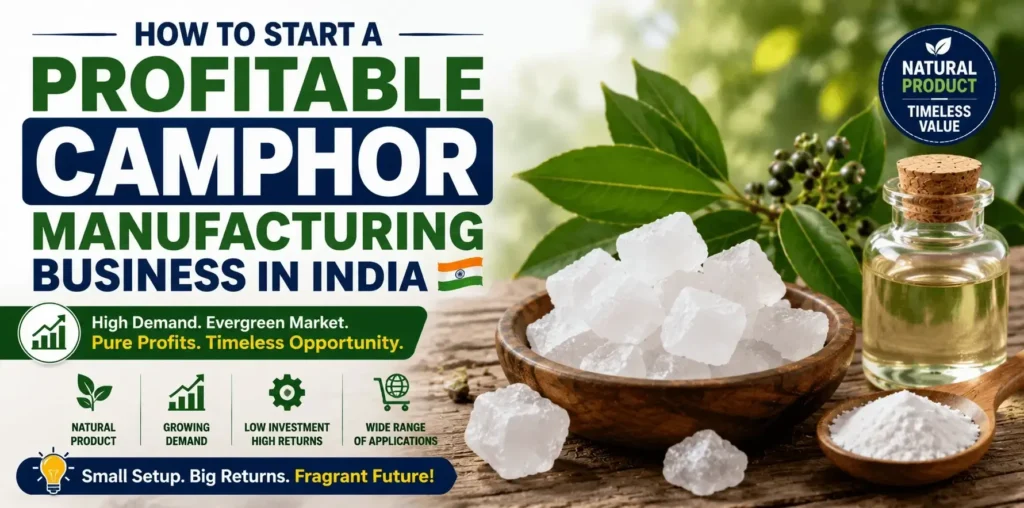
The Camphor Manufacturing Business is emerging as one of the most profitable small-scale manufacturing opportunities in India due to rising demand across religious, pharmaceutical, aromatherapy, and industrial sectors. Camphor, commonly known as Kapoor, is widely used in temples, pooja rituals, ayurvedic products, pain balms, air purification products, and fragrance applications. With relatively low investment, simple machinery setup, and strong year-round demand, many entrepreneurs and small investors are now exploring camphor manufacturing business opportunities in India. From camphor tablets and cones to scented and industrial-grade camphor products, the market continues to expand steadily. What is a Camphor Manufacturing Business? A Camphor Manufacturing Business involves producing camphor tablets, cones, powders, or industrial camphor products using camphor powder, molding machines, and packaging systems for religious, medicinal, and industrial applications. Is Camphor Manufacturing Business Profitable? Yes, the camphor manufacturing business can be highly profitable due to: continuous religious demand growing aromatherapy usage pharmaceutical applications low production cost strong wholesale market Profit margins can range between 25% to 45% depending on production scale, branding, and distribution efficiency. This guide explains the complete camphor manufacturing business setup process including machinery, raw materials, production methods, licensing, packaging, profit margins, and marketing opportunities. Understanding the Camphor Manufacturing Business Setup The foundation of a successful Camphor Manufacturing Business lies in understanding the raw materials, processing steps, machinery requirements, licensing, and market potential. To establish a fully functional camphor production unit, we must begin with well-researched planning, suitable investment, and quality control systems to ensure that our camphor meets market standards. Types of Camphor in the Market There are primarily three types of camphor available in the market: Edible camphor (used in small quantities in food and medicines) Religious camphor (used in temples and rituals) Industrial camphor (used in chemical and pharmaceutical industries) Our business plan should clearly define the target segment, as the machinery and quality parameters vary accordingly. Raw Materials Required To manufacture camphor, the primary raw materials include: Turpentine Oil – The base ingredient in synthetic camphor. Salts and stabilizers Packaging materials – Glass jars, plastic pouches, or aluminum containers. These materials should be sourced from reliable vendors to maintain consistency and quality in production. Machinery and Equipment Setting up a Camphor Manufacturing Business requires semi-automatic or fully automatic machines. The essential machinery includes: Camphor Tablet Press Machine Camphor Mixing Machine Camphor Slab Molding Machine (for slab-based camphor) Packaging Machine Weighing Machine Electric Dryer/Oven (optional for faster processing) A basic semi-automatic plant setup requires a space of around 500–1000 sq. ft. and an investment of ?8–15 lakhs, depending on the capacity. Camphor Manufacturing Process The typical camphor manufacturing process involves: Mixing – Turpentine oil is mixed with appropriate catalysts. Heating – The mixture is subjected to controlled heat to form white crystalline camphor. Cooling – The heated mixture is allowed to cool and harden. Molding/Pressing – Hardened camphor is crushed and molded into tablets, cubes, or slabs. Drying and Finishing – The product is dried and trimmed for final packaging. Packaging – Final camphor pieces are packed and labeled as per market standards. Careful handling and standardized production ensure product purity and safety. Licensing and Legal Compliance To start a Camphor Manufacturing Business, we must comply with local and national regulations: Udyam/MSME Registration Factory License NOC from State Pollution Control Board GST Registration Trademark Registration (optional but recommended) BIS Certification (for industrial camphor) FSSAI License (for edible camphor) Ensuring legal compliance helps avoid penalties and builds consumer trust. Target Market and Applications Camphor has widespread applications, which opens multiple market avenues: Household Use – Pooja rituals, aroma diffusers, cleaning. Pharmaceutical Industry – Balm, ointments, and medicinal vapors. Chemical Industry – Used in explosives and celluloid production. Food Industry – In very limited quantities, edible camphor is used in sweets. Ayurvedic Products – Soaps, oils, and creams. By diversifying the product line, we can tap into multiple revenue streams. Packaging and Branding Strategy Packaging plays a crucial role in the consumer perception of camphor. For this reason: We should use moisture-resistant, odor-proof, and tamper-proof packaging. Invest in attractive labeling with usage instructions and legal declarations. Establish a unique brand identity to build customer loyalty. Private labeling and white labeling options can also expand our market reach. Manpower and Operational Needs A small-scale camphor unit can operate with a modest team: 1 skilled technician to operate machines 2–3 unskilled workers for raw material handling, packaging 1 supervisor/manager for inventory, accounts, and compliance We must ensure proper training for safety and efficiency. Marketing and Distribution Channels To make our Camphor Manufacturing Business profitable, marketing is key: Offline Distribution – Tie-ups with religious shops, general stores, ayurvedic outlets, and chemists. Online Sales – Listing on Amazon, Flipkart, Jiomart, and personal e-commerce website. B2B Sales – Selling in bulk to temples, spas, or industrial buyers. Export Opportunities – Markets like Nepal, Bangladesh, and the Middle East show demand for Indian camphor. Aggressive marketing with digital promotion, social media advertising, and SEO optimization will ensure high visibility. Profit Margin and ROI Analysis The profit margin in the Camphor Manufacturing Business can range from 25% to 45%, depending on scale, sourcing efficiency, and distribution reach. A small unit producing 100 kg/day can expect to break even within 12–18 months under proper management. Key profit boosters include: Reducing raw material costs through bulk purchase Expanding product variety (e.g., scented camphor, camphor cones) Automating packing for large-scale production Challenges and Risk Factors Although profitable, camphor manufacturing has certain risks: Volatility in Turpentine Oil Prices Regulatory Scrutiny on Edible and Industrial Grades Low-quality competition offering substandard products Fire Hazard Risks – Camphor is flammable, so safety measures are crucial Strict quality control, brand differentiation, and robust safety protocols are necessary to mitigate these risks. Sustainability and Innovation Going forward, innovation can reshape the industry: Eco-friendly Camphor made from plant-based essential oils Scented and Designer Camphor Tablets for premium markets Smart Diffusers with Camphor Tablets for homes and offices Refill packs to promote eco-conscious packaging With rising awareness of aromatherapy and natural products, Camphor Manufacturing Business
Recovery of Ferric oxide (Fe2O3) & Titanium Dioxide (TiO2) from Bauxite Processing Waste
Bauxite residue, commonly known as red mud, is an industrial waste generated during the Bayer process for refining bauxite into alumina. Rich in iron oxide (Fe?O?) and titanium dioxide (TiO?), this residue has long posed a disposal challenge. However, advanced hydrometallurgical and pyrometallurgical techniques now enable the efficient extraction of Fe2O3 & TiO2 from bauxite residue, transforming waste into a valuable resource. Efficient Techniques to Extract Fe?O? & TiO? from Bauxite Residue Understanding Bauxite Residue Composition Bauxite residue is primarily composed of iron oxides (30–60%), titanium dioxide (2–10%), alumina, silica, and trace rare earth elements. The variation in composition depends on the bauxite source and the processing conditions. The extraction of Fe2O3 & TiO2 from bauxite residue demands a targeted separation process based on chemical properties and particle size. Pre-Treatment and Classification The first step in the extraction process is pre-treatment, which involves drying and grinding the residue to a fine consistency. Screening and hydroclassification improve particle uniformity, which enhances the reaction kinetics in subsequent extraction stages. Magnetic separation may also be employed at this stage to concentrate Fe3O2, as it is strongly magnetic compared to other minerals present. Hydrometallurgical Leaching Techniques Leaching methods are effective for separating valuable metals. Acid leaching using hydrochloric or sulfuric acid dissolves both Fe and Ti compounds. Under optimized temperature (80–100°C), pressure, and acid concentration, Fe2O3 & TiO2 can be selectively leached from the residue. Iron Extraction: Iron dissolves as Fe²? or Fe³? ions. Controlling the redox environment ensures the desired ion species dominate, aiding in selective precipitation or solvent extraction later. Titanium Extraction: TiO? is generally less reactive but can form soluble complexes like TiOSO? or TiCl? under aggressive acidic conditions. Prolonged leaching (2–6 hours) improves recovery rates. Post-leaching, the solution undergoes solid-liquid separation to isolate the metal-rich filtrate from the inert residues. Solvent Extraction and Precipitation Solvent extraction is essential to isolate Fe2O3 & TiO2 from leachates. Chelating agents such as D2EHPA (Di-(2-ethylhexyl) phosphoric acid) selectively bind iron ions, which can then be stripped and precipitated as iron hydroxide, later calcined to form Fe?O?. Similarly, titanium can be extracted using organophosphorus solvents or precipitated directly as titanium hydroxide, then converted to anatase or rutile TiO? via thermal treatment. Alkaline Roasting and Leaching for TiO? Recovery Another method to extract TiO? from bauxite residue is through alkaline roasting. Mixing red mud with sodium carbonate and roasting at high temperatures (800–900°C) converts titanium compounds into water-soluble forms. These are subsequently leached with water, and titanium is recovered through precipitation and calcination. Carbothermic Reduction and Magnetic Separation A widely used method for Fe?O? recovery from bauxite residue involves carbothermic reduction, where carbon reduces iron oxides to metallic iron. Heating the residue with coke or coal at 1100–1200°C under a controlled atmosphere yields iron particles, which are magnetically separated from the slag. The remaining slag, rich in TiO?, may undergo further leaching or thermal treatment to recover titanium. Electrochemical Methods for Metal Recovery Electrowinning is a selective method to recover metals from leachates. Iron can be plated onto cathodes, while titanium, due to its high electrochemical potential, is typically recovered after prior enrichment and purification. Electrocoagulation may also aid in the co-precipitation of Fe2O3 & TiO2, especially in dilute systems. Waste Minimization and Circular Economy Impact Recovering Fe2O3 & TiO2 from bauxite residue aligns with sustainable industrial practices. The recovered iron oxide is suitable for use in pigments, metallurgy, and cement manufacturing. Manufacturers widely use titanium dioxide, a high-value product, in paints, plastics, and cosmetics. By valorizing bauxite residue, industries can minimize landfill use, reduce environmental hazards, and contribute to a circular economy. The reuse of reagents, water recovery systems, and process integration further enhances eco-efficiency. Pilot Projects and Commercialization Numerous pilot plants globally are validating the commercial feasibility of these recovery techniques. Notably: Kefalonia Process (Greece): Uses hydrochloric acid leaching followed by solvent extraction to recover iron and titanium. BRAVO Project (EU): Integrates pyro-hydrometallurgical routes for complete valorization of red mud. China’s Industrial Units: Employ magnetic separation and acid roasting for recovering Fe2O3 & TiO2 at scale. These models prove that recovery operations can be economically viable, especially with rising demand for strategic materials. Challenges in Industrial Scale-Up Despite technological advancements, a few challenges remain: High energy consumption in thermal routes. Acid management and neutralization of waste streams. Complex mineralogy affecting extraction efficiency. Need for integrated systems to handle multiple metals. To overcome these, continuous research is focusing on low-energy leaching agents, bioleaching, and hybrid methods combining hydrometallurgy with electrochemical processes. Conclusion The extraction of Fe2O3 & TiO2 from bauxite residue represents a promising pathway toward sustainable resource utilization. With efficient processes—ranging from acid leaching, roasting, magnetic separation, to solvent extraction—industries can recover high-purity iron oxide and titanium dioxide from what was once deemed waste. As technological maturity increases, these recovery systems will play a vital role in global metal supply chains. Visit the page Select and Choose the Right Business Startup for You for sorting out the questions arising in your mind before starting any business and know which start-up you can plan. We, at NPCS, endeavor to make business selection a simple and convenient step for any entrepreneur/startup. Our expert team, by capitalizing on its dexterity and decade’s long experience in the field, has created a list of profitable ventures for entrepreneurs who wish to diversify or venture. We update the list regularly to give you a steady dose of new and emerging opportunities. Contact Us