
Ink Manufacturing Process for Printing & Industrial Applications | How Ink is made for Writing, Printing, Offset & Inkjet.
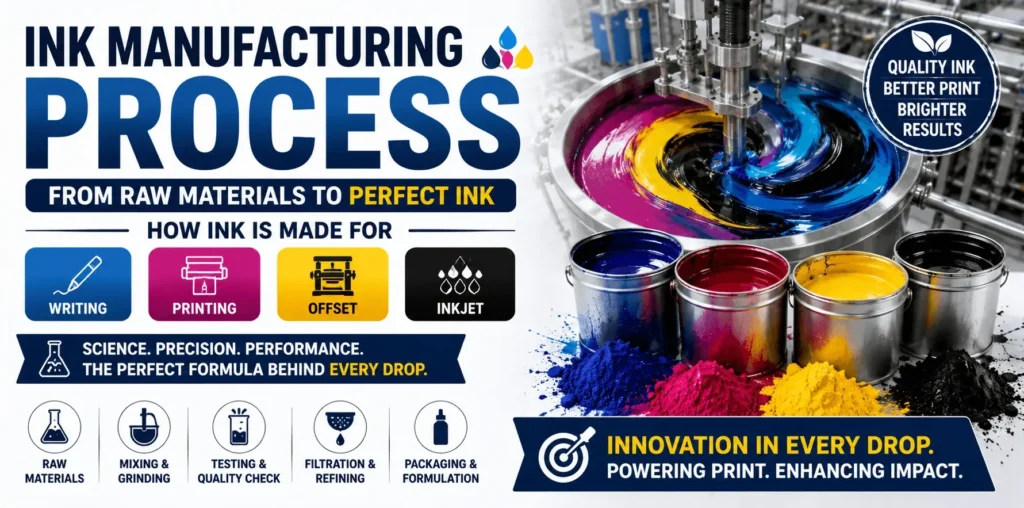
The ink manufacturing process is a sophisticated industrial procedure involving pigments, binders, solvents, additives, and advanced processing technologies to produce inks used in writing, printing, packaging, publishing, and industrial applications. Ink is an essential component of communication and artistic expression. Ink has a significant role in human history from Traditional pen inks to modern offset and inkjet printing systems, inks play a vital role in communication, branding, and commercial printing industries. Modern printing ink manufacturing combines chemistry, material science, and precision engineering to create products with high color consistency, durability, drying performance, and print quality. Different ink formulations are developed for offset printing, gravure printing, flexographic printing, screen printing, and digital inkjet applications. Offset Ink Manufacturing Process Offset printing inks are oil-based formulations designed for commercial high-speed printing applications. The process involves pigment dispersion, varnish preparation, milling, viscosity adjustment, filtration, and quality testing for smooth printing performance. Printing Ink Manufacturing Process Printing ink manufacturing involves mixing pigments, solvents, binders, and additives followed by dispersion, milling, filtration, and packaging to create industrial-grade printing inks. Inkjet Ink Manufacturing Process Inkjet ink manufacturing requires ultra-fine particle control and filtration to ensure smooth flow through printer nozzles without clogging. Water-Based Ink Manufacturing Process Water-based inks use water as the primary solvent and are widely used in eco-friendly packaging and flexographic printing applications. Gravure Ink Manufacturing Process Gravure inks are low-viscosity solvent-based inks used in packaging, magazines, decorative laminates, and publication printing industries. The Science Behind How Ink Is Made The process of how ink is made combines a rich blend of art, chemistry, and technology. Ink is not just a simple fluid with color; it is a carefully engineered product designed to meet specific demands based on its application—whether for writing, printing, or painting. The quality and composition of ink vary depending on the medium it is used with, such as pens, offset printers, or inkjet printers. Key Raw Materials Used in Ink Production The primary materials required to manufacture ink fall into four main categories: colorants, binders, solvents, and additives. Each of these components, moreover, plays a crucial role in determining the ink’s behavior, color consistency, and longevity. In particular, colorants define the hue and vibrancy, while binders ensure the pigment adheres to the surface. Meanwhile, solvents control the ink’s flow and drying time, and finally, additives enhance specific properties such as UV resistance, gloss, or durability. 1. Colorants (Pigments and Dyes) Colorants are the agents responsible for the ink’s hue. There are two main types: pigments and dyes. Pigments are finely ground particles that remain suspended in the binder, providing opacity and UV resistance. Dyes, on the other hand, dissolve in the liquid medium, offering brighter and more vibrant colors, though they are often less fade-resistant. Examples of pigments include: Carbon black (for black ink) Titanium dioxide (for white ink) Phthalocyanine (for cyan and green tones) Common dyes include: Eosin (red) Methylene blue Acid yellow 2. Binders Binders are substances that hold the pigment particles together; moreover, they ensure proper adhesion to the paper or printing surface. In the ink industry, typical binders include natural gums, resins, or synthetic polymers. The choice of binder is critical; in fact, it can significantly influence properties such as drying time, durability, and glossiness of the ink. Therefore, manufacturers must carefully select binders based on the desired performance characteristics. Examples: Shellac Alkyd resins Acrylic resins Polyvinyl acetate 3. Solvents Solvents help to dissolve or disperse the ink ingredients and adjust the ink’s viscosity. Depending on the type of ink being produced, the solvent can either be water-based or oil-based. The volatility of the solvent also influences how quickly the ink dries. Examples: Water (used in most modern inkjet and eco-friendly inks) Ethanol Isopropyl alcohol Petroleum distillates 4. Additives Additives are optional ingredients added to modify specific properties of the ink. These include agents for improving flow, preventing clogs, enhancing UV resistance, or providing waterproof capabilities. Common additives include: Surfactants (for reducing surface tension) Dispersants Preservatives Defoamers UV stabilizers Step-by-Step Ink Manufacturing Process The manufacturing process of ink is both art and science, involving mixing, dispersion, milling, filtering, and packaging. Below is a breakdown of the primary stages in ink production: 1. Formulation and Mixing The process starts with selecting the appropriate raw materials and measuring them precisely. The pigments, binders, solvents, and additives are weighed based on the type of ink and its intended use. These materials are then mixed in a large batch mixer. The goal at this stage is to ensure the preliminary blending of components. 2. Dispersion of Pigments Since pigments are insoluble particles, they must be evenly dispersed throughout the mixture. This is achieved using high-speed dispersers or bead mills. Proper dispersion ensures that the ink maintains a uniform color and texture without clumping or settling. This is one of the most crucial steps when ink is made because poor dispersion can lead to quality issues like streaking, clogging, or inconsistent color application. 3. Milling and Grinding After dispersion, the ink mixture is subjected to a milling process using three-roll mills or ball mills. This step further breaks down pigment particles to micron or even nanometer sizes. The smaller the pigment particle, the smoother and more consistent the ink’s application. The milling process also enhances the ink’s gloss, transparency, and drying characteristics. It’s during this step that the full potential of the ink is unlocked. 4. Filtration Subsequently, once the ink has been milled to the desired fineness, it is carefully filtered to eliminate any unwanted solid residues or large particles. As a result, the ink remains stable over time and does not clog fine nozzles in printers or pens. 5. Quality Control Testing Before packaging, the ink undergoes rigorous quality control tests. Parameters such as pH, viscosity, color consistency, drying time, and rub resistance are measured. If any of these values fall outside acceptable ranges, adjustments are made to the formulation. For example: pH is adjusted using acids or bases Viscosity is changed by adding solvents or thickeners Color matching
Start Your Own Printing Business.
Starting your own printing business in 2025 is one of the most promising ventures for creative entrepreneurs. With low entry barriers, rising demand for customized products, and a wide variety of niches to explore, the printing industry continues to thrive in both B2B and B2C segments. Whether you want to print on T-shirts, mugs, packaging, or corporate materials, this business can offer excellent profit margins with scalable potential. This guide will walk you through every step of how to start your own printing business successfully in 2025. Why 2025 Is the Right Time to Start Your Own Printing Business The printing industry has evolved far beyond traditional paper-based services. With advanced digital and offset printing technology, on-demand customization, and e-commerce integrations, the opportunities today are massive. In 2025, businesses are increasingly turning to local or niche print shops for quality, quick turnaround, and creativity. From small-scale personalized gift items to large-scale signage, customers want originality and flexibility. This demand creates the perfect storm for anyone looking to start their own printing business with a modern edge. See Also: Make Money from Waste Types of Printing Businesses You Can Start Before diving into setup and operations, decide which niche or segment you want to target. Some of the most profitable and in-demand types in 2025 include: T-shirt and apparel printing Mug, bottle, and gift printing Customized stationery (business cards, brochures, letterheads) Large format printing (banners, hoardings, vinyls) Packaging and label printing 3D printing and rapid prototyping Each segment has its own startup cost, target customer, and operational complexity. Choose one that matches your budget, skill level, and interest. Market Research and Business Plan To start your own printing business the right way, begin with solid market research. Understand the demand in your local area or target market, study competitors, and identify your unique value proposition (UVP). For instance, if your city lacks quick-turnaround T-shirt printing shops, that could be your niche. Then, draft a business plan that outlines: Startup costs Equipment and materials Target audience and pricing strategy Marketing and sales approach Monthly financial projections Operational and staffing plans This plan will also be essential if you seek a bank loan or investor funding. Legal and Business Setup Starting a business legally means registering your entity and obtaining the necessary licenses. Depending on your region or country, here are typical steps: Register your business (sole proprietorship, partnership, or private limited company) Obtain GST or VAT registration (for tax purposes) Apply for a local business license or municipal approval Open a current account for business transactions Get liability insurance (especially if operating out of a rented unit) If you start your own printing business online-only, you may not require a storefront, but you’ll still need all legal permissions for selling and delivering customized items. Equipment and Software Your choice of equipment depends on the kind of printing you plan to offer. Below is a general list: Printers: Inkjet, Laser, Sublimation, DTG (Direct to Garment), UV printers, or Flex printers Heat press machines: For T-shirts, mugs, caps Cutting plotters and laminators (optional, but useful for signage or packaging) Computers and design software: Adobe Photoshop, CorelDRAW, Canva Pro Sufficient power supply or backup inverter While setting up to start your own printing business, avoid over-investing in top-end gear. Begin with reliable mid-range machines and upgrade as your customer base grows. Location and Workspace Depending on your budget and the type of services, you can either: Start from home (ideal for small-scale or online orders) Rent a shop in a commercial area (best for walk-ins and business clients) Set up a production-only unit with an online storefront Ensure your workspace has good ventilation, lighting, and safety features. A clean, professional-looking environment also instills trust if customers visit your store. Hiring Staff or Going Solo In the beginning, many choose to start their own printing business solo to save on labor costs. If you’re proficient in designing, printing, and handling clients, this is feasible. But as you scale, you may need to hire: A graphic designer Printing machine operators Delivery staff or courier partners Sales and customer service assistants You can also outsource some tasks like courier delivery or complex designing. Pricing Strategy Your pricing should be competitive but also sustainable. Factor in: Cost of raw materials Machine depreciation Electricity and maintenance Packaging and delivery Labor (even if it’s just your own time) Offer tiered pricing for bulk orders and promotional discounts during the launch to attract customers. Use transparent pricing on your website or brochures. See Also: Converting Waste Agricultural Biomass into a Resource Marketing and Branding Once you’re ready to start your own printing business, it’s time to spread the word. Marketing can be both digital and offline. Some ideas include: Create a strong brand identity: Logo, colors, and name that reflect professionalism Launch a website: Showcase services, pricing, portfolio, and allow online ordering Use Instagram and Facebook: Post daily reels or carousels of new prints or client testimonials Join local WhatsApp or Telegram groups: Offer discounts to local members Collaborate with businesses: Offer them printing deals in exchange for referrals Participate in local exhibitions or flea markets Google My Business and online marketplaces like Amazon, Flipkart, or Etsy can also expand your customer base. Managing Orders and Customer Service Good customer service and timely delivery can set you apart in this industry. Use simple tools like: Google Forms or Shopify for order taking WhatsApp or email for order confirmation and proofs Trello or Notion for task management Razorpay or Paytm for easy online payments Courier aggregators like Shiprocket for affordable shipping Happy customers mean repeat orders, referrals, and better reviews. Financial Planning and Growth To sustain and grow once you start your own printing business, plan your finances well. Monitor daily expenses, calculate profit margins, and reinvest profits wisely. Set goals: Break-even within 6–12 months Add new machines or services after year one Target B2B clients like event companies, schools, and corporates Expand to e-commerce or international markets with print-on-demand models Accounting
Packaging Business of Cereal, Spices, Edible Oils, Drinking Water, Chocolate and Confectionery, Fruits and Vegetables, Marine Products
India’s fast-growing FMCG and food manufacturing industry has created a significant demand for reliable, safe, and attractive food packaging solutions. From dairy products to ready-to-eat meals, spices, snacks, and bakery items—packaging plays a vital role in branding, shelf life, hygiene, and consumer trust. As a result, setting up a food packaging business in India has emerged as a lucrative venture for entrepreneurs who want to tap into the booming processed and packaged food segment. Moreover, with increased government focus on food safety and export potential, the opportunities in this field are expanding across both urban and rural regions. How to Start a Food Packaging Business in India | Profitable FMCG Setup A food packaging business involves sourcing or manufacturing packaging materials and supplying them to food producers or packaging food products under your brand. The business can cater to diverse sectors like dairy, bakery, snacks, frozen food, spices, pulses, condiments, and more. With flexible entry levels, one can start small with manual operations and scale up to fully automated packaging plants as demand grows. See Also – Manufacturing Business Plans 1. Decide Your Packaging Model There are two major approaches to launching a food packaging business: A. Contract Packaging (Co-Packing):You package food products on behalf of other FMCG companies. They supply raw food material, and you supply them with a finished, retail-ready packaged product. B. Private Label Packaging:You purchase bulk food items (like dry fruits, snacks, flour, etc.) and package them under your own brand. This model gives you full branding control and better margins. Moreover, some entrepreneurs also combine both approaches—co-packing during initial months and launching their private labels later. 2. Select the Food Categories to Target Choose your packaging focus based on local demand, ease of sourcing, and competition. Popular packaging segments in India: Dry snacks (namkeen, chips, khakhra) Bakery goods (biscuits, rusks, cookies) Pulses, grains, and flours Spices and masala powders Ready-to-eat meals and frozen foods Pickles, chutneys, sauces Dairy (curd, paneer, milk packets) Moreover, eco-conscious packaging for organic or healthy products is gaining popularity in Tier 1 and export markets. 3. Investment and Machinery Requirements The investment required for a food packaging business depends on scale, automation, and product type. Small-scale setup (semi-automatic): ?5 – ?10 lakhsMedium-scale setup (with batch packaging): ?15 – ?30 lakhsLarge-scale plant (fully automatic, multi-line): ?50 lakhs+ Basic machinery includes: Weighing and filling machine Form Fill Seal (FFS) machine Vacuum sealer or nitrogen flushing machine (for chips/snacks) Labeling and coding machine Batch printing equipment Heat sealing machine Moreover, investing in food-grade stainless steel equipment helps with hygiene compliance and export readiness. 4. Premises and Factory Setup Your unit should follow FSSAI and BIS safety guidelines: Minimum area: 500–1000 sq. ft. for basic setup Segregated zones for storage, processing, packaging, and dispatch Pest-proof environment Dust-free and well-ventilated work area Adequate power supply and water source Moreover, installing CCTV and quality inspection units increases reliability for B2B clients. 5. Raw Materials and Packaging Supplies Depending on your business model, you’ll need: Food-grade packaging materials (LDPE, HDPE, BOPP, PET, glass jars, or paper pouches) Bulk food ingredients (if doing private label) Labels and stickers (custom-printed with brand info) Sealing films, liners, and zip locks (as needed) Pallets and cartons for transport Moreover, source your supplies from reliable manufacturers and get them printed in compliance with FSSAI packaging guidelines. 6. Legal Requirements and Licensing To start a food packaging business in India, ensure compliance with national food safety and business standards. Mandatory licenses: FSSAI License – Food Safety and Standards Authority of India GST Registration – For invoicing and taxation Udyam Registration – For MSME classification and subsidies Factory License (if applicable) – For units with more than 10 workers Pollution Control NOC – For medium/large operations Trade License – From local authorities BIS Standards (Optional) – For rigid compliance and exports Moreover, your packaging labels must include net weight, ingredients, batch number, MFG/EXP date, MRP, and FSSAI logo. 7. Branding and Label Design In the FMCG world, packaging is your first advertisement. Invest in: Attractive pouch or box designs Logo, colors, and fonts that reflect your brand message Clear nutritional info and product benefits QR code or website for digital access Transparent windows for food visibility (optional) Differentiated SKUs – ?10 packs, 100g, 250g, 1kg bulk packs Moreover, custom-packaged products with smart branding can compete against larger brands even in supermarkets. 8. Distribution and Sales Strategy Selling your packaged products or services requires strategic channel development: Offline: Supply to retail shops, supermarkets, kirana stores Offer packaging services to nearby food producers Sell in bulk to wholesalers, institutions, restaurants Online: Sell through Amazon, Flipkart, and Jiomart Create a Shopify or WooCommerce website Join B2B platforms like IndiaMART, TradeIndia Use Google My Business for local SEO Moreover, food delivery platforms (Swiggy, Zomato) now allow listing of FMCG items through Instamart-type models. Profit Margins and Business Potential The food packaging business works on high volume and brand trust. Margins vary by product and market: Packaging-only contracts: 10%–25% Private label products: 30%–60% Specialty food packaging (organic/eco): Up to 70% Breakeven period: 12–18 months for semi-automatic unitsRecurring sales: High, due to FMCG frequency and shelf restocking Moreover, with over 30 lakh food businesses in India and thousands of new brands launching monthly, demand for reliable packaging partners is constantly rising. Future Trends in Food Packaging To stay competitive, your food packaging business should embrace future-ready trends: Sustainable Packaging: Bio-degradable pouches, compostable trays Smart Packaging: QR-code enabled traceability, freshness indicators Minimalist Branding: Clear fonts, matte finish, color coding Convenience Packaging: Zip pouches, easy-peel lids, single-serve packs Customization at Scale: Low MOQ for startups, seasonal designs Moreover, investing in digital printing or variable-data printing opens doors to short-run, customized packaging—perfect for small brands. Government Schemes and Subsidies The Indian government offers several support programs for food processors and packaging units: PMFME Scheme (under MoFPI) – Subsidy for food processing + branding MUDRA Loan – For micro-entrepreneurs in food & packaging NSIC and SIDBI schemes – For packaging equipment leasing PLI Scheme –
How to Start Manufacturing Plant of PP (Polypropylene) Woven Sacks?
India’s industrial packaging sector is witnessing rapid transformation, with traditional jute and single-use plastics being replaced by stronger, cost-effective, and recyclable materials. One such dominant player is the polypropylene (PP) woven sack, widely used across agriculture, fertilizer, cement, and retail industries. Lightweight yet durable, these sacks are essential for bulk goods packaging, both in domestic and export markets. Setting up a PP Woven Sacks Manufacturing Plant can be a profitable venture, especially in India where the demand is growing year-round. Moreover, the relatively low raw material cost, consistent demand, and potential for customization make it an ideal business for manufacturers seeking long-term growth. How to Start a PP Woven Sacks Manufacturing Plant in India A PP Woven Sacks Manufacturing Plant involves converting polypropylene granules into woven fabric and then processing it into durable, customizable sacks. These sacks are used to package everything from rice, wheat, sugar, and pulses to cement, fertilizers, and even shopping items. As industries expand and shift towards efficient packaging, the demand for woven sacks is expected to increase further—especially with government initiatives promoting packaging standardization and MSME growth. See Also – Business to Start in Rajasthan Understanding the Scope and Applications PP woven sacks are used by nearly every industrial sector that requires safe, low-cost packaging for bulk and granular products. Their ability to be moisture-resistant, stackable, and customizable makes them a preferred choice over jute or paper bags. Industries that heavily depend on woven sacks include agriculture, construction, food processing, and chemicals. In fact, government food supply programs also use these sacks for rice and grain distribution. Moreover, many private-label companies prefer printed woven sacks for branding and logistics tracking. Starting your PP Woven Sacks Manufacturing Plant in proximity to such industries helps reduce transport costs and increases repeat business from local buyers. Investment and Manufacturing Models Starting a woven sack plant can be done at different scales. Small and medium enterprises may begin with a conversion unit, while large players often invest in fully integrated systems. For small-scale setups, entrepreneurs can purchase woven fabric rolls from larger units and focus on cutting, stitching, and printing operations. This model requires lower capital and faster setup time. On the other hand, a medium to large-scale PP Woven Sacks Manufacturing Plant involves full-fledged production—from extrusion and weaving to printing and lamination. The initial investment for a semi-automatic unit ranges from ?20–30 lakhs, while an integrated plant can cost ?1 crore or more depending on production capacity. Moreover, the decision should be based on your budget, technical knowledge, and proximity to target industries. Machinery and Plant Setup A fully operational PP Woven Sacks Manufacturing Plant requires specialized equipment for each stage of production. These include: Extrusion Line: Converts polypropylene granules into flat tapes Winding Machines: Wind tapes onto bobbins for weaving Circular Weaving Looms: Create tubular woven fabric Lamination Machine: Adds a moisture-resistant coating Printing Machine: Adds logos and labels on sacks Cutting & Stitching Machine: Converts fabric into final bags Heat Cutting/Sealing Machine: Prevents fraying of fabric edges Each section of the plant should be properly ventilated, dust-free, and powered with a stable 3-phase electricity connection. Moreover, temperature-controlled zones near the extrusion section improve product consistency and reduce waste. Raw Materials and Suppliers The primary raw material for PP woven sacks is polypropylene granules, which are melted and stretched into thin strips to form tapes. Other essential materials include: Color masterbatches (for colored or printed sacks) LDPE or BOPP films (for laminated sacks) Printing ink and solvents Polyester threads (for stitching) Paper inserts or liners (for food-grade bags) These materials can be sourced from domestic suppliers such as Reliance Industries, GAIL, IOCL, or imported for bulk orders. Moreover, working with reliable suppliers ensures consistent quality and uninterrupted production cycles. Location and Infrastructure Requirements For a standard PP Woven Sacks Manufacturing Plant, the ideal location is an industrial zone with easy access to transport and power. Minimum space requirements: Small-scale unit: 1500–2500 sq. ft. Medium-scale: 4000–6000 sq. ft. Large integrated plant: 10,000 sq. ft. or more Your infrastructure should include storage space for raw materials, production and assembly areas, lamination and printing sections, quality testing lab, and finished goods storage. Moreover, maintaining fire safety systems, ventilation, and proper waste disposal is mandatory to comply with environmental and labor regulations. Regulatory Compliance and Licensing To operate legally, your PP Woven Sacks Manufacturing Plant must obtain the following: Udyam Registration (MSME) GST Registration Pollution Control NOC from State Pollution Control Board Factory License under Factories Act Electricity and Water Supply Approval Trade License from your municipal corporation IEC Code (for exports, optional) Moreover, following BIS standards (IS 9755:2003) for woven sacks used in food and fertilizer packaging enhances your credibility and helps attract government or export contracts. Manpower and Staffing Running a medium-scale plant requires 12–30 workers depending on automation level. Roles include: Machine operators Quality control personnel Stitching/printing staff Maintenance technician Inventory manager Sales and admin team Training workers in machine safety, material handling, and basic troubleshooting can significantly improve operational efficiency and reduce downtime. Moreover, hiring experienced supervisors helps ensure quality standards and compliance with customer specifications. Packaging, Logistics, and Delivery Once manufactured, PP woven sacks are usually packed in bundles of 100 or 500 units for dispatch. Efficient packaging ensures: Bags don’t get creased or damaged in transit Proper size and count are maintained Loading/unloading is fast and safe Logistics plays a crucial role in your supply chain. Tie-ups with local transporters or fleet services enable timely delivery to industrial customers. Moreover, maintaining proper batch records and stock movement data helps manage repeat orders and customer audits. Marketing and Sales Strategy To grow your PP Woven Sacks Manufacturing Plant, focus on building strong relationships with B2B buyers. Effective strategies include: Meeting purchase managers of cement, fertilizer, and sugar companies Joining platforms like IndiaMART, TradeIndia, and ExportersIndia Listing your plant on Google Business and creating a professional website Running ads on LinkedIn and participating in industry expos Offering customized printing and flexible MOQ (minimum order quantity) Moreover, building
Circular Loom, Woven Sacks, HDPE PP Bag and Fabric Making. Best Small Business Ideas in India
India’s growing demand for efficient, durable, and cost-effective packaging has made woven sacks one of the most sought-after solutions for bulk material handling. From agriculture and cement to chemicals and food grains, industries across sectors are adopting HDPE and PP woven sacks for reliable packaging. Among the different manufacturing methods, Circular Loom Woven Sack Manufacturing stands out due to its automation, scalability, and ability to produce seamless tubular fabric that increases sack strength and efficiency. Moreover, the technology is affordable for both small and large-scale entrepreneurs aiming to tap into the thriving industrial packaging market. Starting a Circular Loom Woven Sack Manufacturing Business in India A Circular Loom Woven Sack Manufacturing unit uses high-speed circular weaving machines to produce tubular woven fabric from polypropylene or HDPE tapes. This fabric is then converted into sacks used widely in bulk packaging. These sacks are lightweight, tear-resistant, and reusable—making them an ideal choice for packaging commodities like fertilizer, food grains, animal feed, cement, and more. Understanding the Demand and Application Areas Circular loom-based woven sacks are used in virtually every heavy and granular packaging segment. These include rice, sugar, cement, urea, poultry feed, sand, plastic granules, and salt. Government procurement agencies also prefer woven sacks due to their strength and reusability. Moreover, sectors like e-commerce, retail, and exports are increasingly moving to laminated and printed woven sacks, further increasing demand. The consistent consumption across rural and industrial sectors makes Circular Loom Woven Sack Manufacturing a reliable and recession-proof business idea. Starting a unit in proximity to agricultural zones or industrial parks provides easy access to raw material suppliers and local buyers. See Also – Business Ideas for Small and Medium Scale Businesses Key Components of the Manufacturing Process The manufacturing of circular loom woven sacks involves several sequential processes, starting from raw material extrusion to the final sack stitching. Extrusion of TapesPolypropylene or HDPE granules are melted and extruded into flat tapes. These are then cooled, stretched (oriented), and wound onto bobbins. Weaving in Circular LoomsThe bobbins are mounted on circular looms, which weave the tapes into seamless tubular fabric. The circular loom offers uniform tension, strength, and high-speed output. Lamination (Optional)For moisture resistance, a thin LDPE or BOPP layer is laminated over the woven fabric. This step is essential for packaging items like sugar, flour, and salt. PrintingFlexographic or rotogravure printing machines are used to add branding and product information on the sacks. Cutting and StitchingThe fabric is cut into desired lengths, bottom-stitched, and optionally gusseted or folded. Some machines can stitch liners for food-grade applications. Moreover, modern plants often integrate quality control systems to ensure dimensional accuracy and burst resistance. Machinery Required for a Circular Loom-Based Plant To start a Circular Loom Woven Sack Manufacturing unit, you need to procure a set of core machines: Tape Extrusion Line: Converts PP/HDPE granules into flat tapes Circular Looms: 4–10 shuttle looms are common for high-speed tubular weaving Online/Offline Lamination Plant (optional) Printing Machine: Flexographic for 1–4 color printing Cutting & Stitching Machine Heat Cutting/Ultrasonic Machine (for anti-fray edges) A small to medium plant with 4 circular looms and basic conversion setup may cost between ?25–35 lakhs. A fully integrated plant with extrusion, lamination, and printing will require ?1 crore+ investment. Moreover, choosing energy-efficient looms and machines helps save power in long-term operations. Raw Materials and Sourcing The primary materials required for production include: Polypropylene (PP) or HDPE Granules – The main raw material used for extrusion Color Masterbatches – For colored sacks (white, blue, green, etc.) LDPE Granules – For lamination (if required) Printing Ink and Solvents Threads and Labels – For stitching and branding These raw materials are widely available in India from suppliers like Reliance Industries, GAIL, IOCL, and other polymer distributors. Moreover, buying directly from bulk suppliers or manufacturers allows better negotiation on rates and payment terms. Factory Setup and Infrastructure A Circular Loom Woven Sack Manufacturing unit requires an organized production layout for smooth workflow: Space requirement: 3000–5000 sq. ft. for small to mid-scale plants Power load: Minimum 40–60 HP depending on the number of looms Water source: Required for cooling during extrusion Ventilation: Crucial to maintain air quality near lamination and extrusion areas Storage: Sufficient warehousing for raw materials and finished sacks Moreover, proximity to transport hubs (rail/road) reduces logistics costs and improves delivery timelines. Labor and Staffing Needs Your plant requires a mix of skilled and semi-skilled labor: Machine operators for looms and extrusion Technicians for maintenance and troubleshooting Stitching and cutting staff Quality control and packaging workers Administrative and sales personnel For a medium-scale unit, 15–20 workers are sufficient in one shift. Moreover, training your workforce on machine safety and efficiency improves output and reduces downtime. Licensing and Compliance To legally operate your unit, acquire the following licenses: Udyam/MSME Registration – For government benefits GST Registration – For tax compliance Factory License – Under Factories Act, if you employ over 10 workers Pollution Control NOC – Mandatory for extrusion and lamination Fire Safety Certificate Electricity Connection Approval IEC Code – If planning for exports Moreover, aligning your product with BIS standards (e.g., IS 9755:2003 for HDPE sacks) boosts your credibility for institutional and international buyers. Selling and Marketing the Woven Sacks Your marketing strategy should focus on industrial clients and packaging dealers. You can grow your Circular Loom Woven Sack Manufacturing business through: Direct tie-ups with fertilizer, cement, grain, and salt companies Supplying to government procurement agencies Listing your unit on B2B platforms like IndiaMART and TradeIndia Creating a professional website with product specs Participating in industrial expos and trade fairs Moreover, offering customized printing, low MOQ (minimum order quantity), and faster lead times gives you a competitive edge in the B2B space. Cost and Profitability Analysis The profitability of your Circular Loom Woven Sack Manufacturing unit depends on your production volume, automation level, and customer base. Cost per 50 kg bag (standard): Raw material: ?8–10 Printing, stitching, labor: ?2–3 Total cost: ?10–13 Selling price: ?15–18 Net margin: 25–40% depending on scale and value addition Breakeven
Corrugated Cardboard Boxes Manufacturing Unit with Printing Manufacturing Plant
Corrugated boxes are one of the most versatile and widely used packaging materials in the world. From electronics to groceries, these boxes are indispensable in transportation and storage due to their durability, recyclability, and cost-effectiveness. With the boom in e-commerce, logistics, and export industries, corrugated box manufacturing has emerged as a highly profitable venture. If you are planning to start a manufacturing business that combines low risk with steady demand, investing in this sector could be a smart decision. Why Corrugated Box Manufacturing is a Profitable Business One of the biggest drivers behind the rising demand for corrugated box manufacturing is the global shift towards sustainable and biodegradable packaging. Corrugated boxes are made from recycled paper and are fully recyclable, making them a preferred choice over plastic alternatives. Moreover, the expansion of online retail, pharmaceuticals, and FMCG sectors requires a constant supply of customized and sturdy packaging. As a result, the market for corrugated boxes is growing at a steady pace, both in domestic and international markets. Starting a corrugated box manufacturing plant not only caters to this growing demand but also allows scalability, diverse customer base, and consistent revenue. The investment and machinery requirements are moderate, and once the production setup is complete, operations can begin quickly. See Also: Food & Agro Processing Market Overview and Demand The Indian corrugated packaging market is expected to reach over ?50,000 crores in the next few years, driven by retail growth and international trade. Globally, e-commerce is the single largest consumer of corrugated boxes. Companies such as Amazon, Flipkart, and grocery delivery services rely heavily on packaging solutions that are lightweight yet durable. Additionally, electronics, furniture, textiles, and auto parts manufacturers use customized corrugated boxes to ensure safe delivery and brand presentation. Urbanization, lifestyle changes, and increased consumption of packaged goods are also propelling the demand for corrugated packaging. Government regulations restricting the use of plastic have further encouraged industries to switch to eco-friendly options like corrugated boxes. Setting Up the Corrugated Box Manufacturing Plant To start a successful corrugated box manufacturing unit, certain steps need to be followed for smooth planning and execution: 1. Business Registration and Compliance:Register your business as a sole proprietorship, partnership, LLP, or private limited company. Obtain necessary licenses such as Factory License, GST registration, MSME Udyam registration, Pollution Control NOC, and Fire Safety Clearance. 2. Location and Infrastructure:Choose a location with easy access to raw materials, labor, transportation, and markets. A space of at least 3,000–5,000 square feet is required for machinery installation, raw material storage, and finished goods stockpiling. 3. Raw Materials:The primary raw materials for corrugated box manufacturing include kraft paper, adhesives, stitching wire, and printing inks. These can be sourced from local suppliers or imported in bulk for cost efficiency. 4. Machinery and Equipment:Invest in semi-automatic or fully automatic corrugated box making machines based on your budget and production needs. Key machines include: Corrugation Machine (Single/Double Wall) Sheet Cutter Slotter Machine Printing Machine (Flexo or Offset) Die Cutter or Punching Machine Stitching Machine Pasting Machine The cost of machinery for a small-to-medium unit can range from ?20 to ?50 lakhs. 5. Skilled Workforce:Hire machine operators, quality controllers, packaging staff, and supervisors. Proper training in machine handling and safety ensures efficiency and product quality. 6. Power and Utilities:Ensure a steady power supply with backup options. Corrugated box plants require heavy-duty electric connections, clean water supply, and good ventilation. Production Process The corrugated box manufacturing process involves the following steps: Corrugation: Kraft paper is pass through the corrugating machine to create fluted paper, which adds strength. Pasting: The flute paper is glued between two liner papers to form corrugated sheets. Drying and Cutting: Sheets are dried using heaters or sun-drying and cut into require sizes using the sheet cutter. Printing and Slotting: Company branding, logos, or handling instructions are print on the box surfaces. Slotting machines cut slits for folding. Stitching or Gluing: The boxes are stitched or glue into shape and test for strength and quality. Bundling and Dispatch: Finish boxes are pack into bundles and shipped to customers. This structured process ensures durability, neat appearance, and customization as per client specifications. Marketing and Sales Strategy For a corrugated box manufacturing plant to thrive, strong marketing is essential. Here are some ways to promote your products: Business Website: Build an informative and professional website showcasing your product range, capacity, and services. Social Media and B2B Platforms: Use platforms like LinkedIn, IndiaMART, and TradeIndia to reach wholesalers, retailers, and exporters. Local Outreach: Approach businesses in your area – electronics shops, pharmaceutical companies, fruit/vegetable vendors, and e-commerce sellers. Participate in Trade Fairs: Attend packaging and manufacturing expos to network with bulk buyers and suppliers. Offer Customization: Providing printed, size-specific, or multi-layer boxes helps attract niche clients. Creating long-term supply contracts with e-commerce warehouses and manufacturers ensures continuous orders and profitability. Financial Considerations The cost of establishing a medium-scale corrugated box manufacturing plant can vary between ?40 lakhs to ?1 crore, depending on land, machinery, and labor costs. Here’s a basic breakdown: Land & Building: ?15–20 lakhs (if not rented) Machinery: ?20–50 lakhs Raw Material: ?5–10 lakhs (initial stock) Labor & Utilities: ?2–5 lakhs monthly Miscellaneous (marketing, licenses, transport): ?2–3 lakhs Banks and financial institutions offer loans under MSME schemes with subsidies and lower interest rates. Working capital can also be arrange through overdraft facilities. A well-run unit can break even in 1–2 years, with average monthly profits ranging from ?1 to ?3 lakhs, depending on production volume and client base. Challenges and Solutions Like any business, corrugated box manufacturing also has challenges: Raw Material Price Fluctuations: Kraft paper rates often fluctuate, affecting profit margins. Solution: Buy in bulk and negotiate long-term supply contracts. Quality Consistency: Substandard glue or poor machine handling can lead to rejection. Solution: Train staff, conduct regular QC checks, and use reliable materials. High Competition: Many small units operate locally. Solution: Differentiate through custom design, quick delivery, and B2B relationships. With strategic planning and focus on quality, these hurdles can be overcome easily.
Industrial Polymers, Additives, Colourants and Fillers
Industrial polymers play a vital role in modern manufacturing and product development. These synthetic materials are engineered to deliver strength, durability, flexibility, and resistance to environmental factors. From the plastics that shape our daily lives to the high-performance resins used in aerospace and automotive industries, industrial polymers are essential components across sectors. The versatility of these materials is enhanced further through additives like fillers, pigments, plasticizers, stabilizers, and flame retardants, which tailor polymers for specific applications. As industries evolve toward more sustainable and performance-oriented materials, the demand and innovation within the industrial polymers domain continue to expand. Understanding Industrial Polymers and Their Additives At its core, industrial polymers refer to synthetic or semi-synthetic compounds that consist of long chains of repeating molecular units known as monomers. These polymers are formulated through chemical reactions such as polymerization, which can be classified into addition and condensation polymerization. Depending on the type of monomers used, the properties of these polymers can be significantly modified to serve unique purposes. Polymers are broadly categorized into thermoplastics, thermosets, and elastomers. Thermoplastics like polyethylene and polypropylene can be melted and reshaped multiple times, making them ideal for recycling and molding applications. Thermosetting polymers, such as epoxy and phenolic resins, harden permanently after curing and offer excellent thermal and chemical resistance. Elastomers, including rubber and silicone, possess elastic properties that allow them to return to their original shape after deformation. See Also: Aluminium Downstream Projects Additives in Industrial Polymers Additives play a critical role in enhancing or modifying the properties of industrial polymers. These include: Fillers – These are materials added to polymers to reduce production costs, improve mechanical strength, and enhance properties like thermal stability and hardness. Common fillers include calcium carbonate, silica, talc, and clay. Depending on the application, fillers may be inert or reactive. Pigments and Dyes – Pigments provide color to the polymer material. Inorganic pigments like titanium dioxide are widely used for white and opaque coloring, while organic pigments offer a range of vibrant shades. These additives also improve resistance to UV light, weathering, and fading. Plasticizers – These are used to increase flexibility and workability. Particularly common in PVC production, plasticizers reduce the brittleness of polymers, making them suitable for wire insulation, flooring, and synthetic leather. Examples include phthalates and adipates. Stabilizers – Thermal and UV stabilizers help maintain the integrity of industrial polymers under harsh conditions. Heat stabilizers prevent degradation during processing, while UV stabilizers protect products exposed to sunlight. Flame Retardants – These additives inhibit or resist the spread of fire. Depending on the application and environmental regulations, flame retardants may be halogenated compounds or non-halogen alternatives like aluminum hydroxide. Antioxidants – To prevent oxidation and degradation over time, especially in polymers exposed to air and heat, antioxidants are commonly incorporated during production. Lubricants and Antistatic Agents – Lubricants improve the processability of polymers by reducing friction during extrusion or molding. Antistatic agents reduce the buildup of static electricity, essential for electronic and packaging applications. Applications of Industrial Polymers The applications of industrial polymers span a wide array of sectors due to their customizable properties: Packaging Industry – Polymers such as polyethylene terephthalate (PET), low-density polyethylene (LDPE), and polypropylene (PP) are used for bottles, films, containers, and flexible packaging. Additives like pigments and stabilizers are crucial for appearance and shelf-life. Automotive Sector – Lightweight, fuel-efficient vehicles rely heavily on polymer parts. ABS, polyamide (nylon), and polyurethane are used in dashboards, bumpers, seats, and under-the-hood components. Fillers and flame retardants enhance thermal and mechanical properties. Construction Materials – PVC pipes, insulation foams, roofing membranes, and sealants are all made using industrial polymers. UV stabilizers and flame retardants ensure long-lasting and safe usage. Electronics and Electricals – Polymers are essential in wire coatings, circuit boards, and casings. Antistatic agents and flame-retardant materials are critical for safety and performance. Medical Devices – Biocompatible polymers like polyethylene, polypropylene, and silicone rubber are used in medical tubing, syringes, implants, and packaging. Additives help maintain sterility and longevity. Textiles and Fibers – Synthetic fibers like polyester, acrylic, and nylon are made from industrial polymers. Additives like UV stabilizers and dyes enhance comfort, durability, and aesthetics. Advancements in Polymer Technology The evolution of industrial polymers is driven by the need for sustainable, high-performance, and cost-effective materials. Some key advancements include: Biodegradable and Bio-based Polymers – With growing environmental concerns, manufacturers are exploring alternatives like polylactic acid (PLA) and polyhydroxyalkanoates (PHA), derived from renewable sources. These polymers decompose more readily and reduce carbon footprints. Nanocomposites – Integrating nanoparticles into polymer matrices enhances mechanical, thermal, and barrier properties. These are used in automotive, aerospace, packaging, and electronics for improved performance. Recyclable Thermosets – Traditionally, thermosets could not be remelted. Recent innovations aim to develop recyclable thermosetting polymers, reducing industrial waste. Smart and Conductive Polymers – Polymers that can respond to stimuli (like temperature, pH, or light) are being developed for use in sensors, flexible electronics, and medical applications. Market Trends and Growth Prospects The global industrial polymers market continues to grow due to the increasing demand in developing economies, especially across Asia-Pacific, for packaging, automotive, and construction materials. According to industry reports, the market is projected to exceed $600 billion by 2030. Key market drivers include: Rising urbanization and industrialization Demand for lightweight and durable materials Expansion in healthcare and medical device manufacturing Growth in electric vehicles and consumer electronics Challenges in the industry involve regulatory pressure related to environmental impact, volatility in raw material prices, and managing end-of-life disposal. However, innovations in recycling technologies and green chemistry are paving the way for sustainable growth. Sustainability and Environmental Considerations With the growing global focus on climate change and plastic pollution, the polymer industry is increasingly coming under scrutiny. Consequently, many companies are investing in green technologies to minimize dependence on fossil fuels and significantly reduce carbon emissions. Moreover, circular economy models—emphasizing the reuse, recycling, and recovery of polymers—are being actively endorsed by both governments and environmental organizations. In addition, policy frameworks and market incentives are accelerating the shift toward
Food Packaging Industry: Current, Future Potential, Market Trends
The food packaging industry plays a crucial role in preserving food quality, extending shelf life, and ensuring safety from production to consumption. As global consumption patterns evolve and the demand for convenience grows, the industry continues to innovate with sustainable materials, smart packaging, and automation technologies. Moreover, regulatory standards are becoming stricter, driving companies to adopt more transparent, eco-friendly practices. With health and hygiene taking center stage in the post-pandemic world, the food packaging industry is seeing rapid shifts in both consumer expectations and industrial processes. Food Packaging Industry | Trends, Growth & Future Scope The food packaging industry is undergoing transformative change, driven by technological innovation, sustainability goals, and global demand. From biodegradable films to AI-driven packaging lines, the sector is moving towards solutions that meet the evolving needs of both businesses and environmentally conscious consumers. See Also : July 2017 Entrepreneur Key Trends Shaping the Industry Several pivotal trends are reshaping the landscape of the food packaging industry: Sustainable Packaging Materials: Bioplastics, paper-based laminates, and compostable films are replacing traditional plastics. Companies are reducing carbon footprints by adopting recyclable and biodegradable options. Smart and Active Packaging: Use of QR codes, temperature sensors, and freshness indicators enhances traceability and consumer interaction. Active packaging also includes materials that can absorb moisture or oxygen to prolong shelf life. Minimalist and Transparent Designs: Brands are moving toward clean labeling and eco-conscious design. Transparent packaging is gaining popularity as it emphasizes freshness and honesty. Customization and Short Runs: As consumer preferences diversify, businesses are adopting digital printing technologies to accommodate limited-edition and regional variants. Moreover, the demand for tamper-proof and resealable solutions has increased, especially in online grocery and ready-to-eat food segments. Growth Drivers of the Food Packaging Industry The food packaging industry is experiencing rapid growth across global markets due to the following key drivers: Urbanization and Lifestyle Changes: With more people living in cities and leading busy lives, there’s higher demand for ready-to-eat, frozen, and single-serve food products. E-commerce Expansion: Online food delivery platforms require durable and attractive packaging that ensures freshness and reduces damage during transit. Health and Hygiene Awareness: Post-pandemic, consumers prioritize packaging that protects food from contamination. As a result, hygienic, sealed, and disposable formats are in high demand. Technological Advancements: Automation, robotics, and IoT-based systems are streamlining production, reducing waste, and enhancing quality control. Government Regulations: Food safety laws and environmental norms are pushing manufacturers toward compliance through better packaging technologies and labeling practices. Moreover, packaging plays a significant role in reducing food waste, a key concern for both policymakers and consumers. Types of Packaging in the Industry The food packaging industry incorporates a wide range of materials and formats tailored for various food products. These include: Flexible Packaging: Pouches, sachets, and wraps made from films and foils. These are lightweight, cost-effective, and commonly used for snacks and dry foods. Rigid Packaging: Includes plastic containers, glass jars, and metal cans. These offer high durability and are ideal for sauces, beverages, and preserved foods. Semi-Rigid Packaging: Trays and clamshells used for fresh produce, meat, and bakery items. They balance protection with cost-efficiency. Edible Packaging: An emerging segment that includes film made from seaweed, rice, or starch that can be consumed along with the product. Moreover, the choice of packaging depends on product shelf life, transportation needs, environmental impact, and branding goals. Innovations in Food Packaging Innovation is at the heart of the modern food packaging industry. New technologies are transforming how packaging interacts with food, the environment, and consumers. Nanotechnology: Used to enhance barrier properties, improve shelf life, and provide antimicrobial protection. 3D Printing: Enables custom packaging prototypes and short-run designs at reduced costs. Modified Atmosphere Packaging (MAP): Controls oxygen and carbon dioxide levels to maintain freshness in perishable goods like meat, dairy, and vegetables. Smart Labels and Tags: Incorporate RFID, NFC, and QR codes for inventory management, tracking, and marketing engagement. Moreover, AI-powered systems can now analyze consumer behavior to design packaging that improves shelf appeal and brand loyalty. Sustainability Challenges and Solutions While growth is promising, the food packaging industry faces increasing pressure to reduce environmental impact: Plastic Waste: Single-use plastics contribute to pollution. Brands are phasing them out with recyclable, reusable, or compostable materials. Carbon Emissions: Packaging production and transportation account for a large share of emissions. Lightweight and minimalist designs help reduce these. Recycling Infrastructure: Many materials are not compatible with current recycling systems. Companies are investing in mono-materials that are easier to sort and process. Consumer Education: Clear labeling and awareness campaigns are helping consumers dispose of packaging responsibly. Moreover, certifications like FSC, BPI, and ISO 14001 give companies credibility when adopting green practices. Regional Insights and Market Segmentation The food packaging industry operates differently across regions: Asia-Pacific: Rapid industrialization, rising middle-class population, and increasing packaged food demand are fueling growth. North America: Focus on innovation, sustainability, and automation. Regulatory oversight is stricter, prompting the use of FDA-compliant and recyclable materials. Europe: Sustainability is a core focus, with legislation like the European Green Deal pushing for a circular economy in packaging. Middle East & Africa: Emerging markets with opportunities in urban centers and growing demand for processed foods. Moreover, segmentation by food type—beverages, bakery, dairy, meat, and frozen foods—shows varied packaging needs, each requiring tailored solutions. The Future Scope of the Food Packaging Industry Looking ahead, the food packaging industry is set to grow both in scale and sophistication: Sustainability Will Lead: Materials innovation will focus on eliminating plastic waste and increasing compostability without compromising functionality. Personalization and AI: Custom packaging experiences using consumer data will drive brand engagement and retention. Circular Economy Integration: Brands will close the loop with returnable packaging systems and refill stations. Stricter Regulations: Governments will mandate eco-labeling, product traceability, and reduced material use. Global Collaboration: Joint ventures across countries will create standardized systems for smart packaging, waste management, and compliance. Moreover, the industry will need to balance aesthetics, performance, and sustainability to remain competitive in a rapidly changing global food ecosystem. Read More :Small Scale Food Processing Conclusion
Meat Processing and Preservation with Packaging
In today’s food industry, Meat Processing plays a vital role in ensuring safe, quality, and long-lasting meat products. With the growing demand for packaged, ready-to-cook, and hygienic meat, the sector has evolved into a highly organized and regulated industry. Consumers expect tenderness, extended shelf life, and consistent flavor—all of which rely on efficient processing techniques. Moreover, rising urbanization, changing food habits, and an increase in cold chain infrastructure have boosted meat consumption across the country. As a result, entrepreneurs and food technologists are investing in advanced Meat Processing units that focus on quality, safety, and preservation. Meat Processing & Packaging | Tenderness & Preservation Efficient Meat Processing ensures that raw meat is converted into safe, palatable, and market-ready products. This section covers the steps, technologies, and strategies involved in meat handling, tenderness retention, and packaging for shelf life extension. See Also : Cold Storage Pre-Processing & Slaughterhouse Standards The first step in Meat Processing begins at the slaughterhouse, where animal welfare, hygiene, and cleanliness are top priorities. Animals must be handled in stress-free conditions to prevent biochemical reactions that affect meat tenderness. Moreover, proper stunning, bleeding, skinning, and evisceration techniques reduce contamination risks. Carcasses are inspected, cleaned, and stored at appropriate temperatures to avoid microbial growth. All these actions ensure that the meat entering the processing line is of high quality, safe, and compliant with FSSAI and international food safety standards. Chilling, Ageing & Tenderness Control Tenderness is one of the most critical attributes of meat quality. In Meat Processing, the ageing or conditioning of meat at controlled temperatures allows natural enzymes to break down muscle fibers, making the meat more tender and flavorful. Chilling systems such as blast chillers or vacuum chillers are used to bring down the temperature of carcasses quickly. This minimizes bacterial activity and locks in freshness. Moreover, tenderization techniques like mechanical blade tenderizing, enzymatic treatments, and electrical stimulation are used to enhance the texture of tougher cuts. Cutting, Deboning & Value Addition Once aged and chilled, meat moves into the cutting and deboning section. Butchers and machines segment carcasses into wholesale and retail cuts—such as steaks, chops, fillets, or minced meat. Value addition plays a big role in the profitability of Meat Processing businesses. Products such as sausages, kebabs, nuggets, and meatballs are created using advanced mixing, mincing, and forming equipment. Moreover, marination and seasoning enhance flavor while catering to specific regional tastes. This helps processors serve both traditional and modern culinary markets. Packaging Technology for Extended Shelf Life Packaging is not just about appearance—it directly impacts shelf life and food safety. In Meat Processing, vacuum packaging and Modified Atmosphere Packaging (MAP) are commonly used to inhibit microbial growth and oxidation. Vacuum-sealed packs remove air to prevent spoilage, while MAP uses nitrogen, oxygen, and carbon dioxide in specific ratios to preserve freshness. These methods maintain the meat’s color, moisture, and texture. Moreover, packaging labels provide essential information such as product name, weight, storage temperature, use-by date, and FSSAI license number, ensuring compliance and consumer trust. Cold Chain Logistics & Storage Processed meat must be kept at specific temperatures during transportation and storage. Cold chain logistics ensure that the temperature remains consistent from plant to market. Refrigerated vans, insulated boxes, and cold rooms help maintain the meat’s integrity until it reaches the retailer or end-user. This is especially critical for exports and large-scale distribution networks. Moreover, real-time temperature tracking and digital monitoring systems have been integrated into many modern Meat Processing supply chains to ensure traceability and food safety compliance. Hygiene, Safety & Certification Food safety is non-negotiable in the meat industry. Regular cleaning of processing areas, disinfection of machinery, and employee hygiene practices are mandatory. Meat processing units often undergo audits for certifications such as: FSSAI License (India) HACCP (Hazard Analysis and Critical Control Points) ISO 22000 (Food Safety Management System) Halal and/or Kosher Certification (as per market demand) Moreover, waste management practices such as by-product utilization and proper effluent treatment reduce the environmental impact and maintain legal compliance. Market Trends & Business Potential The Indian meat sector is witnessing rapid growth, fueled by changing consumption patterns, rise in disposable income, and awareness about protein-rich diets. Chicken is the most consumed due to its affordability and adaptability to recipes. Goat meat (mutton) commands a premium, especially in urban markets. Processed meats like cold cuts, ham, and sausages are gaining ground in metro cities. Moreover, entrepreneurs setting up Meat Processing plants can explore multiple sales channels such as retail chains, cloud kitchens, hotels, and export markets. Read More :Paper Composite Can Conclusion The Meat Processing industry stands at the crossroads of tradition and technology. It brings together hygiene, flavor, tenderness, and packaging innovation to meet modern consumer expectations. With rising demand for high-quality, ready-to-cook products and increasing awareness around food safety, investing in this sector offers long-term potential. Moreover, government support for cold chain infrastructure and export promotion makes it a viable and scalable business. Entrepreneurs with technical know-how and a commitment to quality can build a successful brand in the ever-evolving meat sector. Contact Us
Printing Technology Offset, Flexo, Gravure, Screen
The world of printing technology enables mass communication, packaging, advertising, and custom design with remarkable precision and efficiency. From classic methods such as offset, flexo, gravure, screen, and letterpress to modern digital, 3D, and non?contact printing, each technique offers unique advantages—and specific trade-offs. Choosing the right method depends on factors like print volume, substrate type, image quality, turnaround time, and sustainability goals. In this article, we explore major commercial printing technologies and explain when and why each one excels in industrial and creative applications. Exploring Core Commercial Printing Technologies By understanding printing technology workflows and capabilities—such as offset, flexo, gravure, screen, digital, 3D and non?contact printing—you can match the ideal process to applications ranging from books and packaging to personalized labels and architectural graphics. See Also – Meat Processing Offset Printing (Lithography) Offset printing, or lithography, uses a plate, rubber blanket, and impression cylinder to transfer ink to paper or board. It excels at high-volume commercial work like magazines, brochures, books, and stationery due to its sharp image quality and low cost per page. Prepress preparation—including CMYK conversion and computer?to?plate workflows—ensures accuracy and consistency. Setup time and plate cost make it best suited for runs above a few thousand sheets. Improvements such as waterless offset and digital plate-making now reduce waste and enhance quality. Flexography (Flexo) Flexography uses flexible relief plates made from photopolymer or rubber to print on various substrates—plastic films, corrugated boards, labels, and cartons. It works with water?based, solvent, or UV inks and supports continuous, high-speed runs. Flexo’s sustainability benefits include reusable elastomer sleeves, reduced VOCs, and energy-efficient LED curing. As a result, it has become the preferred choice for packaging and labels. Gravure (Rotogravure) Printing Gravure printing employs engraved copper or steel cylinders (intaglio) filled with ink in microscopic cells. The excess gets wiped before transferring to the substrate. This method delivers rich tones and stable color over very long print runs like magazines, mail-order catalogs, and flexible packaging. Although gravure’s setup cost is high, its consistency and speed suit massive jobs exceeding one million copies. Screen Printing Screen printing pushes ink through a mesh stencil onto substrates like textiles, glass, ceramics, metal, or wood. It excels on uneven or curved surfaces and allows thick ink deposit—ideal for signage, decals, promotional items, and printed electronics. Automating via flatbed or rotary presses speeds up production. However, its labor?intensive setup and ink waste reduce sustainability for large runs.AfterPrint Ltd Digital Printing (Inkjet & Laser) Digital printing eliminates plates—an image from a digital file prints directly onto substrate via inkjet or laser (xerography). It thrives in short runs, customized or variable data applications such as personalized labels, photo books, signage, and small marketing campaigns. Digital delivers fast turnarounds and minimal setup cost but often faces limitations in resolution and per?unit cost for high-volume runs. 3D Printing and Non?Contact Methods 3D printing, also known as additive manufacturing, builds objects layer by layer using filaments, resins, or metal powders. This technology supports prototyping, architectural models, customized parts, and industrial components where traditional methods fall short. In non?contact printing like LED?UV inkjet, no substrates touch print heads, enabling printing on tiles, glass, foam, and more with minimal wear. Such techniques suit specialty applications like signage, promotional surfaces, and even printed electronics. Letterpress and Other Traditional Techniques Letterpress uses raised type or image blocks pressed onto the substrate (a relief method). While largely obsolete in high-volume industries, it has seen a revival in artisanal printing—especially for wedding invitations and limited-edition prints. Other traditional methods, such as pad printing (for three-dimensional surfaces) or thermal printing (labels and receipts), still serve niche markets. Choosing the Right Technology: Comparison Guide Printing Technology Best For Pros Cons Offset High-volume print runs Excellent quality, low per-unit cost High setup cost and turnaround time Gravure Ultra-high volume packaging & catalogs Sharp color, long cylinder lifespan Very costly plates, not ideal for short runs Flexo Labels, packaging, flexible materials Fast, eco?friendly inks, low material waste Lower resolution than offset Screen Textiles, signage, 3D surfaces Versatile surfaces, vibrant colors Slow setup, much ink waste Digital Short runs, personalized prints No setup cost, fast changeovers Higher per-unit cost, lower quality on long runs 3D / Non-contact Prototypes, industrial parts, signage No tooling, custom shapes Limited material types, slower for mass production How to Select Printing Technology for Your Business When deciding which printing technology fits your business: Define print volume: choose offset/gravure for high volume; digital for short, customized runs. Identify substrates: label films and flexible packaging suit flexo; textiles and electronics benefit from screen or non-contact printing. Assess quality needs: offset and gravure lead in crisp detail and color fidelity. Plan turnaround: digital offers faster setup; offset and flexo take longer to configure. Factor sustainability: flexo and LED-based digital systems minimize environmental footprint. See Also – Jatropha & Herbal Farming Conclusion In summary, printing technology encompasses a rich spectrum—from time-tested methods like offset, flexo, gravure, letterpress, and screen to modern digital, 3D, and non?contact techniques. Each method suits different production needs: gravure and offset for massive print volumes; flexo for flexible packaging; screen for unique surfaces; digital for short runs and customization; and 3D/non?contact for creative and niche applications. As digital capabilities improve and environmental concerns rise, hybrid systems—combining digital flexibility with flexo or offset efficiency—are shaping the future. By selecting wisely based on volume, substrate, detail, speed, and sustainability, businesses can harness the right printing technology for profitability and innovation. Contact Us