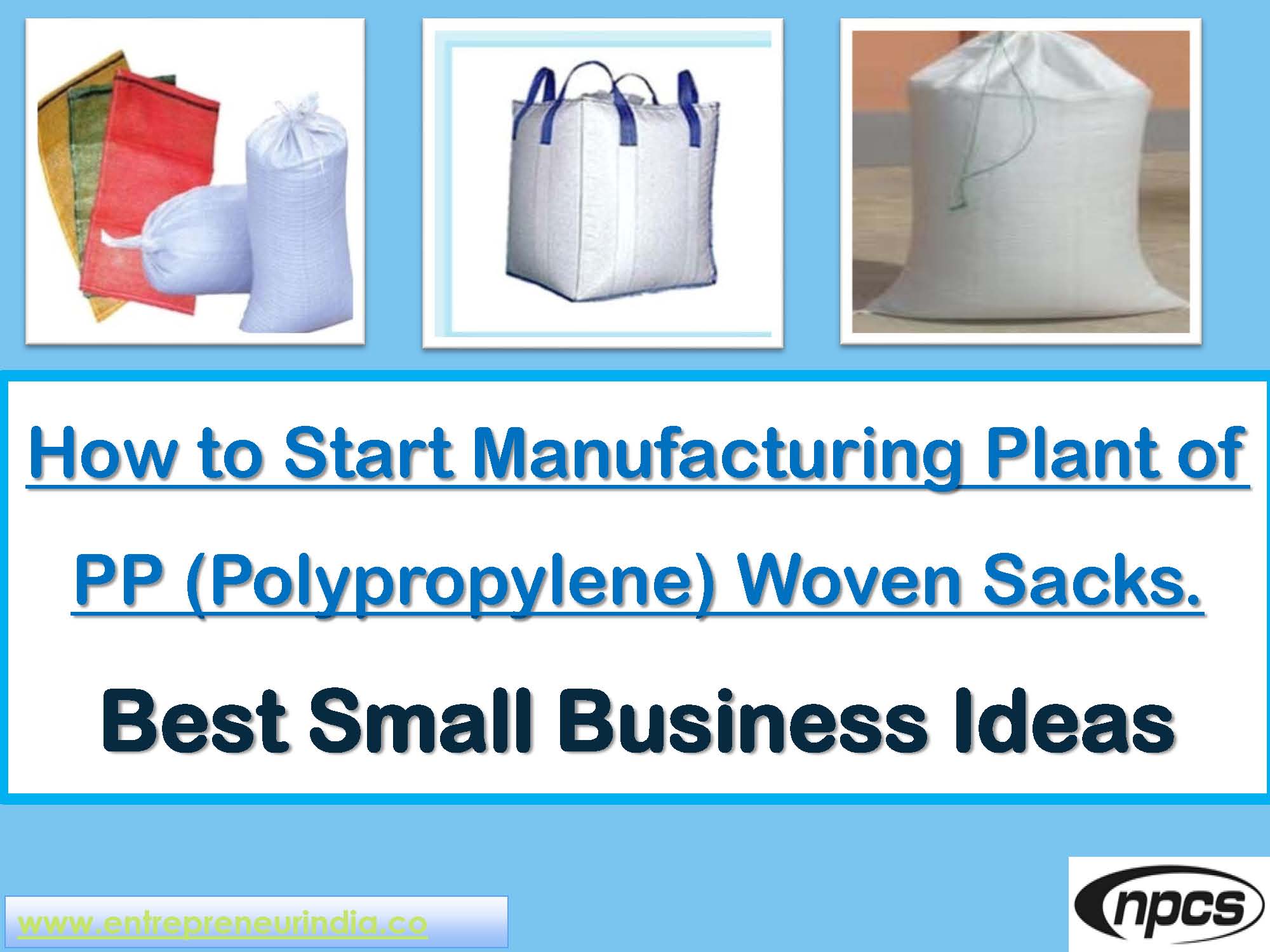
India’s industrial packaging sector is witnessing rapid transformation, with traditional jute and single-use plastics being replaced by stronger, cost-effective, and recyclable materials. One such dominant player is the polypropylene (PP) woven sack, widely used across agriculture, fertilizer, cement, and retail industries. Lightweight yet durable, these sacks are essential for bulk goods packaging, both in domestic and export markets. Setting up a PP Woven Sacks Manufacturing Plant can be a profitable venture, especially in India where the demand is growing year-round. Moreover, the relatively low raw material cost, consistent demand, and potential for customization make it an ideal business for manufacturers seeking long-term growth.
How to Start a PP Woven Sacks Manufacturing Plant in India
A PP Woven Sacks Manufacturing Plant involves converting polypropylene granules into woven fabric and then processing it into durable, customizable sacks. These sacks are used to package everything from rice, wheat, sugar, and pulses to cement, fertilizers, and even shopping items. As industries expand and shift towards efficient packaging, the demand for woven sacks is expected to increase further—especially with government initiatives promoting packaging standardization and MSME growth.
See Also – Business to Start in Rajasthan
Understanding the Scope and Applications
PP woven sacks are used by nearly every industrial sector that requires safe, low-cost packaging for bulk and granular products. Their ability to be moisture-resistant, stackable, and customizable makes them a preferred choice over jute or paper bags.
Industries that heavily depend on woven sacks include agriculture, construction, food processing, and chemicals. In fact, government food supply programs also use these sacks for rice and grain distribution. Moreover, many private-label companies prefer printed woven sacks for branding and logistics tracking.
Starting your PP Woven Sacks Manufacturing Plant in proximity to such industries helps reduce transport costs and increases repeat business from local buyers.
Investment and Manufacturing Models
Starting a woven sack plant can be done at different scales. Small and medium enterprises may begin with a conversion unit, while large players often invest in fully integrated systems.
For small-scale setups, entrepreneurs can purchase woven fabric rolls from larger units and focus on cutting, stitching, and printing operations. This model requires lower capital and faster setup time. On the other hand, a medium to large-scale PP Woven Sacks Manufacturing Plant involves full-fledged production—from extrusion and weaving to printing and lamination.
The initial investment for a semi-automatic unit ranges from ?20–30 lakhs, while an integrated plant can cost ?1 crore or more depending on production capacity.
Moreover, the decision should be based on your budget, technical knowledge, and proximity to target industries.
Machinery and Plant Setup
A fully operational PP Woven Sacks Manufacturing Plant requires specialized equipment for each stage of production. These include:
Extrusion Line: Converts polypropylene granules into flat tapes
Winding Machines: Wind tapes onto bobbins for weaving
Circular Weaving Looms: Create tubular woven fabric
Lamination Machine: Adds a moisture-resistant coating
Printing Machine: Adds logos and labels on sacks
Cutting & Stitching Machine: Converts fabric into final bags
Heat Cutting/Sealing Machine: Prevents fraying of fabric edges
Each section of the plant should be properly ventilated, dust-free, and powered with a stable 3-phase electricity connection. Moreover, temperature-controlled zones near the extrusion section improve product consistency and reduce waste.
Raw Materials and Suppliers
The primary raw material for PP woven sacks is polypropylene granules, which are melted and stretched into thin strips to form tapes.
Other essential materials include:
Color masterbatches (for colored or printed sacks)
LDPE or BOPP films (for laminated sacks)
Printing ink and solvents
Polyester threads (for stitching)
Paper inserts or liners (for food-grade bags)
These materials can be sourced from domestic suppliers such as Reliance Industries, GAIL, IOCL, or imported for bulk orders. Moreover, working with reliable suppliers ensures consistent quality and uninterrupted production cycles.
Location and Infrastructure Requirements
For a standard PP Woven Sacks Manufacturing Plant, the ideal location is an industrial zone with easy access to transport and power.
Minimum space requirements:
Small-scale unit: 1500–2500 sq. ft.
Medium-scale: 4000–6000 sq. ft.
Large integrated plant: 10,000 sq. ft. or more
Your infrastructure should include storage space for raw materials, production and assembly areas, lamination and printing sections, quality testing lab, and finished goods storage.
Moreover, maintaining fire safety systems, ventilation, and proper waste disposal is mandatory to comply with environmental and labor regulations.
Regulatory Compliance and Licensing
To operate legally, your PP Woven Sacks Manufacturing Plant must obtain the following:
Udyam Registration (MSME)
GST Registration
Pollution Control NOC from State Pollution Control Board
Factory License under Factories Act
Electricity and Water Supply Approval
Trade License from your municipal corporation
IEC Code (for exports, optional)
Moreover, following BIS standards (IS 9755:2003) for woven sacks used in food and fertilizer packaging enhances your credibility and helps attract government or export contracts.
Manpower and Staffing
Running a medium-scale plant requires 12–30 workers depending on automation level.
Roles include:
Machine operators
Quality control personnel
Stitching/printing staff
Maintenance technician
Inventory manager
Sales and admin team
Training workers in machine safety, material handling, and basic troubleshooting can significantly improve operational efficiency and reduce downtime.
Moreover, hiring experienced supervisors helps ensure quality standards and compliance with customer specifications.
Packaging, Logistics, and Delivery
Once manufactured, PP woven sacks are usually packed in bundles of 100 or 500 units for dispatch.
Efficient packaging ensures:
Bags don’t get creased or damaged in transit
Proper size and count are maintained
Loading/unloading is fast and safe
Logistics plays a crucial role in your supply chain. Tie-ups with local transporters or fleet services enable timely delivery to industrial customers. Moreover, maintaining proper batch records and stock movement data helps manage repeat orders and customer audits.
Marketing and Sales Strategy
To grow your PP Woven Sacks Manufacturing Plant, focus on building strong relationships with B2B buyers.
Effective strategies include:
Meeting purchase managers of cement, fertilizer, and sugar companies
Joining platforms like IndiaMART, TradeIndia, and ExportersIndia
Listing your plant on Google Business and creating a professional website
Running ads on LinkedIn and participating in industry expos
Offering customized printing and flexible MOQ (minimum order quantity)
Moreover, building a network of distributors or agents can help you reach rural and semi-urban industries without maintaining a large sales team.
Profit Margins and Return Potential
The profitability of your PP Woven Sacks Manufacturing Plant depends on production efficiency, order volume, and pricing strategy.
Typical cost breakdown (per 50 kg sack):
Raw material: ?7–?9
Production cost (power, labor, printing): ?2–?3
Total cost: ?10–?12
Market price: ?14–?18 depending on type
Net profit margin: 20% to 35%
Breakeven period: 18–24 months for medium-scale units
Moreover, value-added products like laminated sacks or printed HDPE bags fetch higher margins and attract premium clients.
See Also – Business Investment Opportunities in India
Government Schemes and Support
The Indian government supports plastic and packaging units through various programs:
PMEGP: Credit-linked subsidy for plant setup
MUDRA Loan: For micro and small enterprises
NSIC Machinery Leasing: With upfront discounts
PLI Scheme: For export-focused manufacturers
SIDBI Assistance: For equipment purchase and working capital
Moreover, registering under MSME ensures access to benefits like interest subsidies, free training, and participation in government tenders.
Conclusion
Setting up a PP Woven Sacks Manufacturing Plant is a profitable, long-term venture that supports India’s core industries like agriculture, infrastructure, and FMCG. The business offers scalable operations, recurring demand, and strong margins with proper setup and management. Moreover, rising demand for recyclable packaging makes woven sacks a sustainable packaging alternative across global markets. With a focus on quality, compliance, and timely delivery, your plant can grow into a reliable supplier for both domestic clients and international buyers.
Frequently Asked Questions (FAQs)
FAQ 1: What is the PP woven sacks manufacturing business and why is it profitable?
The PP woven sacks manufacturing business involves converting polypropylene granules into woven fabric and processing it into durable, customizable sacks used for packaging bulk goods. These sacks are widely used in agriculture, cement, fertilizer, food processing, and retail industries.
Why it is profitable:
Growing demand across agriculture, construction, and FMCG sectors
Low raw material cost with consistent availability
Lightweight, durable, and recyclable packaging solution
Customizable with printing and lamination options
Profit margins of 20-35%
Government support for MSMEs and packaging units
With rising demand for efficient packaging, the PP woven sacks manufacturing business offers excellent returns on investment.
FAQ 2: What is the minimum investment required for a PP woven sacks plant?
The investment for a PP woven sacks manufacturing plant depends on the scale and level of automation:
| Scale | Estimated Investment |
|---|---|
| Small-Scale (Conversion Unit) | ₹20 – 30 lakhs |
| Medium-Scale (Semi-Automated) | ₹50 – 80 lakhs |
| Large-Scale (Integrated Plant) | ₹1 crore and above |
Cost Breakdown (Medium-Scale):
| Expense Category | Estimated Cost (₹) |
|---|---|
| Machinery & Equipment | 30 – 50 lakhs |
| Raw Materials (Initial Stock) | 10 – 15 lakhs |
| Land & Building | 10 – 20 lakhs |
| Licensing & Compliance | 2 – 5 lakhs |
| Working Capital | 10 – 15 lakhs |
| Total Investment | 50 – 80 lakhs |
Government schemes like PMEGP, MUDRA, and NSIC support can help reduce costs.
FAQ 3: What machinery is required for a PP woven sacks manufacturing plant?
A PP woven sacks manufacturing plant requires the following machinery:
| Machinery | Purpose |
|---|---|
| Extrusion Line | Converts PP granules into flat tapes |
| Winding Machines | Winds tapes onto bobbins |
| Circular Weaving Looms | Creates tubular woven fabric |
| Lamination Machine | Adds moisture-resistant coating |
| Printing Machine | Adds logos and labels |
| Cutting & Stitching Machine | Converts fabric into final bags |
| Heat Cutting/Sealing Machine | Prevents fraying of fabric edges |
Small-scale units can start with conversion machinery (cutting, stitching, printing), while integrated plants require all equipment.
FAQ 4: What raw materials are required for PP woven sacks?
The primary raw materials for a PP woven sacks manufacturing plant include:
| Raw Material | Purpose |
|---|---|
| Polypropylene Granules | Main raw material for tapes |
| Color Masterbatches | For colored or printed sacks |
| LDPE/BOPP Films | For laminated sacks |
| Printing Ink & Solvents | For branding and labels |
| Polyester Threads | For stitching |
| Paper Inserts/Liners | For food-grade packaging |
These materials can be sourced from domestic suppliers like Reliance Industries, GAIL, IOCL, or imported for bulk orders.
FAQ 5: What is the manufacturing process for PP woven sacks?
The PP woven sacks manufacturing process involves several stages:
| Step | Description |
|---|---|
| Extrusion | PP granules are melted and stretched into flat tapes |
| Winding | Tapes are wound onto bobbins |
| Weaving | Tapes are woven into tubular fabric using circular looms |
| Lamination | Moisture-resistant coating is applied (optional) |
| Printing | Logos, labels, and branding are printed |
| Cutting | Fabric is cut to required sack length |
| Stitching | One end is stitched to form the bottom |
| Sealing | Edges are heat-sealed to prevent fraying |
Each stage must be monitored for quality and consistency.
FAQ 6: What certifications and licenses are required?
To operate a PP woven sacks manufacturing plant legally, you need:
| License/Certification | Purpose |
|---|---|
| MSME/Udyam Registration | Access to subsidies and benefits |
| GST Registration | Tax compliance |
| Pollution Control NOC | Environmental compliance |
| Factory License | Compliance with Factories Act |
| Trade License | Local municipal permit |
| BIS Certification (IS 9755:2003) | Quality standard for woven sacks |
| IEC Code | For export operations (optional) |
BIS certification enhances credibility for government and export contracts.
FAQ 7: How profitable is the PP woven sacks manufacturing business?
The PP woven sacks manufacturing business offers attractive profitability:
| Financial Metric | Value |
|---|---|
| Production Cost (per 50 kg sack) | ₹10 – 12 |
| Market Price (per sack) | ₹14 – 18 |
| Net Profit Margin | 20% – 35% |
| Break-even Period | 18 – 24 months |
Key Profitability Drivers:
Efficient production and automation
Bulk orders from cement, fertilizer, and agriculture industries
Custom printing and lamination for premium clients
Government tenders for food grain packaging
Value-added products like laminated sacks fetch higher margins.
FAQ 8: What are the target markets for PP woven sacks?
The customer base for a PP woven sacks manufacturing plant is diverse:
| Customer Category | Products |
|---|---|
| Cement Industry | Cement packaging sacks |
| Fertilizer Industry | Fertilizer bags |
| Agriculture Sector | Rice, wheat, pulses, sugar packaging |
| Food Processing | Flour, spices, pulses packaging |
| Chemical Industry | Chemical and powder packaging |
| Retail Shopping | Shopping bags and carry bags |
| Government Supplies | Food grain distribution (FCI, PDS) |
| Export Markets | International buyers |
Building relationships with these clients ensures consistent demand.
FAQ 9: What are the challenges in the PP woven sacks business?
| Challenge | Solution |
|---|---|
| Raw Material Price Fluctuations | Bulk contracts, diversified suppliers |
| Energy Costs | Invest in energy-efficient machinery |
| Competition | Focus on quality, branding, and customization |
| Quality Consistency | Regular quality testing and training |
| Regulatory Compliance | Stay updated on norms, consult experts |
| Skilled Labor Shortage | Training programs for workers |
Proper planning and quality control can mitigate these challenges.
FAQ 10: What is the future growth potential for PP woven sacks?
The PP woven sacks manufacturing industry has strong growth potential:
| Growth Driver | Impact |
|---|---|
| Agriculture Growth | Increasing demand for grain packaging |
| Infrastructure Development | Rising cement and construction demand |
| Government Schemes | Food grain distribution programs |
| Sustainability Focus | Recyclable packaging demand |
| E-Commerce Boom | Growing need for durable packaging |
| Export Opportunities | Global demand for woven sacks |
With India’s industrial packaging sector expanding, this business offers long-term scalability.
FAQ 11: Can I start a PP woven sacks plant with government support?
Yes, the Indian government offers several schemes:
| Scheme | Benefit |
|---|---|
| MSME/Udyam Registration | Access to subsidies and benefits |
| PMEGP | Credit-linked subsidy for plant setup |
| MUDRA Loans | Loans for micro and small enterprises |
| NSIC Machinery Leasing | Upfront discounts on machinery |
| PLI Scheme | For export-focused manufacturers |
| SIDBI Assistance | Equipment purchase and working capital |
Applying for these schemes can significantly reduce the initial financial burden.
FAQ 12: How can I market my PP woven sacks effectively?
Effective marketing strategies for a PP woven sacks manufacturing plant include:
| Channel | Strategy |
|---|---|
| B2B Portals | List on IndiaMART, TradeIndia, ExportersIndia |
| Direct Sales | Approach cement, fertilizer, and sugar companies |
| Government Tenders | Apply for FCI and PDS contracts |
| Industry Expos | Participate in packaging trade fairs |
| Digital Marketing | SEO, Google Business, LinkedIn ads |
| Distributor Network | Reach rural and semi-urban industries |
| Export Channels | IEC code for international buyers |
Customized printing and flexible MOQ attract premium clients.
FAQ 13: What are the different types of PP woven sacks manufactured?
A PP woven sacks manufacturing plant can produce various types:
| Sack Type | Application |
|---|---|
| Standard Woven Sacks | Cement, fertilizer, grains |
| Laminated Woven Sacks | Moisture-resistant packaging |
| Printed Woven Sacks | Branded packaging for retail |
| Food-Grade Woven Sacks | Rice, wheat, sugar packaging |
| Heavy-Duty Woven Sacks | Chemicals, construction materials |
| Shopping Bags | Retail and carry bags |
Diversifying product offerings caters to different customer segments.
FAQ 14: What is the ideal location for a PP woven sacks plant?
For a PP woven sacks manufacturing plant, the ideal location should have:
| Factor | Requirement |
|---|---|
| Industrial Zone | Easy access to transport and power |
| Space | 1500-2500 sq. ft. (small) to 10,000+ sq. ft. (large) |
| Power Supply | Stable 3-phase electricity |
| Raw Material Access | Proximity to suppliers |
| Target Market | Near cement, fertilizer, or agriculture hubs |
| Labor Availability | Access to skilled workers |
Good location reduces logistics costs and ensures faster delivery.
FAQ 15: Why should I invest in a PP woven sacks manufacturing plant?
| Reason | Benefit |
|---|---|
| Growing Demand | Essential for multiple industries |
| High Profit Margins | 20-35% gross margins |
| Scalable Operations | Can start small and expand |
| Government Support | PMEGP, MUDRA, MSME benefits |
| Recyclable Product | Aligns with sustainability goals |
| Customization Options | Branding and lamination for premium clients |
| Export Potential | Growing international demand |
| Essential Industry | Packaging is always in demand |
With proper planning, quality control, and strategic marketing, a PP woven sacks manufacturing plant can become a highly profitable and sustainable venture.
Turn Your PP Woven Sacks Manufacturing Dream into Reality
The packaging market is booming, and early movers stand to gain the most. With profit margins of 20-35%, government support, and growing demand, this is the perfect time to invest.
Why Choose NPCS?
🔹 50+ Years of Industry Experience
🔹 Trusted by 1,000+ Entrepreneurs Worldwide
🔹 Comprehensive Project Reports & Market Analysis
🔹 Expert Guidance on Technology, Compliance & Operations
🔹 End-to-End Project Management Support
Get Your PP Woven Sacks Project Report Now!