
A Complete Business Plan for Malic Acid Powder Production Business

Starting a Malic Acid Powder Production Business can be a highly lucrative opportunity in today’s industrial and food-grade chemical landscape. Malic acid, known for its tart flavor and excellent stabilizing qualities, is widely used across the food & beverage, pharmaceutical, cosmetic, and industrial cleaning sectors. With increasing demand for organic acids and clean-label ingredients, entrepreneurs are looking to tap into this growing niche with efficient production setups and targeted marketing strategies. If you’re looking to enter the world of specialty chemicals with a product that has high market acceptance and scalable potential, malic acid powder is an ideal choice. Visit this Page for More Information: Start a Business in Chemical Industry Projects Overview of Malic Acid Powder Production Business The business of producing malic acid powder revolves around transforming either synthetic or bio-based substrates into a high-purity, fine-grade white crystalline product that meets industry standards for food, cosmetics, or pharmaceutical applications. While chemical synthesis using maleic anhydride is the most common method, biotechnological fermentation has gained momentum due to the rising preference for natural and eco-friendly ingredients. Business Plan: Start Malic Acid (Powder) Production Business What is Malic Acid Powder? Malic acid is a dicarboxylic acid that occurs naturally in apples and other fruits. It plays a key role in the Krebs cycle, supporting energy production in living organisms. In industrial usage, it is appreciated for its acidifying, flavor-enhancing, and stabilizing properties. The powder form is highly soluble in water and easy to blend, making it ideal for precise formulations. There are two forms of malic acid: L-Malic Acid (natural): Produced by microbial fermentation and used in high-quality products. DL-Malic Acid (synthetic): Derived from maleic anhydride and used in technical and food-grade products. Related Feasibility Study Reports: Chemicals (Organic, Inorganic, Industrial) Projects Key Uses and Applications Malic acid powder is versatile and has applications across multiple industries: Food & Beverage: Acts as a souring agent and flavor enhancer in candies, fruit juices, soft drinks, and bakery products. Pharmaceuticals: Improves the bioavailability of minerals and aids in formulation stability. Cosmetics: Used in skincare products for its exfoliating and pH-balancing qualities. Industrial Cleaning: Used in metal surface treatment, boiler descaling, and eco-friendly cleaning agents. Raw Materials Required Depending on your chosen production method, you will require: For Chemical Synthesis: Maleic Anhydride or Fumaric Acid Catalyst (e.g., phosphoric acid) Water (Deionized) pH regulators and preservatives For Fermentation Method: Glucose or starch-based substrate Microbial strain (e.g., Aspergillus niger) Nutrient medium Filtration and drying agents Production Process There are two primary manufacturing processes: 1. Chemical Synthesis Process React Maleic Anhydride with water under heat and pressure. Use a catalyst to convert to malic acid. Filter, purify, and cool the mixture. Crystallize the malic acid and separate solids. Dry and mill to produce a fine powder. Package under sterile, airtight conditions. 2. Fermentation Process Use microbial fermentation with glucose as the carbon source. Cultivate the strain in bioreactors with controlled pH and temperature. Extract and purify the fermented solution. Crystallize and spray-dry to obtain powder form. Ideal for creating premium, organic L-malic acid. Machinery and Equipment Needed To set up a production unit, the following machinery is essential: Reactors or Fermenters (depending on method) Filtration Units and Centrifuges Crystallization Tanks Tray Dryers or Spray Dryers Pulverizers and Blending Machines Packaging Units (Sealing & Weighing) Water Treatment System Laboratory Testing Equipment Read Similar Articles: Chemical Industry Factory Setup and Area Required Minimum space requirement: 1500–2000 sq. ft. Proper ventilation, drainage, and fire safety Raw material storage area Finished goods and packaging room Power backup and utility area for equipment Investment and Capital Requirements Small-scale setup: ?20–?30 Lakhs (approx. $25,000–$40,000) Medium-scale setup: ?40–?60 Lakhs (approx. $50,000–$75,000) Cost distribution includes: Machinery: 50–60% Raw materials: 15–20% Labor, utilities, licensing, branding: 25–30% With good market linkage, break-even can be achieved in 12–18 months. Licenses and Certifications Needed To legally operate your Malic Acid Powder Production Business, you must acquire: Udyam/MSME Registration GST Registration FSSAI License (for food-grade acid) Factory License from local authorities Pollution Control Board Clearance ISO 9001 and GMP Certification (optional but recommended) Packaging and Branding The shelf life and quality of malic acid depend significantly on appropriate packaging. Recommended options include: 1kg, 5kg, and 25kg foil-laminated pouches Vacuum-sealed HDPE or PET containers Bulk fiber drums with liners Your label must include: Product grade (Food/Pharma/Industrial) Manufacturing & expiry dates Batch number, net weight FSSAI or drug license number (if applicable) Usage instructions and safety precautions Target Market and Distribution Strategy Sell your product to: Beverage manufacturers Candy and confectionery companies Nutraceutical brands Cosmetic product developers Pharmaceutical formulators Chemical and agro-chemical firms Leverage B2B platforms like IndiaMART, Alibaba, and TradeIndia. Explore export opportunities to regions like the Middle East, Southeast Asia, and Africa where demand is rising rapidly. Profitability and Return on Investment Profit margins can range between 30% to 55%, depending on the method used and product grade. Natural, L-malic acid typically yields higher profits. If you operate at 70% plant capacity, monthly profits of ?3–?5 lakhs are achievable. With rising global demand, your ROI window can be as short as 12 months. Challenges and Mitigation Strategies Common challenges: Fluctuation in raw material prices Consistent quality assurance Regulatory compliance for export Wastewater disposal and sustainability Solutions: Lock long-term supply contracts Hire a trained chemist or chemical engineer Invest in QA/QC lab setup Install an effluent treatment plant Future Scope and Sustainability The global market for malic acid is projected to reach $270 million+ by 2027. Sustainability trends, clean-label demand, and natural fermentation methods are shaping the future. Companies producing organic and green-certified malic acid are expected to capture a larger market share in the coming years. Final Words A Malic Acid Powder Production Business is not only profitable but also aligned with emerging trends in food safety, clean chemistry, and functional health. With proper machinery, quality standards, smart sourcing, and a customer-first distribution plan, you can establish a highly scalable and rewarding venture in this segment. Read our Books Here: Chemical Technology (Organic, Inorganic, and Industrial), Fine Chemicals
Start your own Business of Silicon Metalloids production
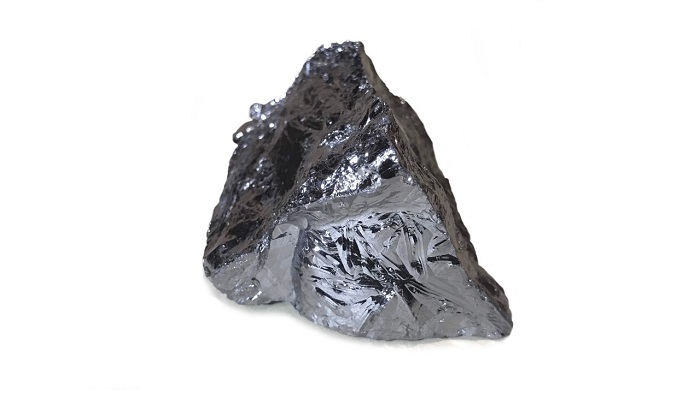
The Business of Silicon Metalloids Production has emerged as a high-potential industrial opportunity, driven by massive demand from the electronics, solar energy, metallurgy, and chemical industries. Silicon, a metalloid known for its semiconducting properties and thermal stability, plays a crucial role in modern technological infrastructure. As the backbone of semiconductors, photovoltaic cells, and alloy manufacturing, the global appetite for silicon continues to rise. Entrepreneurs entering the silicon production sector can capitalize on this growing demand with the right strategy, machinery, and compliance framework. Visit this Page for More Information: Start a Business in Metals Industry Overview of Silicon Metalloids Production Business The production of silicon metalloids involves extracting elemental silicon from quartz (SiO?) through high-temperature reduction in electric arc furnaces. The result is metallurgical-grade silicon, which can then be refined further into solar-grade or electronic-grade silicon depending on the application. This industrial process demands high energy input, skilled labor, and a robust supply chain for raw materials. With the increasing shift towards solar energy and digital devices, setting up a silicon metalloid plant today positions businesses for long-term profitability and export success. Related Business Plans: Ferrous and Non-Ferrous Metals Projects What is Silicon Metalloid? Silicon is a hard, brittle crystalline solid with a blue-grey metallic luster. Although it is a metalloid (exhibiting both metallic and non-metallic characteristics), it is best known for its semiconductor behavior—making it essential for integrated circuits and solar panels. Key features: Atomic Number: 14 Melting Point: ~1414°C Boiling Point: ~3265°C Electrical Conductivity: Adjustable with doping (for electronics) Thermal Stability: High resistance to thermal stress Read Similar Articles: Steel Projects Major Applications of Silicon Metalloids Silicon is used in: Semiconductors: Chips, transistors, processors, memory devices. Solar Energy: Solar photovoltaic (PV) cells, especially mono- and polycrystalline silicon panels. Aluminum Alloys: Improves strength, castability, and corrosion resistance in automotive and aerospace parts. Silicones and Chemicals: Base material for silicon oils, sealants, and rubbers used in construction and personal care. Glass and Ceramics: High-purity silica is used in specialty glass manufacturing. Raw Materials Required To produce metalloid silicon, the following inputs are essential: High-purity Quartz (Silicon Dioxide, SiO?) Carbonaceous Reductants: Wood chips Charcoal Coal Petroleum coke Iron (for producing ferrosilicon alloys) Electrodes for electric arc furnace Fluxing agents (depending on furnace chemistry) High-quality quartz with minimal impurities is critical to achieving metallurgical-grade output. Production Process of Silicon Metalloids 1. Selection and Preparation of Raw Materials Purify quartz to reduce contamination (especially iron and phosphorus). Dry and size all carbon reductants for uniform reaction kinetics. 2. Electric Arc Furnace Smelting Quartz and carbon are loaded into a submerged electric arc furnace. At temperatures above 2000°C, silicon is reduced: SiO? + 2C ? Si + 2CO? Molten silicon collects at the base and is periodically tapped. 3. Refining and Casting Remove impurities through slag separation or metallurgical refining. Cast molten silicon into ingots or crushed into desired granule size. 4. Post-Processing Optional chemical treatments or vapor-phase reactions if further purification is required for solar or electronic-grade silicon. Machinery and Equipment Required Submerged Electric Arc Furnace (15–30 MVA capacity) Raw material handling and feed systems High-voltage transformer and control panels Cooling towers and water treatment plant Tapping and casting system Crushing and sieving units Dust collection and air pollution control systems Laboratory for quality control and impurity analysis Plant Setup and Infrastructure Needs Land Requirement: Minimum 20,000–50,000 sq. ft. depending on capacity. Power Load: High-voltage, 33kV–132kV connection mandatory. Water Source: Continuous water supply for cooling and dust suppression. Storage: Separate storage for quartz, coke, and finished silicon. Safety: Fire suppression system, protective gear, and emergency evacuation protocols. Investment Required Setting up a silicon metalloid plant requires significant capital due to furnace setup and energy infrastructure. Small-scale pilot unit: ?5–7 Crores ($600,000–$850,000) Mid-size commercial plant: ?10–25 Crores ($1.2–3 Million) Costs include: Furnace and power systems: 50% Land and civil works: 20% Raw materials and utilities: 15% Staff and operations: 10% Licenses, pollution control, and compliance: 5% Licenses and Government Compliance Before starting operations, businesses must acquire: Factory License under Factories Act Electricity Board Approval for high-tension connection Pollution Control NOC (Air and Water) Explosives and Fire Safety Certification MSME/Udyam Registration Import Export Code (IEC) if targeting global markets ISO 9001 and ISO 14001 for process and environmental control Packaging and Distribution Silicon is usually supplied in: Lumps/Ingot form: Packed in wooden crates or HDPE bags. Powdered Silicon: Double-lined moisture-resistant bags (25kg–1 ton). Container Shipments: For bulk export, use metal drums or container liners. Distribution channels: B2B sales to foundries, electronics manufacturers, and solar panel firms. Direct contracts with steel and aluminum alloy producers. Government and defense procurement tenders. Profit Margins and Revenue Model Metalloid silicon pricing is influenced by purity, particle size, and global demand. On average: Cost of production: ?85–?110/kg Selling price: ?140–?220/kg (varies by purity & volume) Gross margins range from 25% to 40%, and monthly profits (for mid-sized units) can touch ?20–?50 lakhs depending on operational efficiency and customer contracts. Global Demand and Export Potential Key export destinations include: China, Japan, Germany, USA, South Korea Countries investing in solar energy infrastructure Electronic manufacturing hubs like Taiwan and Vietnam India has a growing domestic demand and also benefits from duty-free access under FTAs in certain markets. Export incentives are available under the RoDTEP scheme. Challenges and Risk Management Challenges: Volatile power costs Import dependence for high-grade quartz Environmental compliance pressures Technical complexity of furnace operation Mitigation: Secure long-term power tariffs through industrial utility contracts Source domestic quartz mines or sign exclusive supply agreements Invest in air pollution control equipment Hire metallurgists and experienced furnace operators Sustainability and Future Outlook The future of the Business of Silicon Metalloids Production is exceptionally promising due to: Expansion of semiconductor manufacturing India’s PLI schemes for solar and electronics Global transition to green energy and electric vehicles Scarcity of domestic silicon producers in emerging markets Entrepreneurs who enter this space today will be part of the core industrial transformation shaping tomorrow’s technology, infrastructure, and sustainability goals. Read our Books Here: Steel, Iron, See More Links: Start
5 Manufacturing Business Ideas for Entrepreneurs- Start your Business now!

In today’s rapidly evolving economy, entrepreneurs are seeking scalable and profitable manufacturing business ideas that combine innovation, market demand, and long-term viability. The manufacturing sector remains the backbone of economic development, offering countless opportunities to build sustainable businesses with strong revenue models. Whether you’re starting small or aiming to scale up with industrial production, the following 5 manufacturing business ideas can help you establish a strong foothold in this rewarding sector. Watch other Informative Videos: Surgical, Medical Plastics, Medical Disposables, Disposable Medical Products used in Hospitals Best Manufacturing Business Ideas with High Profitability Each of the following ideas has been selected based on low to medium investment, strong market demand, scalability, and profit margins. Business Plan: Sodium Hypochlorite Manufacturing Business 1. Disposable Paper Products Manufacturing The demand for eco-friendly disposable items is growing, especially in the food service and hospitality industries. With increased awareness of plastic pollution, paper cups, plates, straws, and food containers have become widely accepted alternatives. Why this business? Low setup cost with semi-automatic machines Continuous demand from restaurants, caterers, street vendors, and retailers High profit margins with bulk production Investment Range: ?5–?10 lakhsProfit Margin: 25% to 40%Target Market: Food chains, event planners, hotels, exporters Related Feasibility Study Reports: Chemicals (Organic, Inorganic, Industrial) Projects 2. Herbal and Ayurvedic Products Manufacturing India’s rich tradition in Ayurveda has fueled the growth of herbal cosmetic and wellness products globally. Items like herbal soaps, oils, powders, and supplements are in high demand for their natural healing properties. Why this business? Rising global demand for natural wellness Government support through AYUSH initiatives Scope for private label exports and ecommerce sales Investment Range: ?10–?15 lakhsProfit Margin: 30% to 50%Target Market: Online stores, wellness centers, pharmacies, salons Read our Books Here: Chemical Technology (Organic, Inorganic, Industrial), Fine Chemicals 3. 3D Printing and Rapid Prototyping Unit With innovation accelerating across industries, 3D printing has emerged as a game-changer. You can manufacture custom plastic parts, medical models, architectural designs, or mechanical prototypes for clients in engineering, healthcare, or real estate. Why this business? High-end niche with limited competition Demand from startups, educational institutions, and R&D labs Can be operated from a small space with skilled staff Investment Range: ?8–?20 lakhsProfit Margin: 40% to 60%Target Market: Startups, hospitals, architects, product designers Watch other Informative Videos: Chemicals (Organic, Inorganic, Industrial) 4. Organic Fertilizer and Vermicompost Manufacturing As organic farming gains ground, bio-fertilizers and vermicompost are replacing chemical alternatives. These natural fertilizers improve soil health and plant yield, making them a staple in sustainable agriculture. Why this business? Rural and urban farmers shifting to organic methods Government subsidies available for setup Easy raw material sourcing from agri-waste and cattle manure Investment Range: ?3–?7 lakhsProfit Margin: 25% to 45%Target Market: Farmers, nurseries, gardening suppliers, agri-cooperatives Watch other Informative Videos: Business Ideas for Startups 5. LED Light Manufacturing The global push for energy efficiency has made LED light production a booming sector. From LED bulbs and tube lights to street lights and panel lights, businesses and households are replacing traditional lighting systems with LEDs. Why this business? High utility demand from smart cities, builders, and export markets Component sourcing is easy, with many suppliers in India and China Low energy consumption and long lifespan attract large buyers Investment Range: ?10–?25 lakhsProfit Margin: 30% to 50%Target Market: Real estate developers, government tenders, exporters, wholesalers Business Plan: Stainless Steel Cold Rolled Coil using Stainless Steel Scrap Final Thoughts Choosing the right Manufacturing Business Ideas for Entrepreneurs depends on your available capital, target market, technical expertise, and growth goals. Whether you go eco-friendly with disposable paper products or dive into high-tech production with 3D printing, the key is to combine innovation with quality and consistent market research. These five ideas offer a promising pathway for entrepreneurs looking to establish sustainable, scalable, and profitable manufacturing businesses in India or globally. Watch other Informative Videos: Chemicals (Organic, Inorganic, Industrial) See More Links: Start a Business in Asia Start a Business in Potential Countries for Doing Business Best Industry for Doing Business Business Ideas with Low, Medium & High Investment Looking for Most Demandable Business Ideas for Startups Startup Consulting Services Start a Business in Africa Start a Business in India Start a Business in Middle East Related Videos Related Books Related Projects Related Market Research Reports NIIR PROJECT CONSULTANCY SERVICES, DELHI An ISO 9001:2015 Company ENTREPRENEUR INDIA 106-E, Kamla Nagar, Opp. Mall ST, New Delhi-110007, India. Email: npcs.ei@gmail.com info@entrepreneurindia.co Tel: +91-11-23843955, 23845654, 23845886 Mobile: +91-9097075054, 8800733955 Website: https://www.entrepreneurindia.co https://www.niir.org Contact Us
5 Small and Medium-sized Manufacturing Businesses that you can start today

In the evolving industrial economy, small and medium-sized manufacturing businesses (SMBs) have become the foundation for innovation, local employment, and economic growth. These businesses require moderate investment, deliver high returns, and offer scope for customization and niche targeting. Whether you’re starting as a first-time entrepreneur or scaling up your existing operations, the following 5 small and medium-sized manufacturing business ideas can offer consistent profitability, manageable risk, and long-term scalability. Business Plan: Rice Husk based Biodegradable Cutlery Making Plant Top Small and Medium-Sized Manufacturing Business Opportunities Each business listed below strikes a balance between affordability, demand, and ease of setup, making them ideal for entrepreneurs with limited capital but big ambitions. Related Business Plans Rice Husk 1. Agarbatti (Incense Stick) Manufacturing A simple yet culturally essential product in India and many Southeast Asian countries, agarbatti has strong domestic and export demand. The process of agarbatti manufacturing is easy to automate, and raw materials are readily available. Why this business? Constant demand for religious, spiritual, and aromatic uses Government support through KVIC and MSME schemes High return on low investment Investment Required: ?2–?5 lakhsMonthly Profit: ?30,000 to ?80,000Ideal For: Rural entrepreneurs, cottage industries, women-led enterprises Read our Books Here: Environmentally Friendly 2. Pickle and Chutney Manufacturing With Indian cuisine gaining global popularity, pickles and chutneys have become high-demand food products in both domestic and international markets. These can be sold under your own label or supplied to major food retailers. Why this business? Easy to start with local ingredients Long shelf life means easier storage and distribution Ideal for online and offline sales Investment Required: ?3–?7 lakhsMonthly Profit: ?50,000 to ?1 lakhIdeal For: Home-based manufacturers, food processors, women entrepreneurs Watch other Informative Videos: Rice Husk Based Products 3. Paper Bag Manufacturing As plastic bans become stricter and eco-awareness grows, paper bags are replacing polythene bags in retail, food delivery, and grocery sectors. Setting up a paper bag manufacturing unit is easy, eco-friendly, and highly scalable. Why this business? Government push for sustainable packaging Low raw material cost (kraft paper) High demand from retail outlets, bakeries, and fashion stores Investment Required: ?5–?10 lakhsMonthly Profit: ?60,000 to ?1.5 lakhsIdeal For: MSMEs, green startups, urban entrepreneurs Business Plan: NPK Complex Organic Fertilizer Plant 4. Detergent Powder and Liquid Manufacturing Household cleaning products are basic essentials with unshakable demand. Starting a detergent powder or liquid soap unit requires basic chemical knowledge, easy-to-source materials, and a local distribution strategy. Why this business? Recurring consumer demand Easy product customization and branding Strong rural and urban market potential Investment Required: ?6–?12 lakhsMonthly Profit: ?70,000 to ?2 lakhsIdeal For: Small-scale manufacturers, FMCG startups Related Business Plans Fertilizers, Fertilisers, Inorganic Fertilizers 5. Coconut Oil and Hair Oil Production With the rise in demand for natural and chemical-free hair care products, coconut oil manufacturing has become a profitable venture. It caters to personal care brands, health-conscious consumers, and ayurvedic retailers. Why this business? Used in cooking, cosmetics, and baby care High export potential, especially in the US, UAE, and Southeast Asia Can be expanded into multiple oil variants (herbal, almond, neem, etc.) Investment Required: ?8–?15 lakhsMonthly Profit: ?1 lakh to ?2.5 lakhsIdeal For: Agro-based startups, ayurvedic manufacturers, FMCG brands Read our Books Here: Biofertilizer Conclusion These small and medium-sized manufacturing businesses offer a perfect entry point into the manufacturing sector. Each idea can be started with limited capital and scaled based on market response, customer feedback, and distribution reach. With the right marketing, product quality, and regulatory compliance, these ventures can deliver high margins and long-term success. Download PDF: 5 Small and Medium-sized Manufacturing Businesses that you can start today Read our Books Here: Spices and Condiments Cultivation, Processing and Extraction with Formulation, Ground and Processed Spices, Grinding of Whole Spices, Indian Kitchen Spices Product Mix, Kitchen Masala Powder Manufacturing See More Links: Start a Business in Asia Start a Business in Potential Countries for Doing Business Best Industry for Doing Business Business Ideas with Low, Medium & High Investment Looking for Most Demandable Business Ideas for Startups Startup Consulting Services Start a Business in Africa Start a Business in India Start a Business in Middle East Related Videos Related Books Related Projects Related Market Research Reports NIIR PROJECT CONSULTANCY SERVICES, DELHI An ISO 9001:2015 Company ENTREPRENEUR INDIA 106-E, Kamla Nagar, Opp. Mall ST, New Delhi-110007, India. Email: npcs.ei@gmail.com info@entrepreneurindia.co Tel: +91-11-23843955, 23845654, 23845886 Mobile: +91-9097075054, 8800733955 Website: https://www.entrepreneurindia.co https://www.niir.org Contact Us
Find out How to Start Your Own Export Business
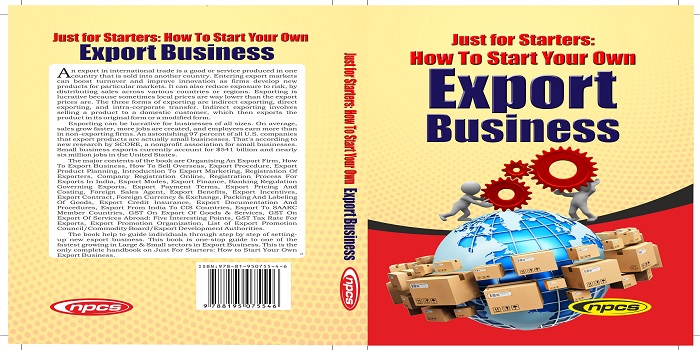
In the era of globalization and digital transformation, entrepreneurs are increasingly turning to the export business to unlock higher profit margins, broader market reach, and long-term growth. With the right strategy, knowledge of international trade regulations, and a product in demand, you can start your own export business and tap into the booming global economy. Whether you’re exporting agricultural produce, handicrafts, textiles, or manufactured goods, this guide provides a comprehensive roadmap for launching and scaling a successful export venture. Related Projects: Trade, Commodities Why Start an Export Business? The export business offers a wealth of advantages that make it one of the most attractive opportunities for new-age entrepreneurs: Higher profit margins due to international pricing Increased market size beyond domestic boundaries Government support through subsidies, schemes, and export promotion councils Brand value enhancement with global exposure Diversification of business risk across multiple countries Starting an export business is no longer limited to big corporations. Today, MSMEs, individual entrepreneurs, and even home-based manufacturers are tapping into international markets with the help of online platforms and eCommerce. Get Detailed Insights from This Book: Just For Starters: How To Start Your Own Export Business Step-by-Step Guide to Start Your Own Export Business 1. Choose the Right Product for Export The foundation of a successful export business lies in choosing a product that is in global demand, easy to source, and profitable. Popular export categories include: Agricultural products (spices, tea, rice, pulses) Textiles and garments Leather goods Handicrafts and home décor Processed food items Herbal and ayurvedic products Engineering goods and auto components Tip: Focus on unique, high-quality, or niche products that are hard to replicate locally in other countries. Related Books: Project Profiles 2. Register Your Export Business Legal registration is essential to operate an export business officially. Here’s what you need to do: Register your business entity (Proprietorship, LLP, Pvt. Ltd., etc.) Obtain PAN & GST registration Open a current account with a bank authorized for forex transactions Get an Import Export Code (IEC) from the Directorate General of Foreign Trade (DGFT) Register with Export Promotion Councils for your industry (e.g., APEDA, FIEO, etc.) 3. Conduct Market Research and Select Target Countries Before you begin exporting, you must analyze where your product has high demand and fewer trade barriers. Use these steps: Study global demand and pricing trends Evaluate trade policies, import duties, and competitor pricing Select 2–3 target countries to focus your initial marketing efforts Use government portals like Export India, DGFT, and EXIM Bank to access country-specific reports 4. Find International Buyers Securing international buyers is a critical part of launching your export business. Here’s how: List your products on B2B portals like Alibaba, IndiaMART, TradeIndia, GlobalSources Participate in international trade fairs and buyer-seller meets Join export promotion councils that connect exporters with verified foreign buyers Use LinkedIn and cold-email marketing to reach importers, wholesalers, and retailers Build a professional export website with product catalogs and inquiry forms 5. Set Up Packaging, Logistics, and Compliance The export process doesn’t end with getting a buyer; fulfilling an order involves multiple logistics and documentation tasks: Choose export-quality packaging based on international standards Coordinate with freight forwarders or shipping agents for sea or air transport Understand Incoterms (FOB, CIF, etc.) to define buyer-seller responsibilities Prepare all documents: Commercial invoice Packing list Bill of lading/airway bill Certificate of origin FSSAI/agriculture/laboratory certificates (if required) Comply with destination country regulations (labeling, customs duty, banned substances) 6. Receive Payment and Manage Foreign Exchange Managing international payments securely is vital for profitability. Use these best practices: Agree on LC (Letter of Credit), TT (Telegraphic Transfer), or Advance Payment Partner with a bank that offers foreign exchange services and export incentives Understand currency conversion, hedging, and export benefits under the Foreign Trade Policy Claim export incentives like MEIS/RODTEP, tax refunds under GST, and interest subsidy schemes 7. Scale and Expand Your Export Operations Once you’ve successfully completed a few export cycles, you can start scaling up: Add more products to your catalog Expand into new markets and regions Build partnerships with overseas distributors Consider setting up a warehousing and distribution model abroad Invest in digital marketing and SEO for your export website to attract inbound leads Pro Tips for New Exporters Always verify buyer credentials before shipping Maintain proper documentation to avoid customs delays Keep track of international trade regulations and certifications Start small, test markets, and grow gradually Use insurance policies to protect goods in transit Build a reliable supply chain with trusted vendors and manufacturers Conclusion Starting your own export business is one of the most rewarding decisions an entrepreneur can make today. With growing international demand for Indian goods and favorable government policies, now is the right time to explore the export market. All it takes is research, commitment, and smart execution to build a globally recognized export brand. See More Links: Start a Business in Asia Start a Business in Potential Countries for Doing Business Best Industry for Doing Business Business Ideas with Low, Medium & High Investment Looking for Most Demandable Business Ideas for Startups Startup Consulting Services Start a Business in Africa Start a Business in India Start a Business in Middle East Related Videos Related Books Related Projects Related Market Research Reports NIIR PROJECT CONSULTANCY SERVICES, DELHI An ISO 9001:2015 Company ENTREPRENEUR INDIA 106-E, Kamla Nagar, Opp. Mall ST, New Delhi-110007, India. Email: npcs.ei@gmail.com info@entrepreneurindia.co Tel: +91-11-23843955, 23845654, 23845886 Mobile: +91-9097075054, 8800733955 Website: https://www.entrepreneurindia.co https://www.niir.org Contact Us
7 Business Ideas for Startups that can make you Money

Launching a startup can be both exciting and overwhelming. The key to success lies in choosing a business idea that aligns with your skills, market demand, and scalability potential. In today’s digital age, startup business ideas are no longer confined to traditional models—innovation and customer-centric solutions define the new wave of entrepreneurship. If you’re looking to break into the market with a powerful concept, here are 7 business ideas for startups that are trending, profitable, and future-ready. Watch other Informative Videos: Chemicals (Organic, Inorganic, Industrial) Start Smart: Best Startup Ideas to Begin Your Entrepreneurial Journey Each idea below focuses on a high-growth sector with strong consumer interest and relatively low barriers to entry—perfect for first-time entrepreneurs. Business Plan: Badminton Rackets Manufacturing Business 1. E-commerce Niche Store Online shopping is booming, and launching a niche e-commerce store is one of the most accessible and profitable startup options. Whether it’s pet supplies, sustainable fashion, handmade crafts, or eco-friendly home products, carving out a niche helps you attract a loyal customer base. Why this business? Minimal investment with dropshipping or third-party fulfillment Potential for global reach Opportunity to scale with digital marketing and SEO Tools you need: Shopify, WooCommerce, Canva, Google AdsTarget Market: Millennials, Gen Z, remote buyers Business Plan: How to Setup Plastic Waste Recycling Plant 2. Digital Marketing Agency As businesses shift online, the demand for digital marketing services like SEO, content creation, social media management, and paid ads is skyrocketing. If you have skills in digital marketing, start your own agency and help other businesses grow their online presence. Why this business? High-profit margins with recurring clients Operates 100% online—work from anywhere Huge market, especially among small businesses and startups Tools you need: SEMrush, Ahrefs, Meta Ads Manager, Google AnalyticsTarget Market: SMEs, D2C brands, personal brands, startups Related Feasibility Study Reports: Waste Management and Recycling, Industrial Waste Management 3. Online Course or Coaching Business People are eager to learn new skills online—from coding to cooking, from financial literacy to fitness. If you’re an expert in any domain, package your knowledge into an online course or coaching program and build a community. Why this business? Passive income through course sales Global reach via eLearning platforms Scalable with minimal overhead Platforms to use: Teachable, Thinkific, Zoom, KajabiTarget Market: Students, professionals, freelancers Read Our Books Here: Waste Management, Waste disposal and Recycling Industry 4. Mobile App Development Startup With mobile usage dominating, there’s a rising demand for functional and innovative apps. A mobile app development startup can create solutions for e-commerce, healthcare, education, fitness, or finance. Why this business? Continuous need for custom apps by businesses High-value clients and retainers Strong scope for innovation and product creation Tech Skills Required: Flutter, React Native, Android/iOS SDKsTarget Market: Startups, corporates, product-based companies Business Plan: Lovastatin Production Business (from Dextrose, Peptone Powder, Sugar & Soyabean) 5. Subscription Box Service The subscription box business model has exploded in popularity, offering curated, recurring deliveries in niches like skincare, healthy snacks, books, stationery, or even pet treats. Why this business? Predictable monthly revenue High customer retention through personalized experience Easy to start with white-label products Examples: FabBag (beauty), Snackible (snacks), The Big Book Box (books)Target Market: Urban professionals, millennials, parents Related Feasibility Study Reports: Chemicals (Organic, Inorganic, Industrial) Projects 6. Health and Wellness Startup Consumers are more health-conscious than ever. A health and wellness business can range from fitness coaching, organic product lines, plant-based snacks, to mental wellness apps. Why this business? Booming industry post-COVID Growing interest in preventive health Can target both B2B (corporate wellness) and B2C audiences Startup Models: D2C nutrition brand, fitness tech app, wellness coachingTarget Market: Working professionals, women, fitness enthusiasts Read Our Books Here: Chemical Technology (Organic, Inorganic, Industrial), Fine Chemicals 7. Eco-Friendly Product Manufacturing As sustainability becomes a top concern globally, startups creating eco-friendly products like bamboo toothbrushes, biodegradable packaging, or reusable bags are gaining traction. Why this business? Environmentally responsible + highly marketable Government support through green business policies Ideal for both retail and export markets Product Ideas: Compostable cutlery, eco stationery, reusable home itemsTarget Market: Urban buyers, eco-conscious consumers, global distributors Watch other Informative Videos: Chemicals (Organic, Inorganic, Industrial) Conclusion The startup landscape is full of opportunities, but success begins with choosing the right business idea that solves a real problem and serves a well-defined audience. From e-commerce to tech, from education to sustainability, these 7 startup ideas are not only relevant but also resilient against future market disruptions. Begin with one, validate the market, and scale with confidence. See More Links: Start a Business in Asia Start a Business in Potential Countries for Doing Business Best Industry for Doing Business Business Ideas with Low, Medium & High Investment Looking for Most Demandable Business Ideas for Startups Startup Consulting Services Start a Business in Africa Start a Business in India Start a Business in Middle East Related Videos Related Books Related Projects Related Market Research Reports NIIR PROJECT CONSULTANCY SERVICES, DELHI An ISO 9001:2015 Company ENTREPRENEUR INDIA 106-E, Kamla Nagar, Opp. Mall ST, New Delhi-110007, India. Email: npcs.ei@gmail.com info@entrepreneurindia.co Tel: +91-11-23843955, 23845654, 23845886 Mobile: +91-9097075054, 8800733955 Website: https://www.entrepreneurindia.co https://www.niir.org Contact Us
The Complete Technology Book on Dyes & Dye Intermediates

In the world of colorants and textile innovation, the book on dyes and dye intermediates is an essential resource for professionals, students, researchers, and entrepreneurs. This comprehensive reference not only provides insights into the chemistry and applications of dyes but also explores their manufacturing processes, classifications, and market potential. Whether you are planning to enter the chemical industry or want to deepen your understanding of the dye sector, this book is a treasure trove of technical knowledge and industrial guidance. Related Business Plans: Dyestuff , Dyes, Pigments and Dye Intermediates Projects An Overview of Dyes and Dye Intermediates Dyes are substances used to impart color to materials such as textiles, leather, paper, and plastics. Dye intermediates are the raw materials or chemical compounds used in the synthesis of dyes. These intermediates form the building blocks for numerous types of synthetic dyes, especially azo dyes, reactive dyes, acid dyes, and disperse dyes. The book on dyes and dye intermediates serves as an in-depth guide to: Types of dyes and their specific applications Chemical structures and synthesis methods Raw materials used in the production of dyes Environmental impact and waste treatment Manufacturing processes and plant layout Industrial standards and regulations Types of Dyes Covered in the Book This book thoroughly explains different dye classes, including: Azo Dyes: Widely used in textiles due to their bright shades and cost-effectiveness Reactive Dyes: Ideal for cotton and cellulose fibers; offer good wash fastness Acid Dyes: Mainly used for protein fibers like wool and silk Disperse Dyes: Best suited for synthetic fibers such as polyester Basic Dyes: Used on acrylic fibers and have high tinctorial strength Direct Dyes: Applied directly to the fabric without a binding agent Vat and Sulfur Dyes: Used for deep shades on cotton with high colorfastness Each dye category is discussed in terms of chemical composition, dyeing mechanism, and compatibility with various substrates. Dye Intermediates and Their Industrial Significance The production of synthetic dyes heavily relies on dye intermediates, which are typically derived from petrochemicals. Common intermediates include: Aniline Naphthol Sulfanilic acid H-acid and J-acid Benzidine derivatives These compounds undergo processes such as nitration, sulfonation, reduction, and coupling to form final dye products. The book details each of these reactions, complete with reaction mechanisms, catalysts used, and by-products generated. Manufacturing Process Flow Diagrams and Plant Setup One of the book’s standout features is its detailed illustrations of manufacturing processes, including: Batch and continuous production models Reaction vessel specifications Effluent treatment setups Equipment required for various dye classes Cost estimation and economic viability of setting up a dye plant Entrepreneurs and plant designers will particularly benefit from the technical layouts and real-world examples provided in this section. Environmental and Safety Considerations Dye manufacturing involves hazardous chemicals that can pose serious environmental risks. The book addresses: Effluent treatment methods (ETP) Zero liquid discharge (ZLD) systems Air pollution control techniques Worker safety protocols and PPE usage Waste minimization and by-product utilization Compliance with REACH regulations, Indian BIS standards, and GOTS certification is also discussed in detail to help businesses remain globally competitive. Applications and Market Trends Dyes and dye intermediates are used across diverse industries: Textiles and garments Paper and pulp industry Plastics and paints Food, cosmetics, and pharmaceuticals Leather processing and packaging The book offers a market analysis on the global demand, export potential, and import dynamics for various dye types. Emerging trends such as natural dyes, digital textile printing inks, and eco-friendly alternatives are also explored. Who Should Read This Book? This book is ideal for: Chemical engineering students Entrepreneurs planning to start dye or pigment manufacturing R&D professionals in colorant and textile industries Exporters and importers in the chemical sector Environmental consultants and compliance officers With a blend of theoretical knowledge and industrial application, this resource acts as both an academic textbook and a practical business guide. Conclusion Whether you’re a budding entrepreneur aiming to enter the dye manufacturing industry or a researcher seeking in-depth chemical insights, this book on dyes and dye intermediates will serve as your ultimate companion. With detailed explanations, flowcharts, market data, and safety standards, it bridges the gap between theory and practical execution. Related Books: Dyes And Dye Intermediates, Textile Dyes & Pigments, Textile Auxiliaries, Natural, Synthetic Dyes And Pigments See More Links: Start a Business in Asia Start a Business in Potential Countries for Doing Business Best Industry for Doing Business Business Ideas with Low, Medium & High Investment Looking for Most Demandable Business Ideas for Startups Start a Business in Africa Start a Business in India Start a Business in Middle East Related Videos Related Books Related Projects Related Market Research Reports NIIR PROJECT CONSULTANCY SERVICES, DELHI An ISO 9001:2015 Company ENTREPRENEUR INDIA 106-E, Kamla Nagar, Opp. Mall ST, New Delhi-110007, India. Email: npcs.ei@gmail.com info@entrepreneurindia.co Tel: +91-11-23843955, 23845654, 23845886 Mobile: +91-9097075054, 8800733955 Website: https://www.entrepreneurindia.co https://www.niir.org Contact Us
The Incredible Growth of the Tourism and Hospitality Sector in India

Introduction to Tourism and Hospitality Sector in India: The tourism and hospitality sector in India has exploded in recent years. It has proven to be a significant contribution to India’s national GDP in terms of foreign exchange profits, job creation, and infrastructure development, all while showcasing India’s cultural richness and variety on a worldwide scale. The tourism and hospitality sector in India has emerged as one of the most important sectors of the Indian economy because it provides a major source of direct and indirect employment opportunities for millions of Indians who are unemployed or underemployed by providing relatively better job opportunities than other sectors such as agriculture, manufacturing, or others. With each passing year, it continues to expand tremendously. There are a variety of accommodations available, ranging from luxurious hotels to budget-friendly guest houses. In reality, India’s tourism industry has expanded by 7%, with more than 8 million visitors flocking to destinations such as Mumbai, Goa, Rishikesh, Agra, and Delhi. Rajasthan forts are popular among tourists visiting India, along with other tourist attractions such as heritage sites, animal sanctuaries, and picnic places. Visit this Page for More Information: Start a Business in Tourism & Hospitality Industry Overview of Indian Hotel Industry: The Indian hotel business has been expanding at a rapid pace in recent years, and it has emerged as one of the country’s most promising sectors. India’s tourism industry is also a thriving and developing industry that contributes significantly to the country’s economy and employment market. It is a vital economic engine that allows India to maintain its status as one of the world’s top tourist destinations and encourages foreign investment into the Indian hospitality industry. It is estimated that it currently accounts for 7% of India’s GDP, making it one of the country’s most important contributors. The key reasons for this quick rise include the country’s expanding importance in terms of global tourism, international investments, and government modernization programmes during the last few years. Due to its rich cultural legacy, historical landmarks, and magnificent natural beauty, India is one of Asia’s and the world’s most popular tourist destinations. With rising demand from foreign travellers and an improving economy, the hospitality sector offers tremendous business opportunities. Related Business Plans: Hotel and Hospitality Projects India is Wonderful: Tourism and Hospitality Sector in India is One of India’s most important service businesses. The tourist industry in India is an important part of the Make in India initiative. The tourist business in India is a big economic multiplier, and it is becoming increasingly important as India strives for rapid growth and employment creation. Geographic diversity, world heritage sites, and specialist tourist goods such as cruises, adventure, medical, and eco-tourism are all available in India. Incredible India has boosted tourist arrivals and job opportunities. Tourism encourages the development of multi-use infrastructure, such as hotels, resorts, and restaurants, as well as transportation infrastructure (airports, highways, shipping, and trains) and healthcare facilities. India is predicted to be one of the top five business travel markets by 2030. Under the automatic approach, 100 percent FDI in the tourism business is permitted. Tourism construction projects, including the development of hotels, resorts, and recreational facilities, are eligible for 100 percent FDI. For further details, please refer FDI Policy Economic Factors Driving the Growth of Tourism and Hospitality Sector in India: Tourism in many places of India has increased in recent years. Furthermore, foreign tourists from nations with no direct border with India, such as the United States, the United Kingdom, and France, have increased. A number of political upheavals in Europe have also resulted in an increase in tourism in India. The hospitality business has seen remarkable expansion as a result of these advances. Many factors are propelling Tourism and Hospitality Sector in India forward. High domestic income levels, a huge population base, a developing middle class population, and rising urbanisation rates all contribute to higher disposable incomes. Furthermore, favourable government policies supporting domestic and international travel, as well as low-cost airfares, have aided the rapid growth of the Indian hotel business in recent years. Read our Books Here: Infrastructure, Hospitality, Medical, Entertainment, Warehousing & Real Estate Projects Situation in Industry: By 2028, India will have contributed $512 billion to its GDP and created 53 million employment. The travel and tourism industry contributed US$ 121.9 billion to GDP in 2020, and it is predicted to grow to US$ 512 billion by 2028. Between 2019 and 2028, the industry’s direct contribution to GDP in India is predicted to expand at a pace of 10.35 percent per year. Tourism and Hospitality Sector in India is predicted to earn $50.9 billion in tourist exports by 2028, up from $28.9 billion in 2018. By 2028, international visitor arrivals are predicted to exceed 30.5 million. From an estimated US$ 75 billion in FY20, India’s travel market is expected to grow to US$ 125 billion by FY27. In FY20, India’s tourism sector employed 39 million people, accounting for 8.0 percent of the country’s overall workforce. It is estimated to employ almost 53 million people by 2029. Between April 2000 and June 2021, the hotel and tourism sector received a total of US$ 15.89 billion in FDI. Read Similar Articles: Hotel and Hospitality Projects Growth Prospects for This Industry: In today’s India, tourism is one of the most developed businesses. It employs over ten million people, many of whom work in resorts, hotels, restaurants, transportation, and travel agencies. International interest has increased as a result of improved security in tourist locations such as Goa, Rajasthan, and Kerala, as well as continuous economic growth, which has boosted domestic tourism. The expanding middle class in India, along with increased demand from foreign tourists, implies that the Indian hospitality business has lots of room for expansion. Furthermore, rather than using traditional brick-and-mortar travel agents, contemporary technology has made it easier for passengers to book their own rooms online. Self-booking gives an opportunity for hospitality entrepreneurs wishing to create new businesses or grow existing ones by making
Oil and Gas Sector in India: The Fastest Growing Industry
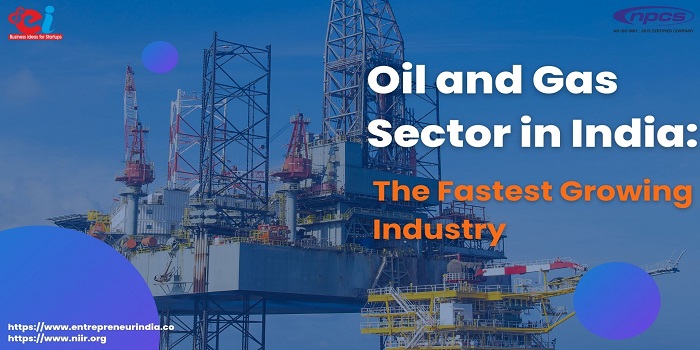
Oil and Gas Sector in India: Oil and Gas Sector in India is one of the Fastest Growing Industry of the economy. Crude oil output totals 267 million tonnes, accounting for 2% of global oil production, while natural gas production totals 636 billion cubic metres, accounting for 5% of global gas production. Since independence, India has discovered significant hydrocarbon resources on land and at sea. Only about 38% (1119 trillion cubic feet) of them have been examined. At present usage rates, these reserves are expected to last more than 100 years. It is an appealing investment destination and a lucrative business prospect because of its enormous potential. Indian energy demand is predicted to expand by 4-5 percent each year over the next 10 years, according to the Petroleum Planning & Analysis Cell (PPAC), a division of the Ministry of Petroleum & Natural Gas. This will need investments in the Oil and Gas Sector in India of $250 billion (Rs 12 lakh crore). Rising incomes, increased urbanisation, industrialisation, population growth, and greater living standards will all contribute to this growth. Visit this Page for More Information: Start a Business in Petroleum Industry Rising Demand of Oil and Gas Sector in India: Total energy demand is expected to rise by more than a third between 2012 and 2035, according to the International Energy Agency, with fossil fuels accounting for the majority of this increase. Oil demand has steadily increased from 1.6 billion tonnes in 2010 to roughly 1.8 billion tonnes (b/d) now, owing to economic expansion and fast modernization. According to the latest IEA report, world oil demand will grow at an average pace of 1.2 million b/d from 2013 to 2030, surpassing 10 million b/d for the first time before 2030. In other words, non-OECD nations, led by China and India, will account for almost two-thirds of new demand over that time span. With a population of over 1.3 billion people, India is expected to overtake the United States and China as the world’s third largest consumer. Although only 2% of its population consumes motor gasoline, compared to 55% in the United States, it will overtake the United States as the third largest consumer in the next five years due to fast GDP growth. Read Similar Articles: Petroleum Based Products Energy Market with the Fastest Growth: After China and the United States, India is the world’s third largest energy and oil consumer. India is the world’s fourth-largest liquefied natural gas importer (LNG). In FY 2019-20, India utilised 213.13 MMT petroleum products and 64.14 BCM natural gas, respectively, up 0.4 percent and 5.5 percent from FY 2018-19 consumption levels. India’s oil demand will climb by about 4 million barrels per day by 2040, the biggest increase of any country. India has 26 sedimentary basins encompassing 3.36 million square kilometres. With a goal of reducing oil and gas import dependency by 10% by 2022. The overall number of petroleum retail outlets increased by 7.7% from 18,848 in 2002 to 77,094 in 2021. As of January 2022, this number had risen to 81,099 people. India is attempting to transition to a gas-based economy by boosting natural gas’s portion of the country’s energy mix from 6.3 percent to 15 percent by 2030. The Pradhan Mantri Ji-VAN Yojana aims to set up 12 commercial scale 2G bio-ethanol projects with viability gap funding of up to INR 150 crore per project. The Sustainable Alternative to Affordable Transportation (SATAT) Scheme aims to install 5000 compressed biogas (CBG) units. By 2025, the goal is to have 20% ethanol blended into gasoline. Natural gas output grew by 19.5% in December 2021 compared to December 2020. Production at petroleum refineries grew by 5.9% in December 2021 compared to December 2020. Petroleum Products exports were valued at $ 3732 million in January 2022, up 74.73 percent from $ 2136 million in January 2021. Total crude oil output from April to December 2021 was 22378.40 TMT, down 4.47 percent and 2.63 percent from the period’s objective and production from the same period previous year, respectively. Natural gas production totaled 25673.90 MMSCM from April to December 2021, up 21.51 percent from the same period previous year. Related Business Plans: Petroleum and Petroleum Products, Refining, Greases, Lube Oil, Brake Fluid, Automotive & Industrial Lubricants, Gear Oils, Wax & Wax Products, Paraffin Wax, Polishes, Bitumen, Base Oil, Crude Oil, Fuel Oils, Lubricating Oils, Gear Oils, Kerosene Situation in Industry: India’s present refining capacity is 249 MMTPA, with 23 refineries (nine in the public sector, three in the private sector, and one in a joint venture). With a capacity of 80.5 MMTPA, Indian Oil Corporation (IOC) is the largest domestic refiner. One Gas Grid, One Nation: Up until September 2021, a total of 21735 kilometres of pipelines have been installed as part of the Gas Grid. By 2024-25, India wants to increase pipeline coverage by 60%, to 34,500 kilometres. By 2027, all states should be connected by a trunk national pipeline network. Over the years, India’s output and consumption of petroleum products have steadily increased. Petroleum product production increased by 5.9% YoY to 250 MMT in 2021, compared to 236 MMT in 2020. Petroleum product consumption increased by 3.6 percent YoY to 201 MMT in 2021 from 194 MMT in 2020. product exports totaled USD 7730.20 million in April 2022, representing a 113.21 percent increase over April 2021. OMCs have adopted a number of efforts to encourage improved LPG consumption and avoid diversion and supply delays. From April to December 2021, PSU OMCs enlisted 141.15 lakh new domestic consumers. On both coastlines, LNG supply is advancing, with three new LNG terminals and one expansion project under construction on the west coast and two on the east coast. The total capacity will be 62.5 MMTPA when all of the projects are completed. Read our Books Here: Petroleum, Greases, Petrochemicals, Lubricants Opportunities for Entrepreneurs: Oil and Gas Sector in India is one of the fastest growing Industry in the world. Huge investment opportunities await business entrepreneurs thanks to
The Metals and Mining Industry in India: Growing Industries of the Future
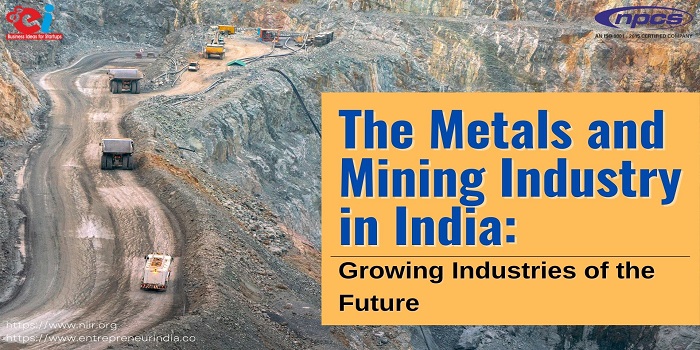
The Metals and Mining Industry in India is one of the most significant contributors to the country’s industrial and economic development. Rich in mineral resources and endowed with abundant reserves of coal, iron ore, bauxite, zinc, copper, and other key minerals, India is among the top global producers of many metallic and non-metallic minerals. The sector forms the backbone of core industries such as steel, cement, power, infrastructure, and automobiles. With government reforms, increasing FDI, automation, and focus on sustainable mining practices, the Indian mining sector is poised for accelerated growth and modernization. It plays a pivotal role in the Make in India and Atmanirbhar Bharat initiatives, fueling industrialization while generating rural employment and revenue. Visit this Page for More Information: Start a Business in Mining Industry Current Status of the Mining Sector India is the second-largest producer of coal, the third-largest producer of steel, and one of the top ten producers of several other metals. The mining industry contributes approximately 2.5% to the GDP directly and around 10% when including mineral-based industries. In FY 2023, the total mineral production in India was worth over INR 3.5 lakh crores, with a strong push towards self-reliance in key raw materials. Read Similar Articles: Minerals & Mineral Processing Industry 1. Key Minerals and Metal Resources a. Coal India has the fifth-largest coal reserves in the world, mainly in Jharkhand, Odisha, Chhattisgarh, and West Bengal. Coal India Limited (CIL), a public sector company, dominates production. Coal is mainly used for power generation, steel production, and industrial heating. b. Iron Ore Iron ore is a critical raw material for the steel industry. Major producing states include Odisha, Chhattisgarh, Karnataka, and Jharkhand. India exported 13 million tonnes of iron ore in FY 2023. c. Bauxite Used in aluminium production, bauxite reserves are abundant in Odisha, Gujarat, Maharashtra, and Madhya Pradesh. India’s alumina refining capacity is also growing rapidly. d. Copper India imports a significant amount of copper despite having reserves in Rajasthan and Jharkhand. Hindustan Copper Limited is the main domestic producer. e. Zinc and Lead India is the sixth-largest producer of zinc globally. Hindustan Zinc (a Vedanta Group company) leads production from mines in Rajasthan. Read our Books Here: Steel 2. Major Players in the Indian Mining Industry Coal India Ltd (CIL) Vedanta Resources National Mineral Development Corporation (NMDC) Hindustan Zinc Hindalco Industries Steel Authority of India Ltd (SAIL) JSW Steel Tata Steel These companies operate in both captive mining and commercial mining capacities, employing lakhs of workers directly and indirectly. Download PDF: The Metals and Mining Industry in India 3. Government Reforms and Policy Support To boost investment and output in the mining sector, the Indian government has implemented several key reforms: MMDR Amendment Act (2021)Opened up commercial mining, allowed auction of composite licenses, and removed restrictions on captive mines. National Mineral Policy (2019)Aims to increase mineral production by 200% over the next 7 years and improve exploration efficiency. Ease of Doing BusinessDigitalization of mining leases, faster environmental clearances, and GIS mapping have reduced red tape. FDI up to 100% allowed in mining and exploration of non-fuel minerals through the automatic route. 4. Sustainability and Green Mining Initiatives With growing environmental awareness, sustainable mining practices are being encouraged through: Mine closure and land reclamation guidelines Adoption of renewable energy for mine operations Use of drone technology, AI, and IoT for efficient resource utilization Waste management and zero-discharge processing plants Companies are investing in CSR projects, afforestation, water management, and community welfare in mining zones. 5. Challenges Facing the Metals and Mining Industry Despite immense potential, the Metals and Mining Industry in India faces various challenges: Delays in land acquisition and environmental clearances High logistics and transportation costs Regulatory uncertainty and multiple approvals Illegal mining and safety violations Volatile global commodity prices Addressing these bottlenecks through single-window clearances, better risk-sharing models, and investment in infrastructure is critical. 6. Emerging Trends and Opportunities The Indian mining sector is rapidly evolving with key trends such as: Commercial coal mining auctions opening the market to private players Battery metals demand like lithium, cobalt, and nickel creating new exploration targets Urban mining and recycling of metals from electronic waste International collaborations for critical minerals with Australia, Africa, and Latin America Technology adoption including autonomous vehicles, digital twins, and real-time monitoring systems 7. Metals Industry: Steel and Aluminium a. Steel Sector India is the second-largest steel producer globally with production crossing 125 million tonnes in FY 2024. The National Steel Policy 2017 aims for 300 million tonnes of capacity by 2030. Demand comes from infrastructure, construction, railways, defence, and real estate. b. Aluminium Sector India is a leading aluminium producer, with Hindalco and Vedanta Aluminium accounting for the majority of output. Aluminium is crucial for aviation, automotive, power, and packaging. 8. Export Potential India exports a wide range of minerals and metals to countries like China, Japan, UAE, and EU nations. The top exports include: Iron ore Bauxite Steel products Zinc and copper concentrates Granite and marble With value-added processing, India can increase its share in the global metals and minerals value chain. Conclusion The Metals and Mining Industry in India is on the cusp of a transformative decade. Rich natural resources, favourable policies, infrastructure growth, and increased domestic demand are pushing the industry into a new phase of expansion. From traditional coal and iron to future-critical minerals like lithium and rare earths, the sector is diversifying and modernizing rapidly. For investors, entrepreneurs, and technologists, the time is right to explore opportunities across exploration, production, equipment manufacturing, technology integration, and green mining solutions. With sustainable growth and digital innovation, India’s mining sector can emerge as a global powerhouse by 2030. Related Business Plans: Mining See More Links: Government Ministry/ Department Ministry of Steel Ministry of Mines Indian Bureau of Mines Ministry of Coal Industry Association Indian Steel Association India Stainless Steel Development Association Aluminum Association of India Coal Consumers Association of India Federation of Indian Mineral Industries Start a Business in Asia Start a Business in Potential Countries