
Is Made-in-India Really Cheaper Than China? The Honest Answer for Manufacturers
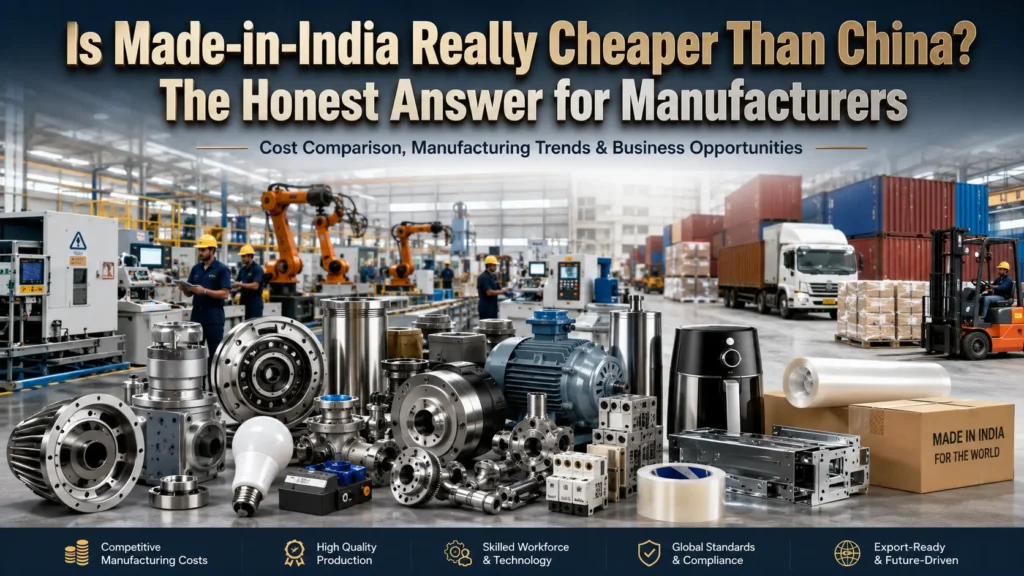
India vs China Manufacturing Cost Comparison The manufacturing fraternity in India creates a new momentum every few months. Glossy headlines herald factories moving, FDI soaring and a new day of industrial self-reliance. The prospect is alluring: India’s labor cost is less than China’s, government is providing incentives, and the geopolitical winds are favouring us. This is the story that is compelling to start-up founders who are considering manufacturing business ideas, and often is incomplete. The real answer is more complicated. India may be more cost-effective for a wise choice of product, scale and supply chain setup when compared to China. But for a lot of categories, the hidden inefficiencies, logistics, infrastructure, and lead time for manufacturing in India still heavily compete with China. That’s closing. However, it has not yet closed. This article cuts through the clutter. It looks at India’s cost advantage, its remaining disadvantage and what considerations manufacturers should make before making a decision on sourcing and/or investment. The Labour Cost Advantage Is Real — But Overstated Let’s talk about India’s strengths first. Average manufacturing wages in India are still much lower than the Chinese counterparts. Data collected by the International Labour Organisation (ILO) and trade bodies like CII shows that factory workers in labour-intensive industries in India are earning approximately 30–45% less than their Chinese counterparts in the same job. That’s a lot of benefit on the books, at least. The industries that benefit most from such an advantage are primarily the clothing, leather, footwear, simple assembly, and some agro-processing industries. For these items, labour represents 35-60% of the total cost. India thus has a defensible cost advantage. It is for this reason that global apparel firms are moving orders to Tiruppur, Surat and Noida. The Confederation of Indian Industry (CII) keeps a close watch on this trend and observes the increasing competitiveness in labour intensive manufacturing. But there are other inputs than labour. Many new startups begin by focusing on labor expenses for manufacturing and neglecting to factor in other expenses. It is not. In capital-intensive or precision manufacturing, labour may only be 10-20% of the cost. Related Article: India vs China Manufacturing: Best Business Opportunities, High Profit Sectors & Startup Ideas in India Where India’s Cost Advantage Gets Eroded Logistics and Inland Infrastructure The Pearl River Delta is a marvellous logistics machine in China. Factories are located within 60-100 km of ports with millions of containers moving through them each month. The roads are of excellent quality. Rail freight operates at high speed. All cold chains, warehouses and last mile are scaled. India’s logistics cost to GDP is in the range of 13-14%, whereas China’s logistics cost to GDP is 8-9% and in developed nations 6-8%. This gap is recognized straight by the Ministry of Commerce and Industry and the National Logistics Policy. The result: manufacturers are paying an additional 4–6% to cover inefficiencies, such as road conditions, port delays and broken cold chains. This one feature can cost the exporter his/her labour cost savings. Power and Utilities The power tariffs for industries are significantly different across states in India, but on average are higher than in China. Power cost is the most important variable input in highly energy consuming industries such as steel processing, chemicals, aluminium, ceramics and glass. In these areas, China’s energy subsidy system and integrated utility system provides a structural cost advantage which India is still trying to catch up with. The Bureau of Energy Efficiency (BEE), under the Ministry of Power, has launched a number of initiatives aimed at enhancing the energy productivity of MSMEs. However, most States still face a tariff deficit against the Chinese industrial zones, and PAT (Perform, Achieve and Trade) cycles and energy audits have helped. Raw Material Supply Chains In part, China developed its manufacturing power by clustering together raw material processing, component production, and final assembly. Shenzhen for electronics. Foshan for ceramics. Small goods in Yiwu. India is building similar clusters, such as textile parks, pharma SEZs and electronics PLI hubs, but the level of depth in the ecosystem is still not matching. India still imports high volumes from China for manufacturers that rely on precision components, speciality chemicals or electronic sub-assemblies. This makes the situation a little paradoxical – a manufactory which seems to be “made in India” can have a partly Chinese supply chain. Government Policies and the PLI Push Indian government has acknowledged these deficits. The Production Linked Incentive (PLI) scheme is implemented through DPIIT and line ministries, and has a total allocation of more than ₹1.97 lakh crore in 14 sectors. They range from mobile phones, pharmaceuticals, medical devices, food processing, textiles, white goods to specialty chemicals. The goal is to push the overall disadvantage of the output side towards direct output-based cash payments. The Ministry of MSME provides credit guarantee scheme (CGTMSE) for MSMEs, capital subsidy on technology upgradation (CLCSS), and the Udyam registration framework which unlocks priority-sector lending for MSMEs. Besides, there’s a Make in India portal (Make in India) which collates information regarding incentives under state and central schemes. It is perhaps the most effective structural intervention, the PM Gati Shakti National Master plan. It plans and manages road, rail, port and utility infrastructure at an integrated level. If fully operational, Gati Shakti has the potential to bring down India’s logistics cost differential by 3-4 percentage points, thus changing the competitiveness landscape. Business Ideas Where India Already Beats China 1. Labour-Intensive Garment and Textile Manufacturing Today, India offers a real cost benefit to entrepreneurs, who are considering their business options in the apparel industry. A well-managed garment unit in Gujarat or Tamil Nadu can compete with the Chinese mills on product categories which are basic and mid-range as the labour cost is 35-40% cheaper compared to the Chinese mills. Additional output incentives are given under PLI scheme for textiles. The success is to establish effective cutting-sewing-finishing lines, to obtain OEKO-TEX or GOTS certification for export markets, and to establish direct buyer-seller relationship without depending on trading
These African Manufacturing Business Has 300% Demand Growth – And Almost Nobody Is Entering It
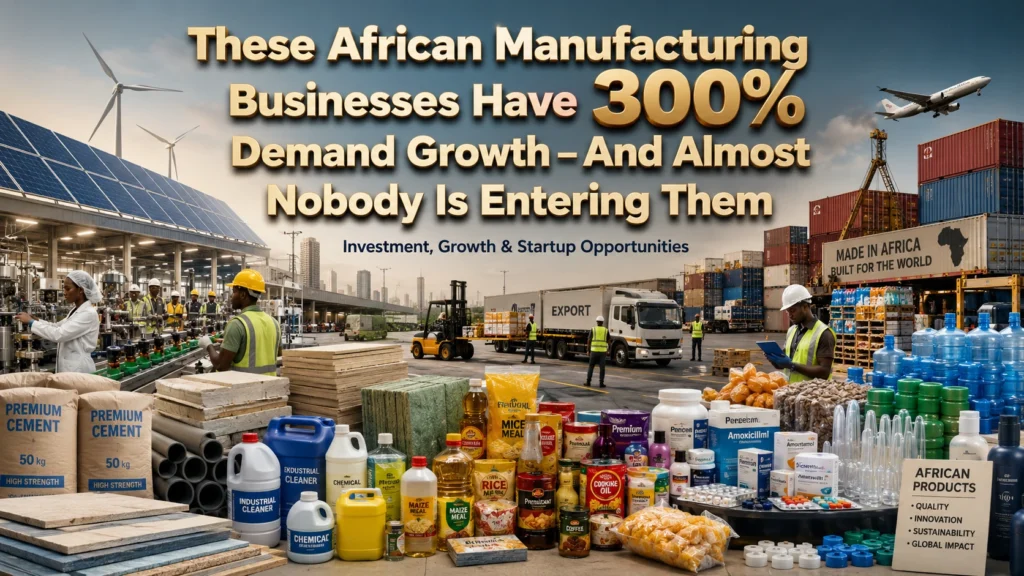
Manufacturing Business Ideas in Africa The African frontier has become more than a frontier market; it is one of the most strategically interesting places to manufacture on the planet. The continent boasts a wellspring of aspiring entrepreneurs with a combined GDP surpassing $3 trillion, a young and rapidly urbanising population of over 1.4 billion, and a historic change in its economic structure to reduce reliance on raw commodity exports. The business ideas that are discussed in this article are not just theoretical business opportunities. They are built on real market opportunities, consumer demand, and production economics that are scalable — that first-generation founders and MSME investors can now leverage with an investment of USD $100,000 to USD $200,000. The African Continental Free Trade Area (AfCFTA), which is already in operation for 54 member countries, has altered the investment equation altogether. No longer do manufacturers have to focus on just one country. This little Rwanda plant can legally export to Kenya, Uganda and Tanzania, and the DRC. Nigeria can access Senegal, Ghana and Côte d’Ivoire through a food-processing unit. This transborder flow and the long-neglected manufacturing industry in the continent has built a unique business environment in which supply remains far behind demand. The article offers an academic analysis of 20 practical manufacturing business ideas that align to this investment level, including market logic, business operational insights, export potential, policy support, and lessons learned from entrepreneurs who have succeeded on the ground. Why Africa Is the Right Manufacturing Destination Right Now The manufacturing sector is still less than 15% of GDP in most African economies, while in most East Asian economies, it accounts for more than 25% of GDP. This structural void is not a vulnerability, it’s a chance. Demand for basic manufactured goods (packaged food, construction materials, hygiene products and energy products, animal feed) is outpacing domestic supply chains. Import costs and availability are still high, and imports are becoming less popular for African governments that want to establish local manufacturing capability. In the meantime, the input costs are relatively low. Labour in EA and WA is cheap and has an improving skill level. There are more than ample supplies of raw materials in the form of agricultural produce, mineral, timber and natural fibre throughout the continent. Although still in its infancy, the energy sector has made tremendous strides with the implementation of solar and off-grid electrification programmes. In combination, these factors make a manufacturing environment that is competitive on the margin—even in more crowded Asian markets—when planned appropriately. AfCFTA and Government Policy: Structural Tailwinds for New Manufacturers The African Continental Free Trade Area is the most significant policy development for manufacturing in Africa over the past 40 years. AfCFTA provides for a single market of goods, the scale of which is unprecedented, as the participating nations have agreed to phase out 90% of tariffs on goods over time. This is what it means for a manufacturer to have the ability to create production capacity for Africa from scratch, rather than simply one country. In addition to AfCFTA, there are multiple incentives at the country level. African Development Bank (AfDB) is proactively supporting industrial SMEs through facilities such as the Africa SME Programme and the Affirmative Finance Action for Women in Africa (AFAWA). Kenya Industrial Estates (KIE) in Kenya provides small-scale manufacturers with factory shells, preferential financing and business development assistance. The government of Ethiopia has created special industrial park zones in which it has offered light industrial manufacturers a package of incentives for land use. The Industrial Development (Income Tax Relief) Act of Nigeria provides for pioneer industries tax holiday. The Special Economic Zones (SEZs) are available to provide infrastructure, tax reliefs and streamlined licensing for Rwanda. The African Union’s Industrialisation Strategy in Agenda 2063 prioritises manufacturing as a sector in the continent’s development agenda and is providing funding and technical assistance for just these sorts of projects. 20 Manufacturing Business Ideas for Africa (USD $100K–$200K) The selection of the following ideas has been made based on the market demand data, availability of raw materials, feasibility of production at small-scale and calculable profitability in a two-to-three-year period. They are all good examples of areas in which there is a high level of import reliance in Africa and where production is lacking or is very limited. 1. Processed Cassava Products (Starch, Flour, Chips) Cassava is the most widely grown food crop in Africa – but Africa imports billions of dollars’ worth of cassava starch and cassava flour derivatives that it could produce itself. A small-scale cassava processing plant (drying, milling and packaging) can be built for $150,000 to $180,000 to be utilized by food manufacturers, textile starch producers and export buyers all at once. There is growing demand from food companies, bakeries and industrial users, with Nigeria, Ghana and DRC being the biggest producers of cassava. The main competitive edge for a new player is the ability to add value to the cassava crop, which is not just raw cassava but clean cassava, packaged cassava, specification grade starch, and/or high quality HQCF (High Quality Cassava Flour). 2. Vegetable Oil Refinery (Small-Scale Edible Oil) Urbanisation is driving up Africa’s consumption of edible oils at a significant clip, but the domestic edible oil refining capacity is severely constrained. Raw quantities of palm oil, groundnut oil, sesame oil and sunflower oil are produced on a large scale throughout the continent but are not generally refined to retainable standards in the region. A small-scale expeller and refinery unit can be set up at a cost of $160,000-$200,000 and can supply refined, bleached and deodorised edible oil for retail packing and institutional food services. As by-products from refinery activities, soap manufacturing is an adjacent revenue stream that can be used to enhance margin usage. Refined edible oil has very high demand-supply mismatch in the West African markets, especially in Nigeria, Ghana and Cameroon. Access Complete Business Plan: Edible Oils, Non-Edible Oils, Fats & Vegetable Oils Projects 3. Solar Panel Assembly Unit Access to energy
10 Manufacturing Business Ideas Under ₹25 Lakh Eligible for PMEGP Subsidy
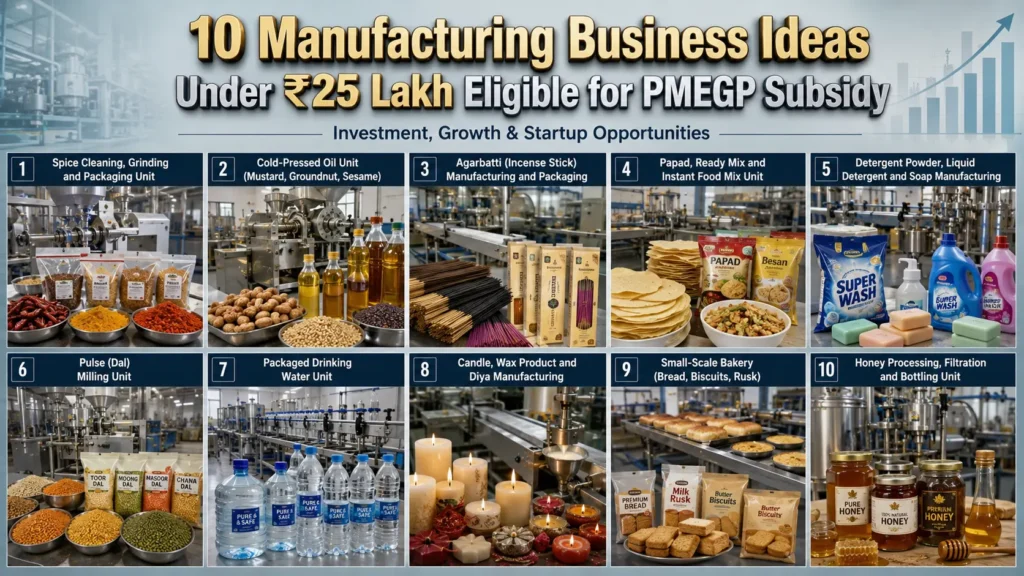
Ten manufacturing units that fit comfortably within PMEGP’s project cost framework, with realistic cost ranges and the subsidy math worked through PMEGP Manufacturing Business Ideas Under 25 Lakh A supportive middle ground for planning PMEGP is ₹25 lakh. It is not too large to be able to establish a medium sized a medium scale unit with the proper machinery, but sufficiently small that the entrepreneur’s contribution of 5 to 10 percent (depending on type) is easily manageable for most first-time applications. The ten ideas below have been selected because they have three common features: The machinery and set-up cost is within or less than ₹25 lakh; The raw material is not limited to a specific geographical area but is available in most parts of India; They are categories that are seen by PMEGP-implementing banks and KVIC offices frequently, and not in an unusual way. Production using a spice processing unit, which involves cleaning, drying, grinding, blending and packaging, requires around ₹15 to 25 lakh investment — one of the lowest capital-intensive avenues into food manufacturing, with India being the world’s leading producer of spices, ensuring a consistent raw-materials supply. 1. Spice Cleaning, Grinding and Packaging Unit The spice processing industry is one of the most viable small-scale manufacturing sectors in India due of its status as the largest producer and exporter of spices in the world. A unit which purchases raw turmeric, chilli, coriander or blends of spices from various regions, cleans and dries the raw spices, grinds the raw spices to the desired fineness and packs them in a packaging line with simple machinery, can be established for Rs. 15 lakhs to 25 lakhs. Value addition makes the economics much better, a packaged, branded masala blend is worth a much higher price than lose ground spice sold to a wholesaler, and the extra cost of packaging is low compared to the price increase. The manufacturing cost ceiling is well within the boundary of this trade category and the profile of the trade is well known with respect to PMEGP because this is one of the more commonly approved trades. View Full Project Details: Spices and condiments, Indian Kitchen Spices, Masala Powder 2. Cold-Pressed Oil Unit (Mustard, Groundnut, Sesame) A small cold pressed or expeller-based oil unit, processing mustard, groundnut, sesame or coconut, depending on availability, usually involves the use of an expeller machine, filtration machine and storage and packing plant, the total investment for a small unit (might be ₹10-22 lakh) being a daily capacity of around 10 tons. Today, with the shift to oils that are cold pressed and free from chemicals, there is a retail premium for these oils that didn’t exist ten years ago, especially in the urban markets. This can be made around a producing cluster for the selected oilseed, reducing raw material cost in a significant manner and often, the higher subsidy rates of PMEGP coincide with such type of siting. 3. Agarbatti (Incense Stick) Manufacturing and Packaging Although Agarbatti manufacturing is one of the simplest industries on this list, the basic rolling machines, drying racks and perfuming and packaging set-up can be acquired for ₹5-15 lakh, depending on the level of automation and the technology used. Demand is steady and is not quite cyclic, as the product is consumed every day for religious and ritualistic purposes all over India. This is also a category that can see a significant boost in output for a small unit without a commensurate proportionate increase in the number of staff working on the machine, especially in the unit economics part of the equation after the initial setup period. 4. Papad, Ready Mix and Instant Food Mix Unit Instant food mixes (dhokla, gulab jamun, pakora mixes and others), papad and idli/dosa batter mixes are a category that has significant retail demand in the urban markets and is growing in sales. These can be manufactured in a unit which can be setup in ₹10-20 lakh with mixing, rolling/extrusion and packaging equipment, FSSAI registration is the primary regulatory requirement. This category is attractive to a PMEGP applicant because the production cycle is relatively short and the recognition of the market is possible without having to invest in significant new machines each time a new product is added to the production line. 5. Detergent Powder, Liquid Detergent and Soap Manufacturing Units involved in detergents production, dishwashing liquid and bathing / laundry soap etc remained very common among the categories approved by PMEGP due to the proven technology for making detergents, established chemical supply chain for raw materials and year-round demand for these products during the recession. The basic unit with mixing vessels, simple soap-cutting/detergent-mixing line with packaging can be set up at ₹8-20 lakh. This is a field that the author has explored in great depth in the Soaps, Detergents and Disinfectants Technology Handbook published by NPCS, which explains how to formulate the product, how to test the product quality and how to choose the machinery needed to produce the soap that performs as well as the established product. These are the areas where a first-time entrepreneur in this field is most likely to need guidance to make the product that performs as well as the established product. Find the most profitable startup for your investment range 6. Pulse (Dal) Milling Unit For the small-scale daily capacity, a small dal milling unit which consists of dehusking, splitting, polishing and grading of pulses fits in between the price of ₹20 to ₹25 lakh and the core of the equipment comprise of dehusking machine, polishing drum and grading equipment. India is a vast consumer of pulses, with much of its production being ground in the country, near its consumption areas, a structural advantage which export dependent categories have not. The unit is best suited close to a pulse producing belt, both for the raw material cost and the fact that the by-products (husk, broken grain) are also sold; one such outlet is to poultry feed manufacturers, which increases the unit economics. Related
Products from Brewery Spent Grain and Distillery By-Products: Manufacturing Guide and Business Opportunities
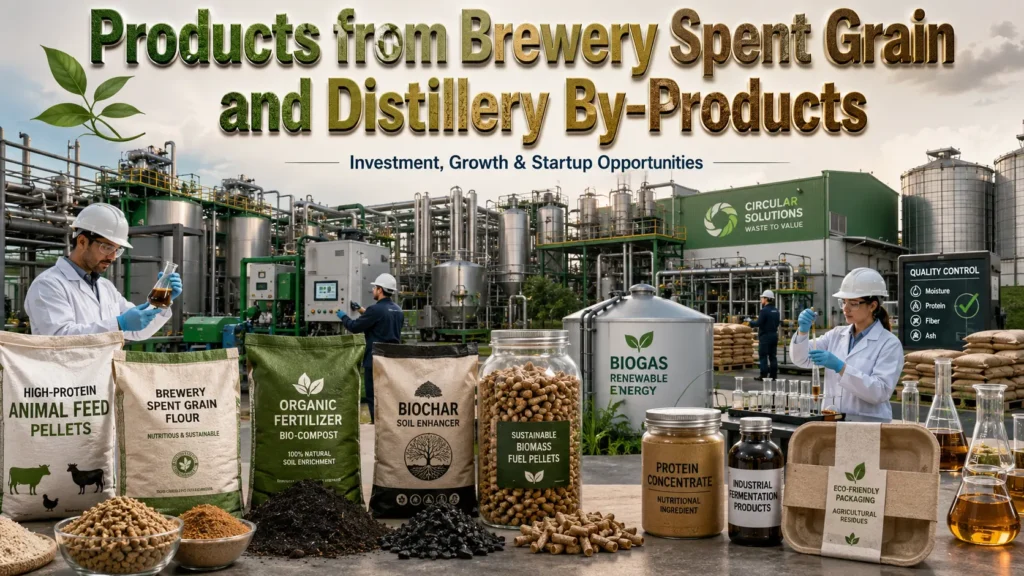
Brewery Spent Grain Business in India Beer and Spirits in India has experienced a tremendous growth in the last 10 years. The Indian market is now the second biggest in the world for whisky and 8–10% of the population are drinking beer every year. This growth equates to increasing amounts of processing waste, such as brewer’s spent grain (BSG) from the brewing industry and distillery spent wash from alcohol production. BSG is the barley malt and adjunct grain used to make the wort that is left over from the brewing processes. About 20kg of wet BSG is produced for every 100 liters of beer produced. The wet BSG is produced by a large Indian brewery (1 lakhs liters per month) and is sold/donated as cattle fodder at Rs. 200 per ton. 1,000–3,000 per ton. BSG is 25–30% protein, 15–25% dietary fiber and has a high content of B vitamins and antioxidants. With the rise in market demand for high fiber, high protein food ingredients like protein bars, sports nutrition, functional foods, food enrichment, there is scope for processing BSG into food grade ingredients which fetches high price of Rs. 100–250 per kg versus Rs. 1- 3 per kg feed as wet cattle feed. The distillery spent wash is a by-product of the alcohol distillation process that contains high levels of BOD (50,000-100,000mg/l) and is rich in potassium, nitrogen and organic compounds useful as crop fertilizers. However, the regulatory pressure (i.e. effluent discharge prohibition) and fertilizer requirement creates a business structure for valorization of spent wash. Top 8 Products from Brewery and Distillery Waste 1. Brewer’s Spent Grain Protein Flour Dried (drum dryer or spray dryer) spent grain after centrifuge and ground to fine flour has a protein content of 25-30% and a fibre content of 15% (dietary fibre). Protein enriched bread, crackers, pasta and health food products use food grade BSG flour. It sells at Rs. 80–150 per kg versus Rs. 1–3 per kg wet. A BSG drying and milling unit will cost Rs. 60–150 lakh. 2. Dried Distillers Grain (DDG) for Animal Feed Dried and pelletised distillery grain residue (corn, sorghum or barley based) is high in protein (26–30%), high in metabolisable energy and high in fat (9–11%) making it a premium animal feed ingredient. DDG can be used in rations for dairy cattle, poultry and swine as a protein-energy source at a competitive price. DDG is a product of large grain-based distilleries and smaller operations can be given the chance to complement their facility with drying and pelletising. Get Detailed Project Report (DPR): Business Plan for Starting Animal Feed Production 3. Spent Wash Potash Fertiliser (Bio-Composted) Distillery spent wash (after multi-effect evaporation) is mixed with agricultural biomass (bagasse, press mud) and forms an organic manure containing 2-3% K₂O, 1.5-2% N and 1% P₂O₅. The Fertiliser Control Order allows spent wash compost as an acceptable organic fertiliser. The cost of the spent wash treatment by composting plant is Rs. It is able to save 50-150 lakh and also addresses the effluent compliance. 4. Biogas from Spent Wash Amongst all industrial effluents, spent wash generates the most energy efficient biogas from high-rate reactors such as UASB and CSTR with 25-35 m³ of gas per m³ of spent wash. The biogas is fired in boilers in place of biomass or coal. A number of large Indian distilleries (United Spirits, Radico Khaitan, Allied Blenders) have installed biogas plants from spent wash. Cost of 1 million litre/day distillery spent wash biogas plant is Rs. 3–8 crore. Get Detailed Insights from This Book: Handbook on Biogas and Its Applications 5. Protein Supplement for Aquaculture Feed Dried and pelletised with balanced amino acid profile, Brewer’s spent grain protein is accepted in tilapia, rohu, catla and shrimp aquafeed at inclusion levels of 10-20%. In the context of the rising production in Andhra Pradesh, West Bengal and Odisha, the demand for plant-based protein feed alternatives to fishmeal is increasing. The price of BSG protein supplement is Rs. 40,000–70,000 per tonne in the aquafeed market. 6. Yeast Extract (from Surplus Brewing Yeast) Protein-rich by-product of the brewing process, surplus brewer’s yeast can be lysed (heated or treated with enzymes) before spray drying into yeast extract, a savory flavour ingredient found in processed soups, sauces, seasoning blends and pet food. The price of yeast extract is Rs. It is imported at present, and costs 200–500 per kg. The cost of a yeast extract production unit is Rs. 1–3 crore. 7. Biosorbent (Spent Grain for Heavy Metal Removal) Chemical processed (acid washed and crosslinked) spent grain is used to make a biosorption material that is efficient in the removal of heavy metals (lead, cadmium, chromium) from industrial effluents. A specialty, niche chemical application for the ETP industry. The cost of a specialty biosorption preparation unit is Rs. 40–100 lakh. 8. Compostable Packaging Material Dried and compressed BSG fibre with starch binders, can be used to create rigid compostable packaging trays, plates and containers. These products are in competition with bagasse and wheat bran moulded packaging products — the single-use plastic alternative market. The cost of a BSG moulded packaging unit is Rs. 80–200 lakh. Discover business ideas that actually make money Investment and Market Summary Product Investment (Rs.) Price Key Buyer BSG Protein Flour (Food Grade) 60–150 lakh Rs. 80–150/kg Health Food, Bakeries DDG Animal Feed Pellets 40–100 lakh Rs. 25–40/kg Dairy, Poultry, Aquafeed Spent Wash Compost 50–150 lakh Rs. 4,000–8,000/MT Organic Farmers Biogas from Spent Wash 3–8 crore Fuel Cost Saving Self-Consumption, OMC Yeast Extract 1–3 crore Rs. 200–500/kg Food Flavour, Pet Food Related Article: Strategic Role of Zinc and Copper in Animal Nutrition: Why Every Feed Formulation Must Include Trace Elements Raw Material Contracts with Breweries and Distilleries Formal contracts must be signed with breweries and distilleries to assure supply of BSG and spent wash including agreed delivery dates, quality data (moisture, protein content), and price. In addition, large breweries are willing to outsource the entire BSG logistics to a processor, even if they have to pay
Top 10 Industrialists of Maharashtra: Success Stories, Business Ideas, and Future Vision
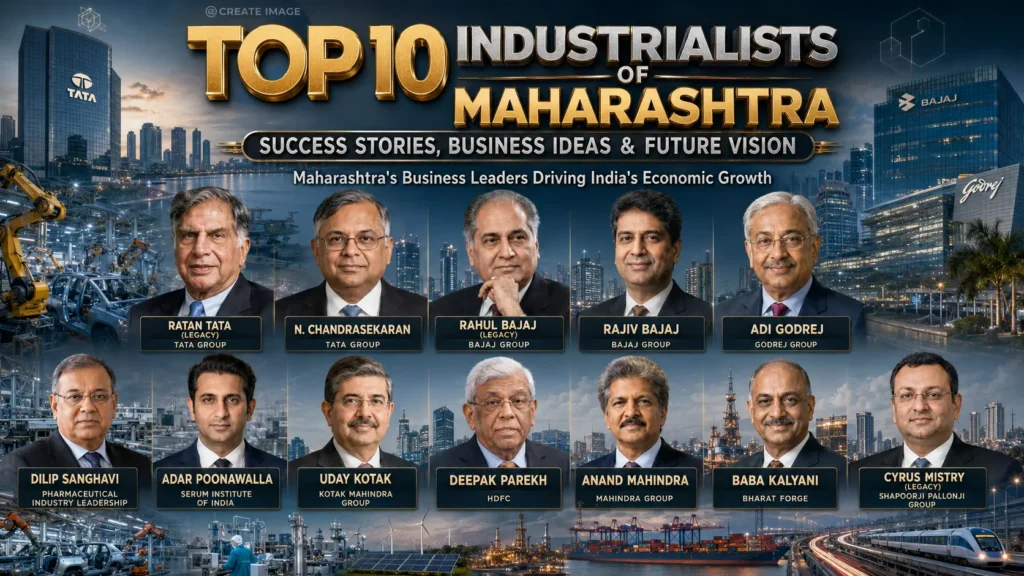
Industrialists of Maharashtra Maharashtra’s Industrial Identity as India’s Economic Capital Maharashtra is the financial capital of India, has the most important seaport (JNPT) and the most diversified industrial base, all of which influence business ideas in the area. Maharashtra generates the highest share of industrial gross value added in India (around Rs.) at 16% of total gross value added in the country. It is the biggest state economy in India with 42.67 trillion. The state’s industrial landscape includes the presence of the auto industry (Pune, Nashik, Aurangabad), pharmaceutical industry, IT industry (Pune), financial industry (Mumbai), petrochemical industry (Raigad) and food processing industry. The industrial ethos is tied to the industrial families, some of whom came up with industries that became the national and international leaders in their respective fields, such as the Godrejs in consumer durables, the Bajajs in two-wheelers, and financial services, the Tamils from Mumbai in Tata and the Ambanis in textiles in the early days. New era industrialists in Electric Vehicles, Fintech and Deep-tech are shaping the next generation of the industrial narrative in Maharashtra from the engineering hub of Pune to the capital markets of Mumbai. IBEF Maharashtra Report offers information on the state of investment in the sector. View Full Project Details: Best Business Opportunities in Maharashtra Why Maharashtra Dominates India’s Industrial Economy Maharashtra has three structural strengths that strengthen and support the dominance of the industrial sector. First, the access to capital: Mumbai is home base of BSE, NSE and the leading banks, insurance companies and mutual funds in India, providing unparalleled access to equity and debt capital for industrial expansion in Maharashtra. Secondly, the connectivity of the ports: Jawaharlal Nehru Port (JNPT) is the largest port in India with more than 50% of the country’s traffic through containers, and is the main export hub for manufacturers in Maharashtra and Central India. Third, human capital: hundreds of thousands of engineering, management and finance graduates are produced by Mumbai, Pune and Nagpur every year, which goes to feed manufacturing and technology businesses. The Pune-Mumbai industrial corridor is one of the most productive manufacturing corridors in India where Bajaj Auto, Tata Motors, Volkswagen, Mercedes-Benz, Force Motors, Thermax, and hundreds of tiers-1 and tier-2 auto component makers are spread out. Nashik’s contribution is wine production (which is an unusual success story in the Indian industrial sector), engineering and auto components. Aurangabad is regarded as one of the fastest growing auto manufacturing cities of India. Government Policies Supporting Maharashtra’s Industries More than 280 industrial areas are managed by Maharashtra Industrial Development Corporation (MIDC). Capital subsidy, power tariff benefit and stamp duty benefit are provided for fresh investments in manufacturing under Package Scheme of Incentives (PSI) in Maharashtra. The state EV Policy 2021 aims to achieve 10% EV penetration by 2025 and offers more incentives to purchase and manufacture EVs. The state of Maharashtra has seen investments in the semiconductor design, EV manufacturing and Data centre sectors under Make in India. The Ministry of MSME actively promotes the MSME clusters of Maharashtra in Auto-component, Pharmaceutical, Textile and Food processing Technology. Top 10 Industrialists of Maharashtra: Profiles and Future Vision 1. Ratan Tata (Legacy) / N. Chandrasekaran – Tata Group (Mumbai HQ) The Tata Group is the most trusted and internationally known conglomerate in India with its headquarters in Mumbai, Maharashtra. N. Chandrasekaran (since 2017) has spearheaded the group’s transition to digital services, EV, semiconductors, and clean energy, while retaining its leadership in steel, auto, IT, consumer goods, and hospitality. Long term capital investment, ethical governance, and community development is the Tata model, which has led to the formation of brands (Tata Salt, Tanishq, Titan, TCS, Jaguar Land Rover) which consumers believe in unconditionally. The future plans involve in the development of India’s first indigenous semiconductor chip and creating India’s most valuable EV brand through the Tata Motors. 2. Rahul Bajaj (Legacy) / Rajiv Bajaj – Bajaj Group The Bajaj Group is based in Pune, in Maharashtra and established two of the most prominent enterprise clusters in India: Bajaj Auto (two wheeled vehicles) and Bajaj Finserv (financial services). Rajiv Bajaj’s bold product strategy move of exiting scooters and concentrating on motorcycles and thus creating India’s first true performance-oriented mass motorcycle is one of the boldest product strategy moves in India. His father Rahul Bajaj made the name Bajaj synonymous with the aspirations of the common people in the country over decades. The future plans involve further expansion of Bajaj’s Chetak EV brand and increased digital lending market share for Bajaj Finserv. Explore This Book: Just For Starters: How To Become A Successful Businessman? 3. Adi Godrej – Godrej Group Adi Godrej is the Chairman of Godrej Group, one of the oldest and the most diversified industrial families in India. Godrej’s business portfolio includes aerospace components, real estate, agri-inputs, FMCG (Good Knight, Hit, Cinthol) and consumer durables (refrigerators, washing machines). Their Vikhroli township on Mumbai is a landmark of the industrial heritage of Maharashtra, which is an entire industrial and residential township. The Godrej way to build trust in the trustworthiness of the product and the long-term investments of brands has established the brand as a household name in the Indian consumers’ minds and has been passed on through four generations. 4. Dilip Sanghavi / Pharma MNC Leaders – Pune Pharma Belt Pune and Nashik is one of the most prominent pharmaceutical manufacturing hubs in India, where the companies manufacture APIs, formulations, and clinical research services for the global markets. The world’s largest vaccine maker in terms of volume is the Cyrus Poonawalla group’s Serum Institute of India (Pune) which is now headed by Adar Poonawalla. Adar Poonalla is looking forward to Serum’s future growth as they extend their vaccine pipeline to additional disease segments, and from vaccines, into biologics globally. 5. Adar Poonawalla – Serum Institute of India (Pune) Adar Poonawalla is the CEO of the world’s largest vaccine maker by volume, Serum Institute of India. During the pandemic, Maharashtra’s pharmaceutical industry capability was put to the test as
How to Start a Seaweed and Marine Algae Products Export Business in India

Seaweed and Marine Algae Products Export Business The seaweed and marine algae products manufacturing for export is one of the promising and fastest-growing business ideas in the blue economy in India. The global seaweed market is over 16 billion dollars annually and is expanding at a rate of 10% to 12% per year, due to the increasing trend in the world towards natural, plant-based, and sustainable products. Seaweed farming and processing is a high priority marine export category promoted by MPEDA and there are significant natural resources of seaweeds in India available along the coast, especially in Tamil Nadu, Gujarat and Andaman and Nicobar Islands. Seaweed and marine algae products represent a business opportunity for entrepreneurs who have access to coastal land, interest in aquaculture or a chemistry processing unit, and are interested in supporting sustainable, healthy, and sustainable business development and future growth. Why Seaweed Products Export Is a Growing Blue Economy Opportunity The potential benefits of seaweed are its exceptional chemical diversity, with carrageenan, agar, alginates, fucoidan, laminarin and various bioactive compounds being used as food additives, excipients for pharmaceuticals, cosmetic actives, agricultural bio stimulants and sustainable packaging materials. This chemical variety provides several opportunities for market penetration and investment and margin characteristics. Seaweed has a strong competitive edge for India because of coastal biodiversity, tropical water temperature, availability of sunlight and its traditional harvesting knowledge among the seaweed harvesting communities in Tamil Nadu and Gujarat. The use of seaweed aquaculture (cultivation of species such as Kapahulu’s alvarezii (cottonii) and Gracilaria (used for agar) production can supplement the natural harvest in terms of scale and consistency. MPEDA and Government Support The Marine Products Export Development Authority (MPEDA) is actively encouraging the cultivation and processing of seaweed products with financial assistance for seaweed cultivation infrastructure, processing equipment, quality certification, and developing market. MPEDA’s seaweed development programme offers subsidies for systems of raft and ropes, for drying facilities and for extraction machines. Seaweed farming infrastructure such as rope, raft cultivation system and seaweed processing equipment are given capital subsidy in the Department of Fisheries PMMSY. The support given to PMMSY is also generous, especially for the cultivation of seaweeds which aligns to the coastal livelihood development and blue economy goals. Central Institute of Fisheries Technology (CIFT), ICAR, offers technical support and technology transfer for the processing of seaweed such as carrageenan extraction, agar production and manufacture of seaweed biostimulant technologies to help entrepreneurs with proven technologies for setting up new enterprises. Exports of seaweed and marine algae products are covered under DGFT RoDTEP Scheme. MPEDA RCMC must be claiming these benefits. Seaweed products are one of the most promising marine export products for MSME entrepreneurs, due to their relatively low investment requirements and the increasing global demand. Read the Complete Book Here: Handbook on Fisheries and Aquaculture Technology Business Ideas in Seaweed and Marine Algae Products 1. Dried Seaweed and Raw Seaweed Export The exported seaweeds are mainly sun-dried Kappaphycus alvarezii (cottonii) from Tamil Nadu coastal farms for processing in food grade carrageenan by the carrageenan extraction companies in Philippines, China and Europe. This is the most readily available seaweed export venture which has minimal processing facilities. Cost investment range between ₹10 lakh to ₹30 lakh for seaweed drying platforms, packaging and basic quality testing. The farmers and SHG of Tamil Nadu involved in seaweed farming under the support of MPEDA and PMMSY provide raw seaweed which is processed and packaged by the traders/exporters. The export price of dried cottonii seaweed is from ₹25 to ₹50 per kg, depending on the quality and the amount of carrageenan present. 2. Carrageenan Extraction and Export A widely used food additive in this country, carrageenan is a natural hydrocolloid obtained from red seaweed, which is used in dairy products, processed meats, infant formula, and cosmetics. The Kappaphycus seaweed cultivation in India is the source of raw material used in the production of carrageenan. The investment amount in an extraction vessel, filtration unit, drying and milling is in the range of ₹1crore to ₹4crore in a carrageenan extraction unit. Premium food industry buyers must use carrageenan that is food grade and certified by JECFA as well as Kosher and Halal. Carrageenan is sold internationally as a stabiliser and gelling agent for dairy manufacturers and processed food producers in the EU, US, Japan and Southeast Asia. 3. Agar Production from Gracilaria Seaweed Agar is a gelling agent from red seaweeds (Gracilaria and Gelidium) that is widely used in microbiology laboratory media, food production and in the manufacture of pharmaceutical capsules. In India natural Gracilaria resources are found in Tamilnadu and Gujarat. The cost of investment for a production unit of the bacteriological agar and food grade agar lies between ₹80 lakh and ₹2.5 crore. The bacteriological agar used in laboratories is one of the most expensive seaweed derivatives in international markets where its prices range from Rs. 2000 to 5000 per kg. Its export markets include some of the global research institutions, food manufacturers, diagnostic laboratories and pharmaceutical companies. To gain access to the pharmaceutical market, the USP and BP agar specifications must be adhered to. Get Detailed Project Report (DPR): Agar Agar (Bacteriological Grade) Manufacturing Industry 4. Seaweed Biostimulant for Agriculture With the growing popularity of organic farming and sustainable agriculture, the use of seaweed based agricultural biostimulants is accelerating in the form of liquid seaweed extracts, seaweed powder and seaweed meal. They are used to enhance crop productivity, tolerance to stress and soil quality when applied to a crop or soil. Mechanical or chemical extraction of fresh or dried seaweed can be used to establish a seaweed biostimulant production unit with an investment of ₹20 lakh to ₹60 lakh. Premium market for organic agriculture opens by compliance with EU Organic Regulation and US organic certification (USDA NOP). The countries with the highest adoption of biostimulants in their export markets are organic farming communities in EU, US, Japan, and Australia. Import-Export Opportunity Analysis The export of seaweed products is steadily increasing in India.
Products from Rice Husk and Rice Husk Ash: Business Ideas, Manufacturing Process, and Project Opportunities
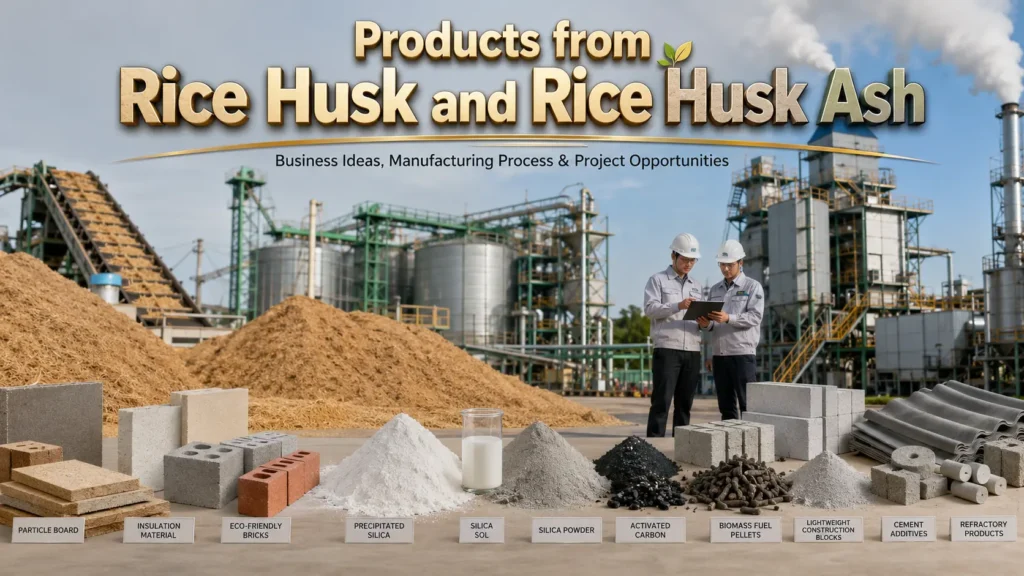
Rice Husk Products Business Ideas Why Rice Husk Is One of India’s Most Undervalued Industrial Raw Materials The one thing that most business people fail to consider when they start a business based on agricultural waste is that the raw materials are nearly free. Rice husk, the sheathing of paddy is just such an opportunity. India is the second largest rice producer, producing around 12 million tonnes of rice husk as a by-product of the milling process every year. Most of this husk was used as fuel for boiler generation of steam in rice mills until recently, but was accompanied by particulate pollution. What entrepreneurs are finding is that rice husk is not only a fuel, but also a chemical feedstock, construction material, and an industrial input that is much more valuable than its fuel value. Rice husk is about 20% silica in a highly amorphous and reactive form. Ash from the controlled combustion known as Rice Husk Ash (RHA) is about 85-92% amorphous silica. This silica is used as a raw material in the production of precipitated silica, sodium silicate, activated carbon, cement additives and refractory materials. The business is real and proven and can be done by the MSME entrepreneurs with an understanding of the processing. Get Detailed Insights from This Book: Manufacture of Value Added Products from Rice Husk (Hull) and Rice Husk Ash (RHA) Top 10 Products from Rice Husk and Rice Husk Ash 1. Precipitated Silica Precipitated silica is produced by reacting RHA with caustic soda to produce sodium silicate solution, and then precipitating silica by acidification with sulphuric acid. The white powder produced is used as a rubber tyre reinforcement, a flow aid in toothpaste, an anti-caking agent in animal feed and a tablet excipient in pharmaceuticals. India is now importing so many materials from China and Germany. The cost of a 5 TPD unit is Rs. The investment requirement for this is about 80 lakh to 150 lakh and has the potential to create Rs. The annual net profit lies in the range of 40-60 lakh at market price of Rs. 35,000–70,000 per tonne depending on grade. 2. Sodium Silicate (Water Glass) Sodium silicate can be obtained by melting RHA with soda ash at high temperature or by dissolving RHA in caustic soda at high pressure. It is used for making detergents, paper adhesives, foundry core binding, textile processing and water treatment. There is a big domestic market in India. In the case of a 10 TPD plant, the investment costs are: 30–80 lakh. It is easy to process and there is a reliable industrial buyer base for the product. 3. Activated Carbon Rice husk activated carbon is obtained when the rice husks are carbonised at 500-700°C and then activated with steam or CO₂ at 800-950°C. Surface areas of 800-1200 m2/g are used for water purification, air filtration, decolourisation in pharmaceuticals, food processing and gold recovery. The cost of a 3 TPD unit is around Rs. Investment required is 60 to 120 lakh and the revenues earned are Rs. Depending on application grade between 50000 and 1,50,000 per tonne. 4. Rice Husk Particle Board Particle board is made from rice husk, Urea Formaldehyde or isocyanate binders and is hot pressed into panels that are used for furniture, partition and low-cost housing. The boards have termite resistance and moisture stability. The cost of a 5,000 m³/year plant is Rs. 1.5–3 crore. Clients are furniture makers, government housing schemes, interior fit out companies etc. Get Detailed Project Report (DPR): Rice Husk, Rice Hull, Rice Husk Ash (Agricultural Waste) Based Projects 5. Rice Husk Briquettes and Pellets The biomass fuel of dense quality with calorific value of 3200 – 3600 kcal/kg is produced by compressing the rice husks under high pressure, without using binders. These briquettes are used in industrial boilers of the food processing, textile, ceramic and brick industries as an alternative to coal. Investment: Rs. 25–60 lakh. Renewable energy requirements around the world are increasing, and so are European and South Korean demands on biomass fuel exports. 6. RHA as Cement Pozzolan The rice husk ash contains a large amount of amorphous silica ash, which has excellent pozzolanic activity, when the rice husk is burned at 600–700°C. RHA can be used as a substitute for 10 – 25% of the Portland cement used in concrete, enhancing durability and reducing carbon footprint. As per contract, RHA is supplied to cement companies at the rate of for 2,000-5,000 per tonne, only investment for collection and quality control is required. It is a low-cost product with 10 to 25 lakh customers and low processing cost. 7. Refractory Products High-silica RHA used in the refractory bricks and castable for industrial furnace, which has high resistance to temperature above 1,600℃, is suitable for steel ladles, foundry furnaces, ceramic kilns, etc. The niche, higher margin product is well-balanced with an industrial buyer base. The price of a small refractory unit begins at Rs. 50–100 lakh. 8. Oxalic Acid Rice husk cellulose is treated with alkaline water at high temperature and pressure to produce oxalic acid which is further acidified to produce oxalic acid. Currently it is imported for use in the textile industry, in leather manufacturing and in the synthesis of pharmaceuticals as well as in metal surfaces. The cost of a 2 TPD unit is Rs. 40–80 lakh. RHA is a cost competitive alternative to imported production. 9. Silicon Metal (Advanced Application) High-temperature carbothermic reduction is being used commercially to provide a source of high purity silicon for electronic and solar cell applications for RHA. India and abroad there are several pilot and commercial plants. This requires a lot of capital (Rs.). The selling price of silicon metal is Rs. 10 lakh – 50 lakhs (10 – 50 crore). The rice husk has the highest value-addition of Rs 1.5–3 lakh per tonne. Discover business ideas that actually make money 10. Cellulosic Ethanol (2G Biofuel) Rice husk is rich in cellulose (35-40%) and hemicellulose (25-30%) which can be fermented
How to Start a Crumb Rubber Powder Plant: ₹1.5 Crore Investment, ₹6 Crore Revenue
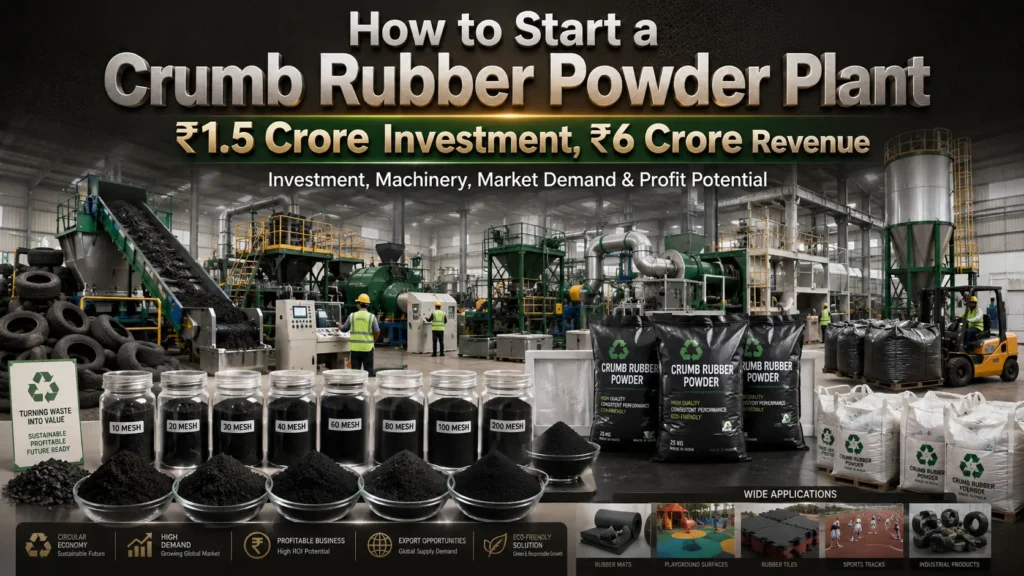
Crumb Rubber Powder Plant in India A Business Idea the Recycling Economy Is Crying Out For In the field of environmental-friendly manufacturing, a crumb rubber powder plant is one of the most missed out business ideas in India for a simple reason, waste tyres are everywhere and the demand for manufactured rubber granules is increasing rapidly. Entrepreneurs who know this are entering a business with solid profit margins, abundant raw material supplies and government tailwinds rolling down the road ahead. Not a niche opportunity — it’s a real industrial play with a real scalability. The Ministry of Environment, Forest and Climate Change numbers show that India produces more than 1.1 million metric tonnes of end-of-life tyres every year. The majority of this rubber is deposited in uncontrolled dump sites, thereby not only posing a threat to the environment, but also creating a raw material that could not be used. This waste is transformed at a crumb rubber powder plant into a high-value industrial input: used in roads, sports surface, automotive component and construction material. The economic arguments are strong. The total project investment is around ₹1.5 crores and a well-managed plant can yield an annual revenue of anywhere between ₹5–6 crore, which means first-generation entrepreneurs and MSME investors will get a handsome return on their investment. Get Detailed Insights from This Book: The Complete Book on Rubber Processing and Compounding Technology Why This Sector Is Growing Fast The crumb rubber industry is a dynamic area of business poised at the crossroads of two trends: the circular economy and the wave of infrastructure expansion. An increasing number of industries are experiencing a surge in demand for crumb rubber powder (also known as recycled rubber granules). Road construction accounts for the greatest use. Rubberised bitumen (with crumb rubber as a modifier) provides an extended service life, improved skid resistance and reduced maintenance costs for pavements. The National Highways Authority of India (NHAI) has issued orders for several NH projects to use rubberised bitumen, taking the demands away from the processors. On the other hand, sports infrastructure, which includes artificial turf, running tracks, playgrounds etc., is booming in tier-2 and tier-3 cities. A lot of crumb rubber infill is needed for each installation. Demand is also on the rise for exports, especially to South Asia and Middle East, where there is not enough tyre recycling facility. So entrepreneurs who are coming in to this industry are not only going to benefit from domestic consumption; they are investing in export revenues as well. The raw material side is also very good. The amount of end-of-life tyres is large, low cost and increasing. Tyres are produced every day by steel mills, transportation companies, logistics companies and municipalities. Since it is an expense to dispose of, many suppliers would be willing to sell scrap tyres at close to zero cost. It helps to lower input costs and maintain solid profit margins, even during recessions. Government Policies and Incentives Supporting This Business Extended Producer Responsibility (EPR) and Waste Tyre Regulations The Central Pollution Control Board (CPCB) has issued notification of EPR rules for Hazardous and Other Wastes Management Rules relating to waste tyres. Tyres must be passed through registered tyre recyclers and processors under these regulations. As a result, tyre Original Equipment Manufacturers (OEMs) are actively looking for authorized crumb rubber processors. For new plants, it is the formalisation of raw material linkages right from the beginning, which gives them a major competitive edge over unorganised players. MSME Credit and Subsidy Schemes MSME Ministry has launched a collateral-free loan facility for MSMEs for manufacturing projects with the Credit Guarantee Trust for Micro and Small Enterprises (CGTMSE) scheme, which offers loans of up to ₹2 crore. The scheme reduces the financing costs of an investment project worth ₹1.5 crore to a great extent. Moreover, the Government offers capital subsidy of 15-35% under its Prime Minister’s Employment Generation Programme (PMEGP) scheme for manufacturing MSME based on the category and geographical area. These should be investigated by new business owners before they approach the banks directly. Make in India (DPIIT) also facilitates green manufacturing projects by having single window clearance systems and facilitation cells in most states. Some of the state governments such as Rajasthan, Gujarat and Maharashtra provide extra subsidy on land cost and rebate on power tariff for recycling units and green manufacturing units. Environmental Clearance and Registration Crumb rubber plants come under the category of Orange Environmental Regulation and are to be gotten proper Consent to Establish (CTE) and Consent to Operate (CTO) from the State Pollution Control Board. The registration procedure is not complicated but is streamlined for small units. Planning for environmental clearances for a new plant takes 60-90 days, so this should be added to the project schedule. Get Detailed Project Report (DPR): Crumb Rubber Powder from Waste Tyre Manufacturing: A Promising Venture for Startups Multiple Business Ideas Within the Crumb Rubber Powder Sector 1. Standard Crumb Rubber Powder Manufacturing Unit The entry point is the most direct – a standard crumb rubber powder making plant, which processes the old tyres into granules with different mesh sizes such as 10-mesh chips, 40-mesh granules, 80-mesh powder etc. Ambient temperature processing mechanical shredding line is used in the unit. Main equipment refers to a primary shredder, secondary granulator, cryogenic or wire separator, and a vibrating sieve classifier. An entrepreneur can have a plant installed for commissioning which will have a capacity of 5–8 tonne per day for a ₹1.5 crore investment. The key is product diversification, however, and selling 10-40 mesh granules to sports surface installers, 40-60 mesh to automotive sealing product manufacturers and fine 60-80 mesh to paint and coating manufacturers. The combination of these product lines optimises the revenue per tonne and lessens the reliance on a single customer segment. 2. Cryogenic Crumb Rubber Processing for Premium Applications The tyres are frozen in a cryogenic tank with liquid nitrogen prior to size reduction, which results in a cleaner, more uniform crumb rubber particle
38 MSME Manufacturing Business Ideas Up to Rs 75 Lakhs: New and Upcoming Opportunities
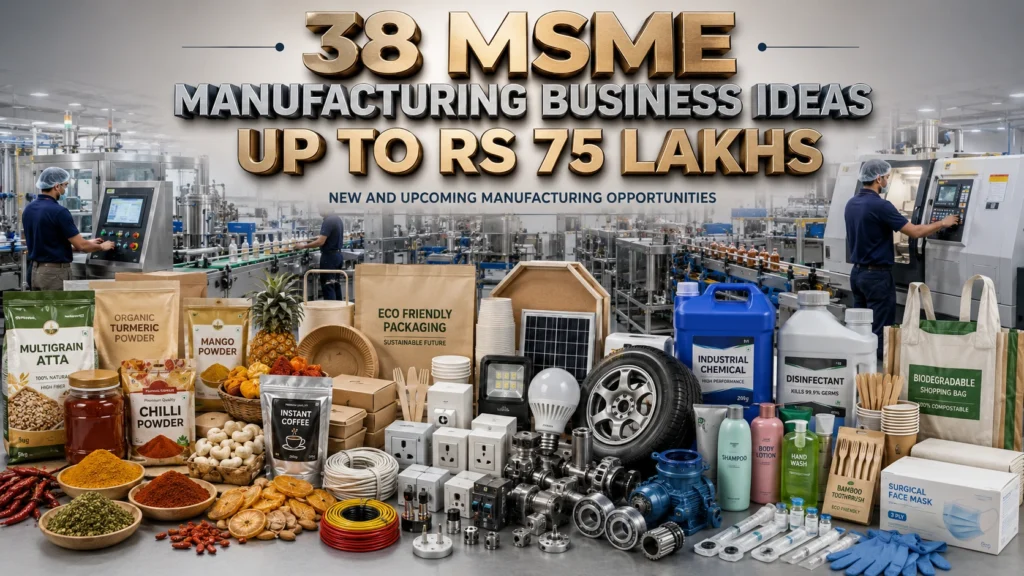
Introduction: Why Manufacturing Still Wins India’s MSME manufacturing sector is at a turning point. There has been a perfect alignment of policy tailwinds, expansion of domestic demand and structural changes in global supply chains, that is unusual. These 38 MSME manufacturing business ideas are a working blueprint, not a motivational talk for the first time entrepreneur and investor who is ready to study the opportunity thoroughly. The investment range covered here is deliberately chosen such that, investment up to ₹75 lakhs. It falls short of the micro enterprise, but it’s not too much for bank loans, government grants or reasonable personal investment. As per Ministry of MSME, the MSME sector is already contributing to over 29% of GDP and employing more than 1.11 crores of people in India. However, thousands of product categories are still not tapped, particularly in speciality manufacturing, agro-processing and industrial components. Those who see these gaps now are the ones who create sustainable and profitable ventures in the future. Why This Is the Right Moment to Enter MSME Manufacturing There are multiple structural forces at play. Global buyers are making supply chains more diversified by no longer relying on only one country. Although wages have been increasing in India, it has been found that the wages are still low as compared to the East Asian countries, in many verticals of the manufacturing industry. The buying habits of the domestic market are changing to more branded, packaged and processed products that MSMEs can compete at relatively low investment. Moreover, DPIIT data has always reflected that manufacturing investment in Tier-2 and Tier-3 cities yields higher ROCE as compared to investments in metros due to lower cost of land, labour and logistics. The Industrial corridors in Rajasthan, Uttar Pradesh, Madhya Pradesh, Odisha and Telangana are maturing with ‘plug and play’ factory sheds, reliable power and road connectivity. With the addition of government procurement through the GeM portal, one has a new channel of demand for new producers who are not present 10 years ago. The profit logic is also attractive. Companies of this size and brands with established products don’t compete in smaller product categories that are specialised. This presents huge white space for MSME manufacturers who have a strong understanding of their product category, maintain quality and establish connection with the B2B buyers or distributors before scaling. Government Support: Schemes Every Aspiring Manufacturer Must Know PMEGP – Prime Minister’s Employment Generation Programme PMEGP is still the most streamlined and direct entry stage for new MSME manufacturers. It provides project cost subsidy ranging from 25–35% up to ₹50 lakhs for manufacturing units and has lower subsidy rate for urban entrepreneurs and higher subsidy rate for SC/ST, women and ex-servicemen. Processing of applications is done at KVIC, KVIBs and District Industry Centres. The rest of the money comes from the bank and the entrepreneur’s own margin may be as little as 5–10% of project cost. CGTMSE – Collateral-Free Lending for MSMEs The Credit Guarantee Fund Trust for Micro and Small Enterprises will facilitate collateral-free credit facilities for eligible MSME manufacturers up to ₹2 crore. This is game-changer for asset-light businesses or entrepreneurs who don’t have mortgageable assets. Currently, most banks actively encourage CGTMSE-backed viable manufacturing projects. Technology Upgradation Fund and PLI Ancillary Benefits Technology Upgradation Fund Scheme (TUFS) offers subsidy on term loans for machinery to enable the new units to acquire modern machines at lower effective cost. In parallel, various schemes such as Production Linked Incentive (PLI) are driving demand from the supply chain that MSME sub-suppliers and ancillaries can directly tap. Udyam Registration and GeM Marketplace All MSME manufacturers should Udyam Registration before starting their business. It enables access to priority sector lending, reduced collateral and access to government procurement through the Government e-Marketplace (GeM). GeM has proved to be one of the most formidable demand channels for small manufacturers, giving them direct access with the institutional buyers in the central and state government departments. 38 New and Upcoming MSME Manufacturing Business Ideas Under ₹75 Lakhs 1. Compostable and Plant-Based Packaging The plastic restriction policy in India has ushered in a compulsory demand shift towards alternative options of packaging made from plants. Areca leaf plates, sugarcane bagasse containers, cornstarch films, and cassava-based bags are being provided by manufacturers to food chains, quick-service restaurant chains, airlines, and event managers. The purchase of thermoforming or hydraulic press setups with agricultural by-products can cost between ₹45 lakhs. The raw materials are mainly agricultural wastes and the margin is over 30%, due to the low acquisition cost. 2. Millet and Ancient Grain Food Processing Millets have come of age as a category of commercial crops. The Ragi pasta, jowar flour mixes, bajra health bars and foxtail millet porridge products are now available on major e-commerce platforms at a considerable premium over the grain-based products. A small food processing unit can be established with grading, roasting and packaging facility for as low as ₹30 lakhs. For this category, there is also the possibility of extra funding through the PMFME scheme and extra marketing assistance. 3. EV Wire Harness and Cable Assembly The need for components is higher than what can be delivered by the big Tier 1 manufacturers by the time India’s e-vehicle population grows. There are several high demand sub-assembly products such as wire harnesses, battery management system connectors, and cable assemblies for two- and three-wheel EV types. A precision wire harness unit with testing facility will cost you ₹40–70 lakhs and you can get a deal from the EV OEMs (originating equipment makers) in Pune, Chennai, Bengaluru, and the NCR belt. 4. Cold-Pressed and Wood-Pressed Oils The consumer willingness to pay 50-80% more for cold-pressed oils as compared to refined oils is the sign of a gradual change in their attitude towards health, which is now mainstream and not emerging. Cold pressed oils like groundnut, sesame, coconut and mustard are doing well in organic outlets, modern trade and D2C outlets. The cost of a traditional wood-press or steel-press unit with
Disposable Syringe and Needle Manufacturing Business in India: Investment, Licensing and Profit
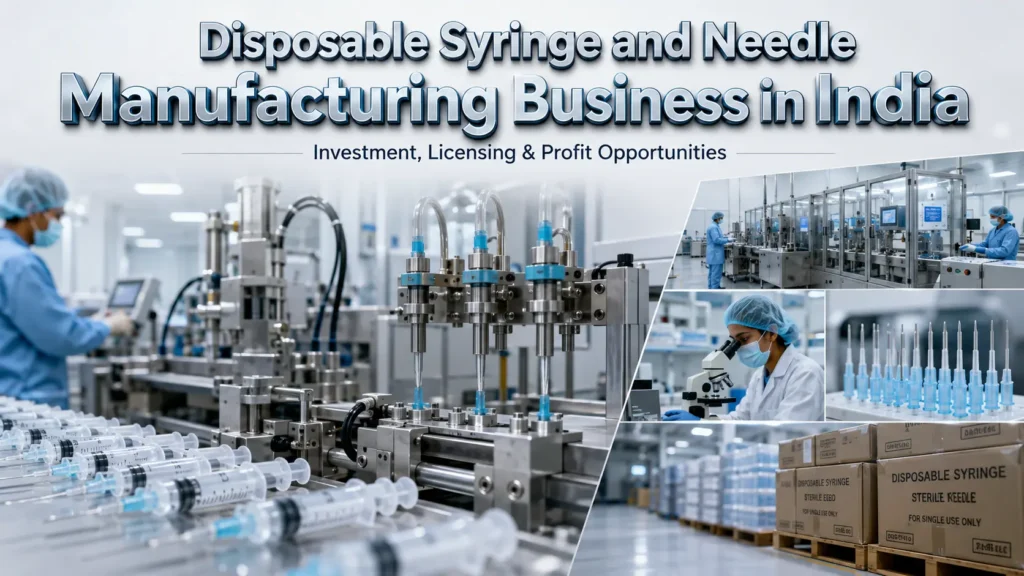
Disposable Syringe Manufacturing Business in India Although India produces more than 16 billion syringes per year and exports almost 80 percent of the world’s auto-disables, the demand for both from government and PMJAY hospitals and export markets still lags behind supply in a number of geographies making this one of the most stable and scalable manufacturing opportunities in India’s medical devices sector. The disposable syringe market is a guaranteed market for an entrepreneur who can understand CDSCO and BIS certification, as well as have clear regulatory pathways, a runway of demand over many years. Market Opportunity: Why This Business Cannot Be Ignored Though the country is a global power in the manufacture of syringes, the production base is concentrated in a few centres in Faridabad (Haryana) and Baddi (Himachal Pradesh) thereby posing procurement risk to hospital buyers in lesser served states, according to Association of Indian Medical Device Industry (AIMED). Tier-2 and tier-3 cities are actively looking for regional suppliers for reliability and quick turnaround time, presenting a solid commercial opportunity for new manufacturing companies that are certified.State government health missions and new PMJAY-empanelled hospitals are also keen on sourcing from the region for reliability and quick turnaround time, offering a clear commercial opportunity for new certified manufacturers. The segment is a geographic quality bottleneck and the Make in India production incentives by the MSME Ministry are specifically targeted to overcome this quality bottleneck. The production entrepreneurs who set up their business in less developed states are eligible for the benefit of capital subsidy under PMEGP, government industrial incentives, and preference in procurement from government health departments to diversify their medical consumables procurement from single cluster dependence. Get Detailed Project Report (DPR): Disposable Plastic Syringes Manufacturing Project Report Industry Analysis: Growth Drivers and Demand Outlook Indian domestic syringe market is worth about Rs. 4,000 crores with growth rates of 10-12% CAGR. With registration on the Government e-Marketplace (GeM), all those manufacturers will automatically get guaranteed business from the public sector as it comes through NHM, CGHS and defence hospitals, which has proven to be one of the most consistent and expanding revenue streams for any medical device manufacturer in India. SYRINGES and INJECTION DEVICES are one of the top export categories for the medical devices sector in India, with the market expected to grow at a CAGR of 14.3% to USD 50 billion by 2030, according to the IBEF Medical Devices Sector Report. With the introduction of mandatory product changeover from non-auto disable syringes to auto-disable (AD) syringes as a part of the National Health Mission’s Universal Immunisation Programme guidelines, only BIS IS:10654 manufacturers can leverage this product upgrade. The ISO 13485 and WHO-GMP certifications open the door to the UNICEF and UNFPA procurement programmes, which are among the most predictable international sources of income that are available. Auto-disable syringes have been identified as a top-10 priority import substitution product by the Invest India Medical Devices investment guide and PLI scheme incentives and government procurement preference are actively helping domestic manufacturers. The Directorate General of Foreign Trade (DGFT) handles the administration of RoDTEP and duty drawback claims, thereby enhancing the net export realisation of eligible syringes to international buyers by 2-5 percent. Indian manufacturers can follow these WHO Medical Devices Access Programme (MDAP) prequalification pathways to provide products to the UNICEF and UNFPA procurement agencies in 120+ LMICs. India Syringe Industry Snapshot Parameter Data Source / Note India Annual Syringe Output 16+ billion units FICCI and AIMED estimates Domestic Market Value Approx. Rs 4,000 crore Industry estimates Market Growth (CAGR) 10-12% per year NHM hospital expansion India Global AD Syringe Share ~80% of world supply Hindustan Syringes data Main Production Cluster Faridabad, Haryana Industry survey Key Government Buyer NHM, CGHS, state CMSDs, defence hospitals GeM procurement Leading Indian Brand Dispovan (Hindustan Syringes and Medical Devices) Faridabad, Haryana How to Start: Step-by-Step Guide for Entrepreneurs Step 1: Business Registration and MSME Enrollment Get your entity (Private Ltd, LLP or Sole Proprietorship) registered and enroll on the Udyam portal at udyamregistration.gov.in to avail MSME benefits. Locate in a state MIDC, GIDC or RIICO industrial estate on an industrial plot of at least 2,000 sq.ft. to avail benefit of lower utility charge and state capital subsidy. Before going for CDSCO License get a Factory License (Act 1948) and get GST Registration. Under the capital subsidy scheme, the new manufacturing units will have to register on the Udyam MSME Registration Portal to get benefits of the capital subsidy scheme for syringe manufacturing units, collateral-free loan under CGTMSE, and state industrial incentive which helps to keep the equity requirements minimised for setting up a syringe plant. Step 2: CDSCO Class B License and BIS Certification Disposable syringes are medical devices of class B under MDR 2017 which must be obtained from the State Licensing Authority in the form of a Manufacturing License (Form MD-5). Apply for BIS certification for both auto-disable syringes (IS:10654) and hypodermic syringe (IS:10178). Prepare your Quality Management System documentation for ISO 13485 certification which is strongly recommended to participate in government tenders and export. Read the Complete Book Here: Handbook on Medical & Surgical Disposable Products Step 3: Machinery Procurement and Clean Room Setup The core machinery mainly consists of polypropylene injection moulding machines for barrel, plunger, piston; blister sealing machine; needle tube cutting and grinding equipment; automated assembly conveyor. Set up ISO Class 7 or 8 cleanroom for assembly and packaging according to CDSCO GMP guidelines. Early stage, you can avail the contract with the certified third-party ETO or gamma sterilisation centres in Delhi NCR, Mumbai, and Bengaluru. Step 4: Quality Control Lab and Sterility Testing Maintain an in-house QC laboratory to perform dimensional checks, break-out point testing (AD syringes), dead space checks and sterility spot checks. Common instruments are a profile projector or digital calipers, a burst pressure tester, and a particle counter. Before you get a manufacturing licence, your QC lab protocol should meet the needs of CDSCO GMP and the appropriate BIS product standard specifications. Step