Our Categories

Our Categories

Pharma Startups & Innovation

Innovation, digitalization, and an increasing demand for a global solution to health problems are factors contributing to the rapid evolution of the ecosystem of start-ups in the pharmaceutical industry. In this category, we untangle the various options available to founders and entrepreneurs in the various pharmaceutical industry start-ups verticals, including drug development, biotechnology, health technology, and regulatory affairs.

Navigating the pharmaceutical industry start-ups ecosystem involves understanding market, funding, and compliance frameworks. This section touches on building scalable businesses, obtaining funding, and applying new technologies (especially AI, and data-driven, and fine-tuned medicine) to gain a competitive edge.

In this category, we present the different actionable frameworks, and across the different pharmaceutical industry start-ups verticals, personalized medicine, clinical trial technologies, and other global expansion opportunities, the emerging trends and their impact on the pharmaceutical industry start-ups ecosystem.

Content of this design is dedicated to start-up founders, innovators, and business leaders looking to have an informed decision, risk reduction, and a faster business growth. You are encouraged to keep abreast of the latest trends and used this to assess the sustainability of your business and the impact it is likely to have on the pharmaceutical industry.


IV Fluid (Intravenous Fluid) Market (Southern and Eastern African Countries)

IV Fluid (Intravenous Fluid) Market (Southern and Eastern African Countries) Read More »

NPCS (Niir Project Consultancy Services) Businessmen and entrepreneurs might benefit from obtaining detailed reports from NPCS (Niir Project Consultancy Services), and they soon recognize this through resource sales. Following are few justifications for purchasing NPCS report: Detailed Market Analysis NPCS reports include market research reports to understand market size, growth rates, and demand and supply volumes of the particular special area, as well as the analysis of key players. Feasibility Studies Derived feasibility studies or reports on how doable are those projects enable potential investors to ascertain if they have an opportunity/exist together with the returns and risks involved. Industry Trends and Forecasts NPCS Reports enables the stakeholders to recognize some emerging trends along with potential upcoming forecasts, which can facilitate an organization in their strategic decision-making. Technological Insights File reports under technological insights to show how new technologies impact a specific sector. Regulatory Framework Understanding the regulatory background of an industry or market will be a key variable for business planning. The NPCS reports, provide all the details relating to formulating regulations and possible modifications. Competitive Landscape NPCS reports further describes the competitive landscape within an industry which includes top comprehensive company profiling of leading players and analysis of each player such as a company overview, revenue shares, market forecast. SWOT Analysis These reports include SWOT (Strengths, Weaknesses, Opportunities and Threats) analysis relative to the sector to make clear for investors how those factors will help in gaining or losing more from this sector. Investment Guidance NPCS reports are perfect reason for the entrepreneurs wishing to know more about facets of the industry and for fresh assays, buyers and other interested parties in it. Business Planning Having a business plan in place is a must for establishing or advancing an existing venture. RPCS market research reports cover forecasts, sales, strategies, and market share to help you understand your business. Tailored Information Furthermore, it allows for specific requirements related to business with the guarantee that most renewal information is relevant and useful. In conclusion, NPCS report is really valuable for identifying a sector, decision-making and launching any product into the market or investment strategy Contact Us

Handbook on Active Pharmaceutical Ingredients (API), Drugs & Pharmaceutical Products

Handbook on Active Pharmaceutical Ingredients (API), Drugs & Pharmaceutical Products Read More »

Handbook on Active Pharmaceutical Ingredients (API), Drugs & Pharmaceutical Products (Paracetamol, Aspirin, IV Fluids, Ointment, Metronidazole, Liquid Glucose, Surgical Cotton, Syrup, Tablet, Excipients, Pharmaceutical Salts with Manufacturing Process, Machinery Equipment Details, and Factory Layout) Active Pharmaceutical Ingredients (API), also known as active ingredients, are chemical substances that are used in the production of drugs and pharmaceutical products. APIs are the active part of a drug or pharmaceutical product, and they play an essential role in the way these products work. These ingredients interact with other components in the drug to produce a desired therapeutic effect. APIs can come from natural sources, such as plants, or they can be created synthetically in a laboratory setting. They are usually formulated into a final dosage form, like a tablet or capsule, before being marketed for use. APIs have a wide range of uses and can be found in products ranging from over-the-counter (OTC) medicines to prescription drugs. They are used to treat a variety of conditions, including pain, inflammation, allergies, and infections. They can also be used to make vaccines and other treatments to prevent or cure diseases. Overview of APIs and Pharmaceutical Products An active pharmaceutical ingredient (API) is the active substance in a pharmaceutical drug that produces its therapeutic effect. APIs can be synthetic chemicals or natural sources such as plant extracts. APIs are components of drugs, the majority of which are manufactured by pharmaceutical companies. Drugs, on the other hand, are dosage forms that contain an API and are distributed to patients for use. Pharmaceutical products are any compounds used in the medical industry to diagnose, treat, cure, or prevent diseases. These products are typically formulated as drugs, vaccines, biologics, and medical devices, which can either be prescribed by a doctor or bought over-the-counter (OTC). They come in various forms, such as tablets, capsules, syrups, ointments, creams, solutions, suspensions, implants, patches, and powders. Pharmaceutical products are manufactured under strict guidelines and must adhere to various regulations such as Good Manufacturing Practices (GMP). Global Market Outlook of Active Pharmaceutical Ingredients (API), Drugs & Pharmaceutical Products: The global market for active pharmaceutical ingredients (APIs), drugs, and pharmaceutical products is expected to grow rapidly in the coming years. This growth will be driven by rising demand for better healthcare services and an increasing number of new treatments. Specifically, the market for APIs is anticipated to grow at a compound annual growth rate (CAGR) of 5.90%. Expansion driven by API advancements and the growing prevalence of chronic diseases like cancer and cardiovascular conditions. Furthermore, supportive government regulations for API manufacturing are contributing to this growth. In addition, shifting geopolitical conditions are playing a significant role in accelerating market expansion. As a result, the overall pharmaceutical market is poised for substantial growth in the near future. The pharmaceutical products market has grown steadily in recent years and is expected to continue to do so. Growth is driven by rising drug demand, shifting diseases, and ageing populations in certain countries. As the emergence of innovative drugs and technologies. The market is being shaped by the rise of emerging economies and their increasing healthcare needs. This boosted drug research investment and prompted more multinational companies to establish operations worldwide. Overall, the global market for pharmaceutical products and drugs is set to continue to grow in the coming years. New products, technologies, and emerging markets will drive growth, creating both opportunities and challenges for the industry. Conclusion The books main subjects include active pharmaceutical ingredients (API), drugs, aspirin, paracetamol, IV fluids, ointment, metronidazole, liquid glucose, surgical cotton, syrup, tablets, excipients, and pharmaceutical salts with formulations, factory layout, and images of machinery with contact information for suppliers. A thorough guide to manufacturing and business operations in the Active Pharmaceutical Ingredients (API), Drugs & Pharmaceutical Products industry. The Active Pharmaceutical Ingredients (API), Drugs & Pharmaceutical Products manufacturing industry is full of opportunities for producers, traders, and business owners, and this book is your one-stop resource for all the information you require. The only complete manual on the creation of commercial active pharmaceutical ingredients (APIs), medications, and pharmaceutical products is this one. It offers a wealth of information on how to do things, from concept through equipment acquisition. Also Read: 5 Reasons Why Market Research is Vital for Start-ups NPCS (Niir Project Consultancy Services) Businessmen and entrepreneurs might benefit from obtaining detailed reports from NPCS (Niir Project Consultancy Services), and they soon recognize this through resource sales. Following are few justifications for purchasing NPCS report: Detailed Market Analysis NPCS reports include market research reports to understand market size, growth rates, and demand and supply volumes of the particular special area, as well as the analysis of key players. Feasibility Studies Derived feasibility studies or reports on how doable are those projects enable potential investors to ascertain if they have an opportunity/exist together with the returns and risks involved. Industry Trends and Forecasts NPCS Reports enables the stakeholders to recognize some emerging trends along with potential upcoming forecasts, which can facilitate an organization in their strategic decision-making. Technological Insights File reports under technological insights to show how new technologies impact a specific sector. Regulatory Framework Understanding the regulatory background of an industry or market will be a key variable for business planning. The NPCS reports, provide all the details relating to formulating regulations and possible modifications. Competitive Landscape NPCS reports further describes the competitive landscape within an industry which includes top comprehensive company profiling of leading players and analysis of each player such as a company overview, revenue shares, market forecast. SWOT Analysis These reports include SWOT (Strengths, Weaknesses, Opportunities and Threats) analysis relative to the sector to make clear for investors how those factors will help in gaining or losing more from this sector. Investment Guidance NPCS reports are perfect reason for the entrepreneurs wishing to know more about facets of the industry and for fresh assays, buyers and other interested parties in it. Business Planning Having a business plan in place is a must for establishing or advancing an

How to Start Manufacturing Business of Blood Collection Tubes (Vacutainer)

How to Start Manufacturing Business of Blood Collection Tubes (Vacutainer) Read More »

If you are planning to start a manufacturing business of blood collection tubes, also known as vacutainers, there are a few things you should keep in mind. First, you will need to find a reliable source of raw materials. Second, you will need to have a good manufacturing process in place. And third, you will need to have a strong marketing and sales strategy. 1. Research the market for blood collection tubes: This includes understanding the different types of blood collection tubes available, as well as the demand for these products. 2. Obtain the necessary licenses and permits: In most countries, you will need to obtain a license from the government in order to manufacture blood collection tubes. 3. Invest in the right machinery and equipment: You will need to invest in high-quality machines for manufacturing the blood collection tubes, as well as the necessary packaging materials. 4. Hire skilled workers: To produce high-quality blood collection tubes, you will need to hire workers who have the necessary skills and experience. Collection of blood The plastic cap for the blood collection tube cap is inserted into the rubber stopper cap using a tube cap machine. In the packaging industry, labels and stickers are applied on items such as bottles, tubes, injections, and containers using sticker labeling machines. The dosing machine is an automated method for supplying machinery with goods like lubricants and water that include liquid. Applying snap caps, fitments, corks, plugs, and threaded caps requires specialized capping equipment. For shrinkable films that have been applied by L-bar sealers, sleeve wrappers, and sealing cutters, shrink tunnels with hot air systems are used. The airflow method, which was designed for high production, aids in circulating the air to prevent bubbles and bumps in plastic film. A centrifuge is a piece of machinery that uses a powerful force to propel an object into a revolving motion around a fixed axis. The Maximize Market Research Report forecasts that the blood collection tubes market will grow at a CAGR of 7.23% from 2017 to 2029, reaching US$ 7.93 billion. Improved blood-collecting methods and technology will support the market’s development during the anticipated period. Type, material, application, and end-use are the segmentation criteria for the market. The type segment is further broken down into serum separating tubes, fast serum tubes, heparin tubes, EDTA tubes, plasma separation tubes, and others. Materials including PEP, polypropylene, and tempered glass are included in the material category. The biochemical testing, routine blood tests, and coagulation tests make up the application portion. Hospitals and clinics, blood banks, pathology labs, and ambulatory surgical services make up the end-user segment. The vacuum blood collection tube market is dominated by North America. This is because the region is home to some of the largest vacutainer suppliers. The vacuum collecting tube market grows due to chronic diseases and increasing lifestyle-related disorders. Europe has a sizable market share as well. With the development of infrastructure and setup for the healthcare industry combined with a large patient population, India and China are also anticipated to have exponential growth during the projection period. Major players in vacuum blood collection tubes include Terumo, Medtronic, Nipro, Schott, Becton, and others. Contact Us

How to Start the Manufacturing Unit of IV Fluid (BFS Technology)

How to Start the Manufacturing Unit of IV Fluid (BFS Technology) Read More »

Manufacturing IV fluids is an excellent business opportunity for those who are planning to start a new business venture. The demand for Intravenous fluid is increasing day by day, globally as well as in India. This has led to the emergence of various manufacturers and suppliers of IV fluid in the market. This article will provide you with information about setting up a manufacturing unit for Intravenous fluids or IV fluids. You will know about the setup cost, raw material, production process and some useful tips to get started. Key Things to Keep In Mind BFS technology is aseptic and sterile, which is critical for the manufacturing of IV fluid. The technology allows for the production of IV fluid with a high degree of safety and quality control. In order to start a manufacturing unit of IV fluid using BFS technology, there are a few key things to keep in mind. Firstly, it is important to have a clean and sterile environment. The BFS technology is designed to work in sterile environments, so it is important to maintain this sterility throughout the manufacturing process. Secondly, it is important to have the proper equipment. The BFS technology requires specialized equipment in order to function properly. This equipment includes things like an aseptic filling machine, an autoclave, and a clean room. Thirdly, it is important to have trained personnel. The BFS technology is complex and requires trained personnel to operate it properly. Without trained personnel, it would be very difficult to produce IV fluid using this technology. Additionally it is important to have a quality control plan. The BFS technology is designed to produce IV fluid of the highest quality. However, it is important to have a quality control plan in place to ensure that the IV fluid meets all the necessary standards. By following these four key points, it is possible to start a manufacturing unit of IV fluid using BFS technology. By doing so, it is possible to produce IV fluid of the highest quality and safety. Materials Required For the Manufacturing of IV Fluid The raw materials required for the manufacturing of Intravenous fluid are glucose, water, sodium chloride, sodium citrate, and potassium phosphate. The details of the raw materials are discussed below: Water – Water is the most important raw material for the production of IV fluid. The water used for manufacturing IV fluid should be deionized, pyrogen-free and trace element-free. Sodium Chloride – Sodium chloride is used for the hypertonic saline solution. Sodium Citrate- Sodium citrate is used for the isotonic solution. Potassium Phosphate– Potassium Phosphate is used for the alkaline solution. Glucose – Glucose is used as the carbon source in the alkaline solution. Understanding the Packaging Process of IV Fluid IV fluids are lifesaving medications that are administered directly into the bloodstream. These fluids are typically sterile and must be free of bacteria and other contaminants. To ensure the safety of IV fluids, they are manufactured using aseptic filling technology, also known as BFS (blow-fill-seal). BFS is a process in which sterile IV fluids are placed in a container and then sealed using aseptic techniques. This process helps to prevent contamination and ensures that the IV fluids are sterile. The BFS process begins with the placement of sterile IV fluids in a container. The container is then sealed using aseptic techniques. Once the container is sealed, it is placed in a clean room where it is filled with sterile air. The container is then placed in a machine that uses heat and pressure to blow the air into the container. This helps to create a sterile environment inside the container. The container is then cooled and sealed. The BFS process is aseptic, which means that it helps to prevent contamination. This process is used to manufacture IV fluids that are sterile and free of bacteria and other contaminants. Steps for Setting up A Manufacturing Unit of IV Fluid The process followed for setting up a manufacturing unit for Intravenous fluid is as follows: Site Selection – The first step in setting up a manufacturing unit for IV fluid is to select the site. You can either go for a Greenfield site or a brownfield site. Design And Development – The next step is to design and develop the product. Let the design be according to the industry standards to ensure product quality. Process And Operational Feasibility – For this, you can hire a consultant to do a process and operational feasibility study. This study is used for identifying the problems and challenges that might occur in the future. What Are The Key Risks In Setting Up A Manufacturing Unit For IV Fluid? The biggest risk in setting up a manufacturing unit for Intravenous fluid is the risk of biohazard. The raw materials used for the manufacturing of IV fluid are biohazardous. Therefore, the manufacturing unit should be equipped with biohazard safety precautions. The other risk in setting up a manufacturing unit for IV fluid is the cost of investment. Setting up a manufacturing unit is an expensive affair. Therefore, it is important to set up the manufacturing unit according to the scale and quantity of products you wish to produce. Conclusion BFS technology has revolutionized the IV fluid manufacturing industry. By using BFS in the manufacturing process, manufacturers can make IV fluids more accurately and efficiently. In addition, BFS helps companies maintain a consistent quality and increases the shelf life of their products. This technology is being applied to other industries as well. Manufacturers can control their robotics and other automated equipment with this technology. This will allow them to create more products in a shorter amount of time! Visit the page Select and Choose the Right Business Startup for You for sorting out the questions arising in your mind before starting any business and know which start-up you can plan. We, at NPCS, endeavor to make business selection a simple and convenient step for any entrepreneur/startup. Our expert team, by capitalizing on its

How to Start an IV Fluid Manufacturing Plant Using BFS Technology - NPCS Blog

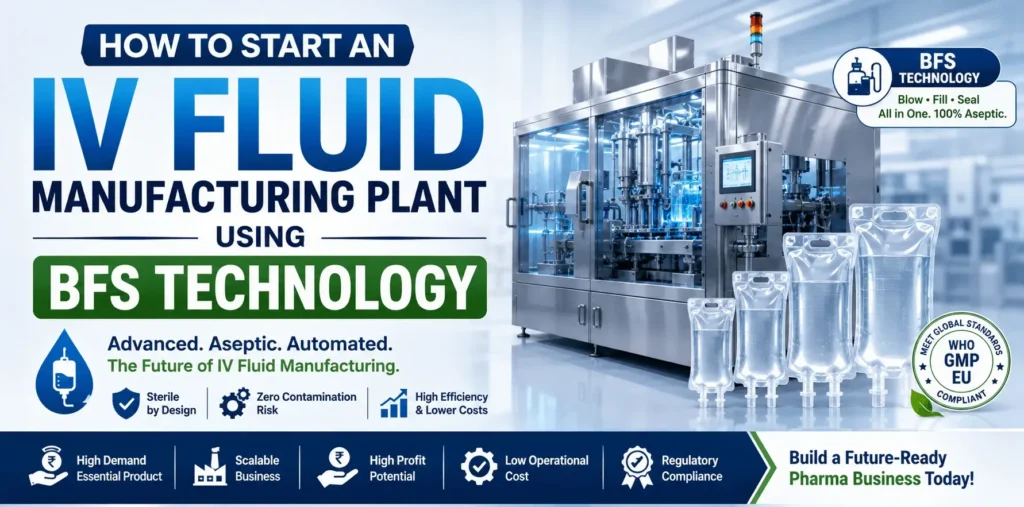
How to Start an IV Fluid Manufacturing Plant Using BFS Technology

How to Start an IV Fluid Manufacturing Plant Using BFS Technology Read More »

The IV Fluid Manufacturing Plant industry is witnessing rapid growth due to increasing demand for sterile injectable solutions across hospitals, emergency healthcare services, clinics, and pharmaceutical supply chains. Intravenous (IV) fluids are essential in hydration therapy, surgery, trauma care, electrolyte replacement, and drug administration, making this sector one of the most important segments in healthcare manufacturing. With advancements in Blow-Fill-Seal (BFS) technology, modern IV fluid manufacturing plants now achieve higher sterility, automation, and production efficiency while meeting global pharmaceutical standards. India is emerging as a major hub for IV fluids manufacturing due to increasing healthcare infrastructure, government support, export opportunities, and rising domestic demand. How are IV Fluids Made? The IV fluid manufacturing process generally includes: Water purification (WFI generation) Solution preparation Sterile filtration Blow-Fill-Seal packaging Leak testing and inspection Labeling and packaging Sterility testing and quality control This guide explains the complete IV fluid manufacturing plant setup process including BFS technology, plant investment, machinery, manufacturing process, licensing requirements, and profitability analysis. What is an IV Fluid Manufacturing Plant? An IV Fluid Manufacturing Plant is a pharmaceutical production facility that manufactures sterile intravenous fluids such as saline, dextrose, and electrolyte solutions using automated technologies like Blow-Fill-Seal (BFS) systems. Modern manufacturing units use BFS (Blow-Fill-Seal) Technology, which is a highly automated process that forms the container, fills it with fluid, and seals it—all in one continuous operation. This minimizes human contact and ensures maximum sterility, a must in the pharmaceutical industry. Applications of IV Fluids IV fluids play a critical role in the healthcare and medical industry. Common applications include: Hydration therapy for dehydration and fluid loss Electrolyte replacement during surgery or trauma Parenteral nutrition for patients who cannot eat Drug dilution and delivery for antibiotics and anesthetics Blood volume expansion in emergency care The constant demand from hospitals, nursing homes, and healthcare centers makes this business highly sustainable. Visit this Page for More Information: Start a Business in Intravenous Fluids Industry Why Use BFS Technology in IV Fluid Manufacturing? Blow-Fill-Seal technology revolutionized pharmaceutical packaging. Unlike traditional glass bottles or manually filled containers, BFS offers: Aseptic production with minimal human intervention Single-use packaging ideal for sterility and disposal Low contamination risk High-speed and cost-effective production Compact unit design with smaller footprints WHO-GMP compliance Adopting BFS technology ensures compliance with international regulatory bodies like WHO, FDA, and GMP. Read Similar Articles: PHARMACEUTICAL INDUSTRY Types of IV Fluids You Can Manufacture A well-planned IV Fluids Manufacturing unit can produce various types of fluids such as: Normal Saline (0.9% Sodium Chloride Solution) Dextrose Solutions (5%, 10%, 25%) Ringer’s Lactate Solution Dextrose-Saline Combination Mannitol Injections Sterile Water for Injection Multivitamin and Electrolyte Fluids Each product serves different clinical purposes and ensures a broad customer base. Related Business Plan: IV Fluids, I.V. solutions Raw Materials Required Key raw materials for manufacturing IV fluids include: Pharmaceutical-grade water (WFI – Water for Injection) Sodium chloride, dextrose, potassium chloride, calcium chloride Plastic granules (for BFS containers) Sterile filters and cartridges Labels, cartons, and secondary packaging Quality sourcing and strict vendor controls are vital to ensure patient safety and compliance with drug regulations. Related Feasibility Study Reports: I. V. Fluids IV Fluids Manufacturing Process (Using BFS) The IV Fluids Manufacturing process using Blow-Fill-Seal technology involves: Water Purification – Raw water is purified using RO + UV + EDI systems and converted into WFI. Solution Preparation – Precise quantities of solutes (like sodium chloride) are dissolved in WFI in a stainless-steel mixing tank. Filtration – The solution is filtered to remove any microbial or particulate impurities. BFS Operation – The plastic container is blow-molded, filled with fluid, and sealed—all in a sterile environment. Leak Test & Inspection – Each unit is checked for leakage, particulate matter, and clarity. Labeling and Packaging – The final product is labeled, packed, and stored in controlled conditions before distribution. This process ensures high sterility and scalability for bulk orders. Read our Books Here: Pharmaceutical, Drugs, Proteins Technology Handbooks Equipment and Machinery Required To set up a BFS-based IV Fluids manufacturing plant, the following machinery is essential: BFS Machine (Blow-Fill-Seal Unit) WFI Generation System RO Water Treatment Plant Mixing Vessels (SS316 grade) Sterile Filtration Units Online Leak Detection Machine Visual Inspection Unit Labeling and Packing Machines HVAC and Clean Room Setup A fully automated plant reduces labor requirements and enhances quality consistency. Infrastructure and Layout A medium-scale IV fluids plant will require around 10,000–20,000 sq. ft., divided into: Raw material storage Water treatment zone Sterile manufacturing (Class 100 or Class 10,000 clean room) BFS and packaging area Quality control laboratory Warehouse for finished goods Office and utility space Adherence to WHO-GMP, Schedule M, and ISO standards is mandatory for layout planning. Regulatory Approvals and Compliance The IV fluids business falls under the pharmaceutical sector, hence requires several licenses: Drug Manufacturing License under the Drugs & Cosmetics Act FSSAI license (if applicable) GMP and WHO-GMP certification Pollution Control Board NOC Fire and Factory License ISO 9001 and ISO 13485 (recommended for credibility) CDSCO and FDA approval (for exports) Proper documentation and audit readiness are essential to operate legally. Cost of Setting Up IV Fluids Manufacturing Unit The capital investment for setting up an IV fluids unit using BFS technology ranges from ?5 crores to ?15 crores, depending on: Plant capacity (number of vials/bottles per day) Degree of automation Clean room setup and certifications Location and utility costs Regulatory compliance expenses Working capital must also account for raw materials, utilities, staff salaries, and distribution. Profitability and ROI Despite high initial investment, IV Fluids Manufacturing promises strong returns: Bulk demand from hospitals and healthcare distributors High margin on sterile products (up to 30% per unit) Scalability with export opportunities Quick turnover and recurring orders You can expect to reach break-even in 3 to 5 years, especially if you establish contracts with government or private hospitals. Target Market and Sales Channels Your customers include: Government and private hospitals Emergency medical services Nursing homes and clinics Medical distributors and wholesalers Export agents and pharma chains Distribution can be done through medical

How to Get In On the Booming Business of Active Pharmaceutical Ingredients (API)

How to Get In On the Booming Business of Active Pharmaceutical Ingredients (API) Read More »

The booming business of Active Pharmaceutical Ingredients is drawing attention from entrepreneurs, manufacturers, and investors around the world. APIs are the core components in any pharmaceutical drug—the active chemicals or compounds responsible for therapeutic effects. As global healthcare needs grow more complex, the demand for high-quality, cost-effective APIs is increasing significantly. Post-pandemic supply chain concerns, rising chronic diseases, and efforts to localize production have brought the spotlight to API manufacturing. In 2025, the API market is valued at over $250 billion, and countries like India, China, and the U.S. are scaling operations to meet rising global demand. Governments are offering production-linked incentives, easing regulations, and supporting pharmaceutical parks to promote self-sufficiency. This makes the booming business of Active Pharmaceutical Ingredients a highly profitable and strategic investment for new businesses. Whether through full-scale manufacturing, contract manufacturing, or export-based production, getting involved in this industry offers long-term potential, technological advancement, and a role in shaping the future of medicine. Why the Booming Business of Active Pharmaceutical Ingredients Is Worth Exploring in 2025 The booming business of Active Pharmaceutical Ingredients reflects a global movement toward pharmaceutical independence, faster drug development, and scalable production. With healthcare spending rising, entering the API industry today positions investors for high returns, policy support, and unmatched global demand. Visit this Page for More Information: Start a Business in Pharmaceutical sector Understanding the API Industry APIs—Active Pharmaceutical Ingredients—are the chemical or biological substances in medicines that produce the intended effect. Without APIs, no drug can serve its purpose. They’re distinct from excipients, which act as carriers or fillers in medicine formulations. The booming business of Active Pharmaceutical Ingredients has evolved from traditional chemical synthesis to include modern techniques like fermentation, enzymatic processing, and biotech manufacturing. These processes ensure purity, potency, and compliance with international standards. APIs are essential for every form of treatment—from simple antibiotics to advanced cancer therapies—making them foundational to pharmaceutical development. Related Business Plan: Active Pharmaceutical Ingredients Manufacturing Industry (API), Bulk API Production Market Outlook and Profit Potential In 2025, the global API market has crossed $250 billion, with a projected CAGR of 6–8% through 2030. The booming business of Active Pharmaceutical Ingredients is driven by a rising prevalence of chronic illnesses such as diabetes, cardiovascular diseases, and cancer. There’s also a growing demand for generics in developing countries and specialized APIs in high-income countries. India, which supplies over 30% of the global demand for generics, has also become one of the top API producers. For entrepreneurs and manufacturers, this means a lucrative entry point into an industry that promises high-volume production and export potential with sustainable profits. Similar Articles: PHARMACEUTICAL INDUSTRY Why Governments Are Prioritizing APIs A major reason behind the booming business of Active Pharmaceutical Ingredients is national healthcare security. Many governments were caught unprepared during the COVID-19 crisis, heavily reliant on imports from a few major countries. Since then, policy makers in the U.S., Europe, and Asia have focused on reshoring or diversifying API production. In India, the government’s Production Linked Incentive (PLI) scheme provides financial support to local manufacturers, while similar initiatives exist in the U.S. and Japan. These government programs reduce the entry burden for new players and open doors to large public and private contracts. Click here to send your queries/Contact Us Business Models for Entering the API Industry There are several ways to tap into the booming business of Active Pharmaceutical Ingredients. Full-scale API manufacturing requires substantial capital but offers higher profit margins. Alternatively, Contract Manufacturing Organizations (CMOs) produce APIs on behalf of larger pharmaceutical firms, allowing smaller players to enter without developing their own brands. Some companies focus on producing intermediates or specific molecules within the supply chain. Another option is API trading and export—particularly beneficial in countries like India where production is cheaper and regulatory standards are globally recognized. Each model offers unique benefits depending on resources and long-term goals. Key Infrastructure and Compliance Requirements The booming business of Active Pharmaceutical Ingredients requires significant infrastructure and strict regulatory adherence. API manufacturing facilities must comply with Good Manufacturing Practices (GMP) certified by regulators such as the USFDA, EMA, or CDSCO. Documentation, including Drug Master Files (DMFs), must be maintained for each API, especially for exports. Beyond compliance, infrastructure must include dedicated labs, waste treatment systems, and safety protocols. For biologically derived APIs, specialized environments and trained staff are essential. While the initial setup is resource-intensive, it builds the foundation for international trust, scale, and sustainability. Related Feasibility Study Reports: Pharmaceutical Unit (tablet And Capsules) Investment Trends and Innovation Innovation plays a major role in sustaining the booming business of Active Pharmaceutical Ingredients. Technologies like flow chemistry, green synthesis, AI-driven quality checks, and bioengineering are transforming how APIs are made. Investors are increasingly backing startups and biotech companies focused on next-generation APIs, including high-potency and orphan drug compounds. In India and China, venture capital and private equity firms are actively funding scalable API ventures. Government-backed incubators and pharma parks offer financial incentives and ready infrastructure. This convergence of investment and innovation ensures that API manufacturing remains a future-proof business. Export Opportunities and Trade Growth The global demand for affordable, high-quality APIs offers unmatched export potential. The booming business of Active Pharmaceutical Ingredients is closely linked with trade across regulated and semi-regulated markets. Countries with robust quality control mechanisms can tap into the U.S., EU, and Middle Eastern markets. Indian manufacturers, for example, export to over 150 countries. Trade agreements like India’s Comprehensive Economic Partnership Agreement (CEPA) with the UAE and proposed FTA with the EU open further gateways. Exporters need to ensure compliance with importing countries’ standards, proper documentation, and active engagement in global tenders to sustain business growth. Sustainable Practices and Environmental Impact Sustainability is becoming essential to the booming business of Active Pharmaceutical Ingredients. API production can involve heavy chemicals, solvents, and high water usage. Regulatory agencies now require Environmental Risk Assessments (ERAs) and green certifications. Businesses that implement eco-friendly production techniques, such as zero-liquid discharge, energy-efficient systems, and biodegradable solvents, enjoy long-term cost savings and

List of Profitable Business Ideas in Active Pharmaceutical Ingredient (API) Products

List of Profitable Business Ideas in Active Pharmaceutical Ingredient (API) Products Read More »

The healthcare sector is rapidly expanding, and within it, the business ideas in Active Pharmaceutical Ingredient (API) manufacturing are seeing a massive surge in demand. APIs are the essential components that make medicines work—they deliver the intended therapeutic effect in both generic and branded drugs. As of 2025, global health concerns, chronic diseases, and the shift towards pharmaceutical self-sufficiency have created multiple high-growth business opportunities in this sector. With the API industry now valued at over $250 billion, businesses ranging from full-scale manufacturing to niche chemical synthesis and even API exports are booming. Governments across the world, including India and the U.S., are incentivizing API-focused businesses with grants, subsidies, and infrastructure support. This shift not only reduces dependency on imports but also opens doors for entrepreneurs to step into a high-value, innovation-driven market. If you’re looking to invest or diversify, exploring business ideas in Active Pharmaceutical Ingredient production, formulation, or supply chain services can lead to long-term success and global relevance. Top Business Ideas in Active Pharmaceutical Ingredient Sector for 2025 and Beyond From chemical synthesis labs to biologic formulation partners, the rise in healthcare needs has diversified the business ideas in Active Pharmaceutical Ingredient production. Entrepreneurs can enter API manufacturing, trading, contract services, or specialty molecule development with promising margins and future-ready operations. 1. API Manufacturing Unit Setup One of the most direct and rewarding business ideas in Active Pharmaceutical Ingredient is establishing a full-fledged API manufacturing facility. This requires capital investment, but offers long-term profitability. Focus areas can include high-demand APIs like paracetamol, metformin, or amoxicillin. In 2025, governments like India’s are offering Production Linked Incentives (PLI) and setting up API industrial parks that provide financial support, ready-to-use infrastructure, and easier compliance. Manufacturing gives you full control over production, quality, and market reach, and offers export potential to regulated markets like the U.S. and Europe. Visit this Page for More Information: Start a Business in Pharmaceutical sector 2. Contract Manufacturing and Outsourcing If full manufacturing setup seems capital-intensive, contract manufacturing is another scalable approach. Under this model, companies can produce APIs on behalf of major pharmaceutical firms. The global demand for outsourcing is increasing as big pharma focuses more on R&D and less on internal production. This has opened a lucrative path in business ideas in Active Pharmaceutical Ingredient processing for small-to-mid-sized enterprises. CMOs (Contract Manufacturing Organizations) benefit from guaranteed volume, long-term partnerships, and a growing market of clients worldwide. Related Business Plan: Active Pharmaceutical Ingredients Manufacturing Industry (API) 3. Speciality API and Niche Molecule Production Developing niche APIs and high-potency active pharmaceutical ingredients (HPAPIs) is gaining attention in 2025. These APIs are used in treatments for cancer, autoimmune diseases, or rare disorders. Due to their complexity and strict handling requirements, there are fewer players in this space—making it one of the most profitable business ideas in Active Pharmaceutical Ingredient development. Entrepreneurs can focus on innovation, IP generation, and high-margin manufacturing while keeping scale limited. Regulatory certifications are a must, but the return on investment is significant due to limited competition. 4. Export-Oriented API Business India, China, and a few Southeast Asian countries have a strategic advantage in API production due to low labor costs and a strong chemical manufacturing base. Exporting APIs to regulated and semi-regulated markets is a proven model among business ideas in Active Pharmaceutical Ingredient trade. With a compliant setup and certifications like USFDA, EU GMP, and WHO GMP, companies can cater to markets across North America, Europe, the Middle East, and Africa. Global pharma giants rely on cost-effective API suppliers, especially in bulk quantities, making this model highly scalable. Read Similar Articles: PHARMACEUTICAL INDUSTRY 5. API Intermediate Manufacturing Producing intermediates—the chemical compounds used in the synthesis of final APIs—is another emerging idea. This part of the supply chain often faces bottlenecks due to dependency on limited producers. Setting up a unit that manufactures high-demand intermediates can solve a major gap in the ecosystem. Among business ideas in Active Pharmaceutical Ingredient, this model involves lower costs and easier entry compared to final API production, yet still offers excellent B2B demand. Partnering with larger API producers can also lead to consistent business growth. 6. R&D-Based API Startup Innovation is driving new business ideas in Active Pharmaceutical Ingredient development. Starting an R&D-driven API startup focusing on novel synthesis methods, green chemistry, or biotech-based APIs can attract significant investor interest. As biologics and biosimilars grow, companies focusing on recombinant APIs or fermentation-based production have a competitive edge. This model often works best when integrated with academic institutions, biotech incubators, or in partnership with pharmaceutical universities. With proper patent protection, the valuation and scalability of R&D-based API startups can grow exponentially. 7. API Distribution and B2B Supply Chain Services Not every entrepreneur needs to set up a lab or manufacturing plant. One of the scalable business ideas in Active Pharmaceutical Ingredient is starting a distribution or supply chain business that connects manufacturers to pharmaceutical companies. This involves warehousing, compliance documentation, cold chain services (if needed), and on-time delivery. You can also specialize in logistics and regulatory consulting for API export/import operations. By becoming a reliable B2B partner, businesses can generate consistent revenue with lower operational risks and high client retention. Visit the site for sorting out the questions arising in your mind before starting any business and know which start-up you can plan for at https://www.entrepreneurindia.co/project-identification Click here to send your queries/Contact Us Related Feasibility Study Reports: Pharmaceutical Industry Read our Books Here: Pharmaceutical, Drugs, Proteins Technology Handbooks Niir Project Consultancy Services (NPCS) prepares multiple project reports on different segment one of the project report by NPCS is List of Business Ideas in Actual Pharmaceutical Ingredient – Manufacturing Plant, Detailed Project Report, Profile, Business Plan, Industry Trends, Market Research, Survey, Machinery, Raw Materials, Feasibility Study and Investment Opportunities. The detailed project report by NPCS covers all the important aspects of a business from analyzing the market, confirming availability of various necessities such as plant & machinery, raw materials to forecasting the financial requirements. The project reports are

Growing Opportunities in Manufacturing Business of Absorbent/Surgical Cotton

Growing Opportunities in Manufacturing Business of Absorbent/Surgical Cotton Read More »

The Manufacturing Business of Absorbent is rapidly gaining momentum as industries and consumers alike seek efficient, sustainable, and cost-effective materials to manage moisture, spills, and waste. Absorbents are indispensable in a variety of sectors—from healthcare and hygiene to automotive, agriculture, packaging, and oil spill management. With an ever-growing global demand for quality absorbent materials, entrepreneurs entering this manufacturing segment are tapping into a highly scalable and profitable business. The absorbent industry includes a broad category of materials such as superabsorbent polymers (SAPs), natural cellulose fibers, diatomaceous earth, clay-based absorbents, and synthetic materials. The increasing preference for eco-friendly and biodegradable absorbents has further fueled the market, opening opportunities for innovations and regional production units. Whether you’re targeting industrial cleaning solutions, personal hygiene products, or environmental cleanup applications, the Manufacturing Business of Absorbent provides a resilient foundation for MSMEs and scalable ventures. What Makes the Absorbent Manufacturing Industry So Promising? The global absorbent market is projected to exceed USD 10 billion by 2032, driven by rising hygiene awareness, stricter industrial safety norms, and growth in healthcare and food sectors. The shift toward sustainable and biodegradable absorbents presents a compelling opportunity for manufacturers to build eco-conscious brands with long-term relevance. Types of Absorbents in High Demand The Manufacturing Business of Absorbent can be categorized into various types based on application: Superabsorbent Polymers (SAPs): Commonly used in diapers, adult incontinence products, and sanitary napkins due to their high absorption capacity. Natural Absorbents: Cellulose, sawdust, corncob, peat moss—preferred in environmental cleanup and packaging. Clay-Based Absorbents: Used in industrial spill control for oil and chemical absorption. Synthetic Absorbents: Include polypropylene and polyurethane foams used in automotive, healthcare, and construction. Bio-based Absorbents: Emerging trends include bamboo fiber, cotton, and other biodegradable options for eco-sensitive consumers. Each type serves specific sectors, allowing manufacturers to specialize or diversify based on demand and market access. Visit this Page for More Information: Start a Business in Pharmaceutical sector Applications Driving the Absorbent Industry The demand for absorbents spans a wide range of industries: Personal Care Products: Diapers, sanitary napkins, adult care items Medical & Healthcare: Surgical dressings, hospital wipes, wound pads Oil & Chemical Spills: Industrial absorbents for containment and clean-up Agriculture: Soil moisture retention products Pet Care: Cat litter, animal bedding Packaging & Logistics: Moisture absorbers for electronics and food products Construction: Damp-proofing and insulation The versatility and utility of absorbents continue to expand, driving consistent demand across both developed and developing markets. Related Business Plan: Pharmaceutical Manufacturing Process Overview Setting up a Manufacturing Business of Absorbent requires a clear understanding of the raw materials, processing techniques, and machinery involved. Here’s a typical flow: Raw Material Procurement: Depending on the product type—SAP granules, cellulose fiber, or clay. Blending and Processing: Materials are mixed to achieve desired absorption properties. Drying and Screening: Ensures uniform granule size or fiber texture. Packaging: Products are packed in pouches, bags, or rolls for B2B or retail sale. Automation and quality control play a key role in high-volume operations, especially in hygiene and healthcare applications. Click here to send your queries/Contact Us Raw Materials Required Superabsorbent polymers (Acrylic acid derivatives) Cellulose pulp (for hygiene products) Bentonite or Fuller’s Earth (for clay absorbents) Packaging materials (non-woven sheets, LDPE films) Binding agents and surfactants (where applicable) Local sourcing of raw materials can significantly reduce manufacturing costs and improve supply chain stability. Read Similar Articles: DISPOSABLE MEDICAL PRODUCTS Market Trends and Opportunities Several market trends are influencing the Manufacturing Business of Absorbent: Sustainability Focus: Demand for biodegradable and compostable absorbents is growing, especially in hygiene and agriculture. Medical Grade Certification: In healthcare, the emphasis on sterile, non-toxic absorbents creates a niche for certified producers. Oil & Gas Industry Regulations: Strict safety norms create demand for absorbents in industrial applications. E-commerce Packaging: Use of absorbents in online food delivery and electronics shipments is increasing. Countries like India are seeing a surge in demand for affordable hygiene products, creating room for domestic MSMEs to fill the supply gap with locally manufactured absorbents. Related Feasibility Study Reports: Pharmaceutical Industry Setup Cost and Investment The initial investment for a small to medium-scale absorbent manufacturing plant can vary based on the product range: Item Estimated Cost (INR) Land and Building (Rental/Lease) ?5 – 10 lakhs Machinery and Equipment ?20 – 50 lakhs Raw Material Inventory ?5 – 10 lakhs Packaging & Branding ?2 – 5 lakhs Licensing and Certification ?1 – 2 lakhs Working Capital ?5 – 10 lakhs   Total Estimated Investment: ?40 – ?80 lakhs (scalable depending on product focus) Read our Books Here: Disposable Products Regulatory and Certification Requirements To ensure quality and regulatory compliance, manufacturers should obtain: ISO 9001 Certification (for quality management) CE Marking (for medical-grade absorbents) BIS Certification (if applicable in India) FDA or CDSCO Approval (for healthcare products) Pollution Control Board NOC These certifications are especially critical when targeting hospitals, export markets, or premium retail shelves. Challenges to Consider Maintaining Quality Consistency Meeting Hygiene and Sterility Standards Disposal and Environmental Impact Competition from Global Brands Awareness and Acceptance of New Products Strategic marketing, innovation in materials, and sustainable practices are key to overcoming these challenges. Profit Margins and ROI The profit margin in absorbent manufacturing can range between 15% to 35%, depending on the product and target segment. Value-added products like antimicrobial absorbents, biodegradable variants, and custom-size solutions for industries offer higher margins. With consistent demand and recurring orders (especially from industries and healthcare), the ROI period is typically 1.5 to 2 years for a well-managed plant. Conclusion The Manufacturing Business of Absorbent offers a reliable and scalable opportunity with wide-ranging applications. As industries adopt safety norms and consumers shift to hygiene-conscious lifestyles, absorbents have become a necessity. Entrepreneurs can capitalize on this rising demand by producing quality, innovative, and eco-friendly absorbent solutions that cater to both B2B and B2C markets. Select and Choose the Right Business Startup for You Surgical Cotton Manufacturing Industry is one of the project report by Niir Project Consultancy Services (NPCS). The project report covers all the aspects of business, from

How to Start Surgical Gowns & Drapes Business?

How to Start Surgical Gowns & Drapes Business? Read More »

The Surgical Gowns & Drapes Business has emerged as a profitable and sustainable venture due to the rising global demand for infection control products in hospitals, clinics, and laboratories. As healthcare infrastructure rapidly expands and infection prevention becomes a priority, the need for high-quality, disposable or reusable surgical gowns and drapes continues to grow. These essential medical textiles are now in demand not only during pandemics or emergencies but also as a standard part of routine surgical operations and patient care worldwide. Starting a Surgical Gowns & Drapes Business presents an excellent opportunity for entrepreneurs in the MSME sector, with the potential for long-term growth and export-oriented expansion. With comparatively low entry barriers, high margins, and increasing awareness of hygiene standards, this sector allows for innovation, scalable production, and integration with the global healthcare supply chain. Understanding the Market Scope and Demand The Surgical Gowns & Drapes Business is driven by the global healthcare industry’s emphasis on sterility, safety, and patient care. According to industry reports, the global surgical drapes and gowns market is expected to surpass USD 4.5 billion by 2028, registering strong growth at a CAGR of 5.2%. Hospitals, ambulatory surgical centers, diagnostic labs, and specialty clinics are the primary consumers. With the growing focus on hospital-acquired infection (HAI) control, regulatory mandates, and medical tourism, demand is rising in both developed and developing economies. This trend provides a strong foundation for launching a manufacturing or distribution business. Visit this Page for More Information: Start a Business in Medical Disposables Industry Types of Surgical Gowns and Drapes to Consider To run a successful Surgical Gowns & Drapes Business, it is important to understand the various product types and their specific market applications: Standard Surgical Gowns: Worn by operating room personnel to prevent contamination. Reinforced Surgical Gowns: Designed for high-fluid procedures with extra barrier protection. Isolation Gowns: Used in patient care, labs, and quarantine settings. Procedure Gowns: Suitable for minor surgeries or examinations. Surgical Drapes: Sterile drapes used to cover patients during surgeries, maintaining a sterile field. Custom Procedure Packs: Combination of gowns and drapes for specific surgeries. Choosing the right mix depends on your target market—government hospitals, private healthcare providers, or export clients. Related Business Plan: Surgical, Medical Plastics, Medical Disposables, Disposable Medical Products used in Hospitals Licensing and Regulatory Approvals Starting a Surgical Gowns & Drapes Business requires several important certifications to ensure compliance with national and international quality standards: Udyam Registration (for MSMEs) GST Registration Factory License ISO 13485 Certification (Medical Devices) CE Marking (for European exports) FDA Approval (for U.S. market) BIS Certification (if applicable in India) These certifications establish your credibility and allow you to bid on institutional supply contracts or government tenders. Read Similar Articles: DISPOSABLE MEDICAL PRODUCTS Infrastructure and Machinery Required Setting up a medium-scale surgical textile unit involves: Cleanroom Facility: Class 10000 or 100000 depending on your product range. Sewing & Ultrasonic Sealing Machines: For stitching and non-woven sealing. Cutting Machines: Automatic or manual for fabric sheets. Sterilization Units: ETO or Gamma sterilizers for making the products ready for medical use. Packaging Machinery: Blister and pouch packaging systems. Investment ranges from ?20 to ?50 lakhs depending on the level of automation and product variety. Click here to send your queries/Contact Us Raw Materials and Fabric Options The primary materials used in the Surgical Gowns & Drapes Business include: SMS (Spunbond-Meltblown-Spunbond) Non-Woven Fabric Spunlace Non-Woven Fabric Polypropylene or Polyester Non-Woven Laminated or Coated Fabrics for Reinforced Gowns These fabrics are selected based on fluid repellency, breathability, durability, and comfort. Suppliers can be domestic (e.g., IndiaMart, TradeIndia) or international depending on volume. Related Feasibility Study Reports: Surgical Manufacturing Process for Surgical Gowns & Drapes Fabric Procurement: Source certified non-woven fabric rolls. Cutting: Fabrics are cut to size using templates or CAD machines. Stitching/Sealing: Gowns are stitched or ultrasonically sealed. Sterilization: Products are sterilized using ETO or gamma methods. Inspection & Testing: Includes microbial barrier tests, tensile strength, etc. Packaging: Packaged in sterile conditions to maintain hygiene. High-quality packaging and labeling are essential for brand positioning and compliance. Marketing Strategy for Gowns & Drapes Business The success of your Surgical Gowns & Drapes Business depends on an aggressive, strategic marketing plan: B2B Sales: Target hospitals, private clinics, and diagnostic centers. Tenders & Government Supply: Register with GEM portal for government procurement. Medical Distributors: Partner with pharma distributors and surgical equipment suppliers. Online B2B Portals: Create a strong profile on platforms like Indiamart, ExportersIndia, Alibaba. Export Focus: Countries in Africa, Southeast Asia, and the Middle East are key buyers. Offer product samples, bulk pricing, and certification support to build trust with large institutional clients. Key Benefits of Starting This Business High Demand with Recurring Orders Scalable Manufacturing Supportive Government Policies under MSME & Startup India Health-Conscious Market Landscape Export Opportunities with High Margins With the right execution, your business can serve both public and private healthcare sectors on a national and global scale. Challenges and How to Overcome Them Quality Consistency: Set up strict QC protocols. Sterility Assurance: Invest in compliant sterilization. Price Competition: Focus on bulk sales and value-added products. Supply Chain Risks: Maintain buffer stocks and alternate vendors. These challenges can be managed with efficient systems, strategic sourcing, and market positioning. Conclusion The Surgical Gowns & Drapes Business is one of the most promising ventures for entrepreneurs in the medical textile and healthcare sector. With growing awareness around hygiene, safety, and infection prevention, the demand for high-quality surgical apparel continues to surge. Whether you choose manufacturing, wholesale, or export, entering this sector with quality-driven products and strategic marketing can yield substantial returns and establish your position in a recession-proof industry. Read our Books Here: Disposable Products Medical Disposables (Gowns & Drapes) Manufacturing Industry is one of the project report by Niir Project Consultancy Services (NPCS). The project report covers all the aspects of business, from analyzing the market, confirming availability of various necessities such as plant & machinery, raw materials to forecasting the financial requirements. The project report by NPCS has benefited engineers,

Manufacturing of Sorbitol: The Sweetener That’s Good for Business

Manufacturing of Sorbitol: The Sweetener That’s Good for Business Read More »

The manufacturing of sorbitol has become a vital process in the food, pharmaceutical, and personal care industries, thanks to the compound’s versatility and economic significance. Sorbitol, a sugar alcohol derived primarily from glucose, is widely used as a low-calorie sweetener, humectant, stabilizer, and thickener. It offers a pleasant taste and moisture-retention properties, making it highly desirable in everything from sugar-free gums to medicinal syrups and cosmetic products. The global demand for sorbitol manufacturing continues to rise due to shifting consumer preferences toward low-sugar and diabetic-friendly products. In fact, the global sorbitol market size was valued at USD 1.7 billion in 2023, and is projected to expand at a CAGR of 6.2% through 2030. With this increasing market potential, investing in a sorbitol production unit can be a highly profitable venture when executed with proper technical know-how and strategic planning. Visit this Page for More Information: Start a Business in Pharmaceutical sector What is Sorbitol and Why is it in Demand? Sorbitol, also known as glucitol, is a polyol produced by the hydrogenation of glucose. It occurs naturally in many fruits but is manufactured industrially for large-scale applications. Its non-cariogenic (tooth-friendly), water-soluble, and mild-sweet properties make it a functional ingredient in numerous consumer and industrial products. In food products, sorbitol is used in sugar-free gums, candies, and baked items. pharmaceuticals, it is employed in vitamin C synthesis, oral solutions, and tablets. In personal care, it is used in lotions, toothpaste, and moisturizers due to its hydrating properties. Related Business Plan: Active Pharmaceutical Ingredients Manufacturing Industry (API), Bulk API Production Raw Materials Required for Sorbitol Manufacturing To initiate the manufacturing of sorbitol, the following primary raw materials are required: Dextrose Monohydrate or Glucose Syrup – Extracted from corn or wheat starch Hydrogen Gas – For catalytic hydrogenation Nickel Catalyst (Raney Nickel or similar) – Facilitates the reaction Deionized Water – As a solvent Activated Carbon & Filter Aids – For purification processes The quality of glucose and purity of hydrogen gas greatly influence the yield and quality of the final sorbitol product. Read Similar Articles: PHARMACEUTICAL INDUSTRY Step-by-Step Sorbitol Manufacturing Process The sorbitol manufacturing process involves a series of chemical and physical steps to convert glucose into sorbitol with high purity and stability. Below is a detailed breakdown: Preparation of Glucose SolutionStarch is hydrolyze using enzymes or acid hydrolysis to produce glucose syrup. This syrup is filtered and decolorized using activated carbon. Hydrogenation ReactionThe purified glucose solution is pumped into a high-pressure hydrogenation reactor. In the presence of a nickel catalyst and under 150–250°C temperature and 30–80 bar pressure, glucose is converted into sorbitol. Filtration and Catalyst RemovalThe reaction mixture is cooled and filtered to remove the catalyst. This step is critical to ensure safety and product quality. Evaporation and ConcentrationThe sorbitol solution is concentrated via evaporators to achieve the desire solid content of 70% or more, depending on end-use. Purification and PolishingThe concentrated solution is further purified using ion-exchange resins and final filtration systems to remove any remaining color, odor, or impurities. Storage and PackagingThe finished sorbitol solution is stored in stainless steel tanks and packed in HDPE drums, IBC totes, or bulk tankers based on customer demand. Read our Books Here: Pharmaceutical, Drugs, Proteins Technology Handbooks Equipment and Machinery Required Setting up a sorbitol plant requires robust and corrosion-resistant machinery due to high-pressure and catalytic reactions. The main equipment includes: Starch Hydrolysis Unit Hydrogenation Reactor (High Pressure) Catalyst Recovery Filter Evaporator System Ion-Exchange Columns Centrifugal Pumps and Heat Exchangers Storage Tanks and Filling Machines For optimal performance, all systems must be automate with PLC and SCADA control to ensure precision, safety, and process consistency. Related Feasibility Study Reports: Pharmaceutical Industry – Manufacturing Plant Factory Layout and Space Consideration A mid-scale sorbitol production plant typically requires 10,000 to 20,000 square feet of industrial land. Areas should be designate for: Raw Material Handling Reaction and Processing Zones Filtration & Purification Sections Quality Testing Labs Packing and Dispatch Section Control Rooms and Utilities Maintaining cleanroom standards in critical sections enhances product purity and GMP compliance. Licensing, Regulatory, and Environmental Aspects Before commencing sorbitol manufacturing, obtain: Factory and Pollution Control Licenses FSSAI Registration (for food-grade sorbitol) GMP Certification (for pharma-grade use) Drug License (for medicinal applications) Explosive License (for hydrogen handling) Hazardous Waste Handling Approval Wastewater must be treat before discharge using an Effluent Treatment Plant (ETP) with biological and chemical units. Applications and Market Segments for Sorbitol The sorbitol manufacturing industry caters to several diverse sectors: Food Industry – Sugar-free gums, baked goods, candies, beverages Pharmaceuticals – Vitamin C production, syrups, tablets, laxatives Cosmetics and Personal Care – Moisturizers, shampoos, toothpaste Industrial Applications – Resins, surfactants, polyurethane foams The personal care segment alone holds over 20% market share due to the rising demand for clean-label products. Costing, Profit Margins, and Financial Feasibility The approximate cost for setting up a medium-scale sorbitol manufacturing plant ranges between ?8 crore to ?15 crore depending on capacity, automation, and quality standards. Cost of Production per kg: ?30–?45 Average Selling Price per kg: ?55–?80 (depending on grade and volume) Gross Profit Margin: 35%–50% Breakeven Point: Within 2–3 years under efficient operations Export potential to Middle Eastern, African, and Southeast Asian countries offers lucrative opportunities. Challenges in Sorbitol Production and Solutions Catalyst Deactivation? – Regular regeneration or replacement of nickel catalyst is essential. Impurities in Product? – Enhance purification via multi-stage ion-exchange or nanofiltration. Hydrogen Safety Risks? – Use explosion-proof reactors and hydrogen leak detectors. Adopting continuous production models and closed-loop recycling of catalyst and water can improve sustainability. Conclusion: Why Sorbitol Manufacturing is a Future-Ready Investment The manufacturing of sorbitol stands as a technically advanced yet commercially rewarding venture. With growing demands across health-conscious food markets and clean-label personal care, sorbitol is pois for substantial global growth. Entrepreneurs and manufacturers who invest in modern equipment, maintain high purity standards, and align with global quality certifications will be well-position to dominate this ever-expanding market. Click here to send your queries/Contact Us Reasons for Buying NIIR Report: Our research

Have a business idea? Let's make it happen together-contact us now!


Contact Form Demo

This will close in 0 seconds

Translate »