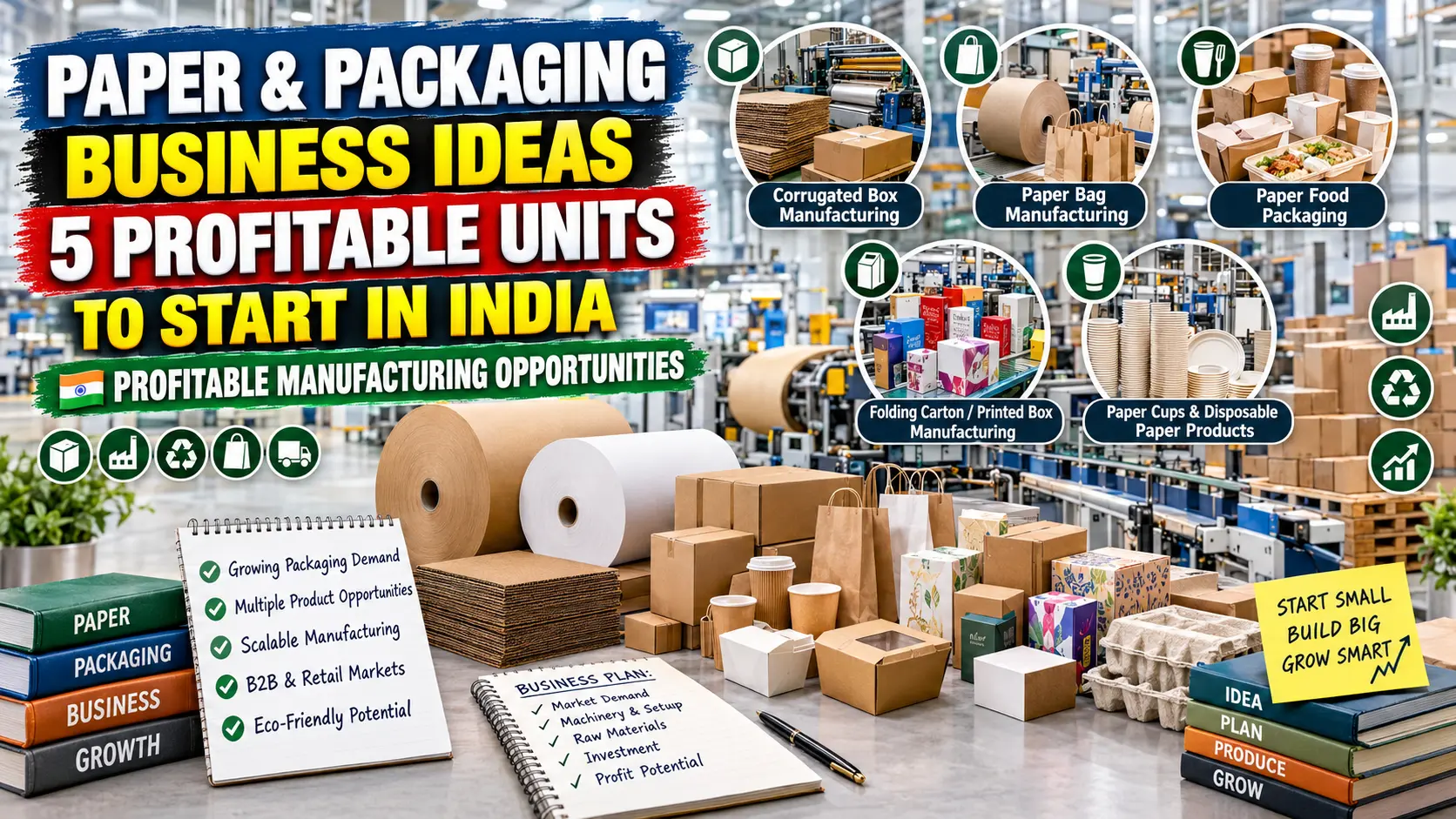
The industrial world has witnessed a shift toward eco-friendly and cost-effective materials in packaging and manufacturing. Among these, Paper Core Manufacturing has emerged as a highly profitable and sustainable business avenue. Paper cores are cylindrical products made from recycled paper and are widely used in textiles, plastic film, paper rolls, tapes, and construction materials. With increased awareness of sustainability and the rise of eco-packaging solutions, the demand for paper cores is on a significant upward trend. If you are an aspiring entrepreneur or investor looking to start a green and profitable business, Paper Core Manufacturing in 2025 is worth serious consideration.
Contents
- 1. Why Paper Core Manufacturing Is a Smart Business Choice in 2025
- 1.1. Market Potential of Paper Core Manufacturing
- 1.2. Types of Paper Cores
- 1.3. Key Raw Materials Required
- 1.4. Machinery and Equipment Needed
- 1.5. Step-by-Step Manufacturing Process
- 1.6. Business Setup and Legal Requirements
- 1.7. Marketing and Sales Strategies
- 1.8. Challenges in the Industry
- 1.9. Profitability and ROI
- 1.10. Future Trends in Paper Core Manufacturing
- 1.11. Conclusion
Why Paper Core Manufacturing Is a Smart Business Choice in 2025
The growing push for environmentally conscious practices and recyclable packaging materials makes Paper Core Manufacturing a strategic investment for the future. Governments around the world are encouraging the use of biodegradable and recyclable products to reduce plastic pollution. This has opened up vast opportunities for paper-based solutions.
Moreover, the increasing need for industrial packaging in sectors like textiles, film, and paper mills has expanded the market for paper cores. These industries use cores as essential components for rolling and storing materials. The low raw material cost, scalable production models, and a wide range of application areas make this business both accessible and profitable.
Market Potential of Paper Core Manufacturing
The global paper core market has been growing steadily and is projected to continue its rise through 2025 and beyond. Several factors contribute to this growth:
- Rapid expansion of the packaging industry
- Increased textile and fabric production
- Greater demand in the construction and adhesive tape industries
- Environmental regulations favoring paper-based alternatives
India, in particular, is a thriving market for Paper Core Manufacturing due to the growth of its textile, packaging, and FMCG industries. With the “Make in India” initiative and support for MSMEs, setting up a manufacturing unit is becoming more viable for small and medium entrepreneurs.
Types of Paper Cores
Depending on the usage and specifications, paper cores can be categorized into:
- Textile Cores – Used for winding yarn and fabrics.
- Industrial Cores – Utilized in plastic film, foil, and other sheet materials.
- Printing & Converting Cores – For paper, label stock, and adhesive tapes.
- Construction Cores – Used for formwork in construction.
- Custom Cores – Made for specialized applications with specific diameters and strengths.
Understanding these categories allows manufacturers to target different industries with tailored product offerings.
Key Raw Materials Required
The most important raw material in Paper Core Manufacturing is recycled kraft paper. Other materials and components include:
- Adhesives and glues (water-based or synthetic)
- Cardboard sheets
- Resin or varnish for coating (optional)
- Machinery for winding, cutting, and shaping
By sourcing raw materials from recycling plants and local vendors, manufacturers can keep costs low while maintaining product quality.
Machinery and Equipment Needed
Setting up a paper core manufacturing unit requires several machines, which may include:
- Paper slitting machine
- Core winding machine
- Core cutting machine
- Dryer (optional, for high-speed production)
- Printing and labeling unit (if customization is offered)
- Quality testing equipment
The capital investment for a small-scale unit can start from INR 15–20 lakhs, with scope to expand based on demand and scale.
Step-by-Step Manufacturing Process
The Paper Core Manufacturing process involves a series of precise steps to ensure strength and dimensional accuracy. Here’s a simplified process outline:
- Slitting the Kraft Paper – Large rolls of kraft paper are slit into smaller strips suitable for core winding.
- Core Winding – The slit kraft paper strips are spirally or parallelly wound using an adhesive to form a core of desired thickness and diameter.
- Drying – The wound cores are dried to solidify the glue and provide shape retention.
- Cutting to Size – The dried cores are cut into required lengths using an automatic cutter.
- Finishing – The final product may be surface-coated, labeled, or polished depending on client requirements.
- Packaging – The finished cores are packed and sent for dispatch.
Business Setup and Legal Requirements
Before you start your Paper Core Manufacturing unit, you need to take care of some basic formalities and registrations:
- Company registration (as a proprietorship, partnership, LLP or Pvt Ltd)
- Udyam Registration for MSME benefits
- GST registration
- NOC from the Pollution Control Board
- Factory license
- Trade license from the local municipal authority
Ensuring compliance with these regulations helps you avoid legal issues and gives access to government subsidies and schemes.
Marketing and Sales Strategies
Effective marketing is crucial to establish your presence in the competitive Paper Core Manufacturing industry. Here are some useful strategies:
- B2B Networking – Connect with textile mills, packaging units, and tape manufacturers.
- Online Listings – Use B2B platforms like IndiaMART, TradeIndia, and Alibaba.
- Exhibitions & Trade Fairs – Participate in industrial expos to showcase your products.
- Website & SEO – Build a professional website and optimize it with keywords like “custom paper cores,” “industrial paper cores,” etc.
- Samples & Discounts – Offer free samples or introductory discounts to bulk buyers.
Good customer service and timely delivery can build long-term relationships with clients.
Challenges in the Industry
While Paper Core Manufacturing is lucrative, it does come with some challenges:
- Raw Material Fluctuations – Prices of kraft paper and adhesives may fluctuate.
- Machinery Maintenance – Equipment requires regular maintenance and skilled operators.
- Competition – Local and regional competitors can affect pricing and margins.
- Waste Management – Managing scrap and glue waste requires proper systems.
A well-thought-out business plan and risk assessment can mitigate these issues efficiently.
Profitability and ROI
A well-managed small-scale Paper Core Manufacturing unit can achieve break-even within 12–18 months. Profit margins generally range between 15–25% depending on production scale and market strategy.
For example, a unit producing 1,000 cores per day can generate monthly revenue between INR 6–8 lakhs with a net profit of INR 1–1.5 lakhs after expenses. Scaling up production and automating processes can further improve profit margins.
Future Trends in Paper Core Manufacturing
By 2025 and beyond, the Paper Core Manufacturing industry is likely to experience innovations and shifts, such as:
- Eco-friendly Adhesives – New biodegradable adhesives to further reduce environmental impact.
- Smart Packaging Integration – Use of QR codes and RFID labels on cores for inventory tracking.
- Customization on Demand – Growth in demand for custom-designed cores for specific industrial use.
- Automation and AI – Automated quality checks and process optimization with AI tools.
Staying updated with trends and upgrading production capabilities will help businesses remain competitive and profitable.
Conclusion
Starting a Paper Core Manufacturing business in 2025 is a smart move for entrepreneurs seeking a sustainable and scalable opportunity. With growing market demand, easy availability of raw materials, and relatively low capital investment, this business offers both environmental and economic benefits. By investing in the right machinery, ensuring quality, and building a strong marketing network, you can carve a niche in this promising industry. As businesses continue to move toward greener packaging alternatives, paper core manufacturing stands out as a future-proof, profitable venture.
Visit the page Select and Choose the Right Business Startup for You for sorting out the questions arising in your mind before starting any business and know which start-up you can plan. We, at NPCS, endeavor to make business selection a simple and convenient step for any entrepreneur/startup. Our expert team, by capitalizing on its dexterity and decade’s long experience in the field, has created a list of profitable ventures for entrepreneurs who wish to diversify or venture. We regularly update the list to give you a steady dose of new and emerging opportunities.