
Start your own Peanut Butter Manufacturing Business
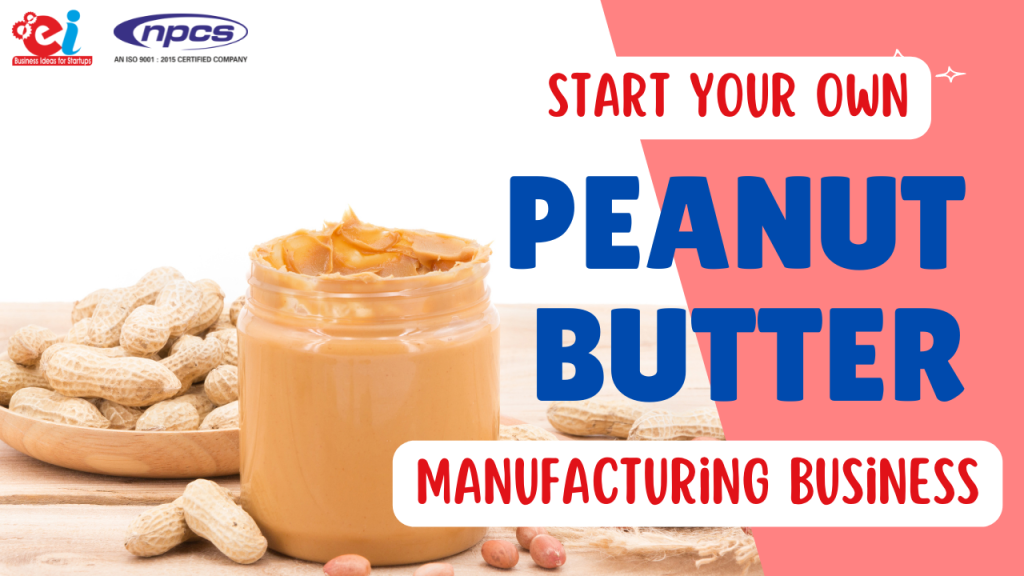
The peanut butter industry has witnessed exponential growth over the past decade. With increasing health consciousness and a shift towards plant-based protein sources, peanut butter has become a staple in households across the globe. Starting a peanut butter manufacturing unit is not only profitable but also scalable. In this detailed guide, we outline every crucial step to establish and run a successful peanut butter production business. Understanding the Peanut Butter Market Potential The demand for peanut butter is driven by its health benefits, high protein content, and versatility in culinary uses. The Indian market, in particular, has embraced this trend, with fitness enthusiasts, vegans, and even traditional households adopting it. With local consumption on the rise and export opportunities opening up, the scope for profit is massive for startups entering the peanut butter manufacturing sector. Business Plan Development for Your Peanut Butter Manufacturing Unit Creating a comprehensive business plan is the cornerstone of your success. It should include: Market analysis identifying your target demographics SWOT analysis of competitors Operational plan for sourcing, production, and logistics Marketing strategies for both B2C and B2B Financial projections and break-even analysis Ensure your business plan is investor-ready if you’re seeking external funding. Legal Registration and Licensing Before initiating production, obtain the following: FSSAI license (Food Safety and Standards Authority of India) MSME/SSI registration for small-scale businesses GST registration Trade license from the local municipal authority BIS certification (Bureau of Indian Standards) for quality assurance Additionally, adhere to all health, safety, and labor laws to maintain regulatory compliance. Choosing the Right Location for Manufacturing Selecting a suitable location plays a crucial role in cost efficiency. Your manufacturing unit should be: Close to peanut farming zones to reduce raw material cost Accessible via road and transport infrastructure Equipped with water, electricity, and waste disposal systems Urban outskirts or agro-industrial clusters are ideal for small to medium-scale setups. Infrastructure and Equipment Required To manufacture peanut butter, the following infrastructure and machinery are necessary: Roasting machine – to roast peanuts uniformly Peeling machine – for removing peanut skins Grinding machine – to make a smooth or crunchy paste Mixing unit – for adding salt, sugar, and stabilizers Cooling conveyor – to bring the product to ambient temperature Filling and sealing machine – for packaging in jars or pouches Labeling machine – to apply branded labels Storage space – for raw materials and finished goods Ensure the facility is clean, pest-free, and well-ventilated to comply with food-grade standards. Sourcing Raw Materials and Ingredients The key ingredients for peanut butter production are: Raw peanuts (high-quality and aflatoxin-free) Edible salt Sweeteners like sugar or jaggery Stabilizers and emulsifiers (optional, for longer shelf life) Establish strong relationships with farmers or suppliers for a consistent supply of quality peanuts. Production Process of Peanut Butter Here’s a step-by-step overview of the typical peanut butter manufacturing process: Cleaning: Remove dirt, stones, and debris from raw peanuts. Roasting: Roast the peanuts at the right temperature to bring out flavor and aroma. Cooling: Allow roasted peanuts to cool to prevent overcooking. Peeling: Use a peeling machine or blanching method to remove skins. Grinding: Ground peanuts in stages to reach the desired consistency. Mixing: Add salt, sugar, and stabilizers to the paste. Cooling again: Bring the mixture to room temperature. Packaging: Fill the final product into sterilized containers. Labeling and sealing: Apply branded labels and seal for distribution. Adhering to proper hygiene at every stage ensures a premium final product. Packaging and Branding Strategy Packaging must preserve freshness and appeal to consumers. Choose: Food-grade PET or glass jars Air-tight seals Attractive labels with nutritional information and branding Invest in a professional logo and design to make your brand stand out on store shelves. Eco-friendly and recyclable packaging is a growing trend among health-conscious buyers. Marketing and Distribution Channels Marketing is essential to create brand awareness and drive sales. Leverage these channels: Digital marketing: Use SEO, social media, and influencer campaigns Retail distribution: Supply to supermarkets, grocery chains, and health stores E-commerce platforms: List your products on Amazon, Flipkart, and BigBasket Direct-to-consumer website: Launch your own e-store for better profit margins Sampling and demos: Offer tastings in fitness centers and health expos Focus on communicating your USPs – be it organic ingredients, sugar-free variants, or protein-rich formulations. Quality Control and Certification To build consumer trust, ensure: HACCP compliance for food safety ISO certification for international quality standards Batch testing for microbial and chemical safety Shelf-life testing to establish best-before dates Maintaining stringent quality control gives you a competitive edge in domestic and export markets. Staffing and Management Recruit staff based on your production scale: Production staff: Machine operators, quality inspectors, packers Marketing and sales: Digital marketers, distribution managers Administrative roles: Accountant, HR, logistics supervisor Provide hygiene and food safety training to all workers. A well-trained team ensures smooth operations and consistency in quality. Investment and Financial Considerations Initial capital depends on production scale and automation level. Approximate investment: Small scale unit: ?10–15 lakhs Medium scale: ?25–50 lakhs Large scale: ?1 crore and above Major cost heads include: Machinery and setup Raw material procurement Packaging materials Marketing and branding Licensing and compliance Funding can be raised through bank loans, government subsidies under MSME schemes, or private investors. Profitability and Growth Potential The profit margin in peanut butter manufacturing ranges from 25% to 40%, depending on scale and distribution efficiency. Once your brand establishes a foothold, you can diversify into: Almond or cashew butter Flavored spreads (chocolate, honey, etc.) Organic or diabetic-friendly variants Snack bars and protein blends Tapping into international markets can significantly scale your revenue. Target countries with high health awareness and peanut butter consumption like the USA, UAE, and the UK. Conclusion Starting a peanut butter manufacturing unit is a lucrative business that combines health trends with scalable growth. With the right strategy, equipment, compliance, and marketing, entrepreneurs can build a successful brand in this high-demand segment. Invest wisely, innovate continuously, and prioritize quality to make your mark in the competitive food industry. Visit the page Select
Cocoa Processing Unit | Cocoa Processing Unit is Set Up for Manufacturing Cocoa Butter, Cocoa Couverture and Cocoa Powder.
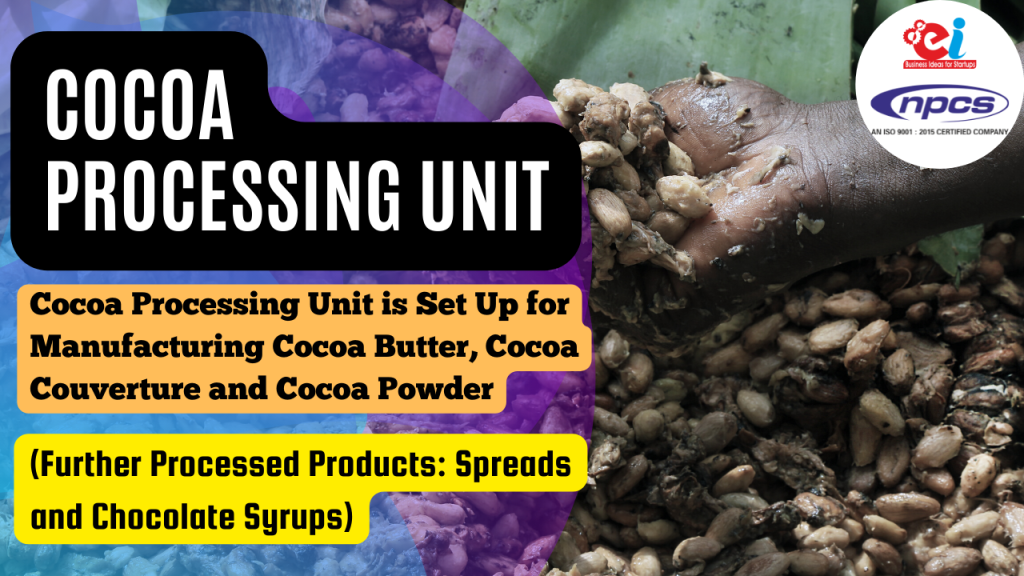
The cocoa processing industry is a lucrative segment within the global agricultural value chain. Setting up a cocoa processing unit is not only a strategic business move but also an opportunity to create value from one of the world’s most loved commodities—chocolate. With proper planning, investment, and knowledge, establishing a cocoa processing plant can be a game-changer in agribusiness. Understanding the Cocoa Value Chain The cocoa processing value chain begins from sourcing raw cocoa beans and continues through fermentation, drying, roasting, and grinding. The main products obtained from this process include cocoa liquor, cocoa butter, and cocoa powder, which serve as critical ingredients in food, cosmetic, and pharmaceutical industries. Sourcing quality beans is vital. West Africa (especially Ivory Coast and Ghana), Latin America, and parts of Southeast Asia are known for producing premium cocoa. Establishing partnerships or direct sourcing channels ensures consistent quality and volume. Market Research and Feasibility Study Before launching a cocoa processing unit, it is essential to conduct comprehensive market research and a feasibility study. Analyze: Demand trends for cocoa-derived products. Local and global competitors. Import-export regulations in target markets. Technology requirements. Operational cost and profit margins. The feasibility study must include analysis of ROI, breakeven point, and scalability potential. It should also review raw material sourcing, logistics, and the potential for forward or backward integration. Business Plan Development Developing a robust business plan is the foundation of any successful cocoa processing venture. The business plan should include: Executive summary of your goals and vision. SWOT analysis of your business concept. Product line description (liquor, butter, powder). Processing capacity (small-scale, medium, or large). Investment requirements and financing sources. Marketing and distribution strategies. Risk management plan. Make sure your business model reflects sustainable practices, fair trade policies, and includes room for future expansion. Legal Registration and Compliance To operate a cocoa processing unit, legal compliance is mandatory. These include: Company registration and factory licensing. Food safety and hygiene certifications (FSSAI, ISO 22000, HACCP). Labor and environmental clearances. Tax registrations (GST, Import-Export Code). Engage legal advisors to assist in ensuring that all government regulations, both local and international, are met for a hassle-free operation. Site Selection and Plant Layout Choosing the right location for your cocoa processing facility directly impacts logistics and operational efficiency. Ideal characteristics include: Proximity to cocoa bean farms or ports. Availability of clean water and stable electricity. Adequate space for current and future expansion. Access to skilled and unskilled labor. Design the plant layout for optimal workflow, from bean reception, cleaning, and roasting to grinding, pressing, and packaging. A well-optimized layout minimizes energy consumption and increases productivity. Procurement of Equipment Investing in high-quality, energy-efficient machinery ensures smooth and consistent output. The primary equipment required includes: Roasting machines – for flavor development. Winnowers – to separate nibs from shells. Grinders/melangers – to produce cocoa liquor. Hydraulic presses – to extract cocoa butter. Powdering units – to process cake into cocoa powder. Packaging machines – to meet various market needs. Opt for semi-automated or fully automated systems based on your budget and production scale. Also, consider sourcing from manufacturers offering installation and after-sales support. Production Process and Quality Control The production process involves several stages, each requiring stringent quality control: Cleaning and Sorting – Remove impurities and grade beans. Roasting – Enhance flavor and reduce moisture. Winnowing – Break and separate nibs. Grinding – Convert nibs to cocoa liquor. Pressing – Separate cocoa butter and cake. Grinding Cake – Produce cocoa powder. Packaging – Preserve freshness and extend shelf life. Implement a comprehensive quality management system. Monitor temperature, moisture, hygiene, and microbial content regularly. Ensure each batch meets industry and food safety standards. Packaging and Branding The packaging of cocoa products must be airtight, tamper-proof, and compliant with local and international regulations. It plays a crucial role in shelf-life and brand image. Consider packaging solutions that are: Eco-friendly and recyclable. Labeled with nutritional information. Designed to appeal to end consumers and B2B buyers. Invest in a strong branding strategy. Highlight product purity, origin, sustainability, and traceability. Effective branding helps position your company in the premium market segment. Distribution and Marketing Channels Develop a multi-channel marketing and distribution approach: Partner with FMCG companies, chocolate manufacturers, bakeries, and cosmetic producers. Explore export opportunities to North America, Europe, and Asia. Build an eCommerce presence to sell directly to consumers. Attend trade shows and industry expos to create B2B connections. Digital marketing is key. Use SEO-driven websites, social media, email campaigns, and influencer marketing to create brand visibility and generate leads. Skilled Workforce and Training Hiring trained personnel ensures process efficiency and quality. Key roles include: Food technologists. Machine operators. Quality assurance professionals. Packaging and logistics managers. Sales and marketing executives. Invest in regular training and upskilling programs to maintain standards and adapt to technological changes. Sustainability and Waste Management Sustainability in cocoa processing is vital. Adopt eco-conscious practices such as: Utilizing cocoa shells for fuel or animal feed. Recycling water and minimizing energy waste. Complying with environmental laws and carbon footprint norms. Promote ethical sourcing and fair-trade certifications to attract conscious consumers and global buyers. Financial Planning and Profitability Setting up a cocoa processing unit involves significant investment. Capital is needed for land, machinery, labor, and working capital. A sample cost breakdown: Land & infrastructure: 20–30% Machinery & installation: 40–50% Licensing, marketing, staffing: 20% Contingency: 10% Profitability depends on efficient operations, market access, and product differentiation. Cocoa products have high demand elasticity, offering profitable margins with the right positioning. Conclusion Starting a cocoa processing unit is a capital-intensive but highly rewarding venture. By aligning strategic planning, technical infrastructure, quality assurance, and marketing, one can build a scalable, globally competitive business. The demand for cocoa-derived products continues to surge, making this a timely opportunity for entrepreneurs and investors alike. Visit the page Select and Choose the Right Business Startup for You for sorting out the questions arising in your mind before starting any business and know which start-up you can plan. We, at NPCS, endeavor to make business selection a
Bamboo Fiber & Yarn | A Complete Business Plan for Manufacturing Bamboo Fiber & Yarn
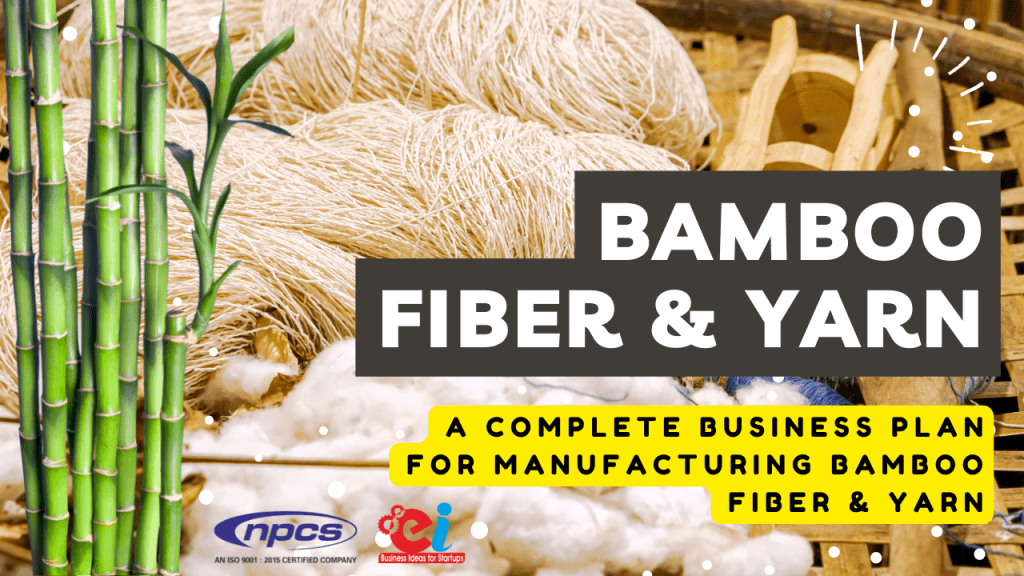
Bamboo fiber yarn is fast becoming a cornerstone in the world of eco-conscious textiles. As industries shift toward more sustainable and ethical practices, bamboo-based materials are emerging as an attractive alternative to traditional synthetic and cotton fibers. Starting a bamboo fiber yarn business not only taps into this growing demand but also contributes positively to the environment by offering a renewable, biodegradable, and highly versatile product. This comprehensive guide will take you through every essential step of launching your bamboo fiber yarn venture—from understanding the market and setting up the production facility to branding and scaling your operations. The Bamboo Fiber Yarn Market – An Eco-Friendly Revolution The textile industry is undergoing a significant transformation. Consumers are becoming more aware of the ecological impact of their choices, demanding materials that are not just stylish and comfortable but also sustainable. Bamboo fiber yarn perfectly meets these criteria. Derived from the cellulose of bamboo plants, this yarn boasts natural antibacterial properties, UV resistance, moisture-wicking capabilities, and a soft texture similar to silk or cashmere. Globally, the demand for eco-friendly yarns is increasing, especially in developed regions like Europe, North America, and parts of Asia. Bamboo yarn is used in making garments, towels, baby clothing, home textiles, and even medical fabrics. Launching a business in this space means capitalizing on a product that is both trendy and environmentally responsible. Step-by-Step Plan to Start a Bamboo Fiber Yarn Business 1. Market Research and Feasibility Analysis Before entering any business, a deep understanding of the market is crucial. Study the domestic and international demand for bamboo yarn. Look into who your potential customers will be—garment manufacturers, weavers, eco-conscious brands, or direct consumers. Identify the size of your target market, pricing patterns, consumption trends, and major players. Additionally, analyze production trends and raw material sourcing options. India, China, and Southeast Asia have an abundance of bamboo resources, making them ideal for raw material procurement. Also, look into trade policies, import/export laws, and government schemes supporting bamboo-based industries. 2. Create a Robust Business Plan A well-structured business plan serves as the backbone of your venture. It guides your strategy and attracts potential investors. Your business plan should include: Executive Summary: Overview of your business goals and mission Market Analysis: Trends, competitor study, and customer segmentation Products and Services: Details on the types of bamboo yarn you’ll offer—combed, carded, dyed, blended, etc. Operations Plan: Description of production processes and logistics Marketing and Sales Plan: Strategy for brand positioning, pricing, and distribution Financial Forecasts: Projected revenues, break-even analysis, and funding needs 3. Choose the Right Business Model You can operate under various business models depending on your budget and vision: Manufacturing-Based Model: Involves full production from raw bamboo to finished yarn. High investment, full control. Outsourcing Model: You outsource production to third-party manufacturers and focus on branding, packaging, and distribution. Wholesale/Retail Model: Buy bulk bamboo yarn and sell to retailers or consumers. Online DTC Model: Set up your eCommerce store and sell bamboo yarn directly to end users. Each model has its pros and cons. Choose the one that matches your capital, expertise, and long-term goals. 4. Legal Compliance and Licensing Operating a bamboo fiber yarn business legally requires registration and compliance with local laws. Obtain: Company Registration (Sole Proprietorship, LLP, or Private Limited Company) GST Registration Trade License from your municipality Import-Export Code (for international trade) Pollution Control Board License (if required) Textile Industry Certifications such as OEKO-TEX®, GOTS, or ISO These certifications also enhance your credibility in global markets. 5. Setting Up the Manufacturing Facility To produce bamboo fiber yarn, you need a facility equipped with advanced machinery and a streamlined production line. The primary steps include: Bamboo Pulping: Raw bamboo is chopped and chemically or mechanically processed to create pulp. Fiber Extraction: The pulp is treated and spun into fibers. Carding and Spinning: The fibers are aligned and twisted into yarn. Dyeing and Finishing: Yarns are dyed naturally or synthetically, then dried and finished. Packaging: The final yarn is packaged for wholesale or retail use. Essential Machinery Includes: Bamboo cutting and grinding machines Steam cooking tanks and chemical treatment vats Fiber extractors and carding machines Ring spinning or open-end spinning machines Dyeing vessels and drying chambers Packaging and winding machines 6. Sourcing Raw Materials Sourcing quality raw bamboo is critical. Partner with certified organic bamboo cultivators who practice sustainable farming. In India, states like Assam, Mizoram, Tripura, and parts of Karnataka and Maharashtra offer vast bamboo plantations. Ensure that your supply chain is ethical and environmentally sustainable. You may also explore partnerships with bamboo cooperatives and forest departments to get bulk raw material at affordable rates. Marketing Strategy for Bamboo Fiber Yarn Business 1. Develop a Green and Responsible Brand Your branding should strongly highlight your sustainable values. Use eco-friendly materials for packaging. Tell your brand story—how your yarn helps reduce environmental impact. Highlight features like: 100% biodegradable Hypoallergenic and breathable Sustainably harvested Fair-trade and cruelty-free 2. Build a Strong Digital Presence Having an SEO-optimized website is essential. Use your primary keyword, “bamboo fiber yarn,” at least seven times throughout your site. Optimize for other related terms like organic yarn, eco-friendly fibers, sustainable textile material, etc. Include: Product pages with detailed descriptions Blog content focused on sustainable fashion and DIY projects Customer testimonials and case studies Tutorials on using bamboo yarn Don’t forget to list on online marketplaces like Amazon, Etsy, IndiaMART, and Shopify. 3. Social Media and Influencer Marketing Use platforms like Instagram, Pinterest, and Facebook to showcase the aesthetic appeal of your yarn and its uses. Collaborate with influencers in the eco-fashion and crafts niche. Host giveaways and user-generated content campaigns to increase visibility. 4. Target B2B Clients Attend textile expos, sustainability summits, and trade fairs. Distribute samples and product catalogs to manufacturers, wholesalers, and designers. Offer customized solutions, bulk discounts, and white-label opportunities. Financial Projections and Cost Estimation Cost Head Estimated Investment (INR) Land and Infrastructure ?20–30 Lakhs Machinery and Equipment ?40–60 Lakhs Raw Material Procurement ?10–15 Lakhs Skilled Labor and Operations
Detailed Project Report on Printed Circuit Board (PCBs) Manufacturing Business
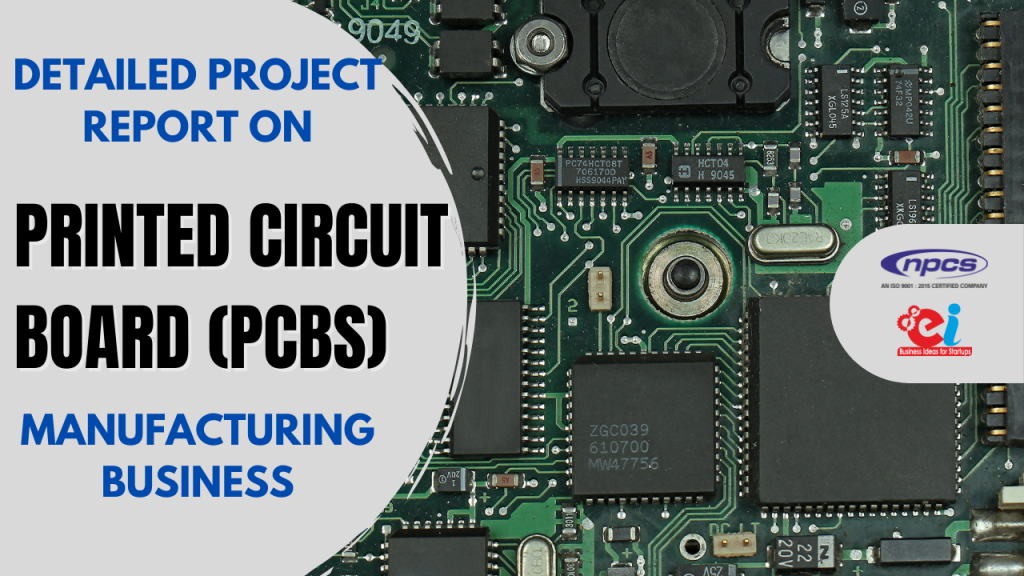
Printed Circuit Boards (PCBs) are at the core of all modern electronic devices, from smartphones and laptops to industrial machinery, medical equipment, and military systems. The growing digitization of industries and the explosion of smart technologies have significantly increased the global demand for PCBs. Establishing a PCB manufacturing business offers a lucrative opportunity for entrepreneurs and investors who want to capitalize on the rising electronics manufacturing market. This detailed business plan and feasibility report explores the investment needs, technical aspects, process flows, market outlook, and financial projections necessary to launch and sustain a profitable PCB manufacturing venture. Executive Summary We aim to launch a technologically advanced and scalable PCB manufacturing unit capable of producing a wide range of PCB types—single-layer, double-layer, and multi-layer boards—to cater to diverse sectors such as consumer electronics, automotive, telecommunications, aerospace, industrial automation, and defense. Our vision is to become a reliable and innovative supplier of customized PCBs that meet international quality standards. We plan to implement automated production systems, strict quality assurance protocols, and rapid prototyping capabilities to ensure our competitiveness in both domestic and export markets. Industry Outlook and Market Analysis The global PCB manufacturing market is growing rapidly and is projected to reach USD 105 billion by 2028, up from around USD 78 billion in 2023. Factors fueling this growth include: Widespread adoption of Internet of Things (IoT) devices. Emergence of electric vehicles (EVs) and autonomous driving systems. Expansion of 5G network infrastructure. Increasing use of PCBs in wearables, medical devices, and defense technology. In India, the government’s push for Atmanirbhar Bharat, rising import tariffs on foreign PCBs, and Production Linked Incentive (PLI) schemes have created favorable conditions for local manufacturing. The Indian PCB market, currently valued at USD 3.6 billion, is largely import-dependent—presenting a huge gap for domestic producers to fill. Investment and Capital Requirements Starting a PCB manufacturing business requires significant upfront capital investment. However, the long-term returns justify the initial expenditure, especially when entering a market with increasing demand and limited supply. Estimated Capital Requirements: Expense Category Estimated Cost (INR) Land and Building ?50 lakh – ?3 crore Machinery and Automation ?1 crore – ?8 crore Raw Material Inventory ?25 lakh – ?80 lakh Working Capital (6–12 months) ?50 lakh+ Licenses and Certifications ?5 lakh – ?10 lakh Utilities Setup (Water, Power) ?10 lakh – ?30 lakh Furniture, Office Equipment ?3 lakh – ?10 lakh Total initial setup cost: ?2.5 crore to ?15 crore depending on the scale and level of automation. Funding Options: Bank loans under MSME schemes SIDBI financing Equity investment from venture capitalists State subsidies and PLI scheme grants Detailed PCB Manufacturing Process PCB production is a complex process involving precise steps, advanced equipment, and stringent quality control. Here’s a comprehensive breakdown: Design & CAD Layout: Engineers use CAD software (e.g., KiCAD, Altium) to design the circuit schematic and layout. Photoplotting & Printing: Design patterns are transferred onto the copper-clad boards using UV light-sensitive film. Etching Process: Excess copper is chemically etched away, leaving only the conductive paths. Drilling Holes: High-speed CNC drills create holes for vias and component mounting. Plating Through Holes (PTH): Holes are plated with copper to ensure connectivity between layers. Solder Mask Application: An insulating solder mask layer is applied to protect the circuitry. Silkscreen Printing: Identifying marks, logos, and reference designators are printed. Surface Finishing: ENIG (Electroless Nickel Immersion Gold), HASL (Hot Air Solder Leveling), or OSP (Organic Solderability Preservative) finishes are applied. Electrical Testing & Inspection: AOI (Automated Optical Inspection), Flying Probe Testing, and ICT (In-Circuit Testing) ensure zero defects. Cutting & Packaging: Final PCBs are cut, cleaned, and packaged for delivery. Our plant will follow RoHS (Restriction of Hazardous Substances) and ISO 9001 standards to ensure global competitiveness. Licensing and Legal Requirements To legally establish and run a PCB manufacturing business, the following registrations and certifications are necessary: Company Registration (Private Limited or LLP) GST Registration Udyam (MSME) Registration Pollution Control Board Certificate Factory License (as per Factories Act) Import-Export Code (IEC) ISO 9001:2015 Quality Certification RoHS Compliance Certification Fire Safety and Environmental Clearance These ensure credibility with clients and compliance with industry norms, especially when dealing with large OEMs and government contracts. Raw Materials and Supplier Management The quality of PCB raw materials directly impacts product reliability and performance. We will establish relationships with certified suppliers in India, China, Taiwan, and Japan to source high-grade inputs. Essential Raw Materials: Copper-clad Laminates (FR-4, CEM-1, Polyimide) Copper Foil Rolls Solder Mask Inks (Green, Red, Blue, Black) Dry Films & UV Resists Etching Chemicals (Ferric Chloride, Ammonia) Drilling Bits and Routing Tools Silkscreen Inks Surface Finish Chemicals We plan to maintain a 60–90-day inventory to avoid production disruptions and mitigate price volatility. Target Market and Customer Segments Our PCB manufacturing business will cater to a wide variety of sectors: Electronics OEMs Automotive Manufacturers Consumer Device Startups Defense & Aerospace Suppliers Medical Device Companies Home Automation and IoT Ventures We will focus on B2B partnerships, offering rapid prototyping, low-to-high volume manufacturing, and custom solutions for niche requirements. Sales and Marketing Strategy A successful PCB business depends heavily on visibility, brand trust, and technical credibility. Our Key Marketing Initiatives: SEO-optimized website with instant quote features B2B platforms like IndiaMART and Alibaba LinkedIn marketing to reach tech entrepreneurs and OEM buyers Participation in trade expos (Electronica India, DEFEXPO) Webinars and technical blogs for thought leadership Google Ads targeting keywords such as “custom PCB manufacturer India”, “HDI PCB supplier”, “prototype PCB services” We will also offer loyalty discounts, volume-based pricing, and after-sales support to build long-term relationships. Financial Projections and Profitability Below are projected revenues and margins for a mid-scale plant: 1st Year: Revenue: ?2 crore Cost of Goods Sold: ?1.4 crore Net Profit: ?16 lakh ROI: 10–12% 2nd Year: Revenue: ?4.5 crore Net Profit: ?55 lakh Break-even Achieved 3rd Year: Revenue: ?7 crore+ Net Profit: ?1.2 crore+ ROI: 28–30% Long-Term Growth Avenues: Exporting to Middle East, Africa, and Southeast Asia Upgrading to flex-rigid and HDI boards Establishing in-house component assembly (EMS expansion) SWOT Analysis
Project Report on Battery Recycling Plant | Recycling of Lithium Ion Battery
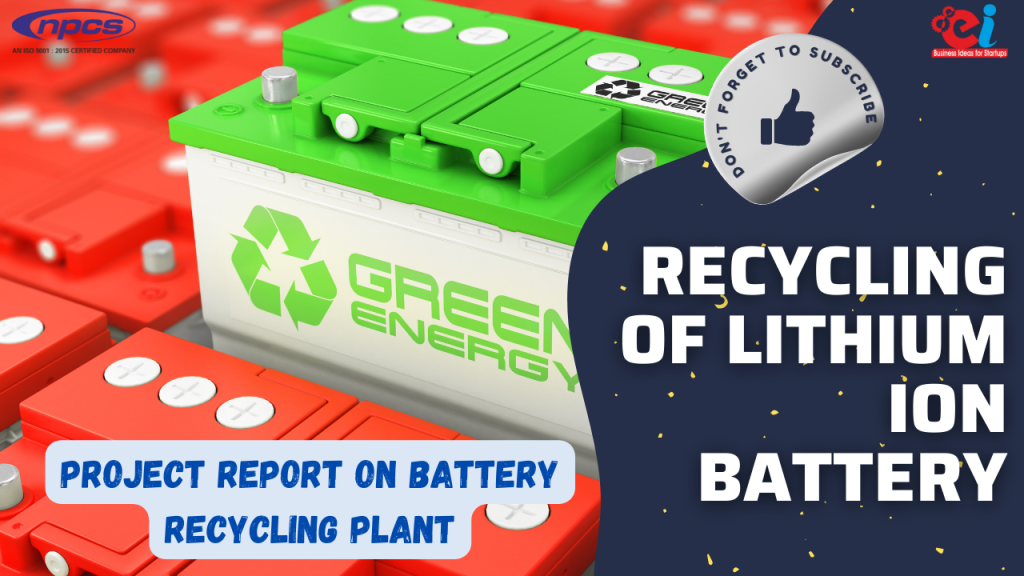
As the world aggressively shifts toward electrification, the role of lithium-ion battery recycling becomes paramount. With electric vehicles (EVs), portable electronics, and renewable energy systems consuming a staggering number of lithium-ion batteries every year, the challenge of managing spent batteries has emerged as both a critical concern and a lucrative opportunity. This article provides an in-depth project report for setting up a lithium-ion battery recycling plant, exploring every vital detail from technology to profitability. Global Demand for Lithium-ion Battery Recycling The consumption of lithium-ion batteries is expected to exceed 3,000 GWh by 2030, largely driven by EV adoption, solar power storage, and increased digitization. However, most of these batteries are discarded after their lifecycle, contributing to e-waste. Recycling them not only recovers valuable metals like lithium, cobalt, and nickel but also supports sustainable manufacturing and reduces dependency on volatile mining operations. Governments and international organizations are now enforcing stricter rules around battery recycling. India, for instance, implemented the Battery Waste Management Rules, 2022, which mandate Extended Producer Responsibility (EPR) and hold manufacturers accountable for recycling spent batteries. Why Invest in a Lithium-ion Battery Recycling Plant? Setting up a lithium-ion battery recycling plant is more than a business—it’s an essential part of a green, circular economy. Here’s why this industry offers high potential: High Profit Margins: Recovered metals can be sold at competitive prices, reducing the cost of sourcing virgin materials. Policy Support: Governments are offering subsidies, tax exemptions, and technology support for green ventures. Environmental Necessity: Improper disposal leads to soil and groundwater contamination, posing ecological threats. Job Creation: Establishing a plant creates jobs across multiple disciplines including engineering, logistics, safety, and R&D. Resource Independence: It reduces the need for importing critical minerals from unstable or monopolized markets. Comprehensive Business Model Overview To run a profitable lithium-ion battery recycling unit, we need a well-structured business model involving material sourcing, advanced processing, logistics, and market linkages. Below is a detailed breakdown of each component: Raw Material Sourcing Channels Lithium-ion batteries come from various sources, including: Electric Vehicles (EVs): EV manufacturers and fleet operators produce a significant quantity of battery waste. Consumer Electronics: Mobile phones, laptops, and tablets have short battery life cycles. Industrial Applications: UPS systems and telecom towers contribute industrial-scale battery waste. E-waste Collection Drives: Municipalities, recyclers, and NGOs often run collection programs. Partnerships with vehicle dealerships, e-waste aggregators, and OEMs are essential to maintain a constant supply. Location and Infrastructure Requirements A strategically located plant near industrial zones or transportation hubs reduces logistical costs. Key infrastructure includes: Battery Discharging Units: For safe energy drainage from batteries. Crushing and Shredding Machines: Mechanical processing units to break down battery packs. Sorting and Separation Units: Equipment to segregate metals and non-metals. Chemical Processing Tanks: For hydrometallurgical or pyrometallurgical recovery. Effluent Treatment Plants (ETPs): Mandatory for treating wastewater and chemical discharge. Storage Areas: Secured storage for hazardous materials and recovered metals. A medium-sized plant that processes 10,000 tons per year typically requires a 20,000 sq. ft. space and demands an investment between ?15–25 crores.. Detailed Process Flow of Battery Recycling The core steps in the recycling of lithium-ion batteries include: Collection and Transportation: Batteries are collected, labeled as hazardous, and transported under safe conditions. Discharging: Remaining charge is safely drained to avoid fires or explosions. Mechanical Dismantling: Batteries are opened to access the internal cell components. Crushing and Sorting: Cells are crushed and materials are separated into plastics, metals, and electrode materials. Thermal Processing (Pyrometallurgy): High-temperature processing to extract cobalt, nickel, and copper. Chemical Processing (Hydrometallurgy): Acid leaching and solvent extraction to isolate lithium, cobalt, and other rare elements. Material Purification: Refinement of extracted metals to make them battery-grade. Lithium-ion battery recycling plants may also include advanced direct recycling methods, which aim to retain cathode materials in usable form. Though still developing, these methods promise higher recovery efficiency and lower environmental impact. Technology and Equipment Required Key technologies include: Automated Sorting Lines Thermal Chambers Acid Leach Reactors Solvent Extraction Columns Induction Furnaces Advanced Control Systems Dust & Emission Control Units Automation not only improves safety and output but also ensures compliance with regulatory standards. Regulatory and Legal Considerations Running a battery recycling plant requires strict compliance with environmental and safety regulations. Approvals must be obtained from: State Pollution Control Boards (SPCB) Central Pollution Control Board (CPCB) MoEFCC Directorate of Industrial Safety and Health (DISH) Hazardous Waste Handling Rules Additionally, the business must register under the Battery Waste Management Rules and obtain EPR authorization. Operational Team and HR Requirements A successful recycling plant will need: Process Engineers Chemical Analysts Environmental Scientists Machine Operators Safety Managers Logistics Coordinators Training programs should be implemented to manage hazardous material handling, fire safety, chemical exposure, and environmental protection. Costs and Financial Projections Estimated cost components for a medium-scale plant: Land & Infrastructure: ?5–8 Crores Machinery & Equipment: ?7–10 Crores Licensing & Compliance: ?1–2 Crores Working Capital: ?3–5 Crores Break-even period: Generally achievable within 3–5 years, depending on capacity utilization and market access. Revenue Generation and Market Scope Key revenue streams: Sale of recovered cobalt, lithium, nickel, copper Scrap sale of plastic and aluminum casings Service fees for battery collection and processing Carbon credits and green subsidies Given that cobalt trades at over $30,000 per ton and lithium around $20,000 per ton (2025 estimates), profitability can be significant. Global buyers include battery manufacturers, EV companies, and metal refineries. Environmental and Social Impact Lithium-ion batteries contain electrolytes and heavy metals that can pollute soil, air, and water. Proper recycling prevents: Groundwater contamination Airborne toxin release Mining-related deforestation Worker exposure to carcinogens Recycling also contributes to UN Sustainable Development Goals (SDGs), particularly in climate action, clean energy, and responsible production. Market Trends and Future Outlook Automation: Use of AI for material detection and robotic dismantling. Urban Mining: Cities becoming hubs for battery recovery from e-waste. Policy Evolution: India is expected to impose stricter EPR compliance from 2026. Battery Passport: Future regulations may require digital tracking of battery components for traceability. Companies entering the lithium-ion battery recycling market today can capitalize
Starting A Production Business of AAC Blocks From Silica Sand & Lime Stone Powder | Start Production Business in Construction Sector
In recent years, AAC Blocks have gained substantial popularity in the construction industry due to their superior properties and sustainable production. The demand for lightweight and eco-friendly construction materials is on the rise, and AAC blocks from silica sand and lime are among the most efficient solutions available. This business guide explores everything from raw materials and production process to market potential and profitability, making it ideal for entrepreneurs considering investment in this promising sector. Understanding AAC Blocks Autoclaved Aerated Concrete (AAC) blocks are precast building materials made from natural raw materials such as silica sand, lime, cement, gypsum, aluminum powder, and water. The blocks undergo a chemical reaction that creates air bubbles, giving them a lightweight and porous structure. After molding, the blocks are cured under high pressure and temperature in an autoclave, resulting in high strength and durability. The primary advantage of using AAC blocks lies in their lightweight, thermal insulation, soundproofing, and ease of handling. Their cellular structure gives them excellent resistance to fire and moisture, making them more sustainable than traditional clay bricks or concrete blocks. Why Choose Silica Sand and Lime? Silica sand and lime are the two essential ingredients that contribute significantly to the unique properties of AAC blocks. Silica sand serves as a major source of silicon dioxide, which reacts with lime (calcium oxide) and cement to form calcium silicate hydrate – the binding agent that gives AAC its strength. The finely ground sand ensures uniformity and smoother surfaces in the final product. Lime, on the other hand, accelerates the reaction and enhances the strength and durability of the blocks. These raw materials are abundantly available in many parts of the world, especially in India, making AAC block manufacturing a cost-effective business opportunity. Additionally, both silica sand and lime are environmentally friendly and sustainable. Setting Up an AAC Block Manufacturing Unit Starting an AAC block manufacturing business involves several critical steps that must be carefully planned and executed. 1. Business Plan and Market Research Begin with a comprehensive business plan that outlines your objectives, financial projections, raw material availability, market analysis, and competitive landscape. Research the local construction market to determine demand for AAC blocks. Evaluate your competitors, identify potential customers (builders, developers, contractors), and assess pricing strategies. 2. Site Selection Choose a location that is well-connected by road or rail for easy transportation of raw materials and finished products. Ensure that the site has adequate space for storage, production, office, and utilities. Proximity to sources of silica sand and lime can significantly reduce logistics costs. 3. Legal and Regulatory Compliance Register your business as per the regulations of your local jurisdiction. Obtain all necessary permits including environmental clearance, pollution control certificates, and factory licenses. Compliance with IS 2185 (Part 3) standards is essential to ensure the quality and marketability of your AAC blocks. 4. Machinery and Equipment AAC block production requires specific equipment that facilitates the chemical reactions and autoclaving process. Key machinery includes: Jaw Crusher and Ball Mill for grinding raw materials Dosing and Mixing Units Moulds for shaping blocks Cutting Machine for sizing blocks accurately Autoclaves for steam curing Material handling systems like cranes and conveyors The capital investment in machinery depends on the scale of production. A medium-scale unit can produce up to 150 cubic meters per day and typically requires an investment of ?2–5 crores. 5. Raw Materials Procurement Raw materials used in the manufacturing process include: Silica Sand: Finely ground for uniformity Quick Lime or Hydrated Lime: Acts as a binder Ordinary Portland Cement (OPC): Enhances strength Gypsum: Acts as a catalyst Aluminum Powder: Triggers the aeration process Water: For mixing and chemical reactions Ensure that the quality of raw materials is consistent and sourced from reliable suppliers. 6. Production Process The AAC block manufacturing process is as follows: Mixing and DosingRaw materials are proportioned and mixed to form a slurry. Pouring and RisingThe mixture is poured into molds where aluminum powder reacts, creating air bubbles and increasing the volume. Pre-curingThe mixture is left to settle and harden for a few hours until it reaches the “green” stage. CuttingThe solidified mixture is removed from molds and cut into desired block sizes. AutoclavingWorkers place the cut blocks in autoclaves and steam-cure them at temperatures of 180–200°C under 12–14 bars of pressure for 8–12 hours. Packing and DispatchCured blocks are stacked, packed, and dispatched to customers or distributors. 7. Quality Control Maintaining consistent product quality is crucial. Regular testing for density, compressive strength, thermal conductivity, and water absorption must be done. Employ trained technicians and quality assurance protocols to monitor every stage of production. Marketing and Sales Strategy The success of your AAC Blocks business largely depends on strategic marketing. Use the following methods to create market presence: Participate in construction expos and trade shows Network with architects, civil engineers, and real estate developers Offer bulk discounts or credit options to dealers and contractors Leverage digital marketing – create a professional website, engage on LinkedIn and construction forums Collaborate with government affordable housing projects Providing value-added services like customized sizes, door delivery, and on-site training for block usage can further enhance brand loyalty. Profitability and ROI AAC block manufacturing offers attractive profit margins due to low raw material cost and high demand. On average: Cost of Production (per cubic meter): ?2,000–?2,500 Selling Price (per cubic meter): ?3,000–?3,500 Profit Margin: ?800–?1,200 per m³ Assuming daily production of 100 m³ and 25 working days/month, monthly profits could range from ?20 to ?30 lakhs depending on location, scale, and operational efficiency. Break-even can typically be achieved within 2–3 years. Challenges and Risk Management Despite its potential, the AAC blocks business comes with challenges: High initial investment Dependence on consistent power and water supply Skilled labor requirement Market education – convincing traditional builders to adopt AAC Raw material price fluctuations Mitigate risks by adopting automation, diversifying suppliers, ensuring energy-efficient operations, and investing in staff training. Environmental and Regulatory Benefits AAC blocks qualify as green building materials because they have a low carbon
A Handbook on How to Manufacture Bioplastics and Biodegradable Products
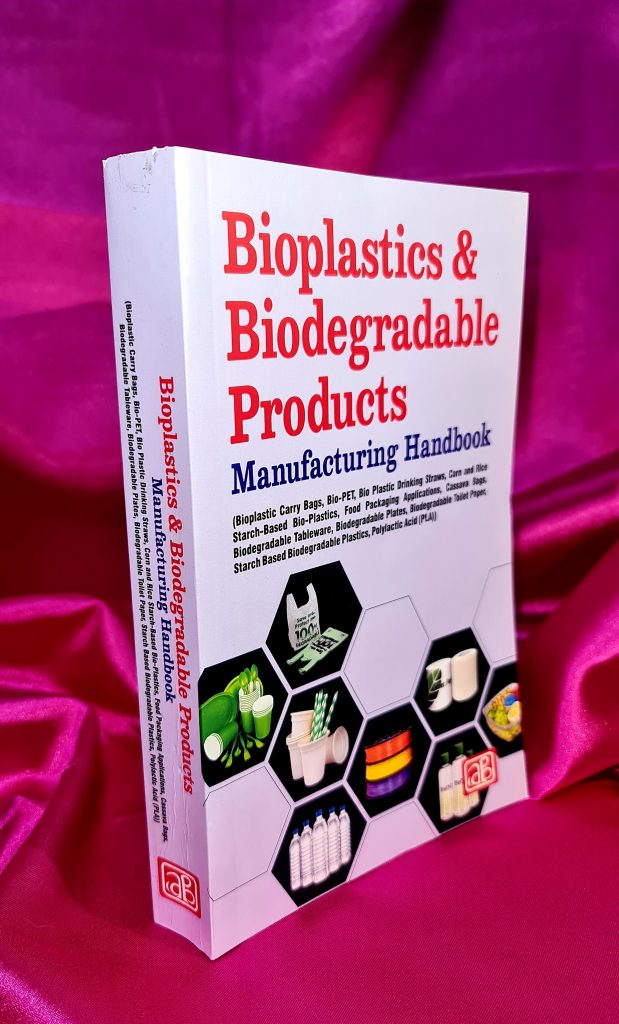
Understanding the Future of Bioplastics and Eco-Friendly Manufacturing In a world grappling with climate change, resource depletion, and an overdependence on petroleum-based products, bioplastics have emerged as a beacon of sustainable innovation. These eco-friendly materials are transforming the manufacturing industry by replacing traditional plastics with renewable, biodegradable alternatives. As governments push for greener policies and consumers demand ethical, low-impact products, the relevance of bioplastics is growing exponentially. Bioplastics represent a class of materials that are either bio-based, biodegradable, or possess both properties. They offer an environmentally conscious choice without compromising performance or durability. Through this detailed handbook, we will explore the raw materials, production processes, types, environmental impact, industrial applications, and future scope of bioplastics and eco products. What Are Bioplastics? Exploring the Basics Bioplastics are not a single material but a family of materials with varying properties and applications. The term typically refers to two types of plastics: Bio-based plastics, which are partially or wholly derived from renewable biological sources. Biodegradable plastics, which can decompose naturally by the action of microorganisms. Some bioplastics meet both criteria, such as PLA (Polylactic Acid) and PHA (Polyhydroxyalkanoates), offering a double advantage in sustainability. However, not all bio-based plastics are biodegradable (e.g., bio-PET), and not all biodegradable plastics are bio-based (e.g., PBAT). This diversity allows manufacturers to choose materials tailored to specific product needs while maintaining an environmentally responsible approach. Sourcing Sustainable Raw Materials The foundation of any bioplastics production system lies in its raw materials. Commonly used feedstocks include: Starch-rich crops like corn, potatoes, and cassava. Sugars extracted from sugarcane, sugar beets, or sweet sorghum. Cellulose from wood pulp or agricultural residue. Vegetable oils, especially from soybeans, castor, or canola. Microalgae and bacteria for advanced polymer synthesis. Using agricultural waste or non-food biomass (second-generation feedstock) is gaining traction to avoid food-versus-fuel conflicts. These renewable materials not only reduce greenhouse gas emissions but also support rural economies by creating new markets for biomass. Types of Bioplastics and Their Unique Applications Bioplastics are classified based on their chemical composition and degradation profile. Some prominent types include: Polylactic Acid (PLA) Derived from fermented plant starch (usually corn or sugarcane), PLA is one of the most commercially available bioplastics. It is transparent, compostable, and widely used in: Packaging Disposable utensils Textile fibers Medical implants and drug delivery systems Polyhydroxyalkanoates (PHA) PHA is produced via microbial fermentation of sugar or lipids. It degrades in marine, soil, and industrial compost environments. Applications include: Agricultural films Bottles and containers Biomedical applications like sutures and tissue scaffolding Starch-Based Bioplastics Starch, a naturally biodegradable polymer, is often blended with other biopolymers or plasticizers. Common uses are: Shopping bags Disposable trays and plates Foam packaging materials Bio-PET and Bio-PE These materials have the same structure as conventional PET and PE but are made from plant-based ethanol. They are recyclable but not biodegradable. Used in: Beverage bottles (Coca-Cola’s PlantBottle) Detergent containers Cosmetic packaging PBAT (Polybutylene Adipate Terephthalate) While not bio-based, PBAT is fully biodegradable and often blended with starch or PLA to enhance flexibility and degradation. Widely used in compostable bags and agricultural mulch. Step-by-Step Manufacturing Process of Bioplastics Creating bioplastics involves multiple stages, many of which mirror traditional plastic production. Here’s a closer look at the manufacturing flow: Biomass Collection and Pre-TreatmentProducers harvest and pre-process organic raw materials by drying, crushing, or fermenting them to extract sugars or starches. Fermentation or Polymerization For PLA: Sugars are fermented to produce lactic acid, which undergoes polymerization into PLA. For PHA: Bacteria ferment sugars/lipids into biopolymers stored inside their cells. For bio-PE: Ethanol from sugarcane is dehydrated to produce ethylene, which is polymerized into polyethylene. Polymer ProcessingPolymers are cooled, solidified, and pelletized. These pellets are the basic raw input for various plastic processing techniques. Shaping and MoldingDepending on the final product, techniques like injection molding, extrusion, blow molding, and thermoforming are used to shape bioplastic items. Quality Control and PackagingThe team tests the final products for strength, flexibility, heat resistance, and biodegradability before packaging and distributing them. Eco Products: A Glimpse into the Future of Sustainable Goods Bioplastics are revolutionizing product development in numerous sectors. Popular eco products include: Biodegradable food packaging: Clamshell containers, films, wrappers Compostable tableware: Plates, bowls, and cups for food services Agricultural tools: Mulch films and seedling trays that decompose into the soil 3D printing filaments: PLA-based filaments for eco-friendly prototyping Textile fibers: Bioplastic-based threads for sustainable fashion Consumer electronics casings: Phone and tablet covers Medical applications: Biodegradable sutures, capsules, and scaffolding These products offer superior end-of-life disposal options, reducing the environmental burden significantly compared to traditional plastics. Environmental and Economic Impact The life cycle of bioplastics from cradle to grave shows tremendous promise: Reduced Carbon Footprint: Lower emissions during production and often carbon sequestration during biomass growth. End-of-Life Options: Industrial composting, home composting, or anaerobic digestion. Energy Efficiency: While production still requires energy, bio-based sources often lead to energy savings in later stages. On the economic front, the bioplastics industry is generating new employment, revitalizing agricultural sectors, and encouraging green technology investments. As oil prices fluctuate, bioplastics also offer pricing stability. Challenges in Bioplastics Adoption Despite clear advantages, bioplastics face some hurdles: Higher Initial Costs: Due to emerging technologies and limited scale. Lack of Infrastructure: Most regions lack industrial composting or separate collection systems. Public Misunderstanding: Terms like “biodegradable” and “compostable” are often confused, leading to misuse and improper disposal. Performance Limitations: Some bioplastics may not offer the same barrier properties or heat resistance as fossil plastics. Addressing these challenges requires technological innovation, policy support, and public education. The Global Bioplastics Market: A Growing Industry The global bioplastics market is on a rapid upward trajectory. It is expected to reach over $25 billion by 2030. Key growth drivers include: Stringent environmental regulations in Europe and North America Rising awareness and demand for sustainable packaging in Asia-Pacific Corporate ESG commitments across industries Multinational companies like Nestlé, Danone, Toyota, and IKEA are already incorporating bioplastics into their supply chains. Governments are introducing bans on single-use plastics, further driving adoption. Regulatory Framework
The Complete Technology Book on Vermiculture and Vermicompost (Earthworm) with Manufacturing Process
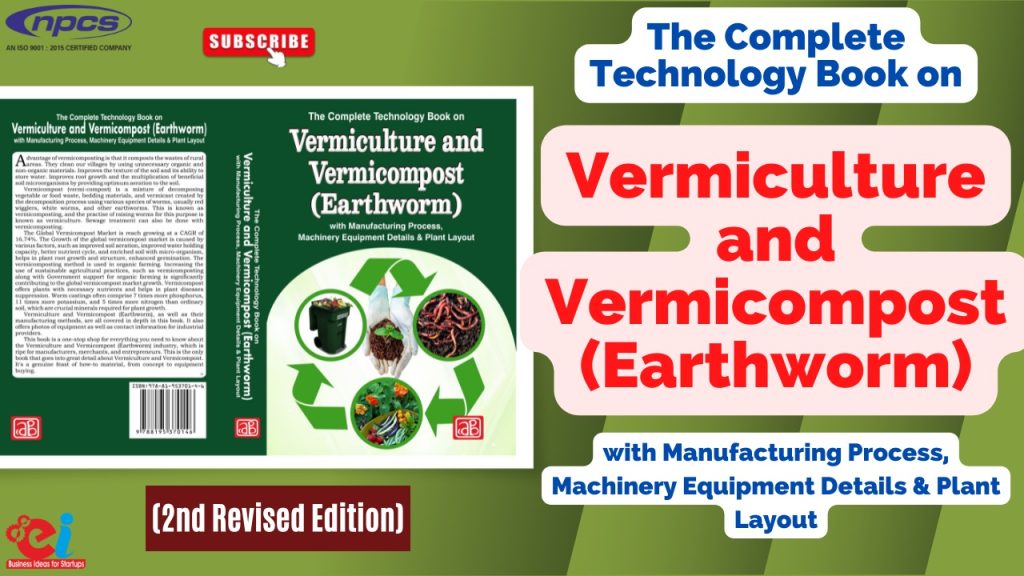
Introduction to Vermiculture Vermiculture is the scientific process of breeding and raising earthworms for the purpose of converting organic waste into nutrient-rich compost, often referred to as vermicompost. This natural method not only reduces waste but also produces one of the most effective fertilizers for agriculture, gardening, and landscaping. The “Vermiculture Technology Book” and earthworm compost guide provide an in-depth understanding of the science, equipment, and processes needed to successfully harness the power of worms. In a world increasingly focused on sustainability, vermiculture offers a green solution to manage organic waste and improve soil health. Whether you are a farmer, gardener, environmentalist, or educator, exploring vermiculture can transform your organic waste management approach and significantly enhance soil fertility without chemical inputs. Benefits of Vermiculture Organic Waste Management One of the most significant advantages of vermiculture is the efficient recycling of organic waste. Food scraps, paper, and agricultural residues that would otherwise end up in landfills can be turned into compost. Vermiculture aids in reducing the volume of waste while producing an eco-friendly product. Soil Enrichment Vermicompost, the by-product of vermiculture, is a powerful soil conditioner. It increases microbial activity, improves soil structure, enhances water retention, and provides essential nutrients such as nitrogen, phosphorus, potassium, and trace elements. This makes it an ideal supplement for both organic and conventional farming. Environmental Sustainability Vermiculture technology plays a vital role in reducing environmental pollution. It minimizes the need for chemical fertilizers, lowers methane emissions from decomposing organic waste, and enhances carbon sequestration through healthy soil practices. Economic Viability Besides ecological benefits, vermiculture is profitable. Households, schools, and commercial farms can generate income by selling earthworms and vermicompost. The “Vermiculture Technology Book” guides users on how to establish a commercial venture through small or large-scale setups. The Science Behind Vermiculture Earthworm Biology At the core of vermiculture is the earthworm, especially species like Eisenia fetida (red wigglers) and Eudrilus eugeniae (African nightcrawler). These worms consume organic matter and excrete nutrient-rich castings. They reproduce rapidly under the right conditions, making them ideal for composting purposes. Composting Process The process begins by setting up a bin filled with bedding materials like shredded newspaper, coconut coir, and peat moss. Organic waste such as vegetable scraps, coffee grounds, and eggshells are added regularly. Over time, worms digest this waste, turning it into dark, crumbly vermicompost. This compost is rich in plant-growth hormones and beneficial microbes. The entire process, from raw waste to finished compost, typically takes 2–3 months, depending on the scale and conditions such as temperature, moisture, and food supply. Setting Up a Vermiculture Unit Choosing a Location The ideal location for a vermiculture system is a shaded, well-ventilated area protected from extreme weather. Indoor systems work well in cooler climates or urban homes, while outdoor units are ideal for farms and gardens. Selecting Earthworms Not all worms are suitable for composting. Compost worms like Eisenia fetida are best because they feed aggressively on decaying organic material and adapt well to bin environments. The “Vermiculture Technology Book” offers insights into selecting the right worm species based on climate and composting needs. Bin Design and Bedding Worm bins can be made from wood, plastic, or concrete. They must have proper drainage and ventilation to prevent foul odors and anaerobic conditions. The bedding should remain moist but not soggy—similar to the texture of a wrung-out sponge. Feeding the Worms Feed worms with non-greasy vegetable and fruit peels, grains, and paper products. Avoid meat, dairy, and oily foods as they attract pests and create odor problems. Feed in small amounts initially and increase quantity as the worm population grows. Vermiculture Maintenance Tips Moisture and Temperature Maintain moisture levels between 60-80% and temperature between 15°C to 25°C. Too much moisture can drown worms, while dryness slows their activity. The earthworm compost guide suggests misting the bin lightly and covering it with a breathable fabric to retain humidity. Harvesting Vermicompost Compost can be harvested once most of the bedding has turned dark and crumbly. One method is to push compost to one side of the bin and add fresh food to the other side. Worms will migrate toward the food, allowing easy collection of compost. Controlling Pests and Odors If maintained properly, vermiculture bins should not produce foul smells or attract pests. Overfeeding, poor ventilation, or the inclusion of inappropriate waste can lead to problems. Regular monitoring and adjusting feeding habits can resolve most issues. Vermiculture Applications in Agriculture Home Gardening Home gardeners can use vermicompost to grow healthier plants with fewer chemicals. It improves potting mix, boosts flower production, and enhances fruit quality. Organic Farming Organic farmers benefit from vermiculture by reducing reliance on synthetic fertilizers. The compost acts as both a soil amendment and a slow-release fertilizer, making it a sustainable alternative in certified organic systems. Horticulture and Landscaping Nurseries, landscapers, and greenhouses use vermicompost to promote faster seed germination, better root development, and disease resistance. The “Vermiculture Technology Book” includes specific formulas and ratios for mixing compost with other growing media. Vermiculture and Climate Change Mitigation Vermiculture contributes to climate change mitigation by reducing greenhouse gas emissions from organic waste decomposition. Instead of releasing methane in landfills, waste is aerobically processed by worms. Additionally, enriched soils store more carbon, thus supporting global efforts for carbon sequestration. Educational and Social Value Schools and institutions use vermiculture projects as educational tools to teach students about ecology, biology, and sustainable agriculture. Community vermicomposting units encourage civic participation, waste reduction, and environmental awareness. The “Vermiculture Technology Book” provides curricula and step-by-step guides tailored for different age groups and educational levels, making it a valuable resource for educators. Key Challenges in Vermiculture While vermiculture is highly beneficial, it also faces several challenges: Temperature Sensitivity: Worms are sensitive to extreme heat and cold. Pest Management: Improper feeding can attract rodents and flies. Market Access: Newcomers may struggle to find consistent buyers for compost or worms. Education Gap: Lack of knowledge and awareness can lead to failure in vermiculture attempts. Overcoming these challenges requires proper
Handbook on Maize (Corn) Processing and Manufacture of Maize Products
The corn & maize industry is a pillar of global food and industrial supply chains. Its importance spans across multiple sectors—from food production to pharmaceuticals, textiles to biofuels. In fact, the versatility of corn and maize makes them one of the most valuable crops in agricultural commerce today. For aspiring entrepreneurs and manufacturers, understanding the end-to-end manufacturing process is crucial for success. In this comprehensive handbook, we delve into the entire journey of corn & maize—from crop to commercial products—unraveling the science, equipment, processes, business models, profitability, and market trends associated with corn & maize manufacturing. Understanding the Fundamentals of Corn & Maize Corn and maize refer to the same grain, with “corn” being more common in North America and “maize” in other parts of the world. Scientifically known as Zea mays, it belongs to the grass family and is cultivated globally for its kernels, which are processed into food, industrial ingredients, and energy sources. Key Kernel Components Starch (60–70%): Primary component used in food, pharmaceuticals, adhesives, and biofuel. Protein (8–10%): Valuable for animal feed and industrial uses. Oil (3–5%): Extracted from the germ, refined into edible or industrial oil. Fiber & Hull: Used in feed, bioplastics, and construction materials. Types of Corn for Industrial Use Dent Corn: Rich in starch, best for industrial processing. Flint Corn: Harder kernel, used in grits and cereals. Sweet Corn: For direct human consumption. Popcorn: Specialty variety with explosive expansion quality. Waxy Corn: Almost pure amylopectin, ideal for unique starch-based applications. The Corn & Maize Processing Lifecycle Processing transforms raw corn into usable products. The lifecycle involves several crucial stages, and each determines the kind of end products generated. The two primary processing methods are dry milling and wet milling, with each offering unique benefits and outputs. Dry Milling Process A relatively simpler and more economical method used to produce: Cornmeal Corn grits Corn flour Steps in Dry Milling: Cleaning – Removing dust, stones, and foreign matter. Conditioning – Moistening the kernels for easy separation. Milling – Mechanical grinding into desired mesh sizes. Sifting & Packaging – Segregating fine flour, grits, or meal. Dry milling is energy-efficient and produces fewer by-products but does not extract starch or oil. Wet Milling Process This is a more sophisticated method used for large-scale production of: Starch Corn syrup Ethanol Corn oil Gluten feed Steps in Wet Milling: Steeping – Soaking corn in water and sulfur dioxide for up to 48 hours. Grinding – Separating kernel components post-soaking. Separation – Centrifugal separation of germ, fiber, protein, and starch. Refining – Further processing to isolate corn starch and oil. Wet milling produces more varied and valuable outputs but requires higher capital and energy inputs. Core Products Manufactured from Corn & Maize The real beauty of corn & maize lies in their multifunctional uses. From staple food to high-end bio-compounds, the list of derived products is vast. Food-Grade Products Corn Flour & Cornmeal – For tortillas, breads, snacks, and bakery items. Corn Grits – Used in cereals, snacks, and brewing. Corn Starch – Thickener in sauces, soups, custards, and baking. Corn Oil – For cooking, frying, and salad dressings. High-Fructose Corn Syrup (HFCS) – Widely used sweetener in beverages and processed foods. Beverage Applications Corn derivatives are used in alcoholic fermentation, like in beer and spirits. Dextrose from corn starch is key in soft drink production. Industrial Products Bioethanol – Clean fuel derived from fermented corn starch. Biodegradable Plastics – Made from PLA (Polylactic Acid) derived from corn. Corn Gluten Meal – High-protein animal feed. Corn-Based Adhesives & Binders – For textiles and paper industries. Pharmaceutical & Cosmetic Uses Modified starch in tablet binding and capsule formation. Corn alcohol as an ingredient in perfumes and antiseptics. Emulsifiers and carriers in lotions and creams. Starting a Corn & Maize Manufacturing Business Getting into corn & maize manufacturing involves strategic planning, technical infrastructure, and a deep understanding of market needs. Here’s what beginners must consider: Site Selection Proximity to corn farming regions reduces raw material cost and logistics burden. Regions like Punjab, Bihar, Madhya Pradesh, and Karnataka are key producers in India. Infrastructure & Machinery Invest in: Cleaning and sorting systems Milling machines (hammer mills, roller mills) Dryers and moisture control units Fermentation tanks and distillation units (for ethanol) Packaging and labeling systems Automation and modern equipment improve throughput and consistency. Licenses & Regulatory Compliance You’ll need: FSSAI license for food products Pollution control clearances MSME/Udyam registration ISO/GMP certifications for export and pharmaceutical-grade materials Labor & Workforce Train employees in: Equipment handling Hygiene and food safety Technical maintenance Quality control Business Models & Profitability There are various ways to enter the corn & maize market: Niche Manufacturing Specialize in one high-demand product, such as organic cornmeal or bioethanol, to target specific market gaps. Integrated Processing Units Handle everything from dry milling to packaging. While capital-intensive, they offer diversified income streams. Contract Manufacturing Process corn for other brands or exporters, reducing marketing and distribution expenses. Export-Oriented Units Focus on corn starch, corn oil, or grits for international buyers. Maintain high quality and traceability standards. Profit Margins Small-scale units: 10–20% profit margins Mid-sized ethanol plants: 25–35% margins due to high demand Export: 30–40% depending on volume and currency rates Sustainability & Environmental Impact Corn & maize manufacturing can be made highly sustainable by optimizing waste usage: Corn husk and cobs: Fuel briquettes, biochar, or compost Leftover fiber: Animal feed or raw material for bioplastics Steepwater from wet milling: Rich in nutrients, used in feed or fertilizer Green technologies such as anaerobic digesters and solar dryers help reduce the carbon footprint of the plant. Market Demand & Export Opportunities The demand for corn-based products is growing both domestically and globally. Key trends include: Rise in health-conscious products: Gluten-free flour and organic cornmeal. Biofuel mandates: Countries like the US, Brazil, and India increasing ethanol blending. Packaging industry demand: For biodegradable corn starch plastics. Export potential: India exports corn starch, corn oil, and maize flour to Southeast Asia, the Middle East, and Africa. Government incentives under
What is The Importance of Business Consulting Services?

In the ever-evolving world of entrepreneurship and competitive markets, business consulting services have emerged as a cornerstone of strategic and sustainable growth. Companies that aspire to excel need more than just capital and manpower—they require insight, agility, and expert guidance. Business consultants offer these crucial elements, transforming ambiguity into actionable strategies that fuel development. Driving Business Transformation through Expert Consulting A core reason why business consulting services matter for growth is their ability to transform vision into reality. Whether you’re a startup navigating initial challenges or an established enterprise striving for expansion, professional consultants bring unbiased, external perspectives grounded in data, experience, and best practices. This outside view enables businesses to identify inefficiencies, refine processes, and seize untapped opportunities. Strategic Planning and Execution One of the key benefits of working with seasoned consultants lies in strategic planning. They help define long-term objectives, craft measurable goals, and chart a roadmap that aligns with market trends. These strategies aren’t just theoretical—they come with executable plans, performance metrics, and risk mitigation strategies. In an increasingly volatile business environment, this structured planning is indispensable for sustainable growth. Enhancing Operational Efficiency Operational bottlenecks can silently erode profitability. Through a comprehensive audit of internal workflows, business consulting services can spot inefficiencies that may be invisible to internal teams. From supply chain optimization to lean management techniques, consultants recommend process improvements that boost productivity and reduce waste, ultimately enhancing the bottom line. Financial Management and Profitability Growth Financial health is the lifeblood of any business. Expert consultants delve deep into budgeting, cash flow, cost control, and pricing strategies to ensure maximum profitability. By creating customized financial models and performing regular audits, they help companies avoid pitfalls and ensure long-term fiscal discipline. Consultants also advise on mergers, acquisitions, investments, and capital raising—critical aspects for businesses in growth mode. This financial foresight enables companies to make informed decisions that align with their scalability objectives. Market Analysis and Competitive Advantage To thrive, businesses must understand their market thoroughly. This is where business consulting services add tremendous value by conducting in-depth market research, identifying target demographics, analyzing competitor behavior, and studying consumer trends. With such insight, businesses can reposition their offerings, refine branding, and optimize marketing strategies to gain a competitive edge. Whether entering a new market or launching a new product, data-backed consulting ensures precision and minimal risk. Digital Transformation and Innovation In the digital age, innovation is non-negotiable. Business consultants specialize in integrating digital transformation strategies—whether that means cloud migration, automation, CRM systems, or AI integration. They guide companies through tech adoption with minimal disruption, ensuring new systems support current goals while enabling scalability. Moreover, digital strategy consultants help build omnichannel customer experiences, harness the power of analytics, and streamline e-commerce operations, all of which are crucial for maintaining relevance in today’s fast-paced market. Human Capital Optimization No company grows without its people. Business consultants help optimize human resource strategies, from recruitment to retention, from leadership development to organizational structure. By introducing talent management frameworks, performance appraisal systems, and training programs, consultants align the workforce with the company’s vision. A motivated and well-directed team is one of the most powerful levers of growth, and consultants ensure that leadership and culture are aligned with performance goals. Risk Management and Compliance Navigating today’s regulatory and risk landscape is increasingly complex. Business consulting services are pivotal in establishing robust governance, ensuring compliance with laws and regulations, and preparing for potential crises. Consultants assess risk from multiple perspectives—financial, operational, reputational—and build contingency plans to minimize exposure. This allows businesses to operate with confidence and agility, even in uncertain times. Customized Solutions for Unique Business Challenges Every business is unique. Generic strategies rarely work in today’s highly specialized industries. That’s why business consulting services provide tailor-made solutions designed specifically for your goals, structure, and market. From boutique firms to multinational corporations, consultants customize frameworks that deliver measurable impact and real-time scalability. Fostering Leadership and Decision-Making Excellence One often-overlooked aspect of consulting is its effect on leadership. By providing executive coaching, strategic workshops, and decision-making frameworks, consultants cultivate leadership that’s resilient, visionary, and data-driven. Great decisions don’t just happen—they are crafted through analysis, experience, and timing. Business consultants ensure leadership teams are equipped to make bold moves with confidence and insight. Scaling Up with Confidence Growth often means scaling operations, entering new markets, and expanding product lines. But scaling can also be a risky endeavor. Business consultants serve as guides during this process, advising on infrastructure, staffing, supply chain logistics, and risk management. With their help, businesses can scale efficiently without compromising quality or culture. Global Expansion and Localization Strategy For businesses aiming to expand internationally, consultants offer guidance on everything from regulatory compliance and cultural adaptation to localization and partnerships. With their expertise, companies can avoid missteps, adapt faster, and connect with global audiences more effectively. The Power of Business Consulting Services in a Competitive Economy In today’s hypercompetitive economy, business consulting services are no longer optional—they are essential partners for growth. With their help, organizations can stay ahead of trends, manage complexity, and build resilient business models. Whether you’re a growing startup or an established enterprise, investing in professional consulting is an investment in your future. It’s the bridge between potential and performance, ideas and execution, goals and results. Conclusion In an ever-changing and competitive business environment, growth is not accidental—it’s strategic. Business consulting services offer the clarity, expertise, and guidance needed to navigate challenges, seize new opportunities, and achieve sustainable development. From streamlining operations and optimizing finances to embracing innovation and empowering leadership, consultants play a pivotal role at every stage of the business lifecycle. By partnering with experienced consultants, businesses gain a trusted ally committed to their success—an ally equipped with tools, insights, and strategies to turn ambition into achievement. As we move forward in a digitally driven world, the need for adaptive thinking, expert support, and customized solutions will only grow. That’s why business consulting services remain a vital asset for any company determined to thrive, not just survive.