Our Categories

Our Categories

P.K. Tripathi

P. K. Tripathi is Associate Editor at Entrepreneur India and a seasoned business consultant with over 35 years of experience advising startups and established enterprises across multiple industries. He has worked closely with founders and business leaders, offering strategic guidance on business planning, project execution, and market positioning — helping entrepreneurs transform ideas into viable, scalable ventures. A published author of several business books on startups, manufacturing opportunities, and practical entrepreneurship, P. K. Tripathi is known for his grounded, execution-focused approach that cuts through theory to deliver actionable insights. Through his writing and consulting work, he continues to equip aspiring entrepreneurs with the real-world knowledge, industry intelligence, and practical strategies needed to thrive in competitive markets.

Want to Start Business in Ethiopia, East Africa?

Want to Start Business in Ethiopia, East Africa? Read More »

Ethiopia, one of Africa’s fastest-growing economies, offers tremendous opportunities for aspiring entrepreneurs. With its rapidly expanding population, government-backed industrialization programs, and strategic location in the Horn of Africa, Ethiopia is becoming a hotspot for business innovation and investment. The demand for infrastructure, agriculture, education, healthcare, and technology-based solutions is on the rise. Ethiopia’s youthful workforce, fertile land, and policy-driven encouragement for foreign and domestic businesses have created a ripe environment for launching ventures that not only thrive but also contribute to the country’s economic development. Lucrative Sectors to Explore for Business in Ethiopia When planning to start a business in Ethiopia, it is important to analyze local needs, government policies, and areas where market gaps still exist. The Ethiopian government has prioritized industries such as manufacturing, agriculture, renewable energy, and services. Below are some of the most promising project ideas to consider: 1. Agro-Processing Industry Ethiopia’s economy is largely agrarian, with agriculture contributing about 40% of GDP. However, much of the produce is exported raw, leading to missed opportunities in value addition. Starting an agro-processing unit—such as for coffee, cereals, fruits, or oilseeds—can cater to local demand and boost exports. Projects like packaged fruit juice, flour mills, or oil extraction plants are ideal. This not only enhances income generation but also creates local employment. 2. Textile and Garment Manufacturing With an abundance of cotton and a low-cost labor force, Ethiopia has emerged as a global destination for textile production. Setting up a garment manufacturing unit is a smart choice, especially with the government’s push to develop industrial parks. Local and international demand is high for affordable clothing, and businesses can benefit from duty-free access to markets under AGOA (African Growth and Opportunity Act). 3. Renewable Energy Solutions Despite major investments in hydroelectric power, rural electrification remains a challenge. Entrepreneurs can tap into the solar and wind energy market, offering products like solar home kits, water pumps, or mini-grids. These solutions are essential for rural development and align well with Ethiopia’s long-term green energy vision. 4. Tourism and Eco-Lodges Ethiopia is home to historic cities, ancient monasteries, national parks, and World Heritage Sites. However, the tourism sector is underutilized. Investing in eco-tourism, boutique hotels, cultural tours, or adventure travel can draw both domestic and international tourists. A business in Ethiopia that promotes cultural heritage and sustainability is likely to attract eco-conscious travelers and global attention. 5. Digital and Mobile Services As smartphone penetration increases, Ethiopians are adopting digital services at a record pace. With the liberalization of the telecom sector, now is the right time to invest in app development, e-commerce, fintech, online education, or digital health. For instance, an app that facilitates mobile payments, agricultural advice, or e-learning in local languages can be revolutionary. Digital businesses in Ethiopia can leapfrog traditional infrastructure gaps and scale quickly. 6. Construction and Real Estate Rapid urbanization and a growing middle class have led to increased demand for residential and commercial spaces. Real estate and construction businesses can build homes, offices, warehouses, and even prefab structures. Moreover, supplying construction materials like cement blocks, steel bars, and tiles can be equally profitable. Business in Ethiopia’s real estate sector benefits from both urban growth and infrastructure projects. 7. Education and Training Services The young population in Ethiopia is eager to upskill. Starting a private school, technical training institute, or online learning platform can meet this need. There’s also demand for English training centers, vocational courses, and ICT education. Partnering with local educators or international institutions can lend credibility and improve access to quality education. 8. Food and Beverage Industry From local Ethiopian cuisine to international fast food, urban consumers are seeking convenience and variety. Opening a café, bakery, or fast-food outlet in cities like Addis Ababa can be a great investment. Packaged food items, bottled water, and organic food production are other viable projects. The rising middle class presents a stable market for food-related businesses in Ethiopia. 9. Healthcare Services and Pharmaceuticals Access to quality healthcare remains limited, especially outside urban areas. Clinics, diagnostic labs, and mobile health services can fill this gap. Also, there is huge potential in manufacturing or distributing generic medicines, medical equipment, or herbal products. A business in Ethiopia’s healthcare sector can generate income while serving critical community needs. 10. Logistics and Transport As Ethiopia increases its international trade through the Djibouti port and industrial zones, logistics and transport services are in high demand. Starting a trucking service, warehouse facility, or last-mile delivery business can be profitable. With growing e-commerce, there’s also demand for reliable courier and freight management services. Government Support and Incentives To encourage investment, the Ethiopian Investment Commission (EIC) provides incentives such as tax holidays, customs duty exemptions, and easy business registration. Sectors like manufacturing, agro-processing, and renewable energy enjoy maximum benefits. Moreover, industrial parks with ready infrastructure and one-stop-shop services reduce entry barriers for new businesses in Ethiopia. Tips for Success in Ethiopia Local Partnerships: Teaming up with local entrepreneurs or hiring local staff helps in understanding cultural dynamics and gaining community trust. Regulatory Compliance: Ensure you meet licensing, tax, and environmental standards to avoid legal hurdles. Market Research: Understand regional needs, consumer behavior, and competition before launching. Leverage Technology: Use mobile platforms, social media, and digital marketing to reach untapped audiences. Sustainability: Design your project to support environmental and social goals—it improves brand reputation and community support. Challenges to Consider Starting a business in Ethiopia is promising but not without its hurdles. Entrepreneurs might face bureaucratic delays, foreign exchange shortages, and occasional political instability. However, with patience, local engagement, and smart planning, these challenges can be managed. Conclusion Ethiopia is undergoing a transformation, and businesses that align with its development goals have significant growth potential. Whether you’re interested in agriculture, technology, education, or manufacturing, the time is right to take action. By choosing the right project and navigating the local landscape effectively, your business in Ethiopia can make a lasting impact and generate long-term rewards. With a visionary approach, the possibilities are vast and inspiring in
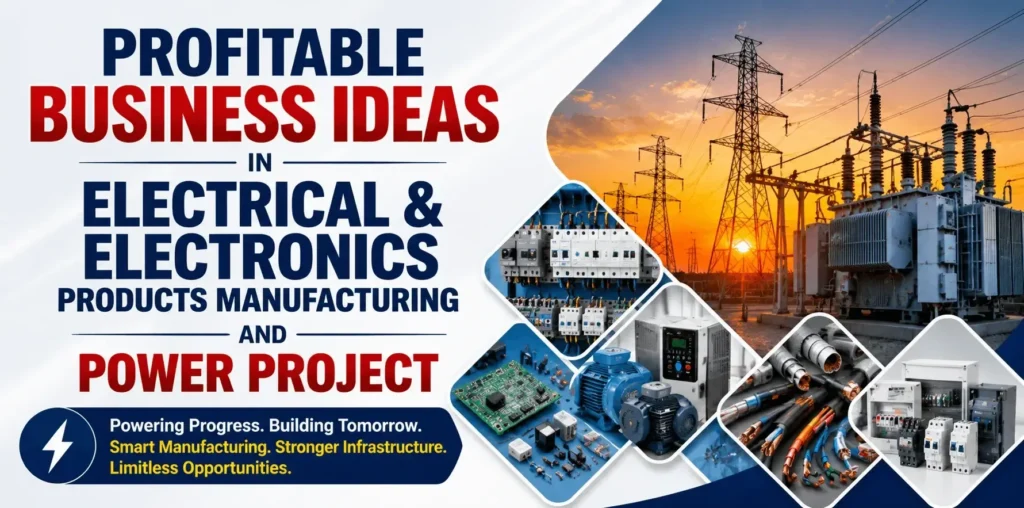
Best Electrical & Electronics Manufacturing Business Ideas 2026

List of Profitable Business Ideas in Electrical and Electronics Products Manufacturing Industries and Power Project

List of Profitable Business Ideas in Electrical and Electronics Products Manufacturing Industries and Power Project Read More »

In 2025, the electrical & electronics manufacturing sector is undergoing rapid evolution, fueled by advancements in artificial intelligence, automation, green energy, and the Internet of Things (IoT). With increasing consumer demand for smart devices, energy-efficient appliances, and electric mobility, the sector presents lucrative opportunities for entrepreneurs, startups, and MSMEs. This guide explores innovative and profitable business ideas that align with global trends and emerging technologies in this dynamic industry. Emerging Electrical & Electronics Manufacturing Business Ideas One of the most significant drivers of the electrical & electronics manufacturing industry is the global shift toward sustainability and digital transformation. Businesses that integrate eco-friendly materials, energy-efficient components, and smart technology are positioned to lead in 2025 and beyond. Here are top business ideas you can explore: 1. Smart Home Device Manufacturing The rise of smart homes is creating high demand for devices that enhance convenience, security, and energy efficiency. Manufacturing products such as smart thermostats, intelligent lighting systems, connected door locks, motion sensors, and voice-controlled assistants can be extremely profitable. Integration with popular platforms like Alexa, Google Assistant, and Apple HomeKit is key to marketability. With consumers increasingly adopting automation in daily life, entering the smart home device space gives you access to a growing and relatively untapped market in India and globally. IoT and embedded software development expertise will add significant value. 2. Electric Vehicle (EV) Component Manufacturing India’s push toward e-mobility and net-zero emissions is accelerating the growth of EVs. Opportunities exist in manufacturing EV batteries (especially lithium-ion and solid-state), power control modules, battery management systems, and charging stations. Startups and SMEs that enter this segment can benefit from government incentives under schemes like FAME II and PLI (Production Linked Incentive). With strategic partnerships and access to raw materials, EV component manufacturing can become a future-proof venture in electrical & electronics manufacturing. 3. PCB (Printed Circuit Board) Production PCBs are essential components in virtually all electronics—from consumer gadgets and industrial equipment to defense and medical devices. Establishing a PCB manufacturing unit can be a low-to-medium investment business idea with high returns. Advanced PCBs with multilayer structures, flexible circuits, and high-density interconnects (HDI) are in demand, particularly for AI-powered electronics and automotive applications. Localizing production helps reduce dependency on imports and meets the government’s “Make in India” goals. 4. Solar Power Equipment Manufacturing As countries around the world adopt clean energy policies, the demand for solar energy components is surging. Manufacturing solar inverters, panels, mounting structures, charge controllers, and solar battery systems offers huge potential. Targeting both residential and commercial solar projects opens up multiple revenue channels. Partnering with EPC (Engineering, Procurement, and Construction) contractors and leveraging government subsidies can improve your market penetration. Solar equipment is a cornerstone of green-focused electrical & electronics manufacturing in 2025. 5. LED Lighting Products The LED lighting market continues to grow due to energy efficiency, longer life, and affordability. You can manufacture LED bulbs, tube lights, panels, floodlights, and decorative lights. There is also rising demand for solar-powered and smart LED lighting solutions, especially in rural electrification and smart city projects. With relatively low capital requirements and easy access to raw materials, LED manufacturing is an ideal business for first-time entrepreneurs. 6. Power Backup and Energy Storage Systems Power reliability remains a concern in many regions, increasing the demand for backup solutions. Manufacturing inverters, UPS (Uninterruptible Power Supplies), home batteries, and industrial storage systems is a high-demand area. As renewable energy sources like wind and solar grow, efficient energy storage becomes essential. Companies that innovate in lithium-ion and flow battery technologies will lead the next wave of energy solutions. This is a high-growth segment within electrical & electronics manufacturing, especially with industries and data centers requiring uninterrupted power. 7. Consumer Electronics Assembly India is becoming a major hub for assembling smartphones, tablets, wearables, and televisions. You can launch an assembly unit focusing on white-label electronics or cater to known brands as a third-party vendor. With the government’s push for domestic manufacturing, along with increasing demand for budget-friendly electronics, consumer electronics assembly is both scalable and profitable. Quality control, efficient supply chains, and after-sales support are essential for long-term success. 8. Industrial Automation Equipment Manufacturing automation solutions like programmable logic controllers (PLCs), human-machine interfaces (HMIs), robotic arms, and sensor-based control systems is gaining traction. Industries ranging from automotive to textiles are modernizing operations, and automation equipment is in high demand. If you can offer locally manufactured, cost-effective alternatives to imported equipment, this could become a lucrative niche in electrical & electronics manufacturing. 9. Embedded Systems and IoT Modules Manufacturing embedded control boards, microcontroller-based devices, and sensor modules for smart devices is a highly specialized yet profitable domain. These are used in agriculture tech, health monitoring devices, smart cities, and industrial automation. Developing IoT development kits and modules for developers, startups, and academic institutions can help you penetrate this tech-driven sector. High R&D investment is required, but margins and scalability are equally strong. 10. Home Appliances and Kitchen Electronics From mixer grinders and air purifiers to smart cooktops and induction heaters, Indian consumers are embracing modern home and kitchen appliances. The middle class is expanding, and the aspiration for comfort and convenience is creating consistent demand. Manufacturing durable, efficient, and affordable home appliances can be a stable business. Targeting Tier-2 and Tier-3 cities will provide a competitive edge. This is one of the most resilient categories in the electrical & electronics manufacturing domain. How to Get Started in the Manufacturing Business Launching a manufacturing unit in this sector requires detailed planning, investment, and compliance with technical and legal regulations. Here are the key steps: Market Research – Understand the target market, competitors, pricing strategies, and technology trends. Business Plan – Prepare a structured plan covering the product line, production process, funding, and distribution model. Location & Infrastructure – Choose a location with access to skilled labor, logistics, and power supply. Licensing & Compliance – Obtain necessary approvals like MSME/Udyam registration, GST, pollution control license, and BIS certification for certain products. Funding & Investment – Seek

List of Profitable Plastic and Rubber Products Manufacturing Business.

List of Profitable Plastic and Rubber Products Manufacturing Business. Read More »

In today’s rapidly evolving industrial landscape, Plastic & Rubber Manufacturing remains one of the most dynamic and profitable sectors. With increasing demand across industries such as automotive, construction, packaging, healthcare, and consumer goods, there’s no shortage of opportunities for entrepreneurs and manufacturers to carve a niche in this evergreen field. The versatility of plastic and rubber materials—coupled with ongoing innovations in sustainability and recycling—has opened doors to a wide array of business models. Whether you’re a seasoned industrialist or a new entrepreneur, investing in this sector can bring strong returns, scalability, and market relevance. Exploring the Most Profitable Plastic & Rubber Manufacturing Ideas 1. PVC Pipe and Fittings Manufacturing The growing demand for plumbing and irrigation systems in both urban and rural areas has fueled the PVC pipe industry. These pipes are used for water supply, drainage systems, and electrical conduit systems. Manufacturing PVC pipes and fittings is capital-intensive initially, but once set up, it offers high-profit margins and low maintenance. With a proper marketing strategy and distribution network, PVC pipe units can scale quickly. 2. Rubber Gaskets and Seals Production Rubber gaskets and seals are crucial components in automotive, aerospace, and machinery industries. They provide insulation, prevent leaks, and ensure safety and functionality. A small to medium-scale setup with basic molding and finishing equipment can be started with moderate investment. Customized rubber sealing products for industrial and commercial applications offer great value and steady client relationships. 3. Plastic Recycling Plant With sustainability at the forefront, plastic recycling is not just profitable—it’s essential. Setting up a recycling unit for used plastics like PET bottles, LDPE sheets, or HDPE containers can be a game-changer. The collected waste is cleaned, shredded, melted, and reshaped into pellets or new products. Recycled plastic can be used in manufacturing containers, pipes, furniture, and more. Governments and environmental agencies often support such eco-friendly Plastic & Rubber Manufacturing ventures through subsidies and schemes. 4. Rubber Sheet Manufacturing Rubber sheets are used extensively in industrial, commercial, and consumer applications. These include flooring, gaskets, mats, and insulation layers. The demand is particularly high in construction and transportation sectors. Raw materials like natural rubber, synthetic rubber, and additives are processed through calendering or extrusion to produce durable sheets. This manufacturing idea allows diversification into customized sizes and grades for various markets. 5. Disposable Plastic Products Despite ongoing debates around plastic use, the demand for disposable plastic items like spoons, plates, cups, and packaging trays remains strong—especially in the food and event industries. A disposable plastic product manufacturing unit, using injection molding or thermoforming machines, can be highly profitable with a reliable supply chain. This Plastic & Rubber Manufacturing idea is suitable for entrepreneurs looking to tap into high-volume, low-cost production. 6. Rubber Tyre Retreading Tyre retreading is a cost-effective and eco-friendly solution used widely by transport companies. Retreading involves refurbishing old and worn-out tyres with new tread using heat and pressure. This business requires relatively lower investment compared to new tyre manufacturing and offers consistent returns. Given the high cost of new tyres, many logistics and commercial vehicle operators prefer retreaded ones for their fleets. 7. HDPE and LDPE Bag Production Plastic bags, despite restrictions in many areas, still find use in packaging, retail, and agriculture. High-Density Polyethylene (HDPE) and Low-Density Polyethylene (LDPE) bags are light, strong, and flexible. These can be manufactured in varying thicknesses, sizes, and designs. While restrictions in single-use plastic exist, biodegradable versions or bags used for industrial packaging are still viable markets. Entrepreneurs can explore sustainable alternatives within this Plastic & Rubber Manufacturing niche. 8. Silicone Rubber Products Silicone rubber is known for its heat resistance, non-reactivity, and durability. It is widely used in medical devices, kitchenware, automotive components, and electronics. Manufacturing silicone rubber products requires precision molds and quality control mechanisms. Though the setup cost is higher, the high-value market and lower competition can yield substantial profits. 9. Plastic Water Tank Manufacturing With rising urbanization and rural infrastructure development, plastic water tanks are in huge demand. Using rotational molding technology, entrepreneurs can produce tanks in various sizes and capacities. The tanks are lightweight, rustproof, and easy to transport, making them ideal for domestic and industrial use. Starting a Plastic & Rubber Manufacturing unit for water tanks ensures a steady demand, especially in regions with water scarcity or unreliable supply chains. 10. EVA Foam Sheet Production Ethylene-Vinyl Acetate (EVA) foam is a soft, flexible, and durable material used in footwear, packaging, sports goods, and children’s toys. The production involves mixing resins, blowing agents, and additives to form sheets of different densities. With its application in everyday consumer products, EVA foam manufacturing is a lucrative business idea. 11. Plastic Furniture Manufacturing Plastic furniture is preferred in homes, offices, schools, and outdoor areas due to its affordability, light weight, and durability. From chairs and tables to storage units, these products can be manufactured using injection molding machines. A creative approach in design, color, and branding can help position your brand strongly in the consumer market. 12. Conveyor Belt and Rubber Roller Production In industries such as mining, agriculture, packaging, and warehousing, conveyor belts and rubber rollers are essential for material handling. These are made using a combination of natural or synthetic rubber with fabric or metal reinforcement. The market for high-quality, abrasion-resistant belts and rollers is vast and still growing. This Plastic & Rubber Manufacturing business idea can cater to a niche yet highly profitable market. 13. Medical-Grade Plastic Components Healthcare and diagnostics sectors increasingly use medical-grade plastics for syringes, IV tubes, inhalers, surgical instruments, and more. These require clean-room environments and strict adherence to quality standards like FDA or ISO certifications. Although technical and regulation-heavy, the returns in this space are high due to consistent demand and premium pricing. 14. Polycarbonate and Acrylic Sheet Manufacturing Polycarbonate and acrylic sheets are used in signage, roofing, partitions, and security panels. These materials are lightweight, transparent, and impact-resistant. With urban development and aesthetic architecture on the rise, there’s a growing market for customized, UV-resistant, and fire-retardant sheets. The

List of Profitable Plastic Products Manufacturing Business.

List of Profitable Plastic Products Manufacturing Business. Read More »

Plastic has become an indispensable part of our lives, finding its way into nearly every industry—from packaging and construction to electronics and healthcare. As global demand continues to surge, the plastic manufacturing sector stands out as a lucrative opportunity for aspiring entrepreneurs. With innovations in technology, recycling methods, and biodegradable alternatives, the industry offers numerous entry points for both small-scale and large-scale ventures. Why Plastic Manufacturing is a Smart Investment The global plastic industry is valued in the hundreds of billions of dollars, and it’s projected to grow steadily over the coming decades. Despite growing environmental concerns, the demand for plastic materials in automotive, construction, consumer goods, and medical devices continues to rise. New-age materials such as biodegradable plastics and recycled resins are creating a parallel demand that complements the traditional plastic industry. By entering the plastic manufacturing business, entrepreneurs can capitalize on this expanding market while also contributing to sustainable development through eco-friendly alternatives. Types of Plastic Manufacturing Businesses Before diving into the business, it’s essential to understand the various sub-sectors within the plastic manufacturing industry. Each segment has unique raw material requirements, machinery needs, investment sizes, and market demand: Plastic Bag and Pouch ManufacturingOne of the simplest and most common ventures, plastic bag and pouch production requires limited capital and basic extrusion and sealing machines. With proper market targeting—such as grocery stores, packaging vendors, and food chains—this can yield quick profits. Injection Molding ProductsThis process is used to create intricate plastic components like bottle caps, containers, toys, and electronic housings. Though it requires a higher investment in molds and machines, injection molding offers high-volume production and scalability. PVC and HDPE Pipe ManufacturingPipes made from plastics like PVC or HDPE are widely used in agriculture, construction, and water supply systems. This sub-sector demands a medium to high investment but offers stable, long-term returns due to continuous demand. Plastic Furniture ProductionWith a growing market for lightweight, durable, and low-cost furniture, especially in developing nations, plastic furniture manufacturing offers great profitability. Chairs, stools, and tables can be molded in bulk and sold wholesale to retailers and contractors. Recycled Plastic Product ManufacturingSustainability-focused ventures can explore the recycling domain—converting waste plastic into usable items like floor tiles, park benches, or packaging materials. This not only minimizes environmental impact but also reduces raw material costs significantly. Biodegradable Plastic ManufacturingWith increasing regulatory pressure against single-use plastics, manufacturing compostable and biodegradable plastic alternatives is a forward-looking business idea. Although this field involves more technical expertise and higher R&D costs, it appeals to a growing eco-conscious customer base. Market Research and Business Planning Every successful plastic manufacturing business starts with comprehensive market research. Understanding the demand, local regulations, competitors, pricing strategies, and supply chain is vital. Your business plan should include: Executive SummaryA brief overview of the business concept, mission, and goals. Market AnalysisEvaluate your target market, potential customers, and competition. Products and ServicesClearly define your product range—are you making utility items, construction materials, or custom parts? Operations PlanDescribe your manufacturing process, location, sourcing of raw materials, and machinery. Marketing StrategyDetermine how you will promote your products—digital marketing, distributors, or direct-to-retail. Financial ProjectionsInclude capital requirements, revenue forecasts, breakeven analysis, and ROI estimates. Legal Compliance and Registration Registering your plastic manufacturing unit involves several steps: Business Entity Formation: Choose a structure like sole proprietorship, partnership, LLP, or Pvt Ltd. Factory License: Obtain a license under the Factories Act if employing workers and using machinery. Pollution Control Board Clearance: Since plastic is environmentally sensitive, you must secure a No Objection Certificate (NOC) from your local State Pollution Control Board. GST Registration: Mandatory for tax compliance and interstate sales. Trademark Registration: Protect your brand name and product identity. Machinery and Raw Materials Required Depending on your product type, your plastic manufacturing unit will require different machines and raw materials. Common equipment includes: Extrusion Machines: For producing plastic films, pipes, and sheets. Injection Molding Machines: For mass production of molded products. Blow Molding Machines: For creating plastic bottles and containers. Recycling Machines: For cleaning, shredding, and repurposing used plastics. Mixers and Cutters: For coloring, shaping, and cutting plastic granules. Typical raw materials used in plastic production include: Polyethylene (PE) Polypropylene (PP) Polyvinyl Chloride (PVC) High-Density Polyethylene (HDPE) Additives and Colorants Raw materials can be sourced from petrochemical companies or imported if specialty resins are required. Investment and Profitability Starting a small-scale plastic manufacturing business can require an investment ranging from ?10 lakhs to ?50 lakhs (USD 12,000 to 60,000), depending on the product type and machinery. Medium and large-scale units may need crores of rupees in investment. Your profitability depends on: Efficient production Low cost of raw materials Bulk sales Minimum wastage High market demand For example, a small plastic bag manufacturing unit can earn ?1 lakh to ?3 lakhs per month after expenses, depending on scale and location. Return on investment can often be realized within 2–3 years. Sustainability and the Future of Plastics While plastic is essential, its environmental impact cannot be ignored. Governments across the world are tightening regulations on single-use plastics. Hence, it’s vital for new entrants in plastic manufacturing to explore greener options: Use recyclable and biodegradable materials Implement closed-loop recycling processes Reduce production waste Partner with waste management services The demand for bio-based plastics is expected to grow at over 10% CAGR globally. Innovations in corn-starch-based PLA (Polylactic Acid), PHA (Polyhydroxyalkanoates), and other biodegradable materials present enormous opportunities. Marketing and Sales Strategies To thrive in the competitive plastic manufacturing market, you must adopt smart marketing and sales tactics: Bulk Contracts: Partner with wholesalers, supermarkets, or institutions for long-term contracts. Online Sales: Use B2B platforms like IndiaMART, TradeIndia, Alibaba, or Amazon Business. Direct Marketing: Attend trade fairs, exhibitions, and expos to showcase your products. Branding: Establish a strong brand identity with logos, product labeling, and quality assurance. Digital marketing—SEO, email outreach, and social media ads—can help you reach niche clients such as eco-conscious brands or local retailers looking for reliable plastic product suppliers. Challenges and Risk Mitigation Every business has challenges, and plastic manufacturing is

List of Profitable Manufacturing Business Ideas Projects on Surgical and Medical Plastics

List of Profitable Manufacturing Business Ideas Projects on Surgical and Medical Plastics Read More »

In the ever-evolving world of healthcare, the demand for medical disposable product innovations has surged significantly. The year 2025 presents a unique opportunity for entrepreneurs and manufacturers to tap into this fast-growing market. Increasing hygiene awareness, rising cases of hospital-acquired infections (HAIs), and the global expansion of healthcare infrastructure are some of the driving forces behind this demand. Furthermore, the aftermath of the COVID-19 pandemic has reshaped medical protocols, where disposable items have become essential for safety and convenience. Emerging Trends and Market Scope of Medical Disposable Product Industry The global medical disposable product industry is expected to witness exponential growth, with projections indicating a market value of over USD 450 billion by 2025. This growth is driven by several trends including the shift to single-use items in hospitals, increasing outpatient surgeries, and heightened patient safety norms. Governments and private hospitals are investing heavily in healthcare infrastructure, particularly in emerging economies such as India, Brazil, and Southeast Asia, creating enormous opportunities for new businesses. With the right strategy, starting a business in the medical disposable product industry can yield consistent and scalable returns. Below are some of the most promising product ideas that align with the current healthcare landscape and are poised for growth in 2025. 1. Disposable Surgical Gowns and Drapes Hospitals and surgical centers require high volumes of sterile, single-use gowns and drapes for every operation. These garments protect both the medical staff and the patient from cross-contamination. Manufacturers can focus on materials like SMS (spunbond-meltblown-spunbond) fabrics, which are breathable, lightweight, and fluid-resistant. In 2025, gowns with antimicrobial coatings and biodegradable options will also gain traction. 2. Disposable Face Masks and Respirators While face masks have been a staple since the pandemic, their use remains high in clinical settings. Products such as N95 respirators, 3-ply surgical masks, and kid-friendly or hypoallergenic variants can be tailored to specific demographics. Eco-friendly and recyclable materials are also becoming a popular demand among healthcare institutions trying to reduce their carbon footprint. 3. IV Cannula and Infusion Sets Intravenous therapy is a fundamental component of medical care, and IV cannulas are typically used only once. With advancements in design and patient comfort, startups can innovate safer, pain-reducing variants. Infusion sets with self-sealing mechanisms and contamination indicators are especially valued in critical care settings. This sub-sector is a highly consumed medical disposable product segment globally. 4. Disposable Syringes and Needles These are essential in every level of medical service — from vaccination to medication administration. Auto-disable syringes, which prevent reuse, are mandatory in many national immunization programs. A business in this space can scale rapidly, especially with government contracts and export opportunities. In addition, pediatric syringes and insulin syringes serve niche but high-demand segments. 5. Disposable Gloves The use of nitrile, latex, and vinyl gloves spans a range of sectors — not just hospitals, but also laboratories, dental clinics, and diagnostic centers. Due to allergies associated with latex, hypoallergenic nitrile gloves are gaining popularity. Offering color-coded, powdered, and powder-free variants provides added customization to meet institutional preferences. 6. Disposable Blood Bags and Collection Kits The increase in blood donations, transfusions, and diagnostic testing means higher demand for sterile, safe, and easy-to-use blood collection products. These include blood bags with multiple transfer bags, integrated filters, and barcode tracking. A high-quality medical disposable product in this category ensures both patient and donor safety and meets strict compliance guidelines. 7. Disposable Urine and Stool Collection Bags Hospitals, nursing homes, and homecare centers heavily rely on hygienic collection methods for immobile or older people patients. Urine drainage bags, pediatric urine collection bags, and stool specimen containers are crucial to disease monitoring and treatment. Innovations in leak-proof designs and odor control are key selling points in 2025. 8. Disposable Oxygen Masks and Nebulizer Kits Respiratory care is an essential part of treating a range of conditions from asthma to COVID-related complications. Disposable oxygen masks, nasal cannulas, and nebulizer kits are indispensable and need frequent replenishment. Lightweight, skin-friendly, and adjustable options are preferred, especially in pediatric and geriatric care. 9. Disposable ECG Electrodes and Monitoring Accessories In critical care, real-time monitoring through ECG or EEG is common. Disposable electrodes reduce the risk of skin infections and are replaced with each patient cycle. This medical disposable product line has a constant demand in ICUs, emergency rooms, and ambulances. Smart electrodes with better skin adherence and integrated RFID tags for tracking are new market entries in 2025. 10. Disposable Biopsy and Sampling Tools Endoscopic procedures, biopsies, and diagnostic sampling all require sterile, single-use instruments like forceps, brushes, and curettes. These items ensure patient safety and regulatory compliance, especially in oncology and gynecology departments. Their precision and sterility make them a highly valued medical disposable product line in specialty hospitals. 11. Wound Care Products – Bandages and Dressings Wound care is a constant need, especially with the growing number of diabetic and older people patients. Single-use wound dressings, hydrogel pads, and transparent film dressings are designed to protect against infection while promoting healing. Innovations in this space include antimicrobial layers and moisture-retaining bandages, making them ideal for chronic wounds. 12. Disposable Delivery Kits and Obstetric Products In rural and semi-urban areas, midwives and field hospitals use pre-packed sterile delivery kits. These typically include gloves, scissors, umbilical clamps, and sanitary pads. Customizable delivery kits can be tailored for NGOs, government programs, or home births. This niche but critical medical disposable product category has high relevance in public health systems. 13. Disposable Endoscopic and Surgical Instruments As minimally invasive surgeries gain popularity, the use of single-use instruments like laparoscopic trocars, scissors, and graspers is increasing. These ensure absolute sterility, eliminate sterilization costs, and are becoming affordable due to advancements in material science. 14. Disposable Thermometers and Diagnostic Strips Infrared thermometers and saliva-based diagnostic strips saw massive demand post-pandemic. For remote and mobile clinics, cost-effective and hygienic options like paper-based thermometers or urine reagent strips are practical. Companies can also explore pregnancy, glucose, and ovulation test strips, which are over-the-counter market hits. 15. Catheters and

Aluminium Recycling Plant Production of Aluminium Ingots from Aluminium Scrap.

Aluminium Recycling Plant Production of Aluminium Ingots from Aluminium Scrap. Read More »

The demand for sustainable and eco-friendly business ventures has soared over the last few years, and aluminium recycling stands out as one of the most viable and profitable opportunities. Aluminium is the most recycled metal globally, thanks to its high recovery rate and energy-efficient recyclability. Unlike other materials, aluminium can be recycled indefinitely without losing its quality, making it a sustainable asset in industrial and consumer product cycles. Establishing an aluminium recycling plant not only contributes to environmental conservation but also opens doors to a highly lucrative business. Entrepreneurs looking to invest in a green business can benefit immensely by tapping into the aluminium recycling market. Business Overview: Aluminium Recycling Plant An aluminium recycling plant involves collecting used aluminium products such as cans, foils, frames, and wires, then processing them into reusable aluminium. The process generally includes sorting, shredding, melting, purifying, and casting the metal into ingots or other desired forms. The finished recycled aluminium is then used in sectors like automotive, construction, packaging, and electronics. Market Potential India’s rapid industrialization, urbanization, and increasing environmental consciousness have boosted the demand for recycled metals. The Indian aluminium industry is expected to grow significantly, with the recycling segment forming a large part of this growth. With domestic and global demand rising, setting up an aluminium recycling plant offers excellent market opportunities. Key consumers such as construction firms, automotive manufacturers, and FMCG companies are now looking for greener supply chains, enhancing the prospects for aluminium recyclers. Key Processes Involved Collection & Sorting: Aluminium scrap is collected from industrial, commercial, and domestic sources. Sorting ensures only aluminium is processed, removing contaminants and mixed materials. Shredding: Sorted aluminium is shredded into smaller pieces to increase the surface area for melting and reduce energy consumption. Melting: The shredded aluminium is melted in a high-temperature furnace. Recycled aluminium uses up to 95% less energy than primary production. Purification: Molten aluminium is purified to remove any non-metallic residues or impurities. Casting: The pure molten aluminium is then cast into desired forms such as ingots, sheets, or bars, depending on the market requirement. Business Plan Essentials When starting an aluminium recycling plant, a solid business plan is critical. Here’s what should be included: Executive Summary: Define your business model, mission, and vision. Market Analysis: Study competitors, demand trends, and customer segments. Operational Plan: Describe how you will manage the recycling process, use specific technologies, and establish sourcing channels. Marketing Strategy: Identify how you will attract and retain clients. This could involve digital marketing, industry tie-ups, or government contracts. Financial Plan: Include capital requirements, revenue forecasts, break-even analysis, and ROI estimates. Risk Assessment: Address market risks, regulatory concerns, supply chain risks, and ways to mitigate them. Investment and Cost Breakdown Setting up an aluminium recycling plant can require a substantial initial investment depending on the scale of operations. Below is a rough estimate of costs involved in establishing a medium-scale recycling unit in India: Land & Building: ?30 – ?50 lakhs (can vary based on location) Machinery & Equipment: ?40 – ?80 lakhs (includes furnaces, shredders, sorters, and casting equipment) Licensing & Compliance: ?2 – ?5 lakhs (includes environmental clearance, factory registration, GST, and labour laws) Labor & Staff Setup: ?5 – ?10 lakhs annually Utilities (Power, Water, etc.): ?5 – ?8 lakhs annually Working Capital: ?10 – ?20 lakhs (for 6–12 months) Total Estimated Investment: ?90 lakhs to ?1.7 crore (for medium scale) Smaller setups can begin with ?30–?50 lakhs using semi-automated technology and local sourcing, while large-scale plants can exceed ?5 crore in capital investment. Raw Material Sourcing Raw materials for the aluminium recycling plant include used beverage cans, aluminium wires, foils, old utensils, window frames, and other scrap aluminium products. You can source scrap through. Scrap dealers and aggregators Industrial waste from factories Local municipal corporations Import of aluminium scrap (subject to import norms) Building a reliable sourcing network is vital for uninterrupted operations. Long-term contracts with industrial waste producers or government e-waste schemes can provide a consistent supply. Revenue Streams An aluminium recycling plant generates income through various streams: Selling Recycled Aluminium: Sold as ingots or semi-finished products to industrial clients. By-products: You can sell certain by-products, such as aluminium dross, to secondary processors. Custom Recycling Services: Offering tailored recycling services to large organizations or government bodies. Export Opportunities: Recycled aluminium has a strong global demand, opening doors for international sales. This industry offers impressive margins when you control input costs and maintain operational efficiency. Recycled aluminium typically sells at 70–85% of the primary aluminium price but costs significantly less to produce. Machinery and Equipment Required Running an efficient aluminium recycling plant requires the following commonly used machines. Conveyor belts for material transport Sorting machines (manual or automated) Shredders or crushers Rotary or reverberatory furnace Degassing and fluxing units Casting moulds or billet casters Cooling and finishing systems Pollution control equipment (bag filters, scrubbers, etc.) Technological upgrades and automation can reduce labour dependency and improve productivity in the long run. Regulatory and Environmental Compliance Operating an aluminium recycling plant requires strict adherence to environmental norms. Key compliance aspects include: Clearance from the State Pollution Control Board Hazardous waste handling authorization Air and water pollution management systems Fire safety and labour law compliance Annual environmental reporting A well-documented Environment Management Plan (EMP) is essential to ensure smooth operations and eligibility for government schemes. Government Support & Subsidies The Government of India, under the Make in India and Startup India initiatives, promotes recycling-based industries. Assistance can come in the form of: Capital subsidies for plant & machinery (especially under MSME schemes) Priority sector lending from banks for recycling-based ventures Technology Upgradation Funds for green and efficient machinery Environmental clearance fast-tracking under sustainable business programs Entrepreneurs should consult the Ministry of Environment, Forest and Climate Change (MoEFCC), Ministry of MSME, and SIDBI for scheme eligibility. Challenges to Watch Out For While the aluminium recycling plant business is promising, it also comes with challenges: Fluctuating scrap prices and inconsistent supply High energy consumption for melting processes Pollution control and

How to Start HDPE Pipes Manufacturing Industry.

How to Start HDPE Pipes Manufacturing Industry. Read More »

The demand for HDPE pipes has grown significantly over the past few decades due to their durability, flexibility, corrosion resistance, and cost-effectiveness. From irrigation and sewage to industrial and urban water supply systems, HDPE pipes serve diverse sectors. Launching an HDPE pipe production business is a smart move for entrepreneurs looking to enter the infrastructure and construction industry. This venture not only promises profitability but also contributes to sustainable development by supporting modern water management systems. Why Start an HDPE Pipe Production Business? With the increasing government focus on rural water supply, smart city development, and agricultural efficiency, the need for reliable piping systems is soaring. HDPE (High-Density Polyethylene) pipes are the most preferred alternative to traditional metal and PVC piping. They offer a longer lifespan, low maintenance costs, and environmental friendliness, which makes the HDPE pipe production industry highly lucrative. Market Demand and Scope The global HDPE pipe market is projected to surpass USD 20 billion in the next few years, with India being one of the key contributors due to massive infrastructure projects like Jal Jeevan Mission and PMKSY (Pradhan Mantri Krishi Sinchayee Yojana). In both urban and rural areas, water distribution systems are seeing a shift towards HDPE pipe production, pushing the market forward at an aggressive pace. Urbanization and industrialization are further adding to the demand for modern, durable pipe systems. Agricultural irrigation systems, bore wells, drainage systems, chemical transportation, and even telecom cable ducting rely on HDPE piping, opening a wide market for manufacturers. Business Model Overview Setting up an HDPE pipe production unit requires detailed planning, substantial investment, and a robust marketing strategy. Your business model should cover production, quality assurance, pricing, distribution, and customer service. Here’s how you can structure your business model: Manufacturing: Involves sourcing raw materials like HDPE granules and setting up a production line with extrusion machinery. Sales Channels: Direct sales to construction companies, dealers, and wholesalers, as well as tenders for government projects. Revenue Streams: Product sales (different diameters, pressure ratings), after-sales support, and customized solutions for industries or farmers. Investment and Machinery The initial investment to start an HDPE pipe production plant varies depending on the scale. A small-scale unit may need INR 30–50 lakhs, while a medium or large-scale plant could require over INR 1 crore. Key machinery required includes: HDPE pipe extrusion machine Vacuum sizing tank Cooling tank Haul-off (puller) Cutter Pipe coiler or stacker Mixer and granule feeder Additionally, space (2000–5000 sq. ft. minimum), labor, and power supply are essential for smooth operations. Raw Material Procurement HDPE granules are the primary raw material for pipe manufacturing. These granules can be sourced from petrochemical companies like Reliance, GAIL, IOCL, or imported if necessary. Ensure the material meets BIS (Bureau of Indian Standards) specifications for quality assurance. Besides granules, other materials like color masterbatches, anti-oxidants, and UV stabilizers may be added during processing to enhance pipe performance. Manufacturing Process The HDPE pipe production process includes several stages: Mixing and Feeding: HDPE granules are mixed with additives and fed into the hopper of the extrusion machine. Extrusion: The granules are melted and extruded into a pipe form using a die of specific diameter. Vacuum Sizing and Cooling: Pipes pass through vacuum and cooling tanks to set the shape and strength. Hauling and Cutting: The pipe is pulled continuously and cut to required lengths. Testing and Quality Control: Pipes are subjected to pressure, tensile, and elongation tests to ensure they meet national and international standards. Automating the line helps maintain consistency and minimizes human error, improving efficiency and output quality. Licensing and Legal Compliance To operate legally, your HDPE pipe production unit must comply with the following: Company Registration: As an MSME or private limited company. GST Registration Factory License and Pollution Control Board NOC BIS Certification (IS 4984:2016 for water supply pipes) Trade License from local municipality ESI & PF Registration for employee welfare These certifications ensure that your products are accepted in both public and private sector procurement. Marketing and Sales Strategy Marketing is essential to the success of your HDPE pipe production business. Focus on a multi-channel strategy to reach contractors, builders, farmers, and government agencies. Key approaches include: Website and SEO: A professional website with detailed product specs, certifications, and use cases helps build credibility. Dealer Network: Appoint regional distributors and retailers for regular supply. Direct Sales: Engage with large-scale consumers such as construction firms or irrigation departments. Participation in Trade Shows: Events like IndiaPlast, PlastIndia, or BuildTech provide excellent exposure. Online B2B Portals: Register on platforms like IndiaMART, TradeIndia, and JustDial to increase visibility. Also, maintain a portfolio of certifications, past projects, and client testimonials to boost trust. Financial Projections and Profit Margins On average, the production cost per meter of HDPE pipe ranges from INR 10 to INR 25 depending on size and grade. Selling price varies from INR 20 to INR 50 per meter, giving a decent profit margin of 20–35%. Assuming a moderate production capacity of 2000 kg/day and efficient operations, monthly revenue can reach INR 15–20 lakhs with net profits between INR 2–4 lakhs. Break-even is typically achieved within 12–18 months, provided there’s consistent demand and quality assurance. Challenges and Risk Management Despite its advantages, HDPE pipe production comes with its own set of challenges: Raw Material Price Fluctuations: HDPE granules prices vary depending on crude oil prices. Market Competition: You’ll be competing with both local and branded players. Product Rejection: Poor-quality production may result in large-scale rejections and financial losses. Power Interruptions: Production relies on consistent electricity; backup is necessary. To mitigate risks: Maintain strict QC (Quality Control) standards. Negotiate bulk raw material contracts. Diversify client base across agriculture, urban development, and industry. Implement lean manufacturing and cost control practices. Sustainability and Future Trends As the world shifts towards greener practices, HDPE pipe production aligns well with sustainability goals. HDPE pipes are recyclable and energy-efficient to produce. Innovations like solar-powered production units and recycled plastic granules are being introduced, reducing carbon footprint and boosting brand reputation. Government initiatives

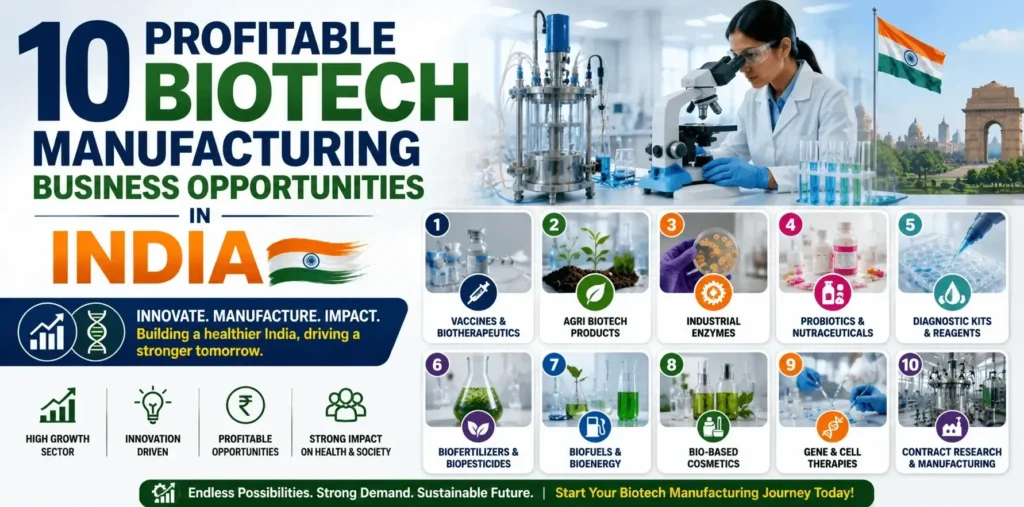
10 Profitable Biotech Manufacturing Business Opportunities in India - NPCS Blog

10 Profitable Biotech Manufacturing Business Opportunities in India

10 Profitable Biotech Manufacturing Business Opportunities in India Read More »

India’s biotechnology sector is rapidly emerging as one of the most profitable and future-focused industries for entrepreneurs, startups, and investors. With rising demand for healthcare innovation, sustainable agriculture, diagnostics, nutraceuticals, industrial enzymes, and bio-based products, biotech manufacturing business opportunities in India are expanding at an unprecedented pace. Today, small and medium-scale entrepreneurs can enter the biotechnology manufacturing industry with innovative and scalable business models. From biofertilizer production and diagnostic kits to probiotics and tissue culture labs, the biotech industry offers multiple high-growth opportunities for startups and investors. What are Biotech Manufacturing Business Opportunities? Biotech manufacturing business opportunities involve producing biotechnology-based products such as biofertilizers, probiotics, diagnostic kits, nutraceuticals, industrial enzymes, tissue culture plants, and sustainable bio-products for healthcare, agriculture, food processing, and environmental industries. This guide explores some of the most profitable biotech manufacturing business opportunities, startup ideas, investment sectors, and future-ready biotech industries in India. Top Biotech Manufacturing Business Opportunities in India Small investors looking to enter the biotech business space must focus on ideas that combine affordability with scalability. Thanks to outsourcing models, contract research organizations (CROs), and shared lab spaces, the initial barrier to entry has lowered significantly. Below are some of the most promising biotech startup concepts suited for small investors: 1. Tissue Culture Plant Nursery Setting up a tissue culture lab to propagate plants in a controlled environment is a lucrative biotech venture. This business model is suitable for small investors because it requires relatively low capital and can be operated in small spaces. The plants grown via tissue culture are disease-free and uniform in size and quality, which makes them ideal for commercial farming and exports. High-value crops like bananas, orchids, strawberries, and medicinal plants are particularly in demand. 2. Probiotic and Fermented Products With increasing awareness of gut health, demand for probiotic supplements and fermented foods like kefir, kombucha, and sauerkraut is growing. Entrepreneurs can establish a small-scale biotech business focused on manufacturing and marketing natural probiotic products. The formulation and fermentation processes are simple, and the startup costs are minimal. Additionally, partnerships with dietitians and wellness influencers can boost brand visibility and market reach. 3. Diagnostic Kits and Reagents Manufacturing The global pandemic has shown the world the importance of rapid diagnostics. Starting a diagnostic kit manufacturing unit is a profitable idea for small investors. These kits can be for infectious diseases, pregnancy testing, blood sugar monitoring, or food contamination. Manufacturing diagnostic reagents and kits under proper licensing and quality standards can serve local clinics, pathology labs, and government tenders. Moreover, localization reduces reliance on imported kits, boosting market demand. 4. Organic Bio-Fertilizers Production With the organic farming movement gaining traction, bio-fertilizers and bio-pesticides are in high demand. These are eco-friendly alternatives to chemical fertilizers and enhance soil fertility naturally. Starting a small production unit for bio-fertilizers made from nitrogen-fixing bacteria, mycorrhiza, or phosphate-solubilizing microorganisms is an excellent biotech business idea. This venture supports sustainable agriculture and aligns with government subsidies and eco-policy initiatives. 5. Microalgae Cultivation for Bio-products Microalgae such as Spirulina and Chlorella are rich in proteins, vitamins, and antioxidants. Cultivating microalgae is a scalable and profitable biotech business. Small investors can set up photobioreactors or open pond systems in rural or semi-urban areas. The harvested algae can be processed into food supplements, cosmetic ingredients, or even animal feed. With increasing vegan and health-conscious consumer bases, the demand for such natural ingredients is expected to rise. 6. CRISPR-Based Genetic Testing Startups Though slightly more technical, starting a small genetic testing service using CRISPR-based tools is feasible with the right partnerships. These startups can offer services like ancestry testing, inherited disease detection, or genome profiling. Investors can collaborate with academic researchers and laboratories for access to platforms and expertise. As this sector matures, licensing CRISPR-related applications can yield high returns for early adopters. 7. Bioinformatics Services and Data Analytics Not all biotech startups require wet-lab setups. Bioinformatics is a data-driven biotech business field involving software development, genome analysis, and drug discovery support. If you have a background in IT or can partner with a software expert, starting a bioinformatics consulting firm can be profitable. These services support pharmaceutical companies, research labs, and hospitals with customized data solutions. 8. Bioplastics and Biodegradable Packaging As plastic pollution becomes a global concern, bioplastics—derived from biological sources like starch, corn, or algae—are becoming essential alternatives. A small biotech business focusing on bioplastic production or biodegradable packaging materials can find ample buyers in the food, fashion, and e-commerce industries. The capital requirement is moderate, and innovations in material sciences continue to reduce production costs. 9. Stem Cell Storage and Therapy Advisory Services Although stem cell banks are capital-intensive, small investors can still benefit by providing allied services. These include stem cell therapy advisory, patient education, and collaboration with hospitals for lead generation. You can also offer logistics solutions for sample transport and storage coordination. This model allows entrepreneurs to participate in a highly promising sector without owning a full-fledged lab. 10. Nutraceutical Formulation and Packaging Nutraceuticals, which include dietary supplements, functional foods, and herbal products, combine nutrition and pharmaceuticals. With the rising demand for preventive healthcare, small-scale manufacturing or white-label branding of nutraceuticals is a good entry point into the biotech business. Entrepreneurs can focus on immunity boosters, anti-aging formulas, joint health supplements, and stress management products using naturally derived ingredients. 11. DNA-Based Personalized Nutrition Plans A highly trending concept in healthtech-biotech convergence is DNA-based diet recommendations. Businesses in this niche collect DNA samples from clients and offer diet charts based on genetic predispositions. The data is analyzed using genome sequencing services (outsourced) and interpreted through proprietary algorithms. Starting such a venture needs basic infrastructure, but once built, it allows scalability with low variable costs. 12. Aquaculture Biotechnology Biotech solutions for aquaculture include vaccines for fish, improved breeds, disease diagnostics, and feed supplements. A small biotech business in this area could focus on developing or distributing biotech-based inputs for fish farmers. India, China, and Southeast Asia are seeing a boom in fish farming, making this

Want to Start Business in Raipur, Chhattisgarh in 2026 - NPCS Blog

Want to Start Business in Raipur, Chhattisgarh in 2026?

Want to Start Business in Raipur, Chhattisgarh in 2026? Read More »

Raipur, the capital of Chhattisgarh, has rapidly evolved into one of the most promising cities in Central India for budding entrepreneurs and business owners. Starting Business in Raipur, Chhattisgarh is a big opportunity, it is strategically located and well-connected by road, rail, and air. Raipur is not only the political and administrative hub of the state but also a major commercial and industrial center. Its pro-business policies, expanding infrastructure, availability of raw materials, and a large workforce make it an ideal destination for investments in various sectors. Whether you’re a local resident or an outstation investor, exploring the right industry is crucial for establishing a successful business in Raipur. Emerging and Profitable Industries to Start Business in Raipur 1. Steel and Iron Industry Raipur has earned the title of “Steel City of Central India” due to its thriving steel and iron industry. The city hosts numerous rolling mills, sponge iron plants, and steel manufacturing units. With raw materials such as coal and iron ore easily accessible from nearby regions like Bastar and Korba, starting a small-scale manufacturing or trading unit can be extremely lucrative. Additionally, due to Raipur’s proximity to mining belts and industrial zones, there is a steady demand for equipment, transport, and auxiliary services, making it a great opportunity for setting up ancillary businesses. 2. Agriculture and Food Processing Agriculture remains a primary occupation in Chhattisgarh, and Raipur serves as a major trading and processing center for grains, pulses, oilseeds, and fruits. The state government offers subsidies and incentives to entrepreneurs looking to enter agro-processing, packaging, cold storage, and warehousing. Starting a business in Raipur that focuses on millet-based foods, organic farming, or food export can be highly profitable. The rise in demand for health-conscious and organic products opens even more doors in this sector. 3. Education and Coaching Centers With increasing literacy levels and a growing middle class, Raipur has become a hotspot for educational institutions, coaching classes, and skill development centers. Students from rural and semi-urban areas flock to Raipur for better educational opportunities. Starting a coaching center for competitive exams, spoken English classes, or skill-based vocational training programs can yield excellent returns. A tech-based educational startup or e-learning platform can also flourish in this digitally adaptive environment. 4. Real Estate and Construction The expansion of Raipur into a smart city and the presence of large-scale projects like Naya Raipur (now Atal Nagar) have increased the demand for housing, office spaces, and commercial complexes. Construction material suppliers, architecture firms, and real estate consultants are in high demand. Starting a business in Raipur in real estate brokerage, construction, or modular interiors can be a smart move, especially with continuous urbanization and migration from rural areas. 5. Tourism and Hospitality Chhattisgarh is home to breathtaking waterfalls, ancient temples, wildlife sanctuaries, and tribal heritage sites. Raipur serves as the gateway to many of these attractions. With an increase in both domestic and international tourists, the hospitality industry is booming. Starting a budget hotel, travel agency, café, or cultural tour operation offers vast potential. Eco-tourism and tribal tourism are niche yet promising business verticals, especially if paired with digital marketing and authentic local experiences. 6. Healthcare and Wellness With improvements in medical infrastructure, Raipur has become a regional hub for quality healthcare. Hospitals, diagnostic centers, nursing homes, and wellness clinics are on the rise. Entrepreneurs can consider investing in pharmacies, telemedicine services, physiotherapy centers, or health-focused apps. In a city where people from nearby rural districts come for treatment, setting up a healthcare-related business in Raipur is both a noble and profitable venture. 7. Textile and Garment Manufacturing Raipur has a long-standing association with handloom and textile products. Sarees from Chhattisgarh, especially from areas like Tussar and Kosa silk, are famous nationwide. With the right blend of tradition and technology, starting a garment unit, tailoring shop, or fabric printing setup can be beneficial. There is also scope in establishing export-focused units that cater to international fashion markets. 8. Logistics and Transport Services Raipur’s location makes it a logistical hub, connecting many parts of central and eastern India. With major highways, a strong railway network, and an airport, goods movement is seamless. Starting a business in Raipur in goods transportation, cold chain logistics, last-mile delivery, or even freight brokerage can serve a wide client base. E-commerce logistics is another rapidly growing opportunity as more people shop online. 9. Renewable Energy and Waste Management Chhattisgarh’s focus on sustainability and clean energy has opened up several green business opportunities. Solar panel installations, biomass energy production, and e-waste recycling plants are supported by government schemes. Setting up a solar energy consultancy, waste segregation facility, or bio-composting unit in Raipur can contribute to environmental health while generating revenue. 10. IT and Digital Services While not traditionally an IT hub, Raipur is witnessing growth in startups offering software, web development, digital marketing, and app-based solutions. With high internet penetration and a young workforce, the digital services industry has ample space to grow. An IT-based business in Raipur can cater to local clients or serve global clients remotely. Freelancing hubs, coworking spaces, and cloud services are other potential segments to explore. 11. Retail and Franchising The retail market in Raipur is flourishing, thanks to malls, shopping complexes, and a young, urban customer base. From apparel and electronics to cosmetics and groceries, demand is steady. Franchising national or international brands in food, fashion, or education can be a low-risk, high-return business model. Entrepreneurs can also explore local brands with strong market appeal. 12. Printing and Packaging As manufacturing and agriculture sectors grow, so does the need for effective packaging and branding. Raipur has opportunities in paper packaging, plastic alternatives, labeling, and industrial printing services. Starting a business in Raipur in eco-friendly or customized packaging can serve clients across industries from food processing to retail and pharma. Key Tips for Starting a Business in Raipur Understand Local Demand – Do thorough market research to assess what products or services are lacking in the region. Leverage Government Schemes –

Sugar Manufacturing Industry Mini Sugar Plant & Sugarcane Mill.

Sugar Manufacturing Industry Mini Sugar Plant & Sugarcane Mill. Read More »

India, one of the largest sugar producers in the world, has an agro-based economy where sugarcane cultivation plays a vital role. The sugar industry not only supports millions of farmers but also drives the rural economy through value-added products and by-products like molasses, bagasse, and ethanol. In recent years, mini sugar plants have emerged as a feasible and profitable investment option for entrepreneurs due to their lower capital requirement, faster setup, and operational flexibility. This article, inspired by the guidance and expertise of Niir Project Consultancy Services (NPCS), provides a comprehensive overview of how to start and manage a sugar mill, including the technical and financial aspects involved. Understanding the Sugar Mil and Mini Plant Business A sugar mil, traditionally known for large-scale sugar production, processes sugarcane into refined sugar by extracting and purifying sucrose. On the other hand, a mini sugar plant is a smaller version that performs the same core functions but on a limited scale—typically processing 250 to 1,000 tons of cane per day (TCD). These smaller units are ideal for regions with abundant sugarcane cultivation but limited infrastructure for large-scale production. Starting a mini sugar mil involves selecting the right location, procuring machinery, planning logistics, and understanding the market. Unlike conventional large mills that need massive investments and land, mini plants can be operational within a shorter timeframe and in more localized rural settings. Niir Project Consultancy Services provides detailed feasibility reports and project planning support for aspiring investors and entrepreneurs in this field. Market Demand and Opportunities The Indian sugar industry is poised for sustained growth, driven by increasing consumption, rising ethanol blending targets, and export potential. Mini sugar plants are especially relevant for small sugarcane-growing regions, where establishing a large factory may not be economically viable. The Government of India’s policies, such as the Ethanol Blended Petrol (EBP) program and incentives for co-generation of power through bagasse, further add to the appeal of setting up a sugar mil. Entrepreneurs can also explore value chains such as jaggery production, ethanol distillation, and electricity generation, making the business model more diversified and profitable. Project Cost and Financial Planning Starting a mini sugar mil involves several key capital expenses. These include the cost of land (if not already owned), plant and machinery, civil works, electrification, and working capital. For a 500 TCD mini plant, the estimated cost ranges between ?25 crores to ?40 crores, depending on the technology and level of automation. Financing options include term loans from banks, subsidies under government schemes (especially for ethanol production and co-generation units), and partnerships. Niir Project Consultancy Services assists entrepreneurs by providing detailed project reports that cover financial projections, break-even analysis, and return on investment timelines. Machinery and Technical Requirements The core machinery required for a sugar mil includes the cane handling system, cane crusher, juice heaters, clarifiers, evaporators, crystallizers, centrifugal machines, and boilers. In a mini plant setup, these systems are optimized for energy efficiency and minimal waste generation. Additionally, by-products like bagasse can be used as fuel in boilers, thereby reducing external energy requirements. Molasses, another by-product, can be diverted to ethanol production, further increasing the revenue streams. With proper planning and expert guidance from NPCS, entrepreneurs can choose between semi-automatic and fully automatic plants depending on budget and operational skills. Raw Material and Supply Chain Sugarcane is a perishable crop with a short window between harvest and crushing. Therefore, proximity to farming areas is essential when selecting the site for the sugar mil. Agreements with local farmers, establishing cane procurement centers, and providing logistical support for transportation are key to maintaining continuous plant operation. Niir Project Consultancy Services often emphasizes the importance of integrated supply chain planning, which includes seasonal harvesting schedules, cane quality management, and timely payment systems to farmers. Ensuring strong farmer relationships not only guarantees raw material availability but also enhances the plant’s reputation and sustainability. Environmental Considerations and Sustainability Running a sugar mil involves water consumption, effluent generation, and energy usage. Therefore, modern mini plants are increasingly designe with sustainability in mind. Effluent Treatment Plants (ETPs), recycling systems, rainwater harvesting units, and solar panels are now being integrate into new setups to meet environmental regulations and reduce carbon footprint. Bagasse, being a clean biomass fuel, allows for steam and power generation, creating a closed-loop energy cycle within the plant. Moreover, vinasse from molasses-based ethanol production can be used to produce bio-compost or biogas, further contributing to the eco-efficiency of the plant. Challenges in the Sugar Mil Industry Despite the attractive returns, the sugar industry has its share of challenges. These include volatile sugarcane prices, seasonal availability, weather dependency, and government pricing controls. Mini plants must also deal with operational hurdles such as skilled labor shortages and maintenance of specialized equipment. To address these challenges, Niir Project Consultancy Services recommends a risk-mitigation approach involving multi-product processing, forward contracts with buyers, and ongoing process optimization through technology upgrades. Additionally, training the local workforce ensures efficient plant operation and reduces dependency on external manpower. Government Policies and Regulatory Framework The Central and State Governments play a significant role in regulating and promoting the sugar industry. Policies concerning Fair and Remunerative Price (FRP) for sugarcane, ethanol procurement prices, and subsidies for setting up co-generation units directly impact the financial dynamics of a sugar mil. Licenses required for operation include environmental clearance, factory registration, pollution control board approvals, and labor permits. Niir Project Consultancy Services assists clients in navigating the bureaucratic process and helps ensure compliance with all applicable laws and standards. Value Addition and Revenue Diversification The key to long-term profitability in a sugar mil lies in value addition. Products like jaggery, ethanol, liquid sugar, and specialty syrups can be developed to target niche markets. Ethanol, in particular, has gained prominence with the government’s push for 20% blending by 2025, offering a lucrative opportunity for sugar millers. Bagasse-based power generation can also be export to the grid, creating an additional income stream. Mini plants, due to their agile structure, can adapt more quickly to market

Have a business idea? Let's make it happen together-contact us now!


Contact Form Demo

This will close in 0 seconds

Translate »