
Green Chemical Business in Odisha
The Green Chemistry Opportunity India Cannot Afford to Miss
The size of India’s green chemicals market is now over USD 15 billion and it’s expanding by more than 10% annually. However, most chemical business owners are still trying to find a business concept that involves the same sort of products that were created 30 years ago. That is a big error! Green chemistry—biodegradable, bio-based and low-carbon specialty chemicals—is the next 10 years of Indian specialty chemicals, consumer demand and preference, and regulatory requirements of global buyers. The advantage that Odisha, which is located on a world class port, huge agricultural biomass and has a government supported petrochemical anchor at Paradip, is unparalleled in the eastern part of the country. There is no question about the growth of the green chemicals market. But who will construct it first?
Why Green Chemicals — and Why Odisha?
Sustainability is a hard trend. It is difficult to do this as a hard rule. Bio content for cleaning and personal care products is required for all products sold in 27 EU countries under European Union’s Green Deal requirements. Methanol and ammonia are being replaced with green alternatives by shipping lines. Exporters of pharmaceuticals to the US FDA and EMA are increasingly being encouraged to use bio-based solvents as a result of the laws and regulations concerning solvent usage in India. As the laws and regulations pertaining to solvent usage in India are moving more towards bio-based solvents, the pharmaceutical exporters are increasingly encouraged to use it for export to US FDA and EMA. All Indian manufacturers have to go green otherwise they have to lose the business in these markets.
Among the three, Odisha has three attributes, which make it uniquely suited for green chemical manufacturing. The first plant, Indian Oil Paradip Petrochemical Complex, will manufacture all the key intermediates used in green formulation chemistry (IPA, phenol, MEG) with an investment of ₹61,077 crore. Second, the rice husk and agricultural biomass produced in Odisha is in millions of tonnes each year, which is the raw material for making bio-based chemicals. Third, Paradip Port has been officially named one of the three Green Hydrogen Hubs under the National Green Hydrogen Mission, which provides a policy and infrastructure benefit that no landlocked port can offer.
Source: Invest India – Chemicals Sector
Get Detailed Insights from This Book: The Complete Book on Biomass Based Products (Biochemicals, Biofuels, Activated Carbon)
Government Policies Supporting Green Chemical Manufacturing
The Union Budget has specifically provided money for the Ministry of Chemicals and Fertilizers. It has also launched three chemical parks based on clusters on a plug-and-play basis, which were developed specifically to boost specialty and green chemical manufacturing. Furthermore, the PCPIR policy in Paradip provides shared effluent, power and jetty facilities, and this significantly decreases the project setup costs.
The National Green Hydrogen Mission (NGHM) offers financial incentives and financial grants to the manufacturers of green ammonia and green methanol. The SIGHT Scheme provides government offtake guarantees which lowers the risk of the revenue stream for the green chemical projects of the first movers. Another positive lever is the Production Linked Incentive (PLI) scheme for specialty chemicals. Moreover, the MSME and Large Industry policy of Odisha also offers capital subsidy of 15–25%, duty waiver on electricity for 5 years and exemption from stamp duty for qualified manufacturing unit.
Source: DPIIT – PCPIR Policy Framework
Source: MNRE – National Green Hydrogen Mission
Green Chemical Business Ideas for Startups in Odisha
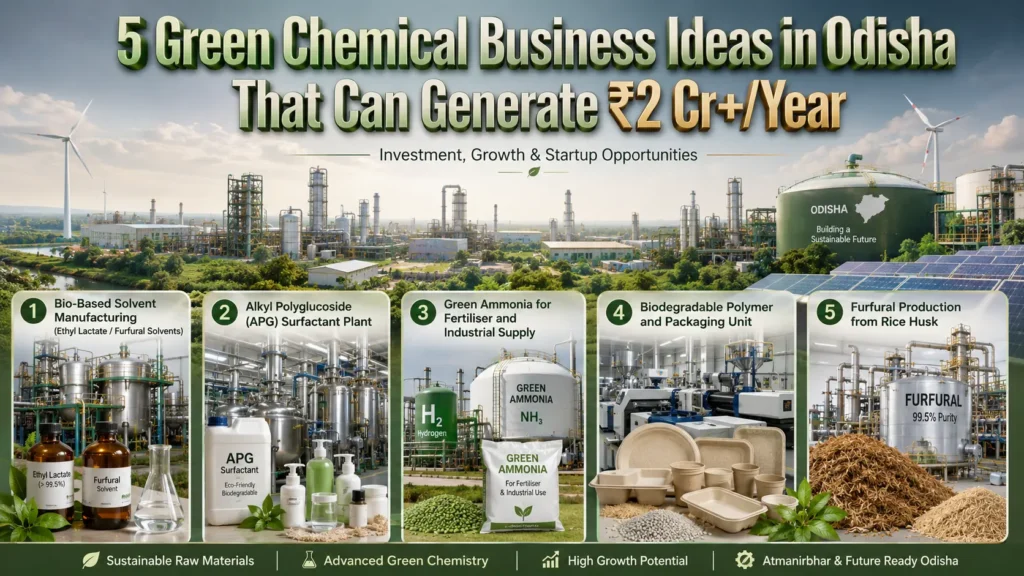
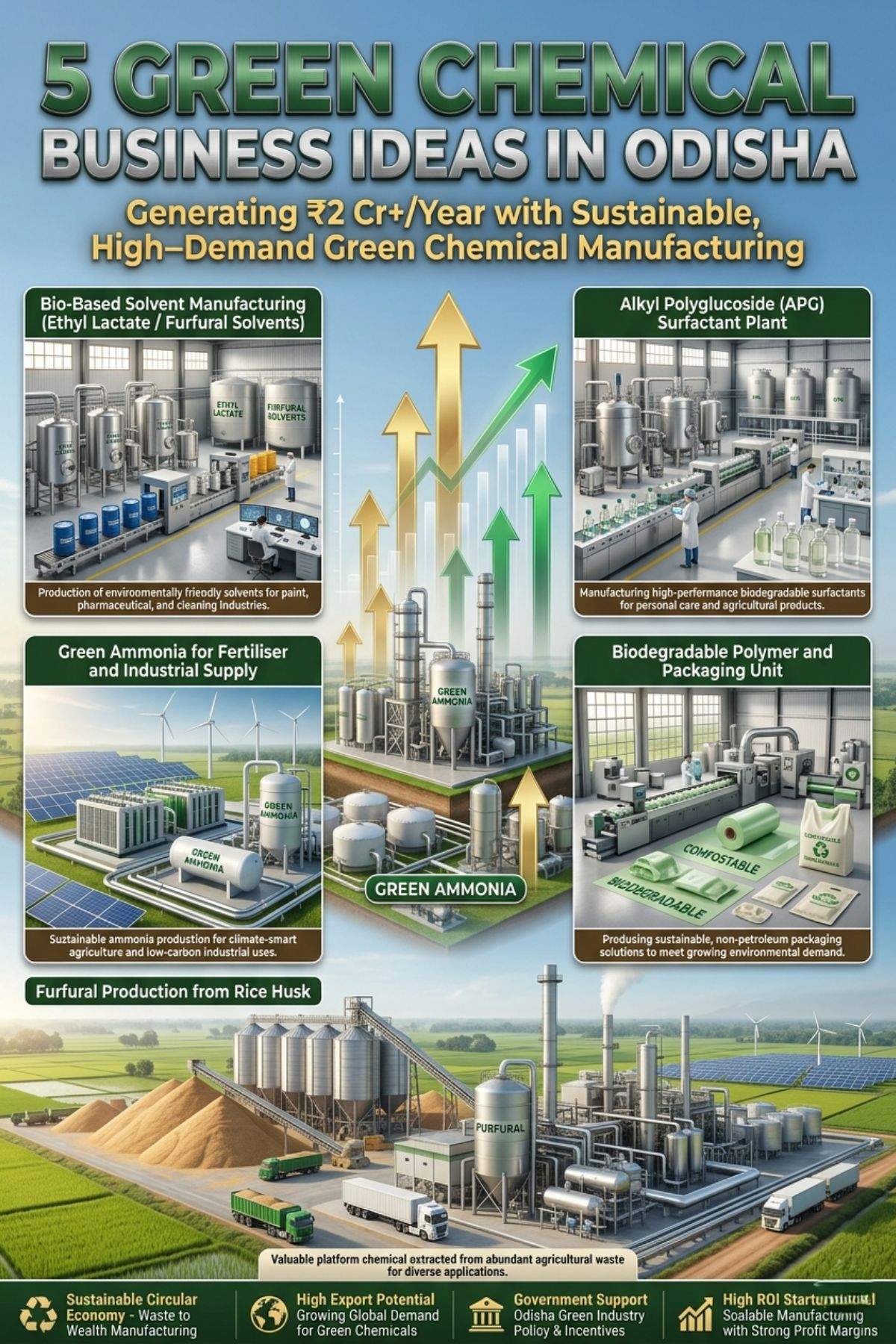
Business Idea 1: Bio-Based Solvent Manufacturing (Ethyl Lactate / Furfural Solvents)
VOC regulations, and buyer demand, are driving the replacement of toluene, xylene, and methyl ethyl ketone in pharmaceuticals, coatings, electronics cleaning and more with bio-based solvents. The one green solvent in this category that is most versatile is ethyl lactate which is made from lactic acid and ethanol. A small-scale ethyl lactate manufacturing plant in Odisha, using locally available broken rice to produce lactic acid and then esterifying it with bio-ethanol, could generate income of ₹80-250 per kg of ethyl lactate, whereas petro-chemical based ethyl lactate can generate income of only ₹25-35 per kg. The Paradip Pharma cluster is an indigenous buyer. The export potential for such solvents to Europe—the region where these solvents are required for pharmaceutical production — is significant. The investment required for setup is in the range of ₹15 crore to ₹50 crore, depending on the scale.
Related Article: Bio-Based Chemical Business Idea: Furfural Plant Cost, Profit and Market Demand in India
Business Idea 2: Alkyl Polyglucoside (APG) Surfactant Plant
APG surfactants are bio-based; they are made from glucose and fatty alcohols. They’re the highest quality in personal care products – baby shampoos, personal luxury products hand washes, and sulphite-free products. They are 100% biodegradable and can be used under EU Ecolabel. There are no major APG production units in the East India. A manufacturer setting up an APG unit at or close to the port of Paradip has direct access to fatty alcohol through coastal shipping from Tamil Nadu, Andhra Pradesh and to glucose from the starch industry in Odisha. APG is priced 40-80% higher than “traditional” surfactants, and European personal care companies continue to demand it steadily making this one of the highest margin green chemical business opportunities in the country today. Capital requirement: ₹30–100 crore.
Business Idea 3: Green Ammonia for Fertiliser and Industrial Supply
ACME Group has already pledged a green methanol plant of capacity 200,000 TPA in Odisha. SECI will also provide ACME with 370,000 MT per year green ammonia supply under an 10-year offtake agreement to Indian fertiliser companies through its SIGHT Scheme. This indicates that the infrastructure for green ammonia offtake in Odisha is already in place. For the entrepreneur who is looking to enter this area at a smaller level of 20,000 to 100,000 TPA, the opportunities include the industrial refrigeration market, ammonium nitrate for mining chemicals, specialty nitrogen applications for agriculture, etc. By designating the port as a green hydrogen hub, it ensures that the production of green hydrogen using electrolysis is possible with captive renewable energy. Entry investment: Based on scale and level of integration, ₹100-500 crore.
Business Idea 4: Biodegradable Polymer and Packaging Unit
The plastic ban policy and the Extended Producer Responsibility (EPR) in India have placed an immediate need for compostable packaging. The most commercially successful bioplastic is PLA (polylactic acid), which is derived from lactic acid, which is obtained by a fermentation process of agricultural sugars. The food, e-commerce and institutional packaging markets which are actively looking for certified compostable packaging solutions can be met by an Odisha-based packaging unit, compounding or starch-blend based. Demand for domestic PLA continue to increase by 25-30% annually. A medium scale of ₹20-60 crore puts an entrepreneur in the front seat of an entrepreneur versus a multinationals supply hole which it will take years to fill.
Get Detailed Project Report (DPR): Sustainable Biodegradable Materials
Business Idea 5: Furfural Production from Rice Husk
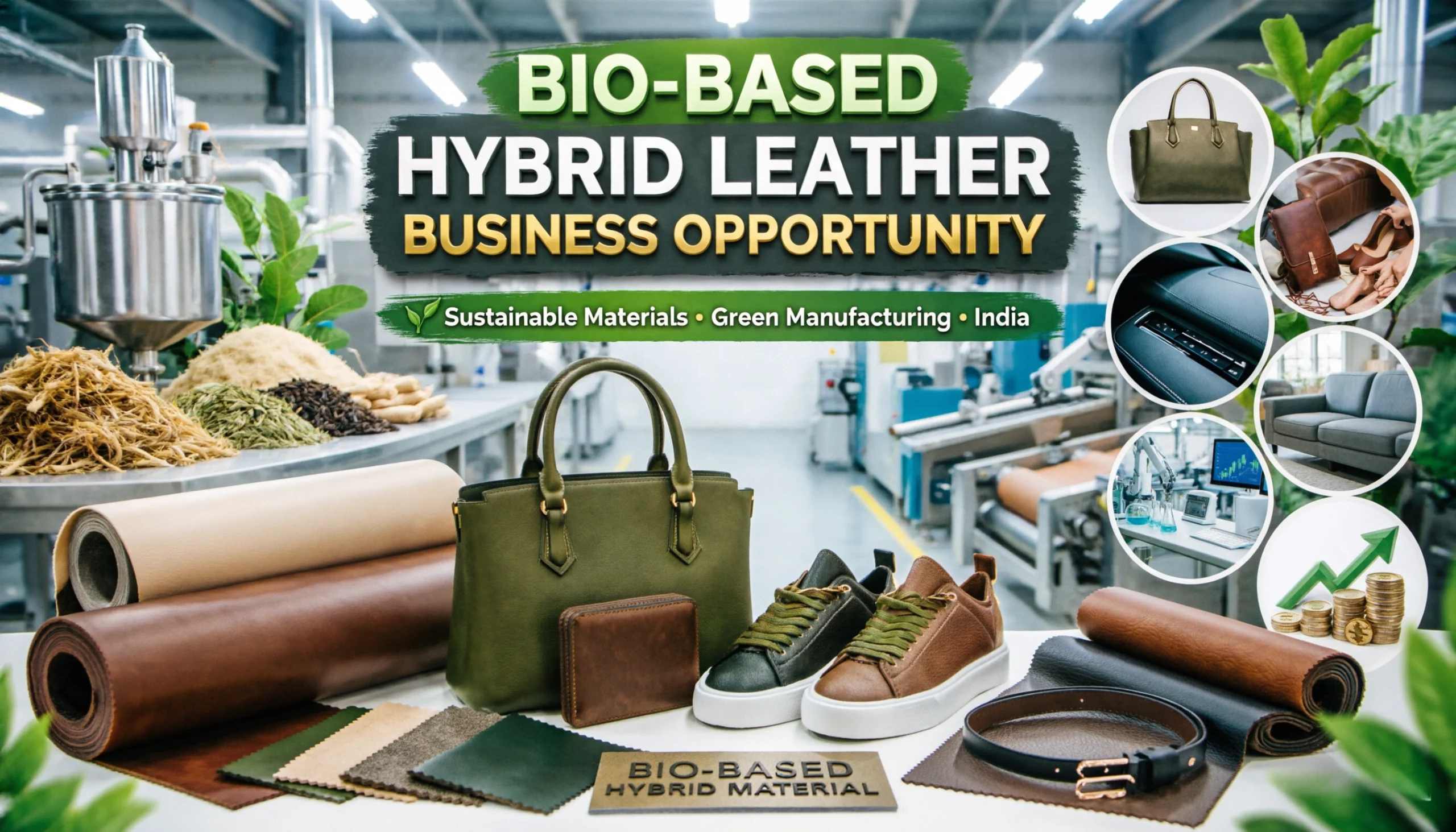
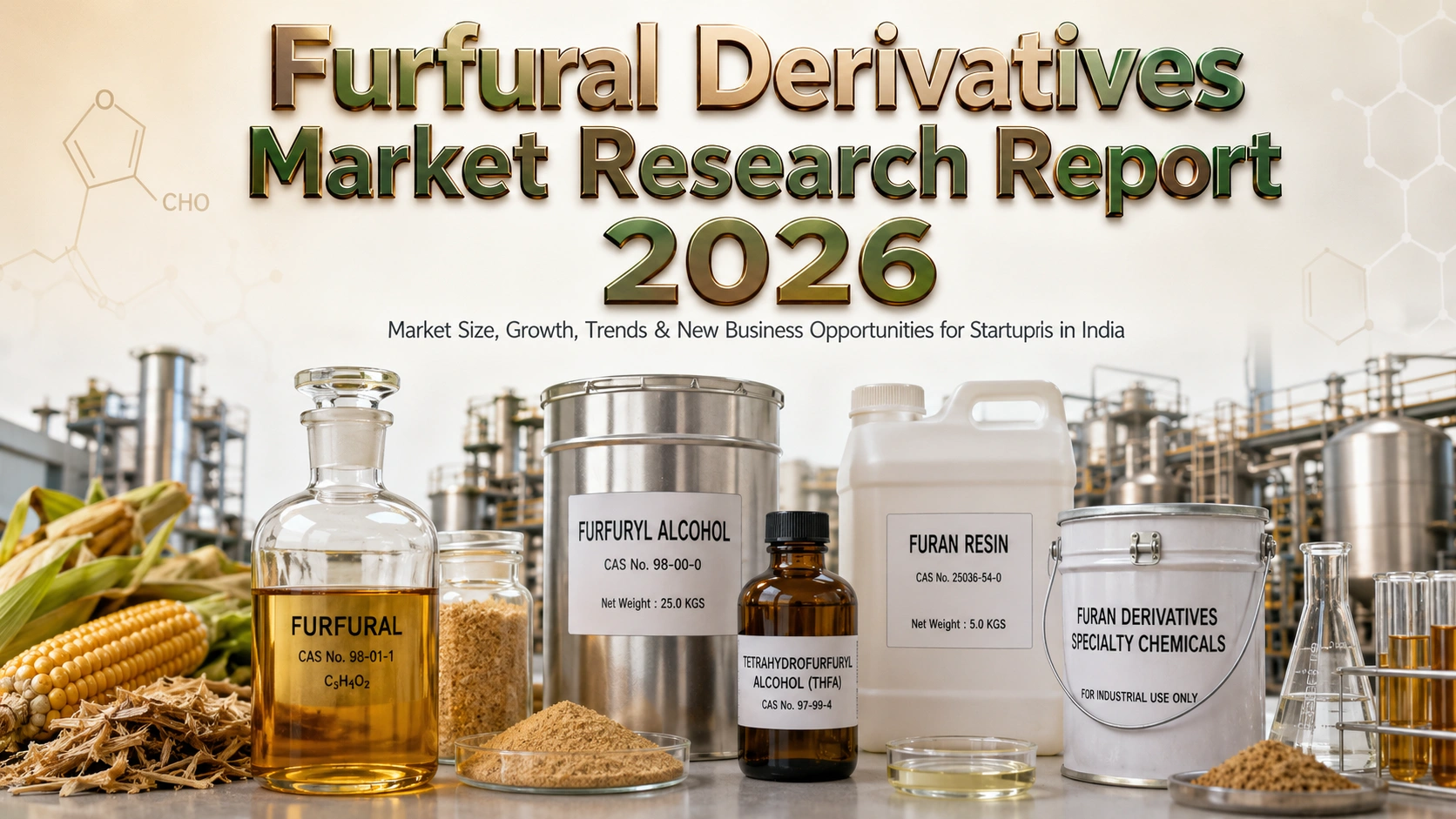
About 7–8 million tonnes of paddy is produced in Odisha annually, which translates to 1.5–2 million tonnes of rice husk. The husk will contain 15-20% hemicellulose which is the raw material used in the production of furfural by acid hydrolysis. The price of furfural is ₹80 to ₹150 per kilogram for industrial grade and much higher for specialty and pharmaceutical grade. It is commonly used in foundry resins, green solvents and specialty coatings, with derivatives such as furfuryl alcohol and tetrahydrofurfuryl alcohol (THFA) also being widely used. Global supply is dominated by China. Nearly 100% of the furfural requirements in India are met through imports. Furfural plant based in Odisha is an import substitution play with high export optionality. Capital: ₹25–80 crore.
Import–Export Opportunity Analysis
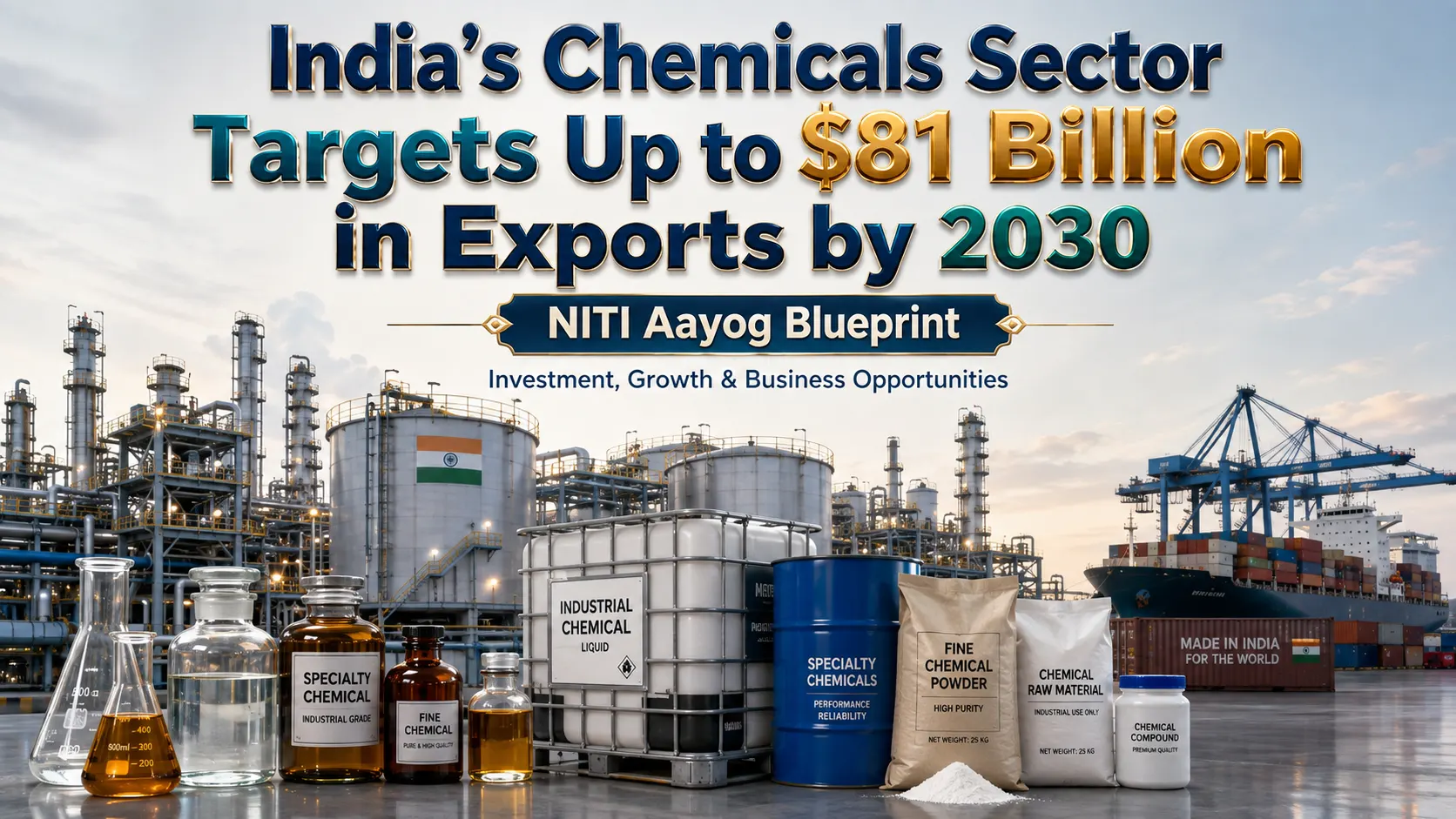
India’s exports of chemicals reached USD 28.69 billion in the last fiscal year, and specialty chemicals accounted for an increasing proportion of the total. Nevertheless, India is still a net importer of bio-based solvents, APG surfactants, PLA polymer and furfural. All these are products which are competitive in the manufacturing because of Odisha’s natural resource base and infrastructure.
The highest growth on the export side is seen for European markets for green chemicals. India produces bio-products that are extremely appealing for the European market, as the EU Green Deal provides a regulatory push. Moreover, the shipping route from Paradip Port is shorter and less expensive than all routes from the west-coast Indian ports, which provides an advantage to the green chemical exporters based in Odisha in accessing the market in the ASEAN countries and East Asia.
Source: IBEF – Indian Chemicals Industry
Indian MSME Success Stories in Green and Specialty Chemicals
Galaxy Surfactants — Building a Global Surfactant Empire from Mumbai
Galaxy Surfactants, founded by U. Shekhar, started as a small specialty surfactant manufacturer in Maharashtra. Today, the company is exporting to more than 80 countries and is also serving multinational FMCG brands and has developed one of the most respected specialty chemical businesses that exports products to other countries of India. The take-home message for the entrepreneurs: a niche chemical business becomes a world-class business because of deep knowledge of products, consistency in quality and export emphasis. Galaxy’s initial emphasis on personal care enabled it to establish high value relationships, which were difficult for others to duplicate, because quality is more important than price in personal care.
Rossari Biotech — Fermentation-Led Specialty Chemicals
Edward Menezes and Sunil Chari started Rossari Biotech in 2003 with an aim of commercialising specialty chemicals based on fermentation, such as enzymes, surfactants and textile chemicals. Through the successful IPO and the impressive revenue growth, it proved that bio-based specialty chemistry has a market in India which can attract investor interest, premium pricing and sustainable margins. Rossari’s case proves that green and bio-based manufacturing, even from a non-traditional base, can scale up to significant levels, if the science and market positioning is correct.
Aarti Industries — Chemistry Scale from Vapi, Gujarat
The Gogri family, the brain behind Aarti Industries, have created one of India’s biggest specialty chemical platforms from the industrial hub of Vapi in Gujarat. Their model, which is to integrate back to raw materials, to continuously expand the capacity, and to diversify exports is a template for any chemical entrepreneur. By clustering around feedstock (as Aarti has done in Gujarat’s chemical clusters), the lesson for Odisha-based entrepreneurs is that their logistical costs can be drastically lowered and they gain pricing power. Odisha is now developing just such a cluster, at its town of Paradip.
How NPCS Can Help You Launch Your Green Chemical Business
At Niir Project Consultancy Services (NPCS), we create in-depth Market Survey cum Techno-Economic Feasibility Reports (DPRs) for entrepreneurs intending to delve into the green and specialty chemical manufacturing industry. We provide detailed manufacturing reports that include full machinery details, raw material information, cost analysis, market demand research, process flow diagrams, and full project financials, such as revenue projections, breakeven analysis and return on investment calculations. Whether you are thinking of investing in a ₹10 crore furfural plant or a ₹200 crore biorefinery, we provide you with the information and insights to make an informed capital investment decision before you invest.
Source: NPCS – Project Reports and Feasibility Studies
Discover business ideas that actually make money
Green Chemical Business Opportunity Snapshot — Odisha
| Business Idea | Feedstock | Est. Investment (₹ Cr) | Margin Range |
| Bio-Based Solvents (Ethyl Lactate) | Broken Rice / Bio-Ethanol | 15–50 | 40–60% |
| APG Surfactant Plant | Glucose + Fatty Alcohols | 30–100 | 40–80% premium |
| Green Ammonia | Renewable Energy + Water | 100–500 | Offtake-secured |
| Biodegradable PLA Packaging | Lactic Acid from Starch | 20–60 | 25–35% |
| Furfural from Rice Husk | Rice Husk / Corncobs | 25–80 | 35–55% |
Frequently Asked Questions (FAQ)
1. What is the minimum investment to start a green chemical business in Odisha?
Small-scale projects such as furfural recovery or lactic acid fermentation unit can start at ₹15-30 crore. The cost for medium scale ethyl lactate/ APG plants ranges from ₹30–100 crore. The green ammonia is a large-scale game, starting from ₹100 crore and more.
2. Are green chemicals profitable, or are they still niche products?
The use of green chemicals is now common and has become a part of the export market. Price premiums for bio solvents are 30–80% more expensive than conventional solvents, APG surfactants are 30–80% more expensive than conventional surfactants and PLA polymer is 30–80% more expensive than conventional polymer. The margins are higher just as they are due to the fact that supply remains limited when compared to an ever-increasing demand.
3. What is the name of the government scheme which supports the green chemical startups in India?
It is applicable to the National Green Hydrogen Mission (NGHM), SIGHT Scheme, PLI for specialty chemicals and the state incentive scheme in Odisha. The DPIIT PCPIR policy at Paradip also offers extra infrastructure and single window clearance facilities.
4. What is the advantage of Odisha over Gujarat for green chemical industry?
The first-mover advantage in eastern India, direct access to the Paradip Green Hydrogen Hub, lower labour and land cost, massive agricultural biomass base for bio-feedstocks, and a government favouring new industrial entry make Odisha the right place for the industry to flourish. Gujarat is over saturated and Odisha is open.
5. Is there a demand for Indian green chemicals in the export markets?
Yes — significantly. The EU regulations require bio-contents in cleaning and personal care products. Demand for green methanol and ammonia from shipping companies is increasing due to the FuelEU Maritime Regulation. Bio-based polymers are becoming one of the key markets in ASEAN. The port advantage of Odisha is making it a natural export hub.
6. Where do I look for detailed feasibility information on green chemical projects?
NPCS (Niir Project Consultancy Services) offers full Techno-Economic Feasibility Reports for chemical manufacturing projects, including process technology, raw material analysis, machinery cost and financial projections.
Source: Ministry of Chemicals and Fertilizers
Conclusion: Odisha’s Green Chemistry Window Is Open Now
India’s green chemicals market is not going to wait; global buyers who are looking for bio-based solvents, biodegradable surfactants, and green ammonia are seeking suppliers today – not five years from now. Odisha has the raw materials, the port infrastructure, the petrochemical feed stock anchor, and the government policy support framework to be eastern India’s green chemicals capital.
What is more, the entrepreneurs who develop the initial green chemical manufacturing clusters in Odisha will not be meeting a market; they will be creating it. They will be developing the quality standards, the buyer networks, and the brand value that will take any new comers up to a decade to duplicate. So, the best time is today: before the cluster fills, before land costs skyrocket and before some else’s name becomes synonymous with your potential.