
May 2022 Entrepreneur India Monthly Magazine
The May 2022 Entrepreneur India Monthly Magazine delivered a treasure trove of actionable insights, startup success stories, investor trends, and sector-specific analyses tailored for India’s entrepreneurial ecosystem. As business founders navigated a changing global economy, this edition emphasized resilience, innovation, and sustainability—making it a must-read for both emerging and established entrepreneurs. From deep dives on scaling businesses to profiles of breakthrough founders, here’s a comprehensive breakdown of what made May 2022’s issue so impactful. What Made the May 2022 Edition Stand Out? The May issue centered on post-COVID recovery, digital transformation, and sector opportunities, with featured interviews, curated frameworks, and dynamism suited for businesses of all sizes across India. 1. Cover Story: Digital Disruption in Traditional Industries The cover story explored how age-old industries—like agriculture, real estate, and logistics—are being transformed through digital technology. Founders leveraging AI, IoT, and digitization shared their journeys towards operational efficiencies, cost advantages, and market expansion: Farmers deploying farm?to?door e-aggregator apps Realtors offering virtual property walkthroughs Traditional logistics hubs going sensor-based for real-time tracking Key Takeaways: Digital augmentation can reduce costs by 15–25% Consumer access and convenience are driving adoption Government initiatives like Digital India are acting as catalysts 2. Startup of the Month: Agri-Tech Enabling Rural Empowerment May’s spotlight was on an agri?tech startup that helped smallholder farmers access real-time soil data and weather forecasting with AI-powered sensors. Their B2B model—partnered with cooperatives—helped predict crop yields and prevented post-harvest losses. Highlights: Raised a ?5?cr Series A from agri?impact VCs Helped farmers increase yields by 12–18% Scalability across states with language?localization support 3. Sector Focus: Fintech for India’s Unbanked Population One of the major featured sections delved into mobile-first fintech innovations, especially in rural and semi-urban India. The article explored how startups are enabling: Micro-lending through UPI and partner bank models Digital insurance with real-time claim settlement Agri?finance for seasonal farmers via SMS-based credit scoring Industry Insights: UPI volume was growing over 40% YoY Over 200?million Indians are still underbanked Partnerships with post offices and cooperatives offer unique onboarding routes 4. Investor Spotlight: Navigating the Funding Pause In May 2022, global deals slowed. This edition brought insights from angel investors and early-stage VCs on how startups are navigating uncertainty: Investor Guidance: Shift focus toward cash flow metrics and DIP (daily income performance) Trim non-core tech tools and renegotiate vendor contracts Pitch runway with K-shaped recovery models rather than top-line growth 5. Women Entrepreneurs Feature: Leading with Purpose May’s edition showcased women?led startups dealing with sectors like agritech, edtech, and clean energy. These founders spoke about funding challenges, bias, and mentorship—but also held a key message: resilience. Female founder investment rose by ~28% between 2021–22 Focus areas included maternal health, green energy, and gender-smarted tech Featured NGOs and incubators supporting first-time founders 6. Franchise & Scale-up: Cloud Kitchens & Wellness Centres A detailed page focused on small-scale franchising opportunities in wellness (yoga studios, organic cafés), cloud kitchens, and local health clinics. It outlined: Capex under ?10?lakh Location selection / demographic matchmaking ROI timelines: 12–18 months with clear brand equity 7. Tech Corner: SaaS Startups Pivoting to B2B A special segment explored India’s SaaS ecosystem shifting from B2C to enterprise focus—especially in HRTech, Supply?chain, and Agri?SaaS domains. Highlights: Revenue from B2B SaaS outperformed B2C by 3× in 2021–22 Niche product bundles (like Sensor?based crop advisories) performed strongly Founders emphasized the value of shortening deployment times for customers Final Thoughts The May 2022 Entrepreneur India Monthly Magazine was not just an issue—it was a strategic toolkit for entrepreneurs navigating a shifting landscape. Whether you’re a startup founder, an investor, or a business advisor, it provided timely perspectives on digital transformation, sectoral pivots, gender equity, and scale-up models. If you’re scaling a digital-first business or exploring franchising and fintech in 2025, revisiting this edition can offer timeless frameworks and case studies aligned with today’s demands. Its strength lies in combining real-world startup journeys, investor playbooks, and sectoral deep dives with practical roadmaps that resonate long after the issue hits stands. Business Ideas Covered in this Issue: Wheat Processing Unit (Wheat Starch, Vital Wheat Gluten, Modified Starches, Fibres & Proteins) 3-Chloropivaloyl Chloride Manufacturing Business Plan Plastic Waste Recycling Plant Lovastatin Production Business (from Dextrose, Peptone Powder, Sugar & Soyabean) Quartz Slabs Manufacturing Business Business Plan for Setting up Automated Vehicle Scrapping and Recycling Unit Surgical Cotton Manufacturing Business Sodium Hypochlorite Manufacturing Ethyl Acetate Production Business Production Business of Industrial Enzymes used in Textile, Poultry and Paper Pulp Industries Rice Husk based Biodegradable Cutlery Making Plant NPK Complex Organic Fertilizer Plant Badminton Rackets Manufacturing Business Curcumin Extraction Unit Linear Alkyl Benzene Sulphonic Acid Tennis Rackets Manufacturing Business Stainless Steel Cold Rolled Coil using Stainless Steel Scrap Download Magazine Here: May 2022 Entrepreneur India Monthly Magazine NIIR PROJECT CONSULTANCY SERVICES An ISO 9001:2015 Company ENTREPRENEUR INDIA 106-E, Kamla Nagar, Opp. Mall ST, New Delhi-110007, India. Email: npcs.ei@gmail.com info@entrepreneurindia.co Tel: +91-11-23843955, 23845654, 23845886 Mobile: +91-9097075054, 8800733955 Website: https://www.entrepreneurindia.co https://www.niir.org Contact Us
The Incredible Growth of the Tourism and Hospitality Sector in India

Introduction to Tourism and Hospitality Sector in India: The tourism and hospitality sector in India has exploded in recent years. It has proven to be a significant contribution to India’s national GDP in terms of foreign exchange profits, job creation, and infrastructure development, all while showcasing India’s cultural richness and variety on a worldwide scale. The tourism and hospitality sector in India has emerged as one of the most important sectors of the Indian economy because it provides a major source of direct and indirect employment opportunities for millions of Indians who are unemployed or underemployed by providing relatively better job opportunities than other sectors such as agriculture, manufacturing, or others. With each passing year, it continues to expand tremendously. There are a variety of accommodations available, ranging from luxurious hotels to budget-friendly guest houses. In reality, India’s tourism industry has expanded by 7%, with more than 8 million visitors flocking to destinations such as Mumbai, Goa, Rishikesh, Agra, and Delhi. Rajasthan forts are popular among tourists visiting India, along with other tourist attractions such as heritage sites, animal sanctuaries, and picnic places. Visit this Page for More Information: Start a Business in Tourism & Hospitality Industry Overview of Indian Hotel Industry: The Indian hotel business has been expanding at a rapid pace in recent years, and it has emerged as one of the country’s most promising sectors. India’s tourism industry is also a thriving and developing industry that contributes significantly to the country’s economy and employment market. It is a vital economic engine that allows India to maintain its status as one of the world’s top tourist destinations and encourages foreign investment into the Indian hospitality industry. It is estimated that it currently accounts for 7% of India’s GDP, making it one of the country’s most important contributors. The key reasons for this quick rise include the country’s expanding importance in terms of global tourism, international investments, and government modernization programmes during the last few years. Due to its rich cultural legacy, historical landmarks, and magnificent natural beauty, India is one of Asia’s and the world’s most popular tourist destinations. With rising demand from foreign travellers and an improving economy, the hospitality sector offers tremendous business opportunities. Related Business Plans: Hotel and Hospitality Projects India is Wonderful: Tourism and Hospitality Sector in India is One of India’s most important service businesses. The tourist industry in India is an important part of the Make in India initiative. The tourist business in India is a big economic multiplier, and it is becoming increasingly important as India strives for rapid growth and employment creation. Geographic diversity, world heritage sites, and specialist tourist goods such as cruises, adventure, medical, and eco-tourism are all available in India. Incredible India has boosted tourist arrivals and job opportunities. Tourism encourages the development of multi-use infrastructure, such as hotels, resorts, and restaurants, as well as transportation infrastructure (airports, highways, shipping, and trains) and healthcare facilities. India is predicted to be one of the top five business travel markets by 2030. Under the automatic approach, 100 percent FDI in the tourism business is permitted. Tourism construction projects, including the development of hotels, resorts, and recreational facilities, are eligible for 100 percent FDI. For further details, please refer FDI Policy Economic Factors Driving the Growth of Tourism and Hospitality Sector in India: Tourism in many places of India has increased in recent years. Furthermore, foreign tourists from nations with no direct border with India, such as the United States, the United Kingdom, and France, have increased. A number of political upheavals in Europe have also resulted in an increase in tourism in India. The hospitality business has seen remarkable expansion as a result of these advances. Many factors are propelling Tourism and Hospitality Sector in India forward. High domestic income levels, a huge population base, a developing middle class population, and rising urbanisation rates all contribute to higher disposable incomes. Furthermore, favourable government policies supporting domestic and international travel, as well as low-cost airfares, have aided the rapid growth of the Indian hotel business in recent years. Read our Books Here: Infrastructure, Hospitality, Medical, Entertainment, Warehousing & Real Estate Projects Situation in Industry: By 2028, India will have contributed $512 billion to its GDP and created 53 million employment. The travel and tourism industry contributed US$ 121.9 billion to GDP in 2020, and it is predicted to grow to US$ 512 billion by 2028. Between 2019 and 2028, the industry’s direct contribution to GDP in India is predicted to expand at a pace of 10.35 percent per year. Tourism and Hospitality Sector in India is predicted to earn $50.9 billion in tourist exports by 2028, up from $28.9 billion in 2018. By 2028, international visitor arrivals are predicted to exceed 30.5 million. From an estimated US$ 75 billion in FY20, India’s travel market is expected to grow to US$ 125 billion by FY27. In FY20, India’s tourism sector employed 39 million people, accounting for 8.0 percent of the country’s overall workforce. It is estimated to employ almost 53 million people by 2029. Between April 2000 and June 2021, the hotel and tourism sector received a total of US$ 15.89 billion in FDI. Read Similar Articles: Hotel and Hospitality Projects Growth Prospects for This Industry: In today’s India, tourism is one of the most developed businesses. It employs over ten million people, many of whom work in resorts, hotels, restaurants, transportation, and travel agencies. International interest has increased as a result of improved security in tourist locations such as Goa, Rajasthan, and Kerala, as well as continuous economic growth, which has boosted domestic tourism. The expanding middle class in India, along with increased demand from foreign tourists, implies that the Indian hospitality business has lots of room for expansion. Furthermore, rather than using traditional brick-and-mortar travel agents, contemporary technology has made it easier for passengers to book their own rooms online. Self-booking gives an opportunity for hospitality entrepreneurs wishing to create new businesses or grow existing ones by making
Oil and Gas Sector in India: The Fastest Growing Industry

Oil and Gas Sector in India: Oil and Gas Sector in India is one of the Fastest Growing Industry of the economy. Crude oil output totals 267 million tonnes, accounting for 2% of global oil production, while natural gas production totals 636 billion cubic metres, accounting for 5% of global gas production. Since independence, India has discovered significant hydrocarbon resources on land and at sea. Only about 38% (1119 trillion cubic feet) of them have been examined. At present usage rates, these reserves are expected to last more than 100 years. It is an appealing investment destination and a lucrative business prospect because of its enormous potential. Indian energy demand is predicted to expand by 4-5 percent each year over the next 10 years, according to the Petroleum Planning & Analysis Cell (PPAC), a division of the Ministry of Petroleum & Natural Gas. This will need investments in the Oil and Gas Sector in India of $250 billion (Rs 12 lakh crore). Rising incomes, increased urbanisation, industrialisation, population growth, and greater living standards will all contribute to this growth. Visit this Page for More Information: Start a Business in Petroleum Industry Rising Demand of Oil and Gas Sector in India: Total energy demand is expected to rise by more than a third between 2012 and 2035, according to the International Energy Agency, with fossil fuels accounting for the majority of this increase. Oil demand has steadily increased from 1.6 billion tonnes in 2010 to roughly 1.8 billion tonnes (b/d) now, owing to economic expansion and fast modernization. According to the latest IEA report, world oil demand will grow at an average pace of 1.2 million b/d from 2013 to 2030, surpassing 10 million b/d for the first time before 2030. In other words, non-OECD nations, led by China and India, will account for almost two-thirds of new demand over that time span. With a population of over 1.3 billion people, India is expected to overtake the United States and China as the world’s third largest consumer. Although only 2% of its population consumes motor gasoline, compared to 55% in the United States, it will overtake the United States as the third largest consumer in the next five years due to fast GDP growth. Read Similar Articles: Petroleum Based Products Energy Market with the Fastest Growth: After China and the United States, India is the world’s third largest energy and oil consumer. India is the world’s fourth-largest liquefied natural gas importer (LNG). In FY 2019-20, India utilised 213.13 MMT petroleum products and 64.14 BCM natural gas, respectively, up 0.4 percent and 5.5 percent from FY 2018-19 consumption levels. India’s oil demand will climb by about 4 million barrels per day by 2040, the biggest increase of any country. India has 26 sedimentary basins encompassing 3.36 million square kilometres. With a goal of reducing oil and gas import dependency by 10% by 2022. The overall number of petroleum retail outlets increased by 7.7% from 18,848 in 2002 to 77,094 in 2021. As of January 2022, this number had risen to 81,099 people. India is attempting to transition to a gas-based economy by boosting natural gas’s portion of the country’s energy mix from 6.3 percent to 15 percent by 2030. The Pradhan Mantri Ji-VAN Yojana aims to set up 12 commercial scale 2G bio-ethanol projects with viability gap funding of up to INR 150 crore per project. The Sustainable Alternative to Affordable Transportation (SATAT) Scheme aims to install 5000 compressed biogas (CBG) units. By 2025, the goal is to have 20% ethanol blended into gasoline. Natural gas output grew by 19.5% in December 2021 compared to December 2020. Production at petroleum refineries grew by 5.9% in December 2021 compared to December 2020. Petroleum Products exports were valued at $ 3732 million in January 2022, up 74.73 percent from $ 2136 million in January 2021. Total crude oil output from April to December 2021 was 22378.40 TMT, down 4.47 percent and 2.63 percent from the period’s objective and production from the same period previous year, respectively. Natural gas production totaled 25673.90 MMSCM from April to December 2021, up 21.51 percent from the same period previous year. Related Business Plans: Petroleum and Petroleum Products, Refining, Greases, Lube Oil, Brake Fluid, Automotive & Industrial Lubricants, Gear Oils, Wax & Wax Products, Paraffin Wax, Polishes, Bitumen, Base Oil, Crude Oil, Fuel Oils, Lubricating Oils, Gear Oils, Kerosene Situation in Industry: India’s present refining capacity is 249 MMTPA, with 23 refineries (nine in the public sector, three in the private sector, and one in a joint venture). With a capacity of 80.5 MMTPA, Indian Oil Corporation (IOC) is the largest domestic refiner. One Gas Grid, One Nation: Up until September 2021, a total of 21735 kilometres of pipelines have been installed as part of the Gas Grid. By 2024-25, India wants to increase pipeline coverage by 60%, to 34,500 kilometres. By 2027, all states should be connected by a trunk national pipeline network. Over the years, India’s output and consumption of petroleum products have steadily increased. Petroleum product production increased by 5.9% YoY to 250 MMT in 2021, compared to 236 MMT in 2020. Petroleum product consumption increased by 3.6 percent YoY to 201 MMT in 2021 from 194 MMT in 2020. product exports totaled USD 7730.20 million in April 2022, representing a 113.21 percent increase over April 2021. OMCs have adopted a number of efforts to encourage improved LPG consumption and avoid diversion and supply delays. From April to December 2021, PSU OMCs enlisted 141.15 lakh new domestic consumers. On both coastlines, LNG supply is advancing, with three new LNG terminals and one expansion project under construction on the west coast and two on the east coast. The total capacity will be 62.5 MMTPA when all of the projects are completed. Read our Books Here: Petroleum, Greases, Petrochemicals, Lubricants Opportunities for Entrepreneurs: Oil and Gas Sector in India is one of the fastest growing Industry in the world. Huge investment opportunities await business entrepreneurs thanks to
How to Make Pesticides, Insecticides, Fungicides, and Herbicides

The pesticides and insecticides industry in India plays a vital role in the nation’s agricultural development by protecting crops and enhancing yields. India, being an agrarian economy, is heavily reliant on the effective use of crop protection chemicals to feed its growing population. With rising awareness among farmers, increasing demand for food, and government support for sustainable farming, the sector is witnessing consistent growth. India ranks among the top five global producers of pesticides and is also a major exporter to countries across Asia, Africa, and Latin America. The industry has evolved from basic chemical formulations to more eco-friendly, bio-based products, presenting opportunities for innovation and entrepreneurship. Read our Books Here: Agrochemicals Current Market Overview India is the fourth-largest producer of agrochemicals in the world and the second-largest in Asia. The Indian pesticides market was valued at over INR 50,000 crores (approx. USD 6 billion) in 2023 and is expected to grow at a CAGR of 8–10% over the next five years. This sector includes: Insecticides (largest market share) Herbicides Fungicides Bio-pesticides Plant growth regulators The major agricultural states like Punjab, Maharashtra, Uttar Pradesh, Andhra Pradesh, and Telangana form the core consumption markets. 1. Types of Pesticides and Their Usage a. Insecticides Insecticides are chemicals used to control or eliminate harmful insects that damage crops. Popular examples include: Chlorpyrifos Imidacloprid Cypermethrin These are extensively used in cotton, rice, sugarcane, and vegetables. b. Herbicides Used to control unwanted weeds and grasses, herbicides reduce manual labor and protect crop productivity. Examples include: Glyphosate Atrazine Pendimethalin Herbicide usage is rising due to labor shortages and demand for mechanized farming. c. Fungicides Fungicides prevent and treat diseases caused by fungi in crops like wheat, paddy, fruits, and vegetables. Common ones are: Mancozeb Carbendazim Tebuconazole d. Bio-pesticides Derived from natural materials like plants and microorganisms, bio-pesticides are gaining traction due to environmental safety and organic farming practices. Examples: Neem-based products Bacillus thuringiensis (Bt) Beauveria bassiana 2. Key Growth Drivers Several factors are contributing to the rapid expansion of the Indian pesticides and insecticides sector: Growing population and food demandMore food production necessitates higher yield per acre, increasing pesticide usage. Limited arable landWith shrinking farmland, farmers aim for maximum productivity using crop protection inputs. Government supportSubsidies on agrochemicals and initiatives like PM-KISAN, eNAM, and Soil Health Cards are improving farmer access and awareness. Export demandIndian agrochemical companies export to over 100 countries, making the industry globally competitive. Increasing pest resistanceClimate change and evolving pests have made modern and targeted pesticide solutions essential. 3. Major Players in the Indian Market The Indian market is dominated by both domestic and multinational companies such as: UPL Limited Bayer CropScience PI Industries Rallis India (Tata Group) Syngenta India Insecticides India Ltd. Sumitomo Chemical India These companies offer a wide range of products, invest in R&D, and have strong distribution networks across the country. 4. Export Opportunities India has emerged as a global hub for generic pesticide manufacturing due to its cost-effectiveness and strong chemical industry base. Export markets include: Latin America Southeast Asia Africa Middle East Pesticide exports from India reached INR 28,000 crores in FY2023, with potential to cross INR 40,000 crores by FY2026 with proper policy support. 5. Challenges in the Sector Despite the growth, the pesticides and insecticides industry in India faces several challenges: Counterfeit and substandard productsA major issue that affects farmer trust and yield. Excessive or improper usageLack of awareness among farmers often leads to overuse, affecting soil health and crop quality. Regulatory delaysSlow approval of new molecules and restrictions on existing ones pose barriers to innovation. Environmental concernsChemical residues in soil and water bodies have raised ecological red flags. 6. Shift Toward Sustainable Practices In response to environmental concerns and global organic farming trends, there is a gradual shift toward: Integrated Pest Management (IPM)A strategy combining cultural, biological, and chemical methods to minimize pesticide use. Organic and bio-pesticidesDemand for neem, garlic, and microbial-based pesticides is on the rise. Precision farmingUse of drones and sensors to apply minimal doses with accuracy. Public-private partnershipsCollaborations for farmer education, safe handling training, and innovation in crop protection. 7. Future Outlook and Investment Opportunities The Indian pesticides and insecticides sector offers immense opportunities in: R&D of next-generation molecules Contract manufacturing for global brands Development of biodegradable, nano, and green pesticides Building cold chain and storage infrastructure for safe pesticide handling Digital apps for advisory services and dosage recommendations Government initiatives like the Production Linked Incentive (PLI) Scheme and Ease of Doing Business reforms are expected to drive capital inflow in this space. Conclusion The pesticides and insecticides industry in India is critical to the country’s food security, agricultural productivity, and rural economy. With a diverse crop base, strong domestic demand, export potential, and policy support, the sector is poised for double-digit growth. However, sustainability, safety, and innovation must go hand in hand with expansion. Businesses, policymakers, and farmers need to collaborate to create a balanced ecosystem that protects crops without compromising health or the environment. Read Similar Articles: Agrochemicals See More Links: Start a Business in Asia Start a Business in Potential Countries for Doing Business Best Industry for Doing Business Business Ideas with Low, Medium & High Investment Looking for Most Demandable Business Ideas for Startups Start a Business in Africa Start a Business in India Start a Business in Middle East Related Videos Related Books Related Projects Related Market Research Reports NIIR PROJECT CONSULTANCY SERVICES, DELHI An ISO 9001:2015 Company ENTREPRENEUR INDIA 106-E, Kamla Nagar, Opp. Mall ST, New Delhi-110007, India. Email: npcs.ei@gmail.com info@entrepreneurindia.co Tel: +91-11-23843955, 23845654, 23845886 Mobile: +91-9097075054, 8800733955 Website: https://www.entrepreneurindia.co https://www.niir.org Contact Us
The Metals and Mining Industry in India: Growing Industries of the Future
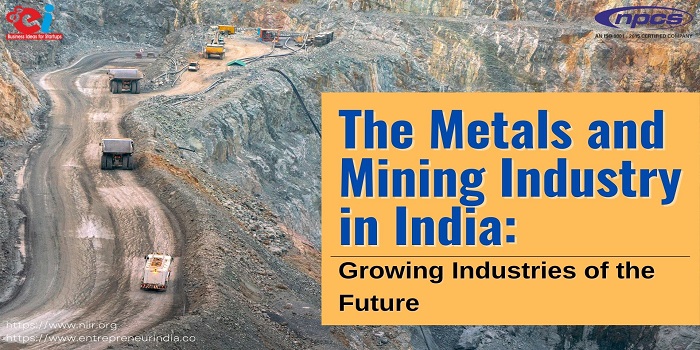
The Metals and Mining Industry in India is one of the most significant contributors to the country’s industrial and economic development. Rich in mineral resources and endowed with abundant reserves of coal, iron ore, bauxite, zinc, copper, and other key minerals, India is among the top global producers of many metallic and non-metallic minerals. The sector forms the backbone of core industries such as steel, cement, power, infrastructure, and automobiles. With government reforms, increasing FDI, automation, and focus on sustainable mining practices, the Indian mining sector is poised for accelerated growth and modernization. It plays a pivotal role in the Make in India and Atmanirbhar Bharat initiatives, fueling industrialization while generating rural employment and revenue. Visit this Page for More Information: Start a Business in Mining Industry Current Status of the Mining Sector India is the second-largest producer of coal, the third-largest producer of steel, and one of the top ten producers of several other metals. The mining industry contributes approximately 2.5% to the GDP directly and around 10% when including mineral-based industries. In FY 2023, the total mineral production in India was worth over INR 3.5 lakh crores, with a strong push towards self-reliance in key raw materials. Read Similar Articles: Minerals & Mineral Processing Industry 1. Key Minerals and Metal Resources a. Coal India has the fifth-largest coal reserves in the world, mainly in Jharkhand, Odisha, Chhattisgarh, and West Bengal. Coal India Limited (CIL), a public sector company, dominates production. Coal is mainly used for power generation, steel production, and industrial heating. b. Iron Ore Iron ore is a critical raw material for the steel industry. Major producing states include Odisha, Chhattisgarh, Karnataka, and Jharkhand. India exported 13 million tonnes of iron ore in FY 2023. c. Bauxite Used in aluminium production, bauxite reserves are abundant in Odisha, Gujarat, Maharashtra, and Madhya Pradesh. India’s alumina refining capacity is also growing rapidly. d. Copper India imports a significant amount of copper despite having reserves in Rajasthan and Jharkhand. Hindustan Copper Limited is the main domestic producer. e. Zinc and Lead India is the sixth-largest producer of zinc globally. Hindustan Zinc (a Vedanta Group company) leads production from mines in Rajasthan. Read our Books Here: Steel 2. Major Players in the Indian Mining Industry Coal India Ltd (CIL) Vedanta Resources National Mineral Development Corporation (NMDC) Hindustan Zinc Hindalco Industries Steel Authority of India Ltd (SAIL) JSW Steel Tata Steel These companies operate in both captive mining and commercial mining capacities, employing lakhs of workers directly and indirectly. Download PDF: The Metals and Mining Industry in India 3. Government Reforms and Policy Support To boost investment and output in the mining sector, the Indian government has implemented several key reforms: MMDR Amendment Act (2021)Opened up commercial mining, allowed auction of composite licenses, and removed restrictions on captive mines. National Mineral Policy (2019)Aims to increase mineral production by 200% over the next 7 years and improve exploration efficiency. Ease of Doing BusinessDigitalization of mining leases, faster environmental clearances, and GIS mapping have reduced red tape. FDI up to 100% allowed in mining and exploration of non-fuel minerals through the automatic route. 4. Sustainability and Green Mining Initiatives With growing environmental awareness, sustainable mining practices are being encouraged through: Mine closure and land reclamation guidelines Adoption of renewable energy for mine operations Use of drone technology, AI, and IoT for efficient resource utilization Waste management and zero-discharge processing plants Companies are investing in CSR projects, afforestation, water management, and community welfare in mining zones. 5. Challenges Facing the Metals and Mining Industry Despite immense potential, the Metals and Mining Industry in India faces various challenges: Delays in land acquisition and environmental clearances High logistics and transportation costs Regulatory uncertainty and multiple approvals Illegal mining and safety violations Volatile global commodity prices Addressing these bottlenecks through single-window clearances, better risk-sharing models, and investment in infrastructure is critical. 6. Emerging Trends and Opportunities The Indian mining sector is rapidly evolving with key trends such as: Commercial coal mining auctions opening the market to private players Battery metals demand like lithium, cobalt, and nickel creating new exploration targets Urban mining and recycling of metals from electronic waste International collaborations for critical minerals with Australia, Africa, and Latin America Technology adoption including autonomous vehicles, digital twins, and real-time monitoring systems 7. Metals Industry: Steel and Aluminium a. Steel Sector India is the second-largest steel producer globally with production crossing 125 million tonnes in FY 2024. The National Steel Policy 2017 aims for 300 million tonnes of capacity by 2030. Demand comes from infrastructure, construction, railways, defence, and real estate. b. Aluminium Sector India is a leading aluminium producer, with Hindalco and Vedanta Aluminium accounting for the majority of output. Aluminium is crucial for aviation, automotive, power, and packaging. 8. Export Potential India exports a wide range of minerals and metals to countries like China, Japan, UAE, and EU nations. The top exports include: Iron ore Bauxite Steel products Zinc and copper concentrates Granite and marble With value-added processing, India can increase its share in the global metals and minerals value chain. Conclusion The Metals and Mining Industry in India is on the cusp of a transformative decade. Rich natural resources, favourable policies, infrastructure growth, and increased domestic demand are pushing the industry into a new phase of expansion. From traditional coal and iron to future-critical minerals like lithium and rare earths, the sector is diversifying and modernizing rapidly. For investors, entrepreneurs, and technologists, the time is right to explore opportunities across exploration, production, equipment manufacturing, technology integration, and green mining solutions. With sustainable growth and digital innovation, India’s mining sector can emerge as a global powerhouse by 2030. Related Business Plans: Mining See More Links: Government Ministry/ Department Ministry of Steel Ministry of Mines Indian Bureau of Mines Ministry of Coal Industry Association Indian Steel Association India Stainless Steel Development Association Aluminum Association of India Coal Consumers Association of India Federation of Indian Mineral Industries Start a Business in Asia Start a Business in Potential Countries
Cold Storage, Cold Chain & Warehouse

The cold storage, cold chain, and warehouse industry in India is gaining momentum as the country witnesses rapid growth in agriculture, food processing, pharmaceuticals, and e-commerce. As temperature-sensitive goods become more critical in the supply chain—from fresh produce and dairy to vaccines and frozen foods—the need for reliable cold chain infrastructure has become paramount. India loses over 30% of its perishable agricultural produce due to lack of cold storage facilities and efficient logistics. To reduce this wastage, improve food security, and ensure timely delivery of quality products, both the government and private players are heavily investing in modern cold chain and warehouse solutions. Related Business Plans: Cold storage, Controlled Atmosphere Storage, Multipurpose, Multi-commodity Cold Storage Current Industry Overview India’s cold chain industry is valued at over USD 20 billion and is expected to grow at a CAGR of 14–16%, driven by increasing demand from the food, dairy, seafood, meat, and pharmaceutical sectors. The warehousing industry, including cold storage, is projected to cross INR 2,000 billion by 2027, thanks to booming e-commerce and organized retail. The market is segmented into: Cold Storage Units (stand-alone and integrated) Temperature-Controlled Vehicles (reefers) Cold Chain Warehousing & Logistics Dry Warehouses for goods storage and fulfillment Read our Books Here: Infrastructure, Hospitality, Medical 1. What is a Cold Chain and Why is it Important? A cold chain is a temperature-controlled supply chain used to preserve and transport perishable products. It ensures that food, medicine, and other sensitive goods maintain their required low temperatures from source to destination. Key components include: Pre-cooling facilities at farms Refrigerated storage units Cold transportation (reefer trucks, rail, and air) Pack houses and processing centers Temperature monitoring systems Failure in any part of the cold chain can lead to spoilage, monetary loss, and health risks, especially for food and pharma products. 2. Sectors Driving Demand for Cold Storage in India a. Agriculture & Horticulture India is the second-largest producer of fruits and vegetables globally. However, nearly 30% is wasted due to inadequate cold storage. Cold chains are vital for: Apples, bananas, mangoes Potatoes, onions, and tomatoes Leafy vegetables and mushrooms b. Dairy Industry Milk, butter, cheese, and yogurt are highly perishable. Proper cold storage helps maintain freshness and meet growing demand for value-added dairy products. c. Meat, Poultry & Seafood Frozen meats, processed foods, and seafood need ultra-low temperature preservation. Exporters particularly rely on high-quality cold chain solutions. d. Pharmaceuticals Vaccines, insulin, and life-saving biologics must be kept at specific temperatures. COVID-19 highlighted the urgent need for cold storage in India’s health infrastructure. e. E-Commerce and Retail Online grocery delivery, cloud kitchens, and food startups are increasingly investing in micro-warehouses and last-mile cold delivery. 3. Government Support and Incentives To strengthen the cold chain ecosystem, the Indian government has rolled out several schemes and policies: Pradhan Mantri Kisan SAMPADA Yojana (PMKSY)Provides subsidies for cold storage and agro-processing units. Mission for Integrated Development of Horticulture (MIDH)Supports construction of cold storages and pack houses. PLI Scheme for Food ProcessingEncourages investment in infrastructure for processed foods. 100% FDI allowed under the automatic route for food storage and cold chain infrastructure. TIES and TPCP schemes to develop export-focused cold chain clusters. 4. Technological Advancements in Cold Storage Innovation is transforming the traditional cold chain model. Companies are adopting: Real-time temperature monitoring IoT-based sensors and GPS tracking Automated storage and retrieval systems (ASRS) Energy-efficient refrigeration systems Renewable energy integration (solar-powered cold storages) Digitalization not only improves efficiency but also ensures regulatory compliance in pharma and food safety. 5. Top Players in the Indian Cold Chain & Warehouse Industry Snowman Logistics ColdEX Logistics Future Supply Chain Blue Dart Express Gati Kausar Coldman Logistics National Cold Chain Development Centre (NCCD) Reliance Retail (JioMart warehouses) Many international players are entering the Indian market through partnerships and joint ventures. 6. Challenges in the Cold Chain Sector Despite growth, several obstacles persist in India’s cold storage and warehousing space: High capital investmentSetting up cold chain infrastructure is expensive and time-consuming. Power shortages and high energy costsContinuous electricity is essential for refrigeration but costly in rural areas. Poor rural connectivityMany farm belts lack access to roads, reefer transport, or pre-cooling units. Fragmented supply chainA lack of integration between storage, transport, and retail logistics causes inefficiencies. Shortage of skilled workforceTechnicians trained in refrigeration, automation, and food safety are in short supply. Visit this Page for More Information: Start a Business in Cold storage Industry 7. Opportunities and Future Growth Potential The cold storage, cold chain, and warehouse industry in India is set to witness exponential growth due to the following: Urban consumption riseDemand for ready-to-eat, frozen, and organic food is growing in cities. Shift to organized retailSupermarkets and online grocers are investing in cold supply chains to meet customer expectations. Export opportunitiesIndia’s mangoes, grapes, spices, and shrimp can fetch high prices globally if cold storage is ensured. Pharma cold chainIndia’s growing status as a vaccine and drug manufacturing hub necessitates global-grade cold chains. Agri-tech & startup innovationStartups are developing portable, solar-powered cold storages and AI-based tracking systems. 8. Key Warehousing Hubs in India Several regions are emerging as cold chain and warehouse clusters, such as: NCR (Delhi, Noida, Gurugram) Mumbai and Navi Mumbai Hyderabad Bangalore Ahmedabad Kolkata Chennai Additionally, Tier-2 cities like Nagpur, Lucknow, and Indore are witnessing investment due to their strategic locations. Conclusion The cold storage, cold chain, and warehouse industry in India is no longer just a logistical necessity—it is becoming a strategic pillar of the nation’s food security, healthcare supply chain, and economic resilience. With robust policy support, growing demand across industries, and technological innovation, the sector is poised for unprecedented growth. Investors, entrepreneurs, and technology providers have a golden opportunity to shape the future of India’s supply chain by building efficient, affordable, and eco-friendly cold storage and logistics infrastructure. As consumer expectations rise and global trade intensifies, cold chain development will be critical to ensuring quality, safety, and sustainability. Read Similar Articles: Cold storage See More Links: Start a Business in Asia Start a Business in Potential Countries
Indian Medical Devices Industry
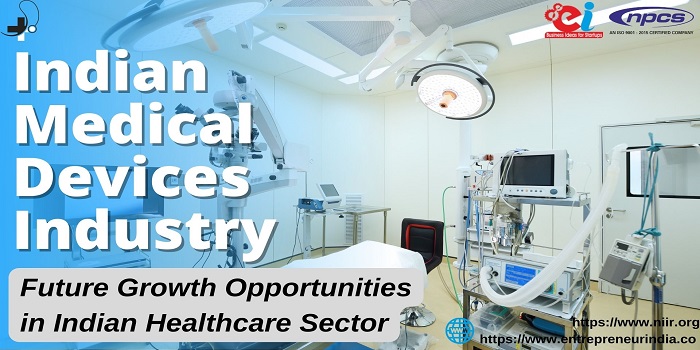
The Indian Medical Devices Industry is one of the fastest-growing segments of India’s healthcare sector. As the country strives toward universal healthcare, technological innovation, and self-reliance under the “Atmanirbhar Bharat” vision, the demand for domestically manufactured and high-quality medical equipment is surging. From diagnostic devices and surgical instruments to wearable tech and high-end imaging systems, the Indian market is witnessing a significant transformation. Currently valued at around USD 11 billion, the industry is expected to grow at a CAGR of 15%, reaching over USD 50 billion by 2030. With strong government support, rising healthcare needs, and increasing FDI, India is positioning itself as a global manufacturing hub for medical devices. Visit this Page for More Information: Start a Business in Healthcare Industry Overview of India’s Medical Devices Sector India ranks among the top 20 global markets for medical devices, but it currently imports over 70% of its requirements. The Indian medical devices ecosystem is evolving from low-value disposables and consumables to high-value, technology-driven equipment. The sector includes: Diagnostic imaging (MRI, CT, X-ray) Consumables (syringes, needles, gloves) Patient aids (hearing aids, pacemakers) Dental products Orthopedic implants Wearable and digital health devices 1. Key Drivers of Growth in the Medical Devices Industry a. Rising Healthcare Infrastructure India is rapidly expanding its healthcare infrastructure with new hospitals, clinics, and diagnostic labs, particularly in Tier-2 and Tier-3 cities. This leads to increasing demand for advanced equipment and devices. b. Growing Medical Tourism India is becoming a global medical tourism destination for affordable and high-quality treatments, which boosts the demand for modern devices across specialties. c. Aging Population & Chronic Diseases Non-communicable diseases (diabetes, heart ailments, cancer) are rising sharply, creating demand for diagnostic, monitoring, and therapeutic devices. d. Government Initiatives Schemes like “Production Linked Incentive (PLI) for Medical Devices,” “MedTech Parks,” and “Make in India” are catalyzing domestic manufacturing. Read Similar Articles: Health Care Sector 2. Government Policy & Regulatory Support a. PLI Scheme for Medical Devices Under this scheme, the government provides financial incentives to eligible manufacturers for producing high-end medical devices such as CT scanners, MRI machines, and ventilators. b. Medical Devices Rules (MDR) 2017 These regulations, amended regularly, classify devices into risk categories (A, B, C, D) and establish quality control mechanisms under CDSCO (Central Drugs Standard Control Organization). c. Dedicated Medical Device Parks India is developing four MedTech parks in Tamil Nadu, Andhra Pradesh, Himachal Pradesh, and Uttar Pradesh to reduce costs and enhance manufacturing capabilities. d. 100% FDI Allowed Foreign Direct Investment is allowed through the automatic route in the manufacturing of medical devices, making India a lucrative destination for global players. Read our Books Here: Infrastructure, Hospitality, Medical, Entertainment, Warehouse, Real Estate, Education, Cold Storage, Cold Chain, Controlled Atmosphere Storage & Rural Godowns 3. Top Domestic and Global Players in India Leading Indian Companies: Trivitron Healthcare Poly Medicure Skanray Technologies BPL Medical Technologies Meril Life Sciences Global Companies with Indian Presence: GE Healthcare Siemens Healthineers Medtronic Philips Johnson & Johnson Abbott These companies are increasingly localizing manufacturing and R&D in India due to rising demand and policy support. Related Feasibility Study Reports: Healthcare and Medical Businesses 4. Startup Ecosystem and Innovation in Medical Devices India is witnessing a wave of health-tech and MedTech startups innovating in areas like: AI-based diagnostic tools Remote patient monitoring Affordable ventilators and oxygen concentrators Wearables and fitness tech 3D printing for custom prosthetics and implants Notable startups include: Niramai (breast cancer screening using AI) Forus Health (portable eye-screening devices) Dozee (contactless health monitoring) 5. Challenges Facing the Indian Medical Devices Industry While the Indian Medical Devices Industry has immense potential, it also faces several challenges: High import dependence on critical diagnostic and imaging equipment Lack of harmonized standards and certification frameworks Limited R&D funding for deep-tech innovation Fragmented manufacturing ecosystem, mostly SME-led Price controls and regulatory ambiguity in some high-value categories Solving these issues will require coordinated policy, investment in infrastructure, and robust private-sector engagement. 6. Key Market Segments and Their Growth Outlook a. Diagnostic Imaging Includes MRI, CT, ultrasound, X-ray machines. Demand is booming in private hospitals, diagnostic labs, and cancer centers. b. Consumables & Disposables IV cannulas, syringes, catheters, PPE, gloves—this segment has seen rapid local production post-COVID-19 and continues to grow due to recurring demand. c. Patient Monitoring & Therapeutic Devices Including ECG, BP monitors, pulse oximeters, ventilators, and infusion pumps. There’s increasing adoption in home healthcare and emergency services. d. Orthopedic and Dental Implants India is a major global exporter of orthopedic implants and is scaling up dental implants due to rising cosmetic and geriatric needs. e. Wearable Devices Smartwatches, fitness bands, ECG trackers—this consumer-driven segment is growing due to lifestyle changes and interest in preventive health. 7. Opportunities for Investment and Manufacturing Make in India Opportunity: Manufacturing low-cost alternatives to imported high-value devices Medical Electronics: Integration of electronics and IoT into devices offers a new frontier for Indian innovation Export Potential: India’s cost advantage can make it a global supplier to Asia, Africa, and Latin America Skill Development: Need for training programs for device maintenance, biomedical engineering, and regulatory compliance Conclusion The Indian Medical Devices Industry is on a transformational journey from an import-dependent market to a self-sufficient, innovation-led global manufacturing hub. Driven by strong demand, enabling policies, and rising investor interest, the sector presents enormous potential for growth, exports, and job creation. For entrepreneurs, manufacturers, and investors, now is the ideal time to enter and expand in this high-impact sector. The future of India’s healthcare—and the quality of millions of lives—depends on how effectively the country develops its medical devices ecosystem. Download PDF: Indian Medical Devices Industry: Future Growth Opportunities in Indian Healthcare Sector Some Useful Links: Government Ministry/Department Central Drugs Standard Control Organization Department of Pharmaceuticals Department for Promotion of Industry and Internal Trade (DPIIT) Ministry of Chemicals & Fertilizers Ministry of Commerce & Industry Ministry of Health & Family Welfare Industry Associations Association of Indian Medical Device Industry (AIMED) Advanced Medical Technology Association (AdvaMed) Association of Diagnostics Manufacturers of India (ADMI) Asia Pacific Medical
Bioplastics & Biodegradable Products Manufacturing Handbook

The Biodegradable Products Manufacturing Handbook is a vital guide for entrepreneurs looking to launch eco-friendly businesses in today’s sustainability-focused economy. With rising environmental concerns, increasing government regulations on plastic, and changing consumer preferences, the demand for biodegradable alternatives is growing rapidly in India and worldwide. This guide outlines key insights into biodegradable product categories, raw materials, machinery, processes, legal standards, and business opportunities. If you’re planning to enter this space, understanding these foundational elements is crucial for long-term success. Start a Business in Biodegradable Products Industry, Click Here What Are Biodegradable Products? Biodegradable products are materials that can naturally break down into non-toxic components through microbial action over time. These products decompose without harming the environment, unlike conventional plastic which takes hundreds of years to degrade. Common Examples of Biodegradable Products: Tableware (plates, spoons, bowls, straws) Carry bags made from corn starch or cassava Compostable garbage bags Biodegradable packaging films Sanitary products and diapers Mulch films for agriculture Cutlery, cups, and takeaway containers 1. Why Start a Biodegradable Products Manufacturing Business? a. Eco-Friendly Demand Surge With bans on single-use plastic and climate change awareness, the Indian market is shifting toward sustainable solutions. b. Government Policies & Incentives India’s ban on single-use plastics and subsidies for green industries create a favorable ecosystem for manufacturing. c. Export Opportunities Countries in Europe, North America, and parts of Asia are major importers of biodegradable products. d. Fast-Growing Market The global biodegradable plastic market is expected to reach USD 20+ billion by 2030, growing at a CAGR of over 13%. Related Feasibility Study Reports: Biodegradable Products 2. Raw Materials Used in Biodegradable Product Manufacturing Choosing the right biodegradable raw material is key to ensuring your product is truly compostable and compliant with regulations. Common Raw Materials Include: Sugarcane Bagasse: A fibrous by-product of sugarcane processing Corn Starch (PLA): Used for films, packaging, and tableware Areca Palm Leaves: Used for eco plates and bowls Rice Husk or Wheat Bran Cassava or Tapioca Starch Paper Pulp and Bamboo Fiber PLA + PBAT (blends) for compostable bags Each material has its own processing technique and shelf life, so understanding compatibility is crucial. 3. Types of Biodegradable Products You Can Manufacture a. Disposable Tableware Plates, spoons, bowls, and containers made from bagasse or areca palm leaves. b. Biodegradable Carry Bags Made using PLA, PBAT, or starch-based formulations. These are commonly used in retail, grocery, and agriculture. c. Compostable Packaging Food wrapping films, trays, containers, and vacuum-sealable bags. d. Agricultural Mulch Films Used to cover soil, these break down over time and enrich the land. e. Biodegradable Cutlery and Straws Popular in the hospitality industry as eco-friendly alternatives. 4. Machinery Required for Manufacturing The selection of machinery depends on the product category. Here are commonly used machines: Pulp Molding Machine – For tableware and packaging Bag Making Machine – For compostable carry bags Injection Molding Machine – For cutlery and containers Film Blowing Machine – For biodegradable films and wraps Hot Press Machine – For palm leaf products Extrusion Machine – For sheets and agricultural films Prices range from ?5 lakh to ?50 lakh depending on capacity and automation levels. Related Books: Environmentally Friendly 5. Manufacturing Process Overview Though the process varies by product, the basic stages include: Raw Material Preparation – Cleaning, grinding, or pulping Forming – Using molds or extrusion to shape products Drying & Trimming – Removing moisture and refining shape Printing or Branding – Optional step for custom designs Packaging – Eco-packaging materials are usually preferred Example: For sugarcane bagasse tableware, the process includes pulping, molding with heat and pressure, drying, and packing. 6. Licenses and Certifications Required Before starting a biodegradable products manufacturing business, it’s essential to comply with local and national guidelines. Required Licenses: Udyam MSME Registration GST Registration Pollution Control Board NOC Factory License Trade License (Municipal) Important Certifications: CPCB/State PCB approval for compostable products ISO 17088 certification for biodegradable plastics Compostability test report from CIPET or BIS labs FDA and FSSAI (for food-contact products) Compliance helps build brand credibility and facilitates export approval. 7. Investment and Profit Margin Initial Setup Cost (for small unit): Machinery: ?10 – ?30 lakh Raw Material stock: ?2 – ?5 lakh Setup cost (shed, electricity, etc.): ?5 – ?10 lakh Labor & Operation: ?1.5 lakh/month Expected Monthly Profit: Turnover: ?4 – ?10 lakh/month (depends on scale) Profit Margin: 25% – 40% (after breakeven) Break-even Period: 12–18 months for small-scale units The business is scalable, and exporting increases profits significantly. 8. Target Market and Customers Your customers may include: Retail stores and supermarkets E-commerce packaging suppliers Hotel and restaurant chains Hospitals and food caterers Agri-input suppliers (for mulch films) Government organizations for public use International wholesalers and distributors A strong B2B sales team or digital presence can help scale rapidly. 9. Marketing Strategy for Biodegradable Products Highlight eco-benefits and government compliance Create a brand identity around sustainability Focus on B2B partnerships with restaurant chains and retailers Use green packaging and certifications in your branding Social media campaigns to build eco-conscious communities List on B2B platforms like IndiaMART, TradeIndia, Alibaba Conclusion This Biodegradable Products Manufacturing Handbook offers a complete overview for entrepreneurs aiming to build an environmentally responsible business. With increasing global demand for plastic-free solutions, India has the resources, policy support, and raw materials to lead in biodegradable product manufacturing. Whether you’re targeting tableware, packaging, or agri-products, this is the right time to step into this booming market and align profits with the planet. Be sure to maintain quality, compliance, and eco-authenticity to build long-term brand value. Read Similar Articles: Biodegradable products See More Links: Start a Business in Asia Start a Business in Potential Countries for Doing Business Best Industry for Doing Business Business Ideas with Low, Medium & High Investment Looking for Most Demandable Business Ideas for Startups Start a Business in Africa</strong> Start a Business in India Related Projects Related Market Research Reports NIIR PROJECT CONSULTANCY SERVICES, DELHI An ISO 9001:2015 Company ENTREPRENEUR INDIA 106-E, Kamla Nagar, Opp. Mall ST, New Delhi-110007, India. Email:
The Textile and Apparel Sector in India: A Booming Industry worth Investing In!

The Textile and Apparel Sector in India is not just an economic powerhouse but a deep-rooted cultural and historical entity. From the ancient cotton looms of the Indus Valley Civilization to today’s cutting-edge textile parks and global fashion exports, India’s textile industry has evolved dramatically while retaining its artisanal heritage. It is one of the largest contributors to India’s GDP, export earnings, and employment generation, especially among women and rural communities. As of 2024, the Indian textile and apparel industry is valued at USD 160 billion and is projected to reach USD 350 billion by 2030, driven by rising domestic consumption, global demand, and robust policy support under initiatives like ‘Make in India’, PLI Scheme, and PM MITRA Parks. Visit this Page for More Information: Start a Business in Textile Industry Significance of the Textile and Apparel Sector in India The Indian textile sector is unique due to its complete value chain — from raw fiber to finished garments — all within the country. It is also one of the few industries that is deeply interwoven with India’s history, culture, agriculture, and rural economy. Read Similar Articles: Textile Industry Key Highlights: Second largest employer after agriculture, employing over 45 million people. Accounts for 2.3% of India’s GDP, 13% of industrial production, and 12% of export earnings. India is the largest producer of cotton, second-largest producer of silk, and third-largest exporter of textiles globally. 1. Key Segments of the Indian Textile Industry a. Natural Fibers Segment India is a global leader in natural fibers like: Cotton (40% of total production) Jute (dominant globally) Silk (especially Tussar, Mulberry) Wool b. Synthetic Rapidly growing due to demand in sportswear, uniforms, and technical textiles: Polyester Viscose Nylon Acrylic c. Apparel and Garments Ready-made garments (RMG) are a major export item, with hubs in: Bengaluru Tirupur Ludhiana Delhi-NCR Mumbai d. Home Textiles Includes bed linen, curtains, carpets, bath towels, and furnishing fabrics — an export-dominant segment. e. Technical Textiles Used in medical, automotive, defense, agriculture, and construction industries. Government is pushing this through the National Technical Textile Mission. Read our Books Here: Textile Spinning 2. India’s Position in the Global Textile Market Largest exporter of cotton and jute Among the top 5 exporters of RMG, home textiles, and handlooms Indian brands like Raymond, Arvind, FabIndia, Biba, and Manyavar have global recognition Key export markets: USA, EU, UAE, UK, Bangladesh, and Japan India’s textile exports were valued at over USD 40 billion in FY 2023–24, with strong projections in 2025 due to global demand shifts from China to India. 3. Government Policies Supporting Textile Growth a. PLI Scheme for Textiles ?10,683 crore approved to incentivize MMF and technical textiles manufacturing with 5-year subsidies for performance-linked output. b. PM MITRA Textile Parks Seven mega textile parks are being developed to provide integrated facilities for spinning, weaving, dyeing, printing, and garmenting under one roof. c. RoDTEP and RoSCTL Schemes Duty remission schemes to support textile exports by refunding embedded taxes and levies. d. Skill India & Samarth Scheme Focused on training over 10 lakh workers, especially women, in textile-related skills for better productivity and employability. 4. Challenges Faced by the Textile and Apparel Sector in India Despite its strength, the Textile and Apparel Sector in India faces several hurdles: Dependence on cotton makes it vulnerable to weather patterns Lack of scale and outdated technology in smaller units Inconsistent supply chain between fiber and finished product High logistics and compliance cost Low penetration of high-value products like branded apparel and technical textiles However, reforms in infrastructure, digitalization, and export facilitation are addressing many of these pain points. Related Feasibility Study Reports: Textile, Apparel, Clothing, Denim wear, Innerwear 5. Rise of Sustainable and Ethical Fashion Sustainability is becoming a defining trend in India’s apparel exports and domestic consumption. Brands are turning to: Organic cotton and khadi Recycled fabrics Plant-based dyes Eco-friendly packaging Consumers are increasingly demanding fair trade, low-carbon, and zero-waste products. This is opening new avenues for ethical textile businesses and startups. 6. Digital Transformation in Indian Textiles India’s textile value chain is embracing digital tools: CAD software for apparel design ERP and SCM platforms for supply chain management E-commerce portals like Myntra, Ajio, Amazon Fashion for direct sales Blockchain for transparency in sourcing and labor practices AI & ML in demand forecasting and inventory optimization Digitalization is helping traditional players scale up, improve efficiency, and compete globally. 7. Key Textile Hubs in India Northern India: Ludhiana – Woolen garments Panipat – Home furnishings Delhi-NCR – Fashion and fast-moving apparel Southern India: Tirupur – Knitwear exports hub Coimbatore – Yarn and spinning mills Bengaluru – High-end fashion apparel Western India: Surat – Synthetic fabrics and embroidery Ahmedabad – Cotton textiles and printing Mumbai – Apparel exports and design Eastern India: Bhubaneswar and Kolkata – Jute and handloom Assam and Tripura – Silk and traditional weaves 8. Opportunities for Entrepreneurs and Investors Branding ethnic and regional weaves like Banarasi, Chikankari, or Pochampally Export-oriented garment factories Sustainable fashion startups Private label manufacturing for global brands Value-added home décor textiles Smart textiles and wearable tech integration With FDI allowed up to 100% under automatic route, international investors are also keen on Indian textile ventures. Conclusion The Textile and Apparel Sector in India is poised for a golden era of growth, innovation, and sustainability. With deep-rooted craftsmanship, a massive workforce, and growing global demand, India holds the potential to reclaim its historical title as the “textile capital of the world.” Entrepreneurs, exporters, fashion designers, and investors can all find exciting opportunities in this dynamic industry — whether through high-value garments, eco-textiles, or global collaborations. Download PDF: The Textile and Apparel Sector in India: A Booming Industry worth Investing In! Government Ministry/ Department Development Commissioner (Handicrafts) Jute Commissioner Ministry of Textiles Office of Development Commissioner (Handlooms) Office of the Textiles Commissioner Textiles Committee Industry Scenario Apparel Export Promotion Council Clothing Manufacturing Association of India Confederation of Indian Textile Industry Indian Technical Textiles Association National Council of Textile Organizations Textile Associations of India Textile
Money Making Business Ideas you can start from Home

In today’s fast-paced digital economy, exploring money making business ideas is more relevant than ever. Whether you’re looking to escape your 9-to-5 job, earn a passive income, or start your own empire, there’s never been a better time to launch a profitable business. From online startups to low-investment ventures and scalable service-based models, numerous business ideas can help you generate a sustainable and substantial income in 2025. This guide outlines some of the most effective, trending, and realistic money-making business ideas you can start with minimal investment and maximum returns. Related Projects: Projects for Small and Medium Enterprises Why Choose a Business Over a Job? Starting your own business can offer more than just money—it provides freedom, control over your schedule, and the ability to scale your income infinitely. Benefits: No income ceiling Tax benefits for business owners Build generational wealth Personal and creative freedom Impact and legacy creation 1. Dropshipping Business What Is It? A low-investment eCommerce model where you sell products without stocking inventory. Products are shipped directly from the supplier to the customer. Why It’s Profitable: No warehouse or upfront inventory cost Access to global markets via Shopify, Amazon, or WooCommerce Trending niches: gadgets, fitness accessories, pet products Investment: ?25,000 – ?50,000 Profit Margin: 15% – 45% Tools Needed: Shopify/WordPress, AliExpress, Oberlo or CJdropshipping 2. Freelancing Services What Is It? Offer your skills (writing, designing, coding, SEO, video editing, etc.) on freelancing platforms like Fiverr, Upwork, and Freelancer. Why It’s Profitable: No initial investment other than your skills Highly scalable—turn freelance into an agency later You can work with global clients and earn in USD Investment: ?5,000 – ?10,000 (portfolio, website) Profit Potential: ?50,000–?2 lakh/month Best Niches: Content writing, graphic design, digital marketing, web development 3. Affiliate Marketing What Is It? Promote other companies’ products via your blog, YouTube, or Instagram and earn a commission per sale. Why It’s Profitable: Passive income stream High-ticket affiliate programs offer up to 50% commission Works well with SEO and content marketing Investment: ?10,000 – ?20,000 (domain, hosting, content) Earning Potential: ?50,000 to ?5 lakh/month Top Platforms: Amazon Associates, ShareASale, Impact, ClickBank 4. YouTube Channel or Podcast What Is It? Create video/audio content and earn via AdSense, sponsorships, and product placements. Why It’s Profitable: Evergreen content keeps earning for years Works for educational, entertainment, or niche-focused channels Monetize via ads, merchandise, courses, and collaborations Investment: ?20,000 – ?60,000 (camera, mic, software) Monetization Methods: Google Ads, Patreon, Sponsorships, Paid courses Ideal Niches: Finance, Tech, Gaming, Motivation, Fitness 5. Reselling Business (Online or Offline) What Is It? Buy in bulk from wholesalers or manufacturers and resell at a profit online (Amazon, Flipkart, Meesho) or offline. Why It’s Profitable: Easy to start via platforms like Meesho and GlowRoad Can scale into a full-fledged brand No manufacturing involved Investment: ?10,000 – ?50,000 Profit Margin: 20% – 70% Best Products: Fashion, kitchen gadgets, skincare, electronics 6. Blogging and Niche Websites What Is It? Write articles around a specific niche and earn money through ads, affiliate links, and sponsored posts. Why It’s Profitable: Long-term passive income Build authority in a niche Easily scalable by hiring writers and SEO experts Investment: ?5,000 – ?15,000 (domain, hosting, content writing tools) Monetization: Google AdSense, Ezoic, Affiliate marketing Top Niches: Personal finance, health, parenting, career advice 7. Print-on-Demand Business What Is It? Sell custom-designed products like T-shirts, mugs, or phone covers that are printed and shipped by third-party services. Why It’s Profitable: No inventory or upfront product cost Ideal for artists, designers, and niche communities Use platforms like Printful, Teespring, and Redbubble Investment: ?15,000 – ?30,000 Profit Margin: 25% – 60% Target Market: College students, fandoms, travelers 8. Social Media Management Services What Is It? Help businesses manage and grow their social media presence on platforms like Instagram, Facebook, and LinkedIn. Why It’s Profitable: High demand from startups and local businesses Can start solo and build a digital agency Monthly retainers provide consistent income Investment: ?10,000 – ?25,000 (tools, training, promotions) Earning Potential: ?20,000 to ?2 lakh/month Best Platforms: Canva, Buffer, Meta Business Suite Related Books: Startup Books For Entrepreneurs 9. Online Courses and Coaching What Is It? Create a course based on your expertise and sell it through platforms like Teachable, Udemy, or your own site. Why It’s Profitable: High profit margins (up to 90%) One-time effort, long-term earning High perceived value for niche education (e.g., coding, marketing, baking) Investment: ?20,000 – ?50,000 (course creation tools, promotion) Earnings: ?1 lakh–?10 lakh/month depending on scale Tip: Focus on solving a specific problem for a specific audience 10. Cloud Kitchen or Tiffin Services What Is It? Run a food delivery business from home without a dine-in setup. Why It’s Profitable: Low setup cost High repeat orders Growing demand from working professionals and students Investment: ?50,000 – ?2 lakh (kitchen setup, packaging) Daily Earning Potential: ?2,000 – ?10,000+ Partner With: Swiggy, Zomato, or go D2C via WhatsApp/Instagram Bonus Ideas for 2025: Virtual Assistant Services Digital Product Sales (eBooks, templates) Pet Care Services Handmade Crafts via Etsy Language Translation Services Online Stock Trading or Crypto Investment (with caution) Final Words There’s no shortage of money making business ideas in India and beyond in 2025. Whether you choose an online model like freelancing, YouTube, or eCommerce—or go offline with food, services, or reselling—you can start small and grow big with consistent effort, smart tools, and a value-first mindset. The real key? Start now. Pick one idea, validate it, and take action. Remember, every successful business today was once just an idea executed by someone brave enough to begin. Money Making Business Ideas You Can Start from Home with Low Costs See More Links: Start a Business in Asia Start a Business in Potential Countries for Doing Business Best Industry for Doing Business Business Ideas with Low, Medium & High Investment Looking for Most Demandable Business Ideas for Startups Start a Business in Africa Start a Business in India Start a Business in Middle East Related Videos Related Books Related Projects Related Market Research Reports