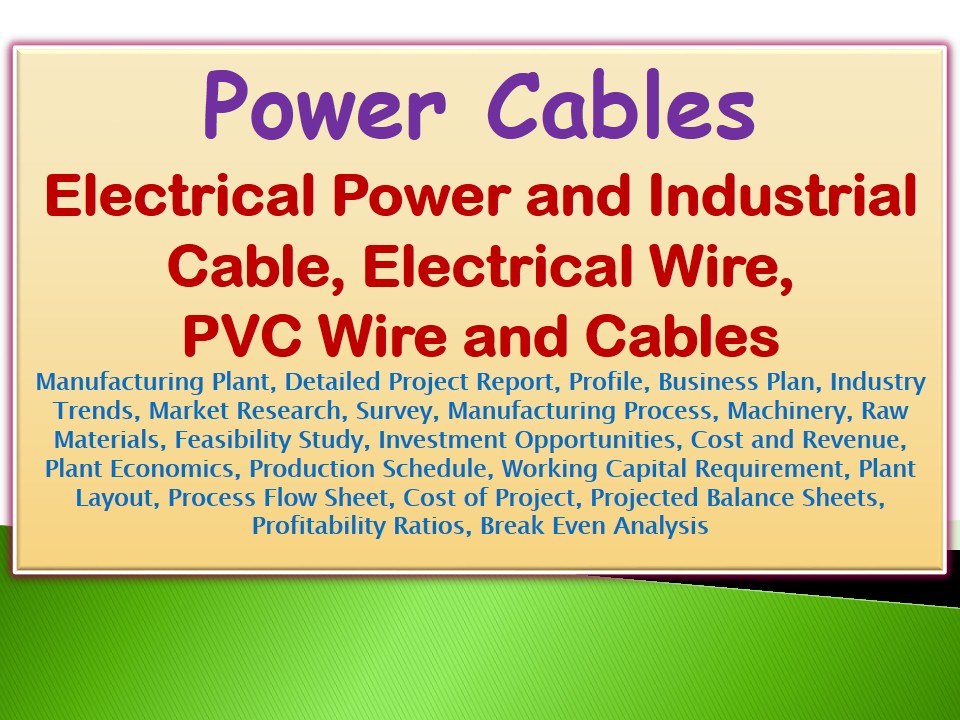
The demand for reliable energy distribution has steadily increased. Consequently, many industries are focusing on the development of robust power cable systems. Among the various types available, PVC Power & Electrical Cables have gained significant popularity due to their durability, cost-effectiveness, and wide range of applications. These cables are used extensively in residential, commercial, and industrial sectors. Therefore, setting up a manufacturing plant for PVC cables can be a profitable venture.
Understanding the PVC Cable Manufacturing Industry
To begin with, the industry relies heavily on advanced machinery and efficient processes. The raw materials such as copper or aluminum conductors and PVC compounds are essential. These are used for insulation and sheathing. After proper procurement, these materials are processed through a series of manufacturing steps.
See Also : Soy-Based Food
Furthermore, the industry is guided by strict quality control protocols. Regulatory standards ensure that products meet required safety and performance parameters. Because of these regulations, constant monitoring and testing are carried out throughout the production line.
In addition to production, packaging and distribution play vital roles. Proper labeling, bundling, and secure transport systems help manufacturers reach domestic and international markets with ease.
Market Potential and Industry Scope
Over the years, global demand for PVC Power & Electrical Cables has grown considerably. This can be attributed to the ongoing expansion of infrastructure projects and electrification programs. Especially in developing nations, the need for reliable electrical connectivity has driven growth in the cable market.
Moreover, industries like telecommunications, real estate, transportation, and manufacturing depend on these cables for efficient power and data transmission. As a result, entrepreneurs investing in this segment are likely to benefit from increasing demand and scalable opportunities.
Besides this, energy-saving initiatives and smart grid developments have created further demand for low-loss and high-efficiency cabling solutions. Hence, cable manufacturers are adopting innovations in design, insulation technology, and materials.
Raw Materials and Components Used
Primarily, copper or aluminum wires are selected for conductors. PVC granules are also used as insulation and sheath material. Often, additives like plasticizers, stabilizers, and colorants are added to improve flexibility and resistance.
In addition to these materials, flame-retardant compounds are applied where safety regulations demand higher performance. For specific applications, armoring with galvanized steel wires or tapes may be used to enhance durability.
It is important to note that the quality of each component directly affects the final product. Therefore, careful testing and supplier vetting are crucial before the materials enter the production floor.
Manufacturing Process of PVC Cables
Firstly, the conductor wires are drawn, annealed, and stranded. This step ensures flexibility and good conductivity. Next, the PVC compound is applied over the conductor using extrusion machines. This process creates an insulating layer.
Subsequently, depending on the type of cable, a second layer of PVC sheathing may be added. For armored cables, steel wires are applied between the insulation and outer sheath. After cooling and curing, the cables are cut into required lengths and wound into coils or drums.
At every stage, the product is tested for insulation resistance, continuity, tensile strength, and flame retardancy. Only after passing these checks, the cables are approved for dispatch.
Notably, energy efficiency and environmental regulations are now being considered in modern facilities. Thus, waste PVC is often recycled, and emissions are controlled through filtration systems.
Machinery and Equipment Needed
A full-fledged PVC Power & Electrical Cables plant must be equipped with a range of machines. These include wire drawing machines, bunching machines, extrusion lines, armoring machines, and coiling systems.
Also, quality testing equipment such as high-voltage testers, spark testers, and resistance meters are essential. In addition to production units, a laboratory and an R&D section are commonly installed in modern plants.
Automated systems are being preferred today, since they improve productivity and reduce human error. Furthermore, automation helps maintain consistent cable diameter and insulation thickness.
Because of this, many manufacturers are choosing PLC-based systems and digital monitoring tools for better control and data logging. Such improvements ultimately enhance product reliability and operational efficiency.
Manpower and Skill Requirements
A skilled workforce is required for operating machines, managing production, and conducting quality checks. Engineers with electrical or polymer background are commonly recruited to handle technical operations.
Moreover, machine operators and helpers are needed across all shifts. Since the industry involves exposure to heat and machinery, proper training and safety equipment are mandatory.
To ensure consistency, standard operating procedures (SOPs) are implemented at each stage. As a result, routine maintenance, troubleshooting, and calibration tasks are handled effectively.
Training sessions and workshops are periodically organized to keep employees updated with the latest advancements in cable technology and manufacturing methods.
Licensing and Regulatory Compliance
Before starting the plant, certain licenses and clearances must be obtained. These include company registration, pollution control board approvals, and factory licenses. Additionally, BIS certification is mandatory for selling cables in the Indian market.
Fire safety clearances and electrical safety certifications are also required. Often, periodic inspections are carried out by government agencies to ensure compliance with industrial norms.
Because of such regulatory frameworks, cable manufacturers must maintain detailed documentation, batch traceability, and quality audit reports.
Furthermore, exports require international certifications such as CE, UL, or RoHS, depending on the destination country. Hence, manufacturers must align their processes with global standards if they plan to serve overseas markets.
Financial Investment and Cost Estimates
Setting up a PVC Power & Electrical Cables manufacturing unit involves a moderate to high capital investment. Costs include land, building construction, machinery, working capital, and raw materials.
In particular, extrusion lines and wire drawing machines represent major capital expenses. Additionally, infrastructure like power supply, water lines, and ventilation systems must be considered.
On average, a small-scale plant may need ?2–5 crore for initial setup, while a medium or large-scale unit could require ?10–25 crore or more. However, government subsidies and MSME support schemes can reduce the financial burden for new entrepreneurs.
Proper cost planning and cash flow management are important. Therefore, a detailed project report is often created before approaching banks or investors for funding.
Marketing and Sales Strategies
After production begins, marketing efforts must be initiated to create brand visibility. Common strategies include distributor appointments, dealer networks, direct sales, and e-commerce platforms.
Additionally, participation in trade fairs and industrial expos helps build contacts and attract bulk orders. Digital marketing is gaining importance as many B2B buyers research online before making procurement decisions.
Customer service, after-sales support, and warranty policies also influence buyer decisions. Therefore, a dedicated team should handle client queries and resolve any issues quickly.
Furthermore, bulk buyers such as construction firms, utility providers, and equipment manufacturers can be targeted with custom solutions and long-term supply agreements.
Opportunities and Challenges
Clearly, the demand for PVC Power & Electrical Cables is rising. Infrastructure expansion, smart cities, and energy grid modernization offer consistent growth opportunities. Moreover, sustainable and fire-retardant cable innovations are creating niche markets.
However, rising raw material prices, fluctuating copper rates, and competition from unorganized players pose significant challenges. In addition, compliance costs and import-export regulations must be managed carefully.
See Also : Education Sector
Despite these hurdles, manufacturers who adopt innovation, quality focus, and efficient processes can succeed in this competitive industry.
Conclusion
The PVC Power & Electrical Cables manufacturing industry offers promising potential for entrepreneurs. With consistent demand from infrastructure, telecom, and residential sectors, the business remains lucrative. Although initial investments are substantial, returns can be rewarding with proper planning, regulatory compliance, and effective marketing. Above all, focusing on quality, innovation, and sustainability can ensure long-term growth in this dynamic industry.