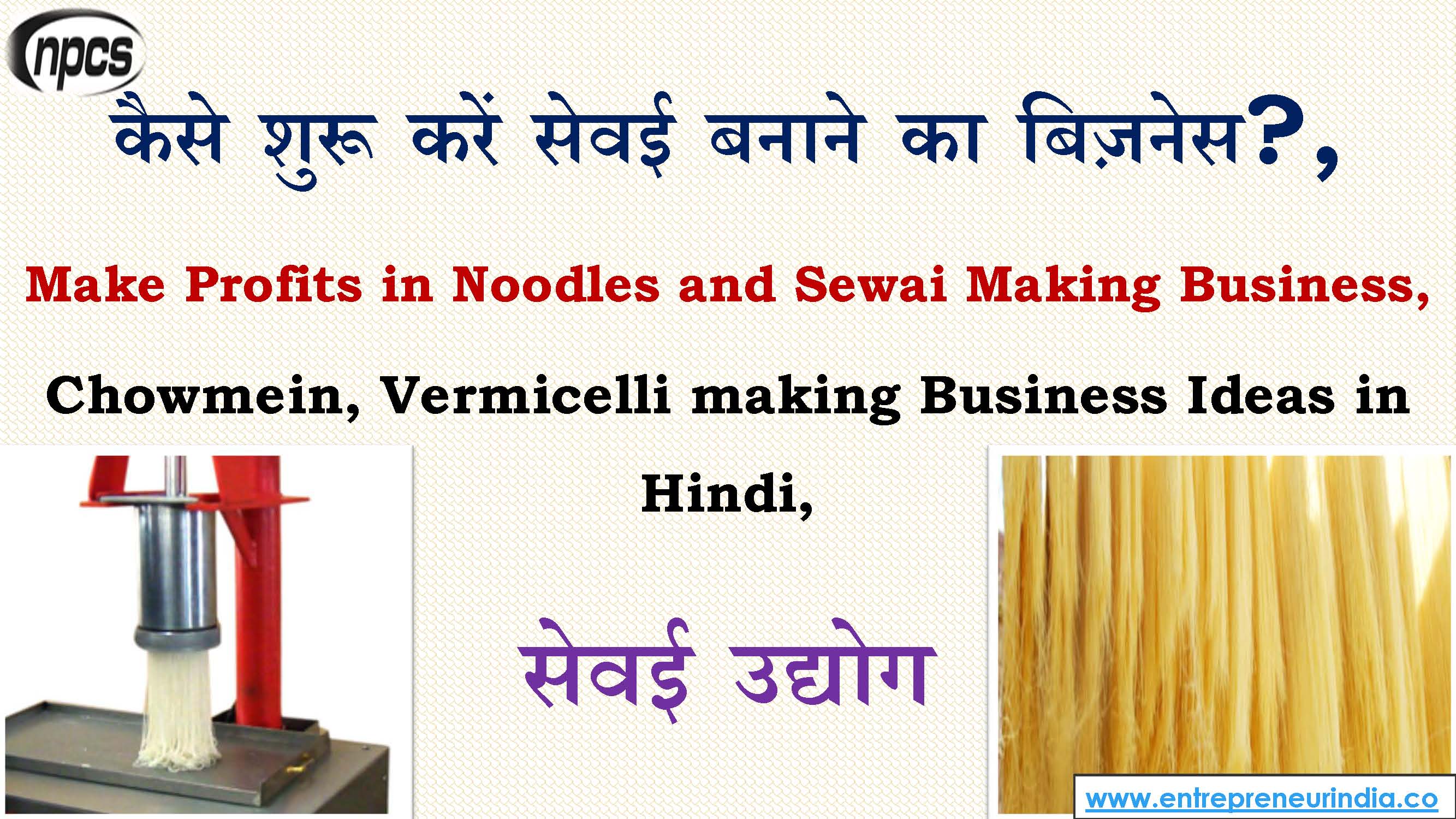
With rising demand for convenient and traditional food items, entrepreneurs now have a compelling reason to make profits in noodles and sewai making business. Both products cater to large and varied markets—from instant noodle lovers to households that regularly use sewai (vermicelli) in festive and daily cooking. Moreover, the manufacturing process is relatively simple, with low initial investment and high volume production potential. Entrepreneurs who maintain product quality, understand local taste preferences, and adopt efficient packaging can quickly build a loyal customer base and a profitable brand in this growing segment.
Make Profits in Noodles and Sewai Making Business
The growing urban population, shifting eating habits, and constant demand for ready-to-cook and traditional products have created the perfect environment for success in noodles and sewai production. These products appeal to both modern and traditional consumers, making the business model highly scalable and financially rewarding. Additionally, automation in production, flexible distribution options, and increasing demand in tier 2 and tier 3 cities make it easier to launch and sustain this business in today’s market.
See Also:-Nonwoven Fabric Manufacturing Plant
Market Potential and Consumer Demand
India’s diverse culinary culture ensures a consistent demand for both instant noodles and traditional sewai. Noodles have become a staple in many urban households due to their ease of preparation and variety in flavors. On the other hand, sewai holds a special place in traditional Indian sweets and festive recipes. This dual market offers immense opportunity to make profits in noodles and sewai making business, especially if the brand caters to both daily consumption and special occasions. Furthermore, with proper branding and attractive packaging, small businesses can easily tap into retail chains and local kirana stores.
Raw Materials and Production Process
Starting this business requires essential ingredients like refined flour (maida), semolina (suji), edible oils, preservatives, and food-grade colors or flavors. For sewai, wheat flour or rice flour is typically used. The production process includes dough mixing, extrusion or pressing, cutting, drying, and packaging. Noodle-making machines and sewai-making machines are widely available at competitive prices. By sourcing ingredients locally and managing wastage, businesses can control costs while maintaining product quality. This streamlined process enables consistent output and plays a major role in ensuring profitability.
Machinery and Setup Requirements
A small-scale unit for noodles and sewai production does not require large infrastructure. A workspace of 1000–1500 sq. ft. is sufficient for machines, raw material storage, drying space, and packaging. Key machinery includes dough mixers, extruders, cutting machines, drying trays or cabinets, and packing machines. Automation improves efficiency and consistency, particularly important in large orders or B2B supply. Moreover, investing in hygienic production practices and food-safe packaging is essential to gain consumer trust and brand credibility in this sector.
See Also:- Products from Fruits and Vegetables
Branding, Packaging, and Distribution
Strong branding and visually appealing packaging are essential to make profits in noodles and sewai making business. For noodles, options like spicy masala, vegetable, or plain variants can be offered in single-serve or family packs. For sewai, packaging in transparent pouches with nutritional labeling can increase shelf appeal. Branding should communicate hygiene, taste, and value. Products can be distributed through local grocery stores, wholesale markets, online platforms, and even direct-to-home models. Building relationships with retailers and ensuring timely supply will enhance brand presence and customer retention.
See Also:-Production of Ferrous and Non-Ferrous Metals
Profit Margins and Business Viability
This business offers promising profit margins due to low production costs and high-volume sales potential. On average, the cost of production per 1 kg of noodles or sewai is significantly lower than the market selling price, especially when sold in bulk or branded packages. With proper market positioning, a small unit can recover its setup costs within 8–12 months. Scaling the business by offering product variations, entering new markets, and securing institutional buyers (canteens, hotels, caterers) further boosts profitability. Moreover, government schemes for food processing and MSME subsidies can reduce initial capital pressure.
See Also:-Profitable Projects on Food or Beverage Processing
Hygiene and Regulatory Compliance
Adhering to food safety and quality standards is non-negotiable in this business. Registering under FSSAI, maintaining clean workspaces, and following basic hygiene practices during processing and packaging will help build customer trust. Regular quality checks and proper labeling ensure compliance with local food laws. In some cases, obtaining ISO certification or HACCP compliance can strengthen the business’s appeal to large distributors and export markets.
Conclusion
To conclude, entrepreneurs looking for a high-demand, low-risk venture can confidently make profits in noodles and sewai making business. The ability to cater to both modern fast food culture and traditional culinary practices makes this segment uniquely positioned for success. With efficient production, strong branding, and focus on quality, this business can be both financially rewarding and scalable in the long term.