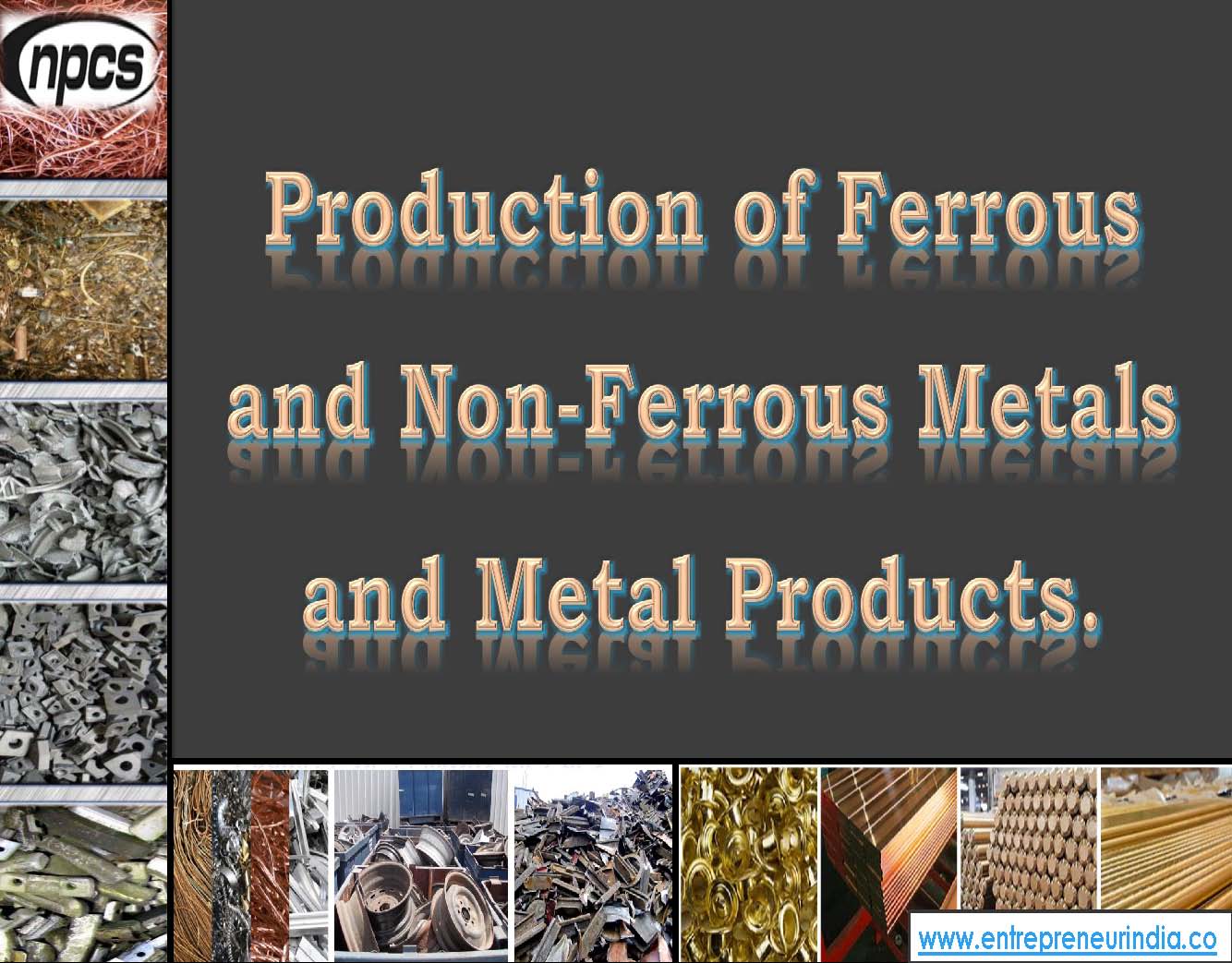
Metals are the foundation of industrial development, infrastructure, and modern living. In particular, the production of ferrous and non-ferrous metals plays a central role in sectors such as construction, transportation, manufacturing, and electronics. India, with its growing industrial base and mineral reserves, has emerged as a significant player in both categories. Ferrous metals like steel and iron dominate heavy industries, while non-ferrous metals such as copper, aluminum, and zinc support a wide range of precision applications. From mining and refining to casting and rolling, this production process opens up substantial opportunities for businesses and investors alike.
Exploring the Production of Ferrous and Non-Ferrous Metals
The production of ferrous and non-ferrous metals is a highly organized sector with deep integration across multiple industries. These metals are extracted, processed, and converted into usable forms through various metallurgical methods. While ferrous metals contain iron and offer strength and magnetism, non-ferrous metals are lighter, corrosion-resistant, and ideal for electrical and thermal conductivity. Together, they serve nearly every critical area of modern infrastructure.
See Also:- Production of Polypropylene (PP) and their Products
1. Understanding Ferrous vs. Non-Ferrous Metals
To get a clear view of the market, it’s important to distinguish between the two:
Ferrous Metals
Contain iron as the main element
Examples: Steel, Cast Iron, Wrought Iron
High tensile strength, magnetic, prone to rust (unless alloyed)
Widely used in construction, automotive, shipbuilding, and machinery
Non-Ferrous Metals
Do not contain iron
Examples: Aluminum, Copper, Zinc, Nickel, Lead
Lightweight, corrosion-resistant, excellent conductors
Used in electronics, aerospace, plumbing, packaging, and renewable energy
Understanding the unique properties and applications of both groups is essential for anyone exploring the production of ferrous and non-ferrous metals.
2. Mining and Raw Material Sourcing
Metal production starts with mining ores and minerals.
Iron Ore is the primary raw material for ferrous metals, mined from open-pit or underground mines
Bauxite (for aluminum), chalcopyrite (for copper), sphalerite (for zinc), and galena (for lead) are key non-ferrous mineral sources
India has abundant reserves in states like Odisha, Jharkhand, Chhattisgarh, and Rajasthan
After extraction, the raw ores undergo beneficiation (crushing, screening, washing) to increase the metal concentration before being transported for processing.
See Also:- Products from Fruits and Vegetables
3. Smelting and Refining Processes
The production of ferrous and non-ferrous metals involves advanced metallurgical techniques:
For Ferrous Metals:
Blast Furnaces are used for smelting iron ore with coke and limestone to produce pig iron
Basic Oxygen Furnaces (BOF) and Electric Arc Furnaces (EAF) convert pig iron or scrap into steel
Alloying elements like manganese, chromium, and nickel are added for special-grade steels (e.g., stainless steel)
For Non-Ferrous Metals:
Aluminum is extracted from bauxite using the Bayer process, followed by electrolysis in the Hall-Héroult cell
Copper is refined through pyrometallurgy (smelting) and electrorefining
Zinc, Lead, and Nickel require roasting, leaching, and electrowinning steps
Each metal has a specific refining path depending on its properties and ore type.
4. Rolling, Casting, and Finishing
After refining, metals are processed into usable forms:
Casting: Liquid metal is poured into molds to make ingots, billets, or slabs
Hot and Cold Rolling: These processes shape metals into sheets, rods, bars, or wires
Extrusion and Forging: Used for creating specific shapes like tubes or structural components
Surface Treatments: Galvanizing, anodizing, and coating improve performance and aesthetics
This phase of the production of ferrous and non-ferrous metals adds value and prepares the material for industrial or commercial use.
See Also:- Start Business in Fisheries and Aquaculture Sector
5. Major Applications and Industry Demand
Metals power nearly every sector. Here’s how both ferrous and non-ferrous metals are used:
Ferrous Metals Applications:
Construction (steel bars, beams, sheets)
Transportation (automotive frames, railway tracks)
Industrial Equipment and Tools
Oil and Gas Infrastructure
Non-Ferrous Metals Applications:
Aluminum in packaging, aviation, and cookware
Copper in electrical wiring, motors, and electronics
Zinc in galvanizing steel
Nickel in battery technology and alloys
The diverse usage makes the production of ferrous and non-ferrous metals a strategic industry for any economy.
6. Machinery and Plant Requirements
Setting up a metal production facility requires capital and precision equipment:
Furnaces: Blast, electric arc, induction, or rotary kilns
Refining Equipment: Electrolytic cells, converters, scrubbers
Casting Units: Continuous casters or mold casting machines
Rolling Mills and Presses
Pollution Control Devices (scrubbers, bag filters)
Automation and AI-integrated systems are now helping producers improve quality, reduce waste, and optimize energy usage.
7. Environmental and Regulatory Compliance
Metal production is resource-intensive and environmentally sensitive.
Plants must follow CPCB and SPCB norms for emissions, noise, and waste
Water recycling systems and energy-efficient furnaces are essential
Dust collectors and fume extraction units must be instal
Compliance with Occupational Health and Safety standards is mandatory
Eco-conscious practices are becoming a major competitive advantage in the production of ferrous and non-ferrous metals.
8. Export Potential and Global Demand
India exports both raw and semi-finished metals to over 100 countries.
Top markets: USA, UAE, China, Germany, Italy
Key exports: Iron and steel products, aluminum ingots, copper cathodes, zinc slabs
Export incentives are offered under MEIS and RoDTEP schemes
Demand for non-ferrous metals is rising due to electric vehicles and green energy initiatives
With quality certifications like ISO 9001 and REACH compliance, Indian manufacturers can expand their global footprint.
See Also:-Emerging Opportunities in the Fertilizer Market
9. Profitability and Growth Prospects
The production of ferrous and non-ferrous metals offers strong returns due to:
High demand and recurring use across industries
Value addition through alloying and forming
Long shelf life and high recyclability
Government focus on infrastructure and manufacturing
Small-scale units producing castings or rods can start with ?50 lakh investment, while larger integrated plants may exceed ?5 crore. ROI depends on efficiency, scale, and market connections.
Conclusion
The production of ferrous and non-ferrous metals forms the backbone of India’s industrial journey. With continuous innovation in metallurgy, sustainable practices, and smart automation, this sector is growing faster than ever. Entrepreneurs can enter at various points in the value chain—mining, refining, forming, or recycling. As demand surges for both structural and specialty metals, investing in this field offers long-term growth, high market relevance, and global business opportunities.