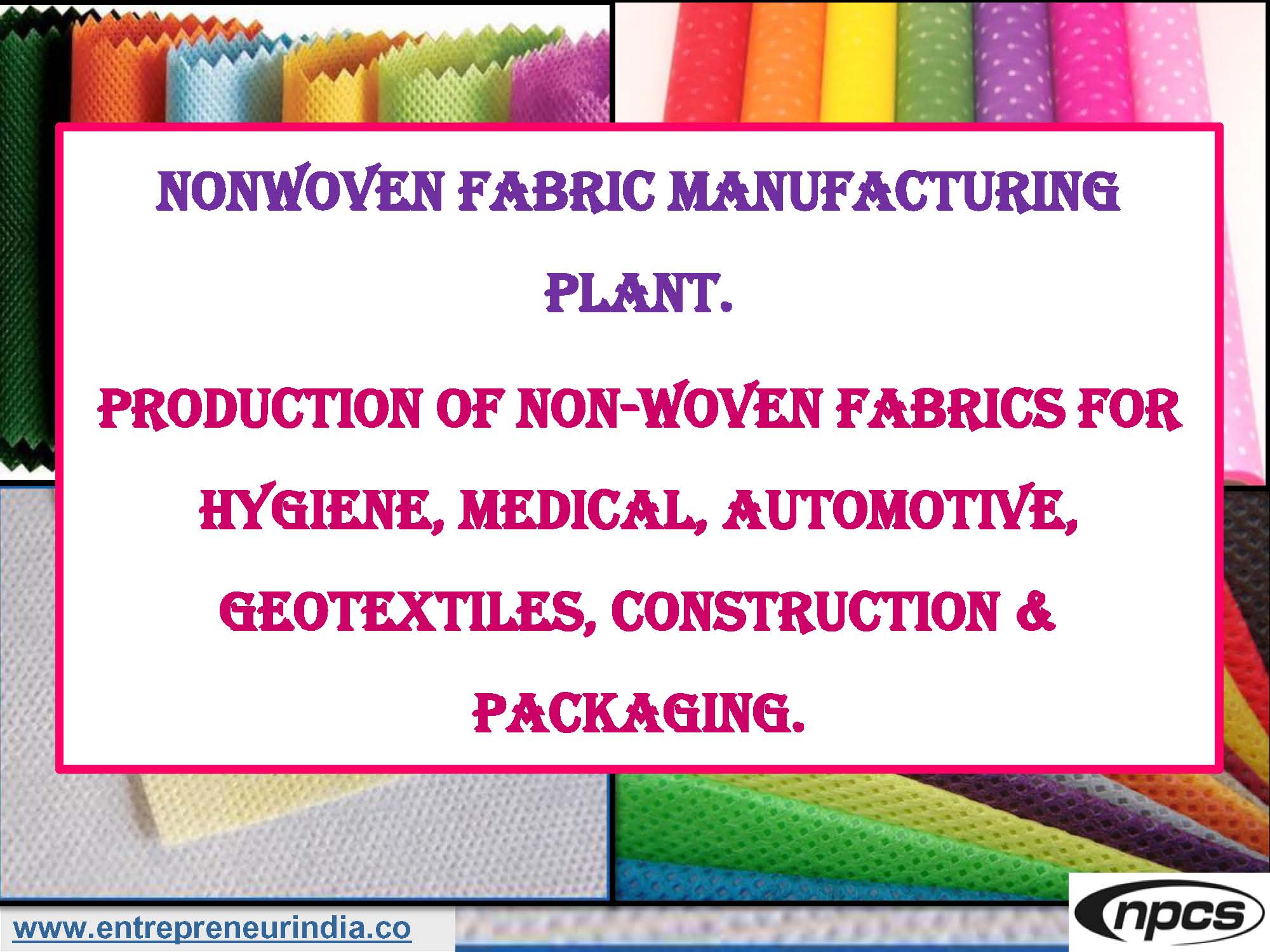
The growing demand for sustainable, cost-effective, and versatile materials across various industries has significantly boosted interest in setting up a Nonwoven Fabric Manufacturing Plant. As industries like healthcare, agriculture, automotive, and hygiene increasingly adopt nonwoven textiles, entrepreneurs and manufacturers are eyeing this sector for its scalability and high returns. Moreover, the relatively lower investment and faster production cycles compared to woven fabrics make it a lucrative venture. By integrating automation, ensuring quality control, and meeting global standards, investors can enter a market that continues to expand with innovation and ecological awareness.
Nonwoven Fabric Manufacturing Plant
Starting a Nonwoven Fabric Manufacturing Plant offers a strategic entry point into a diverse and expanding global textile market. Nonwoven fabrics, made by bonding or felting fibers together rather than weaving, offer unique properties such as lightweight structure, high absorbency, and customizable strength. Moreover, they are vital in applications ranging from medical masks and wipes to geotextiles and insulation materials. With the right planning, equipment, and compliance, setting up such a plant can be both profitable and future-ready.
See Also:- Production of Polypropylene (PP) and their Products
Applications and Market Demand
Nonwoven fabrics serve a wide array of industries, and their demand continues to rise. In healthcare, they are used in disposable items like surgical masks, gowns, and sanitary products. The hygiene sector consumes large volumes for baby diapers, adult incontinence products, and feminine hygiene pads. In construction and agriculture, geotextiles and crop covers made from nonwovens are essential. The automotive sector uses them for insulation, filters, and upholstery. This multi-industry reliance drives consistent demand, making a Nonwoven Fabric Manufacturing Plant a highly stable and scalable business model.
Raw Materials and Production Processes
The production of nonwoven fabric involves several key raw materials, mainly synthetic polymers such as polypropylene (PP), polyester (PET), and sometimes natural fibers like viscose. The choice of raw material depends on the end-use application. Production methods include spunbond, meltblown, airlaid, and needle punch technologies, each suitable for different fabric characteristics. For example, spunbond and meltblown processes are widely used in mask manufacturing. Moreover, combining these processes (e.g., SMS fabric) enhances functionality. Investing in the right technology directly affects product quality and plant efficiency.
See Also:- Products from Fruits and Vegetables
Machinery and Plant Setup Requirements
Setting up a Nonwoven Fabric Manufacturing Plant involves selecting advanced machinery for fiber feeding, web formation, bonding, and finishing. Depending on the fabric specifications, equipment such as spunbond lines, calendaring machines, embossers, and slitting units may be required. A typical plant layout must include areas for raw material storage, production lines, quality control labs, packaging, and warehousing. Moreover, adequate power supply, water access, and environmental controls are crucial. Automating parts of the process reduces labor costs and ensures consistent output, which is vital for scaling operations.
See Also:-Production of Ferrous and Non-Ferrous Metals
Regulatory Compliance and Certifications
Manufacturers must comply with environmental regulations, waste disposal norms, and safety standards. Additionally, certifications like ISO 9001 (Quality Management), ISO 14001 (Environmental Management), and OEKO-TEX certification for textile safety help build credibility and access global markets. In the healthcare and hygiene sectors, FDA or CE certifications may also be necessary. Following good manufacturing practices (GMP) not only ensures legal compliance but also enhances customer trust. Therefore, integrating compliance protocols into the foundation of a Nonwoven Fabric Manufacturing Plant is essential.
Profitability and ROI Considerations
A well-managed Nonwoven Fabric Manufacturing Plant can yield impressive returns due to low material costs and high-volume output. Profit margins vary depending on the target market, production scale, and automation level. Supplying to niche markets such as eco-friendly or biodegradable nonwovens can also command premium pricing. Moreover, long-term contracts with FMCG, healthcare, or automotive companies stabilize cash flow. Government incentives for textile innovation and MSME subsidies further improve the business case. A detailed feasibility study and business plan are key to estimating breakeven timelines and ROI.
Sustainability and Future Trends
Sustainability is a major driver in the future of nonwoven textiles. As global regulations push for greener manufacturing, many producers are turning to biodegradable and recycled materials. Innovations like spunlace technology for eco-friendly wipes or PLA-based nonwovens offer exciting new avenues. Moreover, integration with digital technologies like IoT-based quality monitoring is enhancing operational control. With growing global emphasis on circular economy models, setting up a Nonwoven Fabric Manufacturing Plant with a green focus can provide long-term competitive advantages.
See Also:-Profitable Projects on Food or Beverage Processing
Conclusion
In conclusion, a Nonwoven Fabric Manufacturing Plant stands as a forward-thinking and profitable industrial venture. Its widespread applications, manageable production costs, and evolving technological landscape make it a smart investment. By focusing on product quality, sustainability, and market-driven innovation, entrepreneurs can not only meet current demand but also stay ahead in a future-ready industry.