
Top 8 Products from Waste PET Bottles: Business Ideas & Manufacturing Guide
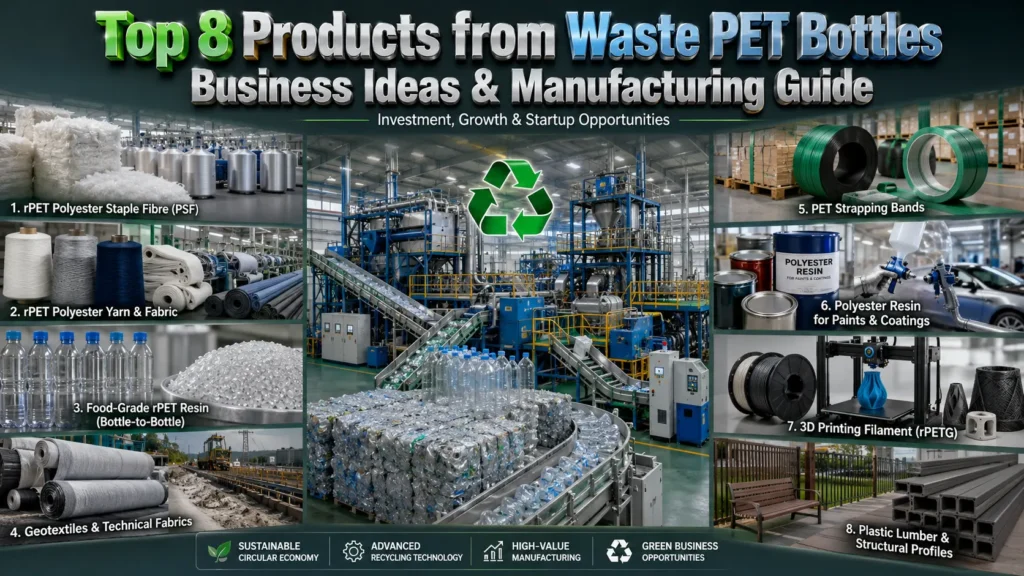
PET bottle recycling business The PET Recycling Opportunity Transformed by EPR Although most commonly recycled plastic in India, polyethylene terephthalate (PET) – clear plastic made for water, soft drink, cooking oil and food packaging – also poses one of the biggest plastic waste concerns for the country. Annually, India generates about 3.5 million tonnes of plastic waste, most of it-60-70%-being collected through an informal network of rag pickers, Kabadiwala networks and small recyclers, and the other 30-40% ending up in landfills, scattered in dumpsites, and often through incinerators. The implementation of EPR – Extended Producer Responsibility – on all plastic packaging producers in the 2022 Plastic Waste Management Amendment Rules has shifted the economics of PET recycling. Now it comes down to the brand owners to prove they collected and recycled the same amount of plastic they added to the market. This has changed the price of recycled PET from a commodity to an EPR compliance tool, with a lower price limit — thus enhancing the investment argument for formal PET recycling. The current trend of entrepreneurs entering this sector has both genuine demand for the product and value of the raw material driven by the regulations. Related Article: Packaged Drinking Water with PET Bottles The PET Recycling Value Chain PET recycling is a chain starting from collection and sorting by colour (clear, green, blue), followed by baling, washing (hot wash lines remove labels, adhesives and contaminants), flaking (shredding into clean PET flakes) and ending with the conversion of PET flakes into end products. The cost of the investment increases significantly at each step downstream — a “baler” costs Rs. 5 lakhs, a hot-wash line Rs. A fibre spinning line Rs. 50 – 150 lakhs. But so do the margins, 3–8 crore. Entrepreneurs may join anywhere and can sell semi-processed material to the downstream processors or can go forward to get more realisation. Top 8 Products from Waste PET Bottles 1. rPET Polyester Staple Fibre (PSF) The most significant end product from PET bottle recycling worldwide is recycled PET polyester staple fibre. After being washed and dried, PET flakes are melted, extruded through spinnerets, drawn, crimped and cut into short fibers (32-64 mm) that are used as pillows, quilts, sleeping bags, stuffed toys and automotive seat cushions. As European and US brands make their recycled fibre content commitments, the demand for exported materials continues to rise.As Europe and the US brands make commitments to recycled fibre content, the demand for exported materials continues to rise. The cost of 10 TPD rPSF plant is Rs. The stake he has in 2–5 crore and the money he generates is Rs. 60,000–90,000 per tonne of output. Explore This Book: The Complete Technology Book on Expanded Plastics, Polyurethane, Polyamide and Polyester Fibres 2. rPET Polyester Yarn and Fabric The high-quality PET flakes are melted and extruded to continuous filament polyester yarn. These high-quality yarns have a range of uses that include fabrics for Apparel, such as active wear, outerwear and linings, Home & Lifestyle, Home & Technical products. As, many globally recognised fashion brands set recycled targets for Polyester, to some extent that you’re more likely to find some of the leading companies making commitments, you could even be looking at, like adidas, H&M, Patagonia and IKEA setting some standards. Indian rPET yarn manufacturers who cater to these brands have established their export business. When making a rPET yarn spinning Plant, the following is required: This makes it a cheaper product than the other 3–8 crore which produces yarn at Rs. 80,000–1,20,000 per tonne. 3. Food-Grade rPET Resin (Bottle-to-Bottle) The most profitable PET recycling process is the bottle-to-bottle process, where rPET (recycled PET resin) is used to make food-grade resins for new beverage bottles. To get the required high intrinsic viscosity for bottle resin, this will need Solid State Polymerisation (SSP) equipment. There is a considerable investment (Rs. The price of food-grade rPET resin is Rs. 10–25 crore. The price of 80,000 to 1,10,000 per tonne is almost comparable to virgin PET resin price, and raw material (PET flakes) price is much lower. Domestic food-grade rPET is a preferred option as beverage brands under EPR pressure look to fill supply chain. 4. Geotextiles and Technical Fabrics Needle-punched geotextile fabrics used in road constructions, slope stabilisation and soil erosion control are made of rPET fibres. The rPET geotextiles have similar performance to virgin polyester but with a price reduction of 20-30%, which is appealing to infrastructure contractors. Specifying geotextile use is increasing the demand, especially from NHAI and state highway departments. The cost of rPET needle-punch geotextile line is Rs. The value is in the range of 1.5–3 crore and directly serves infrastructure supply chains. 5. PET Strapping Bands rPET flakes can be used directly in packaging and logistics industry for PET strapping. The use of PET strapping has been largely superseded by the use of steel strapping because it is lighter, it is rust-proof and it does not break on impact. The price of a PET strapping extrusion line is Rs. The cost of 30–80 lakh and produces strapping at Rs. $60,000-$80,000 per tonne — for large domestic packaging and logistics industry. Get Detailed Project Report (DPR): Plastics, Polymers & Resins Manufacturing Projects 6. Polyester Resin for Paints and Coatings By performing glycolysis on PET waste, bis-hydroxyethyl terephthalate (BHET) and mixed glycol terephthalate oligomers can be used as polyol for polyurethane foams, alkyd resins and polyester resins in paints and coatings. This is a chemical recycling step which needs more advanced chemistry (Rs.). High value-added chemical intermediates having better margin profiles than mechanical recyclables can be generated (1–3 crore). 7. 3D Printing Filament (rPETG) These PET flakes can be extruded and spooled into filament for desktop FDM printers, which are usually made in a high clarity varnish. The niche, high value application fetches Rs. 3,000–6,000 per kg of filament versus Rs. A value multiplier of 40–75x 60-80 per kg of input PET flakes. Small-scale production (Rs. The 20–50 lakh price segment is aimed
Top 8 Products from Dairy Whey and Cheese Waste: Business Ideas & Manufacturing Guide
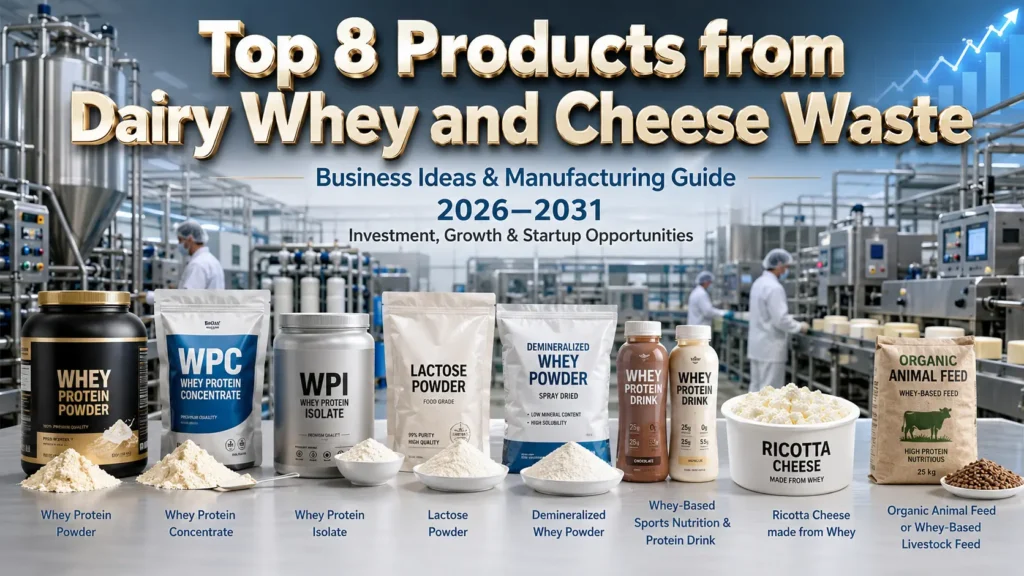
Dairy Whey Processing Business Whey — India’s Most Wasted High-Value Food Industry By-Product India is the world’s largest milk producer, with 220 million tonnes of milk being produced annually. The dairy processing industry generates huge quantities of Paneer, Cheese and Casein in the country and along with each of the above product comes a waste stream which is literally being dumped by most of the processors. The liquid end of cheese, paneer, and casein is called whey, which contains about 6.5 grams of protein (in the form of beta-lactoglobulin, alpha-lactalbumin, immunoglobulins and lactoferrin) that are among the most highly nutritious and most rapidly absorbed proteins in human nutrition. About 13-15 MT of whey is produced in India every year due to paneer, chhena and cheese production. If whey protein concentrate (WPC-80) prices are Rs. The protein content in India’s wasted whey is Rs. 400-600 per kg. 5,000 crore+ annual opportunity. The opportunity for specialised whey processing entrepreneurs who can collect, process and supply to the booming sports nutrition, infant formula and pharmaceutical market in India is created by most of the small and medium dairy processors lacking in capital and technology to recover this value. Get Detailed Insights from This Book: Milk Processing & Dairy Products in India Market Research Report The Whey Processing Chain and Entry Points The technological development of whey processing includes collection from the dairy processors (sweet whey or acid whey), pasteurisation, pre-treatment, ultrafiltration (UF) to concentrate protein, spray drying for whey protein concentrate (WPC-35, WPC-70, WPC-80) or further ion exchange chromatography for whey protein isolate (WPI-90). The protein content as well as market value increases significantly at each step. Lactose from the UF (permeate) will be a separate product stream, as lactose powder for pharmaceutical and food applications. This can be done by entrepreneurs at any stage of their business, whether they are interested in selling the semi-processed concentrate to existing driers or they would like to participate as fully-fledged companies and generate finished products for the consumer-market. Top 8 Products from Dairy Whey 1. Whey Protein Concentrate (WPC-80) WPC-80, which contains 80% protein, is the most popular sports nutrition ingredient on the world market, and the main raw ingredient in protein bars, shakes, meal replacement powders and functional foods. Currently, India sources most of its WPC-80 imports from New Zealand, Australian, Europe and the USA. Reprocessing Indian dairy whey domestically would be extremely cost competitive. The cost of a 5 MTPD WPC-80 plant (ultrafiltration + spray dryer) is around Rs. The revenue that the 5–15 crore earns is Rs. 400–600 per kg. 2. Whey Protein Isolate (WPI-90) The highest quality sports nutrition ingredient, WPI-90 is protein-rich, with 90% protein or higher and is faster digested than WPC, low in lactose, and virtually fat-free. An extra ion exchange chromatography/microfiltration step is needed for production in addition to the step required for WPC production. WPI sells at Rs. India’s sports nutrition market (estimated Rs. The value of the market (12,000crore by 2026) is expanding by 15-20 per cent per year, and it is highly import-dependent thereby offering significant opportunity for domestic manufacturing. Build a profitable business with the right idea 3. Whey Powder (Food Industry Grade) Sweet whey powder (12% protein, 70% lactose) is obtained by the simple spray drying of the concentrated whey without protein separation. It is used in bakery products, confectionery, infant formula, animal feed and processed cheese. At Rs. Whey powder is the cheapest product available but is the lowest value product with requirement of Rs. 80-150 per kg. Installing a spray dryer unit for Rs 80-200 lakh, which is an entry point for dairy processors producing whey. 4. Pharmaceutical Lactose Lactose concentration in the permeate from whey ultrafiltration is 4-5%. Crystallised and dried lactose is used in the manufacturing of pharmaceutical tablets as an excipient, in infant formula as well as confectionery and as a fermentation substrate. Lactose is sold at a price of Rs. per unit in Pharmaceutical Grade. The import prices of 150-250 per kg are high and India is importing a huge amount. The cost of a lactose crystallisation and drying unit is Rs. The market is large and import-substitutable, and they are at 2-5 crore. 5. Lactulose (Pharmaceutical Laxative) Lactulose is formed by alkaline isomerization of whey lactose. A pharmaceutical grade laxative and prebiotic for treating hepatic encephalopathy, selling more than USD 500 million world-wide each year. Currently, India depends on the imports of lactulose from Europe. A lactulose synthesis unit (Rs.) The market potential of 3-6 crore for converting lactose from whey into the pharmaceutical product is a very high margin specialty chemical opportunity with good import substitution potential. 6. Whey-Based Animal and Aquafeed Liquid whey can be spray dryed into whey-enriched animal feed pellets without protein concentration for poultry, swine and aquaculture. A fishmeal replacement ingredient which has been shown to improve fish growth. Due to the trend towards dairy and plant protein-based fishmeal alternatives, whey-based aquafeed is becoming an increasing share of the market. Investment: Rs. For blending and pelletising Rs 20-60 lakh. 7. Lactic Acid from Whey Permeate Whey permeates, containing abundant lactose, can be subsequently fermented by Lactobacillus species to yield lactic acid, which can be used in bioplastic (PLA) production, food acidulants, personal care products and pharmaceuticals. The price of lactic acid is Rs. 80–150 per kg. The price of a 100L whey fermentation and lactic acid recovery unit is Rs. 1-3 crore and is linking dairy waste processing to the rapidly expanding bioplastics value chain. 8. Biogas from Whey and Dairy Effluent Whey and wash water from dairy are good substrates for biogas digestion as they have very high BOD value (35,000-60,000mg/l). The effluent from dairy processing plants must be processed legally before discharge. The biogas digester helps in reducing electricity bill and energy cost in ETP compliance by using whey and dairy effluent as raw material to generate biogas as a fuel to provide energy for boilers. Dairy wastes produce biogas, which is also eligible for benefits under
7 Industrial Business Ideas Near HPCL Pachpadra Refinery That Can Earn ₹1 Crore/Year
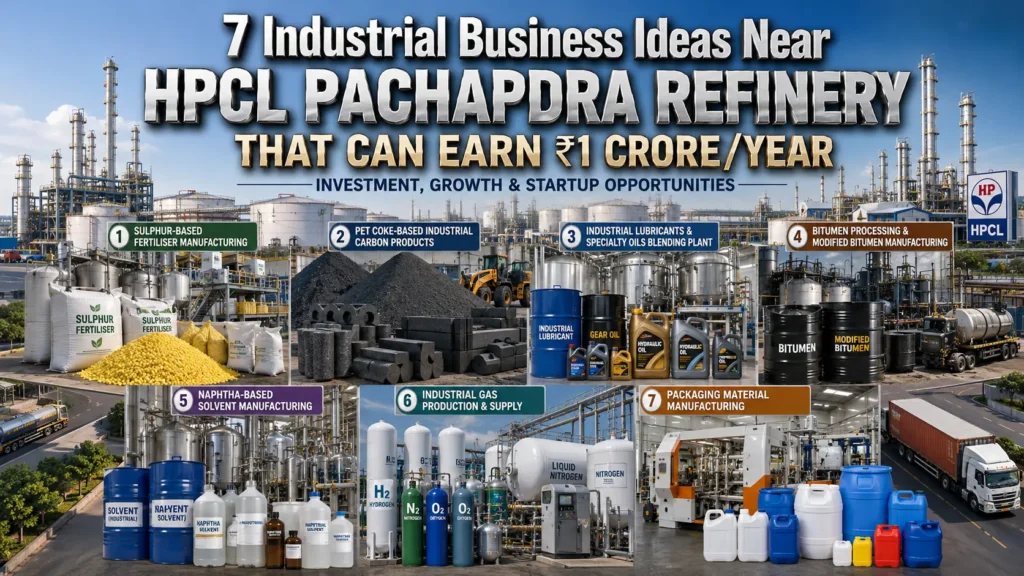
Business Ideas Near Pachpadra Refinery A Refinery That Changes the Map One of the biggest industrial events in the remote memory of western India is the commissioning of HPCL (Rajasthan) Refinery at Pachpadra, Balotra-Barmer belt. A greenfield crude oil refinery of this magnitude isn’t just a manufacturing plant for fuel; it’s a whole new environment of entrepreneurial concepts that savvy business people can exploit today. The supply chains, workforce and infrastructure that a mega-refinery attracts benefits all of the above. The Pachpadra corridor is undoubtedly the most enticing industrial opportunity in the country right now if you are a startup founder, MSME investor or first-generation entrepreneur seeking an opportune industrial entry into the nation. This article takes a detailed look at this opportunity – the sector logic, where the government support is available, some ideas for projects, trade dynamics and models of success to learn from. Understanding the HPCL Pachpadra Refinery and Its Industrial Significance The project for the HPCL Refinery Limited (HRRL) is a joint venture between Hindustan Petroleum Corporation Limited (HPCL) and the Government of Rajasthan at Pachpadra. It is meant to process locally available crude oil from Rajasthan, which is mainly from Barmer oil fields, with a capacity of 9 million metric tonnes per annum (MMTPA). Thus, it is one of the bigger greenfield refinery projects being undertaken during India’s recent industrial history. But it is not just the refinery that is significant for entrepreneurs. It’s the industry that develops around the refinery, and what it makes. Modern crude oil refinery produces more than petrol and diesel. They include naptha, liquefied petroleum gas (LPG), aviation turbine fuel (ATF), sulphur, petroleum coke (pet coke), bitumen, propylene, and other hydrocarbon streams, which are generated as by-products or co-products. These are each a separate “downstream” manufacturing value chain. Plus, because it’s such a large refinery, it requires massive amounts of support infrastructure: industrial gases and packaging materials, logistics, maintenance services, chemical intermediates, and so on. Thus, the business opportunity is direct (in the processing of the refinery outputs) and indirect (in provision of services and materials required by the refinery and its employees). Information about the refinery project can be obtained from HPCL official corporate website. Why the Petrochemical and Ancillary Manufacturing Sector Is a Strong Bet Right Now The Indian Petrochemical industry is in structural growth mode. Demand of polymers, plastics, synthetic fibres and specialty chemicals have been on the ascent in the domestic market. This demand is sustained by rising activity in the construction, food and drinks packaging, automotive and agriculture industries. India is currently importing considerable quantity of petrochemical intermediates which presents an opportunity for domestic manufacturers to meet the demand through import substitution. In addition, the state of Rajasthan is relatively underpenetrated industrially in terms of its resource base and size. The state government has made a conscious effort to make it an attractive industrial location through the Rajasthan Investment Promotion Scheme (RIPS) and dedicated industrial areas. The process of the Pachpadra refinery coming to life is also an anchor investment, which normally leads to an ancillary unit, workforce settlement and service industries coming into the area. One of the biggest costs benefits a manufacturer can have is its proximity to the raw material source, from a profitability perspective. Companies set up near Pachpadra refinery will benefit from reduced logistics costs for feedstocks, quicker response of supply chain and possible preferential access to by-product streams. The benefits directly impact on operating margins. The Ministry of Chemicals and Petrochemicals, Government of India is an authoritative source for industry level data and statistics for the petrochemical industry. Export Potential from the Pachpadra Industrial Belt The Indian petrochemical exports have been on the rise, and major markets in Southeast Asia, Africa and Middle East are actively looking for competitively priced petrochemical intermediates as well as finished products from India. The geo-location factor also proves to be advantageous for Rajasthan. The manufacturing sector has easy access to the sea through proximity of Mundra and Kandla ports located in Gujarat, which is essential for export-oriented industries. It is possible for an entrepreneur to start a petrochemical/ specialty chemical unit which can be export oriented from day one near Pachpadra, provided the product is in line with the global demand patterns such as agrochemicals, packaging polymers, industrial lubricants etc. Government Policies and Incentives Supporting New Manufacturing Businesses The policy landscape for new manufacturing enterprises that are located in the vicinity of an anchor industrial project, such as HRRL Pachpadra, is truly conducive at the moment. There are a few schemes at both central and state levels that offer capital subsidy, tax exemption, institutional support and thereby mitigate the financial risk for the first time investors. Central Government Schemes Production Linked Incentive (PLI) Scheme has been introduced by the Ministry of Chemicals and Petrochemicals for certain chemicals and petrochemicals. It provides incentives based on incremental production, which is especially appealing for manufacturers expanding production. The MSME Credit Guarantee Fund Trust (CGTMSE) scheme provides credit support of up to ₹2 crore to eligible MSMEs without the need for collateral.The MSME Credit Guarantee Fund Trust (CGTMSE) scheme is an important facilitator for the small manufacturing setups for providing credit support without collaterals to MSMEs. Besides, the Ministry of MSME also operates PMEGP (Prime Minister’s Employment Generation Programme) that offers capital subsidy of up to 35% for manufacturing industries in rural and semi-urban areas. Pachpadra is considered as semi-urban area, which is very relevant for small manufacturing entrepreneurs for the implementation of PMEGP. Likewise, the Technology Upgradation Fund Scheme (TUFS) is applicable in the case of investment by business in modern and efficient manufacturing equipment. Rajasthan State Incentives Rajasthan Investment Promotion Scheme (RIPS) is the state’s key industrial incentive scheme. Provides subsidies on investments, exemption from electricity duty, rebate on conversion of land charges, and waiver of stamp duty for qualified industries. Typically, the sectors including units for Petrochemicals and Chemicals are considered as priority sectors for RIPS incentives. Further, the Rajasthan MSME Act provides
How to Start a Power Transformer & Distribution Transformer Manufacturing Business: A Complete Guide
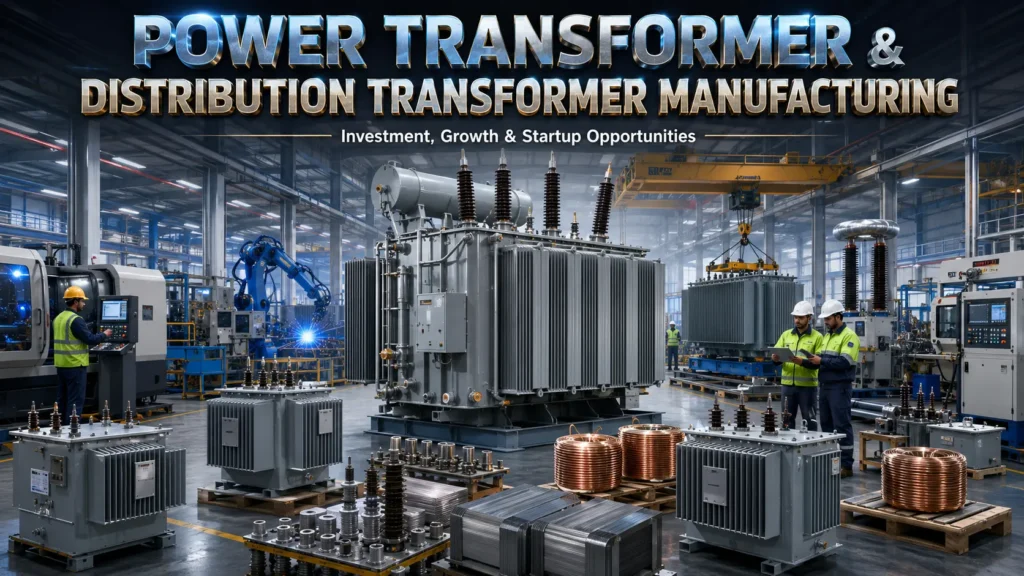
Power Transformer Manufacturing Business and distribution transformer manufacturing is among the most robust and sought-after manufacturing business ideas in India’s industrial landscape and that is one of the reasons why electricity is never in demand. Transformers are used in every new factory, solar farm, residential township, railway line, data centre or irrigation pump. This reality can make transformer manufacturing a viable business idea and structurally sound long duration opportunity for first generation entrepreneur and MSME investors. India is undergoing a large-scale electricity infrastructure build-out. The government’s thrust on 24×7 power supply, modernization of the grid and integration of renewable energy sources are driving transformer demand to a new high. The government’s thrust on 24×7 power supply, modernization of the grid, and integration of renewable energy sources are driving transformer demand to new heights. At the same time, the changes in the global value chain are opening export opportunities that India manufacturers could not have envisioned 10 years ago. Covering investment structure, raw materials, government incentives, project models, and real-world success stories, this article delves into all facets of this manufacturing enterprise. Why the Transformer Manufacturing Sector Is a Smart Business Entry Demand Fundamentals Are Unusually Strong The market for transformers in India (both distribution transformer and power transformer) is more than Rs.30,000 crore and is increasing at a compound annual growth rate of approximately 8 to 10 percent. State electricity distribution companies (DISCOMs) buy hundreds of thousands of distribution transformers annually for electrification in rural areas, feeder separation and for replacing old transformers. Other demand drivers include private industrial estates, commercial real estate developers and renewable energy project developers. Finally, the transition to renewables is a key layer. Step up transformers are used for connecting the generation to the grid in every solar and wind energy park. As India aims to install 500 GW of renewable energy upcoming, transformer demand is likely to be huge from this stream. The market offers volume (distribution transformers) and margin (power and specialty transformers) to a new manufacturing company entering the market. Get Detailed Insights from This Book: Solar PV Power and Solar Products Handbook Export Opportunity and Import Substitution India is currently importing some of its power transformer requirement especially of the High Voltage transformers of the greater than 220 KV range. This presents a clear opportunity for import substitution: to have locally produced manufacturers ready to invest in advanced capabilities. Besides, India’s ability to become a rightful and cost-competing electrical equipment exporter is improving. African DISCOMs, grid companies in Southeast Asia, and Middle Eastern EPC companies are actively seeking transformers from Indian manufacturers, especially those that are IEC and IS certified. The Make in India initiative (https://www.makeinindia.com/sector/electrical-machinery) also helped to build trust among global buyers and Indian manufacturers that India is not only an opportunistic vendor but can also become a long-term supply partner. It’s a paradigm change which a well-positioned new manufacturing company can benefit from early. Government Policies and Incentives Supporting This Manufacturing Business Production Linked Incentive (PLI) and Capital Goods Schemes The ministry of heavy industries (https://heavyindustries.gov.in/) has been managing the following schemes that are of interest to the transformer manufacturers. The PLI scheme for white goods and electrical equipment is based on incentives for sales growth, thus incentivizing incremental investments in manufacturing. The schemes for capital goods can provide financial assistance for upgradation of technology and establishment of new plants — both of which can be directly applied for the business of making transformers. MSME Schemes: Credit, Cluster, and Subsidy Benefits There are a number of schemes run by the Ministry of MSME (https://msme.gov.in/) which directly impact the new transformer manufacturers. Credit Guarantee Fund Trust for Micro and Small Enterprises (CGTMSE) offers collateral free loans of Rs.2 crore, especially helpful in the case of small distribution transformer units. For small manufacturers, there are two schemes, namely Technology Upgradation Fund Scheme (TUPS) and Credit-Linked Capital Subsidy Scheme (CLCSS), which provide support for machinery investment. In addition, MSME Clusters have been developed in various states such as Gujarat, Maharashtra, Rajasthan, Uttar Pradesh, etc. for electrical equipment. Establishing within a cluster provides a new business with shared test infrastructure, shared facility centres and quicker clearances. Manufacturing startups can also avail of other tax exemptions and self-certification benefits provided by the DPIIT Start Up Recognition (https://www.startupindia.gov.in/), portal. BIS and Standards Compliance as a Business Moat BIS certification of the product under IS 1180 (distribution transformer) and IS 2026 (power transformer) is not just a regulatory requirement but also an edge. The one biggest buyer group is the State DISCOMs which procure only BIS certified transformers. A new manufacturer which gets BIS certified in a relatively short period of time is given a channel of procurement of thousands of crores of rupees for the year. The Bureau of Indian Standards (BIS) (https://www.bis.gov.in/) offers transparent certification processes for new applicants. Get Detailed Project Report (DPR): Transformer Manufacturing Handbook State-Level Incentives Gujarat, Telengana, Tamil Nadu, Rajasthan and Madhya Pradesh have active industrial policies that provide additional incentives for electrical equipment manufacturing. This includes stamp duty exemptions, electricity tariff concession, defrayal of GST for a specified term and employment subsidies. State-level industrial policies need to be considered prior to site selection by an entrepreneur. Specific Business Ideas in Power and Distribution Transformer Manufacturing Business Idea 1: Small Distribution Transformer Manufacturing Unit (Up to 200 KVA) It is the easiest and the most convenient start point for the first-generation entrepreneurs and MSME investors. The distribution transformer having a rating of 25 KVA to 200 KVA is the workhorse of the rural / semi-urban electricity distribution system. State DISCOMs procure these in bulk — often through annual rate contracts. The capital investment for a small unit having capacity of 500 to 1000 transformers per year is around Rs.2 to Rs.4 crore, which includes a fabrication shed, core cutting and winding machine, tank fabrication set up, oil impregnation machine and a testing station. The margin profile is good, usually between 18-24% at the operating level, with a well-defined
Indian Aluminum Ingots: Market Size, Demand, Market Gap, Major Players, Import-Export Trends & SWOT Analysis, Startup Opportunities and Forecast 2026–2033
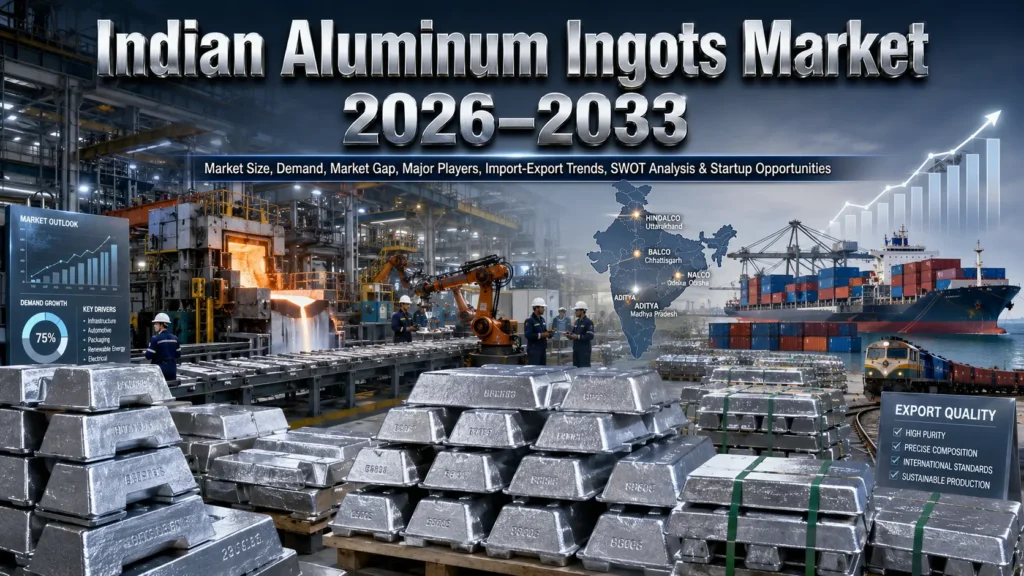
Aluminium Ingots Manufacturing Business MARKET INSIGHT With a market size of USD 15.49 billion, India’s aluminum market is set to be valued at USD 25 billion by 2030 growing at a CAGR of ~7.8%. The primary production capacity stands at 4.1-4.2 million tonnes per annum and the domestic demand remains around 4.5 million tonnes per annum thus giving indications of growing demand outstripping the production growth, primarily driven by the downstream ingot consuming sectors. Executive Overview: Why Aluminum Ingots Demand a Closer Look Aluminum ingots are at the heart of India’s most promising industrial aspirations. Where they go, they are the feedstock that enters automotive die-casting workshops, power cable factories, curtain-wall factories in the construction industry, packaging factories, and now, with growing urgency, they enter the electric vehicle supply chain. Each and every structural aluminium window frame, each and every EV battery housing, each and every ACSR power conductor, and each and every beverage can starts its manufacturing life as a cast ingot. It’s not just an academic pursuit—it’s a business imperative for anyone looking to embark on a manufacturing journey in India’s booming metal landscape. India finds itself in a very peculiar scenario in the aluminium value chain. It is the second largest primary aluminium producer in the world with production contributing nearly 6% of the world production. However, India is also one of the major importers of aluminium products. This dichotomy of high production capability coupled with increased import reliance in certain downstream areas, is an indication of structural gap that can be filled up by an entrepreneurial investor with a well-planned manufacturing unit. Data recorded by Aluminium Association of India shows that the nation has about 3.29 billion tonnes of bauxite reserves, making it one of the world’s largest bauxite reserves. Based on this resource base, the future supply of raw material for domestic aluminum ingot manufacturers is more secure than in most competitors’ economies. Market Size, Growth Trajectory, and Forecast 2026–2033 The India aluminium market was valued at USD 15.49 billion in volume terms of around 6,626 thousand metric tonnes. Independent market forecasts determine that the market will clearly grow to USD 25.03 billion by 2030 at a CAGR of 7.81%, while the volume will exceed 10,200 thousand metric tonnes by 2030. The cumulative growth pattern is also quite attractive over the long forecast period to 2033. All forms of aluminium product—rolled sheet, extrusions, foils and ingots are included. But the base product from which all other aluminum products are derived is aluminum ingots. The global aluminum ingots market size is estimated to be more than USD 154 billion in 2023 and is expected to reach USD 205 billion by 2033 with a CAGR of 3.1%. The Indian share is growing very fast in this global market, fuelled by the combined forces of growth of domestic demand and participation in export markets for the downstream products. The global aluminum ingots market was segmented on the basis of the source of their production into primary ingots and secondary ingots, with primary ingots constituting about 62% share of the market by volume. Secondary ingots – made from recycled aluminium scrap – are expanding even more rapidly at 5.32% CAGR, as the world moves towards the principles of a circular economy and the economics of recycling, which uses 95-98% less energy when compared to primary smelting. Get Detailed Project Report (DPR): Complete Aluminium Manufacturing Guide Key Market Indicators: India Aluminum Ingots Sector Indicator Data Point India Aluminum Market Value (Current) USD 15.49 Billion Projected Market Value (2030) USD 25.03 Billion Market CAGR (2025–2030) ~7.81% Primary Aluminum Production (Annual) 4.1–4.2 Million Tonnes Domestic Consumption ~4.5 Million Tonnes per annum India’s Global Production Share Approx. 6% of World Output Aluminium Ingot Imports (Alloyed, 2024) ~240,000 Tonnes (45% surge YoY) Secondary Aluminum Market CAGR 5.32% (Global); 8.5% India Cast Alloys India’s Aluminum Export Value USD 7.25 Billion (COMTRADE) India’s Aluminum Import Value USD 7.67 Billion (COMTRADE) Demand–Supply Gap: The Core Business Opportunity DEMAND–SUPPLY GAP HIGHLIGHT In India, consumption of primary aluminium was 4.5 million tonnes while production was 4.15 million tonnes. The import of alloyed ingots grew by 45% in one year to 240,000 tonnes. This domestic demand of the unmet part is especially for secondary alloy ingots used in the die casting of automobiles, which are the most obvious sign of investment in the Indian non-ferrous metals market. The demand-supply imbalance in Indian aluminium ingots does not exist in isolation, but rather at two different levels. India has 4.15 million tonnes of production of primary ingots, which is more than the country directly absorbs; a large number of primary ingots and unwrought aluminium are exported. But at the secondary and alloy ingot level, the local supply is so low that it is inadequate. According to Big Mint data, and as reported by Al Circle, in just one month, India imported 38,700 tonnes of aluminium ingots, which is 70% higher than the previous year’s figure. The surge on the imports is almost entirely due to the automotive die-casting business, with particular emphasis on the ADC12 and A356 alloy ingots, which are used for EV battery enclosures, suspension components, engine blocks and transmission housings. Some 1.2 million tonnes of aluminum were used in India for automotive applications in a year, and this demand has been rising drastically because of increased electrification of vehicles. EVs consume as much as 250 kg of aluminum per unit, whereas conventional internal combustion engine vehicles only require 150 kg of aluminum per unit. The demand curve of secondary aluminium alloy ingots is practically vertical in India, where the adoption of electric vehicles is expected to hit 30% mark by 2030. This leaves a textbook disparity between supply and demand for entrepreneurs to deal with: there is a big demand for Indian-made alloy ingots of consistent specification from domestic OEMs die-casters and component manufacturers, but there is not a corresponding growth in secondary smelter capacity in India. The outcome is importing dependence: a signal for the market which
India Cargo Shipping Containers Market 2026–2033: SWOT Analysis, Demand-Supply Gap, Startup Opportunities & Government Incentives
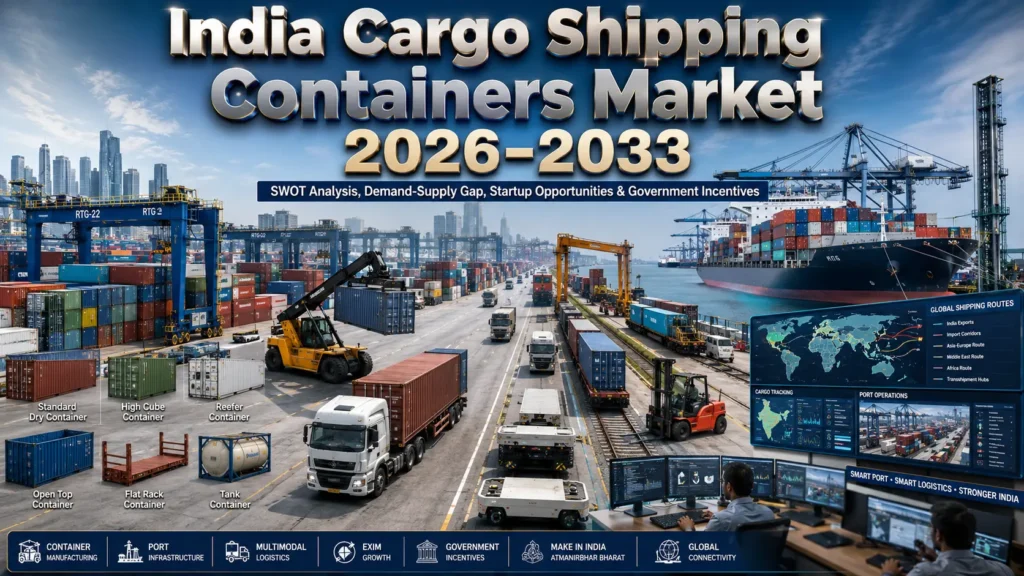
India Cargo Shipping Containers Market The India cargo shipping containers market is estimated to be valued at USD 20.5 billion and is projected to reach USD 31 billion by 2033 at a CAGR of 4.7%. The current annual handling capacity of India’s major ports is more than 14 million TEUs which is growing at 8–10% annually. Even with this demand scale, Indian exporters have critically low dependence on external sources if the amount of over 95% dry shipping containers used by Indian exporters has to be considered. If the amount of dry shipping containers used by Indian exporters is taken into consideration, then Indian exporters are critically dependent on external sources with an over 95% dependence rate. Domestic container production in India is close to zero and annually, there is a throughput demand of 14 million TEUs. Almost all dry freight containers are imported from China. Indian exporters faced freight rates up to 3-5 times higher, and even waited for weeks for containers in recent times of freight disruptions around the world. This structural deficiency has been reflected in Budget 2026 via the ₹10,000 crore Container Manufacturing Assistance Scheme (CMAS) – a meagre amount of domestic manufacturing capacity compared to actual demand – in 1 million TEU per year over 10 years. Why Shipping Containers Are the Backbone of India’s Trade Ambitions Talking about India becoming a global manufacturing hub is always accompanied by the words like port, freight corridors and logistics efficiency in New Delhi where the policymakers talk about becoming a manufacturing powerhouse. However, there is one infrastructure that does not get the attention it deserves despite its critical role in India’s trade with the world: The simple steel shipping container. Almost 90 percent of the world’s trade in merchandise goods is conducted by sea, and containers are the standard units of steel that enable this transportation. Availability, cost and origin of shipping containers are not logistics foot-notes in a country like India, where the ports process over 95% of the international trade by volume according to the Ministry of Ports, Shipping and Waterways (MoPSW). It is a national priority issue. This is the paradox of the India cargo shipping containers market: very high demand in a one of the fastest growing trading economies, with virtually all shipping containers coming from China. The market opportunity being analyzed is a paradox: high throughput and no domestic production. Get Detailed Project Report (DPR): Business Ideas for Steel Shipping Container Manufacturing India Cargo Shipping Containers Market: Size, Growth & Forecast 2026–2033 India cargo containers market is estimated to hit USD 20.5 billion by 2021 and is expected to grow at CAGR of 4.7% till 2033. If one focuses only on the shipping container manufacturing and leasing business alone, the market is estimated to be in the range of USD 389 – 403 million and will increase to approximately USD 546 – 563 million during the same period. These numbers, however, only tell part of the story. The far more significant measure is ‘containerized throughput’ – an estimated 14 million TEUs (Twenty-foot Equivalent Units) are handled through Indian ports each year, an increase of 8–10% year-on-year. The highest share is accounted for by JNPT, Mumbai near port and the port at Chennai, Mundra and Kolkata. The growth of deep-water terminals, particularly the Vizhinjam International Seaport in Kerala, reflects India’s plans for much greater volume of containers being processed in the coming decade. The India Brand Equity Foundation (IBEF) (www.ibef.org) has been emphasizing over and over that India’s port and logistics infrastructure is undergoing the most transformational shift since liberalisation, and that the port-led development policy is being given a top priority in the midst of this shift – the Sagarmala Programme. Market Segmentation at a Glance Segment Category Key Observation Market Share By Size 40 Feet Containers Dominant for bulk/industrial goods 57.7% By Size 20 Feet Containers Preferred by SMEs for frequent shipments ~35% By Application Consumer Goods Largest revenue share; urbanization-led Dominant By Application Food & Beverages Fastest growing; reefer container demand Fastest CAGR By Application Industrial Goods / Pharma / Healthcare Growing with export clusters Significant By Region Western India (Mumbai/JNPT/Mundra) Highest container throughput nationally Largest SWOT Analysis: India Cargo Shipping Containers Market Any entrepreneur or investor considering entering this industry will need a good SWOT analysis. The advantages are structural in nature and continuously gaining ground, the disadvantages are largely fixable with capital and policy intervention, the opportunities are among the most alluring found in Indian manufacturing and the threats are real but can be managed through strategic positioning. Strengths As one of the top-ten trading countries in the world, India has an in-built and continuous demand base for containers. The Sagarmala Programme is the country’s port infrastructure modernization initiative which is being implemented at a scale of lakhs of crores. Now, transit time has considerably been reduced through Dedicated Freight Corridors (DFCs) — Eastern and Western corridors — and intermodal container movement is much more economical. Moreover, India boasts a significant steel manufacturing ecosystem with steel producers such as SAIL, Tata Steel and JSW Steel that can provide raw materials at internationally competitive prices for the production of containers. Weaknesses The biggest drawback is the lack of domestic capacity to produce domestic containers. The number of containers that India makes is an insignificant percentage of the containers that it consumes, and more than 96% of the world’s container production is controlled by China. It is a vulnerability of the supply chain that became painfully apparent during the COVID-19 pandemic and subsequent global freight disruption, when Indian exporters paid a freight rate three to five times greater than normal rates and were forced to wait for weeks for shipments because containers were scarce. The industry also does not have a skilled fabrication labor force to assemble high volume of steel containers for marine applications. Opportunities Changing opportunities. In the Union Budget 2026–27, the Government announced a ₹10,000 crore Container Manufacturing Assistance Scheme (CMAS) for five years with a
India RHA-Based Products Market Analysis 2026–2033: SWOT, Demand-Supply Gap, Applications & Startup Investment Opportunities
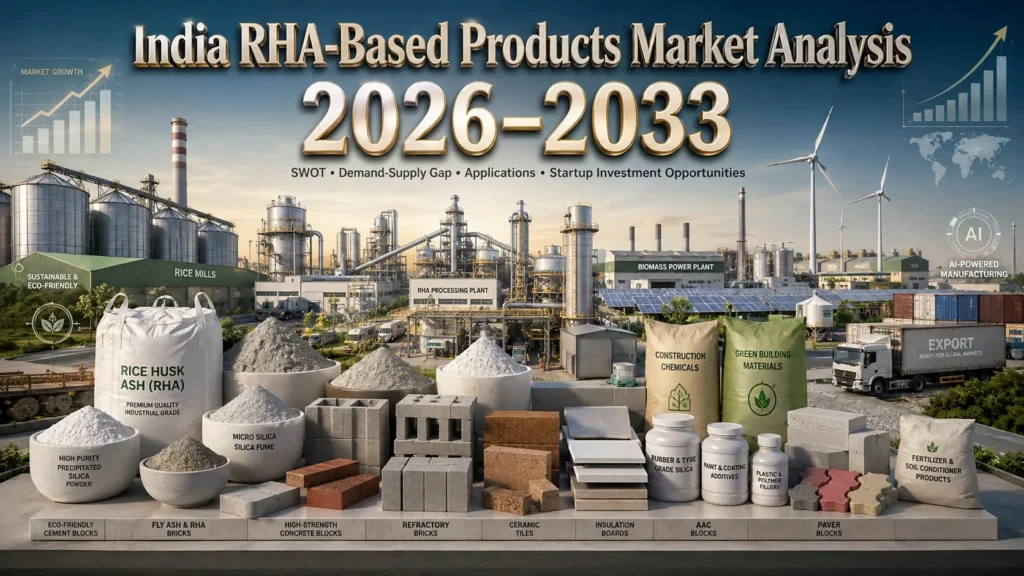
India RHA Based Products Market The market for Rice Husk Ash (RHA) in India is emerging at a time when the country’s agriculture sector is producing more rice than ever before, its infrastructure sector has a $175-billion investment pipeline, and the country is experiencing a shortage in specialty silica supply. The global market for RHA is estimated to be in the range of USD 3.0–3.2 billion, expanding at a 4.8–5.3% CAGR to USD 4.1–4.8 billion by 2033. In this global context India has one of the most dominant raw material positions in the world, but is structurally dependent on imports for high-purity silica, still from that very raw material. The big business opportunity for Indian MSME chemical and agro industries this decade will be closing that gap. The demand–Supply Gap India (D-S-G) is a result of the imports of silica precipitated from China, Germany, Japan, Malaysia and Taiwan at a compounded rate of 20.59% CAGR (2020-2024) and the fragmented nature of the RHA processing capacity with quality inconsistencies in India. The country produces 30+ million tonnes of rice husk a year, but only a small proportion is used to make value added silica products, resulting in a structural gap being addressed by importing rice husk. Organized players in various product segments of RHA include Major Indian Players Guru Metachem Pvt. Ltd., Usher Agro Limited, and Rescon (India) Pvt. Ltd., ranging from steel-grade insulating compounds, high-purity silica, to construction additives. With raw material which is almost free from rice mill clusters, the MSME scale silica unit with a capital investment of ₹ 3–8 crore can expect to generate a profit of 20–30% IRR. The multi-sector pull from green tyre demand, EV sector growth and construction sector boom insulates this investment from single industry cyclicality. India’s Hidden Industrial Asset: 30 million Tonnes of Wasted Silica India’s rice mills produce in excess of 30 million tonnes of rice husk as an end product of the milling process annually in the rice bowl states of Uttar Pradesh, Telangana, West Bengal, Punjab, Chhattisgarh and Andhra Pradesh. This husk, when fired at well-controlled temperature of 500°C to 700°C, produces Rice Husk Ash (RHA) rich in amorphous silica (80-95% by weight) which is the most reactive form of SiO2 available from any raw material on earth with a highest surface area. The contradiction is obvious. As per the Department of Agriculture & Farmers Welfare (DA&FW), India is the world’s largest or second-largest rice producing country based on the crop year with the total paddy production of 1,364 lakh tonnes in 2024–25. The Economic Survey 2025-26 reveals that Uttar Pradesh is the leading contributor of rice, with a production of 20.76 million tonnes, followed by Telangana with 17.45 million tonnes and West Bengal with 16.02 million tonnes, making the top three states contribute to more than 36% of the national rice production. India, however, despite having what is supposed to be a world-class silica manufacturing raw material base, continues to import hundreds of thousands of tonnes of specialty silica annually, due to the lack of pace of development of the processing infrastructure. It’s not a farming issue. It is a gap in industrial policy — and one of the most obvious MSME business opportunities in India’s manufacturing industry. Related Article: Why Rice Husk Silica is the Future of Green Tyres: Market Growth and Demand Gap Understanding RHA: Not Just Ash, But Industrial-Grade Silica It is important to be aware of what RHA is in fact providing that has made it commercially viable to a number of industries, before assessing the market opportunity. In the controlled combustion of rice husk, the organics are burned, leaving a concentrated ash of organic silicon compounds which is extremely porous and amorphous. The result is RHA that has amorphous silica — a much more chemically active form of silica than the crystalline silica from traditional quartz quarries. That’s what makes RHA so valuable. In the field of construction, it reacts with calcium hydroxide to produce more calcium silicate hydrate, which strengthens and makes the concrete impermeable at 10 to 25% cement replacement. It is used as a top-notch filler in the rubber and tyre industry to enhance the resistance to abrasion and minimize rolling resistance. Its thermal stability of over 1500°C is ideal for steel ladle and tundish linings in refractory applications. Global rice production is expected to reach a record high of more than 535 million tonnes (milled basis) in 2024–25, according to the Food and Agriculture Organization of the United Nations (FAO). India has the biggest share of the global upward revision, and also contributes the largest share of the world’s total rice husk production. This places India not just as the producer of RHA for in-house use but as one of the future suppliers of high purity silica derivatives in the global market, which so far India has not fully occupied. Global and India RHA Market: Size, Growth, and What the Numbers Mean for Investors The RHA market is expected to grow to USD 4.1–4.8 billion by 2033, from USD 3.0–3.2 billion in 2026, with the forecast range indicating scope differences among various market segments. The base RHA market is expected to reach nearly USD 1.0 billion in 2034 at 10.4% CAGR, whereas the higher value-added sub-market of Precipitated Silica from RHA will cross USD 608 million by 2026 at 19.2% CAGR. This is because the demand for higher purity of silica for application in tyres, rubber, pharmaceuticals, cosmetics, and specialty chemicals is increasing, while bulk ash for construction products is decreasing. India is poised for faster growth compared to the global rate of 12–15% CAGR, owing to the infrastructure investments that are accelerated in the country, the rapid growth of the rubber and tyre sector, and growing awareness among institutions of the use of pozzolanic materials as carbon efficient alternatives to OPC. The domestic precipitated silica market, the primary commercial product of RHA, was estimated at USD 76.2 million in 2024 and will expand at 10.2% CAGR, to
India Paper-Based Products Market 2026–2033: SWOT, Demand-Supply Analysis, Regional Insights & Startup Opportunities
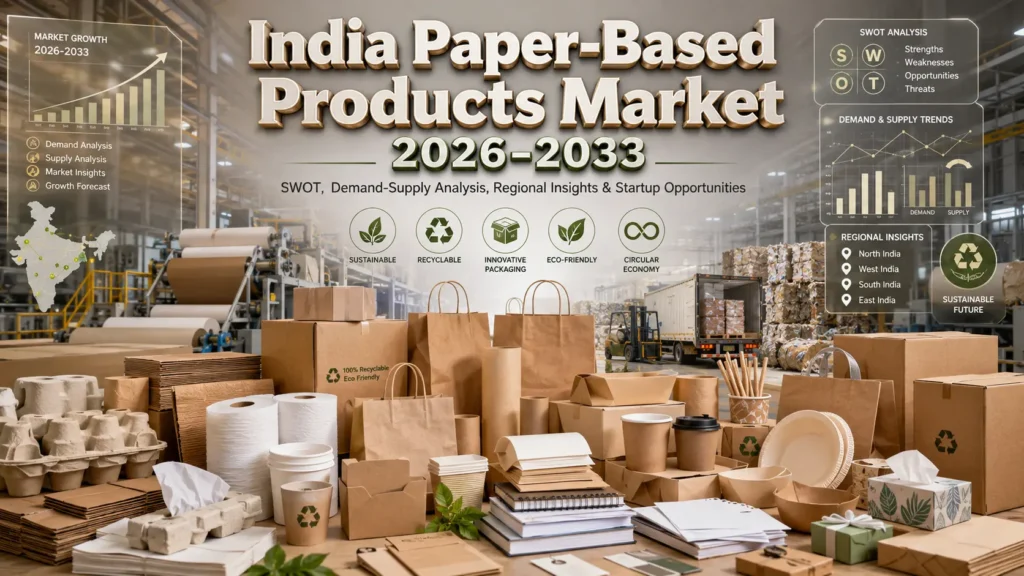
India Paper Based Products Market Market Insight The paper-based products sector in India is at a juncture – where policy support initiatives, increasing e-commerce volumes and a significant change in consumer mindset from single-use plastics are shaping the entire demand curve. Indian paper and paper products market is estimated at USD 9.25 billion and will reach a value of USD 11.91 billion by 2030 with steady growth of approximately 4.37% during the forecast period. The packaged paper market, meanwhile, is growing at much higher rates, and India’s paper packaging market alone was worth about USD 18.6 billion, which by 2033 should be worth USD 28.3 billion, according to data tracked by the India Brand Equity Foundation (IBEF). The headline growth rate is not the most compelling part of this opportunity. It is the increasing disconnect between the demand and supply of domestic consumption, which must be clearly analyzed by policy makers, investors and manufacturing entrepreneurs. India Paper-Based Products: Market Overview and Growth Trajectory India is now among the fastest growing paper markets of the world and the total paper and paperboard consumption have reached 23-24 million tonnes per annum. The production capacity of the operating mills is in the range of 22-24 million tonnes, whereas installed capacity of mills is in the range of 30-32 million tonnes, which is a contradiction and highlights under-usage of production capacity as well as structural deficiency of supply. According to the data given by the Central Pulp & Paper Research Institute (CPPRI), which is an autonomous body under Ministry of Commerce & Industry in the Government of India, the manufacturing of paper in the country is around 900 with only 550-560 being operational. This figure alone represents the level of investment and consolidation needed in the sector. Generally, there are four application segments of the paper market in India – packaging paper and paperboard, writing and printing paper, newsprint, and specialty papers. The packaging is the largest growth driver of these, representing almost 65% of paper usage, with an annual increase of more than 8%, and is fueled by growth from FMCG, organized retail, pharmaceutical packaging and the structural development of e-commerce logistics. India shipped more than 5.2 billion online shipments in one recent year alone, and that figure is still rising — all of these shipments need corrugated packaging, paper bags, labels, or protective paper inserts. Writing and printing paper is the second-largest segment and is expected to see a fairly consistent demand from education institutions, publishing houses, government documentation and stationery from the value chain, as they consume paper at the rate of about 35%. India, despite the digital disruption, has more than 105000 registered newspapers published in various languages of which more than 100000 are daily newspapers in India, according to the Registrar of Newspapers in India, which is the highest in the world in terms of newspaper and writing paper demand. The turnover of Indian paper industry is about Rs. It is estimated to be about Rs. 70,000 crores for the national exchequer. 8,000 crores. Not only is it an industry sector, but it directly and indirectly employs more than five lakh people and helps thousands of agro-forestry farmers all over the country, too. Get Detailed Insights from This Book: Modern Technology of Pulp, Paper and Paper Conversion Industries Per Capita Consumption Gap: The Single Biggest Market Opportunity The one figure that sums up the investment case of the paper-based products industry in India is this: India consumes about 15-17 kilograms of paper per capita annually. The average for the world is 57 kilograms. In developed countries such as the USA, it is over 200 kg per person/year. This is an abysmal consumption deficit and it is not just a number — it is an economic deficit. Increase in India’s per capita paper consumption by 1kg is approximately equivalent to one million additional tonnes of paper consumption per year. In India, the economy is rapidly formalizing, urbanization is increasing rapidly and literacy is on the rise, which will lead to a per capita consumption of 28 to 30 kilograms of paper in 2030. It does not take much imagination to realize that this alone would mean the need for adding up to 15–16 Mt of consumption capacity in this decade—an extraordinary manufacturing opportunity. The Indian Paper Manufacturers Association (IPMA) data shows domestic use of packaging paper is more than 8% a year now, and the total paper market is expanding at 6-7% a year. But a lot of this incremental demand growth is being satisfied right now not by domestic manufacturers but by imports, and especially from China, the ASEAN countries and South Korea. Demand–Supply Gap: Where the Real Opportunity Lies The Indian paper-products industry has a real, measurable and commercially important demand-supply gap. On the other, the domestic consumption is expected to increase to 23.5 million tonnes per annum while the domestic production capacity (with only the operational mills considered) is around 22 MT per annum. This is being addressed mainly by new imports, which have increased dramatically, of around 1.5 to 2 million tonnes per year. IPMA data shows that at certain junctures, imports of paper and paperboard have demanded over 15% of the total Paper Market in India — almost 2.8 to 3 million tonnes of paper per year. Imports from China have increased by more than 13% on an annual basis in value terms and imports from ASEAN have soared by more than 78% in certain quarterly periods. Most of the paper which India imports are coated papers, specialty papers, tissue, kraft paper and newsprint which can be produced locally in India, with the exception of coated papers, which are imported from the Far East. The import surge is structural, not cyclical, according to information from the Directorate General of Commercial Intelligence and Statistics (DGCI&S). Nearly Rs. 14 billion worth of paper and paperboard were imported. This amounts to 10,000 crores in a single nine-month period and is a straight-line impact on the viability of
How to Build Hospital in India with Up to 60% Government Funding

Hospital business in India India has a shortfall of more than 6 lakh hospital beds to meet the WHO recommended norms, and the government has put a number of financial instruments in place to address this shortfall — many of which the majority of entrepreneurs are unaware of. When the project is structured properly, the government can provide Rs.25–30 Crore to the hospital through the scheme of Viability Gap Fund (VGF) under the State Government, National Health Mission (NHM) capital funding, Ayushman Bharat Health Infrastructure Mission (AB-HIM) grants, and NABARD concessional long-term loan. These are ideas for businesses in healthcare that are both commercial and directly hit a public national health problem that’s being actively pursued by the government with allocated resources. Why India Urgently Needs Private Hospital Investment India has an average of 0.55 hospital beds per 1,000 individuals, which is significantly below the WHO recommendation of 3 beds/1,000 people. The gap is particularly acute in Tier-2 and Tier-3 cities where the capacity of the public health system is not being utilized optimally. More than 60% of healthcare expenditure is already on the private side in India, clearly showing that patients opt for private care when it’s available and affordable. The Ayushman Bharat PMJAY scheme has opened up insurance coverage for more than 55 crore beneficiaries, leading to assured inflows of patients into empanelled private hospitals provided the hospitals are available in the right places. Health entrepreneurs can use the district level health infrastructure gap data published by the Ministry of Health and Family Welfare to help them choose project locations. Get Detailed Insights from This Book: Investment Opportunities In Hospitality, Medical, Entertainment, Ware Housing & Real Estate Projects Government Schemes That Can Fund Up to 60% of Your Hospital A number of complementary Government schemes are available to be rolled up to finance a substantial part of a private hospital project. The National Health Mission (NHM) PPP component is in charge of funding the initiatives of private hospitals in low-density regions. Different states like Uttar Pradesh, Bihar, Rajasthan, Jharkhand and Odisha provide private hospitals with Viability Gap Funding (VGF), which is a grant of between 20-35% of the project cost that is provided for hospitals investing in district towns where healthcare facilities are inadequate. NABARD offers concessional long term loan facilities at lower interest rates in rural and semi urban areas for healthcare. Thousands of crores have been allocated under the Ayushman Bharat Health Infrastructure Mission (PM-ABHIM) for development of Healthcare Infrastructure with a provision for participation of the private sector. Having VGF grants and concessional NABARD loans along with operational revenue from PMJAY gives rise to a project financial model which makes the entrepreneur’s net capital requirement much less. Top Business Ideas Within the Hospital Development Model 100-Bed District Hospital with Surgical and Emergency Focus Most of the health needs of a population of 10 to 30 lakh people in a district is met by a 100-bed district hospital having a general surgery OT, orthopaedic surgery capability, obstetrics and gynaecology, ICU, NICU and 24×7 emergency services. After considering the state VGF, NABARD debt, the entrepreneur’s investment in equity comes to Rs.18-20 Crore. First Quality Milestone, get NABH Accreditation – mandatory for empanelment with PMJAY and CGHS and will ensure institutional revenue. Fill online application form on the National Health Authority website for empanelment under PMJAY. PPP Model Hospital Under NHM or State Government Concession The most capital efficient model is the Public-Private Partnership (PPP) model where a private operator constructs and operates a hospital in a public land, on the condition that the government will provide him a minimum patient volume or a subsidy for the operation of the hospital. The NHM has issued PPP guidelines that outline the mechanisms of engagement between the NHM and State health departments for district level hospital PPP arrangements. The State Governments in Tamil Nadu, Karnataka, Andhra Pradesh and Maharashtra have well established PPP hospital frameworks. In some state models, the government constructs the building and pays for the equipment and the private operator operates it and delivers clinical services — eliminating the need for a significant investment from the entrepreneur. Get Detailed Project Report (DPR): Healthcare Business Ideas in the Medical Sector Speciality Hospital Targeting One High-Volume Surgical Procedure Single specialty hospitals (cardiac, orthopaedics, ophthalmology or oncology) have better clinical outcomes and financial performance than generalist hospitals for the same size. A 50-bed cardiac care hospital in Tier-2 city can achieve the same revenue as 100 bed generalist hospital given the higher complexity of the procedures, which command premium rates of PMJAY packages. Specialisation decreases the diversity of equipment needed, leading to more efficient capital deployment. Talk to SECI equivalent at NABH for their advice on the speciality hospital accreditation pathways that lead to premium insurance rates. Import-Export Opportunities in Hospital Development There is a high level of import activity because of the development of hospitals — medical equipment’s from Siemens, GE, Philips and Fujifilm. CDSCO portal can be used to verify duty concession on medicals which are lifesaving medicines. The medical tourism industry is a foreign exchange generation sector in India which is growing day by day. A modern, NABH certified well equipped district hospital can be developed to attract medical tourists from Bangladesh, Nepal, Myanmar and the Gulf countries for its quality, affordable care. The Ministry of Tourism has a medical tourism policy that offers marketing assistance for the facilities approved. Indian MSME Success Stories in Hospital Development Narayana Health — Making Super-Speciality Care Affordable at Scale Located in Bengaluru, founded by Dr. Devi Prasad Shetty, Narayana Health challenged Indian healthcare by bringing to light the fact that cardiac surgery, when carried out in a high-volume, processes-driven fashion, can be a major cost-effective and yet world-class experience for every patient. Dr. Shetty’s shrewdness, that high volume would bring cost efficiency as well as improvement of quality, resulted in hospitals being constructed in areas where they were most needed. Narayana Health’s patient volume model was defined around the
India’s ₹5 Crore Food Processing Business: Gulf Export Opportunities for Manufacturers
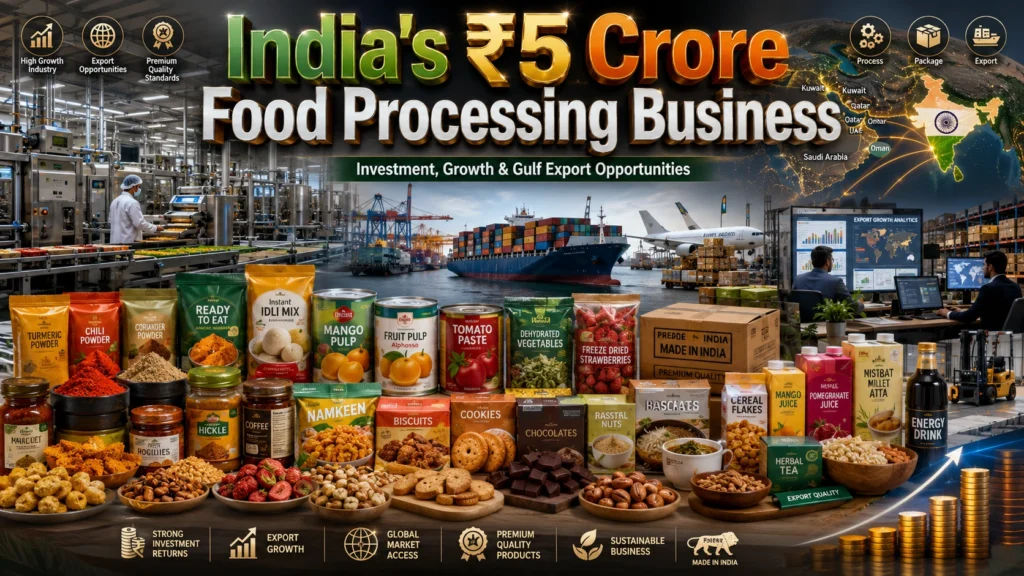
₹5 Crore Food Processing Business in India The food processing industry in India is at a turning point and for those who are thinking of entering into any serious business in manufacturing, the food processing unit with a capital investment of Rs.5 Crore for export to Gulf countries is one of the most commercially viable business ideas possible today. The Gulf Cooperation Council (GCC) countries – Saudi Arabia, UAE, Qatar, Kuwait, Oman and Bahrain – import billions of dollars in packaged and processed food each year. Geographic advantage of India along with huge population of NRIs in these countries leads to a natural demand pipeline. The Ministry of Food Processing Industries has always identified this as a priority for export and the availability of policy support in terms of capital subsidies and export promotion schemes is as easy as ever. Why the Food Processing Sector Is Booming in India India is the second largest producer of fruits and vegetables in the world but a large proportion of them is wasted because of lack of processing facility. The food processing industry is a significant contributor to manufacturing GDP of India and it is an industry which continues to attract investment from both the domestic and foreign sector. The food import needs of the Gulf countries, especially in Saudi Arabia and UAE, have increased substantially due to the huge rate of urbanization and development of the middle class. Indian processed food, including rice flour, spice blends, and ready to cook mixes, as well as frozen snacks, is always in demand in these markets. India’s agricultural exports have been continuously on the rise, with processed food playing a larger role, according to APEDA (Agricultural and Processed Food Products Export Development Authority). It’s an investment that’s also recession-proof — spending on food by consumers doesn’t slow down when the economy slows down, so consumer demand is always stable. Get Detailed Insights from This Book: Handbook on Fruits, Vegetables & Food Processing with Canning & Preservation Government Policies and Incentives for Food Processing Units Entrepreneurs are provided with several targeted schemes by the Ministry of Food Processing Industries (MoFPI). PMKSY offers capital subsidy to food processing units in clusters up to 35%. The innovative product category and organic product category are included in the Production Linked Incentive (PLI) scheme and are given incentives based on incremental sales. Further, the Credit Guarantee Trust Fund scheme of MSME Ministry has made it possible to avail collateral-free loan of Rs.2 Crore. APEDA is active in facilitating exports to the Gulf market in the following ways: Trade Fairs, Buyer-Seller Meetings, Export Certification. Food Safety and Standards Authority of India (FSSAI) has introduced fast-track licensing for export units, which can cut down the compliance timelines for the entrepreneurs. There are also electricity subsidy and provision of land in food parks by the State governments like Maharashtra, Gujarat, and Punjab. To get a detailed list of incentives available, please see the Startup India portal. Top Business Ideas in Food Processing for Gulf Exports Ready-to-Cook Indian Meal Kits and Spice Blends There are more than 8 million Indians living in the Gulf who are actively looking for real Indian flavours. Production of standardised spice mixtures, masala powder, ready to cook curry base, and meal kits can create a huge export brand with a simple investment. From Rs.5 Crore you can operate an automated blending, grinding and vacuum-packaging line, which complies with Gulf food safety certifications like GCC conformity marks and Halal certification. The two key factors in a supermarket’s success in retail shelf placement in the Gulf are consistency and packaging quality. Generally, gross margins for branded spice blends are between 35% and 50%, and hence this is one of the more profitable categories in the food processing industry. For direct buyer connect opportunities, APEDA’s export promotion programmes are for the benefit of entrepreneurs. Rice Flour, Semolina, and Milled Grain Products Domestic ag capacity is very low due to the arid conditions in the Gulf region which makes them very dependent on import of grains and milled products. This can be met by processing of rice and wheat in India which are available at competitive prices. A milling unit handling a capacity of Rs.5 Crore can mill the paddy or wheat to get refined flour, semolina, rice flour, beaten rice, and value-added grain products. Grain-based products are relatively easy to certify for the Halal markets in the Gulf (notably for the fact that this certification does not impose any extra compliance cost). Shelf life of 12 to 18 months can be obtained with good cold chain and moisture-controlled packaging, which meets the retail distribution cycles in the Gulf. Entrepreneurs should visit DGFT (Directorate General of Foreign Trade) for export documents and for IEC code registration. Your investment deserves the right opportunity Frozen Snacks and Traditional Indian Namkeen for the Gulf Retail Market One of the fastest-growing product line in the Gulf supermarkets is frozen food and packaged snacks. Indian namkeen, frozen samosa, frozen paratha and ethnic snack products have each a separate section in the Lulu Hypermarket, Carrefour and Spinneys in the Gulf. There is an investment requirement for the purchase of industrial fryers/ovens, individual quick-freezing equipment and cold storage packaging lines for setting up a frozen food processing unit at Rs.5 Crore. The unit should be HACCP standards and export-controlled temperatures. Many other Indian companies such as Haldirams, MTR Foods have proven this export model at large scale and enough opportunities are there for regional brands to establish niche positions. Import-Export Opportunity Analysis India has been steadily increasing its food and processed food exports to the Gulf region and bilateral agreements have ensured that most of the food categories have relatively low tariff. The APEDA data also reflects that rice, spices, processed vegetables and ready-to-eat products are the key commodities for India’s food export to the GCC. The UAE is also a re-exportation hub; if an Indian exporter sets up distribution in the UAE, then it is relatively easy to