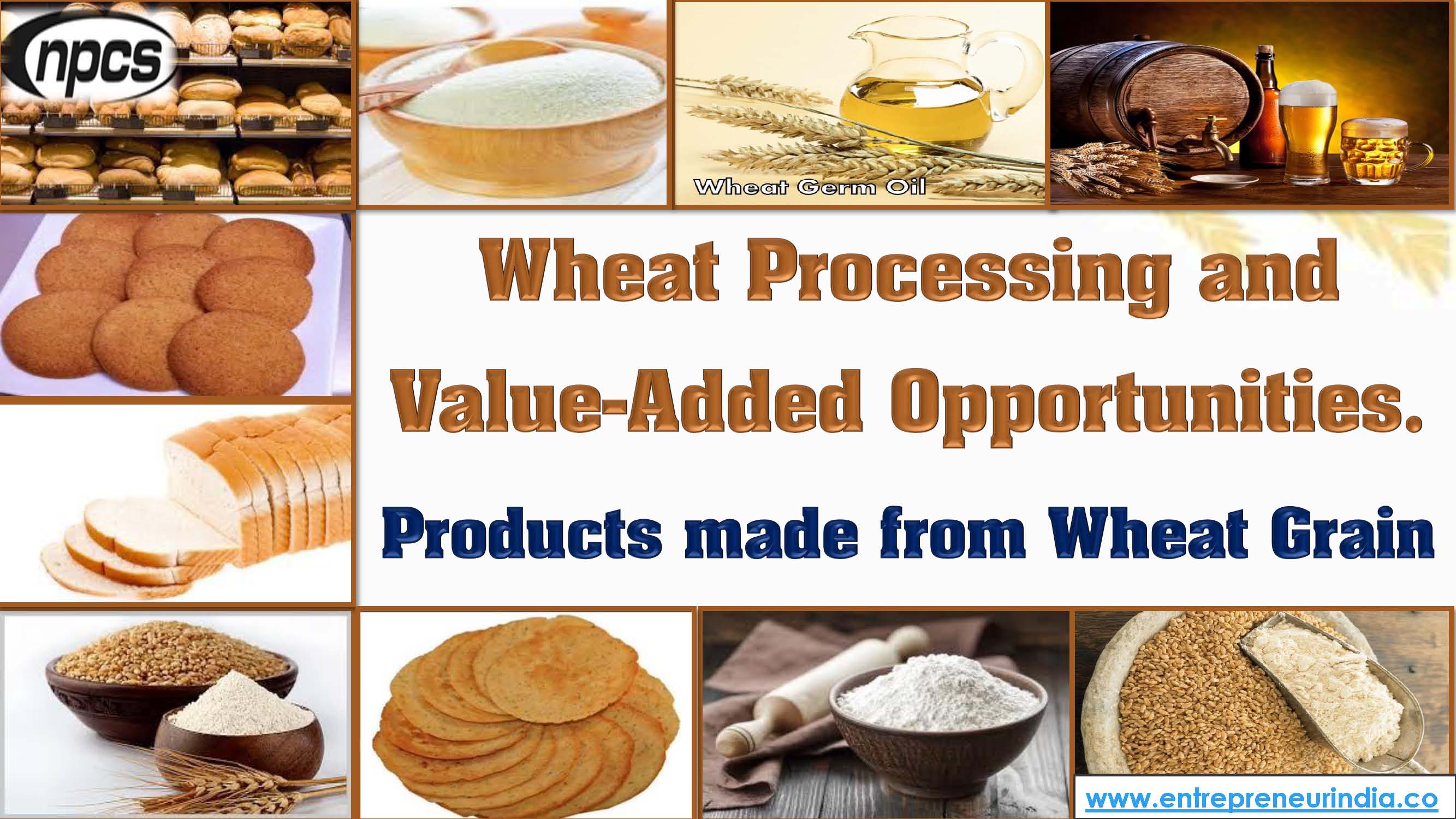
The Wheat Processing industry is one of the most vital components of the global agri-food sector, playing a critical role in the production of essential food items like flour, semolina, bran, and bakery products. With wheat being a staple food for more than 35% of the world’s population, the demand for processed wheat products continues to surge, making it a lucrative and sustainable business opportunity.
As urbanization, health awareness, and packaged food consumption rise, so does the scope of the wheat processing business. Entrepreneurs, startups, and farmers alike are tapping into this industry to cater to both domestic and export markets.
What is Wheat Processing?
Wheat processing refers to the conversion of raw wheat grains into usable food products through cleaning, milling, grading, and packaging. The key products derived from wheat processing include:
Wheat Flour (Maida)
Whole Wheat Flour (Atta)
Semolina (Sooji/Rava)
Bran (used as cattle feed)
Wheat Germ and Broken Wheat (Dalia)
The processed output is utilized in households, bakeries, food industries, hotels, restaurants, and export chains.
Why Invest in the Wheat Processing Business?
High Demand – Wheat products are consumed daily across regions and cultures.
Evergreen Market – Flour-based foods are essential staples (bread, chapati, noodles, pasta, etc.)
Scalability – Can start at micro, small, or large scale with modular expansion.
Raw Material Availability – Wheat is abundantly cultivated globally.
Low Waste – Every part of the wheat kernel has market value.
Government Support – Food processing units enjoy tax benefits and subsidies under MSME and PMFME schemes.
Types of Wheat Processing Units
1. Small-Scale Chakki Mills
Manual or semi-automatic stone grinding systems
Popular in rural and semi-urban areas
Produces atta and limited bran
Low investment (?5–10 lakhs)
2. Roller Flour Mills
Fully automated, high-capacity mills
Produce multiple grades of flour and by-products
Higher hygiene and efficiency
Suitable for urban and industrial markets
3. Specialty Wheat Processing Units
Gluten-free flour, fortified wheat flour, organic whole wheat products
Target health-conscious consumers and premium markets
Step-by-Step Wheat Processing Workflow
1. Cleaning and Conditioning
Removal of dust, stones, chaff, and foreign materials using sieves, aspirators, and magnetic separators.
Moistening the grain to toughen the bran and soften the endosperm for better milling results.
2. Milling
Cracking the wheat kernel and separating components:
Endosperm ? Flour
Bran ? Fiber-rich by-product
Germ ? Nutritional supplements
Uses roller mills or chakki grinders, depending on capacity.
3. Grading and Sieving
Flour is passed through mesh screens to segregate into fine flour, semolina, and other derivatives.
4. Packaging
Automatic or semi-automatic machines are used to pack flour in 1 kg, 5 kg, 10 kg, or bulk 50 kg bags.
Packaging must be airtight, hygienic, and labeled per FSSAI norms.
Raw Material and Inputs
Wheat Grains (varieties depend on product: hard wheat for maida, soft wheat for atta)
Polishing and cleaning agents (food-grade)
Food preservatives (optional in maida)
Packaging materials – HDPE, laminated pouches, or paper bags
Most materials are easily sourced locally or through FCI/mandis at wholesale rates.
Machinery Required
Grain Cleaning Machine
Destoner
Wheat Conditioner
Roller Mill or Chakki Grinder
Plan Sifter
Purifier
Bran Finisher
Packaging Machine
Weighing and Sealing Equipment
A mini plant with 1–2 TPD (ton per day) capacity can be set up with ?10–15 lakhs, while a medium plant (10–50 TPD) may require ?50 lakhs to ?1 crore.
Space and Infrastructure Requirements
1000–5000 sq. ft. depending on plant size
Water and electricity supply
Ventilation and hygiene compliance
Storage for raw wheat and processed flour
Machinery area and packaging unit
It is ideal to establish the unit near wheat-producing regions or grain mandis to reduce logistics costs.
Licenses and Regulatory Approvals
To start a wheat processing unit, you need:
FSSAI License
GST Registration
Udyam (MSME) Registration
Factory License
NOC from Pollution Control Board
BIS Certification (for quality assurance)
Labor Registration (if employing more than 10 people)
For exports, additional certifications like ISO 22000, HACCP, and APEDA registration are beneficial.
Marketing Strategy and Sales Channels
Supply to wholesale grocery chains, retailers, supermarkets, and hotels.
Partner with bakeries and biscuit manufacturers.
Launch a private label brand for direct-to-consumer sales.
List on eCommerce platforms like Amazon, Flipkart, BigBasket.
Collaborate with government-run ration shops or PDS schemes.
Use packaging that emphasizes hygiene, purity, and freshness to appeal to modern consumers.
Profitability and ROI
Production Cost of Atta (per kg): ?18–?22
Selling Price: ?28–?35 depending on location and brand
Gross Margin: 25%–40%
Net Profit Margin: 10%–20% after overheads
Break-even: Within 12–18 months for well-managed units
By-products like bran and wheat germ also fetch good market value, increasing overall profitability.
Challenges in Wheat Processing Business
Maintaining consistent raw wheat quality
High competition from established brands
Frequent machinery maintenance
Seasonal price variations of raw wheat
Adhering to food safety and quality standards
These challenges can be tackled with technology integration, quality procurement, and supply chain optimization.
Conclusion
The Wheat Processing Business offers a stable, high-demand, and scalable opportunity for aspiring entrepreneurs in the food processing domain. With increasing demand for hygienic, packaged, and value-added wheat products, the industry is set to grow even further. A well-structured unit with efficient milling, branding, and distribution can help you tap into both domestic and global markets with confidence.
Niir Project Consultancy Services
An ISO 9001:2015 Company
106-E, Kamla Nagar, Opp. Spark Mall,
New Delhi-110007, India.
Email: npcs.ei@gmail.com , info@entrepreneurindia.co
Tel: +91-11-23843955, 23845654, 23845886, 8800733955
Mobile: +91-9811043595
Website: www.entrepreneurindia.co , www.niir.org