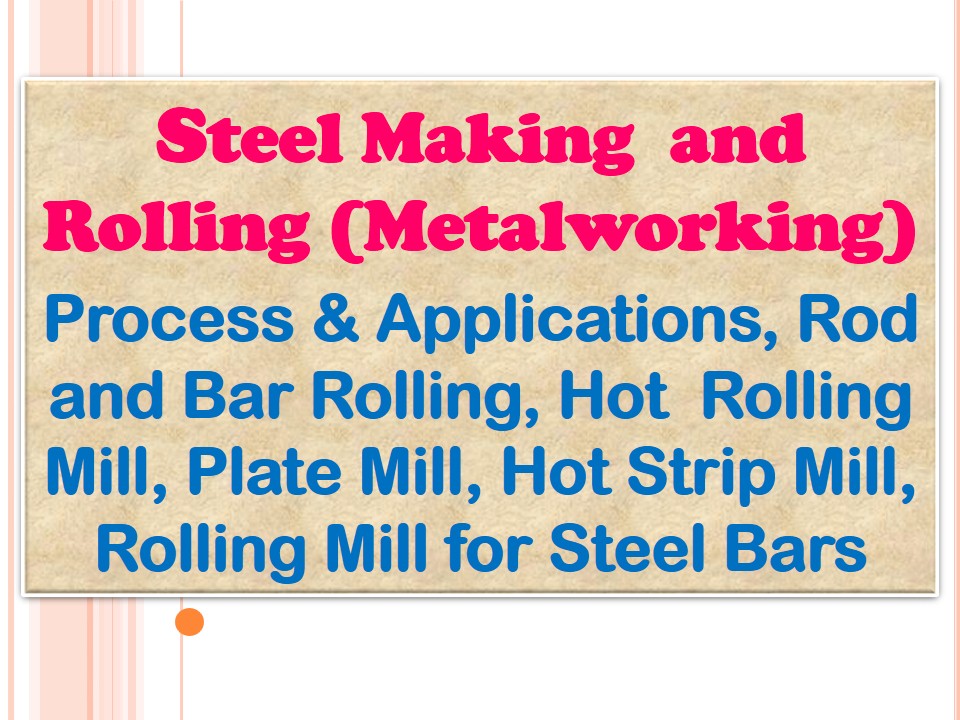
The steel industry has remained one of the foundational pillars of industrial development. From infrastructure to automotive and tools, steel finds applications across every major sector. Steel making and rolling mill processes form the backbone of this industry. Today, entrepreneurs and industrialists are exploring this domain due to its significant market demand, modernization potential, and scalable operations. The steel sector is expected to continue its upward trend with growing urbanization, industrialization, and demand for high-strength materials.
Steel Making & Rolling Mill Process Overview
The production of steel involves several critical steps that transform raw materials into finished products. Primarily, the process consists of iron making, steel refining, casting, and rolling. In modern plants, highly efficient technologies and automation have replaced traditional batch processes, ensuring consistency, energy optimization, and higher output.
See Also : Industrial Adhesives Market
Iron Making
Initially, iron is extract from iron ore through smelting. This stage is usually carry out in a blast furnace, where iron ore, coke, and limestone are charge. High temperatures cause chemical reactions, reducing iron oxide to molten iron and separating out impurities as slag. Direct reduce iron (DRI) and hot metal can also be use as inputs for steel making, depending on the technology adopt.
Steel Refining
In the next phase, steel is form through the refining of molten iron. Basic Oxygen Furnace (BOF) and Electric Arc Furnace (EAF) technologies are employe for this process. In BOF, oxygen is inject into molten iron so that carbon content and impurities can be reduce. In EAF, scrap metal and DRI are melt using electric arcs. To obtain special grades of steel such as stainless steel or high-strength low-alloy steel, alloying elements are introduce during processing.
Continuous Casting
Once steel is refined, it is solidified into semi-finished shapes like billets, blooms, or slabs through a process known as continuous casting. Liquid steel is poured into a water-cooled mold where it solidifies while being continuously withdrawn. This step ensures uniform grain structure, minimal defects, and efficient use of energy and space.
Rolling Mill Process
Semi-finished steel is taken to rolling mills for further processing. Rolling is perform in two stages – hot rolling and cold rolling. In hot rolling, temperatures above the recrystallization point are maintain, so the metal becomes soft and undergoes deformation easily. Sheets, coils, bars, and structural profiles are form through this method. Cold rolling is apply for finishing, where products are given tighter tolerances, better surface finish, and higher strength.
Types of Steel Products
Steel manufacturing facilities offer a wide range of products to meet market requirements. The following are the major steel items produced:
Structural Steel
Structural components such as I-beams, H-beams, channels, and angles are widely used in construction, bridges, and industrial buildings. Hot rolled in large mills, these products require strict dimensional accuracy and strength properties.
Flat Steel Products
Flat steel includes hot rolled coils, cold rolled sheets, galvanized sheets, and color-coated products. These are used in automotive manufacturing, appliances, roofing, and packaging industries.
Long Products
Wire rods, rebar, and merchant bars fall into this category. Rebars are used in reinforced concrete structures, while wire rods are converted into fasteners, welding electrodes, and other components.
Specialty Steels
Alloy steels with specific properties are in use in tools, machinery, automotive components, and aerospace applications. These are made using precise alloying and heat treatment methods.
Equipment & Plant Requirements
For setting up a steel making and rolling mill facility, investment in modern equipment is essential. The key equipment includes:
Blast furnace or DRI plant (for iron making)
Basic Oxygen Furnace or Electric Arc Furnace
Ladle refining furnace and vacuum degassing units
Continuous casting machines
Hot and cold rolling mills
Descaling and pickling lines
Galvanizing and coating lines
Cutting, shearing, and packaging systems
Automation and process control systems are also incorporate to enhance productivity, reduce human error, and ensure quality assurance.
Manufacturing Process Flow
A typical steel manufacturing process flow includes:
Raw material preparation (ore, coke, limestone)
Iron making in blast furnace
Steel making via BOF or EAF
Secondary refining and alloying
Continuous casting to semi-finished steel
Hot rolling to shape steel products
Cold rolling and finishing
Surface treatment, coating, and packaging
At each stage, energy efficiency, pollution control, and waste minimization must be ensure for sustainable production.
Investment and Plant Setup
Establishing a steel making and rolling mill plant involves significant capital investment. Land acquisition, infrastructure development, machinery procurement, and working capital are major cost heads. Depending on capacity, technology, and product range, investment may range from ?50 crore to ?500 crore or more.
Skill manpower, raw material sourcing, utility management (electricity, water, and gas), and compliance with environmental regulations must also be plan meticulously. Industrial areas or clusters with proximity to raw material sources and market access are ideal for such projects.
Applications of Steel Products
Steel is utilize across a wide spectrum of industries:
Construction and infrastructure: Bridges, buildings, highways, ports
Automotive sector: Body panels, engine parts, suspension
Machinery and tools: Cutting tools, gears, bearings
Consumer goods: White goods, kitchen appliances
Oil and gas: Pipelines, pressure vessels
Packaging: Food cans, beverage containers
Railways and transportation: Rails, wagons, shipbuilding
The diverse applications ensure a steady demand for steel products both in domestic and export markets.
Quality and Standards
Steel products must meet stringent quality standards to ensure performance and safety. Standards such as BIS (Bureau of Indian Standards), ASTM, JIS, and DIN are follow base on the market serve. Tests include:
Tensile strength
Yield strength
Elongation
Impact resistance
Corrosion resistance
Microstructure and chemical composition
Certifications like ISO 9001, ISO 14001, and OHSAS 18001 are also desirable for market acceptance and sustainability assurance.
Environmental Considerations
Steel making is an energy-intensive process, and environmental management is crucial. Modern plants incorporate:
Waste heat recovery systems
Dust collection units and bag filters
Effluent treatment plants
Slag recycling systems
Carbon footprint monitoring
Adoption of green technologies such as electric furnaces, hydrogen-base reduction, and circular economy practices are being encourage to align with global sustainability goals.
See Also : Beer & Wine Industry
Conclusion
Steel making and rolling mill process represents a vital industrial opportunity, driven by consistent demand and technological innovation. A comprehensive understanding of the process flow, equipment, product types, and quality requirements is essential for success. With strategic investment, sustainable practices, and market-driven product development, a steel manufacturing venture can prove to be both profitable and impactful. Entrepreneurs seeking long-term industrial investments are being encourage to explore this domain for its scalability, export potential, and central role in national development.