
Herbal Cosmetics Manufacturing Business
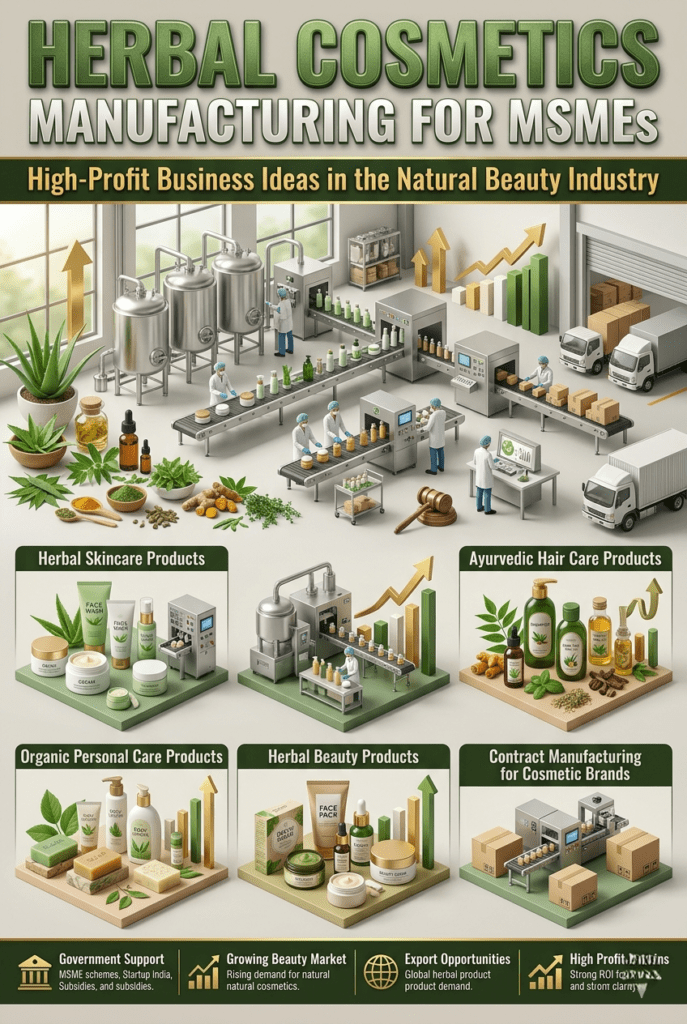
India’s manufacturing sector is in a new era of growth where small and medium industries are discovering opportunities outside traditional industries. One of the fastest growing areas of this transformation is that of herbal cosmetics manufacturing. Products made from natural ingredients are becoming increasingly popular due to consumer awareness of health, sustainability, and products safety. As a result, herbal personal care products such as a cleanser, moisturizer, shampoo, and conditioner are now widely used in households, salons, hospitals and in hospitality businesses.
For entrepreneurs and investors, this shift is a good business opportunity. Herbal cosmetics manufacturing requires manufacturers to use agricultural raw materials together with their light industrial operations. The industry provides steady demand which requires minimal production expenses and allows businesses to increase their output.
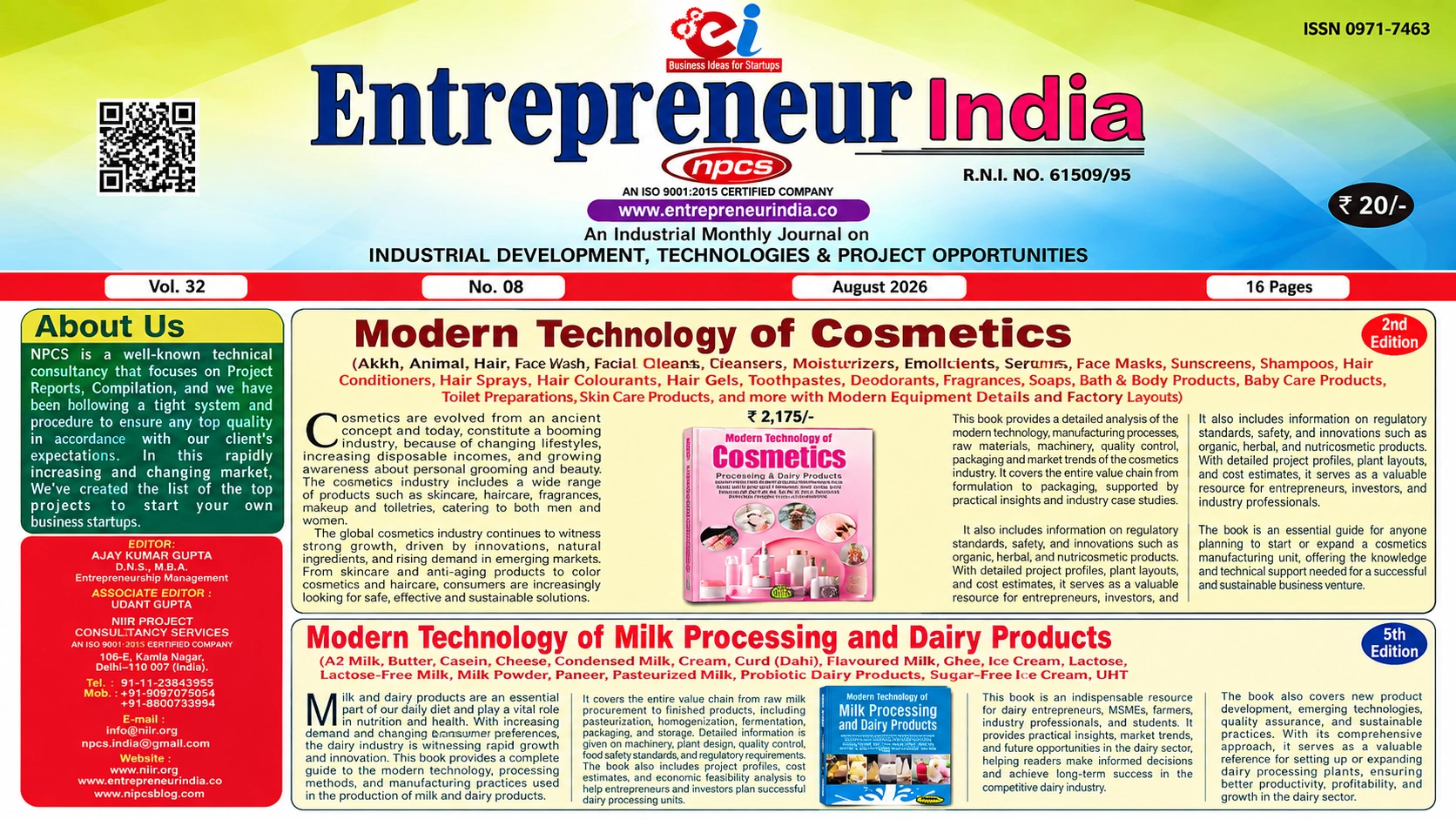
Get Detailed Insights from This Book : Herbal Cosmetics & Ayurvedic Medicines (EOU) (3rd Revised Edition)
Why Herbal Personal Care Manufacturing is Good Business
The herbal cosmetics industry has gained momentum because of a number of structural advantages in the Indian economy. India is one of the most prolific producers of medicinal and aromatic plants and the availability of these raw materials helps in providing growth to the manufacturing industry in the long run. The complete conversion of natural materials into final products results in major value increases. This process enables manufacturers to boost their financial returns.
Some of the main reasons that entrepreneurs are venturing into this sector are:
- Moderate investment requirement as compared to heavy industries
- Strong domestic and export demand for herbal products
- Availability of raw materials throughout India
- Rising consumer demand for natural and chemical free products
- Friendly government policies towards MSMEs and traditional industries
The current market conditions of herbal cosmetics manufacturing give businesses their best chance to expand and develop their operations through this industry.
1. Manufacturing Business Of Herbal Cleanser
Herbal cleansers are fundamental personal care items used every day for cleaning up and hygiene purposes for the skin. Unlike traditional soaps which may contain harsh chemicals, herbal cleansers are made with natural extracts which help to keep your skin healthy while cleansing it gently. Because they are used on a regular basis, they create repeat sales and predictable revenue streams for manufacturers.
The process of producing herbal cleansers is relatively simple and can be handled with semi-automatic machinery. Manufacturers usually prepare herbal extracts, blend them into mild surfactants, correct the pH level, and then package the finished item. With proper quality control, small manufacturing units can make consistent batches that meet consumer expectations.
Common Raw Materials Used
- Neem extract
- Aloe vera gel
- Tea tree oil
- Vegetable oils
- Natural surfactants
- Preservatives and Fragrances
The demand for herbal cleansers has been on rising as consumers have become more aware of their skin sensitivity and hygiene standards. Hotels, clinics and wellness centers are also using more and more herbal cleaning products which creates a larger market for the manufacturers.
Estimated operating margin:
18% to 25%
Get Detailed Project Report (DPR): Herbal Cosmetics
2. Herbal Moisturizer Manufacturing Business
Herbal moisturizers are popular for providing hydration and protection of the skin. They are especially popular in urban markets where there are regular skincare routines by consumers. Moisturizers are also frequently bought by businesses such as hospitals, spas, and corporate organizations for the purpose of employee wellness and promotional programs.
From the business point of view, moisturizers command better selling prices than the basic cleansing products. This enables manufacturers to produce greater profit margins even with medium production levels. The process of manufacturing includes the preparation of oil and water phases, heating and homogenization of two phases, and cooling of the product with subsequent packaging.
Factors That Affect the Quality of Products
- Proper temperature control in mixing
- Emulsifier stabilized selection
- Concentrated quality of herbal extracts
- Suitable packaging design
Packaging is an important factor in this category since consumers typically equate quality packaging with quality products. Investing in attractive packaging can enhance the perception of a brand and boost sales.
Estimated operating margin:
20% to 28%
3. Manufacture of Herbal Shampoo and Conditioner Business
Herbal shampoos and conditioners are among the hottest commodities on the personal care market. They deal with common hair problems like hair fall, dandruff, and dry scalp. Since hair care products are used so often, they are good sources of recurring income for manufacturers.
The manufacturing process includes mixing surfactants with the herbal extracts, adjusting the viscosity of the mixture and adding fragrance and then filling the product into bottles. Conditioners need extra emulsification so that they provide a smooth texture with good conditioning performance.
Major Demand Drivers
- Rising concerns of hair damage through chemical products
- Megatrends in the global beauty market and personal care products market
- Increasing use of herbal products for salons
- Increasing demand for exports from developing countries
This category is especially appealing for long-term growth in business as it has one of the highest rates of repeat purchase in the consumer goods business.
Estimated operating margin:
20% to 30%
Related Article: How to Start a Successful Herbal and Organic Cosmetics Brand?
Investment and Cost Structure Herbal Cosmetics Manufacturing
Understanding the cost structure is the key before launching a manufacturing business. In most herbal cosmetics units, the cost of raw materials is the biggest expense followed by the cost of packaging and marketing. Labor and utility costs are normally manageable, especially in semi-urban areas where operating costs are lower.
Typical Cost Distribution
- Raw materials: 35% to 40%
- Packaging: 20% to 25%
- Labor and utilities: 12% to 15%
- Marketing and distribution: 15% to 20%
Most small-scale herbal manufacturing units achieve break-even point in two to three years, depending upon the capacity of production and demand from the market.
Government Support for Herbal Manufacture Businesses
The Indian government provides support to both small-scale manufacturing operations and traditional industrial sectors. Manufacturing entrepreneurs can access multiple programs which provide them with both financial assistance and training and technical support. These initiatives help in reducing the startup risks and boosts innovation in product development.
Examples of support available to entrepreneurs are:
- Subsidies for machinery and equipments
- Low-interest business loans
- Skill development programs
- Export promotion assistance
- Benefits of Startup and MSME registrations
Government support has made it easier for new entrepreneurs to enter the herbal cosmetics industry and increase the size of their operations over time.
Find high-return business ideas based on your budget & ROI
Key Success Factors in Manufacturing of herbal cosmetics
Success in herbal cosmetics manufacturing is based on steadfast quality, efficient operations and customer relations. While there are many opportunities available in the market, businesses that are disciplined in their approach to production and supply chain management are more likely to achieve long-term growth.
Important factors which influence the success of business include:
- Reliable supply of raw materials
- Consistent product quality
- Whereas competitive pricing strategy
- Effective branding & packaging
- Good network of distribution
Companies that pay attention to these fundamentals can create sustainable businesses and compete with larger brands.
Future Growth Potential of Manufacturing Herbal Cosmetics in India
The future of herbal cosmetics manufacturing is very bright. Rising disposable incomes, rising awareness on natural products, and the rapid growth of e-commerce platforms are likely to be the key drivers of rising demand for herbal personal care products. Export markets are also growing as international consumers are realizing the quality and authenticity of Indian herbal products.
The industry provides entrepreneurs with an uncommon combination of two elements which include stable operations and future growth opportunities. Businesses can launch their operations by making small initial investments which they can increase as their business needs change. With proper planning and execution, the production of herbal cosmetics will generate substantial revenue and create permanent employment opportunities throughout its entire operational duration.
Frequently Asked Questions (FAQ)
Is herbal cosmetics manufacturing a good business for entrepreneurs of all types?
The business sector of manufacturing shows high accessibility for first-time entrepreneurs because it requires businesses to make average-sized financial investments and operate simple manufacturing equipment and processes.
How much investment does it need to start this business?
Most of small-scale units can be set up with a total investment between 10 Lacs to 50 Lacs rupees based on production capacity and level of automation.
What is herbal cosmetics break even time?
The business requires between 24 and 36 months to reach its break-even point when it maintains consistent sales and runs effective operational systems.
Which product is better to begin with in herbal manufacturing?
Herbal cleansers and shampoos are frequently suggested for beginners, since there is a steady demand for them and relatively simple processes for producing them.
Is there the potential of export in herbal cosmetics manufacturing?
Yes, export demand for herbal products is growing worldwide particularly in Asia, Middle East and Africa. Small manufacturers can access export markets through private labelling and distribution channels online.